Why is so little attention paid to the fastest, cheapest, most effective action on climate – ENERGY SAVING?

Look how Fukushima inspired energy saving https://www.ft.com/content/9104a39f-d828-4489-bf4b-5121a5d95052 Andrew Fraser, 16 Nov 21 London SW19, UK
Gideon Rachman (Opinion, November 16) was right to spell out the political as well as technical difficulties involved in delivering the COP commitment to net zero. However, to suggest that “geoengineering” solutions some of which were reminiscent of Jonathan Swift’s people of Balnibarbi (who sought to extract sunbeams from cucumbers) may provide the answers is surely to ignore more practical and affordable steps.
While there are undoubtedly exciting technical breakthroughs connected to renewables and the possibilities of “green” hydrogen, it is surprising that he and others have made so little mention of the capacity of governments to drive energy conservation programmes. Above all, these can make an immediate contribution while—literally—saving significant sums.
A good example came in Japan when — post the Fukushima disasters — a National setsuden (energy saving) campaign reduced consumption by over 20 per cent almost immediately. This involved completely sensible measures such as reducing the number of lifts operating in tall buildings, reducing air conditioning and allowing offices to operate at slightly higher temperatures, and switching off shop lighting and neon advertising after stores had closed.
Why can’t the government lead a similar drive? The Heath government ran a successful advertising campaign during the three-day week in 1974 built around the slogan “SOS Switch Off Something, Now!” If the climate emergency is as serious as scientists all assert, the same urgency is needed on the demand as well as the supply side.
This means we must seek to drive behavioural change alongside sensible conservation policies such as encouragement for home insulation.
Gordon Edwards discusses a Canadian documentary on the ”Nuclear Revival” and small nuclear reactors.
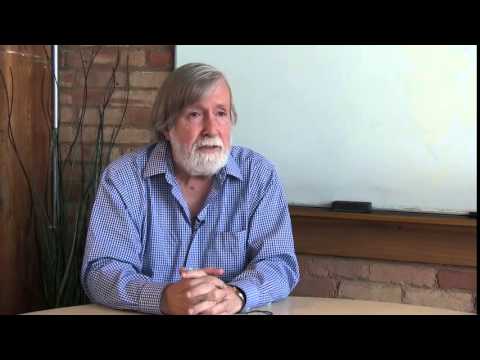
Gordon Edwards, 1 December 21, On November 24, 2021, APTN broadcast a half-hour TV documentary about High Level Nuclear Waste in Canada, with some extra attention paid to the new, unorthodox irradiated fuels that would result from the proposed new reactors called SMRs. Here is a link to the program, entitled Nuclear Revival: https://youtu.be/uLhPwAWejzc
A couple of observations that crossed my mind while watching the report by Journalist Christopher Read –
(1) The fuel bundles should be thought of as CONTAINERS of the actual radioactive wastes, which are locked up inside those solid bundles. There are many different radioactive elements (all of them human-made, most of them not found in unspoiled nature) that can escape from the fuel bundles as gases, liquids or solids. They all have different chemical and biological properties but they are all cancer-causing elements and can damage genetic materials like DNA molecules.
Even though the fuel bundles may not move an inch from where they have been emplaced, these other materials can leak out or leach out and find their way to the environment of living things. Time is on their side!! Damaged fuel bundles are analogous to a broken bottle – the container is still there, but the contents (some at least) have escaped.
(2) Concerning SMRs, even if these new nuclear reactors all worked very well, which is doubtful, they will be terribly expensive and very slow to reach a level of commercial deployment (and profitability) – at least 10 to 20 years – so they are too costly and too slow to respond to the climate crisis TODAY.
Solar and wind are much cheaper than nuclear, they are proven and can be quickly deployed, while energy efficiency measures are even cheaper and even faster to implement. We do not yet know how much progress can be made using these alternatives but clearly they should have the first priority – with nuclear as a wait-and-see backup possibility which very likely will not be needed at all (as in the case of Germany, which has phased out nuclear – nearly finished – and now is focussed on phasing out coal, using renewables and efficiency.)
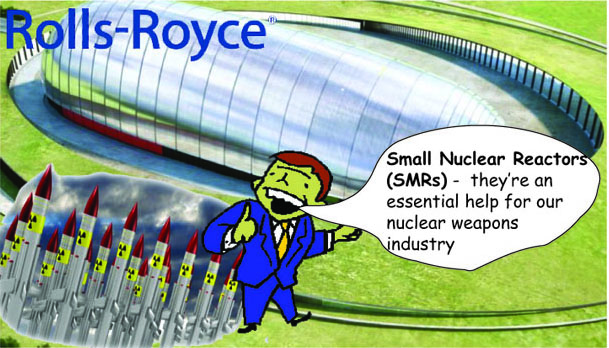
UK government secretive about its Net Zero strategy, especially on tax-payer funded projects like small nuclear power plants.
UK refuses to release document showing Net Zero Strategy CO2 savings, New Scientist, 1 December 2021, By Adam Vaughan
The UK government Department for Business, Energy and Industrial Strategy (BEIS) has turned down a freedom of information request that would allow independent scrutiny of its plan for net-zero greenhouse gas emissions.
The UK government has refused a freedom of information request to release a spreadsheet showing how much its landmark Net Zero Strategy will cut carbon emissions for individual measures, such as backing a new nuclear power station and fitting new electric car chargers.
Withholding the document smacks of “secrecy and subterfuge” and prevents the public from being able to interrogate the estimated impacts of the measures, says Ed Matthew at climate change think tank E3G.
The publication of the government’s Net Zero Strategy on 19 October was a key moment ahead of the COP26 climate summit, laying out in detail how the UK plans to reach its 2050 commitment to net-zero greenhouse gas emissions in the coming years.
Previous government blueprints for decarbonisation, such as the 2020 10-point green plan and 2017 clean growth strategy, have spelled out estimates of exactly how much individual policies will cut emissions. But the Net Zero Strategy failed to provide any such breakdown, which observers said showed a lack of transparency that hampered independent scrutiny.
Government officials conceded that there was a spreadsheet containing all the figures, but said they wouldn’t release it. Now, the Department for Business, Energy and Industrial Strategy (BEIS) has refused a freedom of information request by New Scientist to publish the document. It declined the request on the grounds that it involves the disclosure of internal communications…………….
The strategy does show top-level estimates of how much emissions will change for different sectors, such as power, buildings and farming, between now and 2050. But it doesn’t break down individual measures, including backing new hydrogen production or developing new small nuclear plants, both of which will be supported by hundreds of millions of pounds in public funding.
“Ministers are behaving like a shady dealer asking customers to buy a product without seeing it first,” says John Sauven at Greenpeace UK. He is calling on BEIS to publish the spreadsheet: “The best thing would be for the government to release the numbers behind the plan and allow experts to kick the tyres on it”.
The document is likely to include estimates of how extensively various technologies will be employed and their impacts on greenhouse gas emissions in the UK. There may be a mismatch between what the government has committed to publicly, such as a Conservative party manifesto pledge to quadruple offshore wind capacity by 2030, and the estimates that are being withheld, for example………..
New Scientist has appealed the decision not to publish the document. https://www.newscientist.com/article/2299318-uk-refuses-to-release-document-showing-net-zero-strategy-co2-savings/#ixzz7Drfyfmii
Global heating brings easier Arctic passage for Russia’s floating nuclear power plant to open up Arctic for more fossil fuel mining, more global heating.

World’s first floating nuclear power plant fuels Russia’s Arctic ambitions Ft.com Remote Siberian port lies at centre of plans to open up shipping and reach valuable resources © Nastassia Astrasheuskaya/FT | The Akademik Lomonosov nuclear power plant Share on twitter (opens new window) Share on facebook (opens new window) Share on linkedin (opens new window) Save Nastassia Astrasheuskaya in Pevek YESTERDAY
Moored off the small Arctic town of Pevek is the Akademik Lomonosov — the world’s first floating nuclear power plant and a sign of how President Vladimir Putin’s ambitions for Russia’s far east are taking shape. This port on the northern coast of Siberia was once notorious as a Soviet gulag. These days it is part of Moscow’s plan to open up a major shipping lane through the Arctic and bring natural resources within easier reach. Pevek’s harbour is only ice-free for four months a year but is intended to become a hub for commercial shipping on the so-called Northern Sea Route as climate change gradually eases the passage through the Arctic. And the power provided by the Akademik Lomonosov is intended to help Pevek become a gateway to Chukotka, a region close to Alaska and rich in gold, silver, copper, lithium and other metals…………
Few in Pevek seem concerned by the nuclear reactor in the harbour. “Fear? We have none. Perhaps Russians are not afraid of anything any more. We have seen and lived through everything. We have to be optimistic,” said Igor Ranav, a locally born businessman. “We were told the plant is made with the latest technology and it is safe, and I hope so.”
Development of the NSR is in the hands of Rosatom, the state nuclear corporation. As well as commissioning the Akademik Lomonosov, Rosatom is also in charge of nuclear-powered icebreakers that the company expects will help to open up year-round Arctic navigation by the middle of the decade. …………
Developing Chukotka along with the rest of the Arctic has long been a goal for Putin and Russia, which this week is hosting a plenary meeting of the Arctic Council, where the eight countries of the region are represented. “Russia should expand through the Arctic, as this is where it has its main mineral resources,” Putin said in 2017, when Russia first produced liquefied natural gas in the Arctic and exported it via the NSR. ……………
By mid-century, the Arctic and Antarctic Research Institut expects ice levels to lose another two-thirds in the summer, and to halve in winter. The warming ocean is expected to help cut shipment cost. Less ice means fewer icebreakers and faster journeys.
The warming ocean is expected to help cut shipment cost. Less ice means fewer icebreakers and faster journeys…………….. https://www.ft.com/content/f5d25126-94fc-41fc-bc35-341df0560f4d
9 top US nuclear no-proliferation experts write to Prime Minister Trudeau requesting a review of Canada’s planned nuclear reprocessing to recover plutonium.

| The latest of three open letters to Prime Minister Justin Trudeau from US non-proliferation. experts is copied below [on original] . The previous two letters are linked in footnotes #1 and #2. [on original] In these three letters, a group of nine distinguished nuclear policy experts are asking for a top level Canadian government review of the nuclear weapons proliferation dangers associated with the planned reprocessing of Canadian used nuclear fuel to recover the plutonium for use in a proposed new reactor in New Brunswick. These nine experts have worked under six U.S. presidents: John F. Kennedy, Lyndon B. Johnson, Richard Nixon, George H.W. Bush, Bill Clinton, and Barack Obama; and hold professorships at the Harvard Kennedy School, University of Maryland, Georgetown University, University of Texas at Austin, George Washington University, and Princeton University. CCNR 30th Nov 2021 http://www.ccnr.org/request_plute_nov_24_2021.pdf |
Whistleblower explained the tank design problem that caused the shutdown at Taishan nuclear power station
Last July, in China, the Taishan nuclear power plant was shut down. A few weeks earlier, an incident had taken place in the only EPR plant in service in the world, designed jointly by the Chinese CGN and the French EDF.
At the end of November, perhaps finally an explanation: the incident was due to a fault in the design of the vessel, according to a major French association specializing in nuclear safety. The incident which led in July to the shutdown of a reactor at the EPR nuclear power plant in Taishan, in southern China, is believed to be due to a design flaw in the vessel, the French association CRIIRAD said on Saturday.
The Commission for Independent Research and Information on Radioactivity (CRIIRAD) would get its
information from a “whistleblower”. “This is a Frenchman who works in the nuclear industry, having access to very precise technical information on the situation of the Taishan 1 reactor core,” a CRIIRAD official told AFP.
Taishan is the only pressurized water reactor (EPR) plant in the world, with two reactors. Four other EPR reactors are under construction, all in Europe: one in Finland, one in France in Flamandville and two in England. It is a tank design problem that would be the cause of the incident in Taishan reported on June 14, 2021. This is a first explanation.
TV5Monde 28th Nov 2021
Renewable energy growing at a fast pace, China and India leading the way.

Growth in renewable energy is set to hit an all-time record this year, but is still falling “well short” of what is necessary to slash planet-warming emissions, according to the International Energy Agency. The energy watchdog estimates that around 290 gigawatts (GW) of renewable energy capacity came online around the world in 2021 — enough electricity for approximately 200 million average US homes — according to a report published Wednesday.
By 2026, the agency predicts global renewable capacity will rise more than 60% from 2020 levels, an amount equivalent to the current total global power capacity of fossil fuels and nuclear combined, it said.
But to reach net-zero emissions by 2050, a goal many nations have set, renewables need a far bigger push. The current pace is being driven by China, which the agency says remains the global leader in renewable energy growth. The country is expected to reach 1200 GW of total wind and solar
capacity in 2026, four years sooner than its target date. Renewables are also being rapidly embraced in India, where they are projected to double new installations this year, in comparison to 2015-2020.
FT 1st Dec 2021
https://www.ft.com/content/317424af-a559-4598-a4df-5fe7c9fff947
COP 26 agreement that energy efficiency investments needed for at least half of the investments needed to stall global heating.

The formal Pact, agreed at COP26, explicitly calls upon all governments to accelerate the adoption of policies “rapidly scaling up … energy efficiency measures”. This complements the International Energy Agency’s conclusions that around half the investments needed to deliver net zero by 2050 will need to be achieved via improved energy efficiency.
Andrew Warren examines the publication of the UK Government’s long-postponed “Heat and
Buildings Strategy”. He says the mantra of fabric first seems to have disappeared. He concludes that the strategy proffers no serious strategy at all to improve the energy performance of (in particular) the English building stock. Given the UK’s hosting of COP26, this dereliction of ambition will need to be rectified by no later than COP 27 next November in Egypt.
Energy in Buildings & Industry magazine (not available yet) 28th Nov 2021
Fact check: Is nuclear energy good for the climate?

proponents of nuclear energy “fail to take into account many factors,” including those sources of emissions outlined. All the studies reviewed by DW said the same thing: Nuclear power is not emissions-free.
“Every dollar invested in nuclear energy is therefore a dollar diverted from true urgent climate action. In that sense, nuclear power is not climate-friendly”
Fact check: Is nuclear energy good for the climate? DW 29 Nov 21, Supporters of nuclear energy say it can help us wean our economies off polluting fossil fuels. No surprise, it’s a heated issue. But what about the facts? Can nuclear power really help save the climate?
………….. In recent weeks, particularly during the COP26 climate summit, advocates have been creating a stir online with statements like “if you’re against nuclear energy, you’re against climate protection” and “nuclear energy is about to make a comeback.” But is there anything to it?
Is nuclear power a zero-emissions energy source?
No. Nuclear energy is also responsible for greenhouse gas emissions. In fact, no energy source is completely free of emissions, but more on that later.

When it comes to nuclear, uranium extraction, transport and processing produces emissions. The long and complex construction process of nuclear power plants also releases CO2, as does the demolition of decommissioned sites. And, last but not least, nuclear waste also has to be transported and stored under strict conditions — here, too, emissions must be taken into account.
And yet, interest groups claim nuclear energy is emission-free. Among them is Austrian consulting firm ENCO. In late 2020, it released a study prepared for the Dutch Ministry of Economic Affairs and Climate Policy that looked favorably at the possible future role of nuclear in the Netherlands.
“The main factors for its choice were reliability and security of supply, with no CO2 emission,” it read. ENCO was founded by experts from the International Atomic Energy Agency, and it regularly works with stakeholders in the nuclear sector, so it’s not entirely free of vested interests.
At COP26, environmental initiative Scientists for Future (S4F) presented a paper on nuclear energy and the climate. The group came to a very different conclusion. “Taking into account the current overall energy system, nuclear energy is by no means CO2 neutral,” they said.
Ben Wealer of the Technical University of Berlin, one of the report’s authors, told DW that proponents of nuclear energy “fail to take into account many factors,” including those sources of emissions outlined above. All the studies reviewed by DW said the same thing: Nuclear power is not emissions-free.
How much CO2 does nuclear power produce?
Results vary significantly, depending on whether we only consider the process of electricity generation, or take into account the entire life cycle of a nuclear power plant. A report released in 2014 by the UN’s Intergovernmental Panel on Climate Change (IPCC), for example, estimated a range of 3.7 to 110 grams of CO2 equivalent per kilowatt-hour (kWh).
It’s long been assumed that nuclear plants generate an average of 66 grams of CO2/kWh — though Wealer believes the actual figure is much higher. New power plants, for example, generate more CO2 during construction than those built in previous decades, due to stricter safety regulations.
Studies that include the entire life cycle of nuclear power plants, from uranium extraction to nuclear waste storage, are rare, with some researchers pointing out that data is still lacking. In one life cycle study, the Netherlands-based World Information Service on Energy (WISE) calculated that nuclear plants produce 117 grams of CO2 emissions per kilowatt-hour. It should be noted, however, that WISE is an anti-nuclear group, so is not entirely unbiased.
However, other studies have come up with similar results when considering entire life cycles. Mark Z. Jacobson, director of the Atmosphere / Energy Program at California’s Stanford University, calculated a climate cost of 68 to 180 grams of CO2/kWh, depending on the electricity mix used in uranium production and other variables.
How climate-friendly is nuclear compared to other energies?
If the entire life cycle of a nuclear plant is included in the calculation, nuclear energy certainly comes out ahead of fossil fuels like coal or natural gas. But the picture is drastically different when compared with renewable energy.
According to new but still unpublished data from the state-run German Environment Agency (UBA) as well as the WISE figures, nuclear power releases 3.5 times more CO2 per kilowatt-hour than photovoltaic solar panel systems. Compared with onshore wind power, that figure jumps to 13 times more CO2. When up against electricity from hydropower installations, nuclear generates 29 times more carbon.
Could we rely on nuclear energy to help stop global warming?
………….. “The contribution of nuclear energy is viewed too optimistically,” Wealer from Berlin’s Technical University said. “In reality, [power plant] construction times are too long and the costs too high to have a noticeable effect on climate change. It takes too long for nuclear energy to become available.”
Mycle Schneider, author of the World Nuclear Industry Status Report, agrees.

Nuclear power plants are about four times as expensive as wind or solar, and take five times as long to build,” he said. “When you factor it all in, you’re looking at 15-to-20 years of lead time for a new nuclear plant.”
He pointed out that the world needed to get greenhouse gases under control within a decade. “And in the next 10 years, nuclear power won’t be able to make a significant contribution,” added Schneider.
Nuclear power is not being considered at the current time as one of the key global solutions to climate change,” said Antony Froggatt, deputy director of the environment and society program at the international affairs think tank Chatham House in London.
He said a combination of excessive costs, environmental consequences and lack of public support were all arguments against nuclear power.
Nuclear funding could go toward renewables
Due to the high costs associated with nuclear energy, it also blocks important financial resources that could instead be used to develop renewable energy, said Jan Haverkamp, a nuclear expert and activist with environment NGO Greenpeace in the Netherlands. Those renewables would provide more energy that is both faster and cheaper than nuclear, he said.
“Every dollar invested in nuclear energy is therefore a dollar diverted from true urgent climate action. In that sense, nuclear power is not climate-friendly,” he said.
In addition, nuclear energy itself has been affected by climate change. During the world’s increasingly hot summers, several nuclear power plants have already had to be temporarily shut down or taken off the grid. Power plants depend on nearby water sources to cool their reactors, and with many rivers drying up, those sources of water are no longer guaranteed.
The much vaunted “renaissance of nuclear power” is anything but when all the facts are taken into consideration, Mycle Schneider told DW. He said the nuclear industry has been shrinking for years.
“In the last 20 years, 95 nuclear power plants have gone online and 98 have been shut down. If you take China out of the equation, the number of nuclear power plants has shrunk by 50 reactors in the last two decades,” Schneider added. “The nuclear industry is not thriving.” https://www.dw.com/en/fact-check-is-nuclear-energy-good-for-the-climate/a-59853315
Design flaw: the incident that shut down China’s EPR nuclear station could happen to other EPR reactors.

| The type of incident that caused a reactor shutdown at Taishan plant could happen to other plants. The incident in the Chinese reactor last June is believed to be due to a design flaw in the reactor vessel. The incident which led in July to the shutdown of a reactor at the EPR nuclear power plant in Taishan (China) is believed to be due to a fault in the design of the vessel, the Independent Research and Information Commission said on Saturday (November 27th) on radioactivity (CRIIRAD) which warns against the risk of an identical problem on other EPRs. An association created in the aftermath of the Chernobyl disaster, CRIIRAD wrote on Saturday to the management of the Nuclear Safety Authority (ASN) to share this information with it, which it says it has from a “whistleblower”. “This is a French person who works in the nuclear industry, having access to very precise technical information on the situation of the Taishan 1 reactor core,” said Bruno Chareyron, director of the CRIIRAD laboratory. Sud Ouest 28th Nov 2021 https://www.sudouest.fr/nucleaire-le-type-d-incident-qui-a-provoque-l-arret-de-l-epr-de-taishan-pourrait-arriver-a-d-autres-centrales-7148273.php |
Nuclear risks are laid bare by COVID-19
Nuclear risks are laid bare by COVID-19, https://www.europeanleadershipnetwork.org/commentary/nuclear-risks-are-laid-bare-by-covid-19/
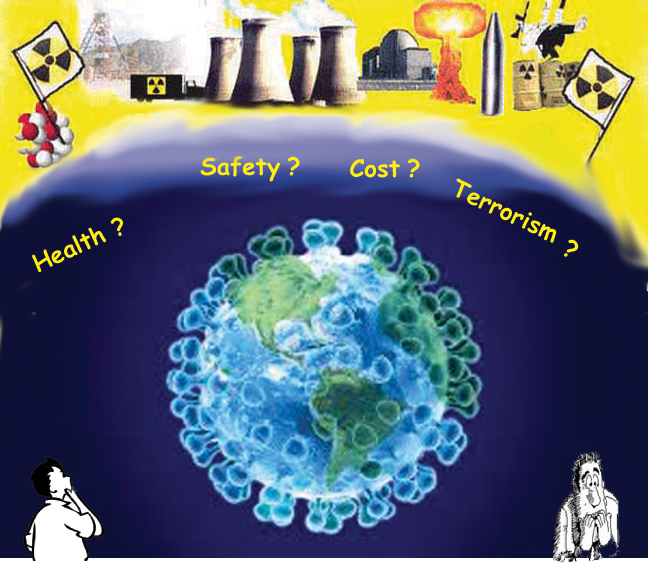
the prioritization of deterrence operations in these circumstances—and the emphasis on conveying this to the public—is fundamentally disquieting. In some circles, there is a call for a reckoning with the massive costs associated with nuclear modernization programs, ever more noticeable with the health sector buckling under extreme pressure.
Wilfred Wan |Researcher at the United Nations Institute for Disarmament Research (UNIDIR) 11 june 2020,
Maintaining deterrence postures has emerged as a key security challenge in the era of COVID-19. In recent weeks, officials in more than one nuclear-armed State have reassured their publics about the viability of their nuclear arsenals. A spokesperson for the UK Royal Navy noted “all required outputs are being maintained” at Faslane, home to Britain’s deterrent, following reports of personnel self-isolating. French submarine crews may not even be informed of the COVID-19 situation, according to their Naval spokesperson. The US Air Force Chief of Staff claimed in a press briefing no change to their nuclear deterrence operations. Similarly, the head of US Strategic Command stressed the pandemic had “no impact to our ability to accomplish our (deterrence) mission.”
Claims of ‘business as usual’ invite scepticism. The machinery of nuclear weapons complexes may be relatively immune from the pandemic, but the people that service them are not. Risk of transmission is especially great in the confined spaces like submarines, bombers, and missile silos that military personnel operate in. For instance, there are confirmed cases of COVID-19 at every nuclear base in the United States except one. Changes by now familiar to the working world are impacting military operations too: virtual teleconferencing, minimized on-site contact, identification of mission-critical tasks; with resources drawn from areas deemed inessential to the deterrence mission. The commander of the US Air Force Global Strike Command noted, “You’ll train a little less, but you can keep training; you can do maintenance, but you don’t have to do as much maintenance.” This is not business as usual.
There should be concern that shifting resources from tasks seen as inessential now could have safety implications down the line. Technical malfunction and human fallibility have featured across the known history of nuclear weapons programs, resulting in false alarms, accidents, and near misses. The US program, about which there exists the most declassified information, experienced a number of ‘broken arrow’ incidents during the Cold War such as missile explosions, aircraft collisions, and even the inadvertent release of nuclear weapons. The longer pandemic-containing measures are in force, the more the militaries of nuclear-armed States will face tough operational choices—choices that bear on nuclear risk.
Meanwhile, the prioritization of deterrence operations in these circumstances—and the emphasis on conveying this to the public—is fundamentally disquieting. In some circles, there is a call for a reckoning with the massive costs associated with nuclear modernization programs, ever more noticeable with the health sector buckling under extreme pressure. Beyond economics, continued reliance on nuclear weapons feels anachronistic as today’s threats are increasingly non-traditional, taking shape in cyber offensive operations or hybrid warfare, and adversaries harder to identify, with their motivations, doctrines, and capabilities varied and complex. Security, as COVID-19 underlines, has evolved. It is hard to hit many of these kinds of nails with the nuclear hammer.
Revitalizing nuclear arms control and disarmament is the only means to eliminate the lingering spectre of nuclear war. Given geopolitical tension, however, a critical short-term goal is to enhance understanding of that risk coming to fruition, intentionally or inadvertently. Proper assessment of the risk of nuclear weapon use is a prerequisite to reducing that risk. The veil of secrecy that has long surrounded nuclear weapons management must be lifted enough to ensure proper regulation, oversight, and accountability, including in all the processes linked to the deterrence ‘mission’. Enhanced use of notifications, signalling, and crisis communication channels, meanwhile, can lessen the likelihood that the mission itself will fail, especially in these extraordinary times.
In the meantime, preserving central control over nuclear arsenals during this and any other time is infinitely preferable to most alternatives. But even control cannot be taken for granted. The possibility of human failure in nuclear operations may well be higher with non-routine rotations and altered schedules of personnel. The hospitalization of British Prime Minister Boris Johnson for COVID-19 in April underlines the permeability of nuclear command and control at even the highest levels. The state of nuclear normalcy and perceived safety and security States are working so hard to uphold is far more fragile than they are willing to admit.
This is not to say that nuclear-armed States cannot effectively maintain their deterrent postures during this difficult period. But for some time now, experts and many governments have become increasingly concerned about nuclear misperception and miscalculation in an environment marked by worsening great power relations (and more so if the US and China continue their blame game over the pandemic). COVID-19 is a further wake-up call. There is no substitute for the easing of tensions and resumption of stockpile reductions. Nevertheless, States must do more to reduce the risk of any use of nuclear weapons. So long as nuclear weapons exist, the possibility remains. This is business as usual.
The nuclear consequences of cyber vulnerabilities
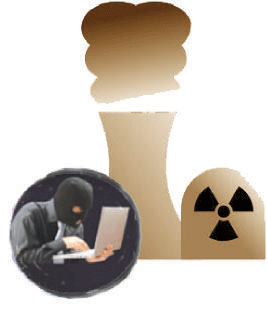
The nuclear consequences of cyber vulnerabilities, https://www.europeanleadershipnetwork.org/commentary/the-nuclear-consequences-of-cyber-vulnerabilities/ Wilfred Wan |Researcher at the United Nations Institute for Disarmament Research (UNIDIR), 29 Nov 21,
A recent report about a massive cyber surveillance campaign allegedly conducted by Russian intelligence against US government agencies reflects disturbing trends in cyberspace. The number of reported data breaches in 2021 is on pace to set a record, with government entities constituting the most targeted sector, and global supply chains increasingly impacted. The planning and sophistication that characterizes some of these operations in recent years also suggest more frequent State-level involvement, underlining the fact that cyber—or information security—capabilities increasingly constitute part of national strategic toolkits.
Operations in cyberspace have also targeted elements of the nuclear weapons enterprise across states. Recent known cases include the discovery in December 2020 of “long duration activity” against the US National Nuclear Security Administration (responsible for the management of the US stockpile), and in April 2021 of operations against a firm linked to the design of Russian nuclear submarines. In neither instance was there any indication that functions related to nuclear weapons systems were impacted.
Yet these revelations should heighten concerns beyond the states targeted, as the existence of these operations could have implications for potential nuclear weapon use. Cyber operations of the kind cited are unlikely to cause detonation events directly. Yet operations that successfully interact with nuclear forces can undermine states’ confidence in their nuclear deterrence capability or credibility, which can trigger forceful military response and even prompt ‘use it or lose it’ nuclear dilemmas. The clearest path to this end involves intrusions into weapons systems themselves. This is not far-fetched. In limited testing with “relatively simple tools and techniques”, the US Department of Defense in 2018 “routinely found mission-critical cyber vulnerabilities” in their weapons systems under development. Other nuclear-armed states are likely to be similarly vulnerable.
Other infringements on deterrence include cyber operations that impact nuclear command, control, and communication. Increased digitalization is likely to create new vulnerabilities, exacerbated by reliance on the supply chain. Even systems isolated from the internet can be compromised. The militarization of cyberspace—and a legacy of Cold War electronic warfare — also raises the possibility that adversaries could now induce the kind of malfunctions (such as erroneous warnings in early warning systems) that in the past have fuelled several nuclear ‘close calls’. Additionally, cyber operations that amplify conventional capabilities to evade radar and air or missile defence may increase nuclear force vulnerability, real or perceived.
The reason why such intrusions may escalate to a scale even beyond the intentions of perpetrators centres on a lack of clarity around so-called cyber ‘red lines’. Several nuclear-armed states have acknowledged the possibility of escalation linked to the cyber domain, or in their nuclear doctrines open the door to use in response to cyber operations. Further precision on thresholds is generally absent, with deliberate ambiguity held in service of deterrence credibility. Yet notions of achievable strategic stability are undermined by the secretive nature of cyber operations, the many potential points of entry for cyber operations, and context-dependent concepts such as ‘critical infrastructure’. Cyber-nuclear interactions open the door for misperception, miscalculation, or misunderstanding.
Reducing cyber-nuclear risks requires preventing interactions between cyber operations and nuclear forces; it also requires mitigating the consequences of interactions when they do take place. Developments in cyber space suggest the potential development of voluntary ‘rules of the road’ that can support the former. Last month the US and Russia submitted a joint resolution to the UN General Assembly (co-sponsored by 104 States) on responsible behaviour in cyberspace. Cyberspace policy also features in ongoing US-Russia strategic stability talks; President Biden in June 2021 had provided President Putin a list of critical infrastructure sectors meant to be “off-limits” from cyber operations. Such negotiations of State behaviours would be significant but would only address part of the risk picture.
It is incumbent on nuclear-armed states to strengthen the cyber security of their weapons and related systems and to elaborate standards across the entirety of their supply chains. Dialogue among nuclear-armed and nuclear-allied states can inform common understandings of risk perceptions, and chip away at the ambiguity around red lines. States can also look to establish guard rails through the conflict-prevention toolkit. In fact, information exchange around cyber military exercises, memorandums of understanding on engagement with communications and radar systems, and political declarations that nuclear command and control lies outside cyber bounds can build a foundation for formal agreements down the line.
Cyber-nuclear interactions are likely to increase given trends in the militarisation of the cyber domain and the digitalisation of nuclear weapons systems. The secrecy across both domains presents significant challenges: not only in their regulation but also to underlining the urgency of the situation and creating the prerequisite momentum for such action. After all, the cyber equivalent of the Cuban Missile Crisis is unlikely to ever play out in public. Yet the very real risk of cyber-nuclear interactions driving inadvertent nuclear war should provide ready incentive for immediate action.
Wilfred Wan is the co-author of a new UNIDIR report on The Cyber-Nuclear Nexus: Interactions and Risks.
At the Global Alliance of Leaders for Nuclear Security and Nuclear-Weapons-Free World (GAL) meeting, Nursultan Nazarbayev proposes Global Forum on Nuclear Nonproliferation and Disarmament

Nazarbayev proposed to launch the Global Forum on Nuclear Nonproliferation and Disarmamenthttps://www.prnewswire.com/news-releases/nazarbayev-proposed-to-launch-the-global-forum-on-nuclear-nonproliferation-and-disarmament-301433017.html
Astana Club , Nov 29, 2021, NUR-SULTAN, Kazakhstan, Nov. 29, 2021 /PRNewswire/ — The Global Alliance of Leaders for Nuclear Security and Nuclear-Weapons-Free World (GAL) was held on the platform of the VI meeting of the Astana Club in the capital of Kazakhstan.
Addressing the members of the GAL, Nursultan Nazarbayev noted that negotiations on nuclear strategic stability on inter-state level are facing a stalemate, and there is a strong need for an alternative form of dialogue on this issue.
To break this deadlock, Mr. Nazarbayev proposed to set up the Global Forum on Nuclear Nonproliferation and Disarmament in the capital of Kazakhstan.
Forum should bring together all key international NGOs and world moral authorities in the anti-nuclear field to forge a unified global agenda.
In his statement Nazarbayev also called on the world community to develop a step-by-step Plan for a comprehensive reduction of strategic offensive arms with the participation of all nuclear states under the auspices of the UN.
Nazarbayev expressed confidence that the GAL can become the central platform and driving force in the development of this document.
Former UN Secretary-General Ban Ki-moon also addressed the Alliance members with the support of the Nazarbayev’s initiative and noted that without the elimination of the nuclear threat, the world community will never be able to guarantee its security.
The address of the former President of the USSR, Nobel Peace Prize laureate Mikhail Gorbachev to Nursultan Nazarbayev and members of the Alliance became a significant moment at the GAL session.
Mr. Gorbachev expressed his full support for the initiative of the First President of Kazakhstan to establish GAL, noting that “there can be no other final goal than a world without nuclear weapons.”
He also noted that the meeting of Joe Biden and Vladimir Putin in June this year in Geneva marked a positive trend. According to Gorbachev, it is extremely important that the meeting of two presidents reiterated the idea that “there will be no winners in a nuclear war,” which was first voiced in 1985 at his meeting with US President Ronald Reagan.
The meeting of GAL was also attended by the leaders of the global anti-nuclear movement such as Nobel Peace Prize laureates Mohamed ElBaradei and ICAN Executive Director, Beatrice Fihn, as well as former UN High Representative for Disarmament Affairs and UN Under-Secretary-General Angela Kane, and many others.
All the meeting participants unanimously acknowledged that Kazakhstan, which voluntarily renounced the world’s fourth largest nuclear military arsenal of 1,200 atomic warheads in 1990s, has the full moral right to undertake such global anti-nuclear initiatives.
This year’s GAL meeting refers to the Doomsday Clock, the symbol of likelihood of nuclear war – One Minute to Midnight: Time for Action for the Nuclear Dialogue. This is because at the beginning of 2021, the Doomsday Clock moved the closest it has ever been in its history since 1947: 100 seconds to midnight.
Nursultan Nazarbayev.
GAL’s mission is to provide impetus to the anti-nuclear agenda through the joint efforts of the leaders of major international NGOs, well-known politicians, and world moral authorities in the anti-nuclear field.
In 2020, GAL’s Open Call to world leaders to demand the need for strengthening joint efforts on nuclear safety, non-proliferation and disarmament was registered as an official document of the UN and the IAEA.
To date, the GAL is supported by over seventy prominent international figures, including politicians, experts, and Nobel Peace Prize laureates..
Design flaw could explain problem at EDF’s Chinese nuclear plant
Design flaw could explain problem at EDF’s Chinese nuclear plant-NGO https://www.reuters.com/markets/commodities/design-flaw-could-explain-problem-edfs-chinese-nuclear-plant-ngo-2021-11-29/Reuters PARIS, Nov 29 (Reuters) – A design flaw in the reactor pressure vessel could be the cause of a problem that was made public in June at French company EDF’s jointly-owned nuclear power plant in China, a French non-governmental organisation said, quoting a whistleblower.
Guarded optimism among Western diplomats, as Iran nuclear talks progress in Vienna.

Progress in Iran nuclear talks as Tehran agrees to discuss compliance
Western diplomats express guarded optimism after first day of negotiations in Vienna, Guardian, Patrick Wintour Diplomatic editorTue 30 Nov 21, Western diplomats have expressed guarded optimism and relief after the first day of resumed Iran nuclear talks in Vienna made unexpected progress when Tehran formally agreed to discuss steps to come back into compliance with the 2015 agreement.
The EU’s chief negotiator, Enrique Mora, said Iran had agreed that the talks could resume largely where they had ended in June, rather than with an entirely new agenda.
There had been fears that Iran’s new harder-line administration, elected in June, would rip up the progress made in the first round of talks and insist the sole legitimate issue for discussion was the list of economic sanctions that the US must lift.
Mora said: “There was a sense of urgency to bring an end to the sanctions and the suffering of the Iranian people … “The Iranian delegation recognises the work we have done in the past six rounds and the fact that we will build on this work going ahead.”
The Russian ambassador to the talks, Mikhail Ulyanov, also described the opening of the talks as successful.
Ali Bagheri, the new Iranian chief negotiator, said he was optimistic, but that he was looking for a US guarantee that it would not only lift a swath of economic sanctions but also promise not to reimpose them in the future.
The talks are due to last at least two further days, with Tuesday dedicated to negotiating the sanctions that will be lifted on the basis that they are linked to the nuclear agreement, and were not imposed due to continuing Iranian human rights abuses or terrorist activity. There are still differences between the two sides on how to classify sanctions.
Iran has also agreed that on Wednesday it will discuss the steps it would need to take to come back into compliance with the agreement. Iran regarded the sequencing of the discussion as significant.
After Donald Trump took the US out of the deal in 2018, Iran responded by taking a series of reversible but escalating steps that breached the agreement’s terms, including stockpiling enriched uranium and stepping up use of advanced centrifuges at sites to which UN nuclear inspectors say they do not have full access.
The talks are between Iran, Russia, China, Germany, France and the UK. The US is excluded from direct negotiations by Iran, but its delegation in Vienna is being consulted on each Iranian offer.
Although there is a mood of optimism, at least in contrast to the gloom leading up to the talks, many hurdles remain to an agreement and there is still a suspicion in some western capitals that Iran is playing for time as it develops its nuclear technology…………….
Israel is isolated in the Middle East to the extent that the Gulf states now follow the US lead in accepting that a revival of the nuclear deal would be good for stability in the region. But that isolation may prove temporary if the talks do not manage to make any progress.
1 This Month



19 November – Webinar – The Reality of Reprocessing
Time: 11:00 AM Pacific Time (US & Canada) / 2:00 PM Eastern / 7:00 PM UK / 8:00 PM CET
Register for the Zoom Event Here



Shut down the radiation-damaged Heysham nuclear reactors now
To see nuclear-related stories in greater depth and intensity – go to https://nuclearinformation.wordpress.com

Say No to NASA’s Reckless Nuclear Reactor on the Moon
Say No to NASA’s Reckless Nuclear Reactor on the Moon
-
Archives
- November 2026 (74)
- October 2026 (302)
- September 2026 (339)
- August 2026 (330)
- July 2026 (355)
- June 2026 (287)
- May 2026 (306)
- April 2026 (356)
- March 2026 (251)
- February 2026 (267)
- January 2026 (308)
- December 2025 (358)
-
Categories
- 1
- 1 NUCLEAR ISSUES
- business and costs
- climate change
- culture and arts
- ENERGY
- environment
- health
- history
- indigenous issues
- Legal
- marketing of nuclear
- media
- opposition to nuclear
- PERSONAL STORIES
- politics
- politics international
- Religion and ethics
- safety
- secrets,lies and civil liberties
- spinbuster
- technology
- Uranium
- wastes
- weapons and war
- Women
- 2 WORLD
- ACTION
- AFRICA
- Atrocities
- AUSTRALIA
- Christina's notes
- Christina's themes
- culture and arts
- Events
- Fuk 2022
- Fuk 2023
- Fukushima 2017
- Fukushima 2018
- fukushima 2019
- Fukushima 2020
- Fukushima 2021
- general
- global warming
- Humour (God we need it)
- Nuclear
- RARE EARTHS
- Reference
- resources – print
- Resources -audiovicual
- Weekly Newsletter
- World
- World Nuclear
- YouTube
-
RSS
Entries RSS
Comments RSS

