France’s Foreign Minister in Indonesia, raises concerns about AUKUS, nuclear submarines, and risks of weapons proliferation.
the theme of ‘betrayal’ in terms of both being ‘cheated’ out of a deal and being deceived by NATO allies and, in Australia’s case, a historical ally.

AUKUS was about ‘pressing a sense of confrontation with China’
if tomorrow Australia has some nuclear-powered submarines, why not, some other countries could ask for similar technology, it could be Indonesia, why not?’
Australia needs an entente cordiale with Indonesia over nuclear propulsion and non-proliferation, The Strategist, 29 Nov 2021, |David Engel However relaxed and comfortable Indonesian Defence Minister Prabowo Subianto might be about Australia’s plans to acquire nuclear-powered submarines (SSNs), the visit to Jakarta of French Foreign Minister Jean-Yves Le Drian has probably validated the very different view of Le Drian’s counterpart, Retno Marsudi.
……………………………………………. the most striking moment of the visit came during Le Drian’s address to Indonesia’s leading international affairs think tank, the Centre for Strategic and International Studies (CSIS). While his speech focused on issues such as multilateralism and the EU’s position on the Indo-Pacific, his response to a question on ‘minilateralism’—specifically, AUKUS and the Quad—took on a very different tone.
Ignoring the Quad, he levelled his remarks at AUKUS, stressing four points. The first two reiterated the theme of ‘betrayal’ in terms of both being ‘cheated’ out of a deal and being deceived by NATO allies and, in Australia’s case, a historical ally. He talked about American efforts to restore trust through various US commitments to France. He didn’t mention Australia in this context.
More significantly, his third point was that AUKUS was about ‘pressing a sense of confrontation with China’ (as the simultaneous translation put it). He said that, while France was not oblivious to China’s military threats and risks, he believed that the best way to respond to these threats was to ‘develop an alternative model rather than to first of all oppose’.
Perhaps his most significant point for Australian interests was his fourth, which went to the transfer of nuclear technology for submarine propulsion. He pointed out that until now no nuclear-weapon state had done this. But ‘if tomorrow Australia has some nuclear-powered submarines, why not, some other countries could ask for similar technology, it could be Indonesia, why not?’ He continued that, even though this technology was not covered by the Nuclear Non-Proliferation Treaty (NPT), the risk the arrangement posed of starting a trend was nonetheless of concern.
Irrespective of Le Drian’s intentions in answering the question in this manner—and it’s noteworthy that he didn’t cover AUKUS in his formal address—he would surely have known that his words would resonate powerfully with his audience, both at CSIS and more generally among Indonesia’s foreign policy establishment. While his depiction of Australia as duplicitous was evidently personal and heartfelt, it would also have struck a chord with those Indonesians who have characterised Canberra the same way over such issues as East Timor, Papua and spying allegations, irrespective of how justified that judgement might be.
Le Drian’s last point went directly to concerns about nuclear proliferation—issues that Indonesia highlighted in its official statement on AUKUS and the planned submarines. It corresponds closely ‘in spirit’ with subsequent official commentary to the effect that Indonesia was considering advocating a change to the NPT aimed at preventing non-nuclear-weapon states from acquiring SSNs………
whoever governs in Canberra now and into the future should at least make a priority of assuaging Jakarta’s worries on this subject, however overstated and unbalanced they are. While Indonesia’s prospects of changing the NPT and precluding Australia from having SSNs look remote at best—not least because several of its ASEAN colleagues do not share its views of Australia’s ambitions—the sooner the two countries can put this latest irritant to rest the better.
In the circumstances, the onus for doing so must primarily rest with Canberra………https://www.aspistrategist.org.au/australia-needs-an-entente-cordiale-with-indonesia-over-nuclear-propulsion-and-non-proliferation/
UK and Israel pledge to stop Iran gaining nuclear weapons
UK and Israel pledge to stop Iran gaining nuclear weapons
Israeli FM Yair Lapid visits London and Paris to discuss Iran, as talks on the 2015 nuclear deal restart in Vienna. Aljazeera, 29 Nov 21,
The United Kingdom and Israel will “work night and day” in preventing Iran from becoming a nuclear power, the foreign ministers of the two countries wrote in a joint article.
“The clock is ticking, which heightens the need for close cooperation with our partners and friends to thwart Tehran’s ambitions,” the UK’s Liz Truss and her Israeli counterpart Yair Lapid wrote in The Telegraph newspaper on Sunday.
Lapid arrived in London on Sunday for a two-day trip to the UK and France, a day before talks on Iran’s nuclear programme restart in Vienna.
Israeli Prime Minister Naftali Bennett said earlier in the day that his country was “very worried” that world powers will remove sanctions on Iran in exchange for insufficient caps on its nuclear programme, as negotiators convene in Vienna on Monday in a last-ditch effort to salvage a nuclear deal………………….. https://www.aljazeera.com/news/2021/11/29/uk-and-israel-pledge-to-stop-iran-gaining-nuclear-weapons
UN chief calls for nuclear weapons-free Middle East
UN chief calls for nuclear weapons-free Middle East, UN News, The UN Secretary-General on Monday called on all Middle East States to transform the vision of a region with no nuclear weapons, or other weapons of mass destruction, into a working reality.
Antonio Guterres was speaking in New York at the second session of the Conference on the Establishment of a Middle East Zone Free of Nuclear Weapons and Other Weapons of Mass Destruction.
Since 1967, five such zones have been established around the world: Latin America and the Caribbean, the South Pacific, Southeast Asia, Africa and Central Asia. They include 60 per cent of all UN Member States and cover almost all of the Southern Hemisphere.
For the Secretary-General, expanding such zones would help build a safer world.
“That is particularly the case in the Middle East, where concerns over nuclear programmes persist, and where conflicts and civil wars are causing widespread civilian casualties and suffering, undermining stability and disrupting social and economic development”, Mr. Guterres explained.
The UN chief also reiterated his call for all parties to exercise restraint and avoid escalation.
In this context, he highlighted the Joint Comprehensive Plan of Action (JCPOA), known commonly as Iran Nuclear Deal, saying that the return to dialogue is “an important step.” ………. https://news.un.org/en/story/2021/11/1106732
China puts forward proposals as Iran nuclear talks resume
China puts forward four proposals as Iran nuclear talks resumeCGTN China welcomes the resumption of talks about the Iran nuclear deal and has made four proposals in the hope of pushing forward the negotiation process, Chinese Foreign Ministry spokesperson Wang Wenbin told reporters on Monday…….
Reiterating China’s support for a diplomatic settlement, Wang put forward four proposals.
First, the U.S. is the initiator of the Iran nuclear crisis, Wang said, urging the U.S. to lift sanctions against Iran and third-party entities and individuals. On this basis, Iran should fully resume its nuclear commitments. Neither party should impose any other conditions for this, Wang said.
Second, all parties should respect each other’s legitimate rights and concerns, Wang said, calling on relevant parties to uphold the principle of mutual respect and win-win cooperation so as to promote regional peace and stability.
| The legitimate rights and interests of parties involved in economic and trade cooperation with Iran should be respected, added Wang.Third, the spokesperson called for a pragmatic and flexible negotiation strategy and encouraged all parties to use their political wisdom and settle the issue through equal consultation.China supports pushing forward the negotiation based on the previous consensuses, he noted.Fourth, Wang stressed that all parties should stay committed to a political settlement of the issue, and stay restrained and rational to maintain the negotiation process……. https://news.cgtn.com/news/2021-11-29/China-puts-forward-four-proposals-as-Iran-nuclear-talks-resume-15ADhfujpqE/index.html |
Nuclear industry handouts to universities continue

Duke Energy Gives $150K of Nuclear Scholarships to SC State
Duke Energy is giving a historically Black South Carolina university $150,000 in scholarships to help train and educate new nuclear engineers. U.S. News By Associated Press|Nov. 29, 2021, ORANGEBURG, S.C. (AP) — Duke Energy is giving a historically Black South Carolina university $150,000 in scholarships to help train and educate new nuclear engineers.
South Carolina State University said that money will provide about 15 scholarships over three years in its nuclear engineering program, which is the only undergraduate one of its kind in the state, interim university President Alexander Conyers said…. .. https://www.usnews.com/news/best-states/south-carolina/articles/2021-11-29/duke-energy-gives-150k-of-nuclear-scholarships-to-sc-state
Crypto currency mining is rampant, so Kazakhstan looks to nuclear energy, despite its dreadful history there.
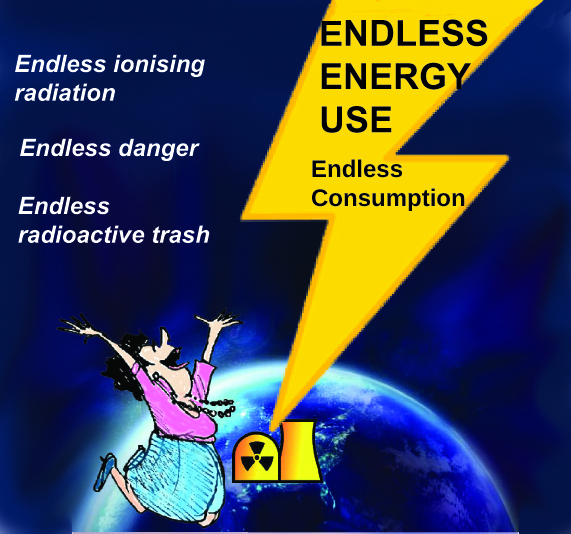
Kazakhstan is now home to 50 registered and an unknown number of unregistered crypto mining companies. The decision to build new nuclear power plants is a serious one for a country that suffered severe nuclear fallout from weapons testing during the Soviet occupation. Kazakhstan’s last nuclear power plant closed in 1999.
Bitcoin mining power crunch: Kazakhstan looks toward nuclear solution, CoinTelegraph, 25 Nov 21
The country saw a great influx of miners this year, but it might have to sacrifice the immense tax revenue from Bitcoin miners if power grid issues are not resolved.
–The exodus of Bitcoin miners from China into Kazakhstan has contributed to an energy crunch that the central Asian country’s president has proposed solving with nuclear energy.
Kazakhstan’s Ministry of Energy has attributed the 8% increase in domestic electricity consumption throughout 2021 to Bitcoin miners. The country received at least 87,849 Bitcoin mining machines from Chinese companies so far this year, following China’s crackdown on crypto mining, according to data from the Financial Times.
The substantial increase in demand has led to a deficit in the domestic power supply and contributed to unreliable electricity services, according to the Kazakhstan Electricity Grid Operating Company. President Tokayev told bankers at a Friday meeting that he thinks building a nuclear power plant will help ease the stress on his country’s electrical infrastructure:………………
Kazakhstan is now home to 50 registered and an unknown number of unregistered crypto mining companies. The decision to build new nuclear power plants is a serious one for a country that suffered severe nuclear fallout from weapons testing during the Soviet occupation. Kazakhstan’s last nuclear power plant closed in 1999……..https://cointelegraph.com/news/bitcoin-mining-power-crunch-kazakhstan-looks-toward-nuclear-solution
26 UK investment funds pouring money into nuclear weapons companies: some have links to UK government.
“It is unsurprising that the same financial institutions who continue to pour funding into companies like BAE Systems also have close links with senior Conservative party members and is yet another example of the cosy relationship between the arms industry and the UK government,”
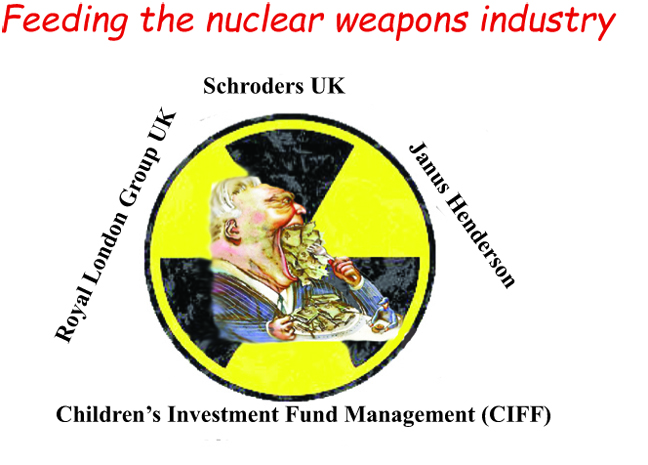
The Ferret, November 28, 2021 Twenty-six financial firms in London have been accused of funding a “new nuclear arms race” including investment funds with links to the UK Government, The Ferret can reveal.
The Ferret found that 26 were based in London and six have links to the Conservative Party, which plans to increase Britain’s nuclear weapons arsenal.
They include Schroders UK which holds shares in the arms giant, BAE Systems. Schroders chair is Lord Geidt, who was an advisor to BAE Systems until April this year. He is now an advisor to Prime Minister Boris Johnson, whose plan to produce more nuclear weapons has been condemned by peace organisations.
Netherlands-based peace group, PAX, produced the study with the International Campaign to Abolish Nuclear Weapons (ICAN). Their report warns that financial institutions continuing to invest in companies involved with the nuclear weapons industry could face “regulatory risks” because of the Treaty on the Prohibition of Nuclear Weapons, which came into force in January 2021.
The treaty – which the UK has not ratified – bans nuclear weapons and has been signed by 86 states so far.
The UK Government — which claims it is “committed to the long-term goal of a world without nuclear weapons” — said in March it would lift the cap on its nuclear arsenal by 40 per cent, from 180 to 260 warheads. In a statement in November the government claimed it had “played a leading role by pioneering work in nuclear disarmament”.
Perilous Profiteering says that Schroders UK had investments in 2020 worth $125.3 million (£93.97m) in BAE Systems which is building new Dreadnought submarines that will be armed with nuclear missiles. The company also provides logistics support for the US Trident and Minuteman missiles. BAE Systems stressed that it does not make nuclear warheads.
The report also names Royal London Group UK which had shares in 2020 worth $98.6m (£74m) in BAE Systems. In June the insurance company appointed Ruth Davidson, former leader of the Scottish Tories , as a non-executive director. Davidson is now a peer.
Others with links to the Tories include the Children’s Investment Fund Management (CIFF) which has shares in Safran, a French firm. Safran owns 50 per cent of ArianeGroup which has contracts for French nuclear weapon production.
Emma Cockburn, Scotland co-ordinator for Campaign Against Arms Trade
CIFF’s investment assets are managed by TCI Fund Management, where Rishi Sunak MP, chancellor of the exchequer, was a partner from 2006 to 2009.
Investment firm Janus Henderson, which has shares in General Dynamics, L3 Harris and Leidos, gave the Tories £3,500 in 2018, a payment which was registered in the House of Commons as required. General Dynamics, L3 Harris and Leidos all operate within the nuclear sector, says the new report.
According to the new report, the entry into force of the Treaty on the Prohibition of Nuclear Weapons in January 2021, is an “historic shift” in the way the world “deals with nuclear weapons”. It points out that while nuclear weapons are controlled by governments, their production is often contracted to private companies. “They (nuclear weapons) are now comprehensively outlawed, as is any assistance with producing, manufacturing or developing them,” the report says.
“Financial institutions that continue investing in companies building nuclear weapons face regulatory risks as more countries join the treaty. They also face an increased reputational risk as clients learn of their support for weapons of mass destruction and terminate their relationships.”
The report also reveals that 338 institutions have financing or investment relationships with the 25 nuclear weapon producing companies, down from 390 the previous year – a fall of 52, which the authors welcomed……….
Other critics of the nuclear weapons industry include Emma Cockburn, Scotland co-ordinator for Campaign Against Arms Trade (CAAT). She said the report provides a “damning insight to the endless billions available for the nuclear and arms manufacturers.”
“It is unsurprising that the same financial institutions who continue to pour funding into companies like BAE Systems also have close links with senior Conservative party members and is yet another example of the cosy relationship between the arms industry and the UK government,” she added……………………….. https://theferret.scot/revealed-27-london-companies-funding-nuclear/
Energy consumers are likely to spend over £1000 each to complete Sizewell C Nuclear …..and then pay a high price for the electricity it produces.
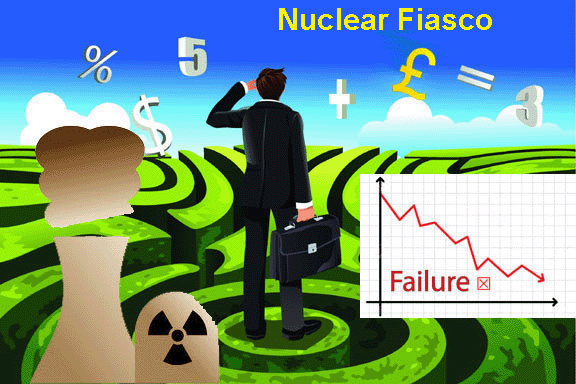
The Government’s new nuclear power construction financing mechanism the so-called ‘Regulatory Asset Base’ (RAB) is likely to cost energy consumers an average of well over £1000 each added onto their electricity bills.
On top of that energy consumers will have carry on paying on top of this for an as-yet undecided amount for each kWh generated by Sizewell C.
According to EDF planning figures the cost of Sizewell C will be £20 billion. Experience suggests that there is little faith to be placed inEDF’s claims. For example, the actual cost of the Flamanville nuclearpower plant being built by EDF (the same EPR model) has cost upwards of 5 times as much as their original estimate.
So we can probably expect a bill of at least £30 billion to be paid by consumers through their electricity
bills. That is because the RAB mechanism will ensure that consumers pay the cost overruns, which are certain to occur when building these nuclear power plant. Given that there are around 26 million domestic electricity consumerbills to be paid in the UK, this means each consumer will be paying over
£1000 each to build the power plant.
100% Renewables 27th Nov 2021
Nuclear power being hyped in the media, but its prospects are grim

 | |||
whether contracting or expanding, there is always a lot of money involved, and, judging by a new section in this years WNISR, looking at the prevalence of crime in the industry, the nuclear sector has had its fair share of corporate and financial corruption and fraud. It says ‘huge contract size and multiple layers of subcontractors make the sector attractive for people with malicious intentions’ and it reports on cases of ‘bribery and corruption, counterfeit and fraud in manufacturing and quality control’, the latter being particularly sensitive given the safety risks involved with nuclear plants and wastes.
While there are obviously cases of fraud and corruption in other sectors with large infrastructure investments, WNISR suggest that ‘in the past decade, there has been growing evidence of criminality in the nuclear industry’. As well as cases of sabotage via internal and external action. Not a happy thought.
https://renewextraweekly.blogspot.com/2021/11/nuclear-power-global-prospects.html Despite its economic problems, construction delays and cost overshoots, the prospect for nuclear power have been talked up of late. It is being portrayed as a way to respond to climate change and ensure continued energy security in a world where energy demand continues to rise, the use of fossil fuels is increasingly reduced and the use of variable renewables increases. The global lobby group, the World Nuclear Association, says that nuclear generation globally will grow by 2.6% annually, reaching 615 GWe by 2040, up from 394 GW now. Indeed, its upper scenario sees nuclear capacity growing faster, to 839 GWe in 2040. Even under the Lower Scenario, a steady increase is seen over the entire reporting period.
That is all very optimistic judging by the views presented in the latest edition of the independent World Nuclear Industry Status Report, which assesses the status and trends of the international nuclear industry. It reports that, in 2020, nuclear power generation output plunged by around 100 TWh, while net nuclear capacity additions (new startups minus closures), declined to 0.4 GW- compared to a net rise of over 150 GW for renewables. It also didn’t see things improving much. Small Modular Reactors (SMRs) were so far unavailable commercially and would not be for another 10-15 years, ‘if ever’. So overall WNISR says ‘nuclear is irrelevant in today’s electricity capacity new-build market’.
By contrast, non-hydro renewables, mainly wind, solar and biomass, out-performed nuclear plants in electricity generation on a global scale. Hydro alone has been generating more power than nuclear for most of the past three decades. And now, for the first time, non-hydro renewables generated more power in the European Union than nuclear, while renewables, including hydro, generated more power than all fossil fuels combined.
Continue readingProtest against plan for nuclear waste dump in West Cumbria, close to National Park
NEW NUCLEAR DUMP FOR HIGHER ACTIVITY WASTES AT DRIGG LOW LEVEL WASTE REPOSITORY? NIREX REBRANDED? From Lakes Against Nuclear Dump to the Lake District National Park Authority. 28 Nov 21, A letter of alarm regarding plans for an Intermediate Level Nuclear Waste Dump for the UK’s Low Level Waste Repository at the village of Drigg. The UKs LLWR is 250 metres from the National Park Boundary at the nearest point. The following letter has been sent to local and national media and mainstream NGOs have been alerted.
Dear Member of the Lake District National Park Authority,
Congratulations on the 70th anniversary of the Lake District National Park. In the original Lake Counties is another 70th anniversary. The Windscale Piles. Which from 1951 produced plutonium for Britain to make its own atomic and hydrogen bombs until the Windscale Fire of 1957. Unfortunately lessons were not learnt. The nuclear experiment continues despite no final solution to the problem of what to do with the escalating wastes from 70 years of military and civil nuclear reactors. Our own view as a nuclear safety group is that the wastes should not be buried out of sight and out of mind but should be closely monitored and repackaged when necessary.
NIREX REBORN AT DRIGG? – Intermediate Level Nuclear Wastes for Burial approximately 250 metres from the National Park?
We have been alerted by locals in the Drigg area to a plan which is running in tandem with that for a deep Geological Disposal Facility which Government say: “will be available to receive the first waste in the 2040s” However the plan for Near Surface Disposal (10s of metres below ground) “could be available within the next 10 years.” This plan, for which the Low Level Radioactive Waste Repository at Drigg is under active consideration, is for the disposal/dumping of Intermediate Level Wastes of the type that were rejected by the NIREX inquiry for deep GDF disposal at Longlands Farm, Gosforth in 1997. Exploratory boreholes have already been drilled at Drigg for the Near Surface Disposal of Intermediate Level Nuclear Wastes, presumably under “permitted development.”
Just like the early days of the Windscale Piles this plan has been put in motion under the radar of public attention. There has not been any debate or vote at Local, Borough or County Council level nor, we assume, any discussion by the Lake District National Park despite the Low Level Waste Repository being only 250 metres from the Lake District National Park boundary. Intermediate Level Nuclear Wastes, according to the Nuclear Decommissioning Authority, “exceeds the upper boundaries for Low Level Waste but does not generate a significant amount of heat. ..The major components of ILW are nuclear reactor components, graphite from reactor cores and sludges from the treatment of radioactive liquid effluents.”
The NIREX dump entrance proposal for Intermediate Level Wastes was rejected in the 1990s because the nuclear industry had no idea how much and how fast the planned dump would leak. They still have no idea. Furthermore for a shallow dump the leaks would be even faster…………
The fundamental conclusion of the expert Assessor and myself was that the Proposed Repository Zone had been chosen for these studies in an arbitrary manner, without conforming to internationally agreed, geological criteria
Earlier in a letter to “The Guardian” of June 28,’07 the NIREX Inquiry Inspector had stated : “The relevant geology in west Cumbria is apparently now claimed to be ‘stable, although imperfect’.…the imperfection consists of simply failing to meet the internationally agreed criteria on the suitability of rocks for nuclear waste deposit. The site should be in a region of low groundwater flow, and the geology should be readily characterisable and predictable, whereas the rocks there are actually of a complex volcanic nature, with significant faulting. Also, the industry was relying on an overlying layer of sedimentary strata to dilute and disperse any groundwater leakage, when the international criteria require such a layer to act instead as a barrier…The site is not suitable and investigations should be moved elsewhere…”.
And: “The site selection process was flawed, not treating safety as the most important factor, and irrationally affected by a strong desire to locate close to Sellafield.”
https://www.theguardian.com/world/2007/jun/28/nuclear.uk
The latest process to deliver a GDF (with Cumbria STILL in the frame), Radioactive Waste Management, is now in partnership with the LLWR at Drigg. These bodies along with the Nuclear Decommissioning Authority are all advised by the Committee on Radioactive Waste Management which is in turn taking “invaluable” advice on construction and delivery of deep (GDF) and not so deep (NSD) dumping/disposal from West Cumbria Mining’s CEO Mark Kirkbride. Kirkbride compiled CoRWMs Annual Report No 3724 which details the push for Near Surface Disposal: “advice in the last year have been in relation to the concept of Near Surface Disposal (NSD) for intermediate level waste which is being explored by NDA as a potential solution for the disposal of specific intermediate level waste materials, reducing the volume of certain elements of the inventory into a GDF.
The Lake District National Park Authority surely cannot ignore this. If Intermediate and heat generating High Level nuclear waste is brushed under the Lake District fringes and abandoned, then the World’s Nuclear Heritage Site will soon become the World’s Nuclear Sacrifice Zone. This could happen within a decade for the Intermediate Level Wastes at Drigg. Please protect the Lake District and its fringes, tomorrow is too late to say “This Far and No Further.”
yours sincerely
Marianne Birkby
Lakes Against Nuclear Dump – a Radiation Free Lakeland campaign
https://www.lakesagainstnucleardump.com/ https://www.lakesagainstnucleardump.com/post/new-nuclear-dump-for-higher-activity-wastes-at-drigg-low-level-waste-repository-nirex-rebranded
The “brigands” regroup in Basilicata

Italians reunite in the face of a renewed radioactive waste dump threat
The “brigands” regroup in Basilicata — Beyond Nuclear International 28 Nov 21,
”………………………………………… between November 13 and 27, 2003, just weeks before we arrived. An unprecedented and dramatic 15 days of protest had unfolded in Scanzano Jonico, culminating in the defeat of a plan by the Italian government, then led by Silvio Berlusconi, to dump all of Italy’s high-level radioactive waste at a single site at Terza Cavone, a few kilometers from Scanzano, in salt rock at a site just 200 meters from the shoreline.
The dump decision had been taken at night, without local consultation, the news deliberately buried in the papers, eclipsed by a headline-garnering suicide bombing that had killed 18 Italian service members at the Nasiriyah Carabinieri barracks in Iraq during that ill-waged war.
But the Lucani noticed the announcement right away. The news struck “like a lightning bolt” Tonino Colucci of the local World Wildlife Fund chapter told me later as we walked into that surprise press conference.
Before the ink was even dry, they had set up a base camp at Terza Cavone — where we were now. They had rallied people from all walks of life to protest, occupy stations, and block highways. The whole region declared itself a nuclear-free zone. Berlusconi’s own members of parliament in the area opposed the deal. By November 23, the ranks of protesters had swelled to 100,000. After fifteen days, the radioactive waste dump was canceled.
The protest garnered widespread coverage, including in the New York Times, and even spawned academic papers, one such describing the remarkable victory as having “cut across lines of locality, age, social class and political affiliation, mobilizing the populace with various symbols, including references to brigandage, postwar struggles for land, and the Madonna of Loreto.” I wrote up my own experiences in The Bulletin of the Atomic Scientists.
Along with the expected objections — the unsuitability of the site so close to the sea; the damage to agriculture and the tourism trade —outrage was also expressed at the desecration of an area so steeped in ancient history. Pythagoras had fled to Basilicata from Greece. He made his table here. He died at Metaponto, just 16 kilometers from the proposed radioactive waste dump site. It was unthinkable to build a nuclear waste dump in such a venerable place!
So here we were at Terza Cavone having a press conference even though the victory had already been won. The site remained occupied. Passions still ran high (encapsulated later as they broke into brigand songs around what was now a roaring camp fire). There was plenty to talk about; plenty still to learn. But I learned more that night from listening — to farmers will the precious dirt of Basilicata still beneath their finger-nails; from union representatives; from mothers and vintners — than talking.
And that vigilance persists today as, once again, the Italian government has fingered Basilicata as a place “ideally suited” to a high-level radioactive waste dump. The protesters haven’t gone away, remaining on guard against just such a day when they might once again be targeted.
Only this time, Basilicata is not alone.
The news first broke in January 2021, that Sogin — the Italian state-owned company responsible for reactor decommissioning and radioactive waste management —had released a map identifying 67 potential sites in five zones that it considered suitable for a high-level radioactive waste repository. The selected sites included 17 in Basilicata and neighboring Puglia. Fifty more, in Piedmont, Tuscany-Lazio, Sardinia and Sicily, comprised the rest.
Italy’s high-level radioactive wastes are the product of just four now closed commercial reactors, one of which was already shut down when a 1987 national referendum, just a year after the Chernobyl nuclear disaster, recorded a stunning vote of more than 80% of Italians opposed to the continued use of nuclear power. (With bafflingly daft timing, a 2011 Berlusconi government ran the referendum again three months after the Fukushima nuclear disaster in March. This time, 93% of Italians said they opposed a nuclear re-start.)
Italy’s radioactive waste is currently stored in about 20 temporary sites, none of which have been deemed suitable as final repositories. Reports on the inspections of the 67 sites identified by Sogin are due in December. A new shortlist of sites is expected in January 2022.
The Lucani, still organized under the mantel they established in 2003, Scanziamo le Scorie — which loosely translates as ‘we reject the wastes’ — are hoping to reignite the same momentum that brought them victory the first time. They participated in the National Seminar carried out by Sogin between September 7 and November 24 this year, and have prepared their own comments (in Italian) on the so-called criteria for suitable sites.
So far, the Sogin proposal has been met with vehement rejection. A spokesperson from Sardinia called it “an act of government arrogance, yet another outrage”. Puglia signaled its “firm and clear opposition”.
As Scanziamo le Scorie’s spokesperson, Pasquale Stigliani — who was there in 2003 — recently wrote to me, “the nightmare is back”. But, he added, “the mobilization continues!” https://beyondnuclearinternational.org/2021/11/28/the-brigands-regroup-in-basilicata/
Prisoners and families exposed to undocumented, possibly risky radiation levels
| |||

Radiation safety feature of prison x-ray scanner is being overridden
Inmates and families exposed to undocumented, possibly risky radiation levels
NationalPrisonHealthYimes of Malta Mark Laurence Zammit Prison officials are being instructed to override a security feature embedded in x-ray scanners that warns them when inmates and visitors are being exposed to excessive levels of radiation.
Several sources told Times of Malta that the high-end scanners in the entrances of prison are equipped with AI that records the amount of radiation each person is exposed to and warns officials when the pre-set limit is reached.
When this happens, officials are instructed to enter a four-digit code (1585) that overrides the security feature, prompting the scanners to perform further x-ray scans without keeping record of each individual’s radiation intake.
On Sunday morning, prisoners’ rights activist Peppi Azzopardi released a video revealing details about the practice.
When the scanner detects that a person has reached the radiation limit, it ceases to perform scans,” he said.
“But they use the code to cheat the software into taking more scans.”
Azzopardi also said officials sometimes input the code straight away.
“Not only should they record radiation from the scanner; they should also have records of any radiation the inmate might have absorbed elsewhere, like in hospital, so they have a clear picture of how risky the scan will be.”
In the video, Azzopardi also demanded an ‘immediate investigation’ into this practice.
| “I have more information that I’m ready to present to whoever will do the investigations,” he said. Inmates are made to go through the scanner, not only when they are first admitted, but almost every time they return to prison from court, hospital or prison leave. Their families and other visitors too, including lawyers, are forced to go through the scanner almost every time they enter prison. ………………… In regulations published on the use of x-ray body scanners in prison, the UK Justice Ministry strictly prohibits x-ray scans on visitors and family members, and demands that each scan is fully justified, arguing that “the exposure may only occur when the benefit to the individual or society outweighs the health detriment that may be caused to the individual”.UK policy says that for a scan to be justified, there must be “intelligence or reasonable suspicion that the prisoner in internally concealing contraband” and when “there are no other means of determining the suspected contraband, for example by means of a full or rubdown search”…………Times of Malta sent questions to the prison authorities, asking why officials are instructed to override the system, how the prison keeps record of how much radiation each person was exposed to, how the prison justifies the amount of scans it performs, why some people are searched after the scan, and how the prison protects its wardens from radiation……………………… https://timesofmalta.com/articles/view/radiation-safety-feature-of-prison-x-ray-scanner-is-being-overridden.917758 |
”Nuclear Revival” for Canada? Gordon Edwards discusses the latest propaganda.
Gordon Edwards, 27 Nov 21, Christopher Read’s latest half-hour documentary on the Nuclear Waste Management Organization (NWMO) discusses its efforts to convince some small community in Ontario to receive all of Canada’s high level radioactive wastes for deep burial.
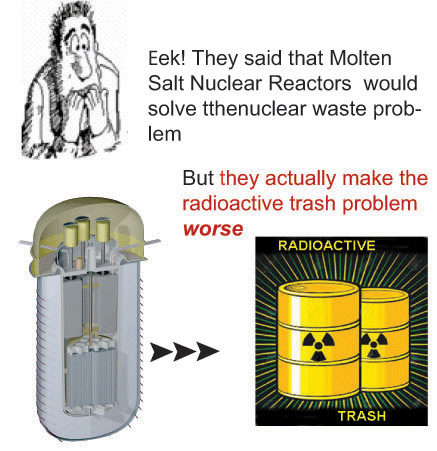
These are the most toxic materials ever produced by any industry. Of the hundreds of kinds of radioactive poisons contained in the used nuclear fuel, only a handful existed on Earth in significant amounts before 1939. They are created in large quantities inside nuclear reactors.
NWMO is owned by the same companies that make the radioactive poisons in the first place – and they have no intention of stopping. They want to keep right on mass-producing the highly dangerous byproducts indefinitely. Because they have to wait 30 years before moving these deadly wastes – they are literally and figuratively “too hot” to move sooner — there will always be a catastrophic amount left unburied at the surface no matter how fast they bury the older, somewhat cooler wastes.
Meanwhile they will be burdening communities with a permanent radioactive legacy, including contamination caused by unpacking and repackaging millions of embrittled fuel bundles right at the surface, beside the proposed waste dump. Any damage to any of these fuel bundles during handling, even small cracks, will allow radioactive materials to escape and some of it will inevitably enter the sir we breathe, the water we drink, the food we eat, or the soil we walk on.
New reactors are untested, exorbitantly expensive, and will take 10 to 20 years to become available, if ever. They are a DDD = Dirty, Dangerous Distraction from the real job of cutting greenhouse gases now, not 10 years from now. Energy efficiency and renewables can be implemented in a single building season. Wind and solar and efficiency measures are far cheaper and much faster to implement than new nuclear.
When your house is on fire, it is time to grab a bucket or a fire hose and pour water on it – out the fire out! This is no time to sit down and design a new, improved sprinkler system for future use.
Climate change is here now. Action is urgent.
Investing in new nuclear plants is just “kicking the can down the road”. Canada’s Environment Commissioner points out that Canada has the worst record for fighting climate change of any country in the G7, as our greenhouse gas emissions have increased steadily since Trudeau was first elected in 2915. Five of the G7 countries have reduced their GHG emissions, while the sixth has increased GHG emissions at a much slower rate than Canada has.
To invest in unproven and dangerous nuclear plants now will guarantee that no progress will be made for at least 10 to 20 years, minimum. And it will give us more radioactive waste, much of it even more dangerous than the waste we already have. Can we afford to encourage this kind of behaviour with lavish government subsidies?
Small modular reactors not the solution
Small modular reactors not the solution – German nuclear authority assessments,
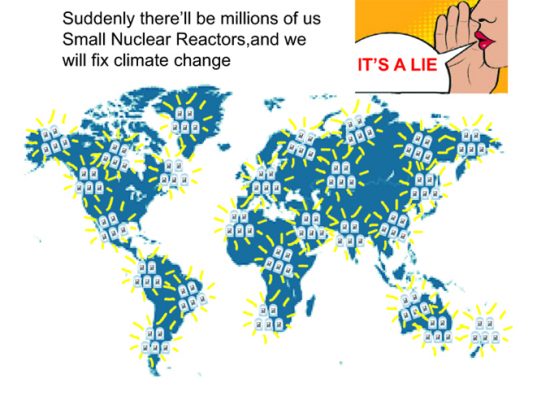
NEWS10 Mar 2021, Kerstine Appunn, Using a large fleet of small modular reactors (SMR) to secure climate neutral electricity supply in the future – as proposed by billionaire and philanthropist Bill Gates – poses many unsolved problems and security risks, two researcher assessments commissioned by the Federal Office for the Safety of Nuclear Waste Management (BASE) have found according to a report by Süddeutsche Zeitung (SZ). SMR proponents claim that, once produced in bulk, these small plants are cheaper and safer thanks to advanced reactor designs and can be operated with converted short-lived radioactive materials, solving the waste problem. But the two reports, seen by SZ, conclude that SMR “carry enormous risks with regard to the proliferation of weapons-grade materials and will probably never be as cheap as their advocates claim”, Michael Bauchmüller writes.
The paper by the Institute for Applied Ecology (Öko-Institut) found that in order to replace the 400 or so large reactors today, “many thousands to tens of thousands of SMR plants” would have to be built. But this raises questions for proliferation, the spread of dangerous nuclear material.
The second assessment by researchers from the Institute for Safety and Risk Sciences, at the Vienna University of Natural Resources and Applied Life Sciences, on nuclear waste aspects of SMR found in three scenarios that a repository for nuclear waste would remain necessary, and that the amount of low and medium level radioactive waste would increase “massively” during the dismantling of nuclear facilities.
Germany will shut down its last nuclear power plant by the end of 2022, according to the government’s phase-out legislation which is supported by a majority of the population. After the nuclear disaster in Fukushima ten years ago, Angela Merkel’s government decided to accelerate the phase-out of nuclear power in Germany where opposition to nuclear plants was one of the key causes leading to the founding of the country’s Green Party. Nuclear power is compensated for by expanding renewable sources wind, solar PV and biogas, as Germany strives for a climate neutral power supply by 2040 or 2050 at the latest.
Newly released Government documents reveal safety, terrorist, dangers of Scotland’s nuclear power stations
Leaks from Scotland’s nuclear power plants had the potential to be as
dangerous as terrorist attacks, ministers in Jack McConnell’s
administration were warned.
Newly released government documents reveal that
concerns were raised about the possibility of accidents at atomic
facilities. There are currently two nuclear power stations north of the
border: Hunterston B, which is due to cease operation early next year, and
Torness, which is scheduled to close in 2030.
Both are operated by the French energy company EDF. Minutes from the Scottish ministerial group on
civil contingencies from March 2005 have been released and posted online.
They contained gloomy forecasts, stating: “The threat from terrorism, in
terms of conventional and Chemical Biological Radiological Nuclear (CBRN)
attacks, remains at a historically high level. ”
The Scottish Conservatives and Scottish Labour have both backed nuclear power to play a role in easing
the country’s reliance on fossil fuels. Last week Anas Sarwar, the Labour
leader, said nuclear should be “part of the mix” of a “diverse energy
supply”. Stuart McMillan, the SNP MSP for Greenock and Inverclyde, said:
“We have been absolutely clear about our opposition to building new
nuclear power plants under current technology.
Times 28th Nov 2021
https://www.thetimes.co.uk/article/warning-over-leaks-scared-scottish-labour-off-nuclear-mb7r2ctc8
1 This Month



19 November – Webinar – The Reality of Reprocessing
Time: 11:00 AM Pacific Time (US & Canada) / 2:00 PM Eastern / 7:00 PM UK / 8:00 PM CET
Register for the Zoom Event Here



Shut down the radiation-damaged Heysham nuclear reactors now
To see nuclear-related stories in greater depth and intensity – go to https://nuclearinformation.wordpress.com

Say No to NASA’s Reckless Nuclear Reactor on the Moon
Say No to NASA’s Reckless Nuclear Reactor on the Moon
-
Archives
- November 2026 (74)
- October 2026 (302)
- September 2026 (339)
- August 2026 (330)
- July 2026 (355)
- June 2026 (287)
- May 2026 (306)
- April 2026 (356)
- March 2026 (251)
- February 2026 (267)
- January 2026 (308)
- December 2025 (358)
-
Categories
- 1
- 1 NUCLEAR ISSUES
- business and costs
- climate change
- culture and arts
- ENERGY
- environment
- health
- history
- indigenous issues
- Legal
- marketing of nuclear
- media
- opposition to nuclear
- PERSONAL STORIES
- politics
- politics international
- Religion and ethics
- safety
- secrets,lies and civil liberties
- spinbuster
- technology
- Uranium
- wastes
- weapons and war
- Women
- 2 WORLD
- ACTION
- AFRICA
- Atrocities
- AUSTRALIA
- Christina's notes
- Christina's themes
- culture and arts
- Events
- Fuk 2022
- Fuk 2023
- Fukushima 2017
- Fukushima 2018
- fukushima 2019
- Fukushima 2020
- Fukushima 2021
- general
- global warming
- Humour (God we need it)
- Nuclear
- RARE EARTHS
- Reference
- resources – print
- Resources -audiovicual
- Weekly Newsletter
- World
- World Nuclear
- YouTube
-
RSS
Entries RSS
Comments RSS

