Inherent design flaw in EPRs (European Pressurised or Evolutionary Power Reactors) casts doubt on future of UK’s Hinkley and Sizewell nuclear projects.
The Nuclear Free Local Authorities network (NFLA) has been alarmed to
receive a French scientific report that a radioactive leak recently
reported by the operators of a Chinese nuclear power plant could signify a
potentially fatal design flaw in new reactors planned for the UK.
In June 2021, nuclear operator, Framatome, a subsidiary of French-state owned power
utility, EDF, reported a leak of radioactive gas at the Taishan 1 nuclear
power plant in China. It is still unclear what the cause was, but a rupture
of the uranium rods within the reactor core as a result of abnormal wear
and tear was suspected.
Now the French Commission for Independent Research
and Information on Radioactivity (Criirad) has reported to the French
Nuclear Safety Authority that a problem with the design of the vessel
causes early wear in the reactor, that this inherent design flaw is common
to all EPRs (for European Pressurised or Evolutionary Power Reactors), and
that the accident at Taishan ‘raises serious questions in terms of
nuclear safety and radiation protection, both for plant workers and for
residents.
Although French worries revolve around the future safety of the
Flammaville 3 EPR, the NFLA is also gravely concerned that the latest news
puts into question the future safety of EPRs planned for the UK. An EPR to
the same design is currently under construction at Hinkley Point C in
Somerset and there is a further proposed plant at Sizewell, Suffolk.
NFLA 7th Dec 2021
Analysis: Small Modular Reactors Are Decades Away. That Suits the Fossil Lobby Just Fine.

Perhaps it is no coincidence that the fossil fuel lobby in all three countries is keen to support nuclear power as “one of the answers to climate change.” Unlike renewables that can be deployed quickly, new nuclear power is decades away, providing breathing space for a dying industry to go on exploiting fossil fuels while nuclear power plants are built.
Analysis: Small Modular Reactors Are Decades Away. That Suits the Fossil Lobby Just Fine. https://www.theenergymix.com/2021/12/01/analysis-small-modular-reactors-are-decades-away-that-suits-the-fossil-lobby-just-fine/December 1, 2021
Primary Author: Paul Brown @pbrown4348 Media outlets and the energy journalists employed by them seem to have lost their critical faculties when it comes to writing about small modular nuclear reactors (SMRs), according to critics who think the industry has no hope of delivering on its promises to build a new generation of power stations.
In the build-up to the climate talks at COP 26 in Glasgow, through the negotiations and afterwards, small modular reactors were repeatedly discussed enthusiastically in newspaper articles, government announcements, and by the nuclear industry.
In every article or press release these reactors, which in the UK have yet to leave the drawing board, were touted as a vital part of Britain’s efforts to reach zero emissions by 2050. The same treatment has been given to similar plans in Canada, France, and the United States.
Oil Price reported Rolls Royce, the British engineering giant, was “breathing life back into the nuclear industry” by promising the first reactor in operation by the early 2030s and 10 by 2035.
After months of hype, having been given £210 million of British government money and raised £250 million from private investors, Rolls Royce has finally applied to the UK licencing authority to have its design approved so construction can begin.
Rolls-Royce SMR has been established to deliver a low-cost, deployable, scalable, and investable program of new nuclear power plants,” said CEO Tom Samson. “Our transformative approach to delivering nuclear power, based on predictable factory-built components, is unique, and the nuclear technology is proven. Investors see a tremendous opportunity to decarbonize the U.K. through stable baseload nuclear power, in addition to fulfilling a vital export need as countries identify nuclear as an opportunity to decarbonize.”
Meanwhile, campaigners and climate policy specialists at the Glasgow talks were looking for fast, deep cuts in carbon emissions before 2030, to enable the planet to have a chance of staying below 1.5°C. They cast Rolls-Royce’s plans, which have been re-announced repeatedly over several months, as another prime example of “greenwash” or “kicking the can down the road.”
Nor did campaigners at Glasgow miss the fact that Britain, Canada, and the United States, the three countries with most enthusiasm for small modular reactors, have something else in common: Their wish to go on extracting oil and gas that scientists say needs to be kept in the ground if the 1.5°C limit is not to be breached.
Perhaps it is no coincidence that the fossil fuel lobby in all three countries is keen to support nuclear power as “one of the answers to climate change.” Unlike renewables that can be deployed quickly, new nuclear power is decades away, providing breathing space for a dying industry to go on exploiting fossil fuels while nuclear power plants are built.
Jonathon Porritt, chair of the U.K.’s Sustainable Development Commission between 2000 and 2009 and founder member of Forum for the Future, is scathing about the plans of the U.K. government and Rolls Royce.
He says taking the SMR through the Generic Design Assessment process takes at least four years, more likely five, and even if it passes it will take years to build, given the need to find sites and seek planning permission amid likely public opposition.
To be generous, Porritt said, it would be 2035 before the first was commissioned, let alone the five to 16 reactors Rolls Royce wants to build.
“It is therefore of zero benefit in terms of meeting the (British) government’s own target of a 78% reduction in greenhouse gas emissions by 2035,” he said. “It doesn’t matter how many times ministers bang this particular drum, or how many times deplorably gullible journalists in the BBC, Financial Times, Times, and the Daily Telegraph suck it all up. Moonshine is still moonshine.”
“It’s all such a pathetic waste of time—and of taxpayers’ money,” he added. “Whatever the time scale, SMRs will never compete with renewables plus storage.”
Porritt went on to discuss tidal stream energy using undersea turbines rather like wind turbines, which two British companies are developing with some success, and the even greater potential of using the tidal range—the height difference between low and high tide—to generate electricity to generate electricity through traditional turbines. Since Britain has the second-highest tides in the world after Canada and is surrounded by the sea, it has huge potential—but is ignored by the U.K. government.
“If our government was genuinely serious about energy security (instead of finding ways of propping up Rolls-Royce to support our nuclear weapons program), tidal power would be top of its list,” Porritt concluded.
Not all publications, however, agree with the mainstream British press about nuclear power. Under the headline “Nuclear Power Won’t Save the World—It Won’t Even Help”, published in the Green Energy Times, climate writer and retired computer engineer George Harvey said the cost estimates and timetables for nuclear power were never realistic.
“All told, we might say that putting money into nuclear power goes beyond being a monumental waste,” he wrote. “It detracts from the overarching issue of dealing with climate change by making that money unavailable for dealing with the problem using less expensive, more reliable energy that can be built far more quickly.”
Norway faces up to fast increasing radiation risks. Drones monitor the nuclear ships, icebreakers, submarines that clutter the Arctic
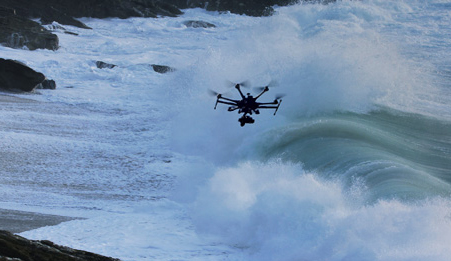
Norway deploys radiation drones along its coast amidst nuclear emergency concerns
Five Coast Guard ships are soon to carry drones with sensors capable of detecting radioactivity in case of a maritime accident involving a potential release from a reactor-powered civilian or military vessel. Barents Observer, By
Thomas Nilsen, December 03, 2021 A sharp increase in nuclear-powered vessels and ships with radioactive materials pose an increasing risk of accidents, a recent radiological- and nuclear risk assessment study for the Arctic Council concludes.
The risk is moderate and increasing in regards to nuclear-powered vessels and floating nuclear power plants, the report reads.
Now, authorities take action and deploy drones with radiation detectors on board Norway’s fleet of five Inner Coast Guard patrol vessels, from the North Sea region in the south to the Barents Sea in the north.
The danger is obvious. A worst-case scenario is a nuclear-powered vessel with a reactor leakage drifting at sea or running aground with a wind direction towards populated areas. In northern Norway, nine out of ten inhabitants live less than four kilometers from the sea.
A drone can help measure levels of radiation in close vicinity to the vessel in distress without exposing any of the emergency response teams to danger. The Coast Guard is already on 24/7 watch and plays an important role in emergency preparedness.
Nuclear-powered icebreakers are more frequently sailing between the yard in St. Petersburg and their homeport in Murmansk, like this weekend when the newest icebreaker, the “Arktika“ sails around Scandinavia a few nautical miles off the coast.
The civilian nuclear-powered “Sevmorput” is also regularly sailing between the Far East and St. Petersburg via the coasts of Siberia, Norway, Sweden, Denmark, Poland, Estonia and Finland loaded with seafood and other products. The ship is 33 years old and is not allowed to make port calls to countries outside Russia.
Every now and then, cargo vessels bring spent nuclear fuel or radioactive substances to the port of Murmansk.
Navy submarines
Caused by increased military tensions, both NATO and Russian nuclear submarines are more frequently patrolling the strategically important North Atlantic. Allied submarines even make port calls to harbors in Norway, like this spring when “USS New Mexico” came to Tromsø in a high-profile visit.
Detailed emergency response plans were made ahead of the submarine’s visit. For Norway, which has a comprehensive network of radiation detectors on land, the challenge however is what to do if something happens at sea. …………………….
Submarines and icebreakers
Norway’s Inner Coast Guard includes the five vessels “Nornen”, “Tor”, “Heimdal”, “Njord” and “Farm”. The latter has Kirkenes as homeport and sails the waters closest to Russia’s Kola Peninsula where several tens of nuclear-powered submarines are based as well as being home to the increasing Arctic fleet of nuclear-powered icebreakers.
Two brand new icebreakers, powered by two reactors each, will be added to the fleet before the end of the year. The first is this weekend en route along the coast of Norway from St. Petersburg to Russia’s ice-covered waters around the Yamal Peninsula and the Kara Sea. ………..
Circumpolar cooperation
Two years ago, the Norwegians and Americans sailed north to Svalbard together with Russian experts from the emergency response unit of Rosatom, working on remote-controlled systems for measuring radiation in case of accidents.
Collaboration on nuclear accident preparedness is a priority for all circumpolar nations which agree that shared resources in sparsely populated areas benefit all………
“We never know where accidents might happen. But with the Coast Guard and their skills on operating drones, we are about to become world-class in preparedness,” Aas-Hansen elaborates. …….
“The new drone detectors for radiation are unique. What we learn from this is something we absolutely will share with other nations,” says Øyvind Aas-Hansen. He underlines that cross-sector collaboration with other agencies in Norway has brought the project forward………
Large nuclear exercise in 2022
In May 2022, the partners will test the systems in a large international Arctic radiation exercise in the area around Bodø, northern Norway…….
Sharp increase in reactors
The Barents Observer has published an overview (pdf) listing the increasing number of reactors in the Russian Arctic. The paper is part of Barents Observer’s analytical popular science studies on developments in the Euro-Arctic Region.
According to the list, there are 39 nuclear-powered vessels or installations in the Russian Arctic today with a total of 62 reactors. This includes 31 submarines, one surface warship, five icebreakers, two onshore and one floating nuclear power plant.
Looking more than a decade ahead, the number of ships, including submarines, and installations powered by reactors is estimated to increase to 74 with a total of 94 reactors, maybe as many as 114. Additional to new icebreakers and submarines already under construction, Russia is brushing dust of older Soviet ideas of utilizing nuclear power for different kinds of Arctic shelf industrial developments, like oil- and gas exploration, mining and research.
Although Russia’s existing “Akademik Lomonosov” and four planned floating nuclear power plants are to operate on the coast of the Chukotka Peninsula thousands of kilometers east of the European Arctic, maintenance, testing and change of spent nuclear fuel elements will take place at the Atomflot base in Murmansk, a city with about 300,000 inhabitants a few hours drive from the border to Norway.
“By 2035, the Russian Arctic will be the most nuclearized waters on the planet,” the paper reads.
Also, existing icebreakers and submarines get lifetime prolongation. The average age of the Northern Fleet’s nuclear-powered submarines has never been older than today. Several of the submarines built in the 1980s will continue to sail the Barents Sea and under the Arctic ice cap until the late 2020s.
Serious accidents happen
In recent years, two serious accidents in Russia’s northern waters have shaken the world.
On July 1, 2019, a fire broke out on the top-secret deep-diving submarine Losharik on 60 nautical miles from Russia’s border to Norway. The submarine was at the time working on the seabed in the Motovkiy Bay, just north of the important navy bases of the Northern Fleet. All 14 sailors on board were killed in the fire that likely started in the batteries.
Losharik was powered by one nuclear reactor and operated on a secret mission for GUGI, the Main Directorate for Deep-Sea Research, a top-secret unit directly subordinated the General Staff of the Russian Armed Forces.
No leakages of radiation were reported at the time.
Later that summer, on August 8, a serious radiation accident happened in the waters just outside Nenoksa naval missile test site on the southern shores of the White Sea.
Five Rosatom experts were killed and at least three others injured as a Burevestnik missile exploded. The Burevestnik is a nuclear-powered cruise missile currently under development by the Armed Forces. The small reactor is aimed at giving the missile “unlimited range”.
Shortly after the blast, radiation levels in the nearby city of Severodvinsk were measured to be several times higher than background for about half an hour, the Barents Observer reported. The data was based on the public automated monitoring system in Severodvinsk with eight sensors in town and at the Zvezdockha shipyard.
While normal background in the town with a population of 190,000 is around 0.11 µSv/h (microsievert per hour), the levels measured at the monitor on the Lomonosov Street near Lake Teatralnoye peaked at 2 µSv/h, nearly 20 times higher gamma radiation than normal. That, though, is still way within permissible levels for population exposure.
Fears more accidents
In its annual threat assessment report the following year, Norway’s Intelligence Service warned that more accidents with Russia’s reactor-powered weapons systems could happen.
“The development will bring, additional to the military challenges, also challenges related to both environment and security. In 2019, about 25 Russians were killed during military activity near Norway,” the Intelligence Service Director Morten Haga Lunde said and added:
“I consider the risk for more such unintended incidents in our neighborhoods to be big in the years to come.”
In the next extradition court case for Julian Assange, we can expect the judge there to be very biased against Assange

Now the most powerful judge in England and Wales, Burnett will soon rule on Assange’s extradition case. The founder of WikiLeaks faces life imprisonment in the US. ……………………
As minister, Duncan did not hide his opposition to Julian Assange, calling him a “miserable little worm” in parliament in March 2018.
Duncan watched UK police pulling the WikiLeaks publisher from the Ecuadorian embassy via a live-feed in the Operations Room at the top of the Foreign Office.
He later admitted he was “trying to keep the smirk off [his] face”, and hosted drinks at his parliamentary office for the team involved in the eviction.
ASSANGE JUDGE IS 40-YEAR ‘GOOD FRIEND’ OF MINISTER WHO ORCHESTRATED HIS ARREST
Julian Assange’s fate lies in the hands of an appeal judge who is a close friend of Sir Alan Duncan – the former foreign minister who called Assange a “miserable little worm” in parliament. DECLASSIFIED UK
MATT KENNARD AND MARK CURTIS 2 DECEMBER 2021 LORD CHIEF JUSTICE IAN BURNETT, THE JUDGE THAT WILL SOON DECIDE JULIAN ASSANGE’S FATE, IS A CLOSE PERSONAL FRIEND OF SIR ALAN DUNCAN, WHO AS FOREIGN MINISTER ARRANGED ASSANGE’S EVICTION FROM THE ECUADORIAN EMBASSY.
The two have known each other since their student days at Oxford in the 1970s, when Duncan called Burnett “the Judge”. Burnett and his wife attended Duncan’s birthday dinner at a members-only London club in 2017, when Burnett was a judge at the court of appeal.
Now the most powerful judge in England and Wales, Burnett will soon rule on Assange’s extradition case. The founder of WikiLeaks faces life imprisonment in the US. ……………………
As minister, Duncan did not hide his opposition to Julian Assange, calling him a “miserable little worm” in parliament in March 2018.
In his diaries, Duncan refers to the “supposed human rights of Julian Assange”. He admits to arranging a Daily Mail hit piece on Assange that was published the day after the journalist’s arrest in April 2019.
Duncan watched UK police pulling the WikiLeaks publisher from the Ecuadorian embassy via a live-feed in the Operations Room at the top of the Foreign Office.
He later admitted he was “trying to keep the smirk off [his] face”, and hosted drinks at his parliamentary office for the team involved in the eviction.
Duncan then flew to Ecuador to meet President Lenín Moreno in order to “say thank you” for handing over Assange. Duncan reported he gave Moreno “a beautiful porcelain plate from the Buckingham Palace gift shop.”
“Job done,” he added………………………………. https://declassifieduk.org/assange-judge-is-40-year-good-friend-of-minister-who-orchestrated-his-arrest/
Nuclear power is a failure – former French Environment Minister

Yves Cochet: “The nuclear failure” Former Minister of the Environment. Against the recent projects announced by the President of the Republic for the revival of nuclear power in France, Yves Cochet, former Minister of the Environment, recalls how the history of this energy sector is marked by a
succession of setbacks.
Despite seventy years of nuclear energy research and development, nuclear energy remains a failure caused by a list of setbacks such that one is enough to destroy any prospect of lasting success. Nuclear power today only contributes 5% of global energy supply and 10% of electricity production, this share has been steadily declining for twenty-five years, while the share of renewable electricity has now surpassed that of nuclear power.
Le Monde 4th Dec 2021
https://www.lemonde.fr/idees/article/2021/12/04/yves-cochet-l-echec-du-nucleaire_6104683_3232.html
New Name- Same Scam. NuScale small nuclear reactors become ‘VOYGR”, universities co-opted.

NuScale SMR plants become VOYGR 03 December 2021,
NuScale Power’s small modular reactor (SMR) power plants are to be named VOYGR, the company has announced. The company is working towards commercialising the technology and aims to be ready to deliver the first VOYGR plant to public power consortium Utah Associated Municipal Power Systems’ Carbon Free Power Project by the end of the decade………
UAMPS earlier this year said it expects to submit a combined licence application for the Carbon Free Power Project – currently envisaged as a six-module plant – to the NRC in 2024. The plant is to be located on a site at the US Department of Energy’s (DOE’s) Idaho National Laboratory…….
Training centre

NuScale has now opened a third university-based centre to provide training and outreach opportunities through simulated, real-world nuclear power plant operation scenarios. The NuScale Energy Exploration (E2) Center, opened in collaboration with the Texas A&M Engineering Experiment Station, is at the Center for Advanced Small Modular and Micro Reactors located in College Station, Texas, and uses state-of-the-art computer modelling within a simulation of the control room of a 12-unit NuScale power plant control.
Previous E2 Centers were opened at Oregon State University, in November 2020, and at the University of Idaho, in August 2021. The centres are supported by a 2019 DOE grant to broaden the understanding of advanced nuclear technology in a control room setting. https://www.world-nuclear-news.org/Articles/NuScale-SMR-plants-become-VOYGR
France joins the Small Nuclear Reactor frenzy, bringing out its odd version ”NAAREA”

French engineering group Assystem has signed a cooperation agreement with
newly-created French micro-reactor developer Naarea to build its
ultra-compact eXtra Small Modular Reactor (XSMR). Dassault Systèmes is to
supply Naarea with a cloud-based platform on which to virtually design the
1 to 40 MW molten salt reactor. Naarea expects the first units of XSMR to
be produced by 2030.
The company says its ultra-compact molten salt reactor uses “the untapped potential of used radioactive materials, and thorium, unused mining waste.” Naarea noted, “The current stocks of these two wastes will supply the energy needs of humanity for thousands of years, and reconcile humanity with its future.”
World Nuclear News 3rd Dec 2021
https://www.world-nuclear-news.org/Articles/Assystem-to-cooperate-with-Naarea-on-micro-reactor
Canada to get its version of the mythical beast – the Small Nuclear Reactor – GE Hitachi Nuclear Energy (GEH) BWRX-300


Ontario Power Generation (OPG) will build a GE Hitachi Nuclear Energy (GEH) BWRX-300 small modular reactor (SMR) at its Darlington Nuclear Station in Clarington, Ontario, marking a major triumph for the nuclear vendor in a stiff competition for the much-watched utility-scale project.
OPG announced the selection of the GE Hitachi BWRX-300 SMR over competitors X-energy and Terrestrial Energy in a live stream on Dec. 2. The utility said it will now work with GE Hitachi on the SMR engineering, design, planning, preparing the licensing and permitting materials, and performing site preparation activities. The companies are targeting a “mutual goal of constructing Canada’s first commercial, grid-scale SMR, projected to be completed as early as 2028.” Site preparation, which will include
“installation of the necessary construction services,” is slated to begin in the spring of 2022, pending appropriate approvals. OPG additionally said it will apply to the Canadian Nuclear Safety Commission
(CNSC) for a License to Construct the SMR by the end of 2022.
Power Mag 2nd Dec 2021
US Ex-Senator warns – US, NATO allies risking ‘all-out nuclear conflict’ with Russia
US, NATO allies risking ‘all-out nuclear conflict’ with Russia: Ex-senator, Press TV Sunday, 05 December 2021 The United States’ belligerent policy toward Russia is driven by an amorphous array of bureaucrats and lobbyists, says a former US state senator, adding that Washington does not comprehend the gravity of its provocative moves in siding with Ukraine.
The United States, its NATO allies and Ukraine accuse Moscow of massing troops near Ukraine’s border for a possible invasion. The US also claims that NATO allies are “prepared to impose severe costs” on Moscow if it attempts an invasion.
Russia says there is no such plan, but it has warned against any provocation from Ukraine that could trigger such an invasion.
“It is not clear that Western officials understand the gravity of what they are doing. It is unlikely that Russia can accept stationing of nuclear weapons or even large-scale movements of NATO troops into Ukraine,” Richard H. Black, a former state senator from Virginia, told Press TV.
“Ukraine is not a part of NATO, but the alliance increasingly talks of war to help Ukraine recover areas that have seceded from it. If NATO were to make war against Russia, the chances of escalation into an all-out nuclear conflict would be high,” he added.
Black pointed the finger of blame at Ukraine for the escalation between Moscow and NATO, stressing that the US-led military alliance’s talk of war is aimed at helping Kiev recover the areas of Donetsk and Luhansk in the Crimean Peninsula, which rejoined Russia in a 2014 referendum.
“The Ukrainian army is moving aggressively against this small pocket of Russian-speaking people. Ukraine has deployed heavy mortars and artillery to shell the enclave, and has carried out 200 unprovoked attacks in recent weeks,” the former senator said………… https://www.presstv.ir/Detail/2021/12/05/672022/Russia-policies-driven-US-bureaucrats-powerful-lobbyists
More delays and extra $1 billion expected for Georgia nuclear plant
More delays and extra $1 billion expected for Georgia nuclear plant, https://newschannel9.com/news/local/more-delays-and-extra-1-billion-expected-for-georgia-nuclear-plant by JEFF AMY Associated PressMonday, December 6th 2021–ATLANTA (AP) — Monitors say even the most recent pushback of completion dates for two new nuclear reactors in Georgia isn’t enough to account for all the delays and increased costs they see coming.
An engineer paid by the Georgia Public Service Commission predicts that the third reactor at Plant Vogtle near Augusta won’t the most recent deadline of September 2022 set by Georgia Power Co. Don Grace instead says ongoing delays suggest a range of November 2022 to February 2023.
Grace says the fourth reactor might not come online until sometime in late 2024.
Grace says more delay could mean $1 billion more in spending on a project already set to cost $28.7 billion.
Taiwanese Group walks for 30 hours to protest nuclear power
SYMBOLIC MARCH: The demonstrators represented the number of boroughs that would be evacuated if there were a disaster at the Fourth Nuclear Power Plant
- By Yang Mian-chieh / Staff reporter, with CNA A group of 21 people demonstrating against nuclear power completed their march in Taipei yesterday after beginning it in New Taipei City’s Gongliao District (貢寮) the day before.
They were joined by supporters as they reached their destination on Ketagalan Boulevard in front of the Presidential Office Building after nearly 30 hours of walking.
Organized by the National Nuclear Abolition Action Platform, the event was aimed at encouraging people to vote “no” in a referendum on Dec. 18 that asks whether the government should restart construction on the mothballed Fourth Nuclear Power Plant in Gongliao District.
The 21 demonstrators represented the 21 boroughs within an 8km radius of the power plant that would be required to evacuate in the event of a nuclear disaster: 11 boroughs in Gongliao District, eight in New Taipei City’s Shuangsi District (雙溪) and two in Yilan County’s Toucheng Township (頭城), the National Nuclear Abolition Action Platform said.
Separately yesterday, a group rallied in front of the Legislative Yuan in Taipei, urging people to vote “yes” for the referendum question on whether a liquefied natural gas (LNG) terminal project should be relocated to protect algal reefs off Taoyuan’s Guanyin District (觀音).
They called for the government to review the nation’s energy policy rather than resort to “emotionally blackmailing the public with fears of a power shortage.”
Environmentalists have said that the algal reef took at least 5,000 years to form and is the largest of its kind in the world.
It also has rich biodiversity, and is home to the endangered coral species Polycyathus chaishanensis and hammerhead sharks that are listed on the International Union for Conservation of Nature Red List of Threatened Species, they said…….
…….. The Democratic Progressive Party has launched a promotional campaign urging people to vote “no” on all four items,…. https://www.taipeitimes.com/News/taiwan/archives/2021/12/06/2003769106
NATO foreign ministers meeting ends with veritable declaration of war
NATO foreign ministers meeting ends with veritable declaration of war, more https://antibellum679354512.wordpress.com/2021/12/01/nato-foreign-ministers-meeting-ends-with-veritable-declaration-of-war/
Rick RozoffAnti-bellum
There is no transcript that includes the question-and-answer session that followed NATO Secretary General Jens Stoltenberg’s comments. But they can be heard here. Excerpts from Stoltenberg’s closing statement are featured below.
That the NATO foreign ministers meeting was held in a member state bordering Belarus and Russia at this critical juncture is significant in its own right; that the main focus of the meeting was on Ukraine and Georgia and their “territorial integrity” is eerily reminiscent of statements and land claims last made in Europe in 1938-1939.
Stoltenberg;s comments about NATO not tolerating any nation establishing and maintaining a sphere of influence approaches the surreal given the Pentagon turning all of Europe except Belarus and Russia into satrapies under the NATO aegis. In denouncing the very prospect of Russia having any influence in nations that border it and that not long ago were part of the same country, Stoltenberg became demonstrably and uncharacteristically condemnatory and bellicose, pounding the podium repeatedly. In general, the NATO secretary general’s statements – diktat, ultimata and threats – over the past few weeks, reaching a crescendo at the Riga meeting, may well be the most inflammatory ones ever made by a NATO leader.
During the session with journalists a comment is made by a reporter that unless Bosnia is press-ganged into NATO “we will have Russian forces there.” Along with similar statements regarding Moldova, the war front is constantly expanding from the Baltic-to-Black Sea front further inland to the Balkans and elsewhere.
Safety fault in China’s European Pressurised Water Reactor (EPR) does not bode well for UK’s Hinkley Point C and Sizewell nuclear projects

Key safety components in the UK’s first new nuclear power station for 30 years may need to be redesigned and the project could be delayed after defects were detected at a similar reactor in China.
The £22 billion Hinkley Point C plant in Somerset is already well over budget and a decade late but the defects mean that the scheduled date for starting electricity generation, of June 2026, may have to be revised. The same power plant design is due to be used for another nuclear power station, Sizewell C in
Suffolk, which is planned but has not yet been approved.
An investigation is still under way into the cause of the problems with the plant in Taishan, in the southern Chinese province of Guangdong. It was shut down in August after reports of damage to fuel rods, which hold nuclear materials used to fuel the reactor.
The plant is operated by China General Nuclear Power Group and owned in partnership with the French state-controlled EDF, the two companies involved in building Hinkley Point C.
The Commission for Independent Research and Information on Radioactivity, a French association
created in the aftermath of the Chernobyl disaster, said that a whistleblower had reported that a design flaw in the reactor pressure vessel could be the cause of the problem at Taishan. An industry source
told The Times that the investigation was likely to show that the pressure vessel was “demonstrably safe” but it might also show that design changes were needed.
Paul Dorfman, a nuclear expert at the University of Sussex, said: “If the news we are hearing from the Taishan EPR [European pressurised reactor] is right, then it’s beginning to look like there’s a potential generic fault with the key safety mechanism of the EPR reactor design itself. “If so, this is serious news for ongoing construction at Hinkley Point C and plans for Sizewell C.
Times 1st Dec 2021
https://www.thetimes.co.uk/article/ef84adce-5215-11ec-8d72-b8ab431649b1
The nuclear fuel chain – uranium mining to radioactive waste problem- European Commission to decide if it is ”green” and”sustainable”
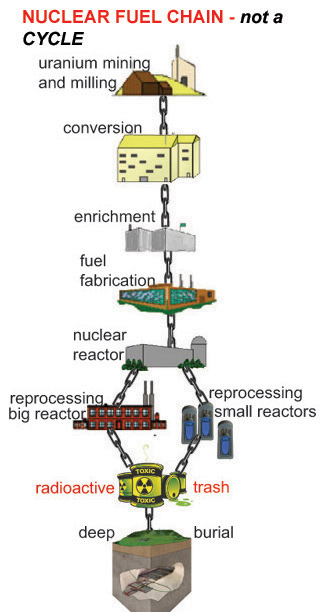
The European Commission is preparing to settle whether nuclear and natural gas are “green” investments in an update to the EU’s sustainable finance taxonomy expected next week, according to several sources. The list will clarify whether nuclear energy generation, waste disposal or fuel supply can be classified as sustainable activities for investors, EU energy commissioner Kadri Simson told a nuclear conference in Paris on Tuesday. French economy minister Bruno Le Maire told the same conference he was convinced France could persuade Germany – which is phasing out its nuclear generation — to agree to including nuclear in the list. Montel 30th Nov 2021 https://www.montelnews.com/news/1277923/ec-set-to-clarify-nuclear-gas-green-status-next-week |
Urgent need to correct exaggerated claims about China’s nuclear arsenal and its intentions.

In the months ahead, as the Biden administration attempts to draft a new Nuclear Posture Review and Congress votes on a proposed $715 defense bill for FY 2022, we can expect to hear a lot more about China’s “breathtaking” nuclear buildup. If we are to reduce the risks of nuclear war and lower the costs of nuclear weapons procurement, we must challenge such assertions and provide a balanced, realistic assessment of Chinese developments. We must also urge Biden to work with Xi in developing the “guardrails” that both agree are necessary to avert catastrophe.
Placing “Guardrails” on the US-China Nuclear Competition, A failure to challenge inflated claims about China’s nuclear arsenal will have serious and painful consequences. The Nation By Michael T. Klare , 1 Dec 21,
With the United States and China both speeding up the acquisition of new nuclear weapons, some analysts predicted that Presidents Joe Biden and Xi Jinping would discuss limits on those munitions during their virtual summit on November 15. However, they barely touched on the matter, agreeing only that both sides should take steps to prevent the unintended escalation of future crises. As Biden told Xi during their three-hour exchange, the two sides need “commonsense guardrails to ensure that competition does not veer into conflict.” Yet no plans were made for negotiations leading to the adoption of such measures, so the US-China arms race will only gain further momentum.
Historically, talk of nuclear arms racing has applied almost exclusively to the United States and the Soviet Union, and now Russia. Indeed, the US and Russia still possess the overwhelming majority of the world’s nuclear warheads, along with its most advanced nuclear delivery systems. But now China—long a minor player in the nuclear arena—appears to be bolstering its capabilities, while the United States is developing new weapons with the Chinese, as well as the Russians, in mind. The risk of a war between the US and China has also been growing, especially due to tensions over Taiwan, increasing the danger of nuclear weapons use.
Fueling these dangerous trends is a steady stream of alarmist pronouncements by US officials about China’s nuclear buildup. The Chinese are engaged in a “remarkable expansion of [their] nuclear and strategic capabilities,” Adm. Charles A. Richard, commander of the US Strategic Command, told the House Armed Services Committee last April. As a result of these initiatives, “China is capable of executing any plausible nuclear employment strategy regionally now, and soon will be able to do so at intercontinental ranges.”
But while China is certainly undertaking the modernization of its relatively old and meager nuclear arsenal—as compared to those of Russia and the United States—it can hardly be described as undertaking a “remarkable expansion” of its arsenal nor is it capable of “executing any plausible nuclear employment strategy” in a US-China war. Yet these inflated claims by senior Pentagon officials are helping spur Congress—which doesn’t really require much nudging—to finance a vast expansion of America’s own nuclear capabilities.
A failure to challenge these inflated claims and to slow the burgeoning US-China nuclear competition will have serious and painful consequences for both sides. If nothing else, it will lead to the massive allocation of resources for nuclear weapons procurement, with no end in sight. Any hope of trimming the Pentagon’s proposed $1.7 trillion modernization of all three “legs” of the nuclear “triad”—intercontinental ballistic missiles (ICBMs), submarine-launched ballistic missiles (SLBMs), and long-range strategic bombers—will disappear. And the emphasis on ever-more-capable conventional weapons, combined with new developments in cyber, space, and surveillance technology, will increase the likelihood that future crises trigger an unrestrained escalatory spiral terminating in nuclear annihilation.
Fortunately, the US-China nuclear arms race is still at a relatively early stage, at least when compared to the long-running US-Soviet/Russian competition. It is possible, then, to conceive of measures that might constrain this contest before it gathers additional momentum. Before considering such measures, however, we must possess a clear understanding of this dynamic and dispel various misconceptions regarding China’s nuclear capabilities.
UNDERSTANDING CHINA’S NUCLEAR POSTURE
For starters, bear in mind that China currently maintains a relatively modest nuclear arsenal. In its latest tally of world nuclear stockpiles, the Stockholm International Peace Research Institute (SIPRI) calculated that China possessed approximately 350 nuclear warheads—a bit more than the number deployed by France (290), but a very small fraction of the 5,550 warheads possessed by the US and the 6,375 by Russia. China has also chosen to limit its arsenal of nuclear delivery systems. According to the Federation of American Scientists (FAS), it has deployed only about 100 ICBMs and 48 SLBMs, compared to 400 ICBMs and 336 SLBMs in the US inventory. China also has a few dozen heavy bombers, but none with a range or nuclear payload comparable to the US B-2 and B-52 bombers.
That China maintains such a modest strategic arsenal has long provided confirmation for Beijing’s claim that it seeks nuclear armaments solely to implement a “minimum deterrence” posture—one that requires sufficient weapons to survive an enemy first strike and deliver intolerable damage on the attacker but not enough to conduct a disarming first strike on an adversary.
China’s arsenal has remained relatively unchanged for several decades, but now is being substantially modernized—allowing US military officials to claim that it is engaged in a major expansion along with a shift in its weapons employment doctrine. China’s nuclear arsenal is expanding at a“breathtaking” rate, Admiral Richard declared in August, and will soon achieve a “strategic breakout,” allowing Beijing to execute “any plausible nuclear strategy” it wishes to pursue……………
In sum, the evidence for a vast and rapid buildup in Chinese nuclear capabilities is underwhelming, to say the least. Also lacking is any indication that Beijing has abandoned its “minimum deterrence” strategy. What recent Chinese developments do suggest, however, is that Chinese officials fear that their existing nuclear force is becoming increasingly vulnerable to a first strike—sometimes called a “counterforce” strike—and so must be strengthened in order to safeguard its retaliatory capability.
US NUCLEAR INITIATIVES AND CHINA’S RESPONSE
In contrast to China, the United States has long maintained that its nuclear forces should be capable of many functions beyond just “minimum deterrence.” Current doctrine, as encapsulated in the Nuclear Posture Review (NPR) of 2018, states that nuclear weapons could be employed in response to an overwhelming conventional, as well as a nuclear, attack on the United States; even a major cyber assault on the United States might justify such usage…………….
| Under these circumstances, China’s nuclear buildup can largely be viewed as an attempt to overcome the vulnerabilities of its deterrence force, ensuring that enough of its weapons can survive an enemy first-strike assault and penetrate enemy defenses. This would explain both of the developments noted above: the replacement of single-warhead missiles with multiple-warhead variants and the construction of multiple silo holes in the desert. By equipping their ICBMs and SLBMs with a number of independently targetable reentry vehicles (MIRVed missiles, in Pentagon-speak), the Chinese evidently hope to ensure that even if only a few of their weapons escape American missile defenses, those survivors will still be able to launch multiple warheads against US targets; likewise, by constructing hundreds of additional silos and moving their ICBMs from one to the other on a random basis, they can circumvent a US first strike. None of this, however, suggests an intent to acquire a US-style counterforce capability. TAKING ACTION NOW As suggested by this analysis, China’s nuclear modernization does not pose the same sort of threat to the United States as US nuclear and conventional initiatives pose to China. True, China is capable of inflicting catastrophic damage on this country in the event of a nuclear war, but it does not appear to be seeking a first-strike or damage-limiting capacity akin to that possessed by the United States. Nevertheless, the danger of a US-China war is growing, and any major confrontation between US and Chinese forces could result in colossal losses on one or both sides, precipitating the early use of nuclear weapons. This is the perfect time, then, for the Biden administration to seek talks with Beijing aimed at eliminating or curtailing weapons developments that are placing both countries at greater risk. The goal—at least in the early stages of such engagement—should not be the adoption of conventional arms control agreements, like those signed between the US and the USSR during the Cold War era. Rather, the two sides should engage in high-level talks aimed at identifying the greatest risks of precipitous or unintended escalation, and in devising strategies for minimizing those dangers. (Reportedly, the Biden administration has been considering the initiation of such talks with China, but there is no indication that formal plans have yet been made to proceed with this.) Such high-level conversations—sometimes called “strategic stability” talks—could focus, for example, on the expected deployment on both sides of numerous hypersonic missiles aimed at each other’s high-value targets, and pursue ways to curtail their numbers or mode of employment, to minimize the risk of rapid escalation. Both sides could also agree to eschew cyberattacks on each other’s nuclear command-and-control systems, with the same goal in mind. Mutual restraints could also be crafted to reduce the danger of escalation during a crisis, for example through limitations on the scale of air and naval maneuvers in the area surrounding Taiwan. In the months ahead, as the Biden administration attempts to draft a new Nuclear Posture Review and Congress votes on a proposed $715 defense bill for FY 2022, we can expect to hear a lot more about China’s “breathtaking” nuclear buildup. If we are to reduce the risks of nuclear war and lower the costs of nuclear weapons procurement, we must challenge such assertions and provide a balanced, realistic assessment of Chinese developments. We must also urge Biden to work with Xi in developing the “guardrails” that both agree are necessary to avert catastrophe. https://www.thenation.com/article/world/china-nuclear-competition/ Michael T. Klare, The Nation’s defense correspondent, is professor emeritus of peace and world-security studies at Hampshire College and senior visiting fellow at the Arms Control Association in Washington, D.C. Most recently, he is the author of All Hell Breaking Loose: The Pentagon’s Perspective on Climate Change. |
1 This Month



19 November – Webinar – The Reality of Reprocessing
Time: 11:00 AM Pacific Time (US & Canada) / 2:00 PM Eastern / 7:00 PM UK / 8:00 PM CET
Register for the Zoom Event Here



Shut down the radiation-damaged Heysham nuclear reactors now
To see nuclear-related stories in greater depth and intensity – go to https://nuclearinformation.wordpress.com

Say No to NASA’s Reckless Nuclear Reactor on the Moon
Say No to NASA’s Reckless Nuclear Reactor on the Moon
-
Archives
- November 2026 (74)
- October 2026 (302)
- September 2026 (339)
- August 2026 (330)
- July 2026 (355)
- June 2026 (287)
- May 2026 (306)
- April 2026 (356)
- March 2026 (251)
- February 2026 (267)
- January 2026 (308)
- December 2025 (358)
-
Categories
- 1
- 1 NUCLEAR ISSUES
- business and costs
- climate change
- culture and arts
- ENERGY
- environment
- health
- history
- indigenous issues
- Legal
- marketing of nuclear
- media
- opposition to nuclear
- PERSONAL STORIES
- politics
- politics international
- Religion and ethics
- safety
- secrets,lies and civil liberties
- spinbuster
- technology
- Uranium
- wastes
- weapons and war
- Women
- 2 WORLD
- ACTION
- AFRICA
- Atrocities
- AUSTRALIA
- Christina's notes
- Christina's themes
- culture and arts
- Events
- Fuk 2022
- Fuk 2023
- Fukushima 2017
- Fukushima 2018
- fukushima 2019
- Fukushima 2020
- Fukushima 2021
- general
- global warming
- Humour (God we need it)
- Nuclear
- RARE EARTHS
- Reference
- resources – print
- Resources -audiovicual
- Weekly Newsletter
- World
- World Nuclear
- YouTube
-
RSS
Entries RSS
Comments RSS

