Temporary spent nuclear fuel storage isn’t temporary.

It is difficult to believe the nuclear power industry and the federal government are so unethical that they would defer the difficult and dangerous task of spent nuclear fuel disposal to future generations of Americans. The present generation must find a permanent disposal solution.
Temporary spent nuclear fuel storage isn’t temporary https://www.santafenewmexican.com/opinion/my_view/temporary-spent-nuclear-fuel-storage-isnt-temporary/article_068d44e0-854c-11ec-b25d-a70bff5372b1.htmll By Dennis McQuillan, 13 Feb 22, The proposal to “store” spent nuclear fuel in New Mexico is a Trojan horse that will defeat the goal of geologically isolating this highly radioactive and chemically toxic material, and create hazards to future generations of Americans.
At face value, the plan is to consolidate up to 10,000 canisters of spent nuclear fuel from nuclear power plants across the United States, store them in New Mexico for decades or even a century, and transport them to an undetermined permanent disposal facility that the federal government will someday establish.
In reality, after more than six decades of using nuclear power to generate electricity and amassing 90,000 metric tons of spent nuclear fuel, neither the industry nor the federal government has established a permanent repository for the fuel. Moreover, after Nevada stakeholders rejected the Yucca Mountain site, federal funding and efforts to find another potential spent nuclear fuel repository ended in 2010.
The citizens of New Mexico have every reason to doubt that deposits at the interim storage facility would ever be moved. Even if a future repository is established, there is no guarantee the funding and determination to dig up and relocate 10,000 canisters of spent nuclear fuel would exist at that time.
What is certain is this: Spent nuclear fuel will remain dangerous for hundreds of thousands of years, and the interim storage facility will not provide geologic isolation.
As proposed, the fuel would be buried at depths less than 100 feet in young alluvium in a region with shallow groundwater, land subsidence and sinkholes, amid one of the most prolific oil patches in the nation. By contrast, radioactive waste generated by national defense activities is isolated 2,150 feet underground, in 250-million-year-old salt beds, at the Waste Isolation Pilot Plant. The proposed interim storage facility is geologically unsuitable even for a period of decades.
It is difficult to believe the nuclear power industry and the federal government are so unethical that they would defer the difficult and dangerous task of spent nuclear fuel disposal to future generations of Americans. The present generation has benefited from electricity generated by nuclear power, and the present generation must find a permanent disposal solution.
New Mexico executive agencies, Attorney General Hector Balderas, state Sen. Jeff Steinborn, Reps. Matthew McQueen, Tara Lujan and other state legislators, are working to stop this geologically unsound, dangerous, unethical and disingenuous proposal to “store” spent nuclear fuel in New Mexico. But federal action is necessary. Congress urgently needs to give the federal government a statutory directive, and funding, to complete the mission of finding a permanent repository for the geologic isolation of spent nuclear fuel. Dennis McQuillan is the former chief scientist of the New Mexico Environment Department and lives in Santa Fe.
USA’s plan – far right Ukrainian militia to attack Russia-speaking Donbass Region – drawing Russian support – USA then to claim Russia aggression
Al Ronzoni <aronzonijr@msn.com> wrote:
The World Socialist Website also confirms from sources in Donetsk that it actually looks like Ukraine will make the first move v. them and Luhansk. Then, if Russia responds in any way, that will constitute the “invasion,” then Menendez “Mother of All Sanctions” will be imposed and Nord Stream 2 will be cancelled. Hell, even if Russia doesn’t actually do anything, the fact that fighting will be taking place , ‘fog of war” etc. can be used to still claim Russia has invaded. No doubt Biden and US leadership think this can be “managed” with Russia embroiled in a protracted conflict in the Donbass Region that can be capitalized on to marginalize Russia’s economic relations with Europe, in favor of the US and to make further NATO expansion, perhaps now including Sweden and Finland, easier.
Another brilliant essentially neo-con type plan. What could go wrong?
US accelerates troop deployments as Biden threatens “world war” with Russia, WSWS,Alex Lantier, Johannes Stern, 12 February 2022
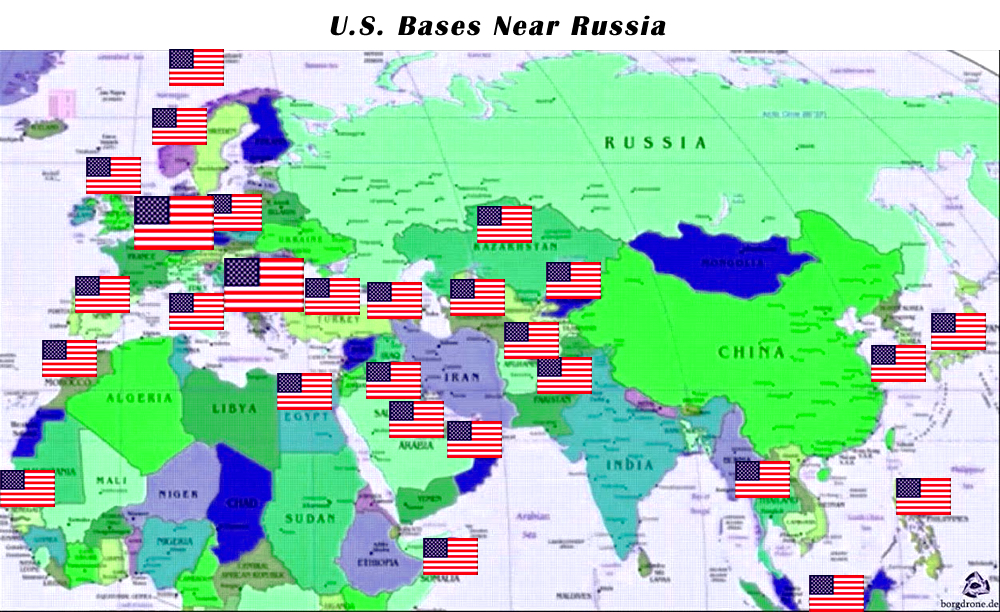
As Washington and its NATO allies work to militarily surround Russia, US officials yesterday declared that a US-Russia war is imminent.
Yesterday, Washington announced the deployment of 3,000 troops from the 82nd Airborne Division to bases in Poland, which borders Ukraine. Britain and Germany will send hundreds of soldiers to strengthen NATO battlegroups in Estonia and Lithuania. This comes after NATO countries have for weeks delivered Javelin anti-tank missiles, Stinger anti-aircraft missiles and Turkish TB2 Bayraktar drones to the Ukrainian regime in Kiev.
Nearly two decades after Washington invaded Iraq based on lies that it had “weapons of mass destruction,” US imperialism and its NATO allies are concocting a strategy to trigger a war with Russia, a nuclear-armed power, under conditions where they can blame Russia for it. Reports of mounting Ukrainian military activity in the Donbass region suggest that a NATO-backed military provocation can be staged there to trigger the war.
The narrative NATO is peddling—that it is acting to defend Ukraine from Russia—is a pack of lies. Ukrainian President Volodymyr Zelensky has publicly declared that Russia’s military posture is not consistent with plans for an all-out invasion of Ukraine. Moreover, when reporters challenged US claims that Russia is preparing an attack, State Department spokesman Ned Price could do nothing but argue that undisclosed “intelligence information” meant his claims were true.
In 2014 … the NATO powers backed a putsch in Kiev, where far-right militias toppled a pro-Russian Ukrainian president and set up a NATO puppet regime. As these militias backed by NATO mercenaries attacked Russian-speaking areas of Ukraine like Donbass and Crimea, these areas broke off from Ukraine, with Crimea voting to rejoin Russia. Since then, far-right Ukrainian militias have faced off against Russian troops in Crimea and Russian-backed militias in the Donbass.
…………. Russian-speaking areas of Ukraine are reporting highly advanced NATO war preparations. Yesterday, Donetsk People’s Republic (DPR) leader Denis Pushilin cited Biden’s call on US citizens to leave Ukraine, warning that war was imminent. “The US President, probably, given US influence in Ukraine, has information that allows him to make such statements and take such a position. … Ukraine may attack at any moment. Ukraine has everything ready for that: the concentration of forces and means makes it possible to do it at any moment, as soon as a political decision is made.”
On February 9, the DPR Militia’s Deputy Chief Eduard Basurin said Ukrainian tanks are taking positions only 15 kilometers from theirs, near Avdeyevka, Gorlovka and Novgorodskoye. Yesterday, Basurin said Ukrainian forces also deployed an S-300 missile system.
Such deployments violate the 2015 Minsk accords, which temporarily froze the Ukraine conflict and sent the Organization for Security and Cooperation in Europe (OSCE) to monitor the front line. Basurin said, however, that Kiev regime forces are using electronic jamming to prevent OSCE observers from using drones to observe these deployments. “It seems that OSCE observers are quite content with a situation where it is impossible to record violations by Ukraine,” he said.
Significantly, DPR forces last month warned, based on their sources in Kiev, that they expect an attack to come as soon as Ukrainian armored assault brigades are assembled and in position.
On January 28, Basurin said: “According to our intelligence, the Ukrainian General Staff under the guidance of US advisers at the Ukrainian Defense Ministry is putting final touches to a plan for offensive operations in Donbas. The date of aggression against the people’s republics will be set when the attack groups have been created and the operation’s plan approved by Ukraine’s National Security and Defense Council.”
These are conditions in which NATO could goad Russia, a nuclear power, into war. Were such an attack to begin, DPR forces would likely require Russian military assistance to avoid being overrun by far-right Ukrainian militias, which call for killing Russians and have bombed Russian-speaking Ukrainian cities near Russia’s borders. If Moscow intervened against this, however, it would provide grounds for NATO war propaganda, denouncing Russian aid to the DPR as an “invasion” of Ukraine……….. https://www.wsws.org/en/articles/2022/02/12/ukra-f12.html
As presidential elections approach in France, only the far right and communists support nuclear power
Then 24 , 11 Feb 22,
Ecologist Yannick Jadot, who regularly affirms his ambition to develop wind power and other renewable energies in France, castigated the recent commitments made by Emmanuel Macron to develop the country’s nuclear fleet.
Ecologist Yannick Jadot, who regularly affirms his ambition to develop wind power and other renewable energies in France, castigated the recent commitments made by Emmanuel Macron to develop the country’s nuclear fleet.

During his appearance on February 11 on the air of BFMTV, the Greens presidential candidate, Yannick Jadot, stormed against Emmanuel Macron’s recent commitments in the nuclear field, in particular after his announcement of the commissioning, from 2035, six new “EPR 2” type nuclear reactors, to which is added the study for eight more for the end of the 2040s.
President Macron locks the French for a century in nuclear power
“It does nothing for the climate, it does nothing for the French […] for the years to come”, notably protested the environmentalist MEP before adding: “President Macron locks the French for a century in nuclear power.”
Yannick Jadot then praised the virtues of a German energy model (where the share of wind power in electricity production exceeded 20% in 2021), which he describes as particularly prolific in terms of employment to better castigate the decision of the Head of State by invoking “dictators” and “the far right”: “Big companies, like small and large democracies, are investing in renewable energies. Unfortunately, only dictators, and in France the extreme right, still support nuclear power.
After having advocated a reduction in the share of nuclear power in French electricity production from 75% to 50% by 2025 – a reduction in the context of which the closure of the Fessenheim power station (Haut-Rhin) took place –, Emmanuel Macron made a 180 degree turn on the subject in the second part of his mandate, now showing himself in favor of a revival of the national nuclear fleet.
Visiting Belfort on February 10, he thus expressed his desire to “extend” the life of “all the nuclear reactors that can be extended”. “If the first extensions beyond forty years have been successfully carried out since 2017, I ask EDF to study the conditions for extension beyond fifty years”, he said, among other things..
…………… With the approach of the presidential election, the nuclear sector is particularly acclaimed on the right of the French political spectrum. On the left, its future is mainly praised by the communist candidate Fabien Roussel while Jean-Luc Mélenchon undertakes to get the country out of this source of energy as quickly as possible. https://then24.com/2022/02/11/for-jadot-only-dictators-and-in-france-the-far-right-support-nuclear-power/
Macron promises 52 billion euros for 6 new EPR nuclear reactors – but this ”nuclear renaissance” is far from certain
Building at least 6 new generation EPRs, a challenge for the nuclear industry. It will be a “renaissance of French nuclear power”, promised Emmanuel Macron, but the construction of at least six new EPRs represents a real challenge for a weakened sector, which remains on the bitter failure of Flamanville.
The president announced Thursday in Belfort six new generation EPR2 reactors, with a first commissioning by 2035. To this is added the study for eight more copies. The investment will be “52 billion euros for 6 new EPR reactors, plus studies on eight possible new reactors, plus research on modular reactors”, quantified Friday the Minister of the Economy, Bruno Le Maire.
“It is an intention but there are a certain number of important stages which will take five years”, underlined Valérie Faudon, the general delegate of the French Company of nuclear energy (SFEN). Before even starting work for an EPR, it is indeed necessary to organize a public inquiry on the first site envisaged, that of Penly (Seine-Maritime) and to obtain a certain number of administrative
authorizations. Emmanuel Macron thus envisages a start of construction in 2028. “The deadline of 2028 that he drew is not impossible to meet but is already in itself optimistic vis-à-vis the various stages to be crossed”,judges Yves Marignac , nuclear expert from the NégaWatt association.
Connaissance des energies 11th Feb 2022
The RAND Corporation’s plan for regime change in Moscow.
RAND Corporation study calls for regime change in Moscow, http://space4peace.blogspot.com/2022/02/rand-corporation-study-calls-for-regime.html Bruce Gagnon,13 Feb 22,
Obama’s ambassador to Ukraine made a trip to US-NATO training base in western Ukraine (where the Nazis predominate). US Special Forces are rotated into the base from Ft. Carson, Colorado to train the Kiev regime’s Army. Many of the Nazis have been brought into this ‘new military unit’.
More than 27 million people in the former Soviet Union died during Hitler’s WW II invasion. Imagine how Russians today feel when they see the US arming, training and directing Nazi forces to attack the Russian-ethnic citizens living in the Donbass region of Ukraine, right next to the Russian border.
Imagine how Moscow felt when they first read this RAND Corporation study. When we look at current events can we notice the direct connection to the points from this study listed below? Whether it is US-NATO military expansion right up to Russian borders or efforts by Washington to kill the Nordstream 2 natural gas pipeline from Russia to Germany – it is clear that there is a method behind US-NATO madness. If you were sitting in Russia’s shoes how would you react to these proposals below – many of which have been or are now being implemented?
Despite these vulnerabilities and anxieties, Russia remains a powerful country that still manages to be a U.S. peer competitor in a few key domains. Recognizing that some level of competition with Russia is inevitable, RAND researchers conducted a qualitative assessment of “cost-imposing options” that could unbalance and overextend Russia.
Continue readingFusion delusion – unsafe, too uncertain, too expensive, and too late – even if it worked
Fusion delusion no answer to climate emergency or cost-of-living crisis https://www.nuclearpolicy.info/news/fusion-delusion-no-answer-to-climate-emergency-or-cost-of-living-crisis/ 13 Feb 22,
Fusion is unsafe, too uncertain, too expensive and, if it is even possible, will still come far too late to address either climate change or Britain’s energy needs, says the UK’s Nuclear Free Local Authorities.
Slamming claims of a ‘major break-through’, Councillor David Blackburn, Chair of the NFLA, noted that scientists have made similar claims for decades when it has come to fusion. Commenting he said:
“Fusion has since the Second World War been heralded as the next big evolutionary development in our energy supply, and scientists have made similar claims for decades when it has come to fusion leading to countless billions being invested in this illusionary technology.”
Emeritus Professor of Energy Policy Stephen Thomas of the University of Greenwich suggested a motivation for the latest claims:
“It has always been said that fusion breakthroughs occur when there is a need for more public funding.”
Fusion is a complex technology to master, representing an attempt to reproduce on Earth the nuclear reactions that take place in the sun. As the Earth lacks the immense gravity of the Sun, the interior of the reactor must be superheated to 100 million degrees centrigrade (or six times the temperature of the Sun). Generating fusion reactions to date have used many times more energy than the energy produced, making fusion a technology that remains economically unviable. The reactor also requires intricate cooling and containment systems which ‘gobbles up’ much of the energy it produces; if these failed at any time reactor safety would be compromised.
Fusion is neither green nor safe. Neutrons produced by the reaction would bombard the walls of the reactor and its housing which over time would threaten the integrity of the structure. The radioactive tritium gas that is produced poses a real danger to public health even at very low levels if it enters the air or our water supply. And, like fission power, fusion would result in radioactive waste that will need to be safely stored and managed for countless years.
The UK Government is currently looking at five sites, one of which will soon be chosen to host a new experimental fusion reactor and has pledged £200 million towards its development.
Councillor Blackburn is sceptical there will be any result anytime soon:
“The earliest estimates that any fusion reactor could come on stream is in the late 2040’s, and that even assumes the technology will ever be mastered or economically viable. There is a need for humanity to address climate change and a need for Britons to address the energy crisis now. Fusion will come 30 years too late if at all. All of us are facing huge hikes in our energy bills, and we need power sources that are green, available now and affordable to keep our lights on and heat our homes.
“The UK Government has foolishly continued to pour billions of taxpayer money into the fusion delusion and other grandiose nuclear projects, whilst strangling financial support for renewables that work. We need a complete about-face in energy policy with the government instead investing massively in insulating Britain’s homes to reduce energy demand and energy bills and address fuel poverty, and also to finance the proven renewable technologies that can provide power now at an affordable price to Britain’s citizens, including solar generation, a renewable technology already available to us which harnesses the energy of the Sun.”
The radioactive ‘Cumbrian mud patch’ would be shaken up by a coal mine at theSellafield site

A tsunami of radioactive wastes now largely inert (apart from tidal processes) would be resuspended in the water column – returning to the shores and to the rest of the world. It takes only 4 years for Sellafield’s seaborne waste to reach the Arctic. The coal mine would cause subsidence and resulting resuspension of nuclear wastes.
| *Sellafield** A great article by Paul Brown below – there is however a big elephant in the room regarding this story. The elephant in the room is the Cumbrian Mud Patch – the radioactive silts on the Irish Sea bed resulting from decades of reprocessing. The coal mine due to be decided upon soon by Government (after Planning Inspector Stephen Normington makes his recommendation) would churn up this nuclear crapola on the seabed. A tsunami of radioactive wastes now largely inert (apart from tidal processes) would be resuspended in the water column – returning to the shores and to the rest of the world. It takes only 4 years for Sellafield’s seaborne waste to reach the Arctic. The coal mine would cause subsidence and resulting resuspension of nuclear wastes. The coal mine would cause earthquakes. Both these outcomes are not “likely” they are certain. The coal mine CEO is also employed by government as advisor on the plans for a deep (and not so deep) nuclear dump for heat generating nuclear wastes – you couldn’t make it up. Keep Cumbrian Coal in the Hole 12th Feb 2022https://keepcumbriancoalinthehole.wordpress.com/2022/02/12/decades-of-sellafields-reprocessing-waste-on-irish-sea-bed-could-be-churned-up-by-coal-mine-subsidence/ |
CounterVortex Episode 110: Nuclear power? No thanks!
https://soundcloud.com/user-752167240/countervortex-episode-110-nuclear-power-is-bad
In Episode 110 of the CounterVortex podcast, Bill Weinberg rants against the current greenwashing of nuclear power, and hype about a supposedly “safe” new generation of reactors. Every stage of the nuclear cycle is ecocidal and genocidal. Uranium mining has poisoned the lands of indigenous peoples from Navajo Country to Saskatchewan to West Africa.
The ongoing functioning of nuclear plants entails routine emissions of radioactive gases, factored in by the bureaucrats in determining “acceptable” levels of cancer. Disposal of the waste, and the retired reactor sites themselves, is a problem that inherently defies solution. They will be deadly for exponentially longer into the future than biblical times stretch into the past.
The Waste Isolation Pilot Project (WIPP) in New Mexico, hyped as secure for hundreds of millennia, leaked plutonium after only 13 years. And finally there is the “sexiest” issue, the one that actually gets some media play, at least—the risk of accident. It is a mark of capitalism’s depravity that even after the nightmares of Fukushima and Chernobyl, we periodically get media capaigns about an imminent “nuclear renaissance.”
Nuclear versus fossil fuels is the false choice offered us by industry. The imperative is to get off the extraction economy and on to one based on sustainability and resource conservation.
Listen on SoundCloud or via Patreon.
French government supressed, postponed, distributing report that recommended no new EPR nuclear reactors

Nuclear: the government has postponed the dissemination of an official report contradicting Emmanuel Macron. Mediapart has obtained a report from Ademe, the public agency for ecological transition, according to which there is no need to build new EPR reactors.
But the government postponed the distribution of this report: the President of the Republic was going to
announce contrary projects.
Mediapart 11th Feb 2022
UK SPENDS OVER £80M ON MEDIA IN 20 COUNTRIES AROUND RUSSIA
The project is likely part of the ongoing information war between Russia and Nato.
The British government is spending tens of millions on media projects in Eastern Europe which are often presented as fighting “Russian disinformation”, but which may involve the UK’s own information operations. DECLASSIFIED UK , MATT KENNARD, 8 FEBRUARY 2022 The British government ploughed at least £82.7m of public money into media projects in countries bordering or near Russia in the four years to 2021.
The projects, which take place across 20 countries in Eastern Europe and Central Asia, are run through the Conflict, Stability and Security Fund (CSSF), a cross-government pot of money with the stated aim of preventing “instability and conflicts that threaten UK interests”.
The National Security Council, which is chaired by the prime minister, sets the fund’s strategic direction. But a parliamentary committee found the CSSF was “being used as a ‘slush fund’ for projects” which “do not meet the needs of UK national security.”
The findings come as tensions between Britain and Russia are high over Ukraine. The UK has accused Russia of planning to invade or launch a coup in Ukraine to install a pro-Moscow government.
Last month Britain began supplying the eastern European country with new anti-tank weapons. Some of the UK-funded media projects appear focused on Ukraine.
‘Counter-disinformation’
The project most clearly directed at Russia is the Counter Disinformation and Media Development programme. It is run around Russia’s western border, from the Baltic States to Central and Eastern Europe, although project documents do not disclose specific countries.
It cost £60.4m in the four years to 2021. …….
The project is likely part of the ongoing information war between Russia and Nato. The funds, UK documents note, aim to “understand and expose disinformation across the North Atlantic Treaty Organisation (Nato) space.”
The project was launched in 2016 and initially called the Russian Language programme. ………
,,,,,,,,, the programme may be a cover for the UK’s own information operations in the region. The UK Ministry of Defence is one of the implementing departments in the counter-disinformation programme. It is not obvious what role the UK armed forces would have in a media support project.
……….In the four years to 2021, the programme cost the UK public £140.5m, although a breakdown of the media component is not provided by the government.
The UK is also “working closely with the US on media reform” through the programme……………
Judicial review on the dumping of Hinkley Point C radioactive mud
A group campaigning against the dumping of sediment from the site of a
decommissioned nuclear power station has succeeded in securing a judicial
review challenging the legality of a licence to dump waste into the River
Severn.
The Save the Severn Estuary / Cofiwch Môr Hafren campaign involves
the Geiger Bay coalition and groups from the English side of the estuary
and is seeking to halt the dumping of sediment from the construction of the
Hinkley C power station in the Marine Protected Area (MPA) near Portishead,
Bristol.
In 2018, EDF, which is building the plant, dumped mud and sediment
off the coast of Cardiff despite fierce objections. The Campaign group says
that millions of tonnes of contaminated mud and sediment will contaminate
the waters and beaches used by local communities, and that by choosing to
ignore legal safeguards, energy giant EDF is threatening the health of
families and animal life.
Save the Severn Estuary / Cofiwch Môr Hafren say
that EDF are now trying to avoid further opposition and negative media
attention by moving the operation to Portishead, Bristol as a ‘soft
touch’ location after initially applying for a new license to dump more
waste off the Cardiff coast. At the judicial review on 8 March the campaign
group will challenge the legality of the licence granted by the Marine
Management Organisation (MMO), stating that several important procedures
haven’t been met and that an alternative to dumping at Portishead should
be adopted.
Nation Cymru
Nation Cymru 12th Feb 2022
Conflict resolution – the positive way out of the Ukraine crisis

According to Anatol Lieven, an academic and Ukraine specialist, this is “the most dangerous crisis in the world today; it is also in principle the most easily solved”. A solution exists, drawn up by France, Germany, Russia and Ukraine in 2015, which involves the implementation of the Minsk II agreement. This offers demilitarisation, a restoration of Ukrainian sovereignty including control of the border with Russia, and full autonomy for the Donbas region. The main objection for Kyiv is that autonomy for the Donbas would prevent Ukraine from joining Nato and the EU.
One way through this would be for Nato to declare Ukraine a neutral country and decree that it does not join Nato for at least a decade. In practice, Ukrainian membership of the EU is ruled out for at least a generation because of Ukraine’s corruption, political dysfunction and lack of economic progress.
I’m a conflict mediator. This is a way out of the Ukraine crisis https://www.theguardian.com/commentisfree/2022/feb/09/conflict-mediator-ukraine-vladimir-putin, Gabrielle Rifkind
Instead of ramping up the threats, western nations should be offering Vladimir Putin a ladder to climb down, The current western narrative on the Ukraine crisis is that Russia is a machiavellian power with an expansionist agenda. That view is shaping our response: we are matching Vladimir Putin’s aggression, meeting strength with strength and threats with threats. But what if we tried to get inside the mind of the enemy, and ask what was motivating the aggression? By doing so, could we break this cycle – and offer Putin a way out, too?
When the USSR deployed ballistic missiles to Cuba in the 1960s, their proximity to the US nearly unleashed a third world war. Sitting in Moscow today, does Putin see being encircled by Nato as an equivalent threat? After all, one of his core demands is that Nato curbs its expansion close to the Russian border, and that Ukraine must not join. Russia claims that the US repeatedly told Soviet leaders it would incorporate Russia into a cooperative European security framework. In practice, Nato emerged as a US-dominated security frame with about 75,000 US troops still on European soil. Great powers always treat with suspicion and hostility the presence of rival great powers on their borders.
Putin was always bitter about the collapse of the Soviet Union. He bided his time, and in 2014 Russia seized Crimea and sent troops into Ukraine’s mostly Russian-speaking Donbas region to support the separatist movement.
Russia today is no benign liberal democracy and President Putin has an intelligence mindset, playing poker, not chess. He is prepared to threaten war, create chaos and spread misinformation to push back Nato from Russia’s borders. Using coercive diplomacy, he has amassed more than 130,000 troops on the eastern border of Ukraine, a continued threat to its sovereignty.
Yet however provocative Russia’s behaviour, western governments have a responsibility not to escalate the threat of war. The consequences of a direct US-Russian confrontation in Ukraine would be catastrophic on all sides. A full-scale conventional war could escalate into nuclear war. Even a limited war would create a ruinous global economic crisis that could destroy for the foreseeable future any chance of serious action against climate change.
I have worked in conflict resolution for the past 20 years and seen the dangers of stumbling into wars, unable to stop or turn back. Selling weapons to a country may look like a principled act in support of an ally but it usually takes them deeper and deeper into the quagmire of conflict. The US and the UK have instigated and been involved in four failed wars this century, but we seem to have failed to have learned the lessons.
There are those who argue that sending military support to Ukraine strengthens Nato’s hand at the negotiating table. Yet there are inherent dangers in this approach – the use of deterrence could be the very thing that escalates the situation.
Washington and London have pledged to increase offensive military aid to Ukraine and have announced arms deliveries, ammunition and anti-tank weapons. The UK is seeking to put itself at the forefront of western efforts to forestall what the prime minister, Boris Johnson, has called the risk of a “lightning war” in eastern Europe.
Germany has been much more sceptical, blocking the transfer of German-made weapons from Baltic states to Ukraine. It has long argued against sending weapons to active conflict zones. Germany has declared that it is prepared to have a serious dialogue with Russia to defuse the highly dangerous situation, arguing that diplomacy is the only viable way.
Whatever western governments feel about Moscow’s behaviour, de-escalating the conflict and giving Moscow a ladder to climb down is in everyone’s interest. We should not underestimate the link between humiliation and aggression. Putin is a very proud man, and smart politics by western governments should offer face-saving gestures if we are serious about avoiding war.
According to Anatol Lieven, an academic and Ukraine specialist, this is “the most dangerous crisis in the world today; it is also in principle the most easily solved”. A solution exists, drawn up by France, Germany, Russia and Ukraine in 2015, which involves the implementation of the Minsk II agreement. This offers demilitarisation, a restoration of Ukrainian sovereignty including control of the border with Russia, and full autonomy for the Donbas region. The main objection for Kyiv is that autonomy for the Donbas would prevent Ukraine from joining Nato and the EU.
One way through this would be for Nato to declare Ukraine a neutral country and decree that it does not join Nato for at least a decade. In practice, Ukrainian membership of the EU is ruled out for at least a generation because of Ukraine’s corruption, political dysfunction and lack of economic progress.
Talks between Putin and France’s President Macron this week were more conciliatory in tone. Macron said: “There is no security for Europeans if there is no security for Russia.” A permanent forum where Russia is welcome is needed to re-examine the post-cold war security system in Europe. This approach to issues such as missile deployments, arms control and transparency around military exercises could ease this conflict. Such a dialogue could create a climate of security cooperation with Russia.
- Gabrielle Rifkind is a specialist in conflict resolution and the director of Oxford Process
Russian Congress of Intellectuals: An Open Letter to the Russian Leadership
Russian Congress of Intellectuals..An Open Letter to the Russian Leadership. https://johnmenadue.com/russian-congress-of-intellectuals-an-open-letter-to-the-russian-leadership-february-4-2022/ February 4, 2022, By John Menadue, (letter, signed by a large number of individuals)
Our position is simple: Russia does not need a war with Ukraine and the West. Such a war is devoid of legitimacy and has no moral basis.
There is an ever-increasing flow of alarming news about a possible Russian invasion of Ukraine. Reports are emerging about stepped-up recruitment of mercenaries within Russia and the transfer of fuel and military equipment to Ukraine’s Donetsk and Luhansk regions. In response, Ukraine is arming itself and NATO is sending additional forces into Eastern Europe. The tension is not abating, but rather mounting.
Russian citizens are becoming de facto hostages of a reckless adventurism that has come to typify Russia’s foreign policy. Not only must Russians live with the uncertainty of whether a large-scale war will begin, but they are also experiencing a sharp rise in prices and a devaluation of their currency. Is this the sort of policy Russians need? Do they want war—and are they ready to bear the brunt of it? Have they authorized the authorities to play with their lives in this way?
But no one asks Russian citizens for their opinion. There is no public debate. State television presents only a single viewpoint—that of the warmongers. Direct military threats, aggression and hatred are aimed at Ukraine, the US, and the West. But the most dangerous thing is that the war is being depicted not only as permissible, but as inevitable. This is an attempt to deceive the population, to impose upon them the idea of waging a crusade against the West, rather than investing in the country’s development and improving living standards. The cost of the conflict is never discussed, but the price—the huge, bloody price—will be paid by the common Russian people.
We, responsible citizens and patriots of Russia, appeal to Russia’s political leadership. We openly and publicly call out the Party of War that has been formed within the government.
We represent the viewpoint of those in Russian society who reject war, who consider unlawful the use of military threats and the deployment of a blackmailing style in foreign policy.
We reject war, whereas you, the Party of War, consider it acceptable. We stand for peace and prosperity for all Russian citizens, whereas you put our lives on the line for the sake of political games. You deceive and manipulate people, whereas we tell them the truth. You do not speak in the name of the Russian population—we do. For decades, the Russian people, who lost millions of lives in past wars, have lived by the saying: “if only there were no war.” Have you forgotten this?
Our position is quite simple. Russia does not need a war with Ukraine and the West. No one is threatening us, no one is attacking us. Policies based on the idea of such a war are immoral and irresponsible and must not be conducted in the name of the Russian people. Such a war is devoid of legitimacy and has no moral basis. Russian diplomacy should take no other position than a categorical rejection of such a war.
Not only does such a war not reflect Russia’s interests, but it also threatens the country’s very existence. The senseless actions of the country’s political leadership, which is pushing us in this direction, will inevitably lead to a mass anti-war movement in Russia. Each of us will naturally play a part in it.
We will do everything in our power to prevent this war, and if it begins, to stop it.
Signed,
Continue readingMacron goes for a new nuclear renaissance, despite the industry’s woes in France

France to build up to 14 new nuclear reactors by 2050, says Macron. French president says ‘renaissance’ of atomic energy industry will help end country’s reliance on fossil fuels, Guardian, Angelique Chrisafis in Paris 11 Feb 22, Emmanuel Macron has announced a “renaissance” for the French nuclear industry with a vast programme to build as many as 14 new reactors, arguing that it would help end the country’s reliance on fossil fuels and make France carbon neutral by 2050.
“What our country needs … is the rebirth of France’s nuclear industry,” Macron said in a speech in the eastern industrial town of Belfort, in which he lauded the country’s technological prowess.
The centrist French president, who is expected to announce his campaign for re-election this month, is conscious of a growing debate about energy ahead of this spring’s presidential vote as costs to consumers rise. Environmental issues are also a growing concern among French voters.
….. recent attempts to build new-generation reactors to replace older models have become mired in cost overruns and delays.
Presidential candidates on the right have supported more nuclear power plants saying France should have “sovereignty” over its electricity, while detractors on the left have warned of the cost and complexity of building new reactors. Environmentalists have raised safety concerns over radioactive waste that remains deadly for tens of thousands of years.
……… He also announced a major acceleration in the development of solar and offshore wind power. He said France had no choice but to rely on renewables and nuclearand that the country would also have to consume significantly less energy in the next decades.
He said he would seek to extend the lives of all existing French nuclear plants where it was safe to do so.
The announcement comes at a difficult time for debt-laden, state-controlled energy provider, EDF, which faces delays and budget overuns on new nuclear plants in France and Britain, and corrosion problems in some of its ageing reactors.
Macron announced the construction of at least six new reactors by EDF by 2050, with an option for another eight.
His recent focus on nuclear power marks a policy shift from the start of his presidency, when he had promised to reduce its share in France’s energy mix.
The French government lobbied hard and successfully to get the European Commission to label nuclear power “green” this month in a landmark review which means it can attract funding as a climate-friendly power source.
The Green presidential candidate, Yannick Jadot, said it was a moral imperative to progressively end France’s dependence on nuclear to protect the climate and French people’s safety. He said Macron’s project was backward-looking and would condemn France to a kind of “energy and industrial obsolescence”. https://www.theguardian.com/world/2022/feb/10/france-to-build-up-to-14-new-nuclear-reactors-by-2050-says-macron
Entergy nuclear plant accused of overcharging ratepayers – customers could now get $millions on refunds.
there are also allegations that the utility is living high on the hog and trying to stick ratepayers with the bill. Among other charges, regulators questioned Entergy’s expenses for $1.6 million of private airplane travel, lobbying expenses, advertisements promoting Entergy and industry association dues. The PSC said Entergy has improperly assessed ratepayers for those expenses.
Growing fight over Entergy nuclear plant could net millions in refunds for customers. Probe over accounting at Grand Gulf has spawned a litany of allegations, BY SAM KARLIN THE ADVOCATE STAFF WRITER, FEB 11, 2022 –
A probe over Entergy’s accounting at its Grand Gulf nuclear power plant in Mississippi has morphed into a larger fight between regulators and the power company, which is accused of overcharging ratepayers at its various subsidiaries hundreds of millions of dollars over a period of several years.
If the Louisiana Public Service Commission and other regulators prevail in the three main probes now open before the Federal Energy Regulatory Commission, or FERC, Entergy could be forced to pay customers substantial refunds.
What started as an obscure probe into arcane accounting practices has turned into a broader battle – over tax maneuvers, compensation for executives and the plant’s performance – the latter of which has drawn in former FERC commissioners and even Mississippi Gov. Tate Reeves, who wrote a letter to the commission about Grand Gulf’s economic impact to his state.
The potential refunds could amount to $1 billion or more across Entergy’s network if FERC sides with regulators across the board, which could mean hundreds of dollars for each affected customer. Regulators in one of the cases already won a favorable recommendation from a judge, who advised FERC to make Entergy pay back $422 million to customers, plus interest, for one of the allegations, likely bringing the tally for that case alone to over $600 million, according to an SEC filing Entergy made late last year.
The judge made that recommendation in April 2020. FERC hasn’t yet made a decision on the case.
Customers of Entergy Louisiana and Entergy New Orleans would split the refunds with ratepayers in Mississippi and Arkansas – a group that totals about 2.5 million customers. Entergy Louisiana and New Orleans customers would get roughly 14% and 17% of the total refunds, respectively, according to the best estimates available in FERC filings…………………………………
The PSC, which regulates Entergy Louisiana, filed a complaint in 2018 accusing the company of violating accounting rules by overbilling ratepayers for a sale-leaseback arrangement – where Entergy sold assets and leased them back from the new owner. Entergy owns 90% of Grand Gulf through a subsidiary called SERI, while Cooperative Energy of Mississippi owns the other 10%.
While investigating that complaint, regulators say they uncovered a host of accounting practices that, taken together, amount to a scheme to systematically overcharge electric customers who get power from Grand Gulf. Among those allegations is essentially that Entergy charged ratepayers more for taxes than it was paying. …………..
there are also allegations that the utility is living high on the hog and trying to stick ratepayers with the bill. Among other charges, regulators questioned Entergy’s expenses for $1.6 million of private airplane travel, lobbying expenses, advertisements promoting Entergy and industry association dues. The PSC said Entergy has improperly assessed ratepayers for those expenses.
Complaints turn to performance issues
Last year, the inquiry widened further. The PSC, the New Orleans City Council and regulators in Arkansas and Mississippi filed a new complaint asking FERC to force Entergy to reimburse customers for a host of glaring performance problems at the nuclear plant – the least reliable nuclear plant in the nation from 2018-2020, according to figures compiled by the Nuclear Energy Institute. The figures showed Grand Gulf was running at full power less frequently than any other nuclear plant in the U.S.………………..
Grand Gulf, which was built in the 1970s, has been troubled from the start. Its two units were budgeted to cost $1.2 billion, but its first unit wound up costing nearly $3 billion. The energy it produced when it went online was about 13 cents per kilowatt hour, well above the typical price of power of about 3 cents per kilowatt hour, according to a FERC filing made by the PSC.
“Grand Gulf has been a bad apple since the late 1970s,” said Logan Burke, head of the Alliance for Affordable Energy. “The costs to run it are going up, benefits from running it are going down, and customers are kind of stuck paying for this thing.” https://www.theadvocate.com/baton_rouge/news/article_6e99be86-8b7a-11ec-8155-e3988c8fc7b3.html
1 This Month



19 November – Webinar – The Reality of Reprocessing
Time: 11:00 AM Pacific Time (US & Canada) / 2:00 PM Eastern / 7:00 PM UK / 8:00 PM CET
Register for the Zoom Event Here



Shut down the radiation-damaged Heysham nuclear reactors now
To see nuclear-related stories in greater depth and intensity – go to https://nuclearinformation.wordpress.com

Say No to NASA’s Reckless Nuclear Reactor on the Moon
Say No to NASA’s Reckless Nuclear Reactor on the Moon
-
Archives
- November 2026 (74)
- October 2026 (302)
- September 2026 (339)
- August 2026 (330)
- July 2026 (355)
- June 2026 (287)
- May 2026 (306)
- April 2026 (356)
- March 2026 (251)
- February 2026 (267)
- January 2026 (308)
- December 2025 (358)
-
Categories
- 1
- 1 NUCLEAR ISSUES
- business and costs
- climate change
- culture and arts
- ENERGY
- environment
- health
- history
- indigenous issues
- Legal
- marketing of nuclear
- media
- opposition to nuclear
- PERSONAL STORIES
- politics
- politics international
- Religion and ethics
- safety
- secrets,lies and civil liberties
- spinbuster
- technology
- Uranium
- wastes
- weapons and war
- Women
- 2 WORLD
- ACTION
- AFRICA
- Atrocities
- AUSTRALIA
- Christina's notes
- Christina's themes
- culture and arts
- Events
- Fuk 2022
- Fuk 2023
- Fukushima 2017
- Fukushima 2018
- fukushima 2019
- Fukushima 2020
- Fukushima 2021
- general
- global warming
- Humour (God we need it)
- Nuclear
- RARE EARTHS
- Reference
- resources – print
- Resources -audiovicual
- Weekly Newsletter
- World
- World Nuclear
- YouTube
-
RSS
Entries RSS
Comments RSS

