Latest look inside Fukushima ruins show mounds of melted nuclear fuel
A remote-controlled robot has captured images of melted nuclear fuel
inside Japan’s wrecked Fukushima nuclear plant. A massive earthquake and
tsunami in 2011 damaged cooling systems at the power plant, causing the
meltdown of three reactor cores. Most of their highly radioactive fuel fell
to the bottom of their containment vessels, making its removal extremely
difficult. A previous attempt to send a small robot with cameras into the
Unit 1 reactor failed, but images captured this week by a ROV-A robot show
broken structures, pipes and mounds of what appears to be melted fuel.
Metro 16th Feb 2022 https://metro.co.uk/2022/02/16/take-a-look-inside-the-radioactive-ruins-of-fukushima-nuclear-plant-16113689/
French utility EDF will check auxiliary cooling circuits, or RRAs, at its 56 domestic reactors, after faults found
French utility EDF will check auxiliary cooling circuits, or RRAs, at its 56 domestic reactors, it confirmed on Tuesday. “We will gradually look at other circuits including the RRA circuit. The [French nuclear safety authority] ASN is being regularly informed of the results of the checks and
expert assessments,” a spokesman for the state-owned firm told Montel.
The comments came in the wake of a Montel report on Monday that EDF had uncovered potential issues with the RRAs, which are used for depressurising the cooling water in the primary circuit of a reactor in the event of an emergency shutdown of the unit. The spokesman declined to say why the utility was checking other circuits, as well as the RRAs.
Montel 15th Feb 2022
https://www.montelnews.com/news/1299687/edf-confirms-new-safety-checks-on-french-reactors
Any missile launch may be perceived as nuclear strike amid tensions
Any missile launch may be perceived as nuclear strike amid tensions — security official, Tass, 16 Feb 22,
“Hardly anyone, except specialists, comes to realize that modern systems spot launches of missiles quite quickly but cannot identify whether these missiles carry nuclear weapons,” Mikhail Popov noted
…………….. Commenting on a statement by German Defense Minister Annegret Kramp-Karrenbauer that the West must be increasingly decisive in its deterrence of Russia, demonstrating its readiness to employ nuclear weapons, the deputy secretary of Russia’s Security Council pointed out that it is “quite irresponsible” for an official of this level.
“Moreover, considering that Germany does not possess nuclear weapons, this statement can be viewed as a call on the United States to use its nuclear potential, including tactical nuclear charges deployed at forward bases in NATO countries,” the security official said.
An official of this level must be aware that in the event of employing nuclear weapons, US facilities on Germany territory will be subjected to a retaliatory or a retaliatory counter strike, he pointed out.
It would be interesting to hear an answer to the following question: In the event of a nuclear apocalypse, would the surviving electors forgive such short-sighted behavior by their country’s defense minister?” the security official said. https://tass.com/defense/1404657
Russian Foreign Minister Lavrov informs UN chief about Russia’s talks with NATO on security guarantees
 | |||
Lavrov informs UN chief about Russia’s talks with NATO on security guarantees https://tass.com/world/1403199
Russian Foreign Minister drew the attention of Antonio Guterres to the problems the Russian mission to the organization is facing in the United States due to the US side’s non-implementation of its commitments
MOSCOW, February 14. /TASS/. Russian Foreign Minister Sergey Lavrov informed United Nations Secretary General Antonio Guterres about Russia’s ongoing negotiations with NATO and OSCE member countries on security guarantees, the Russian foreign ministry said on Monday after their online talks.
“The sides exchanged views on a range of current international topics (Syria, Libya, the activities of the UN mission in Kosovo), including in the context of Russia’s presidency of the United Nations Security Council in February. Lavrov informed the United Nations secretary general in detail about the ongoing talks with on security guarantees to Russia with NATO and OSCE member states,” the ministry said.
Apart from that, Lavrov drew the attention of the UN chief to the problems the Russian mission to the organization is facing in the United States due to the US side’s non-implementation of its commitments. “Lavrov drew special attention to the problems Russia’s permanent mission to the United States is facing due to the United States’ failure to implement its liabilities under the agreement regarding the UN headquarters in what concerns the return the mission’s official premises blocked by the Americans and the issuance of visas to its employees and members of Russian delegations taking part in the work of the General Assembly and its committees,” the ministry said.
The sides stressed the importance of further efforts “to strengthen the United Nations’ central coordinating role in global politics” and reiterated their commitment to the cooperation between Russia and the United Nations.
Earlier on Monday, Russian President Vladimir Putin discussed with Lavrov the United States’ and NATO’s responses to Russia’s proposals on long-term legally binding guarantees of its security. Lavrov informed the president about these responses, noting that NATO and the US gave a negative answer on Russia’s key concerns. He stressed that Moscow cannot be satisfied with these responses. However, in his words, some of the responses are quite constructive. These are concrete measures concerning shorter-and medium-range missiles and a series of proposals on reducing military risks, building up trust and military transparency
On January 26, the US and NATO handed over written responses to Russia on Moscow’s security guarantees that it was demanding from Washington and Brussels. The American side requested that the documents not be made public, although US Secretary of State Antony Blinken and NATO Secretary General Jens Stoltenberg enumerated their basic provisions. According to these statements, the West did not make concessions to Russia considered to be critical, but did indicate directions for further negotiations.
Lord Truscott questioned the idea that a thermonuclear war with Russia would be an ”unwelcome outcome”

In a written question submitted by Lord Truscott in December, he asked: “Further to the remarks by Baroness Goldie on 29 November (HL Deb, col 1130), what are their reasons for believing that a thermonuclear war with Russia would be an ‘unwelcome outcome’?”
The question has now gone viral on social media after resurfacing amid reports of a potential Russian invasion of Ukraine.
Reassuringly, Goldie was steadfast in her reply. “It is difficult to envisage any scenario in which war, whether accidental, thermonuclear or otherwise, and irrespective of which other parties may be involved, would be a welcome outcome,” came the curt response.
The National 15th Feb 2022
https://www.thenational.scot/news/19925593.peer-asks-nuclear-war-russia-unwelcome-outcome/
The Spectator 15th Feb 2022
https://www.spectator.co.uk/article/peer-asks-why-nuclear-war-would-be-unwelcome-
Terrifying “nuke map” reveals danger zone if nuclear bomb dropped on YOUR city
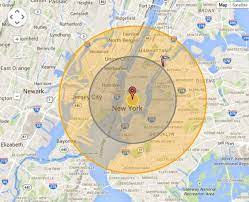
DEAD SCARY Terrifying “nuke map” reveals danger zone if nuclear bomb dropped on YOUR city, Jamie Harris, Technology and Science Reporter, The Sun 16 Feb 2022
EVER wondered what the devastating impact would be if a nuclear bomb dropped on your area?
A terrifying tool reveals how some of the most destructive weapons known to humankind would pan out if launched on any spot around the world.
The NUKEMAP estimates everything from possible casualties to radioactive fallout.
Real weapons tested by North Korea, Russia and the US are among the detonations that users can simulate.
Even catastrophic bombs such as the ‘Little Boy’, which killed up to 166,000 people in Hiroshima in 1945, are available to try.
Expert Professor Alex Wellerstein came up with the idea using declassified nuclear weapons effects data.
Since launching it in 2012, the historian has seen 220million virtual detonations carried out on his site.
At one point he said the site picked up on a possible visit originating from North Korea………….
The so-called ‘King of the Bombs’, aka the Tsar Bomba’s maximum design yield (100 Mt) which was tested by the Soviet Union, has proven to be the most popular nuke to try.
If it was launched on London right now for example, casualties could be over 5.9million people.
Dropping it on New York would be even more devastating, with an estimated death toll of more than 8million people…………… https://www.thesun.co.uk/tech/17670602/nukemap-nuclear-bomb-simulator/
Why the Iran nuclear talks have stalled
Why have the nuclear negotiations with Iran stalled? Middle East Monitor, February 16, 2022 ”” …………………………………………………………………… Optimism about the outcome of the current negotiations remains difficult, not only because of the internal pressures — US negotiators obliged to make changes to the agreement; the Iranians calling for the complete lifting of sanctions — but also because of the other Iranian demand for a pledge that a new deal will remain in effect even when the US administration changes.
The difficulty in this is that it is not related to America’s relationship with Iran, but to the nature of the US political system, which refuses to make any agreement or treaty binding on future administrations. At the moment, the Iranian negotiator does not want to understand this, and instead insists on pressing for a guarantee which the Biden administration cannot provide. https://www.middleeastmonitor.com/20220216-why-have-the-nuclear-negotiations-with-iran-stalled/
Opposition to Holtec dumping nuclear waste into Cape Cod Bay
Preventing nuclear wastewater dumping, MV Times, By Eunki Seonwoo, February 16, 2022 The Aquinnah select board was in favor of Mara Duncan’s request for a non-binding ballot question. Duncan’s ballot question was for Holtec International, owner of the Pilgrim Nuclear Power Plant in Plymouth, decommissioned in 2019, not to discharge nuclear waste into Cape Cod Bay.
Federal leaders from Massachusetts — Senators Edward Markey and Elizabeth Warren, as well as U.S. Reps. Seth Moulton and Bill Keating — have expressed opposition to Holtec dumping nuclear wastewater into the bay in a letter they wrote in January.
When evaluating the proper method of disposal, Holtec must consider the public’s concerns surrounding and perception of the release of irradiated material into Cape Cod, especially when viable alternatives are available,” the letter reads.
Duncan told the board a number of groups, such as Physicians for Social Responsibility and the fishing industry, are against the dumping. Holtec has other disposal methods. “It is their cheapest option, obviously. It is very easy to open up just open the [lid] and let it spill,” Duncan said. …………….. https://www.mvtimes.com/2022/02/16/preventing-nuclear-wastewater-dumping/
Legal challenge to license for EDF to dump radioactive mud in the Bristol Channel and Severn Estuary
Campaigners are calling on the government to prohibit energy giant EDF
from dumping contaminated mud in the Bristol Channel and Severn Estuary.
They say mud from the new Hinkley power station development is ‘a risk to
human health, threatens protected marine habitats and damages a treasure of
Britain’s natural world’.
EDF says all waste from the site is controlled
and regulated to ‘ensure the environment and public are protected’.
But Save the Severn, organised by a collaborative group of scientists and
environmental activists, is urging people to get behind its campaign to
halt further waste – including chemical and radioactive contaminants –
getting dumped in an international marine protected area near Portishead.
Campaigners will also challenge the legality of a license granted by the
Marine Management Organisation (MMO) to EDF for dumping waste in March,
when they will present a legal challenge against the company at a judicial
review.
Weston Mercury 15th Feb 2022
https://www.thewestonmercury.co.uk/news/campaign-group-wants-to-save-the-severn-8692070
Mini-reactor for Highlands -too “high cost and high risk” says Scottish MP Maree Todd
Caithness, Sutherland and Ross MSP Maree Todd has declared that she cannot support the idea of a mini-reactor being built in her constituency,pointing to the “high cost and high risk” associated with nuclear energy.
Engineering giant Rolls-Royce hopes to build up to 10 small modular reactor(SMR) power stations by 2035 and there have been calls for one to be established in Caithness, which has been described as “one of the most nuclear-sympathetic parts of the UK”.
However, Ms Todd said her party, the
SNP, has been clear in its opposition to nuclear development and she argued
that Scotland must look to “safe, sustainable and cost-effective” renewable
sources for its future energy supply.
Ms Todd said: “As an MSP representing a vast and rural Highland constituency, a constituency with the highest fuel poverty rates in the country, I cannot in all conscience
support a nuclear fission solution as a cost-effective, safe energy source
for our community and I believe the vast majority of the public back my
position. We must focus on reliable energy sources that offer value for
money and align with our net-zero ambitions.
John O Groat Journal 16th Feb 2022
Severn Estuary – internationally significant fish nursery – threatened by Hinkley radioactive mud
Four Weeks to Save-the-Severn estuary!
Energy giant, EDF, has been dumping millions of tonnes of mud and sediment contaminated by the decades of discharges from the Hinkley nuclear power stations. Dumping is convenient and cheaper than using the sediments on their construction site. They are dredging these sediments to build a giant seawater extraction system for cooling water, which will be short-lived as its slaughter of millions of fish a year has to end. This Estuary is an internationally important fish nursery and Marine Protection Area.
Despite fierce opposition, dumping of Hinkley mud and sediment went ahead off Cardiff in 2018 and it’s too late to change what happened. Since that time, increased radioactivity has been detected in coastal mud. It could have been different. Now they have a licence to dump off Portishead, Bristol – but we have Court permission to challenge that licence and stop EDF resuming dumping in April.
Save The Severn, an independent, science-led campaign group, have won a day in court to challenge further dumping. Without the effort and expense of delaying EDF through legal means, the bosses of the company would be able to simply do as they please. Can you help to ensure the legal case is heard?
The court case is heard on Tue 8 March 2022. We have four weeks to save the Severn Estuary and many donations from £1 upwards will reach our target. It’s easy to do, please visit the Save The Severn fundraising page here:
Statement calling for a review of the volcanic impact assessment in the new regulatory standards for the restart of nuclear power plants in light of the Tonga eruption

February 15, 2022
1. Occurrence of the Funga-Tonga-Hunga Ha’apai eruption
On January 15, 2022, a large-scale eruption occurred at the submarine volcano on the island of Hunga Tonga-Hunga Ha’apai, located about 65 km north of Nuku’alofa (Tongatapu Island), the capital of the Kingdom of Tonga (hereinafter referred to as the “HTHH eruption”). The plume rose to an altitude of 15 to 6 km and formed an umbrella-shaped plume with a diameter of about 500 km (radius of about 250 km) in just a few tens of minutes. The aerosol is thought to have reached the stratosphere.
The shock wave (aerial vibration) from the HTHH eruption traveled around the globe, and it is said that the sound of the explosion was heard even in New Zealand, more than 2,000 km away.
A tsunami of up to 1.2 meters in height was also observed in Japan (Kominato, Amami City), causing damage such as the capsizing of fishing boats. The Tongan government announced that the tsunami reached a maximum height of 15 meters. These tsunamis are believed to have been events that cannot be explained by conventional tsunami mechanisms, and while some believe they were caused by aerial vibration, others point to changes in water levels caused by the caldera sinking.
Furthermore, discoloration of the seawater, thought to be caused by volcanic activity, has been confirmed to have spread as far as 300 km, and experts in Japan and abroad are not sure if this is the end of the eruption.
Based on the scale of the plume, it is believed that the eruption may have released about 10 km3 of volcanic material, about the same level as the 1991 eruption of Pinatubo volcano in the Philippines, which also caused global cooling, and the volcanic explosion index (VEI) is thought to be around 5-6.
2. Eruption that was not predicted or warned in advance
The islands of Hunga Tonga and Hunga Ha’apai are both separate islands at the edge of a huge submarine caldera crater (1,800 m high and 20 km wide), and although they are known to have been active about 1,000 years ago, they were quiet volcanoes until a major eruption occurred in 2009.
Then another eruption occurred in 2014-2015, and the land was united to form the island of Hunga Tonga-Funga Ha’apai (HTHH). However, although there were some who pointed out the possibility of activity, the island was basically considered to be normally quite quiet and so on.
In December 2021, prior to the HTHH eruption, HTHH erupted again. In December 2021, prior to the HTHH eruption, HTHH erupted again, this time to a height of about 16 km, but experts who visited the site afterwards said that they saw nothing unusual.
The HTHH eruption was not predicted or warned of such a large-scale eruption.
3. There are many things that we do not understand with our current knowledge
The cause of the tsunami that struck Japan is still unclear, and its mechanism has not been elucidated. Although it is comparable to the Pinatubo eruption, its behavior is very different from that of the Pinatubo eruption. Yujiro Suzuki, associate professor of volcanic physics at the Earthquake Research Institute of the University of Tokyo, analyzed the spread of the plume based on images taken by satellites and compared it to simulations of the volume of plumes from Pinatubo and other volcanoes, estimating that the volume of plumes per second is about three times that of Pinatubo. Associate Professor Suzuki said, “I’ve never seen a plume expand at such a rate before, and I’m very surprised.” I am very surprised. On the other hand, the amount of volcanic ash and pumice, as well as sulfur dioxide, which is considered to be the cause of climate change, is low, and it is predicted that climate change will be avoided, but it is not clear why the amount of sulfur dioxide is low.
The HTHH eruption is also a submarine volcano, and there is much less knowledge about it than about land volcanoes, so there is much we do not know. Janine Krippner, a volcanologist at the Smithsonian Institution in the U.S., says, “At this point, we have far more questions than we know,” but in any case, with the current level of science and technology, it is impossible to accurately understand all the events and phenomena associated with volcanic eruptions. In any case, with the current level of science and technology, it is impossible to accurately understand all the events and phenomena associated with volcanic eruptions, and it has become clear once again that predicting volcanic events is extremely difficult.
4. Similarities between Japan and Tonga, and the possibility of a large-scale submarine eruption in Japan Although the HTHH eruption is comparable to the Pinatubo eruption, which is said to be the largest eruption in the 20th century, it is not a rare phenomenon, as Japan has experienced many eruptions of a larger scale than this in the past. Japan is the world’s largest volcanic country, with about 7% of all active volcanoes (volcanoes that have erupted within the past 10,000 years), and 111 of them. As an island nation surrounded by the sea on all sides, about one-third of the active volcanoes are located in the Izu-Ogasawara Islands and the Nansei Islands. Professor Yoshiyuki Tatsumi of Kobe University points out the similarities between the geography of Tonga and the Japanese archipelago, especially the Izu-Ogasawara and Mariana Islands, and suggests that eruptions like the HTHH eruption could occur in Japan in the future. It is still fresh in our minds that the August 2021 eruption of Fukutoku Okanoba, a submarine volcano, caused a great deal of pumice to drift to the Japanese archipelago, which caused tension among those involved in nuclear power plants, but this was a much smaller eruption than the HTHH eruption. In recent years, it has become clear that a huge lava dome has formed in the Onikkai Caldera, which had a catastrophic eruption about 7,300 years ago, but this eruption is much larger than the HTHH eruption. There is no other way to say that we do not know.
5. Errors in volcanic impact assessment to date
(1) The HTHH eruption once again demonstrated the limitations of current volcanology and also showed that disasters caused by volcanic events are real and cannot be ignored.
However, the volcanic impact assessment conducted by the Nuclear Regulatory Commission (NRC) as part of its determination of compliance with the new regulatory standards has, in effect, been trivialized as if a massive eruption (an eruption in which underground magma erupts to the surface at once, resulting in a massive pyroclastic flow with an eruption volume of more than tens of km3) could not occur. The March 7, 2018 “Basic Concept on ‘Evaluation of Volcanic Activity with Volcanic Events that Cannot be Designed for’ in the Volcanic Impact Assessment Guide for Nuclear Power Plants” (hereinafter referred to as the “Basic Concept on Mega Eruptions”) embodies this concept, and the injustice of this concept was explained by the Liaison Committee in its March 13, 2018 report. However, the Nuclear Regulatory Commission (NRC) has since issued a report on this issue.
However, the Nuclear Regulatory Commission (NRC) not only ignored our statement, but also revised the Volcanic Impact Assessment Guide on December 18, 2019, and formally incorporated the “Basic Concept on Massive Eruptions” into the Guide.
(2) The revised Volcanic Impact Assessment Guide acknowledges that the process leading to a major eruption is not fully understood and that a major eruption would cause serious and severe damage to a wide area if it were to occur. The risk is acceptable if (1) the current activity is not considered imminent (non-imminent), and (2) there is no scientifically reasonable concrete evidence for the possibility of a major eruption during the operational period (lack of concrete evidence) (Section 4.1(2)).
However, even catastrophic eruptions of VEI 7, which are even larger than giant eruptions, have occurred since prehistoric times, such as the eruptions of Mount Paektu (around 960) and Tambora (1815), and the Volcano Guide, which relies on the scientifically totally meaningless fact of whether there have been any observed cases since prehistoric times in areas around Japan, is wrong in its assumptions.
Since the process leading to an eruption has not been fully elucidated, it is difficult to show the imminence of (1) and the concrete evidence for (2), and in effect, the risk of a huge eruption is being ignored (there have been no cases in which the risk of a huge eruption has been considered).
(3) What is more problematic is that the framework seems to exclude even large eruptions that do not lead to large eruptions.
The Revised Volcanological Guide states that if a volcano has had a major eruption in the past and the possibility of a major eruption is judged to be sufficiently small, the largest eruption since the last major eruption should be assumed (Section 4.1(3)).
For example, Aso Caldera has had four catastrophic eruptions (ejecta volume of over 100 km3) in the past, but the largest eruption since the last catastrophic Aso 4 eruption was the Kusasenrigahama pumice eruption (ejecta volume of about 2 km3), which is not even a huge eruption.
(4) As mentioned above, the HTHH eruption may be a VEI6 class eruption, and we cannot deny the possibility that it will continue to be active and develop into a huge eruption. What we learned from this eruption is that large-scale eruptions can occur in Japan, and therefore we should not ignore the risk of such eruptions, and that there are many things we do not know with the current level of volcanology. Trying to downplay and trivialize the risk of a large-scale eruption is not a “socially accepted idea,” but merely a bias or desire of those who do not want to shut down nuclear power plants. The Nuclear Regulation Authority (NRA), whose mission is to protect the safety of citizens from nuclear disasters, should not be allowed to endanger the lives and bodies of many people living in the vicinity of nuclear power plants over a wide area based on such assumptions and wishes. If there were no nuclear power plants in the vicinity of a volcano, even if an eruption occurred, as in the case of the Pinatubo eruption, recovery and reconstruction would be possible within a few years to a decade. The presence of a nuclear power plant will cause the spread of radioactive materials, making the area around the plant uninhabitable for a long time. Without bringing up the rights of future generations or intergenerational ethics, it is hard to imagine that the law even permits the operation of nuclear power plants without taking such risks into consideration.
(5) Furthermore, in the past volcanic impact assessments, only a cursory assessment of the effects of submarine volcanoes has been made, but the August 2021 eruption of the Fukutoku Okanoba submarine volcano and the recent HTHH eruption have made it clear that there are too many things about the behavior of submarine volcanoes that are not understood by current science. It has become clear that there are too many things we don’t know about the behavior of underwater volcanoes. Rather than ignoring what science does not understand in this regard, it is necessary to thoroughly conduct conservative assessments to ensure the safety of nuclear power plants even in the event of unforeseen events.
6 The Nuclear Regulatory Commission should completely review the method of volcanic impact assessment and other aspects.
In this way, the HTHH eruption has shown how the volcanic impact assessment has been based on wrong criteria.
The government’s accident investigation report on the Fukushima Daiichi nuclear power plant accident (TEPCO Fukushima Nuclear Accident Independent Investigation and Verification Commission) proposes a shift in risk perception, stating that before the Fukushima Daiichi nuclear accident, “natural phenomena can cause events that exceed the current state of academic knowledge, and the traditional precautionary approach of preparing for such extremely rare events must always be considered in parallel.
In other words, the report recommends that “Japan should bear in mind that it is a ‘disaster-prone country’ that has been struck by various natural disasters since ancient times, and humbly confront the threats of the natural world and the scale and time scale of tectonic movements. In the case of accidents and disasters that cause enormous damage over a wide area, such as the accident at the Fukushima Daiichi Nuclear Power Plant, it is necessary to establish a new concept of disaster prevention that requires appropriate safety and disaster prevention measures to be taken regardless of the probability of occurrence, both in government and business” (pp. 412-413 of the Final Report).
The current volcano guide clearly contradicts these recommendations. The Nuclear Regulatory Commission (NRC) should take the opportunity of the HTHH eruption to completely review the methods of volcanic impact assessment, etc., based on the conservative assumption that a large-scale eruption will actually occur, correctly taking into account the indefiniteness of science and the limitations of current volcanology.
http://www.datsugenpatsu.org/bengodan/news/22-2-15/?fbclid=IwAR2K3y4tGW-_XTc0Vc7Sxkuq4Tm-B3YDIOeEH-EZhuFBq9Ne5nEaz3J1giA
Today’s Crisis Over Ukraine ACURA ViewPoint
Today’s Crisis Over Ukraine ACURA ViewPoint Jack F. Matlock, Jr.: American Committee for the Us- Russia Accord
February 14, 2022 Today we face an avoidable crisis that was predictable, actually predicted, willfully precipitated, but easily resolved by the application of common sense.
We are being told each day that war may be imminent in Ukraine………………………….
I cannot dismiss the suspicion that we are witnessing an elaborate charade, grossly magnified by prominent elements of the American media, to serve a domestic political end. ……………………..
Was the crisis avoidable?…………………………………….. In fact, the decision to expand NATO piecemeal was a reversal of American policies that produced the end of the Cold War…………………………
Willfully precipitated? Adding countries in Eastern Europe to NATO continued during the George W. Bush administration (2001-2009) but that was not the only thing that stimulated Russian objection. At the same time, the United States began withdrawing from the arms control treaties that had tempered, for a time, an irrational and dangerous arms race and were the foundation agreements for ending the Cold War.
—Easily resolved by the application of common sense?
The short answer is because it can be. What President Putin is demanding, an end to NATO expansion and creation of a security structure in Europe that insures Russia’s security along with that of others is eminently reasonable. He is not demanding the exit of any NATO member and he is threatening none. By any pragmatic, common sense standard it is in the interest of the United States to promote peace, not conflict. To try to detach Ukraine from Russian influence—the avowed aim of those who agitated for the “color revolutions”—was a fool’s errand, and a dangerous one. Have we so soon forgotten the lesson of the Cuban Missile Crisis?1
Now, to say that approving Putin’s demands is in the objective interest of the United States does not mean that it will be easy to do. The leaders of both the Democratic and Republican parties have developed such a Russophobic stance (a story requiring a separate study) that it will take great political skill to navigate the treacherous political waters and achieve a rational outcome.
President Biden has made it clear that the United States will not intervene with its own troops if Russia invades Ukraine. So why move them into Eastern Europe? Just to show hawks in Congress that he is standing firm? For what? Nobody is threatening Poland or Bulgaria except waves of refugees fleeing Syria, Afghanistan and the desiccated areas of the African savannah. So what is the 82nd Airborne supposed to do?……….
Jack F. Matlock served as US ambassador to the USSR (1987-1991). A member of the board of director of ACURA, he writes from Singer Island, Florida. https://usrussiaaccord.org/acura-viewpoint-jack-f-matlock-jr-todays-crisis-over-ukraine/
Ambassador suggested that Ukraine might drop its bid for NATO membership – but he was quickly corrected.
Ukrainian ambassador forced to walk back claims nation could drop NATO bid, By Vladimir Isachenkov and Stephen Coates, The Age February 14, 2022 Ukraine could drop its bid to join NATO to avoid war with Russia, the BBC quoted the country’s ambassador to Britain as saying, in what would amount to a major concession to Moscow in response to the build-up of Russian troops on its borders.
However, the ambassador walked back his remarks in a later interview as President Volodymyr Zelensky’s spokesman insisted that aspirations to join NATO and the European Union remain the absolute priority to the country.
Ambassador Vadym Prystaiko told the BBC on Monday morning (UK time) that Ukraine was willing to be “flexible” over its goal to join the Atlantic military alliance, a move Russian President Vladimir Putin has said would be a trigger for war.
We might – especially being threatened like that, blackmailed by that, and pushed to it,” Prystaiko, Ukraine’s foreign minister until 2020, was quoted as saying when asked if Kyiv could change its position on NATO membership.
Shortly after his remarks made headlines around the world, Prystaiko returned to the BBC to state that the former Soviet republic would not be reconsidering its attempt to join the military alliance, after a spokesman for the Ukrainian President said the ambassador needed to clarify what he meant…………..
Ukraine is not a NATO member but has a promise dating from 2008 that it will eventually be given the opportunity to join, a step that would bring the US-led alliance to Russia’s border.
Putin has been arguing that Ukraine’s growing ties with the alliance could make it a launch pad for NATO missiles targeted at Russia. He has said Russia needs to lay down “red lines” to prevent that………
Moscow denies it is planning an attack, calling the military manoeuvres exercises, but it has issued written demands that NATO forgo any further expansion eastwards including Ukraine. NATO members have rejected the demand……….https://www.theage.com.au/world/europe/ukraine-could-drop-nato-bid-to-avoid-war-uk-ambassador-20220214-p59we9.html
The goal of Russia is to destroy NATO by exposing its impotence.

By 2008 NATO had become a bloated edifice largely unrecognizable from the organization that had been created at its founding, in 1949. Its appetite for expansion knew no bounds, with membership offers being dangled before two former Soviet Republics, Georgia and Ukraine, and military engagements being initiated in North Africa and the Persian Gulf.
Once NATO began expanding, both in terms of membership composition and scope and scale of its non-European military commitments, it was obvious to any observer exercising a modicum of intellectual curiosity that NATO existed for the sole benefit of the United States.
Exposing NATO
By militarizing the Ukraine crisis, Russia has exposed the absolute military impotence of NATO. First and foremost, after dangling the bait of NATO membership before Ukraine for the past fourteen years, NATO was compelled to confess that it would not be able to come to the defense of Ukraine in case of any Russian military invasion because Article 5 only allowed collective defense to be invoked for NATO members, which Ukraine is not.
Germany, Biden was saying, is little more than a colony of the United States.
The Ultimate End of NATO, Russia’s goal is not to destroy Ukraine—this could be accomplished at any time. Rather, the goal of Russia is to destroy NATO by exposing its impotence, writes Scott Ritter. Consortium News 11 Feb 22,
” …………………………………………. A Messy History.
Students of history might be experiencing what Yogi Berra once famously called “Déjà vu all over again” when examining the frenetic activities undertaken by the North Atlantic Treaty Organization (NATO) today, as it responds to what it alleges is a provocative Russian military buildup along the Russian-Ukrainian border.
The Trans-Atlantic alliance is a strange amalgam of political, economic, and military belief systems cloaking a mass of 30 nations who manage the day-to-day activities of their organization through a consensus-based, collective decision-making process that is as unwieldy as it is inefficient.
Originally formed as a collective of 12 nations united by the desire, as the first secretary-general of NATO, Lord Ismay, once quipped, “to keep the Russians out, the Americans in, and the Germans down”, the Trans-Atlantic alliance was, first and foremost, a club comprised of nations which had two things in common—a shared belief in the primacy of democratic governance, and a desire to be protected under the umbrella of American military power.
Early on the alliance witnessed a period of expansion, as it grew to 16 nations following the admittance of Turkey, Greece, Spain, and Portugal. These 16 nations served as the foundation of NATO throughout the Cold War, united in their determination to stand up to any potential Soviet aggression targeting the territory of western Europe.
NATO was always, from a political standpoint, a mess. Strong pro-communist movements in France and Italy led to the unseemly situation where the intelligence services of an allied nation, the United States, were engaged in manipulating the domestic political affairs of two ostensible allies to keep the communists out of power.
West Germany carried out its own unilateral Ostpolitik, seeking better relations with Soviet-occupied East Germany, much to the consternation of the United States. France, offended by what it (rightly) believed to be the dominance of the United States in the military command structure of the alliance, withdrew its military from NATO command authority. And Turkey and Greece were engaged in their own regional Cold War which, in 1974, went hot over the island of Cyprus.
The glue that held the alliance together was the collective defense provisions of Article 5 of the NATO Charter, which provides that if a NATO Ally is the victim of an armed attack, each and every other member of the Alliance will consider this act of violence as an armed attack against all members and will take the actions it deems necessary to assist the Ally attacked.
For much of the Cold War, the NATO alliance was configured militarily so that there was little doubt as to what actions would be taken, with a standing NATO army deployed in West Germany in constant combat readiness, prepared to repel any attack by the Soviet Army and its Warsaw Pact allies. Likewise, NATO maintained significant air and naval forces deployed in the Mediterranean Sea ready to confront any Soviet aggression there. These forces were anchored by a massive standing U.S. military presence comprising hundreds of thousands of troops, tens of thousands of armored vehicles, thousands of combat aircraft, and hundreds of naval vessels.
This full-time presence of concentrated combat-ready military power, prepared as it was to fight at the drop of a hat, gave the Article 5 obligation far more gravitas than it perhaps deserved. The reality of Article 5 is such that, upon its invocation, Allies can provide any form of assistance they deem necessary to respond to a situation based upon the circumstances.
While this assistance is taken forward in concert with other Allies, it is not necessarily military in nature and depends on the material resources of each country. In short, Article 5 leaves to the judgement of each individual member country to determine how and what it would contribute in the case of its invocation.
With the end of the Cold War in 1990-91 came the dismantlement of this full-time combat-ready military force. The unified nature of the NATO military component that existed in the 1980’s ceased to exist barely ten years later, with each member state carrying out its own demobilization and restructuring based upon domestic political requirements, and not the requirements of the alliance.
NATO Goes on Offense
During this time NATO also watched its long-held mantra of being a purely defensive alliance fall to the side as it engaged in offensive military operations on the soil of the former Republic of Yugoslavia, and non-member, and a offensive bombing campaign against Serbia, despite Serbia not having attacked any NATO member.
This deconstruction of NATO’s military capabilities and status as an exclusively defensive organization took place hand in glove with a decision by NATO to expand its membership to include the former members of the Warsaw Pact, beginning with the accession of Poland, Hungary, and the Czech Republic in 1999. The enlargement of NATO was seen as achieving two objectives—from the NATO perspective, it brought most of Europe together into a single collective of allied parties who, because of their membership, would contribute to the overall stability of Europe.
But there was another perspective at play, that being that of the U.S.. While NATO responded to the U.S. invoking of Article 5 after the 9/11 attacks, providing airborne surveillance aircraft for North American patrols and naval forces in the Mediterranean Sea, several core members, led by Germany and France, balked at becoming involved in the post-9/11 military misadventures of the U.S. in Afghanistan and Iraq.
This prompted then-Secretary of Defense Donald Rumsfeld to make a quip denigrating “Old Europe” at the expense of “New Europe.” The continued expansion of NATO eastwards, absorbing all of the former nations of the Warsaw Pact along with three former Soviet Republics in the Baltics not only pushed NATO’s geopolitical center of gravity further east, but also put NATO on a collision course with Russia, whose opinion most NATO members had conditioned themselves to ignore.
NATO went on to provide military and police training support to Iraq in 2004, following that nation’s defeat at the hands of a military coalition which included the U.S., U.K., and Poland providing combat troops, and Spain, Portugal, and the Netherlands providing political support.
Likewise, NATO contributed significant military forces to reconstruction efforts in Afghanistan. These troops operated under Article 4 authorities after the U.S. brought the Afghan situation post-9/11 to the attention of the general membership, which voted to authorize member states to deploy to Afghanistan in support of U.S. reconstruction and nation-building operations.
In 2011, NATO engaged in offensive military operations in Libya, part of a larger political campaign to remove the Libyan leader, Muammar Qaddafi, from power.
A US Adjunct
By 2008 NATO had become a bloated edifice largely unrecognizable from the organization that had been created at its founding, in 1949. Its appetite for expansion knew no bounds, with membership offers being dangled before two former Soviet Republics, Georgia and Ukraine, and military engagements being initiated in North Africa and the Persian Gulf.
While the bloated organizational structure of NATO looked impressive on paper, there were two realities that no amount of puffing and posturing could obviate. First and foremost was the absolute dearth of real military power on the part of the non-U.S. NATO components.
To support and sustain their respective military commitments to Afghanistan, the major NATO nations involved—Canada, the Netherlands, the United Kingdom, France, and Italy—were forced to cannibalize their overall military capability to surge their respective military components forward. Even then, none of these nations could accomplish their Afghan mission without the logistical support provided by the United States.
This over-reliance upon U.S. military capacity only underscored the inconvenient reality that NATO had become little more than an adjunct of U.S. foreign and national security policy. The U.S. had always played an oversized role in NATO. If this was singularly focused on preserving European security, the non-U.S. members of NATO could deceive themselves into believing that they were co-equal partners in a defensive-oriented Trans-Atlantic arrangement.
Once NATO began expanding, both in terms of membership composition and scope and scale of its non-European military commitments, it was obvious to any observer exercising a modicum of intellectual curiosity that NATO existed for the sole benefit of the United States.
Nothing drove this point home more than the humiliation NATO suffered at the hands of the U.S. when it came to the abandonment of the Afghan reconstruction mission. The decision to withdraw from Afghanistan was made unilaterally by the United States, without consultation. NATO, faced with a fait accompli, had no choice but to do as ordered, and leave Afghanistan with its tail between its legs.
The ultimate humiliation was yet to come. Nothing takes place in a vacuum, and the expansion of NATO, combined with its offensive re-orientation, drew the ire of Russia, which took extreme umbrage over the encroachment of a military alliance no longer bound by the constraints of collective self-defense, but rather imbued with a post-Cold War posture built around the notion of containing and constraining a Russia which was recovering from its post-Soviet collapse malaise and, under the leadership of Vladimir Putin, was actively restoring it position as a regional and global power.
NATO Fissures
Russia had, since 2001, been sounding a claxon call about NATO expansion and the threat it posed to Russian security interests. These calls were ignored by NATO and its U.S. masters, largely because they believed Russia to be too weak both militarily and economically.
While NATO chased post-9/11 ghosts in the Middle East and Afghanistan at the behest of its American overseer, Russia worked to reform its economy and military. In 2008 Russia defeated Georgia in a short but violent war precipitated by a Georgian military assault on the breakaway territory of South Ossetia. In 2014, Russia responded to the U.S.-orchestrated Maidan coup that ousted the democratically-elected president of Ukraine, Victor Yanukovich, by annexing Crimea and throwing its support behind pro-Russian separatists in the Donbass region of Ukraine.
The important thing to note about the current crisis in Ukraine is that while the underlying issues are solely the byproduct of NATO overreach, the timing of the crisis is based upon a Russian timetable defined by purely Russian goals and objectives. The goal of Russia is not to destroy Ukraine—this could be accomplished at any time. Rather, the goal of Russia is to destroy NATO.
This will not be accomplished through the direct use of military force, but rather the indirect threat of military action which forces NATO to react in a way which exposes the impotence of an organization which long ago lost its raison d-etre, collective defense, and instead flounders under the weight of a mission—the containment of Russia—it cannot achieve, and which its membership is not united in pursuing.
Here are a few statements of fact—the Russian military would defeat any force NATO can assemble in a stand-up conventional fight. The entire notion of collective self-defense is predicated on the ability to deter any potential adversary from considering military action against a NATO member because the outcome—the total defeat of the attacking party—was never in dispute.
While a truly defensive alliance would have the moral authority to call out the build-up of Russian military power around Ukraine as un-duly provocative, NATO has long since lost the ability to apply that label to itself with any degree of seriousness. From the standpoint of Russia, when the same “defensive” alliance which bombed its ally Belgrade and worked to overthrow the leader of Libya puts its sights on acquiring Ukraine and Georgia as members, such actions can only be viewed as aggressive, offensively oriented-measures that function as part of a broader anti-Russian campaign.
Exposing NATO
By militarizing the Ukraine crisis, Russia has exposed the absolute military impotence of NATO. First and foremost, after dangling the bait of NATO membership before Ukraine for the past fourteen years, NATO was compelled to confess that it would not be able to come to the defense of Ukraine in case of any Russian military invasion because Article 5 only allowed collective defense to be invoked for NATO members, which Ukraine is not.
Moreover, the “massive” economic sanctions that NATO has promised to unleash in lieu of a military response have turned out to be as impotent as NATO’s military power. Despite what the political leadership of NATO and the United States may say to the contrary, there is no unity of purpose when it comes to imposing sanctions on Russia in the event of a military incursion into Ukraine.
In short, any sanction package that targets Russian energy and/or access to banking institutions will hurt Europe far more than Russia. While the United States continues to push for Europe, and in particular Germany, to wean itself off Russian energy supplies, the fact is there is no viable alternative to Russian energy and, moreover, Europe is increasingly recognizing that the U.S. position has less to do with European security and more to do with a play by the U.S. to grab the European market for itself.
Under normal conditions, the U.S. cannot compete with Russia in terms of price and volume when it comes to natural gas deliveries. If, through sanctions, the U.S. can cut off Europe from Russia, then the U.S. will be able to impose its own energy products on Europe at prices that otherwise would be uncompetitive.
NATO’s Realization
The individual members of NATO are beginning to awaken to the reality that their organization is little more than an impotent tool of American global hegemony. Hungary has cut its own gas deal with Russia, in defiance of U.S. directives to pull back. Croatia and Bulgaria have made it clear that they will not be deploying troops in support of NATO posturing on Ukraine.
Turkey has stated that it views the Ukraine crisis as little more than a thinly disguised effort by NATO and the U.S. to weaken Turkey by forcing it to fight Russia in the Black Sea. But perhaps the most telling moments came when the two European powerhouses of NATO, Germany, and France, were compelled to come face to face with the reality of their subservient role vis-à-vis the U.S..
When French President Emmanual Macron flew to Russia to try and negotiate a settlement to the Ukraine crisis, he was confronted with the reality that Russia won’t negotiate with France without the U.S. first expressing support for the positions being put forward by the French President. The U.S. matters; France does not.
Likewise, the German chancellor was forced to stand mutely during his visit to the White House while U.S. President Joe Biden “promised” that he would unilaterally shut down the NordStream 2 pipeline project, even though the U.S. had no role to play in the construction and administration of the pipeline. Germany, Biden was saying, is little more than a colony of the United States.
The final nail in the NATO coffin came on Feb. 4, when the Russian president met with Chinese President Xi Jinping at the opening of the Winter Olympics in Beijing. The two leaders issued a 5,000-plus word joint statement in which China threw its weight behind Russia’s objection to NATO expansion into Ukraine.
The Sino-Russian joint statement was a de facto declaration that neither Russia nor China would allow the U.S.-led “rules based international order” being promulgated by the Biden administration to go forward unchallenged. Instead, the two nations announced that they will be pursuing a “law based international order” which draws on the United Nations Charter for its authority, in contrast to unilateral rules which only serve the interests of the U.S. and small blocs of allied nations.
A Different World
The world has fundamentally changed. NATO literally has no relevance. Its last gesture of defiance lays in the deployment of forces into eastern Europe to bolster the defensive capabilities of that region in accordance with Article 5. The forces deployed—a few thousand American paratroopers, and a smattering of other contingents from other NATO nations—not only cannot defeat a Russian adversary, but doesn’t even provide a modicum of deterrence value should Russia be inclined to shift its sights away from Ukraine toward Poland and the Baltics.
What NATO doesn’t realize is that Russia has no intention of invading either Ukraine or eastern Europe. All Russia has done is demonstrate the empty shell that NATO has become by underscoring just how empty the Article 5 promise of collective defense truly is.
In this regard, one should view NATO’s current round of muscle flexing as the modern-day equivalent of Picket’s Charge, the high-water mark of the Trans-Atlantic alliance. In the weeks and moths to come, NATO will be faced with the reality that Russia is not invading anyone, and that the muscle flexing it is currently engaged in is not only not needed, but worse, unsustainable.
The fractures exposed in NATO’s membership when it comes to Ukraine will only grow larger over time. It may take years for NATO to go away, but let no one be fooled by what is happening—NATO is finished as an alliance.
Scott Ritter is a former U.S. Marine Corps intelligence officer who served in the former Soviet Union implementing arms control treaties, in the Persian Gulf during Operation Desert Storm, and in Iraq overseeing the disarmament of WMD. https://consortiumnews.com/2022/02/11/the-ultimate-end-of-nato/
1 This Month



19 November – Webinar – The Reality of Reprocessing
Time: 11:00 AM Pacific Time (US & Canada) / 2:00 PM Eastern / 7:00 PM UK / 8:00 PM CET
Register for the Zoom Event Here



Shut down the radiation-damaged Heysham nuclear reactors now
To see nuclear-related stories in greater depth and intensity – go to https://nuclearinformation.wordpress.com

Say No to NASA’s Reckless Nuclear Reactor on the Moon
Say No to NASA’s Reckless Nuclear Reactor on the Moon
-
Archives
- November 2026 (74)
- October 2026 (302)
- September 2026 (339)
- August 2026 (330)
- July 2026 (355)
- June 2026 (287)
- May 2026 (306)
- April 2026 (356)
- March 2026 (251)
- February 2026 (267)
- January 2026 (308)
- December 2025 (358)
-
Categories
- 1
- 1 NUCLEAR ISSUES
- business and costs
- climate change
- culture and arts
- ENERGY
- environment
- health
- history
- indigenous issues
- Legal
- marketing of nuclear
- media
- opposition to nuclear
- PERSONAL STORIES
- politics
- politics international
- Religion and ethics
- safety
- secrets,lies and civil liberties
- spinbuster
- technology
- Uranium
- wastes
- weapons and war
- Women
- 2 WORLD
- ACTION
- AFRICA
- Atrocities
- AUSTRALIA
- Christina's notes
- Christina's themes
- culture and arts
- Events
- Fuk 2022
- Fuk 2023
- Fukushima 2017
- Fukushima 2018
- fukushima 2019
- Fukushima 2020
- Fukushima 2021
- general
- global warming
- Humour (God we need it)
- Nuclear
- RARE EARTHS
- Reference
- resources – print
- Resources -audiovicual
- Weekly Newsletter
- World
- World Nuclear
- YouTube
-
RSS
Entries RSS
Comments RSS

