Philippines: the case against coal, other fossil fuels and nuclear power
Building a nuclear power plant will only further burden Filipino consumers economically and expose the country and citizens to more health hazards, contamination and disaster risks.Nuclear energy is the most expensive and most dangerous source of electricity. Contrary to others’ expectations, nuclear will actually cost us so much: fuel, expertise and technologies all have to be imported overseas. That’s aside from the huge costs of dealing with the safety risks and disasters associated with nuclear power plants.
By Ludwig Federigan, Manila Times, February 12, 2022, The author is the executive director of the Young Environmental Forum and a nonresident fellow of the Stratbase ADR Institute. He ranks 236th among global Sustainable Development Goals (SDG) influencers, according to the Taking Action Online. You can email him at ludwig.federigan@gmail.com. Follow him on Twitter at @WiggyFederigan
GROWTH is difficult to imagine without energy and energy that does not take the needs of future generations into consideration can only destroy and not build………The Philippines has enough renewable resources to meet its power needs but some are unevenly distributed.
Some locations may not be as well-endowed. Geographic features, such as mountains, may cause clouds to appear more often and block sunlight. Others may disrupt wind flows, making it harder to generate electricity from the wind.The solution in such cases is to import power from nearby areas better endowed with renewable sources.
Given that we can be self-sufficient in renewable electricity nationwide, less endowed areas should not have to look too far to source electricity. This is no different from what we do today when we construct hundred-megawatt and gigawatt-level power plants — these are so widely-spaced apart that they have to export their output to distant locations, too.
Delivering electricity to localities in need requires transmission and distribution lines. Thus, even where renewables make it possible for more households and communities to consume electricity at the point it is generated, we still need transmission infrastructure to support less endowed localities.The importance given to baseload plants — plants that provide a steady output 24/7 — is an outdated idea. It was useful in the past when renewables were very expensive but is less so today in an era of cheap renewables. It is possible to cope with the variable output of solar panels and wind turbines in the same way that banks cope with the inherent unpredictability of deposits and withdrawals.
The claim that renewable electricity is too expensive to compete with fossil fuels might have been valid a few years ago. It is not so true today. Various case studies have already shown how rooftop solar is cheaper than grid electricity in most parts of the country. Of course, if consumers still think otherwise, then the market for renewables will remain sluggish.
What is needed at this point is for the policymakers, academics, media and the public to be better informed about the state of prices. This is something that can be done by suppliers and the government. Unfortunately, too many policymakers, academics and media people still think that “solar is expensive.”
………………The government must do more to support renewable energy (RE). When people say RE is expensive, it’s in large part because it takes so many permits and many years to develop a project in the country. Many of the steps are unnecessary and sometimes are subject to discretion and abuse of public officials. If we cut this red tape, it will decrease the cost and risks of development, allow more local and foreign companies to compete, and reduce costs for all consumers.
On nuclear power
Building a nuclear power plant will only further burden Filipino consumers economically and expose the country and citizens to more health hazards, contamination and disaster risks.Nuclear energy is the most expensive and most dangerous source of electricity. Contrary to others’ expectations, nuclear will actually cost us so much: fuel, expertise and technologies all have to be imported overseas. That’s aside from the huge costs of dealing with the safety risks and disasters associated with nuclear power plants.
The uranium needed to fuel a nuclear facility will have to be imported as deposits do not exist in the country. Not only will this reduce the country’s energy independence, it will also render the price we pay for power dependent on changes in world uranium prices. Transportation of the fuel is also another cost that has to be shouldered. The costs of building, operating and eventually decommissioning nuclear plants are also much more higher than renewables.Nuclear energy is not clean or truly renewable. While atomic energy can be regenerated, substances such as uranium are finite resources. These materials are also mined, just like fossil fuels, and need further processing before they are usable. The processing also poses risks for the environment and is likely to contribute to greenhouse gas emissions rather than mitigate them, as is often claimed by nuclear power proponents…………..
The risk and costs of environmental destruction and the impacts on health and livelihoods outweigh any short-term perceived benefits from nuclear. The government must instead focus on achieving ambitious RE targets and aim for 100-percent RE power generation. We should stop wasting time, money and effort on pursuing nuclear energy, which is a losing proposition for consumers, the economy, and our health and safety. https://www.manilatimes.net/2022/02/12/business/green-industries/the-case-against-coal-other-fossil-fuels-and-nuclear-power/1832623.
Furthest from Ukraine frontline, Washington is most eager for war

Washington intends to instigate wars, in a bid to increase the legitimacy of NATO’s existence and the bloc’s internal cohesion to tie Europe – which has shown some signs of departing from Washington – more tightly to the US. Some other analysts say the US can take the opportunity to sell arms – a reasonable suspicion based on history.
Furthest from Ukraine frontline, Washington is most eager for war: Global Times editorial, By Global Times, Feb 07, US President Joe Biden recently approved the deployment of 3,000 US troops to the eastern part of Europe. The first batch has arrived in Germany and Poland. This is an eye-offending move the US made after it withdrew its troops from Afghanistan and Iraq. The Pentagon previously announced that 8,500 US troops are placed on heightened alert to possibly deploy to Eastern Europe. In addition, NATO defense ministers will discuss further reinforcements at their next meeting on February 16 and 17. Although these troops are not deployed directly in Ukraine, the move has de facto made people think Eastern Europe is on the brink of war.
Washington, it must be noted, is furthest away from the Ukrainian frontline but it is most eager for a war, while both Russia and Ukraine have repeatedly announced they have no intention of going to war or solving their problems by force. Ukraine’s president and defense minister publicly stated that the situation is not as tense as the US has portrayed. But Washington, which is far away from the region, has been hyping that war is on the verge of breaking out. US media Bloomberg has even released fake news that “Live: Russia Invades Ukraine.” The US has not only fanned the flames of public opinion, but also provided arms to Ukraine and enhanced military deployment around the European country. The US’ intention is to urge Ukraine to “hold on” and not “fall behind” in its confrontation with Russia.
 | |||
Washington intends to instigate wars, in a bid to increase the legitimacy of NATO’s existence and the bloc’s internal cohesion to tie Europe – which has shown some signs of departing from Washington – more tightly to the US. Some other analysts say the US can take the opportunity to sell arms – a reasonable suspicion based on history.
In short, the US is trying to hit various birds with one stone, but it is playing an immoral and dangerous game. The New York Times reported that “even many reliably hawkish voices in both parties show no appetite for seeing US troops fight and potentially die for Ukraine.” The US is pushing Ukraine into the firing line, but it itself has jumped aside to avoid being implicated.
One of Washington’s aims is to make Russia feel uncomfortable, but Ukraine is very likely to become the victim. Anyone with a discerning eye can figure out that the last thing Ukraine really needs is arms. The US’ donating or selling weapons to Ukraine cannot change the military balance between Russia and Ukraine. What Ukraine does need is a peaceful and stable internal and external environment. The country has to focus on developing its economy, improving people’s livelihoods, and easing tensions with Russia. If the US “stands with Ukraine” as it has claimed, it should have provided Ukraine the necessary and substantial help in these fields. It needs to be underlined that the most difficult thing for Ukraine to withstand right now is to add fuel to the fire, but Washington has repeatedly “created” opportunities to escalate the situation between Russia and Ukraine.
……………. the China-Russia joint statement stated clearly: “Peace, development and cooperation lie at the core of the modern international system… and the international community is showing a growing demand for the leadership aiming at peaceful and gradual development.”
Against this backdrop, Washington still intends to impair other countries and maintain its hegemony by instigating wars. This is a staggering geopolitical daydream. To wake up from such a pipe dream, the bunch of political elites in Washington should carefully read this joint statement and understand how to make the US conform to the trend of the times and become a truly responsible power. https://www.globaltimes.cn/page/202202/1251577.shtml
Amid Ukraine Tension, US Deploys Nuclear-Ready B-52 Bombers to UK
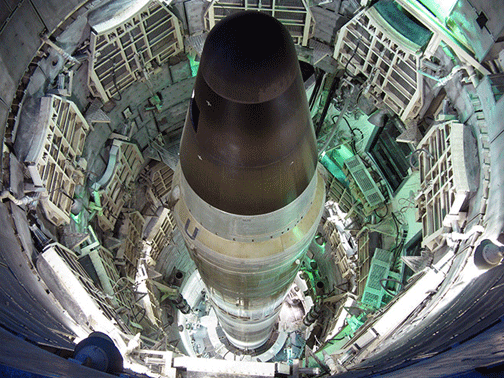
Amid Ukraine Tension, US Deploys Nuclear-Ready B-52 Bombers to UK “The West is trying to make a tragedy out of this,” said Russia’s foreign minister. Common Dreams, JULIA CONLEY February 11, 2022 Despite repeated warnings from Ukrainian President Volodymyr Zelensky that the U.S. is driving the rise of tensions at Ukraine’s eastern border, the U.S. Air Force has deployed four B-52 bombers with nuclear capabilities to the U.K., where one official acknowledged that the deployment is at least partially connected to Russia’s recent military activities.
Two B-52 Stratofortress aircrafts arrived at Royal Air Force Fairford on Thursday, with two more following. The bombers integrated with other NATO members’ forces en route to Fairford, according to the Air Force, including “British Typhoon aircraft and Portuguese F-16s currently assigned to NATO’s Icelandic Air Policing mission.”………
According to The Telegraph, a former British intelligence official noted that the Pentagon could launch air strikes from Fairford as it has before.
“From Fairford they could operate against a range of targets: troop concentrations in southern Russia and Belarus, Moscow/St. Petersburg, even the naval bases in the White Sea,” the former official told the outlet. “In 1991 they hit Baghdad from Fairford, flew on to Diego Garcia, refueled and rearmed, bombed Baghdad again on the way back, and returned to Fairford.”
The bombers sent from Minot Air Force Base in North Dakota are capable of carrying precision-guided and nuclear weapons…………………………….. https://www.commondreams.org/news/2022/02/11/amid-ukraine-tension-us-deploys-nuclear-ready-b-52-bombers-uk
Safety concerns as counterfeit parts found in U.S. nuclear reactors.

Counterfeit parts have been discovered in U.S. nuclear plants, potentially increasing the risk of a safety failure, the inspector general of the federal nuclear industry regulator said in a report released on Thursday.
The report is a blow to a U.S nuclear industry that has shrunk in recent years due to competition from renewable power and plants that burn natural gas and lingering public concerns following high-profile mishaps includinga 2011 tsunami at Japan’s Fukushima plant.
“Counterfeit parts are safety and security concerns that could have serious consequences in critical
power plant equipment required to perform a safety function,” the report from the inspector general’s office of the Nuclear Regulatory Commission
(NRC) said.
Reuters 10th Feb 2022
BBC Cons the Public with Reports of “Sadness as Somerset nuclear power station nears closure” Tell us the Truth.
BBC Cons the Public with Reports of “Sadness as Somerset nuclear power station nears closure” Tell us the Truth, https://mariannewildart.wordpress.com/2022/02/11/bbc-cons-the-public-with-reports-of-sadness-as-somerset-nuclear-power-station-nears-closure-tell-us-the-truth/ The following is a Guest Blog by Jim Duffy former co-ordinator of Stop Hinkley republished with permission from a social media post. This lifts the veil on Hinkley Point B in a way that the BBC are wilfully neglecting to do.
No sadness on my part. It all started badly with bodged welds in the cooling circuit which luckily a welder owned up to some years later when the Chernobyl accident made him worry about the defects he and others made. A regulator told me that the whole cooling system had to be rebuilt while the welder was threatened with prosecution for his honesty and not allowed on site to show the faulty areas.
In 1995 a new low level waste incinerator was refused permission from the Environment Agency after Somerset Green Party campaigned against it with Dr Chris Busby ‘s help. It already had planning permission from the local council but Somerset County Council was worried it would pave the way for a regional incineration centre for radioactive waste. We argued it would harm people’s health.
Chris Busby researched local cancer rates from 2000 onwards which Stop Hinkley commissioned and publicised. He found a doubling of breast cancer mortality in downwind Burnham on Sea together with raised leukaemia and other cancers. BNFL announced the closure of Hinkley ‘A’ when Dr John Large also lambasted the plant for dangerous corrosion. Hinkley ‘B’ carried on running despite evidently contributing to the radioactive discharges.
In the 2000’s Dr John Large supported Stop Hinkley’s campaign to shut it down after worrying cracks and weight depletion were discovered in the graphite reactor core. The regulators forced it to operate at lower temperature and radiation levels to try to maintain safety thus generating less electricity.
At the same time we discovered that one of the three vital safety systems was never fitted to the twin reactors. The boron beads system is designed to slow down the nuclear reactions if the reactors overheat. For some unexplained reason the system was not fitted nor added later despite our protests at the increased risks from the cracks in the reactor cores.
In the mid 2000’s a 20 by 20 metre patch of radiation was found on nearby Kilve beach by a retired submarine engineer with his Geiger counter. His two dogs had died unexpectedly after digging and playing in the sand. The Environment Agency refused to visit the site for five weeks by which time they couldn’t detect the patch. It wasn’t clear if the leak came from Hinkley ‘A’ or ‘B’.
So I can’t cheer at the closure of the plant as it has caused so much worry and concern over the years. Relief is more my feeling although the story isn’t over by a long chalk with all the spent fuel and radioactive waste to take care of for hundreds of thousands of years…”
Hugely costly venture – nuclear fusion – now going private – but success is as elusive as ever

So far, while nuclear fusion has been successfully achieved in labs, ignition has remained elusive.
Europe’s Nuclear Fusion Race Is Going Private. The race is on to achieve commercial nuclear fusion. Believers in the “holy grail of clean energy” are hopeful that a breakthrough in nuclear fusion is imminent
enough that the clean energy source could power a green energy transition sweeping and swift enough to help the world achieve the emissions targets set by the Paris climate accord.
So far, relatively few large-scale nuclear fusion initiatives have gotten off the ground, due to huge barriers to entry. Because of the enormous expense associated with building a reactor capable of facilitating fusion, so far the field has been dominated by publicly funded projects such as Europe’s ITER and China’s EAST (Experimental Advanced Superconducting Tokamak). As scientists have gotten closer and closer to achieving ‘ignition’ – which refers to a nuclear fusion reaction that emits more energy than it consumes – the private sector has become increasingly interested in getting into the industry on the bottom floor and positioning itself at the forefront of what could be a world-changing innovation. So far, while nuclear fusion has been successfully achieved in labs, ignition has remained elusive.
Naked Capitalism 10th Feb 2022
Government approval for Bradwell B project does not really give a green light for nuclear reactors to be built.
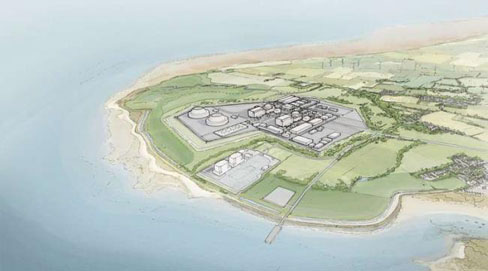
“This absolutely does not give a green light for reactors to be built at Bradwell. “And, given the problems of the Bradwell site and the fierce local opposition, CGN would surely struggle to gain the permits, licences and planning permission that it will need over coming years.
A MAJOR milestone has been reached for a nuclear reactor intended for a new power plant in Essex, but campaigners say the approval shouldn’t be seen as a go-ahead for the plant. The Office for Nuclear Regulation (ONR) and the Environment Agency (EA) have confirmed the UK HPR1000 nuclear reactor is suitable for construction in the UK after completion of an in-depth assessment of the design, marking the end of a five year process.
The technology has been developed by China General Nuclear Group (CGN) and its adaptation to the UK has been jointly performed by CGN and EDF. It is intended to be used in their Bradwell B project.
However. the approval by the regulators should not be read as a go-ahead for a new nuclear power
station at Bradwell, according to the Blackwater Against New Nuclear Group (BANNG). Prof. Andy Blowers, BANNG’s chairman, said: “This absolutely does not give a green light for reactors to be built at Bradwell. “And, given the problems of the Bradwell site and the fierce local opposition, CGN would surely struggle to gain the permits, licences and planning permission that it will need over coming years.
Prof. Blowers said the approval does not recognise the “serious long-term risks” the impacts of
climate change pose to “people and environments from reactors and radioactive waste stores on vulnerable low-lying coasts threatened by flooding, storm surges and sea level rise”. He added: “If Bradwell B ever comes to pass, the ONR and EA will have to grant permits and licenses and we must hope that they will then apply their ‘rigorous and detailed asesssment’ to the issues of radioactive waste, decommissioning, cooling, environmental impact and climate change at the Bradwell site.
Maldon Standard 10th Feb 2022
EU plan to call nuclear power ”green”, but for Asia, nuclear’s outlook is poor
EU plans to label natural gas and nuclear ‘green’ ‘reflect Asia position’ Pinsent Masons, OUT-LAW NEWS | 11 Feb 2022 John Yeap john.yeap@pinsentmasons.com The EU executive arm the European Commission has presented a plan to classify some gas and nuclear power as “transitional” green investments.
Known as the EU Taxonomy Complementary Climate Delegated Act, the plan aims to define sustainable investment to guide spending on projects in line with EU’s climate goal to become climate neutral by 2050. The Commission said it would include certain gas and nuclear power activities as ‘transitional activities’.
………….. “Nuclear involves different considerations as its role in power generation in Asia has to date been and will likely continue to be limited. The small landmass of several nations as well as geological considerations of earthquake, volcanoes and tsunamis will likely inhibit the growth of nuclear in nations not currently deploying nuclear. Where nuclear is currently deployed in the region, its continued growth will continue to be influenced by policy, which remains generally negative to its continued use,” he said.
“China has the largest fleet of nuclear power plants in the region and with its advancing domestic technologies, may continue to champion nuclear power generation…….
…… Nuclear power must meet strict nuclear and environmental safety requirements, and natural gas must contribute to the transition from coal to renewables – investment must meet strict conditions and not squeeze out investment in renewables.
Nuclear-related activities classified as ‘sustainable’ under the Act include advanced technologies with closed fuel cycles; new nuclear power plant projects for energy generation, which will be using best-available existing technologies, will be recognised until the date of approval of construction permit in 2045; and modifications and upgrades of existing nuclear facilities for the purposes of lifetime extension will be recognised until the date of approval by competent authority in 2040.
……… The College of Commissioners has reached political agreement on the text of the Act, which will be formally adopted once translations are available in all EU languages, a statement by the Commission said.https://www.pinsentmasons.com/out-law/news/eu-plans-label-natural-gas-nuclear-green-reflect-asia-position
Macron pledged to close down over a dozen nuclear plants, but now he’s done a U-turn

Mr Macron’s decision to extend the lifespan of existing plants marked a U-turn on an earlier pledge to close more than a dozen of EDF’s 56 reactors by 2035. Nuclear safety still divides Europe following Japan’s Fukushima disaster.
Independent 10th Feb 2022
Slovak government plans to tax nuclear power plants
Slovak government plans to tax nuclear power plants, owners threaten bankruptcy
By Michal Hudec | EURACTIV.sk 11 Feb 22, The “excessive profits” of nuclear power plants should be taxed as this would open up millions to compensate for the soaring energy prices, the economy ministry has said. But Slovenské elektrárne a.s, the owner of both Slovak nuclear power plants, claims the bill would lead to the private company filing for bankruptcy.
The government already agreed on a proposal and sent it to parliament to request a shortened legislative procedure. “The proposal introduces a tax on excessive profits for trading in electricity produced by nuclear facilities. The tax period will be a calendar month, ” the ministry wrote in an explanatory report.
According to the bill, excessive profit is a difference between electricity market prices and expenditures for their production in nuclear power plants. If parliament approves the bill, the state will get half of this difference. This year, it would be approximately €50 million………..
Slovenské elektrárne a.s. is a company owned by EPH of Czech billionaire Daniel Křetínský and Italian energy giant Enel. Together, they own two-thirds of the shares, with the rest belonging to Slovakia’s economy ministry. https://www.euractiv.com/section/politics/short_news/slovak-government-plans-to-tax-nuclear-power-plants-owners-threaten-bankruptcy/
Reactor at Oskarshamn 3 nuclear power plant in Sweden shut down due to ‘fuel damage’.
Reactor at Oskarshamn 3 nuclear power plant in Sweden shut down due to
‘fuel damage’. Oskarhamn 3 will be temporarily taken out of production for
nine days from February 19 after assessments showed a “fuel damage” issue
needed urgent repair, according to owner OKG.
Mirror 10th Feb 2022
https://www.mirror.co.uk/news/world-news/reactor-oskarshamn-3-nuclear-power-26197599
EDF predicts more cuts in nuclear output, as repairs needed for defects in reactors
Electricite de France SA said Friday that it had cut its nuclear output
estimates in France for 2023, adding to concerns after defects had led to
output revisions for 2022. The French energy company said next year’s
output would between 300 and 330 terawatt hours, compared with 340-370 TWh
under previous estimates.
Earlier this week, EDF cut its 2022 output
expectations for the second time, after it found defects at five reactors
at its Civaux and Penly sites. The estimate for 2023 takes into account the
continuation of the control-and-repair program on “pipes potentially
affected by stress corrosion,” EDF said.
Market Watch 11th Feb 2022
https://www.marketwatch.com/story/edf-cuts-2023-french-nuclear-output-estimates-271644567491
In the UK, local Councils are signing up to the UN Treaty on the Prohibition of Nuclear Weapons
| Having campaigned for decades for the global abolition of nuclear weapons, CND supporters had reason to celebrate in 2021 when the Treaty on the Prohibition of Nuclear Weapons (TPNW) entered into force. This United Nations treaty was supported by most of the world’s states and makes nuclear weapons illegal in the countries that sign it. 86 countries have already signed up to the Treaty, but shamefully the British government will not even engage with this historical agreement. There was a particularly memorable moment when the UK representative at the UN stood alongside former US President Trump’s Ambassador outside the building denouncing the talks (which eventually led to the agreement), while the more mature countries got on with the business of negotiating inside. CND groups are already taking matters into their own hands in regards to the TPNW by getting local councils to support the Treaty and building support from the ground up. And now we’re asking our supporters to help us with a campaign to get the UK government to engage with the global majority who support the Treaty. Labour Outlook 10th Feb 2022 https://labouroutlook.org/2022/02/10/talks-not-bombs-campaign-for-nuclear-disarmament-cnd/ |
President Macron asssures France’s EDF of tens of billions of euros in public financing for new nuclear reactors

French Finance Minister Bruno Le Maire told C News TV on Friday that he was sure that EDF’s (EDF.PA) difficulties would “disappear” after France announced plans to build at least six new nuclear reactors in the decades to come.
President Emmanuel Macron said on Thursday that the new plants would be built and operated by state-controlled energy provider EDF and that tens of billions of euros in public financing would be mobilized tofinance the projects and safeguard EDF’s finances.
Reuters 11th Feb 2022
USA does not have to march into war with Russia over Ukraine. It can choose to keep to the Minsk-Normandy process

The current crisis should be a wake-up call to all involved that the Minsk-Normandy process remains the only viable framework for a peaceful resolution in Ukraine. It deserves full international support, including from U.S. Members of Congress, especially in light of broken promises on NATO expansion, the U.S. role in the 2014 coup, and now the panic over fears of a Russian invasion that Ukrainian officials say are overblown.
Memo to Congress: Diplomacy for Ukraine Is Spelled M-I-N-S-K
Ukrainians of all ethnicities deserve genuine support to resolve their differences and find a way to live together in one country—or to separate peacefully.
https://portside.org/2022-02-08/memo-congress-diplomacy-ukraine-spelled-m-i-n-s-k Medea Benjamin, Nicolas J.S. Davies COMMON DREAMS
While the Biden administration is sending more troops and weapons to inflame the Ukraine conflict and Congress is pouring more fuel on the fire, the American people are on a totally different track.
A December 2021 poll found that a plurality of Americans in both political parties prefer to resolve differences over Ukraine through diplomacy. Another December poll found that a plurality of Americans (48 percent) would oppose going to war with Russia should it invade Ukraine, with only 27 percent favoring U.S. military involvement.
The conservative Koch Institute, which commissioned that poll, concluded that “the United States has no vital interests at stake in Ukraine and continuing to take actions that increase the risk of a confrontation with nuclear-armed Russia is therefore not necessary for our security. After more than two decades of endless war abroad, it is not surprising there is wariness among the American people for yet another war that wouldn’t make us safer or more prosperous.”
The most anti-war popular voice on the right is Fox News host Tucker Carlson, who has been lashing out against the hawks in both parties, as have other anti-interventionist libertarians.
On the left, the anti-war sentiment was in full force on February 5, when over 75 protests took place from Maine to Alaska. The protesters, including union activists, environmentalists, healthcare workers and students, denounced pouring even more money into the military when we have so many burning needs at home.
You would think Congress would be echoing the public sentiment that a war with Russia is not in our national interest. Instead, taking our nation to war and supporting the gargantuan military budget seem to be the only issues that both parties agree on.
Most Republicans in Congress are criticizing Biden for not being tough enough (or for focusing on Russia instead of China) and most Democrats are afraid to oppose a Democratic president or be smeared as Putin apologists (remember, Democrats spent four years under Trump demonizing Russia).
Both parties have bills calling for draconian sanctions on Russia and expedited “lethal aid” to Ukraine. The Republicans are advocating for $450 million in new military shipments; the Democrats are one-upping them with a price tag of $500 million.
Progressive Caucus leaders Pramila Jayapal and Barbara Lee have called for negotiations and de-escalation. But others in the Caucus–such as Reps. David Cicilline and Andy Levin–are co-sponsors of the dreadful anti-Russia bill, and Speaker Pelosi is fast-tracking the bill to expedite weapons shipments to Ukraine.
But sending more weapons and imposing heavy-handed sanctions can only ratchet up the resurgent U.S. Cold War on Russia, with all its attendant costs to American society: lavish military spending displacing desperately needed social spending; geopolitical divisions undermining international cooperation for a better future; and, not least, increased risks of a nuclear war that could end life on Earth as we know it.
For those looking for real solutions, we have good news.
Negotiations regarding Ukraine are not limited to President Biden and Secretary Blinken’s failed efforts to browbeat the Russians. There is another already existing diplomatic track for peace in Ukraine, a well-established process called the Minsk Protocol, led by France and Germany and supervised by the Organization for Security and Cooperation in Europe (OSCE).
The civil war in Eastern Ukraine broke out in early 2014, after the people of Donetsk and Luhansk provinces unilaterally declared independence from Ukraine as the Donetsk (DPR) and Luhansk (LPR) People’s Republics, in response to the U.S.-backed coup in Kiev in February 2014. The post-coup government formed new “National Guard” units to assault the breakaway region, but the separatists fought back and held their territory, with some covert support from Russia. Diplomatic efforts were launched to resolve the conflict.
The original Minsk Protocol was signed by the “Trilateral Contact Group on Ukraine” (Russia, Ukraine and the OSCE) in September 2014. It reduced the violence, but failed to end the war. France, Germany, Russia and Ukraine also held a meeting in Normandy in June 2014 and this group became known as the “Normandy Contact Group” or the “Normandy Format.”
All these parties continued to meet and negotiate, together with the leaders of the self-declared Donetsk (DPR) and Luhansk (LPR) People’s Republics in Eastern Ukraine, and they eventually signed the Minsk II agreement on February 12, 2015. The terms were similar to the original Minsk Protocol, but more detailed and with more buy-in from the DPR and LPR.
The Minsk II agreement was unanimously approved by the U.N. Security Council in Resolution 2202 on February 17, 2015. The United States voted in favor of the resolution, and 57 Americans are currently serving as ceasefire monitors with the OSCE in Ukraine.
The key elements of the 2015 Minsk II Agreement were:
- an immediate bilateral ceasefire between Ukrainian government forces and DPR and LPR forces;
- the withdrawal of heavy weapons from a 30-kilometer-wide buffer zone along the line of control between government and separatist forces;
- elections in the secessionist Donetsk (DPR) and Luhansk (LPR) People’s Republics, to be monitored by the OSCE; and
- constitutional reforms to grant greater autonomy to the separatist-held areas within a reunified but less centralized Ukraine.
The ceasefire and buffer zone have held well enough for seven years to prevent a return to full-scale civil war, but organizing elections in Donbas that both sides will recognize has proved more difficult.
Continue reading1 This Month



19 November – Webinar – The Reality of Reprocessing
Time: 11:00 AM Pacific Time (US & Canada) / 2:00 PM Eastern / 7:00 PM UK / 8:00 PM CET
Register for the Zoom Event Here



Shut down the radiation-damaged Heysham nuclear reactors now
To see nuclear-related stories in greater depth and intensity – go to https://nuclearinformation.wordpress.com

Say No to NASA’s Reckless Nuclear Reactor on the Moon
Say No to NASA’s Reckless Nuclear Reactor on the Moon
-
Archives
- November 2026 (74)
- October 2026 (302)
- September 2026 (339)
- August 2026 (330)
- July 2026 (355)
- June 2026 (287)
- May 2026 (306)
- April 2026 (356)
- March 2026 (251)
- February 2026 (267)
- January 2026 (308)
- December 2025 (358)
-
Categories
- 1
- 1 NUCLEAR ISSUES
- business and costs
- climate change
- culture and arts
- ENERGY
- environment
- health
- history
- indigenous issues
- Legal
- marketing of nuclear
- media
- opposition to nuclear
- PERSONAL STORIES
- politics
- politics international
- Religion and ethics
- safety
- secrets,lies and civil liberties
- spinbuster
- technology
- Uranium
- wastes
- weapons and war
- Women
- 2 WORLD
- ACTION
- AFRICA
- Atrocities
- AUSTRALIA
- Christina's notes
- Christina's themes
- culture and arts
- Events
- Fuk 2022
- Fuk 2023
- Fukushima 2017
- Fukushima 2018
- fukushima 2019
- Fukushima 2020
- Fukushima 2021
- general
- global warming
- Humour (God we need it)
- Nuclear
- RARE EARTHS
- Reference
- resources – print
- Resources -audiovicual
- Weekly Newsletter
- World
- World Nuclear
- YouTube
-
RSS
Entries RSS
Comments RSS

