£3 billion more, 1 year longer: EDF Energy announces latest price hike and further delay at Hinkley Point C
£3 billion more, 1 year longer: EDF Energy announces latest price hike
and further delay at Hinkley Point C. Whilst news that yet another civil
nuclear power plant is to be delivered still further over-budget and still
further behind schedule may be ‘par for the course’, the Nuclear Free
Local Authorities still find EDF’s latest pronouncement that Hinkley
Point C will cost £3 billion more and take one year longer to build
shocking.
In a media release yesterday (Thursday 19 May), the French parent
of UK nuclear operator, EDF Energy, conceded that, on their latest
estimate, Hinkley Point C will now cost £25 to 26 billion to build and
become operational no earlier than July 2027.
EDF last updated its Hinkley
Point construction schedule in January 2021, when it stated the plant would
be delayed by a further six months to June 2026 with the cost rising by an
additional half billion pounds to £22 billion to 23 billion. NFLA Chair
Councillor David Blackburn commented: “EDF Energy have blamed COVID and
the Ukraine conflict for the price hike and the delay, but Hinkley Point C
was already way over budget and way behind schedule before either of these
calamities occurred. For the simple reality is that nuclear costs too much
and takes too long”.
NFLA 20th May 2022
UK Ministers taking the public for fools, as they tout grandiose and delusional nuclear power schemes
Betting on the French will not keep Britain’s lights on, EDF’s latest
Hinkley Point delay shows PM’s nuclear ambitions are divorced from
reality.
It is testament to the sheer incompetence of France’s
state-backed utility EDF that Hinkley Point C has become Britain’s most
radioactive construction project and it hasn’t even been built yet. In
fact, one wonders if it ever will be at this rate after yet more delays and
cost overruns.
For critics of atomic energy, Hinkley Point is the gift that
keeps on giving. For the rest of the country it remains laughably elusive.
After repeated setbacks, Britain’s first new plant in three decades was
already scheduled to be nine years overdue and £7bn over budget having
been pushed back to 2026, while estimated build costs had rocketed to
£23bn.
And now? An announcement from EDF, snuck out at 10pm on Thursday
night, reveals that the project has been delayed by another year at best,
and will cost a further £3bn, with Covid the excruciatingly predictable
excuse being provided. It is the fourth time that EDF has had to revise the
timetable and budget since construction began in October 2016.
At this point, any suggestion that the Prime Minister’s recently announced
ambition to build 24 gigawatts of new nuclear capacity, equivalent to
another six Hinkleys, each costing £20bn, have any chance of being
realised should be banished. Ministers are taking us for fools with these
grandiose yet delusional schemes.
Like so many of this Government’s plans
to transform important areas of the economy, Britain’s nuclear ambitions
are totally divorced from reality, and will remain so while we continue to
depend on the same unreliable partner with a risible track record of
delivering on its promises.
But it is in France where the major red flags can be found. EDF’s flagship Flamanville plant in
Normandy, which is being built using the same European Pressurised Reactors
(EPR) that are set to be deployed at Hinkley, was originally meant to come
on line in 2009. Instead, it won’t be ready until 2023, nearly a decade and
a half later than originally planned, and is £10bn over budget after costs
quadrupled from initial estimates in 2004.
Yet Flamanville is just one of
many plants where EDF is experiencing problems. The company has been forced
to launch a programme of checks on its entire fleet of 56 nuclear reactors
after the discovery of corrosion caused outages at some. A total of 12 are
offline, exacerbating a perilous financial squeeze as it prepares to
spearhead Emmanuel Macron’s plans to put nuclear power at the heart of
his country’s pursuit of carbon neutrality by 2050. And yet, incredibly,
EDF harbours ambitions to build another plant in the UK, at Sizewell C in
Suffolk.
Telegraph 21st May 2022
https://www.telegraph.co.uk/business/2022/05/21/betting-french-will-not-keep-britains-lights/
US Government Secret Files: Human Experiments With Plutonium Side Effects
by SOFREP, 22 May 22, ” …………………………………… The Manhattan Project………….. The most famous development of the Manhattan Project was when they produced atomic bombs, two of which were the Little Boy Bomb and the Fat Man Bomb, that were dropped on the two cities of Japan, Hiroshima, and Nagasaki. There was also this not-so-famous bomb that was supposed to be the third bomb to be dropped in Japan had they not surrendered, known as the Demon Core (know why it was called as such here.)
Although a huge chunk of the Manhattan Project was dedicated to the development and production of the weapons, a small portion of it was dedicated to studying the health effects of the radioactive materials involved in the project, which was Plutonium.
Human Experiments
…………………. the huge amounts of radioactive materials used in the experiments also led to widespread contamination even outside of the research facilities. They wanted to know exactly the risks and dangers that these researchers were facing, so they began studying the effects of radiation on human bodies.
The plutonium toxicity studies began with rats as the main subject. These were quickly deemed inconclusive, so they decided to move the experiments onto human trials beginning in 1945. They didn’t realize at the time that rats are pretty resistant to radiation. At that time, details about plutonium were not yet disclosed to the public, so they decided that for the secrecy of it, they would not inform anyone outside of scientific circles about the trials, not even the human test subjects.
A total of eighteen human subjects were selected and injected with plutonium without their knowledge from 1945 until 1947, their ages ranging from 4 to 69. One common thing about them was their diagnosis of a terminal illness.
Patient CAL-1
One of the involuntary subjects of the human radiation experiment was a house painter from Ohio in his late 50s named Albert Stevens, or patient CAL-1. At that time, he had checked into the University of California Hospital in San Francisco and was diagnosed with terminal cancer. It was suggested that a gastroscopy be performed to make sure that the diagnosis was accurate, but it never really happened. And so Stevens was chosen for the study because, according to acting chief of radiology Earl Miller, “he was doomed” to die.
Before he underwent the operation that would try to rid him of cancer, Stevens was injected with what would be known as the highest accumulated radiation dose in any human, 131 kBq (3.55 µCi) of plutonium. After that, stool and urine samples were taken from Stevens for analysis. He then underwent an operation to remove his cancer, which included taking out parts of his liver, entire spleen, lymph nodes, part of his pancreas, part of his omentum, and most of his ninth rib.
When some of the materials removed from Stevens were analyzed, they discovered that Stevens was misdiagnosed and did not have cancer in the first place. He was, in fact, suffering from a large gastric ulcer. He and his family were not informed about it and were instead told that his recovery was speedy. ………….. https://sofrep.com/news/us-government-secret-files-human-experiments-with-plutonium-side-effects/
Entergy shuts down Palisades nuclear station ahead of time
Entergy Corp said on Friday it has permanently shut a nuclear power
station in Michigan despite a Biden administration plan to rescue plants
like it because they generate electricity virtually free of carbon
emissions. Entergy closed the 800-Megawatt Palisades plant in Michigan that
had operated for more than 50 years. “After careful monitoring, operators
made the conservative decision to shut down the plant early due to the
performance of a control rod drive seal,” Entergy said in a statement about
the plant.
Reuters 21st May 2022
New book – does nuclear power have a future?
| Dave Elliott: Nuclear power’s development has been both exciting and difficult, as well as controversial. In this new book, an updated and much expanded second edition of the 2017 text that I wrote for the Institute of Physics (IoP), I look first at the early history of nuclear innovation in the 1950s, when, growing out of the weapons programme, a wide range of ideas for uranium fission reactors were tested, mainly in the USA and UK. As it attempts to show, many of the pilot projects were unsuccessful, indeed some proved dangerous, but some viable lines of power plant development were identified, mostly water-cooled reactors. The book then moves on to the present, when, with economic problems facing the current generation of water-cooled nuclear plants, some of the other older ideas are being revisited. The book looks critically at progress on these ideas so far and asks will any of them be successful, or will nuclear fission prove to be a dead end as an energy option? It also looks at the state of play with nuclear fusion, a parallel development often seen as providing the ultimate energy source for the long term, and it asks whether that is likely to be viable in time to respond to climate change. Overall, it adopts a critical approach. With renewable expanding rapidly around the world as their costs fall, the case for nuclear is, arguably, much weakened. It is still possible that it will revive, with new cheaper technology, but that case has to be made, not just assumed. Nuclear power is often promoted as a viable energy option for major expansion in the future, perhaps alongside renewables, but it clearly has significant problems. By looking back to the past, and also at current progress with new nuclear technology based on earlier ideas, this book aims to identify whether nuclear has a future. Renew Extra 21st May 2022 https://renewextraweekly.blogspot.com/2022/05/nuclear-power-past-present-and-future.html |
UK’s energy policy (for a nuclear ”renaissance”) ignores the fastest and most cost-effective measure – SAVING ENERGY

| Andrew Warrant: Energy policy is big news again. Initially, because fuel prices are rocketing, and set to rise even more this autumn. Plus the invasion of Ukraine has precipitated a determination to minimise the amount of gas and oil purchased in future from Russia. These two factors have prompted Prime Minister Boris Johnson to devise a new energy security strategy. Published last month, its reception was uniformly dismissive. Not so much because of the energy supply sources it concentrated upon but mainly because it entirely omitted any serious consideration of the policy area deemed most capable of providing swift cost-effective solutions. Saving energy. The Times’ editorial was unsparingly contemptuous. The UK government’s new energy security strategy amounted to “little more than a glorified press release.” The “eye-catching announcement” of eight new nuclear power plants offers “no analysis of why Britain had succeeded in starting construction on just one new reactor in the 16 years since Tony Blair announced a nuclear renaissance.” It added: “What is certain isthis new nuclear programme will not bring energy bills down any time soon. if ever. Instead, it will push bills up as the costs of construction are passed on to consumers. Nor will it do much in the near term to reduce Britain’s reliance on Russian oil and gas given that it takes at least a decade to build a nuclear power station.” While no doubt well-intentioned, Rishi Sunak’s attempts to alleviate the cost of living – including through a £150 council tax rebate for most homes and a £200 loan towards energy bills – have been overly complicated and badly targeted. And, as Helen Barnard of the Joseph Rowntree Foundation has pointed out, the £2.4bn the Treasury lost cutting fuel duty would have covered the cost of insulating a third of all social housing in the country. “Theconsultancy E3G has calculated that new energy efficiency measures could reduce the heating bills for poorly insulated homes by an average of £500 and end the UK’s dependence on Russian gas (which is admittedly quite limited) within a year. There is a very revealing explanation for why no new plans are being proposed. It is that “this is not being imposed on people and is a gradual transition following the grain of behaviour. The British people are no-nonsense pragmatists who can make decisions based on the information.” But if an Englishman’s home really is his castle, then why did fears for COVID 19 lock everybody inside their castle? If we want people to support delivery of a collective good like energy security or climate mitigation, then it is sensible to see it as collective action. And for Government to lead it. The parallel with the pandemic is spot on.Energy in Buildings and Industry 18th May 2022 https://eibi.co.uk/article/collective-spirit-required-to-ensure-energy-security/ |
Global heating brings megadrought and water shortages to over half of the USA
The “megadrought” gripping the southwestern US has driven water levels
at the two largest reservoirs to record lows, forcing unprecedented
government intervention to protect water and power supplies across seven
states.
Millions of Americans already contending with critical water
shortages now face the prospect of black outs as energy demand grows during
heatwaves just as hydroelectric power supply is strained. A US power
regulator this week warned that a big swath of the US was at risk of
blackouts, partly as a result of drought conditions curtailing
hydroelectric supplies.
US government climate scientists have said more
than half the country is enduring drought conditions, while a separate
study estimated that the drought affecting southwestern states was the
worst to hit the region for 1,200 years after being exacerbated by human
activity.
FT 21st May 2022
https://www.ft.com/content/9f00dfff-3a44-483f-9d5a-f58db7806046
UK Home Secretary PRITI PATEL WAS PART OF CIA-LINKED LOBBY GROUP WITH HUSBAND OF ASSANGE JUDGE

Home Secretary Priti Patel, who will soon decide whether to extradite Julian Assange to the US, has been a political adviser to – and been funded by – a right-wing lobby group which has attacked Assange in the British media for a decade. DECLASSIFIED UK, MATT KENNARD, 29 MARCH 2022
- Patel sat on advisory council of Henry Jackson Society (HJS) with Lord Arbuthnot, whose wife later made two key legal rulings against Assange
- Former CIA director James Woolsey has been an HJS patron since 2006
- HJS has hosted three other ex-CIA directors in London since 2014
- Patel was paid £2,500 by HJS to fly to Washington for a “security” programme in the US Congress
- Patel ignores Declassified’s request for clarification of her role in HJS
Priti Patel sat on the Henry Jackson Society’s (HJS) advisory council from around 2013-16, although the exact dates are unclear as neither the HJS nor Patel responded to Declassified’s requests for clarification.
She has also received funds from the HJS, and was paid £2,500 by the group to visit Washington in March 2013 to attend a “security” programme in the US Congress.
Patel, who became an MP in 2010 and was appointed Home Secretary in 2019, also hosted an HJS event in parliament soon after she returned from Washington.
After the UK Supreme Court said this month it was refusing to hear Assange’s appeal of a High Court decision against him, the WikiLeaks founder’s fate now lies in Patel’s hands. He faces life in prison in the US.
The HJS, which was founded in 2005 and does not disclose its funders, has links to the CIA, the intelligence agency behind the prosecution of Assange and which reportedly developed plans to assassinate him.
One of the HJS’s international patrons is James Woolsey, CIA director from 1993-95, who was in this role throughout the period Patel was advising the group. Woolsey’s affiliation to the HJS goes back to at least 2006, soon after it was founded.
In 2014, the group hosted General David Petraeus, CIA director from 2011-12, at a UK parliament meeting from which all media were barred.
Three years later, in 2017, the HJS organised another event at parliament with General Michael Hayden, CIA director from 2006-9, to “discuss the current state of the American Intelligence Community and its relationships with foreign partners.”
Hayden described “the relationship within the Five Eyes community as strong as ever, despite potential concerns over recent intelligence leaks between members.” Five Eyes is an intelligence alliance comprising Australia, Canada, New Zealand, the UK, and the US.
‘Perception of bias’
During a visit to the UK in July 2020, then US Secretary of State Mike Pompeo spoke at a roundtable hosted by the HJS with what the Washington Post referred to as a group of “hawkish” members of the Conservative Party.
As director of the CIA in 2017, Pompeo had launched a blistering attack on WikiLeaks calling the media organisation a “hostile intelligence service” that makes “common cause with dictators”.
Pompeo did not provide evidence but added a threat: “To give them the space to crush us with misappropriated secrets is a perversion of what our great Constitution stands for. It ends now.”
On the HJS advisory council at the same time as Patel was Lord James Arbuthnot, a former Conservative defence minister. His wife, Lady Emma Arbuthnot, was Westminster Chief Magistrate from 2016-2021.
For part of her tenure, she was in charge of the Assange case and made two key rulings against him in 2018. Lady Arbuthnot eventually stepped aside from ruling on the case because of a “perception of bias” but never declared a conflict of interest.
The links between Patel and Lord Arbuthnot go further. In 2010, soon after becoming an MP, Patel was appointed one of five parliamentary officers of the Conservative Friends of Israel (CFI) when the group was chaired by Lord Arbuthnot.
CFI has been described as “beyond doubt the most well-connected and probably the best funded of all Westminster lobbying groups”. It also does not disclose its funders.
Patel was forced to resign as Secretary of State for International Development in November 2017 after it was revealed that she had held more than a dozen undeclared meetings with Israeli ministers and organisations while on holiday in the country.
Many of these were arranged by CFI’s honorary president, Lord Polak. Patel’s resignation letter accepted that her conduct “fell below…standards of transparency and openness”.
HJS staff have been repeatedly critical of Julian Assange and WikiLeaks in the British media since 2011 when its then associate director, Douglas Murray, engaged in a combative debate with Assange.
………. Over the following years, the HJS and its staff continued to be among the most active civil society voices for impugning the motives and reputation of Assange.
This stands in contrast to nearly all human rights and press freedom organisations which argue that extraditing the WikiLeaks publisher to the US would be a grave blow to media freedom.
‘Conspiracy theories’
In October 2016, the HJS released a statement to the media, which claimed: “Mr Assange has a long track record of stealing and distributing information, peddling conspiracy theories, and casting aspersions on the moral standing of western democratic governments. He has done this whilst supporting, and being supported by, autocratic regimes.”
No evidence was supplied to support the assertions.
A number of other HJS staff—including spokesperson Sam Armstrong and then chief of staff Ellie Green—have made anti-Assange interventions in the British media.
Secrecy
In October 2019, as home secretary, Patel visited Washington again to meet William Barr, the US Attorney General who was then in charge of the Assange case as head of the Department of Justice.
Together they signed the Cloud Act which made it easier for American and British law enforcement agencies to demand electronic data on targets as they undertake investigations.
Assange’s defence team had previously raised the concern in court that Barr may be using Assange’s extradition case in the UK for political ends.
In August 2020, Declassified requested basic information about Patel’s 2019 trip to Washington. The Home Office confirmed it held the information but refused to release it because the department considered “that disclosure of some of the information would prejudice relations between the UK and the United States”.
In May 2020, Declassified also requested information about any calls or emails made or received by Patel since she became Home Secretary which concerned the case of Julian Assange, or mentioned his name.
The Home Office told us “we can neither confirm nor deny whether we hold the information you have requested” because “to do so either way would disclose information that constitutes the personal data of Julian Assange”.
The same request for Sajid Javid’s tenure as Home Secretary from 2018-19 was rejected because the department said “we have carried out a thorough search and we have established that the Home Office does not hold the information that you have requested.”
This was despite the fact Javid signed the initial US extradition request for Assange in June 2019. The shadow home secretary at the time, Diane Abbott, opposed approving the US extradition request.
Declassified previously revealed that before signing the US request, Javid had attended six secretive meetings, some attended by former CIA directors, which were organised by a US lobby group which has published calls for Assange to be assassinated or taken down.
The Home Office recently admitted it had eight officials working on Operation Pelican, the UK government campaign to seize Assange from the Ecuadorian embassy in London.
The department, however, claimed it did not know which other UK government ministries were involved in the operation.
Priti Patel and the Henry Jackson Society did not respond to requests for information and comment. https://declassifieduk.org/priti-patel-was-part-of-cia-linked-lobby-group-with-husband-of-assange-judge/
Ukraine War Has No End in Sight

Ukraine’s current status as a wartime non-Nato ally has strengthened a long-held goal of the US and Nato of neutralizing Russia as a long-term military threat to Europe — in short, by transforming Ukraine’s military into a de facto Nato proxy.
As things stand, the best Russia can hope for is a permanent state of conflict with Ukraine — which would accomplish the US goal of “weakening” Russia.
Neither Russia nor Nato knows where and how escalation would end.
https://www.energyintel.com/00000180-d669-d410-aba9-f66dbd120000, Author Scott Ritter, Washington, May 18, 2022
Russia’s invasion of Ukraine is grinding its way toward its inevitable conclusion, namely Russian control over the Donbas region. But this will not end the conflict between Russia and Ukraine, which has expanded in scope and scale beyond the capabilities of the Russian military resources originally allocated. With no diplomatic off-ramp on the horizon, the war risks becoming a permanent state of conflict between Russia and Ukraine — with unknown consequences.
As the Ukraine conflict enters its third month, the Kremlin looks likely to achieve its major military objective of securing physical control over the eastern Donbas region. Peripheral territorial acquisition of the strategic southern city of Kherson, as well as a swath of territory connecting Crimea to the Donbas and the border of the Russian Federation, also looks likely.
While it seems clear that Ukraine will not be formally joining Nato any time soon, if ever, the reality is that the war has reforged the relationship between Ukraine and the trans-Atlantic alliance in a way that transforms the way the two entities work together. Ukraine’s current status as a wartime non-Nato ally has strengthened a long-held goal of the US and Nato of neutralizing Russia as a long-term military threat to Europe — in short, by transforming Ukraine’s military into a de facto Nato proxy.
Game Changer
Nato’s decision to arm Ukraine, combined with the willingness of several Nato nations to allow their territory to be used for training, has provided the Ukrainian military with the kind of strategic depth that was unimaginable when the war began on Feb. 24. The transition from supplying light anti-armor and anti-aircraft missiles to heavy weaponry such as artillery and armor has also enabled Ukraine to begin the process of reconstituting the heavy brigades that Russia is destroying in eastern Ukraine.
The creation of an impregnable Ukrainian strategic rear is a game changer. First and foremost, it provides Ukraine with the means to rearm, refit and re-equip its forces to Nato standards without fear of Russian intervention. This not only counters Russia’s stated military objective of “demilitarization” of Ukraine’s forces, but also steels the resolve of the Ukrainian government to reject any settlement that obliges them to embrace neutrality in perpetuity.
Russia’s efforts to disrupt the injection of Nato-provided supplies and material have proven haphazard at best. While warehouses containing military equipment have been identified and destroyed, Ukrainian units equipped with the latest US and Nato weapons are still appearing on the front lines. Likewise, while Russia has targeted Ukraine’s petroleum refining and storage capacity, the continued provision by Nato countries of refined petroleum products allows the Ukrainian military to remain mechanized. In short, while Russia will likely accomplish the objective of securing the Donbas and associated regions, unless it is willing to expand the scope and scale of its current interdiction efforts, it will not be able to bring to a successful conclusion its state of war with Ukraine.
Escalating Tensions
There currently is no identifiable diplomatic off-ramp for either Ukraine or Russia to end the conflict. Rather, all existing trends point to continued escalation. While Ukraine and Nato have constructed the strategic depth to allow Ukraine’s continued resistance, Russia’s current military configuration remains inadequate to the task of matching this mobilization. As things stand, the best Russia can hope for is a permanent state of conflict with Ukraine — which would accomplish the US goal of “weakening” Russia.
Add in expected pressures on Russia from Nato expansion in northern Europe (Finland and Sweden), and rising tensions involving Transnistria (a pro-Russian breakaway state between Ukraine and Moldova), and the current situation appears untenable for Russia without a broader mobilization of its military resources. While the outcome of any such action is impossible to predict, one thing is sure: Neither Russia nor Nato knows where and how such escalation would end.
Scott Ritter is a former US Marine Corps intelligence officer whose service over a 20-plus-year career included tours of duty in the former Soviet Union implementing arms control agreements, serving on the staff of US Gen. Norman Schwarzkopf during the Gulf War and later as a chief weapons inspector with the UN in Iraq from 1991-98.
Seismic Concerns at Los Angeles Nuclear Laboratory and Expanded Plutonium Pit Production
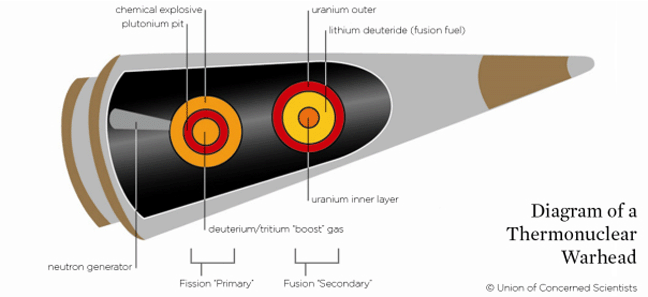
Seismic Concerns at LANL and Expanded Plutonium Pit Production http://nuclearactive.org/, May 19th, 2022, Ongoing Plutonium operations at Los Alamos National Laboratory’s Technical Area 55 are centered in the middle of the 36-square mile national nuclear weapons facility. LANL is the only U.S. facility with the capabilities to fabricate plutonium triggers, or the fissile pits, for nuclear weapons. However, Technical Area 55, or TA-55, is located within the complex Pajarito Fault Zone between two young, north – south running faults called the Guaje Mountain and Rendija Canyon faults. Visual evidence of faulting can be found in the canyons to the north of TA-55. http://nuclearactive.org/gilkeson/ see Seismic Documents.
The U.S. Department of Energy owns LANL. It has plans for expansion of all things plutonium-pit production at the Plutonium Facility and at least five new support buildings at TA-55. CCNS anticipates that DOE will continue its efforts to conceal and ignore the reality of the growing seismic threats of the young faults.
We witnessed similar efforts in the mid-2000s when DOE began to design a new super Walmart-sized Nuclear Facility within TA-55 next door to the Plutonium Facility. DOE was so bold as to dig into the volcanic tuff with heavy equipment to prepare a pad for future construction. http://www.nuclearactive.org/news/030510.html In the end, public opposition and escalating costs forced the cancellation of its plans. http://nuclearactive.org/livestreamed-nuclear-safety-board-hearing-on-february-21st-in-albuquerque/
Fabricating plutonium pits for nuclear weapons involves many steps – some using aqueous processes that result in water contaminated with radiation and hazardous materials. That water is treated across the street from the Plutonium Facility at the Radioactive Liquid Waste Treatment Facility and for decades was discharged through an industrial outfall into Effluent Canyon. Since November 2011, though, the treated water has been evaporated into the air at a mechanical evaporator.
In April, the Environmental Protection Agency renewed the five-year industrial permit for LANL to discharge through Outfall 051 into Effluent Canyon. https://www.epa.gov/nm/los-alamos-national-laboratory-lanl-industrial-wastewater-permit-final-npdes-permit-no-nm0028355
We note that on May 11th, CCNS, Honor Our Pueblo Existence, and the Albuquerque Veterans for Peace, Chapter No. 63, appealed the EPA decision to permit the outfall and five others to the Environmental Appeals Board. https://yosemite.epa.gov/oa/EAB_Web_Docket.nsf/f22b4b245fab46c6852570e6004df1bd/ba987f24df0c356085258837004f3dcd
Then on May 5th, the New Mexico Environment Department approved for the first time a ground water discharge permit for not only for the Radioactive Liquid Waste Treatment Facility, the outfall and Mechanical Evaporator, but for two large solar evaporative tanks, and a new low-level radioactive liquid waste treatment facility. In addition, DOE plans to build a liquid waste treatment facility for the transuranic plutonium liquid waste. https://www.env.nm.gov/public-notices/, go to Los Alamos County, and scroll down to DP-1132 where the draft permit is posted, but not the final permit.
These facilities are all in support of DOE’s plans for expanded plutonium pit production at LANL.
The extent of American radiation exposure is larger than you think

U.S. nuclear bomb testing spread radiation across the vast majority of the country https://www.deseret.com/opinion/2022/5/20/23125918/opinion-the-extent-of-american-radiation-exposure-nuclear-bomb-testing-reca By John LaForge, Readers’ Forum, May 21, 2022
In a May 3 editorial board opinion “The steep price of America bombing its own people,” it says “the interior West of the United States” is “the only part of the nation exposed repeatedly, over many years, to fallout from nuclear weapons tests conducted by the United States government.”
This is a gross underestimation of the nationwide extent of radioactive fallout spread from U.S. bomb testing in the atmosphere, fallout which, in fact, contaminated each and every county in the continental United States.
The board must certainly know of the groundbreaking October 1997 report by the National Cancer Institute, “Estimated Exposures and Thyroid Doses Received by the American People from Iodine-131 in Fallout Following Nevada Atmospheric Nuclear Bomb Tests.”
This report notes in its executive summary and in multiple map illustrations that “Some radioiodine was deposited everywhere in the United States, with the highest deposits immediately downwind of the NTS (Nevada test site).”
The report notes that “Ninety nuclear tests … released about 150 million curies of iodine-131, mainly in the years 1952, 1953, 1955, and 1957.” Of course beyond just iodine-131, there were dozens of other dangerous radioactive materials in the fallout. Radioiodine alone was studied because after being deposited on grass, it quickly contaminated cow’s milk and consequently the infants, children and adults that consumed the milk.
UK Public Accounts Committee warns on need to double-check on safety of aging nuclear reactors
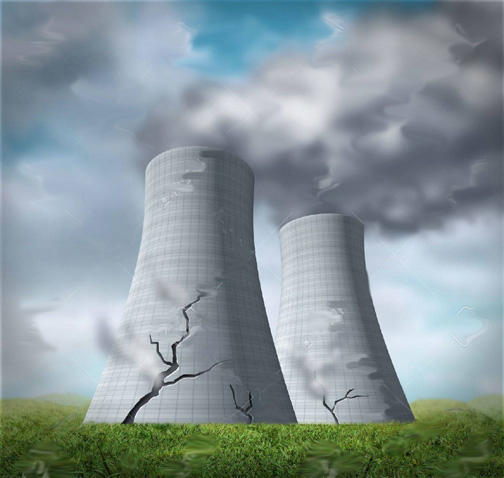
Ageing nuclear reactors must be ‘double-checked’ for safety before
being kept going to ease energy crisis. Closure of seven nuclear reactors
by 2028 will ‘significantly reduce’ UK energy generation, the Public
Accounts Committee warns, and taxpayers face billions of pounds in extra
costs.
iNews 20th May 2022
UK Parliament’s Public Accounts Committee sets out the grim facts on costs of decommissioning nuclear reactors

Despite government already having had to provide additional funding of
£10.7 billion, there remains a strong likelihood that more taxpayers’
money will be required to meet the costs of decommissioning the seven
Advanced Gas-cooled Reactor nuclear power stations.
The Nuclear Liabilities Fund, which was set up to meet the decommissioning costs of these stations,
has not kept up with the increased costs of decommissioning or met its
investment targets. In response, government has chosen to top up the Fund
with taxpayers’ money, providing an injection of capital of £5.1 billion
in 2020–21 with a further £5.6 billion expected in 2021–22. HM
Treasury and the Department for Business, Energy & Industrial Strategy have
opted to maintain an investment strategy for the Fund whereby around 80% of
its assets are invested in the National Loans Fund currently earning
minimal returns.
Estimated decommissioning costs on the other hand have
almost doubled since March 2004, estimated at £23.5 billion in March 2021,
and there remains a significant risk that the costs could rise further
putting strain on the Fund.
Public Accounts Committee 20th May 2022
https://publications.parliament.uk/pa/cm5803/cmselect/cmpubacc/118/summary.html
UK nuclear power stations’ decommissioning cost soars to £23.5bn
UK nuclear power stations’ decommissioning cost soars to £23.5bn https://www.theguardian.com/environment/2022/may/20/uk-nuclear-power-stations-decommissioning-cost Failures in government’s investment strategy mean taxpayer has contributed £10.7bn in just two yearsm Sandra Laville Environment correspondent Fri 20 May 2022
The cost of decommissioning the UK’s seven ageing nuclear power stations has nearly doubled to £23.5bn and is likely to rise further, the public accounts committee has said.
The soaring costs of safely decommissioning the advanced gas-cooled reactors (AGRs), including Dungeness B, Hunterston B and Hinkley B, are being loaded on to the taxpayer, their report said.
Failures in the government’s investment strategy for the fund, which was set up to pay for the decommissioning, have led to the taxpayer topping it up by an additional £10.7bn in just two years.
The nuclear power stations are owned by EDF Energy and provide much of the UK’s nuclear power-generated electricity, which makes up 16% of the energy mix. But the stations are nearing the end of their lives and are scheduled to stop generating electricity during this decade.
The government has recently agreed that once the stations have been defuelled by EDF, which involves the removal of all the spent fuel from the reactor core and cooling ponds, ownership of the stations will be transferred to the government’s Nuclear Decommissioning Authority (NDA) to complete decommissioning.
“The pace at which the stations can be defuelled could have a big impact on the costs, between £3.1bn and £8bn depending on the time taken,” the inquiry report said. “Successful defuelling will depend on all parties being ready and working together, including the NDA being ready to receive and dismantle the volume of fuel arriving at Sellafield. Any delays in the defuelling process could result in costs increasing substantially.
“The handover agreement does not appear to sufficiently ‘incentivise cost efficiency and ensure a smooth transfer of defuelled stations to the NDA’.”
The public accounts committee also said it had concerns over whether the NDA had the capacity to take on the seven AGR stations in addition to its other responsibilities, which includes decommissioning the older Magnox reactors.
It will cost the UK taxpayer £132bn to decommission all the UK’s civil nuclear sites and the work will not be completed for another 120 years, according to latest estimates.
Boris Johnson has pledged to build eight nuclear power stations in eight years. But the UK has no facility for permanently and safely storing the waste from past, present or future nuclear power stations. Most is currently stored at Sellafield, one of the most complex and hazardous nuclear sites in the world.
Nuclear Waste Services, an arm of the government, is seeking a site to build a geological deposit facility deep underground for all the UK’s nuclear waste.
MPs on the public accounts committee said in their report on Friday the government must learn lessons from the rising costs of decommissioning the seven AGR reactors and be clear how the decommissioning of proposed new nuclear stations would be funded.
The seven stations were sold by the government to EDF in 2009, with the later agreement that the French company would remove the fuel from the stations when they closed, and the Nuclear Decommissioning Authority would take on the decommissioning of the sites. But the cost of decommissioning the seven AGR reactors that began to close last year, plus Sizewell B, has more than doubled from £12.6bn in 2004-05 to £23.5bn in 2020-21, the public accounts committee report said.
“There remain significant uncertainties that will need to be managed to prevent further increases in costs and ease pressures on the fund,” the report said. “The cost of defuelling will depend on the stations not closing significantly earlier than planned and how quickly they can be defuelled once electricity generation ceases.”
The public accounts committee, in a previous report, said the cost of decommissioning the older Magnox reactors – which were the first generation of UK nuclear stations – had increased by billions of pounds because of uncertainty over the condition of the sites and how to tackle the decommissioning.
The PAC report said the closure of seven nuclear stations by 2028 would have a significant impact on energy production, but EDF has said there can be no extensions to the life of the reactors while the UK waits for new generating capacity to come online.
Nuclear Fusion Is Already Facing a Fuel Crisis

It doesn’t even work yet, but nuclear fusion has encountered a shortage of tritium, the key fuel source for the most prominent experimental reactors
” ………………… Like many of the most prominent experimental nuclear fusion reactors, ITER relies on a steady supply of both deuterium and tritium for its experiments. Deuterium can be extracted from seawater, but tritium—a radioactive isotope of hydrogen—is incredibly rare.
Atmospheric levels peaked in the 1960s, before the ban on testing nuclear weapons, and according to the latest estimates there is less than 20 kg (44 pounds) of tritium on Earth right now. And as ITER drags on, years behind schedule and billions over budget, our best sources of tritium to fuel it and other experimental fusion reactors are slowly disappearing.
Right now, the tritium used in fusion experiments like ITER, and the smaller JET tokamak in the UK, comes from a very specific type of nuclear fission reactor called a heavy-water moderated reactor. But many of these reactors are reaching the end of their working life, and there are fewer than 30 left in operation worldwide—20 in Canada, four in South Korea, and two in Romania, each producing about 100 grams of tritium a year. (India has plans to build more, but it is unlikely to make its tritium available to fusion researchers.)
But this is not a viable long-term solution—the whole point of nuclear fusion is to provide a cleaner and safer alternative to traditional nuclear fission power. “It would be an absurdity to use dirty fission reactors to fuel ‘clean’ fusion reactors,” says Ernesto Mazzucato, a retired physicist who has been an outspoken critic of ITER, and nuclear fusion more generally, despite spending much of his working life studying tokamaks.
The second problem with tritium is that it decays quickly. It has a half-life of 12.3 years, which means that when ITER is ready to start deuterium-tritium operations (in, as it happens, about 12.3 years), half of the tritium available today will have decayed into helium-3. The problem will only get worse after ITER is switched on, when several more deuterium-tritium (D-T) successors are planned.

These twin forces have helped turn tritium from an unwanted byproduct of nuclear fission that had to be carefully disposed of into, by some estimates, the most expensive substance on Earth. It costs $30,000 per gram, and it’s estimated that working fusion reactors will need up to 200 kg of it a year. To make matters worse, tritium is also coveted by nuclear weapons programs, because it helps makes bombs more powerful—although militaries tend to make it themselves, because Canada, which has the bulk of the world’s tritium production capacity, refuses to sell it for nonpeaceful purposes.
………………………………… the mainstream fusion community is still pinning its hopes on ITER, despite the potential supply problems for its key fuel. “Fusion is really, really difficult, and anything other than deuterium-tritium is going to be 100 times more difficult,” says Willms. “A century from now maybe we can talk about something else.” https://www.wired.com/story/nuclear-fusion-is-already-facing-a-fuel-crisis/
1 This Month



19 November – Webinar – The Reality of Reprocessing
Time: 11:00 AM Pacific Time (US & Canada) / 2:00 PM Eastern / 7:00 PM UK / 8:00 PM CET
Register for the Zoom Event Here



Shut down the radiation-damaged Heysham nuclear reactors now
To see nuclear-related stories in greater depth and intensity – go to https://nuclearinformation.wordpress.com

Say No to NASA’s Reckless Nuclear Reactor on the Moon
Say No to NASA’s Reckless Nuclear Reactor on the Moon
-
Archives
- November 2026 (74)
- October 2026 (302)
- September 2026 (339)
- August 2026 (330)
- July 2026 (355)
- June 2026 (287)
- May 2026 (306)
- April 2026 (356)
- March 2026 (251)
- February 2026 (267)
- January 2026 (308)
- December 2025 (358)
-
Categories
- 1
- 1 NUCLEAR ISSUES
- business and costs
- climate change
- culture and arts
- ENERGY
- environment
- health
- history
- indigenous issues
- Legal
- marketing of nuclear
- media
- opposition to nuclear
- PERSONAL STORIES
- politics
- politics international
- Religion and ethics
- safety
- secrets,lies and civil liberties
- spinbuster
- technology
- Uranium
- wastes
- weapons and war
- Women
- 2 WORLD
- ACTION
- AFRICA
- Atrocities
- AUSTRALIA
- Christina's notes
- Christina's themes
- culture and arts
- Events
- Fuk 2022
- Fuk 2023
- Fukushima 2017
- Fukushima 2018
- fukushima 2019
- Fukushima 2020
- Fukushima 2021
- general
- global warming
- Humour (God we need it)
- Nuclear
- RARE EARTHS
- Reference
- resources – print
- Resources -audiovicual
- Weekly Newsletter
- World
- World Nuclear
- YouTube
-
RSS
Entries RSS
Comments RSS

