No Iran nuclear deal ‘worse’ than even a bad one: Israel sources
No Iran nuclear deal ‘worse’ than even a bad one: Israel sources, https://www.aljazeera.com/news/2022/5/23/no-iran-nuclear-deal-posses-more-danger-for-israel-and-its-allies
Failure to revive Iran’s nuclear accord poses much more danger even than ‘a bad’ deal, Israeli intelligence sources tell the Jerusalem Post.
Not reviving the Iran nuclear deal could result in more imminent nuclear danger for Israel and its allies, anonymous intelligence sources told the Jerusalem Post, saying Tehran was only weeks away from weaponising uranium to 90 percent.
Iran is in a position to produce not only one but as many as four nuclear bombs, the sources told the Israeli news outlet.
While Israeli leaders such as current Prime Minister Naftali Bennett and his predecessor Benjamin Netanyahu have denounced a deal with Iran over its nuclear programme, the sources said there are factions within Israel’s defence and intelligence apparatus that believe no deal poses a far greater risk than “even a bad deal“.
Negotiations to revive the landmark 2015 nuclear deal signed between Iran and world powers resumed in 2021 after former US President Donald Trump withdrew from the historic agreement in 2018 and re-imposed crippling sanctions on Tehran.
After more than a year of negotiations, it remains unclear whether a deal can be reached to save the Joint Comprehensive Plan of Action (JCPOA) – the agreement’s official name.
The United States and Israel have expressed their commitment to work together to prevent Iran from ever obtaining a nuclear weapon.
Iran has denied allegations that it plans to produce nuclear arms, saying there is no weapons programme operational at the moment, and the country is working on the peaceful use of nuclear energy.
US Secretary of State Antony Blinken has said the administration of President Joe Biden supports restoring the nuclear deal is “the best way to put Iran’s programme back in the box”, after former President Donald Trump unilaterally withdrew Washington from it in 2018.
Talks have stalled over a number of issues including a US “terror” designation against Iran’s elite military force, the Islamic Revolutionary Guard Corps (IRGC).
Tensions rose again on Sunday after an Iranian colonel was assassinated outside his home in Tehran by motorcycle-riding gunmen – an attack Iran suggested was carried out by Israeli operatives.
The European Union’s coordinator for the nuclear talks, Enrique Mora, visited Tehran earlier this month in an effort to facilitate the negotiations.
Israel has threatened military action if diplomacy collapses.
Billionaires from USA and Denmark have inordinate influence on public opinion about molten salt nuclear reactors

| Elon Musk and Bill Gates are the two best-known (energy) billionaires, but there are many more that invest their money in energy innovation. Denmark’s richest man is a big investor in a startup that researches molten salt as a form of energy storage. The perception of energy billionaires often influences the opinion of the general public vis-a-vis certain energy innovations. Oil Price 22nd May 2022https://oilprice.com/Energy/Energy-General/Billionaires-Are-The-Drivers-Of-Innovation-In-The-Energy-Industry.html |
The U.N. “Sustainable Development Goals”- just ”greenwashing” – claim experts
100 scientists and academics urge UN to drop sustainable development
targets after ‘failure’. Exclusive: The letter was released as the
United Nations begins a summit on disaster risks in Bali, Indonesia on
Monday. The experts are calling for the United Nations to abandon the
“Sustainable Development Goals” — a group of 17 targets adopted in
2015 to tackle global social and environmental issues from hunger to
climate change to economic growth.
Among the notable experts who have put
their names to the letter are Peter Kalmus, a climate scientist at Nasa who
was arrested last month in a climate protest; Yves Cochet, France’s
former Minister of Environment and Regional Planning; and Britt Wray,
author of the recent climate anxiety book, Generation Dread.
The Sustainable Development Goals (SDGs) are based on an ideology that values
material and technological progress and prioritizes corporate interests –
where “humanity will balance social, economic and environmental issues to
progress materially,” Jem Bendell, a sustainability researcher at the
University of Cumbria, told The Independent via email, citing a recent
non-peer reviewed paper that he authored on the subject. Dr Bendell called
the SDGs a “systemic greenwash” that undermines “challenges to
structural power.”
Independent 23rd May 2022
https://www.independent.co.uk/climate-change/news/un-sustainable-development-failure-b2084034.html
What to do about humanity entering “a spiral of self-destruction” – a UN Summit now on in Indonesia
A little-known United Nations summit gets underway in Indonesia this week.
Unfortunately, it’s one that will become more important to us all. The
intention? What to do about humanity entering “a spiral of
self-destruction”. At least that should be the focus, according to the
UN’s Deputy Secretary, ahead of the gathering in Bali. Meanwhile, on the
other side of the world in Davos, Switzerland, leaders of the richest
corporations and banks are sounding much more upbeat at the World Economic
Forum’s Annual Meeting.
Independent 23rd May 2022
https://www.independent.co.uk/climate-change/news/davos-switzerland-un-bali-climate-b2084431.html
Asianization of NATO: China, Russia react to Biden visit — Anti-bellum
Global TimesMay 25, 2022 Tensions escalate in Korean Peninsula as QUAD summit shakes Asian stability The US and South Korea jointly fired two missiles on Wednesday in response to North Korea’s reported launch of three missiles, marking a further escalation of the Korean Peninsula situation as US President Joe Biden concluded his Asia trip to […]
Asianization of NATO: China, Russia react to Biden visit — Anti-bellum
Former Sect. of State Kissinger says U.S. should get along with China
Gary Clifford Gibson, Blog and Books, 23 May 22, Former Sect. of State Henry Kissinger; 99 years old, spoke at an economic forum on the need to get along with China. If the Biden administration had its oars in the water on international affairs it would understand that mentioning the U.S. would go to war if China invades Taiwan is a diplomatic faux pas.
There are other ways to let China know what the administration thinks about Taiwanese independence and U.S. support for that without using a bludgeon, in a manner of speaking.
The Democratic President and his party leadership are used to forcing whatever they want into being, since the U.S. is regarded as the most powerful nation on Earth militarily and financially and party leadership realizes that force can get what they want done sometimes. Yet nuclear war with either Russia or China shouldn’t be an option; and it is for Democrats as an escalation from conventional war implicitly. Having peaceful and mutually prosperous relations with China is advantageous for the world and the world environment. Intelligent leadership needs to find a way to return international affairs to order as soon as possible including ending sanctions on Russia directly if they sign on on halting the Ukraine venture in place and sign off on a permanent peace……….. https://wordpress.com/read/blogs/53114755/posts/13350
The risk of Green Parties selling their souls to the nuclear lobby – Finland succumbs to the nuclear siren-song

Yes, it’s been all too much for Finland. Green Party members are finding it much easier to get along with the international powers-that-be, by simply dropping their anti-nuclear principles.
I mean – if your well-paid job depends on it , and your status, and self-esteem as an important person. well – why oppose those prestigious leaders who now greenwash the nuclear industry.?
After all, Finland has a nuclear industry, and is very proud of its coming, though rather limited, nuclear waste facility. And Finland’s joining NATO, and however much they deny this, could well be hosting nuclear weapons before too long.
Finland’s Greens will probably find it easy to forget that the full nuclear fuel cycle emits lots of greenhouse gases, that it produces toxic wastes, that it has safety risks, that it is most uneconomic, and that the nuclear industry really has one sole raison-d’etre – nuclear weapons.
It’s just too hard to press on with energy efficiency, wind, sun and wave power – when you’re up against a tsunami of pro-nuke propaganda.
No doubt the nuclear lobby is salivating at the thought that other Green Parties might follow suit, and turn dirty yellow. But Finland is in a bit of a nervous breakdown over Russia. in this time of Ukraine war, and it is more likely that the global Green Party movement will stick to reality.
War in Ukraine is getting complicated, and America isn’t ready — The New York Times

https://en.thepage.ua/politics/war-in-ukraine-is-getting-complicated-and-america-isnt-ready Author Valery Moiseev, 22 May 22,
The Senate passed a $40 billion emergency aid package for Ukraine, but with a small group of isolationist Republicans loudly criticizing the spending and the war entering a new and complicated phase, continued bipartisan support is not guaranteed. This is stated in an editorial published in The New York Times (NYT).
Avril Haines, the director of national intelligence, warned the Senate Armed Services Committee recently that the war in Ukraine could take “a more unpredictable and potentially escalatory trajectory”, with the increased likelihood that Russia could threaten to use nuclear weapons.
The newspaper also notes that there are many questions that President Biden has yet to answer for the American public.
Is the United States, for example, trying to help bring an end to “this conflict” (as the newspaper calls the war in Ukraine) through a settlement that would allow for a sovereign Ukraine and some kind of relationship between the United States and Russia? Or is the United States now trying to weaken Russia permanently? Has the administration’s goal shifted to destabilizing Putin or having him removed? Does the United States intend to hold Putin accountable as a war criminal? Or is the goal to try to avoid a wider war — and if so, how to achieve this?
Without clarity on these questions, the White House not only risks losing Americans’ interest in supporting Ukrainians — who continue to suffer the loss of lives and livelihoods — but also jeopardizes long-term peace and security on the European continent, the NYT says.
The authors of the article believe that Americans “have been galvanized by Ukraine’s suffering”, but popular support for a war far from U.S. shores will not continue indefinitely. Inflation is a much bigger issue for American voters, and problems in global food and energy markets are likely to intensify.
“It is tempting to see Ukraine’s stunning successes against Russia’s aggression as a sign that with sufficient American and European help, Ukraine is close to pushing Russia back to its positions before the invasion. But that is a dangerous assumption.”
The article says that Russia remains too strong, and Putin has invested too much personal prestige in the invasion to back down.
“Unrealistic expectations could draw the United States and NATO ever deeper into a costly, drawn-out war. Russia, however battered and inept, is still capable of inflicting untold destruction on Ukraine and is still a nuclear superpower with an aggrieved, volatile despot who has shown little inclination toward a negotiated settlement.”
The NYT says that it is the Ukrainians who must make the hard decisions: they are the ones fighting, dying and losing their homes to Russian aggression, and it is they who must decide what an end to the war might look like. “If the conflict does lead to real negotiations, it will be Ukrainian leaders who will have to make the painful territorial decisions that any compromise will demand.”
But as the war continues, “Biden should also make clear to President Volodymyr Zelenskyy and his people that there is a limit to how far the United States and NATO will confront Russia, and limits to the arms, money and political support they can muster. It is imperative that the Ukrainian government’s decisions be based on a realistic assessment of its means and how much more destruction Ukraine can sustain.”
Confronting this reality may be painful, but it is not appeasement, the NYT stresses. This is what governments are duty bound to do, not chase after an illusory “win.” Russia will be feeling the pain of isolation and debilitating economic sanctions for years to come, and Putin will go down in history as a butcher. The challenge now is to shake off the euphoria, stop the taunting and focus on defining and completing the mission.
Ukraine Contact Group: war used to expand global NATO

Defense News May 22, 2022, Rick Rozoff, m https://antibellum679354512.wordpress.com/2022/05/22/ukraine-contact-group-war-used-to-expand-global-nato/
More nations expected to sign up for Pentagon’s Ukraine aid group
A group of international defense chiefs convened by U.S. Defense Secretary Lloyd Austin to coordinate military aid for Ukraine is likely to expand when it meets for the second time on Monday.
The Ukraine Contact Group, which included 40 member countries at the inaugural gathering at Ramstein Air Base in Germany on April 26, has since attracted more interest….
“In its first iteration, you had countries from the Middle East, you had countries from the Indo-Pacific,” he said. “It wasn’t just Europe, and it certainly wasn’t just NATO….”
British Defense Secretary Ben Wallace, co-organizer of the push, is expected to make an opening statement along with Austin and a Ukrainian delegate, according to a British official, who spoke on condition of anonymity….
At the last meeting, Germany agreed to provide 50 Cheetah air-defense vehicles to Ukraine. The vehicles are slated to be delivered in July, German broadcaster ZDF reported. The British government also agreed to provide Ukraine with anti-aircraft capabilities, along with Canada’s offer of eight armored vehicles.
Austin will hold a call with Ukraine’s defense minister, Oleksii Reznikov, to discuss its military requirements in advance of the contact group meeting, Kirby said….
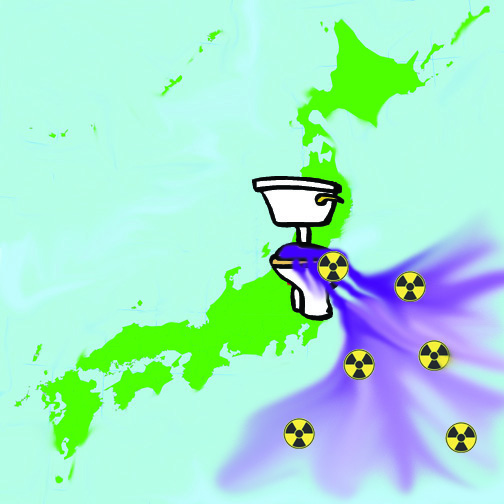
Nuclear expert reaffirms harm of dumping nuclear-contaminated water into ocean, calls on Japan to stop pressuring opposition voices
By Zhang Changyue, May 22, 2022
Nuclear expert reaffirms harm of dumping nuclear-contaminated water into ocean, calls on Japan to stop pressuring opposition voices https://www.globaltimes.cn/page/202205/1266269.shtml
Experts have reaffirmed the inevitable radioactive pollution to be caused by the dumping of nuclear-contaminated water from the Fukushima nuclear plant into the Pacific Ocean after Japan on Wednesday initially approved the discharge plan.
They demanded the Japanese government to stop pressuring those opposed to the plan and to truly listen to concerns from domestic public and international community, as a 30-day public comment period will finally determine the fate of the plan.
The Japanese government and Tokyo Electric Power Company (TEPCO) haven’t conducted a comprehensive environmental impact assessment as required by international law, Shaun Burnie, a senior nuclear specialist at Greenpeace, a global environmental protection organization, told the Global Times.
Their assessment made fundamental mistakes in radiation protection by ignoring the evidence that many different radionuclides would be discharged from the Fukushima nuclear power plant. For example, how much radioactivity in total is planned to be discharged has not been provided,” Burnie pointed out.
“The contaminated water contains radioactive cesium, strontium, tritium and other radioactive substances, which could be incorporated and concentrated in marine biota and end up in the bodies of humans. Some could cause damage to DNA, while others result in higher risks of diseases such as leukemia and blood cancer,” said Burnie.
“To assess the consequences of the tank releases, we need a full accounting of what isotopes are left in each tank after any secondary treatments. This is not just for the nine isotopes currently reported but for a larger suite of possible contaminants, such as plutonium,” explained Burnie. The expert added that since different radionuclides behave differently in the environment, models of tritium’s rapid dispersion and dilution in the ocean cannot be used to assess the fate of other potential contaminants.
Some isotopes are more readily incorporated into marine biota or seafloor sediment, said Burnie. For example, the biological concentration factor for fish for carbon-14 is up to 50,000 times higher than for tritium. Cobalt-60 is up to 300,000 times more likely to end up associated with seafloor sediment.
Also, the discharge could in reality continue for many decades longer than the period of 30 years claimed by the Japanese government – potentially for the rest of this century and beyond, Burnie noted.
Although the Japanese government and TEPCO agreed in 2015 that the consent of the Fukushima Fishermen’s Association would be a condition for any future discharges, they are trying to pressure those opposed to say yes, said Burnie, encouraging efforts in Japan and the international community to continue to stop the unlawful and unjustified dumping plan.
Magnitude 6.0 quake shakes Japan’s east and northeast
https://www.japantimes.co.jp/news/2022/05/22/national/earthquake-ibaraki-fukushima/An earthquake with a preliminary magnitude of 6.0 struck Fukushima and other prefectures in Japan’s east and northeast on Sunday, but there was no threat of a tsunami, the Meteorological Agency said.
There were no immediate reports of injuries or serious property damage following the quake, which occurred around 12:24 p.m.
The quake’s magnitude was later revised upward from the initial estimate of 5.8, the agency said.
The quake registered lower 5 on the Japanese seismic intensity scale to 7 in the city of Iwaki in Fukushima, according to the agency. Its focus was at a depth of about 30 kilometers in the Pacific off Ibaraki Prefecture.
The quake registered 4 in some other parts of Fukushima and 3 in the neighboring prefectures of Miyagi, Yamagata, Ibaraki, Niigata and Tochigi.
No abnormalities were found at the Tokai No. 2 nuclear power plant on the coast of Ibaraki or at the Fukushima No. 1 and No. 2 nuclear power plants, their operators said.
There were also no major transport disruptions. JR East said it briefly suspended services on a section of the Tohoku Shinkansen line between Fukushima and Miyagi prefectures.
Tritium isn’t harmless — Beyond Nuclear International

Dumping Fukushima’s radioactive water is one of many wrong options
Tritium isn’t harmless — Beyond Nuclear International Japan plan to dump tritiated water into the ocean comes with big risks https://wordpress.com/read/feeds/72759838/posts/4028994254
On May 18, Japan’s Nuclear Regulation Authority gave its initial approval for Tokyo Electric Power to release radioactive water from the destroyed Fukushima nuclear power plant into the Pacific Ocean, claiming that there are no safety concerns. But science disagrees with this conclusion. In a September 2019 blog entry, now updated by the author, Dr. Ian Fairlie looks at the implications of dumping largely tritiated water into the sea and whether there are any viable alternatives.
By Ian Fairlie
At the present time, over a million tonnes of tritium-contaminated water are being held in about a thousand tanks at the site of the Fukushima Daichi nuclear power station in Japan. This is being added to at the rate of ~300 tonnes a day from the water being pumped to keep cool the melted nuclear fuels from the three destroyed reactors at Fukushima. Therefore new tanks are having to be built each week to cope with the influx.
These problems constitute a sharp reminder to the world’s media that the nuclear disaster at Fukushima did not end in 2011 and is continuing with no end in sight.
Recently TEPCO / Japanese Government have been proposing to dilute, then dump, some or all of these tritium-contaminated waters from Fukushima into the sea off the coast of Japan. This has been opposed by Japanese fishermen and environment groups.
There has been quite a media debate, especially in Japan, about the merits and demerits of dumping tritium into the sea.
Many opinions have been voiced in the debate: most are either incorrect or uninformed or both. This post aims to rectify matters and put the discussion on a more sound technical basis.
- TEPCO / Japanese Government have argued that, as tritium is naturally-occurring, it is OK to discharge more of it. This argument is partly correct but misleading. It is true that tritium is created in the stratosphere by cosmic ray bombardment, but the argument that, because it exists naturally, it’s OK to dump more is false. For example, dioxins, furans and ozone are all highly toxic and occur naturally, but dumping more of them into the environment would be regarded as anti-social and to be avoided.
- TEPCO / Japanese Government have argued that it is safe to dump tritium because it already exists in the sea. Yes, tritium is there but at low concentrations of a few becquerels per litre (Bq/l). But the tritium concentrations in the holding tanks at Fukushima are typically about a megabecquerel per litre (MBq/l). In layman’s terms, that’s about a million times more concentrated.
- TEPCO / Japanese Government have argued coastal nuclear plants routinely dump water that contains tritium into the ocean. Yes, this does (regrettably) occur as their cooling waters become tritiated during their transits of reactor cooling circuits. But two wrongs do not make a right. Moreover, the annual amounts are small compared with what is being proposed at Fukushima. A one GW(e) BWR reactor typically releases about a terabecquerel (trillion Bq) of tritium to sea annually. But Fukushima’s tanks hold about one petabecquerel (PBq or a thousand trillion Bq) of tritium – that is, a thousand times more. A much bigger problem.
- Readers may well ask where is all this tritium coming from? Most (or maybe all) the tritium will come from the concrete structures of the ruined Fukushima reactor buildings. After ~40 years’ operation they are extremely contaminated with tritium. (Recall that tritium is both an activation product and a tertiary fission product of nuclear fission.) And, yes, this is the case for all decommissioned (and by corollary, existing) reactors: their concrete structures are all highly contaminated with tritium. The older the station, the more contaminated it is. In my view, this problem constitutes an argument for not building more nuclear power stations: at the end of their lives, all reactor hulks will remain radioactive for over 100 years.
- What about other radioactive contaminants? Reports are emerging that the tank waters also remain contaminated with other nuclides such as caesium-137 and especially strontium-90. This is due to the poor performance of Hitachi’s Advanced Liquid Processing System (ALPS). Their concentrations are much lower than the tritium concentrations but they are still unacceptably high.
For example, on 16 October 2018, the UK Daily Telegraph stated:
“Tokyo Electric Power Co (Tepco) which runs the plant, has until recently claimed that the only significant
contaminant in the water is safe levels of tritium, which can be found in small amounts in drinking water, but is dangerous in large amounts. The [Japanese] government has promised that all other radioactive material [apart from tritium] is being reduced to “non-detect” levels by the sophisticated (ALPS).
“However documents provided to The Telegraph by a source in the Japanese government suggest that the ALPS has consistently failed to eliminate a cocktail of other radioactive elements, including iodine, ruthenium, rhodium, antimony, tellurium, cobalt and strontium.
“That adds to reports of a study by the regional Kahoko Shinpo newspaper which it said confirmed that levels of iodine-129 and ruthenium-106 exceeded acceptable levels in 45 samples out of 84 in 2017. Iodine 129 has a half-life of 15.7 million years and can cause cancer of the thyroid; ruthenium 106 is produced by nuclear fission and high doses can be toxic and carcinogenic when ingested.
In late September 2017, TEPCO was forced to admit that around 80 per cent of the water stored at the Fukushima site still contains radioactive substances above legal levels after the Ministry of Economy, Trade and Industry held public hearings in Tokyo and Fukushima at which local residents and fishermen protested against the plans. It admitted that levels of strontium 90, for example, are more than 100 times above legally permitted levels in 65,000 tons of water that has been through the ALPS cleansing system and are 20,000 times above levels set by the government in several storage tanks at the site.”
So what is to be done?
First of all, the ALPS system has to be drastically improved. After that, some observers have argued that, ideally, the tritium should be separated out of the tank waters. Some isotopic tritium removal technologies have been proposed, for example by the International Atomic Energy Agency, but the picture is complicated. The only operating facility I’m aware of, is located at Darlington near Toronto in Canada, though secret military separation facilities may exist in the US or France.
However the Darlington facility was extremely difficult and expensive to construct (~12 years to build and to get working properly), and its operation consumes large amounts of electricity obtained from the Darlington nuclear power station nearby. Its raison d’ȇtre is to recover very expensive deuterium for Canadian heavy water reactors.
Other proposed remedies will probably be more expensive. One problem is basic physics. The tritium is in the form of tritiated water, which is effectively the same as water itself, so that chemical separation or filtration methods simply do not work.
Another problem is inefficiency: with isotope separation, one would have to put the source hydrogen through thousands of times to get even small amounts of separated non-radioactive hydrogen. A third problem is that hydrogen, as the smallest element, is notoriously difficult to contain, so that gaseous tritium emissions would be very large each year.
None of these technologies is recommended as a solution for Japan: any such facility would release large amounts of tritium gas and tritiated water vapor to air each year, as occurs at Darlington. Tritium gas is quickly converted to tritiated water vapor in the environment. The inhalation of tritiated water vapor from any mooted Japanese facility would likely result in higher collective doses than the ingestion of tritiated sea food, were the tritium to be dumped in the sea.
I recommend neither of these proposed solutions.
There are no easy answers here. Barring a miraculous technical discovery which is unlikely, I think TEPCO/Japanese Government will have to buy more land and keep on building more holding tanks to allow for tritium decay to take place. Ten half-lives for tritium is 123 years: that’s how long these tanks will have to last – at least.
This will allow time not only for tritium to decay, but also for politicians to reflect on the wisdom of their support for nuclear power.
3 unplanned shutdowns of French nuclear reactors due to corrosion concerns, in the Framatome-designed piping

EDF revealed on Thursday that it will shut down the 1.3 GW Paluel 2, Penly
2 St Alban 2 and Cattenom 1 reactors next year, when no shutdowns were
planned so far, to check whether their auxiliary pipes to the primary
circuit are affected by corrosion. The dates of these shutdowns, which will
occur in the second quarter of 2023, must be published imminently on Remit,
said the deputy director of EDF’s nuclear production department Régis
Clément at a press conference in Paris.
The French group intends to check the rest of these 56 reactors by the end of 2023, or even the beginning of 2024, during the planned shutdowns which will be extended and the ten-year
visits, seven of which are scheduled for the rest of this year, he added.
Earlier on Thursday, EDF on Thursday revised the dates for thirteen
scheduled outages at nuclear power plants in 2022-23 due to
corrosion-related checks and repairs. Mr. Clément also asserted that the
“preponderant” cause of cracks due to corrosion on the auxiliary piping
to the primary circuit of certain reactors in the nuclear fleet was the
design of these circuits, developed by the EDF subsidiary Framatome. “Today
what we have as a clear conviction is that the design [of the auxiliary
circuits] appears to us as a preponderant cause”, he said.
Montel 19th May 2022
https://www.montelnews.com/news/1322042/corrosion-edf-rvle-les-4-units-quelle-arrtera-en-2023
Leaked emails expose UK Home Secretary Priti Patel’s connection to MI6-style ‘research and influence operation’AND to extraditing Julian Assange

British Home Secretary Priti Patel is due to imminently decide on whether WikiLeaks founder Julian Assange is extradited to the US, where he faces life imprisonment for journalistic activities.
Patel sat on the advisory council of the neoconservative Henry Jackson Society think tank alongside Lord James Arbuthnot – a former Conservative Minister of Defence whose wife, Lady Emma Arbuthnot, made two key rulings against Assange in 2018, before being forced to step aside due to a “perception of bias.”
it is safe to assume the intelligence cabal bringing its influence to bear on Patel would strongly favor his extradition to the US.
The GRAYZONE, KIT KLARENBERG·MAY 18, 2022,
A deeply anti-democratic MI6-linked cabal’s apparent influence on Priti Patel raises serious questions about her fitness to rule on Julian Assange’s extradition to the US.
- Cabal now managing MI6-inspired “research and influence operation”
- Effort may be funded by intelligence agency actors
- British Home Secretary implicated in plot
- Green advocates and perceived Chinese agents targeted
- Home Office infiltrated by cabal’s civil service mole
- Cabal seeks to seize power over energy policy and “displace” government minister
Hinkley Point C – costs soar, delays again. UK govt’s big bet on nuclear is backfiring
| The risks to the government’s plans to build another eight nuclear power plants have been underlined by the latest wave of ballooning costs and delays at Hinkley Point C. EDF, which is constructing the 3,200MW reactor in Somerset, has warned that estimated costs have jumped to between £25 billion and £26 billion, while the power station will not now start producing electricity until June 2027 at the earliest. The revised estimates are £3 billion higher than the previous cost projections in January last year, which were in turn well ahead of the group’s initial £18 billion forecast when the project was approved in 2016. Hinkley is Britain’s first new nuclear plant in decades. It is expected to power six million homes, with the government guaranteeing that consumers pay an index-linked £92.50 per megawatt hour, in 2012 prices, for its electricity. Construction costs are being met by EDF and its junior partner in the project, CGN of China. Critics seized on the latest overruns to point out the risks to Boris Johnson’s blueprint for another 24 gigawatts of new nuclear power by 2050. The Stop Sizewell C lobby group pointed out that, while EDF and CGN are on the hook for Hinkley’s “rocketing costs”, a proposed new financing model would see consumers paying upfront via higher bills for cost overruns. “The £20 billion estimate for Sizewell C is already two years out of date, with zero chance of it being delivered at that cost,” it said, noting that the risk of spiralling costs would “fall on consumers”. Doug Parr, Greenpeace’s UK policy director, said: “The government’s big bet on nuclear is backfiring with every extra billion added to the bill”. He advocated investment in offshore wind instead. Costs at the prototype for Hinkley, the Flamanville plant in France, have rocketed from €3.3 billion to €12.7 billion. Construction is running more than a decade late. Times 20th May 2022 https://www.thetimes.co.uk/article/hinkley-point-c-nuclear-plant-to-open-a-decade-late-9vsk6w9zx |
1 This Month



19 November – Webinar – The Reality of Reprocessing
Time: 11:00 AM Pacific Time (US & Canada) / 2:00 PM Eastern / 7:00 PM UK / 8:00 PM CET
Register for the Zoom Event Here



Shut down the radiation-damaged Heysham nuclear reactors now
To see nuclear-related stories in greater depth and intensity – go to https://nuclearinformation.wordpress.com

Say No to NASA’s Reckless Nuclear Reactor on the Moon
Say No to NASA’s Reckless Nuclear Reactor on the Moon
-
Archives
- November 2026 (74)
- October 2026 (302)
- September 2026 (339)
- August 2026 (330)
- July 2026 (355)
- June 2026 (287)
- May 2026 (306)
- April 2026 (356)
- March 2026 (251)
- February 2026 (267)
- January 2026 (308)
- December 2025 (358)
-
Categories
- 1
- 1 NUCLEAR ISSUES
- business and costs
- climate change
- culture and arts
- ENERGY
- environment
- health
- history
- indigenous issues
- Legal
- marketing of nuclear
- media
- opposition to nuclear
- PERSONAL STORIES
- politics
- politics international
- Religion and ethics
- safety
- secrets,lies and civil liberties
- spinbuster
- technology
- Uranium
- wastes
- weapons and war
- Women
- 2 WORLD
- ACTION
- AFRICA
- Atrocities
- AUSTRALIA
- Christina's notes
- Christina's themes
- culture and arts
- Events
- Fuk 2022
- Fuk 2023
- Fukushima 2017
- Fukushima 2018
- fukushima 2019
- Fukushima 2020
- Fukushima 2021
- general
- global warming
- Humour (God we need it)
- Nuclear
- RARE EARTHS
- Reference
- resources – print
- Resources -audiovicual
- Weekly Newsletter
- World
- World Nuclear
- YouTube
-
RSS
Entries RSS
Comments RSS

