“Shell” companies purchase radioactive materials, prompting push for nuclear licensing reform

Defense News, By Bryant Harris, 10 Aug 22,
WASHINGTON – Late last year, government employees forged a copy of a license to buy hazardous, radioactive material. They created shell companies, then placed orders, generated invoices and paid two U.S.-based vendors.
The scheme worked. The employees successfully had the material shipped, complete with radioactive stickers on the side, then confirmed delivery.
But the workers were actually investigators from the Government Accountability Office, the congressional watchdog, and they were testing the Nuclear Regulatory Commission’s ability to regulate the sale and procurement of dangerous materials.
The act, and a subsequent report from the GAO, alarmed Rep. Ritchie Torres, D-N.Y., who is now calling on the Nuclear Regulatory Commission to overhaul its licensing system as a way to avoid a national security disaster.
“Anyone could open a shell company with a fraudulent license to obtain dangerous amounts of radioactive material that could be weaponized into a dirty bomb,” Torres told Defense News in an interview on Wednesday. “Disperse radioactive material in a city as densely populated as New York, and it could cause catastrophic damage.”
The commission classifies radioactive material into five categories of risk. Only categories one and two currently are subject to its independent license verification system – a loophole that Torres and the GAO fear that an individual or group could exploit to wreak havoc by building a dirty bomb that combines combines conventional explosives with category three radioactive materials.
Torres, who sits on the House Homeland Security Committee, is pressing the NRC to immediately expand its independent license verification system to include category three quantities of radioactive materials. He formally made the licensing overhaul request in a letter seen by Defense News on Wednesday. This request is in line with the GAO’s recommendations in what Torres called an “alarming report.”………………………
more https://www.defensenews.com/congress/2022/08/10/shell-companies-purchase-radioactive-materials-prompting-push-for-nuclear-licensing-reform/
Utility company Eon talks about possibility of delaying the closure of Germany’s last nuclear reactor
German utility Eon is open to discuss the operational extension of its 1.4
GW nuclear reactor Isar 2 as a way for Germany to secure supplies this
winter in the face of an energy crisis, its CFO said on Wednesday.
“Our last nuclear power station will go offline at the end of the year,” said
Mark Spieker, CFO of Eon, in a speech published prior to the presentation
of the company’s interim results. “If, as part of the ongoing stress
test, the federal government reassess the situation, we’re open to
discussions,” he added.
Germany is due to close its last three nuclear
reactors with a total capacity of 4.1 GW by the end of 2022, but the recent
energy crisis caused by Russia’s invasion of Ukraine has spurred calls to
extend the reactors’ lifetimes to avoid blackouts over the winter.
Montel 10th Aug 2022
https://www.montelnews.com/news/1341852/eon-open-to-discussion-on-nuclear-lifetime-extension
Legal challenge to Sizewell C nuclear project
Campaign group Together Against Sizewell C (TASC) has now sent a
pre-action protocol letter, signalling the start of judicial review process
challenging the decision, which it contends is “unlawful”. The Planning
Inspectorate’s report to the business secretary stated that “unless the
outstanding water supply strategy can be resolved”, the case for granting
consent was “not made out”.
Building 9th Aug 2022
https://www.building.co.uk/news/sizewell-c-approval-faces-legal-challenge/5118719.article
The United States, in decline but still able to kill us all
The march of folly in American strategic policy has enshrined the madness of control by a giant defence industry and defence budget now past $800 billion.

The fiercely presented wearisome trope of commitment to a Rules Based International Order is quite suddenly unmasked as an American Establishment desire to maintain a unipolar control of the world, with violence.
The fiercely presented wearisome trope of commitment to a Rules Based International Order is quite suddenly unmasked as an American Establishment desire to maintain a unipolar control of the world, with violence.
The global dominance of the United States, in so many fields, from space, to science, to entertainment, to sport, to novelty in the development of the English language, has been taken for granted, is part of our fabric of Australian existence.
Reinforced by the Covid Era of Isolation, Netflix, Facebook, and Computer Games and inability even to get to Bali or Thailand let alone China, we are now in a noisy metal barrel where even dissident voices seem projections from the dissident voices of the US, similarly muted and squeezed. At a time when the US and its roles in the world are suddenly dramatically changing.
The undoing of the United States, the collapse of the imperial centre, is happening with little awareness in Australia. Our generally oblivious mindframes affect the capacity of political leaders to reflect upon or point to core problems of our world. Richard Adams, the author of Watership Down, that great rabbit adventure full of meaning for human society, coined the rabbit language word ‘tharn’ for the mental state of rabbits caught in the headlights and stuck. We are a tharn nation, gabbling about entertainments and irritations, eyes glued to the seatback monitor, not wanting to know that the plane is crashing.
Heed these markers:
- The Americans were first to the moon, but NASA after the retirement of the space shuttle has depended on Russian rockets to get to their joint space station. The Russians are now planning to remove the propulsion units of the station which keep it from crashing, their property, for use on a bigger new venture. America is losing in space, though US private business has appallingly taken the lead in cluttering near space with junk.
- The fiercely presented wearisome trope of commitment to a Rules Based International Order is quite suddenly unmasked as an American Establishment desire to maintain a unipolar control of the world, with violence. This is being unmasked in much of the world if not NATO and AUKUS and the conservative acolytes in Japan and ROK. Ideological assertions of democracy versus autocracy, built by vilification and isolation of China and Russia, is rotting from the head as big democracies are in serious trouble.
- We are doing OK in Australia, our minds from age 12 filled with bubblegum flavoured vape and Tiktok, graduating to Facebook and the metaverse, and with a newer, kinder, kinda-tealish government we can all go to sleep, take off our masks and order American franchised fast food. Or real Aussie drinks. But while we have had a narrow focus on bad boys in the SAS we fail to review our complicity in the great crimes of the twenty first century, led by champions of democracy, smashing the lives of people in a number of countries far more violently than has the Ukraine war so far. Biden and his Secretary of State were advocates for invasions of Afghanistan and Iraq, so appallingly bringing down bad governments and making countries ungovernable. Creating Al Qaeda and ISIS in the process, directly through funding and arming extremists (in Afghanistan beginning before the Russians were invited into Afghanistan) and via embitterment of ordinary people. The world is destabilised, American control is widely undone.
- The march of folly in American strategic policy has enshrined the madness of control by a giant defence industry and defence budget now past $800 billion. Poverty of foreign policy has led to regimes of sanctions which have been substantially shaped by Richard Nephew whose book reveals that far from focusing on potentates and oligarchs, the targets of sanctions must be ordinary people and the purpose is to inflict pain and weaken resolve (his words). Consider sanctions related deaths in Iraq Venezuela Cuba, Afghanistan Pain but no loss of resolve, hatred not submission. The US official study of the effects of strategic bombing on Germany in World War II by J K Galbraith and others long ago suggested morale and resolve were increased by the bombing of cities and civilians. And yet we have the ongoing commitment to defend and achieve democracy by mass murder, with constant focus on disruption, regime change, and violence… not on peace.
- Jeffrey Sachs has recently returned to the themes of his 2013 book on the 50th anniversary of President John Kennedy’s Commencement Speech at American University in 1963. Speaking in the aftermath of the Cuban Missile Crisis, Kennedy spoke of peace not as an event or a state but a constant process of engagement. We now have no such thing, we are in an Age of Hostility, Meanness, Folly, and Decay.right wing is fervently in support. Stanley Kubrick made a movie about such madness, we are sleeping through it.
Australia recognises, as does the United States, that Taiwan is part of China. Though the media vague up the history, China kicked the Portuguese and Dutch out of Taiwan early in the 1600s, long before the greatest land grab in history, of Britain over the Australian continent, could even be imagined as the British didn’t know it was there then. The government in Taipei is the Government of the Republic of China. The large opposition party in the National Assembly is the Kuomintang, ruling party of the government of the Republic of China that lost the revolutionary war on the mainland in 1949 and retreated to Taiwan. The ROC held the China seat in the UN until 1971 with American backing. The majority of local governments in Taiwan are governed by the KMT because the party of the national government is on the nose both because of its independence-advocating foreign policy and corruption allegations. Pelosi’s visit risks great power war as not seen since 1945. The American right wing is fervently in support. Stanley Kubrick made a movie about such madness, we are sleeping through it.
The US economy is in serious trouble………………………………….
The US campaign for unipolar dominance has included partly fabricated propaganda against China and Russia. This no longer convinces or concerns a wide sweep of the world beyond NATO, the G7, the EU and AUKUS. Mix in enough lies and it all seems lies.
The summit meeting of BRICS in June seemed a more constructive meeting than the G7. The countries of Eurasia also have the Shanghai Cooperation Organisation SCO. The Iran,Russia, Turkey summit meeting in Tehran in July 2022 seems to have been more successful than President Biden’s visit to Saudi Arabia to meet also other Arab leaders, a visit described by the Wall Street Journal as worse than an embarrassment,…………………………..more https://johnmenadue.com/the-united-states-in-decline-but-still-able-to-kill-us-all/
Nagasaki urges the elimination of nuclear weapons as city marks 77th A-bomb anniversary

August 9, 2022 (Mainichi Japan) NAGASAKI (Kyodo) — Nagasaki marked the 77th anniversary Tuesday of the U.S. atomic bombing of the southwestern Japan city during World War II, with Mayor Tomihisa Taue calling for the abolition of nuclear weapons amid mounting concern over their potential use following Russia’s invasion of Ukraine.
The atomic bombing of Nagasaki, three days after a similar bomb was dropped on Hiroshima around 300 kilometers to the northeast, had taken the lives of an estimated 74,000 people by the end of 1945, with many others suffering from the effects of burns and radiation-related illnesses long after the attack.
A moment of silence was observed at 11:02 a.m., the exact time on Aug. 9, 1945, when a plutonium bomb codenamed “Fat Man” dropped by a U.S. bomber exploded over the port city, only the second time a nuclear weapon has been used in war.
In a Peace Declaration delivered during a memorial ceremony at the city’s Peace Park, the mayor called on nuclear weapons states to present a concrete way forward to achieve nuclear disarmament at the ongoing review conference of the Nuclear Non-Proliferation Treaty.
Taue also demanded that the Japanese government lead discussions on a possible nuclear weapons free-zone in Northeast Asia, as well as sign and ratify a U.N. treaty banning nuclear weapons………………………………………………….
In the Peace Park, atomic bomb survivors and relatives of the victims gathered to offer prayers, some with flowers in their hands, from the early morning as cicadas sang in the trees.
“I heard a loud boom and saw a bright spark on that day even though I had escaped to an air raid shelter after seeing a plane approach,” said Michiko Kaida, 89. She said she was around 8 kilometers from the hypocenter with her friends.
“It is difficult for me to recall that day and the aftermath. It was so devastating,” she said………………
Over a one-year period through the end of July, the city confirmed the deaths of 3,160 atomic bomb survivors. Its list of those officially recognized as victims of the atomic bombing now bears the names of 192,310 people.

The combined number of officially recognized survivors of the two nuclear attacks, known as hibakusha, stood at 118,935 as of March, down 8,820 from a year earlier, the Ministry of Health, Labor and Welfare said. Their average age was 84.53. https://mainichi.jp/english/articles/20220809/p2g/00m/0na/010000c
Nuclear reactors at Bugey, Blayais, Saint-Alban-Sanit-Maurice, Golfech and Tricastin allowed to release hotter water into rivers

New thermal discharge limits applicable to the reactors of the Bugey,
Blayais, Saint-Alban-Saint-Maurice, Golfech and Tricastin power plants have
been set and will be valid until 11 September. The nuclear power plants of
Blayais, Saint-Alban-Saint-Maurice, Golfech, Bugey and Tricastin will
benefit until September 11 from environmental exemptions concerning water
discharge temperatures due to high temperatures, despite impacts possible
negative effects on the environment.
A decree published on Saturday in the
Official Journal sets ” new thermal discharge limits applicable to the
reactors of the nuclear power plant of Bugey, Blayais,
Saint-Alban-Saint-Maurice, Golfech and Tricastin “. It is specified that
the implementation of these measures will be “associated with a
reinforced environmental monitoring program”.
Le Figaro 6th Aug 2022
Hisashi Ouchi Suffered an 83-day Death By Radiation Poisoning

https://science.howstuffworks.com/hisashi-ouchi.htm By: Patrick J. Kiger | Aug 8, 2022
On the morning of Sept. 30, 1999, at a nuclear fuel-processing plant in Tokaimura, Japan, 35-year-old Hisashi Ouchi and two other workers were purifying uranium oxide to make fuel rods for a research reactor.
As this account published a few months later in The Washington Post details, Ouchi was standing at a tank, holding a funnel, while a co-worker named Masato Shinohara poured a mixture of intermediate-enriched uranium oxide into it from a bucket.
Suddenly, they were startled by a flash of blue light, the first sign that something terrible was about to happen.
The workers, who had no previous experience in handling uranium with that level of enrichment, inadvertently had put too much of it in the tank, as this 2000 article in Bulletin of the Atomic Scientists details. As a result, they inadvertently triggered what’s known in the nuclear industry as a criticality accident — a release of radiation from an uncontrolled nuclear chain reaction.
Ouchi, who was closest to the nuclear reaction, received what probably was one of the biggest exposures to radiation in the history of nuclear accidents. He was about to suffer a horrifying fate that would become a cautionary lesson of the perils of the Atomic Age.
“The most obvious lesson is that when you’re working with [fissile] materials, criticality limits are there for a reason,” explains Edwin Lyman, a physicist and director of nuclear power safety for the Union of Concerned Scientists, and co-author, with his colleague Steven Dolley, of the article in Bulletin of the Atomic Scientists.
If safeguards aren’t carefully taught and followed, there’s potential for “a devastating type of accident,” Lyman says.
It wasn’t the first time it had happened. A 2000 U.S. Nuclear Regulatory Commission report noted that before Tokaimura, 21 previous criticality accidents had occurred between 1953 and 1997.
The two workers quickly left the room, according to The Post’s account. But even so, the damage already had been done. Ouchi, who was closest to the reaction, had received a massive dose of radiation. There have been various estimates of the exact amount, but a 2010 presentation by Masashi Kanamori of the Japan Atomic Energy Agency put the amount at 16 to 25 gray equivalents (GyEq), while Shinohara, who was about 18 inches (46 centimeters) away, received a lesser but still extremely harmful dose of about 6 to 9 GyEq and a third man, who was further away, was exposed to less radiation.
Internet articles frequently describe Ouchi as ‘the most radioactive man in history,’ or words to that effect, but nuclear expert Lyman stops a bit short of that assessment.
“The estimated doses for Ouchi were among the highest known, though I’m not sure if it’s the highest,” explains Lyman. “These typically occur in these kinds of criticality accidents.”
What Does a High Dose of Radiation Do To the Body?
The radiation dose in a criticality accident can be even worse than in a catastrophic accident at a nuclear power plant, such as the 1986 reactor explosion at Chernobyl in Ukraine, then a part of the Soviet Union, where the radiation was dispersed. (Even so, 28 people eventually died from radiation exposure.)
“These criticality accidents present the potential for delivery of a large amount of radiation in a short period of time, though a burst of neutrons and gamma rays,” Lyman says. “That one burst, if you’re close enough, you can sustain more than a lethal dose of radiation in seconds. So that’s the scary thing about it.”
High doses of radiation damage the body, rendering it unable to make new cells, so that the bone marrow, for example, stops making the red blood cells that carry oxygen and the white blood cells that fight infection, according to Lyman. “Your fate is predetermined, even though there will be a delay,” he says, “if you have a high enough dose of ionizing radiation that will kill cells, to the extent that your organs will not function.”
According to an October 1999 account in medical journal BMJ, the irradiated workers were taken to the National Institute of Radiological Sciences in Chiba, just east of Tokyo. There, it was determined that their lymphatic blood count had dropped to almost zero. Their symptoms included nausea, dehydration and diarrhea. Three days later, they were transferred to University of Tokyo Hospital, where doctors tried various measures in a desperate effort to save their lives.
Ouchi’s Condition Continued to Deteriorate
When Ouchi, a handsome, powerfully built, former high school rugby player who had a wife and young son, arrived at the hospital, he didn’t yet look like a victim of intense radiation exposure, according to “A Slow Death: 83 Days of Radiation Sickness,” a 2002 book by a team of journalists from Japan’s NHK-TV, later translated into English by Maho Harada. His face was slightly red and swollen and his eyes were bloodshot, but he didn’t have any blisters or burns, though he complained of pain in his ears and hand. The doctor who examined him even thought that it might be possible to save his life.
But within a day, Ouchi’s condition got worse. He began to require oxygen, and his abdomen swelled, according to the book. Things continued downhill after he arrived at the University of Tokyo hospital. Six days after the accident, a specialist who looked at images of the chromosomes in Ouchi’s bone marrow cells saw only scattered black dots, indicating that they were broken into pieces. Ouchi’s body wouldn’t be able to generate new cells. A week after the accident, Ouchi received a peripheral blood stem cell transplant, with his sister volunteering as a donor.
Nevertheless, Ouchi’s condition continued to deteriorate, according to the book. He began to complain of thirst, and when medical tape was removed from his chest, his skin started coming off with it. He began developing blisters. Tests showed that the radiation had killed the chromosomes that normally would enable his skin to regenerate, so that his epidermis, the outer layer that protected his body, gradually vanished. The pain became intense. He began experiencing breathing problems as well. Two weeks after the accident, he was no longer able to eat, and had to be fed intravenously. Two months into his ordeal, his heart stopped, though doctors were able to revive him.
On Dec. 21, at 11:21 p.m., Ouchi’s body finally gave out. According to Lyman’s and Dolley’s article, he died of multiple organ failure. Japan’s Prime Minister at the time, Keizo Obuchi, issued a statement expressing his condolences to the worker’s family and promised to improve nuclear safety measures, according to Japan Times.
Shinohara, Ouchi’s co-worker, died in April 2000 of multiple organ failure as well, according to The Guardian.
The Japanese government’s investigation concluded that the accident’s main causes included inadequate regulatory oversight, lack of an appropriate safety culture, and inadequate worker training and qualification, according to this April 2000 report by the U.S. Nuclear Regulatory Commission. Six officials from the company that operated the plant were charged with professional negligence and violating nuclear safety laws. In 2003, a court gave them suspended prison terms, and the company and at least one of the officials also were assessed fines, according to the Sydney Morning Herald.
New Mexico’s ’s nuclear waste dump could be open ‘forever’ despite 2024 closure date.
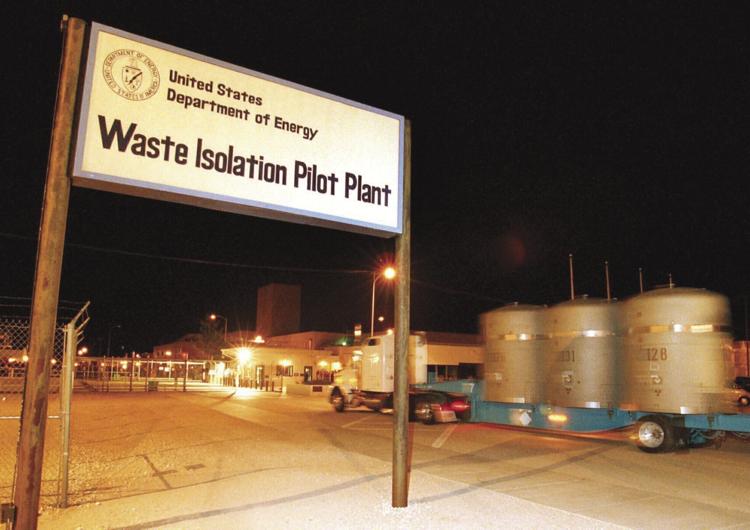
WIPP leaders also want approval for plan to increase waste storage
Source NM, BY: PATRICK LOHMANN – AUGUST 8, 2022
Shipments of nuclear waste to the nation’s only deep geological repository for the hazardous material show no signs of slowing in the coming years, despite the current permit calling for the plant to begin closing in 2024.
The future of shipments to the Waste Isolation Pilot Plant east of Carlsbad was the subject of debate and scrutiny during a meeting among a state legislative committee Friday in Clovis. The site stores waste like clothing, rags, soils and tools contaminated with radioactive elements due to nuclear weapons research and assembly in places like Los Alamos National Laboratory and Idaho National Laboratory.
WIPP leaders are seeking renewal of the 10-year permit that allows the site to continue receiving shipments, plus the state’s approval of an expansion of the plant to store more waste.
But advocates closely watching the plant for decades say such approval could open the door to an unending stream of radioactive waste transported across the country into New Mexico.
So far this fiscal year, WIPP has received 190 shipments. The material arrives from about 10 sites across the country, shipped in large drums on semi-trailers along state roads and interstates. The site has received more than 13,000 such shipments since 1999. When the waste arrives, and if it meets meets WIPP’s safety standards, the material is “emplaced” for permanent disposal in one of eight large panels a half-mile below ground that are sealed when full.
The 1990 federal law that allowed WIPP to be created and an agreement between the state of New Mexico and United States Department of Energy permits the site to permanently hold up to 175,000 cubic meters of the waste.
But WIPP needs more space to fulfill that mission, said Reinhard Knerr, manager of the DOE Carlsbad Field Office. Six of the eight panels are sealed, despite the facility having only disposed of 40% of the 175,000 cubic meters it can receive. …………………………………..
But Don Hancock, who runs the nuclear waste program at the Southwest Research and Information Center, said WIPP leaders are seeking to abandon the principles set out when WIPP began. He also fears the DOE is trying to prime the site to become the nation’s only recipient of this kind of radioactive waste for years to come.
Hancock testified Friday that WIPP was meant to be a site that would permanently dispose of waste only until new repositories would be opened up across the country. The legislation creating WIPP says it would store “up to” 175,000 cubic meters, he noted, and he said lawmakers at the time fully expected that the site could be decommissioned without being filled completely.
But instead, other potential sites across America have been identified but not opened in the intervening years, Hancock said, and an official told him recently at a public meeting that the DOE currently had “no plan” for a waste repository elsewhere.
“WIPP is the only repository. It was supposed to be the first, but not only. Other repositories are necessary for legal reasons, agreements with the state of New Mexico, technical reasons,” Hancock told lawmakers. “But now the Department of Energy is saying they have no plan for any other… waste repository.”
Hancock said the state should use its role to push the Department of Energy to open up other sites elsewhere and should push for specific closure dates when the permit comes up for renewal. He also is asking the state Legislature to push for more transparency from the DOE and more public involvement.
The state is hoping to have a revised permit for WIPP by May of 2023, a state official told the panel.
Hancock said the DOE has no longer even offered a potential closure date for WIPP in any of its recent permit applications. That’s another tell, he said, that shows the DOE no longer has any interest in finding an alternative to WIPP.
The New Mexico Environment Department recently asked the feds to provide a potential closure date. The DOE said it could take as long as 2083 for WIPP to dispose of all current and projected waste being produced across the country.
Hancock, speaking to Source New Mexico after the meeting, said the fact that DOE is being coy about the eventual closure of WIPP should concern generations of New Mexicans.
“When you’re supposed to be from 1999 to 2024 and are now say 1999 to 2083, that looks like forever,” he said. “Because if you go 60 years more, why are you not going to say again, ‘Oh, well, we don’t have any other place. So guess what?’”………………….
A 2020 analysis by the National Academies of Sciences found that all waste that has been generated or is planned to be, will exceed WIPP’s legal capacity by at least 10%. That’s another issue the DOE has not responded to publicly, Hancock said.
The bi-partisan legislative committee, made up of state senators and representatives, ultimately voted to send a letter to the Department of Energy asking questions about shipments and seeking more transparency. https://sourcenm.com/2022/08/08/nms-nuclear-waste-site-could-be-open-forever-despite-2024-closure-date-advocate-warns/
Fukushima water dumping plan triggers fresh anger from South Korea
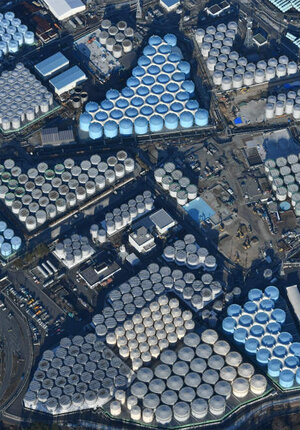
As water-dumping moves advance, S. Koreans seek firm regional stance, http://global.chinadaily.com.cn/a/202208/09/WS62f1be52a310fd2b29e7119d.html By YANG HAN in Hong Kong |2022-08-09
Japan’s plan to dump radioactive wastewater from the stricken Fukushima nuclear power plant will endanger the lives of people in the Asia-Pacific region, say experts who want to see stepped-up efforts against the ocean disposal from the countries most at risk.
South Koreans have been among those expressing their opposition to the plan, and voices have again been raised after Japan moved a step closer to implementing its planned discharge of the nuclear-contaminated water from next year, following the recent approval of the plan’s details by the nation’s nuclear regulator.
“The discharge of wastewater from Fukushima is an act of contaminating the Pacific Ocean as well as the sea area of South Korea,” said Ahn Jae-hun, energy and climate change director at the Korea Federation for Environment Movement, an advocacy group in Seoul.
“Many people in South Korea believe that Japan’s discharge of the Fukushima wastewater is a wrong policy that threatens the safety of both the sea and humans,” Ahn told China Daily.
Last month, Japan’s nuclear regulator approved the plan to discharge wastewater into the Pacific Ocean from the Fukushima Daiichi power plant, after it built up a huge amount of radiation-tainted water. The water has been collected and stored in tanks following efforts to cool down the reactors after an earthquake and tsunami struck Japan in 2011.
The dumping plan has drawn fierce opposition from government officials and civic groups in South Korea, one of the world’s major consumers of seafood.
On Aug 1, South Korea’s Minister of Oceans and Fisheries Cho Seunghwan said the government is considering whether to take the issue to the International Tribunal for the Law of the Sea, Yonhap News Agency reported. Cho said the government’s primary plan is to prevent Japan from releasing the contaminated water. “We do not accept the release plan”, he said.
Ahn said radioactive materials can generate long-term effects and it remains unclear how they will affect the marine ecosystem.
Though the South Korean government is considering taking the issue to the international tribunal, Ahn said it will be difficult to quantify the potential damage.
South Korea has said it will conduct a thorough analysis and revision of the impact of Japan’s plan, but the government has not received enough data from Japan to conduct such research, South Korea’s Hankyoreh newspaper reported in June.
After Japan’s nuclear regulator approved the Fukushima discharge plan, South Korean President Yoon Suk-yeol said Tokyo needs to transparently explain and gain consent from neighboring countries before releasing the contaminated water.
Potential impact
Shaun Burnie, a senior nuclear specialist with Greenpeace Germany, said the environmental group is concerned about the potential impact of the water’s release on the wider Asia-Pacific region.
The level of exposure depends on multiple variables including the concentration in seawater and how quickly it concentrates, disperses and dilutes, forms of life, and the type of radionuclide released and how that disperses or concentrates as it moves through the environment, Burnie said.
“The concentrations are of direct relevance to those who may consume them, including marine species like fish and, ultimately, humans,” Burnie told China Daily.
Noting that the Fukushima contaminated water issue comes under the United Nations Convention on the Law of the Sea as it is a form of pollution to international waters, Burnie said there are strong grounds for individual countries to file a legal challenge against Japan’s plan.
Ahn said joint expressions of opposition in the region could force the Japanese government to choose a safe method to deal with the wastewater instead of dumping it into the sea. China is also among the neighboring countries that have voiced opposition to the Fukushima discharge plan.
70% of Western weapons sent to Ukraine don’t reach troops – CBS
Rt.com 8 Aug 22, Report suggests US appears to be repeating the mistakes of Afghanistan, Iraq, and Syria.
With the US and its allies pledging unprecedented levels of military support to Ukraine, a recent CBS News report suggested that only around 30% of the weapons sent by the West actually make it to the front lines. The report adds to ongoing rumors of waste, corruption, and black market profiteering.
The US has approved more than $54 billion of economic and military aid to Ukraine since February, while the UK has committed nearly $3 billion in military aid alone, and the EU has spent another $2.5 billion on arms for Kiev. An entire spectrum of equipment, from rifles and grenades to anti-tank missiles and multiple launch rocket systems have left the West’s armories for Ukraine, with most entering the country through Poland.
However, this rarely goes smoothly, CBS News revealed this week.
“All of this stuff goes across the border, and then something happens, kind of like 30% of it reaches its final destination,” Jonas Ohman, the founder of a Lithuania-based organization supplying the Ukrainian military, told the American network. Ohman said that getting the weapons to the troops involves navigating a complex network of “power lords, oligarchs [and] political players.”
The new CBS Reports documentary, “Arming Ukraine,” explores why much of the billions of dollars of military aid that the U.S. is sending to Ukraine doesn’t make it to the front lines: “Like 30% of it reaches its final destination.” Stream now: https://t.co/Ob7Y3EsWknpic.twitter.com/YgVbpYZkHn
— CBS News (@CBSNews) August 5, 2022
“There is really no information as to where they’re going at all,” Donatella Rovera, a senior crisis adviser with Amnesty International, told CBS. “What is really worrying is that some countries that are sending weapons do not seem to think that it is their responsibility to put in place a very robust oversight mechanism.”
Ukraine insists that it tracks each and every weapon that crosses its borders, with Yuri Sak, an adviser to Defense Minister Alexey Reznikov, telling the Financial Times last month that reports to the contrary “could be part of Russia’s information war to discourage international partners from providing Ukraine with weaponry.”
However, some officials in the West have sounded alarm bells. A US intelligence source told CNN in April that Washington has “almost zero” idea what happens to these arms, describing the shipments as dropping “into a big black hole” once they enter Ukraine. Canadian sources said last month that they have “no idea” where their weapons deliveries actually end up.
Europol has claimed that some of these weapons have ended up in the hands of organized crime groups in the EU, while the Russian government has warned that they are showing up in the Middle East. An investigation by RT in June found online marketplaces where sophisticated Western hardware – such as Javelin and NLAW anti-tank systems or Phoenix Ghost and Switchblade explosive drones – was apparently being sold for pennies on the dollar.
Ukraine is consistently ranked as one of the most corrupt countries in the world, scoring 122/180 on Transparency International’s 2021 ‘Corruption Perceptions Index’, where 180 represents the most corrupt and 0 the least.
In Washington, drawing attention to this corruption is frowned upon by both parties in Congress. Representative Victoria Spartz, a Ukrainian-born lawmaker, has reportedly been cautioned by her colleagues and the White House for suggesting that Congress should establish “proper oversight” of its weapons shipments due to the alleged corruption within Vladimir Zelensky’s government. ………………………. more https://www.rt.com/russia/560419-ukraine-weapons-lost-cbs/
Sizewell C nuclear station approval faces legal challenge

Campaigners have begun a legal challenge against the government’s decision to give the Sizewell C nuclear power station the go-ahead amid warnings that UK nuclear plants will be on the frontline of climate breakdown.

Citing the threat to water supplies in an area officially designated as seriously water stressed, the threats to coastal areas from climate change and environmental damage, the challenge is the first step in a judicial review of the planning consent.
The business secretary, Kwasi Kwarteng, overruled the independent Planning Inspectorate to grant permission for the new nuclear reactor in Suffolk in July. Kwarteng is pushing ahead with
government plans to approve one new nuclear reactor a year as part of an energy strategy that aims to bolster the UK’s nuclear capacity, with the hope that by 2050 up to 25% of projected energy demand will come from it.
But Sizewell C has faced stiff opposition from local campaigners, and environmental groups both for its cost and the environmental impact. In a letter to Kwarteng outlining their legal challenge Together Against Sizewell C (TASC) argues that the permission by the government for the plant was given unlawfully. Represented by Leigh Day solicitors and supported by Friends of the Earth, the group says there was a failure to assess the implications of the project as a whole, by ignoring the issue of whether a permanent water supply could be secured, a failure to assess the environmental impact of that project and the suggestion that the site would be clear of nuclear material by 2140, which was not upheld by evidence showing highly radioactive waste would have to be stored on site until a much later date.
The Planning Inspectorate had rejected the scheme saying “unless the outstanding water supply strategy can be resolved and sufficient information provided to enable the secretary of state to carry out his obligations under the Habitats Regulations, the case for an order granting development consent for the application is not made out”.
Pete Wilkinson, chair of TASC, said: “The case against Sizewell C is overwhelming, as has been carefully documented throughout the inquiry stage and was found by the planning inspector to have merit. “Even to consider building a £20bn-plus nuclear power plant without first securing a water supply is a measure of the fixation this government has for nuclear power and its panic in making progress towards an energy policy which is as unachievable as it is inappropriate for the 21st-century challenges we
face.”
Guardian 8th Aug 2022
UK tax-payers face £billions of costs for the indefinite future in the clean-up of closed Hinkley Point B nuclear power station
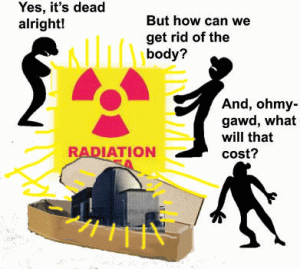
‘End of an error’, say protesters as nuclear plant is shut down. LAST
week’s closure of Hinkley Point B after 46 years was described by
anti-nuclear campaign group Stop Hinkley as ‘the end of an error’. Stop
Hinkley spokesman Roy Pumfrey said Monday (August 1) was not a day to
celebrate the life of Hinkley Point B.
He said Monday was a day to mourn
the production of radioactive waste that would need to be carefully and
expensively managed and monitored for many generations to come. Mr Pumfrey
said: “Some of these timescales for managing the legacy of waste left
over by Hinkley B are truly staggering. EDF’s jamboree on Monday
conveniently ignores the nuclear waste which has been generated over the
past 46 years.
“Under current plans it will be at least another 100 years
before all this dangerous waste is under the ground. “And the costs are
staggering, too. “EDF’s most recent £23.5 billion estimate for
decommissioning advanced gas-cooled reactors (AGRs) suggests it could cost
around £3-4 billion to decommission Hinkley B.
“The taxpayer has been
asked to top up the decommissioning fund by over £10 billion. “Past
experience suggests these costs will continue rising.” Mr Pumfrey said
the UK was left with Hinkley’s legacy of nuclear waste for thousands of
years and even after 46 years, nobody yet knew for sure what would happen
to it other than a ‘vague promise’ to bury it in a geological disposal
facility – a site for which had still not been found.
West Somerset Free Press 7th Aug 2022
Ukraine calls for demilitarised zone around the shelled Zaporizhzhia nuclear plant
International alarm over shelling attacks on Ukraine’s Zaporizhzhia nuclear complex has grown with Kyiv warning of a Chornobyl-style catastrophe and appealing for the area to be a demilitarised zone.
Key points:
- Ukraine and Russia have traded blame for attacks on the Zaporizhzhia plant
- Russia says it is ready to enable UN watchdog visit to the plant
- Twelve grain ships have left Ukrainian ports since last week
The United Nations chief called for UN nuclear inspectors to be given access to the plant as Kyiv and Moscow traded blame for the shelling.
“Any attack (on) a nuclear plant is a suicidal thing,” UN Secretary General Antonio Guterres said on Monday.
Petro Kotin, head of Ukraine’s state nuclear power company Energoatom, called for a team of peacekeepers to be deployed at the Zaporizhzhia site which is still run by Ukrainian technicians………………………………………………………. more https://www.abc.net.au/news/2022-08-09/ukraine-calls-for-demilitarised-zone-around-nuclear-plant/101313112
Nuclear Free Local Authorities Briefing to Local Councils – Energy Minister responds to NFLA concerns over Nuclear Liabilities Fund.
Richard Outram, 8 Aug 22. In response to Parliamentary concerns that the cost of decommissioning redundant nuclear power stations was out of control, and after hearing news that a further £10.7 billion of public money has been made available by the UK Government to bolster the finances of the Nuclear Liabilities Fund, the public – private sector body responsible for managing finances of approximately £15 billion to meet the long-term cost of decommissioning (https://www.nlf.uk.net/), in early June the Chair of the NFLA Cllr David Blackburn wrote to the Energy Minister Greg Hands to urge him to give the NLF Board more latitude to invest in green energy to make the fund sustainable. On 25 July, Minister Hands replied. This briefing includes our initial media release, Cllr Blackburn’s letter to Minister Greg Hands and the Minister’s response.
1 This Month



19 November – Webinar – The Reality of Reprocessing
Time: 11:00 AM Pacific Time (US & Canada) / 2:00 PM Eastern / 7:00 PM UK / 8:00 PM CET
Register for the Zoom Event Here



Shut down the radiation-damaged Heysham nuclear reactors now
To see nuclear-related stories in greater depth and intensity – go to https://nuclearinformation.wordpress.com

Say No to NASA’s Reckless Nuclear Reactor on the Moon
Say No to NASA’s Reckless Nuclear Reactor on the Moon
-
Archives
- November 2026 (32)
- October 2026 (302)
- September 2026 (339)
- August 2026 (330)
- July 2026 (355)
- June 2026 (287)
- May 2026 (306)
- April 2026 (356)
- March 2026 (251)
- February 2026 (267)
- January 2026 (308)
- December 2025 (358)
-
Categories
- 1
- 1 NUCLEAR ISSUES
- business and costs
- climate change
- culture and arts
- ENERGY
- environment
- health
- history
- indigenous issues
- Legal
- marketing of nuclear
- media
- opposition to nuclear
- PERSONAL STORIES
- politics
- politics international
- Religion and ethics
- safety
- secrets,lies and civil liberties
- spinbuster
- technology
- Uranium
- wastes
- weapons and war
- Women
- 2 WORLD
- ACTION
- AFRICA
- Atrocities
- AUSTRALIA
- Christina's notes
- Christina's themes
- culture and arts
- Events
- Fuk 2022
- Fuk 2023
- Fukushima 2017
- Fukushima 2018
- fukushima 2019
- Fukushima 2020
- Fukushima 2021
- general
- global warming
- Humour (God we need it)
- Nuclear
- RARE EARTHS
- Reference
- resources – print
- Resources -audiovicual
- Weekly Newsletter
- World
- World Nuclear
- YouTube
-
RSS
Entries RSS
Comments RSS

