Truss caves in to Mirror’s demands to mark ‘Plutonium Jubilee’ with gift for nuclear test vet
The heroes of Britain’s Cold War radiation experiments and their families welcomed the news, but said it did not go far enough to address the tests’ legacy of cancers, early death and birth defects
Mirror, By Fleet Street Fox, Columnist, 3 Oct 2022,
Prime Minister Liz Truss has caved to the Mirror’s demands to mark the ‘Plutonium Jubilee’ with a £450,000 gift for nuclear test veterans.
The heroes of Britain’s Cold War radiation experiments and their families welcomed the news, but said it did not go far enough to address the tests’ legacy of cancers, early death and birth defects.
More than half the money – £250,000 – will go to an academic or cultural institution to record oral histories of survivors. The remaining £200,000 will be available for veterans’ charities to bid for.
But that will be equivalent to just £133 a head for the estimated 1,500 ex-servicemen still alive.
The government will also host an event to “celebrate the unique and significant contributions of those involved in testing and developing our nuclear deterrent”.
It was announced on the same day as the 70th anniversary of Operation Hurricane – the Plutonium Jubilee, which marks Britain’s first atomic bomb test.
Alan Owen, of campaign group LABRATS, said: “It’s very welcome news, and a direct result of the meeting we had with Boris Johnson following the Mirror’s Look Me In The Eye campaign.
“In fact, it was the Mirror that asked, in that meeting, for a ceremony of national acknowledgement to allay veterans’ anger, and that will be a huge leap forward if we get it. But this money is a pittance in the grand scheme of things, and there’s still no medal, no apology, no acknowledgement.”
The money won’t be available until April next year – and there are fears some survivors, who are now all in their 80s, may not benefit from it.
Minister for the Armed Forces and Veterans, James Heappey, said the test veterans “played a crucial role in keeping Britain and our NATO allies safe”.
He added: “Their sacrifice contributed to achieving the ultimate guarantee of UK sovereignty and they forever have this nation’s gratitude.
“I look forward to commemorating the incredible service and efforts of our veterans.” https://www.mirror.co.uk/news/politics/truss-caves-mirrors-demands-mark-28145217
NATO ‘not obliged’ to assist Ukraine — German ambassador
Rt.com 2 Oct 22, Berlin’s envoy to the military bloc clarifies that NATO won’t actively fight for a non-member state.
Germany’s permanent representative to NATO has explained that the US-led bloc is not obliged to offer direct military assistance to Ukraine. Ruediger Koenig added that its members want to avoid a major war.
He was speaking to Dein Spiegel, the youth version of Der Spiegel magazine, which published the interview on Saturday.
The Ukraine conflict dominated much of the article, with Koenig describing Russia’s decision to launch its offensive against its neighbor in late February as a watershed event…….
Germany’s representative to NATO stressed that the military alliance as a whole, however, has no legal obligation to help Kiev repel Moscow’s attack as Ukraine is not a member state. This means that Article 5 of NATO’s treaty cannot be activated, the official explained. Under it, an attack on one ally is considered to be an attack against the whole of NATO, with all member states having to stick up for the targeted nation.
According to Koenig, the military bloc is anxious to avoid getting actively involved in the conflict at all costs because “this would mean a very big war.”
Such a scenario, which would see 30 more nations join the fray, is something “nobody wants,” the diplomat noted…………..
He concluded that the prospect of peace is rather slim as Ukraine and Russia’s positions seem to be irreconcilable. Koenig clarified that Ukraine “rightly” demands that Moscow cede all former Ukrainian regions in the south and east of the country that recently voted to join Russia, as well as Crimea, which joined the country in 2014. The official pointed out that the Kremlin, however, is unlikely to agree to such terms. https://www.rt.com/news/563942-germany-nato-envoy-ukraine-kids/
Sizewell C nuclear plan – an insane legacy for our grandchildren
Letter: Dave Haskell, Cardigan: It is the height of madness to fund
another nuclear fission power station at Sizewell costing £34 billion,
with Hinkley C currently costing £24 billion and yet to come on stream.
What a legacy to leave to our children and grandchildren – foreign owned,
very expensive and years to build, dangerous, hazardous waste and
horrendous decommissioning costs – not to mention a potential target for
terrorists.
Cambrian News 1st Oct 2022
https://www.cambrian-news.co.uk/news/why-we-must-avoid-using-nuclear-power-565623
Honouring Britain’s nuclear testing veterans
Britain’s nuclear testing programme veterans to be honoured in £450,000
project. Government will commemorate the ‘incredible service’ of the
veterans who witnessed hundreds of atomic tests and were exposed to
radiation.
Telegraph 3rd Oct 2022
Don’t nuke the future

even the White House Environmental Justice Advisory Committee (WHEJAC) have declared nuclear power to be a false solution to climate change.

Regrettably. powerful nuclear lobbies, the Biden Administration, and nuclear supporters in Congress have ramrodded legislation (the 2021 IFA; the 2022 IRA) through Congress worth as much as $70+ billion dollars to bail out this false climate “solution”.
Time to focus on real climate solutions
Don’t nuke the future — Beyond Nuclear International https://beyondnuclearinternational.org/2022/10/02/dont-nuke-the-future/ By David Kraft, NEIS, 2 Oct 22,
As we strike for climate, we must strike nuclear power from our energy plans
The Fridays for the Future Climate Strike on September 23 called out tens of thousands of people worldwide – over 300 in downtown Chicago — to protest the inadequate governmental response to the Climate Code Red, and identify the many corporate criminals who are responsible for the bulk of the crisis.
While it is necessary to identify and hold accountable those who are the source of the problem, if the Planet is to survive the predicted catastrophic temperature rise and resulting environmental impacts, it is equally important to identify real and viable solutions to the crisis, given the limited amount of time left to act.
On that note it cannot be stressed more emphatically that nuclear power is not a viable climate solution.
Why is this the case? With eight years left before the IPCC’s 2030 deadline to literally reinvent and implement a climate friendly energy infrastructure, nuclear power serves as a drag and barrier to reaching that target. It is too costly; to slow to build out to the levels needed; displaces less atmospheric carbon per dollar spent than cheaper and quicker alternatives; and not only fails to solve its current list of unsolved problems (for example, nuclear waste disposal), but adds to this list the threat of increased nuclear proliferation and accidents, especially in war zones like Ukraine, and potentially elsewhere (India/Pakistan; China Taiwan; Iran/Saudi Arabia, etc.).
Worse, money spent on bailing out the economically failed nuclear power plants we have is money not available to be spent on real climate solutions we already know work: more renewable energy, more energy efficiency, improved transmission/distribution systems, and energy storage.
Who says so? Only: two former CHAIRPERSONS of the U.S. Nuclear Regulatory Commission; former public utilities chairs and utility CEOs from the states of California, New York, and Maine; energy experts and scientists like Amory Lovins and Mark Jacobson of Stanford University, and Dr. Andy Stirling of University of Sussex.
Cost analysts at Lazards demonstrate that nuclear (both the present old generation, and the proposed “next generation” of so-called small modular nuclear reactors) is too expensive compared to renewables and other alternatives; while those at Moody’s point out that reactors will be at severe risk of operating safely in a climate disrupted world without extraordinary added expense to enhance safety – again, money that won’t be available for real alternatives.
Environmental justice activists loudly label nuclear power as a false climate solution. Statements by the Climate Justice Alliance and Indigenous Environmental Network (IEN), and even the White House Environmental Justice Advisory Committee (WHEJAC) have declared nuclear power to be a false solution to climate change. Scores if not hundreds of environmental organizations nationwide share the same sentiment.
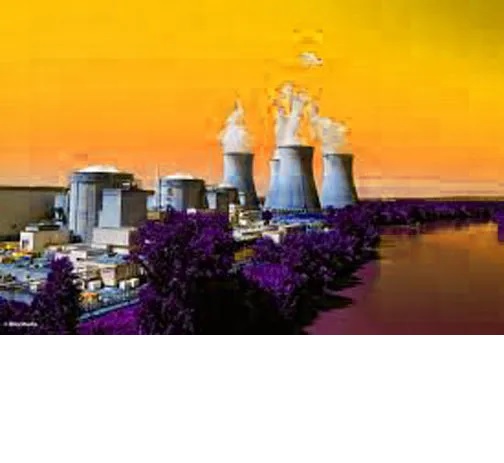
Who else? Mother Nature herself. The heat wave experienced in France this year (and in previous years) shuttered 32 of 54 French reactors due to lack of river water to cool them and make steam – precisely when they were needed most. The laws of physics state that reactors will also produce less electricity the warmer the water they take in to make steam. And climate induced swarms of jellyfish, mayflies and other creatures have led to reactor shutdowns on multiple occasions. These will only become more frequent with the worsening climate disruption. These incidents have led former Union of Concerned Scientists staff scientist and NRC consultant David Lochbaum to sardonically ask, “And what will save nuclear power from climate change?
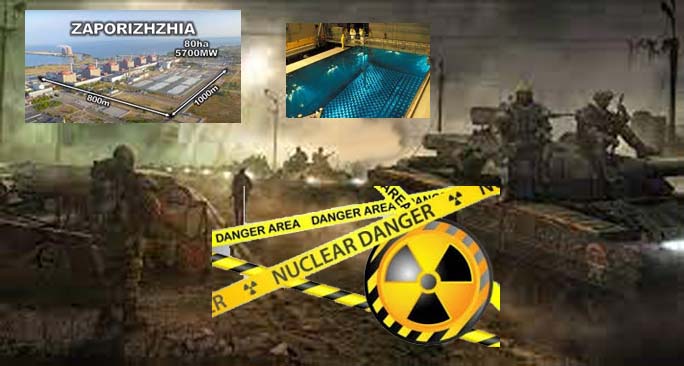
Finally, the war in Ukraine has forced to world to examine whether nuclear power even belongs on a planet where war seems omnipresent. Nuclear power plants are now targets in war. Do not think this will be the end of it. The war and what has happened at the Zaporizhzhia nuclear plant in Ukraine now forces the nuclear industry, military planners and governments of the world to face what they have long avoided and refused to discuss: nuclear power plants are gigantic, pre-positioned radiation dispersion devices. The thought of sprinkling literally thousands of so-called “small modular nuclear reactors” (SMNRs) worldwide like fairy dust — without containment buildings and with reduced emergency planning/response zones and plans, as nuclear proponents eager to market their new techno-toys currently suggest — almost seems to be the quintessential confirmation of Einstein’s admonition that insanity is doing the same thing over and over, expecting different results.
Regrettably. powerful nuclear lobbies, the Biden Administration, and nuclear supporters in Congress have ramrodded legislation (the 2021 IFA; the 2022 IRA) through Congress worth as much as $70+ billion dollars to bail out this false climate “solution.” This is one time when trying to jam a square peg down a round hole will not work. You can’t build an energy future by bailing out the past.
Today’s demonstrations make two very important points: we are out of time; and we must declare a climate crisis – and act like it is a crisis, to paraphrase climate activist Greta Thunburg. We do not have the time or money for “all of the above”, business as usual false solutions like those proposed by Sen. Joe Manchin and Sen. Chuck Schumer. We must act now to implement real energy solutions.
Nuclear power is simply a false solution to the climate crisis. Anyone who says otherwise is as much a “denier” as those who still falsely claim that climate change does not exist.
This article also appeared as a September 23, 2022 press release from Nuclear Energy Information Service, a non-profit organization committed to ending nuclear power and advocating for sustainable ecologically sound and socially just energy solutions.
Interviews With Donetsk Residents After Joining Russia
Eva Bartlett 1 Oct 2022Given the predictable Western negation of the referendum to join Russia, and following having done many interviews with people during the referendum, yesterday I did some follow up interviews with Donetsk residents, asking their opinions on joining Russia
Zelensky pledges never to talk to Putin

Rt.com 2 Oct 22
Ukraine will not negotiate with Moscow until Putin is replaced as president, Zelensky and his cabinet said
Ukrainian President Vladimir Zelensky refuses to negotiate a peace settlement as long as Vladimir Putin remains president of Russia. He made this claim in a post on his official Telegram channel on Friday.
………….. “We are ready for a dialogue with Russia, but … with another president of Russia,” he wrote. Unlike the majority of his Telegram posts, this one was written only in Ukrainian, without an accompanying English translation.
Zelensky has repeatedly rejected overtures of peace from Moscow, most recently turning down Putin’s offer on Friday to resume negotiations. What made the offer a non-starter for Kiev is that Putin refused to relinquish the regions that voted this week to join Russia…..
Zelensky also confirmed that Ukraine had submitted an accelerated application to join NATO on Friday, something he previously admitted was probably never going to happen. While Western media described the move as “more symbolic than practical,” the Ukrainian president argued that Sweden and Finland were able to apply on an accelerated basis even without a Membership Action Plan and it was thus only “fair” that Ukraine do the same.
De facto, we have already completed our path to NATO,” he said in another Telegram post. “De facto, we have already proven interoperability with the Alliance’s standards … We trust each other, we help each other and we protect each other.”
Zelensky has previously acknowledged Ukraine might struggle to secure the consent of all 30 NATO member nations…………………………….
 |
https://www.rt.com/russia/563840-zelensky-negotiations-putin-russia/
‘Not wise’ to let Ukraine join NATO – Kissinger
https://www.rt.com/news/563858-kissinger-ukraine-nato-russia/ 1 Oct 22, Russia regarded its sphere of influence in Eastern Europe as a “safety belt,” the former US secretary of state said.
Washington’s attempts to incorporate Ukraine into NATO after the collapse of the Soviet Union were not prudent, former US Secretary of State Henry Kissinger said on Friday.
Speaking to the Council on Foreign Relations, a non-partisan US think tank, the 99-year-old veteran diplomat argued that Washington tried to indiscriminately include all former members of the Soviet bloc under its umbrella after the Berlin wall fell, and that the “whole region between the center of Europe and Russian border became open to restructure.”
“From the Russian point of view, the United States then attempted to integrate this whole region, without exception, into an American-led strategic system,” he said, adding that this development basically removed Russia’s historic “safety belt.”
Kissinger thus stressed that “it was not a wise American policy to attempt to include Ukraine into NATO.”
He does not believe, however, that this justifies attempts by Russian President Vladimir Putin to re-incorporate Ukraine into Moscow’s sphere of influence by a “surprise attack.”
Kissinger said he does not know if it is possible to make peace with the Russian leader, but stressed that the West “must seek an opportunity for an arrangement that guarantees Ukrainian freedom” and keeps the country part of the European system.
Moreover, Kissinger opined that in a way, Russia has “already lost the war” because its capacity to threaten Europe with conventional attacks, which it had enjoyed for decades or even centuries, “has now been demonstrably overcome.”
Despite that, the former secretary of state signaled that sooner or later, the West and Russia must engage in dialogue. “Some dialogue, maybe on an unofficial level, maybe in an exploratory way is very important,” he reiterated, adding that “in the nuclear environment” such an outcome is preferable to a “battlefield decision.”
In early August, Kissinger warned that the US had found itself “at the edge of war with Russia and China on issues which we partly created,” arguing that Washington has rejected traditional diplomacy, as it has been “seeking to convert or condemn their interlocutors rather than to penetrate their thinking.”
Here comes the catastrophocene…

If humans have become a geological force reshaping the Earth in the Anthropocene, then we need to become a geological force to undo the damage we have caused, and correct the threats we are still causing.
Pearls and Irritations, By Julian Cribb Oct 3, 2022, https://johnmenadue.com/here-comes-the-catastrophocene/
The good news is that the Anthropocene is almost over. It will have been the shortest geological epoch in all of Earth history.
The bad news is that the Catastrophocene is just beginning.
This is a period marked by the interaction of ten catastrophic risks which many scientists are now warning could precipitate the end of human civilisation – and potentially bring about the departure of our species from an uninhabitable Earth.
The Holocene, the climatically stable period which enabled humans to develop agriculture and cities, is now over. It lasted about 11,650 years, from the last Ice Age to the latter C20th. And now it is gone and we are into a wholly different world, named in 2000 by Dutch Nobel laureate Paul Crutzen ‘the Anthropocene’ – the epoch in which humans became a truly geological force, reshaping and altering the entire planet, its atmosphere, oceans, the land, and life itself. On present indications, the Anthropocene will last only a century or two.
The evidence is all about us that we’re into something altogether grimmer. Each day, almost, brings fresh reports of colossal unintended consequences of human activity around the planet – vast floods, tens of thousands of fires raging, dust storms sweeping topsoil off our farms, heatwaves, dried-up rivers and lakes, melting glaciers, unimaginable losses of birds, animals, insects and other life, dwindling forests and fish, poisoned water, oceans, food and air, declining oxygen levels, hunger and starvation, the dissemination of new diseases, the mass migration of 350 million people a year, the advent of powerful new technologies whose effects are unknown and uncontrolled, and the insidious worldwide seep of malicious lies about it all.
The evidence is all about us that we’re into something altogether grimmer. Each day, almost, brings fresh reports of colossal unintended consequences of human activity around the planet – vast floods, tens of thousands of fires raging, dust storms sweeping topsoil off our farms, heatwaves, dried-up rivers and lakes, melting glaciers, unimaginable losses of birds, animals, insects and other life, dwindling forests and fish, poisoned water, oceans, food and air, declining oxygen levels, hunger and starvation, the dissemination of new diseases, the mass migration of 350 million people a year, the advent of powerful new technologies whose effects are unknown and uncontrolled, and the insidious worldwide seep of malicious lies about it all.
These phenomena are the physical manifestations of what the Council for the Human Future has termed the ‘existential emergency’ now confronting humanity – a crisis which many scientists and individual citizens now recognise as real, but which most governments, corporates and politicians seem loath to accept the evidence that is before their very eyes.
This crisis is comprised of ten catastrophic risks, not just the one or two most commonly reported in the media. All these risks interact with one another, meaning they cannot be tackled separately or solved one by one. Collectively, they are driven by human overpopulation, overconsumption and over pollution. The risks are:
Extinction and eco-collapse: currently proceeding 1000-10,000 times faster than normal, eliminating the ecosystems that humans and wildlife need to survive. Mainly caused by agriculture and land development.
Overheating: a climate approaching out-of-control as nine huge ‘feedbacks’ from the Earth system itself make it even faster, hotter and more turbulent than man-made factors (like fossil fuels and land clearing) alone.
Global poisoning: five times larger and ten times more deadly even that climate, human chemical emissions are the largest and most underestimated threat to planetary health and survival.
Nuclear holocaust: with 70 nations still committed to nuclear arms and conflict, scientists currently rate the threat at ‘100 seconds to midnight’, the worst level since Hiroshima.
Resource scarcity: a world water crisis is already a reality for half the population. Loss of topsoil, forests, fish stocks and scarcity of other key resources threaten to unleash fresh conflicts.
Pandemics: there have been seven pandemics since 2000, with a new one striking every 2-3 years. With some 90 wild animal diseases already crossed into humans, more are on the way.
Overpopulation: due to hit 8 billion in November and 10 billion by 2060, human numbers are estimated by some researchers to now be 4 times what the Earth can carry in the long run. Not a threat in itself, population pressure drives all the other threats and must be brough under control.
Famine and hunger: already rising due to loss of soil, water and a stable climate. World food chains increasingly vulnerable to disruption from shortages, conflict and big events, putting megacities at risk.
Ultratechnologies: uncontrolled development and release of powerful new technologies without thought for the consequences will unlock fresh threats for humanity, just as fossil fuels and chemistry already have.
Misinformation: the world is drowning in lies, half-truths and disinformation, mainly spread by the fossil fuels lobby, certain media, politicians and other malicious actors. These are disabling government, breeding mistrust of science and making the task of saving civilisation ever harder.
It is the interaction of these ten mega-threats which now constitutes the new age – The Catastrophocene. This will be a period in which most human lives will be consumed in attempting merely to survive and find workable collective solutions to these threats, to repair our damaged planet and salvage all that is good and decent of our civilisation.
Take heart, solutions do exist. I detail the main ones in a forthcoming book, both global answers and what individuals can do to save themselves. However, as the Council for the Human Future has noted: no government on Earth yet has a policy for human survival. They simply do not grasp the magnitude or the reality of what is unfolding. Or they don’t care. Nor do the giant corporations who now rule the world economically.
If humans have become a geological force reshaping the Earth in the Anthropocene, then we need to become a geological force to undo the damage we have caused, and correct the threats we are still causing. Part of that consists in reducing both our numbers and our material demands to what the planet can safely bear in the long term. If we do not undertake this task, then nature will surely do it for us. Doing nothing, or doing too little too late, will destroy us.
In other words, controlling the catastrophic risks we now face will save countless lives, help avoid total collapse or even extinction, restore the Earth and preserve what is best about the human endeavour.
It is the greatest, noblest and most urgent cause in all our million year journey.
Washington split over Ukraine’s NATO bid – Politico
https://www.rt.com/news/563851-washington-split-ukraine-nato/ 2 Oct 22,
Zelensky’s unexpected demand to fast-track membership talks has reportedly been met with a mixed reaction
Ukraine’s bid for accelerated accession to NATO caught Washington off-guard, driving a wedge between a number of US lawmakers, Politico reported on Friday.
When the outlet asked US House Speaker Nancy Pelosi if she supports Kiev’s demand to join NATO, she stopped short of unequivocally endorsing the move, saying the US is “very committed to democracy in Ukraine.”
“Let’s win this war. But I would be for them having a security guarantee,” she told Politico.
Democratic Party colleague Representative Mike Quigley (D- Illinois) said that Washington should support Ukraine’s NATO bid. “Ukraine’s fight is the reason we formed NATO in the first place,” he told Politico, adding that since WWII, the US has recognized “that an authoritarian regime cannot be allowed to wipe out a democratic country.”
On Friday, following the start of the formal accession of four former Ukrainian regions to Russia, Ukrainian President Vladimir Zelensky demanded that the procedure for joining NATO be fast-tracked. This apparently came as a surprise to the Biden administration, according to two US officials cited by the outlet.
Many Western officials fear that if Kiev becomes a full-fledged member of the bloc, it would not only provoke Russia, but would also draw Washington and Moscow into a direct war, as NATO’s charter stipulates that an attack on one member is considered an attack against the entire alliance. The only instance in which this principle has been applied came after the 9/11 terrorist attacks against the US.
On Friday, President Vladimir Putin signed treaties on the inclusion of the two Donbass republics, as well as the two southern Ukrainian regions which had declared independence, into the Russian Federation. All four territories held referendums from September 23 to 27, in which the people voted overwhelmingly in favor of joining Russia.
Western leaders have condemned Moscow’s latest moves. US President Joe Biden has vowed to impose further sanctions on Russia and continue to supply Kiev with military aid.
The world in denial about the climate crisis
Climate breakdown is far more intense in 2022 than even many scientists
expected, yet the world still isn’t treating this like a crisis. I
underestimated the depth and intransigence of society’s collective
climate denial. Despite climate breakdown being far more intense by 2022
than I thought it would be – it all feels like a decade or two ahead of
schedule, somehow – the world still isn’t treating global heating like
the emergency it is.
To understand what an emergency we are now in, the
scale and variety of the climate damage we’ve already incurred, you only
need to look at a few of the most recent disasters. Hurricane Ian has just
pummeled Cuba and Florida. The full extent of the disaster will only be
revealed in the coming days and weeks, although first looks are shocking.
But we do know with certainty that Ian was supercharged by global heating
through several well-understood fundamental physics pathways.
Or consider the record extreme heat, fires, and drought that have hammered arid
subtropical regions such as California, Spain, China and elsewhere this
summer.
The planet has heated by about 1.3C on average since fossil fuel
burning began in earnest 150 years ago, and is now increasing by 0.1C every
five years. These mean values roughly double over the planet’s land
surfaces. That extra heat also supercharges heatwaves. In addition, global
heat is expanding the Hadley cell circulation and moving subtropical storms
poleward, causing a permanent increase in subtropical aridification.
All of this tends to dry out soils, kill trees and worsen wildfires. Or consider
the biblical flooding in Pakistan from a few weeks ago. Or the “doomsday
glacier” in Antarctica which promises “big changes over small
timescales”. Or record melt of the Greenland ice sheet. Or the crazy and
deadly disintegration of glaciers in Europe. In short, it has been a summer
of climate insanity.
But even so, this will be, on average, the coolest
summer with the least climate chaos for the rest of your life. That is just
the nature of trends. It should be terrifying.
Guardian 1st Oct 2022
https://www.theguardian.com/commentisfree/2022/oct/01/climate-emergency-hurricane-ian-crisis
NATO in the horns of a dilemma after former Ukrainian regions vote to join Russia
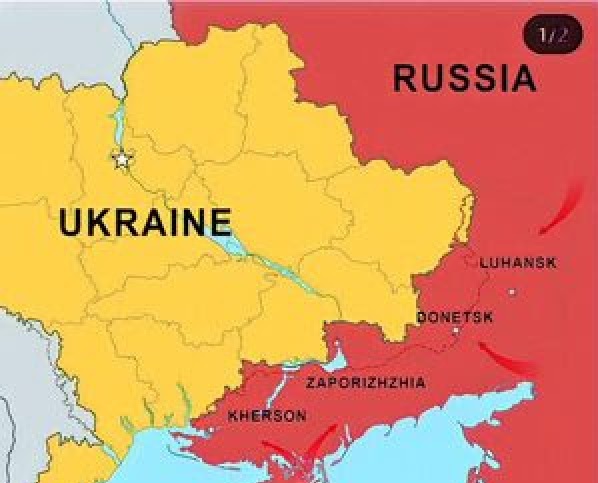
NATO, having overcommitted to Ukraine, now finds itself “on the horns of a dilemma” – if it continues to provide massive material and financial support to Ukraine, it will, in effect, become a direct party to the conflict, something no one in the bloc wants. However, if it backs away from supporting Ukraine, the various Western political leaders and institutions which have made support for Kiev a sacred obligation will be seen as going back on their word.
How NATO opts to proceed has yet to be manifest, but indications are that it will not be in a manner which continues to double down on supporting Ukraine no matter what
https://www.rt.com/russia/563788-referendums-ukraine-nato-dilemma/–-1 Oct 22,
Moscow is flipping the bloc’s script by moving to absorb Kiev’s lost lands, thus switching the fight to its own turf.
By infusing tens of billions of dollars’ worth of military aid into Ukraine, NATO produced a “game-changing” dynamic designed to throw Russia off balance. By undertaking the referendums in Kherson, Zaporozhye, Donetsk, and Lugansk, Russia changed the game altogether.
The ancient Greeks spoke of lemma as representing a logical premise, a matter taken for granted. This contrasted with a dilemma, or “dual premise”, where one would be presented with an either/or proposition. The Romans furthered this notion, referring to a “double premise” as argumentum cornutum, of the “horned argument,” because by answering one argument, an individual would be impaled by the logic of the second. Thus are the ancient roots of the modern idiom, “on the horns of a dilemma.”
This is the ultimate objective of maneuver warfare, for example: to position your forces in such a manner as to present the enemy with no good option – should they react to one pressing threat, they would find themselves overwhelmed by the other.
The Russian military operation that has been underway in Ukraine for more than seven months now has provided ample examples of the military forces of both sides being confronted with a situation that compelled them to alter their preferred course of action; the Russian “diversion” against Kiev early on in the SMO prevented the Ukrainians from reinforcing their forces in eastern Ukraine, and the recently concluded Ukrainian counteroffensive in Kharkov compelled a hasty Russian withdrawal from a significant swath of previously occupied Ukrainian territory.
Both examples cited presented one side with a lemma, or a single problem, which needed to be addressed. But neither was able to put its opponent “on the horns of a dilemma,” forcing a response which would result in impalement regardless of the option chosen. The reason for this is simple – very rarely will competent military commanders allow themselves to be presented with a military problem for which there is no viable response. War, it seems, is hard work, and dilemmas don’t fall from trees.
Or do they? Ever since Boris Johnston flew to Kiev in April to convince Ukrainian President Vladimir Zelensky to pull out of peace talks then ongoing with Russia in the Turkish city of Istanbul, NATO has embarked on a program designed to provide Ukraine with tens of billions of dollars in military and financial assistance, including the transfer of modern heavy weapons and the use of facilities on Western soil where tens of thousands of Ukrainian troops could be trained and organized without fear of Russian intervention.
The purpose behind the NATO infusion of weaponry into Ukraine was straightforward – to empower Ukraine to not only lengthen the conflict, but also to undertake offensive military operations designed to evict Russia from what Kiev and its backers consider occupied Ukrainian territory, including the Donbass and Crimea. The counteroffensive in Kharkov in early September underscored the serious consequences of NATO’s actions – even though, given the massive loss of life and material suffered by the attacking Ukrainian forces, made the Kharkov victory Pyrrhic in nature, it was a Ukrainian victory, and one which compelled a Russian retreat.
By transforming the Ukrainian army into a NATO army which was manned by Ukrainians, the US-led bloc had, in fact, changed the nature of the game from a straightforward Russia-versus-Ukraine “special military operation” into a “Russia-versus-the collective West” struggle where the military resources originally allocated by Moscow to the fight were now insufficient to the task.
Russia, however, was not taking the game-changing actions of NATO standing still. Responding to the new reality on the ground in Ukraine, Russian President Vladimir Putin opted not to simply up the ante in this new NATO-driven game of increasing military power but change the game altogether. Not only did he order the partial mobilization of some 300,000 Russian reservists to reinforce the troops currently committed to the SMO, Putin also approved referendums in the four territories where Russian forces are presently fighting – Kherson and Zaporozhye (formerly occupied Ukrainian regions), and Donetsk and Lugansk (former regions of Ukraine, de-facto independent since 2014). These referendums asked the citizens of these four territories one simple question: do you wish to become part of Russia?
After five days of voting, the results from all four territories were clear – by an overwhelming majority, the participants in the referendums approved the proposition. Shortly thereafter, they were incorporated into the Russian Federation. What was once Ukraine has now become Mother Russia
Russia didn’t just change the rules of the game – it changed the game itself. Instead of Ukrainian forces fighting Russian forces on the territory of Ukraine, any future combat carried out by Ukraine against Russian forces would represent an attack on the Russian homeland itself.
Where does this leave NATO? The bloc’s leadership has made it clear from day one that it is not seeking direct confrontation with Russia. While its members have poured in tens of billions of dollars of material into Ukraine to help reconstitute its military, and provided critical logistics, intelligence, and communications support to Ukraine, it has repeatedly and insistently stated that it has no desire to fight a war with Russia directly and has made it clear that it would rather have the Ukrainians serve as a de facto NATO proxy in resisting Moscow.
NATO has gone “all in” both economically and politically when it comes to supporting Ukraine, to the extent that some of its members, having stripped their respective military structures of equipment and material, have nothing left to give. Despite this, European political and economic elites continue to articulate their strong support for Ukraine going forward.
This support, however, was predicated on the fundamental assumption that by providing Ukraine with this massive level of support, NATO would not get directly involved in a conflict with Moscow. But Russia, by transforming the battleground from one being fought on Ukrainian soil to one where it’s now defending its own land, has flipped the script.
NATO, having overcommitted to Ukraine, now finds itself “on the horns of a dilemma” – if it continues to provide massive material and financial support to Ukraine, it will, in effect, become a direct party to the conflict, something no one in the bloc wants. However, if it backs away from supporting Ukraine, the various Western political leaders and institutions which have made support for Kiev a sacred obligation will be seen as going back on their word.
How NATO opts to proceed has yet to be manifest, but indications are that it will not be in a manner which continues to double down on supporting Ukraine no matter what. Secretary General Stoltenberg’s tepid speech condemning Russia while showing no enthusiasm for Zelensky’s “accelerated application” for membership is indicative of the less-than-resolute nature of its support for Kiev.
NATO now will find its role diminished by the consequences of the Russian mobilization and referendums. Years from now, when the history of the conflict is finally written, the decision by President Putin to simultaneously mobilize the Russian reserves while absorbing the territory of southern and eastern Ukraine into the Russian Federation will serve as one of the premier modern-history examples of putting an adversary “on the horns of a dilemma.” The effective neutering of NATO by this action will more than likely be seen as a turning point in the conflict, one which sealed the fate of Ukraine in the face of an inevitable Russian victory.
“End War in Ukraine” Say 66 Nations at UN General Assembly
Common Dreams, BY MEDEA BENJAMIN – NICOLAS J. S. DAVIES, 30 Sept 22,
We have spent much of the past week reading and listening to speeches by world leaders at the UN General Assembly in New York. Most of them condemned Russia’s invasion of Ukraine as a violation of the UN Charter and a serious setback for the peaceful world order that is the UN’s founding and defining principle.
But what has not been reported in the United States is that leaders from 66 countries, mostly from the Global South, also used their General Assembly speeches to call urgently for diplomacy to end the war in Ukraine through peaceful negotiations, as the UN Charter requires. We have compiled excerpts from the speeches of all 66 countries to show the breadth and depth of their appeals, and we highlight a few of them here.
African leaders echoed one of the first speakers, Macky Sall, the president of Senegal, who also spoke in his capacity as the current chairman of the African Union when he said, “We call for de-escalation and a cessation of hostilities in Ukraine, as well as for a negotiated solution, to avoid the catastrophic risk of a potentially global conflict.”
The 66 nations that called for peace in Ukraine make up more than a third of the countries in the world, and they represent most of the Earth’s population, including India, China, Indonesia, Bangladesh, Brazil and Mexico.
While NATO and EU countries have rejected peace negotiations, and U.S. and U.K. leaders have actively undermined them, the leaders of five European countries – Hungary, Malta, Portugal, San Marino and the Vatican – joined the calls for peace at the General Assembly.
The peace caucus also includes many of the small countries that have the most to lose from the breakdown of the UN system that recent wars in Ukraine and the Greater Middle East represent, and who have the most to gain by strengthening the UN and enforcing the UN Charter to protect the weak and restrain the powerful.
Philip Pierre, the Prime Minister of Saint Lucia, a small island state in the Caribbean, told the General Assembly,
“Articles 2 and 33 of the UN Charter are unambiguous in binding Member States to refrain from the threat or use of force against the territorial integrity or political independence of any state and to negotiate and settle all international disputes by peaceful means.…We therefore call upon all parties involved to immediately end the conflict in Ukraine, by undertaking immediate negotiations to permanently settle all disputes in accordance with the principles of the United Nations.”
Global South leaders lamented the failure of the UN system, not just in the war in Ukraine but throughout decades of war and economic coercion by the United States and its allies. President Jose Ramos-Horta of Timor-Leste directly challenged the West’s double standards, telling Western countries,
“They should pause for a moment to reflect on the glaring contrast in their response to the wars elsewhere where women and children have died by the thousands from wars and starvation. The response to our beloved Secretary-General’s cries for help in these situations have not met with equal compassion. As countries in the Global South, we see double standards. Our public opinion does not see the Ukraine war the same way it is seen in the North.”
Many leaders called urgently for an end to the war in Ukraine before it escalates into a nuclear war that would kill billions of people and end human civilization as we know it. The Vatican Secretary of State, Cardinal Pietro Parolin, warned,
“…the war in Ukraine not only undermines the nuclear non-proliferation regime, but also presents us with the danger of nuclear devastation, either through escalation or accident. … To avoid a nuclear disaster, it is vital that there be serious engagement to find a peaceful outcome to the conflict.”
Others described the economic impacts already depriving their people of food and basic necessities, and called on all sides, including Ukraine’s Western backers, to return to the negotiating table before the war’s impacts escalate into multiple humanitarian disasters across the Global South…………………………………………………
At the end of the debate on September 26, Csaba Korosi, the president of the General Assembly, acknowledged in his closing statement that ending the war in Ukraine was one of the main messages “reverberating through the Hall” at this year’s General Assembly.
You can read here Korosi’s closing statement and all the calls for peace he was referring to.
And if you want to learn more about the “legions working together in solidarity… to impose the unconditional option of peace on the war lobbies,” as Jean-Claude Gakosso said, you can find out more at https://www.peaceinukraine.org/. https://qoshe.com/common-dreams/medea-benjamin/-end-war-in-ukraine-say-66-nations-at-un-general-assembly/147104931
These ‘nuclear bros’ say they know how to solve climate change

These ‘nuclear bros’ say they know how to solve climate change.
Meet the internet subculture obsessed with nuclear power — and proud of it.
The typical “nuclear bro” is lurking in the comments section of a clean energy YouTube video, wondering why the creator didn’t mention #nuclear.
He is marching in Central California to oppose the closing of the state’s Diablo Canyon nuclear power plant. His Twitter name includes an emoji of an atom. He might even believe that 100 percent of the world’s electricity should come from nuclear power plants.
As a warming world searches for ever more abundant forms of clean energy, an increasingly loud internet
subculture has emerged to make the case for nuclear. They are often — but not always — men. They include grass-roots organizers and famous techno-optimists like Bill Gates and Elon Musk. And they are uniformly convinced that the world is sleeping on nuclear energy.
Nuclear advocates often meet each other on the internet — on large shared WhatsApp groups, sharing news on the subreddit r/nuclear, or on Twitter. The “nuclear bro” label …… — serves to cast nuclear supporters as all being of a particular type: young, White, millennial men with a singular focus on splitting atoms.

It alludes to a few factors of “bro culture” that can make interacting with some nuclear bros frustrating and bizarre. The criticism is that these types of bros mansplain, refuse to accept other arguments, or otherwise harass their interlocutors.
Washington Post 30th Sept 2022
https://www.washingtonpost.com/climate-environment/2022/09/30/nuclear-bros-power-activists/
King Charles abandoned plans to speak at Cop27 climate summit, now will not attend, on instruction from Prime Minister Liz Truss.
Liz Truss advised King Charles to stay away from Cop27 climate summit. The
King, a passionate environmental campaigner, has abandoned plans to attend
next month’s Cop27 climate change summit after Liz Truss told him to stay
away. He had intended to deliver a speech at the meeting of world leaders
in Egypt. Truss, who is also unlikely to attend the Sharm el-Sheikh
gathering, objected to the King’s plans during a personal audience at
Buckingham Palace last month.
Times 1st Oct 2022
King Charles III has reportedly abandoned plans to attend and deliver a
speech at the Cop27 climate change summit on the advice of Liz Truss. The
monarch, a veteran campaigner on environmental issues, had been invited to
the 27th UN climate change conference in Sharm el-Sheikh, Egypt, next
month. But the prime minister is understood to have raised objections
during a personal audience at Buckingham Palace last month, according to
the Sunday Times. Buckingham Palace has confirmed King Charles III will not
attend the summit.
Guardian 1st Oct 2022
1 This Month



19 November – Webinar – The Reality of Reprocessing
Time: 11:00 AM Pacific Time (US & Canada) / 2:00 PM Eastern / 7:00 PM UK / 8:00 PM CET
Register for the Zoom Event Here



Shut down the radiation-damaged Heysham nuclear reactors now
To see nuclear-related stories in greater depth and intensity – go to https://nuclearinformation.wordpress.com

Say No to NASA’s Reckless Nuclear Reactor on the Moon
Say No to NASA’s Reckless Nuclear Reactor on the Moon
-
Archives
- November 2026 (22)
- October 2026 (302)
- September 2026 (339)
- August 2026 (330)
- July 2026 (355)
- June 2026 (287)
- May 2026 (306)
- April 2026 (356)
- March 2026 (251)
- February 2026 (267)
- January 2026 (308)
- December 2025 (358)
-
Categories
- 1
- 1 NUCLEAR ISSUES
- business and costs
- climate change
- culture and arts
- ENERGY
- environment
- health
- history
- indigenous issues
- Legal
- marketing of nuclear
- media
- opposition to nuclear
- PERSONAL STORIES
- politics
- politics international
- Religion and ethics
- safety
- secrets,lies and civil liberties
- spinbuster
- technology
- Uranium
- wastes
- weapons and war
- Women
- 2 WORLD
- ACTION
- AFRICA
- Atrocities
- AUSTRALIA
- Christina's notes
- Christina's themes
- culture and arts
- Events
- Fuk 2022
- Fuk 2023
- Fukushima 2017
- Fukushima 2018
- fukushima 2019
- Fukushima 2020
- Fukushima 2021
- general
- global warming
- Humour (God we need it)
- Nuclear
- RARE EARTHS
- Reference
- resources – print
- Resources -audiovicual
- Weekly Newsletter
- World
- World Nuclear
- YouTube
-
RSS
Entries RSS
Comments RSS

