America’s nuclear industry remains dependent on Russia for enriched uranium fuel

Russia’s dominance in the global nuclear fuel market presents another
massive challenge for Washington, especially the liberal hawks in the Biden
administration, who are trying to wean Western countries off Russian energy
supplies. Secretary of Energy Jennifer Granholm said President Biden is
redoubling efforts to break the US reliance on Russian nuclear fuel,
indicating domestic uranium-enrichment capacity could be increased with
upcoming key legislation.
Oil Price 1st Oct 2022
Zaporizhzhia nuclear plant director general detained by Russian patrol
A Russian patrol has detained the director general of Ukraine’s
Russian-occupied Zaporizhzhia nuclear power plant, the state-owned company
in charge of the plant said on Saturday, and the U.N. nuclear watchdog said
Russia had confirmed the move. Ihor Murashov was detained on his way from
the nuclear plant, Europe’s largest, to the town of Enerhodar at around 4
p.m. (1300 GMT) on Friday, the head of state-owned Energoatom, Petro Kotin,
said in a statement.
Reuters 1st Oct 2022
Russia’s oil and gas sanctioned, – but its profitable nuclear trade allowed to roll on!

Russia’s nuclear trade with Europe flows despite Ukraine war. European
Union nations are continuing to import and export nuclear fuel that is not
under EU sanctions on Russia. While the European Union has agreed to
curtail its use of Russian oil and gas, its member nations continue to
import and export nuclear fuel that is not under EU sanctions — to the
chagrin of the Ukrainian government and environmental activists.
A cargo ship carrying uranium that departed from the French port of Dunkirk
traveled across the North Sea on Thursday, heading toward the Russian
Baltic port of Ust-Luga. It was the third time in just over a month that
the Panama-flagged Mikhail Dudin ship docked in Dunkirk to transport
uranium from or to Russia.
Environmental group Greenpeace France denounced
the ongoing shipments and called for stopping all trade in nuclear fuel,
which it said was “financing the war in Ukraine, extending (Europe’s)
energy dependence and delaying the transition to renewable energy.” The
EU’s executive arm, the European Commission, did not propose targeting
Russia’s nuclear sector in its latest sanctions package presented
Wednesday.
ABC News 29th Sept 2022
Giant pensions group Phoenix considers investing in nuclear, but wary of the financial risks
One of Britain’s biggest investors is preparing to back the
Government’s plans for a nuclear renaissance, but only if ministers
overhaul the funding model that previously led to the collapse of proposed
power stations. Andy Briggs, chief executive of pensions giant Phoenix
Group, said he has been in talks with the Government about investing in
nuclear power infrastructure and is exploring how it could support the
creation of new plants.
His support is unusual for the industry, with
pension companies traditionally avoiding nuclear because of the huge
up-front costs involved. However, Mr Briggs also warned that ministers need
to give private sector investors greater clarity on returns around the
investment if the FTSE 100 company is to back future projects. He said:
“We’re in ongoing dialogue regularly [with Government] on this. To
date, we haven’t made significant investments into nuclear, [but] it’s
something we would consider.”
Under the new proposed model, companies
building plants would be paid during the construction phase, cutting down
their development risk and allowing them to secure cheaper financing. Mr
Briggs said: “There’s definitely risks associated with it so we would
need to be comfortable that there’s a robust and safe model around it. It
seems to us likely that it will form part of the [energy] solution going
forward provided it’s done safely and sensibly. “It’s about getting
clarity on the model around it…but it’s definitely an area of potential
interest where there may be attractive returns in long-term, illiquid
assets.”
Telegraph 2nd Oct 2022
https://www.telegraph.co.uk/business/2022/10/02/pension-titan-vows-back-nuclear-power-renaissance/
Climate pragmatism or Faustian bargain? — Beyond Nuclear International

A (rotten) compromise
The Inflation Reduction Act, with its hodgepodge of climate measures, is what remains of progressive Democrats’ multi-trillion dollar Green New Deal agenda of 2019 and the $2 billion Build-Back-Better framework legislation that President Biden pushed last fall……..……………………………
the enacted climate action bill is technology agnostic, and includes, for example, tax support for nuclear plant lifetime extensions. Rhodium Group estimates that without the bill’s funding commitments, about one-third of U.S. nuclear plants would have to shut down by 2030 due to cost. Hundreds of millions of dollars also support nuclear fusion research………….
New US laws will prop up old nukes
Climate pragmatism or Faustian bargain? — Beyond Nuclear International What the new US climate law does—and where it fails
By Liane Schalatek, Heinrich Böll Stiftung 2 Oct 22,
Analysis: U.S. climate policy is currently putting observers through a roller coaster of emotions: just a few weeks ago, the Supreme Court limited the authority of the U.S. Environmental Protection Agency to issue far-reaching climate regulations. Now, after decades of unsuccessful legislative attempts, the U.S. Congress has passed the most comprehensive American climate legislation ever by a razor-thin majority.
The $369 billion package is now law with President Biden’s recent signature. The legislation is intended to lead to drastic emissions reductions over the next decade and transform the U.S. energy sector and the U.S. economy. What some see as an expression of goal-oriented climate pragmatism, in which the perfect must not become the enemy of the good, others see as a Faustian bargain that tightens rather than loosens the fossil fuel industry’s stranglehold on the U.S. economy. So what exactly is in the package?
The sweeping climate package, embedded alongside health care and tax reforms in the surprise passage of the more than 700-page Inflation Reduction Act, represents the largest U.S. funding boost to date to reduce greenhouse gases and promote climate-friendly “green” technologies. It is roughly four times what was authorized for climate action under President Biden’s Democratic predecessor Obama in 2009 in what was then the American Recovery and Reinvestment Act. This spending is in addition to the more than $200 billion in clean energy and climate action investments that a majority Democratic Congress already approved last year in a massive infrastructure funding bill.
Passage of the bill is a much-needed win for the Biden administration, whose approval ratings are extremely low given the impact of inflation on American households. It comes just months before the November midterm elections, in which Republicans are expected to win.
Carrots instead of sticks: financial incentives instead of bans
The law includes neither a carbon price nor a CO2 cap under a federal emissions trading system. It also fails to radically address the main cause of climate change, namely the extraction and burning of fossil fuels. Thus, the measure clearly relies on carrots rather than sticks, in part because previous attempts to push a climate bill through Congress that relies on carbon taxation have repeatedly failed over the past several decades. Then-Vice President Al Gore’s push in 1993 failed to gain traction, as did the Markey-Waxman emissions trading plan of 2010.
So instead of punitive measures and restrictions, the package prioritizes financial support as an incentive and emphasizes how much the investments will support the American economy, create jobs and benefit consumers. This also secured the almost euphoric support of the U.S. business sector for the proposed legislation, with letters of support from more than 1,000 companies, investors and trade groups, including major oil companies, as well as labor unions. The Biden administration has purposefully pursued this approach, which justifies climate protection with green jobs and economic growth, since the beginning of his term in office as part of his reconstruction strategy to Build Back Better after the pandemic-related economic crisis.
Accordingly, the White House stressed that the Inflation Reduction Act “secures America’s position as a world leader in domestic manufacturing and clean energy supply chains,” creates and sustains “good-paying union jobs in construction and manufacturing, including in rural communities,” and lowers annual energy costs for Americans by an average of up to $1840, according to expert estimates.
Expansion of the US markets for renewable energies and e-mobility…………………………………
A (rotten) compromise
The Inflation Reduction Act, with its hodgepodge of climate measures, is what remains of progressive Democrats’ multi-trillion dollar Green New Deal agenda of 2019 and the $2 billion Build-Back-Better framework legislation that President Biden pushed last fall…………………………………..
The majority of Democrats and climate experts celebrates the package as a historic success of pragmatic climate policy, in which good legislation was not sacrificed in the name of hoping for an even better ideal—especially in the face of the expected Republican win in the midterm elections, which could block U.S. climate legislation for the rest of the decade so critical for accelerated climate action. …………………………..
Safeguarding the fossil fuel industry
The many-voiced chorus of those hailing the legislative coup drowns out the critical voices from the progressive U.S. climate movement, who castigate what they see as a rather rotten compromise and a Faustian bargain.
That’s because in order to win Manchin’s approval, numerous pledges were made that solidify the fossil fuel industry’s stranglehold on the U.S. economy instead of reducing its influence. Chief among these is the provision requiring the U.S. Department of the Interior to agree to millions of acres of new oil and gas development concessions over the next decade as a precondition to leases for offshore wind and solar and wind farms on federally owned land, including in the Gulf of Mexico and Alaska’s Cook Inlet. Each year, for example, an area of ocean the size of the U.S. state of Wyoming, about 60 million acres, could be opened to offshore drilling. While such extraction concessions need not necessarily lead to expanded fossil fuel production, their forced linkage to permits for new renewable energy projects could slow such clean investments…………………………………………..
the enacted climate action bill is technology agnostic, and includes, for example, tax support for nuclear plant lifetime extensions. Rhodium Group estimates that without the bill’s funding commitments, about one-third of U.S. nuclear plants would have to shut down by 2030 due to cost. Hundreds of millions of dollars also support nuclear fusion research……………………………………………………..
even in the best-case scenario, emissions reductions are still well below what would be needed to meet the climate pledge President Biden has made to the global community, which calls for the U.S. to reduce emissions by 50 to 52 percent from 2005 levels by 2030………………………………..
Climate justice deficits
Many U.S. climate activists view the passage of the legislative package with mixed feelings , if not outright anger and disappointment, including in light of critical equity deficiencies in its design and foreseeable implementation. After all, it was their political pressure on Democrats, their mobilization of votes, and their implementation proposals over recent years, which made the Inflation Reduction Act even possible.
………………………………………………………………………. Many progressive climate groups in the U.S. see the passage of the climate package, despite or more precisely because of all its flaws, as an incentive to ramp up their climate activism in the run-up to the midterm elections and to keep up the pressure on Democrats to implement more progressive legislative goals if more progressive climate activists can be elected to Congress. They have not yet given up hope that President Biden might yet declare a national climate emergency, as they have requested, which would allow him, via presidential decrees, to, for example, halt U.S. crude oil exports, limit private investment in fossil fuel projects abroad, or spend defense budget money on renewable energy. And they are also counting on young climate activists in particular to become more involved at the local level in the coming years in order to politically implement their vision of far more comprehensive climate-just social and environmental protection rules in cities and municipalities in all U.S. states.
Mitsubishi Heavy, Hitachi to develop new nuclear reactor for 2030s use

September 29, 2022
TOKYO (Kyodo) — Mitsubishi Heavy Industries Ltd. and a subsidiary of Hitachi Ltd. will separately develop next-generation nuclear reactors in what could be the first two projects in the government’s recent policy shift to push nuclear energy.
Mitsubishi Heavy said Thursday it will develop with four major Japanese utilities an advanced light-water reactor, a new type of pressurized water reactor, or PWR, deemed safer than existing models, and plan to put it into use in the mid-2030s.
The four power companies — Kansai Electric Power Co., Hokkaido Electric Power Co., Shikoku Electric Power Co. and Kyushu Electric Power Co. — all operate Mitsubishi Heavy reactors at their nuclear plants.
The new reactor, called SRZ-1200, is designed to be more resilient to natural disasters, such as tsunamis and earthquakes, as well as terrorist attacks, Mitsubishi said.
The facility, with an output of about 1.2 million kilowatts, will also enhance equipment to seal off melted nuclear fuel in a containment vessel and prevent or limit radiation leaks in the event of an accident.
Hitachi-GE Nuclear Energy Ltd., a Hitachi subsidiary, will also develop an advanced nuclear reactor based on light-water reactor technology for use in the mid-2030s, a person familiar with the matter said Thursday. Hitachi has an 80.01 percent stake in the subsidiary, with the rest owned by General Electric Co.
These plans come as the Japanese government announced in August that it would promote the construction of next-generation nuclear power plants to ensure a stable electricity supply without producing carbon dioxide emissions, in a major reversal from its policy of no new nuclear energy.
Among a variety of next-generation nuclear reactor types, the government plans to prioritize developing advanced light-water reactors as it could utilize existing supply chains, given the technological similarities to PWRs.
Chief Cabinet Secretary Hirokazu Matsuno welcomed the news of Mitsubishi Heavy’s project, saying at a press conference, “I hope relevant ministries will consider (helping the development of) next-generation reactors based on research and development activities like this.”
Concerns over the safety of nuclear power generation remain strong in Japan after a massive earthquake and tsunami caused the nuclear crisis at the Fukushima Daiichi plant in 2011 — the world’s worst nuclear disaster since Chernobyl in 1986.
Such safety concerns prompted the government to shelve the construction of new nuclear reactors, even as Japanese nuclear regulators set stricter safety regulations after the Fukushima disaster.
https://mainichi.jp/english/articles/20220929/p2g/00m/0bu/053000c
Mitsubishi Heavy to develop new nuke reactor with 4 utilities

September 30, 2022
Mitsubishi Heavy Industries Ltd. and four major Japanese power utilities will work together to develop a next-generation nuclear reactor that will go online in the 2030s, the company announced on Sept. 29.
The announcement comes as the central government reverses course from its cautious nuclear energy policies set in the aftermath of the 2011 Fukushima nuclear disaster.
Mitsubishi Heavy Industries plans to develop an advanced light water reactor, an improved version of conventional pressurized water reactors. It will do so jointly with Kansai Electric Power Co., Kyushu Electric Power Co., Shikoku Electric Power Co. and Hokkaido Electric Power Co.
It will be one of the next-generation reactors that the administration of Prime Minister Fumio Kishida is considering promoting, along with other next-generation reactors, alongside rebuilding existing ones.
Mitsubishi Heavy Industries has been working with the four utilities, which operate pressurized water reactors, to develop new technology to enhance the safety of the reactors.
A Mitsubishi Heavy Industries official said the new reactor will be safer than conventional ones since it will be equipped with a “core catcher,” designed to cool melted reactor cores in the event of a reactor meltdown like the ones at the Fukushima No. 1 nuclear plant in March 2011.
The new reactor could also generate 1.2 gigawatts of electricity, equivalent to the capacity of a large nuclear reactor in Japan, according to the official.
But the company has yet to decide which utility will build the planned reactor and where it will be built because of difficulties finding a new construction site amid a strong public distrust toward nuclear reactors.
One potential candidate site is KEPCO’s Mihama nuclear plant in Fukui Prefecture, according to a source. The utility is decommissioning the plant’s No. 1 and No. 2 reactors, while more than 40 years have passed since the No. 3 reactor first went online.
Mitsubishi Heavy Industries has not disclosed the cost to build the new reactor, either.
One estimate suggests the construction of a new nuclear reactor will require 1 trillion yen ($6.91 billion), nearly double the amount spent on building an existing one, due to additional expenses required to comply with stricter safety regulations.
The central government plans to include nuclear reactors in its new support measures to encourage the construction of power plants amid calls from major utilities for financial support.
The government had long maintained that it had no plans to push for the construction of new nuclear reactors or the rebuilding of existing ones in the wake of the 2011 nuclear disaster.
But the Kishida administration changed that policy after energy costs began to soar and the country faced the prospect of a severe power shortage. Kishida said in August that he will consider promoting the development and construction of next-generation rectors with new safety mechanisms.
New head of nuclear regulator vows to maintain ‘transparency’.
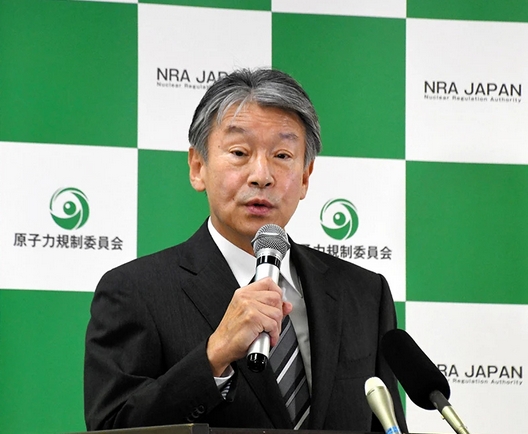
September 27, 2022
The new chairman of the Nuclear Regulation Authority vowed to maintain “independence and transparency” as the government agency performs its watchdog role over Japan’s nuclear industry.
Shinsuke Yamanaka, 66, an expert on nuclear material science, took the helm of the NRA on Sept. 26.
“I will never forget the Fukushima nuclear disaster at Tokyo Electric Power Co.’s Fukushima No. 1 nuclear plant,” he said at a news conference. “With this resolve, I remain committed to the NRA’s policy to regulate the nuclear industry while steadfastly maintaining independence and transparency.”
The appointment of Yamanaka, who has been an NRA commissioner since 2017, comes as the administration of Prime Minister Fumio Kishida seeks a return to more reliance on nuclear energy. It is the first such move since the 2011 triple meltdown at the Fukushima plant.
The administration is considering building nuclear plants and new reactors to replace aged ones, something the industry ministry and nuclear industry have pushed for years.
Yamanaka pledged that the NRA will continue to remain neutral.
“The NRA should sincerely carry out its duties while keeping in mind that the safety of nuclear energy is never a guarantee,” he said.
On the NRA’s prolonged examinations of reactors to assess if they meet the new reactor safety regulations, Yamanaka said his agency will be open to measures to help speed the process.
“Our basic stance is to conduct strict inspections, but we are willing to take measures to expedite the regulation procedures and improve communications between us and nuclear plant operators,” he said.
Japan hosted 54 commercial reactors before the Fukushima nuclear accident. Of these, 27 reactor operators had applied for restarts under the more stringent reactor regulations that went into force in 2013. Only 10 have gone back online so far, however, as the NRA examinations continue.
Yamanaka also cited three things he wants to focus on in the coming years: strengthening the NRA’s ability to disseminate information, having a field-oriented approach and developing human resources.
Before joining the NRA, he did fuel safety research related to severe nuclear reactor accident at Osaka University.
Yamanaka’s term will run until September 2027. He replaced Toyoshi Fuketa, who finished his term as the second chairman of the NRA, which was established in 2012.
The same day, Tomoyuki Sugiyama, who specializes in reactor safety, joined the NRA as one of four commissioners.
Sugiyama had researched reactor safety at the Japan Atomic Energy Agency’s Nuclear Safety Research Center.
Uncle Sam’s Long Trail of Wreckage

the Biden administration opted to use Ukraine in a Western proxy war against Russia.
Washington and London appear to have sabotaged a possible peace accord between Moscow and Kiev.
The Biden administration is risking nuclear war with Russia to assist a corrupt, authoritarian regime in a country of little importance to the United States.
Until the early 1990s, Ukraine wasn’t even an independent country, much less a U.S. vital interest.
Very few policymakers even concede that Washington’s overseas military adventures often have not turned out as planned.
The American Conservative, Ted Galen Carpenter, Sep 28, 2022, The leaders and most of the news media in the U.S. seem to believe that Washington’s foreign policy over the past several decades has been a success and benefitted both the United States and the world. That assumption wasn’t really true even during the Cold War, although that confrontation eventually resulted in the peaceful demise of America’s nasty totalitarian adversary. There was plenty of collateral damage along the way, with the suffering caused by Washington’s conduct in Vietnam and Afghanistan being the most glaring examples.
The performance of U.S. leaders after the Cold War has been even worse. An array of disruptive, bloody tragedies—most notably those in the Balkans, Afghanistan (again), Iraq, Libya, Syria, and Yemen—mark Uncle Sam’s global trail of wreckage. The Biden administration’s decision to use Ukraine as a pawn in Washington’s power struggle with Russia is fast becoming the latest example.
Very few policymakers even concede that Washington’s overseas military adventures often have not turned out as planned. The news media, which is supposed to serve as the public’s watchdog, have routinely ignored or excused America’s foreign-policy disasters. Instead, when one intervention fails, they simply move on to lobby for the next crusade pushed by U.S. leaders. Consider how few news accounts now deal with the ongoing violence and chaos in places such as Libya, Syria, and Yemen, even though Washington was a major contributor to all of those tragedies.
Paul Poast, a scholar with the Chicago Council on Global Affairs, aptly describes the conflict in Syria as America’s “forgotten war.” “That the war in Syria has become the “forgotten war,” he observes, “points to a more disturbing trend in U.S. foreign policy: The United States is so engaged in wars and interventions around the world that a conflict involving the U.S. military that has killed hundreds of thousands of civilians does not even register with the American public anymore.”………………………………………
The turmoil in Iraq is less severe, but is still damaging the country. Political disputes and mass demonstrations against the current government regularly surface in Iraq. Pro-Iranian militias continue to play a prominent role in the country’s government, and the three-way split among Sunni Arabs, Shiite Arabs, and Kurds is becoming ever more contentious. Political violence among rival factions shows no signs of subsiding, nor does public resentment against the presence of U.S. troops. Washington so lacks trust in its “ally” that officials once threatened to seize the country’s bank reserves if Iraqi leaders continued to press for the withdrawal of U.S. forces.
The level of human tragedy in Libya and Yemen is horrifying. Washington and its NATO allies bear almost exclusive responsibility for the situation in Libya………………………
The latest application of Washington’s meddlesome policy is in Ukraine. U.S. leaders ignored repeated Russian warnings that making Ukraine a NATO member or even an unofficial NATO military asset would cross a line that threatened Russia’s security. When Moscow finally responded to the provocations with an invasion of Ukraine in February 2022, the Biden administration opted to use Ukraine in a Western proxy war against Russia.
The conflict has already done enormous damage to Ukraine’s infrastructure and taken thousands of lives. Worse, Washington and London appear to have sabotaged a possible peace accord between Moscow and Kiev.
The U.S. foreign-policy record over the past three decades could hardly be worse. It is crucial not to let policymakers and their media mouthpieces get away with convenient collective amnesia and imitations of Pontius Pilate. Instead, they need to be held fully accountable for their blunders and deception.
Future U.S. policymakers also need to avoid repeating the faulty performance of their predecessors. To do so, they must make three significant changes to U.S. foreign policy.
First, Washington should utterly renounce nation-building. Trying to remake alien societies by force and impose Western political, economic, and social values is the essence of folly.
Even when the United States has not yet been drawn into a new war to enforce crumbling nation-building goals, as in Bosnia and Kosovo, such armed social experiments are an exercise in futility and frustration. Worse, nation-building missions frequently worsen conditions in the targeted country, and the predictable failure of U.S. objectives even can lead to Washington’s outright humiliation. The debacle in Afghanistan is a stark reminder of that danger.
Second, the United States must avoid the temptation to engage in regime-change wars. Such offensives often are a prelude to disastrous nation-building ventures. That was the case in Iraq, Afghanistan, and Libya. Those wars not only made matters worse for the populations in the three countries, but worsened the security situation for neighboring states and even the United States. In both Iraq and Libya, U.S. actions toppled secular dictators, paving the way for chaos that strengthened the position of Islamic jihadists. Granted, the secular dictators were brutal and sometimes caused problems for the United States, but Washington’s “solution” clearly made matters worse, not better.
Third, U.S. leaders must do a much better job of distinguishing vital national interests from secondary or peripheral ones. Washington’s current policy of using Ukraine as a proxy for a war against Russia is a troubling example of the failure to make such basic distinctions. The Biden administration is risking nuclear war with Russia to assist a corrupt, authoritarian regime in a country of little importance to the United States.
Until the early 1990s, Ukraine wasn’t even an independent country, much less a U.S. vital interest. To accept the risks the Biden administration is incurring is irresponsible and violates the U.S. government’s responsibility to the American people.
Unless these policy changes are made, it is just a matter of time until a new set of officials repeat the disastrous blunders of their predecessors. If they do, the consequences to America and the world will be equally damaging. Indeed, the Ukraine adventure reveals that the consequences could be even worse than the wreckage already wrought by Uncle Sam. https://www.theamericanconservative.com/uncle-sams-long-trail-of-wreckage/
Sanctions against Russian exports – but that doesn’t apply to NUCLEAR EXPORTS, (while they bring in funding for Russia’s war!)

ED note. When will they all wake up? The nuclear industry is essential for the nuclear weapons so beloved by the governments that have them.
Keeping the nuclear industry going is essential for the wealth, power and influence of the global nuclear lobby, and the future of all their crackpot super-costly ‘advanced’ nuclear gimmicks.
Apparently we can all accept cutting back gas, oil, food ……. but must not let anyone curtail that sacred cow – the nuclear industry
Russia’s nuclear trade with Europe flows despite Ukraine war, By SYLVIE CORBET, September 30, 2022,
PARIS (AP) — While the European Union has agreed to curtail its use of Russian oil and gas, its member nations continue to import and export nuclear fuel that is not under EU sanctions — to the chagrin of the Ukrainian government and environmental activists.
A cargo ship carrying uranium that departed from the French port of Dunkirk traveled across the North Sea on Thursday, heading toward the Russian Baltic port of Ust-Luga. It was the third time in just over a month that the Panama-flagged Mikhail Dudin ship docked in Dunkirk to transport uranium from or to Russia.
Environmental group Greenpeace France denounced the ongoing shipments and called for stopping all trade in nuclear fuel, which it said was “financing the war in Ukraine, extending (Europe’s) energy dependence and delaying the transition to renewable energy.”
The EU’s executive arm, the European Commission, did not propose targeting Russia’s nuclear sector in its latest sanctions package presented Wednesday.
“France ensures strict compliance by economic players with all the European sanctions adopted against Russia. Civil nuclear power is not affected by these sanctions,” the French Foreign Affairs Ministry told the Associated Press.
The ministry that EU nations “did not consider this to be a relevant area for ending Russian aggression against Ukraine.”
Ukraine, meanwhile, is pushing for European sanctions in that area. The Ukrainian president’s economic adviser, Oleg Ustenko, said Wednesday that “in terms of uranium, we think it’s extremely important to impose sanctions, not only on Russian oil.”
“Oil, gas, uranium and coal, all this should be banned. Because they are using this money in order to finance this war,” Ustenko said.
According to Greenpeace France, reprocessed uranium meant to be transported to Russia were loaded onto the Mikhail Dudin on Wednesday. Pauline Boyer, an energy campaigner at Greenpeace France, said the ship’s repeated trips between Russia and France show “the extent to which the French nuclear industry is trapped in its dependence on Russia.”
French authorities have repeatedly said the country does not depend on Russia to supply the nuclear power plants that provide 67% of its electricity — more than any other nation………………………………………..
The Lingen plant is operated by Framatome, which is majority-owned by French utility giant EDF. It is supplying nuclear fuel to plants in France, Belgium, Switzerland, the Netherlands, Britain, Spain, Sweden and Finland.
Faced with activists’ protests, the German government took a critical view toward the uranium shipment but said it couldn’t stop the fuel from being processed because it isn’t covered by the EU’s war-related sanctions on Russia.
At the end of last month, enriched uranium unloaded from the Mikhail Dudin in Dunkirk was destined for the Rhone valley in southern France, which is home to major sites of the French civil nuclear industry, according to Greenpeace France.
The French nuclear sector has a series of contracts with Russian state-controlled energy giant Rosatom, including some to import enriched uranium destined for European nuclear power plants and to export reprocessed uranium to Russia. Rosatom is one of the world’s biggest actors in the nuclear energy market.
Multinational company Orano, headquartered in France, has a contract with Rosatom to buy reprocessed uranium to convert it into nuclear fuel at its Seversk plant, in Siberia, and ultimately use it in reactors to produce energy.
The U.S. power industry also imports uranium from Russia to feed its nuclear plants.
AP recently tracked millions of dollars worth of shipments of radioactive uranium hexafluoride from Russian state-owned Tenex JSC, the world’s largest exporter of initial nuclear fuel cycle products, to Westinghouse Electric Co. in South Carolina. https://apnews.com/article/russia-ukraine-france-global-trade-only-on-ap-business-c521f2248c823f69f0a677735a78e89d
U.S. has not seen acts indicating Russia contemplating nuclear attack
U.S. has not seen acts indicating Russia contemplating nuclear attack
WASHINGTON, Sept 30 (Reuters) – The United States has not yet seen Russia take any action that suggests it is contemplating the use of nuclear weapons amid its invasion of Ukraine, U.S. Secretary of State Antony Blinken said on Friday, despite what he called “loose talk” by Russian President Vladimir Putin about their possible use.
“We are looking very carefully to see if Russia is actually doing anything that suggests that they are contemplating the use of nuclear weapons. To date, we’ve not seen them take these actions,” Blinken told a news conference in Washington with his Canadian counterpart.
“This kind of loose talk about nuclear weapons is the height of irresponsibility and it’s something that we take very seriously,” Blinken said.
Putin on Friday proclaimed Russia’s annexation of a swathe of Ukraine, the biggest annexation in Europe since World War Two. Putin also vowed to press ahead with what he calls a “special military operation” in Ukraine. Russia launched its invasion in February.
In recent weeks, Putin explicitly warned the West that Russia would use all available means to defend Russian territory and accused the West, without offering evidence, of discussing a potential nuclear attack on Russia. Putin on Friday said the United States had set a precedent when it had dropped two atomic bombs on Japan in 1945, but stopped short of issuing new nuclear warnings against Ukraine.
Pentagon spokesperson Brigadier General Patrick Ryder this week said the United States had not seen any changes that would lead it to alter the posture of American nuclear forces.
Putin controls the world’s largest nuclear arsenal, including a new generation of hypersonic weapons and 10 times more tactical nuclear weapons than the West.
Reporting by Simon Lewis and Humeyra Pamuk; Editing by Chizu Nomiyama and Will Dunham
“Eva Bartlett describes Ukraine’s unspeakable genocide of Donbass FULL INTERVIEW (Graphic Content Warning)”
nterview I did on Redacted on September 22.
**Warning: This video contains graphic images of civilians killed by Ukrainian shelling of completely civilian areas of Donetsk.**
Swiss Government wants command centre in case of ‘nuclear event’

Government wants command centre in case of ‘nuclear event’
The Swiss government on Friday laid out responsibilities in case of a nuclear attack or nuclear disaster linked to the war in Ukraine. September 30, 2022
While the defence ministry currently considers this unlikely, the government says it is necessary to be prepared and be able to react rapidly.
It has tasked the defence ministry to set up a Federal Strategic Command Staff if there were to be such an event or it looked likely. This Command Staff will be headed by the secretary-general of the defence ministry and include the secretary generals of all the ministries, the federal government spokesperson, heads of the federal health, civil defence, energy and other key offices as well as representatives of the army, police and fire brigade…………………..more https://www.swissinfo.ch/eng/politics/government-sets-chain-of-command-in-case-of–nuclear-event-/47943850
NATO chief throws cold water on Ukraine’s bid to join NATO
NATO Secretary General Jens Stoltenberg condemned Russia’s move to take over the Donbass, but also threw cold water on Ukraine’s bid to join NATO. 30 Sept 22 “……………………………………………………………………………….Neither side will be getting exactly what they want anytime soon. On Friday, Ukrainian President Volodymyr Zelenskyy announced that Ukraine would seek a “fast-track” application to join NATO. “De facto, we have already made our way to NATO. De facto, we have already proven compatibility with the Alliance’s standards. They are real for Ukraine—real on the battlefield and in all aspects of our interaction,” Zelenskyy said.
Stoltenberg, when asked about the application on Friday, answered as he has in previous engagements, without making any promises and referring to NATO’s rule that “membership, of course, has to be taken by all 30 allies and we take these decisions by consensus.”
That consensus seems a long way off. Hungary is openly opposed to Ukrainian membership and even Germany and France—allies who are supporting Kyiv’s fight against the Russian invaders—have opposed it in the past.
U.S. National Security Advisor Jake Sullivan said that Ukraine’s NATO bid should be taken up “at a different time.” ………………. https://www.defenseone.com/threats/2022/09/nato-chief-slams-russias-nuclear-blackmail-remains-cool-ukraines-membership-bid/377906/
Amid increased threats to military and civilian targets, Sweden increases security around nuclear power stations
Sweden has stepped up security around two nuclear power stations after the
bombing of two subsea gas pipelines in the Baltic. The national security
agency said the threat to military and civilian targets had “broadened
and deepened” and that it was taking additional measures to protect the
reactors at Forsmark, north of Stockholm, and Ringhals, south of
Gothenburg.
Norway promised to make its armed forces “more visible”
around oil and gas installations after the suspected attack on the Nord
Stream 1 and 2 pipelines from Russia to Germany. This morning Nato said the
damage had been caused by “deliberate, reckless and irresponsible acts of
sabotage” after a fourth leak was detected in the waters of Sweden’s
maritime economic zone, meaning that all four pipelines along the Nord
Stream route have been disabled within days.
Times 29th Sept 2022
1 This Month



19 November – Webinar – The Reality of Reprocessing
Time: 11:00 AM Pacific Time (US & Canada) / 2:00 PM Eastern / 7:00 PM UK / 8:00 PM CET
Register for the Zoom Event Here



Shut down the radiation-damaged Heysham nuclear reactors now
To see nuclear-related stories in greater depth and intensity – go to https://nuclearinformation.wordpress.com

Say No to NASA’s Reckless Nuclear Reactor on the Moon
Say No to NASA’s Reckless Nuclear Reactor on the Moon
-
Archives
- November 2026 (22)
- October 2026 (302)
- September 2026 (339)
- August 2026 (330)
- July 2026 (355)
- June 2026 (287)
- May 2026 (306)
- April 2026 (356)
- March 2026 (251)
- February 2026 (267)
- January 2026 (308)
- December 2025 (358)
-
Categories
- 1
- 1 NUCLEAR ISSUES
- business and costs
- climate change
- culture and arts
- ENERGY
- environment
- health
- history
- indigenous issues
- Legal
- marketing of nuclear
- media
- opposition to nuclear
- PERSONAL STORIES
- politics
- politics international
- Religion and ethics
- safety
- secrets,lies and civil liberties
- spinbuster
- technology
- Uranium
- wastes
- weapons and war
- Women
- 2 WORLD
- ACTION
- AFRICA
- Atrocities
- AUSTRALIA
- Christina's notes
- Christina's themes
- culture and arts
- Events
- Fuk 2022
- Fuk 2023
- Fukushima 2017
- Fukushima 2018
- fukushima 2019
- Fukushima 2020
- Fukushima 2021
- general
- global warming
- Humour (God we need it)
- Nuclear
- RARE EARTHS
- Reference
- resources – print
- Resources -audiovicual
- Weekly Newsletter
- World
- World Nuclear
- YouTube
-
RSS
Entries RSS
Comments RSS

