‘The Hell With It’: SpaceX CEO Musk Reverses Position On Funding Satellite Internet For Ukraine

https://www.rferl.org/a/musk-starlink-ukraine-funding-spacex/32084855.html 16 Oct 22
SpaceX CEO Elon Musk now says that his company will continue to pay for the Starlink satellite Internet service for Ukraine, a day after suggesting SpaceX could no longer afford it.
“The hell with it,” Musk said on Twitter. “Even though Starlink is still losing money & other companies are getting billions of taxpayer $, we’ll just keep funding ukraine govt for free.”
Musk activated Starlink, a network of more than 2,000 satellites orbiting the Earth and thousands of terminals on the ground, in late February after Internet services were disrupted because of Russia’s invasion of Ukraine.
Starlink has cost SpaceX $80 million thus far and the cost will exceed $100 million by end of year, Musk said on Twitter on October 7.
He told his more than 108 million Twitter followers on October 14 that SpaceX cannot fund the network “indefinitely” amid reports that he has asked the Pentagon to step in.
He issued the statement after CNN reported that SpaceX sent a letter to the Pentagon last month saying it could not continue to fund the Starlink service in Ukraine and that it may have to stop funding it unless the U.S. military gives the company tens of millions of dollars a month.
The Defense Department later confirmed that it received a request from Musk to take over funding for the satellite network. The official said the issue has been discussed in meetings and senior leaders are weighing the matter.
Biden authorizes more weapons for Ukraine
The US will send $725 million in additional military aid to Kiev from the Pentagon’s stockpiles. https://www.rt.com/news/564698-biden-pentagon-ukraine-weapons/ 15 Oct 22,
US President Joe Biden ordered an additional $725 million in weapons shipments to Ukraine on Friday. The White House did not specify what the latest disbursement will consist of, only that it would be yet another drawdown of Defense Department “defense articles and services.”
The Pentagon later clarified that the aid package will include an unspecified quantity of “additional ammunition for High Mobility Artillery Rocket Systems (HIMARS),” thousands of 155mm artillery rounds and more than 200 additional Humvees.
Earlier this week, the US vowed to expedite the shipment of two of the eight NASAMS air defense systems it has long promised to Ukraine. The new package, however, will not include any additional anti-air capabilities.
Washington and its NATO allies pledged to boost Ukraine’s air defenses following heavy Russian missile strikes on Ukraine on Monday and Tuesday. Moscow said that they were in response to “terrorist tactics” employed by Kiev, which included sabotage attempts at the Kursk nuclear power plant and the TurkStream gas pipeline as well as the truck bombing of the Crimea Bridge.
he US has been the strongest supporter of Ukraine since the start of Russia’s military operation, providing the country with billions of dollars in military and financial aid, as well as intelligence data. Washington’s deliveries to Kiev have included large quantities of heavy weapons, among them over 150 artillery pieces, 20 Mi-17 helicopters, 200 M113 Armored Personnel Carriers, hundreds of Humvees and at least 16 HIMARS. The list includes more than 1,400 Stinger anti-aircraft systems, over 8,500 Javelin anti-tank weapons and 32,000 other anti-armor platforms, as well as at least 700 Switchblade suicide drones and an undisclosed number of Claymore anti-personnel mines.
Biden has used his Presidential Drawdown Authority to authorize the transfer of “surplus” weapons from the Pentagon’s stocks for the 23rd time since August 2021. This year alone, the United States “has committed more than $17.5 billion in security assistance” to Kiev, the Department of Defense confirmed on October 4.
Putin Says No Need For Further Massive Air Strikes On Ukraine, Foresees End To Mobilization
Nearly eight months into his war against Ukraine, Russian President Vladimir Putin appears to be striking a softer tone, saying he sees no need for continued massive air strikes and that a mobilization of troops to support his military operation will end in two weeks.
Speaking to journalists in Kazakhstan’s capital, Astana, on October 14, Putin said that Russia was willing to hold talks on ending the war, although they would need to be held with an international mediator if Ukraine comes to the table as well………………………………………………..more https://www.rferl.org/a/putin-end-mobilization-air-strikes-ukraine-war/32083657.html
Anti-nuclear campaigners have raised fears about a plan to turn Trawsfynydd into a test-bed for a new generation of mini nuclear power plants.
The Nuclear Decommissioning Authority which owns the Trawsfynydd
nuclear power plant site has signed an agreement with the Welsh
government’s development company, Cwmni Egino, to share information on
how best to redevelop the site. Cwmni Egino chief executive Alan Raymant
has said that they are focused on installing one of a new generation of
mini nuclear reactors developed by Rolls-Royce, with an aim to start on the
work by 2027.
But anti-nuclear campaigners CND Cymru, Cymdeithas y Cymod,
CADNO, and PAWB have released a statement opposing the plans and backing
renewables instead. “Wales is already a net exporter of electricity, and
the investment into true renewables like wave, wind, tidal, and sun will be
much more effective than the billions washed down the nuclear drain,”
they said. “We jointly call on the NDA to reconsider its support of
nuclear development in Wales, and Trawsfynydd and Wylfa in particular, and
further call on the UK and Welsh Government to invest in the green, clean,
and renewable future of wave, wind, and sun that we all deserve.”
Last month anti-nuclear campaigners have protested against plans for new nuclear
power stations to be built in Wales with a 70-mile march across Gwynedd and
Anglesey. Plaid Cymru Gwynedd Council leader Dyfrig Siencyn is among those
to have backed the plans for a new reactor at the nuclear power plant,
which employed 500 people when in operation between 1967 and 1993.
“There’s quite a strong anti-nuclear lobby, and they have been
demonstrating recently; we received a petition from them as a council,”
he told the Telegraph newspaper. “But I think we need nuclear energy if
we are serious about addressing the climate change emergency.”
Nation Cymru 14th Oct 2022 https://nation.cymru/news/anti-nuclear-campaigners-raise-fears-about-trawsfynydd-mini-nuke-test-bed-plans/
Radioactive waste from WWII nuclear weapons found in Missouri school
https://www.fox10phoenix.com/news/radioactive-waste-from-wwii-nuclear-weapons-found-missourischool 16 Oct 22, FLORISSANT, Mo. (AP) – There is significant radioactive contamination at an elementary school in suburban St. Louis where nuclear weapons were produced during World War II, according to a new report by environmental investigation consultants.
The report by Boston Chemical Data Corp. confirmed fears about contamination at Jana Elementary School in the Hazelwood School District in Florissant raised by a previous Army Corps of Engineers study.
The new report is based on samples taken in August from the school, according to the St. Louis Post-Dispatch. Boston Chemical did not say who or what requested and funded the report.
“I was heartbroken,” said Ashley Bernaugh, president of the Jana parent-teacher association who has a son at the school. “It sounds so cliché, but it takes your breath from you.”
The school sits in the flood plain of Coldwater Creek, which was contaminated by nuclear waste from weapons production during World War II. The waste was dumped at sites near the St. Louis Lambert International Airport, next to the creek that flows to the Missouri River. The Corps has been cleaning up the creek for more than 20 years.
The Corps’ report also found contamination in the area but at much at lower levels, and it didn’t take any samples within 300 feet of the school. The most recent report included samples taken from Jana’s library, kitchen, classrooms, fields and playgrounds.
Levels of the radioactive isotope lead-210, polonium, radium and other toxins were “far in excess” of what Boston Chemical had expected. Dust samples taken inside the school were found to be contaminated.
Inhaling or ingesting these radioactive materials can cause significant injury, the report said.
“A significant remedial program will be required to bring conditions at the school in line with expectations,” the report said.
The new report is expected to be a major topic at Tuesday’s Hazelwood school board meeting. The district said in a statement that it will consult with its attorneys and experts to determine the next steps.
“Safety is absolutely our top priority for our staff and students,” board president Betsy Rachel said Saturday.
Christen Commuso with the Missouri Coalition for the Environment presented the results of the Corps’ study to the school board in June after obtaining a copy through a Freedom of Information Act request.
“I wouldn’t want my child in this school,” she said. “The effect of these toxins is cumulative.”
Low operating costs make the case for investing in utility-scale renewable projects
Renewables met 100% of global electricity demand growth during the first
half of 2022. So says the ‘Global Electricity Mid-Year Insights 2022’
from Ember, a global energy think tank. In fact, it says there was a 389
TWh increase in the demand for electricity in the first half of 2022
compared to the first half of 2021, whereas the rise in renewables supply
was actually a bit more – 416TWh.
That’s not surprising given that
renewables are getting so cheap- including in the UK, with wind and solar
the most prolificate new sources across world. However, that in turn may
create a bit of a problem for older renewables, set up under quite
lucrative subsidy schemes, based on now high gas prices, like the
Renewables Obligation in the UK. As I have noted in earlier posts, there is
pressure on them to switch to the more competitive CfD system. Certainly
the RO system is based on adding a subsidy to wholesale gas prices, so
something has to change, since gas prices are now so high. But there are
issues- will every supplier be happy to accept less earnings? They may drag
their feet.
The record-breaking run in power prices, particularly in
Europe, is creating a favorable investment case for solar and wind
projects, making it increasingly compelling to develop renewable assets
purely based on project economics. According to Norwegian consultancy
Rystad Energy, current spot prices in Germany, France, Italy, and the
United Kingdom would all result in payback of 12 months or less.
Considering the average monthly spot prices for August in these countries
were all well over €400/MWh and the relatively low operating costs of
renewables, investing in utility-scale projects appear to be a no-brainer.
Renew Extra 15th Oct 2022
https://renewextraweekly.blogspot.com/2022/10/renewable-booming-but-windfall-tax.html
Small modular nuclear reactors risky venture for Saskatchewan
https://thestarphoenix.com/opinion/letters/letters-small-modular-nuclear-reactors-risky-venture-for-saskatchewan 16 Oct 22, Small modular reactors do not exist yet
Referring to nuclear as a possible part of our future energy mix in “SaskPower working to find right mix for the future,” (Oct. 5) CEO Rupen Pandya said “small modular reactors are smaller, easier to build, more affordable and safer”. This statement is both misleading and inappropriate.
Pandya’s use of the word “are” is a red flag: SMRs do not yet exist. The type of SMR SaskPower has selected to build — if it ever gets beyond the conceptual stage — would use enriched uranium fuel imported from the
USA, thus cannot be considered “safe”.
Are SMRs easier to build? We don’t know, since none have ever been built.
The exact cost of building the GE-Hitachi BWRX-300 is unknown, but would be in the billions of dollars, and is certainly less affordable than renewable energy options that are already available.
Nuclear power projects are prone to cost over-runs and delays — but this is an advantage for the companies involved in their design and construction, as it means more money will be be transferred to them from
the taxpayer.
An energy mix based on expensive, uncertain and risky SMRs would foreclose on building a truly sustainable energy future based on energy conservation and renewable sources like solar, wind, hydro, geothermal
and energy storage systems.
SaskPower should be listening — not trying to sell us on a particular option.
Cathy Holtslander, Saskatoon
SMRs are hardly emissions free
Re. Cameco engineer Brahm Neufeld’s letter on small modular reactors.
The marketing of SMRs has been entirely fraudulent. No emissions? Of course there will be emissions. All nuclear power plants must release radioactive gases, tritium and krypton intermittently and sometime inadvertently.
If carbon dioxide is included it would likely be radioactive carbon-14. Green? The carbon cost of building, mining, refining, enriching and decommissioning is many times that of solar and wind.
Dale Dewar, Wynyard
Editorial: Japan’s push to extend nuke reactor life past 40 yrs doesn’t add up

October 13, 2022 (Mainichi Japan)
The administration of Prime Minister Fumio Kishida has begun considering eliminating the “40-year rule,” or the principle that nuclear reactors should be decommissioned after four decades in service.
Japan’s Nuclear Regulation Authority (NRA), which is responsible for the law enforcing the 40-year principle, has given its blessing to this new policy. The Ministry of Economy, Trade and Industry, in charge of the stable supply of electricity, will now decide how a reactor’s operating life should be determined.
The 40-year rule was introduced after the meltdowns at Tokyo Electric Power Co. Holdings (TEPCO)’s Fukushima Daiichi Nuclear Power Station in March 2011. And since then, the idea that nuclear reactors will run for 40 years and no more has become firmly entrenched.
The rule was also Japan’s declaration that it was committed to moving away from nuclear dependence by decommissioning aging reactors one by one, reflecting upon the seriousness of the disaster.
A policy shift from the 40-year rule would require national consensus. It is unacceptable for the administration to leave legal revisions regarding safety up to the industry ministry — which spent decades promoting nuclear power — and essentially dictate a return to atomic power. It is also inconsistent with the government’s own Basic Energy Plan, which clearly states that Japan’s dependence on nuclear power will be reduced.
In August this year, Prime Minister Kishida abruptly announced a policy of building new nuclear power plants and restarting existing reactors. This was based on the belief that atomic power is indispensable for both a stable electricity supply and to decarbonize Japan’s energy system.
One obstacle to this is those existing reactors’ service time. Most of them have been in operation for 30 years, and should the 40-year rule be strictly applied, more than 10 reactors will have to be decommissioned by 2030.
The electricity sector and the industry ministry hope to extend those reactors’ operational life to save money, arguing that “40 years is just a guideline with no clear scientific basis.” However, data on accident risks at aging atomic power plants is limited. After the Fukushima Daiichi meltdowns, it was decided that 11 reactors in Japan would be decommissioned because it would cost too much to implement the safety measures needed to keep them running.
NRA head Shinsuke Yamanaka stated, “We will establish a system that enables strict regulation no matter what the operational life may be.” But is there enough knowhow, and a sufficiently robust review system, to maintain effective regulation?
Even if the rules are changed to allow nuclear reactors to stay online regardless of how long they’ve been in service, this does not guarantee that restarts will go smoothly. In addition to potential nuclear accidents, municipalities hosting the plants have deep-seated concerns about information disclosure and evacuating residents in case of a disaster.
What is needed is an energy policy that makes use of the lessons learned from Fukushima Daiichi. Forcing through political decisions without convincing the Japanese public will only stoke their distrust of nuclear power.
https://mainichi.jp/english/articles/20221013/p2a/00m/0op/009000c
[Nuclear Waste] Two Years After Applying for the Literature Review, the Divide Remains Unresolved in Suttsu Town, Hokkaido, Japan

High-level radioactive waste, or “nuclear waste.
Two years have passed since the town of Suttsu, Hokkaido, applied to participate in a study for the construction of a final repository for this waste.
The first phase of the literature review has reached its climax, but the focus is on whether or not to proceed to the next phase of the survey.
We covered the current situation in Machi.
Salmon landings are at their peak in Sutou Town.
Strong winds blow all year round.
In the fall of last year, when the wind began to turn cold, the town attracted nationwide attention.
(Mayor Kataoka said, “I want to put this nuclear waste on the table.
Mayor Haruo Kataoka decided to apply, so to speak, on his own initiative to the national government’s survey for the construction of a final disposal site for nuclear waste from nuclear power plants.
Nuclear waste has no place to go and cannot even be touched by humans.
After it is mixed with glass and hardened, it is buried in a stratum deeper than 300 meters underground.
It will take 100,000 years for the waste to reach a safe state.
However, for each of the three levels of investigation accepted, the municipality is given a large subsidy.
This was Mayor Kataoka’s goal.
(Mayor Kataoka said, “I heard about this in a study group on the final disposal of nuclear power plants, and I thought it was a pretty tasty grant.
The grant obtained from the literature review was 1.85 billion yen over two years.
Part of the grant is used for personnel expenses for nursery staff, and the rest is set aside as a fund.
For a small town, this is a valuable financial resource.
Kazuyuki Tsuchiya runs a pension in the town.
He has consistently opposed the survey.
(Kazuyuki Tsuchiya) “The gap between those in favor and those opposed is deepening. Those who are in favor of the project have talked to me.
I try not to mention it as much as possible. I try not to mention it.”
The literature survey will soon reach the two-year mark, with the pros and cons remaining divided.
However, with the exception of Kamieuchi Village, where the survey is also underway, no local government has raised its hand.
In the town of Sutto, a referendum will be held to decide whether or not to conduct the next survey, but Mayor Kataoka has not found the right time to do so.
(Mayor Kataoka (last month): “The residents are still anxious. They are anxious in the absence of knowledge.
I frankly feel that things are not progressing very smoothly.
(Mr. Kazuyuki Tsuchiya) “I think that those who are complying with the town’s way of doing things have stopped thinking about it.
(Is the future bright?
(Kazuyuki Tsuchiya) “It is not bright. The darkness is getting deeper and deeper.
There is an expert at Hokkaido University who has been advising NUMO, which is conducting the survey, for many years.
(Professor Tsutomu Sato, Hokkaido University Graduate School) “The literature survey has already started, and I have given advice before that.
The next time the overview survey starts, I will advise them on how they should proceed in this way.”
Discussions with local residents have not progressed well in the town of Sutou.
Professor Sato points out that the reason for this is also on NUMO’s side.
(Professor Tsutomu Sato, Hokkaido University Graduate School) “Right now, NUMO is investigating what they want to investigate for their own purposes.
They may want to know why we can get good oysters here, or why it may have something to do with geology or geological strata.
It is difficult to say whether the research is being conducted in such a way that the residents would want to know about it.
The purpose of a literature review is to compile information for a dialogue that is beneficial to both parties.
If we can do that well, I think we can overcome the hurdle of the literature review.
The debate over nuclear waste has created a deep divide within the town.
Concrete solutions to bridge that divide remain shrouded in darkness.
https://www.stv.jp/news/stvnews/cs3pdu00000022ym.html?fbclid=IwAR3ShIsHhdE6kSOtkO5grcv1gxg2Dbs-PKkbnX8vB1LKocXNYtFZ2qow7XA
Nuclear Power Is a Dead End. We Must Abandon It Completely.

In fact, the knock-out arguments against the nuclear industry today are reactors’ cost and deployment time. The greatest barriers to this claimed renaissance—and it is primarily talk, not investment—is its inability to deliver affordable power on time and on budget.
Small nuclear reactors (SMRs) -both slower to deploy than conventional reactors and more expensive per kilowatt capacity. “overall, SMRs are inferior to conventional reactors with respect to radioactive waste generation, management requirements, and disposal options.”
Even given Europe’s energy crisis, the case against nuclear power has never been so conclusive—and so important.
The Nation, By Paul Hockenos 13 Oct 22,
BERLIN—Amid a confluence of crises—the Ukraine war, an energy crisis, and climate breakdown—nuclear energy is experiencing a renaissance, at least in the rhetoric of politicians and pundits across Europe, North America, and beyond. After all, it’s tempting to propose these generators of low-carbon energy as a panacea to this daunting phalanx of calamities.
But in fact, the case against nuclear power and for genuinely renewable energies has never been so conclusive—and so important. In early March, Russia captured the Zaporizhzhia nuclear power plant in Ukraine—the largest in Europe with six reactors, each the size of the one that melted down in the 1986 Chernobyl disaster—and transformed it into an army base from which it fires artillery at Ukrainian positions.
Although this weaponizing of nuclear reactors had long been recognized as a threat, the vulnerability of nuclear power plants in conflict zones is now center stage in Europe. The battlefield in this case is controlled by an unpredictable autocrat who has threatened that he’ll use every means at his disposal to destroy Ukraine. At the Zaporizhzhia station, the Russian military has taken the Ukrainian nuclear engineers hostage, and is working them at gunpoint. The International Atomic Energy Agency (IAEA) warned in August that there’s a “real risk of nuclear disaster” unless the fighting stops. Russia could sabotage a power plant like Zaporizhzhia and attempt to shift the blame onto Ukraine. A nuclear weapon strike would be a crime against humanity, but a disaster at nuclear plant could blur responsibility and complicate the international response. Nuclear plants, where military-scale security is nonexistent, are sitting ducks for acts of terrorism and wartime targeting.

At the same time, the world’s nuclear power champion, France, has punctured the myth that nuclear power is a round-the-clock energy source that can operate without back-up reserves—a favorite trope of wind and solar power skeptics. Nowhere in Europe today is the energy crisis more acute than in France, where for much of this year, between a third and over half of France’s 56 nuclear reactors have been shut down either because weather-warmed rivers cannot cool their systems or on account of corrosion damage, hairline cracks, staff shortages, and pending maintenance work on their geriatric hardware. The outages have forced France to rely on Germany for electricity imports—culled in large part from the wind and solar farms that supply almost half of Germany’s electricity. In August, France’s power prices hit €1,100 per megawatt-hour, more than 10 times the 2021 price, smashing records across the continent………………………………………
Critics’ original concern with nuclear power, namely its safety, remains paramount. The two most catastrophic meltdowns, in 1986 at the Chernobyl nuclear power plant in the Soviet Union and the Fukushima site in Japan, in 2011, had horrific repercussions that still haunt those regions. But these mega disasters are only the most well known. According to IAEA, there have been 33 serious incidents at nuclear power stations worldwide since 1952—two in France and six in the United States.
These accident numbers don’t include the toxic fallout from lax disposal and storage of nuclear waste.

Between 1945 and 1993, 13 countries, including the UK, the US, and the Soviet Union, heaved barrels of nuclear waste into their seas—a total of 200,000 tons—presuming the vast ocean waters would dissolve and dilute it. Those casks still lie there today.
This sad chapter belongs to the 80-year-old saga of nuclear waste. Currently, there’s over a quarter-million metric tons of spent fuel rods sitting above ground, usually in cooling pools at both closed-down and operative nuclear plants, waiting like Samuel Beckett’s protagonists Vladimir and Estragon for a definitive solution that will never come.
In northern Europe, the Finns claim that they’ve solved it by digging 100 tunnels 1,400 feet into the bedrock of an uninhabited island in the Gulf of Bothnia. Underway now for decades, this $3.4 billion undertaking, the first permanent repository in the world, will eventually hold all of Finland’s spent nuclear refuse—less than 1 percent of the world’s accumulated radioactive remnants—until about 2100. This highly radioactive mass will, its operators promise, remain catacombed for 100,000 years. (Since nuclear waste is lethal for up to 300,000 years, these sites are a time-bomb for whoever or whatever is inhabiting the planet then, assuming geological conditions allow it to lie peacefully for that long.) In light of Finland’s small volume of radioactive waste, the full lifetime price tag of nearly $8 billion dollars is significantly more per ton than the estimated $34.9 billion, $19.8 billion, and $96 billion that the France, Germany, and the United States respectively will shell out for nuclear waste management, according to the World Nuclear Waste Report 2019.
Most countries don’t have barren islands far from groundwater sources, so they have to make do, like Switzerland did in September when it announced that it intends to excavate a geological storage repository near the German border, closer to German towns in Baden Württemberg than Swiss ones. Germany’s borderland communities are vigorously contesting the choice, which will probably be abandoned by the Swiss. Nearly all proposed sites end up scratched for the obvious reason that nobody wants to live next to a nuclear waste dump.
“Nowhere in the world has anyone managed to create a place where we can bury extremely nasty nuclear waste forever,” Denis Florin of Lavoisier Conseil, an energy-focused management consultancy in Paris, told the Financial Times earlier this year. “We cannot go on using nuclear without being adult about the waste, without accepting we need to find a permanent solution.”
The inherent danger of nuclear power is often relativized by advocates as the bitter pill we must choke down in light of its other advantages. In fact, the knock-out arguments against the nuclear industry today are reactors’ cost and deployment time. The greatest barriers to this claimed renaissance—and it is primarily talk, not investment—is its inability to deliver affordable power on time and on budget.
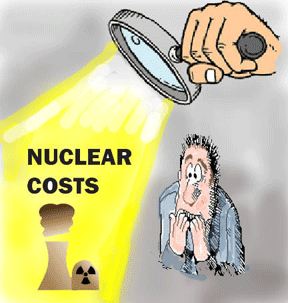
Nuclear energy is such a colossal expense—into the tens of billions of dollars, like the $30 billion Vogtle units in Waynesboro, Ga.—that few private investors will touch them, even with prodigious government bankrolling.
The UK government finally found a taker for its Hinkley Point C station in 2016 when it offered lavish subsidies to the French energy firm EDF. But even that deal becomes less sweet the higher construction costs spiral and the longer EDF postpones its opening beyond 2025. So catastrophic are the cost overruns of EDF’s projects worldwide that the company could no longer service its €43 billion debt and this year agreed to full nationalization. But experts say this alone won’t solve any of the fundamental problems at Hinkley C or the Flamanville plant in Normandy, which is 10 years behind schedule, with costs fives times in excess of the original budget. Cost overruns are one reason that one in eight new reactor projects that start construction are abandoned.
While safety concerns drive up the cost of nuclear plant insurance, the price of renewables is predicted to sink by 50 percent or more by 2030. Study after study attests that wind and solar cost a fraction of the price of nuclear power: at least three to eight times the bang for the buck in terms of energy generation and climate protection, at a time when the exorbitant cost of energy is causing recessions and street protests across Europe. It is because solar photovoltaic and wind power are the cheapest bulk power source in most of the world that renewables, grids, and storage now account for more than 80 percent of power sector investment. In 2021, companies, governments, and households invested 15 times as much in renewable energy than in nuclear. They’re simply the better buy.
NUCLEAR IS MUCH TOO SLOW
Indeed, in the face of an ever more cataclysmic climate crisis that demands solutions now—like hitting the EU’s 2030 targets of reducing carbon dioxide emissions by 55 percent of 1990 levels by 2030—the build-out of nuclear is painfully, prohibitively slow. In Europe, just one nuclear reactor has been planned, commissioned, financed, constructed, and put online since 2000—that’s Finland’s Olkiluoto-3 reactors (March 2022). Europe’s flagship nuclear projects—called European Pressurized Reactors—have been dogged by delays from the start. The Olkiluoto-3 reactors in Finland, which had been scheduled to go online in 2009, still isn’t heating homes. Globally, the average construction time—which count the planning, licensing, site preparation, and arranging of finances—is about a decade.
Small-scale modular reactors (SMR), advanced with funding during the Obama administration, are supposedly the industry’s savior—the so-called next generation—although they’ve been around for decades. Purportedly quicker to build, with factory-made parts, they generate at most a 10th of the energy as a conventional reactor. Yet they are not significantly different in terms of their problems. The World Nuclear Industry Status Report 2022 claims that, so far, they have been both slower to deploy than conventional reactors and more expensive per kilowatt capacity. A recent study conducted by Stanford University and University of British Columbia came to the conclusion that “overall, SMRs are inferior to conventional reactors with respect to radioactive waste generation, management requirements, and disposal options.”
NUCLEAR AND RENEWABLES DON’T MIX
Finally, the last claim of nuclear supporters is that the massive baseload supply that reactors provide when they’re up and running is just what systems reliant on weather-based renewables need at down times. In fact, nuclear is the opposite of what decentralized clean energy systems require.
Renewables and nuclear energy don’t mix well in one system, explains Toby Couture of the Berlin-based think tank E3 Analytics. “What renewables need is not so-called baseload power,” he told me, “which is inflexible and unable to ramp up and down, but flexible, nimble supply provided by the likes of storage capacity, smart grids, demand management, and a growing toolbox of other mechanisms, not the large and inflexible supply of nuclear reactors.”
Couture added, “The inability of nuclear power to ramp down effectively to ‘make room’ for cheap wind and solar is one of the main reasons why France’s own domestic renewable energy development has lagged behind its peers.” According to Couture, France’s inability to flexibly accommodate wind and solar has exacerbated the continent-wide power supply crunch.
In light of the energy crisis, Germany may extend the lifetime of two of its three remaining nuclear plants for three months, in a reserve capacity beyond their scheduled end-of-year closure date. This emergency measure, a direct consequence of the previous governments’ failures, does not alter the logic against nuclear power, which even Germany’s own nuclear industry now accepts. Renewables, clean tech, and energy efficiency are easy to rollout, cost-effective, safe, and proven. Let’s concentrate on deploying these technologies at full speed to decarbonize our world before the impacts of climate change overwhelm us. https://www.thenation.com/article/world/nuclear-power-europe-energy/
U.S. tax-payers’ aid to Ukraine $67.5 billion – Taiwan will be the next beneficiary

Nothing But Welfare Queens: American Aid to Zelensky and Tsai Ing-wen
Libertarian Institute, by Patrick Macfarlane | Oct 13, 2022,
As it pertains to the American public, Ukraine’s response to the Russian invasion can be summed up with two words: “Zelensky demands.”
To date, Washington elites and their politicians have been happy to provide—at public expense—lining their own pockets in the process.
As of this writing, U.S. aid for Ukraine has reached approximately $67.5 billion, a figure greater than Russia’s entire 2021 military budget. According to the State Department, this support includes $15.2 billion in direct military assistance. The support comes although 60-70% of lethal aid never reaches the front lines, according to a now-redacted CBS interview with on-the-ground activists.
Not only is the American taxpayer supporting much of the Ukrainian military, it is also supporting the Ukrainian government. The same working class Americans who were deemed “nonessential” in 2020—who saw their businesses shuttered and burned down—now have to pay entitlement programs both at home and in Ukraine. As of September 30, 2022, the U.S. has provided $13 billion in “direct budget support,” which is ostensibly used;
…to pay government salaries, meet pension obligations, maintain hospitals and schools, and protect critical infrastructure[,] support continuity operations at the national, regional, and local levels, support for [sic] the health sector, agricultural production, civil society, [and enable] programs to hold Russia and its forces accountable for their actions in Ukraine.
Although American taxpayers have already matched Russia’s 2021 military budget, Ukrainian president Vlodomyr Zelensky only demands more. During a Tuesday phone call, President Biden reviewed Washington’s latest $625 million dole to Zelensky. It includes, inter alia, 4 additional High Mobility Artillery Rocket Systems (HIMARS), 16 155mm Howitzers, 75,000 155 mm artillery rounds, 500 precision-guided 155mm artillery rounds, 16 105mm Howitzers, 30,000 120 mm mortar rounds, and 200 MaxxPro Mine Resistant Ambush Protected Vehicles.
This latest boon notwithstanding, in the same phone call, Zelensky urged Biden to provide Ukraine with air defense systems that would be used to shoot down Russian planes.
………………… Republicans like Taylor-Greene, Gaetz, and Hawley understand the cost of empire: endless warfare, a decaying homefront, and a beclowned international reputation. They understand that a war between the U.S. and Russia will be unlike anything Americans have ever experienced. Although they cloak their condemnation of war with Russia in criticism of “weak Joe Biden,” they understand it is the West that provoked this conflict and seeks to prolong it “to the last Ukrainian.” They know that the conflict—even if it remains by-proxy—is a cost war-weary working class Americans do not want and cannot afford.
They must, then, realize that the same Washington elites waxing American fat off the Ukraine conflict are cultivating Taiwanese President Tsai Ing-wen as a Zelensky in-waiting.
Although U.S. military aid to Taiwan traditionally comes by way of arms sales, that may soon change. Senators Bob Menendez and Lindsey Graham have introduced the Taiwan Policy Act—a piece of legislation that would radically overhaul Sino-American relations.
In short, “the Taiwan Policy Act would give Taiwan $6.5 billion in military aid, give the island the benefits of being a ‘major non-NATO ally,’ expedite arms sales to Taipei, and require sanction in the event of Chinese aggression.” The bill would also authorize up to $2 billion in loans to Taiwan.
On September 14, the bill passed the Senate Foreign Relations Committee. Rather than passing it as a standalone piece of legislation, the bill’s supporters currently seek to incorporate “much” of the bill into the $817 billion 2023 National Defense Authorization Act. As of Wednesday, it is not clear exactly which provisions would be incorporated.
As above noted, the Taiwan Policy Act was introduced in the Senate on June 16, 2022 by Senators Bob Menendez and Lindsey Graham. Both Menendez and Graham are ardent supporters of Ukraine and Zelensky.
Graham met with Zelensky in July to hand deliver a plaque of his proposed Senate resolution to designate Russia as a State Sponsor of Terrorism. Since the Russian invasion, Graham has made regular appearances on Fox News whipping up lethal aid for Ukraine while calling for regime change in Moscow.
Menendez, as Chair of the Senate Foreign Relations Committee, has spearheaded Washington’s Ukraine support. In January, he began and continues to lead the comprehensive U.S. sanctions campaign against Russia. In March, Menendez lambasted Congressional Republicans, mainly Senator Rick Scott (R-FL), for undermining Ukraine aid. In May, Menendez, among others, introduced a Senate resolution approving the bids of Finland and Sweden to join NATO (something Josh Hawley correctly opposed).
On June 23 Menendez specifically invoked the 75th anniversary of the Marshall Plan to stoke support for Ukraine, but the Marshall Plan came after WWII, not during it, when similar support further involves the U.S. in the conflict.
Republicans opposing U.S. support for Ukraine should take note that both Menendez and Graham have repeatedly met with Taiwanese President Tsai Ing-wen to pledge American support for Taiwan. In their latest visit on April 15, 2022, president Ing-wen called Lindsey Graham a “pillar of strength for Taiwan in the U.S. Congress” and dubbed Menendez one of Taiwan’s “staunchest friends.”
In his meeting remarks, Graham likened U.S. support for Ukraine to its support for Taiwan, saying:……………………………………………….
Menendez echoed Graham’s sentiment in his own remarks, shedding light on Washington’s Ukrainian plans for Taiwan:…………………..
Menendez followed up these remarks with an op-ed in The New York Times, stating:…………………………
These remarks should terrify working class Americans. Essentially, Menendez is proposing a redoubling of military support for Taiwan—the same “preventive policy” which played a large role in provoking Putin to invade Ukraine. We simply cannot afford it.
The above-named Congressional Republicans were right to oppose aid to Ukraine. For those same reasons, they should oppose adding Tsai Ing-wen to the same dole as the entitled and ungrateful Zelensky. Like Rand Paul, they should oppose the Taiwan Policy Act in all its forms. https://libertarianinstitute.org/articles/nothing-but-welfare-queens-american-aid-to-zelensky-and-tsai-ing-wen/
Beware of Nuclear False Flag Blaming Russia

The video below – I do find their smart-aleck tone and flippancy rather annoying.
BUT – when you listen to what Zelensky says – these guys making fun of him do have a point.
Zelinsky wants to the US to pre-emptively nuke Russia
E. Michael Jones says if someone sets off a nuke, it will be the US, not the Russians, https://www.unz.com/kbarrett/beware-of-nuclear-false-flag-blaming-russia/ KEVIN BARRETT • OCTOBER 9, 2022,
Dr. E. Michael Jones issued a disturbing warning on this week’s False Flag Weekly News:
Col. (Douglas) MacGregor was on some platform yesterday saying that there is no evidence whatsoever that the Russians are planning to use nuclear weapons. They don’t need to. They have overwhelming military superiority at the moment as they’re building up for the fall offensive. So it seems to me what we’re really talking about here is America setting off a nuclear bomb and attributing it to Russia. In case you didn’t notice, they did this already with the pipeline, so why wouldn’t they do it with a nuclear weapon?
Jones’ warning comes amid signs that the US leadership is actively considering nuclear war. Joe Biden recently announced that the world is on the brink of nuclear apocalypse. His government seems to be preparing for that eventuality:
On Wednesday, the US Department of Health and Human Services (HHS) announced that it would spend $290 million to secure an undisclosed quantity of Amgen’s blood disorder drug Nplate, which has been approved to treat blood cell injuries caused by acute radiation syndrome (ARS) in both children and adults.
The Union of Concerned Scientists agrees that a civilization-ending nukefest is closer than ever. Their Doomsday Clock is currently set to “doom’s doorstep”— 100 seconds from midnight. That is the worst “doom setting” since the Doomsday Clock was inaugurated in 1947.
Biden and the mainstream media are pre-emptively blaming Putin. They say that Russia is losing, growing desperate, and likely to resort to a nuclear strike.
But militarily experienced analysts like Col. Douglas MacGregor and Larry Johnson beg to differ. They point out that the vaunted Ukrainian advances are relatively insignificant. As Johnson writes:
Rolling across wide open plains represents a feel good moment, but this territory is not defensible once Russia decides to counter attack…Russia is baiting Ukraine to take territory and then face the task of trying to take a city Russia holds, such as Kherson…Ukraine will have to conduct a frontal assault on the city of Kherson and, in order to do this, will have to mass troops and equipment that will be easy targets for Russian artillery, missiles and bombs.
If Russia were really losing, wouldn’t the sanctions-flouting nations representing 85% of Earth’s population quickly capitulate to the US, cut off their trade with Russia, and beg for Uncle Sam’s forgiveness? And wouldn’t the Saudis and the rest of OPEC+ side with Biden rather than Putin? But that isn’t happening. On the contrary, it seems that most world leaders are betting on the Russians, not the Americans. They know the actual military score. They know that the pre-war Ukrainian military is mostly destroyed, that Ukraine has taken atrocious losses, and that the mad dashes against undefended empty plains are a desperate PR stunt, not a real threat to the success of the Russian SMO. The Russians are currently massing for their winter offensive, and when it comes, Ukraine will lose everything it has gained and then some, setting the stage for a decisive resolution to the conflict.
So it is the Ukrainians and their American neocon backers—not the Russians—who are desperate. How desperate? Well, Zelinsky wants to the US to pre-emptively nuke Russia, that’s how desperate.
Caitlin Johnstone: US Rejects Moscow’s Offer to Talk
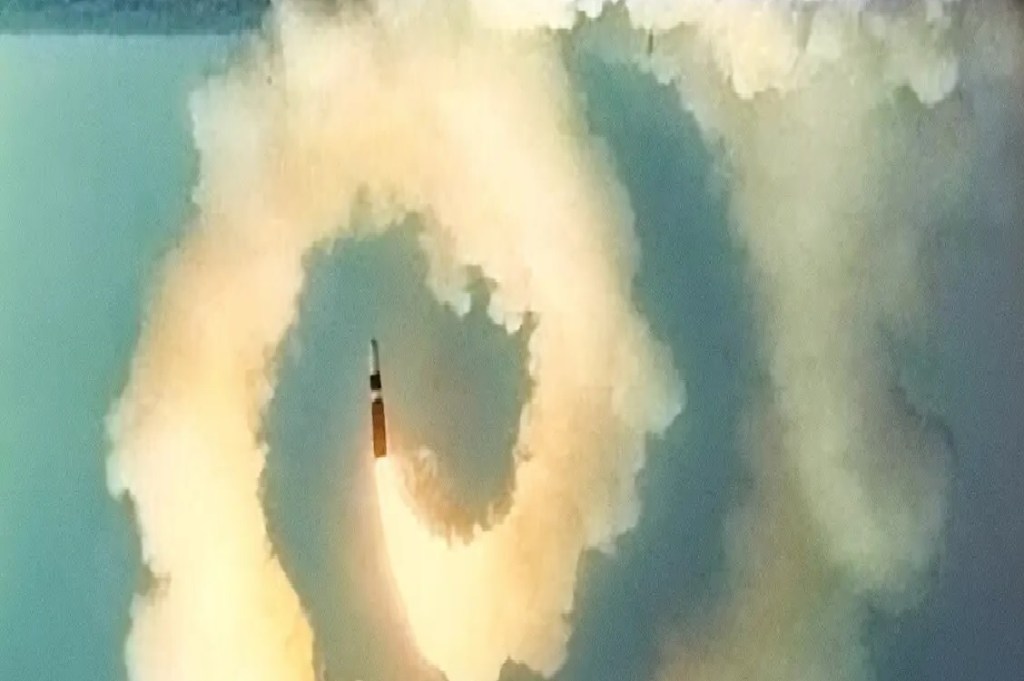
“It is time for the United States to supplement its military support for Ukraine with a diplomatic track to manage this crisis before it spirals out of control“
“Would that open the way to negotiations, diplomacy? Can’t be sure. There’s only one way to find out. That’s to try. If you don’t try, of course it won’t happen.”
It’s inexcusable that these direct peace negotiations are not already underway. The recent escalation of this war makes peace talks more necessary, not less
https://consortiumnews.com/2022/10/13/caitlin-johnstone-us-rejects-moscows-offer-to-talk/ By Caitlin Johnstone CaitlinJohnstone.com 14 Oct 22
Russian Foreign Minister Sergei Lavrov said on Tuesday that Moscow was open to talks with the U.S. or with Turkey on ending the war in Ukraine, claiming that U.S. officials are lying when they say Russia has been refusing peace talks.
Reuters reports:
“Lavrov said officials, including White House national security spokesman John Kirby, had said the United States was open to talks but that Russia had refused.”
“This is a lie,” Lavrov said. “We have not received any serious offers to make contact.”
Lavrov’s claim was given more weight when U.S. State Department Spokesman Ned Price dismissed the offer for peace talks shortly after it was extended, citing Russia’s recent missile strikes on Kyiv.
We see this as posturing,” Price said at a Tuesday press briefing.
“We do not see this as a constructive, legitimate offer to engage in the dialogue and diplomacy that is absolutely necessary to see an end to this brutal war of aggression against the people and the state, the Government of Ukraine.”
This is inexcusable. At a time when our world is at its most perilous moment since the Cuban Missile Crisis according to many experts as well as the president of the United States, the U.S. government has no business making the decision not to sit down with Russian officials and work toward de-escalation and peace.
They have no business making that call on behalf of every terrestrial organism on this planet whose life is being risked in these games of nuclear brinkmanship. The fact that this war has escalated with missile strikes on the Ukrainian capital makes peace talks more necessary, not less.
This rejection is made all the more outrageous by new information from The Washington Post that the U.S. government does not believe Ukraine can win this war and refuses to encourage it to negotiate with Moscow.
“Privately, U.S. officials say neither Russia nor Ukraine is capable of winning the war outright, but they have ruled out the idea of pushing or even nudging Ukraine to the negotiating table,” WaPo reports. “They say they do not know what the end of the war looks like, or how it might end or when, insisting that is up to Kyiv.”
These two points taken together lend even more credibility an argument I’ve been making from the very beginning of this war: that the U.S. does not want peace in Ukraine, but rather seeks to create a costly military quagmire for Moscow just as U.S. officials have confessed to trying to do in Afghanistan and in Syria.
Which would explain why U.S. Secretary of Defense Lloyd Austin said the U.S. goal in Ukraine is actually to “weaken” Russia, and also why the empire appears to have actively torpedoed a peace deal between Ukraine and Russia in the early days of the conflict.
This proxy war has no exit strategy. And that is entirely by design.
Many have been calling for the U.S. to abandon its policy of actively sustaining this war while avoiding peace talks.
“President Biden’s language, we’re about at the top of the language scale, if you will,” former Joint Chiefs of Staff Chairman Mike Mullen told ABC’s This Week on Sunday regarding the president’s recent remark that this conflict could lead to “Armageddon.”
“I think we need to back off that a little bit and do everything we possibly can to try to get to the table to resolve this thing,” Mullen said, adding, “As is typical in any war, it has got to end and usually there are negotiations associated with that. The sooner the better as far as I’m concerned.”
“One thing the United States can do is… drop the position, the official position, that the war must go on to weaken Russia severely, meaning no negotiations,” Noam Chomsky argued in a recent appearance on Democracy Now.
“Would that open the way to negotiations, diplomacy? Can’t be sure. There’s only one way to find out. That’s to try. If you don’t try, of course it won’t happen.”
“It is time for the United States to supplement its military support for Ukraine with a diplomatic track to manage this crisis before it spirals out of control,” said the Quincy Institute’s George Beebe following the Monday missile strikes on Kyiv, calling it “a major escalation in the war” that was bound to “bring the world closer to a direct military collision between Russia and the United States.”
“The Americans have to come to an agreement with the Russians. And then the war will be over,” Hungarian Prime Minister Viktor Orban said at an event on Tuesday, adding that “anyone who thinks that this war will be concluded through Russian-Ukrainian negotiations is not living in this world.”
The real war is, “people vs. the banks”
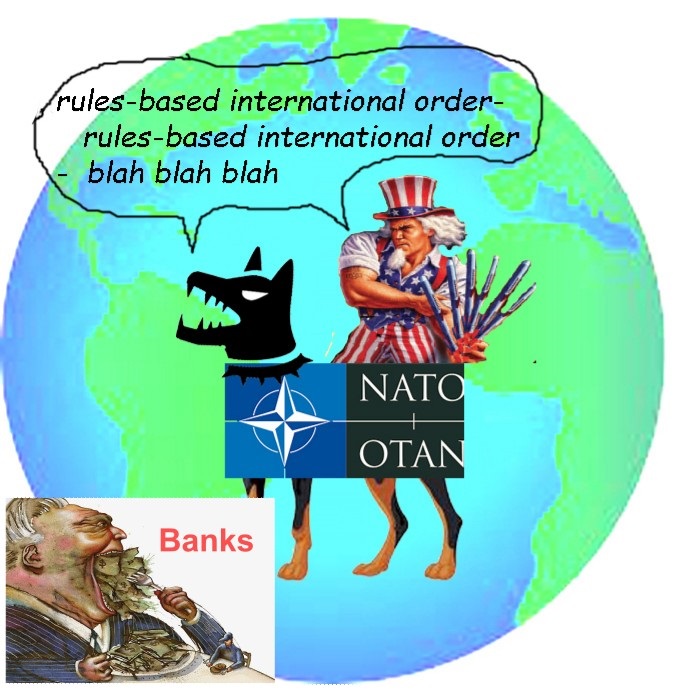
Things are not going well for the “rules-based” empire of lies
Alex Krainer’s TrendCompass Alex Krainer 12 Oct 22
Recessions, debt, energy crisis, inflation and wars… somehow it is all related, and it is related at a global level, impacting nearly all economies and markets. It all seems to be going rather badly for the “rules based global order,” or as some prefer to call it, “the empire of lies.”
Shock, after shock, after shock…
Last week, on Oct. 6, Kristalina Georgieva, IMF’s Managing Director gave a speech at the Georgetown University in Washington where she explained that the global economy, which was expected to recover strongly after the Covid 19 pandemic, experienced a “shock, after shock, after shock” instead, that it is now experiencing a “fundamental shift,” and that this shift could create a “dangerous new normal.” Georgieva thinks this can only be mitigated by “countries working together.”
We’re winning in Ukraine! Or maybe not.
Part of the problem is the “senseless war” in Ukraine. For weeks now, as the groupthink went, the war has turned in the west’s favor and Ukraine has been winning. Nobody even bothers pretending any more that this war is between Russia and Ukraine: it is now overtly discussed as the war between Russia and the collective west. NATO’s Secretary General Jens Stoltenberg made this plain in yesterday’s press conference: “If Putin wins, that is not only a big defeat for the Ukrainians, but it will be the defeat, and dangerous, for all of us.” But not to worry, said Stoltenberg, “Ukraine has the momentum,” and “President Putin is failing in Ukraine.”
Last week, US 4-star General Jack Keane went on Fox Business to boast about Bidden administration’s awesome “investment” in Ukraine: “We have a $6 trillion budget… we’ve invested, and I mean, invested, $66 billion in Ukraine this year and that is like, 1.1% [of the budget] … So for $66 billion what we’re getting is Ukraine doing the fighting, they are literally destroying the Russian Army on the battlefield.”
So apparently we’re winning and we can all relax – everything is awesome. Or maybe it isn’t. Last week, former US National Security Advisor, John Bolton published a revealing article that gives away a different mindset near the top of western command-and-control hierarchy. Bolton says that “the West still lacks a shared definition of ‘victory’ in Ukraine,” and that “everyone worries about the durability of Europe’s resolve…” But it was John Bolton’s Tweet promoting the article that was the most revealing:
John Bolton @AmbJohnBolton My new article’s headline is clear– “Putin must go: Now is the time for regime change in Russia.” There is no long-term prospect for achieving America’s critical, long-standing goal of peace and security in Europe without regime change in Russia.
What Bolton seems to be saying is that Putin has defeated the rules-based global order and that they can only reverse this defeat if they could remove Putin from power and replace him with some Juan Guaido who would hand them back their toys and their victory. Bolton then went on CBS to advocate for the assassination of Vladimir Putin………..
It’s the banks, not Vladimir Putin
So then, what would be the “fundamental shift,” and the “dangerous new normal” that IMF’s Georgieva is worried about? I believe that the worry is that the rules-based global order is falling into a profound economic, social and political crisis that could be long and very severe. And even while we are all encouraged to come together and hate on Russia and Vladimir Putin, that’s not where this crisis emanated from. Rather, it emanated from the fraudulent monetary system that’s largely shaped our rules-based global order and which has had an impressive track record of incentivizing forever wars and generating chronic crises.
Chronic crises, forever wars……………………………………
Rather than waging never-ending wars, blowing up bridges and pipelines or assassinating Vladimir Putin, western powers would do well to reform their monetary systems and embrace honest money. Even a miraculous military victory over Russia could only delay the day of reckoning, and the system would need to find a new enemy to fight more wars. That is a certainty. As Lord Acton said over a century ago, “The issue that has swept down the centuries and which will have to be fought sooner or later is the people versus the Banks.” The banks – not Russia nor Vladimir Putin!
P.S. I do not mean local banks and savings institutions but the international banking cartel and their Global Systemically Important Banks. https://alexkrainer.substack.com/p/the-real-war-is-people-vs-the-banks
Across Europe, USA and NATO to hold a show of their nuclear weapons

NATO’s annual nuclear exercise gets underway, NATO News, 14 Oct. 2022
Air forces from across NATO will exercise nuclear deterrence capabilities involving dozens of aircraft over north-western Europe starting on Monday (17 October 2022). The exercise, which runs until 30 October, is a routine, recurring training activity and it is not linked to any current world events. [Ed. oh yeah! Pull the other leg!]…………………………..
Exercise “Steadfast Noon” involves 14 countries and up to 60 aircraft of various types, including fourth and fifth generation fighter jets, as well as surveillance and tanker aircraft. As in previous years, US B-52 long-range bombers will take part; this year, they will fly from Minot Air Base in North Dakota. Training flights will take place over Belgium, which is hosting the exercise, as well as over the North Sea and the United Kingdom. …………………………………
NATO’s goal is a safer world for all; we seek to create the security environment for a world without nuclear weapons.“ [Ed. Whaa aa t?] https://www.nato.int/cps/en/natohq/news_208399.htm
1 This Month




Shut down the radiation-damaged Heysham nuclear reactors now
To see nuclear-related stories in greater depth and intensity – go to https://nuclearinformation.wordpress.com

Say No to NASA’s Reckless Nuclear Reactor on the Moon
Say No to NASA’s Reckless Nuclear Reactor on the Moon
-
Archives
- November 2026 (12)
- October 2026 (302)
- September 2026 (339)
- August 2026 (330)
- July 2026 (355)
- June 2026 (287)
- May 2026 (306)
- April 2026 (356)
- March 2026 (251)
- February 2026 (267)
- January 2026 (308)
- December 2025 (358)
-
Categories
- 1
- 1 NUCLEAR ISSUES
- business and costs
- climate change
- culture and arts
- ENERGY
- environment
- health
- history
- indigenous issues
- Legal
- marketing of nuclear
- media
- opposition to nuclear
- PERSONAL STORIES
- politics
- politics international
- Religion and ethics
- safety
- secrets,lies and civil liberties
- spinbuster
- technology
- Uranium
- wastes
- weapons and war
- Women
- 2 WORLD
- ACTION
- AFRICA
- Atrocities
- AUSTRALIA
- Christina's notes
- Christina's themes
- culture and arts
- Events
- Fuk 2022
- Fuk 2023
- Fukushima 2017
- Fukushima 2018
- fukushima 2019
- Fukushima 2020
- Fukushima 2021
- general
- global warming
- Humour (God we need it)
- Nuclear
- RARE EARTHS
- Reference
- resources – print
- Resources -audiovicual
- Weekly Newsletter
- World
- World Nuclear
- YouTube
-
RSS
Entries RSS
Comments RSS

