Poland missile incident is step towards World War III – Medvedev
Rt.com 16 Nov 22A hybrid war waged by the West against Russia could lead to disastrous consequences, the former Russian leader warns.
Former Russian president Dmitry Medvedev has warned that incidents like the missile explosion which killed two people in Poland risk prompting a major global conflict.
The incident “proves just one thing: waging a hybrid war against Russia, the West moves closer to the World War”, the ex-president, who is now the deputy chair of Russia’s Security Council, wrote on Twitter on Wednesday. He also put the words “missile strike” in quotation marks…………………………………..
Ukrainian President Vladimir Zelensky was quick to blame Russia for the incident late on Tuesday, urging NATO, of which Poland is a member, to act against this “attack on collective security.” Despite not being backed by any proof, the claims were picked by the media in Poland and by some of the country’s officials.
Warsaw put its military on alert, and said it was discussing whether to invoke NATO’s Article 4, which would require consultations on the situation with the other 29 member states and a consensus decision on how to proceed.
However, US President Joe Biden said soon afterwards: “it is unlikely, in the minds of the trajectory, that it [the missile] was fired from Russia.” The Associated Press also cited three US officials as saying preliminary data suggested the missile was actually Ukrainian, fired by the country’s air defenses amid a large-scale Russian attack on Ukraine’s energy infrastructure.
Russia’s Defense Ministry has insisted that it did not carry out any strikes near the Ukrainian-Polish border on Tuesday. It later clarified that analysis of photos from the site showed that the debris were from a missile for the S-300 air defense system operated by Ukraine’s military. https://www.rt.com/russia/566619-poland-missile-ukraine-medvedev/
‘On The Highway To Climate Hell’ – The Climate Crisis, Activism And Broken Politics
Scientists are now admitting more often that they are ‘scared’ about
the climate crisis. Record high temperatures this summer in the UK alone
prompted Professor Hannah Cloke, from Reading University, to say: ‘This
sort of thing is really scary. It’s just one statistic amongst an
avalanche of extreme weather events that used to be known as “natural
disasters”.’
Aaron Theirry, co-founder of Scientists for Extinction
Rebellion, recently pointed out that: ‘The world’s largest oil and gas
companies are set to invest $930 billion over this decade in new fossil
fuel projects. Whilst the largest investment banks such as J.P. Morgan,
Citigroup, etc. have continued to pour hundreds of billions into the sector
since the Paris agreement.’
He added: ‘It was recently calculated that
fossil fuel companies already own seven times more reserves than can be
burned if we are to stay below 1.5C of global warming – yet they continue
to explore for more, with government backing!
Mark Campanale, CEO of Carbon
Tracker points out that if we look at current investment strategies then
“we are heading way beyond 3C degrees”. In other words, the global
political and financial elites are still marching us towards
catastrophe.’
In a recent interview with Aaron Bastani of Novara Media,
wildlife television presenter and conservationist Chris Packham made highly
articulate comments about the climate crisis, grassroots protest and the
destructive nature of the private media.
It is well worth quoting him at
length. As Bastani noted, Packham is a genuine national treasure, highly
regarded by much of the British public for his knowledge and passion about
the natural world and the environment, and for his keen ability to
communicate these issues effectively. Bastani asked him: ‘Do you think
politics in this country is capable of addressing the climate crisis?’
Packham answered: ‘No. No, I think the people will have to force our
politicians to address it. That’s why I continue to support those
activists [referring to Extinction Rebellion and Just Stop Oil] who are
making a noise about this, and trying to bring it to the forefront of
public attention, and express and articulate the urgency [of the situation]
that we now find ourselves in. ‘It’s not only that I don’t trust them
[politicians], it’s that even if they were trustworthy people, I don’t
think the system’s there to make it work.’
Media Lens 14th Nov 2022
“Everywhere you look at Egypt’s COP27 you can see and hear the influence of the fossil fuel industry” – Greenpeace .
Yeb Saño, Executive Director, Greenpeace Southeast Asia and Head of the
Greenpeace delegation attending the COP said: “While this is merely a
skeleton of the Egyptian Presidency’s draft of a COP cover note
Greenpeace is shocked that it has no backbone. It is scarcely credible that
they have forgotten all about fossil fuels especially with the level of
carbon cartel capture present here in Sharm el-Sheikh.”
“Everywhere you
look in Sharm el-Sheikh you can see and hear the influence of the fossil
fuel industry. They have shown up in record numbers to try and decouple
climate action from a fossil fuel phase out.”
“India clearly put all
fossil fuels on the phase down negotiating table. The EU could not have
been simpler in calling for a phase out. And, Tuvalu powerfully connected
transitioning away from fossil fuels with staying below 1.5C as a human
right. T
The ever present COP chroniclers of the Egyptian Presidency somehow
seem to have failed to record any of it.” The cover note must make it
clear that limiting temperature rise to 1.5C by 2100 is the only acceptable
interpretation of the Paris Agreement and acknowledge the 1.5°C aligned
global phase out dates for the production and consumption of coal, gas and
oil.”
Greenpeace International 15th Nov 2022
Japan’s new nuclear energy policy- is it really feasible?
On August 24, 2022, at the newly established GX (Green Transformation)
Implementation Council chaired by Prime Minister Kishida Fumio, the
Japanese government announced a new nuclear energy policy.
The framework
for this new policy consists of three key points: maximize the use of
existing nuclear power plants through an accelerated restart and extension
of their operation period; develop and build advanced next-generation
reactors; and develop conditions suitable for the use of nuclear energy,
including back-end support.
The most contentious of these is the second
point: the development and construction of advanced next-generation
reactors. Since the Fukushima nuclear disaster, previous Japanese
government policy has made no mention of building new power plants, so it
is being seen as a major policy change. What explains this policy change,
and is it really feasible?
The Diplomat 14th Nov 2022
https://thediplomat.com/2022/11/japans-changing-nuclear-energy-policy/
DOE awards millions to restart nuclear operations in southern Ohio as contamination concerns continue
The United States Department of Energy has awarded $30 million to produce
nuclear fuel at the Portsmouth Gaseous Diffusion Plant in Piketon. The
award comes with accolades from some and grave concerns from others.
According to the DOE, the “$30 million cost share during the first year
to start up and operate 16 advanced centrifuges in a cascade” at the
Piketon facility. The announcement raises concerns over radiation
contamination in Pike, Ross, and Scioto counties.
Scioto Valley Guardian 15th Nov 2022
U.S. nuclear plants expect government decision on credits by year-end
Reuters 16 Nov 22,
WASHINGTON, Nov 15 (Reuters) – Two companies that have applied for funding to keep struggling nuclear power plants open said they expect to hear from the U.S. Department of Energy by the end of the year.
Both power utility PG&E Corp (PCG.N) and Holtec International applied to the first phase of the $6 billion DOE Civil Nuclear Credit program to keep their reactors running. The Biden administration believes nuclear power is essential to fight climate change, but plants are struggling with costs and competition from natural gas plants and renewables.
PG&E’s Diablo Canyon reactors in California are slated to close in 2024 and 2025 but could stay open if they get the funding………….
The DOE declined to comment on timelines and future recipients of awards. U.S. infrastructure legislation passed in 2021 included funding for the civil nuclear credit program in the United States………………. https://www.reuters.com/business/energy/us-nuclear-plants-expect-government-decision-credits-by-year-end-2022-11-15/
Nuclear fusion discovery uncovers strange behaviour of limitless energy source
Despite promises of imminent breakthroughs in nuclear fusion power going
back decades, the ultimate clean energy source remains out of scientists’
reach. Nuclear fusion discovery uncovers strange behaviour of limitless
energy source. Even as scientists achieve new milestones in developing
fusion power, new questions arise as to how the basic physics of fusion
reactions may work.
Independent 15th Nov 2022
Did the “stray missiles” to Poland come from Russian or from Ukrainian military?

Ukraine Weapons Tracker @UAWeapons
So what crashed in the village of Przewodów, Poland today? With the cooperation of @blueboy1969 we analyzed the available photos of fragments and came to a clear conclusion that they belong to the 48D6 motor of the 5V55-series missile of the S-300 AD system- a Ukrainian one.
So what crashed in the village of Przewodów, Poland today? With the cooperation of
@blueboy1969 we analyzed the available photos of fragments and came to a clear conclusion that they belong to the 48D6 motor of the 5V55-series missile of the S-300 AD system- a Ukrainian one.
Poland Considering NATO Article 4 Activation, Says Spokesman, By Reuters. Nov. 15, 2022,
WARSAW (Reuters) – Poland is verifying if it needs to request consultations under Article 4 of the NATO military alliance treaty, a government spokesman said on Tuesday, after a report that a blast that killed two people near the Ukrainian border was caused by stray Russian missiles.
The United States and Western allies said they were investigating but could not confirm a report on Tuesday that the blast in the village of Przewodow resulted from stray Russian missiles. Russia’s defence ministry denied it.
Biden, Xi ‘Agreed’ Nuclear Weapons Should Never Be Used
https://www.barrons.com/news/biden-xi-agreed-opposition-to-nuclear-weapons-use-in-ukraine-white-house-01668432907 By AFP – Agence France PresseNovember 14, 2022,
US President Joe Biden and his Chinese counterpart Xi Jinping agreed in talks Monday that nuclear weapons should never be used, including in Ukraine, the White House said.
“President Biden and President Xi reiterated their agreement that a nuclear war should never be fought and can never be won and underscored their opposition to the use or threat of use of nuclear weapons in Ukraine,” it said in a statement.
The pair held their first face-to-face talks since Biden took office on the sidelines of a G20 meeting expected to be dominated by the war in Ukraine.
The pair shook hands at the start of the meeting, with Biden saying the superpowers shared the responsibility to show the world that they can “manage our differences, prevent competition from becoming conflict”.
The White House said he had told Xi that Washington would “continue to compete vigorously” with China, but “this competition should not veer into conflict”.
Biden raised objections to China’s “coercive and increasingly aggressive actions toward Taiwan,” the White House said after three hours of talks aimed at avoiding conflict between the rival superpowers.
And he told Xi the world should encourage North Korea to act “responsibly”, after a record-breaking series of missile launches by Pyongyang and growing fears of a new nuclear test.
Westinghouse deal for Poland ushering in a new nuclear wave. Can it deliver on time and on budget?

Westinghouse spokeswoman Cathy Mann said last week that it was “too soon to say how financing will play out until we get further into developing the agreements and contracts.”
“The U.S. EXIM bank will offer robust financing,” she said, and because of its involvement, “U.S. content will be maximized.”
It was the first year that the International Atomic Energy Agency, which monitors nuclear power plants all over the world and ensures nonproliferation, had its own pavilion at the global climate event, Director General Rafael Mariano Grossi boasted on Wednesday in Egypt. He spent the day hosting panels and answering questions about how this nuclear wave differs from the ones that came before it.
ANYA LITVAK Pittsburgh Post-Gazette alitvak@post-gazette.com 14 Nov 22
Sebastian Barkowski, Poland’s special envoy for international climate and energy cooperation, arrived at the global climate summit in Egypt as a member of a new club: the nuclear club.
Earlier this month, his government picked Cranberry-based Westinghouse Electric Co. to supply the first three nuclear reactors to Poland, with another three units to be awarded in the future.
The deal, which is estimated to be worth about $20 billion, was in the works for a few years and represents Westinghouse’s first sale of its AP1000 plant abroad since it launched the reactor design in a deal with China in 2007.
Until the last moment, it was a geopolitical nail biter, with high-ranking U.S. officials such as Energy Secretary Jennifer Granholm and Vice President Kamala Harris intervening on Westinghouse’s behalf, and the U.S. nuclear firm filing a lawsuit against Korea Electric Power Corp. which had also submitted a bid for the Polish project.
Poland is surrounded by countries with nuclear power fleets but the large European nation never got its only attempt at nuclear off the ground.
Burning coal supplies 75% of its electricity needs, Mr. Barkowski said during a panel at COP27 on Wednesday, and driving that number down to meet climate goals was the main motivation behind Poland’s plan to build between 6 and 9 gigawatts of nuclear power. In 2020, the Polish government signed an intergovernmental agreement with the U.S. and Westinghouse to pursue this plan.
It was the first year that the International Atomic Energy Agency, which monitors nuclear power plants all over the world and ensures nonproliferation, had its own pavilion at the global climate event, Director General Rafael Mariano Grossi boasted on Wednesday in Egypt. He spent the day hosting panels and answering questions about how this nuclear wave differs from the ones that came before it.
In a conversation with Mr. Grossi, Fatih Birol, the executive director of the International Energy Agency, revised his year-ago prediction that “nuclear may well make a comeback” to a more definitive “nuclear is making a comeback.”
When asked what could derail that, Mr. Grossi talked of his fear that a Ukrainian nuclear powerplant in the warzone might suffer an attack that causes a nuclear accident — “the background music of my visit to Zaporizhzhia was bombs and mortars” — and that the fallout from that would ruin nuclear’s momentum the same way that Chernobyl and Fukushima had done.
Mr. Birol, meanwhile, zeroed in on the more mundane issue that has taken the wind out of nuclear’s sails before.
“The nuclear industry, to be honest with you, doesn’t have a very good reputation in terms of delivering on time and on budget,” he said.
With all the new reactor orders piling up, “It is important that the nuclear industry have more discipline,” he said.
That was something that Westinghouse’s future owner, the Canadian nuclear fuel company Cameco Corp. which signed a deal last month to acquire a 49% stake in Westinghouse, thinks about as well.
The Chinese and the Russians are good at building new nuclear plants, Cameco’s CEO Tim Gitzel said during a World Nuclear News podcast last week.
“We in the west now need to show that we’re back in the game and that we can take our share of the market,” he said.
Poland’s project with Westinghouse is a big deal, he said.
“I think there are more to come. And so we need to show the world that we can deliver our projects on time, on budget.”
In the U.S., Westinghouse’s attempt to restart large nuclear construction with a pair of reactors in South Carolina and another two in Georgia ended in bankruptcy in 2017. The South Carolina project was cancelled after billions had already been spent. In Georgia, nuclear fuel was finally loaded into the first reactor last month and the unit is slated to start producing power this year — 15 years after construction began. …………………………………………….
Westinghouse was bringing the lawsuit now, the company wrote in the complaint, because it had gotten word that KEPCO was about to sign a memorandum of intent with a group in Poland and that it had been invited to bid on projects in Czech Republic and Saudi Arabia.
Providing the technical information requested in those bids would trigger Westinghouse’s responsibility under U.S. nuclear export regulations, the company argued, and KEPCO has been non-committal about cooperating in the process.
So Westinghouse is asking the court to “enjoin defendants from delivery of technical information regarding Korean reactor designs outside the Republic of Korea,” specifically in Poland, Saudi Arabia and Czech Republic.
KEPCO had not filed a reply as of Wednesday.
Show me the money
A 15-year construction project is extremely difficult to finance, Dario Liguti, director of Sustainable Energy at the United Nations Economic Commission for Europe, said during a COP27 panel on nuclear financing.
That’s partly why “the nuclear plants that have been built, have been built with public money,” he said.
Countries like China, Russia, or France, where nuclear companies are at least partially owned by the government, offer the backing of the government when financing new builds.
In the U.S., that role, albeit much diminished, is filled by the U.S. Export-Import Bank, which provides financing for entities to buy American products and services.
The U.S. government has a variety of reasons to help such projects along.
A recent analysis of nuclear financing by researchers at Columbia University’s Center on Global Energy Policy includes this list: “supporting American jobs, assisting other countries’ decarbonization efforts and confronting the broader problem of climate change, reducing other countries’ fossil fuel dependencies for geopolitical reasons, limiting Chinese and Russian influence in general, and the national security value in the United States having some role in international nuclear reactor commerce.”
Export-Import Bank, which helped to finance dozens of nuclear export deals, mostly in the 1970s, hasn’t done any in decades.
Westinghouse asked for up to $5 billion in export assistance from ExIm when it sold the first four AP1000 units to China, the analysis said, and while the bank approved the request, the project did not end up using the offer.
In Polish newspapers, government officials suggested that the Westinghouse offer included $17 billion in financing, including through ExIm.
Elias Gedeon, Westinghouse senior vice president of commercial operations, said during an interview at an economic forum in September that the proposed financing also includes money from Westinghouse and Bechtel, the engineering and construction firm that took over the AP1000 project in Georgia in 2017.
“This is something that we have not done before,” Mr. Gedeon said, “but we have committed to put equity in this project in Poland.”
Westinghouse spokeswoman Cathy Mann said last week that it was “too soon to say how financing will play out until we get further into developing the agreements and contracts.”
“The U.S. EXIM bank will offer robust financing,” she said, and because of its involvement, “U.S. content will be maximized.”
Westinghouse is also continuing to sign agreements with companies in Poland and in other European countries to establish a European supply chain that could handle not just the Polish nuclear project but the others that might follow. Last year, it opened a shared global services center in Krakow which now employs 165 people and more will be hired, she said. In southwestern Pennsylvania, Westinghouse had about 3,100 employees at the end of last year.
Asked if Westinghouse can stick to the timeline envisioned in the Polish plan, Ms. Mann said that Westinghouse has learned from its experience delivering the first AP1000 plants in China and in Georgia.
On social media networking site LinkedIn last month, Westinghouse’s CEO Patrick Fragman thanked the governments of Poland and the U.S. for shepherding this agreement and promised full speed ahead.
“We are ready, able and willing to move very fast now.” https://www.post-gazette.com/business/powersource/2022/11/14/new-nuclear-faces-old-skepticism-can-it-deliver-on-time-and-on-budget/stories/202211130052
So-Called Next-Generation Nuclear Power Plants Are Being Oversold

One contender, for example, TerraPower’s 345-megawatt Natrium reactor, received considerable media attention earlier this year when company founder Bill Gates touted it during interviews about his new book, How to Avoid a Climate Disaster. According to the UCS report, however, sodium-cooled fast reactors such as Natrium would likely be less uranium-efficient and would not reduce the amount of waste that requires long-term isolation. They could also experience safety problems that are not an issue for light-water reactors. Sodium coolant, for instance, can burn when exposed to air or water, and the Natrium’s design could experience uncontrollable power increases that result in rapid core melting.

There’s little evidence that they’d be cheaper or safer than existing designs
https://www.scientificamerican.com/article/lsquo-advanced-rsquo-nuclear-reactors-don-rsquo-t-hold-your-breath/— By Elliott Negin, Elliott Negin is a senior writer at the Union of Concerned Scientists. July 21
The U.S. nuclear power industry is at an impasse. Since 2012, 11 of the 104 light-water reactors in operation at the time have closed, mainly as a result of aging infrastructure and the inability to compete with natural gas, wind and solar, which are now the cheapest sources of electricity in the U.S. and most other countries worldwide.
One way the industry is trying to reverse the trend is by looking to what it likes to call “advanced” reactors. Despite the name, these designs are largely based on unproven concepts from more than 50 years ago. Unlike conventional light-water reactors, these rely on sodium or molten salt or gas for cooling, and their proponents claim they will be less expensive, safer and more secure than their predecessors. Some claim that these innovative devices will be ready for prime time by the end of this decade.
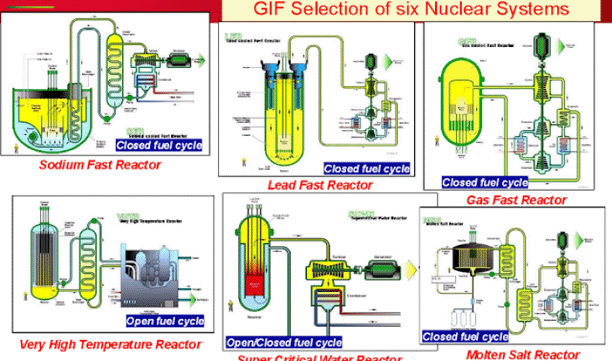
This has naturally attracted the attention of Biden administration officials and some key members of Congress, who are looking for ways to curb carbon emissions. But an analysis of non-light-water reactor concepts in development by the Union of Concerned Scientists (UCS) has found that these designs are no better—and in some respects significantly worse—than the light-water reactors in operation today. The report’s author, UCS physicist Edwin Lyman, took a close look at the claims developers have been making: that these new devices will burn uranium fuel more efficiently and produce less radioactive waste than existing plants; will reduce the risk of nuclear proliferation; and will be commercialized relatively soon. Those claims, however, do not hold up to scrutiny.
One contender, for example, TerraPower’s 345-megawatt Natrium reactor, received considerable media attention earlier this year when company founder Bill Gates touted it during interviews about his new book, How to Avoid a Climate Disaster. According to the UCS report, however, sodium-cooled fast reactors such as Natrium would likely be less uranium-efficient and would not reduce the amount of waste that requires long-term isolation. They could also experience safety problems that are not an issue for light-water reactors. Sodium coolant, for instance, can burn when exposed to air or water, and the Natrium’s design could experience uncontrollable power increases that result in rapid core melting.
In June, TerraPower announced that it would build the first Natrium reactor in Wyoming as part of a 50–50 cost-share program with the Department of Energy. The DOE program originally required the company to have the reactor, still in its early design stage, up and running by 2027. That was recently pushed back a year, but it is still a completely unrealistic timetable. According to the UCS report, if federal regulators require the necessary safety demonstrations, it could take at least 20 years—and billions of dollars in additional costs—to commercialize such reactors, their associated fuel-cycle facilities, and other related infrastructure.
The Nuclear Regulatory Commission (NRC) may have to adapt some regulations when licensing reactor technologies that differ significantly in design from the current fleet. Lyman says that should not mean weakening public health and safety standards, finding no justification for the claim that “advanced” reactors will be so much safer and more secure that the NRC can exempt them from fundamental safeguards. On the contrary, because there are so many open questions about these reactors, he says they may need to meet even more stringent requirements.
Lyman’s report recommends that the DOE suspend its advanced reactor demonstration program until the NRC determines whether it will require full-scale prototype tests before any designs are licensed for commercial deployment, which the report argues are essential. It also calls on Congress to require the NRC to convene an independent commission to review the technical merits of non-light-water reactors and approve only those projects that have a high likelihood of commercialization and are clearly safer and more secure than the current fleet.
Finally, it recommends that the NRC and Congress consider spending more research and development dollars on improving the safety and security of light-water reactors rather than on commercializing immature, overhyped non-light-water reactor designs. Any federal appropriations for R&D and deployment of these reactor designs, Lyman says, should be guided by a realistic assessment of the likely benefits and not based on wishful thinking.
US and Western officials considering diplomacy as winter looms and Ukraine war cost may rise to $60 billion

The growing belief that there’s no military resolution to the war and the rising hope that Ukraine and Russia move toward starting talks comes as Ukraine needs additional military aid. The White House and Congress are expected to consider additional funds for assistance for Ukraine, potentially $40 billion to $60 billion, NBC News has reported. Some Republicans and Democrats have begun to question whether the U.S. should send additional tens of billions of dollars to Ukraine
Some U.S. and Western officials think neither side can win and see winter as a shot at diplomacy in Ukraine-Russia war
Russia and Ukraine are most likely looking to the slower tempo of battle this winter as a time to reset and refit their forces to be ready for a spring offensive.
nbc news, By Courtney Kube, Carol E. Lee and Josh Lederman 14 Nov 22,
Some U.S. and Western officials increasingly believe that neither side can achieve all of their goals in the Ukraine war and are eyeing the expected winter slowdown in fighting as an opportunity for diplomacy to begin between Russia and Ukraine, officials familiar with the matter say.
Western defense officials question Ukraine’s ability to remove Russian troops completely from occupied areas, and if military operations on the ground stabilize over the winter that could underline that neither side is likely to achieve its goal of controlling the whole country, the officials said. They spoke on the condition of anonymity because they are not authorized to speak publicly on matters of diplomacy.
“In the winter, everything slows down,” said a Western official with direct knowledge of military operations. “The potential for talks, we would like to see that happening.”
The official pointed to a statement by Russia’s ambassador to the United Kingdom last week about the potential for negotiations as possible “messaging” toward a diplomatic path.
U.S. national security adviser Jake Sullivan made a surprise visit last week to Kyiv, where he met with President Volodymyr Zelenskyy and top Ukrainian officials. The White House National Security Council said the meetings were to “underscore the United States’ steadfast support to Ukraine and its people.” But two people familiar with the meetings and a Ukrainian government official said Sullivan did broach the idea of how the conflict can end and whether it could include a diplomatic solution. “He was testing the waters a bit,” a person familiar with the meetings said.
The Ukrainian official said that during his meetings, Sullivan raised the need for a diplomatic resolution to the war and made the point that Ukraine’s leverage would be strengthened — not weakened — if it expressed openness to ultimately negotiating with the Russians. The official said that Sullivan had not tried to pressure Ukraine to enter into negotiations immediately or to take any specific steps. Instead, the official said, Sullivan expressed the view that Ukraine would able to maintain the support of Western allies better if it is perceived as being willing to reach an end to the conflict through diplomacy……………………………………………
………………….. The growing belief that there’s no military resolution to the war and the rising hope that Ukraine and Russia move toward starting talks comes as Ukraine needs additional military aid. The White House and Congress are expected to consider additional funds for assistance for Ukraine, potentially $40 billion to $60 billion, NBC News has reported. Some Republicans and Democrats have begun to question whether the U.S. should send additional tens of billions of dollars to Ukraine. ……….. https://www.nbcnews.com/politics/national-security/ukraine-russia-war-winter-diplomacy-rcna56190—
USA, Japan, South Korea and a whole heap of companies join in the gamble of NuScam’s small nuclear reactors for Ukraine

The duration of the Ukrainian SMR project is a highly-ambitious two to three years.
the European Union has yet to approve the deployment of the technology. NuScale itself admits that its own SMR plant in Idaho is unlikely to become operational until 2029.
Ukraine joins Europe’s list of SMR hopefuls, Emerging Europe Yulia Valova 15 Nov 22,
Ukraine is the latest country in emerging Europe to sign up for an SMR project, one which aims to support the country’s energy security and signals a new direction in its energy development policy – decarbonisation.
Ukraine, in partnership with the United States, as well as Japan and South Korea, will participate in a public-private consortium to research and develop small modular reactors (SMRs).
A pilot project was announced this week by US Presidential Special Envoy on Climate Issues John Kerry and Ukrainian Energy Minister Herman Galushchenko at the UN Climate Change Conference, COP27, in Egypt.
The pilot project involves the construction of an SMR in Ukraine which, according to the US State Department, will involve the production of environmentally-friendly hydrogen and ammonia and advanced electrolysis technologies.
According to the State Department’s press service, the project builds on existing cooperation in developing nuclear energy capabilities initiated under the US Basic Infrastructure for Responsible Use of SMR Technology programme.
SMRs are a key part of the US Energy Department’s goal to develop safe [?], clean[?], and affordable[?] nuclear power options. Both Romania and Poland have previously signed agreements to explore the construction of SMRs with US technology.
The duration of the Ukrainian SMR project is a highly-ambitious two to three years. The list of participants includes both leading nuclear companies and research institutes.
In particular, NuScale (which is involved in the Romanian and Polish projects), FuelCell Energy, Clark Seed and Argonne National Laboratory will participate on the American side, with NAEC Energoatom and the State Science and Technology Centre for Nuclear and Radiation Safety representing Ukraine.
Doosan Enerbility, IHI Corporation, JGC Corporation, Samsung C&T and Starfire Energy will also participate in the project…………………….
According to the UN’s International Atomic Energy Agency (IAEA) there are around 50 SMR designs and concepts globally. Most of them are in various developmental stages and some are claimed as being near-term deployable……………..
However, while NuScale’s SMR was in August given final certification by the US Nuclear Regulatory Commission, the European Union has yet to approve the deployment of the technology. NuScale itself admits that its own SMR plant in Idaho is unlikely to become operational until 2029.
Nuclear Power Is Not the Answer

As world leaders convene at COP27 to discuss the global decarbonization agenda, they should focus on the technologies that can be deployed rapidly and universally to replace fossil fuels.
As consecutive editions of the WNISR have shown, nuclear power is too slow and too expensive to compete with energy-efficiency measures and renewable energy.
Project Syndicate, Nov 14, 2022 ANTONY FROGGATT
As world leaders convene at COP27 to discuss the global decarbonization agenda, they should focus on the technologies that can be deployed rapidly and universally. That means de-emphasizing nuclear power, which was no longer competitive with solar and wind even before this year’s geopolitical turmoil.
PARIS – Just as Russia’s invasion of Ukraine has highlighted Europe’s dangerous dependence on fossil fuels, increasingly frequent and intense climate-driven weather events are highlighting the death and destruction that fossil-fuel dependence has wrought. Understandably, political and public pressure to reduce greenhouse-gas emissions, move away from insecure primary energy supplies, and develop new, reliable, secure, and affordable energy sources is at an all-time high. But rather than rushing ahead, we need to consider carefully which options are most realistic, and how they will be deployed and operate in the real world.
Consider nuclear power. With many countries and companies now giving this option a second (or even a third) look, the 2022 World Nuclear Industry Status Report (WNISR) offers valuable insights into how the sector is faring.
While the last 12 months may be remembered as a turning point for the broader energy sector, it won’t be because of the nuclear industry. Nuclear energy’s share of global commercial gross electricity generation in 2021 dropped to 9.8%, which is its first dip below 10% in four decades, barely more than half its peak of 17.5% in 1996. Meanwhile, wind and solar surpassed nuclear for the first time in 2021, accounting for 10.2% of gross power generation.
These diverging trajectories can be seen clearly across every indicator of investment, deployment, and output. According to the International Atomic Energy Agency, operating reactors peaked in 2018, both in terms of their number (449) and total capacity (396.5 gigawatts). The IAEA reports that 437 reactors were “in operation” globally at the end of 2021, including 23 reactors that have not generated power for at least nine years, and which may never do so again.
In 2018, when installed nuclear power peaked below 400 GW, solar and wind capacity rose above 1,000 GW, on its way to reaching 1,660 GW by the end of 2021. In just three years, solar and wind added two-thirds more capacity than nuclear at its last peak. Even if nuclear plants usually generate more electricity per unit of installed capacity than wind and solar, the divergence in these numbers is staggering.
In 2021, total investments in non-hydro renewables hit a record $366 billion, adding an unprecedented 257 GW (on net) to electricity grids, whereas operating nuclear capacity decreased by 0.4 GW. Only six new reactors were connected to the grid that year, and half of these were in China. Then, in the first half of 2022, five new reactors went online, two of which were in China. But while China has the most reactors under construction (21, as of mid-2022), it is not building them abroad.
Until recently, that role was taken up by Russia, which is dominating the international market with 20 units under construction, including 17 in seven countries as of mid-2022. Sanctions and potential other geopolitical developments have cast doubt on many of these projects, with a Finnish consortium already canceling construction of a facility based on a Russian design.
Only 33 countries operate nuclear power plants today, and only three – Bangladesh, Egypt, and Turkey – are building reactors for the first time (all in partnership with the Russian nuclear industry). Twenty-six of the 53 construction projects around the world have suffered various delays, with at least 14 reporting increased delays, and two reporting new delays, just in the past year.
For the first time, the WNISR also assesses the risks of nuclear power and war. There has been significant international concern about Ukraine’s Zaporizhzhia nuclear power plant, which has been occupied by Russia forces since March 4, 2022. Owing to repeated shelling in and around the area, the plant has frequently lost external power, prompting warnings from the IAEA that the situation is “untenable.” Operating a nuclear facility requires motivated, rested, skilled staff; but Zaporizhzhia’s Ukrainian personnel are under severe stress.
The key challenge now is to maintain continuous cooling for the reactor core and the pool for spent fuel, even after the reactor is shut down. The failure to evacuate heat from residual decay would lead to a core meltdown within hours, or a spent-fuel fire within days or weeks, with potentially large releases of radioactivity.
As world leaders convene at COP27 to discuss the global decarbonization agenda, they should focus on the technologies that can be deployed rapidly and universally to replace fossil fuels. As consecutive editions of the WNISR have shown, nuclear power is too slow and too expensive to compete with energy-efficiency measures and renewable energy.
Urging peace with Russia, top US general challenges DC’s proxy war
A series of leaks, including a call for diplomacy from Gen. Mark Milley, show that some US officials are ready for a settlement in Ukraine.
Substack, Aaron Maté Nov 13,
When the Congressional Progressive Caucus was bullied into withdrawing a letter urging diplomacy with Russia to end the war in Ukraine, everyone from neoconservative pundits to Sen. Bernie Sanders came forward to scold them. But now the same call is coming from a source that cannot be so easily ignored, and intimidated.
“A disagreement has emerged at the highest levels of the United States government over whether to press Ukraine to seek a diplomatic end to its war with Russia,” the New York Times reports. Leading the call for talks with Moscow is Gen. Mark Milley, the chairman of the Joint Chiefs of Staff. According to US officials, Milley “has made the case in internal meetings that the Ukrainians have achieved about as much as they could reasonably expect on the battlefield before winter sets in and so they should try to cement their gains at the bargaining table.”
The top US general has made no secret of his stance. “When there’s an opportunity to negotiate, when peace can be achieved, seize it,” Milley declared in a public speech this week.
Milley’s view “is not shared” by President Biden or his National Security Adviser, Jake Sullivan, the Times claims. Nor by the top US diplomat, Secretary of State Antony Blinken. As one US official explained to CNN, “the State Department is on the opposite side of the pole,” leading to “a unique situation where military brass are more fervently pushing for diplomacy than US diplomats.”
While US “diplomats” oppose diplomacy, White House officials would not be disclosing that Milley, the nation’s highest military officer, is challenging their stance if he were alone. Indeed, the Milley revelation is only the latest in a series of leaks suggesting that, despite the uproar over the progressives’ pro-diplomacy letter, at least some close to the president agree with its message……… more https://mate.substack.com/p/urging-peace-with-russia-top-us-general?utm_source=post-email-title&publication_id=100118&post_id=84024812&isFreemail=true&utm_medium=email
1 This Month
Tell Congress: Prevent Nuclear Catastrophe in Iran

Tell Congress: Prevent Nuclear Catastrophe in Iran

Read the Public Inquiry Report, the Commissioners’ report, Surrendering Australia: The AUKUS Deception is available to download for free at aukuspublicinquiry.com. Or just watch the replay of the National Press Club Luncheon.


Shut down the radiation-damaged Heysham nuclear reactors now
To see nuclear-related stories in greater depth and intensity – go to https://nuclearinformation.wordpress.com

Say No to NASA’s Reckless Nuclear Reactor on the Moon
Say No to NASA’s Reckless Nuclear Reactor on the Moon
-
Archives
- November 2026 (246)
- October 2026 (302)
- September 2026 (339)
- August 2026 (330)
- July 2026 (355)
- June 2026 (287)
- May 2026 (306)
- April 2026 (356)
- March 2026 (251)
- February 2026 (267)
- January 2026 (308)
- December 2025 (358)
-
Categories
- 1
- 1 NUCLEAR ISSUES
- business and costs
- climate change
- culture and arts
- ENERGY
- environment
- health
- history
- indigenous issues
- Legal
- marketing of nuclear
- media
- opposition to nuclear
- PERSONAL STORIES
- politics
- politics international
- Religion and ethics
- safety
- secrets,lies and civil liberties
- spinbuster
- technology
- Uranium
- wastes
- weapons and war
- Women
- 2 WORLD
- ACTION
- AFRICA
- Atrocities
- AUSTRALIA
- Christina's notes
- Christina's themes
- culture and arts
- Events
- Fuk 2022
- Fuk 2023
- Fukushima 2017
- Fukushima 2018
- fukushima 2019
- Fukushima 2020
- Fukushima 2021
- general
- global warming
- Humour (God we need it)
- Nuclear
- RARE EARTHS
- Reference
- resources – print
- Resources -audiovicual
- Weekly Newsletter
- World
- World Nuclear
- YouTube
-
RSS
Entries RSS
Comments RSS

