Bulgarian nuclear reactor shut down after technical glitch
Tsvetelia Tsolova Reuters, OCT 30, 2022, SOFIA, Oct 30 (Reuters) – Bulgarian nuclear power plant Kozloduy has shut down its 1,000 megawatt Unit 6 late on Saturday following a technical problem in with the cooling system of the unit’s power generator, its spokesperson said on Sunday………………. more https://www.nasdaq.com/articles/bulgarian-nuclear-reactor-shut-down-after-technical-glitch
Kremlin reveals possible basis for Putin-Biden talks
https://www.rt.com/news/565611-russia-talks-biden-putin/ 28 Oct 22, Russia’s proposals on security guarantees could serve as a springboard for re-engagement, Dmitry Peskov says
Potential talks between Russian President Vladimir Putin and his US counterpart Joe Biden would depend on Washington’s willingness to hear Moscow’s security concerns, the Kremlin press secretary said on Sunday.
Speaking to the Rossiya-1 TV channel, Dmitry Peskov said high-level re-engagement could happen if the United States “pays heed to our concerns.”
It would be contingent on “the US desire to go back to the state of things as of December-January and ask the question: what the Russians are offering may not suit all of us, but maybe we should still sit down with them at the negotiating table?”
The spokesman explained that he was referring to the draft documents on security guarantees that Moscow submitted to both Brussels and Washington before the Ukraine conflict broke out in late February.
In mid-December last year, the Russian Foreign Ministry published the drafts of two treaties – one with the US and one with NATO – with a list of Moscow’s security demands, in a bid to lower tensions in Europe.
At the time, Russia wanted the West to ban Ukraine from entering NATO and limit the deployment of troops and weapons on the bloc’s eastern flank. It also insisted that the military alliance retreat to its borders as of 1997, before it expanded eastwards.
While neither the US nor NATO gave written responses to Russia’s proposals, they both rebuffed Moscow’s demand that Ukraine should be barred from the bloc.
Earlier this month, Putin said he saw no need for talks with his US counterpart, explaining that “there is no platform for any negotiations yet.” The statement was echoed by the White House, which stated that Joe Biden does not plan to meet with the Russian leader at the G20 summit next month, despite earlier refusing to rule out the possibility.
The last time the two leaders met in person was in June 2021 in Geneva, Switzerland. The talks were followed up by a virtual summit in December, with Ukraine being one of the topics on the agenda.
Academics and industry questioned on UK nuclear power supply.

The Science and Technology Committee begin its Delivering Nuclear Power evidence
sessions on National Engineering Day in the UK. This session examines how
UK nuclear energy production will be maintained and increased. The
Government has said nuclear power will play a key part in the UK’s energy
security and goal of reaching Net Zero emissions by 2050, setting the
intention to triple the current electricity output by 2050.
However, all but one civil nuclear reactor in the UK will be decommissioned by 2028
under current plans. And only one new reactor, Hinkley point C in Somerset,
is currently expected to be operational before 2030. In the final panel,
the Committee will question EDF executives on the four-year delay in the
construction of Hinkley Point C, completion of which is expected in 2027.
The progress in plans for a new reactor in Sizewell C in Suffolk will also
be discussed.
UK Parliament 28th Oct 2022
Sizewell C nuclear could become low on the priority list of UK government projects
Therese Coffey’s appointment as the new Environment Secretary came as a
surprise to those who expected her to return to the backbenches after the
departure of her close friend Liz Truss from Downing Street.
But actually it looks like quite an astute move by new Prime Minister Rishi Sunak if he
wants to keep all wings of his party onside.
What it also does is throw up
a very real challenge for her – the Environment Secretary has one of the
most controversial green issues in the country sitting in the middle of her
constituency and an electorate divided about what the government could do.
Dr Coffey is now in charge of the Department for the Environment, Food and
Rural Affairs – it’s effectively the old Min of Ag with environmental
issues tagged on.
What happens at Sizewell is not up to the Environment
Secretary, but the department has a very big input into the decision. It
would probably have to be one of her more junior ministers who actually
makes its case in the Sizewell debate – but as Secretary of State she will
always be closely identified with that by the public.
Of course, it remains
to be seen how much of an issue Sizewell C is likely to be for the Sunak
government. It is a very expensive project and would require a great deal
of government capital expenditure to get it under way. Given that we’re
facing a second era of austerity in 15 years and that any investment now
will not pay off for a decade, I can’t help feeling that any moves towards
progressing Sizewell C are likely to proceed in first gear (or even be left
in neutral) for the next two or three years.
East Anglian Daily Times 27th Oct 2022
https://www.eadt.co.uk/news/23080960.will-coffeys-new-job-mean-sizewell-suffolk-coast/
India headed towards 100% renewables power by 2050
A new optimistic Nature paper from the LUT University in Finland looks to a
key role being played by renewables for rapid transitioning of the power
sector across states in India. Progress has been uneven at times, but LUT
says that a renewables-based power system by 2050 could be ‘lower in cost
than the current coal dominated system’ and have ‘zero greenhouse gas
emissions’ while providing ‘reliable electricity to around 1.7 billion
people’.
Renew Extra 29th Oct 2022
https://renewextraweekly.blogspot.com/2022/10/india-towards-100-renewable-power-by.html
USA’s Westingouse likely to build and fund 49% of Poland’s first nuclear power station
Poland is likely to choose the United States engineering firm Westinghouse
Electric to build its first nuclear power plant and provide 49% equity
financing for the project. State-owned Korea Hydro Nuclear Power (KHNP) may
also be involved in a separate and parallel private nuclear project, Polish
Deputy Prime Minister Jacek Sasin said earlier this week. Warsaw has also
been talking to France’s state-owned EdF utility which has built and
operates the country’s nuclear power plants. After years of shelved plans
to build a civil nuclear capacity in Poland from scratch, the energy crunch
caused by the war in Ukraine, lower gas supplies from Russia and lack of
immediate renewable substitutes, have kicked the issue back up the
political agenda.
Deutsche Welle 28th Oct 2022
https://www.dw.com/en/us-south-korean-firms-to-operate-nuclear-plants-in-poland/a-63576093
Reporters Without Borders leads 16 organisations urging UK Home Secretary to intervene in extradition of Julian Assange.

UK: RSF leads a coalition of 16 organisations in urging Home Secretary Suella Braverman to urgently intervene in Assange extradition
Reporters Without Borders (RSF) has led a coalition of 16 organisations in urging the new UK Home Secretary, Suella Braverman, to intervene in the US government’s request to extradite Wikileaks publisher Julian Assange. These groups, representing press freedom, free expression, and journalists’ organisations, have also requested a meeting with Braverman to discuss concerns in the case, after a request for a meeting with former Home Secretary, Priti Patel, went unanswered. The full text of the letter is below.
The Rt. Hon Suella Braverman
Secretary of State for the Home Department
2 Marsham Street
London
SW1P 4DF
7 October 2022
Dear Home Secretary,
We, the undersigned press freedom, free expression and journalists’ organisations, are writing to raise the case of WikiLeaks publisher Julian Assange and request you to urgently intervene to ensure he is not extradited to the United States.
In June your predecessor, Priti Patel, signed the order to extradite Mr Assange, despite widespread international concern that his extradition would have alarming implications for journalism and press freedom. In fact, many of the signatories in this letter wrote to Ms Patel warning that Assange’s prosecution “would set a dangerous precedent that could be applied to any media outlet that published stories based on leaked information, or indeed any journalist, publisher or source anywhere in the world.”
Our request for a meeting was unfortunately left unanswered. We are therefore now asking you, Home Secretary, to meet with the signatories of this letter to discuss the case in detail.
We urge you, Home Secretary, to intervene in this extradition request as a matter of priority. In the US, Mr Assange would face trial on 17 counts under the Espionage Act and one count under the Computer Fraud and Abuse Act, which combined could see him imprisoned for up to 175 years. He is highly likely to be detained there in conditions of isolation or solitary confinement despite the US government’s assurances, which would severely exacerbate his risk of suicide.
Further, Mr Assange would be unable to adequately defend himself in the US courts, as the Espionage Act lacks a public interest defence. This would not align with the values of fairness, justice and a public commitment to media freedom that the UK continues to promote.
You now have an opportunity to ensure that this extradition does not proceed. An opportunity to demonstrate through action that the UK means what it says in its commitment to media freedom. And most importantly, the opportunity to reunite Mr Assange with his young family after many years of separation – an act that may ultimately save his life. We ask you to seize this opportunity as a matter of urgency and ensure that the UK government acts in the interest of journalism and press freedom and does not enable the US government to continue to pursue this more than decade-old, politically motivated case.
We look forward to hearing from you and discussing the case further. We would be grateful for a prompt response. Please reply via Azzurra Moores at Reporters Without Borders (RSF) at amoores@rsf.org.
Sincerely,
Rebecca Vincent, Director of Operations and Campaigns, Reporters Without Borders (RSF)
Laurens Hueting, Senior Advocacy Officer, European Centre for Press and Media Freedom (ECPMF)
Séamus Dooley, Assistant General Secretary, National Union of Journalists
Ricardo Gutiérrez, General Secretary, European Federation of Journalists (EFJ)
Ruth Smeeth, Chief Executive, Index on Censorship
Mark Johnson, Legal & Policy Officer, Big Brother Watch
Peter Tatchell, Director, Peter Tatchell Foundation
Dr Suelette Dreyfus, Executive Director, Blueprint for Free Speech
Romana Cacchioli, Executive Director, PEN International
Daniel Gorman, Director, English PEN
Ricky Monahan Brown, President, Scottish PEN
Alix Parodi, President, PEN Suisse Romand
Tanja Tuma, President, Slovene PEN
Alix Parodi, President, PEN Suisse Romand
Zoë Rodriguez, joint President, PEN Sydney, and Chair of the PEN International Women Writers
Jesper Bengtsson, President, Swedish PEN


Talk World Radio: Dennis Kucinich: Democrats Should Not Make Support for War a Test of Party Loyalty
Cuban missile crisis, 60 years on: new papers reveal how close the world came to nuclear disaster
In 1962, a Soviet submarine commander nearly ordered a nuclear launch, newly translated accounts show, with modern parallels over Ukraine all too clear
Guardian, Julian Borger in Washington 27 Oct 2022
The commander of a nuclear-armed Soviet submarine panicked and came close to launching a nuclear torpedo during the Cuban missile crisis 60 years ago, after being blinded and disoriented by aggressive US tactics, according to newly translated documents.
Many nuclear historians agree that 27 October 1962, known as “Black Saturday”, was the closest the world came to nuclear catastrophe, as US forces enforced a blockade of Cuba to stop deliveries of Soviet missiles. On the same day a U-2 spy plane was shot down over the island, and another went missing over Siberia when the pilot lost his way.
Six decades on from the “world’s most dangerous day”, last week’s revelation that a Russian warplane fired a missile near a British Rivet Joint surveillance plane over the Black Sea has once more heightened concerns that miscalculation or accident could trigger uncontrolled escalation.
In October 1962, the US sent its anti-submarine forces to hunt down Soviet submarines trying to slip through the “quarantine” imposed on Cuba. The most perilous moment came when one of those submarines, B-59, was forced to surface late at night in the Sargasso Sea to recharge its batteries and found itself surrounded by US destroyers and anti-submarine planes circling overhead.
In a newly translated account, one of the senior officers on board, Captain Second Class Vasily Arkhipov, described the scene……………………………………………………………
In his account, Arkhipov played down his role and how close the B-59 submarine commander, Savitsky, came to launching the submarine’s one nuclear-tipped torpedo. However, Svetlana Savranskaya, the director of the National Security Archive’s Russian programmes, interviewed another submarine commander from the same brigade, Ryurik Ketov, who said Savitsky was convinced they were under attack and that the war with the US had started.
The commander panicked, calling for an “urgent dive” and for the number one torpedo with the nuclear warhead to be prepared. However, because the signalling officer was in the way, Savitsky could not immediately get down the narrow stairway through the conning tower, and during those few moments of hesitation, Arkhipov realised that the US forces were signalling rather than attacking, and deliberately firing off to the side of the submarine.
“He called to Savitsky and said: ‘calm down, look they are signalling, not attacking, let’s signal back.’ Savitsky turned back, saw the situation, ordered the signalling officer to signal back,” Savranskaya said. She added that two other officers would have had to confirm any order from Savitsky before the nuclear torpedo could have been launched.
Tom Blanton, the director of the National Security Archive, said the aggressive tactics used by the American submarine hunters contributed to the close shave…………………………………………….
Saved ‘primarily because of luck’
The B-59 incident was just one of a cascade of crises that day. A U-2 went missing over Siberia when the pilot lost his bearings, blinded by the aurora borealis and misled by compass malfunction close to the north pole.
Some F-102 interceptor jets were scrambled to protect the U-2, but the joint chiefs of staff who gave the order for their launch were not aware they had been armed with nuclear missiles as a matter of course once the alert level was raised to Defcon 2.
Minutes later, the joint chiefs heard that another U-2 had been shot down over Cuba and assumed it was a deliberate escalation by Moscow. In fact, the order had been given independently by two Soviet generals in Cuba. The joint chiefs were also unaware that there were 80 nuclear warheads on the missiles already in Cuba when they gave their recommendation for the US to carry out airstrikes and then an invasion of Cuba.
The recommendation was overruled by president John Kennedy, as negotiations with Soviet representatives, some of them in a Washington Chinese restaurant, were making progress, leading ultimately to the withdrawal of Soviet missiles from Cuba while US missiles were pulled back from Turkey.
Tom Collina, the director of policy at the Ploughshares Fund, a disarmament advocacy group, said Black Saturday “reminds us that the reason we’ve gotten out of things like that in the past is primarily because of luck”.
“We had some good management, we had some good thinkers,” Collina, co-author of The Button, a book on the nuclear arms race, said. “But basically, we got lucky in the closest situations where we could have gotten involved in nuclear war.”……………………………..
“The lesson we should have learned in 1962 is that humans are fallible, and we should not combine crises with fallible humans with nuclear weapons,” Collina said. “Yet here we are again.” https://www.theguardian.com/world/2022/oct/27/cuban-missile-crisis-60-years-on-new-papers-reveal-how-close-the-world-came-to-nuclear-disaster
Every nuclear power plant is a ‘dirty bomb’ in waiting: watchdog

https://www.alternet.org/2022/10/a-dirty-bomb-in-waiting/ Brett Wilkins and Common Dreams October 26, 2022, With Ukraine and Russia each trading renewed accusations that the other is planning to weaponize Ukrainian atomic reactors, a leading anti-nuclear group warned Wednesday that all such power plants have the potential to become radioactive “dirty bombs.”
“Like all nuclear power plants, Ukraine’s reactors are inherently dangerous pre-deployed nuclear weapons,” Maryland-based Beyond Nuclear said in a statement. “Nuclear power plants—and their mounting inventory of high-level nuclear waste—are inherently dangerous and their use should be permanently discontinued.”
The group’s warning comes as Russian officials this week doubled down on unfounded allegations that Ukraine is planning to weaponize a nuclear reactor, while Ukrainian officials accused Russia of carrying out secret construction work at the occupied Zaporizhzhia Nuclear Power Plant, the largest such facility in Europe.
Russia’s August shelling of Zaporizhzhia, as well as last month’s Russian missile strike a few hundred meters from the South Ukraine Nuclear Power Plant near Yuzhnoukrainsk, have raised eyebrows and alarm among nuclear experts and other observers around the world. Experts also fear that possible Russian destruction of Ukrainian dams and other hydroelectrical infrastructure could leave the Zaporizhzhia plant without enough water to cool its reactors.
“The reality all of this exposes is that nuclear power plants are inherently dangerous with their large inventories of radioactive materials that must be protected for hundreds to thousands of years from escaping into the environment,” Paul Gunter, Beyond Nuclear’s director of reactor oversight, said in Wednesday’s statement.
With Ukraine and Russia each trading renewed accusations that the other is planning to weaponize Ukrainian atomic reactors, a leading anti-nuclear group warned Wednesday that all such power plants have the potential to become radioactive “dirty bombs.”
“Like all nuclear power plants, Ukraine’s reactors are inherently dangerous pre-deployed nuclear weapons,” Maryland-based Beyond Nuclear said in a statement. “Nuclear power plants—and their mounting inventory of high-level nuclear waste—are inherently dangerous and their use should be permanently discontinued.”
The group’s warning comes as Russian officials this week doubled down on unfounded allegations that Ukraine is planning to weaponize a nuclear reactor, while Ukrainian officials accused Russia of carrying out secret construction work at the occupied Zaporizhzhia Nuclear Power Plant, the largest such facility in Europe.
Russia’s August shelling of Zaporizhzhia, as well as last month’s Russian missile strike a few hundred meters from the South Ukraine Nuclear Power Plant near Yuzhnoukrainsk, have raised eyebrows and alarm among nuclear experts and other observers around the world. Experts also fear that possible Russian destruction of Ukrainian dams and other hydroelectrical infrastructure could leave the Zaporizhzhia plant without enough water to cool its reactors.
“The reality all of this exposes is that nuclear power plants are inherently dangerous with their large inventories of radioactive materials that must be protected for hundreds to thousands of years from escaping into the environment,” Paul Gunter, Beyond Nuclear’s director of reactor oversight, said in Wednesday’s statement.
“The only reason there is such justifiably high anxiety right now about the possibility of these plants being used as dirty bombs—as well as the very real threat of a missile attack—is because of the lethal radioactivity that would be released, sickening and killing countless people and contaminating land and water indefinitely,” Gunter continued. “This sends a clear message that using this already highly expensive form of electricity generation is, and was always, a mistake.”
War, propaganda, and blindness

We are easy to convince because we know nothing about Ukrainian history and culture.
Nato propaganda tells us about the real sufferings of the Ukrainians, but it does not mention the eight years of torture, murder and massacres that preceded it.
We do not see that we are supporting the very ideas we believe we are fighting against
VoltaireNet by Thierry Meyssan, Translation Roger Lagassé 28 Oct 22
Propaganda makes you stupid. We know that the Ukrainian integral nationalists have committed abominable massacres, especially during the Second World War. But we don’t know what they have been doing on our doorstep for the last thirty years, including the civil war they have been waging for the last eight years. Our own stupidity allows us to endure the war cries of our political leaders on the side of these criminals.
When war comes, governments always believe that they must boost the morale of their people by showering them with propaganda. The stakes are so high, life and death, that debates get tougher and extremist positions become popular. This is exactly what we are witnessing, or rather how we are being transformed. In this game, the ideas defended by some and others have nothing to do with their ideological presuppositions, but with their proximity to power
In the etymological sense, propaganda is just the art of convincing, of propagating ideas. But in modern times, it is an art that aims at reconstructing reality in order to denigrate the adversary and magnify one’s own troops.
Contrary to a widespread idea in the West, it was not the Nazis or the Soviets who invented it, but the British and the Americans during the First World War [1].
Today, Nato coordinates efforts in this area from its Strategic Communication Centre in Riga, Latvia [2]. It identifies the points on which it wants to act and organizes international programs to carry them out.
For example, NATO has identified Israel as a weak point: while former Prime Minister Benjamin Netanyahu was a personal friend of Ukrainian President Volodymyr Zelensky, his successor, Naftali Bennett, recognized the validity of Russian policy. He even advised the return of Crimea and Donbass and, above all, the denazification of Ukraine. The current Prime Minister, Yair Lapid, is more hesitant. He does not want to support the fundamentalist nationalists who massacred a million Jews shortly before and during the Second World War. But he also wants to stay on good terms with the West.
To bring Israel back into line, Nato is trying to persuade Tel Aviv that in case of a Russian victory, Israel would lose its position in the Middle East [3]. To this end, it is spreading the lie that Iran is Russia’s military ally as widely as possible. The international press is constantly claiming that Russian drones are Iranian on the battlefield, and soon the medium-range missiles will be too. Yet Moscow knows how to manufacture these weapons and has never asked Tehran for them. …………………….
The British, on the other hand, traditionally excel in activating networked media and enlisting artists. MI6 relies on a group of 150 news agencies working within the PR Network [4]. They convince all these companies to take up their imputations and slogans.
They are the ones who successively convinced you that President Vladimir Putin was dying, then that he had gone mad, or that he was facing strong opposition at home and that he would be overthrown by a coup. Their work continues today with cross interviews with soldiers in Ukraine. You hear Ukrainian soldiers say they are nationalists and Russian soldiers say they are afraid but must defend Russia. You hear that Ukrainians are not Nazis and that Russians, living under a dictatorship, are forced to fight.
………………………………………………… We are easy to convince because we know nothing about Ukrainian history and culture.
………….. We in Ukraine are unaware of the atrocities of the interwar period and the Second World War, and have a vague idea of the violence of the USSR. We ignore that the theoretician Dontsov and his disciple Stepan Bandera did not hesitate to massacre all those who did not correspond to their “integral nationalism”, first the Jews in this Khazar country, then the Russians and the Communists, the anarchists of Nestor Makhno, and many others. The “integral nationalists”, who had become admirers of the Führer and deeply racist, returned to the forefront with the dissolution of the USSR [6]. …………………………………
Modern Ukraine has patiently built its Nazi regime. After proclaiming the “genetic heritage of the Ukrainian people”, it enacted various laws. The first one grants the benefit of human rights by the state only to Ukrainians, not to foreigners. The second defines who the majority of Ukrainians are, and the third (enacted by President Zelensky) who the minorities are. The trick is that no law speaks about Russian speakers. Therefore, by default, the courts do not recognize them the benefit of human rights.
Since 2014, a civil war has pitted the integral nationalists against the Russian-speaking populations, mainly those of Crimea and Donbass. 20,000 deaths later, the Russian Federation, applying its “responsibility to protect,” launched a special military operation to implement Security Council Resolution 2202 (Minsk Agreements) and end the martyrdom of Russian speakers.
…………………………. Nato propaganda tells us about the real sufferings of the Ukrainians, but it does not mention the eight years of torture, murder and massacres that preceded it. It talks about “our common values with Ukrainian democracy”, but what values do we share with the integral nationalists and where is the democracy in Ukraine?
We do not have to choose between one or the other, but only to defend peace and therefore the Minsk Agreements and resolution 2202.
War drives us crazy. There is a reversal of values. The most extremist triumph. Some of our ministers speak of “stifling Russia” (sic). We do not see that we are supporting the very ideas we believe we are fighting against https://www.voltairenet.org/article218325.html#social
Scotland ‘could fund England’s nuclear plants after independence’ under “regulated asset base” (RAB) model

the RAB model was favoured by the Tory government because “the fact is the market has fled nuclear”.
“The market has fled nuclear because of the risk and liability. The only way of getting nuclear through is with vast public subsidy, and this is a way of disguising that public subsidy.
the RAB model had been tried before in the US – under the name Early Cost Recovery – “and failed miserably”.
And that public money would come at the very start of construction. They would be paying right from the word go, so this is essentially free money. Even with that there really doesn’t seem to be much interest from the market.”
SCOTTISH bill payers could still be funding nuclear projects south of the Border through additional fees on their energy bills even after independence, one expert has said.
It comes as the UK Government looks to award the first contracts for new nuclear stations in England, which will be funded through the “regulated asset base” (RAB) model.
This RAB model will see electricity suppliers pay a levy to “relevant licensee nuclear companies”, with the costs passed on to consumers in the form of additional fees on top of their energy bills. Under conservative UK Government estimates, this could mean Scottish households’ energy bills rising by around £100 a year.
Dr Paul Dorfman, the chair of the non-profit Nuclear Consulting Group and associate fellow at the University of Sussex’s Science Policy Research Unit, told The National that the RAB model was favoured by the Tory government because “the fact is the market has fled nuclear”.
“RAB is absolutely, unequivocally all about trying to incentivise the market,” he said, “and it is doing it with public money.”
Dorfman went on: “And that public money would come at the very start of construction. They would be paying right from the word go, so this is essentially free money. Even with that there really doesn’t seem to be much interest from the market.”
The nuclear expert, who will give evidence on the topic to a Westminster committee next week, said the RAB model had been tried before in the US – under the name Early Cost Recovery – “and failed miserably”.
He said: “It can work for projects which you know will come in on time, but nuclear has huge liabilities and huge over-runs, and that’s precisely why it doesn’t work. RAB doesn’t work for projects with high liability and high risk.
“The market has fled nuclear because of the risk and liability. The only way of getting nuclear through is with vast public subsidy, and this is a way of disguising that public subsidy.
Dorfman warned that once the UK Government started sinking billions of pounds into efforts to begin construction of eight new nuclear stations by 2030, it would “become a fait accompli”.
He said that even after 17 years – the amount of time he estimates it will take from a contract being awarded to a nuclear plant being finished – “the UK public, and the Scots public, who may no longer be part of the UK, will still be liable for that”.
Dorfman said the first RAB nuclear contracts looked set to be awarded in 2023, estimating that would mean a completion date of the first nuclear plants around 2040.

“That’s too late for our climate,” he said. “It’s far too late for the current energy crisis. The point is of course, why do this when last year solar and wind made up three-quarters of all total new electricity generation capacity installed worldwide?”
“
The Nuclear Consulting Group chair further cautioned that no one knows for certain what the RAB funding arrangements will be.
Craig Dalzell, the head of policy and research at Common Weal, a think tank which has recently produced a report on the RAB funding model, said the “ongoing liability” for new nuclear projects in England should “not be outsourced to Scotland post-independence”.
Dalzell told The National: “The idea that Scottish energy users could be paying for the UK’s nuclear RAB schemes even after independence will surely be something that should be resisted. The Scottish Government should do everything it can to extract guarantees from the UK Government that this will not be the case and that the ongoing liability for these plants will not be outsourced to Scotland post-independence.
“At the very least, any payments for these plants should be taken into account when the time comes for independence negotiations and I would expect these charges to be offset against other debts or added to an equivalent payment from the remaining UK to Scotland to compensate for their mismanagement of energy policy.”
The UK Government’s Department for Business, Energy and Industrial Strategy declined to comment, saying only that its policy has not changed despite a new Secretary of State, Grant Shapps, taking control.
You can read Dr Dorfman’s written evidence on nuclear power to the House of Commons’ Science and Technology Committee here.
Together Against Sizewell and other groups to fight on, despite legal setback

Campaigners have pledged to fight on after the High Court rejected their
appeal against the Government’s decision to approve the new Sizewell C
nuclear power station. Together Against Sizewell C (TASC) and other
campaign groups are seeking an oral hearing through the judicial review
process after an initial assessment by the legal authority deemed the
appeal should be rejected.
The review of the approval had been sought on
the grounds that the decision was unlawful amid concerns about the
maintenance of a water supply to the new £20bn station and the resilience
of the coastline. The provision of fresh water to the site was one of the
key issues raised by the Planning Inspectorate when considering the plans.
TASC chair Pete Wilkinson described the rejection verdict as ‘predictable
and wholly unreasonable,’ adding there appeared to be a ‘presumption’
that judicial reviews should be dismissed rather than used as a forum for
democracy.
East Anglian Daily Times 28th Oct 2022
https://www.eadt.co.uk/news/23082932.high-court-rejects-sizewell-legal-challenge/
USA upgrades its B61-12 nuclear bombs in Europe
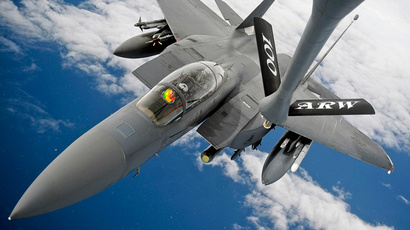
US Accelerates Upgraded Nuke Delivery To Jittery European Allies: Cable, Zero Hedge BY TYLER DURDEN, 28 Oct 22,
On the same day that Russia hailed completion of its ‘successful’ annual nuclear drills, Politico published a bombshell report describing that the US has accelerated plans to maintain upgraded nuclear weapons in Europe.
Specifically, US defense officials informed NATO allies earlier this month that Europe will host a B61-12 air-dropped gravity bomb, to be transferred by December. Politico reported Wednesday that a classified cable it has seen confirmed this.
The upgraded bomb was expected to arrive in Europe next spring, but the timeline was accelerated amid Russia’s growing nuclear rhetoric surrounding the war in Ukraine. President Biden recently raised eyebrows in saying nuclear “armageddon” is a real possibility for the first time since the close of the Cold War.
On an official level the Pentagon is disputing that its planned nuclear upgrade for NATO’s Europe arsenal is in any way connected to events in Ukraine, however, Politico cites the following sources:
Two people familiar with the issue of the upcoming shipment to Europe confirmed the accelerated timeframe reported in the diplomatic cable. They asked not to be named due to the sensitivity of the issue.
The cable, which has not previously been made public and was written to be distributed throughout the Pentagon and State Department to give policymakers a rundown of what was discussed among defense ministers at the NATO meeting, clearly indicates that allies are jittery.
The document says that during the meetings, 15 NATO allies raised concerns that the alliance “must not give in to Putin’s nuclear blackmail.”
The cable is further quoted by Politico as follows: “Given the rising volume and scale of Russia’s nuclear rhetoric, a subset of allies requested continued consultations at NATO to ensure continued readiness and consistent messaging.”……………..
The upgraded B61-12 is designed to allow the bomb to be carried by a fuller array of US and allied bombers and fighter jets, while older versions had more limited delivery options. The upgraded version is also said to be more accurate. https://www.zerohedge.com/military/us-accelerates-upgraded-nuke-delivery-jittery-european-allies-cable
“The voices in this world which have the most power belong to those who are destroying it”, writes Greta Thunberg
“The voices in this world which have the most power belong to those who
are destroying it”, writes Greta Thunberg in the outro of her spectacular
new book. It is a sentence which encapsulates the skill with which she can
speak the blatant truths our society can scarcely acknowledge, but it is
also a damning conclusion and part of a revolutionary call to arms.

Her zero-tolerance level for bulls*** is the beacon which has not only won her
acclaim, but also lights the way through this collection of essays, evidence and potential solutions written by an astonishing list of experts,
scientists, activists and authors.
Independent 27th Oct 2022
1 This Month




Shut down the radiation-damaged Heysham nuclear reactors now
To see nuclear-related stories in greater depth and intensity – go to https://nuclearinformation.wordpress.com

Say No to NASA’s Reckless Nuclear Reactor on the Moon
Say No to NASA’s Reckless Nuclear Reactor on the Moon
-
Archives
- November 2026 (12)
- October 2026 (302)
- September 2026 (339)
- August 2026 (330)
- July 2026 (355)
- June 2026 (287)
- May 2026 (306)
- April 2026 (356)
- March 2026 (251)
- February 2026 (267)
- January 2026 (308)
- December 2025 (358)
-
Categories
- 1
- 1 NUCLEAR ISSUES
- business and costs
- climate change
- culture and arts
- ENERGY
- environment
- health
- history
- indigenous issues
- Legal
- marketing of nuclear
- media
- opposition to nuclear
- PERSONAL STORIES
- politics
- politics international
- Religion and ethics
- safety
- secrets,lies and civil liberties
- spinbuster
- technology
- Uranium
- wastes
- weapons and war
- Women
- 2 WORLD
- ACTION
- AFRICA
- Atrocities
- AUSTRALIA
- Christina's notes
- Christina's themes
- culture and arts
- Events
- Fuk 2022
- Fuk 2023
- Fukushima 2017
- Fukushima 2018
- fukushima 2019
- Fukushima 2020
- Fukushima 2021
- general
- global warming
- Humour (God we need it)
- Nuclear
- RARE EARTHS
- Reference
- resources – print
- Resources -audiovicual
- Weekly Newsletter
- World
- World Nuclear
- YouTube
-
RSS
Entries RSS
Comments RSS

