Tactical Nuclear Fantasists
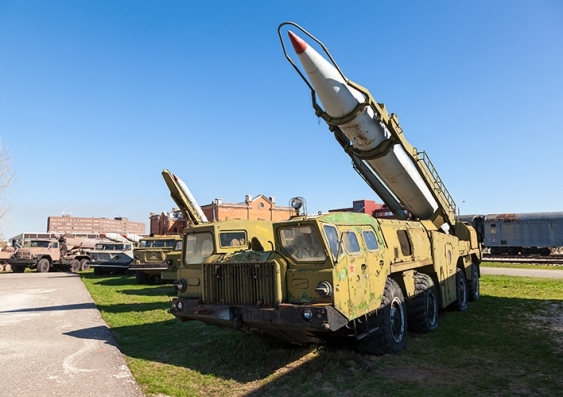
one category of nuclear weapon has continued to mark a grey area, lending a disturbed, even lunatic’s legitimacy to the battlefield deployment of such weapons. The tactical nuclear weapon is deceptively seductive to military planners.
Australian Independent Media, October 27, 2022 by: Dr Binoy Kampmark
Bogeyman politics tends to be flatly unimaginative. The image of the nuclear-mad Russian President, counting his diminishing options, has caught the imagination of press and propaganda outlets across the West. Will Mad Vlad go the distance and deploy a nuclear weapon in Ukraine?
Certainly, his rhetoric suggests the possibility. Vladimir Putin has promised to “make use of all weapon systems available to us” in the event Russia’s territorial integrity is threatened. ………….
The moment the innocents of Hiroshima were incinerated in August 1945, a weapon of mass lethality became a political option, the means to extract concessions and terrify opponents. Even more disturbingly, it also created an incentive on the part of powers to prevent others from getting it, thereby creating an exclusive club equipped with special amenities and privileges.
During a number of teeth-chattering moments of the Cold War, the use of nuclear weapons was contemplated. Historians note Cuba, Berlin and the Middle East. That they were not actually unleashed was a matter of unalloyed dumb luck and faux theory. Over time, this spawned an accepted, if nonsensical literature about the merits of having such lethal means. Precisely because of their potency, such weapons would never be used. Possessing them would be, to use a modern comparison, much like having unconvertible digital currency of huge value, more a matter of impressing your rivals than drawing direct benefit from them.
Having said that, one category of nuclear weapon has continued to mark a grey area, lending a disturbed, even lunatic’s legitimacy to the battlefield deployment of such weapons. The tactical nuclear weapon is deceptively seductive to military planners. Being of lower yield than their strategic, all-killing counterparts, they are seen as, in the words of the Union of Concerned Scientists, “more militarily useful, and less politically objectionable, and thus more likely to be used.” This does little to dampen the awful reality that such weapons can have yields greater than that of the first atomic weapon ever used.
The nature of such weapons is disturbingly nebulous in the military argot. In 2018, James Mattis, as US Secretary of Defense, opined to the House Armed Services Committee that there was no “such thing as a ‘tactical nuclear weapon’. Any nuclear weapon used at any time is a strategic game changer.”
Tactical nuclear weapons can comprise any number of devices with yields ranging from 1 kiloton to 50 kilotons. Alistair Millar, writing for Arms Control Today, mentions a few, including nuclear landmines, nuclear artillery shells, and missile warheads dropped by air or launched by missiles.
The 2018 US Nuclear Posture Review does away with much of the sentiment of the 2010 NPR in stressing the need to improve capabilities against Russia in various areas, including nonstrategic nuclear options. Moscow is specifically blamed for embracing a “limited first use” policy involving low-yield weapons that might “provide coercive advantage in crises and at lower levels of conflict.”……………………..
Ambiguity when it comes to a prospective use of nuclear weapons is considered one of the great flaws of military and political planning. Each party should know what the other proposes to do in certain circumstances, be it in terms of command structure, control and communications. Who has the authority to launch what weapons and when? What are the safeguards to cope with error? ………………….
Opacity is another factor complicating the whole business of how we cope with nonstrategic nuclear weapons. Numbers regarding the world’s tactical nuclear stockpiles remain sketchy………..
Paradoxically, even as such measures as the Treaty on the Prohibition of Nuclear Weapons gather greater popularity, the old members of the nuclear club continue to make mischief, modernising and adjusting their arsenals with little intention of ever abolishing them. The sheer allure of such weapons is unlikely to dissipate till their political dividends diminish. In the Ukraine War, such dividends abound. https://theaimn.com/tactical-nuclear-fantasists/
Kucinich Says Call for Diplomacy to end Ukraine-Russia War Must be Heard; Silencing of Congressional Progressive Caucus Casts Democrats as the “War Party”
https://worldbeyondwar.org/kucinich-says-call-for-diplomacy-to-end-ukraine-russia-war-must-be-heard-silencing-of-congressional-progressive-caucus-casts-dems-as-the-war-party/By Dennis Kucinich, World BEYOND War, October 26, 2022
CLEVELAND (Oct. 26) Weds – – Dennis J. Kucinich, former Congressman and former Democratic Presidential candidate today called upon Congressional Democrats to “rethink their opposition to diplomacy” as a means to end the war between Russia and Ukraine.
During his eight terms in congress, Kucinich led Democratic members’ efforts against the US-sponsored wars in Afghanistan, Iraq, Libya, Syria and worked to end the war in the Balkans and to divert war against Iran.
“War is ultimately a failure of political leadership. Diplomacy is difficult. It requires intelligence, skill and patience. The only way wars end is at the negotiating table,” Kucinich said.
Kucinich spoke in response to the recent retraction by the Congressional Progressive Caucus of the letter, signed by 30 Members of Congress, which called upon the Administration to aggressively seek diplomacy to end the most recent conflict which began with Russia’s invasion on February 24 of this year and which has resulted in over 15,000 deaths of Ukrainian civilians, and the deaths of tens of thousands of soldiers from both Ukraine and Russia.
“The Caucus’ letter, far from being sympathetic to Russia, sought to end the suffering of the Ukrainian people, while preserving their independence. The letter revealed an understanding of the risks of wider war, even a nuclear war, unless diplomacy is pursued,” Kucinich said.
Kucinich reminded Members of Congress that President Jimmy Carter used US diplomacy to achieve the Camp David Accords on September 17, 1978, with Israeli Prime Minister Menachem Begin and Egyptian President Anwar Sadat. US diplomacy brought about the Dayton Accords of November 21, 1995, which ended war in the Balkans. US Senator George Mitchell of Maine negotiated with multiple parties to bring about the Good Friday Agreement on April 10, 1998, which ended 30 years of deadly conflict in Northern Ireland, known as “The Troubles.”
“Remember the words from John F. Kennedy’s January 20, 1961, Inaugural Address: ‘Let us never negotiate out of fear. Let us never fear to negotiate.’ It was that type of thinking which produced negotiations between the US and the Soviet Union which averted a nuclear war during the Cuban Missile Crisis, October 16, 1962 – October 29, 1962.
Kucinich said that the obvious strong-arming and silencing of Caucus members who want a negotiated settlement in Ukraine casts the Democratic Party as a “Party of War,” he said. “It’s time for the Party to rethink Democratic opposition to diplomacy.”
“Democrats must not make support for the war, and its expansion, a test of party loyalty. We owe it to the people of Ukraine, Russia, the United States and the world to help negotiate a settlement to end this war which has already had severe global consequences, created energy and food scarcity and propelled sharp price increases,” he said.
US aid to Ukraine in 2022 currently stands in excess of $60 billion.
Russian delegation at UN calls on USA to join initiative to renounce weapons in space
Foreign Ministry Spokeswoman Maria Zakharova’s comment on the US initiative in the UN General Assembly First Committee
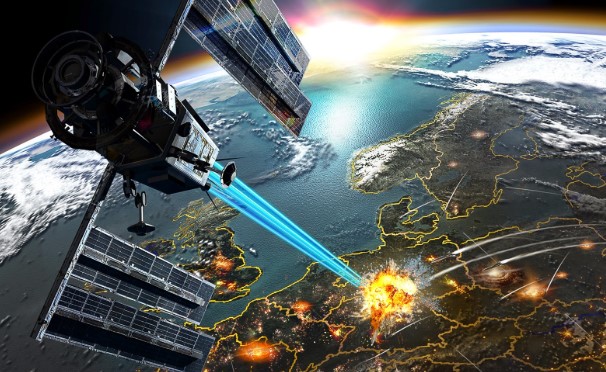
The other day, the US delegation submitted to the UN General Assembly First Committee an aide-memoire on proposed UN General Assembly resolution on destructive direct-ascent anti-satellite missile testing. We analysed the text to discover that our apprehensions concerning this US initiative were valid.
As before, we regard the moratorium on testing the above type of anti-satellite weapon (ASW) announced by the White House in April as a purely declarative move. The UN General Assembly statements and draft resolutions are clearly not enough to prevent an arms race in space (PARIS), all the more so for a country that has had experience – at least since 2008 – destroying space objects with ASW.
The United States remains bashfully silent about the most important thing: are they willing to permanently rule out the combat use of this type of weapon? The resolution says nothing about it. There are no commitments regarding the development and production of such systems, or the prospect of ever destroying the Pentagon’s existing anti-satellite capabilities.
Moreover, the possibility of deploying ASW means on the US reusable unmanned space shuttle X-37B, which is capable of staying in orbit for a long time, performing manoeuvres and carrying a payload, cannot be ruled out. By the way, our multiple requests to the United States to clarify the X-37B platform’s goals and objectives have so far remained unanswered.
Military dominance and superiority in outer space being set as clear goals in US doctrinal documents, their view of space as an arena of confrontation and their plans for achieving these goals are quite telling if one wants to understand Washington’s genuine motives. It is no coincidence that the US delegation at the Geneva Conference on Disarmament is doing its utmost to hinder the start of talks on a multilateral instrument which contains reliable international legal guarantees against deploying weapons of any kind in outer space and the renunciation of the use of force or the threat of force against space objects. The Americans are using every pretext to avoid working on the Russian-Chinese draft treaty designed to fulfill PARIS goals………………….
Washington can prove it has serious intentions if it revises its destructive stance and the US delegation that is participating in the Conference on Disarmament joins the efforts to start talks as soon as possible on a legally binding instrument with guarantees of non-deployment of weapons in space, non-use of force or threat of force against space objects.
Specifically, the approach promoted by Russia involves the following commitments:
– not to use space objects as a means of destroying any targets on Earth, in the air or outer space;
– not to create, test or deploy weapons in space to perform any tasks, including for anti-missile defence, anti-satellite activity, or use against targets on Earth or in the air, and to eliminate such systems that the states already possess;
– not to create, test, deploy or use space weapons for anti-missile defence, anti-satellite activity, or use against targets on Earth or in the air;
– not to destroy, damage, or disrupt the normal functioning and not to change the flight paths of space objects owned by other states;
– not to assist or encourage other states, groups of states, international, intergovernmental, or any non-governmental organisations, including non-governmental legal entities that were established, registered or located on the territory under their jurisdiction and/or control, to participate in the above activities.
In addition, the accession of the United States and its allies to the international initiative/political commitment not to be the first to place weapons of any kind in outer space would be a really important confidence-building measure. We are once again calling on Washington to follow the example of more than 30 UN member states and join this initiative, as well as to support the UNGA draft resolution on that matter.
We are ready to substantively and professionally discuss the US initiative in this context of multilateral efforts to arrive at a comprehensive solution to PARIS issues. https://mid.ru/en/foreign_policy/news/1835061/
US, Japan, S Korea vow response if N Korea tests nuclear bomb
US says full military capabilities will be used, including nuclear, to protect its allies South Korea and Japan.
An “unparalleled” scale of response would be warranted if North Korea conducts a seventh test of a nuclear weapon, the United States, Japan and South Korea have warned.
The warning was issued on Wednesday amid concerns by the US and its regional allies that North Korea could be poised to resume nuclear bomb testing for the first time since 2017.
“We agreed that an unparalleled scale of response would be necessary if North Korea pushes ahead with a seventh nuclear test,” South Korean first vice foreign minister Cho Hyun-dong told a news conference in Tokyo.
Cho made his comments alongside Japan’s vice foreign minister Takeo Mori and US Deputy Secretary of State Wendy Sherman.
North Korea has been carrying out weapons tests at an unprecedented pace this year, firing more than two dozen short and medium-range ballistic missiles in recent weeks, including a missile that over-flew Japan.
We urge (North Korea) to refrain from further provocations,” Sherman said, calling the North’s actions “reckless” and deeply destabilising for the region.
Sherman also said that the US will use its full military capabilities, “including nuclear, conventional and missile defence”, to protect its allies Japan and South Korea.
North Korea needs to understand that the US commitment to the security of South Korea and Japan is “iron clad”, she said.
“And we will use the full range of US defence capabilities to defend our allies, including nuclear, conventional and missile defence capabilities,” she said.
US State Department spokesman Ned Price said in a statement that Sherman also reiterated that the US was continuing to “seek serious and sustained dialogue with the DPRK” (Democratic People’s Republic of Korea) – the official name for North Korea.
Cho, during his talks with Sherman, raised concern that a new North Korean nuclear weapons policy adopted in September increases the possibility of its arbitrary use of nuclear weapons.
“This is creating serious tension on the Korean peninsula,” Cho said.
In September, the USS Ronald Reagan and accompanying ships conducted joint military exercises with South Korean forces in response to a North Korean ballistic missile test in what was their first joint military training involving a US aircraft carrier since 2017.
Angered by South Korea’s military activities, Pyongyang last week fired hundreds of artillery shells off its coasts in what it called a grave warning to its neighbour to the south.
Sherman met earlier on Tuesday with Japan’s Mori and reaffirmed the further strengthening of the Japan-US alliance and other shared goals, including the complete denuclearisation of North Korea and their joint response to China’s increasingly assertive actions in the region.
Japanese defence minister Yasukazu Hamada recently said that North Korea is believed to have achieved a miniaturisation of nuclear warheads while significantly advancing its missile capabilities by diversifying its launch technologies, making interceptions more difficult.
Japan has joined South Korea in also warning of a possible nuclear test by North Korea in the near future.
Takahama Unit 4 postpones resumption of operation due to rising equipment temperatures

October 21, 2022
On October 21, KEPCO announced that it had postponed the restart of the Takahama Unit 4 reactor, which is currently shut down for routine inspections, due to a temperature rise in one of the devices inside the reactor containment vessel that is activated when there is a problem with the primary cooling system. The reactor startup scheduled for the 21st will be postponed due to a temperature rise in one of the devices that operates in the reactor containment vessel in the event of a primary cooling system problem.
After the reactor start-up on the 21st, the plant was scheduled to resume power delivery on the 24th and commercial operation on November 18. KEPCO was planning to resume commercial operation on November 18. KEPCO is investigating the impact on the process and the cause of the temperature rise.
According to KEPCO, the temperature rose because of one of the safety devices used to reduce the pressure that rose due to a problem in the primary cooling system. The temperature was 4.2 degrees Celsius at around 3:30 p.m. on March 21, but it rose to 77 degrees Celsius at around 4:35 p.m., triggering an alarm.
https://www.tokyo-np.co.jp/article/209502?fbclid=IwAR3dktnvsjEKFDfgo3U1N_aguXV53mX5X7AURPw_J7_XArDcUkMPgjIh-dk
Russia is funding its war on Ukraine by selling $billions of uranium to Europe’s nuclear industry- no sanctions on that!
The Russian nuclear industry has once again managed to avoid inclusion in the latest round of EU sanctions – the eighth in a row to skirt this vital issue in an apparent acknowledgment that Europe’s dependence on Russian nuclear fuel cannot easily be reversed.
Since the start of the war in February, the media has been so focused on Russian fossil fuels, particularly natural gas, that it has avoided any discussion of Europe’s nuclear dependence on Russia completely. However, the topic can no longer be safely ignored. The Kremlin has already earned several hundred billion dollars so far this year by selling fossil fuels to Europe, a financial cushion that has allowed Moscow to fund its horrific war in Ukraine.
While Europe is less reliant on Russia supplying its atomic energy sector than it is its fossil fuel sector, the dependence of the European atomic energy industry on Russian nuclear fuel is as surprising as it is alarming. Much work has gone into weaning Europe off Russian fossil fuels, with time being of the essence as Brussels seeks to curtail Moscow’s lucrative revenue streams as quickly and as comprehensively as possible. However, its nuclear industry has not yet been the focus of any such efforts.
Moscow Times 22nd Oct 2022
https://www.themoscowtimes.com/2022/10/22/europe-should-sanction-russias-nuclear-industry-now-a79089
EU ‘dancing on edge of volcano’ with Ukraine – French ex-president
https://www.rt.com/news/565187-eu-ukraine-peace-sarkozy/ 24 Oct 22, Nicolas Sarkozy says the bloc’s policy is driven by “miscalculation, exaltation, anger, superficial reactions”
It’s high time for the EU to abandon its emotionally driven policies on Ukraine and start talking about achieving peace, former French president Nicolas Sarkozy has suggested.
In an interview with Le Journal du Dimanche on Saturday, Sarkozy criticized Brussels for its involvement in the conflict between Russia and Ukraine, which has included sweeping sanctions on Moscow, weapons deliveries to Kiev, and calls for a military solution to the crisis.
“The European Commission is primarily an administrative body. Moreover, I still haven’t understood under which article of the European treaties [the body’s president Ursula] von der Leyen justifies her competence in the field of arms purchases and foreign policy,” he said.
“The only thing the Europeans are hearing now is more and more billions of euros being spent on the purchase of weapons. More weapons, more deaths, more war,” the 67-year-old politician added.
The EU’s policy regarding the conflict in Ukraine is driven by “miscalculation, exaltation, anger, superficial reactions,” and because of this “we’re dancing at the edge of a volcano,” said Sarkozy, who was the president of France between 2007 and 2012.
The bloc was right to condemn Russia and show solidarity with Ukraine, but it also needs to exercise “composure” and work to prevent the escalation of the conflict, he added. “It’s high time for serious initiatives to be taken to start talking about the future and peace.”
Sarkozy also criticized Ukrainian President Vladimir Zelensky for signing a decree earlier this month, which officially made it “impossible” for him to hold talks with his Russian counterpart Vladimir Putin.
Such a stance amounted to “demanding a regime change in Moscow,” the veteran politician pointed out. “I consider this to be a dangerous leap into the unknown, although it’s understandable that it’s difficult for the Ukrainian president to talk to Putin,” he said.
Moscow, which has repeatedly invited Kiev to come to the negotiating table in recent months, has blamed the Ukrainian side for undermining any potential for a peaceful settlement of the crisis. It has also repeatedly condemned the deliveries of weapons to Zelensky’s government by the US, EU, UK and some other countries, arguing that they won’t change the outcome of the conflict, but will prolong the fighting and increase the risk of a direct confrontation between Russia and NATO.
Cities should increase role in effort to abolish nuclear weapons
Mayors for Peace comprises 8,213 cities from 166 countries and regions, including the United States, Russia and other nuclear weapon states.
https://www.asahi.com/ajw/articles/14750556, October 24, 2022
Foreign representatives to the general conference of Mayors for Peace pose for a photograph in Hiroshima on Oct. 20. (The Asahi Shimbun)
While disarmament by nuclear weapon states progresses only at a snail’s pace, Russia has invaded Ukraine and has repeatedly threatened to use nuclear weapons.
The developments have brought home a reality where nuclear arms could be used again in the manner of what was done to Hiroshima and Nagasaki.
In light of the situation, we are left to ask what role could be played by local governments, which are closer to citizens than central governments, in striving for the goal of abolishing nuclear weapons.
Mayors for Peace held its 10th General Conference in Hiroshima on Oct. 19-20.
The international nongovernmental organization was founded 40 years ago in the midst of the Cold War in response to a proposal made by Hiroshima’s mayor at a U.N. meeting.
The Hiroshima Appeal, adopted at the meeting last week, expressed alarm at the risk of nuclear war, which it said has been raised to “the highest level,” and emphasized that “the only absolute viable measure for humanity to take against repeated threats of nuclear weapons is their total elimination.”
The document called on nuclear weapon states to fulfill their disarmament obligations spelled out in the Nuclear Nonproliferation Treaty (NPT) and to ratify the Treaty on the Prohibition of Nuclear Weapons (TPNW), which took effect at the initiative of countries with no nuclear arsenals, in lockstep.
Mayors for Peace comprises 8,213 cities from 166 countries and regions, including the United States, Russia and other nuclear weapon states.
While nuclear weapon states and their allies continue to adhere to the nuclear deterrence theory, the organization has called on local governments to unite across national borders and return to the basic principle that nuclear arms should be abolished. It has played a significant role.
A number of cities, particularly in Europe, have moved to join Mayors for Peace since Russia invaded Ukraine.
In a resolution last year, the U.S. Conference of Mayors called on the U.S. government to welcome the TPNW and take immediate action toward nuclear abolition. Cities that are members of Mayors for Peace played a major part in that process.
Mayors for Peace should expand its activities by capitalizing on the current trend of the growing presence of local governments.
The essential thing is to work hand in hand with civil society in sending out messages.
Mayors for Peace has been supported by pleas from survivors of the atomic bombings of Hiroshima and Nagasaki that the error should never be repeated.
During the meeting in Hiroshima, cases of efforts being made in Japan and abroad were presented. They include how a group of 26 cities in western Tokyo have been working together to archive people’s accounts of their war experiences and to provide peace education.
We hope more local governments will draw on their networks to share and expand their diverse attempts.
Japan, as the only nation that has suffered atomic bombings in war, has a major role to play.
Of all municipalities in the nation and Tokyo’s wards, more than 99 percent, or 1,737, are members of Mayors for Peace.
At a general meeting of Japanese member cities held on the sidelines of the 10th general conference, a written request was approved calling on the government to participate as an observer in the second meeting of the state parties to the TPNW, which is scheduled for next year, and sign and ratify the treaty.
Hiroshima is expected to host the first meeting of a new international group of eminent persons to discuss nuclear disarmament by year-end and a Group of Seven summit next spring.
Prime Minister Fumio Kishida, who will be presiding over both meetings, should take the appeal of Mayors for Peace seriously and discard his stance of continuing to turn his back on the TPNW as soon as possible.
This Abandoned Nuclear City Is Trapped Under Ice, What Happens If It Thaws?
https://twistedsifter.com/videos/what-happens-if-this-frozen-abandoned-nuclear-city-thaws 24 Oct 22, In an effort to stop the spread of Soviet influence during the height of the Cold War, the United States and Denmark signed the 1951 Defense of Greenland Act. Soon after, the U.S. Army constructed a state-of-the-art nuclear-powered Arctic research center, with multiple military bases built out on the ice sheet, one of them was Camp Century.
Watch the video on why Project Iceworm was aborted before it began, and the state of Camp Century today. In the midst of a warming climate, who is responsible for the abandoned base, and how do we protect the environment from the physical, biological, and radiological wastes at the site?
For more on this unfolding threat, read about Denmark’s Camp Century Climate Monitoring Programme and scientists’ warning of melting Artic releasing banned toxins.
Kremlin diplomat assures that Russia has no intention of using nuclear weapons in Ukraine
https://euroweeklynews.com/2022/10/25/kremlin-diplomat-assures-that-russia-has-no-intention-of-using-nuclear-weapons-in-ukraine/ By Chris King • 25 October 2022,
Russia has no intention of using nuclear weapons in Ukraine claimed Kremlin diplomat Vasily Nebenzya in a letter to the UN Secretary-General.
As reported by TASS on Monday, October 24, in a letter from Vasily Nebenzya from the Permanent Mission of the Russian Federation to the UN Secretary-General Antonio Guterres, he stated that Russia never intended to, and never will, use nuclear weapons in Ukraine.
Konstantin Vorontsov, the Deputy Director of the Department for Non-Proliferation and Arms Control of the Russian Foreign Ministry, noted earlier that Russia has not threatened and is not threatening Ukraine with nuclear weapons.
This was reiterated by Dmitry Peskov, the press secretary of the Russian president, Vladimir Putin, who stressed that the Russian Federation does not participate in Western rhetoric about the use of nuclear weapons in Ukraine. These arguments are only on the conscience of American and European leaders he added.
Prior to this, Mikhail Podolyak, the adviser to the head of the office of the President of Ukraine stated that the likelihood of a nuclear conflict with the Russian Federation at the moment is minimal. He recalled that Russia signed the Treaty on the Non-Proliferation of Nuclear Weapons. That is, it is forbidden to use nuclear weapons against a state that does not have them.
In turn, the head of European diplomacy, Josep Borrell, said that an attack against Ukraine with nuclear weapons would provoke a powerful military response from NATO, the European Union, and the United States, as reported by gazeta.ru.
Zelenskyy blasts Israel, suggests Russia-Iran nuclear collusion
Ukraine’s leader rails against Israel’s refusal to provide its Iron Dome missile defence system, saying the attack on his country has brought Moscow and Tehran closer together.
Aljazeera, 24 Oct 2022, President Volodymyr Zelenskyy has criticised Israel’s neutrality in the Ukraine war, saying the decision by its leaders not to support Kyiv with weaponry has encouraged Russia’s military partnership with Iran.
Addressing a conference on Monday organised by Israel’s Haaretz newspaper, Zelenskyy repeated his request for Israel’s Iron Dome anti-missile technology to thwart Russian strikes………..
On Monday, Israeli Defence Minister Benny Gantz told his Ukrainian counterpart, Oleksiy Reznikov, that “Israel will not provide weapon systems to Ukraine.”
Since the Russian invasion in February, Israel has offered humanitarian assistance to Ukraine but has held back from providing military equipment for fear of harming relations with Russia……………………………………
Iran has denied providing Russia with weapons for the war.
“The Islamic Republic of Iran has by no means supplied any side with arms to be used in the war in Ukraine, and its policy is to oppose arming either side with the aim of ending the war,” said Hossein Amirabdollahian, Iran’s foreign minister. https://www.aljazeera.com/news/2022/10/24/zelenskyy-blasts-israel-suggests-russia-iran-nuclear-collusion
Spokane poised to declare city a nuclear free zone
https://www.thecentersquare.com/washington/spokane-poised-to-declare-city-a-nuclear-free-zone/article_08df369e-53ba-11ed-b3bc-dfdc7a56a890.html By RaeLynn Ricarte | The Center Square 25 Oct 22, (The Center Square) – The Spokane City Council was poised Monday to declare the municipality a nuclear free zone, which would prohibit local resources or facilities from being used to manufacture weapons.
The proposal to add a new chapter to city code has been brought forward by Council President Breean Beggs and Councilor Karen Stratton.
Beggs was asked by The Center Square on Monday whether the ordinance was being considered due to escalating fears about nuclear weapons being deployed in the Ukraine and Russian war.
“This has been in the works far longer than Russia’s invasion of Ukraine (several years), but that crisis does underline the dangers,” Beggs said in a statement.
The draft ordinance outlines that the “nuclear arms race has been accelerating for more than three-quarters of a century, draining the world’s resources and presenting humanity with the ever-mounting threat of nuclear holocaust.”
Because there is no adequate method to protect Spokane residents in the event of a nuclear war, which destroys most higher life forms on the planet, Stratton and Beggs want protection rules in place for local residents and businesses.
They also contend that resources used to develop new nuclear weapons are taken away from other human needs, including jobs, housing, education, health care, public transportation and services for youth, the elderly and disabled.
“The United States already has a sufficient stockpile of nuclear weapons to defend itself and destroy the world several times over,” states the proposed ordinance.
As a leading producer of these weapons, Beggs and Stratton say the U.S. should take the lead in the process of a global slowdown of the arms race and the negotiated elimination “of the threat of a pending holocaust.”
“An emphatic expression of the feelings on the part of private residents and local governments can help initiate such steps by the U.S. and the other nuclear weapons powers,” states the proposal. “Spokane is on record in support of a bilateral nuclear weapons freeze and has expressed its opposition to civil-defense crisis relocation planning for nuclear war.”
Because the governments of nuclear nations have failed to adequately reduce or eliminate the risk of nuclear attack, the people and their local representatives must take action, states the ordinance. It notes that nearby Fairchild Air Force Base no longer utilizes nuclear weapons.
If adopted, the new code prohibits work on nuclear weapons, or manufacture of any component, within the city limits.
If city officials determine that a good or service cannot reasonably be obtained from any source other than a nuclear weapons producer, a waiver to the ordinance may be sought. Documented evidence must be provided that the sought-after resource is vital to the health or safety of residents or employees of the city.
The ordinance would allow city residents to seek a court injunction against any perceived violation. If successful, the plaintiff is to be reimbursed attorney fees and court costs.
According to the agenda, the ordinance will not infringe on First Amendment rights, attempt to constrain Congress, or prevent the city council or mayor from addressing an emergency that poses a clear and present danger to the community.
Rooppur nuclear power plant: Cost may rise for multiple factors
Daily Star Rejaul Karim Byron, Tue Oct 25, 2022 ,
Rooppur Nuclear Power Plant Project may see a cost rise due to slow progress in power grid upgrade, possible changes in the loan repayment method amid the Russia-Ukraine war and the devaluation of the taka.
The Tk 113,092-crore plant has two units with a power generation capacity of 1,200 megawatts each. Of the amount, Tk 91,040 crore ($11.38 billion) will be provided by Russia as loan, according to an agreement.
Project officials said the first unit will be ready for commercial operation in December 2023 and the second one in July 2024.
The plant, however, may face delay in going into commercial operation as the Infrastructure Development for Power Evacuation Facility, scheduled to be completed by December next year, has seen only 27 percent financial progress and 45 percent physical progress in nearly five years till September this year.
Talking to reporters at the plant site recently, Shawkat Akbar, project director of Rooppur Nuclear Power Plant, said they would not be able run the plant until the power grid upgrade is done under the infrastructure development facility.
“Once we use nuclear fuel in the plant, we can’t stop production,” he pointed out.
Work of the infrastructure development facility under the Power Grid Company of Bangladesh (PGCB) began in April 2018 at a cost of Tk 10,981 crore with Tk 8,219 crore funding from the Indian Line of Credit…………………………………………………….. more https://www.thedailystar.net/news/bangladesh/news/rooppur-nuclear-power-plant-cost-may-rise-multiple-factors-3151171
Meetings scheduled on compensation for Utah’s ‘downwinders’ affected by nuclear testing
https://www.thespectrum.com/story/news/2022/10/24/meetings-scheduled-compensation-utahs-nuclear-downwinders/10588294002/ David DeMille, St. George Spectrum & Daily News,
Southern Utah’s thousands of “downwinders” — people whose families suffered high rates of cancer attributed to U.S. nuclear weapons testing in the Nevada desert in the 1950s and ’60s — could be eligible for federal compensation.
An estimated 60,000 people were exposed to radioactive fallout in southern Utah during the testing programs that took place at the Nevada Test Site, where nuclear weapons were tested and much of the radiation was sent “downwind” to the east via the prevailing winds.
For years, the federal government has issued money to those affected via the Radiation Exposure Compensation Act, which was set to expire this summer but was extended by Congress for another two years.
Qualifying downwinders, or spouses and/or children of deceased loved ones, may apply for up to $50,000 in compensation.
To help residents learn more about the program and whether they may be eligible for some of the compensation funds, St. George area medical officials are set to host a series of meetings this week in rural communities. Representatives from Intermountain Healthcare are also taking questions via phone from anyone interested.
The act allows qualifying downwinders to receive a one-time payout of $50,000, said Becky Barlow, project director and nurse practitioner at the Radiation Exposure Screening and Education Program (RESEP) Clinic at Intermountain St. George Regional Hospital. Test site workers can apply for $75,000, and certain uranium workers can apply for $100,000.
“We are pleased that the president and Congress would continue to support downwinders and uranium workers that were unknowingly exposed because of nuclear testing or jobs in uranium mining and refinement,” Barlow said.
Applications and information are available by calling 435-251-4760.
The Radiation Exposure Compensation Act was first passed in 1990 as an alternative to costly litigation to ensure the federal government met its financial responsibilities to workers who became sick as a result of the radiation hazards of their jobs. Coverage was broadened a decade later.
There was some question about whether the program might end this year, but the two-year extension takes it through summer 2024. It also covers some different cancers and includes different stipulations, so people who were denied in past attempts might be eligible under the new rules.
If possible, the Department of Justice prefers to award the money directly to the person impacted by the testing. However, if that person is already deceased, their legal spouse can apply for the money, and in some cases the person’s children or grandchildren can also apply.
“If you had a family member impacted and you don’t know if they filed, you can contact us to check,” Barlow said.
Anyone with questions regarding the Radiation Exposure Compensation Act, or in need of screenings, should call 435-251-4670.
David DeMille writes about southwestern Utah for The Spectrum & Daily News, a USA TODAY Network newsroom based in St. George. Follow him at @SpectrumDeMille or contact him at ddemille@thespectrum.com.
COP27 climate change summit: World leaders urged to act as report reveals 768 million are underfed
COP27 climate change summit: World leaders urged to act as report reveals
768 million are underfed. Institute for Economic and Peace says ‘existing
ecological challenges will only be amplified by climate change’ and
millions of vulnerable people are being failed by current efforts to tackle
it.
World leaders facing the threat of a global recession must not scrimp
on support for poorer nations with hundreds of millions of people at
increased risk of catastrophic ecological disasters, a leading think-tank
has warned. Threats posed by water scarcity, food stress, and natural
disasters mean that the number of undernourished people worldwide rose to
768 million last year, according to a report by the Institute for Economics
and Peace.
The think-tank’s Ecological Threat Report says that
“existing ecological challenges will only be amplified by climate
change” and millions of vulnerable people are being failed by current
efforts to tackle it. The report’s authors say negotiators at the UN
COP27 climate change conference, which starts in Egypt on 6 November, must
commit to finding a way to address these risks “quickly” or risk a
catastrophe.
iNews 23rd Oct 2022
1 This Month




Shut down the radiation-damaged Heysham nuclear reactors now
To see nuclear-related stories in greater depth and intensity – go to https://nuclearinformation.wordpress.com

Say No to NASA’s Reckless Nuclear Reactor on the Moon
Say No to NASA’s Reckless Nuclear Reactor on the Moon
-
Archives
- November 2026 (12)
- October 2026 (302)
- September 2026 (339)
- August 2026 (330)
- July 2026 (355)
- June 2026 (287)
- May 2026 (306)
- April 2026 (356)
- March 2026 (251)
- February 2026 (267)
- January 2026 (308)
- December 2025 (358)
-
Categories
- 1
- 1 NUCLEAR ISSUES
- business and costs
- climate change
- culture and arts
- ENERGY
- environment
- health
- history
- indigenous issues
- Legal
- marketing of nuclear
- media
- opposition to nuclear
- PERSONAL STORIES
- politics
- politics international
- Religion and ethics
- safety
- secrets,lies and civil liberties
- spinbuster
- technology
- Uranium
- wastes
- weapons and war
- Women
- 2 WORLD
- ACTION
- AFRICA
- Atrocities
- AUSTRALIA
- Christina's notes
- Christina's themes
- culture and arts
- Events
- Fuk 2022
- Fuk 2023
- Fukushima 2017
- Fukushima 2018
- fukushima 2019
- Fukushima 2020
- Fukushima 2021
- general
- global warming
- Humour (God we need it)
- Nuclear
- RARE EARTHS
- Reference
- resources – print
- Resources -audiovicual
- Weekly Newsletter
- World
- World Nuclear
- YouTube
-
RSS
Entries RSS
Comments RSS

