Thousands rally in Rome against arming Ukraine
Trade unionists and leftists marched after the new government promised more arms for Kiev next year
https://www.rt.com/news/567650-italy-ukraine-weapons-protest/ 5 Dec 22,
Left-wing demonstrators took to the streets in Rome on Saturday, demanding higher wages and condemning the Italian government for renewing a decree allowing it to send weapons to Ukraine until 2024.
Organized by Italy’s USB trade union and backed by a number of leftist political factions, the protest saw thousands of people assemble at the Piazza della Repubblica and march behind a banner reading “guns down, wages up.”
“The Meloni government is dragging us further and further into a spiral of war with unpredictable outcomes,” the USB wrote prior to the protest. “Italy is evidently a belligerent and active country in the conflict, despite the fact that the great majority of the population is against the war and the consequent sharp increase in military spending.”
Italy’s new prime minister, Giorgia Meloni, issued a decree on Thursday allowing her cabinet to continue sending weapons to Ukraine until the end of 2023 without seeking the formal approval of parliament. Her predecessor, Mario Draghi, was a staunch supporter of Kiev and lost power after a disagreement over arms shipments split the largest party in his coalition government, the Five Star Movement.
The Italian public is split too, with 49% opposing sending weapons to Kiev and 38% in favor, according to a poll taken by EuroWeek News last month. Additionally, 49% of Italians believe that Ukraine needs to make concessions to Russia in the ongoing conflict to speed up the peace process, while only 36% want Kiev to keep fighting.
Last month, another rally in Rome calling for a peace deal to end the Ukrainian conflict drew 100,000 people, organizers said.
‘A form of self-destruction’: Japan weighs up plan to expand nuclear power
Japan’s prime minister is pushing for as many as 17 nuclear reactors to be switched back on, more than a decade on from the meltdown at Fukushima
Guardian, Justin McCurry in Onagawa, 30 Nov 22,
“…………………………………. In a sweeping change to the country’s energy policy, the prime minister, Fumio Kishida, has announced plans to build next-generation reactors and restart those left idle after the 2011 triple meltdown, in an attempt to end Japan’s dependence on imported fossil fuels and help meet its net zero target by 2050.
Kishida’s “green transformation”, which could include extending the lifespan of existing reactors beyond the current maximum of 60 years, underlines Japan’s struggle to secure an affordable energy supply as a result of the war in Ukraine and a power crunch that has triggered warnings of potential blackouts in Tokyo during this summer’s heatwave.
Most of Japan’s nuclear power plants have remained offline since the Fukushima meltdown, and previous governments indicated they would not build new reactors or replace ageing ones, fearing a backlash from a shaken and sceptical public.
Japan plans for nuclear to account for 20-22% of its electricity supply in 2030, compared with about a third before Fukushima. In 2020 the figure was less than 5%. Just 10 nuclear reactors among more than 30 have been restarted since the post-Fukushima introduction of stricter safety standards.
If Kishida gets his way though, seven additional reactors will be restarted after next summer, including the No. 2 unit at Onagawa, which sustained structural damage from the 2011 earthquake and tsunami but escaped a catastrophic meltdown despite being the closest atomic plant to the quake’s epicentre.
‘A threat to the safety of local people’
The restart has been approved by Japan’s nuclear watchdog and given “local consent” by Yoshihiro Murai, the governor of Miyagi – the prefecture where Onagawa is located.
But many residents argue that contingency plans for potential accidents would put lives at risk.
“The evacuation plans won’t work … they are a threat to the safety of local people,” says Masami Hino, one of 17 residents living within 30km of the plant who last year launched a legal action to block the restart, now scheduled for early 2024.
In the event of a serious accident, 1,000 residents living within 5km of the plant would leave immediately, while 190,000 people within a 30km radius would evacuate in stages, according to the official blueprint.
“How can Tohoku Electric and the prefecture guarantee that an evacuation would go smoothly after something like a major earthquake? It’s impossible,” says Mikiko Abe, an independent member of the Onagawa town assembly who has spent 40 years campaigning for the plant’s closure.
“Instead of planning for an evacuation, wouldn’t it be better to live safely in a place where there’s no need to even think about fleeing our homes?”………………………………………….
While pro-nuclear members of the Miyagi prefectural assembly have helped resist calls for a referendum, a poll in April by the local Kahoku Shinpo newspaper found that 56% of residents were “strongly” or “somewhat” opposed the restart.
“All of Japan’s nuclear power plants are on the coast … and this is a country that has earthquakes, tsunamis and volcanoes,” says Tsuyoshi Suda, a member of local anti-nuclear group Kaze no Kai, as he looked at the plant – complete with a newly built 29-metre high seawall – from a nearby beach.
“For Japan to keep putting its faith in nuclear power plants is like a form of self-destruction.”
Workers at hazardous nuclear waste site test positive for drugs
Random testing has been carried out on 741 workers over the past year. Seven
workers at the hazardous Sellafield nuclear waste site have tested positive
for drugs over the past twelve months. Three have tested positive for
alcohol, raising questions over safety at the site Cumbria which manages
spent fuel from Britain’s nuclear reactors.
Four of the positive drugs tests and one of the positive alcohol tests followed random testing,
carried out on 741 workers between November 2021 and November 2022. The
others followed “for cause” testing, where a worker is suspected of
being impaired by drugs or alcohol, carried out on 36 people over the same
period.
The figures were released to The Telegraph following a Freedom of
Information request. It did not reveal what action had been taken against
those who tested positive. Sellafield is considered one of the most
hazardous nuclear sites in the world, according to the Office for Nuclear
Regulation, handling more radioactive material per square meter than any
site in Europe.
Telegraph 4th Dec 2022
Sizewell C nuclear – a huge black hole for taxpayers’ money
“If the Chancellor is looking for cheap, reliable, energy independence,
he is backing the wrong project, as Sizewell C’s ultimate cost and
technical reliability are so uncertain and building it is reliant on French
state-owned EDF.
Green-lighting Sizewell C also loads more tax onto
struggling households, who would be forced to pay a nuclear levy on bills
for a decade before they could light a single lightbulb. Despite the
Chancellor’s statement, Sizewell C still needs financing, and with at least
a year before it’s decided whether it will finally go ahead, we’ll keep
fighting this huge black hole for taxpayers’ money, when there are cheaper,
quicker ways to get to net zero.”
Stop Sizewell C 3rd Dec 2022
Climate change brings risk of flooding to the multi billion pound nuclear project Sizewell C.
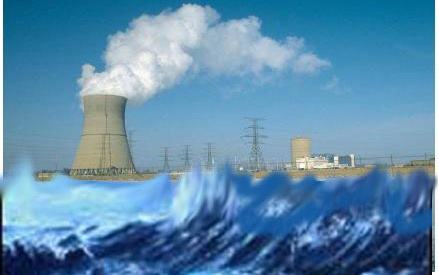
UK sent nuclear warning as new £20bn site facing risk from increased flooding: ‘Alarming!’
Earlier this week, the UK Government confirmed that £700million of public money will be invested in the Sizewell C nuclear power plant.
https://www.express.co.uk/news/science/1703570/energy-crisis-nuclear-edf-sizewell-c-increased-flooding-climate-change-suffolk By ANTONY ASHKENAZ Nov 30, 2022
Experts have issued a dire warning about the proposed Sizewell C nuclear power plant, as climate change induced flooding could mean that in future, the coastal nuclear site could turn into an island. Earlier this week, the Government confirmed that £700million of public money will be invested power plant, which once built will provide power to the equivalent of six million homes for more than 50 years. However, experts fear that the reactor, which will be built in Suffolk, could be at risk of climate change, as rising sea levels threaten to erode and swallow up the East coast of the UK, Express.co.uk was told.
Earlier this week, the UK’s former Chief Scientific Advisor Sir David King warned that the new £20billion power plant would be “very difficult to protect from flooding” due to rising sea levels on the Suffolk Coast.
Speaking to LBC, he said: “Part of the British coast that’s most at risk of rising sea level is the east coast and clearly this is very close to the oceans as is Sizewell B, and frankly that is the biggest risk.
“It would be very very useful if we could see published an analysis of sea level to the end of the lifespan of Sizewell C. It would take us to 2070 and beyond, possibly 2080.
“I do fear that it’s quite possible that we will have had a one-metre sea level rise by that time, by which time this would be very difficult to protect from flooding. I’m not saying it’s impossible, but I would love to see the safety analysis on the basis of rising sea levels.”
Dr Paul Dorfman, an associate fellow from the Science Policy Research Unit at the University of Sussex told Express.co.uk: “In 2008, the pro-nuclear group of the Institute of Mechanical Engineers published a report, which says that UK nuclear coastal installations, which specify Sizewell, will be subject to storm surge, climate-induced sea level rise, flooding and potential nuclear islanding.
“Perhaps alarmingly, IME point out that these UK coastal nuclear sites will need considerable investment to protect them against rising sea levels, and even relocation or abandonment.
“Our knowledge about climate now is that rare events then, become the norm today, so basically there are questions of Sizewell being at significant risk. So quite literally, Sizewell is at the frontline of climate change, and not in a good way.”
He also noted that very “reasonable models” of climate change showed that Sizewell within two decades, would be surrounded by flood water once a year.
He said: “If construction goes ahead, clearly they will build in defences. But the idea of a nuclear power plant within a couple of decades being almost entirely cut off by water, and what does that mean for the future.
“Because it’s not just the reactors, it’s also the high-level spent fuel points, and the hot intermediate-level waste stores that are also at risk.”
As part of its energy strategy unveiled in April, which heavily focused on a number of policies that could help weaken Russia’s grip on UK energy prices, the Government set a target of significantly scaling up nuclear so that it will account for 25 percent of the country’s projected electricity demand by 2040.
The strategy noted that Sizewell C is critically important for helping the UK reach its nuclear targets, and it has been engaging in negotiations regarding the project’s construction since January 2021.
However, Dr Dorfman added: “The other thing is, BEIS, in a statement to Parliament, state that nuclear construction can take 13-17 years. If Sizewell C gets the go-ahead next year at the earliest, we’re looking at first generation by 2040.
“Firstly, that’s much too late to help with our climate and energy problems. But by the time it’s constructed, it’s likely to be a climate risk.”
Meanwhile, Alison Downes, from the campaign group Stop Sizewell C told Express.co.uk: ““Future flood risk maps show the Sizewell site as an island, and we’re deeply concerned that planning assessments were not conservative enough in considering the potential for coastal erosion in Sizewell Bay.
“EDF is being forced to plan sea defences the height of 3 double-decker buses, but since this site will carry radioactive material for well over a century, is it a safe and sustainable approach to protecting our children’s future to locate a nuclear power station here? We say no.
Why a new convention to protect nuclear installations in war is a bad idea
Bulletin of the Atomic Scientists, y Michal Onderco, Clara Egger | December 5, 2022 In recent weeks, several voices have called for adopting new legal instruments to protect civilian installations from military attacks during conflicts. The prime motivation stems from Russia’s shelling and occupation of the Zaporizhzhia nuclear power plant—Europe’s largest—as part of its ongoing war against Ukraine. This event, combined with Russia’s repeated transgression of international laws of armed conflicts, is said to reveal the weaknesses and inadequacy of existing legal protections. Such arguments were also aired during the 2020 NPT Review Conference held this summer in New York (after a two-year delay due to the global COVID-19 pandemic) as well as, more recently, in the columns of the Bulletin of the Atomic Scientists. Proponents of improved legal protections argue that a new convention is needed because of the ambiguity of existing international laws and the lack of enforcement mechanisms.
Although concerns about the protection of nuclear sites in war settings are wholly justified, the cure proposed might be worse than the disease. First, calls for a new regime reflect a partial reading of the legal and political mechanisms surrounding the protection of nuclear installations during a conflict. Second, because international law and political commitments already protect against attacks on nuclear installations, a new convention could add undesirable complexity with countries picking and choosing their commitments, which ultimately would weaken existing protections. Calls for new legal instruments would also send counterproductive signals in a context where the value of international norms is already challenged at the domestic and global levels.
There are no gaps. Legally, international humanitarian law norms already establish a detailed and unambiguous system of protection to avoid nuclear facilities becoming battlefields or being targeted by military attacks. The obligations of warring parties derive from two sources: They are linked to the general protection applicable to all types of civilian infrastructure in wartime but are reinforced and by specific protections applicable to nuclear power plants.
By default, nuclear facilities are considered civilian infrastructures even if doubts exist about their use, according to the Additional Protocol I to the Geneva Conventions (1977) as well as in contact areas (when military forces or combat operations are in the vicinity of power plants). This consideration is confirmed in the official commentary on the Additional Protocol I published by the International Committee of the Red Cross in 1987. Nuclear facilities are therefore already protected against attacks and reprisals.
………………………………… Overall, the legal protection against attacks on installations “containing dangerous forces” are seen as so fundamental that they are recognized as a part of the customary international humanitarian law, binding states regardless of whether they signed and ratified (or withdrew from) relevant international treaties. For example, the current military legal codes of Russia, Israel, and the United States (to name a few) all contain such provisions. From the legal perspective, nuclear facilities are on very safe grounds.
……………. The Additional Protocols to the Geneva Conventions explicitly provide that nuclear facilities must not be attacked even as part of broader military campaigns, if such an attack “may cause the release of dangerous forces and consequent severe losses among the civilian population” (cited in Article 56(1) of Additional Protocol I). This protection applies against retaliatory action (as cited in Art 56(4) of Additional Protocol I), and legal experts have even argued that such an act falls under the definition of a war crime (Art 85(3) of Additional Protocol I).
……………………………… Fragmentation is dangerous. Not only is a new convention in regard to attacks on nuclear power plants unnecessary; it would be politically and legally damaging. Adopting a new treaty would signal that current norms have become obsolete, making existing commitments irrelevant. ………………………………… more https://thebulletin.org/2022/12/why-a-new-convention-to-protect-nuclear-installations-in-war-is-a-bad-idea/
The complicated politics of nuclear power
Cardinal News, by Dwayne Yancey, December 5, 2022
Feelings about nuclear energy generally split along left-right lines. But while Gov. Glenn Youngkin is pushing nuclear energy in Virginia, it’s left-of-center governments that are now pushing small nuclear reactors internationally and a conservative state legislator in Southwest Virginia who opposes them.
The push to build such small portable reactors – the technical term is “small modular reactor,” or SMR – is pretty widespread, though………………………
It will not surprise you to learn that Americans are politically polarized over nuclear energy the way they are most other things. A Gallup Poll earlier this year found Americans almost evenly split – 51% in favor, 47% against. What’s more interesting, though (or maybe more predictable), is how they split: 60% of Republicans are in favor of nuclear energy, only 39% of Democrats are.
That left-right split is generally true around the world, which a) helps explain why this nuclear proposal is coming from a Republican governor, and b) makes the exceptions so interesting.
Globally, France is an obvious exception. …………….. there has been a general left-right consensus that nuclear energy is an important national priority. Not until the Green Party came along in 1984 was there any significant voice against nuclear power, according to a paper published by Oxford Academic.
Another interesting exception comes just to our north – in Canada, specifically with the government of Prime Minister Justin Trudeau……… Trudeau has also come down on the side of nuclear power. …………[Four provinces] called for making Canada “a global SMR technology hub” ………………………
Another left-of-center government promoting nuclear energy is our own – the Biden administration.
The Democrats’ so-called climate bill – officially the Inflation Reduction Act – that passed this summer contains numerous provisions promoting nuclear energy. More recently, Biden’s special presidential envoy for climate, John Kerry, has been one of the chief proponents. In November, Kerry made two announcements that haven’t gotten much attention. First, he announced that the United States will partner with Ukraine on a pilot program to build a “secure and safe small modular nuclear reactor” in Ukraine. Second, he announced plans to help Europeans – particularly in central and eastern Europe – convert coal-fired plants to small modular reactors
……… All these exceptions to ideological orthodoxy have come on the left, but there are some on the right, too. I mentioned that the Gallup Poll found 60% of Republicans in favor – but it also found 37% opposed. One of those Republicans who opposes nuclear power – at least in Southwest Virginia – is Del. Marie March, R-Floyd County. She recently posted on Facebook: “Youngkin wants nuclear micro reactors to be placed in SWVA coal mines. I am very concerned about this new technology and prefer that SWVA isn’t used as the lab rat.
For too long NOVA harvests our taxes and our land. Now they want to use us to harvest power. Right now a Nuclear power plant is being targeted in Ukraine to be bombed. Look at the impact of a nuclear meltdown on generations of people and the ecosystem. We don’t need Geiger counters in SWVA!”
March’s concern about coal country effectively being used as a sort of “sacrifice zone” to generate energy for urban areas isn’t that different from what some liberal groups might say. ……………………
Now, none of this is meant to make a case one way or another on the wisdom of splitting atoms and whether some of that should be done in Southwest Virginia. It is meant to put the proposed SMR in Southwest Virginia in a global context and to show that the politics of nuclear are not always clear-cut. We in Virginia will get to see this play out in the General Assembly (and perhaps beyond). Youngkin has proposed $10 million to go toward research and development of innovative energy technologies, with half of that devoted to nuclear research. That may be exactly what we should expect of a conservative governor. Meanwhile, the liberal government in Canada has invested more than $18 million toward its own nuclear research. Who would have thought that Glenn Youngkin and Justin Trudeau had so much in common, or that Marie March would wind up aligned with Greenpeace? https://cardinalnews.org/2022/12/05/the-complicated-politics-of-nuclear-power/—
Talking football pitches but not in Qatar
thttps://www.nuclearpolicy.info/news/talking-football-pitches-but-not-in-qatar/ 5 Dec 22, Whilst the World Cup action on the pitch in Qatar is the current focus of many millions of fans of ‘the beautiful game’, the UK/Ireland Nuclear Free Local Authorities are seeking out the answer to a football-related question much nearer to home.
Rolls-Royce has been talking big about the prospects for its so-called Small Modular Reactors in recent days, but everyone remains confused as to how big the reactor is. Although the intended power output is clear, at 470 MW being roughly compatible with a first-phase Magnox nuclear reactor, various media articles have reported the SMR as occupying a surface area amounting to between ‘one and a half and ten football pitches’.
Football’s world governing body, FIFA, sets international standards for the dimensions of playing pitches based on metres, but even these are at variance. The length of a pitch can be between 90 metres and 120 metres from goal line to goal line and the width between 45 metres and 90 metres.
Quite a difference, so the NFLA decided they want to use Wembley Stadium with a playing pitch of 105 metres by 68 metres as a reference football pitch most people can relate to.
The Chair of the UK/Ireland Nuclear Free Local Authorities Councillor David Blackburn has just written to Tom Samson, Chief Executive Officer of Rolls-Royce SMR, seeking out the answer.
Councillor Blackburn said “If we do not know how big it is we do not know what we are dealing with, and it is way overdue for Rolls-Royce to provide clarity. With the FIFA standard size of a football pitch being variable, we have gone for Wembley Stadium as a reference most people, whether football fans or otherwise, can relate to. We have asked how many ‘Wembley’s’ will the SMR fill? It is now over to Mr Samson to respond. We shall of course bring you the final score when we have it.”
Pursuing Assange in a US court could cause even more embarrassment than the WikiLeaks’ publications.
It’s possible that pursuing Assange in a US court could cause even more embarrassment than the WikiLeaks’ publications. As the years have passed, we have learned that a Spanish security firm recorded his every move and those of his visitors and legal counsel in the Embassy of Ecuador. This was passed to the CIA, and was used in the US case for his extradition. The trial of Daniel Ellsberg for leaking the Pentagon Papers failed because his psychiatrist’s records were stolen by investigators, and this should set a precedent for Assange.
Enough is enough for Albanese on Assange: our allies may respect us if we say this more. https://johnmenadue.com/enough-is-enough-for-albanese-on-assange-our-allies-may-respect-us-if-we-say-this-more/ By Alison Broinowski, Dec 2, 2022
The Prime Minister’s surprise revelation that he has raised the case against Julian Assange with US officials and urged that charges of espionage and conspiracy be dropped opens up many questions.
Mr Albanese thanked Dr Monique Ryan for her question on Wednesday 31 November, giving what appeared to be a carefully prepared and timed answer. The Independent MP for Kooyong sought to know what political intervention the government would make in the case, observing that public interest journalism is essential in a democracy.
The news flashed around between Assange supporters in and outside Parliament, and reached the Guardian, the Australian, SBS, and Monthly online. Neither the ABC nor the Sydney Morning Herald carried the story, even the next day. SBS reported that Brazil’s president-elect Luiz Inacio Lula da Silva expressed support for the campaign to free Assange.
But two days earlier, on Monday 29 November, the New York Times and four major European papers had printed an open letter to the US Attorney-General Merrick Garland, deploring the assault on media freedom which the pursuit of Assange represented.
The NYT, the Guardian, Le Monde, Der Spiegel and El Pais were the papers which in 2010 received and published some of the 251,000 classified US documents provided by Assange, many revealing American atrocities in Afghanistan and Iraq.
US Army intelligence analyst Chelsea Manning gave them to Assange, who redacted names of people he considered could be harmed by publication. A senior Pentagon serving officer later confirmed that no-one had died as a result. Manning was imprisoned, and then pardoned by Obama. Assange spent seven years in diplomatic asylum in the Embassy of Ecuador in London before British police removed him and he was imprisoned for breach of bail condition.
Assange has been in Belmarsh high security prison for three years, in poor physical and mental health. Court proceedings against him over extradition to face trial in the US have been farcical, biased, oppressive, and excessively prolonged.
In Opposition, Albanese said ‘Enough is enough’ for Assange, and he has at last done something about it in Government. What exactly, with whom, and why now, we don’t yet know. The PM’s hand may have been forced by the major dailies’ letter to Attorney-General Garland, which made Australian politicians and media appear to be doing nothing. Or he may have raised the Assange case in his recent meetings with Biden, at the G20 for example.
Another possibility is that he was talked into it by Assange’s barrister, Jennifer Robinson, who met with him in mid-November and spoke about the case at the National Press Club. When I asked if she could say if she and Albanese discussed Assange, she smiled and said ‘No’ – meaning she couldn’t, not that they didn’t.
Monique Ryan made the point that this is a political situation, requiring political action. By raising it with US officials, Albanese has moved away from the previous government’s position that Australia couldn’t interfere in British or American legal processes, and that ‘justice must take its course’. That wasn’t the approach Australia took to secure the freedom of Dr Kylie Moore-Gilbert, imprisoned for espionage in Iran, or of Dr Sean Turnell from jail in Myanmar. It isn’t Australia’s approach in China either, where a journalist and an academic remain in detention.
By taking up Assange’s case, Albanese is doing nothing more than the US always does when one of its citizens is detained anywhere, or than the UK and Canada quickly did when their nationals were imprisoned in Guantanamo Bay. Australia allowed Mamdouh Habib and David Hicks to spend much longer in US custody before negotiating their release. We might gain more respect from our allies if we adopted their speedy approach to these cases, than we do by subservience to British and American justice.
It’s possible that pursuing Assange in a US court could cause even more embarrassment than the WikiLeaks’ publications. As the years have passed, we have learned that a Spanish security firm recorded his every move and those of his visitors and legal counsel in the Embassy of Ecuador. This was passed to the CIA, and was used in the US case for his extradition. The trial of Daniel Ellsberg for leaking the Pentagon Papers failed because his psychiatrist’s records were stolen by investigators, and this should set a precedent for Assange.
Even though Biden once called Assange a ‘hi-tech terrorist’, as President he is now an advocate of human rights and democratic freedoms. This might be a good time for him to put them into practice. Doing so would make both Biden and Albanese look better than their predecessors.
‘Guinea Pig Nation’- Lax rules for new reactors deliberately endanger communities

“Make no mistake about it—while NRC is doing its part to serve nuclear industry needs, we should not lose sight of the fact that it is the aggressive pro-nuclear agenda of the Biden Administration that has unleashed a juggernaut of financial and PR support for new nuclear reactors. Everything from the tens of billions of dollars allocated for new nuclear in the Infrastructure Act and the IRA [Inflation Reduction Act, which establishes a nuclear power production tax credit], to the national dog-and-pony show [the recent U.S. tour promoting nuclear power] of Energy Secretary Jennifer Granholm, demonstrates the administration’s intentions to run roughshod over the objections of the public. We have a hard fight ahead of us.”
‘Guinea Pig Nation’ — Beyond Nuclear International NRC will weaken regulations for new “advanced” reactors says scientist
By Karl Grossman
“Guinea Pig Nation: How the NRC’s new licensing rules could turn communities into test beds for risky, experimental nuclear plants,” is what physicist Dr. Edwin Lyman, Director of Nuclear Power Safety with the Union of Concerned Scientists, titled his presentation last week.
The talk was about how the U.S. Nuclear Regulatory Commission is involved in a major change of its “rules” and “guidance” to reduce government regulations for what the nuclear industry calls “advanced” nuclear power plants.
Already, Lyman said, at a “Night with the Experts” online session organized by the Nuclear Energy Information Service, the NRC has moved to allow nuclear power plants to be built in thickly populated areas. This “change in policy” was approved in a vote by NRC commissioners in July.
For a more than a half-century, the NRC and its predecessor agency, the U.S. Atomic Energy Commission, sought to have nuclear power plants sited in areas of “low population density”—because of the threat of a major nuclear plant accident.
But, said Lyman, who specializes in nuclear power safety, nuclear proliferation and nuclear terrorism, the NRC in a decision titled “Population-Related Siting Considerations for Advanced Reactors,” substantially altered this policy.

The lone NRC vote against the change came from Commissioner Jeffery Baran who in casting his ‘no’ vote wrote “Multiple, independent layers of protection against potential radiological exposure are necessary because we do not have perfect knowledge of new reactor technologies and their unique potential accident scenarios….Unlike light-water reactors, new advanced reactor designs do not have decades of operating experience; in many cases, the new designs have never been built or operated before.”
He noted a NRC “criteria” document which declared that the agency “has a longstanding policy of siting nuclear reactors away from densely populated centers and preferring areas of low population density.”
But, said Baran, under the new policy, a “reactor could be sited within a town of 25,000 people and right next to a large city. For reactor designs that have not been deployed before and do not have operating experience, that approach may be insufficiently protective of public health and safety…And it would not maintain the key defense-in-depth principle of having prudent siting limitations regardless of the features of a particular reactor design—a principle that has been a bedrock of nuclear safety.”
That is just one of the many reductions proposed in safety standards.
“The central issue,” commented Lyman in an interview following his November 17th presentation, “is that the NRC is accepting on faith that these new reactors are going to be safer and wants to adjust its regulations accordingly, to make them less stringent—on faith.”
The key motivation, he said, behind the nuclear industry’s push to significantly weaken safety standards is that the line of smaller nuclear power plants the nuclear industry is now pushing—including what it calls the “small modular nuclear reactor”— are going to be “much more expensive” than the existing light-water nuclear power plants, the most common type of nuclear power plant, which are large and are cooled by plain water. Thus, he said, these “advanced” nuclear plants would be more costly to operate than using energy alternatives, “certainly wind and solar.”
And the NRC is complying with the nuclear industry.
It’s a demonstration of one of the alternatives for the acronym for the NRC—Nuclear Rubberstamp Commission.

The list of proposed safety reductions in the PowerPoint portion of Lyman’s presentation under “Cutting corners on safety and security to cut costs,” and what the nuclear industry “wants” in what the NRC calls its “Part 53” assemblage of changes, included, in addition to the already completed alteration of
siting criteria:
- Allowing nuclear power plants to have a “small containment—or no physical containment at all.” Containments are the domes over nuclear plants to try to contain radioactive releases in an accident.
- “No offsite emergency planning requirements.” The NRC has been requiring emergency planning including the designation of a 10-mile evacuation zone around a nuclear power plant.
- “Fewer or even zero operators.” The nuclear industry would like advanced nuclear plants to operate “autonomously.”
- Letting the plants have “fewer” NRC “inspections and weaker enforcement.”
- “Reduced equipment reliability reporting.”
- “Applications” for an advanced reactor “should contain minimal information.”
- “The NRC’s review standards should be lenient.”
- Letting the plants have “fewer inspections and weaker enforcement.”
- “Fewer back-up safety systems.”
- “Regulatory requirements should be few in number and vague.”
- “Zero” armed security personnel to try to protect an advanced nuclear power plant from terrorists.
What the industry wants
from Part 53
- Regulatory requirements should be few in number and vague. – details should go in non-binding guidance.
- Applications should contain minimal detail.
- The NRC’s review standards should be lenient.
- Fewer inspections and weaker enforcement.
The Nuclear Energy Information Service’s summary of his presentation stated: “Under the direction of Congress, the NRC is developing new regulations to facilitate licensing of experimental reactors by relaxing safety security standards and by relying on safety demonstrations that utilize computer simulations rather than experimental data. The major focus of this effort, known as ‘Part 53,’ is being written with an unprecedented level of industry involvement. If ‘Part 53’ is enacted, first-of-a kind reactors would be located in densely populated urban areas without any promise for emergency evacuation, planning, without security forces to protect against terrorist attack, and without highly trained operators—and all without meaningful opportunities for public input.”
These “are sometimes referred to as ‘advanced reactors.’ However, that is a misnomer for most designs being pursued today…largely descend from those proposed many decades ago,” the report continued.
“In part,” it went on, “the nuclear industry’s push to commercialize NLWRs is driven by its desire to show the public and policymakers that there is a high-tech alternative to the static, LWR-dominated status quo: a new generation of ‘advanced’ reactors. But a fundamental question remains: Is different actually better? The short answer is no. Nearly all of the NLWRs currently on the drawing board fail to provide significant enough improvements over LWRs to justify their considerable risks.”
In the report, Lyman extensively examines issues involving each of the NLWR (Non Light Water Reactors) or “advanced” reactors.
David Kraft, director of the Chicago-based Nuclear Energy Information Service, after Lyman’s talk said in an interview: “Dr. Lyman warns us all once again how largely beholden to the nuclear industry the NRC is. NRC is willing to twist and contort even reasonable safety regulations in ways that cater to nuclear industry desires to a degree that would rival a toy balloon-dog at a children’s party. It is this kind of almost institutionalized acquiescence to industry wants that has led many to believe that NRC stands for Not Really Concerned.”
Kraft continued: “Make no mistake about it—while NRC is doing its part to serve nuclear industry needs, we should not lose sight of the fact that it is the aggressive pro-nuclear agenda of the Biden Administration that has unleashed a juggernaut of financial and PR support for new nuclear reactors. Everything from the tens of billions of dollars allocated for new nuclear in the Infrastructure Act and the IRA [Inflation Reduction Act, which establishes a nuclear power production tax credit], to the national dog-and-pony show [the recent U.S. tour promoting nuclear power] of Energy Secretary Jennifer Granholm, demonstrates the administration’s intentions to run roughshod over the objections of the public. We have a hard fight ahead of us.”
Founded in 1981, Nuclear Energy Information Service is among the safe-energy, anti-nuclear organizations that are challenging the NRC’s effort to change its “rules” and “guidance” to boost “advanced” nuclear plants. It plans to soon post through its website a recording of Lyman’s Zoom presentation.
UK government may be covering up the extent of its involvement in the arrest and incarceration of Julian Assange
MINISTER ‘MISLED PARLIAMENT’ ON FOREIGN OFFICE ROLE IN SECRET ASSANGE OPERATION New information suggests the UK government may be covering up the extent of its involvement in the arrest and incarceration of the WikiLeaks founder.
https://declassifieduk.org/minister-misled-parliament-on-foreign-office-role-in-secret-assange-operation/ MATT KENNARD AND JOHN MCEVOY 2 DECEMBER 2022
A British MP has accused a Foreign Office minister of “misleading parliament” over his department’s involvement in the secret operation to arrest Julian Assange.
Kenny MacAskill MP, a former Scottish justice secretary, asked the Foreign Office “whether any people working on Operation Pelican were based within [its] Department’s premises.”
Pelican was the secret Metropolitan Police-led operation to seize Assange from his asylum at the Ecuadorian embassy in London, which was mounted in April 2019.
Junior foreign minister David Rutley told parliament last week in answer: “No Foreign and Commonwealth Office [FDCO] officials were directly assigned to work on Operation Pelican.”
However, in response to a Freedom of Information Act (FOI) request in July last year, the Foreign Office had already admitted: “Three FCDO officials did some work on Operation Pelican, the most senior of which was Head of Latin America Department.”
Declassified on Tuesday revealed the UK government had assigned 15 staff to Pelican, but this number did not include any Foreign Office personnel.
‘Misled parliament’
Under the Ministerial Code, ministers have a duty to “be as open as possible with parliament” and to “give accurate and truthful information”. A House of Commons guide states that “this requirement governs the answers ministers provide to parliamentary questions”.
The misleading of parliament is a serious charge that can lead to a minister’s resignation or sacking.
David Rutley, the Conservative MP for Macclesfield, has been foreign minister for the Americas and Caribbean since October 2022, and serves under foreign secretary James Cleverly.
A supporter of Rishi Sunak, Rutley has met the US ambassador to Britain and travelled to Colombia and Panama since taking up office.
Kenny MacAskill, MP for East Lothian, told Declassified: “This new information shows that foreign minister David Rutley misled parliament in answering my recent question. It demonstrates not just the standard obfuscation I have become used to, but actual distortion of the facts about the UK government’s effort to ‘get’ Julian Assange.”
He added: “The actions of the British government have not simply been to assist the US. They have been active and willing participants in the state-sponsored cruelty meted out to Assange. And then tried to hide it all.”
18 officials
Operation Pelican’s existence was only revealed in the memoirs of former foreign minister Sir Alan Duncan which were published last year. The UK government routinely blocks, or obfuscates its answers to, information requests about the Assange case.
For instance, the Home Office and the Cabinet Office have refused FOI requests regarding communication between departments about Pelican. The Foreign Office claimed it holds no information on the matter.
In March, Home Office minister Kit Malthouse even told parliament that his department, despite having eight staff assigned to Pelican, holds no information about which other ministries were involved.
Then, in a later response to a FOI request, the Home Office refused to confirm or deny whether it holds information on inter-departmental communication about Pelican. This refusal to rule out whether the Home Office does hold information on the matter raises concerns that Malthouse may also have earlier misled parliament.
The new information takes up to 18 the number of officials the UK government has admitted to deploying on Operation Pelican.
These included senior officials such as the Deputy National Security Advisor at the Cabinet Office and the International Director at the Home Office, according to documents obtained by Declassified through a FOI request.
Declassified has revealed that four of Britain’s most powerful government ministries, including the Foreign Office, are refusing to say if their officials have met with US authorities to discuss Julian Assange.
China keeps aggressively surrounding itself with US bases: notes from the edge of The Narrative Matrix
We’ll either move from competition-based systems to collaboration-based ones, eliminating all the obstacles necessary for us to do so, or we will go extinct. We are at our adapt-or-die juncture as a species.
Pearls and Irritations, By Guest writer Caitlin Johnstone, Dec 2, 2022
It still amazes me how many people who fancy themselves anti-establishment critical thinkers will spend all day mindlessly regurgitating mainstream media lines about China.
* There are Chinese people with real grievances against their government.
* The US empire’s propaganda machine will spin current protests in China to advance imperial agendas.
* Western intelligence agencies will become more and more involved in these protests the longer they go on.
I cannot emphasise enough how little respect I have for anyone who parrots US empire narratives about China and how completely dismissive I am of all their attempts to explain to me that it’s actually right and good to do this. Literally all of our major problems are because of the people who rule over us; if you’re buying into the narrative that who we should really be mad at right now is a government on the other side of the planet with no power over us, you’re a fucking loser. You’re a bootlicking empire simp. You’re worthless, bleating human livestock.
Why does China keep aggressively surrounding itself with US military bases?
Everyone knows the US has invaded countries completely unprovoked very recently and will definitely do so again, but we still have to pretend that Putin is the worst thing since Hitler.
It’s disturbing how many people I encounter who claim Russia’s invasion of Ukraine is worse than America’s invasion of Iraq because Ukraine is a “democracy”. How fucked up do you have to be inside to believe human lives are worth less because of their nation’s political system?
Leaving aside the fact that a nation which bans political parties, shuts down opposition media, imprisons opposition leaders, and is vastly more accountable to Washington than to its own people is in no way a “democracy”, that’s just a profoundly disturbed way of looking at life. A mother holding the remains of a child whose body has been ripped apart by military explosives does not care whether her country is considered a “democracy” by the western governments who are invested in that country’s military outcomes.
Rightists correctly believe that liberals subscribe to an artificially constructed worldview designed by the powerful in the service of the powerful, but incorrectly believe that they themselves do not.
Common debates:
* Which status quo party is best
* Which side of the culture war is correct
* How the western empire should act
* What capitalism should look like
Uncommon debates:
* Should status quo politics exist
* Should the western empire exist
* Should capitalism exist
* Should class war replace culture war
And it is of course entirely by design that the former are common and the latter are uncommon. Keeping everyone debating how establishment power structures should exist, rather than if they should, ensures the survival of those power structures.
It’s actually a really big problem that the most visible “left” in the US is completely worthless on war and militarism. When Americans who are critical of those things look right and see people like Rand Paul and Tucker Carlson doing something then look left and see AOC and Bernie doing nothing, which side do you think they’ll choose?
And of course this is because the so-called progressive Democrats are not “left” in any meaningful way, but your average mainstream American doesn’t know that, and perception is reality. The US is the nation where antiwar sentiment is most important and the most urgently needed, and it’s been buried on the left. Americans are trained that Clintonites are “centre-left” and AOC/Bernie are “far left”, and anyone further to the left than them on foreign policy is demonised by these progressives as a Russian agent. This creates the very understandable impression that the entire left is pro-war.
When you’ve got Ilhan Omar and AOC calling people who protest US proxy warfare at their rallies Russian operatives and antiwar leftists like Jill Stein branded as Kremlin agents, the message mainstream Americans come away with is that antiwar sentiment is only welcome on the right.
Again, I get this isn’t true and there’s lots of antiwar sentiment on the true left in the US, but nobody sees that left. It’s denied any media presence or political validity; mainstream Americans don’t know the difference between an anti-imperialist socialist and a Berner. This causes antiwar Americans to drift to the right; I’ve watched it happen in real time with some of my US followers. I do my best to make the case for the left, but I’m just one voice amid a surging deluge of messaging they’re getting that the real opposition is on the right.
Naming your war machinery after the Indigenous tribes your government genocided is the modern-day equivalent of wearing the skulls of your enemies on your war horse.
A lot of acceptance of the status quo worldview boils down to a failure of imagination. People literally can’t imagine the possibility that reality is as different as it is from what they’ve been told by their teachers, parents, pundits and politicians. It’s actually unfathomable to them, and that is because it’s so different. The world we’re trained to see by establishment perception managers is as different from the real world as any fictional world is.
The claim that capitalism is the best system for generating profits is basically correct; it’s hard to beat greed and starvation as a carrot and stick to get the gears of industry whirring. The issue here is that merely generating profits won’t solve most of the world’s problems, and in fact many of our problems come from the fact that capitalism is too effective at turning the gears of industry. Our biosphere is dying largely because capitalism values making lots of things but not un-making things; we’re choking our ecosystem to death because it’s profitable.
Capitalism has no real answers for problems like ecocide, inequality, exploitation and caring for the needful. Yes “let the markets decide” will generate lots of profits for those set up to harvest them, but profit-seeking cannot address those very serious problems. The “invisible hand of the market” gets treated as an actual deity that actually exists, with all the wisdom necessary to solve the world’s problems, but in reality the pursuit of money lacks any wisdom. It can’t solve our major problems, it can only make more stuff and generate more profit……………………………………….
We’ll either move from competition-based systems to collaboration-based ones, eliminating all the obstacles necessary for us to do so, or we will go extinct. We are at our adapt-or-die juncture as a species. https://johnmenadue.com/china-keeps-aggressively-surrounding-itself-with-us-bases-notes-from-the-edge-of-the-narrative-matrix/
IAEA hoping to get a protection zone at the Zaporizhzia nuclear power plant
The International Atomic Energy Agency hopes to reach an agreement with
Russia and Ukraine to create a protection zone at the Zaporizhzhia nuclear
power plant by the end of the year, the head of the U.N. atomic watchdog
was quoted as saying.
Reuters 2nd Dec 2022
Europe, weaning off fossil fuels from Russia, but still dependent on Russia for nuclear fuel
France has been accused of helping to fund Vladimir Putin’s war effort
by continuing to import nuclear fuel from Russia. Greenpeace on Friday
called it “scandalous” that uranium was still being bought by European
companies to be used in nuclear power stations across the continent.
The campaigning charity this week filmed the arrival of dozens of drums of
uranium, both raw and enriched, from Russia at the northern French port of
Dunkirk. Imports of nuclear fuel from Russia remain legal in Europe as
Brussels has not been able to ban them in eight rounds of sanctions
packages.
While Europe has been weaning itself off Russian fossil fuels
since the start of the invasion of Ukraine, its nuclear sector is still
heavily dependent on Russia and imports more than €200 million worth of
uranium every year.
Telegraph 2nd Dec 2022
Iran increasing its nuclear power
Iran on Saturday began construction on a new nuclear power plant in the
country’s southwest, Iranian state TV announced, amid tensions with the
U.S. over sweeping sanctions imposed after Washington pulled out of the
Islamic Republic’s nuclear deal with world powers.
The new 300-megawatt plant, known as Karoon, will take eight years to build and cost around $2
billion, the country’s state television and radio agency reported. The
plant will be located in Iran’s oil-rich Khuzestan province, near its
western border with Iraq, it said.
Iran has one nuclear power plant at its
southern port of Bushehr that went online in 2011 with help from Russia,
but also several underground nuclear facilities. The announcement of
Karoon’s construction came less than two weeks after Iran said it had
begun producing enriched uranium at 60% purity at the country’s
underground Fordo nuclear facility. The move is seen as a significant
addition to the country’s nuclear program.
PBS 3rd Dec 2022
https://www.pbs.org/newshour/world/iran-announces-start-of-construction-on-new-nuclear-power-plant
1 This Month




Shut down the radiation-damaged Heysham nuclear reactors now
To see nuclear-related stories in greater depth and intensity – go to https://nuclearinformation.wordpress.com

Say No to NASA’s Reckless Nuclear Reactor on the Moon
Say No to NASA’s Reckless Nuclear Reactor on the Moon
-
Archives
- October 2026 (302)
- September 2026 (339)
- August 2026 (330)
- July 2026 (355)
- June 2026 (287)
- May 2026 (306)
- April 2026 (356)
- March 2026 (251)
- February 2026 (267)
- January 2026 (308)
- December 2025 (358)
- November 2025 (359)
-
Categories
- 1
- 1 NUCLEAR ISSUES
- business and costs
- climate change
- culture and arts
- ENERGY
- environment
- health
- history
- indigenous issues
- Legal
- marketing of nuclear
- media
- opposition to nuclear
- PERSONAL STORIES
- politics
- politics international
- Religion and ethics
- safety
- secrets,lies and civil liberties
- spinbuster
- technology
- Uranium
- wastes
- weapons and war
- Women
- 2 WORLD
- ACTION
- AFRICA
- Atrocities
- AUSTRALIA
- Christina's notes
- Christina's themes
- culture and arts
- Events
- Fuk 2022
- Fuk 2023
- Fukushima 2017
- Fukushima 2018
- fukushima 2019
- Fukushima 2020
- Fukushima 2021
- general
- global warming
- Humour (God we need it)
- Nuclear
- RARE EARTHS
- Reference
- resources – print
- Resources -audiovicual
- Weekly Newsletter
- World
- World Nuclear
- YouTube
-
RSS
Entries RSS
Comments RSS

