Seven countries reject nuclear-derived hydrogen from EU renewables law
By Frédéric Simon | EURACTIV.com, Mar 20, 2023
A group of seven EU countries led by Germany have rejected calls to incorporate nuclear-made hydrogen into the bloc’s green transport targets, reigniting a dispute with France that has held back an agreement on the bloc’s renewable energy directive.
In a letter to the European Commission, the seven countries reiterate their opposition to including nuclear power in calculating green transport fuel targets.
“We share the view that the production and use of low-carbon hydrogen and low-carbon fuels should not be incentivised through a directive on the promotion of renewable energy,” says the letter, dated 16 March and signed by Austria, Denmark, Germany, Ireland, Luxembourg, Portugal, and Spain.
France and eight other EU countries have called for exempting nuclear-derived fuels from green transport targets in the renewables directive. In practice, this would be done by withdrawing those from the denominator used to calculate binding targets for green transport fuels….
This pro-nuclear coalition [led by France] includes Bulgaria, Croatia, Czechia, France, Hungary, Poland, Romania, Slovakia, and Slovenia.
But the seven EU countries disagree, saying low-carbon fuels should be left out of the renewable energy directive, “especially by accounting them towards the overall 2030 or any sectoral renewable energy targets or deducting them from the denominator”.
They also express their “clear opposition to the link between low-carbon fuels and [renewable energy] targets under Article 8a of the Gas Directive,” supported by France and the other pro-nuclear countries.
Counting low-carbon energy towards renewable targets would rather reduce our climate efforts and slow down investment in the much needed additional renewable capacity,” they argue, adding that the renewable energy directive “does not prevent or prohibit Member States from using other low-carbon hydrogen and low-carbon fuels.”
The seven countries acknowledge that nuclear-derived hydrogen “may play a role in some member states” and that “a clear regulatory framework for them is needed”. But according to them, this should be addressed in the ongoing revision of EU gas legislation.
France has pushed for the European Union to recognise nuclear power as a low-carbon energy source alongside renewables.
Earlier this month, Paris launched a “nuclear alliance” with 10 other EU member states, aiming to cooperate more closely along the entire nuclear supply chain and promote “common industrial projects” in new generation capacity…….. https://www.euractiv.com/section/energy-environment/news/seven-countries-reject-nuclear-derived-hydrogen-from-eu-renewables-law/
U.S. government marketing nuclear power to Indonesia
Indonesia plans to develop a nuclear power plant with a potential capacity
of 462MW in West Kalimantan with funding and technological support from the
United States government.
Infrastructure Journal 20th March 2023
https://www.ijglobal.com/articles/171053/indonesia-plans-nuclear-plant-with-us-support
The (Vancouver) Columbian Editorial Board: Congress must recognize urgency at Hanford.
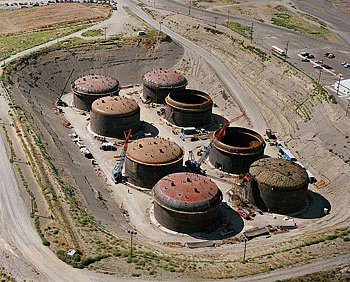
Hanford represents “the costliest environmental remediation project the world has ever seen and, arguably, the most contaminated place on the entire planet.”
as Washington residents learned long ago, it is difficult to draw federal attention to a remote site in our state.
The (Vancouver) Columbian Editorial Board, Mar 17, 2023 https://www.wenatcheeworld.com/opinion/opinion-the-vancouver-columbian-editorial-board-congress-must-recognize-urgency-at-hanford/article_b86f63c1-8193-5510-b3b0-b5357aa2c4d5.html
For too long, the federal government has kept cleanup at the Hanford nuclear reservation toward the bottom of its to-do list. “It’s a nice idea,” a long string of presidential administrations have seemed to say. “We’ll get to it eventually.”
With such nonchalance being the prevailing attitude for decades, the fact that President Joe Biden’s proposed 2024 federal budget includes record funding for Hanford is encouraging. But it is far from cause for celebration.
Congress must join the administration in recognizing the importance of the site and approving the president’s request for some $3 billion for Hanford. The issue is not only a matter of cleaning up hazardous, radioactive waste in Washington; it is about the federal government fulfilling its moral and court-ordered duty.
“There’s more work to do, but this is a big step in the right direction to getting this cleanup done efficiently, effectively and safely,” Gov. Jay Inslee wrote on Twitter this week.
Beggars, as they say, can’t be choosers, which puts Washington leaders in a difficult spot. While the proposal for increased funding is a step in the right direction, it does not mitigate years of inattention by the federal government. Nor does it fully fund cleanup at what is considered the nation’s most contaminated radioactive site.
Hanford, once the hub of plutonium production for the United States’ arsenal of nuclear weapons, now is home to underground tanks holding 56 million gallons of radioactive waste. Many of those tanks are known to be leaking, and with the site’s proximity to the Columbia River — 200 miles upstream from Vancouver — federal officials should have brought urgency to the project long ago.
“The citizens living along banks of the Columbia River deserve to know the full story of what is happening with the Hanford tanks,” U.S. Sen. Ron Wyden, D-Ore., once wrote to Department of Energy officials, who oversee Hanford cleanup.
That was in 2014. Citizens still are waiting for significant progress.
According to the Tri-City Herald, Biden’s proposed budget would increase spending on a vitrification plant at Hanford from its current $875 million to $1 billion; that plant is being prepared to treat radioactive waste for disposal. The budget also would add an extra $34 million for work at the tank farms.
Rep. Dan Newhouse, R-Sunnyside, whose district includes the Hanford site, long has worked to draw attention to the cleanup. So have Washington Sens. Patty Murray and Maria Cantwell. As Congress considers the details of Biden’s budget proposal, Washington lawmakers — including Rep. Marie Gluesenkamp Perez, D-Skamania — should impress upon their colleagues the importance of Hanford.
Every state and every congressional district has its own needs, but a site largely unknown to the rest of the country warrants special attention. As journalist Joshua Frank wrote last year in the book “Atomic Days: The Untold Story of the Most Toxic Place in America,” Hanford represents “the costliest environmental remediation project the world has ever seen and, arguably, the most contaminated place on the entire planet.”
With Murray serving as chair of the Senate Appropriations Committee — and with Newhouse sitting on the House Appropriations Committee — there is hope that Hanford funding will remain unscathed when Congress takes a scalpel to Biden’s proposed budget. But as Washington residents learned long ago, it is difficult to draw federal attention to a remote site in our state.
UK’s costly struggle to deal with dead nuclear submarines

The MoD has also been slated for the cost of maintaining the subs, £30 million a year.
Rosyth to be ‘de-nuclearised’ with removal of old submarines
https://www.dunfermlinepress.com/news/23150469.rosyth-de-nuclearised-removal-old-submarines/ By Ally McRoberts 27th November, 22
ALL of the laid-up nuclear submarines will be gone as part of a UK Government pledge to “de-nuclearise Rosyth” by 2035.
Councillors were given an update on the programme to remove radioactive waste and turn the seven boats that have been parked at the dockyard for decades into “tin cans and razor blades”.
The Ministry of Defence have faced heavy criticism for the delays in dealing with the nuclear legacy, with 27 Royal Navy subs to be scrapped in total.
Christine Bruce, from the Rosyth Submarine Dismantling Project, said most of the Low-Level Radioactive Waste (LLW) should be gone by the end of 2024.
She added: “The subs will take a bit longer but we’ve got a forward programme which definitely does remove them all by about 2035.
“It absolutely is our aim to do what we said all those years ago, to de-nuclearise Rosyth.”
One of the decommissioned subs, Dreadnought, has been in the Rosyth basin since 1980 and she admitted that it had been out of service for so long that a lot of the low-level radiation had “disappeared naturally”.
The MoD has also been slated for the cost of maintaining the subs, £30 million a year.
At the South and West Fife area committee yesterday (Wednesday), Ms Bruce acknowledged: “It’s taken a long time to get to where we are.
We started in 1998, I was part of it from the beginning, it’s taken quite a long time to come up with the policy and for good reasons.
“There were no easy answers. If it had been easy we would have done it a long time before now.
“The aim is to get rid of 27 submarines, of which seven are at Rosyth and the rest are, or will be, at Devonport.”
A facility to deal with the boats at Rosyth had to be brought up to date, to make sure it was safe to remove the radioactive material, with funding from the MoD.
Work started on Swiftsure in 2015-16 and around 52 tonnes of LLW was removed, with most of the metals recycled.
With lessons learned from the first sub, they progressed and removed 77 tonnes from Resolution and then 120 tonnes from Revenge.
The next step was a world first, the removal of the reactor from Revenge, the most radioactive part left in the sub, as well as the steam generators.
Next will be removing the rest of the LLW from Swiftsure so all that’s left is the reactor, which should be taken out around 2025.
The sub was to be recycled elsewhere but it’s cheaper, safer and more secure “to do the first one at Rosyth” and then sell it off to scrap merchants.
Gordon McAughey, head of internal assurance at Babcock Rosyth, added: “Hopefully, by 2026, the skyline change at Rosyth will occur where the first boat will be gone, it will be tin cans and razor blades.
“It’s a very challenging programme to build a facility to do all this work and to get all the permissions from regulators, but what I will say is we never compromise on safety for the sake of progress. We can’t compromise on safety.”
LLW is to be taken to a facility in Dorset, which should be completed next year, by 2024.
The reactors are to be taken to Capenhurst in Cheshire and it hasn’t yet been decided if they’ll be transported by road or sea.
Ms Bruce said safety and security would be paramount.
What to do with dead nuclear submarines?

Legacy. It is unacceptable to leave waste for future generations to deal with……
End game
To some extent, the Ministry of Defence is stuck in a vicious circle whereby the cost of storing submarines eats into the budget for their disposal. ………but the glacial pace of work …. is more concerning. There are always more pressing priorities for defence expenditure and the dismantling project has been continually delayed. In the meantime the nuclear and health and safety regulatory requirements that must be met are getting stricter, adding further costs. There is almost complete reliance on Babcock for UK submarine support activity and there is a very finite number of SQEP with nuclear expertise available to recruit in the UK.
Project to dismantle ex-Royal Navy nuclear submarines inches forward, Navy Lookout, 7 Feb 22.
There are currently 21 former Royal Navy nuclear submarines awaiting disposal, 7 in Rosyth and 14 in Devonport. Here we look at the process and the modest progress in efforts to dismantle them.
Kicking the can down the road ………. Unfortunately, successive governments failed to make arrangements for the timely disposal of these boats. In a less environmentally conscious era, filling the boats with concrete and sinking them in the deep ocean was the original plan but the disposal of nuclear waste at sea was banned by the London Dumping Convention in 1983. Planning for the dismantling of these submarines should have been started at that time, but only in the last 10 years has there been a serious effort to grip the issue.
Over time the nuclear regulatory frameworks have become ever-more demanding than when the submarines were conceived. Stricter rules have added more complexity and cost to the dismantling process, ironically adding delays and increasing the amount of nuclear waste awaiting appropriate disposal. HMS Dreadnought decommissioned in 1980, has now been tied up in Rosyth far longer than she was in active service. In the civil nuclear industry, operators are required by law to put aside funds and make plans during the life of the plant to pay for decommissioning. It would be prudent if a similar principle was applied by the MoD to all new nuclear submarine construction.
Besides the attraction of deferring costs in the short-term, a major cause of delays has been the selection of a land storage site for radioactive waste. Low-Level Waste (LLW) is stored at Sellafield in concrete-lined vaults and in 2017 URENCO Nuclear Stewardship Ltd at Capenhurst in Cheshire was selected as the interim site for storing the more dangerous Intermediate Level Waste (ILW). The Reactor Pressure Vessels (RPV) removed from the submarines are classed as ILW and will temporarily be stored in purpose-built buildings above ground. They will eventually be moved to a permanent underground Geological Disposal Facility (GDF)
Afloat storage
While awaiting dismantling, decommissioned submarines are stored afloat in a non-tidal basin in the dockyard. The 7 submarines in Rosyth have all had their nuclear fuel rods removed but of the 14 in Devonport, 10 are still fuelled. This is because in 2003 the facilities for de-fuelling were deemed no longer safe enough to meet modern regulation standards and the process was halted. Submarines that have not had fuel removed have the reactor primary circuit chemically treated to guarantee it remains inert and additional radiation monitoring equipment is fitted.
Apart from regular monitoring, once every 15 years each boat has to be dry-docked for a Survey and Docking Period (SADP) which involves hull inspection and preservation work.
Reasons to accelerate disposal
Cost. The expense of afloat storage and maintenance of decommissioned boats is rising – currently costing approximately £30M per year. Every further delay adds to this and will have to be funded from a defence budget that is much smaller in real terms than when the boats were ordered and built during the Cold War. The total disposal cost will be at least £3bn over 25 years and continue into the 2040s. (This is for the 27 boats listed above – Astute-class dismantling is not yet being considered.) All this effort and expense is a drain on precious MoD resources for zero operational gain with each delay adding to the cost.
Legacy. It is unacceptable to leave waste for future generations to deal with and it is simply common sense to dispose of old equipment at around the same time their replacements come online. Responsible care of the hulks afloat means they pose minimal risk to the environment or local population, but a tiny risk does remain. This makes some people living nearby uneasy and provides another grievance for those ideologically opposed to nuclear submarines and Trident. The minimal environmental hazard they pose is sometimes exaggerated by media, politicians and campaigners to suit their own agenda. The old boats are also a rather uncomfortable reminder of the time when the RN had an SSN force approximately double the strength it is today.
Space. When HMS Trenchant is moved to 3 Basin at Devonport for storage, the basin will be at its licensed capacity. Currently, the MoD only has permission from the nuclear regulator to store 14 boats. Approval to hold 16 will be needed in order to accommodate HMS Talent and Triumph when they decommission. Storing more boats in Rosyth is not an option because of limited space in the basin which is also used for civilian vessels as well as by the aircraft carriers to access the dry dock. Once the purpose-built disposal facility at Devonport is up and running in the early 2030s, it will be more efficient (and likely deemed politically less sensitive than anything in Scotland).
Progress at Rosyth
The Submarine Dismantling Project (SDP) finally started at Rosyth in December 2016, around 15 years behind schedule. A team of around 150 people are working on the site pioneering the two-stage process to remove radioactive waste. Swiftsure was the ‘pilot’ submarine for the project and stage 1 – the removal of LLW. This work was completed and the boat was sealed up and returned to afloat storage in the basin during August 2018. So far, 129 tonnes of mainly metallic LLW have been removed from Swiftsure and Resolution. Many of the older boats have asbestos lagging around pipes, which also has to be removed with exceptional care and disposed of in sealed containers. Stage 1 work on Resolution was completed on time in March 2020 and on budget.
Stage 1 work on Revenge started in March 2020 but was suspended on the 24th due to COVID lockdown and (almost) normal working was not resumed until June 2020……………..
Disposal at Devonport
Progress at Devonport is considerably behind that of Rosyth. The unplanned refuelling of HMS Vanguard added a six-month delay as Babcock engineers were diverted from the SDP to work on the more urgent SSBN refit. ………………..
End game
To some extent, the MoD is stuck in a vicious circle whereby the cost of storing submarines eats into the budget for their disposal. The modest progress at Rosyth in the last 5 years is encouraging but the glacial pace of work in Devonport is more concerning. There are always more pressing priorities for defence expenditure and the dismantling project has been continually delayed. In the meantime the nuclear and health and safety regulatory requirements that must be met are getting stricter, adding further costs. There is almost complete reliance on Babcock for UK submarine support activity and there is a very finite number of SQEP with nuclear expertise available to recruit in the UK.
Like so many problems in defence, the failure to dispose of the boats cannot be blamed on one person, government or company, rather a series of decisions made by many individuals that seemed justifiable at the time. There must be some sympathy for those working to deal with this legacy today, although the thrust of 2019 HoC Public Accounts Committee report on submarine disposal efforts can be summarised as saying “this is simply not good enough”. https://www.navylookout.com/project-to-dismantle-ex-royal-navy-nuclear-submarines-inches-forward/
No country in the world has worked out what to do with its old dead, radioactive, nuclear submarines.

In light of Boris’s new enthusiasm for lots of Rolls-Royce’s so-called “mini-nukes” to generate electricity, it should be better known that the Ministry of Defence has not scrapped any of its 21 similarly Rolls-Royce-powered old nuclear submarines, berthed for up to 40 years.
It has made a start dismantling the hull of one, but there are still no plans for dealing with the reactors beyond burying them. Indeed, no country in the world has properly made safe a worn out mini-nuke-powered ship or submarine.
Guardian 10th April 2022
Nuclear option: Illinois grapples with the future of nuclear power
WSIU Public Broadcasting | By Andrew Adams | Capitol News Illinois, March 17, 2023
Lawmakers consider loosening restrictions as environmentalists seek an end to state’s atomic age
A measure allowing the construction of new commercial nuclear power plants has bipartisan, bicameral support in the state legislature as the body considers its next steps in meeting carbon-free energy goals while maintaining grid reliability.
Its advocates say the measure would open the door for the use of smaller nuclear reactors to serve as a carbon-free power source when the wind doesn’t blow on turbines and the sun doesn’t shine on solar plants.
While proponents are hopeful, the technology behind nuclear power’s potential resurgence hasn’t yet been deployed for power generation anywhere in the United States. A few examples of small next generation reactors exist across the world, but in the U.S. only one of these smaller nuclear reactor designs has been approved by regulators…………….
The nuclear industry is all for this push. Representatives of Constellation Energy, the state’s nuclear power company, have said they support any legislation to make it easier to build nuclear reactors……….
But some environmentalists and anti-nuclear advocates say allowing new nuclear technologies represents a fundamental risk to the future of the carbon-free movement and the state’s environment………………………………………..
Two of the state’s major environmental advocacy groups, the Illinois Environmental Council and the Illinois Chapter of the Sierra Club, oppose lifting the moratorium on nuclear power plant construction.
“We believe that nuclear is not clean energy,” said Jack Darin, the director of the Illinois Chapter of the Sierra Club. “Its full life cycle has very serious impacts.”
After nuclear fuel is used, it continues to emit potentially hazardous radiation for tens of thousands of years. Eventually, this spent fuel should be moved to a long-term disposal facility, although no such facility has ever been designated or built in the U.S. This means waste is often kept on-site at nuclear facilities in pools or in steel cannisters designed to block radiation.
Grundy County has the nation’s only de facto permanent disposal site, and it has been at capacity since 1989. With nowhere to dispose of spent fuel, waste management continues to be an open question for the nuclear industry and the NRC.
Darin also pushed back on some of the concerns about electrification, pointing out that advancements in energy efficiency could reduce the overall load on the electric grid.
“The ideal path for our nuclear fleet is a steady reduction of our reliance on it,” Darin said.
……………………….A new regulatory landscape?
To facilitate this potential nuclear renaissance, lawmakers are considering two effectively identical proposals to end a moratorium on nuclear plant construction that has been in effect since 1987. The temporary ban was put in place pending the federal government’s designation of a long-term disposal site for nuclear waste.
One bill, House Bill 1079, was introduced by Rep. Mark Walker, D-Arlington Heights, and passed out of committee on Feb. 28 on a 18-3 vote. The second, Senate Bill 76, was introduced by Rezin and passed out of committee on March 9 by a 15-1 vote.
Nuclear construction was mostly abandoned after the 1980s
The average age of the nation’s nuclear fleet is just over 41 years old. Though the NRC is increasingly licensing plants to a lifespan of 60 or 80 years, this has raised questions about how long nuclear plants should be allowed to operate.
…………………. No commercial SMRs are online in the U.S., meaning their long-term economic benefits (or unforeseen costs) are yet to be seen……………………
Edwin Lyman is a physicist and director of nuclear power safety with the Union of Concerned Scientists. While he and the UCS took no position on lifting the state moratorium, he likened lifting the policy to “opening Pandora’s box.”
“We have extensively reviewed the safety claims for a range of new nuclear technologies that have been proposed and found that in general they offer few safety benefits compared to current technologies, and in some cases may pose even greater risks from accidents, terrorist attacks or extreme weather events made more probable by climate change,” Lyman said in written testimony to the Senate Energy and Public Utilities Committee.
In a follow-up interview, Lyman said construction moratoriums are one of the few ways states can regulate nuclear safety.
David Kraft is the head of the Nuclear Energy Information Service, an anti-nuclear advocacy group. He said that ending the moratorium could result in the state becoming the dumping ground for spent nuclear fuel.
“This puts a safety and security burden on the state that it didn’t sign up for,” Kraft said.
Kraft said he is particularly worried about ending the moratorium because of lawmakers’ interest in new nuclear models, like microreactors and small modular reactors. He cited the fact that some designs for smaller reactors don’t have safety features required for traditional reactors, like containment buildings………………………………………………………………………..
Under their current licenses, Illinois’ six nuclear power stations will be offline by 2047
Constellation has said they will extend the licenses of their plants to 80 years if they continue receiving state and federal support, although its predecessor company has announced (and reversed) plans to close four plants in the past 6 years.
………………….. Constellation announced in October that it’s applying to extend the life of its Dresden and Clinton plants for 20 more years. If the application is approved, Clinton could operate until 2047 and Dresden could operate until 2051.
………………. Nuclear critics have taken issue with the relationship the state has with its nuclear energy provider.
“For decades, the only way you could get renewables built in Illinois was if Exelon got something in exchange. Now it’s gonna be Constellation,” Kraft said. “They’ll come back in a few years for more bailouts. They’ll be complaining even if the small modulars come online because the market is lowering the prices. They’ll come up with excuses.”
Huge 1.5 million litres of radioactive water with tritium leaks from nuclear power plant
Xcel Energy said they are cleaning up the leak of 400,000 gallons (1.5
million litres) of tritium-contaminated water from its Monticello nuclear
power plant in Minnesota.
Mirror 18th March 2023
https://www.mirror.co.uk/news/us-news/huge-15-million-litres-radioactive-29492496
North Korea’s Kim led drills ‘simulating nuclear counterattack’: KCNA
Latest show of force from Pyongyang comes as it bristles at military drills by South Korea and the US.
Aljazeera, 20 Mar 23
North Korean leader Kim Jong Un has supervised two days of drills “simulating a nuclear counterattack” — including the firing of a ballistic missile carrying a mock nuclear warhead — according to state news agency KCNA, as South Korea and the United States continued their own military exercises.
Kim expressed “satisfaction” over the weekend launches, which were held to “let relevant units get familiar with the procedures and processes for implementing their tactical nuclear attack missions”, KCNA reported on Monday………………………….
The drills were the fourth show of force from Pyongyang in a week and came as South Korea and the US stage their own military manoeuvres — known as Freedom Shield — which North Korea sees as a rehearsal for an invasion and a hostile act.
On Sunday, the two allied countries staged air and sea drills involving US B-1B strategic bombers, and their navies and marine corps are set to start the large-scale Ssangyong amphibious landing exercises on Monday. The drills, the biggest in five years, will continue for two weeks until April 3.
Last month, the US and South Korea held tabletop exercises simulating North Korea’s nuclear attack amid South Korean President Yoon Suk Yeol’s push for more confidence in US extended deterrence — its military capability, especially nuclear forces, to deter attacks on its allies.
This is turning the Korean peninsula into “a flashpoint with higher potential for a nuclear war”, Lim Eul-chul, a professor at Kyungnam University’s Institute for Far Eastern Studies told the AFP news agency.
“As the intensity of the South Korea-US exercises increases, the possibility of unforeseen situations increases, and as a result, mutual physical clashes may occur,” he said.
South Korea and Japan have also moved to boost security cooperation amid the North Korean weapon tests, putting aside decades of historical grievances.
North Korea is banned from testing ballistic missiles under successive UN sanctions over its nuclear weapons programme.
Last week, Pyongyang fired its largest and most powerful intercontinental ballistic missile (ICBM), the Hwasong-17, its second such test this year.
The UN Security Council is expected to hold an emergency meeting on Monday over the ICBM launch at the request of the US and Japan, according to the South Korean Yonhap news agency. https://www.aljazeera.com/news/2023/3/20/n-koreas-kim-led-drills-simulating-nuclear-counterattack-kcna
—
Taiwan phasing out nuclear power
Taiwan is buying more LNG for delivery over the next year as it closed a
nuclear reactor and is set to phase out nuclear power generation by 2025.
Taiwan’s CPC Corp bought via a tender this week at least 10 cargoes of
LNG to be delivered between May this year and March next year, traders
familiar with the deals told Bloomberg on Friday. The LNG purchases are
also part of Taiwan’s strategy to procure more gas to offset the decline
in nuclear power generation, according to the traders.
This week, Unit 2 of
Taiwan’s Kuosheng nuclear power plant was taken offline and will be
decommissioned following the expiry of its 40-year operating license. There
are now two remaining nuclear reactors operating in Taiwan at the Maanshan
nuclear power plant. Those reactors are expected to be shut down in 2024
and 2025.
Oil Price 17th March 2023
https://oilprice.com/Energy/Natural-Gas/Taiwan-Looks-To-Replace-Nuclear-Power-With-LNG.html
Despite UK government’s enthusiasm, nuclear power is just not a good investment
Investment industry lukewarm on confirmation of nuclear in UK taxonomy.
One London-based funding manager warned that the industry’s problems were
economic not environmental. A sustainability figure at one large UK fund
manager said the nuclear industry’s ability to attract capital has not
primarily been about having to manage an unattractive ESG profile. “It is
incredibly expensive and un-cost competitive when compared to the
alternatives”.
Responsible Investor 14th March 2023
https://www.responsible-investor.com/investment-industry-lukewarm-on-confirmation-of-nuclear-in-uk-taxonomy/
Seymour Hersh warns of potential US plan B in Ukraine
Washington could clash with Moscow’s forces if Kiev starts to lose, the veteran journalist argues
https://www.rt.com/russia/572993-seymour-hersh-ukraine-conflict-future/ 17 Mar 23
The US could get directly involved in the Ukraine conflict if it sees that Kiev’s forces are on the back foot, Pulitzer Prize-winning reporter Seymour Hersh suggested on Tuesday.
Speaking at an event in Washington, DC hosted by the Committee for the Republic, a non-profit organization, Hersh noted that the US “did stupid things” during the Vietnam War, and suggested that Washington could “start doing something else” in the Ukraine conflict.
I don’t know what happens if it goes bad for Ukraine, you have all this manpower,” he said, pointing out that the US has dispatched units of its 82nd and 101st elite airborne divisions close to the Ukrainian border, while “a lot of weapons and arms are coming” to Europe.
“I’m told the game is going to be: this is NATO, we are supporting NATO in offensive operations against the Russians, which is not going to fool the world… It’s us fighting Russia,” Hersh stressed, without disclosing his sources.
According to Hersh, “the big deal” is that Russian President Vladimir Putin is ready to come to an agreement with the Ukrainian government. “The deal is demilitarize, and it’s going to be a no-go for us,” the journalist said, adding that the Russian leader “has not put in his main force yet” in the conflict.
Summing up the Ukraine conflict, Hersh argued that “we just may be kidding ourselves what’s going on there and what the results are going to be”.
He recalled the battle of Stalingrad during WWII, when Soviet troops suffered heavy losses but still emerged victorious. “Come on. Do we really want to mix up with those guys? I don’t think so,” the journalist added.
In February, Hersh released a bombshell report on last September’s Nord Stream 1 and 2 gas pipeline blasts, accusing Washington of orchestrating the attack. The White House denied responsibility. Last week, several Western media outlets claimed the culprits may have been linked to Ukraine. Moscow dismissed the reports as “a coordinated media hoax campaign.”
Russia has repeatedly voiced concerns about the eastward expansion of NATO and its involvement in the Ukraine conflict. Last month, Kremlin Press Secretary Dmitry Peskov stated that NATO “is no longer acting as our conditional opponent, but as our enemy” as it conducts round-the-clock intelligence operations against Moscow and continues to supply Kiev with arms.
EDF confirms nuclear power target for 2023, despite corrosion problems, and plummeting output in 2022.
EDF confirms 300-330 TWh nuclear power target for 2023 despite the recent
discovery of new corrosion issues which may be present at all France’s 56
reactors. France’s nuclear output plummeted by 22.6% year-on-year in 2022,
down 81.7 TWh to 279 TW.
Montel 17th March 2023
https://www.montelnews.com/news/1462200/edf-confirms-300-330-twh-nuclear-power-target-for-2023
Scotland’s not-so-Green Freeports: Minister’s equivocal response leaves way open to nuclear manufacturing facility
Scottish anti-nuclear campaigners were disappointed to learn that the
Scottish Net Zero Minister will not be opposed to a nuclear manufacturing
facility in a supposed Green Freeport. The Scottish Nuclear Free Local
Authorities and Highlands Against Nuclear Power wrote to Michael Matheson
MSP in the hope that he could provide reassurance that the two new Green
Freeports planned for Scotland in Forth and Cromarty & Inverness Firth
would not include a manufacturing plant to produce prefabricated parts for
supposedly Small Modular Reactors, such as the 470 MW design championed by
Rolls-Royce, but the Minister was unable to do so.
The Minister’s
assertion that the new Green Freeports could include businesses undertaking
work for the nuclear sector appears to both the NFLA and HANP a
contradiction of their stated aim to ‘contribute towards a just
transition to net-zero emissions by 2045’ and in so doing create
thousands of new green technology jobs.
Councillor Paul Leinster, Convenor
of NFLA Scottish, said: “We are glad that the Minister has once more
stated that there will be no new nuclear power generation on site, but
bemused that it would be acceptable for a manufacturing facility to be
located there that would make parts that would be shipped elsewhere to
enable nuclear power generation to take place outside Scotland. Nuclear is
not ‘green’; although the industry makes much of its claim that
electricity generation is carbon free this fails to take account of the
huge carbon footprint that any nuclear plant creates throughout its
lifecycle and once it is decommissioned.
NFLA 16th March 2023
“Great British Nuclear” launch – an eccentric fraud by the UK government.

UK to finally harness full power of green energy with new Great British
Nuclear scheme. Jeremy Hunt has confirmed nuclear power will be classed as
“environmentally sustainable” in a bid to boost investment in the energy
sector. The Chancellor said today he would launch “Great British Nuclear”
to bring down costs.
Andy Stirling, Professor of Science and Technology
Policy at the Science Policy Research Unit at the University of Sussex,
told Express.co.uk: “Amid the complete eclipse of nuclear power by
renewables, the position being taken by the UK Government is now growing so
eccentrically flawed as to become a major investment-threatening risk in
its own right. “To characterise nuclear as ‘cheap’ is to completely forego
credibility.
This is even more so, if promises are relied on around a new
generation of military-derived ‘small modular reactors’ that are
currently undeveloped, untested, unlicensed, unpiloted, unsited and
unbuilt.
“The National Infrastructure Commission confirms that renewables
and storage offer much more affordable, effective and rapid zero carbon
alternatives than even the most attractive nuclear options. The track
record of nuclear and renewables accentuate this picture.
“By attaching such a strong priority to nuclear power, the UK Government is not only
jeopardising economic, secure clean energy. With other nations prioritising
renewables more strongly, the UK thereby continues to forego the full
domestic employment and industrial benefits of unique UK renewable
resources.”
Express 15th March 2023
https://www.express.co.uk/news/politics/1746665/energy-crisis-nuclear-jeremy-hunt-budget
1 This Month




Shut down the radiation-damaged Heysham nuclear reactors now
To see nuclear-related stories in greater depth and intensity – go to https://nuclearinformation.wordpress.com

Say No to NASA’s Reckless Nuclear Reactor on the Moon
Say No to NASA’s Reckless Nuclear Reactor on the Moon
-
Archives
- October 2026 (268)
- September 2026 (339)
- August 2026 (330)
- July 2026 (355)
- June 2026 (287)
- May 2026 (306)
- April 2026 (356)
- March 2026 (251)
- February 2026 (267)
- January 2026 (308)
- December 2025 (358)
- November 2025 (359)
-
Categories
- 1
- 1 NUCLEAR ISSUES
- business and costs
- climate change
- culture and arts
- ENERGY
- environment
- health
- history
- indigenous issues
- Legal
- marketing of nuclear
- media
- opposition to nuclear
- PERSONAL STORIES
- politics
- politics international
- Religion and ethics
- safety
- secrets,lies and civil liberties
- spinbuster
- technology
- Uranium
- wastes
- weapons and war
- Women
- 2 WORLD
- ACTION
- AFRICA
- Atrocities
- AUSTRALIA
- Christina's notes
- Christina's themes
- culture and arts
- Events
- Fuk 2022
- Fuk 2023
- Fukushima 2017
- Fukushima 2018
- fukushima 2019
- Fukushima 2020
- Fukushima 2021
- general
- global warming
- Humour (God we need it)
- Nuclear
- RARE EARTHS
- Reference
- resources – print
- Resources -audiovicual
- Weekly Newsletter
- World
- World Nuclear
- YouTube
-
RSS
Entries RSS
Comments RSS

