From the Manhattan Project to the Bronx Project: the toxic legacy of the nuclear age

by Alice Slater Spring 2023 Edition
Recent alarming reports state that the UK is prepared to supply Ukraine with depleted uranium ammunition in the ongoing slaughter in Ukraine. These lethally toxic carcinogens are known to cause illness and death, not only for the victims of war but for the perpetrators as well. Victims who have suffered genetic damage pass it on to their children who are often born with terrible malformations and illnesses.
In Metal of Dishonor–Depleted Uranium: How the Pentagon Radiates Soldiers and Civilians with DU Weapons, published in 1997 by Ramsay Clark and the International Action Center, essays reveal the horrors caused by depleted uranium in the first Gulf War. Although the figures on the nuclear budgets have risen astronomically, with the United States now budgeting over $1 trillion for new bombs, bomb factories and delivery systems, sadly, nothing else has changed much since that time, although civil society did succeed in establishing the International Renewable Energy Agency to promote benign life affirming energy from the sun, wind, and tides. Below is a chapter written for that book in 1996, when the author was president of GRACE, the Global Resource Action Center for the Environment.
he world is awash in radioactive waste. We simply haven’t a clue where to put it. The best we have come up with in the United States is a harebrained scheme to ship the lethal carcinogenic garbage from nuclear weapons and civilian nuclear power plants, by rail and by truck, from the four corners of the continent, and bury it in a hole in the ground in Nevada at Yucca Mountain. Citizens groups, like the proverbial boy with his finger in the dike, have been holding off the onslaught of this devastating disposal solution, preventing the legislation from passing in the Congress. Deadly plutonium remains toxic for 250,000 years and there is no way of guaranteeing that the Yucca site could prevent radioactive seepage into the ground water over this unimaginable period of time. Remember that all of recorded history is only 5000 years old!
The National Academy of Sciences reported last August that most of the contaminated nuclear weapons sites across our land can not be adequately cleaned up because of “insufficient money, technical skill or political will to do the job.” reflecting the skewed priorities of our national leadership. Congress approved Clinton’s last request for $5.1 billion to the Department of Energy’s weapons labs which will fund the design of new nuclear weapons ……………………………………….
We’ve Wasted Precious Resources………….
We’ve Polluted Our Own Environment
We’ve created more than 4,500 contaminated sites, covering tens of thousands of acres that may take 75 years and cost as high as one trillion dollars to ‘clean up.’ ‘Clean up’ of toxic plutonium, which remains lethal for over 250,000 years, is the wrong word. At best, we can only attempt to manage and contain the poisons from seeping into the air and groundwater and visiting further destruction on our people.
We’ve Experimented on Our Own People
Nuclear weapons drove us to the unspeakable act of secretly testing radiation on our own population. 23,000 American civilians were subjected to radiation research in about 1,400 projects over 30 years. The government tested on children with mental disabilities, mental patients, poor women, and US soldiers. More than 200,000 troops were ordered to observe nuclear test detonations and were exposed to radiation.
We’ve Abused Indigenous Peoples
Every nuclear test site in the world is on indigenous land. ……………………
Worst of All—We’re Still Doing It…………………………….
Enchanted by the “hardness” of depleted uranium which can penetrate tank armor, some evil genius in the pay of the Pentagon thought to make bullets from it in a bizarre recycling program which enabled the government to make a dent in the 500,000 tons of depleted uranium waste amassed since the Manhattan Project. Don’t be misled by the term “depleted uranium.” Like “spent fuel” from civilian reactors, depleted uranium is highly toxic and carcinogenic and has a half-life of some 4.4 billion years.
“Half life” is another euphemism that distances us through our language from grasping the deadly seriousness of what we are doing to our planet. For example, while the half-life of plutonium is 26,000 years, this lethal poison has a fully toxic life of about 250,000 years until all the radioactivity decays. So you can imagine — or can you — the life span of toxic depleted uranium with its “half life” of over 4 billion years!
While our brilliant military was dreaming up its scheme of penetrating Saddam’s tanks with “hard” depleted uranium (DU), they neglected to calculate the impact this material would have on our own soldiers. “Friendly fire” killed 35 U.S. soldiers and wounded 72 others during the Gulf War while disabling more US tanks than the Iraqis did. Spewing 300 tons of DU ammunition over Iraq, the U.S. left a growing legacy of respiratory problems, liver and kidney dysfunction, and birth defects among the newborn children of U.S. vets (A Veterans Administration study of 251 Gulf War veterans families in Mississippi found that 67 percent of the children born to the vets since the war have severe illnesses, with effects ranging from missing eyes and ears to fused fingers.) And similar medical reports are coming from Iraq with an increase of leukemia and congenital birth defects from 8% before the war to 28% today. Undeterred, similar environmental havoc and dangers to health were created by the use of depleted uranium ammunition in the bombing of Bosnia.
This callous disregard for human well being is sadly typical of government policy during the nuclear age………………………………………………………..
Trying to get our government to admit that radioactive bomb factories and power plants are harmful to living things is like the long battle waged against the tobacco companies who continued to claim that there is no connection between smoking, cancer, and other life threatening diseases. There are current assaults on the permissible level of radiation exposure. Don’t protect the people. Just change the standards…………………………………………………………………..
We need to tell the boys to put away the toys of war and clean up the mess they made. ………………………
Our ability to govern ourselves has been eroding as a result of the unprecedented secrecy and cover-up engendered by the nuclear age…………………………….
A sane informed citizenry would call for an immediate cessation of the production of any new nuclear material, leaving all existing nuclear waste as close to the point where it is generated, as safely as possible, under international guard…………………………….more https://peaceandplanetnews.org/toxic-legacy-of-the-nuclear-age/
A Cold War Legacy — uranium pollution

Uranium mills dumped their toxic wastes and filled cancer wards
A Cold War Legacy — Beyond Nuclear International
What’s lurking in U.S. groundwater?
By Mark Olalde, Mollie Simon and Alex Mierjeski, video by Gerardo del Valle, Liz Moughon and Mauricio Rodríguez Pons
This story was originally published by ProPublica.
ProPublica is a Pulitzer Prize-winning investigative newsroom. Sign up for The Big Story newsletter to receive stories like this one in your inbox.
In America’s rush to build the nuclear arsenal that won the Cold War, safety was sacrificed for speed.
Uranium mills that helped fuel the weapons also dumped radioactive and toxic waste into rivers like the Cheyenne in South Dakota and the Animas in Colorado. Thousands of sheep turned blue and died after foraging on land tainted by processing sites in North Dakota. And cancer wards across the West swelled with sick uranium workers.
The U.S. government bankrolled the industry, and mining companies rushed to profit, building more than 50 mills and processing sites to refine uranium ore.
But the government didn’t have a plan for the toxic byproducts of this nuclear assembly line. Some of the more than 250 million tons of toxic and radioactive detritus, known as tailings, scattered into nearby communities, some spilled into streams and some leaked into aquifers.
Congress finally created the agency that now oversees uranium mill waste cleanup in 1974 and enacted the law governing that process in 1978, but the industry would soon collapse due to falling uranium prices and rising safety concerns. Most mills closed by the mid-1980s.
When cleanup began, federal regulators first focused on the most immediate public health threat, radiation exposure. Agencies or companies completely covered waste at most mills to halt leaks of the carcinogenic gas radon and moved some waste by truck and train to impoundments specially designed to encapsulate it.
But the government has fallen down in addressing another lingering threat from the industry’s byproducts: widespread water pollution.
Regulators haven’t made a full accounting of whether they properly addressed groundwater contamination. So, for the first time, ProPublica cataloged cleanup efforts at the country’s 48 uranium mills, seven related processing sites and numerous tailings piles.
At least 84% of the sites have polluted groundwater. And nearly 75% still have either no liner or only a partial liner between mill waste and the ground, leaving them susceptible to leaking pollution into groundwater. In the arid West, where most of the sites are located, climate change is drying up surface water, making underground reserves increasingly important.
ProPublica’s review of thousands of pages of government and corporate documents, accompanied by interviews with 100 people, also found that cleanup has been hampered by infighting among regulatory agencies and the frequency with which regulators grant exemptions to their own water quality standards.
The result: a long history of water pollution and sickness.
Reports by government agencies found high concentrations of cancer near a mill in Utah and elevated cancer risks from mill waste in New Mexico that can persist until cleanup is complete. Residents near those sites and others have seen so many cases of cancer and thyroid disease that they believe the mills and waste piles are to blame, although epidemiological studies to prove such a link have rarely been done……………………………………………………………………………………………
For all the government’s success in demolishing mills and isolating waste aboveground, regulators failed to protect groundwater.
Between 1958 and 1962, a mill near Gunnison, Colorado, churned through 540,000 tons of ore. The process, one step in concentrating the ore into weapons-grade uranium, leaked uranium and manganese into groundwater, and in 1990, regulators found that residents had been drawing that contaminated water from 22 wells………………………………………………………………………………
When neither water treatment nor nature solves the problem, federal and state regulators can simply relax their water quality standards, allowing harmful levels of pollutants to be left in aquifers.
…………………………………………………………………………………………… Layers of Regulation
It typically takes 35 years from the day a mill shuts down until the NRC approves or estimates it will approve cleanup as being complete, ProPublica found. Two former mills aren’t expected to finish this process until 2047.
……………………………………………………………………… “A Problem for the Better Part of 50 Years”
While the process for cleaning up former mills is lengthy and laid out in regulations, regulators and corporations have made questionable and contradictory decisions in their handling of toxic waste and tainted water.
More than 40 million people rely on drinking water from the Colorado River, but the NRC and DOE allowed companies to leak contamination from mill waste directly into the river, arguing that the waterway quickly dilutes it.
Federal regulators relocated tailings at two former mills that processed uranium and vanadium, another heavy metal, on the banks of the Colorado River in Rifle, Colorado, because radiation levels there were deemed too high. Yet they left some waste at one former processing site in a shallow aquifer connected to the river and granted an exemption that allowed cleanup to end and uranium to continue leaking into the waterway……………………………………………………………………………… more https://beyondnuclearinternational.org/2023/04/10/a-cold-war-legacy/
Why a nuclear-weapons-free zone in the Middle East is more needed than ever
Why a WMD-free zone in the Middle East is more needed than ever., By Almuntaser Albalawi | April 10, 2023
Recent news reports suggesting Saudi Arabia is seeking US aid for a peaceful nuclear program are bringing attention to the distressing potential for nuclear weapons proliferation in the Middle East. Yet conversations about averting such a doomed future for the region might be heading once again in the wrong direction. History suggests that power politics—in which self-interest is prioritized over global interests—may not be the best lens for looking at issues of arms control.
During the 10th review conference of the Nuclear Non-Proliferation Treaty last year, Arab states reiterated their call for establishing a Middle East zone free of weapons of mass destruction (WMD). This has been a long-standing position, but it should not be taken for granted.
A growing interest in nuclear technology in the Middle East—combined with ambiguity over nuclear activities in Iran and Israel—raises concerns about potential proliferation in the region. A robust and inclusive WMD-free zone remains the best solution for addressing these concerns…………………………………………………………………………………………. more https://thebulletin.org/2023/04/why-a-wmd-free-zone-in-the-middle-east-is-more-needed-than-ever/?utm_source=Newsletter&utm_medium=Email&utm_campaign=MondayNewsletter04102023&utm_content=NuclearRisk_WMDFreeZone_04102023
Westminster keeps nuclear secrets to avoid upsetting Scottish Government
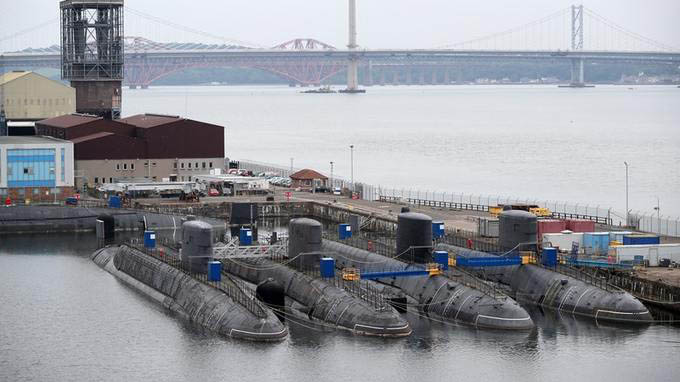
The Ferret, Rob Edwards, April 10, 2023
The UK Government is refusing to say why it is keeping nuclear safety reports secret because it is worried about “anti-nuclear arguments from the Scottish Government”.
The Ministry of Defence (MoD) won’t give its reasons for failing to release annual assessments of the safety of nuclear weapons on the Clyde so as not to “prejudice relations between the UK and Scottish governments”.
The secrecy has been condemned by the Scottish Greens as “outrageous, undemocratic and frankly dangerous”. It was akin to nuclear policies in Russia, China and North Korea, according to a campaigner — and it was described as “totally unacceptable” by a former nuclear submarine commander.
The Scottish Government urged the MoD to be “open and transparent” about the handling of nuclear materials in Scotland. The MoD said it had to “strike a balance” between public interest in safety and protecting information about nuclear weapons.
Annual reports from the MoD’s internal watchdog, the Defence Nuclear Safety Regulator (DNSR), were released for ten years, but ceased being published in 2017. A freedom of information appeal to a UK tribunal to force the MoD to again release the reports was rejected in July 2021.
The Ferret previously revealed that the reports for 2005 to 2015 highlighted “regulatory risks” 86 times, including 13 rated as high priority. One issue repeatedly seen as a high risk was a shortage of suitably qualified and experienced engineers.
Now the MoD has rejected another freedom of information request asking for documents that set out the rationale for refusing to release more recent DNSR reports. It disclosed that the decision was taken in 2017 by then secretary of state for defence, Michael Fallon, but has withheld information on why……………………………………..
The MoD letter also argued that information on reasons for withholding the reports should be kept secret “for the purpose of safeguarding national security”. Secrecy was also necessary so as not to prejudice “the defence of the UK” or “the relationship between the UK and the US” as well as to allow a “safe space” for officials to advise ministers.
Nuclear secrecy ‘totalitarian’
The Scottish Greens argued that the people of Scotland have a “fundamental right” to know the risks they face from hosting weapons of mass destruction on the Clyde. Suppressing information that may support arguments against nuclear weapons poses a “clear and present danger” politically, it warned.
“The extraordinary admission in this letter that the MoD and UK Government are actively concealing key pieces of information from the Scottish Government is outrageous, undemocratic and frankly dangerous,” said Green MSP, Mark Ruskell.
“The MoD is basically saying they won’t share this information because they are scared Scotland won’t like it and it might upset the US. You simply can’t get any more totalitarian than that and this should be challenged further.”
Ruskell added: “If they want to reassure people that there are no unnecessary added dangers, they should share the information urgently and transparently. If not they should pack up and ship out. Scotland doesn’t want nukes here and they know it.”
The nuclear researcher and campaigner who has been challenging the MoD’s refusal to release the nuclear safety reports is Peter Burt. UK citizens are allowed to know “virtually nothing” about the hazards of nuclear weapons despite paying billions of pounds for them, he said.
“We’re not allowed to know whether the Ministry of Defence’s safety watchdog thinks the nuclear weapons programme is complying with public protection arrangements, and Scottish Ministers are not trusted to know what is going on at the Navy’s nuclear bases in Scotland,” Burt told The Ferret.
“It’s pretty clear that this has more to do with politics than security. While the US government regularly releases information about its nuclear weapons programme, the UK Government has decided to model its own nuclear policies on those of countries like Russia, China, and North Korea.”
Rob Forsyth, a former Royal Navy nuclear submarine commander who now campaigns against nuclear weapons, described the MoD’s justifications for secrecy as “totally unacceptable”.
He said: “The way to avoid any misinterpretation is to be honest and fully transparent over matters affecting public safety and our national defence. The notion that government should not allow public discussion is not conduct expected of a democracy.”
The Scottish Government reiterated its opposition to the possession of nuclear weapons and its support for world-wide nuclear disarmament. ……………………………………………………………….. more https://theferret.scot/nuclear-secrets-scottish-government/
Nuclear disasters could leave a lasting legacy of contaminants in glaciers
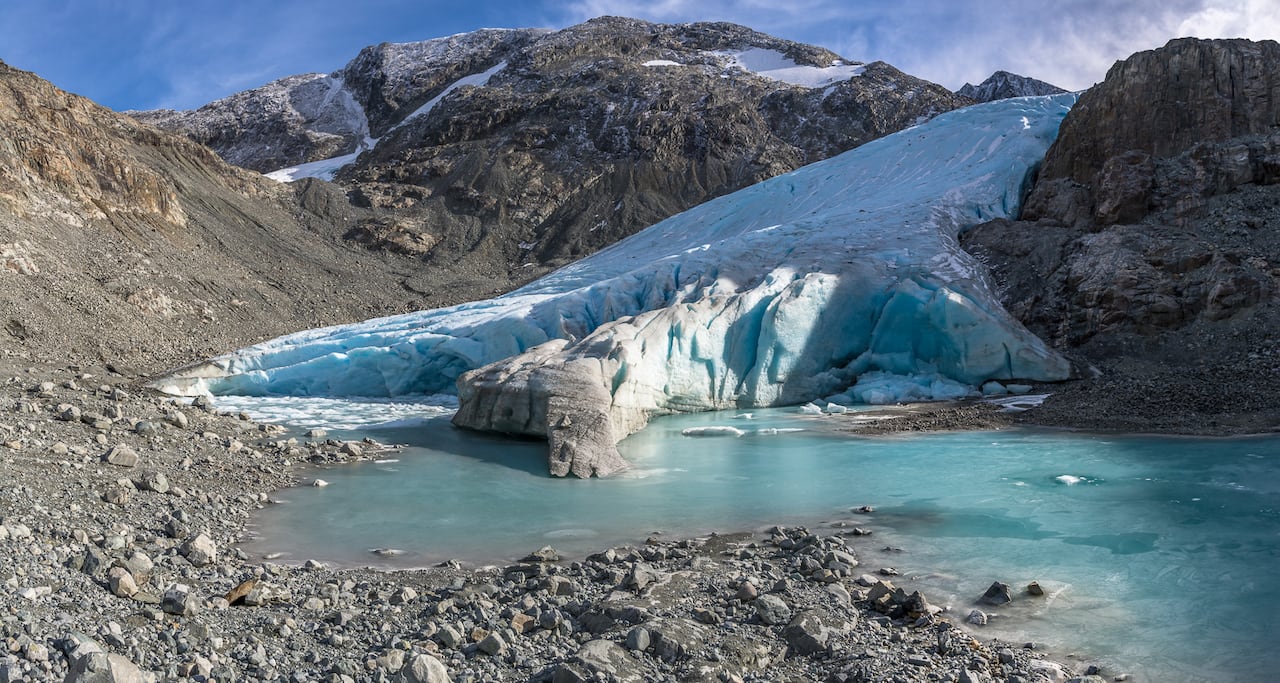
Emerging research is suggesting that radioactive particles are being stored within glaciers
University of Plymouth Alan Williams, April 2019
Nuclear disasters such as Chernobyl and Fukushima are known to have had an immediate impact on their surrounding environments and the people living within them.
But emerging research is suggesting the legacy of these events and international weapons testing could be felt for much longer as radioactive particles are being stored within glaciers.
The first results from this collaborative international research project were presented at the 2019 General Assembly of the European Geosciences Union (EGU), taking place in Vienna from April 7-12, 2019………………………………………
The EGU presentation combined studies into the presence of fallout radionuclides (FRNs), a product of nuclear accidents and weapons testing, within ice surface sediments – or cryoconite – across multiple sites in the Arctic (Sweden, Greenland and Svalbard), Iceland, the European Alps, the Caucasus, British Columbia, and Antarctica.
The levels of some FRNs found in these sites are orders of magnitude higher than those detected in many other (non-glaciated) environments, raising important questions around the role of glaciers, and specifically cryoconite and its interaction with meltwater, in the accumulation of anthropogenic atmospheric contaminants.
The research also demonstrates that the presence of FRNs in cryoconite is not restricted to sites closest to large source areas such as Chernobyl, highlighting the global reach of nuclear events and other sources of atmospherically-transported contaminants.
The widespread occurrence of concentrated FRNs in glacier catchments, and the impacts on downstream water and environmental quality, including uptake of FRNs into flora and fauna, are the focus of current and future research efforts.
Dr Clason said:
“Research into the impact of nuclear accidents has previously focussed on their effects on human and ecosystem health in non-glaciated areas. But evidence is mounting that cryoconite on glaciers can efficiently accumulate radionuclides to potentially hazardous levels. Very high concentrations of radionuclides have been found in several recent field studies, but their precise impact is yet to be established. Our collaborative work is beginning to address this because it is clearly important for the pro-glacial environment and downstream communities to understand any unseen threats they might face in the future.”
Finland’s NATO entry raises nuclear war stakes
Traditionally neutral nation’s accession to US-led alliance will compel an increasingly encircled Moscow to flex its nuclear muscles
Asia Times, By M.K. BHADRAKUMARAPRIL 10, 2023
The national flag of Finland was raised for the first time at the headquarters of the North Atlantic Treaty Organization (NATO) in Brussels on April 4, which also marked the 74th anniversary of the Western alliance. It signifies for Finland a historic abandonment of its policy of neutrality.
Not even propagandistically can anyone say Finland has encountered a security threat from Russia. This is an act of motiveless malignity toward Russia on the part of NATO, which of course invariably carries the imprimatur of the US while being projected to the world audience as a sovereign choice by Finland against the backdrop of Russia’s intervention in Ukraine.
…………………. this will also make Europe’s security landscape even more precarious and make it even more dependent on the US as the provider of its security. The general expectation is that Sweden’s accession to NATO will now follow, possibly in time for the alliance’s summit in Vilnius, Lithuania, in July.
In effect, the US has ensured that the core issue behind the standoff between Russia and the West – that is, the expansion of NATO to Russia’s borders – is a fait accompli no matter the failure of its proxy war in Ukraine against Russia.
……………………………………… Don’t be surprised if NATO missiles are deployed to Finland at some point, leaving Russia no option but to deploy its nuclear weapons close to the Baltic region and Scandinavia.
Suffice to say, the military confrontation between NATO and Russia is set to deteriorate further and the possibility of a nuclear conflict is on the rise…………………………….
the US has long deployed tactical nuclear weapons in European countries, including Belgium, Germany, Italy, the Netherlands and Turkey, which means the US has long deployed its tactical nuclear weapons at Russia’s doorstep…………………………………………………………………………………….. more https://asiatimes.com/2023/04/finlands-nato-entry-raises-nuclear-war-stakes/
After leak of secret documents, South Korea to raise spying allegations with U.S.
https://www.washingtontimes.com/news/2023/apr/9/after-leak-secret-documents-south-korea-raise-spyi/
Leaked papers reportedly show that U.S. gathered signals intelligence from Seoul, a close all
South Korean officials said Sunday they will “come up with our response accordingly” after revelations that the U.S. reportedly spied on its close ally and gathered signals intelligence related to South Korea‘s internal debate over weapons sales to the U.S., and Seoul‘s fears that those weapons would ultimately end up in Ukraine.
Officials in Seoul said they’ll raise the alleged spying — which came to light as part of a major leak of sensitive documents over the weekend — with their U.S. counterparts.
For both countries, the timing is delicate. South Korean President Yoon Suk Yeol is scheduled to visit Washington and join President Biden for a state dinner at the White House on April 26.
We will review precedents and instances involving other countries, and come up with our response accordingly,” a South Korean presidential official said Sunday after being asked about the revelations, according to the country’s Yonhap News Agency.
The New York Times first reported the leak Friday.
The Pros And Cons of Modular Nuclear Reactors
By Leonard Hyman & William Tilles – Apr 10, 2023 https://oilprice.com/Alternative-Energy/Nuclear-Power/The-Pros-And-Cons-of-Modular-Nuclear-Reactors.html
- Customization in nuclear power led to isolated and non-transferable experiences and limited the industry’s growth.
- Small modular reactors are a new approach that allows for standardization and assembly line efficiency, but also offer logistical and funding challenges.
- The future of nuclear energy could rely, in part, on the development and implementation of small modular reactors.
Did you ever get the feeling that you’ve seen this movie before, except with another name? The remake, maybe in color this time or with a younger cast? Well, nothing wrong with recycling but not when you get the uncomfortable notion that the actors don’t know that somebody did it before them.
Take nuclear power What went wrong last time around? We suggest that a principal culprit was customization. Almost every utility wanted a nuke tailored to its needs, site by site. Thus, each site had its own problems, and solving them produced little experience that helped anywhere else.
France, of course, was the main exception. The French state, which owned the utility, settled on one design and repeated it again and again. Of course, the French utility had the scale that U.S. and British’s utilities lacked. And the French never shied from dirigisme, state control of the economy. If the government planned to finance, subsidize and insure the industry, it might as well specify what it wanted. Not so in the USA, where we didn’t want the government to tell utilities what to buy, although we had no problem subsidizing and insuring whatever they built.
Today, we applaud the efforts to design nuclear power stations of smaller size, which will achieve economies of scale by constructing identical equipment in a manufacturing setting and shipping the modules to the construction site where they will be assembled. We have yet to establish whether the modular units will be substantially cheaper, and we have a good idea that most of the designs will not solve the nuclear waste problem. We are still determining whether the public will accept the new nukes more warmly than the old ones, too. But we are confident that builders will have less money at risk in any one piece of machinery, which is good.
Here’s our worry. There are at least 21 announced small modular reactor technologies ( as we wrote in a previous report), some with big-name tech backers. It is almost as if some tech entrepreneurs that can no longer find app start-ups to fund have plunged into nuclear energy.
Now, let’s do some rough numbers. There are 439 nuclear power plants in the world (92 in the USA, 56 in France, 54 in China and 37 in Russia, 33 in Japan, and 24 in South Korea). Over the coming 20 years, we believe most of these reactors will have to be retired, some in extreme old age. Figure that the new units might average one-tenth to one-quarter the size of the old ones.
So maybe a requirement for 4000 units over 20 years. Or 200 units per year. Divide that by 20 different designs. If each producer got an equal share, that would mean ten units per year. We don’t know but have to ask whether that number would yield financing for a factory that could achieve economies of scale.
Now add on the nationalism and security issues. Should we expect the USA, France, Russia and China to buy from foreign sources? If they require in-country sourcing, it is more difficult for any manufacturer to achieve real scale. The contestable market for manufacturers might be closer to 100 units per year, maybe less. That might not give room for manufacturing economies of scale.
We do not expect to see reliable analyses of the manufacturing costs of SMRs for some time, if ever, because the information would be a competitive secret. We are not even sure that current cost estimates are reliable, as opposed to come-ons to bring in generator companies to sign memoranda of interest, which are not contracts but might convince backers to put up money to build a factory.
However, let’s assume that manufacturing a reactor in a factory is not much different than manufacturing an airplane or automobile. Each facility ( or firm) has a U-shaped or saucer shaped cost curve. That is, cost per unit is high when volume is low, hits a low point at a a given volume, and then, eventually rises as the firm hits diseconomies of scale. [graph on original]
Average cost per unit at given production volumes
Let’s say that the total market per year for the product is 200 units. With the optimal, low-cost-per-unit production point at 50-60 units, the market couldn’t support more than four manufacturers. Whether the nuclear market can support 21 or four manufacturers depends on presently unknown manufacturing cost curves. As good capitalists, you might ask why consumers should care if a bunch of manufacturers put up plants and don’t get enough business to support them and then go under.
Well, there are several reasons. For one, we don’t want manufacturers hard up for orders and profits to skimp on the production process. The nuclear plant had better operate safely. Second, owners of nukes will need decades of service. Would they buy plants from manufacturers that look like they might not be around when needed?
Third, considering the financial consequences of outages, would they want to take a chance on a cheaper unit or rather pay up for perceived quality? Fourth, and most importantly, would government watchdogs encourage a proliferation of designs, making their jobs harder?
We don’t expect many of these SMR providers to get off the ground, especially if the government, the real backer of the industry, decides to opt for uniformity in order to get economies of scale in manufacturing and in regulation. In short, we’d put our money on the big names with long years of servicing their products.
Finally, SMRs, while welcome, neither substantially reduce nuclear costs nor cure the waste disposal problem, although they should reduce the financial burden inherent in big nuclear projects. In other words, they seem like a better way to pursue nuclear energy, which remains the most expensive, environmentally controversial, non-carbon producer. Is there a better way?
Macron sparks outrage, infuriates China hawks over Taiwan comments

German foreign policy scholar and China-watcher Ulrich Speck said Macron’s comments vindicated Australia’s decision to tear up its contract for French-made submarines in favour of the AUKUS pact.
Malcolm Davis from the Australian Strategic Policy Institute described Macron’s comments as “ill-conceived at best, and poorly timed” given the situation in Ukraine, and the need for Europe and the US to work together to support Kyiv
The Age, By Latika Bourke, April 10, 2023
London: French President Emmanuel Macron has sparked outrage after saying Europe should reduce its dependency on the United States and avoid getting involved in any conflict between Washington and Beijing over Taiwan.
Macron made the comments in an interview with Politico on-board COTAM Unité, France’s Air Force One, while travelling home to Paris after a three-day state visit to Beijing where he struck a range of business deals for French companies…………………
Macron said he wanted Europe to adopt “strategic autonomy” from the United States, a concept which is backed by Beijing.
He warned against Europe becoming “America’s followers”.
“If the tensions between the two superpowers heat up … we won’t have the time nor the resources to finance our strategic autonomy and we will become vassals,” Macron told the travelling journalists.
“The paradox would be that, overcome with panic, we believe we are just America’s followers.
“The question Europeans need to answer … is it in our interest to accelerate [a crisis] on Taiwan? No. The worse thing would be to think that we Europeans must become followers on this topic and take our cue from the US agenda and a Chinese overreaction.
“Europeans cannot resolve the crisis in Ukraine; how can we credibly say on Taiwan, ‘Watch out, if you do something wrong we will be there’? If you really want to increase tensions that’s the way to do it,” he said.
France has long held out an ambivalence for US power and influence over Europe. France, for example, forced the withdrawal of NATO headquarters from Paris in 1967 over fears of US political sway over the continent. Macron has also supported the creation of a European army that could function in place of NATO…………………………………………………
Macron’s comments sparked widespread dismay and anger across Europe and in the United States, where Republican senator Marco Rubio urged European countries to clarify “pretty quickly” if Macron spoke for Europe or France alone.
“We need to ask Europe does he speak for them, because we’re pretty heavily involved in Ukraine right now, we’re spending a lot of our taxpayer money on a European war,” he said in a video statement.
“if our allies’ position, if in fact Macron speaks for all of Europe, and their position now is they’re not going to pick sides between the US and China over Taiwan, maybe we shouldn’t be picking sides either?
“Maybe we should say we’re going to be focusing on Taiwan and the threats that China poses and you guys handle Ukraine on your own?”
German foreign policy scholar and China-watcher Ulrich Speck said Macron’s comments vindicated Australia’s decision to tear up its contract for French-made submarines in favour of the AUKUS pact.
Malcolm Davis from the Australian Strategic Policy Institute described Macron’s comments as “ill-conceived at best, and poorly timed” given the situation in Ukraine, and the need for Europe and the US to work together to support Kyiv………………………………………… more https://www.theage.com.au/world/europe/after-visit-with-xi-macron-warns-europe-on-support-for-taiwan-infuriating-china-hawks-20230410-p5cz6t.html
Law to ban high-level nuclear waste storage facility effective June
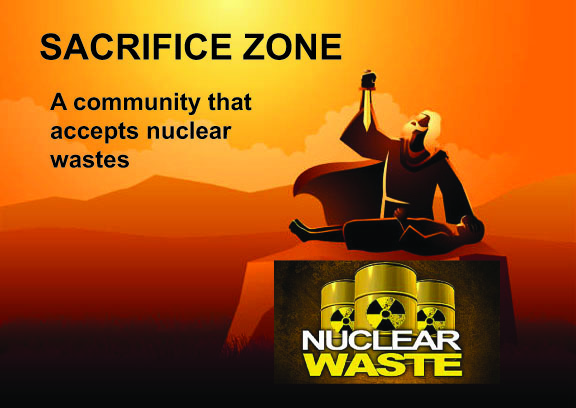
“New Mexico can’t just be the convenient sacrifice zone for the country’s contamination,”
Proponents call the ban an ‘important first step’ to limit impacts from radioactive waste
Source New Mexico, BY: DANIELLE PROKOP – APRIL 10, 2023
A state ban on high-level nuclear waste will go into effect in June, blocking a private company’s ability to build a contentious storage facility in southern New Mexico.
Gov. Michelle Lujan Grisham signed Senate Bill 53 into law March 17. The bill did not have the votes for an emergency enaction, so it goes into effect June 15.
The new law has two provisions.
The first expands the scope and duties for a task force to consult state agencies on nuclear disposal and investigate its impacts on New Mexico.
The second bans storage of high-level nuclear waste. The ban is in effect until two conditions are met – the state agrees to open a facility to handle waste, and the federal government has adopted a permanent underground storage site for nuclear waste.
“We do need a permanent solution. But New Mexico can’t just be the convenient sacrifice zone for the country’s contamination,” said Sen. Jeff Steinborn (D-Las Cruces) in an interview.
High level radioactive waste is extremely toxic. Some types will remain highly radioactive for thousands, if not tens of thousands of years. Short doses of exposure can be fatal. If radioactive waste leaches into the groundwater or soils, it can move through the food chain.
The state ban would include regulations on Holtec International’s plans for an underground facility for spent nuclear fuel from nuclear power reactors and other high-level radioactive waste from across the country.
At its peak, Holtec projected the facility could hold 176,600 metric tons of waste aboveground on more than 1,000 acres between Hobbs and Carlsbad.
“This bill is another major obstacle that will prevent this site from ever receiving any nuclear waste,” said Don Hancock, Nuclear Waste Safety program director and administrator at the nonprofit Southwest Research and Information Center.
The region already hosts the Waste Isolation Pilot Project, an underground site that stores clothes, tools, rags and other items contaminated with radioactive waste. The new law does not impact WIPP……………………………………
Kayleigh Warren, a member of Santa Clara Pueblo and a health and justice coordinator at the nonprofit Tewa Women United, called the four-page bill “an important first step.”
“It’s a way our state can start to communicate to the rest of our county that we’ve done our part,” Warren said. “We’re not interested in being a sacrifice zone for the country’s waste anymore.
Tewa Women United protests the impacts of toxins from Los Alamos National Laboratory on water and land in the Española valley and surrounding Pueblos. Looking forward, a key issue is how tribal governments will participate on the task force.
Native Americans are disproportionately vulnerable from uranium mining on the Navajo Nation or exposed at higher rates to radiation in water supplies.
“I want to see how our voices become part of these conversations moving forward,” Warren said. https://sourcenm.com/2023/04/10/law-to-ban-high-level-nuclear-waste-storage-facility-effective-june/
US troops to China? Not a good idea, really
Some pertinent comments to New York Post’s rather war-mongering article.
bob bob. 8 April, 2023
No, “Sending Troops” is not on the table. Taiwan is part of China as Puerto Rico is to the US. Imagine China intervening with our island and threatening us. Taiwan recently held elections, based on pro and anti China issues. Voters overwhelming support China regardless of what our own press and politicians say. Any country deciding to put their fate in US hands should take a long look at Afghanistan.
Cronkyte, 8 April, 2023
China has no desire to “invade” Taiwan, which would require a massive military operation and likely destroy the goose that lays the golden egg. China will do everything it can to persuade Taiwan to agree to reunification, most likely by offering semi-autonomous governance as they promised Hong Kong (and just like Hong Kong, they will then renege on those promises).
There is a growing push for reunification on the island, and after former Taiwan President Ma Ying-jeou’s speech upon returning from China, that will likely grow. He describes the choice as “peace or war,” and no one on either side of the Taiwan Strait want to see the island razed. https://nypost.com/2023/04/07/rep-michael-mccaul-us-troops-to-taiwan-on-the-table-if-china-invades/
One German company persists with nuclear power -interests in reactors in Sweden.
Germany is getting out of nuclear power – not completely
Market Screener, 04/11/2023 DÜSSELDORF (dpa-AFX) – Even after Germany’s last three nuclear power plants shut down on April 15, a German company will continue to produce nuclear power. Uniper, the energy company nationalized in the wake of the gas crisis, has stakes in three nuclear power plants in Sweden, and is a majority shareholder in one of them. “
Uniper is currently planning to build an electric, non-nuclear research and test facility at the Oskarshamn nuclear power plant site, with construction set to begin next year, he said. The project will be carried out in cooperation with the company Blykalla and the Royal Institute of Technology, he said. The research facility will focus on testing materials and components for a new type of reactor, called a Small Modular Reactor (SMR)………..
The German Institute for Economic Research (DIW) recently expressed its disapproval of SMR plants, which are understood to be reactors with an electrical output of up to 300 megawatts. SMR concepts are not mature and will not be available in the foreseeable future, according to a study. They were old reactor concepts that had not become established because of economic disadvantages due to the lower outputs.
“Further, they remain radiologically hazardous because the problems of increased transport and interim storage of radioactive waste would multiply.” Despite decades of research, he said, hardly any nuclear power plants in the SMR category have been able to begin commercial power operations. Even assuming optimistic conditions, he said, a cost-competitive bid cannot be assumed./tob/DP/zb https://www.marketscreener.com/quote/stock/E-ON-SE-3818998/news/Germany-is-getting-out-of-nuclear-power-not-completely-43462261/
AUKUS nuclear submarine cooperation seriously jeopardizes peace, stability in Asia-Pacific: embassy

LONDON, April 8 (Xinhua) http://eng.chinamil.com.cn/VOICES/16215442.html
The United States, Britain and Australia have been pressing ahead with nuclear submarine cooperation despite being widely questioned, which creates nuclear proliferation risks and undermines the international non-proliferation system, the Chinese Embassy in Britain has said.
In response to a question concerning the trilateral Australia-UK-U.S. (AUKUS) cooperation on nuclear submarines, the embassy said on Friday that such cooperation will exacerbate the resurgence of the Cold War mentality, trigger a new round of arms race, and further provoke regional security and military confrontation, seriously jeopardizing regional peace, stability and prosperity.
The Asia-Pacific is now the most dynamic and fastest growing region in the world, which hasn’t come easily, the embassy said in a press release. “The AUKUS cooperation is designed to serve the U.S. geopolitical agenda to introduce group politics and Cold War confrontation into the Asia-Pacific with military deterrence. It is aimed at creating a NATO-replica in the Asia-Pacific, which runs counter to peace and stability in the region.”
The AUKUS nuclear submarine cooperation marks the first time for nuclear weapon states to transfer naval nuclear propulsion reactors and weapons-grade highly enriched uranium to a non-nuclear weapon state, it noted.
As the current International Atomic Energy Agency (IAEA) safeguards system is incapable of ensuring effective safeguards, such cooperation poses serious nuclear proliferation risks, seriously compromises the authority of the IAEA, and deals a blow to the agency’s safeguards system, the embassy said.
“If the three countries are set on advancing the cooperation, other countries will likely follow suit, eventually leading to the collapse of the international nuclear non-proliferation regime,” it said.
China urges the three countries to heed the call of the international community and regional countries, discard the outdated zero-sum Cold War mentality and narrow geopolitical mindset, earnestly fulfil their international obligations and do more things that are conducive to regional peace, stability, unity and development, the embassy said.
“This serves the fundamental and long-term interests of regional countries as well as the three countries themselves,” it said. “The UK is not a country in the region and it is unwise to overstretch itself.”
Ex-PM Ehud Barak Confirms Israel Has Nuclear Weapons: Why it Matters
Israel has maintained a strict policy of never confirming or denying it possesses nuclear weapons.
By Pesach Benson | Apr 9, 23, https://www.israeltoday.co.il/read/ex-pm-ehud-barak-confirms-israel-has-nuclear-weapons-why-it-matters/
(TPS) Former Prime Minister Ehud Barak broke Israel’s policy of ambiguity and tweeted his confirmation that Israel possesses nuclear weapons last Tuesday.
While commenting on the fallout from the governing coalition’s judicial reform initiative, Barak tweeted:
“It sounds weird to us. But in Israelis’ conversations with political parties in the West, their deep concern emerges about the possibility that, if the coup d’état in Israel succeeds, a messianic dictatorship will be established in the heart of the Middle East, possessing nuclear weapons, and fanatically wishing for a confrontation with Islam centered on the Temple Mount. In their eyes – it’s really scary. not going to happen. Happy holiday”
Israel has maintained a strict policy of never confirming or denying it possesses nuclear weapons. Nevertheless, it has been widely believed that Israel possesses them, with foreign reports estimating the nuclear arsenal’s size from dozens to hundreds of bombs.
Barak, a former Defense Minister and Israel Defense Forces Chief of Staff, argued in a Sept. 2021 op-ed that Israel should review its policy of nuclear ambiguity, suggesting disclosure could be a better deterrent against Iran’s nuclear program.
Proponents of ambiguity say it protects Israel from being forced to sign the Non-Proliferation Treaty or possibly facing international sanctions. Signing the NPT would require Israel to open its nuclear facilities to international inspection.
Meanwhile, the US reportedly floated a proposal with Israel and other allies in February to resume nuclear talks with Iran in which Tehran would not enrich uranium above 60 percent purity in exchange for sanctions relief. The White House has neither confirmed nor denied those reports.
The International Atomic Energy Agency reported in March that Iran has enriched uranium to 83.7 percent purity, far higher than the 3.67% necessary for a civilian nuclear program. Nuclear weapons require uranium enriched to 90% purity.
It is widely believed that Iran could finish enriching enough uranium to produce an atomic bomb in about four weeks.
Iran and the US agreed to the Joint Comprehensive Plan of Action in 2015 along with France, Germany, Britain, Russia and China. Under the terms of the JCPOA, Iran was supposed to limit its uranium enrichment under UN supervision in exchange for the US lifting economic sanctions. Israel opposed the agreement, saying it wasn’t strong enough.
In 2018, President Donald Trump withdrew the US from the agreement. Restoring the JCPOA has been a key foreign policy goal of the Biden administration.
Israel and its Gulf allies oppose a resumption of the nuclear talks.
SECOND BATCH of Classified Documents Detailing US Ukraine War Secrets Is Leaked Online –
By Jim Hoft Apr. 8, 2023 https://www.thegatewaypundit.com/2023/04/second-batch-of-classified-documents-detailing-us-ukraine-war-secrets-is-leaked-online/
Secret details of US analysis of Ukraine War, China, terrorism and the Middle East.
The documents contain information on Ukrainian losses in the war and an alleged upcoming assault by Ukraine and its allies into Russian controlled eastern Ukraine.
The Western mainstream media called the leaks a “suspected Russian plot.”
The first documents appeared on 4Chan and Discord.
The Daily Mail reported:
A second batch of classified documents detailing the United States’ analyses of global hotspots has been leaked online in a suspected Russian plot.
More than 100 documents are feared to have been obtained in what a senior intelligence called ‘a nightmare for the Five Eyes,’ – a reference to the intelligence sharing agreement between the United States, Britain, Australia, New Zealand and Canada.
The documents cover the war in Ukraine, China, terrorism and the Middle East.
The Pentagon confirmed the leak, but said that some of the documents – as with the earlier reported leak – had been doctored to downplay the strength of U.S. allies.
The first tranche of documents appeared to have been posted in early March on the social media platform Discord, according to Aric Toler, an analyst at Bellingcat, the Dutch investigative site.
Friday’s documents were published on the controversial message board 4Chan, and subsequently spread on Twitter.
Russia Today reported on the leaked documents.
The state-run media outlet says the “secret plan” does not add up.
Which information is most suspect?
The probable locations of Russian units, indicated on the combat map in red, appear to have been collected from open sources. Several pro-Kiev resources that track military operations contain almost identical information.
Also, the ratios of killed and wounded for the Ukrainian and Russian Armed Forces which initially appeared in these ‘secret plans’ have since been changed. When first posted, the losses for the Ukrainian side were underestimated at about 16,500 –17,000 people. Then (probably to be more realistic), they increased almost fivefold, up to 65,000 – 75,000. At the same time, the numbers given for Russia’s purported losses of vehicles and equipment coincide with data published by Kiev’s Ministry of Defense.
What else is wrong with the published AFU offensive plans?
The blatant falsification of data on the readiness of Ukrainian military formations catches the eye. The document states that, of the nine supposedly to be trained up to US and NATO standards by March 31 and April 30, five of Kiev’s brigades have had zero training: these are the 82nd Airborne, the 32nd, 117th, and 118th Territorial Defense, as well as the 21st separate mechanized.
Even if only two or three companies in these brigades were trained, and self-preparation wasn’t completed, their level of training couldn’t be zero. At the same time, the highest percentage of readiness was recorded only in the 47th mechanized(40%) and the 46th airborne assault (60%).
1 This Month
Tell Congress: Prevent Nuclear Catastrophe in Iran

Tell Congress: Prevent Nuclear Catastrophe in Iran

Read the Public Inquiry Report, the Commissioners’ report, Surrendering Australia: The AUKUS Deception is available to download for free at aukuspublicinquiry.com. Or just watch the replay of the National Press Club Luncheon.


Shut down the radiation-damaged Heysham nuclear reactors now
To see nuclear-related stories in greater depth and intensity – go to https://nuclearinformation.wordpress.com

Say No to NASA’s Reckless Nuclear Reactor on the Moon
Say No to NASA’s Reckless Nuclear Reactor on the Moon
-
Archives
- November 2026 (238)
- October 2026 (302)
- September 2026 (339)
- August 2026 (330)
- July 2026 (355)
- June 2026 (287)
- May 2026 (306)
- April 2026 (356)
- March 2026 (251)
- February 2026 (267)
- January 2026 (308)
- December 2025 (358)
-
Categories
- 1
- 1 NUCLEAR ISSUES
- business and costs
- climate change
- culture and arts
- ENERGY
- environment
- health
- history
- indigenous issues
- Legal
- marketing of nuclear
- media
- opposition to nuclear
- PERSONAL STORIES
- politics
- politics international
- Religion and ethics
- safety
- secrets,lies and civil liberties
- spinbuster
- technology
- Uranium
- wastes
- weapons and war
- Women
- 2 WORLD
- ACTION
- AFRICA
- Atrocities
- AUSTRALIA
- Christina's notes
- Christina's themes
- culture and arts
- Events
- Fuk 2022
- Fuk 2023
- Fukushima 2017
- Fukushima 2018
- fukushima 2019
- Fukushima 2020
- Fukushima 2021
- general
- global warming
- Humour (God we need it)
- Nuclear
- RARE EARTHS
- Reference
- resources – print
- Resources -audiovicual
- Weekly Newsletter
- World
- World Nuclear
- YouTube
-
RSS
Entries RSS
Comments RSS

