Legal case begins against Sizewell C nuclear project.

High Court hearing for Sizewell C legal challenge campaigners. Campaigners
who have issued a legal challenge against the building of nuclear power
plant Sizewell C have a High Court hearing starting on Wednesday 22 March.
Together Against Sizewell C will argue that the environmental impacts of
securing a permanent water supply of two million litres per day at the
proposed site in Suffolk were never assessed.
As a result, the government
cannot guarantee the date the nuclear power plant will open, which means it
has no way of knowing for sure that the plant’s contribution to climate
change is enough to override the environmental harm it will cause.
Together Against Sizewell C will also make the case that no alternatives to nuclear
power, including renewables, were considered when the Secretary of State
for Energy, then Kwasi Kwarteng, gave the go ahead for the building of
Sizewell C on 20 July 2022. He rejected the recommendation of the Examining
Authority which ruled in February 2022 that unless the outstanding water
supply strategy could be resolved and sufficient information provided to
enable the Secretary of State carry out his obligations under the Habitats
Regulations, there was no case for a development consent order.
Leigh Day 20th March 2023
Imperial Visits: US Emissaries in the Pacific
Australian Independent Media Binoy Kampmark 19 Mar 23
For some time, Washington has been losing its spunk in the Pacific. When it comes to the Pacific Islands, a number have not fallen – at least entirely – for the rhetoric that Beijing is there to take, consume, and dominate all. Nor have such countries been entirely blind to their own sharpened interests. This largely aqueous region, which promises to submerge them in the rising waters of climate change, has become furiously busy.
A number of officials are keen to push the line that Washington’s policy towards the Pacific is clearly back where it should be. It’s all part of the warming strategy adopted by the Biden administration, typified by the US-Pacific Island Country summit held last September. In remarks made during the summit, President Joe Biden stated that “the security of America, quite frankly, and the world, depends on your security and the security of the Pacific Islands. And I really mean that.”
Not once was China mentioned, but its ghostly presence stalked Biden’s words. A new Pacific Partnership Strategy was announced, “the first national US strategy for [the] Pacific Islands.” Then came the promised cash: some $810 million in expanded US programs including more than $130 million in new investments to support, among other things, climate resilience, buffer the states against the impact of climate change and improve food security.
The Pacific Islands have also seen a flurry of recent visits. In January this year, US Indo-Pacific military commander Admiral John Aquilino popped into Papua New Guinea to remind the good citizens of Port Moresby that the eyes of the US were gazing benignly upon them. It was his first to the country, and the public affairs unit of the US Indo-Pacific Command stated that it underscored “the importance of the US-Papua New Guinea relationship” and showed US resolve “toward building a more peaceful, stable, and prosperous Indo-Pacific region.”
In February, a rather obvious strategic point was made in the reopening of the US embassy in the Solomon Islands. Little interest had been shown towards the island state for some three decades (the embassy had been closed in 1993). But then came Beijing doing, at least from Washington’s perspective, the unpardonable thing of poking around and seeking influence.
Now, Prime Minister Manasseh Sogavare finds himself at the centre of much interest, at least till he falls out of favour in the airconditioned corridors of Washington………………………………………………………………………………………….. https://theaimn.com/imperial-visits-us-emissaries-in-the-pacific/
Bi -Partisan measure opposes Canadian plan to store nuclear waste long term near Lake Huron
Melissa Nann Burke, The Detroit News
Washington ― A bipartisan group of Great Lakes lawmakers introduced a resolution in Congress on Wednesday to oppose a Canadian proposal to permanently store spent nuclear fuel waste in the Great Lakes Basin.
The move comes ahead of President Joe Biden’s first trip to Canada as president this week to meet with Prime Minister Justin Trudeau.
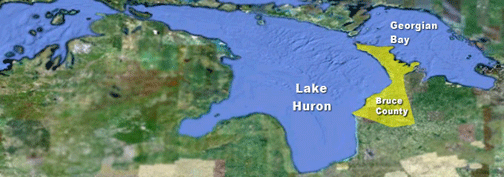
The resolution is concerned with Canada’s Nuclear Waste Management Organization, which plans to decide next year on one of two potential sites for a nuclear waste facility, either Ignace, Ontario, or South Bruce, which is in the Great Lakes basin and less than 40 miles from Lake Huron.
The resolution says that Biden and Secretary of State Antony Blinken should ensure that the government of Canada does not permanently store nuclear waste in the Great Lakes Basin.
It goes on to warn that a “spill” of such waste into the lakes during transit to a deep geological repository “could have lasting and severely adverse environmental, health and economic impacts on the Great Lakes and the individuals who depend on the Great Lakes for their livelihoods.”
The measure is led by U.S. Reps. Dan Kildee, D-Flint Township, and John James, R-Farmington Hills, in the House and U.S. Sen. Debbie Stabenow, D-Lansing, in the Senate.
“Storing hazardous nuclear waste in our shared waterways threatens the drinking water of millions of people in the United States and Canada, and jeopardizes jobs in the fishing, boating and tourism industries,” Kildee said in a statement. “I urge President Biden to address Canada’s plan to permanently bury nuclear waste in the Great Lakes basin as he meets with Canadian Prime Minister Trudeau.”
The resolution has 15 other House co-sponsors including Michigan Reps. Jack Bergman of Watersmeet, John Moolenaar of Caledonia, Bill Huizenga of Holland, Lisa McClain of Bruce Township, Debbie Dingell of Ann Arbor, Elissa Slotkin of Lansing, Hillary Scholten of Grand Rapids, Haley Stevens of Birmingham and Shri Thanedar of Detroit as well as five Senate co-sponsors, including Sen. Gary Peters of Bloomfield Township………………………………………………………………………………. https://www.detroitnews.com/story/news/politics/michigan/2023/03/22/measure-opposes-canadian-plan-to-store-nuclear-waste-near-lake-huron/70036108007/
France trying to “sell off its old nukes” to the Netherlands?
France looking to liberal Netherlands in push for nuclear revival
By Paul Messad | EURACTIV.fr | translated by Daniel Eck 22 Mar 23
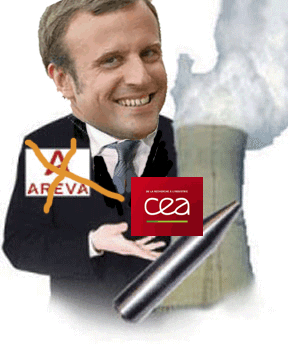
Paris is looking towards “liberal” allies such as the Netherlands to revive its nuclear industry, French Green MP Julie Laernoes told EURACTIV, after the country’s National Assembly approved a bill seeking to build six new reactors.
Read the original French story here.
France’s National Assembly approved the bill, which scraps a 50% limit on the share of nuclear in France’s electricity mix, on Tuesday (21 March) with 402 votes in favour and 130 against.
While the bill still needs a second vote of approval to go through, the numbers suggest parliament will most likely rubberstamp the new law.
“We are moving forward on the third pillar of our energy transition,” Energy Minister Agnès Pannier-Runacher said after the vote, in reference to French efforts at reducing energy consumption and building more renewables.
Olivier Marleix, the president of the right-wing Les Républicains group in the National Assembly, which supported the bill, said the text represents a “long-awaited turnaround”.
Nuclear alliance
The approval of the bill comes at a time when France is trying to push the role that its low-carbon nuclear power mix can play in the EU’s energy transition.
France launched a “nuclear alliance” at the end of February, aiming to promote European cooperation along the entire nuclear supply chain and launch “common industrial projects” in new generation capacity as well as small modular reactors.
To broaden support, France is “looking for other partners in Europe” such as the Netherlands, said Laernoes, a French MP of dual French-Dutch nationality who sits with the opposition Green party.
Like other Green lawmakers in the National Assembly, Laernoes voted against the motion to revive nuclear power in France and opposes French-led moves to build more nuclear reactors across Europe………………………………………………
Net-Zero Industry Act
Last week, the European Commission presented its Net-Zero Industry Act, a legislative proposal that describes nuclear power as one of the key technologies needed to attain the EU’s carbon neutrality goal.
Although Paris welcomed the EU’s announcement, it also noted that France’s new generation of pressurised water reactors – known as EPRs – do not appear in a separate list of ‘Strategic Net-Zero technologies’ eligible to receive “particular support” from the EU
The status of nuclear power in the Net-Zero Industry Act will be debated in upcoming negotiations on the text in the European Parliament, said Christophe Grudler, a French MEP sitting with the centrist Renew group in Parliament which includes lawmakers from the French presidential majority.
However, for Laernoes, the French government is waving “an ideological mantra”, as for the time being, “we still don’t have the design of the EPR2s, nor have we validated the extension of existing plants”.
Although the lifetime extension of existing nuclear power plants to 60 years was approved by the text voted on Tuesday, the president of the French Nuclear Safety Authority indicated that a position should be taken by the end of 2026 at the earliest.
“The political text is very far from the industrial and financial reality,” said Laernoes. “France is simply trying to sell off its old nuclear power plants,” she told EURACTIV.
Rolls Royce marketing its mini nuclear reactors to Sweden, Finland, Czech Republic, but deals could collapse

Rolls-Royce could build mini-nuclear reactors in Sweden and Finland under
plans being explored by Helsinki’s national energy company. Finnish
government-owned utility Fortnum has signed an early stage deal with
Rolls-Royce’s nuclear power business to explore uses of its small modular
reactors (SMRs) in the two Nordic countries. Shares in Rolls-Royce jumped
over 6pc in London on the news, amid a broader market rally.
The early stage deal comes as Rolls-Royce awaits a UK government decision on whether
to buy the reactors, which are smaller and cheaper than full scale plants.
Rolls-Royce’s 470MW units cost £1.8bn each. As well as the Finns, the
Czech government is also considering purchasing the technology as part of
efforts to decarbonise energy systems. Despite international interest,
Rolls-Royce has warned that deals may collapse unless Britain signals it
backs the technology by placing its own orders.
Telegraph 21st March 2023
Mini nuclear reactors all the rage, but are they the answer?

Mini nuclear reactors have appeared on the scene as an exciting prospect since the
spring budget, but how do they weigh up to traditional plants?
London-based start-up Newcleo laid out plans over the weekend to raise £900mln to build
small reactors in the UK on the back of the news. US-based developer Last
Energy then announced it had signed a deal to sell 24 of its mini nuclear
plants to UK customers on Monday, with these set to cost just £100mln
each.
Rolls-Royce Holdings PLC, a key player in the industry and the only
firm with SMR tech currently going through the UK’s regulatory process,
said it welcomed the government’s new stance, meanwhile.
What it may not
welcome is heated-up competition, though, with Newcleo among six rival
firms which have already applied to enter the UK’s stringent SMR design
assessment process, and the announcement likely to prompt more –
including Last Energy. Cavendish Nuclear/X-Energy, GE-Hitachi Nuclear
Energy, GMET Nuclear, Holtec Britain, UK Atomics, mark the others which
have submitted applications for their tech, though none are set to match
the size and output of Rolls-Royce’s.
Proactive Investors 21st March 2023
World on ‘thin ice’ as UN climate report gives stark warning
By Associated Press, CNN Mar 21, 2023, https://www.9news.com.au/world/climate-change-ipcc-report-antonio-guterres-says-world-on-thin-ice-as-un-climate-report-gives-stark-warning/fd6c84d9-6139-40a9-a971-866da5233ca1—
Humanity still has a chance, close to the last one, to prevent the worst of climate change‘s future harms, a top United Nations panel of scientists says.
But doing so requires quickly slashing carbon pollution and fossil fuel use by nearly two-thirds by 2035, the Intergovernmental Panel on Climate Change said.
The United Nations chief said it more bluntly, calling for an end to new fossil fuel exploration and rich countries quitting coal, oil and gas by 2040.
“Humanity is on thin ice — and that ice is melting fast,” United Nations Secretary-General Antonio Guterres said.
“Our world needs climate action on all fronts — everything, everywhere, all at once.”
Stepping up his pleas for action on fossil fuels, Guterres not only called for “no new coal” but also for eliminating its use in rich countries by 2030 and poor countries by 2040.
He urged carbon-free electricity generation in the developed world by 2035, meaning no gas-fired power plants too.
That date is key because nations soon have to come up with goals for pollution reduction by 2035, according to the Paris climate agreement.
“The climate time-bomb is ticking,” Guterres said, describing the IPCC report as a “a how-to guide to defuse” it.
The report draws on the findings of hundreds of scientists to provide a comprehensive assessment of how the climate crisis is unfolding.
After contentious debate, the UN science panel calculated and reported that to stay under the warming limit set in Paris the world needs to cut 60 per cent of its greenhouse gas emissions by 2035, compared with 2019, adding a new target not previously mentioned in the six reports issued since 2018.
“The choices and actions implemented in this decade will have impacts for thousands of years,” the report, said calling climate change “a threat to human well-being and planetary health”.
“We are not on the right track but it’s not too late,” said report co-author and water scientist Aditi Mukherji.
“Our intention is really a message of hope, and not that of doomsday.”
With the world only a few tenths of a degree away from the globally accepted goal of limiting warming to 1.5 degrees since pre-industrial times, scientists stressed a sense of urgency. The goal was adopted as part of the 2015 Paris climate agreement and the world has already warmed 1.1 degrees.
This is likely the last warning the Nobel Peace Prize-winning collection of scientists will be able to make about the 1.5 mark because their next set of reports will likely come after Earth has either breached the mark or locked into exceeding it soon, several scientists, including report authors, told The Associated Press.
‘We are pretty much locked into 1.5’
After 1.5 degrees “the risks are starting to pile on,” said report co-author Francis X Johnson, a climate, land and policy scientist at the Stockholm Environment Institute.
The report mentions “tipping points” around that temperature of species extinction, including coral reefs, irreversible melting of ice sheets and sea level rise on the order of several metres.
“The window is closing if emissions are not reduced as quickly as possible,” Johnson said in an interview.
“Scientists are rather alarmed.”
“1.5 is a critical critical limit, particularly for small islands and mountain (communities) which depend on glaciers,” said Mukherji, who’s also the climate change impact platform director at the research institute CGIAR.
Many scientists, including at least three co-authors, said hitting 1.5 degrees is inevitable.
“We are pretty much locked into 1.5,” said report co-author Malte Meinshausen, a climate scientist at the University of Melbourne in Australia.
“There’s very little way we will be able to avoid crossing 1.5 C sometime in the 2030s” but the big issue is whether the temperature keeps rising from there or stabilises.
Guterres insisted “the 1.5-degree limit is achievable”. Science panel chief Hoesung Lee said so far the world is far off course
“This report confirms that if the current trends, current patterns of consumption and production continues, then … the global average 1.5 degrees temperature increase will be seen sometime in this decade,” Lee said.
Scientists emphasise that the world, civilisation or humanity won’t end if and when Earth hits and passes the 1.5 degree mark. Mukherji said “it’s not as if it’s a cliff that we all fall off”. But an earlier IPCC report detailed how the harms – from coral reef extinction to Arctic sea ice absent summers to even nastier extreme weather – are much worse beyond 1.5 degrees of warming.
“It is certainly prudent to be planning for a future that’s warmer than 1.5 degrees,” said IPCC report review editor Steven Rose, an economist at the Electric Power Research Institute in the United States.
Threats from fossil fuels
If the world continues to use all the fossil fuel-powered infrastructure either existing now or proposed Earth will warm at least 2 degrees Celsius since pre-industrial times, blowing past the 1.5 mark, the report said.
Because the report is based on data from a few years ago, the calculations about fossil fuel projects already in the pipeline do not include the increase in coal and natural gas use after Russia’s invasion of Ukraine, said report co-author Dipak Dasgupta, a climate economist at The Energy and Resources Institute in India.
The report comes a week after the Biden Administration in the United States approved the huge Willow oil-drilling project in Alaska, which could produce up to 180,000 barrels of oil a day.
The rich vs poor divide
The report and the underlying discussions also touch on the disparity between rich nations, which caused much of the problem because carbon dioxide emissions from industrialisation stay in the air for more than a century, and poorer countries that get hit harder by extreme weather.
If the world is to achieve its climate goals, poorer countries need a “many-fold” increase in financial help to adapt to a warmer world and switch to non-polluting energy. Countries have made financial pledges and promises of a damage compensation fund.
If rich countries don’t cut emissions quicker and better help victim nations adapt to future harms, “the world is relegating the least developed countries to poverty”, said Madeline Diouf Sarr, chair of a coalition of the poorest nations.
Despite the risk, ‘a message of hope’
The report offers hope if action is taken, using the word “opportunity” nine times in a 27-page summary. Though opportunity is overshadowed by 94 uses of the word “risk.”
The head of the IPCC said the report contains “a message of hope in addition to those various scientific findings about the tremendous damages and also the losses that climate change has imposed on us and on the planet”.
“There is a pathway that we can resolve these problems, and this report provides a comprehensive overview of what actions we can take to lead us into a much better, liveable future,” Lee told The Associated Press.
Lee was at pains to stress that it’s not the panel’s job to tell countries what they should or shouldn’t do to cap global temperature rise at 1.5 Celsius.
“It’s up to each government to find the best solution,” he said, adding that scientists hope those solutions will stabilise the globe’s temperature around 1.5 degrees.
Asked whether this would be the last report to describe ways in which 1.5 degrees can be achieved, Lee said it was impossible to predict what advances might be made that could keep that target alive.
“The possibility is still there,” he said.
“It depends upon, again I want to emphasise that, the political will to achieve that goal.”
Activists also found grains of hope in the reports.
“The findings of these reports can make us feel disheartened about the slow pace of emissions reductions, the limited transition to renewable energy and the growing, daily impact of the climate crisis on children,” said youth climate activist Vanessa Nakate, a goodwill ambassador for UNICEF.
“But those children need us to read this report and take action, not lose hope.”
Climate News. What is the IPCC AR6 synthesis report and why does it matter?

The fourth and final instalment of the sixth assessment report (AR6) by the
Intergovernmental Panel on Climate Change, the body of the world’s leading
climate scientists, is the synthesis report, so called because it draws
together the key findings of the preceding three main sections.
Together, they make a comprehensive review of global knowledge of the climate. The
first three sections covered the physical science of the climate crisis,
including observations and projections of global heating, the impacts of
the climate crisis and how to adapt to them, and ways of reducing
greenhouse gas emissions. They were published in August 2021, February and
April 2022 respectively.
The synthesis report also includes three other
shorter IPCC reports published since 2018, on the impacts of global heating
of more than 1.5C above pre-industrial levels, climate change and land, and
climate change and the oceans and cryosphere (the ice caps and glaciers).
Guardian 19th March 2023
Samoa’s desperate plea for world climate action

Samoa PM urges world to save Pacific people from climate crisis
obliteration. The world must step back from the brink of climate disaster
to save the people of the Pacific from obliteration, the prime minister of
Samoa has urged.
On the eve of a landmark report by the Intergovernmental
Panel on Climate Change, which is expected to deliver a scientific “final
warning” on the climate emergency, Fiame Naomi Mata’afa, Samoa’s prime
minister, issued a desperate plea for action. “We’re all impacted, but
the degree of the impact is in the particular circumstance of countries. So
our low-lying atoll countries, it’s right there, we’re living with it,”
said Mata’afa. “There are already examples in the Pacific of communities,
whole communities, that have relocated to different countries,” she said.
“They’re really having to address issues of sovereignty through loss of
land.”
Guardian 19th March 2023
Thorium fake charity group cons El Salvador into joining the “Nuclear Power Club”.

Power, 20 Mar 23,
“…… the government of El Salvador and the Thorium Energy Alliance, a Harvard, Illinois–based non-profit advocacy group that endorses thorium-fueled reactors, signed a memorandum of understanding (MOU) to promote the “El Salvador Energy Bridge” plan. The MOU was signed by Daniel Alvarez, El Salvador’s director general of Energy, Hydrocarbons, and Mines (DGEHM), and John Kutsch, executive director of the Thorium Energy Alliance, at the Embassy of El Salvador in Washington, D.C. (Figure 1), with Ambassador Milena Mayorga present to witness the event.
El Salvador has historically gotten much of its power from hydro and geothermal resources, according to International Energy Agency (IEA) data. In 2020, the most recent numbers available on the IEA’s website, hydropower accounted for about 32.8% of the electricity generation in El Salvador. Geothermal was second, supplying 24.6% of the mix, while oil (15.5%), solar PV (14.3%), and biofuels (12.9%) rounded out the list. El Salvador’s total generation in 2020 was about 6.321 TWh………………..”
South Korea coming for a slice of Africa’s emerging nuclear power market
As African countries firm up their nuclear power ambitions, South Korea’s Korea Hydro & Nuclear Power (KHNP), a subsidiary of state-owned Korea Electric Power Corporation is coming for a share of the continent’s emerging market.…… (Subscribers only) https://www.theafricareport.com/293984/south-korea-coming-for-a-slice-of-africas-emerging-nuclear-power-market/
Just another U.S. nuclear front group, marketing to Indonesia (never mind about the volcanoes)

USA, Indonesia announce partnership on SMRs
WNN, 20 March 2023
The USA and Indonesia have announced a strategic partnership to help Indonesia develop its nuclear energy programme, supporting Indonesia’s interest in deploying small modular reactor (SMR) technology to meet its energy security and climate goals.
A Memorandum of Agreement, as well as affiliated grants and contracts, was signed during the Indo-Pacific Business Dialogue in Bali, Indonesia. The agreement advances the goals of the Just Energy Transition Partnership (JETP) and will strengthen Indonesia’s leadership in the ASEAN region on the deployment of advanced, safe and secure nuclear energy technologies, working toward the goal of net-zero emissions in Indonesia by 2060.
Under the agreement, the US Trade and Development Agency (USTDA) has awarded a grant to PLN Indonesia Power to provide assistance to assess the technical and economic viability of a proposed nuclear power plant, to be located in West Kalimantan. It will include a site selection plan, power plant and interconnection system design, preliminary environmental and social impact assessment, risk assessment, cost estimate and regulatory review.
Indonesia Power selected NuScale Power to carry out the assistance in partnership with a subsidiary of Fluor Corporation and Japan’s JGC Corporation. The proposed 462 MWe facility would utilise NuScale’s SMR technology…………………………………..
In August 2019, Indonesia’s National Atomic Energy Agency (Batan) signed a Memorandum of Understanding with utility Indonesia Power to cooperate in the use of nuclear technology in the energy sector. One area of cooperation will be a feasibility study on the use of nuclear power plants. https://world-nuclear-news.org/Articles/USA,-Indonesia-announce-partnership-on-SMRs
France in national denial- rejecting renewable energy, clinging to out-dated nuclear

our country seems to be in a form of denial of the difficulties of the
nuclear sector and has been rehashing the same arguments against renewable energies for twenty years: supposed overconsumption of materials, lack of aesthetics, presumed destruction of biodiversity… and a allegedly
astronomical cost.
The debate in the energy sector has intensified in recent years as
important deadlines have come and gone in terms of choices regarding
France’s climate and energy future. But this confrontation of proposals,
necessary and commendable, is struggling to find its place, as illustrated
by the failure of the debate organized by the National Commission for
Public Debate on the construction of the EPR2 reactors, which ended on
February 27.
It usually boils down to invective, at the expense of the
quality of the information brought to the attention of the greatest number.
This desperate state of affairs must change so as not to mislead us
collectively about the choices that determine the country’s energy future.
The debate on energy in France is skewed by the place of nuclear power
which, for a long time, relegated renewable energies to the bare minimum.
At a time when the question arises of renewing our electricity generation
system, it is appropriate to question the relevance of maintaining the same
technological choices as fifty years ago in an eminently different context.
But our country seems to be in a form of denial of the difficulties of the
nuclear sector and has been rehashing the same arguments against renewable
energies for twenty years: supposed overconsumption of materials, lack of
aesthetics, presumed destruction of biodiversity… and a allegedly
astronomical cost.
Le Monde 16th March 2023
Jerome in Paris 18th March 2023
Rebooting memories of life before the nuclear devastation of Hiroshima
20 March 2023Peace and Security https://news.un.org/en/story/2023/03/1134662
A Japanese initiative to colourize photos of Hiroshima survivors, taken before the war, has been hailed by the UN as a way to breathe new life into conversations about peace, and a world without nuclear weapons.
Only a few survivors of the World War Two Hiroshima and Nagasaki nuclear bombings are still alive to share their memories. Acutely aware that she is part of the last generation to be able to talk directly to the hibakusha – those who survived the Hiroshima nuclear bomb – Anju Niwata, a young Japanese peace activist born and raised in Hiroshima, launched a project called “Rebooting Memories”, which involves colourizing photos taken in the city before the war, featuring survivors, and the families and places lost in the bombing.
Ms. Niwata uses a combination of software and interviews with survivors to accurately bring colour to the black and white photos she borrows from the survivors. “The black and white photos may appear lifeless, static, and frozen to us”, she says.
“By colourizing the photos, however, the frozen time and memories of the peaceful lives before the bombing gradually advance and start breathing. It takes a long time, but I am always encouraged by the hibakusha’s joy at seeing the colour photos.
Her efforts have been warmly welcomed by the hibakusha, who played a big part in helping people around the world to understand the devastating impact of nuclear weapons, in the years following the Second World War.
Tokuso Hamai was evacuated from Hiroshima when he was two-years-old, before the bombing. All of his family members were killed. As part of Ms. Niwata’s project, he went with her to the site of the barber shop that his father used to run, in Hiroshima’s Nakajima district.
Today, any remains of the shop, and the buildings around it, have disappeared, buried under the Peace Park built to commemorate the tragic event, and remember the victims.
Standing at the site, and looking at the colour photographs, sparked Mr. Hamai’s memories of pre-War Hiroshima. “I recalled what I had forgotten”, he says. “If the photos were black and white, this would not have happened. What I recalled first was a green avenue of cedars. I remember picking cedar buds as bullets for a toy gun.”
Ms. Niwata’s aim of reviving awareness of the consequences of nuclear war is wholeheartedly supported by Izumi Nakamitsu, the UN Under-Secretary-General of Disarmament Affairs, who is herself Japanese.
“Disarmament is part of the DNA of the United Nations. The first General Assembly session took place in London, just a few months after Hiroshima and Nagasaki. The shock of the nuclear bombings made a huge impact on everyone in the world at the time.
“Since then, it’s been part of a priority agenda of the United Nations and it is even more important today because we are again in a dangerous world where conflicts and tensions are on the rise. There are some 13,000 nuclear weapons in the world’s arsenals, relations between nuclear weapons states are tense. This poses existential threats, and I think it’s important that people start to imagine the impact if they are ever used.
I think Ms. Niwata’s project will have an enormous impact. if you can visualize how things were, it enters your imagination more vividly, and will do something to your mind and then your heart.”
When she took part in the SDG Global Festival of Action, a UN event filled with dozens of inspiring speakers from around the world, Ms. Niwata was encouraged to see that she was far from the only young activist working towards peace, each using different methods to achieve the same goal. “It is my mission to continue spreading the thoughts and memories of the atomic bomb survivors into the future and realize a world free from nuclear weapons”.
- In 2019, a General Assembly resolution, “Youth, Disarmament, and Non-proliferation”, reaffirmed the important and positive contribution that young people can make in sustaining peace and security.
- That same year, the UN Office for Disarmament Affairs (UNODA) launched the #Youth4Disarmament outreach initiative, recognizing that young people like Ms. Niwata play a critical role in raising awareness and developing new ways to reduce threats from weapons of mass destruction and conventional arms.
- The initiative connects geographically diverse young people with experts to learn about current international security challenges, the work of the United Nations, and how to actively participate.
1 This Month




Shut down the radiation-damaged Heysham nuclear reactors now
To see nuclear-related stories in greater depth and intensity – go to https://nuclearinformation.wordpress.com

Say No to NASA’s Reckless Nuclear Reactor on the Moon
Say No to NASA’s Reckless Nuclear Reactor on the Moon
-
Archives
- October 2026 (268)
- September 2026 (339)
- August 2026 (330)
- July 2026 (355)
- June 2026 (287)
- May 2026 (306)
- April 2026 (356)
- March 2026 (251)
- February 2026 (267)
- January 2026 (308)
- December 2025 (358)
- November 2025 (359)
-
Categories
- 1
- 1 NUCLEAR ISSUES
- business and costs
- climate change
- culture and arts
- ENERGY
- environment
- health
- history
- indigenous issues
- Legal
- marketing of nuclear
- media
- opposition to nuclear
- PERSONAL STORIES
- politics
- politics international
- Religion and ethics
- safety
- secrets,lies and civil liberties
- spinbuster
- technology
- Uranium
- wastes
- weapons and war
- Women
- 2 WORLD
- ACTION
- AFRICA
- Atrocities
- AUSTRALIA
- Christina's notes
- Christina's themes
- culture and arts
- Events
- Fuk 2022
- Fuk 2023
- Fukushima 2017
- Fukushima 2018
- fukushima 2019
- Fukushima 2020
- Fukushima 2021
- general
- global warming
- Humour (God we need it)
- Nuclear
- RARE EARTHS
- Reference
- resources – print
- Resources -audiovicual
- Weekly Newsletter
- World
- World Nuclear
- YouTube
-
RSS
Entries RSS
Comments RSS

