Oman facilitating Iran-US talks to replace 2015 nuclear accord
MUSCAT DAILY, 12 JUN 2023
Tehran, Iran – Iran on Monday said it has continued indirect negotiations with the Unites States through the Sultanate of Oman over its nuclear deal and a possible prisoner swap.
Iran’s nuclear programme has long been the subject of scrutiny from Western powers, resulting in sanctions that have crippled the country’s economy.
A 2015 deal granted Tehran much-needed relief from sanctions in exchange for curbs on its nuclear programme before it was torpedoed by the United States’ unilateral pullout in 2018.
In recent days, the two capitals have denied media reports that they were close to reaching an interim deal to replace the 2015 accord.
“We welcome the efforts of Omani officials and we exchanged messages with the other party through this mediator” over the lifting of US sanctions, Iran’s Foreign Ministry spokesman Nasser Kanaani said on Monday.
“We have never stopped the diplomatic processes,” he added during his weekly press conference, emphasising that the talks “were not secret”.
Diplomatic ties between Tehran and Washington soured following the 1979 revolution led by Iran’s first supreme leader Ayatollah Ruhollah Khomeini.
Efforts to revive the 2015 nuclear deal have so far failed to yield results.
Iran’s Supreme Leader Ayatollah Ali Khamenei on Sunday reiterated the denial of moves towards acquiring a nuclear weapon. He also said deals could be reached, provided they do not change “the existing infrastructure of the nuclear industry”……………………………………………..more https://www.muscatdaily.com/2023/06/12/oman-facilitating-iran-us-talks-to-replace-2015-nuclear-accord/
Fukushima nuclear plant begins tests of wastewater release plan; fishing officials remain opposed
The operator of the wrecked Fukushima nuclear plant has begun tests of newly constructed facilities for discharging treated radioactive wastewater into sea, a plan strongly opposed by local fishing communities and neighboring countries
By MARI YAMAGUCHI Associated Press. abc news, June 12, 2023,
TOKYO — The operator of the wrecked Fukushima nuclear plant began tests on Monday of newly constructed facilities for discharging treated radioactive wastewater into the sea, a plan strongly opposed by local fishing communities and neighboring countries.
The tests at the Fukushima Daiichi nuclear power plant use fresh water instead of the treated water, operator Tokyo Electric Power Company Holdings said……………………………….
The plan has faced fierce protests from local fishing communities concerned about safety and reputational damage. Nearby countries, including South Korea, China and Pacific Island nations, have also raised safety concerns. Japan’s government has set up a fund to promote Fukushima seafood and provide compensation in case sales fall due to safety concerns.
Fishing officials said they remain opposed to the plan when they met Industry Minister Yasutoshi Nishimura on Saturday when he visited Fukushima and the neighboring prefectures of Ibaraki and Miyagi.
“We stand by our opposition,” Tetsu Nozaki, head of the Fukushima prefectural fisheries association, told Nishimura. Nozaki, however, said the association supports progress in the plant’s decommissioning and hopes to continue the dialogue. “At the moment, our positions remain wide apart.”
………….. In South Korea, fishermen staged a rally in front of the National Assembly in Seoul on Monday against the plan to release treated radioactive water. https://abcnews.go.com/Technology/wireStory/fukushima-nuclear-plant-begins-tests-wastewater-release-plan-100006333
Ontario Government Response on Nuclear Proximity Principle Expected by Mid-October.

www.nuclearwastewatch.ca 12 June 23
| Toronto – Groups that travelled to Queen’s Park last week for the reading of their petition asking the Provincial government to adopt a Proximity Principle requiring that high-level radioactive waste be managed close to where it is generated may wait until mid-October to hear to back from the Provincial government. The government has 24 sitting days to respond to petitions presented in the Provincial legislature. The groups say they won’t be idle during that waiting period. Members of We the Nuclear Free North, in Northern Ontario, and Protect Our Waterways – No Nuclear Waste, in Southwestern Ontario, attended the May 30 session of Ontario’s Legislative Assembly to witness their petition being presented by Lise Vaugeois (NDP – Thunder Bay-Superior North), Sol Mamakwa (NDP – Kiiwetinoong) and Mike Schreiner (GPO Leader – Guelph). The petition calls for the adoption of the proximity principle with respect to the management of (nuclear waste) and for the government to direct Ontario Power Generation (OPG) to further their development of robust extended storage systems at the reactor locations. In conjunction with attending the Legislature to witness the reading of the Petition, the dozen representatives of the two groups were present at Queen’s Park for a related media conference and for meetings with members of the Provincial parliament. |
“We had an excellent day at Queen’s Park, and are ready for more,” commented Anja van der Vlies, President of Protect Our Waterways – No Nuclear Waste, which is based in South Bruce, one of the areas under investigation by the Nuclear Waste Management Organization (NWMO) for a deep geological repository for nuclear fuel waste.
The groups plan to continue meeting with MPPs as well as with municipal and First Nation leaders, seeking their support and learning what additional concerns or questions they have, either about the Proximity Principle or about the NWMO’s nuclear waste burial plan which would include 2-3 transport trucks of nuclear waste per day for 50 years, travelling an average of 1,600 kilometres one-way.
The petitions bearing 1,141 signatures were presented in the Legislature. An additional 977 signatures had been collected but were not included in the packages presented at Queen’s Park due to a formatting issue.
“Each of those 2,200 signatures represents a conversation,” explained Dodie LeGassick, member of We the Nuclear Free North and Nuclear Lead for Environment North.
| Toronto – Groups that travelled to Queen’s Park last week for the reading of their petition asking the Provincial government to adopt a Proximity Principle requiring that high-level radioactive waste be managed close to where it is generated may wait until mid-October to hear to back from the Provincial government. The government has 24 sitting days to respond to petitions presented in the Provincial legislature. The groups say they won’t be idle during that waiting period.Members of We the Nuclear Free North, in Northern Ontario, and Protect Our Waterways – No Nuclear Waste, in Southwestern Ontario, attended the May 30 session of Ontario’s Legislative Assembly to witness their petition being presented by Lise Vaugeois (NDP – Thunder Bay-Superior North), Sol Mamakwa (NDP – Kiiwetinoong) and Mike Schreiner (GPO Leader – Guelph). The petition calls for the adoption of the proximity principle with respect to the management of (nuclear waste) and for the government to direct Ontario Power Generation (OPG) to further their development of robust extended storage systems at the reactor locations.In conjunction with attending the Legislature to witness the reading of the Petition, the dozen representatives of the two groups were present at Queen’s Park for a related media conference and for meetings with members of the Provincial parliament.“We had an excellent day at Queen’s Park, and are ready for more,” commented Anja van der Vlies, President of Protect Our Waterways – No Nuclear Waste, which is based in South Bruce, one of the areas under investigation by the Nuclear Waste Management Organization (NWMO) for a deep geological repository for nuclear fuel waste.The groups plan to continue meeting with MPPs as well as with municipal and First Nation leaders, seeking their support and learning what additional concerns or questions they have, either about the Proximity Principle or about the NWMO’s nuclear waste burial plan which would include 2-3 transport trucks of nuclear waste per day for 50 years, travelling an average of 1,600 kilometres one-way.The petitions bearing 1,141 signatures were presented in the Legislature. An additional 977 signatures had been collected but were not included in the packages presented at Queen’s Park due to a formatting issue.“Each of those 2,200 signatures represents a conversation,” explained Dodie LeGassick, member of We the Nuclear Free North and Nuclear Lead for Environment North.“We are hearing it repeatedly from public – the nuclear industry has to do better than their 1970s plan to ship and bury all of Canada’s high-level waste in a single location and then abandon it. When people learn about the Proximity Principle they say, ‘What can I sign to support that?’” Additional petitions are active among groups opposing the NWMO’s proposed deep geological repository. Environment North has collected over 12,000 signatures on an online petition that opposes NWMO’s nine-step siting plan, and Protect Our Waterways – No Nuclear Waste is circulating a petition informing the Ontario government that Ontario is not a willing host for a deep geological repository, and demanding programs that prioritize the investigation of technology alternatives. Ontario Power Generation (OPG) owns over 90% of the nuclear fuel waste in Canada, and is a major shareholder in the NWMO, which is seeking a site for a deep geological repository for all of Canada’s nuclear fuel waste. Two sites are now short-listed: the Revell Site between Ignace and Dryden, and the South Bruce-Teeswater Site near Teeswater. The Provincial government can issue directives to OPG, which is a Provincial crown corporation. A Backgrounder on the Proximity Principle and High Level Nuclear Waste is HERE. |
3
Lawmakers seek clearer picture of nuclear command and control costs
By Colin Demarest C4ISR Net 12 June 23
WASHINGTON — U.S. lawmakers are pushing for a clearer catalog of spending on nuclear command, control and communications, the means through which the devastating arsenal is readied, coordinated and potentially used.
Members of the House strategic forces panel included in a draft of fiscal 2024 defense legislation a provision to establish a major force program for NC3, a highly guarded topic. The proposal was shared June 12, alongside additional National Defense Authorization Act input from other subcommittees.
……………………………… The Biden administration’s Nuclear Posture Review, published last year, pledged to strengthen nuclear command and control, including further insulation from cyber, space-based and electromagnetic attack. Different nuclear weapon types face different risks, as well, in part because of their age and lack of ingrained information technologies. Newer nuclear weaponry is expected to enter the stockpile after 2030 — and with it, the potential for more-modern systems. https://www.c4isrnet.com/battlefield-tech/c2-comms/2023/06/12/lawmakers-seek-clearer-picture-of-nuclear-command-and-control-costs/
Stealth actions by SpaceX, as 36 space launches approved by California Coastal Commission without a vote, public hearing, or public notice

Nina Beety, 11 June 23
June 7, the California Coastal Commission approved 36 SpaceX launches at
Vandenberg AFB per year without a vote, public hearing, or public notice
in the agenda. SpaceX presently launches 6 rockets per year.
The proposal was hidden in a staff report which the Commission merely
concurred with. The public did not know it was proposed. Fortunately, a
commissioner commented on it during the meeting, and a member of the
public caught it and investigated. She and another person then spoke
during public comments the following day June 8 against this possibly
unlawful action, and hearing about it for the first time, I joined them.
If this attendee had not caught it, the action would not have come to
light.
Stealth actions are being repeated by agency after agency, exempting
projects from review, environmental evaluation, hearings, public notice,
and laws, and this must be exposed and contested very publicly whenever they
occur.
Below is the link to the agenda. Item #10 “Energy, Ocean Resources and
Federal Consistency” report.
Also, U.S. Department of the Air Force propose a new space complex at
Vandenberg Air Force Base
for private company Phantom Space Company for up to 48 launches per year
and 48 rocket tests per year. This was scheduled on the June 7 agenda
but was postponed until probably the July meeting. The staff report for
it is linked in the June agenda.
10 Energy, Ocean Resources & Federal Consistency
https://www.coastal.ca.gov/meetings/agenda/#/2023/6
Report by the Deputy Director on permit waivers, emergency permits,
immaterial amendments & extensions, negative determinations, matters not
requiring public hearings, and status report on offshore oil & gas
exploration & development. For specific information contact the
Commission’s Energy, Ocean Resources, and Federal Consistency Division
office at (415) 904-5240.
Judge orders the Crown Prosecution Service to come clean about the destruction of key documents on Julian Assange

WIKILEAKS – After years of running up against a brick wall, the first crack has appeared with the latest ruling on our FOIA case issued by Judge O’Connor. In addition to the ruling, British Labour MP John McDonnell has just obtained new information from the Crown Prosecution Service. McDonnell is calling for an independent inquiry into the CPS’s role in the Assange case.
DI STEFANIA MAURIZI, 31 MAGGIO 2023, https://www.ilfattoquotidiano.it/in-edicola/articoli/2023/06/01/judge-orders-the-crown-prosecution-service-to-come-clean-about-the-destruction-of-key-documents-on-julian-assange/7179642/
For the last six years, they have rejected all of our attempts to shed light on the destruction of key documents in the Julian Assange case, even though the emails were deleted when the high-profile, controversial case was still ongoing.
But now the British authorities at the Crown Prosecution Service have to come clean: they must declare whether they hold any information as to when, how and why that documentation was deleted, and if they do hold it, they must either release it to us or clarify the grounds for their refusal.
This order was just issued by the London First-tier Tribunal, chaired by Judge O’Connor, in response to our litigation based on the UK Freedom of Information Act (FOIA), in which we are represented by top-notch FOIA specialist Estelle Dehon, of Cornerstone Barristers in London.
READ THE RULING ISSUED BY JUDGE O’CONNOR
The Crown Prosecution Service must comply with this judicial order by June 23, and any failure on their part to do so could lead to contempt proceedings.
Ever since 2017, when we first discovered that documents had been destroyed, we have consistently run up against a brick wall: the Crown Prosecution Service (CPS) has always maintained that deletion of those documents was in conformity with their standard operating procedure. A previous ruling issued in 2017 by the London First-tier Tribunal – chaired by a different judge, Andrew Bartlett – averred that there was “nothing untoward” about their deletion, and the British body instituted to uphold information rights, the Information Commissioner (ICO), has always been pleased with the decision that there was “nothing untoward” about it.
This new ruling by judge O’Connor is the first crack in the brick wall.
Judge O’Connor has also confirmed that “WikiLeaks is a media organization”, though he rejected all of our requests to access the full correspondence between the Crown Prosecution Service and the U.S. State Department, the U.S. Department of Justice, the Swedish Prosecution Authority and the Ecuadorian authorities on the Julian Assange case from 2010 to 2019.
Relative to the correspondence between the CPS and Ecuador, the judge ruled in favour of the Crown Prosecution Service, maintaining an exemption to “neither confirm nor deny” that the British and the Ecuadorian authorities exchanged emails on the case.
As for the case of all other correspondence between the CPS and the Swedish authorities, between the CPS and the U.S. Department of Justice, and between the CPS and the U.S. State Department, Judge O’Connor ruled that if released, the documentation would risk damaging the relationship of trust and confidence that underlies information sharing between prosecuting authorities, and that it would be likely to have a chilling effect on the relationship with both the Swedish and US authorities, as well as with other foreign authorities.
The ruling was issued in two forms: a decision available to the public, and a separate closed decision which can be accessed only by the UK authorities at the Crown Prosecution Service and by ICO.
The documentation on which the closed ruling is based includes, among other documents, over 552 pages of correspondence between the CPS and the U.S. Department of Justice and between the CPS and the State Department between 2010 and 2019, including “the provision of legal advice and queries on wider strategic matters relating to Mr. Assange’s extradition to that country”.
This correspondence is part of the documentation which we have been requesting under FOIA for years, and which has always been denied to us. And yet accessing it would be crucial, as the British authorities are assisting the U.S. government in extraditing a journalist for revealing war crimes and torture, as if he was a mafia boss or drug dealer. From Amnesty International to the International Federation of Journalists (IFJ), all major organizations for the defense of human rights and freedom of the press have called for the extradition case to be dropped and Assange freed.
Assange remains in prison, however, waiting for British justice to decide on his appeal against extradition to the United States, where he risks 175 years in prison for obtaining and publishing classified U.S. government files.
All requests to drop the charges and free Julian Assange have been ignored by the British and U.S. governments. And all decisions and opinions of highly respected UN bodies like the UN Working Group on Arbitrary Detention (UNWGAD) or the UN Special Rapporteur on Torture from 2016 to 2022, Nils Melzer, have been completely ignored by the British government, if not ridiculed, as occurred with the UNWGAD decision.
Now that Judge O’Connor has rejected our request to access those documents, in particular the correspondence between the U.S. and the U.K., the oversight role that the Fourth Estate should play also risks being severely undermined. And yet we are not alone in our call for public scrutiny.
In addition to the authoritative report by Nils Melzer and our FOIA battle, recently a British Labour member of Parliament, John McDonnell, has also submitted a FOIA request to the CPS, full of detailed questions which were just answered by the Crown Prosecution Service.
Speaking to Il Fatto Quotidiano, John McDonnell told us: “It’s become clear that there must now be an independent inquiry into the role of the CPS in relation to the case of Julian Assange. We need full openness and transparency”.
The role of the Crown Prosecution Service in the Assange case
Continue readingThe ABCs of a nuclear education

Then she remembered the words of her grandmother, a field nurse from Ohkay Owingeh Pueblo, who once tended to Navajo Nation tribal members affected by uranium mining and saw the health impacts of radiation exposure firsthand.
“She used to tell me, ‘Don’t ever, ever work at Los Alamos National Labs.’”
New Mexico’s local colleges are training students to work in a plutonium pit factory. What does this mean for their future — and the world’s?
Searchlight NewMexico, by Alicia Inez Guzmán, June 7, 2023
Every day, thousands of people from all parts of El Norte make the vertiginous drive up to Los Alamos National Laboratory. It’s a trek that generations of New Mexicans have been making, like worker ants to the queen, from the eastern edge of the great Tewa Basin to the craggy Pajarito Plateau.
All in the pursuit of “good jobs.”
Some, inevitably, are bound for that most secretive and fortified place, Technical Area 55, the very heart of the weapons complex — home to PF-4, the lab’s plutonium handling facility, with its armed guards, concrete walls, steel doors and sporadic sirens. To enter “the plant,” as it’s known, is to get as close as possible to the existential nature of the nuclear age.
For 40 years, some 250 workers were tasked, mostly, with research and design. But a multibillion-dollar mission to modernize the nation’s nuclear arsenal has brought about “a paradigm shift,” in the words of the Defense Nuclear Facilities Safety Board, a federal watchdog. Today, the plant is in the middle of a colossal expansion — growing from a single, aged building to what the safety board calls “a large-scale production facility for weapon components with the largest number of workers in its history.”
In short, the plant is slated to become a factory for making plutonium pits, the essential core of every nuclear warhead.
Four years ago, LANL began laying the groundwork for this expansion by searching out and shaping a highly trained labor pool of technicians to handle fissile materials, machine the parts for weapons, monitor radiation and remediate nuclear waste. The lab turned to the surrounding community, as it often had, tapping New Mexico’s small regional institutions — colleges that mostly serve minority and low-income students. The plan, as laid out in a senate subcommittee meeting, set forth a college-to-lab pipeline — a “workforce of the future.”
Taken altogether, Santa Fe Community College, Northern New Mexico College and the University of New Mexico’s Los Alamos campus are set to receive millions of federal dollars for their role in preparing and equipping that workforce. They’ve graduated 74 people to date, many of whom will end up at TA-55……………………………………
For many local families, the lab has been a gateway to the American dream. Its high wages have afforded generations of Norteños a chance at the good life — new houses, new cars, land ownership, higher education for their kids. Indeed, to work there is to become part of the region’s upper crust.
It carries a legacy of illness, death and environmental racism for countless others. History tells of a long practice of hiring local Hispano and Pueblo communities to staff some of the most dangerous positions, a practice that has its origins in the early years of the lab, as Myrriah Gómez described in her 2022 book “Nuclear Nuevo México.”

New Mexico’s academic institutions have for decades served as LANL’s willing partner, feeding students into the weapons complex with high school internships, undergraduate student programs; graduate and postdoc programs; and apprenticeships for craft trades and technicians. The lab heavily recruits at most local colleges with the assurance of opportunities not easily found in New Mexico.
Talavai Denipah-Cook can still remember LANL representatives plying her with promises of a high-paying job and good benefits at an American Indian Sciences and Engineering Society conference years ago. At the time, she was a student at a local high school, and the future that they painted looked bright.
“I was like, ‘Wow, that sounds really intriguing.’ We don’t get that around here, especially as people of color,” said Denipah-Cook, now a program manager in the Environmental Health and Justice Program at Tewa Women United, an Indigenous nonprofit based in Española.
Then she remembered the words of her grandmother, a field nurse from Ohkay Owingeh Pueblo, who once tended to Navajo Nation tribal members affected by uranium mining and saw the health impacts of radiation exposure firsthand.
“She used to tell me, ‘Don’t ever, ever work at Los Alamos National Labs.’” ……………………………………………………………………………………………………….
“The lab has never had to be accountable for their promises,” said Greg Mello, of the Los Alamos Study Group, an influential anti-nuclear nonprofit based in Albuquerque. “Could they be a factory? Could they produce pits reliably? No. Not at all.”
LANL, regardless, was tapped as one of two sites — the other being the Savannah River plutonium processing facility in South Carolina — to produce an annual quota of “no fewer than 80 such pits by 2030,” according to the Fiscal 2020 National Defense Authorization Act. With this, LANL has been authorized to produce 30 pits per year by 2026.
What’s being proposed is so huge it has no precedent, said Jay Coghlan, executive director of Nuclear Watch New Mexico, an anti-nuclear advocacy organization in Santa Fe.
“Here we have this arrogant agency that thinks it can just impose expanded bomb production on New Mexico,” said Coghlan, referring to the National Nuclear Security Administration, the lead agency for pit production. “They do not have credible cost estimates and they do not have a credible plan for production. But yet they expect New Mexicans to bear the consequences.”
The costs, according to the Los Alamos Study Group, will come to some $46 billion by 2036 — the earliest the NNSA says it can hit 80 pits per year at the two sites. It’s roughly the same amount of money it would take to rebuild every single failing bridge in America.
To support the pit mission at LANL, the NNSA estimates the lab will need 4,100 full-time employees, including scientists and engineers, security guards, maintenance and craft workers, and “hard-to-fill positions,” as LANL has dubbed the pipeline jobs.
More costly than the Manhattan Project in its day, the NNSA program is the most expensive in the agency’s history. It is also destined, Coghlan and others say, to collapse under its own weight. Both Los Alamos and Savannah River are, according to federal documents, billions of dollars over budget and years behind schedule.
Money, waste and risk
In the meantime, LANL’s budget has increased by 130 percent over the past five years, according to a June 2022 report by the Government Accountability Office. There’s no real way to determine how much money LANL will need to reach its quota.
…………………………………………………………. Radiation 101: Students get prepped for pit work
Last spring, assistant professor Scott Braley taught two back-to-back introductory courses to 13 future radiation control technicians at NNMC. His lectures covered a host of topics: the history of “industrial-scale” radiation accidents worldwide, algebraic formulas to determine the correlation between individual cancer and workplace exposure, and maximum permissible doses for future workers like themselves. The rates are higher than for the general public, Braley explained, because, for one, radiation workers “have accepted a higher risk.”
……………………………. Much of the college programs and their curricula center around minimizing risk. But because the possibility of serious harm at LANL is much higher than in most jobs, the programs present an ethical dilemma: Who are the people bearing the risk?
“What does it mean to assume that exposure is acceptable at all?” asked Eileen O’Shaughnessy, cofounder of Demand Nuclear Abolition. “Because the thing about radiation is it’s cumulative and any amount is unsafe.”
………………….. “You realize, yes, they are paying you well, but you’re being put in situations that you have no idea about,” said the retired machinist, a man with over two decades of experience working at the lab, much of it at the plant. He asked to remain anonymous for fear of retaliation. “It’s the mentality at the lab,” he said. “They don’t really think that people that are techs are even really worth much.”
A powerful neighbor
Dueling perspectives in El Norte reveal the chasms around the lab and, in particular, what some consider the Manhattan Project’s original sin: Its use of eminent domain to force Indigenous and Hispano people off their farms and sacred lands on the Pajarito Plateau. Its arrival, oral histories hold, spelled the end of land-based living.
……………………. As the single largest employer in northern New Mexico, LANL’s horizon of influence is vast. And with billions more dollars flooding in, its sway in almost every sphere — economics, politics, education — seems only to grow.
“It is hard for us at the Los Alamos Study Group to see how New Mexico can ever develop if LANL becomes a reliable, enduring pit factory,” said Greg Mello, the executive director. “We see it as a death sentence for economic and social development in Northern New Mexico.”
Despite the lab’s omnipresence, economic gains have been relatively limited. While Los Alamos County has one of the highest median household incomes in the nation, the surrounding communities — including Española — are among the poorest in the state.
The most damning indication of that disparity came in a draft report from the University of New Mexico’s Bureau of Business and Economic Research, which showed that the lab actually cost Rio Arriba County $2.6 million and Santa Fe County $2.2 million in fiscal year 2017.
According to the Rio Grande Sun, LANL suppressed that information in the report’s final version. And though LANL jobs are by far the most competitive in the region, the trickle-down hasn’t amounted to collective uplift.
“LANL has been a bad neighbor,” charged Warren. “If the economic benefits are so good for them to continue their work and expand, you would think the communities around here would be doing better. But we’re not.” https://searchlightnm.org/the-abcs-of-a-nuclear-education/
A-bombed artist to distribute ‘war brooms’ in Hiroshima as he calls for nuclear abolition
June 11, 2023 (Mainichi Japan)
SHIKAOI, Hokkaido — A Hiroshima A-bomb survivor ink artist seeking to amplify his nuclear abolition message will hand out miniature brooms signifying the renunciation of war in front of Hiroshima Peace Memorial Museum, coinciding with his art show opening in the city on June 24.
Miki Tsukishita, 82, a resident of the Hokkaido town of Shikaoi, was exposed to radiation from the atomic bombing in Hiroshima when he was 4 years old. He is upset that the recent Group of Seven (G7) summit held in the A-bombed city from May 19 to 21 recognized the deterrence of war through the possession of nuclear weapons.
The joint document, “G7 Leaders’ Hiroshima Vision on Nuclear Disarmament,” set forth the direction that the G7 would pursue to realize a world without nuclear weapons. At the same time, the document referred to nuclear deterrence. While it also pointed out the importance of nuclear nonproliferation, Tsukishita said emphatically, “What we are seeking is not nuclear nonproliferation, but nuclear abolition.”
After the summit, he wrote a letter of appeal to the participating leaders in his distinctive ink brush strokes, which was full of sarcasm, beginning with “Did the ‘okonomiyaki’ (savory pancakes that are a Hiroshima specialty) suit your palate?” It is lined with harsh phrases such as, “You left us with the continuation of nuclear nonproliferation,” “What was the purpose of your visit to Hiroshima?” “The tender ‘heart of Hiroshima’ has been trampled on by all of you.”
The feelings of the people of Hiroshima cannot be conveyed only by the appeal letter. So, in line with his already scheduled show in Hiroshima, Tsukishita decided to convey the wishes of A-bomb survivors for nuclear abolition by distributing miniature brooms, paper cranes and letters of appeal to foreign visitors to the Hiroshima museum……………………………………………..
The upcoming exhibition, titled “war brooms art exhibition,” will be held at Aster Plaza in the city of Hiroshima from June 24 to 29. In addition to Tsukishita’s ink artwork, pictures such as “The boy standing by the crematory” and a young A-bombed Chinese parasol tree will be on display. Seeds of the tree will also be handed out. https://mainichi.jp/english/articles/20230608/p2a/00m/0na/025000c
(Japanese original by Hitoshi Suzuki, Obihiro Bureau)
China and Russia building most nuclear power plants, – the main goal is to market them to developing countries


China and Russia account for 70% of new nuclear plants
Exports used as diplomatic card while Western nations fall behind
NAOYUKI TOYAMA, Nikkei staff writerJune 11, 2023
TOKYO — Russia and China are building up an outsized presence in the field of nuclear power, with the countries accounting for nearly 70% of reactors under construction or in planning worldwide.
…………………Notably, 33 of the reactors are being constructed or planned outside each respective country. Russia has the largest number of overseas reactors with 19, and despite growing opposition from Europe and the U.S. following its invasion of Ukraine, it maintains a strong global influence in nuclear power.
In April, Russian President Vladimir Putin participated remotely in a ceremony to mark the arrival of the first fuel at the under-construction Akkuyu nuclear power plant in Turkey………
Russia’s nuclear power diplomacy is extending to other countries as well. In May, Rosatom began full-scale construction on Unit 3 of the Dabaa nuclear plant in Egypt, the country’s first.
Hungarian Prime Minister Viktor Orban met with Rosatom officials this month to discuss the company’s plans to build a new nuclear power plant in the country’s south. Hungary opposes sanctions the European Union has imposed on Rosatom.
“Many developing countries take a positive view of Russia,” Kacper Szulecki of the Norwegian Institute of International Affairs told British scientific journal Nature Energy. Russia’s acceptance of spent nuclear fuel is also attractive to emerging countries.
Meanwhile, China is deepening its engagement with Pakistan………………………………..
China also plans to build a nuclear plant in Argentina…………………………………
The U.S., Japan and Europe are hoping to catch up using small modular reactors (SMRs), considered fourth-generation technology………………………………………..
Another issue is nuclear fuel. Uranium enrichment has become the weak link for Western nations. Enrichment facilities are limited, and Russia is the global leader for that process. In April, the U.S., the U.K., France, Canada and Japan formed a nuclear fuel alliance. While the aim is to shut out Russian fuel from Western reactors, doing so will not be easy.
https://asia.nikkei.com/Business/Energy/China-and-Russia-account-for-70-of-new-nuclear-plants
Anxiety and disagreement in South Korea about Fukushima radioactive wastewater
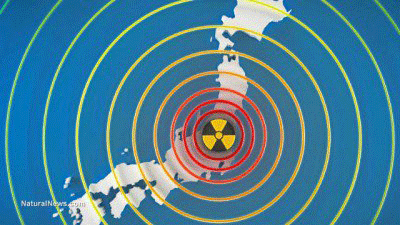
[Lee Kyong-hee] Fallout from Fukushima radioactive wastewater, By Korea Herald, Jun 8, 2023
“………………….. quoting a diplomatic source, the reports say that President Yoon Suk Yeol vowed to make all-out efforts to remove public concerns in Korea about the wastewater discharge when he met Japanese lawmakers in March during his visit to Tokyo for a summit with Prime Minister Fumio Kishida.
Many Koreans were caught off guard, and this administration’s purported stance is further proof that their president is bent on fence-mending with an unrepentant government at whatever cost.
Yoon has neither confirmed nor denied the reports. Transparency is not a priority of his administration, though his search for avenues of rapprochement with Japan is clear.
As Yoon remains tight-lipped, we can only guess his views about the rationality of the discharge and whether he grasps the potential risks. Hence a confrontation with the main opposition Democratic Party of Korea is underway, each side blaming the other for spreading malicious rumors lacking scientific basis.
Amid the accusations, the science community also has misgivings. Seo Kyun-ryeol, a professor emeritus at Seoul National University’s Department of Nuclear Engineering, is an outspoken critic. He is among several scientists who question the contaminated water filtration process and cautions that sea currents will ultimately bring some of discharged wastewater to Korea’s shores.
…………………….public mistrust is understandable, given TEPCO’s history; a Japanese government investigation report in 2012 said TEPCO had failed to meet initial safety requirements.
………………………. Seo says, “There is no guarantee that all of the system’s many filters for different isotopes will work perfectly all of the time, given the condition and quantity of the water, let alone the period of time required.”
The SNU professor highlights the potential hazards associated with cesium, strontium and plutonium, which were released from the reactors due to the disaster. “These substances not only enter the bloodstream but also penetrate the muscles, bones and brain, leading to the development of solid cancers and tumors,” he said.
Seo has raised concerns that marine life and ocean currents can carry harmful radioactive isotopes across the Pacific. He warns of the potential risks to entire marine ecosystems, from the deep-sea organisms up to invertebrates, fish and marine mammals through the food chain, eventually reaching humans.
Naturally, among the most vocal critics of the ocean discharge is the Pacific Islands Forum, an organization representing 18 island nations. They have already suffered from nuclear tests by the United States and European countries. Their concerns are reasonable as most of their populations are coastal residents who depend on the ocean for their livelihoods.
The International Atomic Energy Agency is expected to release its final assessment later this month before Japan embarks on its plan. The root of the problem, as contended by Ken Buesseler, a marine radiochemist and advisor to the Pacific Islands Forum, is that Japan is moving already with a plan which has not proven workable.
Masashi Goto, a retired nuclear engineer who designed reactor containment vessels for Toshiba for many years, bemoans the “safety culture” he encountered in the industry. In a presentation marking the 10th year after the Fukushima accident, he said, “Risks can be expressed in terms of their potential for damage or probability of occurrence. Many unlikely scenarios run the risk of horrendous consequences.”
Goto’s views concerning the decommissioning of a nuclear reactor are worth heeding. “TEPCO claims to have a decommissioning schedule that can be completed within the next 30 to 40 years, but this is completely unrealistic. Given the severity of what happened and the current state of the reactors, in practice we are looking at a process lasting anywhere from 100 to 200 years.”
“What is the number one priority? It’s the same question that was thrust upon the citizens of Japan 10 years ago. Do we prioritize the economy and convenience at any cost, or do we choose to live modestly in safety and free from worry?” he asked.
All said, Japan should suspend the planned release of the wastewater. Heeding the concerns of the international community, it may well consider other possible options, such as long-term storage and processing through half-lives of isotopes or cement-based solidification. https://www.koreaherald.com/view.php?ud=20230607000843
Despite scientific evidence and public opposition, Japan to test ocean nuclear wastewater discharge on June 12
CGTN, 11 June 23
Japan plans to start sending seawater in an underwater tunnel built to release nuclear-contaminated water into the ocean from the Fukushima Daiichi nuclear power plant on June 12, local media reported on Friday citing news from the plant’s operator, Tokyo Electric Power Company (TEPCO).
According to TEPCO, the tunnel has been filled with about 6,000 tonnes of seawater this week for a two-week test before releasing the nuclear-contaminated water from the plant to a point about one kilometer offshore.
Japan is likely to officially begin its plan to dump the nuclear-contaminated wastewater into the ocean as early as the beginning of July. So far, the implementation of Japan’s plan still needs to await the outcome of the International Atomic Energy Agency’s (IAEA) meeting in late June.
However, the content of Cs-137 (a radioactive element that is a common byproduct in nuclear reactors) in the marine fish caught in the harbor of the Fukushima Daiichi Nuclear Power Plant is 180 times that of the standard maximum stipulated in Japan’s food safety law, according to a statement released by the Chinese embassy in Japan on Monday, referring to data from a report released by TEPCO.
It also pointed out that there are more than 60 radionuclides, including tritium, carbon-14, cobalt-60, strontium-90 and iodine-129, in the nuclear-contaminated water. Some long-lived nuclides may spread with ocean currents and result in a bioconcentration effect, which will increase the total amount of radionuclides in the environment and cause unpredictable hazards to the marine ecosystem and human health.
Earlier, TEPCO admitted that tritium, a mildly radioactive form of hydrogen, cannot be removed from the wastewater, but insisted it is not harmful to human health, which has aroused the opposition of many experts.
“When tritium gets inside the body, it’s at least as dangerous as any of the other radionuclides. And in some cases, it’s more than double as dangerous in terms of the effects of the radiation on the genetic material, on the proteins,” Timothy Mousseau, professor of biological sciences at the University of South Carolina, told a press conference in Seoul.
Japan insists that the purified “treated water” is no different from the normal discharged water from a nuclear power plant. ………………………………..
Regardless of raging opposition from home and abroad, Japan has been rushing to dump the wastewater into the ocean, which has incited protests from local civic groups as well as neighboring nations and communities within the Pacific Islands.
A spontaneous protest was held in front of the headquarters of TEPCO in Tokyo on Wednesday evening. Holding banners and flags with slogans that read “Don’t discharge polluted water into the sea” and “Don’t pollute the ocean for all,” the protesters said that the discharge of nuclear-contaminated water in the ocean is a highly irresponsible act.
On the same day, Green Korea United, an environmental group, also staged a protest in front of the Japanese embassy in Seoul, calling the discharge an “international crime” that will transfer the risk of further pollution to the world through the seas…………………. more https://news.cgtn.com/news/2023-06-11/Despite-opposition-Japan-to-test-wastewater-discharge-on-June-12-1kyqtkyBhNC/index.html
Universalization of Nuclear Weapon Ban Treaty Is Essential
IDN InDepthNews BERLIN | TOKYO, 11 June 2023 (IDN) By Ramesh Jaura — Peacebuilder and Buddhist leader Daisaku Ikeda, who is president of the Tokyo-based Soka Gakkai International (SGI), issued a statement ahead of the meeting of the Group of 7 (G7) countries in Hiroshima May 19-21, calling on the G7 leaders to take bold steps toward resolving the conflict in Ukraine and guarantee the security of all humanity by taking the lead in discussions on pledges of No First Use of nuclear weapons.
The venue of the summit of seven leaders—from Canada, France, Germany, Italy, Japan, the United Kingdom and the United States, plus the European Union (EU)—was symbolically stark because the US atomic bombings in 1945 killed over 226,000 people in the twin Japanese cities of Hiroshima and Nagasaki, with the heaviest toll in Hiroshima.
But did the seven leaders—from Canada, France, Germany, Italy, Japan, the United Kingdom and the United States, plus the European Union (EU)—manage to take bold steps in respect of the Russia-Ukraine conflict and committing to ‘No First Use’ of nuclear weapons?
IDN interviewed Mr Hirotsugu Terasaki, Director General of Peace and Global Issues, Soka Gakkai International. Following is the complete text of the interview:
Q: What does the SG think of the outcome of the Hiroshima Summit, which ended May 21 with Ukraine in focus and both Russia and China criticizing the G7?
Hirotsugu Terasaki (HT): Hiroshima, where the first atomic bomb in human history was dropped, is the starting point of peace, and a summit meeting for the total abolition of nuclear weapons should be held there—the this is something SGI President Daisaku Ikeda has repeatedly called for since 1975…………………………………………….. more https://www.indepthnews.net/index.php/armaments/nuclear-weapons/6233-universalization-of-nuclear-weapon-ban-treaty-is-increasingly-essential
Last reactor at Ukraine’s biggest nuclear power plant shut down for safety
The last operating reactor at Europe’s largest nuclear power plant has
been put into a “cold shutdown” as a safety precaution amid
catastrophic flooding from the collapse of a nearby dam, Ukraine’s
nuclear energy agency said Friday.
NBC 10th June 2023
Metro 10th June 2023
Irish Examiner 10th June 2023
UK: Julian Assange Dangerously Close to Extradition Following High Court Rejection of Appeal

byEDITORJune 8, 2023
Reporters Without Borders (RSF) is deeply concerned by the UK High Court’s decision rejecting WikiLeaks publisher Julian Assange’s appeal against his extradition order, bringing him dangerously close to being extradited to the United States, where he could face the rest of his life in prison for publishing leaked classified documents in 2010.
In a three-page written decision issued on 6 June, a single judge, Justice Swift, rejected all eight grounds of Assange’s appeal against the extradition order signed by then-UK Home Secretary Priti Patel in June 2022. This leaves only one final step in the UK courts, as the defence has five working days to submit an appeal of only 20 pages to a panel of two judges, who will convene a public hearing. Further appeals will not be possible at the domestic level, but Assange could bring a case to the European Court of Human Rights.
“It is absurd that a single judge can issue a three-page decision that could land Julian Assange in prison for the rest of his life and permanently impact the climate for journalism around the world. The historical weight of what happens next cannot be overstated; it is time to put a stop to this relentless targeting of Assange and act instead to protect journalism and press freedom. Our call on President Biden is now more urgent than ever: drop these charges, close the case against Assange, and allow for his release without further delay.Rebecca Vincent, RSF’s Director of Campaigns
Stella Assange, Julian’s wife, made a statement on Twitter: “On Tuesday next week my husband Julian Assange will make a renewed application for appeal to the High Court. The matter will then proceed to a public hearing before two new judges at the High Court and we remain optimistic that we will prevail and that Julian will not be extradited to the United States where he faces charges that could result in him spending the rest of his life in a maximum security prison for publishing true information that revealed war crimes committed by the U.S. government.”
This is the latest stage in more than three years of legal proceedings in UK courts, as the US government has made its case to extradite Assange in order to try him on 18 counts in connection with WikiLeaks’ publication of hundreds of thousands of leaked classified documents that informed public interest reporting around the world. Although the first instance court ruled against extradition on mental health grounds, the Court of Appeals overturned the decision in consideration of diplomatic assurances presented by the US government. Assange would be the first publisher prosecuted under the Espionage Act, which lacks a public interest defence. He faces a combined total sentence of a possible 175 years in prison.
RSF is the only NGO to have monitored the entire extradition proceedings despite extensive barriers to observation. In April 2023, RSF Secretary-General Christophe Deloire and Director of Campaigns Rebecca Vincent were arbitrarily barred access to visit Assange in Belmarsh prison, where he has been held on remand for more than four years. RSF continues to seek access to the prison and to campaign globally for Assange’s release.
Ukraine rebuffs Vatican peace attempt

https://www.rt.com/russia/577589-ukraine-vatican-peace-meeting/ 9 June 23
An envoy of Pope Francis visited Kiev in search of ways to end the conflict
The only end to the conflict that Kiev considers acceptable is the Ukrainian “peace formula,” President Vladimir Zelensky told the Holy See envoy Cardinal Matteo Zuppi in a meeting on Tuesday.
“Ukraine welcomes the willingness of other states and partners to find ways to achieve peace, but since the war is on our territory, the formula for achieving peace can only be Ukrainian,” Zelensky said after meeting the papal emissary in Kiev.
Zelensky added that he discussed the situation in Ukraine and the humanitarian cooperation with the Vatican “within the framework of the Ukrainian peace formula,” and urged the Holy See to join the efforts to pressure Russia.
Zuppi arrived in Ukraine on Monday, in what the Vatican called a “search for paths to a just and lasting peace.” In addition to Zelensky, he met with other Ukrainian officials, including parliamentary commissioner for human rights Dmitry Lubinets.
“The results of these talks, like those with religious representatives as well as the direct experience of the atrocious suffering of the Ukrainian people as a result of the ongoing war, will be brought to the Holy Father’s attention,” the press office of the Holy See said in a statement on Tuesday evening.
This is the second time in two months that Zelensky has declined an offer by Pope Francis to mediate in the conflict with Russia. After his meeting with the pontiff at the Vatican last month, the Ukrainian president told Italian media outlets that Kiev was only interested in its own vision of peace.
“It was an honor for me to meet His Holiness, but he knows my position: the war is in Ukraine and the [peace] plan must be Ukrainian,” Zelensky told talk show host Bruno Vespa.
The “peace formula” in question is a list of Zelensky’s demands first revealed
The “peace formula” in question is a list of Zelensky’s demands first revealed in November 2022, ranging from Russia’s withdrawal from all territories Ukraine claims – including Crimea and the Donbass – payment of reparations, war crimes trials for the Russian leadership, and Ukraine’s membership in NATO.
Moscow has rejected Zelensky’s “peace platform” as delusional. Russia understands that any peace talks will not be held “with Zelensky, who is a puppet in the hands of the West, but directly with his masters,” Russian Foreign Minister Sergey Lavrov told reporters last month.
1 This Month
Tell Congress: Prevent Nuclear Catastrophe in Iran

Tell Congress: Prevent Nuclear Catastrophe in Iran

Read the Public Inquiry Report, the Commissioners’ report, Surrendering Australia: The AUKUS Deception is available to download for free at aukuspublicinquiry.com. Or just watch the replay of the National Press Club Luncheon.


Shut down the radiation-damaged Heysham nuclear reactors now
To see nuclear-related stories in greater depth and intensity – go to https://nuclearinformation.wordpress.com

Say No to NASA’s Reckless Nuclear Reactor on the Moon
Say No to NASA’s Reckless Nuclear Reactor on the Moon
-
Archives
- November 2026 (238)
- October 2026 (302)
- September 2026 (339)
- August 2026 (330)
- July 2026 (355)
- June 2026 (287)
- May 2026 (306)
- April 2026 (356)
- March 2026 (251)
- February 2026 (267)
- January 2026 (308)
- December 2025 (358)
-
Categories
- 1
- 1 NUCLEAR ISSUES
- business and costs
- climate change
- culture and arts
- ENERGY
- environment
- health
- history
- indigenous issues
- Legal
- marketing of nuclear
- media
- opposition to nuclear
- PERSONAL STORIES
- politics
- politics international
- Religion and ethics
- safety
- secrets,lies and civil liberties
- spinbuster
- technology
- Uranium
- wastes
- weapons and war
- Women
- 2 WORLD
- ACTION
- AFRICA
- Atrocities
- AUSTRALIA
- Christina's notes
- Christina's themes
- culture and arts
- Events
- Fuk 2022
- Fuk 2023
- Fukushima 2017
- Fukushima 2018
- fukushima 2019
- Fukushima 2020
- Fukushima 2021
- general
- global warming
- Humour (God we need it)
- Nuclear
- RARE EARTHS
- Reference
- resources – print
- Resources -audiovicual
- Weekly Newsletter
- World
- World Nuclear
- YouTube
-
RSS
Entries RSS
Comments RSS

