Connecticut Governor Lamont should veto SB 7 that would advance dangerous nuclear power

Gov. Lamont, veto bill to ‘advance’ dangerous nuclear power. CT Mirror, by Stanley Heller, June 12, 2023
What folly! Just as a dam necessary for cooling nuclear waste at Europe’s biggest nuclear power complex is blown up, members of the Connecticut legislature pass a bill that includes promotion of dangerous outmoded nuclear power.
Senate Bill 7 creates a “Council for Advancing Nuclear Energy Development” specifically packed with six positions for people who work in the nuclear energy industry. Their mission will be to discuss “advancements that are occurring in nuclear energy development.” They’ll study “small modular reactors, advanced nuclear reactors, [and] fusion energy facilities.”
Rather than seek “advancement,” we should be figuring out how to phase out this technology. We see by the Ukraine example that parties at war do not respect what one would think would be totally obvious, the need to do nothing to harm the safety of nuclear power plants. Not that we expect warfare to break out in the U.S., but this country should lead in best practices so that countries where war is a lot more likely won’t go down the nuclear path and risk huge releases of nuclear contamination that spread world-wide.
Realize that the Chernobyl disaster of 1986 led to thousands of fatalities. In Ukraine alone 35,000 women have received compensation for spouses who died because of the disaster. And that’s only the numbers from Ukraine. High levels of radiation covered southern Belarus too, but the government there has never released its statistics.
Another section of the Connecticut bill would classify nuclear power as a “Class 1 renewable energy source.” That would allow the owner of a new nuclear facility to sell renewable “energy credits,” another dubious idea. Rather than limit the use of polluting fuels, the idea is for “the market” to take care of things. Grand, let’s rely on the same market whose mindless profit seeking got us hooked on fossil fuels in the first place.
The new council will study ways to “promote nuclear energy development, expansion and research” in Connecticut. What won’t be studied is the problem of importation of Russian uranium that is used to generate nuclear power. Every year hundreds of millions of dollars are spent by U.S. companies to buy raw and enriched uranium from Russia. Presumably Connecticut nuclear power companies are no different. Reuters reports that the U.S. power industry relies on Russia and its allies Kazakhstan and Uzbekistan for roughly half of the uranium powering its nuclear power plants. Why not respond to a petition about this and study how to stop relying on a fuel that enriches the Russian dictator?
……………………………………….. Governor Lamont should veto SB 7. Then call a special session to pass a revised SB 7 clean of plans for more nuclear power. After doing that stay in session and spend time passing blockbuster legislation that will provide leadership for a country teetering on a climate precipice.
EU to vote on renewables bill again after being stalled on nuclear row
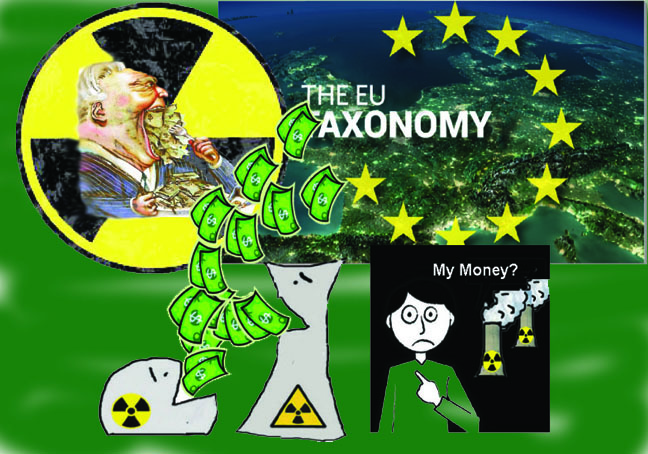
France wants the law to recognise low-carbon nuclear energy as a component of renewable targets, while Bulgaria, Romania and Poland call the targets overambitious.
By Ashima Sharma, https://www.power-technology.com/news/eu-to-vote-on-renewables-bill-after-nuclear-row/ 12 June 23
U diplomats will vote on the bloc’s new renewable energy bill on Wednesday after a group of countries, including France, registered last-minute opposition in May.
The bill proposes a binding goal for all EU countries to generate 42.5% of their energy from renewable sources by 2030. While France wanted the law to recognise low-carbon nuclear energy as a component of renewable targets, Bulgaria, Romania, and Poland say the targets are overambitious.
The EU’s current share of renewables in the energy mix is 22%. However, the share of the energy mix is unevenly distributed among the countries. Sweden’s share of renewable energy is 63%, while Ireland, Luxembourg, Malta and the Netherlands comprise less than 13% of the total energy share.
The revised directive on renewables doubles the current targets with an ambition to accelerate the bloc’s plan to fight climate change and end dependence on Russian fuel. Meeting the new goals requires scaling up wind and solar farms, increasing the production of renewable gases and integrating Europe’s power grids to accommodate cleaner energy.
While nuclear energy is low-carbon, it is not renewable. France is, however, pushing for more favourable treatment of nuclear energy. The country maintains that the new bill puts countries like France, with a huge nuclear share, at a disadvantage. In May this year, the French Parliament passed a law to accelerate the construction of new nuclear reactors.
European Union to try again for renewable energy deal after nuclear row

By Kate AbnettJune 10, 2023
BRUSSELS, June 10 (Reuters) – European Union countries will try again next week to pass a deal on new renewable energy targets, which have been stalled by concerns from France and other states that the law sidelines nuclear energy.
A group of countries including France lodged last-minute opposition to the EU’s law on more ambitious renewable energy goals last month, putting on hold a main pillar of the bloc’s plans to tackle climate change.
EU country diplomats will attempt to approve the law on Wednesday, according to an agenda for the meeting published late on Friday.
Paris has sought changes to the law to offer more favourable treatment of nuclear energy, and said the final deal puts at a disadvantage countries like France with large shares of nuclear power. Nuclear energy is low-carbon, but not renewable.
The EU law is designed to drive a rapid expansion of renewable energy sources like wind and solar. The deal negotiated this year offered some compromises, including lower renewable fuel targets for industry, in countries that have already used nuclear power to slash their use of fossil fuels…………………
France’s energy ministry did not immediately respond to a request for comment.
French Finance Minister Bruno Le Maire said on Thursday France will not give up the competitive advantages linked to nuclear power, noting that EU countries have the right to choose their own energy mix.
Other pro-nuclear EU members including Bulgaria, Poland, Hungary and the Czech Republic had also signalled they would not support the renewable law – citing concerns including, for some, that the targets are simply too high.
Together, they have enough votes to block the law.
It is unusual for countries to reject pre-agreed deals on EU laws, which follow months of negotiations.
Meanwhile, states including Germany and Luxembourg – both anti-nuclear countries – plus Denmark and Ireland have urged the EU to resolve the spat quickly, warning the delay endangers investments in renewable energy.
Reporting by Kate Abnett Additional reporting by Dominique Vidalon Editing by Frances Kerry https://www.reuters.com/world/europe/eu-try-again-renewable-energy-deal-after-nuclear-row-2023-06-10/
France’s EDF and the global nuclear lobby sulking because Europe won’t accept their lie that nuclear power is “renewable”.

‘Not there yet’: France’s EDF frustrated with nuclear power’s status in EU’s Net-Zero Industry Act, By Frédéric Simon | EURACTIV.com 11 June 23,
Supporters of nuclear power in France have welcomed plans to scrap the two-tier approach to low-carbon technologies in the EU’s draft Net-Zero Industry Act (NZIA) but they also condemn the lower status granted to atomic energy as “incoherent” with the bloc’s wider decarbonisation goals.
Tabled by the European Commission in March, the NZIA aims to ensure Europe is capable of producing domestically at least 40% of the technologies it deems “strategic” to achieve its goal of reducing emissions to net zero by 2050.
But while nuclear energy was catalogued among the EU’s net-zero industries, it did not make it into the list of “strategic” technologies – such as wind, solar, batteries and electrolysers – that are eligible for the 40% domestic manufacturing benchmark, as well as quicker permitting procedures and looser EU state aid oversight.
Under the Commission’s proposal, only Small Modular Reactors (SMRs) and “advanced technologies” producing energy from nuclear processes “with minimal waste from the fuel cycle” would be eligible for the ‘strategic’ label.
“The cutting-edge nuclear is in for specific fields, but not for all,” European Commission President Ursula von der Leyen explained after an EU summit in March, causing uproar among nuclear energy fans on social media.
Technological neutrality
Legislators are now examining the proposed NZIA regulation, with the European Parliament and EU member states aiming to reach an agreement on a joint text before the end of the year.
And for nuclear power advocates, the Parliament’s draft position on the regulation means more frustration, even though some see encouraging signs as well…………………………………..
EDF, the French state-owned electric utility, appears even more bitter, denouncing the “incoherence” of ignoring a mature technology like nuclear power, which emits almost no carbon dioxide, in a legislative text meant to promote zero-emission technologies.
“The only nuclear power included in the NZIA is the one which does not yet exist – Small Modular Reactors (SMRs),” said Erkki Maillard, senior vice president for EU affairs at EDF, which returned under full state ownership this week……………………………………..
Nuclear alliance
France is not alone in its quest to win recognition for nuclear power as a strategic net-zero technology.
Last month, a group of 16 European countries taking part in the French-led “nuclear alliance” signed a joint declaration in which they encouraged the European Commission “to recognise nuclear energy in the EU’s energy strategy” and promote “better conditions for the development and deployment of new nuclear energy capacity in the EU”.
………………………………………. Parliament lawmakers have until 19 June to table amendments to the NZIA regulation.
The Parliament’s industry committee, which has the lead on the matter, is scheduled to vote on the proposal on 12 October, before a plenary vote expected the following month. This will open the way for decisive talks with EU member states and the European Commission to finalise the law’s adoption.
Ukraine’s propaganda machine is vital for Zelensky: Here is how it works
Rt.com 12 June 23
Kiev is waging an extensive information war against Russia and it began long before the military conflict
The Russia-Ukraine conflict isn’t just about the clash of armed forces on the battlefield. It has also been marked by unprecedented levels of confrontation in the fields of information and psychology, cognition and semantics.
Kiev has arguably achieved more success on the information front, than on the ground. There the “fighters” aren’t just journalists and information and psychological warfare specialists, but content makers and PR experts. Influencing the psyche, mindset, and emotions of ordinary people has become a big deal, as shaping Western public opinion is vital for President Vladimir Zelensky’s regime.
The symbols of war
Anyone familiar with advertising and PR knows that tying a product to a colorful, memorable symbol, or slogan, will boost its popularity, especially in this era of short attention spans. During wartime, the same strategy works just as well with the news as with advertising and election campaigns.
In the current conflict, Ukraine has become very good at creating symbols. Media outlets instantly take up any popular symbol and make use of it in order to influence the mindset of ordinary Ukrainians.
Here’s a recent example. In May, despite the very difficult situation for the Armed Forces of Ukraine (AFU) in Artemovsk (Bakhmut) and statements from several commentators – particularly the former Zelensky adviser Alexey Arestovich – that the army could soon retreat (as it eventually did), Ukrainian society wasn’t at all worried and had complete faith in the AFU’s ability to retain control over the city.
In fact, public attitudes towards the battle were largely shaped by the media. For example, at the beginning of the year the rock band “Antytila” (“Antibodies”) released a video for the song ‘Bakhmut Fortress.’ A few months later, it became viral. Ukrainians have since posted countless self-made versions of the video on social networks, affirming the myth of the impenetrable fortress of Bakhmut.
Such symbols are created not only during ongoing battles, but also in the aftermath of the AFU’s obvious failures. For example, at the end of February, the Artemsol salt production enterprise announced that before the start of active battles for Soledar (which ended in January with the victory of the Russian Army), it collected 20 tons of salt from the mines. The salt was packed into 100,000 packages bearing the symbolic inscription “Ukrainian Rock-Solid Strength.” Each package was sold for 500 hryvnia (about $13.50). According to the organizers of the fundraiser, most proceeds were spent on kamikaze drones for the AFU.
Symbolic campaigns like these occur regularly in Ukraine and are designed to encourage the population. In November of last year, when Russian troops withdrew from the west bank of the Kherson region and the AFU entered the eponymous regional capital, a national social media campaign urged users to place images of watermelons (the area grows them) on their profile pictures. ………………………………………………………………
The triumph of these symbols, which have endured long after being confirmed as fake, is a result of the information bubble in which Ukrainian society and much of the West has found itself. In the past year and a half since opposition media was blocked, government-controlled outlets are often the only source of information for Ukrainians.
The invisible front
“Today, information warfare is the core structure of any war. It is very important to have influence over a society that is involved in combat. Moreover, it is essential to convince the world community of the rightness of our actions in order to receive further support. Not only authorized persons can take part in this information war, but also regular citizens who ‘fight’ at their own discretion,” Ukraine’s Deputy Defense Minister Anna Maliar said in February.
Information and Psychological Operations (IPsO) are intended to brainwash people and shape public opinion, and they are among Kiev’s most important strategies in the conflict with Russia. In combat conditions, these operations are primarily aimed at demoralizing and disorganizing the enemy’s front and rear and inspiring a hopeless, doomed atmosphere. Usually, their main task is to discredit the military and political command and highlight defeat and failure…………………………………………………………………………………….
As part of Ukraine’s integration into NATO structures, special unit instructors from the United States and other Western countries are involved in the training of IPsO center personnel. In particular, these are specialists from the US Army’s 4th Psychological Operations Group (formerly called the 4th Military Information Support Group) and the UK’s 77th Brigade – a special unit of information, psychological, and cyber operations of the Armed Forces of Great Britain. IPsO specialists also undergo regular training at US military bases.
Disinformation and propaganda
In addition to official media outlets, Ukraine’s Information and Psychological Operations Centers rely on several thousand internet resources including information and news sites, social networks, and coordinated social media groups.
Even before the start of Russia’s military campaign, certain Ukrainian volunteer internet information resources were controlled by IPsO centers. This included the volunteer communities InformNapalm, (informnapalm.org ), Peacemaker (psb4ukr.org ), Information Resistance (sprotyv.info ), as well as commercial sites (seebreeze.org.ua, petrimazepa.com, podvodka.info, metelyk.org, mfaua.org, burkonews.info, euromaidanpress.com , peopleproject.com and others) used for information campaigns and testing “social engineering” technologies. In particular, it was noted that IPsO officers often operated under the guise of “volunteers” and pseudo-bloggers……………………………………
Ukraine uses various tools – including websites, social networks, and bots – to spread disinformation. In April, hackers from RaHDit and other groups revealed Ukrainian Telegram channels presumably supervised by the SBU, which posed as pro-Russian. An entire network of such channels, with an audience of 5-6 million people, was discovered during the investigation. The list includes channels Operation Z, Novorossiya 2.0, and many others……………… more https://www.rt.com/russia/577774-kievs-propaganda-machine-how-it-works/—
The Fukushima Wastewater ‘Discharge’: What’s in a Name? – technostrategic language.
Japan is very carefully shaping the narrative around its release of radioactive water into the Pacific Ocean.
The Diplomat By Maxime Polleri, June 12, 2023
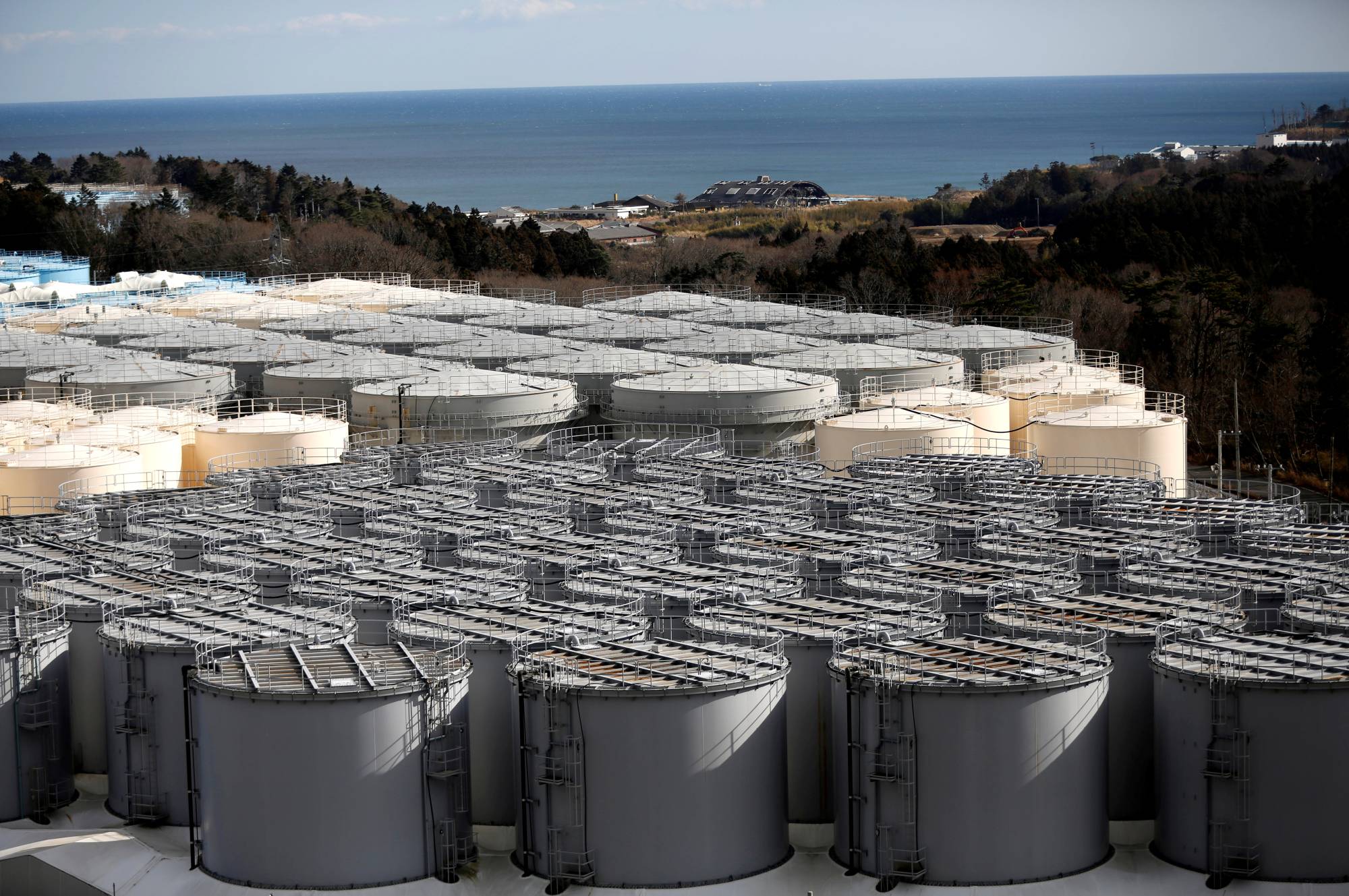
Japan is planning to soon release a million tons of radioactive water from the Fukushima power plant. Since the 2011 Fukushima nuclear disaster, water used to cool the crippled power plant has become contaminated, while being kept in huge storage tanks. Advanced techniques of water treatment have removed many of the radioactive substances from this stored water, but one pollutant, radioactive tritium, remains especially tricky to get rid of. Since tritium is a radioactive isotope of hydrogen – a key component of water – it cannot be removed by purification and remains in the treated water.
Currently, tritium-contaminated water is filling Japan’s tanks to the brink and the government has no choice but to release this water in the sea. This decision is fueling numerous controversies surrounding the potential danger of releasing nuclear wastewater in the ocean. It is notably facing stark opposition from Japan’s fishing industry, which has been scrambling to recover ever since the 2011 nuclear meltdowns.
As a social anthropologist working on this disaster, I am less concerned about the scientific debates over the safety vs. danger, and more interested in another type of battle that surrounds this decision: a linguistic one. For instance, when fishermen discuss their concerns, they at times use a specific narrative that accuses the authorities of treating the sea as a garbage dump. On the other hand, state authorities and nuclear organizations like The International Atomic Energy Agency (IAEA), rarely talk about “dumping” wastewater in the sea. Instead, they use words like “release,” “disposal,” or even “dilution.” Words like “garbage,” “pollutants,” “contaminants,” or “waste” are also utterly absent from these expert organizations’ vocabulary. In talking about tritium-contaminated water, for example, IAEA prefers resorting to highly technical terms like Advanced Liquid Processing System-treated water.
These words are not random choices. They reflect highly peculiar ways of governing environmental risks in the aftermath of nuclear disasters. In particular, they echo what scholar Carol Cohn famously called “technostrategic language,” that is, terminologies that disregard particular realities in the face of risks, while preventing the expression of specific values. Cohn first talked about technostrategic languages in the context of nuclear defense intellectuals, arguing that their specific language allowed a rejection of the idea that they too could become victims of the wrath of nuclear weapons.
Similarly, words like “discharge,” “dilution,” or “treated water” are part of governance techniques that have powerful symbolic functions. This language imbues post-disaster narratives with specific values, while shutting out alternatives. Let us examine some of the consequences of this technostrategic language.
First, technical words provide an aura of expertise, legitimacy, and control toward the things that cannot be governed, such as the slow accumulation of tons of contaminated water………………………..
Second, much like the phenomenon of radioactive decay – a process where unstable atomic elements gradually transform themselves into wholly different elements – bringing discussions of contamination into the technical sphere literally transmutes the narrative of “waste dumping” into what appears to be a sound policy of “treated-water management.”………………….
Third, the use of scientific jargon also creates powerful hierarchical divisions between people and experts. For instance, Japanese fishermen are worried that the release of radioactive water will affect their livelihood. Yet they can rarely compete against the technical lingo of reified expertise. https://thediplomat.com/2023/06/the-fukushima-wastewater-discharge-whats-in-a-name/
Nuclear arsenals growing as chances for diplomacy shrink: report

China, Russia, India, Pakistan, and North Korea each deployed more nuclear weapons last year, according to SIPRI.
Connor Echols https://responsiblestatecraft.org/2023/06/12/nuclear-arsenals-growing-as-chances-for-diplomacy-shrink-report/ JUNE 12, 2023
Nuclear-armed states are expanding and modernizing their arsenals as tensions continue to rise between great powers, according to a new report from the Stockholm International Peace Research Institute. SIPRI estimates that militaries have deployed an additional 86 warheads over the past year, bringing the total number of active nuclear weapons to 9576.
China added 60 warheads since the start of 2022, giving it a total arsenal of 410 nuclear weapons, according to SIPRI. Russia deployed an additional 12 nukes, with India, Pakistan, and North Korea making up the rest of the increase.
“It is increasingly difficult to square this trend with China’s declared aim of having only the minimum nuclear forces needed to maintain its national security,” argued SIPRI senior fellow Hans M. Kristensen in a press release.
The new data comes from SIPRI’s Yearbook, the organization’s annual report on global trends in weapons stockpiles and disarmament.
Despite China’s notable increase, the United States and Russia continue to dominate all other states when it comes to nuclear stockpiles. Together, the two hold 85 percent of the world’s deployed nuclear weapons, and both plan to invest heavily in efforts to modernize their arsenals.
Chances for renewed disarmament talks have flagged following Russia’s invasion of Ukraine early last year. Washington and Moscow both took steps recently to reduce their compliance with the New START Treaty — the only agreement capping the number of warheads that each country deploys, which expires in 2026.
Notably, the United States announced earlier this month that it is ready to engage in new nuclear talks “without preconditions” with both Russia and China. But it remains unclear whether either state is interested in negotiating with Washington as geopolitical tensions continue to grow.
“This elevated nuclear competition has dramatically increased the risk that nuclear weapons might be used in anger for the first time since World War II,” SIPRI researcher Matt Korda said in a press release.
Meanwhile, some states have taken steps to reduce transparency around their nuclear stockpiles. The United States and United Kingdom “both declined to release information to the public concerning their nuclear forces in 2022, which they had done in previous years,” the report notes. The UK decision is particularly notable given its 2021 announcement that it will increase the limit on its arsenal from 225 to 260 warheads.
Data about the arsenals of other nuclear-armed states is also limited given the secrecy surrounding many countries’ nuclear programs. Israel has never admitted to possessing nuclear weapons, but SIPRI estimates that it currently has 90 warheads. North Korea, another secretive nuclear-armed state, has as many as 30 nuclear bombs, according to the report.
Iranian Supreme Leader Says ‘Nothing Wrong’ With A Nuclear Deal With West
https://www.rferl.org/a/iran-khamenei-nuclear-deal-approval/32454257.html 12 June 23
Iran’s supreme leader said on June 11 that a deal with the West over Tehran’s nuclear work was possible if the country’s atomic infrastructure remained intact, amid a stalemate between Tehran and Washington to revive a 2015 nuclear pact.
Months of indirect talks between Tehran and Washington to salvage the nuclear accord with six major powers have stalled since September, with each side accusing the other of making unreasonable demands. Ayatollah Ali Khamenei’s guarded approval comes days after both Tehran and Washington denied a report that they were nearing an interim deal. To read the original story by Reuters, click here.
Time to remove nuclear weapons from NATO countries, in return for Putin not putting them in Belarus?
Now is the time to call for all US nuclear weapons to be removed from five NATO countries, Italy, Turkey, Germany, Netherlands, Belgium, restore the ABM Treaty which Bush walked out of and close new missile bases in Romania and Poland in return for Putin not putting nuclear weapons in Belarus. https://apnews.com/article/putin-russia-belarus-nuclear-weapons-war-ukraine-a8b462cd8f30b85ec8f3be93e554e94b
Oil-rich nations dominate COP28 – now offering rich sponsorships, in the effort to silence critics

Emanuele Del Rosso Emanuele is an award-winning Italian political cartoonist. His work is published and distributed internationally.
16 January 2023
UN climate summit organisers wage public relations battle. Marketing drive
for multimillion-dollar sponsorships for UAE-hosted event as critics become
more vocal.
The UAE COP28 has offered sponsorship packages ranging up to
$8.2mn (Dh30mn) for a principal partner to enjoy privileged access in the
controlled “blue zone” where world leaders gather, according to
documents sent to prospective sponsors.
Space in the “green zone”, open
to civil society and small business, is less than $7,000 (Dh25,000).
Expressions of interest for pavilions close this week for the event
starting on November 30.
FT 11th June 2023
https://www.ft.com/content/7b17bc43-f303-4039-a8d5-7e9825604a46
45 nations pledge to double their rate of energy efficiency improvements

45 nations pledge to double rate of energy efficiency improvements. The
UK, the US and Ukraine are among the 45 nations endorsing a new global
commitment to accelerate the rate of energy efficiency improvements. The
declaration takes the form of a new ministerial statement, released to mark
the conclusion of the International Energy Agency’s (IEA) global
conference on energy efficiency in France. As the conference began earlier
this week, the IEA confirmed that global energy intensity decreased 2.2%
last year, twice the average of the previous five years, largely due to
policy responses to the energy price crisis. Yet annual decreases of 4% are
needed to give the world the best chance of achieving net-zero by
mid-century and averting the worst physical impacts of the climate crisis.
To that end, the 45 nations have pledged to develop and implement better
policies to improve energy efficiency domestically. These include both
government-led schemes and policies that help to unlock private investment.
Edie 9th June 2023 https://www.edie.net/45-nations-pledge-to-double-rate-of-energy-efficiency-improvements/
A.I. or Nuclear Weapons: Can You Tell These Quotes Apart?
Many experts on artificial intelligence are warning of its potential dangers and calling for regulation, just as others once did with the atomic bomb.
NYT.By Ian Prasad Philbrick and Tom Wright-Piersanti. June 10, 2023
The comparison seems to be everywhere these days. “It’s like nuclear weapons,” a pioneering artificial intelligence researcher has said. Top A.I. executives have likened their product to nuclear energy. And a group of industry leaders warned last week that A.I. technology could pose an existential threat to humanity, on par with nuclear war.
People have been analogizing A.I. advances to splitting the atom for years. But the comparison has become more stark amid the release of A.I. chatbots and A.I. creators’ calls for national and international regulation — much as scientists called for guardrails governing nuclear arms in the 1950s. Some experts worry that A.I. will eliminate jobs or spread disinformation in the short term; others fear hyper-intelligent systems could eventually learn to write their own computer code, slip the bonds of human control and, perhaps, decide to wipe us out. “The creators of this technology are telling us they are worried,” said Rachel Bronson, the president of the Bulletin of the Atomic Scientists, which tracks man-made threats to civilization. “The creators of this technology are asking for governance and regulation. The creators of this technology are telling us we need to pay attention.”…………………………………more https://www.nytimes.com/2023/06/10/upshot/artificial-intelligence-nuclear-weapons-quiz.html
My nuclear family

“The locals know their local land and water supplies are contaminated from the nuclear material that was either buried in nearby canyons or on riverbanks,” Gómez writes in her book. “They know their presence on the Pajarito Plateau is being erased from national memory. They know they were placed in dangerous jobs because of their identities. They know the plutonium exploded into the atmosphere during the Trinity Test is making them sick. They know nuclear waste, if buried in their backyard, poses severe threats.”
Alicia Inez Guzmán, Searchlight New Mexico, 14 June 23, https://www.lcsun-news.com/story/news/2023/06/11/my-nuclear-family/70306994007/
My parents’ house sits at the foot of the Sangre de Cristos facing west toward the setting sun and the Jemez Mountains. I still remember nights looking out across the vast darkness at the twinkling lights of Los Alamos, the secret city, “a place,” as the late anti-nuclear activist and Ohkay Owingeh elder Herman Agoyo put it, “with no public memory.”
As the crow flies, Truchas is 30 miles from Los Alamos, separated by the great Tewa Basin and arid badlands checkerboarded by Hispano settlements and Indigenous Pueblos. For most of my young life, I took the Lab for granted. It was there in the background, omnipresent like a low-frequency hum.
But it didn’t always just exist. It was forced onto our homeland and into our consciousness, even if most origin stories about the Manhattan Project and the Lab’s continued presence in the region treat local people like extras in a movie.
“For the several hundred workers required to man these plants, there must also be several thousand service and supporting personnel,” a 1950 internal report read. Its writer was debating whether Los Alamos was the best place for the weapons Lab moving forward.
Scientists performed clandestine work here, yes, but that work required and continues to require the effort of so many others — “supporting personnel” — who can also be on the frontlines of exposure.
I am reminded, for instance, of an experiment that went horribly wrong just nine months after American forces decimated Hiroshima and Nagasaki with nuclear bombs. A Canadian physicist, Louis Slotin, was trying to gather data on nuclear chain reactions when the screwdriver he was holding as a wedge between a beryllium tamper and a plutonium core accidentally slipped. For a brief second, the beryllium and plutonium reached fission, sending out a blast of blue light and radioactivity.
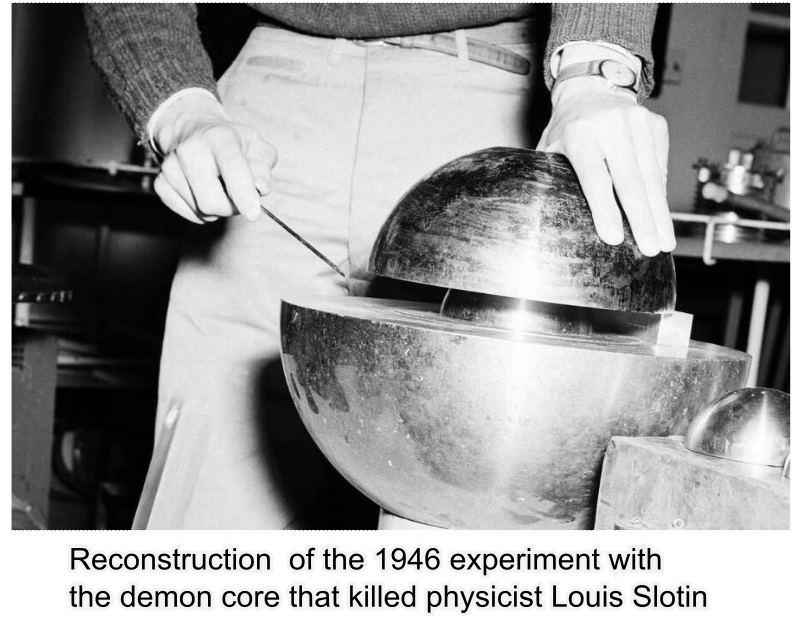
Slotin’s death in 1946 has been famously recorded in histories of the Lab. But there were several other people in the room that day, including several colleagues and a security guard whose fate has largely been eclipsed. All that was noted in records of the event was his fear. Apparently, it was said, the security guard ran out of the room and up a hill. And that’s where his part in the story ends.
But he was there, a witness — and one, I imagine, who was exposed to the same plutonium that within a matter of nine days killed Slotin. I’ve long wondered: Who was he? What was his story?
When I think of that man, I think of my Grandpa Gilbert. Many auxiliary staff were local people who got their start on “the hill” as security guards for the Atomic Energy Commission. That was his story — a career begun as a security guard in 1946 and ended some three decades later as a staff member of the Lab and the University of California, which managed it. The position was a distinction that not many Hispanos held at the time. My mom says he felt dignified by his work there — the only means he had to raise five kids after World War II. But there was a trade-off, including discreet trips to the doctor where he was screened for cancer on a more-than-routine basis.
Many family members would follow in his footsteps — my Uncle Jerry among them. Los Alamos was a place abounding in conspiracy theories and Uncle Jerry found himself at the center of one of them. He believed that racism had created a culture of retaliation, so toxic that it led to his being framed for intentionally dosing his supervisor with plutonium-239. After my uncle’s death two years ago, the Santa Fe New Mexican published a column narrating the sordid events — his boss ultimately recanted the allegations and my uncle and others won a settlement — but he was haunted by a lasting specter. The multiple cancers that consumed his body decades later were products of the Lab, in his opinion, like sleeper fires set within him.
I only recently came to know the fragments of my Uncle Pat’s story. During his three years at the Lab in the late 1970s, he was flown on two occasions to California with a locked box chained to his wrist. His destination was TRW, the predecessor of Northrop Grumman Space Technology, and his cargo, he told me, was top-secret technology that could detect nuclear weapons testing from outer space.
There’s a kind of mental acrobatics required to compartmentalize these different realities — the opportunity and the harm, the secrets and the consent. I know this compartmentalization well, this desire to draw a line in the sand between the good and the bad. When I was 19, I spent a summer working as an undergraduate intern in the Lab’s explosives division, a building perched behind a maze of fences and guards. I didn’t have a security clearance at the time, nor could I foresee getting one, so I spent most days marooned at my desk in the front office, filing papers and sending emails. I couldn’t even take a bathroom break without a chaperone accompanying me.
Nothing of that work rings more clearly than a memory of two scientists stumbling out into the hallway, covered in blood. An experiment had gone awry — nothing radiation related — but it was so shrouded in mystery that parsing what actually happened is like trying to put a puzzle together that’s missing half the pieces. I watched in horror from the doorframe.
After that, I transferred to the Bradbury Science Museum, also in Los Alamos, where I walked by replicas of Little Boy and Fat Man daily to get to my desk. I spent that summer, among other things, writing exhibition text about the Manhattan Project’s early architects — J. Robert Oppenheimer, Enrico Fermi, Richard Feynman. I wrote not the history of mi gente, but of those agents of immense creation and destruction, those who’d exacted what Myrriah Gómez in her book, “Nuclear Nuevo México,” calls nuclear colonization. The irony.
It was only when I left the state that I had the distance to understand the debt our communities pay for the good jobs. I began to unpack what it means for New Mexico to be what the writer D.H. Lawrence once called the moon of America. This place was distant enough in America’s consciousness to be foreign, exotic even. But as that “tierra incognita,” the unknown and unknowable blankness stretched across mental maps of the Southwest, our world became America’s wasteland. We continue to sit at the periphery of centers of power, yet we have been forced into the epicenter of this nation’s nuclear weapons complex.
Now, as I write about the role of nuclear weapons across New Mexico, the nation and the globe, Toni Morrison’s words come to mind: “The subject of the dream is the dreamer.” Her ideas about literature were deeply influenced by psychoanalysis. Indeed, to her mind, the act of dreaming was not unlike the act of writing. Or, to put it another way, the subject of the writing is the writer. Here, that is me.
My family and community’s own tangled history with the Lab sits in my subconscious like an inchoate thought. Only when I hold it up to scrutiny does that thought form into the imperative, allowing me to fully fathom what the Manhattan Project birthed in our backyard. Perhaps this is what Gómez refers to as an “innate knowing,” our local “sixth sense.”
“The locals know their local land and water supplies are contaminated from the nuclear material that was either buried in nearby canyons or on riverbanks,” Gómez writes in her book. “They know their presence on the Pajarito Plateau is being erased from national memory. They know they were placed in dangerous jobs because of their identities. They know the plutonium exploded into the atmosphere during the Trinity Test is making them sick. They know nuclear waste, if buried in their backyard, poses severe threats.”
I know all of this when I drive along Highway 84/285, an artery that connects Pojoaque Pueblo to Española and the Pueblos of Santa Clara and Ohkay Owingeh, below a billboard sprawled against sienna-hued bluffs. A woman with a complexion like my own holds radiation detection equipment and smiles down at me.
“Radiation Control Technicians are vital to operations at LANL,” the billboard proclaims. “Start your career as an RCT at Northern NM College now.”
My worldview will always shape my writing on a topic that hits so close to home, but the focus of this series — The Atomic Hereafter — is to highlight all the communities most impacted by 80 years of nuclear presence, from the most recent attempts to modernize the nation’s nuclear arsenal to the long, drawn-out ways radiation can transmit from mother to child. Nuclear issues in this state are generational. I will take them one story at a time.
Fukushima waste-water plan a nuclear threat to Asia-Pacific
By Shaun Burnie | chinadaily.com.cn 2023-06-13 https://www.chinadaily.com.cn/a/202306/13/WS6487d3e0a31033ad3f7bbf92.html
Japan has decided to start discharging radioactive wastewater from the Fukushima Daiichi nuclear power plant into the Pacific Ocean very soon. The operator of the wrecked plant began tests on Monday of newly constructed facilities for discharging treated radioactive wastewater into the sea. Many myths and untruths have been spread about the nuclear-contaminated water. For example, the Japanese government has said, that according to the International Atomic Energy Agency, the global nuclear industry and some scientists, there is nothing to worry about the effects of the radioactive wastewater.
The Japanese government also claims that nearly all the radioactive materials will be removed from the wastewater using the Advanced Liquid Processing System (ALPS) with only tritium remaining before it is released into the Pacific. It is constantly stated that tritium cannot be removed from the wastewater, but would emit very weak radiation and therefore it will have no impact on either the marine environment or human health in the Asia-Pacific region and beyond.
False claims to mislead the Japanese public
As for Tokyo Electric Power Company, the owner of the Fukushima nuclear plant, it claims discharging the wastewater is necessary due to insufficient space for more storage tanks and for it to be able to fully decommissioning the Fukushima plant between 2041 and 2051. TEPCO also says the discharges will meet regulatory standards and will be lawful.
In the real world, it is a lot worse and a lot more complicated than what TEPCO, the Japanese government and the IAEA claims. The ALPS has been a spectacular failure, with major doubts about its effectiveness. In addition to tritium, all the radioactive carbon (C-14) in the wastewater will be released into the ocean along with many other radionuclides (plutonium isotopes, iodine-129, strontium-90). But despite the Japanese government and TEPCO “planning” to keep them below the regulatory limit, they will still be significant.
There is no safety threshold for artificial radioactivity in the environment, and technology does exist to process tritium from the tanks’ water. However, TEPCO and the Japanese government do not want to spend huge amounts of money needed to do so. Tritium is indeed a low energy radioactive material but that does not mean its effect is weak; if ingested, it has the potential to damage plants, animals and humans.
Recent research published by a leading radiation biologist shows scientific literature of the past 60-plus years is clear — tritium, in particular organically bound tritium (OBT), is biologically harmful to all forms of life. The persistence, bioaccumulation and potential biomagnification and increased toxicity of OBT increases the potential impact on the environment if tritiated water is discharged on land or in the sea.
Tritium more dangerous than previously believed
None of the current regulations in Japan (or worldwide) takes into full account the nature of organic forms of tritium. That organic forms of tritium have been found to bioaccumulate in phytoplankton, the base of the marine food chain, is deeply worrying. The fact that there has been no comprehensive environmental impact assessment of these and many other issues is outrageous, and suggests there is a deliberate underestimation of the accumulation and potential toxic effect of tritium on the environment.
Equally important, the many other radioactive materials in the Fukushima wastewater have the potential to cause damage to the environment and human health. In fact, Japan has sufficient storage capacity, including in the areas around the Fukushima plant. And storing the toxic wastewater, TEPCO cannot fully decommission the reactors at Fukushima in the next 20-30 years — probably not in this century. Rather than being lawful, the release of the wastewater into the sea will violate international law, specifically the United Nations Convention on the Law of the Sea.
One reason why the untruths and myths continue to be spread is that there is a lot at stake for the Japanese government and the nuclear industry. Japan’s energy policy is dependent on restarting many nuclear reactors shut down after the 2011 Fukushima disaster. So far, nine have resumed operations — but according to government policy, Japan needs 30-plus reactors by 2030.
Public opinion in Japan has been influenced by the government’s claim that it is safe to operate these nuclear reactors and that it is possible to recover from a three-reactor meltdown without consequences for human health and the environment. Of course, it’s not.
Sweeping real issue under the carpet
TEPCO, the Japanese government or the IAEA refuses to accept that the wastewater crisis points to a deeper nuclear crisis at the Fukushima plant. And it is getting worse, because groundwater entering the plant continues to become highly contaminated, while the water in the tanks requiring ALPS processing increases.
In November 2021, based on TEPCO data, there were 1,284,284 cubic meters of contaminated ALPS water in the storage tanks, of which 832,900 cu m needed further ALPS processing. As of April 20, 2023, the total volume of radioactive wastewater stored in the tanks was 1,330,944 cu m — a 3.6 percent increase in less than 2 years.
Worse, about 70 percent or 931,600 cu m of the wastewater needs to be processed again (and probably many times again) by the ALPS to bring the radioactive concentration levels below the regulatory limit for discharge. This is an increase of nearly 12 percent in less than 2 years.
TEPCO has succeeded in reducing the concentration levels of strontium, iodine and plutonium in only 0.2 percent of the total volume of the wastewater, and it still requires further processing. But no secondary processing has taken place in the past nearly three years. Neither TEPCO nor the Japanese government nor the IAEA wants to talk about this. They have not said how many times the wastewater needs to be processed, how long it will take to do so or whether the efforts will ever be successful.
Problems not new but none solved in 5 years
Greenpeace wrote about these problems and why the ALPS failed nearly five years ago; none of those issues has been resolved. Also, there is a high possibility of the ALPS failing in the future.
To proceed with their discharge plan, the Japanese government and TEPCO have been creating a false impression on the public that significant progress has been made in decommissioning the Fukushima plant. But fact is, the source of the problem — the highly radioactive fuel debris in reactor pressure vessels 1, 2 and 3 — continues to contaminate groundwater. Nearly 1000 cu m of water becomes highly contaminated every 10 days. So until the nuclear fuel is isolated from the environment, contaminated groundwater, potentially hundreds of thousands of cubic meters, will continue to accumulate.
While the Fukushima plant, after being destroyed by the earthquake-triggered tsunami in March 2011, released large amounts of radioactive particles into the environment, most of the radioactive inventory remains inside the melted fuel. As such, the damaged Fukushima plant on the edge of ocean is a long-term radioactive threat to the environment, including the marine environment. And this threat will be aggravated once Japan begins dumping the toxic water into the ocean.
TEPCO, the Japanese government and the IAEA refuse to acknowledge the fact that the decommissioning plan for the Fukushima plant is not attainable, and that they must embark on a comprehensive reassessment of the plan.
Crisis compounded by damage to reactor
The nuclear crisis in Fukushima is compounded by the damage to the reactors, in particular unit 1. The rapid meltdown of the nuclear fuel in March 2011 severely damaged the large concrete block the 440-ton reactor pressure vessel sits on. One of the agencies responsible for its decommissioning has recently demanded that TEPCO work out immediate countermeasures to prevent the possible collapse of the reactor. But with very high radiation levels inside the plant, it’s not clear whether any countermeasures are possible.
Building a very large containment structure covering the reactor buildings, like it was done at the Chernobyl plant in Ukraine after the nuclear disaster in 1986, is probably the only way to prevent highly radioactive dust entering the lower atmosphere in the event of a future collapse. But such a “solution” is not a currently an option for the Japanese government or the nuclear industry, as it would send the wrong message that the decommissioning process is not going according to plan.
There is no scientific, legal or moral justification for Japan to deliberately contaminate our shared and common marine environment. And concerned citizens, scientists, maritime lawyers, the fishing communities across the Asia-Pacific and the world’s leading oceanography universities and institutes have spread public awareness about the nuclear dangers, something that has rarely been done before.
There is a very strong legal case for challenging Japan’s decision to dump the wastewater into the sea but doing so is a major undertaking. For many reasons, no state or group of states may take up the challenge through UNCLOS this year. But since the environmental threat from the Fukushima plant will only intensify, future legal action should not be ruled out.
At a time when our oceans are under so many multiple threats, including from melting glaciers and related climate emergencies, overfishing and biodiversity loss and plastic pollution — there is no reason why Japan should be allowed to dump the radioactive water into the sea.
Greenpeace has been campaigning for protection for our oceans from radioactive contamination since the 1970s. And the most important thing I have learned in my 30 years with Greenpeace is that positive change is possible even if it does not often happen as early as it should but it can happen and people must never give up their efforts or hope.
The author is a senior nuclear specialist with Greenpeace East Asia and has worked in Japan and wider Asia for over 30 years.
Number of nuclear weapons held by major powers rising, says thinktank
Daniel Boffey,Guardian, 12 June 23
The number of operational nuclear weapons in the arsenals of the major military powers is on the rise again according to a leading thinktank, whose analysts warn the world is “drifting into one of the most dangerous periods in human history”
There are now an estimated 12,512 warheads across the globe, with most of the new ones in military stockpiles said to be China’s
The other new weapons are attributed to Russia (12), Pakistan (five), North Korea (five) and India (four).
The increase in battle-fit warheads comes despite a statement in 2021 from the UN’s five permanent security council members – the US, Russia, China, the UK and France – that “nuclear war cannot be won and must never be fought”.
Russia and the US together possess almost 90% of all the nuclear weapons globally. In addition to their usable nuclear weapons, the two powers each hold more than 1,000 warheads previously retired from military service, which they are gradually dismantling.
Of the total of 12,512 warheads in the world, which includes those that are retired and awaiting dismantlement, Sipri estimates that 3,844 are deployed with missiles and aircraft.
At a time of both deteriorating international relations and the escalation of nuclear sabre-rattling, there are now said to be an estimated 12,512 warheads globally, of which 9,576 are in military stockpiles ready for potential use, up 86 on a year ago.
Around 2,000 of those – nearly all of which belong to Russia or the US – are kept in a state of high operational alert, meaning that they are fitted to missiles or held at airbases hosting nuclear bombers.
Sipri notes, however, that the full picture is difficult to judge as a number of countries, including Russia, the US and the UK, have reduced their level of transparency since Vladimir Putin launched his full-scale invasion of Ukraine.
China, the world’s third biggest nuclear power, is believed to have increased its number of warheads from 350 in January 2022 to 410 in January 2023. That arsenal is expected to keep growing but Sipri predicts it they will not surpass the arsenals of the US and Russia.
The rise brings to an end the period of gradual decline that followed the end of the cold war. The Stockholm International Peace Research Institute (Sipri) suggested 60 of the new warheads were held by China………………………………………………………………………………. more https://www.theguardian.com/world/2023/jun/12/number-of-nuclear-weapons-held-by-major-powers-rising-says-thinktank
1 This Month
Tell Congress: Prevent Nuclear Catastrophe in Iran

Tell Congress: Prevent Nuclear Catastrophe in Iran

Read the Public Inquiry Report, the Commissioners’ report, Surrendering Australia: The AUKUS Deception is available to download for free at aukuspublicinquiry.com. Or just watch the replay of the National Press Club Luncheon.


Shut down the radiation-damaged Heysham nuclear reactors now
To see nuclear-related stories in greater depth and intensity – go to https://nuclearinformation.wordpress.com

Say No to NASA’s Reckless Nuclear Reactor on the Moon
Say No to NASA’s Reckless Nuclear Reactor on the Moon
-
Archives
- November 2026 (238)
- October 2026 (302)
- September 2026 (339)
- August 2026 (330)
- July 2026 (355)
- June 2026 (287)
- May 2026 (306)
- April 2026 (356)
- March 2026 (251)
- February 2026 (267)
- January 2026 (308)
- December 2025 (358)
-
Categories
- 1
- 1 NUCLEAR ISSUES
- business and costs
- climate change
- culture and arts
- ENERGY
- environment
- health
- history
- indigenous issues
- Legal
- marketing of nuclear
- media
- opposition to nuclear
- PERSONAL STORIES
- politics
- politics international
- Religion and ethics
- safety
- secrets,lies and civil liberties
- spinbuster
- technology
- Uranium
- wastes
- weapons and war
- Women
- 2 WORLD
- ACTION
- AFRICA
- Atrocities
- AUSTRALIA
- Christina's notes
- Christina's themes
- culture and arts
- Events
- Fuk 2022
- Fuk 2023
- Fukushima 2017
- Fukushima 2018
- fukushima 2019
- Fukushima 2020
- Fukushima 2021
- general
- global warming
- Humour (God we need it)
- Nuclear
- RARE EARTHS
- Reference
- resources – print
- Resources -audiovicual
- Weekly Newsletter
- World
- World Nuclear
- YouTube
-
RSS
Entries RSS
Comments RSS

