Solar energy boost for France
CNR is leading a consortium in the development of “Ombrières
PHotovoltaïquE grand LIneAire”, a solar shading project along the
ViaRhôna cycling route in southern France’s Caderousse department,
alongside the Rhône River.
The pilot project aims to evaluate the
integration of a PV facility into the landscape and assess its energy
performance. The project partners include French cable supplier Nexans,
Schneider Electric, railway operator SNCF, and the SuperGrid Institute.
The PV system will span 900 meters in length and have an installed capacity of
900 kW. It will consist of 30 shaded structures with west-east oriented
solar panels. The consortium will conduct tests on the system’s overall
architecture and the equipment needed for transporting medium voltage
direct current (MVDC) electricity to the delivery point. Construction and
testing are scheduled for the 2025-28 period, following a three-year phase
of engineering studies, research and development (R&D), and prototyping.
PV Magazine 13th Sept 2023
https://www.pv-magazine.com/2023/09/13/french-consortium-plans-900-kw-solar-cycling-path/
Cracks at V.C. Summer nuclear plant raise concern from federal regulators

A pattern of cracks and leaks, some dating back two decades, has recently come to light, prompting concerns over the safety of the 40-year-old facility.
News 19 Becky Budds, September 15, 2023
JENKINSVILLE, S.C. — Federal regulators have raised alarms about the integrity of the emergency backup systems at the V.C. Summer nuclear plant.
A pattern of cracks and leaks, some dating back two decades, has recently come to light, prompting concerns over the safety of the 40-year-old facility.
During a routine equipment test last year, plant workers discovered a minor oil leak in a critical section of the piping connected to the diesel generator system.
Subsequently, the Nuclear Regulatory Commission (NRC) inspected the plant, uncovering a disconcerting series of cracks and leaks in the emergency generator system dating back twenty years.
Emergency diesel generators are an essential safety component at nuclear power plants, serving as a backup power source for the nuclear reactor. The NRC cautions that these cracks could potentially hinder the generator’s functionality………………………………………………..more https://www.wltx.com/article/news/local/nuclear-regulatory-comission-concerns-cracks-vc-summer-nuclear-plant/101-1e4f01d0-c8a0-4386-886e-24fc13f5877a
Pakistan has 170 nuclear warheads, and may increase it to 200 by 2025, say American atomic scientists
LiveMint. 15 Sep 2023
Top American nuclear scientists have estimated that Pakistan currently possesses roughly 170 nuclear warheads, and this number could potentially increase to approximately 200 by the year 2025, based on the current rate of expansion.
As reported by PTI citing the Nuclear Notebook column published in the Bulletin of the Atomic Scientists on September 11, “We estimate that Pakistan now has a nuclear weapons stockpile of approximately 170 warheads. The US Defense Intelligence Agency projected in 1999 that Pakistan would have 60 to 80 warheads by 2020, but several new weapon systems have been fielded and developed since then, which leads us to a higher estimate.”……………………………………………………………………………………………………………………
Even when the document listed fissile materials production and inventory from available sources in the public domain, the scientists put out a disclaimer: “Calculating stockpile size based solely on fissile material inventory is an incomplete methodology that tends to overestimate the likely number of nuclear warheads.”
“We estimate that Pakistan currently is producing sufficient fissile material to build 14 to 27 new warheads per year, although we estimate that the actual warhead increase in the stockpile probably averages around 5 to 10 warheads per year,” they further said………………………………………………………………………
Commenting on the 2017’s medium-range ballistic missile called Ababeel that Pakistan said is “capable of carrying multiple warheads, using multiple independent reentry vehicle (MIRV) technology,” the Nuclear Notebook observed, “Development of multiple-warhead capability appears to be intended as a countermeasure against India’s planned ballistic missile defense system. Its status remains unclear as of July 2023.”
Pointing out that the total number and location of Pakistan’s nuclear-capable missile bases and facilities remains unknown, the document said, “Analysis of commercial satellite imagery suggests that Pakistan maintains at least five missile bases that could serve a role in Pakistan’s nuclear forces.”………………………………….
Admitting that little is publicly known about warhead production, the scientists said: “But experts have suspected for many years that the Pakistan Ordnance Factories near Wah, northwest of Islamabad, serve a role. One of the Wah factories is located near a unique facility with six earth-covered bunkers (igloos) inside a multi-layered safety perimeter with armed guards.” https://www.livemint.com/news/world/pakistan-has-170-nuclear-warheads-and-may-increase-it-to-200-by-2025-says-american-atomic-scientists-11694753125105.html
Public Need Versus the Business of War
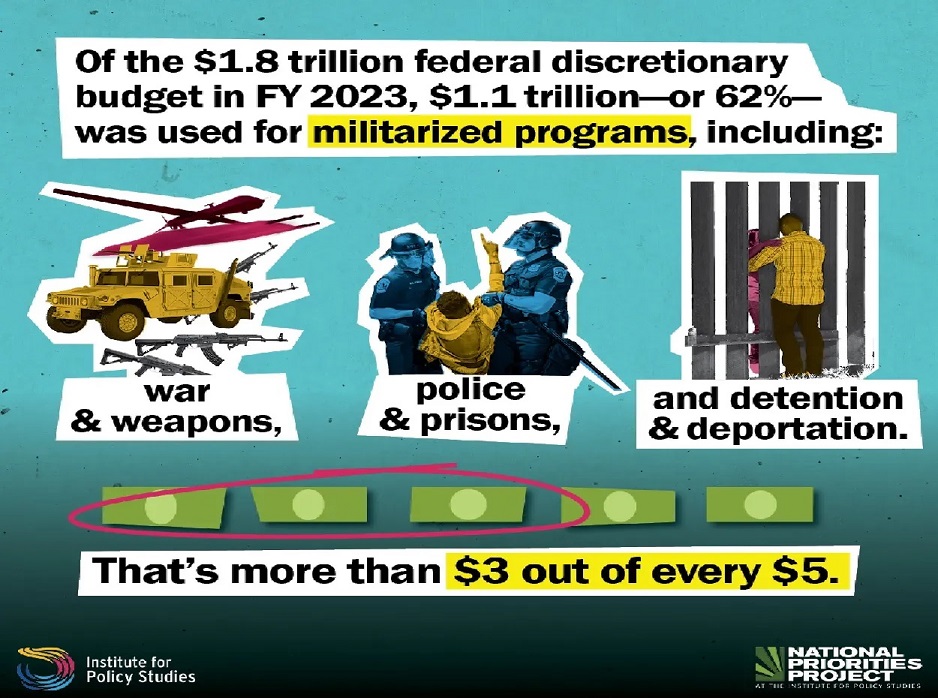
What does military contracting tell us about the priorities of the U.S. ruling class?
CHRISTIAN, SEP 16, 2023 Christian’s Substack
The American public is hurting. The bare necessities—clean water, nutritious food, and affordable housing—are hard to come by.
Tap water is contaminated with lead, PFAS, and other pollutants. The water systems that serve cities and towns suffer additional stressors, including drought, overuse, and a failure to incorporate greywater systems. And, like many necessities, you have to pay for it in the United States: Water utility prices continue to go up and up.
Hunger is a severe problem. ……………………………………
Housing is prohibitively expensive. …………………………………..
What is U.S. Congress doing as the public suffers?
Water Is Not a Priority
Every year, U.S. Congress appropriates money for two federal water funds. The Environmental Protection Agency gives this money to states in the form of grants. The Washington Post recently reported, “Since 2022, the federal allocation has totaled roughly $5.5 billion, amounting to a literal and figurative drop in the bucket for a nation with an estimated $625 billion backlog in projects just to provide cleaner, reliable drinking water.”
In other words, Congress has allocated 0.88 percent of the funding needed to establish infrastructure that dependably provides potable water.
It gets worse. Members of Congress skim funds off the top……………………………………
Food is Not a Priority
Stephen Semler, co-founder of the Security Policy Reform Institute, recently showed that annual U.S. military spending increased during the Trump administration by 20 percent in nominal terms and then increased during the first two years of the Biden administration by 15 percent in real terms. The military budget is now a record $858 billion for fiscal 2023, a bipartisan feat.
Food insecurity “climbed 18 percent during the same stretch,” Semler explained. “Something’s wrong when either military spending or food insecurity spikes over a two-year period. When they soar in tandem, it’s an abomination…”
There is plenty of money available to make sure people don’t go hungry. For example, the amount of money to be spent over several years on new land-based nuclear weapons ($263.9 billion) could instead build 52.5 million community gardens ($2,750 each) across the country, with more than enough money left over ($119.52 billion) to cover a year of food stamps. Tax dollars, we see, could be used to nourish instead of accidentally or deliberately eliminating human life on Earth.
The Housing Crisis……………………………………
Support the Troops
Evidence suggests that the federal government doesn’t even prioritize the troops’ water, food, and housing…………………………………………………………………………………
A State of Permanent Warfare
Military and intelligence personnel don’t deploy themselves. The U.S. ruling class deploys them.
When “successful,” military or intelligence operations open up an economy to multinational corporations, enriching the ruling class. Examples spanning the three main eras of the military-industrial complex (the first Cold War, the “global war on terror”, and today’s “strategic competition”) illustrate this success:……………………………………………………………………………………….
Moreover, U.S. military activity itself is extremely profitable for Wall Street and top corporate executives, as the U.S. military doesn’t shoot, move, or communicate—let alone eat, refuel, fly, or spy—without corporate goods and services. Corporations absorb more than half of the U.S. military budget. Many regularly price gouge the military.
The ruling class is organized and relentless in its pursuit of profit. The three branches of government (legislative, judicial, executive) largely respond to the needs of this class. Some of the richest and/or most influential members of U.S. government, such as a coal baron or a person who has profited from the provision of healthcare, even come from that class.
The Front Burner
A military aircraft, the F-35 Joint Strike Fighter, embodies the priorities of the ruling class. With a lifetime cost expected to top $1.7 trillion, the F-35 is on track to becoming the most expensive weapon of all time………………………………………………………………………………………………………………
One-Two Punch
The military-industrial complex is a one-two punch to the public………………………………………………………………………………… more https://thebusinessofwar.substack.com/p/public-need-versus-the-business-of?utm_source=post-email-title&publication_id=1769284&post_id=137081544&utm_campaign=email-post-title&isFreemail=true&r=c9zhh&utm_medium=email
Hyping Ukraine Counteroffensive, US Press Chose Propaganda Over Journalism

The fact that US officials pushed for a Ukrainian counteroffensive that all but expected would fail raises an important question: Why would they do this? Sending thousands of young people to be maimed and killed does nothing to advance Ukrainian territorial integrity, and actively hinders the war effort.
Even as Ukraine and Russia sat at the negotiation table early in the war, the US made it clear that it wanted the war to continue and escalate. The US’s objective was, in the words of Raytheon board member–turned–Defense Secretary Lloyd Austin, “to see Russia weakened.”
The consensus among policymakers in Washington is to push for endless conflict, no matter how many Ukrainians die in the process. As long as Russia loses men and material, the effect on Ukraine is irrelevant. Ukrainian victory was never the goal.
BRYCE GREENE, FAIR, 15 Sept 23
It has been clear for some time that US corporate news media have explicitly taken a side on the Ukraine War. This role includes suppressing relevant history of the lead-up to the war (FAIR.org, 3/4/22), attacking people who bring up that history as “conspiracy theorists” (FAIR.org, 5/18/22), accepting official government pronouncements at face value (FAIR.org, 12/2/22) and promoting an overly rosy picture of the conflict in order to boost morale.
For most of the war, most of the US coverage has been as pro-Ukrainian as Ukraine’s own media, now consolidated under the Zelenskyy government (FAIR.org, 5/9/23). Dire predictions sporadically appeared, but were drowned out by drumbeat coverage portraying a Ukrainian army on the cusp of victory, and the Russian army as incompetent and on the verge of collapse.
Triumphalist rhetoric soared in early 2023, as optimistic talk of a game-changing “spring offensive” dominated Ukraine coverage. Apparently delayed, the Ukrainian counteroffensive launched in June. While even US officials did not believe that it would amount to much, US media papered over these doubts in the runup to the campaign.
Over the last three months, it has become clear that the Ukrainian military operation will not be the game-changer it was sold as; namely, it will not significantly roll back the Russian occupation and obviate the need for a negotiated settlement. Only after this became undeniable did media report on the true costs of war to the Ukrainian people.
Overwhelming optimism
In the runup to the counteroffensive, US media were full of excited conversation about how it would reshape the nature of the conflict. NATO Secretary General Jens Stoltenberg told Radio Free Europe (4/21/23) he was “confident Ukraine will be successful.” Sen. Lindsey Graham assured Politico (5/30/23), “In the coming days, you’re going to see a pretty impressive display of power by the Ukrainians.” Asked for his predictions about Ukraine’s plans, retired Lt. Gen. Ben Hodges told NPR (5/12/23), “I actually expect…they will be quite successful.”
Former CIA Director David Patraeus, author of the overhyped “surge” strategy in Iraq, told CNN (5/23/23):
I personally think that this is going to be really quite successful…. And [the Russians] are going to have to withdraw under pressure of this Ukrainian offensive, the most difficult possible tactical maneuver, and I don’t think they’re going to do well at that.
The Washington Post’s David Ignatius (4/15/23) acknowledged that “hope is not a strategy,” but still insisted that “Ukraine’s will to win—its determination to expel Russian invaders from its territory at whatever cost—might be the X-factor in the decisive season of conflict ahead.”
The New York Times (6/2/23) ran a story praising recruits who signed up for the Ukrainian pushback, even though it “promises to be deadly.” Times columnist Paul Krugman (6/5/23) declared we were witnessing “the moral equivalent of D-Day.” CNN (5/30/23) reported that Ukrainians were “unfazed” as they “gear up for a counteroffensive.”
Cable news was replete with buzz about how the counteroffensive, couched with modifiers like “long-awaited” or “highly anticipated,” could turn the tide in the war. Nightly news shows (e.g., NBC, 6/15/23, 6/16/23) presented audiences with optimistic statements from Ukrainian President Volodymyr Zelenskyy and other figures talking about the imminent success.
Downplaying reality
Despite the soaring rhetoric presented to audiences, Western officials understood that the counteroffensive was all but doomed to fail. This had been known long before the above comments were reported, but media failed to include that fact as prominently as the predictions for success………………………………………………………………..
Too ‘casualty-averse’?
……………………………………………………………… A mid-July New York Times article (7/14/23) reported that US officials were privately frustrated that Ukraine had become too afraid of dying to fight effectively. The officials worried that Ukrainian commanders “fear[ed] casualties among their ranks,” and had “reverted to old habits” rather than “pressing harder.” A later Times article (8/18/23) repeated Washington’s worries that Ukrainians were too “casualty-averse.”
Acknowledging failure
After it became undeniable that Ukraine’s military action was going nowhere, a Wall Street Journal report (7/23/23) raised some of the doubts that had been invisible in the press on the offensive’s eve…………………………………………………………………………………………………..
Rather than dwelling on the stalled campaign, the New York Times and other outlets focused on the drone war against Russia, even while acknowledging that the remote strikes were largely an exercise in public relations. The Times (8/25/23) declared that the strikes had “little significant damage to Russia’s overall military might” and were primarily “a message for [Ukraine’s] own people,” citing US officials who noted that they “intended to demonstrate to the Ukrainian public that Kyiv can still strike back.” Looking at the quantity of Times coverage (8/30/23, 8/30/23, 8/23/23, 8/22/23, 8/22/23, 8/21/23, 8/18/23), the drone strikes were apparently aimed at an increasingly war-weary US public as well.
War as desirable outcome
The fact that US officials pushed for a Ukrainian counteroffensive that all but expected would fail raises an important question: Why would they do this? Sending thousands of young people to be maimed and killed does nothing to advance Ukrainian territorial integrity, and actively hinders the war effort.
The answer has been clear since before the war. Despite the high-minded rhetoric about support for democracy, this has never been the goal of pushing for war in Ukraine. Though it often goes unacknowledged in the US press, policymakers saw a war in Ukraine as a desirable outcome. One 2019 study from the RAND Corporation—a think tank with close ties to the Pentagon—suggested that an effective way to overextend and unbalance Russia would be to increase military support for Ukraine, arguing that this could lead to a Russian invasion.
In December 2021, as Russian President Vladimir Putin began to mass troops at Ukraine’s border while demanding negotiations, John Deni of the Atlantic Council published an op-ed in the Wall Street Journal (12/22/21) headlined “The Strategic Case for Risking War in Ukraine,” which laid out the US logic explicitly: Provoking a war would allow the US to impose sanctions and fight a proxy war that would grind Russia down. Additionally, the anti-Russian sentiment that resulted from a war would strengthen NATO’s resolve.
All of this came to pass as Washington’s stance of non-negotiation successfully provoked a Russian invasion. Even as Ukraine and Russia sat at the negotiation table early in the war, the US made it clear that it wanted the war to continue and escalate. The US’s objective was, in the words of Raytheon boardmember–turned–Defense Secretary Lloyd Austin, “to see Russia weakened.” Despite stated commitments to Ukrainian democracy, US policies have instead severely damaged it.
NATO’s ‘strategic windfall’
In the wake of the stalled counteroffensive, the US interest in sacrificing Ukraine to bleed Russia was put on display again. In July, the Post‘s Ignatius declared that the West shouldn’t be so “gloomy” about Ukraine, since the war had been a “strategic windfall” for NATO and its allies. Echoing two of Deni’s objectives, Ignatius asserted that “the West’s most reckless antagonist has been rocked,” and “NATO has grown much stronger with the additions of Sweden and Finland.”
In the starkest demonstration of the lack of concern for Ukraine or its people, he also wrote that these strategic successes came “at relatively low cost,” adding, in a parenthetical aside, “(other than for the Ukrainians).”
Ignatius is far from alone. Hawkish Sen. Mitt Romney (R–Utah) explained why US funding for the proxy war was “about the best national defense spending I think we’ve ever done”: “We’re losing no lives in Ukraine, and the Ukrainians, they’re fighting heroically against Russia.”
The consensus among policymakers in Washington is to push for endless conflict, no matter how many Ukrainians die in the process. As long as Russia loses men and material, the effect on Ukraine is irrelevant. Ukrainian victory was never the goal.
‘Fears of peace talks’
Polls show that support for increased US involvement in Ukraine is rapidly declining………………..
The failure of the counteroffensive has not caused Washington to rethink its strategy of attempting to bleed Russia. The flow of US military hardware to Ukraine is likely to continue so long as this remains the goal.
The Hill (9/5/23) gave the game away about NATO’s commitment to escalation with a piece titled “Fears of Peace Talks With Putin Rise Amid US Squabbling.”

But even within the Biden administration, the Pentagon appears to be at odds with the State Department and National Security Council over the Ukraine conflict. Contrary to what may be expected, the civilian officials like Jake Sullivan, Victoria Nuland and Antony Blinken are taking a harder line on perpetuating this conflict than the professional soldiers in the Pentagon. The media’s sharp change of tone may both signify and fuel the doubts gaining traction within the US political class. https://fair.org/home/hyping-ukraine-counteroffensive-us-press-chose-propaganda-over-journalism/
—
Uranium Mining Protections Needed Across the West
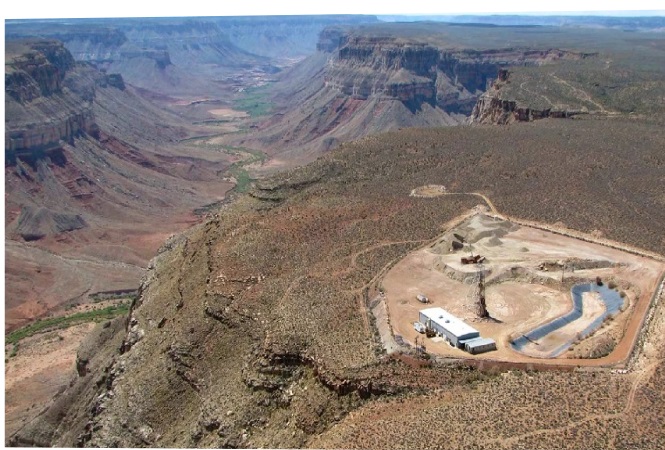
The Biden administration needs to protect communities and water supplies across the West from the dangers of uranium mining.
Geoffrey H. Fettus Senior Attorney, Nuclear, Climate & Clean Energy Program
President Biden’s designation of the Baaj Nwaavjo I’tah Kukveni—Ancestral Footprints of the Grand Canyon National Monument will go far in protecting the rich cultural and ecological value of this majestic landscape. It will safeguard some of the most iconic public lands in the American West from the ravages of destructive mining and destructive waste. This protection has been a top priority for tribes in the area, and the designation is long overdue.
“That’s our aboriginal homelands,” Dianna Sue Uqualla, a Havasupai tribal council member, told the Bureau of Land Management at a public meeting according to Bloomberg Law. The monument will “keep at bay these mining people that are coming in,” and will protect the Grand Canyon from companies that are “desecrating, raping the Mother Earth.”
This is wonderful news, but there is much more to be done about uranium mining across the American West. And there’s also a lot of misinformation out there that muddies what should be a clear path forward to protecting all the people and watersheds of the West from unchecked uranium mining.
Uranium mining contaminated tribal lands for decades
The uranium mining industry has left a dreadful history of contamination and harm across vast swathes of the American West, but especially with respect to the Indigenous People who call this area home. It’s a complicated history that intertwines with the Manhattan Project and the Cold War, and it’s a legacy that has yet to be addressed.
On Navajo land alone, nearly four million tons of uranium ore were extracted from 1944 to 1986. The industry and the U.S. government left behind hundreds of abandoned uranium mines, four inactive uranium milling sites, a former dump site, and the widespread contamination of land and water; this includes the 1979 collapse of a tailings dam in Church Rock, New Mexico, that deposited 93 million gallons of radioactive and chemically contaminated liquid and 1,100 tons of solid radioactive tailings into the Rio Puerco, contaminating the river for more than 60 miles downstream. After decades of pressure, the government has finally started to assess and mitigate this contamination.
Much is left to be done: More than 500 abandoned uranium mines remain on Navajo land.
We need new standards
Back in 2016, the Obama administration was poised to take action on uranium mining standards, but then Donald Trump was elected president. It will come as no surprise that the U.S. Environmental Protection Agency (EPA) under the Trump administration cast aside the Obama EPA’s long-overdue protective environmental standards. In an about-face, the Trump EPA and Nuclear Regulatory Commission (NRC) moved to weaken uranium mining rules.
Once Biden took office in 2021, NRDC had hoped for a new approach. So far, however, we haven’t heard anything from either the EPA or NRC, despite repeated requests by NRDC and other major environmental groups, tribal representatives, and regional groups across the West.
It is time for the EPA to clear the obstacles and move forward on the uranium protections it drew up years ago.
The Biden administration can begin to protect the communities and water resources that have been negatively affected by uranium mining for decades by taking two steps: (1) dissolving a 2020 memorandum of understanding between the EPA and NRC that undercuts the EPA’s ability to enact standards; and (2) issuing protective uranium in situ mining standards that have been sitting on a shelf for years. ……………………………………………………………….
Environmental groups urge regulators to shut down California reactor over safety, testing concerns.

Daily Mail, By ASSOCIATED PRESS, 15 September 2023
LOS ANGELES (AP) – Environmental groups called on federal regulators Thursday to immediately shut down one of two reactors at California´s last nuclear power plant until tests can be conducted on critical machinery they believe could fail and cause a catastrophe.
Friends of the Earth and Mothers for Peace said in a petition filed with the Nuclear Regulatory Commission that tests and inspections have been delayed for nearly 20 years on the pressure vessel in the Unit 1 reactor at the Diablo Canyon Nuclear Power Plant, midway between Los Angeles and San Francisco.
Instead, the groups argue, operator Pacific Gas & Electric has relied on data from similar reactor vessels to justify continued operations at Diablo Canyon, while dismissing indications that the steel wall in Unit 1 might be deteriorating from sustained exposure to radiation and is becoming susceptible to cracking, a condition technically known as embrittlement.
“We will not sit idly by while PG&E cuts corners on Unit 1´s safety,” Hallie Templeton, legal director for Friends of the Earth, said in a statement.
The vessels are thick steel containers that hold nuclear fuel and cooling water in the reactors.
The statement from the anti-nuclear groups contended that PG&E “has repeatedly postponed essential metallurgical tests and ultrasound inspections over the past two decades” on the vessel…………………………………..
The petition, filed Thursday in Washington, was accompanied by a 46-page report by Digby Macdonald, a University of California, Berkeley, professor in nuclear engineering and materials science, who wrote that continued operation of the Unit 1 reactor “poses an unreasonable risk to public health and safety due to serious indications of an unacceptable degree of embrittlement.”
“The reactor should be closed until PG&E obtains and analyzes additional data regarding its condition,” wrote Macdonald, who was retained by the environmental groups.
The petition asks the NRC to convene a hearing to review a 2003 decision by agency staff to extend the testing schedule for the Unit 1 pressure vessel until 2025. According to the groups, the last inspections on the vessel took place between 2003 and 2005. The utility postponed further testing in favor of using results from similar reactors to justify continued operations, they said.
In his report, Macdonald concludes PG&E should have accelerated its testing schedule, not delayed it, to assess possible defects. He noted that unlike most other reactor safety components, the pressure vessel has no independent backup system that can be called upon if it should crack or fracture and lose essential cooling water.
He added that obtaining more testing data on Unit 1 is especially important because its steel has excessive copper and nickel content “that render it more vulnerable to embrittlement.”
The “NRC currently lacks an adequate basis to conclude that Diablo Canyon Unit 1 can be operated safely,” Macdonald said.
Construction at Diablo Canyon began in the 1960s. Critics have long argued that potential shaking from nearby earthquake faults not recognized when the design was approved could damage equipment and release radiation. One nearby fault was not discovered until 2008. The groups argue that the embrittlement assessment is even more critical, given the plant’s seismic vulnerabilities………… https://www.dailymail.co.uk/wires/ap/article-12519587/Environmental-groups-urge-regulators-shut-California-reactor-safety-testing-concerns.html
50 US Lawmakers Reintroduce ‘CBDC Anti-Surveillance State Act’ to Protect ‘the American Way of Life’

BY PATRICIA HARRITY ON
Fifty U.S. lawmakers have reintroduced the CBDC Anti-Surveillance State Act to prohibit the Federal Reserve from issuing a retail Central Bank Digital Currency while protecting innovation and any future development of true digital cash. This is in direct opposition to the Globalists and the WEF agenda that seeks to enslave and remove all personal freedoms and privacy with CCP-style credit scores and surveillance.
U.S. Congressman Tom Emmer (R-MN) who has been a longtime advocate that any Fed-issued digital dollar (central bank digital currency) remain open, permissionless, and private announced on Tuesday that he and 49 other lawmakers have reintroduced the CBDC Anti-Surveillance State Act “to halt the efforts of unelected bureaucrats in Washington D.C. from issuing a Central Bank Digital Currency (CBDC) that dismantles Americans’ right to financial privacy.”
“If not open, permissionless, and private — like cash — a CBDC is nothing more than a CCP-style surveillance tool that can be weaponized to oppress the American way of life.” argues the congressman, “President Biden is willing to compromise the American people’s right to financial privacy for a surveillance-style CBDC. I don’t believe in compromising Americans’ rights,” he added.
CBDC Power
In many Western countries, including England, the USA, and Australia, banks are continuing to push towards the goal of Central Bank Digital Currencies as the only money as they plan to completely phase out cash use before the end of 2024. Individuals may argue that they already mostly use digital banking and debit or credit cards.
However, we have witnessed the freezing of the bank accounts of protesters in 2022 by Canadian PM Justin Trudeau simply for standing against the tyrannical restrictions of the plandemic, and hundreds of personal bank accounts were frozen under special powers.
Although yes, banks already have the power to close your account if they deem it necessary at the moment there is a small number of people already dealing with this, with their only offence being buying Bitcoin or questioning why the banks need to know what we’re doing with our money or questioning the banks ever tightening rules about holding an account with them, imagine what’s going to happen with CBDCs as the only legal currency says Brad Bleckwehl author of from the gutter up.
He continues:
“If you think the careers, contracts, and accounts of famous people getting canceled for saying or doing something that offends has nothing to do with you.. think about how ever-tightening PC culture is growing, and how authoritarian our Western governments have been becoming in recent years.”
“They’re literally trying to pass misinformation and censorship bills so they can legally control what we’re allowed to talk about. Combine the loss of freedom of speech with the ability to blackball us financially by freezing CBDCs, and we’re headed to a very bleak time for society. It’s not just going to be what is currently considered socially acceptable or not, it’s going to be forced behavior, forced ways of thinking. Look at how they bullied us with covid vaxxes.” (source).
The news of this pushback against the authoritarian control of our finances is huge
CBDC Anti-Surveillance State Act Updated, Reintroduced
Congressman Emmer posted on social media platform X: “Today, with 49 of my Republican colleagues, I reintroduced the CBDC Anti Surveillance State Act.” (source)……………………………………………………………………………………………………………….
“Bottom Line: If not open, permissionless, and private — like cash — a CBDC is nothing more than a CCP-style surveillance tool that can be weaponized to oppress the American way of life,” the lawmaker concluded,
The House Financial Services Committee will consider his bill this month. more https://expose-news.com/2023/09/14/50-us-lawmakers-reintroduce-cbdc-anti-surveillance-state-act-to-protect-the-american-way-of-life/
Sunak gives China green light to build UK nuclear plants despite nationbeing ‘threat to our way of life’
The Government has rejected calls
for Chinese state-linked firms to be excluded entirely from Britain’s
nuclear sector. China will not be permanently barred from investing in
Britain’s nuclear energy despite posing a “threat to our open and
democratic way of life”, the Government has said.
Ministers were accused
of a “patronising” and “misleading” approach by senior
Conservatives after ruling out a ban and insisting existing rules on China
are already tough enough. A committee of MPs suggested that allowing firms
with links to the Beijing regime to be involved in the civil nuclear sector
provided an “incentive and opportunity for espionage”.
In its response,
the Government said that it would consider new ways to scrutinise China’s
involvement in Hinkley Point C, which is already well under way, but would
not impose a blanket ban. It said: “The Government will continuously
review measures to ensure that economic security and critical national
infrastructure is protected. All investment involving critical
infrastructure is subject to thorough scrutiny and needs to satisfy strong
legal, regulatory, and national security requirements.” Future nuclear
projects would be “subject to these individual assessments” in which
the Government characterises as “a one step at a time approach” –
although a Chinese firm has already been bought out of the Sizewell C
project in which it was originally an investor.
iNews 14th Sept 2023
Top candidate for head of European Investment Bank cautions about defense, nuclear investments
France has been pushing for a candidate sympathetic to steering the EIB funds to nuclear projects and defense investments.
Vestager cautions about defense, nuclear investments in EIB pitch
BY PAOLA TAMMA. SEPTEMBER 15, 2023, Politico
The European Investment Bank is ‘for everybody,’ Dane says in an effort to win wider support for job bid.
SANTIAGO DE COMPOSTELA, Spain — The European Investment Bank should not become a “political fighting arena” for investments in nuclear energy or defense, said Margrethe Vestager, who’s trying to convince European Union finance ministers to pick her to head the powerful government-backed lender.
Vestager, currently on leave as EU digital and antitrust chief, is one of the top candidates to take over from President Werner Hoyer next year and lead the bank that finances EU policies, from fighting climate change to rebuilding Ukraine.
She stressed that a successful candidate needed broad support, including smaller countries, because “the bank is for everybody, big shareholders as well as small shareholders,” she told POLITICO on the sidelines of a finance ministers’ gathering in Santiago de Compostela.
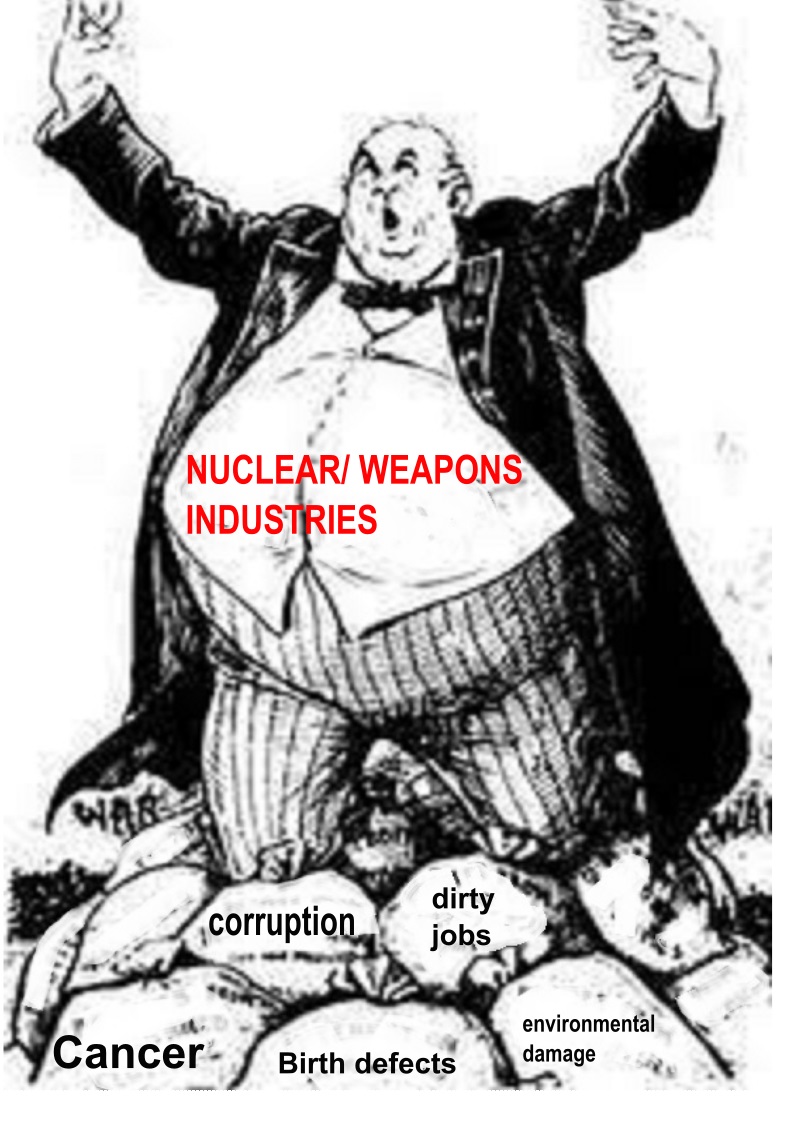
France and Germany, who together with Italy, account for nearly half of the bank’s capital, haven’t said who they will back. France has been pushing for a candidate sympathetic to steering the EIB funds to nuclear projects and defense investments. It also wants someone willing for the cautious lender to take on more risks.
Germany has emphasized that “sound banking is essential” and that “the mission of the EIB mustn’t be overstretched,” Finance Minister Christian Lindner said ahead of the meeting.
Nuclear “is a good example of the fact that the bank should not be a political fighting arena,” Vestager said. The EIB “should not take sides” and should “engage in processes that maybe can find a new balance.”……………more https://www.politico.eu/article/margrethe-vestager-nuclear-defense-eib-european-investment-bank-pitch-smaller-nations/
USA can’t get investors for Small Nuclear Reactors: no problem – flog them off to Ghana!
U.S. Announces New Support for Ghana’s Civil Nuclear Energy Program under the FIRST Capacity Building Program
US Embassy in Ghana 16 Sept 23

Accra, Ghana – U.S. Principal Deputy Assistant Secretary of State for International Security and Nonproliferation Ann Ganzer joined Ghanaian counterparts today to announce further U.S. support for establishing Ghana as a Small Modular Nuclear Reactor (SMR) Regional Training Hub and center of excellence for the sub-Saharan African region……………………………………………………………………………………….
Chris Hedges: Stella Assange Speaks Out on the Conditions of Julian Assange’s Imprisonment
SCHEERPOST, September 14, 2023
Julian Assange has languished in Belmarsh Prison in the UK since 2019 as he fights extradition to the US to face prosecution under the Espionage Act.
Prison is always a political tool, and in the case of whistleblowers like Julian Assange, the use of incarceration to suppress, discourage, and silence dissent is self-evident. Since being imprisoned, Assange has married and even started a family—but has been kept apart from his wife and children. In the second part of a two-part conversation, Stella Assange and Chris Hedges discuss the conditions of Julian’s incarceration, and how it offers a glimpse into the overall brutality of the prison system……………………………………………………
Nuclear Free Local Authorities concerned over safety risks regarding nuclear-armed U.S. base planned for RAF Lakenheath, Suffolk
A combination of tremendous heroism, good fortune and the will of
God” – will this be the future of safety at a nuclear-armed Lakenheath?
With evidence mounting that the United States Air Force intends to return
nuclear weapons to RAF Lakenheath in Suffolk, the Nuclear Free Local
Authorities have written to emergency planners in the county, and on their
recommendation now to the Ministry of Defence, to question their
preparedness for any future accident involving the destruction of a
military aircraft carrying nuclear weapons, either at Lakenheath or in
transit to or from the airbase.
NFLA 14th Sept 2023
Radioactive material leaks detected at Japan’s plutonium nuclear fuel research facility

New Straits Times By Bernama – September 13, 2023
TOKYO: The Japan Atomic Energy Agency (JAEA) has confirmed the detection of radioactive material leaks in one of its nuclear fuel research facilities but reported no adverse effects on the health of the staff or the surrounding environment, Xinhua quoted local media reports.
The leaks were detected within the Plutonium Fuel Development Room No. 3 at the JAEA’s Nuclear Fuel Cycle Engineering Laboratories, located in Tokai Village, Ibaraki Prefecture, national news agency Kyodo reported, citing the agency.
Last Friday, the Plutonium Fuel Development Room No. 3 identified pollution caused by radioactive materials at four locations within the facility.
The pollution was discovered during a routine inspection of the glovebox equipment, which is designed to be airtight………………………..
At present, the cause of the radioactive material leak is under investigation. Authorities at the laboratories suspected that the radioactive materials may have seeped out of the equipment. –BERNAMA https://www.nst.com.my/world/world/2023/09/954873/radioactive-material-leaks-detected-japans-nuclear-fuel-research-facility
NATO’s Steadfast Defender Drills Near Russia Signal Bloc’s Shift to ‘War Footing’
Ilya Tsukanov, Sputnik News 11 Sept 23
All thirty-one NATO countries plus Sweden are reportedly gearing up to conduct the bloc’s biggest military drills since the Cold War in early 2024. Sputnik reached out to Michael Maloof, a former security policy analyst with the Office of the Secretary of Defense, to get a sense of the risks posed by the exercises.
British business media reported Monday that NATO plans to hold large-scale exercises across Germany, Poland and the Baltic countries between February and March of 2024, with the drills’ pretext being to practice “repelling Russian aggression” against allies. The drills, dubbed Steadfast Defender 24, are set to involve up to 41,000 troops, 50 warships, and to feature between 500-700 air combat missions, according to sources familiar with the plans.
The exercises are the first of their kind since 2021, with the alliance previously mostly avoiding large-scale exercises in Russia’s direct vicinity amid concerns about Moscow’s possible reaction amid repeated warnings by Russian Foreign Intelligence that some NATO countries may be preparing to transform the Ukrainian proxy conflict into a direct shooting war with Russia.
The drills are “designed to put Russia and allies in the most unfavorable position,” former Pentagon analyst Michael Maloof told Sputnik.
Pointing to the exercises’ expected heavy focus on air power, something Ukraine has lacked utterly throughout its three-month long counteroffensive this summer, Maloof emphasized that the drills appear aimed at going “from being reactionary in terms of reacting to a crisis, to actually going on a war footing” on NATO’s part, “assuming that there’s an invasion, and that Russia has allies participating.”
The exercises will be meant to “show coordination on a wartime footing,” the observer said, and NATO will likely use experience gained by observing fighting in Ukraine to “coordinate their air, sea, land, but also their space and cyber capabilities together.”
“That said,” Maloof noted, “the reality is” that much of NATO’s stocks of war materiel “have been depleted because of Ukraine,” with Europe and the United States each running low on weapons and ammunition after sending nearly $100 billion in arms assistance to Kiev over the past 18 months.
“If, in fact, there was a war, Russia would certainly activate ships and other aircraft and what have you in international waters and perhaps off the coast of the United States to deal with” US attempts to set up a logistical supply train across the Atlantic.
The observer doesn’t believe that the alliance is “really ready for a real confrontation and real head-on war” with Russia, with any conflagration certain to result in “tremendous losses.”…………………. more https://sputnikglobe.com/20230911/natos-steadfast-defender-drills-near-russia-signal-blocs-shift-to-war-footing-1113292863.html
1 This Month
23-25 October – on Zoom – World BEYOND War’s annual global conferenc


Shut down the radiation-damaged Heysham nuclear reactors now
To see nuclear-related stories in greater depth and intensity – go to https://nuclearinformation.wordpress.com

Say No to NASA’s Reckless Nuclear Reactor on the Moon
Say No to NASA’s Reckless Nuclear Reactor on the Moon

-
Archives
- October 2026 (199)
- September 2026 (339)
- August 2026 (330)
- July 2026 (355)
- June 2026 (287)
- May 2026 (306)
- April 2026 (356)
- March 2026 (251)
- February 2026 (267)
- January 2026 (308)
- December 2025 (358)
- November 2025 (359)
-
Categories
- 1
- 1 NUCLEAR ISSUES
- business and costs
- climate change
- culture and arts
- ENERGY
- environment
- health
- history
- indigenous issues
- Legal
- marketing of nuclear
- media
- opposition to nuclear
- PERSONAL STORIES
- politics
- politics international
- Religion and ethics
- safety
- secrets,lies and civil liberties
- spinbuster
- technology
- Uranium
- wastes
- weapons and war
- Women
- 2 WORLD
- ACTION
- AFRICA
- Atrocities
- AUSTRALIA
- Christina's notes
- Christina's themes
- culture and arts
- Events
- Fuk 2022
- Fuk 2023
- Fukushima 2017
- Fukushima 2018
- fukushima 2019
- Fukushima 2020
- Fukushima 2021
- general
- global warming
- Humour (God we need it)
- Nuclear
- RARE EARTHS
- Reference
- resources – print
- Resources -audiovicual
- Weekly Newsletter
- World
- World Nuclear
- YouTube
-
RSS
Entries RSS
Comments RSS

