Activists want California nuclear reactor closed over safety concerns
EHN Staff September 17, 2023 https://www.ehn.org/activists-want-california-nuclear-reactor-closed-over-safety-concerns-2665541415.html
Washington Post journalist Anumita Kaur reports about environmental groups that have demanded the federal government immediately shut down one of two reactors at California’s last nuclear power plant, stating that until tests are conducted on critical components, there is risk of “nuclear meltdown.”
In a nutshell:
The groups, Friends of the Earth and Mothers for Peace, filed a petition with the Nuclear Regulatory Commission, citing concerns about the risk of a nuclear meltdown due to delayed inspections of critical components, specifically the Unit 1 reactor’s pressure vessel. They are calling for comprehensive testing and inspection using ultrasound equipment and other methods to assess the vessel’s structural integrity before resuming operations. PG&E, the plant’s operator, asserts compliance with regulatory standards and safety measures.
Key quote:
“We will not sit idly by while PG&E and the Nuclear Regulatory Commission rubber stamp and streamline Diablo Canyon’s extension,” said Hallie Templeton, legal director at Friends of the Earth. “Our latest filing targets unlawful, delayed inspections of the nuclear power plant’s crumbling, dangerous pressure vessel.”
The big picture:
A nuclear meltdown could have severe health and environmental consequences. In the event of a meltdown, radioactive materials can be released into the environment, posing a significant risk to human health. Exposure to radiation can lead to acute and long-term health issues, including cancer, radiation sickness, and genetic mutations. The environmental impact also includes contamination of air, soil, and water, affecting ecosystems and potentially requiring long-term evacuation of affected areas.
Read the article in the Washington Post.
Last year, Peter Dykstra wrote about utilities whose nuke plants are facing early closure because they’re aging and priced out of the market can apply to the DOE for relief.
UN nuclear agency slams Iran for barring inspectors from monitoring program
The UN nuclear watchdog has criticised Iran for effectively barring several of its most experienced inspectors from monitoring the country’s program.
International Atomic Energy Agency (IAEA) chief Rafael Grossi on Saturday condemned Iran’s “disproportionate and unprecedented” move to bar multiple inspectors assigned to the country, hindering its oversight of Tehran’s atomic activities.
Iran’s move is a response to a call led by the United States, Britain, France and Germany at the IAEA’s Board of Governors this week for Tehran to cooperate immediately with the agency on issues including explaining uranium traces found at undeclared sites.
Grossi made clear, however, that he believed Iran had overreacted.
“I strongly condemn this disproportionate and unprecedented unilateral measure which affects the normal planning and conduct of agency verification activities in Iran and openly contradicts the cooperation that should exist between the agency and Iran,” he said in a statement.
The strongly worded statement came amid longstanding tensions between Iran and the agency, which is tasked with monitoring a nuclear program that Western nations have long suspected is aimed at eventually developing a nuclear weapon. Iran insists the program is peaceful.
Iran’s move, known as “de-designation” of inspectors, is allowed; member states can generally veto inspectors assigned to visit their nuclear facilities under the nuclear Non-Proliferation Treaty (NPT) and each country’s safeguards agreement with the agency governing inspections.
But the IAEA said Tehran’s decision went beyond normal practice. It said Iran had told it that it would bar “several” inspectors, without giving a number.
“These inspectors are among the most experienced agency experts with unique knowledge in enrichment technology,” the agency said. “With today’s decision, Iran has effectively removed about one third of the core group of the agency’s most experienced inspectors designated for Iran.”
Iran’s foreign ministry linked the move to what it said was an attempt by the US and three European countries to misuse the body “for their own political purposes”. He appeared to be referring to Britain, France and Germany, which said on Thursday they would maintain sanctions on Iran related to its nuclear and ballistic missile programs.
“Of course, Iran will continue its positive cooperation within the framework of the agreements that have been made, and emphasise the necessity of the agency’s neutrality,” he added.
A Vienna-based diplomat said Iran had de-designated all the French and German members of the IAEA inspection team. There were already no US or British members.
The Vienna-based IAEA reported earlier this month that Iran had slowed the pace at which it is enriching uranium to nearly weapons-grade levels. That was seen as a sign that Tehran was trying to ease tensions after years of strain between it and the US.
Iran and the US are negotiating a prisoner swap and the release of billions of dollars in Iranian assets frozen in South Korea.
Then-President Donald Trump unilaterally pulled the US out of the accord in 2018, restoring crippling sanctions. Iran began breaking the terms a year later. Formal talks in Vienna to try to restart the deal collapsed in August 2022.
Ex-Ukrainian president pictured wearing Nazi symbol (PHOTOS)

https://www.rt.com/russia/583014-poroshenko-nazi-patch-ukraine/
https://www.rt.com/russia/583014-poroshenko-nazi-patch-ukraine/ 17 Sept 23
Pyotr Poroshenko, the former president of Ukraine, was photographed wearing a symbol on his military fatigues that was created by the Nazis, during a meeting with Ukrainian troops last week.
The politician often showcases supplies such as quadcopter drones, household equipment, or even armored vehicles in his social media and PR, to emphasize his personal contribution to the war effort against Russia.
The images posted on his social media accounts last Saturday show him wearing a military patch with the so-called Black Sun, or ‘Sonnenrad.’ The symbol originates from Nazi Germany and is extensively used by various neo-Nazi groups around the world to denote their political leanings.
The infamous Ukrainian military unit, the Azov Batallion, for example, featured the Sonnenrad in its original insignia but later removed it as it attempted to downplay its association with far-right ideologies.
The controversial patch appears to come from the 36th Marine Brigade of the Ukrainian Armed Forces. An earlier photo of the ex-president showed him clasping hands with Valery Prozapas, a member of Poroshenko’s European Solidarity party and a captain serving in the 36th Brigade, who wore an identical emblem.
The 10th Mountain Assault Brigade, which Poroshenko was visiting while sporting the patch on his jacket shoulder, is called ‘Edelweiss’ after Zelensky formally assigned the designation to the unit in February.
The Ukrainian military denies that the name has anything to do with the Nazi-era 1st Mountain Division of the Wehrmacht, which is notorious for war crimes committed by its troops on the Eastern front, and used the Edelweiss as an insignia.
The prevalence of neo-Nazi sympathizers among Ukrainian troops after the 2014 coup in Kiev has been thoroughly documented by researchers and the international press. However, this has been largely ignored by the Western media since the hostilities between Russia and Ukraine broke out last year.
In June, the New York Times contended that the widespread use of Nazi iconography in Ukraine was a “thorny issue,” emphasizing it does not reflect the true ideology of those displaying them.
Moscow, on the other hand, has called the empowerment of far-right nationalists in modern Ukraine one of the key reasons for the ongoing conflict.
Israel’s nuclear commission head refuses to side by High Court – in the case of a constitutional crisis
Brig.-Gen. (res.) Moshe Edri, unofficially affiliated with the ruling Likud party, has not committed to siding with the court in case of a constitutional crisis.
By JERUSALEM POST STAFF SEPTEMBER 17, 2023 https://www.jpost.com/breaking-news/article-759427
The head of Israel’s Atomic Energy Commission (IAEC) as of Sunday has yet to address a request by other members of the commission to adhere to the High Court of Justice in the case that the government refuses to respect any of its rulings, N12 reported on September 17.
Brig.-Gen. (res.) Moshe Edri, unofficially affiliated with the ruling Likud party, was asked by his fellow IAEC members to announce along with other Israeli security establishment heads to “choose the kingdom over the king,” if Prime Minister Benjamin Netanyahu’s government does not respect a potential High Court ruling on the reasonableness standard amendment to Basic Law: The Judiciary.
Edri, who formerly headed the Defense Ministry’s Special Measures Division, has been acting as IAEC director-general since July 2022.
Nuclear scientists are against Israel’s judicial reform
Senior nuclear scientists in the Israel Atomic Energy Commission are considering resigning in protest against the government’s judicial reform plan, Channel 13 reported two months ago.
The groups of scientists, dozens as per the report, are still discussing whether or not to resign.
These scientists are reportedly targeted across the globe due to the nature of their occupation and have had security detail attached following Iranian threats on their lives.
The report continues, adding that any decision is unlikely to be taken as a united group, but rather as individuals.
Why this Ukrainian nuclear plant is now on brink of a ‘Fukushima’ disaster.
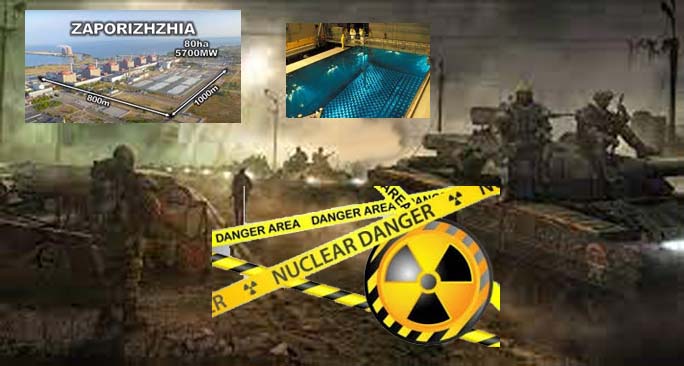
The chance of a serious disaster at the Russian-occupied nuclear power
plant in Ukraine has risen to one in five, a leading engineer at the
Soviet-era facility has warned. A recent exodus of top staff and the power
station’s use as a military base by Chechen troops are among the reasons
why a “Fukushima scenario” could happen at any time, according to one
of the ten most senior engineers at the plant near Zaporizhzhia, which had
a prewar workforce of 11,000.
The shortage of expertise is so acute that
janitors, secretaries and “blue-collar” workers are posing as engineers
in lab coats to dupe international observers into believing that the
Russians have the necessary staff to avert disaster, according to sources
with knowledge of conditions inside the facility. The Zaporizhzhia plant is
the largest in Europe. Before Russian soldiers arrived last year, only 160
senior staff members were licensed to supervise its six reactors. Of these,
about 30 agreed to collaborate with the Russians, while the remaining 80
per cent stayed in the adjoining occupied town of Enerhodar, ready to work
in an emergency. But a brutal crackdown over the summer against any
residents yet to obtain Russian passports forced 100 of those engineers to
take the perilous journey to escape.
Times 16th Sept 2023
September 14, 2023: Dounreay decommissioning end date that proved to be unachievable

By Alan Hendry – alan.hendry@hnmedia.co.uk, 14 September 2023
The end of an era for Caithness… the last chapter in a pioneering
industrial story that began in the black-and-white world of the 1950s… a
final farewell to our great atomic age… Or at least, it would have been
if a prediction made 11 years ago had proved to be accurate.
It was in May 2012 that Roger Hardy, then managing director of Dounreay Site Restoration
Ltd (DSRL), announced a target for the demolition of the nuclear site that
had transformed the county’s socio-economic landscape over the course of
six decades. Dounreay’s operators were setting a specific end date of
September 14, 2023.
That was when all redundant facilities needed to be
flattened and the waste sorted, segregated and made safe for the long term,
according to Mr Hardy. It was a big ask, he acknowledged at the time, but
staff were responding to the challenge: “No-one seems hugely surprised by
what we think is achievable.”
It was destined not to be achievable after
all. The current deadline for the clean-up is 2033, a full decade beyond
that 2012 forecast – although questions have been raised as to whether
even this revised schedule is a realistic one. Earlier this year,
ex-councillor Roger Saxon, a former chairman of Dounreay Stakeholder Group,
expressed the view that 2033 would be unachievable. He was concerned that
momentum had been lost on the decommissioning programme.
John O’Groat Journal 14th Sept 2023
The U.K.’s Goldilocks Moment For Nuclear Power

Christine Ro. Forbes, 17 Sept 23
You hear it up and down the U.K.: the future of nuclear energy will be small and flexible. Of course, people have been claiming for years now that small modular reactors (SMRs) are just about ready. As with so many technological breakthroughs, the reality has lagged behind the optimism.
Scale is not just a matter of technical preference, as the heated debates over the Sizewell C proposal indicate.
Alison Downes is a campaigner with Stop Sizewell C, an organization attempting to put the brakes on a nuclear mega-project on the eastern coast of England. Like the also-contested Hinkley Point C nuclear plant, Sizewell C would be a two-reactor, 3.2-gigawatt power station. It would be located near the smaller Sizewell B plant currently in operation. According to the operator, EDF, Sizewell C would produce enough electricity for around 6 million homes. EDF expects it to be operational in 2034, but construction has already lagged behind expectations.
Stop Sizewell C has a number of reasons for opposing the proposed Sizewell C plant. First, the project is expensive. The estimated price tag is £20 to 30 billion, and the projected expenses have continued to tick up.
Then there are the ecological concerns. The plant would be sited in a picturesque conservation area next to a bird reserve. Some are worried about coastal erosion. There are also uncertainties about the exact source of the water that will be critical to the plant’s operations, which has led to legal challenges.
Compared to large-scale nuclear in an ecologically delicate area, Downes argues that “there are alternative ways of making progress on our climate objectives”. She’s in favour of cheaper, quicker investments in renewable energy………………………………………….
Downes also believes that the massive Sizewell C project is politically popular partly because of its size. “Any big infrastructure project creates jobs,” as she points out.
The U.K. government is supporting nuclear in both big and small forms. At the launch of the Net Zero Nuclear initiative on September 7, Andrew Bowie, the U.K.’s minister for nuclear and networks, said, “We have launched a nuclear power revival in the UK, with projects like Hinkley and Sizewell C, but also with Great British Nuclear supporting the latest cutting-edge technologies like small modular reactors.”

Great British Nuclear is not an energy-focused reality show, but a young government unit that has kicked off its work with a technical selection process for SMRs. The hope is that these will be operational in the mid-2030s. In other words, the earliest SMRs could come online around the same time as Sizewell C, which complicates discussions of which would be developed faster.
Once they become viable, SMRs would be cheaper and faster to build, while using less fuel and generating less waste (although this is contested). Nuclear waste remains a prime concern for nuclear skeptics like Downes, given the almost inconceivably long timescales and uncertainty about what to actually do with the stuff.
Of course, the trade-off is that SMRs would generate less electricity – about 1/3 of the capacity of conventional big nuclear reactors. The sheer amount of energy supply is of course important. Yet conversations about the scale of nuclear energy production have tended to lack parallel discussion of energy consumption, and how to encourage energy conservation………………………………………………
For the time being, the U.K. is hedging its bets by investing in both big (controversial) and small (nonexistent) nuclear reactors. Other countries are looking to this corner of Europe for clues as to whether they too should be scaling up or down their nuclear prospects.
It’s not an either/or situation, of course, as the U.K.’s diversified nuclear options suggest. But there are limits to both budgets and political room for maneuver, as well as limited time to get the energy mix right as the climate transforms for the worse……………………………….. https://www.forbes.com/sites/christinero/2023/09/17/the-uks-goldilocks-moment-for-nuclear-power/?sh=794417ee39a3
A nuclear bomb is still missing after it was dropped off the Georgia coastline 65 years ago
Since 1950, the US military has been involved in 32 “broken arrow” incidents, where they lost or dropped nuclear weapons or other issues, like fires, were involved.
In his book “Command and Control,” Eric Schlosser wrote that in 1957 Air Force planes unintentionally dropped a nuclear weapon once every 320 flights. Coupled with the high rate of B-52 bomber crashes, there was the potential for about 19 incidents involving nuclear weapons each year.
Jenny McGrath Sep 16, 2023, Business Insider
- In 1958, two Air Force jets collided over Georgia, and one was carrying a nuclear weapon.
- The plane dropped the bomb off the coast of Tybee Island and landed safely.
- Several searches have failed to find the weapon in the decades since.
Every once in a while, a high reading of radioactivity off the coast of Tybee Island, Georgia, sends the US government scrambling to look for a nuclear weapon that’s likely hidden 13 to 55 feet below the ocean and sand, buried in the seafloor.
On February 5, 1958, two Air Force jets collided in mid-air during a training mission. The B-47 strategic bomber carried a Mark 15 thermonuclear bomb.
For over two months, the Air Force and Navy divers searched a 24-square-mile area in the Wassaw Sound, a bay of the Atlantic Ocean near Savannah. They never found the nuclear bomb.
Forty years later, a retired Air Force officer who remembered newspaper stories about the lost bomb from his childhood started a search for it.
“It’s this legacy of the Cold War,” said Stephen Schwartz, author of “Atomic Audit: The Costs and Consequences of US Nuclear Weapons Since 1940.” “This is kind of hanging out there as a reminder of how untidy things were and how dangerous things were.”
But some experts say that even if someone finds the bomb, it may be better to leave it buried.
An armed training mission
At the time of the collision, it was “common practice” for the Air Force pilots on training missions to carry bombs on board, according to a 2001 report about the Tybee accident.
The purpose of the training mission was to simulate a nuclear attack on the Soviet Union. They practiced flying over different US cities and towns to see whether the electronic beam would reach its target…………………………………………………………………………………………………………………………………
In 2004, Richardson told CBS News he regretted dropping the bomb because of all the trouble it caused.
“What I should be remembered for is landing that plane safely,” he said. “I guess this bomb is what I’m going to be remembered for.”
The question of the plutonium capsule………………………………………………………………
The US government and military have repeatedly said the Tybee weapon didn’t contain a plutonium capsule when Richardson jettisoned it. A receipt for the bomb that Richardson signed at the time said he wouldn’t allow the insertion of an “active capsule” into the weapon.
A 1966 letter declassified in 1994 complicated the picture. It referred to then-Assistant Defense Secretary Jack Howard’s testimony before a congressional committee calling the Tybee bomb a complete nuclear weapon, with plutonium included. In 2001, a military spokesman told The Atlantic that they had recently spoken with Howard, and “he agreed that his memo was in error.”……………………………………………………………………………………………………………………….
One mishap among many
Less than a month after Richardson jettisoned the Tybee bomb, another B-47 accidentally dropped a nuclear weapon on South Carolina. It didn’t contain plutonium but left a 50-foot crater in a family’s yard. A few family members had minor injuries but everyone survived.
Since 1950, the US military has been involved in 32 “broken arrow” incidents, where they lost or dropped nuclear weapons or other issues, like fires, were involved.
In his book “Command and Control,” Eric Schlosser wrote that in 1957 Air Force planes unintentionally dropped a nuclear weapon once every 320 flights. Coupled with the high rate of B-52 bomber crashes, there was the potential for about 19 incidents involving nuclear weapons each year.
Between 1960 and 1968, the US military kept jets armed with nuclear weapons at the ready in case of a surprise nuclear attack. A series of near misses and serious accidents with nuclear weapons caused the Air Force to end the program.
“I don’t think we’re going to go back to the bad old days of putting our nuclear weapons on aircraft,” Schwartz said…………………………. https://www.businessinsider.com/missing-nuclear-bomb-georgia-coast-still-not-found-2023-9
—
Zelensky Implies Ukrainian Refugees in Europe Will Resort to Terrorism If West Curtails Aid

Despite Ukraine’s faltering counteroffensive, the Ukrainian leader said he was preparing for a long war and rejected the idea of diplomacy with Russian President Vladimir Putin.
He told The Economist it would not be a ‘good story’ for Europe if it were to ‘drive these people into a corner’
By Dave DeCamp / Antiwar.com September 16, 2023 https://scheerpost.com/2023/09/16/zelensky-implies-ukrainian-refugees-in-europe-will-resort-to-terrorism-if-west-curtails-aid/
Ukrainian President Volodymyr Zelensky implied in an interview with The Economist that Ukrainian refugees in Europe might resort to terrorism if Western aid to Ukraine is curtailed.
The Economist report reads: “Curtailing aid to Ukraine will only prolong the war, Mr Zelensky argues. And it would create risks for the West in its own backyard. There is no way of predicting how the millions of Ukrainian refugees in European countries would react to their country being abandoned. Ukrainians have generally ‘behaved well’ and are ‘very grateful’ to those who sheltered them. They will not forget that generosity. But it would not be a ‘good story’ for Europe if it were to ‘drive these people into a corner.’”
Zelensky also said in the interview, published on September 10, that anyone who is not supporting Ukraine is with Russia. “If you are not with Ukraine, you are with Russia, and if you are not with Russia, you are with Ukraine. And if partners do not help us, it means they will help Russia to win. That is it,” he said.
Despite Ukraine’s faltering counteroffensive, the Ukrainian leader said he was preparing for a long war and rejected the idea of diplomacy with Russian President Vladimir Putin. The report reads: “Tapping loudly on the table, Mr. Zelensky rejects outright the idea of compromise with Vladimir Putin. War will continue for ‘as long as Russia remains on Ukrainian territory,’ he says.”
While worried about sustaining support from the West for the long-term, Zelensky said he does not expect to lose US backing if former President Trump is elected in 2024. He said Trump would “never” support Putin. “That isn’t what strong Americans do,” he added.
The Biden administration seems happy to support an open-ended conflict and is looking to tie the hands of a future president by negotiating a deal with Ukraine for long-term military support. The US and other G7 nations vowed at the recent NATO summit in Vilnius to negotiate their own bilateral security deals with Ukraine.
Making Britain a target for nuclear retaliation
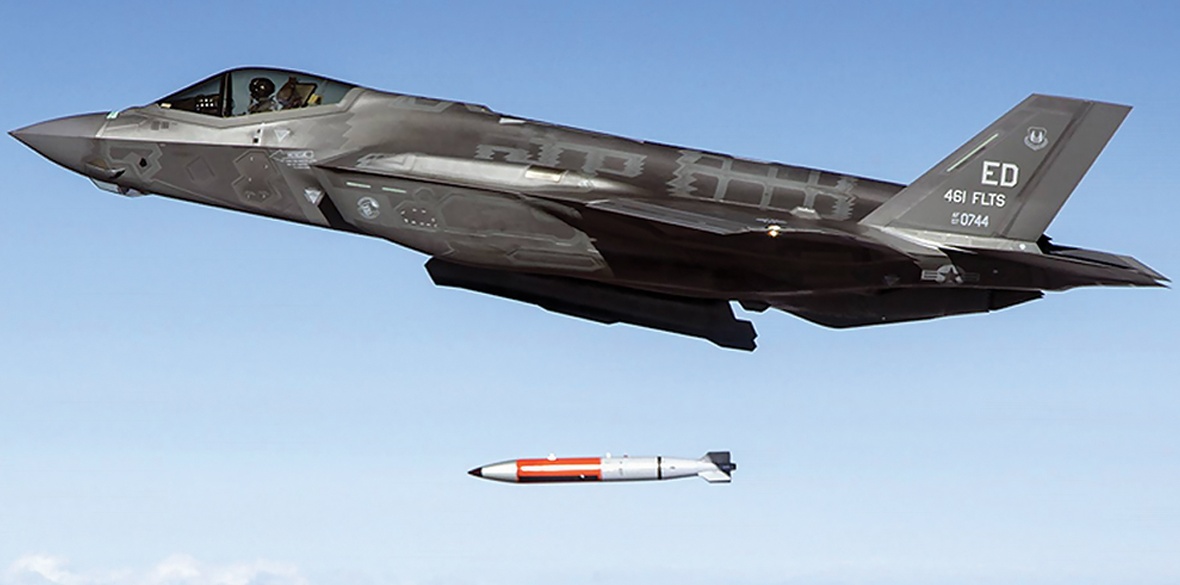
The new bomb will also be located in five other European countries and assigned to Nato. The presence of these US nuclear weapons in Europe has already been used by Putin to justify his recent movement of Russian nukes to Belarus. Their return to Britain has led to promises of Russian countermeasures.
It’s beyond irresponsible that the UK government is allowing the deployment of the US new B61-12 guided nuclear bomb, writes KATE HUDSON
16 Sept 23 https://morningstaronline.co.uk/article/f/making-britain-a-target-for-nuclear-retaliation—
ABOUT £9 billion of this year’s massive expansion in military spending is earmarked for nuclear weapons — that’s on top of over £205bn already being shelled out on replacing Britain’s Trident nuclear weapons system.
The deployment of the new B61-12 to Europe undermines prospects for global peace and ensures Britain will be a target in a nuclear conflict between the US/Nato and Russia.
Everyone needs to know that this is not a local or regional problem confined to East Anglia. In the event of a war, certainly Lakenheath will be targeted. But so will Britain’s other nuclear facilities, as well as major cities. The fact is, we are all at greater risk than ever if these weapons come back to Britain.
And no doubt there’ll be plenty extra spent on increasing the nuclear arsenal, announced in 2021, in spite of it being a breach of international law.
So you’d think there was already enough nuclear weaponry in Britain. But no. We’re having US nuclear weapons foisted on us too, without any public or parliamentary discussion.
As Diane Abbott wrote in these pages last weekend, the United States Congress has been informed of this development, but no such information has been provided to the British Parliament.
Repeated questions put in the House of Commons usually result in the non-information that “the Ministry of Defence is unable to comment on US spending decisions and capabilities, which are a matter for the US government. It remains long-standing UK and Nato policy to neither confirm nor deny the presence of nuclear weapons at a given location.”
Is this obfuscation, or can the US really put nuclear weapons here without our government’s say-so? Is this the much-vaunted “special relationship” — that the US can make us a nuclear target without our government even being allowed to comment?
One thing’s for certain: next year when the US-UK Mutual Defence Agreement comes up for renewal in Parliament, we can’t allow it to be the same old rubber stamp. It’s time to put paid to UK subordination to US nuclear, military and foreign policy.
But Lakenheath is our most immediate challenge. There’s been clear evidence for over a year that the US is planning to return its nuclear weapons to the base in Suffolk — a base often dubbed USAF Lakenheath because it is, in fact, wholly run and controlled by the US.
It’s time for our government to rethink its supine position, because even if it thinks that’s OK, the majority of the population doesn’t: 59 per cent of respondents to a recent Yougov poll opposed US nukes coming back to Britain, with only 23 per cent supporting.
CND has been active in protesting to stop the weapons coming here since the news first emerged last year. Despite the huge risks that are now facing all of us as a result of these weapons, getting widespread coverage of this issue has not been easy. The honourable exception has, of course, been the Morning Star.
But the tide has now turned. With the latest news from the Federation of American Scientists, we have managed to break through into the mainstream, with coverage on major national broadcasting and most national newspapers, not to mention a good range of local coverage.
The next step in our protests is coming up next weekend, with a “Stop US nukes coming to Britain” national day of action on Saturday September 23.
Events are happening across the country, and at Lakenheath itself, CND will visit to conduct a citizens’ weapons Inspection.
If the government refuses to confirm or deny the presence of nuclear weapons at the base, then citizens need to take matters into their own hands to ensure we have the information we need. And if we are going to be on the nuclear front line, then we certainly need to know that!
So far, the information we have is that US Air Force documents dated March this year strongly indicate that Washington is in the process of re-establishing its nuclear weapons presence in Britain, with the new B61-12 guided nuclear bomb.
Massive building works are under way at Lakenheath, including construction work on new facilities to house the anticipated influx of air crew. The work is expected to last from June 2024 to February 2026.
The new bomb will also be located in five other European countries and assigned to Nato. The presence of these US nuclear weapons in Europe has already been used by Putin to justify his recent movement of Russian nukes to Belarus. Their return to Britain has led to promises of Russian countermeasures.
It’s clear that Lakenheath is once again a vital cog in Washington’s overseas nuclear machine — despite refusals from the British government to acknowledge this reality.
It’s beyond irresponsible that the UK government is allowing this deployment. It’s time for us to step up our mobilisation. Over the decades, from Lakenheath to Greenham Common, persistent popular protest has been vital in getting US nuclear weapons removed from Britain. Now we must stop them coming back.
Kate Hudson is general secretary of the Campaign for Nuclear Disarmament.
The UK Government Knows How Extreme the Online Safety Bill Is

SCHEERPOST, By Joe Mullin / Electronic Frontier Foundation (EFF)
The U.K.’s Online Safety Bill (OSB) has passed a critical final stage in the House of Lords, and envisions a potentially vast scheme to surveil internet users.
The bill would empower the U.K. government, in certain situations, to demand that online platforms use government-approved software to search through all users’ photos, files, and messages, scanning for illegal content. Online services that don’t comply can be subject to extreme penalties, including criminal penalties.
Such a backdoor scanning system can and will be exploited by bad actors. It will also produce false positives, leading to false accusations of child abuse that will have to be resolved. That’s why the OSB is incompatible with end-to-end encryption—and human rights. EFF has strongly opposed this bill from the start.
Now, with the bill on the verge of becoming U.K. law, the U.K. government has sheepishly acknowledged that it may not be able to make use of some aspects of this law. During a final debate over the bill, a representative of the government said that orders to scan user files “can be issued only where technically feasible,” as determined by Ofcom, the U.K.’s telecom regulatory agency. He also said any such order must be compatible with U.K. and European human rights law. ……………………………………………………………………………
People Need Privacy, Not Weak Promises
Let’s be clear: weak statements by government ministers, such as the hedging from Lord Parkinson during this week’s debate, are no substitute for real privacy rights.
Nothing in the law’s text has changed. The OSB gives the U.K. government the right to order message and photo-scanning, and that will harm the privacy and security of internet users worldwide. These powers, enshrined in Clause 122 of the OSB, are now set to become law. After that, the regulator in charge of enforcing the law, Ofcom, will have to devise and publish a set of regulations regarding how the law will be enforced.
Several companies that provide end-to-end encrypted services have said they will withdraw from the U.K. if Ofcom actually takes the extreme choice of requiring examination of currently encrypted messages. Those companies include Meta-owned WhatsApp, Signal, and U.K.-based Element, among others. ……………………….
Finally, lawmakers in other jurisdictions, including the United States, should take heed of the embarrassing result of passing a law that is not just deceptive, but unhinged from computational reality. The U.K. government has insisted that through software “magic,” a system in which they can examine or scan everything will also somehow be a privacy-protecting system. Faced with the reality of this contradiction, the government has turned to an 11th hour campaign to assure people that the powers it has demanded simply won’t be used. https://scheerpost.com/2023/09/15/the-uk-government-knows-how-extreme-the-online-safety-bill-is/
JULIAN ASSANGE AND THE END OF AMERICAN DEMOCRACY
The revival of the Espionage Act in the persecution of Assange is destroying the very foundation of democracy
The US government has hounded Julian Assange since WikiLeaks first revealed the extent of US war crimes in 2010. In the process of persecuting Assange, the federal government has used every tool at its disposal and even pushed beyond the boundaries that supposedly restrict state power in defense of civil liberties. One of the most insidious tactics is the use of the Espionage Act, which had not been used for against whistleblowers and journalists for almost a century before Assange’s case. In the first part of a two-part conversation, lawyer and human rights defender Stella Assange, spouse of Julian Assange, joins Chris Hedges for a look at the vast and vicious campaign by the US to silence Julian Assange, and what it all portends for our democracy.
…..one of the things that’s disturbed me from the start is how all of the international bodies and the legal entities that have gone after Julian, have broken their own rules and it’s so blatant. That’s what I find kind of incomprehensible because it’s public. It’s not a secret. I mean, there is many secret stuff they’ve done, too, of course. But, you know, revoking political asylum, allowing British police to go in on sovereign territory, charging him under the Espionage Act when he’s not an American citizen, recording his meeting with his attorneys. I mean, any one of these things in a normal legal procedure, would have seen the case dismissed and yet they keep doing it and doing it.
…………. if they eviscerate the rule of law, it’s not just going to be for Julian. They set those kinds of precedents and if they’re allowed to get away with it with anyone, it’s dangerous. That’s what, for me, is just so frustrating.
STELLA
But don’t you think they’re deliberately dismantling the system? They want to show that they are dismantling it.
CHRIS
Yes, of course, they are. But they’re dismantling it right in front of us and we’re just watching. I’m talking about the broader public and not reacting.
Yes, of course, that is the goal.
And so in a way, that passivity makes us complicit in what is ultimately our own enslavement. I mean, this is all, of course, even beyond Julian as a person and as a journalist. And that’s what, you know, having followed this case for several years and as you know, I was very close friends with Michael Ratner, which is how I met Julian, because I would come to London with Michael. I’m just kind of mystified at how people can’t see where this is going to lead………………………………………………………….
CHRIS
……… I think reading the CIA, which is a state within a state, it’s not even accountable within the Congress. And there was a few years ago, Feinstein, after the torture was exposed, tried to do a congressional report and there was this really revealing moment. I’m no fan of Feinstein, but she was, at that moment, trying to do the right thing.And she came out and she was just ashen. And I can’t remember the exact words, but it’s something like, “we can’t take on these people…”, because they had bugged all the computers in the congressional office, they destroyed information.
And I think it was that moment where she personally realised that we can’t control, there’s no regulation, there’s no oversight, there’s no control. And unlike the Church and the Pike committees that in the middle 70s, had exposed the crimes. That was it. That moment is gone. And I think that Vault 7, because of this kind of imperial attitude on the part of the CIA where they can do anything, because the CIA, we have 17 intelligence communities in the United States. I mean, the CIA as an intelligence organization is kind of redundant.
And what it has done is transformed itself into a paramilitary, especially after 9/11. And it’s completely in the dark. It has its own drones and special forces units. Having had friends who served in Afghanistan and Iraq, these people create more problems than they solve because they’ll go on extraction and night raids and anger an entire village and then the next day the Rangers will go through the village and they open fire on…I mean, they’re counterproductive. And I think that what happened with Vault 7 is that you now have an incredibly powerful organisation that is, in essence, a paramilitary organisation with huge resources and that exposure of Vault 7, they’re not used to being monitored, exposed in any way. I think the anger, I think it was more visceral. I think the anger within the CIA was ran really deep. And, you know, again, I haven’t spoken to anyone in the CIA, but my guess is that at that point, they laid down the law. We’re getting Julian. That’s my my guess.
I think it’s all being, because Biden, no matter who’s in the office, Obama, you can’t, at this point they talk about the Dark State. I mean, these are the, you know, figures like Biden are the puppets. In the military, you know, the US military has not been audited for a decade. I read somewhere we spend more on military bands than we do on the State Department. I mean, again, it’s like ancient Rome. I mean, it’s its own entity, almost severed from the government.
But that’s how I read what happened after Vault 7.
…………………………………………………………………………………………………………………………………….. there is no investigative journalism now within the government, with the inner workings of government, because everyone’s too frightened to talk, because they they’re they can immediately be traced.
So the last readout of any kind of exposure of the the the crimes, the criminal activity of power comes through people who are like Chelsea manning or Snowden, who have access to documents and will leak them,……………………………………………………………….
It means there is no power is in no way accountable. There’s no transparency, and we know history has taught us that when that kind of secrecy is imposed on autocratic power, it just in abuse grows upon abuse grows upon abuse. And that is why they’re just determined to crucify Julian.
That’s the crisis that we’re in.
We’ve lost the ability to know what power is doing.
STELLA
I have this feeling that in order to establish the baseline, you would have to give a history lesson.
Because, for example, the use of the Espionage Act, you have to understand that it wasn’t used for almost 100 years against whistleblowers and journalists. There was a shift with Obama that opened the doors to maybe one day the Espionage Act being used against publishers in the same way now being used against whistleblowers. And the way it was being used against whistleblowers was as if they were spies to begin with. So, there was a progressive shift. And that’s why Julian was surprised when Michael Ratner told him that he tought the US would try him under the Espionage Act after he had published. Because it was unprecedented, because the First Amendment is clear. And the First Amendment is really a revolutionary instrument, and it is the gold standard in the world…………………………………………………………..
And then, with what’s been done to Julian, because it’s been so protracted, we’re in a completely different information and security environment, as in the powers of the security state are far greater and have eroded all these other rights that came.
…………………………………since the surveillance state has become so powerful, there’s been an ability to control communication in such an aggressive and invisible manner.
In the 12 or 13 years since WikiLeaks published this, we’re in a completely different environment……………………………………………………………………………………………………………………. more https://therealnews.com/julian-assange-and-the-end-of-american-democracy
Kings Bay nuclear submarine hub dodged a bullet named Hurricane Idalia
By Jamie Kwong | September 15, 2023
Last month, Hurricane Idalia slammed parts of Florida, Georgia, and the Carolinas. It also threatened to devastate one of only two US bases that host nuclear-powered ballistic missile submarines.
Located in Camden County, Georgia—just north of the Florida border—Naval Submarine Base Kings Bay is the Atlantic hub of the US nuclear submarine fleet. It’s tasked with maintaining and servicing these billion dollar systems and their nuclear missiles, which the United States relies on to assure its capacity to launch a nuclear strike “anywhere, anytime.”
Hurricane Idalia put this key nuclear mission at risk………………………………………………………………………………………
Kings Bay seems to have dodged the worst. Reports indicate the installation experienced minimal damage and resumed normal operations the morning after the storm passed.
But the base may not be so lucky next time. Hurricanes are only expected to get worse as global temperatures rise. A warmer ocean and atmosphere fuel the evaporation-condensation cycle that powers hurricanes, causing more rain, stronger winds, and so, more powerful storms. Idalia’s rapid intensification amid unseasonably warm ocean temperatures in the Gulf suggest this phenomenon may well already be underway………………………………….more https://thebulletin.org/2023/09/kings-bay-nuclear-submarine-hub-dodged-a-bullet-named-hurricane-idalia/
Radioactive discharge from Fukushima nuclear plant raising concerns on California coast.

CBS News, BY ANNE MAKOVEC, MOLLY MCCREA, SEPTEMBER 14, 2023
A controversial plan to release more than one million tons of treated radioactive water into the sea is now underway in Japan, giving scientists here in the Bay Area pause as well as those who seek escape on the open water.
Near Fort Cronkhite in the Marin Headlands recently, surfer Jason Gittens contemplated what is means to be able to enjoy the open oceans. For him, the Pacific Ocean is a treasure………………..
……………………………………………………………….. Recently, protestors have gathered in Tokyo and in parts of South Korea. They oppose Japan’s release of more than a million tons of treated radioactive water into the Pacific Ocean which started on August 24.
Soon after, China announced a ban on all imported Japanese fish because of the release.
That prompted the U.S. ambassador to Japan, Rahm Emanuel, to go shopping for Fukushima fish in a supermarket and to chow down sushi to show support for Japan in front of the news media……………………………………………
The damaged reactors are still hot. There is a massive amount of melted nuclear fuel and fuel debris inside them and they require constant cooling.
‘Water was used to cool the reactors and it is still needed to cool the reactors,” explained UC Berkeley nuclear engineering professor Dr. Kal Vetter. The water used for cooling turns radioactive. …………………
The water is cooling the molten cores of the Fukushima reactors from the time of the accident,” said Dr. Arjun Makhijani. “It’s coming into direct contact with highly radioactive fission products and plutonium. So that’s why the water gets extremely radioactive.”
Makhijani is a nuclear fusion expert and president of the Institute for Energy and Environmental Research (IEER).
In addition to the cooling water that is pumped inside, groundwater has seeped into the site, and rainwater has fallen on the damaged reactors and turbines. All this water is now contaminated with radioactivity. The tainted water is collected, filtered, and stored on-site in specially prepared tanks.
……………………………….The discharging of the radioactive waters will take at least 30 years and will be controlled and monitored not just by Japanese officials, but by the International Atomic Energy Agency (IAEA). “The monitoring remains critical,” advised Vetter,…………………………………
Makhijani and Dalnoki-Veress remain concerned. Both belong to a panel of experts representing the Pacific Islands Forum. The panel consulted with Japan over its intentions to release treated nuclear wastewater into the Pacific Ocean and found the decision to release “regrettable.”
“There’s a lot of things that can go wrong,” said Dalnoki-Veress.
Tritiated water remains a concern for the panel. Makhijani recently wrote the book “Exploring Tritium’s Danger,” which challenges many long-held beliefs about the radioactive substance. He maintains that the impacts of tritium on human health, especially when taken into the body, warrant much more attention.
Makhijani told CBS News Bay Area that in addition to the discharges, we all must pay more attention to what else we’re putting into the oceans.
“Because it’s not just this dumping,’ he said. “The oceans are under extreme stress. They’re under heat stress. They’re under acid stress, they’re under plastic stress.”
The oceans cover 72% of the earth and supplies half its oxygen. They also absorb 50 times more carbon dioxide than the atmosphere.
A recent poll conducted by the National Marine Sanctuary Foundation and Consortium on the Ocean’s Role in Climate found Americans care deeply about the ocean and that the majority worry about how climate change is impacting the ocean’s health.
………………………………”We used to think in the old days, “Out of sight, out of mind.” And they just dump stuff in the ocean,” said Gittens. “Well, now it’s not so out-of-sight, and going forward, I worry about my kids. Are they going to enjoy the ocean as much as I do?” https://www.cbsnews.com/sanfrancisco/news/radioactive-discharge-from-fukushima-nuclear-plant-raising-concerns-on-california-coast/
Two years after AUKUS announcement, American politicians are divided on delivery of submarines to Australia
ABC By North America bureau chief Jade Macmillan in Washington DC, 16 Sept 23
A Republican senator has renewed calls for the US to step up its production of nuclear-powered submarines before selling them as part of AUKUS, arguing America is as “unprepared” as it was ahead of the Pearl Harbor attack.
The US is set to transfer at least three Virginia-class submarines to Australia from the early 2030s under the AUKUS agreement.
However, the top Republican on the Senate Armed Services committee, Roger Wicker, told a hearing in Washington this week that the US was failing to meet its own shipbuilding targets.
“We should be producing somewhere between 2.3 and 2.5 attack submarines a year to fulfil our own requirements as we implement AUKUS,” he said………….
Senator Wicker insists he supports the AUKUS agreement but has refused to back legislation in congress authorising the transfer of the submarines, arguing substantial new investments are needed in America’s shipbuilding capacity first.
In a letter to the president last month, he and 24 other Republicans argued selling submarines to Australia without a clear plan to replace them would “unacceptably weaken” the US fleet at the same time that China expands its military power.
Push for speed amid prospect of another Trump term
The AUKUS agreement will see Australia obtain up to five Virginia-class submarines from the US before eventually building its own nuclear-powered boats.
But two years after the deal was first announced, the US Congress still needs to sign off on several legislative proposals to progress it.
They include legislation to approve the sale of the subs, to allow Australia to make a promised $3 billion contribution to US shipyards, and to facilitate the sharing of sensitive technology………………………………………………………………………………………………
The political debate in the United States comes amid ongoing questions in Australia about the merits and the cost of AUKUS, which could have a price tag of up to $386 billion…………………………
Tensions within the Labor Party were exposed at its recent national conference, while former prime minister Paul Keating has described the agreement as the “worst deal in all history”.

Australian Defence Minister Richard Marles also previously expressed confidence in the level of bipartisan support for the agreement in the US………………………………
1 This Month
23-25 October – on Zoom – World BEYOND War’s annual global conferenc


Shut down the radiation-damaged Heysham nuclear reactors now
To see nuclear-related stories in greater depth and intensity – go to https://nuclearinformation.wordpress.com

Say No to NASA’s Reckless Nuclear Reactor on the Moon
Say No to NASA’s Reckless Nuclear Reactor on the Moon

-
Archives
- October 2026 (199)
- September 2026 (339)
- August 2026 (330)
- July 2026 (355)
- June 2026 (287)
- May 2026 (306)
- April 2026 (356)
- March 2026 (251)
- February 2026 (267)
- January 2026 (308)
- December 2025 (358)
- November 2025 (359)
-
Categories
- 1
- 1 NUCLEAR ISSUES
- business and costs
- climate change
- culture and arts
- ENERGY
- environment
- health
- history
- indigenous issues
- Legal
- marketing of nuclear
- media
- opposition to nuclear
- PERSONAL STORIES
- politics
- politics international
- Religion and ethics
- safety
- secrets,lies and civil liberties
- spinbuster
- technology
- Uranium
- wastes
- weapons and war
- Women
- 2 WORLD
- ACTION
- AFRICA
- Atrocities
- AUSTRALIA
- Christina's notes
- Christina's themes
- culture and arts
- Events
- Fuk 2022
- Fuk 2023
- Fukushima 2017
- Fukushima 2018
- fukushima 2019
- Fukushima 2020
- Fukushima 2021
- general
- global warming
- Humour (God we need it)
- Nuclear
- RARE EARTHS
- Reference
- resources – print
- Resources -audiovicual
- Weekly Newsletter
- World
- World Nuclear
- YouTube
-
RSS
Entries RSS
Comments RSS

