Germany’s Scholz: Fresh nuclear disarmament talks should include China
Reuters, September 12, 2023 https://www.reuters.com/world/germanys-scholz-fresh-nuclear-disarmament-talks-should-include-china-2023-09-12/
BERLIN, Sept 12 (Reuters) – German Chancellor Olaf Scholz called for new international negotiations on nuclear disarmament on Tuesday, saying that not only Russia and the United States but also China should be involved.
“Getting a fresh start on arms control would be very important,” he said at a religious event in Berlin, adding that several other countries had also built up a nuclear arsenal.
Preventing Iran from producing uranium that could contribute to nuclear weapon production “remains an important task,” he said.
Scholz said nuclear weapons posed an existential threat to humanity, which is why there is an “immediate obligation” to do everything possible to ensure they are never used.
According to the Stockholm International Peace Research Institute (SIPRI), the number of operational nuclear weapons rose slightly in 2022 as countries implemented long-term force modernisation and expansion plans.
Reporting by Andreas Rinke, Writing by Friederike Heine, Editing by Miranda Murray
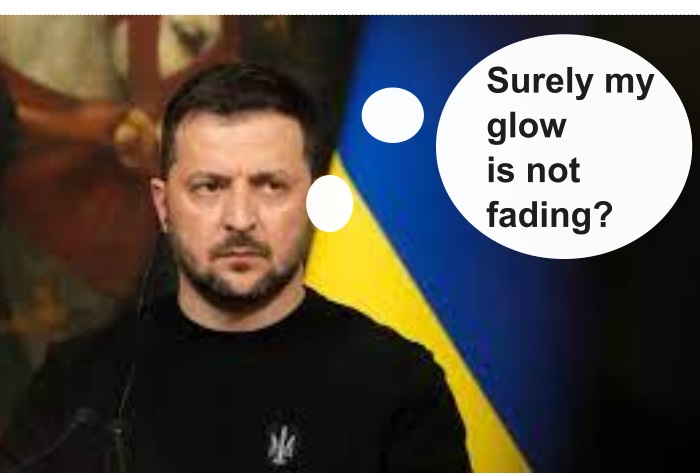
Ukrainians blame Zelensky for corruption – poll
https://www.rt.com/news/582796-ukraine-corruption-poll-zelensky-responsible/ 13 Sept 23
Nearly eight in ten citizens believe the country’s president is “directly responsible” for rampant graft, a new survey has shown
The vast majority of Ukrainians believe that President Vladimir Zelensky is at fault for widespread corruption in the country’s government and military, a new study has revealed.
The poll, released on Monday, found that 78% of Ukrainian adults see Zelensky as “directly responsible” for Kiev’s corruption problem. It was conducted by the Ilko Kucheriv Democratic Initiatives Charitable Foundation and the Kiev International Institute of Sociology.
Prior to the launch of Russia’s military offensive in February 2022, Ukraine consistently ranked among the world’s most corrupt nations, but it was touted as a bastion of freedom and democracy as the US and its NATO allies rallied public support for massive aid to Kiev. However, Ukrainian corruption remains a concern and could hinder the country’s bid to join the European Union, an unidentified Western diplomat told Politico on Monday.
Ukraine is a “very corrupt country,” the diplomat said, adding that Zelensky’s plan to use the Security Service of Ukraine (SBU) to prosecute graft cases could “send the wrong message.” Upon landing in Kiev for a surprise visit on Monday, German Foreign Minister Annalena Baerbock reportedly said Ukraine needed to step up its efforts to fight corruption.
The Ukrainian poll was conducted from July 3 to July 17 in face-to-face interviews with thousands of citizens across the country. There were no major differences in findings based on region or socioeconomic factors. Respondents aged 60 and older took a harsher view, with 81% saying Zelensky was responsible for government corruption. The rate was 70% in the youngest segment, ages 17 to 29. Overall, only 18% of Ukrainian adults disagreed with the statement that Zelensky bears responsibility.
Documents obtained by the International Association of Investigative Journalists in 2021 showed that Zelensky and his business partners set up offshore companies to purchase lavish properties in central London. Zelensky transferred his stake in one of the companies to an aide just before he was elected president in 2019. Supporters of former Ukrainian president Petro Poroshenko accused Zelensky and his associates of using their offshore accounts to evade taxes.
Zelensky has purged officials in his government for alleged corruption, including an embezzlement scheme involving humanitarian aid. Just this month, he sacked Defense Minister Aleksey Reznikov, who came under fire earlier this year over purchases of military rations at inflated prices. However, the new defense chief, Rustem Umerov, is reportedly under investigation for alleged crimes in his previous job.
Zelensky Issues Veiled Threat To Destabilize Europe If Weapons Flow Curtailed

Zero Hedge, TYLER DURDEN, WEDNESDAY, SEP 13, 2023 –
As predicted by a number of independent geopolitical commentators, including ourselves, the emerging official narrative on why Ukraine’s counteroffensive ended in failure will be to falsely claim the West didn’t provide “enough” weapons in a timely fashion. Despite the literally tens of billions of US taxpayer dollars sunk into Kiev’s war effort at record-breaking pace and scale, it will be the “fault” of the United States and its allies—or at least this will be solidified as the Ukrainian government’s perspective and narrative (and then will be parroted among Zelensky’s most diehard hawkish supporters).
Ukrainian President Volodymyr Zelensky has this week been busy advancing this as a key talking point, first telling CNN’s Fareed Zakaria on Sunday his country “waited too long” to start counteroffensive. The reason? He blames the West for forcing his military leaders to wait so long for the necessary weaponry and equipment.
“We — look, we waited too long. It’s true. No, I’m thankful to partners, to the United States, EU, other partners,” Zelensky said. “I’m thankful very much to President Biden and to Congress, but we have to understand: We waited too long, they put mines.”
“Then when we been ready from the point of view of our partners because the decision to give us, for example, Bradley [Fighting Vehicles] and other kind of weapons, the decision, it doesn’t mean the result.” And The Hill underscores of his remarks, “Zelensky noted that Ukraine does not get the weapons promised to it immediately after they are announced by allies.” This is not the first time Zelensky has blamed slowness in supplies and training from his Western sponsors. But behind the scenes, his Western patrons have criticized him for being “ungrateful”.
In late March, Zelensky when asked about why the counteroffensive was being delayed said that he can’t “start yet” as he’s unable to “send our brave soldiers to the front line without tanks, artillery and long-range rockets.” And then in May he reasserted that “We can advance with what we’ve got and I think we can be successful but we will lose a lot of people, I think that is unacceptable.” He had added at the time, “We need to wait, we need a bit more time.” The offensive later belatedly kicked off in full force in June.
In another interview freshly published this week with US media, Zelensky took this theme of “blame the West” even further. In remarks to the Economist, he issued a thinly veiled threat to those countries thinking about curtailing aid in any way, warning that “millions of Ukrainian refugees in European countries” are capable of destabilizing the West.
Here’s what Zelensky said as captured by the Economist interview published this week:
Curtailing aid to Ukraine will only prolong the war, Mr Zelensky argues. And it would create risks for the West in its own backyard. There is no way of predicting how the millions of Ukrainian refugees in European countries would react to their country being abandoned.
Ukrainians have generally “behaved well” and are “very grateful” to those who sheltered them. They will not forget that generosity. But it would not be a “good story” for Europe if it were to “drive these people into a corner”.
A number of online commentators took note of his surprisingly open and aggressively accusatory rhetoric, saying he seems to be threatening Europe with terrorism if Ukraine doesn’t get its way.
“Am I misreading this or is Zelenskyy actually threatening European countries with terrorism if they don’t send the weapons he wants to Ukraine?” Arnaud Bertrand reacted. And Max Abrahms, a counterterrorism expert and professor of international relations had this to say…
Zelensky is now threatening that Ukrainian refugees will attack Europe if it doesn’t keep the gravy train running.
In the same interview Zelensky tripled down on prior repeat vows to never negotiate with Putin or to contemplate ceding territory. …………………………………………………..
When will US, UK, and European leaders begin to say “enough is enough” when it comes to Zelensky’s chastising, humiliating and threatening them?https://www.zerohedge.com/geopolitical/zelensky-issues-veiled-threat-destabilize-europe-if-weapons-flow-curtailed
Small modular nuclear reactors for Ukraine (safe?)

Ukraine’s Energoatom and the US firm Westinghouse have signed a memorandum
of understanding (MoU) relating to the development and deployment of AP300
small modular reactors (SMRs) in Ukraine.
World Nuclear News 12th Sept 2023
https://www.world-nuclear-news.org/Articles/Westinghouse-and-Energoatom-agree-AP300-SMR-cooper
Japan to start old nuclear reactor checks in October
Japan’s Nuclear Regulation Authority (NRA) will begin receiving
applications for nuclear safety inspections of aged reactors from October,
ahead of the country’s new nuclear safety regulations that will take effect
on 6 June 2025.
Under the new rule, all the country’s reactors that will be
operating for or beyond 30 years as of 6 June 2025 will in advance need to
secure approval from the NRA for safety plans by 5 June 2025. Nuclear power
operators will have to obtain such permission every 10 years or less after
their 30-year operating period is over. The NRA will start safety screening
of each old reactor.
But it is still unclear how long the process will
take. If a nuclear power operator fails to secure safety permission by 5
June 2025, the company could shut down the reactor, an official at the NRA
said.
Argus Media 13th Sept 2023
https://www.argusmedia.com/en//news/2488629-japan-to-start-old-nuclear-reactor-checks-in-october
Ukraine plans up to 1GW wind farm in Chernobyl nuclear disaster zone
Five years after a small solar farm was built at the site, Ukraine has
unveiled plans to develop a potentially huge wind power plant in the
Chernobyl exclusion zone – the site of the worst nuclear power plant
disaster in world history. Der Spiegel reports that a declaration of intent
was signed this week between German-based developer Notus Energy, the
Ukrainian government and electricity transmission system operator
Ukrenergo, to build an up to 1,000MW wind farm, capable of supplying power
to around 800,000 homes – including in the capital Kyiv.
Renew Economy 13th Sept 2023
Ukraine joining NATO ‘would not promote peace’ – ex-French president
https://www.rt.com/news/582921-france-sarkozy-ukraine-nato-eu/ 12 Sept 23
Kiev must adopt a neutral stance between Russia and the West, Nicolas Sarkozy has said
Former French President Nicolas Sarkozy has warned that Ukrainian membership of NATO and the EU “would not promote peace” and would be perceived as a “provocation” by Russia.
Speaking to French news station BFMTV on Wednesday, Sarkozy argued it is in Kiev’s best interests to remain “neutral” regarding Western blocs. The former leader also insisted that diplomacy with Moscow remains the most prudent option for Ukraine to end the current conflict.
“Bringing Ukraine into NATO would not promote peace,” said Sarkozy, who served as French president between 2007 and 2012.
NATO leaders declared at a summit in Lithuania in July that the bloc would only invite Ukraine to become a member “when allies agree and conditions are met.” NATO had already denied Kiev’s calls for a “fast-track” to full membership in September of 2022.
Moscow has frequently expressed its opposition to NATO’s eastward expansion. President Vladimir Putin cited the bloc’s involvement in Ukraine as among the key reasons when Moscow began its military operation against Kiev last year.
Ukraine has also pursued EU membership and was granted formal candidate status in 2022. In June, sources within the bloc told Reuters that Kiev currently meets two of the seven conditions required to be considered for full membership.
Rather than chasing closer ties with the West, Sarkozy told BFMTV there are “two solutions” available to Ukraine and its allies to bring an end to the hostilities. The first, he claimed, is the “annihilation” of Russia – before explaining that this is unrealistic because “we are not going to wipe out the second nuclear power in the world, or the world risks falling into total war.”
According to Sarkozy, a more achievable scenario is “diplomatic discussion.” The former president stated that his experience had given him a clear view of what can be achieved over the negotiating table. “They tell me Putin has changed and [that] we cannot have discussions with him,” Sarkozy said. “Those who say that are generally those who have never met him.”
Sarkozy reiterated to BFMTV his stance that Ukraine should pursue firm neutrality in its relationships with Russia and the West, arguing: “When you wave the muleta under the bull’s nose, you shouldn’t be surprised if he attacks.”
Sarkozy’s comments follow the backlash he received for an interview with French publication Le Figaro last month, in which he said Kiev should disregard joining NATO or the EU in favor of “an international agreement providing it with extremely strong security assurances to protect it against any risk.”
Endless energy use needed for endless data storage – so, small nuclear reactors for Sweden

Nuclear-powered campus in Sweden will power data centers
Small modular player Kärnfull Next plans commercial campus at Nyköping
September 11, 2023 By Peter Judge
Swedish nuclear company Kärnfull Next has announced plans for a campus of small modular reactors (SMRs) on the Swedish coast, which will power data centers.
The company plans to build the campus at a site in Nyköping, on the east coast of Sweden, where nuclear software firm Studsvik currently operates test reactors. It is planned to come on stream in 2030.
DCD has asked Kärnfull for more details, including the type of data center partners the company hopes to engage with…………………………………………
The company is still checking on aspects such as financing, permitting, and the possibility of power purchase agreements with power off-takers, and expects to finalize some decisions on all that towards the end of 2024……………………………………………………………. https://www.datacenterdynamics.com/en/news/nuclear-powered-campus-in-sweden-will-power-data-centers/
Windfarm bid withdrawn after Ministry of Defence raises nuclear testing station concerns
Midlothian View, by Local Democracy Reporter, Paul Kelly, Wednesday September 13th 2023
A bid for a domestic windfarm in Hawick has been withdrawn after the Ministry of Defence (MoD) raised concerns over its potential impact on a nearby nuclear testing station.
Scottish Borders Council received a planning application for the erection of a 10.4m high turbine on land south east Of Wynburgh Cottage at Langburnshiels.
But the MoD objected to the application due to its potential impact on the Eskdalemuir Seismological Recording Station.
The normally unmanned station was established by the UK Atomic Energy Authority in 1962 as the British contribution to an international network intended to identify and locate underground nuclear tests and, later, monitor compliance with the Comprehensive Nuclear Test Ban Treaty…………………………more https://www.midlothianview.com/news/windfarm-bid-withdrawn-after-mod-raises-nuclear-testing-station-concerns
The Discharge of Fukushima’s Radioactive Water could be a Precedent for Similar Actions

Obviously, it would be misleading to rely on the IAEA’s statements suggesting that radioactive wastewater does not pose any risk to global health. This information strengthens the likelihood that the IAEA did not reveal valid and precise radiation data regarding the Chornobyl accident and Zaporizhia nuclear power plant during the ongoing Ukrainian war either.
Pinar Demircan 7 Sept 23 https://www.dianuke.org/the-discharge-of-fukushimas-radioactive-water-could-be-a-precedent-for-similar-actions/
Underlying the disregard for objections from global civil society and transforming the ocean into a nuclear waste dump lies a bigger goal inspired by capitalist practices that arise from its crisis: to achieve another threshold by normalization of cost-cutting measures for the sake of the nuclear industry.
While the climate crisis is rapidly turning forests and habitats of living creatures into coal and ash with a tiny spark of fire in Turkiye, Greece, and Canada, the planet’s seas, already polluted with plastics and waste, are also being recklessly infused with radioactivity, driven by profit and cost-centered policies. On August 24, within the framework of the procedures carried out by the Japanese government and TEPCO, the discharge of 1.34 million tonnes of radioactive water which is accumulated in tanks at the plant site, started.
The installation of a treatment system costing 23 million USD, the discharge of wastewater without an Environmental Impact Assessment (EIA) is being realized by foregoing safer alternatives such as solidification of wastewater into construction materials or long-term storage costing 100 times more that constitutes ecocide. Clearly, this method of release that is expected to be carried out over the next 40 years, indicates a systemic assault on the global ecosystem that is longer and more severe than presently apparent.
The Japanese Government is not telling the truth about ‘purification’
The discharge process of the wastewater resulting from the complete meltdown of three reactor cores at the Fukushima nuclear facility began in 2011 and is at par with the danger level ascribed to the Chornobyl disaster. This also highlights how the Fukushima discharge differs from the regular discharge processes of nuclear power plants and indicates the extent of danger that nuclear power plants pose. Furthermore, the radioactive isotopes treated in the accumulated wastewater is only half of the whole amount according to what was stated on the website of the Japanese Ministry of the Environment.
A detail that has been overlooked till today is that there is no information regarding the amount of discharge during this 40-year time frame for the disposal of radioactive water into the ocean. This might indicate that the discharged amount may even be equivalent to the period of, for example, 100 years despite the declared duration of 40. In addition, since the present objections have been disregarded, it is worth considering the potential impact of future oppositions at the end of the 40 years.
A threshold to be achieved
Apparently, over the next decade, the radioactive water discharged from Fukushima is anticipated to disseminate into multiple seas worldwide, encompassing the Marmara, Mediterranean, Aegean, and Black Sea, which surrounds Turkiye. A recent scientific study [2] suggests that the evaporation in these seas will escalate industrial radioactivity levels in the ecosystem. Given this backdrop, it is important to ask why TEPCO, the Japanese government, and the IAEA continue to disregard the adverse impacts of the discharge, which also makes them responsible for the potential increases in cancer, DNA damage, increased miscarriages, hormone imbalances, and unhealthy future generations worldwide? Underlying the disregard for objections raised by global civil society, and transforming the ocean into a nuclear waste dump, lies a bigger goal inspired by capitalist practices that arise from its crisis: to achieve another threshold of the normalization of cost-cutting measures for the sake of nuclear industry.
How can we be sure of the exact amount to be released?
It is also possible to consider the above statement with the possibility of adding wastewater from the other nuclear power plants across Japan to the already 1 million 340 thousand tonnes of water accumulated over the past 12 years at Fukushima. While nuclear power plants operate under higher costs and have to cope with four times cheaper renewable energy production costs, the ocean dumping of the radioactive wastewater offers an easy solution for the nuclear industry. Crossing this threshold guarantees the capability to manage climate-induced hazards to nuclear facilities since now, societal consent has been obtained for this plan of action. Imagine how beneficial this course of action will be for the nuclear industry, with the IAEA promising its support for the industry – to the 410 reactors operating worldwide, approximately 50 reactors under construction, and 80 reactors [3] in various stages of maintenance, repair, decommissioning, and dismantling.
Take for example, Rosatom of Russia, the owner of the Akkuyu Nuclear Power Plant which reached its final stage of construction for the first reactor in Turkiye. It has a long history of concealing the Mayak nuclear power plant accident, well into the 1990s. Furthermore, from 1948 to 2004, Rosatom discharged nuclear waste into the Techa River, thus reinforcing its already questionable track record, and also points to how the legalization of nuclear discharge might be beneficial for the industry. It is also easy to predict the potential impact of this approach in the Mediterranean region by a nation with an underdeveloped democratic system and institutional dynamics dominated [4] by political power. This is especially important since an exemption made for the Akkuyu NPP in the article which allows for the discharge water from the facilities around the Mediterranean temperature of the plant and allows the sea temperature to reach up to 35 Celsius and poses serious ecological challenges indicating that Turkiye violates Barcelona Agreement.
The Role of the IAEA
The example of Fukushima’s radioactive water discharge presents us a picture of a political power that has adopted the corporate management mentality prioritizing profits and industry interests under the guise of efficiency and profitability. The International Atomic Energy Agency (IAEA) plays a vital role in ensuring that nuclear energy generation is conducted safely and within established guidelines. However, a leaked document [5] from the IAEA reveals that the agency, which declared its support for TEPCO and the Japanese government, advised them to refrain from making statements that could portray nuclear power plants negatively and disseminate information that influences the press and public opinion. As this scandal brings to light the deep connections between the IAEA, the Japanese government, and TEPCO, it is important to consider the role of the IAEA as a highly regarded global organization.
It is noteworthy to mention that the IAEA’s involvement in the nuclear industry stems from a confidential agreement WHA 12-40 [6] with the World Health Organization (WHO) in 1959, stating that “whenever either organization proposes to initiate a programme or activity on a subject in which the other organization has or may have a substantial interest, the first party shall consult the other with a view to adjusting the matter by mutual agreement”. Consequently, the IAEA, established to promote the growth of nuclear power plants worldwide, refrained from disclosing any potential health hazards posed by these plants.
Obviously, it would be misleading to rely on the IAEA’s statements suggesting that radioactive wastewater does not pose any risk to global health. This information strengthens the likelihood that the IAEA did not reveal valid and precise radiation data regarding the Chornobyl accident and Zaporizhia nuclear power plant during the ongoing Ukrainian war either.
It is important to inform the global society that the IAEA, which focuses mainly on promoting nuclear power, should not be involved in discussions related to public health in line with the principle of separating responsibilities to avoid conflict of interest. Therefore, it is recommended that civil society should inform the international community about the content of the recently disclosed IAEA document and demand an end to the discharge of radioactive water from Fukushima into the ocean. Accordingly, it should be ensured that all processes involved in disposing radioactive contamination in Fukushima are subject to internal and financial control measures performed by a minimum of two separate units.
At this stage, it is essential to take measures by clarifying the issues emphasized by the non-governmental organizations following the processes, and it should be ensured that realistic solutions can only be produced with the involvement of a consortium of neighbouring countries such as South Korea, China, Taiwan and the Pacific Islands. In this regard, the process management for the construction of the steel dome shelter, which was completed in 2016 with financing by 40 countries that came together in 1997 to protect the exploded fourth reactor of the Chornobyl Nuclear Power Plant from external weather conditions, can be taken as an example. [7]
Undoubtedly, the economic and administrative control mechanisms created for Chornobyl due to Ukraine’s lack of financial resources is not acceptable for the technology-giant Japan, which bears the costs of the disaster on its own. However, since global society has not entirely shown its commitment to changing the system, an in-system solution can prevent adding the radioactive disaster to the climate crisis before the transformation of life on the planet hits its constraints. In other words, claiming efficiency and profitability and institutionalization of the logic of ‘running the state like a business’, which has become the common discourse of political powers will at least help to achieve the rationality of emulated corporate management.
” The future of nuclear as an alternative energy source relies on the success of the Fukushima release” – Rafael Grossi.

“more broadly, the future of nuclear as an alternative energy source relies on the success of the Fukushima release,” he said. Though there has been heightened public alarm toward nuclear plants recently – for instance, regarding the Russian-occupied Zaporizhzhia plant in Ukraine – “the problem there is war, the problem is not nuclear energy,” Grossi said.
AEA chief ‘completely convinced’ it’s safe to release treated Fukushima nuclear wastewater .
By Jessie Yeung, Marc Stewart and Emiko Jozuka, Tokyo CNN, 7 July 23
Japan’s plan to release treated radioactive water into the ocean is safe and there is no better option to deal with the massive buildup of wastewater collected since the 2011 Fukushima nuclear disaster, the head of the United Nations’ nuclear watchdog told CNN.
Japan will release the wastewater sometime this summer, a controversial move 12 years after the Fukushima nuclear plant meltdown. Japanese authorities and the IAEA have insisted the plan follows international safety standards – the water will first be treated to remove the most harmful pollutants, and be released gradually over many years in highly diluted quantities.
But public anxiety remains high, including in nearby countries like South Korea, China and the Pacific Islands, which have voiced concern about potential harm to the environment or people’s health. On Friday, Chinese customs officials announced they would maintain a ban on food imports from 10 Japanese prefectures including Fukushima, and strengthen inspections to monitor for “radioactive substances, to ensure the safety of Japanese food imports to China.”……………………..
On Tuesday, Grossi formally presented the IAEA’s safety review to Japanese Prime Minister Fumio Kishida. The report found the wastewater release plan will have a “negligible” impact on people and the environment, adding that it was an “independent and transparent review,” not a recommendation or endorsement……………………….
The 2011 disaster caused the plant’s reactor cores to overheat and contaminate water within the facility with highly radioactive material. Since then, new water has been pumped in to cool fuel debris in the reactors. At the same time, ground and rainwater have leaked in, creating more radioactive wastewater that now needs to be stored and treated.
That wastewater now measures 1.32 million metric tons – enough to fill more than 500 Olympic-sized swimming pools.
Japan has previously said there were “no other options” as space runs out – a sentiment Grossi echoed on Friday. When asked whether there were better alternatives to dispose of the wastewater, the IAEA chief answered succinctly: “No.”
It’s not that there are no other methods, he added – Japan had considered five total options, including hydrogen release, underground burial and vapor release, which would have seen wastewater boiled and released into the atmosphere………………………………………
International skepticism
But some critics have cast doubt on the IAEA’s findings, with China recently arguing that the group’s assessment “is not proof of the legality and legitimacy” of the wastewater release.
Many countries have openly opposed the plan; Chinese officials have warned that it could cause “unpredictable harm,” and accused Japan of treating the ocean as a “sewer.” The Secretary General of the Pacific Islands Forum, an inter-governmental group of Pacific island nations that includes Australia and New Zealand, also published an op-ed in January voicing “grave concerns,” saying more data was needed.
And in South Korea, residents have taken to the streets to protest the plan. Many shoppers have stockpiled salt and seafood for fear these products will be contaminated once the wastewater is released – even though Seoul has already banned imports of seafood and food items from the Fukushima region.
International scientists have also expressed concern to CNN that there is insufficient evidence of long-term safety, arguing that the release could cause tritium – a radioactive hydrogen isotope that cannot be removed from the wastewater – to gradually build up in marine ecosystems and food chains, a process called bioaccumulation…………………………………
more broadly, the future of nuclear as an alternative energy source relies on the success of the Fukushima release, he said. Though there has been heightened public alarm toward nuclear plants recently – for instance, regarding the Russian-occupied Zaporizhzhia plant in Ukraine – “the problem there is war, the problem is not nuclear energy,” Grossi said……….. https://edition.cnn.com/2023/07/06/asia/japan-fukushima-water-iaea-chief-interview-intl-hnk/index.html
Safety fears : the problem of Britain’s ageing nuclear submarines
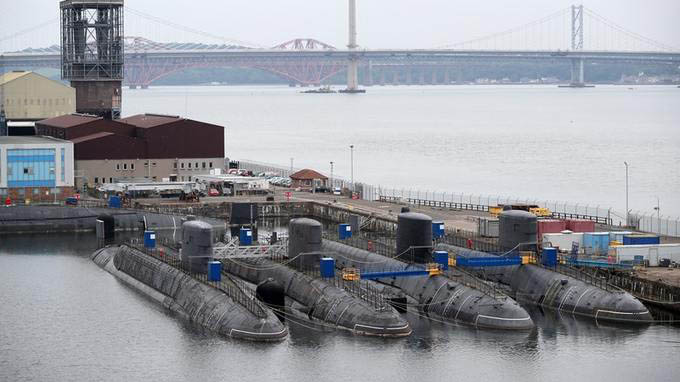
A British nuclear submarine has broken the record for the longest patrol at
sea as safety fears grow over the Royal Navy’s ageing fleet. The
Vanguard-class vessel returned to the Faslane naval base in Scotland on
Monday encrusted with barnacles and covered in slime after a gruelling tour
understood to have lasted more than six months.
Naval experts have raised concerns that the long patrols result in immense physical strain on the vessels and take a psychological toll on the crews. The UK has four
Vanguard-class submarines, which are armed with up to eight Trident
ballistic missiles carrying Britain’s nuclear warheads. At least one
submarine is on patrol at all times to maintain a continuous at-sea
deterrent. The fleet has been effectively reduced to two functioning
vessels, HMS Vigilant and HMS Vengeance, owing to repair works on the other
two.
Times 12th Sept 2023
British activists join Nuclear Free Local Authorities in supporting Swedish Sami against uranium mining
The UK/Ireland Nuclear Free Local Authorities and Lakes against the Nuclear Dump have been joined by activists from twelve anti-nuclear campaign groups in a letter to organisations representing the Sami people of Sweden offering support in their fight against uranium mining.
A ban on uranium exploration, mining and processing in Sweden came into force on 1 August 2018 but, last month, Swedish Climate Minister Romina Pourmokhtari announced that the ban would be lifted and that ten new nuclear reactors would be built over the next twenty years. In the face of international and domestic criticism, the centre-right government has since reined in the commitment to new nuclear by talking instead of a vague commitment to developing ‘green power’, but there has been no roll-back on uranium mining.
Sweden accounts for 80% of the European Union’s uranium deposits and already extracts uranium as a waste product when mining for other metals. Foreign companies, including Aura Energy and District Metals, have already expressed an interest in exploiting reserves. Even if the new government’s nuclear hopes come to naught, there will still be a ready export market for any output. The ongoing conflict in Ukraine has made the surety of uranium supply from Russia and its allies uncertain and the recent military takeover in uranium-producing Niger has shaken the market; consequently, pro-nuclear European nations will be looking for any stable source from a neighbour.
The correspondents fear that any resumption of uranium mining will come at a heavy price to the traditional lands and lifestyles of the Indigenous Sami People, with a degradation of their natural environment and their health. The Sami (or Saami) inhabit the region of Sápmi, which embodies the most Northern parts of Norway, Sweden and Finland, and North West Russia, and are best known for their reliance upon semi-nomadic reindeer herding.
Councillor Lawrence O’Neill, Chair of the NFLA’s Steering Committee, said: “Sadly the world over, uranium mining has been, and still is, often visited upon Indigenous People in their Traditional Lands by large, profit-hungry corporations. In addition, national governments have chosen their lands to carry out nuclear weapons testing and nuclear waste dumping. The impact has been enormous – the lands of Indigenous People have been poisoned, their health destroyed and their culture and traditional way of life decimated.
“Sweden has signed the UN Declaration of the Rights of Indigenous People pledging to defend the lands and lifestyle of the Sami, but the decision to resume uranium mining could, if left unchallenged, lead to their destruction. In sending this collective letter, we, the British and Irish local authorities opposed to nuclear power, with British anti-nuclear groups and activists are pledging ourselves as allies in this fight”.
Co-sponsor, Marianne Kirkby, founder of LAND, Lakes against the Nuclear Dump, added: “Here in Cumbria, we feel so much empathy for the Sami people who have had no say whatsoever in the opening-up of Sweden’s wild areas to the devastation of uranium mining.
“In the UK, we have no uranium mining, but plenty of nuclear plants. We are constantly told that nuclear power is ‘clean’ and ‘home-grown’. This blatant lie is the means by which Sami lands are put under pressure for new uranium mining exploitation in areas where it was previously, and quite rightly, banned as being too destructive to the health of people and planet”.
“This lie of ‘clean nuclear’ is the means by which Indigenous people, whether in Cumbria or in Sweden, whether at the waste end or the fuel end of the nuclear industry, are being exploited by the most toxic industry there is without even a ‘by your leave’. We stand in solidarity with the Sami in saying NO – NO MORE!”
Huge nuclear lobbying aimed at British Parliament

The Nuclear Industry Association will host the third Nuclear Week in
Parliament (NWiP) between the 11th and 13th of September 2023. In January
2023, the rescheduled week saw hundreds of Parliamentarians and industry
representatives engage in various events.
Back in its annual September slot, this year’s NWiP will be packed with multiple events and receptions, plus opportunities for NIA members to hold their complementary meetings.
The week will focus on engaging with Parliamentarians on various topics,
including new build, Advanced Nuclear Technologies, and the fuel cycle.
This will build on our Summer Conference, due to be held in the Concorde
Conference Centre in Manchester on Wednesday, 14 June 2023.
Nuclear Industry Association (accessed) 13th Sept 2023
https://www.niauk.org/nuclear-week-in-parliament-2023-sponsorship-opportunities/
Congress should seek ‘poison pills’ for any US-Saudi nuclear agreement
Federal Times, By Eric Gomez, Jon Hoffman and Jordan Cohen, 13 Sept 23,
Swirling reports of a U.S.-Saudi Arabia deal that would trade normalization with Israel for U.S. security guarantees are raising questions about what Washington will put on the table.
A U.S.-Saudi civil nuclear agreement—also known as a “123 agreement” after the Atomic Energy Act’s section that governs such cooperation — could be part of the broader arrangement, per reports that Saudi Arabia is demanding such cooperation as part of this “grand bargain.”
Any other country that possessed Saudi Arabia’s mix of gross human rights abuses, authoritarian government, malign activities abroad and stated intentions to build a nuclear weapon if Iran gets the bomb would be rightly isolated by the U.S., and not be a serious contender for a 123 agreement.
The U.S. ought to be drawing down its Middle East presence to focus limited resources on more pressing interests in other regions of the world. Nonetheless, if President Joe Biden proceeds, Congress should take steps to make the agreement as stringent and difficult as possible for Saudi Arabia……………………..
The Saudi government claims that it only wants to produce low-enriched uranium, which is suitable for nuclear energy but not weapons. However, a complete nuclear fuel cycle would make it much easier to either covertly manufacture fissile material for a nuclear weapon over time or quickly “sprint” to a weapon on short notice. Past statements by Saudi Arabia’s political leadership that Riyad will develop a nuclear weapon if Iran does should raise alarm bells about the proliferation risks of a Saudi civil nuclear program.
These risks mean that Congress should do everything in its power to introduce so-called poison pills provisions that would make the process of finalizing an agreement as difficult as possible. The legislative body can prevent a 123 agreement from taking effect though a joint resolution of disapproval, but such a resolution can be easily overturned by presidential veto. Regardless, Congress still has tools at its disposal.
The U.S.-India and U.S.-United Arab Emirates 123 agreements provide examples of ways to make a potential U.S.-Saudi nuclear deal more stringent…………………………………….
The U.S. should similarly link any Saudi nuclear deal to end-use monitoring of all weapons transferred to Riyad. Since Saudi Arabia started its war in Yemen, the country has used U.S. weapons to commit vast human rights abuses and endanger U.S. troops. Making a 123 agreement contingent on U.S. end-use monitoring of all weapons sent to Saudi Arabia would improve American security.
Put simply, helping one of Washington’s most problematic allies build a civil nuclear program is non-sensical. The Biden administration should not go ahead with such an agreement in the first place, but if it does Congress should implement poison pills to make the deal as unpalatable as possible for Saudi Arabia. https://www.federaltimes.com/opinions/2023/09/13/congress-should-seek-poison-pills-for-any-us-saudi-nuclear-agreement/
1 This Month
23-25 October – on Zoom – World BEYOND War’s annual global conferenc


Shut down the radiation-damaged Heysham nuclear reactors now
To see nuclear-related stories in greater depth and intensity – go to https://nuclearinformation.wordpress.com

Say No to NASA’s Reckless Nuclear Reactor on the Moon
Say No to NASA’s Reckless Nuclear Reactor on the Moon

-
Archives
- October 2026 (199)
- September 2026 (339)
- August 2026 (330)
- July 2026 (355)
- June 2026 (287)
- May 2026 (306)
- April 2026 (356)
- March 2026 (251)
- February 2026 (267)
- January 2026 (308)
- December 2025 (358)
- November 2025 (359)
-
Categories
- 1
- 1 NUCLEAR ISSUES
- business and costs
- climate change
- culture and arts
- ENERGY
- environment
- health
- history
- indigenous issues
- Legal
- marketing of nuclear
- media
- opposition to nuclear
- PERSONAL STORIES
- politics
- politics international
- Religion and ethics
- safety
- secrets,lies and civil liberties
- spinbuster
- technology
- Uranium
- wastes
- weapons and war
- Women
- 2 WORLD
- ACTION
- AFRICA
- Atrocities
- AUSTRALIA
- Christina's notes
- Christina's themes
- culture and arts
- Events
- Fuk 2022
- Fuk 2023
- Fukushima 2017
- Fukushima 2018
- fukushima 2019
- Fukushima 2020
- Fukushima 2021
- general
- global warming
- Humour (God we need it)
- Nuclear
- RARE EARTHS
- Reference
- resources – print
- Resources -audiovicual
- Weekly Newsletter
- World
- World Nuclear
- YouTube
-
RSS
Entries RSS
Comments RSS

