US treasury chief claims Washington ‘unlikely to restart’ large-scale hostilities against Iran
Bessent said that illegal US sanctions are a replacement for a war of aggression that has failed to break Tehran
News Desk, AUG 20, 2026, https://thecradle.co/articles/us-treasury-chief-claims-washington-unlikely-to-restart-large-scale-hostilities-against-iran
US Treasury Secretary Scott Bessent told CNBC on 20 August that Washington will likely “not restart” large-scale military operations against Iran, as the White House shifts to a campaign of maximum economic sanctions.
If we are doing the maximum economic pressure, then that means that likely there will not be a large-scale kinetic restart,” Bessent said in an interview with CNBC’s Squawk on the Street news program.
Trump had announced hours earlier on Truth Social that Washington would impose major economic penalties on any country extending Tehran what he called “any type of lifeline.”
“This will be an ECONOMIC D-DAY, and we need all of our Allies to stand with the United States of America to isolate, and defeat, the Iran threat,” Trump wrote.
Bessent said he would lay out the details of the plan at a press conference, telling CNBC that the message to every US ally would be: “You are either with us or against us.”
“If you insist on doing business with [Iran], either transferring money, buying their oil or doing seaborne ship transfers, then the US Treasury and the US government … will put its full might and force toward enforcing against you,” he said.
He described the campaign as “the greatest coordinated economic isolation in the history of the world.”
Iranian Foreign Minister Abbas Araghchi dismissed the campaign the same day, writing on X that it would deliver Washington nothing but “further defeat.”
“The so-called ‘Economic D-Day’ is a diversion from America’s own crisis: unprecedented debt & surging interest costs,” Araghchi wrote, describing US “economic terrorism” as a threat to the global economy.
Iranian Deputy Foreign Minister Kazem Gharibabadi said Washington had reached for economic warfare only after its military campaign failed to deliver.
“They claim Iran is on the verge of defeat and hanging by a thread, yet they are begging all their allies to help them,” he wrote on X, adding that the US had “named their next failure an ‘economic war.’”
Vice-Chairman of the Belt and Road Institute in Sweden Hussein Askary notes that the US naval blockade imposed in April has pushed Iran to shift its trade overland, sharply increasing freight traffic on the China–Iran railway and raising the strategic value of Eurasian land corridors as Tehran works to keep supply routes open beyond the reach of maritime pressure.
The Pentagon is reviewing whether to scale back its presence in Persian Gulf states after Iranian retaliatory strikes battered the largest US bases overseas, with sources saying a westward pullback is under consideration.
A regional intelligence source told Press TV that the Pentagon has concluded no military plan exists that could guarantee open shipping through the Strait of Hormuz, which carries roughly one-fifth of the world’s oil.
UK seeks to tighten security of supply chains after Iran-linked cyber attacks
The UK government is seeking to change the law so that it can block
companies from buying products from high-risk suppliers, in a move that
comes shortly after news that a hacking group had shut down a small energy
facility.
Ministers could demand companies in critical sectors such as
energy, healthcare and telecoms take extra security measures such as
implementing a phased removal of certain vendors or be banned from
acquiring technology from them under proposals announced on Monday.
The vulnerability of key UK infrastructure was highlighted by Sunday’s
revelation that hackers thought to be linked to Iran had forced a small gas
plant offline. The National Cyber Security Centre has also warned that
companies must do more to guard against cyber attacks. The government’s
plans were introduced via amendments to the Cyber Security and Resilience
Bill and are subject to parliamentary approval. They will seek to safeguard
the supply chains of companies, which are often used as a “soft
underbelly” by hackers seeking to target larger groups.
FT 24th Aug 2026,
https://www.ft.com/content/3d46e4cb-4dee-4f49-adc1-0bb0f63d4c49
Fukushima nuclear wastewater discharge marks three years amid concerns

In a statement issued on Sunday, Masanobu Sakamoto, head of the National Federation of Fisheries Cooperative Associations (JF Zengyoren), said the group’s position has not changed, stressing that it remains opposed to discharging wastewater without the understanding of fishermen and the public.
24-Aug-2026, CGTN
It has now been three years since the Japanese government began to discharge contaminated wastewater from the Fukushima Daiichi nuclear power station into the Pacific Ocean despite strong opposition and concerns at home and abroad.
Japan unilaterally launched the ocean discharge of nuclear-contaminated water from the Fukushima Daiichi plant on August 24, 2023. Since then, Japan has conducted 22 rounds of ocean discharge, releasing around 173,000 tonnes of wastewater containing tritium, a radioactive substance that purification equipment cannot remove, according to Tokyo Electric Power Company (TEPCO).
The latest round, held from July 30 to August 17, involved discharging nearly 8,000 tonnes of wastewater.
Over the past three years, TEPCO has paid a total of 96.7 billion yen (roughly $600 million) in compensation for about 1,100 claims as of August 5, including claims related to losses suffered by fishermen and businesses that have had to temporarily suspend or scale back their fishing activities due to the discharge plan.
According to The Japan News by The Yomiuri Shimbun, people in the fishing industry said most of the compensation claims were filed by those outside Fukushima Prefecture, as fishermen in Fukushima receive separate compensation for temporarily suspending their operations.
Despite the compensation, opposition to the controversial operation and worries about local fisheries’ development remain.
In a statement issued on Sunday, Masanobu Sakamoto, head of the National Federation of Fisheries Cooperative Associations (JF Zengyoren), said the group’s position has not changed, stressing that it remains opposed to discharging wastewater without the understanding of fishermen and the public.
Sakamoto noted that some countries and regions continue to impose restrictions on imports of Japanese seafood, while products such as sea cucumbers have been affected by falling prices.
“The markets that have been lost have yet to fully recover, and there are concerns over whether they can be recovered at all,” Sakamoto said, underscoring the serious challenges facing the fishing industry.
He also said government support measures were “insufficient for fishermen.”
According to The Japan News by The Yomiuri Shimbun, abalones from Iwate Prefecture had an average wholesale price of about 120,000 to 140,000 yen per 10 kilograms before the treated water discharge began. However, prices have remained low due to the suspension of exports. In 2025, the price fell as low as 60,000 yen per 10 kilograms.
To ensure food safety, fisheries cooperative associations in Fukushima Prefecture have set their own limit of 50 becquerels of radioactive cesium per kilogram for shipping marine products, stricter than the Japanese government’s standard of 100 becquerels per kilogram, according to the report.
Local fishermen remain committed to ensuring the safety of their products based on scientific standards and rebuilding consumer trust, The Japan News by The Yomiuri Shimbun reported, citing the Soma Futaba Fisheries Cooperative Association.
Documents Reveal Trail of Unreported Millions From Israeli Military to U.S. Universities

Research funding by Israel’s Ministry of Defense and arms manufacturers often fails to appear in national databases intended to track foreign funding.
Murtaza Hussain, Aug 25, 2026, https://www.dropsitenews.com/p/israel-military-funding-universities?utm_source=post-email-title&publication_id=2510348&post_id=212599104&utm_campaign=email-post-title&isFreemail=false&r=5mo6u&triedRedirect=true&utm_medium=email
The Israeli Ministry of Defense and Israeli defense companies have directed millions in unreported funding to U.S. university research programs for weapons development, sponsoring research directly or serving as the pass-through entity for the funding, a Drop Site investigation has found.
A sample of state and university audits, foreign-funding disclosures, and other institutional records identified millions of dollars in financial ties over the last two decades between the Israeli Ministry of Defense (MOD), Israeli weapons manufacturers, and American universities, much of which does not appear consistently in national databases intended to track foreign funding into U.S. universities.
An analysis of audit records, building on findings compiled by the Antiwar Initiative, an academic research group that documents the connections between universities and the global arms industry, found more than $15 million of unreported or inconsistently reported entries for funding tied to the Israeli MOD or defense manufacturers.
The true scale of Israeli support is difficult to determine because entries for such funding were often not reported in public filings mandating disclosure of foreign gifts, but were discovered by manually cross-referencing public and internal databases, audit records, and acknowledgments in academic papers. Some projects listed in university materials as being sponsored by the Israeli MOD or defense companies also did not include the amounts of funding provided, or contained inconsistent or contradictory records in audit databases.
Drop Site reviewed and verified public records that showed research grants, tuition payments, and receipts of gifts totalling millions of dollars to dozens of colleges and universities around the country. The data shows examples of financial support and sponsorship for American researchers from the Israeli Ministry of Defense as well as Israeli weapons manufacturers like Elbit Systems.
Records dating from 2004 to 2025 point to a large number of schools that have had financial relationships with the Israeli MOD or Israeli weapons manufacturers, including Columbia, Cornell, Princeton, Harvard, Northwestern, Georgia Tech, Texas Tech, the University of Connecticut, the University of Tennessee, the University of Maryland, the University of Florida, the University of California at Berkeley, the University of Rhode Island, the University of New Mexico, the Washington University in St. Louis, and the State University of New York.
The recorded financial relationships include time-bound research contracts and do not indicate whether relationships with the MOD are still ongoing. Previous reporting has documented MOD funding of programs at MIT and student protests there over the relationship.
In addition to financial support from the MOD and Elbit, records also showed sponsorship of individual research projects related to military technologies by Israeli defense manufacturers Rafael and Israel Aerospace Industries.
Taken together, the records reveal an opaque defense-research pipeline spread across some of the country’s most prominent universities.
In one example that illustrates the typical nature of these ties, an Israeli MOD-sponsored project at the University of Connecticut was listed in public audit records with the title, “Impact Point Prediction Research for Short & Medium Range Thrusting Projectiles.”
Connecticut’s annual federal-award schedules record $668,456 in funding under that title across nine fiscal years between 2013 and 2023 with the funder listed as Israel’s Ministry of Defense. Another Israeli MOD-linked research project at the school titled, “High Sensitivity SQUIDs for Magnetic Field Detection,” received $251,336 in funding across the same time period.
Federal law requires colleges and universities receiving federal assistance to disclose gifts and contracts totaling at least $250,000 in a calendar year from a foreign source, though transactions below that threshold may remain outside the public reporting system. But these multi-year contributions do not consistently appear in federal databases intended to help the public track foreign money flowing into American universities. The Education Department’s latest public disclosure of foreign gifts and funding contains no Israel-attributed entry for the University of Connecticut, even as entries for MOD funding show up in other databases and audit documentation.
The Israeli government and its allies in Congress are now seeking to transform relationships like these from a scattered research pipeline into formal American defense policy. The fiscal 2026 National Defense Authorization Act already directed the Pentagon to establish a U.S.-Israel Defense Industrial Base Working Group to consider integrating Israel into what it calls “the American National Technology and Industrial Base.”
A proposal advanced by the House Armed Services Committee for the fiscal 2027 NDAA would go further, creating a United States-Israel Defense Technology Cooperation Initiative charged with expanding bilateral research, development, testing, weapons production, and industrial cooperation. If these measures become law, the scattered funding connections documented in American university audit trails and research papers would become part of the architecture of the American military-industrial base.
Gears of War
Israeli forces have used drones, automated intelligence tools, persistent aerial surveillance, precision-guided projectiles, and large-scale data analysis throughout the genocide in the Gaza Strip, as well as wars in Lebanon, Iran, Syria, and Yemen.
Those operations draw upon the technologies originating in the same research fields that the Israeli government and weapons manufacturers have paid American academics to advance: video surveillance, human-activity recognition, autonomous flight, network analysis, target identification, magnetic sensing, and projectile impact modeling. At the University of Central Florida, researchers have received funding from Elbit Systems to develop algorithms to recognize human activity and detect objects in video.
Records from the University of Tennessee show that a U.S. subsidiary of Elbit also provided $514,500 in payments to the school between 2023, 2024, and 2025. The available public documentation does not identify what programs or researchers the contributions are intended to support, with the description listing the purpose of the funding as simply “tuition payments for various students.”
“For relatively small sums—like the price of funding a single PhD—Israel has gained major new capabilities that have bolstered its capacity to commit genocide in Gaza, carry out a brutal occupation of Lebanon, and spark a war with Iran that has escalated to a region wide conflict,” said William Hartung, a political scientist and expert on the U.S. arms industry and Pentagon budgetary practices.
Many awards from the Israeli MOD are classified as U.S. Department of Defense expenditures, with the Israeli ministry identified as the pass-through entity that administers the grants. MIT, for example, has stated that the money for its projects funded by the Israeli ministry originated with the U.S. Department of Defense. The U.S. provides an estimated $3.8 billion in annual military aid to Israel on top of other forms of assistance.
Some audit records identify the Pentagon’s Defense Security Cooperation Agency, which administers U.S. security assistance and weapons-transfer programs, as the primary agency providing the funding that was ultimately directed by the Israeli MOD. The public documents do not establish whether every dollar for particular research support at a school came from Israel’s treasury, from U.S. military assistance placed under Israeli procurement authority, or from some combination of the two.
Audit Trail
In the summer of 2025, MIT professor Markus Buehler withdrew from an Israeli Defense Ministry grant after a student-led campaign publicized the project. The decision followed more than a year of protests over MIT’s defense relationships with Israel, which the university says amounted to $4 million for individual ministry-linked projects between fiscal 2015 and fiscal 2024, plus $290,000 in fiscal 2025.
A trail of open source records traces similar financial and research relationships between the Israeli defense establishment and schools in Connecticut, New York, Maryland, Florida, New Jersey, Texas, California, and Virginia.
At Columbia University, annual audits name two ministry-linked projects and record $799,190 in grants. One MOD-funded project for “Direct 3D Printing of Integrated Electro Mechanical Systems” accounted for $469,999 from 2016 through 2021, while another for “Optimizing Micro Resonators Based Sensor” accounted for another $329,191 from 2021 through 2024. Columbia’s fiscal 2024 audit lists the latter project under the U.S. Department of Defense, with the “Israeli Ministry of Defense” as the “pass-through name,” and records $25,327 in funding.
The Research Foundation for the State University of New York shows audit entries for five Israeli MOD-linked projects totaling $949,915 from 2010 through 2021.
Florida’s statewide audits record $1,195,795 in expenditures passed through the Ministry of Defense from 2012 through 2021, while not identifying the schools that received all of this funding.
Campus records connect at least some of the awards to the University of Central Florida and the University of Florida. One University of Florida engineering publication names an Israeli MOD-sponsored project, “Coupled Size and Rate Effects in Ultra-High-Performance Concrete,” beginning in 2012. While listing the project under “Sponsored Research,” the newsletter did not identify the amount the school received from the MOD for the study.
In response to a request for comment about another $150,000 contract beginning in March 2015 that named the Israeli Ministry of Defense at UC Berkeley, a spokesperson said that, “UC Berkeley complies with all of the statues and regulations that apply to contracts and gifts from foreign sources,” noting that the school is only involved in fundamental research and adding that, “every government, every researcher, every person in the world is able to read the results of our research in freely available scientific publications.”
UC Berkeley did not respond to additional questions about the purpose of the MOD funding. Other schools contacted by Drop Site did not respond to requests for comment or stated that they could not provide information about the cited funding.
In addition to records from audits, public information from individual researchers provides more hints of the scope of Israeli military’s U.S. research funding.
In February, The Nation reported that computer-vision researchers Mubarak Shah and Abhijit Mahalanobis received a $200,000 Elbit Systems of America grant in 2020 to develop “human activity recognition” technology, while Mahalanobis received another $60,000 for algorithms involving object detection and human-activity recognition.
At the University of Maryland, aerospace engineering professor Inderjit Chopra’s research page lists two Israeli ministry grants: $150,000 for “Autonomous Operation of Micro-Helicopters,” from 2011 to 2012, and $300,000 for “Aeromechanics of Rotorcraft in High Speed Flight,” from 2014 to 2016.
A curriculum vitae filed by another researcher in a separate U.S. Patent and Trademark Office proceeding lists Israeli MOD funding of $150,000 for “Functional Targeting of Terror Networks: A Big Data Approach,” from February 2017 through December 2018, and $153,520 for “Fast Algorithms for Group Between-ness Centrality in Massive Social Networks.”
Princeton University records identify physicist Michael Romalis on a $600,000 contract called “Pulsed Scalar Atomic Magnetometer.” The university’s fiscal 2018 sponsored-awards report names the Government of Israel’s Ministry of Defense and the Defense Security Cooperation Agency as sponsors and gives a contract period from July 2015 through June 2019.
Texas Tech University’s engineering newsletters list yet another award for $400,000 from the Israeli Defense Ministry to research a “Sealed Vircator HPM System,” naming James Dickens, John Mankowski, and Andreas Neuber as researchers. The same amount and title appear in both the January 2014 and April 2015 newsletters.
The vircator technology has a clear military application: Texas Tech’s Center for Pulsed Power and Power Electronics describes vircators as compact, high-power microwave sources and says its work includes coordinating vehicle-mounted emitters with GPS timing to place a microwave “hot spot” at a desired location—an application potentially useful for combatting drone swarms.
The purpose of a separate Israeli Defense Ministry-linked funding stream at the University of Texas at Austin is less clear from the public records. UT Austin’s fiscal 2013 financial report identifies $58,992 in expenditures under an Israeli Ministry of Defense purchase order. Statewide audit schedules record expenditures under the same purchase order reappearing in public audit records from 2010 through 2014, for a total of $299,952.
The audit archive contains still more Israeli military-named expenditures, including recorded contributions to Northwestern University and Washington University in St. Louis, and repeated entries for the MOD in audits for the state of Virginia.
But the opaque nature of some support that turned up in public records means that financial and in-kind support to universities may not even be recorded in any audit trail at all.
At the University of Texas at Dallas, Haoran Wei and Nasser Kehtarnavaz produced a video-surveillance system in a study that the published paper indicated was “funded by Elbit Systems of America through a contract with the University of Texas at Dallas” without mentioning the amount of financial support. The report also noted that the company had provided “far-field video clips” to help conduct their research on target recognition.
The researchers did not respond to requests for comment about the nature of their work and ties to Elbit.
Disclosure Gap
Section 117 of the Higher Education Act generally requires a federally assisted university to report covered gifts and contracts from a foreign source when they meet or exceed $250,000, including multi-year contracts meeting that threshold over their duration. Under the Education Department’s example, a five-year research contract worth $50,000 a year is reportable at signing because its lifetime value is $250,000.
The Education Department’s inspector general warned in February 2025 that oversight of the system was weak with insufficient controls to ensure reporting requirements were being met. The current disclosure thresholds also make it easier for foreign countries to contribute amounts below that number to avoid triggering reporting requirements but can be significant for individual research projects.
That lack of oversight contributes to a situation in which millions of dollars from a foreign military under increasing scrutiny in the U.S. for human rights abuses and facing genocide charges from international courts has been able to spend millions of dollars funding military research at American universities.
These relationships are now coming under greater scrutiny at a time when public opinion on Israel has soured in the U.S. due to the genocide in Gaza and Israeli conduct in other regional conflicts.
“No self-respecting university should accept funding from Israel, given its destabilizing, destructive, and inhumane use of U.S. weapons,” said Hartung.
U.S. nuclear campuses could power a renaissance. Except for one problem.

Lack of oversight and safety restrictions could make future nuclear
projects dangerous. Trust is hard to earn and easy to lose — especially
in a field like nuclear energy. The Trump administration is in danger of
learning that the hard way.
In late July, the Energy Department signed
tentative agreements with five states — Utah, Tennessee, Oklahoma,
Louisiana and Idaho — to explore hosting what it calls “Nuclear
Lifecycle Innovation Campuses.” Each campus would place multiple stages
of the nuclear energy process — potentially including uranium enrichment,
fuel fabrication, spent fuel reprocessing, waste disposal, and power
generation, among others — in one location. Normally, these steps are
carried out hundreds of miles apart from one another.
Washington 26th Aug 2026,
https://www.washingtonpost.com/opinions/2026/08/26/trump-cuts-nuclear-safety-could-hurt-new-innovation-campuses/
Netanyahu declares West Bank ‘our land’

Wed, 26 Aug 2026, https://www.rt.com/news/644673-netanyahu-west-bank-settlement-expansion/
The Israeli prime minister has vowed to annex more territory for Jewish immigrants.
Israel will continue building illegal settlements in the West Bank in preparation for a“major”wave of Jewish immigration, Prime Minister Benjamin Netanyahu has said. Israel’s most recent settlement expansion triggered rebukes from its Arab neighbors and Western partners.
Netanyahu said in Jerusalem on Tuesday:
“Today, many of our brothers and sisters around the world understand: This is our land and it will remain ours. And when I say our land, every Jewish man and every Jewish woman, the door is open. We are waiting for you. We are preparing the door for major Aliyah (Jewish immigration to Israel).“
It is unclear whether the “major Aliyah” predicted by Netanyahu is actually coming. Israelis have emigrated in growing numbers since Hamas’ 2023 attack and the subsequent war on Gaza. More than 150,000 Israelis left the country from 2024 to 2025, according to a report by 972 magazine.
The Israeli prime minister spoke at an event organized by the Binyamin Regional Council, which governs 47 Jewish settlements in the West Bank. All of these settlements, which are located outside Israel’s 1967 borders, are considered illegal by the UN, and Israel’s transfer of population to them has been deemed a breach of the Geneva Convention by the International Criminal Court.
Although the Israeli state sometimes pre-authorizes the construction of settlements, they typically begin as outposts on Palestinian land, until they are retroactively legalized by the Israeli government. During his speech on Tuesday, Netanyahu boasted that his government has established and regularized “104 settlements and 160 farms and we continue to do more.”
“It isn’t easy, it’s never easy,” he continued. “The land of Israel is acquired through suffering. Sometimes also through smiles, sometimes also through arguments, but it is being acquired by us. We are not giving up, we have a vision, this is our land, and it will remain ours.”
Last week, Israel opened bidding for the construction of more than 1,200 homes in the E1 settlement project, located east of Jerusalem. Named after its designation on Israeli planning maps, the project will comprise more than 3,400 homes, and was green-lit by Netanyahu’s government last year.
The E1 plan will establish a land corridor between East Jerusalem and the existing settlement of Ma’ale Adumim, both of which are built on Palestinian land. It will also sever road links between the Palestinian cities of Ramallah and Bethlehem, located to the north and south of Jerusalem, respectively.
It is unclear whether the“major Aliyah”predicted by Netanyahu is actually coming. Israelis have emigrated in growing numbers since Hamas’ 2023 attack and the subsequent war on Gaza. More than 150,000 Israelis left the country from 2024 to 2025, according to a report by 972 magazine.
The Israeli prime minister spoke at an event organized by the Binyamin Regional Council, which governs 47 Jewish settlements in the West Bank. All of these settlements, which are located outside Israel’s 1967 borders,are considered illegal by the UN, and Israel’s transfer of population to them has been deemed a breach of the Geneva Convention by the International Criminal Court.
Although the Israeli state sometimes pre-authorizes the construction of settlements, they typically begin as outposts on Palestinian land, until they are retroactively legalized by the Israeli government. During his speech on Tuesday, Netanyahu boasted:
Eight Arab and Muslim states, including Mecca Pact members Saudi Arabia, Pakistan, and Türkiye, “categorically” rejected the plan, describing it as “a dangerous escalation.” The UK, Canada, Australia, New Zealand, European Commission, and 15 European states also condemned the project.
“The E1 settlement will undermine the prospect of the two-state solution by driving a wedge through the West Bank,” they said in a statement last Thursday. “At a time of grave instability in the West Bank with unprecedented levels of violence by settlers against civilians, and serious restrictions on the Palestinian economy, this decision is even more concerning.”
Netanyahu has suggested for years that he intends to annex the entirety of the West Bank, describing the option as “on the table” even as he signed peace accords with Arab states in 2020. Netanyahu’s hardline coalition partners have been more explicit, with Finance Minister Bezalel Smotrich urging the prime minister in June to “apply sovereignty here in Judea and Samaria [the West Bank] before the elections” in October.
Britain’s Storm Shadow tech transfer to Ukraine will lead to more escalation. We need dialogue!

Campaign for Nuclear Disarmament, August 25, 2026, https://cnduk.org/britains-storm-shadow-tech-transfer-to-ukraine-will-lead-to-more-escalation-we-need-dialogue/?link_id=1&can_id=0a448bf4278898648e02a8f6dea4650f&source=email-britain-pushes-for-more-escalation-in-ukraine-aukus-webinar-register-for-cnd-agm-policy-conference&email_referrer=email_3374903&email_subject=britain-pushes-for-more-escalation-in-ukraine-aukus-webinar-register-for-cnd-conference
Britain’s decision to join France in transferring classified Storm Shadow blueprints to Ukraine so it can domestically produce the long-range cruise missile will only increase nuclear risks, warns CND.
Prime Minister Andy Burnham made the announcement about the technology transfer during a visit to Kyiv on Monday.
The Storm Shadow is co-produced with France by the multi-national arms company MBDA and has a range of 155 miles (250km). The air-launched missiles also have bunker-busting warheads and are capable of hitting Russian targets in its territory. In November 2024, the British government, in coordination with the US administration, gave permission for Ukraine to use these weapons to hit targets deep inside Russian territory. This was in spite of Russia’s threat to use its nuclear weapons against such long-range attacks.
France already agreed to hand over its own blueprints for the SCALP-EG (its French export name) in July, as part of a wider arms deal that included Rafale fighter jets and interceptor missiles.
On Sunday, Russia’s foreign ministry said it had withdrawn its ambassador to London, Andrei Kelin, accusing Britain of choosing a “path of confrontation.” This comes after Russia announced that there would be consequences for attacks on civilian infrastrcutrue by British-made long-range drones. Some reports have suggested that this could mean British drone factories could be attacked by “unknown sources.”
Burnham’s announcement has been interpreted as an attempt by Britain and France to push the US into giving Ukraine its Patriot interceptor technology so it can produce them locally. During July’s NATO summit, Donald Trump told Ukrainian President Volodymyr Zelensky that the US would give a licence to produce Patriots only to backtrack on the promise weeks later saying it “a hard thing to give away.”
The reversal coincided with an escalation in the US’s illegal war on Iran in July. That conflict, ongoing since February, has led to a shortage in stocks of both Patriot and Tomahawk as the US and its Gulf allies use them to counter Iranian ballistic missiles and drones. It’s estimated that only 1,000 Patriot missiles remain in US stocks and current annual production is currently 600. Plans are already in place to set up new production lines in Germany and Poland to help replenish their stocks given to Ukraine, while Zelensky is also calling for a line to be set up in Ukraine.
CND General Secretary Sophie Bolt said:
“The British government’s strategy of escalation is very dangerous. We have already seen the nuclear risks from such escalation in 2024 when Russia threatened to use its nuclear weapons against long-range missiles. Burnham needs to end this reckless war-mongering and focus on dialogue and de-escalation.”
Romania steps up efforts to restart Cernavoda nuclear reactors

By Iulian Ernst in Bucharest August 24, 2026, https://www.intellinews.com/romania-steps-up-efforts-to-restart-cernavoda-nuclear-reactors-462977/
Romanian authorities are changing their approach to restoring water levels at the Cernavoda nuclear power plant, with national waterways management company Apele Romane (Romanian Waters) building a temporary dam on the Danube and state-controlled hydropower group Hidroelectrica releasing additional water from its Olt River reservoirs to support the restart of at least one of the two reactors currently offline, according to G4Media and Radio Romania.
The measures follow several weeks of emergency interventions that included dredging and attempts to sink barges loaded with stone in an effort to raise water levels near the nuclear plant’s intake. Those measures produced insufficient results, leaving Romania dependent on more expensive electricity imports during peak consumption hours.
Under the revised strategy, Apele Romane is constructing a transverse guide dam on the Old Danube arm to redirect water towards the intake channel serving the plant. Emergency dredging is continuing in the Cernavoda area under the coordination of the Lower Danube River Administration and Apele Romane.
Hidroelectrica has meanwhile started releasing additional water from reservoirs on the Olt River. According to Antena 3, the company can release around 50 cubic metres per second for five days, although water reserves in the Olt system have also been reduced following several months of drought.
The Ministry of National Defence has resumed support for the emergency works. Military specialists will carry out topobathymetric and geodetic measurements, while military divers will participate in underwater interventions.
The effectiveness of the measures remains constrained by the exceptionally low flow of the Danube. Water entering Romania’s section of the river is currently around 1,300 cubic metres per second, roughly one-third of the multi-annual average.
According to the forecast for August 22-29, the flow is expected to remain at around this level for the first three days before gradually increasing to approximately 1,550 cubic metres per second. The expected natural increase would therefore provide considerably more water than the temporary releases from the Olt reservoirs.
The engineering works could eventually have a larger effect by improving the flow towards the nuclear plant’s intake, but their impact is unlikely to be sufficient immediately. This leaves the timing of a reactor restart dependent primarily on the availability of adequate cooling water.
Cernavoda’s two reactors, each with an installed capacity of 680 MW, have been taken offline because of insufficient Danube water for cooling. Their prolonged outage has increased Romania’s reliance on electricity imports during a period of high summer consumption. Out of the 7,500 MW consumed by Romania during the peak hours, it imports 1,00-2,500 MW.
Trump Sends Nuclear Agreement With Saudi Arabia to Congress
The president still insists that the deal is contingent on the kingdom normalizing relations with Israel
By Michael R. Gordon and Robbie Gramer,
President Trump has submitted a landmark nuclear
accord with Saudi Arabia to Congress for review, but hasn’t dropped his
last minute condition that the kingdom normalize relations with Israel, an
administration official said.
Wall St Journal 25th Aug 2026,
https://www.wsj.com/world/middle-east/trump-sends-nuclear-agreement-with-saudi-arabia-to-congress-7f01af2c
Is Putin about to test ‘Flying Chernobyl’ nuclear-powered missile that can fly for DAYS?
By WILL STEWART and SOPHIA STANFORD, 25 August 2026,
https://www.dailymail.com/news/article-16078037/Putin-test-Flying-Chernobyl.html
Vladimir Putin may be about to test a nuclear-powered cruise missile – dubbed the Flying Chernobyl – that can fly for days, according to analysts.
An influx of aircraft and shipping has converged in the Arctic in a telltale sign that a new experimental firing is expected of a weapon powered by its own atomic reactor, say analysts.
The ‘invincible’ Burevestnik missile – with a nickname inspired by the nuclear catastrophe that could be inflicted, much like the Chernobyl power plant explosion in 1986 – carries a nuclear warhead with an ‘unlimited range’ and is designed to fly for days at a time before striking the West, according to the Russians.
Norwegian defence analyst Thord Are Iversen said the movements followed the pattern seen during previous tests of Putin’s experimental 9M730 Burevestnik cruise missile.
‘It now appears that everything is ready for actual Burevestnik flight testing,’ he told independent Russian outlet The Insider.
In the Arctic, two specialist Il-976 SKIP aircraft used to monitor missile trajectories and collect test data arrived at Rogachyovo airbase on the remote Novaya Zemlya archipelago, reports say.
Satellite imagery also shows an A-50U airborne early-warning aircraft, four An-26 military transports, an An-74 and several helicopters at the base amid a suspected test of Putin’s Flying Chernobyl missile.
Civilian vessels previously involved in missile trials have taken up positions in the Barents and Kara seas around the Pankovo test range.
California´s last working nuclear power plant sits in a landscape that would worry any firefighter when the wind picks up.
Federal wildfire crews are stretched thin. California is stepping in to help
By ASSOCIATED PRESS, 26 August 2026
California´s last working nuclear power plant sits cradled in a landscape that would worry any firefighter when the wind picks up.
The Pacific Ocean and its perpetual fog lick the western edge of the coastal bluffs holding the Diablo Canyon Power Plant. But the Irish Hills rise steeply to its east – their slopes rugged, dark with scrub and oak. Difficult to access, and full of fuel.
“Any fire within the Diablo power plant area could be catastrophic,” said Dave Erickson, a division chief and forester with the Cal Fire San Luis Obispo unit. The property, he said, is in a very high fire severity zone. “So we just take precautions.”
It´s one of the many places where California is now stepping into federal gaps created by Congress´ long-term underinvestment in fuels management on federal lands, the Trump administration´s cuts, and firefighters stretched thin by blazes raging across the West.
A local organization with state funding, the San Luis Obispo County Community Fire Safe Council, started carving a fuel break into the surrounding ridgelines. And Erickson put his crews to work closing the gaps, to create a critical toehold for firefighters to get ahead of flames………………………………….
The stakes are high for California, where wildfires have burned through millions of acres in the last decade – killing more than 220 people, hastening the deaths of tens of thousands more, and racking up tens to hundreds of billions of dollars in damage.
But the costs are high, too. California has spent nearly half a billion dollars in grants for wildfire resilience and forest health projects on federal lands since Gov. Gavin Newsom took office, according to the California Natural Resources Agency…………………………………………………………………………………………………………………….
https://www.dailymail.com/wires/ap/article-16079773/Federal-wildfire-crews-stretched-California-stepping-help.html
The Race to Power AI Is Reviving America’s Nuclear Ambitions

By Haley Zaremba – Aug 25, 2026, https://oilprice.com/Alternative-Energy/Nuclear-Power/The-Race-to-Power-AI-Is-Reviving-Americas-Nuclear-Ambitions.html
- Surging AI and data-center electricity demand is attracting billions of dollars to advanced nuclear technologies.
- SMRs could offer a cheaper and more flexible alternative to traditional nuclear plants, but none are commercially operating in the United States yet.
- Applied Atomics is reviving BWXT’s shelved mPower technology and Virginia test infrastructure in an effort to commercialize modular nuclear power.
The artificial intelligence boom is supercharging the development of next-gen nuclear energy technology. Big Tech and private equity are catalyzing the research and development of cutting-edge approaches to round-the-clock clean energy production as hyperscalers add power-hungry data centers to the grid at a blistering rate.
“A single hyperscale data center can consume as much electricity as 50,000 homes,” writes the MIT Energy Initiative. “U.S. data centers consumed more than 4% of the country’s total electricity in 2023, and by 2030 that fraction could rise to 9%,” MIT goes on to warn. This means that the expansion of data centers to fuel the integration of AI into everything from your email provider to your electric toothbrush is seriously changing the way we consume – and therefore the way we produce – energy in the United States and beyond. Not only do we need to expand energy production capacity at a breakneck pace, but we also need to find a way to do so without throwing climate goals out the window.
As a result, venture capital funding is going gangbusters for both nuclear fusion and fission startups. According to a recent report from Axios, global investment in both fission and fusion has topped USD $4.5 billion across 81 companies in 2026 so far. At this rate, projections show that 2026 will shatter the previous annual record of $6.2 billion for 93 companies in 2025.
Some of the biggest figures and deepest pockets in Silicon Valley are throwing their weight behind nuclear energy advancement as a silver bullet solution to the energy monster that AI is creating. Major investors include Microsoft’s Bill Gates and OpenAI’s Sam Altman. “There’s no way to get there without a breakthrough,” Altman said at the 2024 World Economic Forum in Davos, Switzerland. “It motivates us to go invest more in fusion.”
In addition to nuclear fusion, there is a lot of buzz around the potential for small modular reactors (SMRs) to transform the aging and ailing nuclear power sector in the United States. These smaller and cheaper reactors hold considerable promise for overcoming some of the hurdles that have been causing nuclear energy to fall out of fashion in the last several decades.
Traditional nuclear power plants are enormously expensive and time-consuming to develop. The United States’ newest traditional nuclear power plant, Georgia’s Plant Vogtle, finally came online in 2024, years late and billions of dollars over budget. While this has scared a lot of policymakers and investors away from large-scale nuclear power, there is hope that SMRs could allow for a more agile energy future at a time when carbon-free energy sources are sorely needed.
However, SMRs have been slow to deliver on the considerable hype behind them. While billions of dollars have gone toward developing the technology, and the Nuclear Regulatory Commission only approved NuScale’s uprated SMR design last year, there are still zero commercial SMRs operating in the country. Some experts think that the buzz has turned to bust. But others, buoyed by the new wave of investment interest driven by the AI boom, think that the timing is finally right for the SMR revolution.
For example, a duo of scientists with SpaceX pedigrees is taking advantage of an abandoned SMR test facility in Virginia, with the hopes of being the team to push the SMR revolution over the finish line and into commercial reality. “We’re standing on the shoulders of giants here, right?” Applied Atomics co-founder Ben Kellie recently told the Washington Post. “We’re starting with something that had $400 million in investment put into it, and significant time and effort. That’s a leg up.”
Whether this project is the one that will ultimately serve as a proof-of-concept for SMRs, it will at the very least provide more data in a nascent field where hard numbers are sorely needed. “It is not just about whether the technology is viable,” David Schlissel, a ‘longtime nuclear consultant to consumer and environmental groups,’ told the Washington Post. “It is also whether the cost is viable. … The industry is running around with all this hype trying to sell nuclear broadly. But they still have not fully tested and built any of these new reactors.”
Construction costs and financing of new nuclear power plants in Switzerland.

Source :
Neu U (2026) Construction costs and financing of new nuclear power plants in Switzerland. Swiss Academies Reports 21 (6)
This report provides a more detailed analysis of the observed development of construction costs for new nuclear power plants and discusses the potential costs of a new plant in Switzerland, as well as the associated uncertainties. Furthermore, it presents current financing models in Europe and the financial risks for the state and the economy associated with such construction.
In addition, current financing models in Europe and
the financial risks associated with construction for the state and the
economy are presented.
[Paul Dorfman says: The report is significant
because, unlike many other cost studies, it derives the risks from real
construction projects and, for the first time, also takes into account the
immense financing costs during the long construction period of a nuclear
power plant. It therefore estimates the expenditures to be 20 to 30 %
higher than estimates that consider only the pure construction costs.
According to the report, these account for around 70 % of the total costs
over the plant’s service life.
The study authors concludes, without billions in federal guarantees, no private investor would be willing to take on the financial risk.]
Swiss Academy of Sciences 21st Aug 2026, https://scnat.ch/en/uuid/i/5e8fa25a-bfa9-54ac-b33b-4e5f464f8561-Baukosten_und_Finanzierung_von_neuen_Kernkraftwerken_in_der_Schweiz
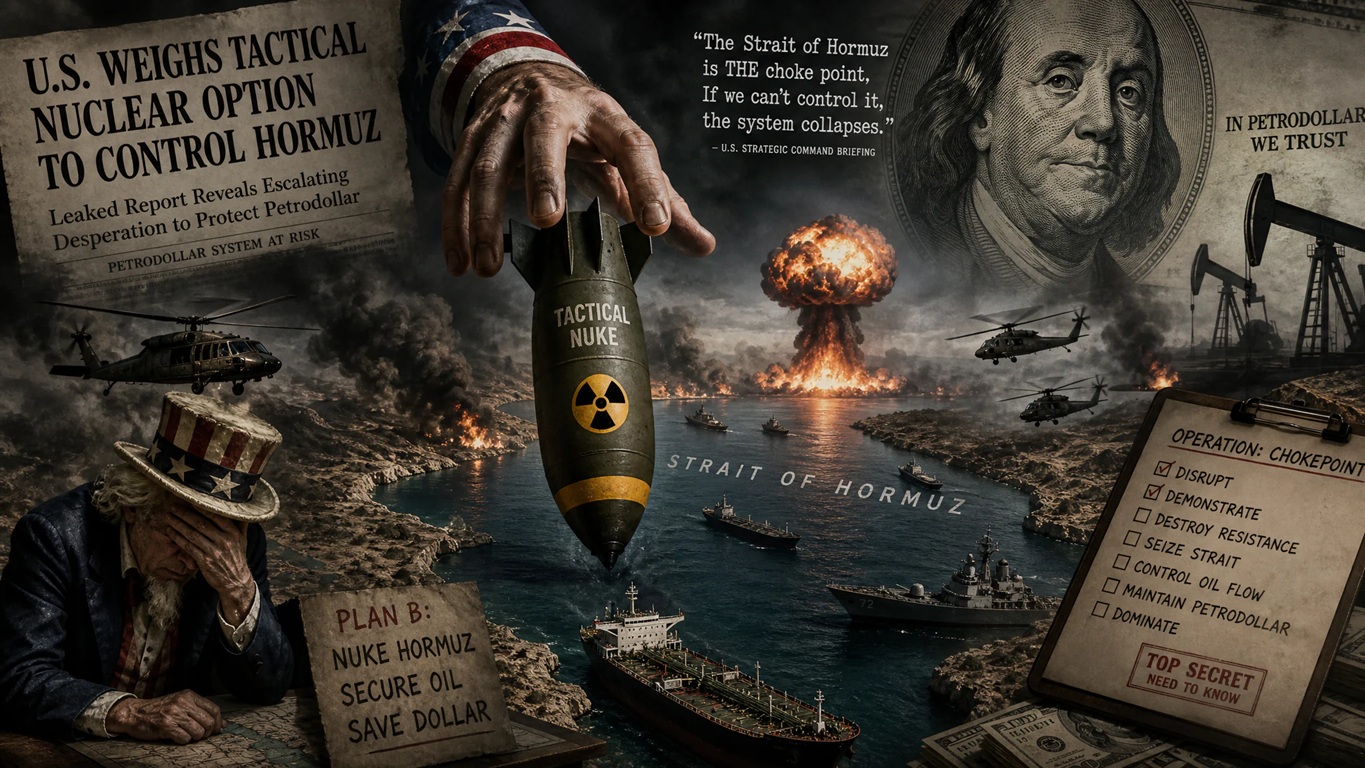
A Nuclear Option Against Iran Would Be a Catastrophe – Not a Solution
Taut Bataut, August 21, 2026, https://journal-neo.su/2026/08/21/a-nuclear-option-against-iran-would-be-a-catastrophe-not-a-solution/
Driven by desperation after failing conventionally in West Asia, the U.S. demonstrates reckless foreign policy by entertaining the use of tactical nuclear weapons to forcibly capture the Strait of Hormuz and preserve petrodollar hegemony.
his reliance on nuclear blackmail reflects a long-standing U.S. pattern of resorting to aggressive, unconventional force whenever its global military dominance is challenged.
A line in the sand that, once crossed, cannot be uncrossed. “They are discussing using nuclear weapons on Iran in strategy meetings. Yes, you read that correctly. It’s real. I’m not speculating; I know. And it’s pure evil.” This is what former US Congresswoman Marjorie Taylor Greene wrote on her X account on 17 August 2026. Although this statement is neither confirmed by the White House nor does it unveil any implicit information, the mere consideration of such an option signals a dangerous psychological shift in U.S. foreign policy. Heading towards any such move against Iran could result in global catastrophe, and the consequences would then be out of control. The real query here is whether the ongoing Middle Eastern volatility is paving the way for a nuclear holocaust or not.
Historical Perspective
To understand the ongoing situation in the Middle East, it is necessary to look into the historical perspective. When the US used nuclear weapons against Japan in World War II, we were told that the Japanese surrendered because of the nuclear weapons. This is false. Anyone who has studied World War II carefully will understand that the Japanese forces were already surrendering. So why was there a need to use nuclear weapons? The reason is that the US was running a secret project called the ‘Manhattan Project.’ Under this project, Americans were developing both uranium and plutonium bombs. So, the US wanted to test its weapon and thus bombed Japan. That’s why two bombs were dropped; however, only one could be enough. And thus, the US claimed itself as the number one military power in the world.
Later on, in the 1950s, Americans once again found that Soviet military dominance had surpassed them. So, the US introduced the tactical nuclear weapons to surpass the Soviet’s conventional superiority. However, till the 1970s, Soviets also developed tactical nuclear weapons in large numbers. In retaliation, the US started investing in space projects to develop long-range conventional missiles. By 2010, now the US military concluded that the Chinese military had become equal to ours. So, now the US is introducing artificial intelligence and autonomy in its military. But the PLA, without any doubt, has significantly outpaced the US military in this regard. This clears one thing: the US establishment did not want President Trump to sign an MoU with Iran, which was a clear surrender of the US military. So, as the US has completely failed against Iran in conventional terms, it might opt for some unconventional means to maintain its military superiority in the region.
Why the U.S. Might Opt for Tactical Nuclear Weapons
As of now, it is clear that there is no way to stop Iran through conventional capabilities. So, the statement made by Greene actually depicts the current strategic thinking inside the US: that even if the 50,000 US troops stationed at the 19 airbases in West Asia withdraw, if they do, and the US maintains control of the Strait of Hormuz, which could then be declared as US territory, then the petrodollar will remain intact. Therefore, the plan is to move out of the region and capture the Hormuz region through tactical nukes.
The next question then becomes, how is this going to be done? When one talks of tactical nuclear weapons, they mean the weapons whose power ranges from sub-kilotons to 50 kilotons. Just to remind you, the weapons the US dropped on Japan during WWII were tactical and weighed 15 kilotons. But now through modern technology, one can create a critical mass with just using a few kgs of uranium or plutonium, which could result in a chain reaction, and a nuclear weapon can be used.
Technically, this is possible today. If the Strait of Hormuz’s chokepoint could be opened with the use of a very small, limited-range, sub-blast, or sub-kiloton nuclear weapon. So, the US could capture the Strait of Hormuz in this way, declare it its own territory, and continue to generate petrodollars. This is the reason President Donald Trump recently said, “After we finish defeating Iran, which is being very badly defeated, pretty soon I’ll be declaring the Hormuz Strait a territory of the United States.”
The Devastating Consequences
Elbridge Colby, Under Secretary of War for Policy, has recently warned, “What I would fear more is a regional war, a kind of local war, a conventional war that might have local employment, God forbid, of nuclear weapons that could escalate from there as it expanded outward.” The consequences would be catastrophic. We know that many countries in the world today possess nuclear weapons, and we are also aware that North Korea has openly declared that if nuclear weapons are used against Iran, it will stand in solidarity with Iran. In addition, many analysts are of the view that Iran might have already developed nuclear weapons. But here the question is, could Iran have done this?
There are two reasons for which it can be concluded that Iran would not have done it. First, Iran is trying to develop a regional security framework, and the Mecca Defense Pact is its best manifestation, which could be expanded in the near future. Iran wants every regional country to see it as a partner nation. Thus, if Iran pursues developing nukes, it could start an arms race in the region where countries like Saudi Arabia would also demand a bomb. Second, Iran is a signatory of the NPT. So, Iran would first announce its withdrawal from the treaty, and then it will head forward in this direction.
China’s Role and Supremacy
Here China can play a pivotal and powerful role. Today China has approximately $800 billion in US Treasury bonds. If the Chinese were to tell Americans today that they were selling half or a large amount of their Treasury bonds, it would create problems with the US’s indebted economy. Inflation would spike, the stock market would crash, and the economy would be in dire condition. Moreover, China also has dominance over the world’s rare earth minerals, on which American conventional capabilities are highly dependent. Also, the PRC could also pressurize the US over the upcoming visit of Chinese President Xi Jinping to the US in September 2026. Thus, China has a lot to do in this regard, and it’s already doing it in one way or another to preserve the world’s peace.
A Nuclear Strike is not a Solution
A nuclear attack against Iran is not an answer; it is a recipe for disaster that is bound to happen sooner rather than later. This policy of desperation would be a betrayal of principles and a failure of our ideals and would not help to bring peace. The rest of the world should make its voice heard and condemn such rhetoric before it normalizes something unimaginable. There are reasons that dictate that we should rely on diplomacy and patience, no matter how desperate the situation becomes. The unthinkable should remain unthinkable; to think about such an option is to play with fire.
Japan to Reuse Fukushima Soil in Regional Cities
Tokyo, Aug. 25 (Jiji Press)
https://jen.jiji.com/jc/eng?g=eco&k=2026082500738 —
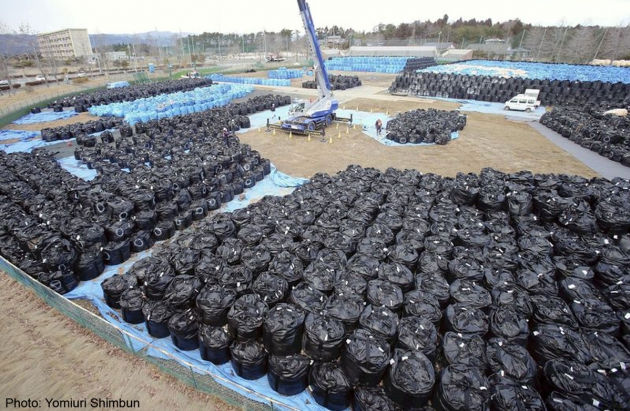
The Japanese government decided Tuesday to begin the reuse of soil generated from decontamination work following the 2011 accident at Tokyo Electric Power Company Holdings Inc.’s Fukushima No. 1 nuclear power plant in regional cities.
At a meeting at the prime minister’s office in Tokyo, the government decided to begin the soil reuse program at an early date for flowerbeds at buildings in Sendai in Miyagi Prefecture, northeastern Japan, and the city of Saitama, north of Tokyo, where central government branch offices are located.
It will be the first time for the soil from decontamination work to be used outside Tokyo, except for its use in demonstration projects in Fukushima Prefecture, home to the TEPCO plant, which suffered a triple meltdown following the massive earthquake and tsunami that mainly struck northeastern Japan in March 2011.
Chief Cabinet Secretary Minoru Kihara said at the meeting that the reuse of soil from decontamination work will be key to achieving the government’s goal of completing the final disposal of the soil outside Fukushima by March 2045.
Kihara urged attendees to expand the reuse of the soil to regional branch offices in other cities and strengthen public communication about its safety.
1 This Month



Shut down the radiation-damaged Heysham nuclear reactors now
To see nuclear-related stories in greater depth and intensity – go to https://nuclearinformation.wordpress.com

Say No to NASA’s Reckless Nuclear Reactor on the Moon
Say No to NASA’s Reckless Nuclear Reactor on the Moon
-
Archives
- October 2026 (256)
- September 2026 (339)
- August 2026 (330)
- July 2026 (355)
- June 2026 (287)
- May 2026 (306)
- April 2026 (356)
- March 2026 (251)
- February 2026 (267)
- January 2026 (308)
- December 2025 (358)
- November 2025 (359)
-
Categories
- 1
- 1 NUCLEAR ISSUES
- business and costs
- climate change
- culture and arts
- ENERGY
- environment
- health
- history
- indigenous issues
- Legal
- marketing of nuclear
- media
- opposition to nuclear
- PERSONAL STORIES
- politics
- politics international
- Religion and ethics
- safety
- secrets,lies and civil liberties
- spinbuster
- technology
- Uranium
- wastes
- weapons and war
- Women
- 2 WORLD
- ACTION
- AFRICA
- Atrocities
- AUSTRALIA
- Christina's notes
- Christina's themes
- culture and arts
- Events
- Fuk 2022
- Fuk 2023
- Fukushima 2017
- Fukushima 2018
- fukushima 2019
- Fukushima 2020
- Fukushima 2021
- general
- global warming
- Humour (God we need it)
- Nuclear
- RARE EARTHS
- Reference
- resources – print
- Resources -audiovicual
- Weekly Newsletter
- World
- World Nuclear
- YouTube
-
RSS
Entries RSS
Comments RSS

