Right-wing Czech politician who promised to cut aid to Ukraine takes lead in parliamentary election .
The right-wing party of agriculture billionaire Andrej Babis, branded ‘Czech Trump’ by local media, has taken the lead in his country’s parliamentary election.
Partial results were released by the Czech Statistical Office several hours after the polls closed across the central European country of 11 million earlier on Saturday.
With ballots from 20% of voting districts counted, Babis’ opposition ANO (Yes) party was ahead with 39.7% of the vote, followed by the Spolu (Together) group led by Czech Prime Minister Petr Fiala with 19.1%, the agency said.
Babis has been campaigning on a promise to stop Czech military assistance to Kiev, unlike Fiala, who has been a staunch supporter of Ukraine in its conflict with Russia.
The 71-year-old, who served as prime minister between 2017 and 2021, has been particularly critical of Prague’s ammunition initiative for Kiev, calling it “overpriced” and insisting that it should be handled by NATO.
He has spoken out against Ukraine’s membership in the EU, as well as Brussels’ handling of immigration and the Green Deal.
The Western media has warned ahead of the vote that with Hungary and Slovakia already refusing to provide military aid to Kiev and advocating for a diplomatic end to the conflict, Babis’ victory in the Czech Republic could tip Central Europe even further away from Brussels on Ukraine and other key issues.
45K gallons of radioactive water to be dumped into Hudson River from Indian Point nuclear plant

Shane Galvin Oct. New York Post, 2, 2025,
Roughly 45,000 gallons of radioactive water from a defunct plant north of New York City will be discharged into the Hudson River after a federal court ruling struck down a state environmental law.
US District Judge Kenneth Karas sided with company Holtec International over New York State in a ruling issued last week that reversed the 2023 “Save The Hudson” law which sought to prevent the company from muddying the Hudson’s waters.
Holtec sued the Empire State last year, arguing that only the federal government had the right to regulate discharge of the Indian Point plant’s nuclear waste, which amounted to the 45,000-gallon sum, The New York Times reported……………………………………..
Indian Point, which sits on the Hudson River about 35 miles north of Manhattan, was closed in 2021 after years of public outcry from the local community over environmental concerns…………………… https://nypost.com/2025/10/02/us-news/45k-gallons-of-radioactive-water-to-be-dumped-into-hudson-river-from-indian-point-nuclear-plant/
Another ageing Royal Navy nuclear-armed submarine completes a 200-day patrol amid fears absence of replacements will make epic voyages ‘the new normal’

Daily Mail, By BY MARK NICOL DEFENCE EDITOR, 3 October 2025
An ageing Royal Navy nuclear submarine has completed a 200-day patrol amid fears of shortages of alternative vessels.
The Vanguard class submarine was welcomed back to port with her hull covered in slime and barnacles.
The marine growth indicated how long the submarine – which carries the UK’s nuclear deterrent – had spent submerged.
Nuclear submarines remain undetected by spending the majority of their time on patrol at very slow speed. This is to minimise their noise signature.
Biofouling as it is also known, can also indicate a submarine has been operating in either shallower or warmer waters.
Nuclear submarine patrols are being extended as Navy chiefs await new vessels.
This submarine was understood to have spent 203 days at sea. Earlier this year another spent 204 days at sea.
While only last year another Vanguard-class submarine broke the 200 day barrier for the first time. At least ten patrols are understood to have exceeded five months.
The trend for extended patrols is dangerous according to Admiral Sir Tony Radakin, the recently retired former Chief of the Defence Staff (CDS).
In his final speech he decried the decrepit state of the Royal Navy’s subsurface fleet at a time when the world is getting more dangerous.
In September Admiral Sir Tony said: ‘Our armed forces are not as strong as we would wish. There is something wrong when governments profess the nuclear deterrent at sea is our highest priority but our sailors are having to put to sea for extraordinarily long patrols in some of the most complex machines on the planet that are beyond their original design life.’……………………….
The oldest of the Vanguard class submarines first put to sea 33 years ago. The vessels have a recommended service life of 25 years.
The physical strain on the Vanguard class submarines is mirrored by the psychological effects on their crews of spending six months and longer at sea.
Each submarine has a crew of around 130 sailors and officers
Experts have also warned of the growing risk of a catastrophic accident as parts are being cannabalised from other submarines which are more than 30 years old…………………………….
The shortage of submarines is also compounded by the length of time it takes to conduct repairs.
The Vanguards will be replaced by Dreadnought submarines – but these are not expected to enter service before the early 2030s……………………… https://www.dailymail.co.uk/news/article-15159175/Another-ageing-Royal-Navy-nuclear-armed-submarine-completes-200-day-patrol-amid-fears-absence-replacements-make-epic-voyages-new-normal.html
Sellafield nuclear workers to strike over pay

ITV 3rd Oct 2025, https://www.itv.com/news/border/2025-10-03/sellafield-nuclear-workers-to-strike-over-pay
Construction workers at the Sellafield nuclear site are to strike from Saturday in a dispute over pay.
Unite said 1,500 of its members, including electricians, joiners and welders, at the Cumbria site will walk out until 13 October.
The union said other nuclear projects pay premiums it wants Sellafield to match, and it warned of further industrial action if the dispute is not resolved.
Unite general secretary Sharon Graham said: “Our members are highly skilled workers operating in an extremely challenging environment.
“That this is the most significant industrial action at Sellafield in recent history speaks volumes about the levels of feeling among the workforce.”
As well as the strikes, a continuous overtime ban will start on 14 October.
Panic in Israel as Hamas agrees to release all of the hostages
Laura and Normal Island News, Oct 04, 2025, https://www.normalisland.co.uk/p/panic-in-israel-as-hamas-agrees-to?utm_source=post-email-title&publication_id=1407757&post_id=175259462&utm_campaign=email-post-title&isFreemail=true&r=ln98x&triedRedirect=true&utm_medium=email
In a worrying turn of events, Hamas has agreed to release all remaining prisoners in accordance with Donald Trump’s peace proposal. The plan will involve the de-radicalisation and disarmament of Gaza, but not the de-radicalisation and disarmament of Israel. Nevertheless, Netanyahu feels Israel is being unfairly picked on.
Trump has instructed Netanyahu to immediately halt all bombing of Gaza, but Netanyahu has sensibly ignored him and continued bombing throughout the night. Be honest, who would miss the opportunity for some last minute mass murder? Not a Zionist, that’s for sure.
Understandably, Hamas’ announcement has been met with horror in the Israeli war room which has successfully held off a peace deal for two years so it can kill as many Palestinians as possible.
Israel only had to sacrifice half of the hostages to achieve this goal and would be quite happy to sacrifice the other half for two more years of slaughter. It is therefore drawing up emergency plans to derail the peace process and blame Hamas. I’m told a false flag is not off the table.
Netanyahu has launched an investigation to establish why the IDF failed to murder all of the Hamas negotiators before they could agree to peace. This was an enormous and unforgivable oversight.
While Netanyahu and his accomplices are worried a peace deal could mean they face jail, Israelis are torn on the idea of a ceasefire. On the one hand, they don’t give a fuck about those prisoners, but on the other hand, they have bombed everything there is to bomb several times over, and taking selfies among the rubble gets old. Mass slaughter is even making some of them feel sad.
One Zionist was told the pang he felt when he squished children with a bulldozer might have been a conscience, although it was probably self-pity. Either way, he was promptly arrested, and we don’t talk about him anymore. His family has destroyed all pictures of him.
Given the serious risk of self-pity spreading among IDF ranks, perhaps it really is time to end this thing, and I can go back to doing anything other than satirising a fucking genocide. Palestinians have no idea how hard my life is.
Let’s just end this thing now and pat ourselves on the back for a job well done…
It’s fair to say Israel has achieved many things throughout this genocide. For example, it has destroyed 80% of the buildings, 86% of the farmland, 90% of the cattle, 89% of water and sanitation infrastructure, 100% of desalination plants, and it has made Gaza more or less unliveable. Israel has killed so many civilians that the world lost count.
Israel didn’t stop at Gaza either. It killed a load of people in the West Bank and Syria and Yemen and Iran and Qatar and Lebanon. Who remembers the time when Israel’s pagers took the eyeballs of doctors and nurses and all of the nicest people laughed? Good times.
The relentless bombing campaign was not Israel’s only achievement though. Israel successfully colonised TikTok, the social media app that was promised to God’s chosen people 3,000 years ago. Israel is carrying out a Nakba on TikTok by culling everyone who has ever used the word “AIPAC”. Needless to say, AIPAC does not exist and it’s racist to say otherwise.
Mahmoud Abbas says he is willing to make regular child sacrifices to Israel in exchange for the Gaza presidency, but he has been told his services will not be needed. If a peace deal can be agreed, we have the exciting prospect of Tony Blair ruling Gaza from afar without the consent of Palestinians.
We need someone with the ability to eliminate all evidence of genocide. It’s gonna take the most ghoulish person imaginable to erase hundreds of thousands of corpses and act like they never existed. Needless to say, Blair is just as keen to harness the souls of the dead as he was to steal oil in Iraq.
Once the peace deal is in place, Palestinians will kindly be allowed to live in tents with minimal rations and occasional bombings until they get fed up and leave. At this point, Blair will be given a Nobel Peace Prize and all mentions of Palestine will be erased from the history books. Sadly though, Netanyahu will probably be in jail on corruption charges. Life can be so unfair x
Trump says Hamas ‘ready for peace’, tells Israel to stop bombing Gaza
By Alastair McCready, Umut Uras and Urooba Jamal, 4 Oct 20254 Oct 2025, https://www.aljazeera.com/news/liveblog/2025/10/4/live-trumps-tells-israel-stop-bombing-gaza-after-hamas-ceasefire-reply
Hamas has submitted its response to US President Donald Trump’s peace plan, with the group agreeing to hand over administration of the enclave to Palestinian technocrats and free all Israeli captives.
The Palestinian group’s response did not address the crucial issue of its disarmament, but it said it was willing to “immediately enter” peace negotiations through mediators.
In a video address following Hamas’s statement, President Trump said the development was “unprecedented”, before cautioning that it’s important to get the “final word down in concrete”.
Trump also said he believes Hamas is ready for a “lasting peace”, as he called on Israel to “immediately stop bombing Gaza” in a post on his Truth Social platform.
Israel has continued its deadly bombardment of Gaza, killing at least 72 Palestinians across the Gaza Strip on Friday, according to medical sources.
Israel’s war on Gaza has killed at least 66,288 people and wounded 169,165 since October 2023. Thousands more are believed to be buried under the rubble. A total of 1,139 people were killed in Israel during the October 7, 2023, attacks and about 200 were taken captive.
After Bombing Boats, Trump Tells Congress US Is in ‘Armed Conflict’ With Drug Cartels.
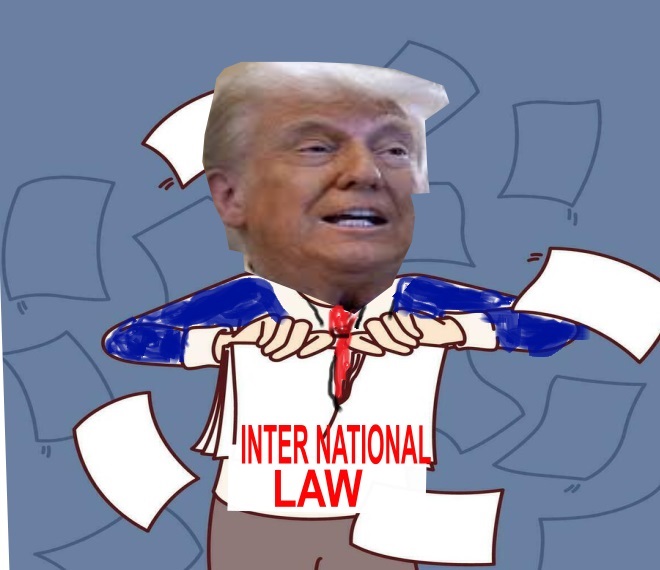
“This is not stretching the envelope,” said a retired judge advocate general lawyer. “This is shredding it. This is tearing it apart.”
October 3, 2025, Jessica Corbett, https://www.commondreams.org/news/trump-venezuela
President Donald Trump’s administration claimed that the United States is in an “armed conflict” with drug cartels in a confidential notice to Congress this week intended to justify his deadly bombings of alleged smuggling boats in the Caribbean.
Democrats in Congress and legal officials have been challenging the legality of the three military strikes Trump announced last month. A woman who identified herself as the wife of one of the at least 17 people extrajudicially killed in the US bombings said her husband was a fisher.
“Congress was notified about the designation by Pentagon officials on Wednesday,” according to The Associated Press, one of several outlets that obtained the notice. The New York Times reported that it “was sent to several congressional committees.”
NewsNation‘s Kellie Meyer posted the full memo on social media: https://x.com/KellieMeyerNews/status/1973817299053269376?ref_src=twsrc%5Etfw%7Ctwcamp%5Etweetembed%7Ctwterm%5E1973817299053269376%7Ctwgr%5Eed7e0a4e5fa28e5d3a356b95835b5dd3057f6b22%7Ctwcon%5Es1_&ref_url=https%3A%2F%2Fwww.commondreams.org%2Fnews%2Ftrump-venezuela
After citing a relevant section from the National Defense Authorization Act for fiscal year 2024, the notice describes decades of law enforcement efforts to stem the flow of illicit narcotics into the United States as “unsuccessful,” and says that cartels “illegally and directly cause the deaths of hundreds of thousands of American citizens each year.”
“The president determined these cartels are nonstate armed groups, designated them as terrorist organizations, and determined that their actions constitute an armed attack against the United States,” the document continues. Trump also “determined that the United States is in a non-international armed conflict with these designated terrorist organizations” and directed the US Department of Defense, which he has dubbed the Department of War, “to conduct operations against them.
“The United States has now reached a critical point where we must use force in self-defense and defense of others against the ongoing attacks by these designated terrorist organizations,” adds the memo, which notes the second strike on September 15.
Lawmakers and legal experts again challenged the administration’s claim that, as the notice put it, Trump directed the bombings under “his constitutional authority as commander in chief and chief executive to conduct foreign relations.”
As the Times reported:
Geoffrey S. Corn, a retired judge advocate general lawyer who was formerly the Army’s senior adviser for law-of-war issues, said drug cartels were not engaged in “hostilities”—the standard for when there is an armed conflict for legal purposes—against the United States because selling a dangerous product is different from an armed attack.
Noting that it is illegal for the military to deliberately target civilians who are not directly participating in hostilities—even suspected criminals—Mr. Corn called the president’s move an “abuse” that crossed a major legal line.
“This is not stretching the envelope,” he said. “This is shredding it. This is tearing it apart.”
New York University School of Law professor Ryan Goodman, who served as special counsel to the general counsel of the Defense Department during the Obama administration, said on social media that Corn was “completely right.”
“Drug cartels not = ‘armed conflict,‘” Goodman added, stressing that the “people killed” in such strikes “are civilians.”
Rutgers University law professor Adil Haque similarly pushed back on social media, saying: “The United States is not in a ‘non-international armed conflict’ with drug cartels. Cartels are not organized as armed groups, nor are they engaged in intense hostilities. These are dangerous criminal organizations and should be confronted using law enforcement tools.”
Members of Congress also publicly weighed in, including Senate Armed Services Committee Ranking Member Jack Reed (D-RI), who said that “every American should be alarmed that President Trump has decided he can wage secret wars against anyone he labels an enemy. Drug cartels must be stopped, but declaring war and ordering lethal military force without Congress or public knowledge—nor legal justification—is unacceptable.”
At least two of the strikes have occurred off the coast of Venezuela, elevating fears of an armed conflict with the country.
“Trump’s actions are illegal, unconstitutional, and dangerous,” Sen. Ed Markey (D-Mass.) said in response to the new memo. ”He is leading us willy-nilly into war with Venezuela. I have ‘determined’ that this is a terrible idea.”
Israel Raids Global Sumud Flotilla, Abducts Over 400 Volunteers, Group Says.
“This is an unlawful abduction, in direct violation of international law and basic human rights,” the flotilla said.
By Elizabeth Weill-Greenberg , Truthout, October 2, 2025, https://truthout.org/articles/israel-raids-global-sumud-flotilla-abducts-over-400-volunteers-group-says/
Overnight on Wednesday, Israeli soldiers raided more than a dozen boats carrying humanitarian aid to Gaza, blocked the ships’ communications, and abducted more than 400 volunteers from 47 countries.
During the raid, Israeli forces attacked volunteers with water cannons and doused them with “skunk water,” according to a press release issued by the flotilla. The volunteers were reportedly taken to the large naval vessel, the MSC Johannesburg, but the lawyers representing the volunteers have been given “minimal updates,” as per the press release.
“This is an unlawful abduction, in direct violation of international law and basic human rights,” the group said, adding that “intercepting humanitarian vessels in international waters is a war crime.”
“[D]enying legal counsel and concealing the fate of those seized compounds that crime,” the group continued.
The Global Sumud Flotilla set sail in August, carrying volunteers from more than 40 countries on dozens of civilian boats filled with humanitarian aid for Gaza, including baby formula, medicine, and prosthetic limbs. As a result of Israel’s genocide, Gaza has the largest population of child amputees per capita in the world.
The flotilla posted several prerecorded messages from volunteers stating their name, their country of origin, and that they had been abducted by Israeli forces.
Among the people aboard the flotilla were Nkosi Zwelivelile “Mandla” Mandela, Nelson Mandela’s grandson; European Parliament Member Emma Fourreau; and climate justice activist Greta Thunberg. The raid on the Global Sumud Flotilla occurred on the Jewish holiday of Yom Kippur, the day of atonement. Israel largely shuts down for the holiday, but that did not stop the raid or its attacks on Gaza.
Israel’s raid on the boats sparked demonstrations overnight throughout the world, and Italian unions have called for a general strike on Friday in solidarity with the flotilla. The unions held a general strike just weeks ago in support of the flotilla.
The Council on American-Islamic Relations (CAIR) called Israel’s raid on the Global Sumud Flotilla “an act of piracy meant to sustain its genocide.”
“Every nation that pays lip service to international law should condemn this illegal attack on the Global Sumud Flotilla and take their own steps to forcibly break the siege of Gaza,” CAIR Deputy Executive Director Edward Ahmed Mitchell said in a statement.
Earlier this week, more than a dozen U.S. lawmakers called on the Trump administration to protect the volunteers onboard the flotilla’s ships.
“The law is clear: any attack on the Global Sumud Flotilla or its civilians is a clear and blatant violation of international law,” the lawmakers wrote in a letter to Secretary of State Marco Rubio. “The United States has an obligation to protect its citizens from foreign attack.”
The lawmakers also demanded that the administration “address the issue at root of this voyage: the brutal Israeli blockade and genocide of the Palestinians in Gaza.”
The flotilla said they will not be deterred by Israel’s illegal attacks on the flotilla.
“We have to make it clear: They take one boat, we sail with 40,” the group posted on Instagram. “They try to stop us, we escalate. Take the streets, take the ports, take the seas.”
Money to oversee nuclear weapons safety will start running low after 8 days, Energy secretary says

The National Nuclear Security Administration will need to ramp back its work, which ranges from maintaining the weapons arsenal to international non-proliferation efforts.
Politico, By Kelsey Tamborrino, 10/03/2025
Energy Secretary Chris Wright is warning that the agency within the Energy Department that oversees the safety and reliability of the nation’s nuclear weapons stockpile has only enough funding to operate at full strength for about eight more days because of the ongoing government shutdown.
“Eight more days of funding, and then we have to go into some emergency shutdown procedures, putting our country at risk,” Wright said Thursday evening on Fox News, referring to the National Nuclear Security Administration.
Prior to federal cuts imposed earlier this year, NNSA had more than 65,000 federal workers and contractors across the country responsible for a wide range of activities from maintaining the nuclear arsenal to international non-proliferation work and overseeing the U.S. Navy’s nuclear operations.
In its recent shutdown plan, the Energy Department said it would maintain the NNSA’s weapons-focused staff who operate “critical control operations systems,” as well as employees who work on tasks such as stemming the spread of nuclear weapons, but it did not offer figures on how many people that includes…………………………………………………………….
The shutdown poses the second risk this year to the NNSA, after cuts instituted by Elon Musk’s DOGE removed too many people, forcing DOE to call back some terminated workers at the NNSA. Those DOGE appointees were reportedly unaware of the NNSA’s role in overseeing national security………………………………………………………. https://www.politico.com/news/2025/10/03/nuclear-energy-nnsa-00592883
Under Trump, Criticism Is Now Criminal

Jim Naureckas, FAIR, October 3, 2025
After the killing of right-wing influencer Charlie Kirk, President Donald Trump (9/10/25) escalated his war on free speech, calling for criminalizing criticism of himself:
“It’s a long past time for all Americans and the media to confront the fact that violence and murder are the tragic consequence of demonizing those with whom you disagree day after day, year after year, in the most hateful and despicable way possible. For years, those on the radical left have compared wonderful Americans like Charlie to Nazis and the world’s worst mass murderers and criminals.
This kind of rhetoric is directly responsible for the terrorism that we’re seeing in our country today, and it must stop right now. My administration will find each and every one of those who contributed to this atrocity and to other political violence, including the organizations that fund it and support it, as well as those who go after our judges, law enforcement officials, and everyone else who brings order to our country.“
To spell it out: “Demonizing”—which is to say, criticizing—people with whom you disagree is “directly responsible” for Kirk’s death. Note that this is about criticizing people that you disagree with—”you” presumably being one of “those on the radical left”—as Trump has built a wildly lucrative political career out of demonizing those he disagrees with, and he’s not about to stop now. It’s the “wonderful Americans” like Kirk whom you aren’t supposed to criticize.
Trump promises “this kind of rhetoric”—the “radical left” kind—will “stop,” because the government will “find each and every one who contributed to this atrocity.” This includes all those who used their speech to “go after our judges,” cops and “everyone else who brings order.”
This is, in short, a declaration that the idea of free speech is over—despite Trump going on to list “free speech” first among “the American values for which Charlie Kirk lived and died.” Where once you had the right to criticize those who “bring order,” now such reckless rhetoric is punishable as direct support for “terrorism”—a word that under the US legal system authorizes draconian police powers……………………………………………………………………………………………………………………. https://fair.org/home/under-trump-criticism-is-now-criminal/
Can Warriors Stop Endless Wars?
The Role of Veterans in Movements for Peace and Justice
By William D. Hartung. Tom Dispatch, September 30, 2025
Secretary of Defense Pete Hegseth, the former “Fox and Friends” cohost, claims to be obsessed with making the Pentagon and the military services about “the warfighter.” His main approach to doing so is a deeply misguided campaign to reduce “distractions” like commitments to diversity, equity, and inclusion (the dreaded “DEI”). No matter that the purpose of DEI is to combat White supremacist attitudes, misogyny, and anti-gay and anti-trans violence in the ranks.
All such forms of discrimination are, in fact, already present in the U.S. military, and the way to build a cohesive defense force is certainly not by allowing them to run wild and be seen as acceptable or “normal” behavior. The best way to build a stronger, more unified military would, of course, be to make people feel welcome regardless of gender, race, ethnicity, or gender identification. That would, in fact, be the only way to build a military that reflects the nation it’s charged with defending. DEI, after all, is not an irritating slogan. It’s an attempt to right historic wrongs in the service of a more effective military and a more unified populace. And it’s one thing to suggest that current approaches could be made more effective, but quite another to demonize them in the name of forging “better” warfighters.
In short, the Hegseth method is bound to prove destructive. Count on this, in fact: it will only weaken our military, not strengthen it. The result, if Hegseth’s efforts succeed, will indeed be a Whiter, more aggressive armed forces, and quite likely one significantly more loyal to the current occupant of the Oval Office than to the Constitution.
Ex-Warriors for Peace
Thankfully, Hegseth’s vision is not shared by many of the veterans of America’s disastrous post-9/11 wars in Afghanistan, Iraq, and elsewhere. The eye-opening documentary What I Want You to Know presents the views of just such veterans about their service and about the meaning of the conflicts they fought in. Almost to a person (no, not “a man”!), they said the following four things:
– They don’t know why they were sent to the places where they fought
– They did not believe the U.S. could win the war they were sent to fight
– Their government lied to them
– They were forced to do things that will haunt them for the rest of their lives
It took courage for such veterans to go on camera and offer the unvarnished truth about the disastrous wars they helped to fight. They are, of course, far from alone, but as one of the producers of the film told me, many veterans are reluctant to discuss such feelings and insights publicly. Some don’t want to reflect on the idea that the wars they fought in were disastrously misguided and didn’t end in anything resembling an American victory. Others fear political retribution. Still others prefer to keep such conversations among their fellow vets, in large part because they feel that people who haven’t served can’t fully understand what they went through.
It’s little wonder that many vets keep their feelings about their long years in service within a close circle of friends and other veterans. But whether they choose to speak out publicly or not, a striking number of them are now either antiwar or “war skeptical,” questioning whether some of our recent conflicts were faintly worth fighting in the first place.
Don’t misunderstand me on this. There are indeed veterans speaking out against such unnecessary, unjust wars (past or future). Fifteen of them, for instance, contributed chapters to Paths of Dissent, a volume edited by Quincy Institute co-founder Andrew Bacevich and U.S. Army veteran Daniel Sjursen. A description of a 2023 webinar marking the release of the book caught its main theme perfectly:
“[T]hese soldiers vividly describe both their motivations for serving and the disillusionment that made them speak out against the system. Their testimony is crucial for understanding just how the world’s self-proclaimed greatest military power went so badly astray.”
There are also entire organizations, including Veterans for Peace (VFP), Common Defense, and About Face: Veterans Against the War, devoted to ensuring that such endless wars remain over and crafting an American foreign policy grounded in diplomacy and defense rather than in a quest for global military dominance. …………………………………………………………………………………………………………………………………………………………………………………………………………………………..
Isn’t it finally time for a respectful national dialogue about what constitutes an adequate defense and how to balance military preparations with other urgent national needs? Of course, having any such conversation, given the present deep divisions in American society, will be a challenge in its own right. But the alternative is a continuation of some variation of the devastating wars of the post-9/11 period, and such new and perilous conflicts will involve boots on the ground, air strikes, or the endless arming of repressive regimes. https://tomdispatch.com/can-warriors-stop-endless-wars/
The U.S. is now a fascist state. What Trump’s new order on domestic terrorism really means.
Richard J Murphy, 3 Oct 2025
Fascists mean what they say. Donald Trump has now issued NSPM-7, a presidential order that redefines dissent as terrorism and authorises the state to treat opponents as enemies. From Stalin’s Article 58 to the Nazi Malicious Practices Act, history shows what happens when repression becomes law. We need to face facts: the US is very rapidly sliding into full-blown fascism — and the UK could follow.
And that future is dystopian. Dissent is recast as terrorism in Trump’s world. This order makes that idea law, and terrorists are now to be eliminated by the US military, as he told them in a conference when he assembled 700 or more generals and declared that they would now be fighting terrorism in the cities of the USA.
In effect, Trump is saying that there is a civil war to be waged in the USA now against what he calls the domestic terrorist threat, but which doesn’t exist.
The truth is that the USA is now a fascist authoritarian state, and we need to take seriously what he’s saying because, as Chris Hedges put it, “Fascists mean what they say”.
This memo, this order, signed by Trump, starts with the words ’Heinous assassinations and other acts have dramatically increased’. He lists Charlie Kirk’s murder, an attack on the Supreme Court Judge Brett Kavanaugh in 2022 and recent attacks on ICE, the Customs Enforcement Agency in the USA, that is expelling people from the country.
He claims that these are the basis for the terror that he is talking about. But in a country where, frankly, violence is normalised, and death on the streets is not uncommon, to pretend that this is the case is just wrong. He’s trying to build a highly selective, distorted, and self-serving story about left-wing terror, for which there is almost no evidence whatsoever. But as a consequence, he’s criminalising dissent.
Anti-fascism is now defined as terrorism.
Opposition to expulsions by ICE and opposition to patriarchy, or to his idea of empire, is defined as violent revolution. Anti-capitalism, anti-racism, and campaigns for gender equality – all these are branded as extremist. And truth becomes whatever he, as the arbiter of power, declares it to be.
In this situation, the law is inverted. Instead of being a mechanism that defends our freedoms, the law becomes a weapon of repression. This order dictates that the Department of Justice seek to prosecute people who oppose what Trump is trying to do with maximum charges.
There is an instruction that the Internal Revenue Service of the USA, the equivalent of HM Revenue and Customs in the UK, should strip the tax status of suspected groups, and that would include NGOs of the sort that campaign in the UK with regard to human rights, or even universities that teach courses that suggest that people have the right to dissent.
The agencies of the USA are authorised to interrogate and detain people just because they don’t agree with Trump.
Justice in this world becomes a means of persecution, and we’ve been here before, of course. There are massive historical parallels to what Trump is now doing.
Stalin had Article 58 in his penal code. It was a catchall for counter-revolutionary activity, and literally millions of people died as a result of being prosecuted under Article 58. Any form of dissent basically gave rise to their execution.
The same thing happened in Nazi Germany. There was the Malicious Practices Act of 1933, the very first act right at the beginning of the Nazi era that made it illegal to criticise the Nazi government, its leaders or its policies, and which allowed for punishment by arrest and internment in concentration camps like Dachau, which was in suburban Munich.
Trump’s memo – his order – fits exactly the same pattern. It’s vague and sweeping, and it’s designed to criminalise opposition, but without precisely saying what anybody will have done wrong, except to offer dissent.
This is, in effect, a declaration of preemptive war. What the order says is that a new organisation, the National Joint Terrorism Task Force, or the JTTF for short, must disrupt and dismantle networks of opposition to what Trump is trying to achieve. That’s not based on evidence of crimes, but on the basis of people’s associations or their free speech or their ideas. Financial networks, NGOs and universities are all specifically targeted by this. This is the policing of thought.
And behind all this, there is a very obvious ideology. A Christian nationalist worldview drives this agenda.
Those who support LGBTQ+ rights or who are indeed members of the LGBTQ+ community, people who are secular humanists or immigrants, all of them are labelled as deviants. Science and reason are replaced by biblical dogma, and patriotism is twisted into theocratic authoritarianism.
This has a paranoia behind it. Indeed, there is a paranoia that is gripping the elite in America. Narcissists and conspiracists are imagining that there are enemies everywhere to what Trump is proposing to do and what they wish to happen.
Pseudo-democracy is being created. Pseudo-courts, pseudo-media, pseudo-citizens, people who will, in fact, support the lies that maintain the Trump regime, and I rightly call it a regime and not an administration, and these lies replace facts.
Loyalty is replacing law.
Liberal institutions are being hollowed out.
Rights are being reduced to privileges and are being revoked at will, and hope and silence will ensure that the repression spreads.
And all of this happens whilst we try to look the other way. And that is the big threat of this moment.
Alexander Solzhenitsyn wrote in The Gulag Archipelago, “Universal innocence gives rise to the universal failure to act. Maybe they won’t take you. Maybe it will all blow over”, he said.
But it won’t. This is real. Fascists should lay out in advance what they intend to do, and then they do it, and that is what is happening in the USA.
This will happen. People will disappear. This is not a future danger. It’s here and now, and the decree that puts it into place already exists. The bars to freedom are being literally built before our own eyes at this moment, and democracy can’t survive if the opposition to it is redefined as terrorism.
So, where are we? Let’s face the facts. Fascism cannot be reasoned with. It must be confronted. And hope is most definitely not enough. And silence is complicity.
Solidarity and resistance are essential, even though that does inevitably involve risk. Making this video involves risk. If these measures become the norm in the UK as well, I will, of course, be identified as one of the threats.
But we have to defend civil liberties, truth and institutions now and challenge our government to act to do so, or we will follow the path of the USA and head down the direct route to both fascism and everything that follows from it, including the internment camps, which I am sure will be sprouting up soon in the USA and not just for those who are scheduled for deportation because they come from an ethnic minority.
We have to isolate the USA.
We have to call out what’s happening.
We have to say we object.
Our governments must decide whether they can any longer align with a country which is so openly fascist.
We need to come to the point where we say, “This is not acceptable.”
We need to say, “This is a country now built on lies, peddling myths and untruths and oppressing what is real.”
We need to support independent journalism, which there still is in the USA, but which is under enormous threat.
And we need to support those who will stand up for democracy.
We need to demand accountability.
And we need to stand up for what was put in place after World War II, which was the structure of human rights, which our mainstream political parties in the UK, including the Labour Party and the Conservative Party, both now question, even though this structure was put in place as a result of the influence of Winston Churchill, who wanted to make sure that never again would human rights be threatened by fascists. But they are, and our politicians are letting that happen.
We have to take action before the iron bars of fascism slam the door shut. That’s the risk that we face, and our politicians have to rise to the challenge, or we’re all in very deep trouble. The US is already a fascist state. We could be too. That’s what we’re up against.
What do you think? There’s a poll below. Do you think the US has now moved into fascism? Do you think that the UK could follow in the same way? Are you willing to take a stand? Or will you stand by the wayside? We are at a point where we have to decide.
Please think about what you are going to do.
Israeli Defense Minister says half a million Palestinians in Gaza City will be considered ‘terrorists’ if they don’t evacuate.
One of the most devastating aspects of the ongoing Israeli campaign has been the phenomenon of what locals call the use of remote-controlled “robots” rigged with explosives and sent into dense built-up areas to be detonated, causing widespread destruction………….. each of these explosions equals the explosive force of two heavy air missiles.
With at least half a million people still left in Gaza City, Israeli Defense Minister Israel Katz issued a “final warning” for residents to evacuate, saying those who remain will soon be regarded as “terrorists or terrorist supporters.”
By Qassam Muaddi October 1, 2025, https://mondoweiss.net/2025/10/israeli-defense-minister-says-half-a-million-palestinians-in-gaza-city-will-be-considered-terrorists-if-they-dont-evacuate/
The Israeli army just announced that it won’t allow Palestinians in central and southern Gaza to travel north to Gaza City. Movement will only be allowed to leave the city for the south, the Israeli army said in a statement. Israeli Defense Minister Israel Katz also said that this was the Palestinians’ “last warning” to leave Gaza City, adding that anyone who remains will be considered “terrorists or terrorist supporters.”
An estimated 500,000 Palestinians remain in Gaza City, who are now officially cut off from any provisions coming from the south, including food, water, fuel, and medicine. To the north, Gaza City is completely sealed off from northern Gaza, including the cities of Jabalia, Beit Lahia, and Beit Hanoun, where the Israeli army is operating and has emptied of most of its inhabitants.
The announcement comes two days after the Trump administration announced its new plan for the end of the war on Gaza, amid an intensification of Israel’s campaign in Gaza City ahead of its planned occupation in the coming days or hours. According to the Israeli army, some 700,000 Palestinians have left, leaving at least 500,000 Palestinians still within the city. As of last Monday, September 29, half a million Palestinians remain trapped there, occupying a space of less than 8 square kilometers, UNRWA spokesperson Adnan Abu Hasna said.
The slow pace of evacuations from the city for the central and southern parts of the Strip had forced the Israeli army to delay sending in the third of its three military divisions (the 36th division), finally pushing it into Gaza last week.
Israel’s Channel 12 quoted military sources saying that the occupation would take up to three months, according to a report airing on September 16. The Israeli channel had reported earlier in August of disagreements between the Israeli army and the Israeli cabinet on the timing of the scheduled invasion. The cabinet insists on a faster operation, while the army prefers to conduct operations at a slower pace.
According to the Israeli daily Maariv, the Israeli army is avoiding combat with Palestinian resistance fighters, concentrating on air and artillery strikes to increase pressure on residents before sending in ground troops. Yet armored Israeli vehicles have still reached several areas, including the vital Jalaa street and the vicinity of the al-Shifa Hospital.
Despite the slow advance of ground forces, aerial and artillery bombardment has been relentless, sowing overwhelming destruction. Already, the iconic Shuja’iyya district in eastern Gaza City has been completely flattened, 90% of the Tuffah district has been destroyed, and 300 buildings have been demolished in Gaza’s largest neighborhood, Zeitoun.
In addition to entire residential blocks, Israeli strikes have targeted universities, where thousands of displaced Palestinians have taken shelter.
Remote-controlled ‘robots’ rigged to explode
One of the most devastating aspects of the ongoing Israeli campaign has been the phenomenon of what locals call the use of remote-controlled “robots” rigged with explosives and sent into dense built-up areas to be detonated, causing widespread destruction.
The deadly weapon is essentially an outdated Israeli armored personnel carrier (APC), which is retrofitted with large amounts of explosives and sent into neighborhoods. According to a report by Israeli army radio reporter Doron Kadosh, aired on September 21, each of these explosions equals the explosive force of two heavy air missiles.
The report pointed out that each APC explosion sends fragments across 500 square meters, turning the sky red for several seconds and pulverizing anything — including bodies — in its perimeter. The report confirmed that the Israeli army has been using these weapons “at an industrial scale,” detonating dozens of APCs in Gaza City every day, especially at night.
Meanwhile, Nibal Farsakh, spokesperson for the Palestinian Red Crescent Society (PRCS), told Al-Araby TV on Wednesday that the only two hospitals still operating in Gaza City are the al-Ahli Arab Hospital and the al-Quds Hospital, which is also owned by PRCS. Both hospitals are running without essential medical supplies, and access to al-Quds Hospital has been cut off by Israeli forces for the past nine days, Farsakh said, adding that the hospital can only treat the patients already inside it.
Farsakh said that the hospital is using its last stock of oxygen canisters, which are about to run out at any moment, warning that today’s blockade on the only way into the city puts thousands of patients at risk. Farsakh noted that as large numbers of wounded individuals have continued to require treatment, most essential medicines and medical supplies have run out.
If Gaza City falls
Amid the offensive, Palestinians are practically trapped in the city. Moving south is only possible through vehicles that charge up to 8,000 shekels per trip (about $2,420), with long delays due to the high volume of requests. For thousands of families, the only alternative is to flee on foot, which is impossible for the elderly, the sick, and the wounded. Many of them have already fled Israeli strikes numerous times.
Although most Palestinians from north Gaza have already fled the cities of Jabalia and Beit Lahia, which have been completely destroyed, most of them moved a short distance south to Gaza City.
The majority of them had fled during the Israeli operation between October and December of 2024, dubbed “the Generals’ Plan.” The majority of these displaced Palestinians returned to the destroyed north during the ceasefire between January and March of this year. After Israel broke the ceasefire, most Palestinians remained in the north, exhausted by the displacement they had already experienced since October 2023, especially after Israel bombed places to which they had fled in the south that the army designated as “safe zones.”
The Palestinians who have already fled Gaza City have concentrated in the central Gaza Strip, in and around the cities of Deir Al-Balah, Khan Younis, and the coastal Mawasi area. These areas have been crowded with tent encampments for almost two years.
A Palestinian displaced from Gaza City in Mawasi, who asked not to be named, told Mondoweiss that “there is no place left in Mawasi, not even for a needle.” He noted that “people are expanding the tent encampments into the areas in Khan Younis controlled by the Israeli army, which is putting their lives at risk.”
“They’ve been removing the rubble of other people’s homes with their bare hands for days, just to make some room for another tent,” he said.
Another Palestinian who remains in Gaza City told Mondoweiss that “we had a difficult and long discussion inside my family over moving out or not, and decided to split.”
“My mother and two sisters left to the south, and my father and I remained,” they said. “The moment we said goodbye was the most difficult of my entire life. I hugged my mother for several minutes, and we both wept, as neither of us knew if we were going to see each other again.”
Gaza City is the largest urban center in the Strip, and is 5,000 years old. It has been an economic and cultural hub for a millennia.
Now Palestinians fear that Israel plans on wiping it out entirely, the same way it did with Rafah, which has now been completely leveled. If Gaza City meets the same fate, it would be the end of the Gaza Strip as we know it.
80 years demonizing Russia long enough…time for détente.

In 2019 and 2020 the US withdrew from two critical nuclear treaties with Russia: INF (Intermediate-Range Nuclear Forces) and Open Skies. The third and last, New Start, expires in 4 months with no substantive ongoing negotiations. Why? Because America has abandoned negotiations extending New Start and reinstituting the others during its senseless, failed proxy war to weaken, isolate Russia from the European political economy.
Walt Zlotow, West Suburban Peace Coalition, Glen Ellyn IL , 3 Oct 25,
Last time US and Russia were buddies was 80 years ago at the end of WWII. Russia coughed up over 25 million dead in defeating Nazism in the East. In return for shedding that blood, the US coughed up several billion in military aid that kept the Russian war machine functioning in a Russian economy largely destroyed by Germany.
That friendship was blown up, literally, on August 6, 1945, when the US dropped the first of 2 atomic bombs on Japan. One of several reasons was to inform Russia (than USSR) that as new boss of the world America would brook no interference from a Russia we falsely assumed was bent on expanding communism everywhere on earth.
Had FDR lived there may not have been a Cold War. FDR recognized a prostrate Russia needed a buffer from a third German invasion from the west in the 20th century. He wisely surmised Stalin had no agenda whatsoever to conquer the world. So, he acquiesced in Stalin’s authoritarian control of his neighbors.
Alas, FDR’s death ushered in profoundly inexperienced Harry Truman. Woefully uninformed on foreign affairs, Truman was easy pickings for Russophobes Jimmy Burns, James Forestall, Dean Atchison and others who not only wanted to vanquish communist Russia, but desired a permanent war economy to prevent another Great Depression.
That wasn’t needed as pent-up domestic demand began the fabulous growth of the post WWII middle class. But Truman’s foreign policy handlers convinced him to promulgate the Truman Doctrine in February 1947, opposing communist expansion everywhere on earth even if meant demonizing as ‘communist’ any progressive movement that might make life better for downtrodden peoples.
But Russia never, for a single day between 1945 and the USSR’s implosion 46 years later, represented a serious existential threat to America. That’s because Russia had neither the desire nor the capability to attack America without suffering its utter destruction from an overwhelming American nuclear capability.
Instead, imaginary US obsession with Russia promoting communism in every corner of the earth including America, led to millions of deaths from hot wars such as Korea and Vietnam, and from US support for dictators killing dissidents threatening their regimes in over 20 countries. The million leftists Indonesia’s General Suharto killed with America’s help gave the grisly name to this murderous foreign policy…The Jakarta Method.
So, the Cold War was on till l1991 when the USSR went poof. Time to disband a now obsolete NATO? ‘Ha ha’, said the US national security state. ’We’re just getting started.’ Between 1999 and 2020 NATO expanded from 16 to 30 members, including 2 on Russia’s borders.
Beginning in 2007 Russia, requested, pleaded, begged the US and NATO to cease expansion. A year later the US response was to pledge NATO membership to the one country Russia would never allow in…neighboring and partially Russian cultured Ukraine. It took 14 years for an astonishingly patient Russia to say ‘enough’ and launch its ‘special military operation.’ That will not only prevent Ukraine NATO membership, it will effectively destroy Ukraine as a functioning state. All thanks to deranged anti-Russian US policy.
But America’s clearly lost proxy war against Russia sacrificing Ukraine is not the worst of what should be termed Cold War II. In 2019 and 2020 the US withdrew from two critical nuclear treaties with Russia: INF (Intermediate-Range Nuclear Forces) and Open Skies. The third and last, New Start, expires in 4 months with no substantive ongoing negotiations. Why? Because America has abandoned negotiations extending New Start and reinstituting the others during its senseless, failed proxy war to weaken, isolate Russia from the European political economy. The US has put peoplekind at increased risk of nuclear confrontation due to refusal to negotiate nuclear disarmament.
Eighty years of America’s Russian Derangement Syndrome is 80 years too long. Time to shut down the lost proxy war against Russia by ceasing all aid to Ukraine till they negotiate the war’s end. Time to begin disengagement from European security including NATO. Time to embrace diplomatic relations with Russia to end all sanctions, explore mutually beneficial trade relations, and most importantly, reinstitute and renew nuclear agreements to prevent our collective annihilation rom nuclear war. We can’t wait another 80 years, 80 months, 80 weeks…even another 80 days.
A breakdown of Tony Blair’s bizarre proposal to run Gaza
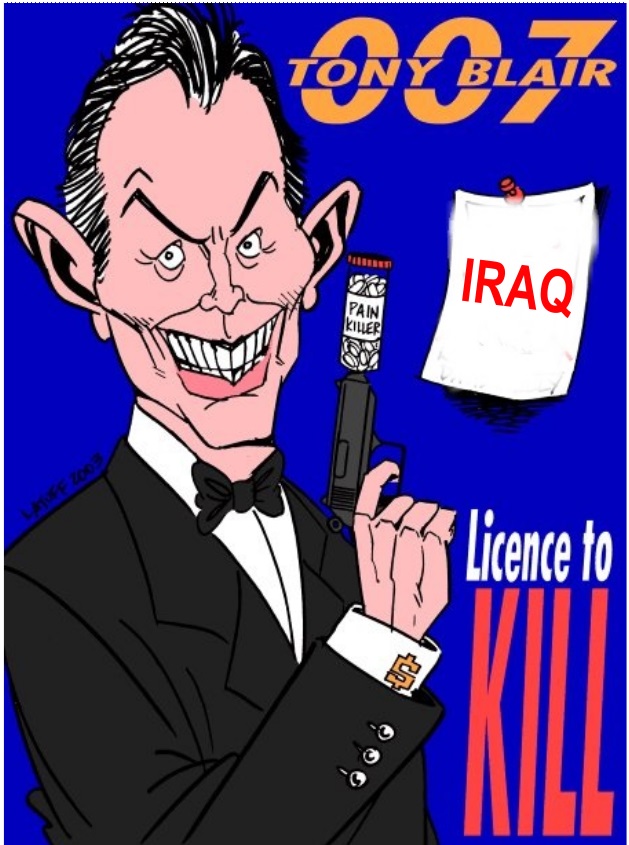
His handling of the Iraq war as premier of the UK, as well as his dealings with a string of autocrats, has left him deeply unpopular across the globe.
Proposed transitional authority will have global billionaires and businesspeople at top and Palestinians at bottom, according to leaked draft
Middle East Eye, By Rayhan Uddin, 29 September 2025
An unlikely answer has been found for who should lead the process of running Gaza after Israel’s genocidal war: Tony Blair.
It was revealed last week that the former British prime minister – a controversial figure in the Middle East, to say the least – was being considered to lead a transitional authority in the enclave.
Haaretz has now published a leaked draft plan of what Gaza would look like under Blair’s initiative.
The plan reveals a hierarchy in which an international board of billionaires and businesspeople sit at the top, while highly vetted “neutral” Palestinian administrators are at the bottom.
It sets out a three-year plan, budgeted at $90m in the first year, $134m in the second and $164m in the third (these are solely management expenses, and don’t include reconstruction or aid).
The administration would work closely with Israel, Egypt and the US, and, according to Israeli sources cited by Haartez, has the backing of the White House.
Middle East Eye breaks down key highlights from the 21-page leaked document.
Board of billionaires
Gaza International Transitional Authority, or Gita, is the name given to the new institution which will administer the Palestinian enclave.
According to the draft, Gita will be run by an international board which has “supreme political and legal authority for Gaza during the transitional period”.
The board will be in charge of all appointments, and supervise every component of the authority.
It will be made up of between seven and 10 members, including a chair.
The board will include a senior UN official, with Sigrid Kaag, the UN’s special coordinator for the Middle East peace process, cited as an example.
It would also include “leading international figures with executive and financial expertise”.
Three names are cited as potential candidates: Marc Rowan, a billionaire who owns one of America’s largest private equity firms, Naguib Sawiris, an Egyptian billionaire in the telecommunications and technology sector, and Aryeh Lightstone, chief executive of the Abraham Accords Peace Institute.
Lightstone was a senior adviser to David Friedman, a staunch defender of Israel’s illegal settlement movement, when he was US ambassador to Israel between 2017 and 2021 under Donald Trump’s first administration.
According to Haaretz, he was also deeply involved in the creation of the highly controversial Gaza Humanitarian Foundation.
Not every single board member will be a billionaire or have links to Israel or America.
There will be “at least one qualified Palestinian representative”, potentially coming from the “business or security sector”. It wasn’t made clear what “qualified” means.
And finally, the document said that the board would have “a strong representation of Muslim members to ensure regional legitimacy and cultural credibility”.
These Muslim figures would ideally have the political support of their countries, but also “long standing business credibility”.
Members of the board would be “nominated by contributing states and confirmed through a process coordinated by the UN”.
The board would report to the UN Security Council, which would ultimately grant it authority to carry out its functions.
The Security Council currently includes non-permanent members that have been highly critical of Israel’s genocide in Gaza, such as Algeria, Pakistan and Slovenia, in addition to permanent members Russia and China.
It would be interesting to see if these countries would approve a transitional government in Gaza run mostly by non-Palestinian billionaires and business figures.
The chairman (probably Blair)
Various media outlets have reported that Blair is being touted to be the chair of the transitional authority, though his name is not mentioned in the draft.
Public-private partnerships to run government projects, one of Blair’s hallmark policies as prime minister of the UK, is mentioned in the document.
According to the draft plan, the chairman will serve as the “senior political executive, principal spokesperson, and strategic coordinator for the entire transitional authority”.
They would be appointed through “international consensus” and endorsement by the UN Security Council. There is no mention of Palestinian consensus in choosing them.
If Blair is indeed the proposed chairman, he may have his work cut out gaining “international consensus” for his appointment.
His handling of the Iraq war as premier of the UK, as well as his dealings with a string of autocrats, has left him deeply unpopular across the globe.
The chair will represent Gita “in all diplomatic, donor and intergovernmental forums”. They will also lead “strategic security diplomacy” with other actors, “including Israel, Egypt and the United States”.
The document notes that initially, Gita’s senior officials won’t be in Gaza. ………………………………………………………………………………………………………………………………………………………………………
Palestinian Executive Authority, with little authority
Despite the name, the Palestinian Executive Authority, at the bottom of the hierarchy, has little to no independent authority.
It is separate from the PA, which administers parts of the occupied West Bank…………………………………………
It’s notable that the language used for all roles throughout the document, like board, chairman and CEO, reflects a business structure rather than a country or territory.
The Palestinian CEO will lead the process of identifying “directors” (not ministers) to head up the various departments like health, education, infrastructure and planning. …..
The international board of billionaires and businesspeople will have the final say on appointments “to safeguard institutional legitimacy and independence”.
“All department heads are subject to performance review and can be dismissed or replaced in accordance with transitional governance procedures,” the document notes.
An Israeli source told Haaretz that the Palestinian Executive Authority would be completely subordinate to the board and have no independent authority.
As such, it would be far weaker than the technocratic administration set out in a joint Arab plan led by Egypt earlier this year.
Below the Palestinian Executive Authority are a number of municipal roles related to the running of local public services and utilities. ………………………………………………………….. https://www.middleeasteye.net/news/breakdown-tony-blairs-bizarre-proposal-run-gaza
1 This Month
26 September – International Day for the Total Elimination of Nuclear Weapons





PLEASE OPPOSE HR 8255 AND S.3639 – bills would accelerate satellite deployment, with no environmental review or safeguards – https://ncstd5li.quorum.us/campaign/169331/
To see nuclear-related stories in greater depth and intensity – go to https://nuclearinformation.wordpress.com
-
Archives
- September 2026 (323)
- August 2026 (330)
- July 2026 (355)
- June 2026 (287)
- May 2026 (306)
- April 2026 (356)
- March 2026 (251)
- February 2026 (267)
- January 2026 (308)
- December 2025 (358)
- November 2025 (359)
- October 2025 (375)
-
Categories
- 1
- 1 NUCLEAR ISSUES
- business and costs
- climate change
- culture and arts
- ENERGY
- environment
- health
- history
- indigenous issues
- Legal
- marketing of nuclear
- media
- opposition to nuclear
- PERSONAL STORIES
- politics
- politics international
- Religion and ethics
- safety
- secrets,lies and civil liberties
- spinbuster
- technology
- Uranium
- wastes
- weapons and war
- Women
- 2 WORLD
- ACTION
- AFRICA
- Atrocities
- AUSTRALIA
- Christina's notes
- Christina's themes
- culture and arts
- Events
- Fuk 2022
- Fuk 2023
- Fukushima 2017
- Fukushima 2018
- fukushima 2019
- Fukushima 2020
- Fukushima 2021
- general
- global warming
- Humour (God we need it)
- Nuclear
- RARE EARTHS
- Reference
- resources – print
- Resources -audiovicual
- Weekly Newsletter
- World
- World Nuclear
- YouTube
-
RSS
Entries RSS
Comments RSS

