US conducts its Intercontinental Ballistic Missile (ICBM) test.

ICBMs have been sold to the public as a guarantor of security, when in fact, they are an imminent threat.
Maintaining these weapons is a huge waste of resources.
Influential right wing think tanks like The Heritage Foundation have come out in opposition to the Comprehensive Test Ban Treaty, and have directly called for the U.S. to prepare to resume explosive nuclear weapons testing
by beyondnuclearinternational, https://beyondnuclearinternational.org/2025/11/09/us-conducts-its-icbm-test/
Although not carrying a nuclear warhead, the test is still provocative, say Defuse Nuclear War and Tri-Valley CAREs
In the early morning hours of November 5th, Vandenberg Space Force Base launched a Minuteman III missile, the current intercontinental ballistic missile (ICBM) ground-based nuclear warhead delivery system in roughly 400 underground silos across five states that would target US adversaries in a full-scale nuclear war.
This ICBM test, which landed roughly 30 minutes later at Kwajalein Atoll in the Marshall Islands, is one of several that occur at Vandenburg every year — as they have for many decades. According to the Space Force Press Release, today’s test “validates” the “reliability, operational readiness, and accuracy of the ICBM system.” While these tests are launched without the nuclear warhead, the purpose is to practice nuclear war fighting and these tests are just as provocative to US adversaries as their nuclear-capable missile tests are to us.
This launch has an increased gravitas, as it comes hardly a week after the President used his social media platform to make a confusingly provocative announcement that, “Because of other countries’ testing programs, I have instructed the Department of War to start testing our nuclear weapons on an equal basis.”
Exactly what was meant by the President’s vague statement has been debated in the days since. The President could not have been referencing other countries conducting explosive nuclear tests, because no nation except North Korea has conducted an explosive nuclear test this century.
The reference to “equal basis” with other “countries testing programs” has been thought to be in reference to nuclear weapon delivery system tests, which have been conducted by both Russia and China. But as today’s launch displays, these delivery system tests are nothing new, and the United States has long tested all of the delivery vehicles in its triad, including today’s ICBM test.
If the US were to resume explosive nuclear testing, Russia and others have already signaled they will follow. This reckless move would break a 30-year taboo that has kept the world safer. If the US resumes testing, it won’t just poison the air: it could destroy decades of progress toward preventing nuclear war.
Resuming explosive nuclear testing at this time would solely be a political decision, and it would be a very bad one. The human and environmental toll would be immense: radiation poisoning that seeps into lungs, water, and soil; children born with preventable cancers; ecosystems rendered unlivable. Testing again would repeat history’s worst mistakes on purpose.
US resumption of explosive nuclear testing would open the door to all of the other nuclear powered states conducting their own tests for both their existing stockpile warhead designs, and those that are in development, potentially opening the door to decades of testing and associated releases of radiation into the environment.
Influential right wing think tanks like The Heritage Foundation have come out in opposition to the Comprehensive Test Ban Treaty, and have directly called for the U.S. to prepare to resume explosive nuclear weapons testing at the Nevada National Security Site (NNSS). For example, in its January 2025 report, America Must Prepare to Test Nuclear Weapons, it claims that testing is necessary for the global image of America and would be a display of resolve.
Additionally, Project 2025 calls for the United States to “Reject ratification of the Comprehensive Test Ban Treaty and indicate a willingness to conduct nuclear tests in response to adversary nuclear developments if necessary. This will require that the National Nuclear Security Administration be directed to move to immediate test readiness…”
Officials from the Lawrence Livermore and Los Alamos National Labs who manage the existing nuclear weapons stockpile have expressed that there’s no military or technical justification for explosive nuclear testing at this time. The billions spent on the Labs’ supercomputer modeling, National Ignition Facility laser testing and multiple other simulation systems allow them to ensure that the stockpile will work as designed in a “use scenario.”
The US conducted 100 atmospheric and 828 underground explosive nuclear tests at NNSS between 1951 and 1992. The agency currently needs 36 months to get “ready” for a full-scale, underground, explosive nuclear test at NNSS.
In response to the President’s sudden announcement, on October 30th Congresswoman Dina Titus (NV-01) introduced the Renewing Efforts to Suspend Testing and Reinforce Arms Control Initiatives Now (RESTRAIN) Act to prohibit the United States from conducting explosive testing of nuclear weapons.
In her press release announcing the RESTRAIN Act, Representative Titus states, “Donald Trump has put his own ego and authoritarian ambitions above the health and safety of Nevadans. His announcement to resume nuclear testing in the United States goes against the arms control and nonproliferation treaties that the U.S. has spearheaded since the end of the Cold War, and will trigger new tests by Russia and China, reigniting an international arms race. It also puts Nevadans back in the crosshairs of toxic radiation and environmental destruction. With just 97 days until the only arms control agreement between the U.S. and Russia expires, now should be the time to negotiate further arms-control agreements, not create mushroom clouds in the Nevada desert.”
The RESTRAIN Act amends U.S. Code to insert a prohibition of explosive nuclear testing while simultaneously preventing any funding from going toward the Trump Administration’s effort to conduct explosive nuclear tests.
Emma Claire Foley with the Defuse Nuclear War coalition said of today’s launch, “ICBM tests make war more likely and damage the place they supposedly protect. Scheduling this latest test on Election Day is an attempt to avoid public attention on a weapons system that experts agree makes the U.S. less safe.” She added, “ICBMs are a threat to the life and health of every single person in the United States and around the world. We ask that the upcoming ICBM test, all future scheduled tests, be canceled, and that the U.S. hold to its decades-long record of not conducting nuclear tests.”
ICBMs have been sold to the public as a guarantor of security, when in fact, they are an imminent threat. In the words of the late Daniel Ellsberg, author of The Doomsday Machine, these weapons make “any conflict enormously more dangerous than it has to be” by increasing “the danger that any armed conflict between major nuclear states can escalate to all-out war.” ICBMs are on hair-trigger alert and, once launched, cannot be recalled, virtually guaranteeing a strike on the country that launches them. As long as ICBMs exist, we live with the constant risk that misinterpreted intelligence, human error, or a single rash decision could end civilization as we know it within an hour.
Maintaining these weapons is a huge waste of resources. The U.S. has committed to spending hundreds of billions of dollars to “modernize” its ICBM force, which in practice means replacing the Minuteman III system that was tested today with an entirely new missile system – the Sentinel ICBM, and a new nuclear warhead design.
Thus far, the Sentinel ICBM program is now an astonishing 81% over budget and years behind schedule, not including the expense for its new W-87-1 nuclear warhead development being done at Lawrence Livermore National Laboratory or the new plutonium pits that will be built at Los Alamos National Laboratory. Yet the U.S. Secretary of Defense has certified, through a “comprehensive, unbiased review” not shared with the public, that the program will proceed.
Scott Yundt, Executive Director of Livermore-based Tri-Valley CAREs criticized the launch from Vandenburg, saying, “Test launches like today’s damage human communities and ecosystems. The Marshall Islands, already forced to bear the overwhelming environmental costs of U.S. nuclear weapons testing, are still used as a target test area.”
Yundt went on to say “When tensions among nuclear-armed states are high, each test launch carries an added risk. The U.S. military has acknowledged as much by pausing these launches at high points of tension in the war in Ukraine. The risk of nuclear escalation remains too high to introduce the possibility of misinterpretation of a test into the mix.”
“ICBM tests are damaging and provocative acts masquerading as business as usual. We condemn all wasteful, destructive tests that keep the world at the edge of nuclear destruction,” Yundt concluded.
TriValley CAREs watchdogs the nuclear weapons complex and its Lawrence Livermore Lab, one of two locations that develops all US nuclear bombs and warheads. Defuse Nuclear War is a coalition of more than 200 organizations and organizers dedicated to reducing the risk of nuclear war.
Michael Mann to Bill Gates: You can’t reboot the planet if you crash it
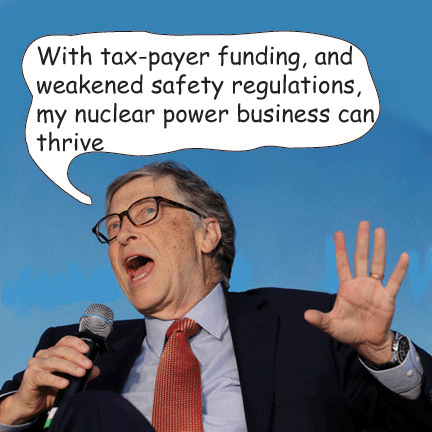
Gates downplays the role of clean energy and rapid decarbonization. Instead, he favors hypothetical new energy tech, including “modular nuclear reactors” that couldn’t possibly be scaled up over the time frame in which the world must transition off fossil fuels.
By Michael E. Mann | October 31, 2025, https://thebulletin.org/2025/10/you-cant-reboot-the-planet-if-you-crash-it/
“I suppose it is tempting, if the only tool you have is a hammer, to treat everything as if it were a nail.” Thus wrote the famous psychologist Abraham Maslow in 1966.
If Maslow were around today, I imagine he might endorse the corollary that if your only tool is technology, every problem appears to have a technofix. And that’s an apt characterization of the “tech bro”-centered thinking so prevalent today in public environmental discourse.
There is no better example than Bill Gates, who just this week redefined the concept of bad timing with the release of a 17-page memo intended to influence the proceedings at the upcoming COP30 international climate summit in Brazil. The memo dismissed the seriousness of the climate crisis just as (quite possibly) the most powerful Atlantic hurricane in human history—climate-fueled Melissa—struck Jamaica with catastrophic impact. The very next day a major new climate report (disclaimer: I was a co-author) entitled “a planet on the brink” was published. The report received far less press coverage than the Gates missive. The legacy media is apparently more interested in the climate musings of an erstwhile PC mogul than a sober assessment by the world’s leading climate scientists.
Gates became a household name in the 1990s as the Microsoft CEO who delivered the Windows operating system. (I must confess, I was a Mac guy.) Microsoft was notorious for releasing software mired with security vulnerabilities. Critics argued that Gates was prioritizing the premature release of features and profit over security and reliability. His response to the latest worm or virus crashing your PC and compromising your personal data? “Hey, we’ve got a patch for that!”
That’s the very same approach Gates has taken with the climate crisis. His venture capital group, Breakthrough Energy Ventures, invests in fossil fuel-based infrastructure (like natural gas with carbon capture and enhanced oil recovery), while Gates downplays the role of clean energy and rapid decarbonization. Instead, he favors hypothetical new energy tech, including “modular nuclear reactors” that couldn’t possibly be scaled up over the time frame in which the world must transition off fossil fuels.
Most troublingly, Gates has peddled a planetary “patch” for the climate crisis. He has financed for-profit schemes to implement geoengineering interventions that involve spraying massive amounts of sulfur dioxide into the stratosphere to block out sunlight and cool the planet. What could possibly go wrong? And hey, if we screw up this planet, we’ll just geoengineer Mars. Right Elon?
Such technofixes for the climate, in fact, lead us down a dangerous road, both because they displace far safer and more reliable options—namely the clean energy transition—and because they provide an excuse for business-as-usual burning of fossil fuels. Why decarbonize, after all, if we can just solve the problem with a “patch” later?
Here’s the thing, Bill Gates: There is no “patch” for the climate crisis. And there is no way to reboot the planet if you crash it. The only safe and reliable way out when you find yourself in a climate hole is to stop digging—and burning—fossil fuels.
It was arguably Gates who—at least in part—inspired the tech-bro villain Peter Isherwell in the Adam McKay film “Don’t Look Up.” The premise of the film is that a giant “comet” (a very thinly veiled metaphor for the climate crisis) is hurtling toward Earth as politicians fail to act. So they turn to Isherwell who insists he has proprietary tech (a metaphor for geoengineering, again thinly veiled) that can save the day: space drones developed by his corporation that will break the comet apart. Coincidentally, the drones are designed to then mine the comet fragments for trillions of dollars’ worth of rare metals, that all go to Isherwell and his corporation. If you haven’t seen the film (which I highly recommend), I’ll let you imagine how it all works out.
For those who have been following Gates on climate for some time, his so-called sudden “pivot” isn’t really a “pivot” at all. It’s a logical consequence of the misguided path he’s been headed down for well over a decade.
I became concerned about Gates’ framing of the climate crisis nearly a decade ago when a journalist reached out to me, asking me to comment on his supposed “discovery” of a formula for predicting carbon emissions. (The formula is really an “identity” that involves expressing carbon emissions as a product of terms related to population, economic growth, energy efficiency, and fossil fuel dependence). I noted, with some amusement, that the mathematical relationship Gates had “discovered” was so widely known it had a name, the “Kaya identity,” after the energy economist Yōichi Kaya who presented the relationship in a textbook nearly three decades ago. It’s familiar not just to climate scientists in the field but to college students taking an introductory course on climate change.
If this seems like a gratuitous critique, it is not. It speaks to a concerning degree of arrogance. Did Gates really think that something as conceptually basic as decomposing carbon emissions into a product of constituent terms had never been attempted before? That he’s so brilliant that anything he thinks up must be a novel discovery?
I reserved my criticism of Gates, at the time, not for his rediscovery of the Kaya identity (hey—if he can help his readers understand it, that’s great) but for declaring that it somehow implies that “we need an energy miracle” to get to zero carbon emissions. It doesn’t. I explained that Gates “does an injustice to the very dramatic inroads that renewable energy and energy efficiency are making,” noting peer-reviewed studies by leading experts that provide “very credible outlines for how we could reach a 100 percent noncarbon energy generation by 2050.”
The so-called “miracle” he speaks of exists—it’s called the sun, and wind, and geothermal, and energy storage technology. Real world solutions exist now and are easily scalable with the right investments and priorities. The obstacles aren’t technological. They’re political.
Gates’ dismissiveness in this case wasn’t a one-off. It was part of a consistent pattern of downplaying clean energy while promoting dubious and potentially dangerous technofixes in which he is often personally invested. When I had the chance to question him about this directly (The Guardian asked me to contribute to a list of questions they were planning on asking him in an interview a few years ago), his response was evasive and misleading. He insisted that there is a “premium” paid for clean energy buildout when in fact it has a lower levelized cost than fossil fuels or nuclear and deflected the questions with ad hominem swipes. (“He [Mann] actually does very good work on climate change. So I don’t understand why he’s acting like he’s anti-innovation.”)
This all provides us some context for evaluating Gates’ latest missive, which plays like a game of climate change-diminishing bingo, drawing upon nearly every one of the tropes embraced by professional climate disinformers like self-styled “Skeptical Environmentalist” Bjorn Lomborg. (Incidentally, Lomborg’s center has received millions of dollars of funding from the Gates Foundation in recent years and Lomborg recently acknowledged serving as an adviser to Gates on climate issues.)
Among the classic Lomborgian myths promoted in Gates’ new screed, which I’ll paraphrase here, is the old standby that “clean energy is too expensive.” (Gates likes to emphasize a few difficult-to-decarbonize sectors like steel or air travel as a distraction from the fact that most of our energy infrastructure can readily be decarbonized now.) He also insists that “we can just adapt,” although in the absence of concerted action, warming could plausibly push us past the limit of our adaptive capacity as a species.
He argues that “efforts to fight climate change detract from efforts to address human health threats.” (A central point of my new book Science Under Siege with public health scientist Peter Hotez is that climate and human health are inseparable, with climate change fueling the spread of deadly disease). Then there is his assertion that “the poor and downtrodden have more pressing concerns” when, actually, it is just the opposite; the poor and downtrodden are the most threatened by climate change because they have the least wealth and resilience.
What Gates is putting forward aren’t legitimate arguments that can be made in good faith. They are shopworn fossil fuel industry talking points. Being found parroting them is every bit as embarrassing as being caught—metaphorically speaking—with your pants down.
For years when I would criticize Gates for what I consider to be his misguided take on climate, colleagues would say, “you just don’t understand what Gates is saying!” Now, with Donald Trump and the right-wing Murdoch media machine (the Wall Street Journal editorial board and now an op-ed by none other than Lomborg himself in the New York Post) celebrating Gates’ new missive, I can confidently turn around and say, “No, you didn’t understand what he was saying.”
Maybe—just maybe—we’ve learned an important lesson here: The solution to the climate crisis isn’t going to come from the fairy-dust-sprinkled flying unicorns that are the “benevolent plutocrats.” They don’t exist. The solution is going to have to come from everyone else, using every tool at our disposal to push back against an ecocidal agenda driven by plutocrats, polluters, petrostates, propagandists, and too often now, the press.
Nuclear power will get the most Energy Department loans, Chris Wright says
Mon, Nov 10 2025, Spencer Kimball, CNBC
Key Points
- Nuclear power plants will receive the bulk of the money from the Energy Department’s loan office, Secretary Chris Wright said.
- The Trump administration struck a deal last month with the owners of Westinghouse to invest $80 billion to build nuclear plants across the U.S.
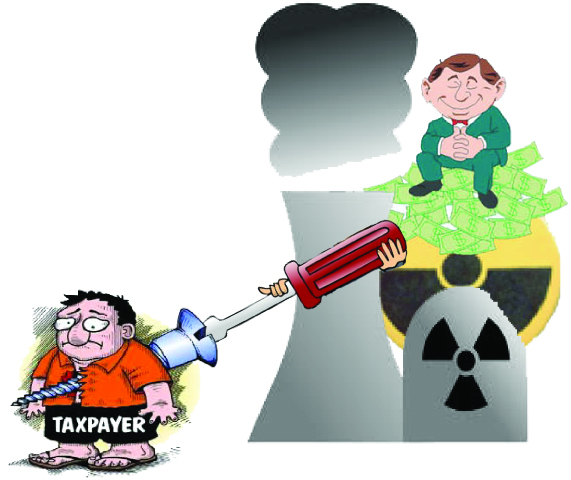
Nuclear power will receive most of the money from the Energy Department’s loan office as the Trump administration pushes to quickly break ground on new reactors, Secretary Chris Wright said on Monday.
“We have significant lending authority at the loan program office,” the Secretary of Energy said at a conference hosted by the American Nuclear Society in Washington D.C. “By far the biggest use of those dollars will be for nuclear power plants — to get those first plants built.”
President Trump signed an executive order in May that called for the U.S. to break ground on 10 large nuclear reactors by 2030. Alphabet, Amazon, Meta Platforms and Microsoft are investing billions of dollars to restart old nuclear plants, upgrade existing ones, and deploy new reactor technology to meet the electricity demand from artificial intelligence data centers.
Wright said he expects electricity demand from AI to attract billions of dollars in equity capital to build new nuclear capacity from “very creditworthy providers.” The Energy Department could match those private dollars by as much as four to one with low cost debt financing from the loan office, he said………..
Westinghouse deal
The Trump administration struck a deal last month with the owners of Westinghouse to invest $80 billion to build nuclear plants across the U.S. Westinghouse is owned by uranium miner Cameco and Brookfield Asset Management…………………………….
Cameco Chief Operating Officer Grant Isaac said last week that the U.S. government has a number of options available to facilitate the financing of Westinghouse reactors, including the Energy Department’s loan office.
“We’re assured that there is a lot of interest in investing this minimum $80 billion in order to begin the process,” Isaac told investors on Cameco’s third-quarter earnings call.
Under the terms of the October deal, Westinghouse could spin out as a separate, publicly-traded company with the U.S. government as a shareholder.
But Westinghouse has struggled in the past to build the AP1000 on time and on budget. It went bankrupt in 2017 from cost overruns at big nuclear projects in Georgia and South Carolina.
Two AP1000 reactors entered service at Plant Vogtle in Georgia in 2023 and 2024, years behind schedule and billions of dollars over budget. The South Carolina project was cancelled. https://www.cnbc.com/2025/11/10/nuclear-power-energy-department-chris-wright-loan-westinghouse-ai-data-center.html
Legalising the theft of Russian assets
There are, I’m afraid to say, still too many truly believers in the Russia total defeat delusion. Ukraine can still win! With what troops and, critically, what money?
With Glenn Diesen, Ian Proud. Nov 10, 2025
Following my recent article on the topic of the so-called EU reparations loan (a cheap ruse to fund the Ukrainian state for another 2-3 catastrophic years of war), I discussed the issue in more detailed with Glenn Diesen,
The more I consider this issue, the more clear it becomes that attempting to exproprirate Russian assets is a desperate measure to prevent EU Member States from giving Ukraine the money themselves, money which they do not have.
The Commission idea, should the Russian asset option continue to be blocked by Belgium, to borrow the money on international markets and then lend it to Ukraine, which can’t borrow money itself, appears similarly desperate. Who will make repayments on that loan? Becauses Ukraine won’t.
Suddenly, the EU idea of common debt becomes more worrying still. Who wants to give Kaja Kallas a blank cheque to fund proxy wars in other countries, with repayments being share among Member States?
Amid all of this, with Pokrovsk falling, Kupiansk and Siversk almost lost, the Russian army pushing into Zaporizhia, does anyone in Brussels take a step back and ask whether, in fact, it would be better to support the US in leveraging Zelensky to settle?
There are, I’m afraid to say, still too many truly believers in the Russia total defeat delusion. Ukraine can still win! With what troops and, critically, what money?
The dark side of Zelenskyy’s rule

Opposition lawmakers and civil society activists say Ukraine’s leadership is using lawfare to intimidate opponents and silence critics.
Politico, October 31, 2025, By Jamie Dettmer
As Russia began its full-scale invasion of Ukraine nearly four years ago, Volodymyr Kudrytskyi, then head of Ukraine’s state-owned national power company Ukrenergo, was scrambling to keep the lights on.
Somehow, he succeeded and continued to do so every year, earning the respect of energy executives worldwide by ensuring the country was able to withstand Russian missile and drone strikes on its power grid and avoid catastrophic blackouts — until he was abruptly forced to resign in 2024, that is.
Kudrytskyi’s dismissal was decried by many in the energy industry and also prompted alarm in Brussels. At the time, Kudrytskyi told POLITICO he was the victim of the relentless centralization of authority that Ukrainian President Volodymyr Zelenskyy and his powerful head of office Andriy Yermak often pursue. He said he feared “corrupt individuals” would end up taking over the state-owned company.
According to his supporters, it is that kind of talk — and his refusal to remain silent — that explains why Kudrytskyi ended up in a glass-enclosed cubicle in a downtown Kyiv courtroom last week, where he was arraigned on embezzlement charges. Now, opposition lawmakers and civil society activists are up in arms, labeling this yet another example of Ukraine’s leadership using lawfare to intimidate opponents and silence critics by accusing them of corruption or of collaboration with Russia. Zelenskyy’s office declined to comment.
Others who have received the same treatment include Zelenskyy’s predecessor in office, Petro Poroshenko, who was sanctioned and arraigned on corruption charges this year — a move that could prevent him from standing in a future election. Sanctions have frequently been threatened or used against opponents, effectively freezing assets and blocking the sanctioned person from conducting any financial transactions, including using credit cards or accessing bank accounts.
Poroshenko has since accused Zelenskyy of creeping “authoritarianism,” and seeking to “remove any competitor from the political landscape.”
That may also explain why Kudrytskyi has been arraigned, according to opposition lawmaker Mykola Knyazhitskiy, who believes the use of lawfare to discredit opponents is only going to get worse as the presidential office prepares for a possible election next year in the event there’s a ceasefire. They are using the courts “to clear the field of competitors” to shape a dishonest election, he fears.
Others, including prominent Ukrainian activist and head of the Anti-Corruption Action Center Daria Kaleniuk, argue the president and his coterie are using the war to monopolize power to such a degree that it threatens the country’s democracy.
Kaleniuk was in the courtroom for Kudrytskyi’s two-hour arraignment, and echoes the former energy boss’s claim that the prosecution is “political.” According to Kaleniuk, the case doesn’t make any legal sense, and she said it all sounded “even stranger” as the prosecutor detailed the charges against Kudrytskyi: “He failed to show that he had materially benefited in any way” from an infrastructure contract that, in the end, wasn’t completed, she explained……………………………………………………………………………
for former Deputy Prime Minister Ivanna Klympush-Tsintsadze, the case “doesn’t look good from any angle — either domestically or when it comes to international partners.” The timing, she said, is unhelpful for Ukraine, as it coincides with Kyiv’s ongoing appeal for more European energy assistance ahead of what’s likely to be the war’s most perilous winter.
With Russia mounting missile and drone strikes on a far larger scale than before, Ukraine’s energy challenge is likely to be even more formidable. And unlike previous winters, Russia’s attacks have been targeting Ukraine’s drilling, storage and distribution facilities for natural gas in addition to its electrical power grid. Sixty percent of Ukrainians currently rely on natural gas to keep their homes warm.
Some Ukrainian energy executives also fear Kudrytskyi’s prosecution may be part of a preemptive scapegoating tactic to shift blame in the event that the country’s energy system can no longer withstand Russian attacks.
Citing unnamed sources, two weeks ago Ukrainian media outlet Ukrainska Pravda reported that former energy executives fear they are being lined up to be faulted for failing to do enough to boost the energy infrastructure’s resilience and harden facilities.
“They need a scapegoat now,” a foreign policy expert who has counseled the Ukrainian government told POLITICO. “There are parts of Ukraine that probably won’t have any electricity until the spring. It’s already 10 degrees Celsius in Kyiv apartments now, and the city could well have extended blackouts. People are already pissed off about this, so the president’s office needs scapegoats,” he said, speaking on condition of anonymity to discuss the matter freely.
“The opposition is going to accuse Zelenskyy of failing Ukraine, and argue he should have already had contingencies to prevent prolonged blackouts or a big freeze, they will argue,” he added……..https://www.politico.eu/article/dark-side-zelenskyy-rule-ukraine/
Hegseth Vows Wartime Footing For U.S. Weapons Production.
BY DREW FITZGERALD, Wall Street Journal 11/08/25
Pentagon leaders are putting their weapons suppliers in the crosshairs.
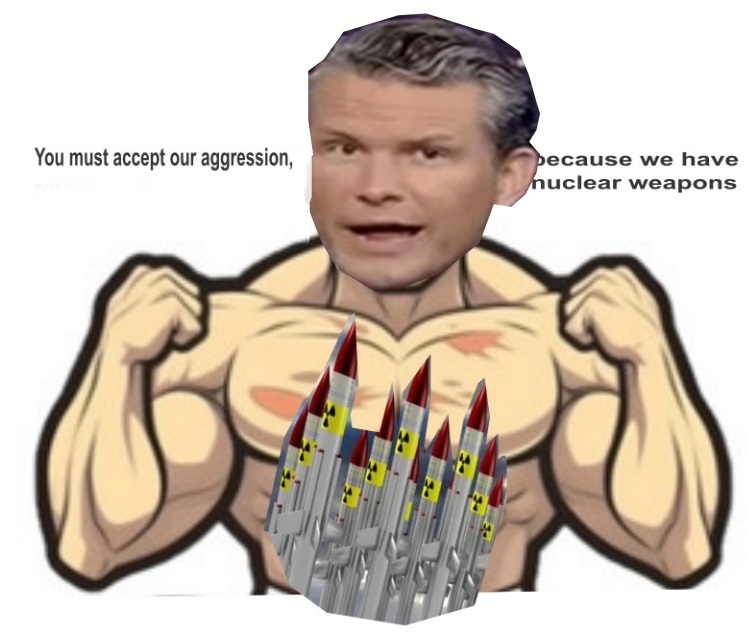
Defense Secretary Pete Hegseth said Friday that the U.S. military will shake up the way it buys weaponry, equipment and software by making purchases more quickly, and from a broader range of potential suppliers. The plan would streamline Pentagon program offices, develop incentives for new investments and potentially box out suppliers that miss deadlines.
Hegseth said decadelong weapons-development timelines have put the U.S. military at risk of falling behind rivals such as China. He said he would clear testing requirements that can slow purchasing and empower military officials to order commercial products when custom-made technology takes too long.
“We need to save the bureaucracy from itself,” Hegseth said Friday at an address to dozens of defense-industry executives in Washington.
The Trump administration aims to extend Pentagon efforts to bring into the fold more technology companies. The push has exposed ten-sions between the old-guard contractors such as Boeing and Lockheed Martin and a new crop of politically connected tech companies………………………………………………….
“We need to save the bureaucracy from itself,” Hegseth said Friday at an address to dozens of defense-industry executives in Washington.
The Trump administration aims to extend Pentagon efforts to bring into the fold more technology companies. The push has exposed ten-sions between the old-guard contractors such as Boeing and Lockheed Martin and a new crop of politically connected tech companies…………..
US Again Flies Heavy Bombers Near Venezuela’s Coast

The Senate on Thursday voted against a War Powers Resolution that would have prohibited the president from starting a war with Venezuela without congressional authorization.
The flight marked the fourth time since October 15 that the US has sent bombers into the Caribbean
by Dave DeCamp | November 6, 2025, https://news.antiwar.com/2025/11/06/us-again-flies-heavy-bombers-near-venezuelas-coast/
The US has once again flown heavy bombers over the Caribbean and near the coast of Venezuela, according to a report from Newsweek, which cited flight tracking data.
Two US Air Force B-52 Stratofortress aircraft made the provocative flight, marking the fourth time since October 15 that the US has sent bombers near Venezuela’s coast. The first flight also involved B-52s, and the second and third were conducted by B-1B Lancer bombers.
In each case, the US bombers kept their transponders on when flying near Venezuela, meaning they wanted to be seen. It’s been clear that one aspect of the US military activity in the region has been meant as a psychological operation against Venezuelan President Nicolas Maduro, as the Trump administration is hoping he decides to step down or someone in his inner circle turns on him, something that’s unlikely to happen.
The latest bomber flight comes as a US aircraft carrier, the USS Gerald Ford, is en route to the region. The Gerald Ford and its strike group will join eight US warships already deployed in the Caribbean.
According to a recent report from The New York Times, President Trump is considering several options for launching attacks on Venezuela, and he isn’t expected to decide until the Gerald Ford is in position. The report also said that the president was worried about failing or putting US troops at risk, and that he hadn’t made a final decision.
The Senate on Thursday voted against a War Powers Resolution that would have prohibited the president from starting a war with Venezuela without congressional authorization.
The US military has continued its bombing campaign against alleged drug-running boats in Latin America, which so far has involved the destruction of 17 vessels and the killing of 66 people. The Trump administration has not provided any evidence to back up its claims about what the boats are carrying and has admitted it doesn’t know the identities of the people it has been extra-judicially executing.
Ukraine accuses Russia of targeting its nuclear substations.
A large Russian missile and drone attack that overwhelmed Ukrainian air
defences overnight targeted substations that power two of Ukraine’s nuclear power plants, according to the country’s foreign minister and a person with knowledge of the barrage.
Andriy Sybiha, Ukraine’s top diplomat, said the
substations which power the Khmelnytskyi and Rivne nuclear power plants
were targeted in “well planned strikes”. “Russia is deliberately
endangering nuclear safety in Europe,” he said in a statement.
FT 9th Nov 2025, https://www.ft.com/content/474e7f27-87fb-4fb1-9899-d62778a611a4
Declassified cable reinforces proliferation concerns about high-assay low-enriched uranium fuel (HALEU)
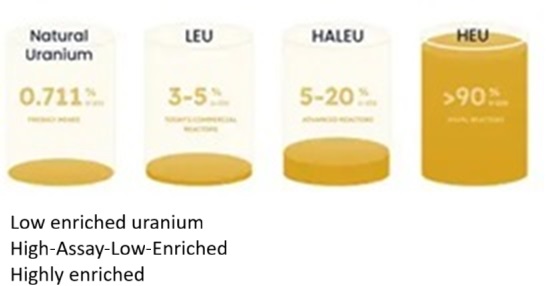
in 1977, the US government recommended to the IAEA that, contrary to its previous position, the agency should consider enriched uranium in the HALEU range to be a material “of direct utility in an … explosive device.” That is, the United States advised that HALEU should be treated similarly to HEU and be subject to stricter safeguards
Bulletin, By Edwin Lyman | November 7, 2025
A recently declassified document from nearly 50 years ago provides an important piece of the puzzle for open-source researchers seeking to understand the murky origins of the International Atomic Energy Agency (IAEA) system for safeguarding against the diversion of civil nuclear materials for weapons. The document also reinforces concerns about the proliferation potential of small modular reactors that require fuels using uranium enriched from 10 to less than 20 percent uranium 235—that is, fuels that contain the material known as high-assay low-enriched uranium (HALEU).[1]
HALEU is a subcategory of low-enriched uranium (LEU), which is uranium enriched to below 20 percent uranium 235, and the IAEA has long considered LEU, including HALEU, to be “indirect-use material.” For the agency, HALEU cannot be used to make a nuclear weapon without converting it to highly enriched uranium (HEU) by further enriching it to 20 percent or above—a significant technical barrier for all but a few countries. Consequently, HALEU is subject to far less stringent international safeguards than HEU.
But the newly uncovered document reveals that, in 1977, the US government recommended to the IAEA that, contrary to its previous position, the agency should consider enriched uranium in the HALEU range to be a material “of direct utility in an … explosive device.” That is, the United States advised that HALEU should be treated similarly to HEU and be subject to stricter safeguards—a recommendation that the IAEA apparently rejected. But given the current international push for rapid deployment of reactors that will need large quantities of HALEU fuel, it is time for the IAEA to reconsider that decision.
Proliferation risk of HALEU fuel. The Energy Department, with bipartisan support from Congress, is now vigorously promoting the global deployment of “advanced” nuclear power reactors that require HALEU-based fuels, as well as the facilities needed to enrich and fabricate those fuels. For example, nearly all of the 11 reactor designs selected by the Energy Department for its New Reactor Pilot Program will use HALEU fuel. And Russia, which has already deployed two barge-mounted small modular reactors (SMRs) using HALEU fuel, is planning to deploy others in Uzbekistan and elsewhere around the globe.
But without appropriate constraints, large-scale production and use of HALEU may greatly increase the risks of nuclear proliferation and terrorism…………………………………………………….
earlier this year, the late Richard Garwin and I—along with professors Scott Kemp of MIT, Mark Deinert of the Colorado School of Mines, and Frank von Hippel of Princeton— presented evidence in a letter to Science that HALEU may be used to make nuclear weapons without the need to enrich it further, and we called for further study of the issue by the US government. The concern is that a state or a terrorist group that illicitly obtained enough HALEU—typically, one reactor core’s worth or less, depending on the design—could have a far easier path to acquiring a bomb than if it only had access to conventional LWR fuel………………………………………………………………………………………
The document reveals that the United States apparently sought to lower the enrichment threshold that the IAEA had formerly used to define direct-use enriched uranium from 20 percent to 10 percent—thereby including the enrichment range now known as HALEU. To my knowledge, this information was not previously known to the public, and a cursory web search does not turn up any other mention of the new terms proposed in the cable………………………………………………………………………….
the cable strongly suggests that other US government agencies were concerned enough about the weapon usability of enriched uranium in the HALEU range to challenge the status quo and recommend that it be safeguarded as intensely as HEU. Such concerns should be even more salient today. An international review of HALEU’s proliferation risks is urgently needed before any more power reactors running on HALEU fuel are deployed. https://thebulletin.org/2025/11/declassified-cable-reinforces-proliferation-concerns-about-high-assay-low-enriched-uranium-fuel/?utm_source=ActiveCampaign&utm_medium=email&utm_content=Can%20Latin%20America%20find%20common%20ground%20at%20COP30%3F&utm_campaign=20251110%20Monday%20Newsletter
The ‘weird’ catch to Labour’s ‘national security threat’ attack on the Scottish National Party.

LABOUR’S “national security threat” attacks on the SNP reveal how deeply embedded support for nuclear weapons has become in UK politics, a leading security academic has said.
Nick Ritchie, a professor of international security at the University of York, said that by branding opposition to Trident as a danger to the nation, ministers risk “shutting down” democratic debate on defence.
Ritchie, who last year led research
on international nuclear security for the New Zealand government, spoke to
the Sunday National after Labour ministers ramped up their rhetoric against the Scottish Government, suggesting it poses a bigger danger to UK
interests than China.
In the past week, Deputy Prime Minister David Lammy,
Scottish Secretary Douglas Alexander, and Defence Secretary John Healey
have all described the SNP administration as a “threat” to UK national
security. The Labour ministers’ arguments hinge on the SNP’s opposition to
nuclear weaponry, which Ritchie said “really reduces how you can talk and
think about national security”.
He suggested that national security was
being “conflated with unequivocal support for nuclear weapons”. RITCHIE
said the “weird thing” is that the UK Government is technically legally
bound “under the Non-Proliferation Treaty to work towards the goal of
nuclear disarmament”. He went on: “Of course, the caveat is that the
time is not right now, it’ll be far too difficult and so on and so forth.
But the premise – that nuclear disarmament is where we need to end up – is a premise that is accepted, or has been accepted, by governments of all
stripes. “So there’s a tension there between accepting that on the one
hand and then chastising the SNP for a pretty legitimate position that
nuclear weapons are a security liability. This is the position that the
majority of countries in the world have taken.”
The National 9th Nov 2025, https://www.thenational.scot/news/25606016.weird-catch-labours-national-security-threat-attack-snp/
Brian Goodall says no to next stage of submarine dismantling

“Whichever way we deal with all seven of the subs currently at the dockyard I remain completely against any further nuclear submarines being brought to Rosyth.
By Ally McRoberts, Dunfermline Press, 8th Nov 2025
REMOVING the reactor from one of the laid-up nuclear submarines at Rosyth Dockyard is a “stage too far”.
Local SNP councillor Brian Goodall said there was “no need” to cut out the most radioactive parts left in HMS Swiftsure, which is being dismantled as part of an innovative recycling scheme.
He said there was nowhere to safely store the waste and it would also be cheaper to not go ahead – a stance that Labour MP Graeme Downie said was an “insult to the highly skilled team at Rosyth”.
Cllr Goodall said: “The next step will see Babcock cutting out the pressure vessel from the reactor compartment of the decommissioned nuclear submarine Swiftsure, in an experimental process that has never been done anywhere in the world before.
“This part of the submarine dismantling project has required Babcock to seek an increase in the limits to the levels of radioactivity they are allowed to discharge into the environment around the area.
“I believe there’s no clear justification for the cutting out of the pressure vessel, and that the removal for long term storage of the entire reactor compartment would be the more logical, proven, safer and cheaper approach to the next step in the dismantling process.”
There are currently seven old nuclear subs laid up at Rosyth and another 15 at the Devonport naval base in Plymouth.
A further five are due to come out of service.
The dismantling programme at the dockyard began in 2015 – Swiftsure is the first to be cut up – and in September yard bosses said Rosyth could become a “centre of excellence” for dealing with the UK’s old nuclear subs.
The project is doing what no-one else has attempted to do – removing the most radioactive parts left in the vessel, the reactor and steam generators, and recycling up to 90 per cent of the ship.
However, Cllr Goodall said: “The only justification ever given for cutting out the reactor pressure vessels in this way was to reduce the volume of the intermediate level radioactive waste that would be going into the UK’s deep geological radioactive waste facility.
“But such a facility does not exist and it looks like it never will, so long term, near surface storage at a nuclear licensed facility in England, like Capenhurst or Sellafield, is now the most likely outcome.
“And so there’s no need to take forward the experimental stage two part of the proposed procedure, with the increased radioactive discharges associated with it.”
He said he had made the same point at the consultation stage in 2012, before the dismantling of subs at Rosyth got the go ahead.
The councillor continued: “While I support the demonstrator project and, if it’s successful, I’d reluctantly back the on-site dismantling of the six other decommissioned submarines that are currently at Rosyth, I feel it’s not too late to rethink stage two of the process.
“Whichever way we deal with all seven of the subs currently at the dockyard I remain completely against any further nuclear submarines being brought to Rosyth.
“With homes within metres of the site and schools, shops and countless other businesses right next door, Rosyth should never have become a nuclear facility and radioactive waste store.
“We should now be doing all we can to create a long positive, clean, green future for the dockyard.”…………………https://www.dunfermlinepress.com/news/25606854.brian-goodall-says-no-next-stage-submarine-dismantling/
‘Dangerous for humanity’: Nuclear testing truth exposed
As the world reacts to US President Donald Trump’s huge nuclear weapons call, this is what an arms race could really mean for the future of humanity.
Jamie Seidel, news.com.au November 11, 2025
ANALYSIS
Nuclear tests? Or testing nukes?
The difference is profound. And has dire global implications.
So the future may hinge on US President Donald Trump’s ability to comprehend the difference, whether or not he’s playing “madman” politics, and the advice he’s getting from his intelligence agency appointees.
“Because of other countries testing programs, I have instructed the Department of War to start testing our Nuclear Weapons on an equal basis,” the US president proclaimed recently.
“That process will begin immediately.”
Since then, strategic analysts worldwide have been struggling to come to grips with what he means.
“And it certainly perplexed those who follow these matters as Trump’s announcement appeared to be based on a misapprehension about what other nations are doing and made little strategic or practical sense,” notes British strategist Lawrence Freedman.
“As is often the case with some of Trump’s more dramatic announcements, [this] did not betray extensive staff work or fact-checking.”
Was it about testing nuclear warheads? That’s what the words seem to say.
Was it about testing means of delivering nuclear warheads? That’s what Russia’s just done.
Was it about China’s rapidly expanding nuclear arsenal? The statement was made immediately before Mr Trump met with Mr Xi.
“Because of other countries testing programs, I have instructed the Department of War to start testing our Nuclear Weapons on an equal basis,” the US president proclaimed recently.
“That process will begin immediately.”
Since then, strategic analysts worldwide have been struggling to come to grips with what he means.
“And it certainly perplexed those who follow these matters as Trump’s announcement appeared to be based on a misapprehension about what other nations are doing and made little strategic or practical sense,” notes British strategist Lawrence Freedman.
“As is often the case with some of Trump’s more dramatic announcements, [this] did not betray extensive staff work or fact-checking.”
Was it about testing nuclear warheads? That’s what the words seem to say.
Was it about testing means of delivering nuclear warheads? That’s what Russia’s just done.
Was it about China’s rapidly expanding nuclear arsenal? The statement was made immediately before Mr Trump met with Mr Xi.
President Donald Trump greets Chinese President Xi Jinping. Picture: Andrew Harnik/Getty Images
“There are concerns that Russia and China may have been cheating, essentially conducting nuclear explosive tests in a way that is undetectable to the international community,” notes the vice president of international affairs US think tank Atlantic Council Matthew Kroenig.
But evidence supporting this claim is yet to be presented.
Meanwhile, President Trump appears certain in his own mind as to what’s going on.
“You’ll find out very soon”, he told reporters aboard Air Force One recently.
“But we’re going to do some testing, yeah. Other countries do it. If they’re going to do it, we’re going to do it.”
Mutually assured disruption
“The United States has more Nuclear Weapons than any other country,” President Trump stated in a Truth Social post.
“This was accomplished, including a complete update and renovation of existing weapons, during my First Term in office. Because of the tremendous destructive power, I HATED to do it, but had no choice!”
“They seem to all be nuclear testing. We have more nuclear weapons than anybody,” the President later added on Air Force One. “We don’t do testing, and we halted it many years ago, but with others doing testing, I think it’s appropriate that we do also.”
Despite repeating his assertions, Trump’s meaning remains unclear.
“Every sentence is problematic,” writes Sir Freedman.……………………………………………………………………………………………………………………………
Put simply, the United States doesn’t need to explode a bomb to test its nuclear capabilities.
It has already conducted 1054 carefully monitored tests. Russia has set off 715. And China 47.
So the only winner in a renewed nuclear warhead testing scenario is Beijing.
“This asymmetry in test data has been a sore spot for Chinese officials who felt disadvantaged by arms control agreements such as the Partial Test Ban Treaty,” Ms Williams explains. “If one country returns to nuclear testing, others are likely to follow.”……………………………………………………https://www.news.com.au/technology/innovation/military/dangerous-for-humanity-nuclear-testing-truth-exposed/news-story/e7fc61137ea5bd747352088f7bf9eca0
-
Archives
- October 2026 (112)
- September 2026 (339)
- August 2026 (330)
- July 2026 (355)
- June 2026 (287)
- May 2026 (306)
- April 2026 (356)
- March 2026 (251)
- February 2026 (267)
- January 2026 (308)
- December 2025 (358)
- November 2025 (359)
-
Categories
- 1
- 1 NUCLEAR ISSUES
- business and costs
- climate change
- culture and arts
- ENERGY
- environment
- health
- history
- indigenous issues
- Legal
- marketing of nuclear
- media
- opposition to nuclear
- PERSONAL STORIES
- politics
- politics international
- Religion and ethics
- safety
- secrets,lies and civil liberties
- spinbuster
- technology
- Uranium
- wastes
- weapons and war
- Women
- 2 WORLD
- ACTION
- AFRICA
- Atrocities
- AUSTRALIA
- Christina's notes
- Christina's themes
- culture and arts
- Events
- Fuk 2022
- Fuk 2023
- Fukushima 2017
- Fukushima 2018
- fukushima 2019
- Fukushima 2020
- Fukushima 2021
- general
- global warming
- Humour (God we need it)
- Nuclear
- RARE EARTHS
- Reference
- resources – print
- Resources -audiovicual
- Weekly Newsletter
- World
- World Nuclear
- YouTube
-
RSS
Entries RSS
Comments RSS

