Bernard McNamee could soon sit on the commission that unanimously rejected a DOE coal and nuclear bailout plan he has championed.
JEFF ST. JOHNOCTOBER 03, 2018President Donald Trump has nominated Bernard McNamee to the Federal Energy Regulatory Commission, seeking to put a chief proponent of the Energy Department’s coal and nuclear bailout efforts on the same commission that has unanimously rejected these efforts over the past year.
Environmental groups were quick to decry McNamee’s choice to replace outgoing Commissioner Ron Powelson, a Republican who nonetheless voted last year with the rest of the commission to deny Energy Secretary Rick Perry’s proposal for FERC to use its authority to create out-of-market payments for coal and nuclear power plants.
McNamee, by contrast, worked on this proposal as DOE’s deputy general counsel for energy policy and defended it in a Senate hearing this year as head of DOE’s Office of Policy. He has also defended the department’s ongoing efforts to demand out-of-market payments for coal and nuclear power plants, using federal laws intended to keep critical infrastructure running in times of national emergency.
These efforts have been roundly decried by environmental groups, state and federal regulators including many former FERC commissioners, consumer advocates, and the natural gas, solar, wind and energy efficiency industries. They’ve also been undermined by data from mid-Atlantic grid operator PJM, which has reported no threats to grid reliability from the impending closures of several coal and nuclear plants in its territory .
These power plants belong to FirstEnergy, the utility that in March asked DOE to use its emergency power to prop up its now-bankrupt generation unit. DOE’s plan was also influenced by Perry’s association with coal company CEO and owner Robert Murray, an outspoken financial supporter of Donald Trump’s presidential campaign, whose company sells much of its coal to FirstEnergy’s plants.
DOE hasn’t made its plans public — they were revealed via a leak of a supporting document in June — which makes it difficult to assess how they would affect energy markets. But forcing utilities to buy power from the power plants likely to be supported could raise costs for U.S. consumers by billions of dollars per year. Preliminary estimates range from the American Coalition for Clean Coal Electricity’s projection of about $4 billion per year, to The Brattle Group’s estimate of between $9.7 billion and $17.2 billion per year.
Unlike Powelson, who previously served as a utility executive and Pennsylvania utility regulator before being appointed to FERC, McNamee is an attorney who’s worked for the attorneys general of Texas and Virginia and for Senator Ted Cruz (R-Texas), as well as for anti-regulation think tanks.
His nomination, first floated as a possibility by Politico in August, has largely been seen as the Trump administration’s efforts to get a reliable pro-coal and nuclear vote on FERC.
“The selection is not at all unanticipated, as Powelson’s departure was widely seen as opportunity for the White House to more closely align FERC with its own policies,” Jason Johns, a partner at the law firm Stoel Rives, wrote in a Wednesday email. “It is my belief that Powelson’s opposition to certain policy efforts came as a surprise to the White House, particularly the White House’s efforts to subsidize coal and nuclear facilities. I’m confident the White House is looking to address those surprises with this choice.”
John Moore, director of the Natural Resources Defense Council’s Sustainable FERC Project, noted that “McNamee’s past writings and career track record suggest that he would seek every opportunity possible to support fossil fuels. […] He should be prepared to answer some very hard questions about his previous comments and positions, and how they would affect FERC independence” during his Senate confirmation hearings.
Mary Anne Hitt, senior director of Sierra Club’s Beyond Coal campaign, called McNamee “a political plant for Energy Secretary Rick Perry and Donald Trump. Collectively, they are trying to use FERC to manipulate America’s electricity markets to bail out dirty and expensive coal plants that are heading toward retirement, while locking in a fossil fuel future for communities across the country.”
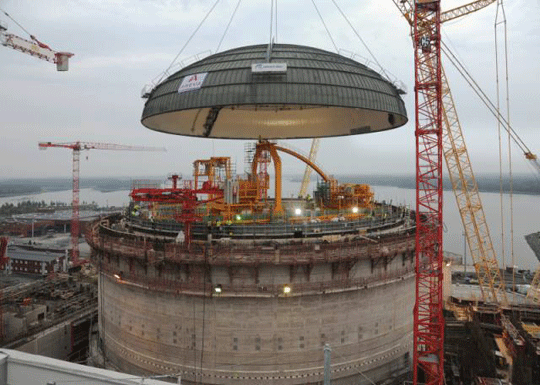
Nuclear plant delay, YLE 4 Oct 18Daily Turun Sanomat reports that the start of regular power production at Finland’s biggest nuclear reactor, Olkiluoto 3, may be pushed back yet again.
TVO – the owner of the power plant – said the French-German consortium Areva-Siemens has not been able to complete commissioning tests at the Eurajoki site as planned, the paper says. According to TVO, it is still unclear whether the supplier’s test delays will affect the launch of the plant, which has been scheduled for September 2019.
The project in western Finland has been hit by repeated delays, spiraling costs and legal disputes. The construction of the 1,600 MW reactor began in 2005, and initially it was scheduled to start producing electricity in 2009.
The United States on Thursday indicted seven Russian intelligence officers for conspiring to hack computers and steal data, including attempts to break into the computer networks of the nuclear power company Westinghouse Electric Co. France 24 4 Oct 18The Justice Department said one of the Russian officers performed online reconnaissance and stole log-in credentials of Westinghouse workers, including staff that work at its advanced nuclear reactordevelopment and new reactor technology units.
Westinghouse, which is located outside of Pittsburgh, provides fuel, services and plant design to customers, including Ukraine.
Three of the seven Russian military officers indicted on Thursday were charged in a separate case brought by Special Counsel Robert Mueller’s office for their role in hacking activities designed to influence the 2016 presidential election……..
In the indictment, prosecutors alleged that one of the Russian officers, Ivan Sergeyevich Yermakov, performed “technical reconnaissance” of the company as early as Nov. 20, 2014, and got access to IP addresses, domains and network ports. The hackers also researched Westinghouse to learn about the company’s employees and their backgrounds in nuclear energy research.
In December, the Justice Department said, Yermakov and his co-conspirators registered a fake domain and website designed to mimic the company’s website and sent phishing emails to at least five employees. Once people clicked on the spoofed domain and provided their log-ins, they were rerouted to the original network.
On other occasions, according to the indictment, the conspirators also sent spearphishing emails to the personal emails of employees at Westinghouse. Two account users clicked on the malicious links.
The indictment does not clearly explain why Westinghouse was targeted or whether the hackers succeeded, and Justice Department officials declined to comment beyond the indictment.
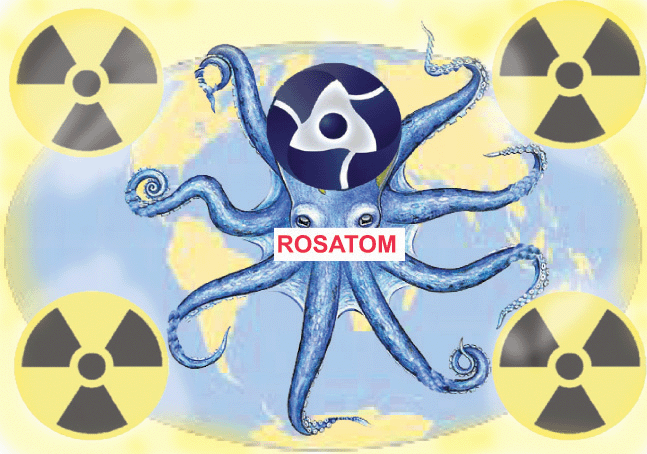
Is the global nuclear industry Russia’s latest power play? , Telegraph UK 4 Oct 18“…….Amid the financial fallout of the West’s attempts at a new nuclear dawn, Russia is quietly building an army of nuclear reactors across the world in an increasingly important power play for a country that has traditionally been powered by fossil fuels.
Kirill Komarov, the first deputy chief executive of Russia’s Rosatom, is also the head of the World Nuclear Association. It is a fitting role for man helping to lead Russia’s global nuclear expansion.
“We are the ultimate leader in the majority of nuclear sectors,” he says, and it is hard to disagree. “In the last 11 years we have commissioned 13 new nuclear plants, which is probably the biggest number in the world even compared to the increase from our Chinese friends.”………
“We are a unique company in that we have activities in all areas of the nuclear business; starting with mining of natural uranium, enrichment fuel fabrication, developing our own nuclear equipment, the construction of nuclear power plants, the decommissioning, waste management… everything,” says Komarov…..
says Tim Yeo, a former Tory MP and the leader of New Nuclear Watch, an industry-backed lobby group.
Belgian nuclear agency to investigate reactor problems: expert Daphne Psaledakis,– 4 Oct 18 BRUSSELS (Reuters) – Belgium’s nuclear safety regulator (FANC) will investigate whether Engie’s Belgian subsidiary Electrabel underestimated the concrete degradation at Doel 3 reactor, a senior expert at the agency said on Thursday.
Belgium faces an unprecedented power shortfall ahead of winter, with only one of seven nuclear reactors run by Electrabel scheduled to operate in November. The reactors account for 50 percent of the country’s consumption.
REFILE-EDF says Meuse river flow could restrict output at Chooz nuclear plant https://af.reuters.com/article/commoditiesNews/idAFL8N1WK4QZ PARIS, Oct 4 (Reuters) – Electricity production at French utility EDF’s Chooz nuclear power plant could be restricted from Oct. 11 due to the forecast flow of the Meuse river, French electricity grid operator RTE, said on Thursday.
Chooz nuclear power plant in the northeast of the country has an installed capacity of 3,000 megawatts. The plant uses water from the river to cool its two reactors.
“Production restrictions are likely to affect EDF’s nuclear generating fleet on Chooz production units starting Thursday October 11,” RTE said. It did not give further details.
Low river levels has forced EDF, which operates France’s 58 nuclear reactors, to curb production at some reactors in recent weeks.
French nuclear output drops to 41 GW on three unplanned outages, S and P Global Platts,- Andreas Franke –Jonathan Fox – 4 Oct 28
HIGHLIGHTS
1.3 GW Belleville-2 in unplanned shutdown overnight
0.9 GW Gravelines-6 also taken offline overnight
0.9 GW Tricastin-2 restart attempt delayed again
London— French nuclear output fell below 41 GW Wednesday morning, with operator EDF listing three unplanned short-term outages with a combined 3 GW capacity, according to grid operator RTE…
some risks remain, with Platts Analytics noting the ongoing shift in the restart of reactors as a key factor.
The improved nuclear outlook in France is offset by a 2.5 GW shortfall in Belgium this winter and the permanent closure of the 1.3 GW Gundremmingen B reactor in Germany, with combined nuclear output across the CWE region for December seen barely above December 2017 levels, Platts Analytics said in its October report.
NJ BPU set to move ahead with nuclear subsidy application process, By Daniel J. Munoz, NJBIZ October 4, 2018The state’s public utilities board is set to begin the process for determining which nuclear power plants should receive ratepayer subsidies to stay afloat.
Known as the zero emissions certificate (ZEC) program, $300 million of subsidies would be paid through an additional surcharge on ratepayers bills, and nuclear power plant operators can apply for a piece of the pie.
The ZEC program was enacted with Gov. Phil Murphy’s signing of Senate Bill 2313 in May.
Thursday evening in Hackensack, the board will hold the first of three public sessions to gather testimony on how it will structure the application process. The board will hold additional hearings in Atlantic City on Oct. 10 and in New Brunswick on Oct. 11.
The BPU is scheduled to unveil the program recipients in April……….
The state’s largest utility, Public Service Enterprise Group, threatened to shut down its South Jersey Salem and Hope Creek nuclear power, if it did not receive the subsidies.
PSEG argued that the plants were losing money and could not stay afloat without the ZEC subsidies.
On Aug. 29, the BPU sent out a letter regarding the ZEC program’s implementation to the state’s largest electric companies: PSEG, Jersey Central Power & Light Co., Rockland Electric Co. and Atlantic City Electric Co. The letter was also sent to the New Jersey Rate Counsel and Butler Power & Light.
But the ZEC program has fallen under disapproval by New Jersey’s environmental activists.
Jeff Tittel, president of the environmental advocacy group the New Jersey Sierra Club, said the program is a subsidy to PSEG and other nuclear plant operators at the expense of ratepayers.
Hinkley Point builder feels heat for French reactor failings. EDF has been
rebuked by French safety regulators for failings in the construction of a
prototype reactor in Normandy. Flamanville has been beset by problems and
delays that critics say cast doubt on EDF’s ability to deliver power from
the British plant by 2025, as promised.
The Autorité de Sûreté Nucléaire, the French nuclear regulator, said yesterday that EDF may need
to carry out more repairs than had been estimated initially on faulty
weldings at the French reactor and ordered it to carry out a wider review
of the quality of materials in the project. The watchdog said that it
believed the company had “failed to properly oversee certain activities” at
Flamanville and had failed in its handling of the welding problems when
they were discovered, taking a year and a half to inform the regulator.
Times 4th Oct 2018 , Flamanville originally was due to start up in 2012, but it has been delayed
repeatedly. This summer, EDF said that the start date had slipped again to
early 2020 as it needed to repair “quality deficiencies” in the welding in
part of the plant that carries steam to the turbines.
The costs of the project are estimated at €10.9 billion, more than three times its
original budget. The company has blamed the welding issues on a contractor
that had signed off on the work despite the failings. It said in July that
it needed to redo 53 weldings at Flamanville, but was confident that a
further ten were fit for service.
However, the watchdog said it was not certain that this was the case and that EDF should “start preparing for
possible repair work on the weldings”. It said that the company had
informed it only early last year, despite identifying the issue in July
2015.
This year the British nuclear regulator raised concerns about poor
quality control checks on EDF’s supply chain for Hinkley Point C and said
that improvements had to be made. Kate Blagojevic, head of energy and
climate at Greenpeace, said: “The French nuclear regulator has given a
pretty damning verdict on EDF’s attempt to build the new nuclear power
station at Flamanville . . . Nothing in the latest statement from the
French nuclear regulator could possibly inspire confidence that Hinkley
will be built on time or budget.” https://www.thetimes.co.uk/article/b8a10964-c745-11e8-a4a5-a34bea2c1d04
On September 26, the global community celebrated International Day for the Total Elimination of Nuclear Weapons, a day designated by the United Nations (UN) to draw attention to one of its oldest goals: achieving global nuclear disarmament.
By unhappy coincidence, September 26 was also the day President Donald Trump addressed the UN Security Council, and total nuclear disarmament wasn’t exactly high on his agenda. As expected, he wants North Korea to fully abandon its arsenal (and Iran, though it doesn’t have one) — without the United States reducing its own in return.
Trump’s aggressive, bullying rhetoric was on full display throughout his remarks when he addressed the UN General Assembly the previous day. (He did dial it back a bit from last year’s UN address, when he said the United States would “totally destroy” North Korea and referred to Kim Jong Un as “Rocket Man,” but maybe that’s a low bar.)
Trump has made it abundantly clear that he’s not committed to nuclear disarmament. Like other presidents before him, he has the power to unilaterally order a first nuclear strike. Rather unlike others, he’s previously asked, if we have nuclear weapons, why can’t we use them?
But Congress has the power to act to avert a nuclear catastrophe. In fact, a few champions in Congress have recently taken critical steps to prevent the outbreak of nuclear war.
On September 18, Representatives Ted Lieu, Adam Smith, John Garamendi, Earl Blumenauer, and Senator Ed Markey introduced a bill called the “Hold the LYNE Act,” which stands for Low-Yield Nuclear Explosive. It would “prohibit the research, development, production, and deployment of low-yield nuclear warheads for submarine-launched ballistic missiles.”
So-called “low-yield” nuclear weapons actually lower the threshold for nuclear war and increase the risk that they may actually be used.
“There’s no such thing as a low-yield nuclear war,” said Lieu in the joint press release announcing the bill. “Use of any nuclear weapon, regardless of its killing power, could be catastrophically destabilizing. It opens the door for severe miscalculation and could drag the U.S. and our allies into a devastating nuclear conflict.”
We’ve come very close to nuclear war in the past. On September 26, 1983, Soviet military officer Stanislav Petrov made a split-second decision and deemed a supposed missile attack from the United States to be an error, refusing to carry out an order to counterattack and thus averting a nuclear war.
If Petrov hadn’t made that judgment, we might not even be here to advocate for a world free of nuclear weapons.
Let’s take the lessons we’ve learned from the past and use them to create a healthier, safer future for young people and future generations, so they won’t have to worry about the looming threat of nuclear war.
The president of the United States may not have marked the International Day for the Total Elimination of Nuclear Weapons. The rest of us still can.
Huffington Post 1st Oct 2018 A Cardiff court will play host to a group of activists on Tuesday, as they
fight for an injunction to stop 300,000 tonnes of “nuclear mud” from a
Somerset power station being disposed of just outside Cardiff.
The unusual dispute centres on the “Hinkley Point C” building site, where energy
supplier EDF are currently in the process of constructing two new nuclear
reactors. In order to drill the six shafts needed for the reactors, EDF is
clearing 300,000 tonnes of mud and sediment – and planning to dispose of it
just off the Welsh coast, on the Cardiff Grounds sandbank.
The prospect of that amount of waste being ditched a mile and a half away hasn’t exactly
excited locals or environmental campaigners, but there’s another factor
causing added concern. For decades, Hinkley Point has been a nuclear power
hub, with its first station – “A” – operating for 35 years before
closing in 2000. Hinkley Point B was opened in 1976 and is still
functioning today.
The presence of these two plants has led to concerns
over whether the mud there is radioactive and when the plans were
announced, various online petitions calling for the Welsh Assembly to look
into the matter were launched online, gathering a total of 100,000
signatures by mid-September. Keyboard player Cian Ciarán has become
something of a spokesperson for the campaign. His worries – shared by his
fellow campaigners – are centred on the validity of the tests carried out.
Nuke Expert Dana Durnford Unpacks – Linear No-Threshold (LNT) Debate
Trump’s EPA moving to loosen radiation limits, Financial Post, Ellen Knickmeyer, 2 Oct 18 WASHINGTON — The Trump administration is quietly moving to weaken U.S. radiation regulations, turning to scientific outliers who argue that a bit of radiation damage is actually good for you — like a little bit of sunlight.
The government’s current, decades-old guidance says that any exposure to harmful radiation is a cancer risk. And critics say the proposed change could lead to higher levels of exposure for workers at nuclear installations and oil and gas drilling sites, medical workers doing X-rays and CT scans, people living next to Superfund sites and any members of the public who one day might find themselves exposed to a radiation release.
The Trump administration already has targeted a range of other regulations on toxins and pollutants, including coal power plant emissions and car exhaust, that it sees as costly and burdensome for businesses. Supporters of the EPA’s new radiation guidance argue the government’s current no-tolerance rule for radiation damage forces unnecessary spending for handling exposure in accidents, at nuclear plants, in medical centres and at other sites.
…… The proposed rule would require regulators to consider “various threshold models across the exposure range” when it comes to dangerous substances.
While it does not specify that it’s addressing radiation and chemicals, an EPA news release on the rule quotes Edward Calabrese as saying it would: “The proposal represents a major scientific step forward by recognizing the widespread occurrence of non-linear dose responses in toxicology and epidemiology for chemicals and radiation and the need to incorporate such data in the risk assessment process.”
The comment period for the science regulation has ended and the agency is currently reviewing the comments. There’s no specific date for final action by the administration. The EPA declined to make an official with its radiation-protection program available.
… what’s of concern is the higher-energy, shorter-wave radiation, like X-rays, that can penetrate and disrupt living cells, sometimes causing cancer.
As recently as this March, the EPA’s online guidelines for radiation effects advised: “Current science suggests there is some cancer risk from any exposure to radiation.”
“Even exposures below 100 millisieverts” — an amount roughly equivalent to 25 chest X-rays or about 14 CT chest scans — “slightly increase the risk of getting cancer in the future,” the agency’s guidance said.
But that online guidance — separate from the rule-change proposal — was edited in July to add a section emphasizing the low individual odds of cancer: “According to radiation safety experts, radiation exposures of …100 millisieverts usually result in no harmful health effects, because radiation below these levels is a minor contributor to our overall cancer risk,” the revised policy says.
…….. The radiation regulation is supported by Steven Milloy, a Trump transition team member for the EPA who is known for challenging widely accepted ideas about manmade climate change and the health risks of tobacco. He has been promoting Calabrese’s theory of healthy radiation on his blog.
But Jan Beyea, a physicist whose work includes research with the National Academies of Science on the 2011 Fukushima nuclear power plant accident, said the EPA science proposal represents voices “generally dismissed by the great bulk of scientists.”
The EPA proposal would lead to “increases in chemical and radiation exposures in the workplace, home and outdoor environment, including the vicinity of Superfund sites,” Beyea wrote.
At the level the EPA website talks about, any one person’s risk of cancer from radiation exposure is perhaps 1 per cent, Beyea said.
“The individual risk will likely be low, but not the cumulative social risk,” Beyea said.
“If they even look at that — no, no, no,” said Terrie Barrie, a resident of Craig, Colorado, and an advocate for her husband and other workers at the now-closed Rocky Flats nuclear-weapons plant, where the U.S. government is compensating certain cancer victims regardless of their history of exposure.
“There’s no reason not to protect people as much as possible,” said Barrie.
U.S. agencies for decades have followed a policy that there is no threshold of radiation exposure that is risk-free.
The National Council on Radiation Protection and Measurements reaffirmed that principle this year after a review of 29 public health studies on cancer rates among people exposed to low-dose radiation, via the U.S. atomic bombing of Japan in World War II, leak-prone Soviet nuclear installations, medical treatments and other sources.
Twenty of the 29 studies directly support the principle that even low-dose exposures cause a significant increase in cancer rates, said Roy Shore, chief of research at the Radiation Effects Research Foundation, a joint project of the United States and Japan. Scientists found most of the other studies were inconclusive and decided one was flawed.
None supported the theory there is some safe threshold for radiation, said Shore, who chaired the review.
If there were a threshold that it’s safe to go below, “those who profess that would have to come up with some data,” Shore said in an interview.
Grand Canyon uranium mining ban upheld as supreme court declines to hear challenge
Court says extraction ban is among cases it refuses to review, in victory for environmental groups and Native American communities, Guardian, Joanna Walters in New York@Joannawalters13 2 Oct 2018 The ban on new uranium mining near the Grand Canyon implemented by the Obama administration was effectively upheld on Monday when the US supreme court declined to hear a challenge from the industry.
Environmental groups and Native American communities declared victory when, on the first day of its fall season, the bench announced that the uranium extraction ban was among cases it refuses to review.
An appeals court decision from December 2017 that the ban is legal will now stay in place. Hundreds of mineral deposit claims from Canadian, British and US interests that want to seek out and exploit uranium deposits close to Grand Canyon National Park now remain on hold.
Under Barack Obama, the interior department announced in 2012 a 20-year ban on fresh mining activity, which protects a million acres of public land in the vicinity of the canyon. The ban, also known as a mineral withdrawal, has faced a series of legal challenges from commercial interests………
Film review: ‘The New Fire’ and the old Gen IV rhetoric Author: Jim Green ‒ Nuclear Monitor editor NM866.4751, October 2018 The New Fire is a pro-nuclear propaganda film directed and produced by musician and film-maker David Schumacher.It’s similar in some respects to the 2013 film Pandora’s Promise.1,2 The New Fire premiere was held in October 2017 and it can be streamed online from 18 October 2018.
Promotional material claims that the film lacked “a supportive grant” (and celebrity endorsements and the backing of a major NGO) but the end-credits list numerous financial contributors: Berk Foundation, Isdell Foundation, Steven & Michele Kirsch Foundation, Rachel Pritzker, Roland Pritzker, Ray Rothrock, and Eric Uhrhane.
The film includes interviews with around 30 people (an overwhelming majority of them male) interspersed with footage of interviewees walking into buildings, and interviewees smiling. The musical underlay is a tedious drone ‒ a disappointment given Schumacher’s musical background.
A highlight is hearing Eric Meyer ‒ an opera singer turned pro-nuclear activist ‒ bursting into song at various locations around the COP21 climate conference in Paris in December
2015, while he and his colleagues handed out free copies of the pro-nuclear book Climate Gamble Interviewees are mostly aging but the film’s main message is that young entrepreneurs may save the planet and its inhabitants with their Generation IV reactor projects. The film’s website states: “David Schumacher’s film focuses on how the generation facing the most severe impact of climate change is fighting back with ingenuity and hope. The New Fire tells a provocative and startlingly positive story about a planet in crisis and the young heroes who are trying to save it.”3
Schumacher writes (in the press kit): “These brilliant young people – some of the most gifted engineers of their generation, who in all likelihood could have cashed in for a fortune by doing something else – believe deeply that nuclear power could play a key role in saving the planet. And they are acting on that conviction. They did the research. They raised the money. They used cutting edge computer technology to perfect their designs. They are the new face of nuclear power, and to me, the newest and most unlikely climate heroes.”
These climate heroes are contrasted with anti-nuclear environmentalists. One interviewee says that “people of our generation are the first ones that have the opportunity to look at nuclear power without all the emotional baggage that previous generations have felt.” Another argues that anti-nuclear environmentalists are “very good, decent, smart people” but the “organizational DNA … that they have inherited is strongly anti-nuclear.” Another argues that environmental organizations “have been using nuclear power as a whipping boy for decades to raise funds”. Another interviewee attributes opposition to nuclear power to an “irrational fear of the unknown” (which surely poses a problem for the exotic Generation IV concepts promoted in the film) and another says that “once people sort of understand what’s going on withnuclear, they are much more open to it”.
The film trots out the usual anti-renewables tropes and falsehoods: 100% renewables is “just a fantasy”, renewables can contribute up to 20% of power supply and the remainder must be baseload: fossil fuels or nuclear power.
In rural Senegal, solar power has brought many benefits but places like Senegalese capital Dakar, with a population of one million, need electricity whether the sun is shining or not. A Senegalese man interviewed in the film states: “Many places in Africa definitely need a low cost, reliable, carbon neutral power plant that provides electricity 24/7. Nuclear offers one of the best options we have to do that kind of baseload.” The film doesn’t explain how a 1,000 megawatt nuclear plant would fit into Senegal’s electricity grid, which has a total installed capacity of 633MW.4 The ‘microreactors’ featured in The New Fire might help … if they existed.
Accidents such as those at Fukushima and Chernobyl get in the news because they are “so unusual” according to interviewee Ken Caldeira. And they get in the news, he might have added, because of the estimated death tolls (in the thousands for Fukushima5, ranging to tens of thousands for Chernobyl6), the costs (around US$700 billion for Chernobyl7, and US$192 billion (and counting) for Fukushima8), the evacuation of 160,000 people after the Fukushima disaster and the permanent relocation of over 350,000 people after the Chernobyl disaster.9
“Most people understand that it’s impossible for a nuclear power plant to literally explode in the sense of an atomic explosion”, an interviewee states. And most people understand that chemical and steam explosions at Chernobyl and Fukushima spread radionuclides over vast distances. The interviewee wants to change the name of nuclear power plants to avoid any conflation between nuclear power and weapons. Evidently he didn’t get the memo that the potential to use nuclear power plants (and related facilities) to produce weapons is fast becoming one of the industry’s key marketing points.
Conspicuously absent from the film’s list of interviewees is pro-nuclear lobbyist Michael Shellenberger. We’ve taken Shellenberger to task for his litany of falsehoods on nuclear and energy issues10 and his bizarre conversion into an advocate of worldwide nuclear weapons proliferation.11 But a recent article by Shellenberger on Generation IV nuclear technology is informative and insightful ‒ and directly at odds with the propaganda in The New Fire.12
So, let’s compare the Generation IV commentary in The New Fire with that in Shellenberger’s recent article.
Transatomic Power’s molten salt reactor concept The film spends most of its time promoting Generation IV reactor projects including Transatomic Power’s molten salt reactor (MSR) concept. [Ed note. recently failed and abandoned] .
Scott Nolan from venture capital firm Founders Fund says that Transatomic satisfies his four concerns about nuclear power: safety, waste, cost, proliferation. And he’s right ‒ Transatomic’s MSRs are faultless on all four counts, because they don’t exist. It’s doubtful whether they would satisfy any of the four criteria if they did actually exist.
Shellenberger quotes Admiral Hyman Rickover, who played a leading role in the development of nuclear-powered and armed submarines and aircraft carriers in the US: “Any plant you haven’t built yet is always more efficient than the one you have built. This is obvious. They are all efficient when you haven’t done anything on them, in the talking stage. Then they are all efficient, they are all cheap. They are all easy to build, and none have any problems.”
Shellenberger goes on to say:12 “The radical innovation fantasy rests upon design essentialism and reactor reductionism. We conflate the 2-D design with a 3-D design which we conflate with actual building plans which we conflate with a test reactor which we conflate with a full-sized power plant.
“These unconscious conflations blind us to the many, inevitable, and sometimes catastrophic “unknowns” that only become apparent through the building and operating of a real world plant. They can be small, like the need for a midget welder, or massive, like the manufacturing failures of the AP1000.
“Some of the biggest unknowns have to do with radically altering the existing nuclear workforce, supply chain, and regulations. Such wholesale transformations of the actually existing nuclear industry are, literally and figuratively, outside the frame of alternative designs.
“Everyone has a plan until they get punched in the face,” a wise man once said. The debacles with the AP1000 and EPR are just the latest episodes of nuclear reactor designers getting punched in the face by reality.”
Shellenberger comments on MSR technology:12
New designs often solve one problem while creating new ones. For example, a test reactor at Oak Ridge National Laboratory used chemical salts with uranium fuel dissolved within, instead of water surrounding solid uranium fuel. “The distinctive advantage of such a reactor was that it avoided the expensive process of fabricating fuel elements, moderator, control rods, and other high precision core components,” noted Hewlett and Holl.
“In the eyes of many nuclear scientists and engineers these advantages made the homogeneous reactor potentially the most promising of all types under study, but once again the experiment did not reveal how the tricky problems of handling a highly radioactive and corrosive fluid were to be resolved.”
In The New Fire, Mark Massie from Transatomic promotes a “simpler approach that gives you safety through physics, and there’s no way to break physics”. True, you can’t break physics, but highly radioactive and corrosive fluids in MSRs could break and rust pipes and other machinery.
Leslie Dewan from Transatomic trots out the silliest advantage attributed to MSRs: that they are meltdown-proof. Of course they are meltdown-proof ‒ and not just in the sense that they don’t exist. The fuel is liquid. You can’t melt liquids. SMR liquid fuel is susceptible to dispersion in the event of steam explosions or chemical explosions or fire, perhaps more so than solid fuels.
Michael Short from MIT says in the film that over the next 2‒3 years they should have preliminary answers as to whether the materials in Transatomic MSRs are going to survive the problems of corrosion and radiation resistance. In other words, they are working on the problems ‒ but there’s no guarantee of progress let alone success.
Dewan claims that Transatomic took an earlier MSR design from Oak Ridge and “we were able to make it 20 times as power dense, much more compact, orders of magnitude cheaper, and so we are commercializing our design for a new type of reactor that can consume existing stockpiles of nuclear waste.”
Likewise, Jessica Lovering from the Breakthrough Institute says: “Waste is a concern for a lot of people. For a lot of people it’s their first concern about nuclear power. But what’s really amazing about it is that most of what we call nuclear waste could actually be used again for fuel. And if you use it again for fuel, you don’t have to store it for tens of thousands of years. With these advanced reactors you can close the fuel cycle, you can start using up spent fuel, recycling it, turning it into new fuel over and over again.”
But in fact, prototype MSRs and fast neutron reactors produce troublesome waste streams (even more so than conventional light-water reactors) and they don’t obviate the need for deep geological repositories. A recent article in the Bulletin of the Atomic Scientists ‒ co-authored by a former chair of the US Nuclear Regulatory Commission ‒ states that “molten salt reactors and sodium-cooled fast reactors – due to the unusual chemical compositions of their fuels – will actually exacerbate spent fuel storage and disposal issues.”13 It also raises proliferation concerns about ‘integral fast reactor’ and MSR technology:
“Pyroprocessing and fluoride volatility-reductive extraction systems optimized for spent fuel treatment can – through minor changes to the chemical conditions – also extract plutonium (or uranium 233 bred from thorium).”
Near the end of the film, it states: “Transatomic encountered challenges with its original design, and is now moving forward with an updated reactor that uses uranium fuel.” Transatomic’s claim that its ‘Waste-Annihilating Molten-Salt Reactor’ could “generate up to 75 times more electricity per ton of mined uranium than a light-water reactor” was severely downgraded to “more than twice” after calculation errors were discovered. And the company now says that a reactor based on the current design would not use waste as fuel and thus would “not reduce existing\ stockpiles of spent nuclear fuel”
So much for all the waste-to-fuel rhetoric scattered throughout The New Fire.
Michael Short from MIT claims MSRs will cost a “couple of billion dollars” and Dewan claims they will be “orders of magnitude cheaper” than the Oak Ridge experimental MSR. In their imaginations, perhaps. Shellenberger notes that “in the popular media and among policymakers, there has remained a widespread faith that what will make nuclear power cheaper is not greater experience but rather greater novelty. How else to explain the excitement for reactor designs invented by teenagers in their garages and famous software developers [Bill Gates / TerraPower] with zero experience whatsoever building or operating a nuclear plant?”12
Shellenberger continues:12
“Rather than address the public’s fears, nuclear industry leaders, scientists, and engineers have for decades repeatedly retreated to their comfort zone: reactor design innovation. Designers say the problem isn’t that innovation has been too radical, but that it hasn’t been radical enough. If only the coolant were different, the reactors smaller, and the building methods less conventional, they insist, nuclear plants would be easier and cheaper to build.
“Unfortunately, the historical record is clear: the more radical the design, the higher the cost. This is true not only with the dominant water-cooled designs but also with the more exotic designs ‒ and particularly sodium-cooled ones.”
Oklo’s sodium-cooled fast neutron microreactor The New Fire promotes Oklo’s sodium-cooled fast neutron microreactor concept, and TerraPower’s sodium cooled fast neutron ‘traveling wave’ reactor (TerraPower is also exploring a molten chloride fast reactor concept).
Oklo co-founder Jacob DeWitte says: “There’s this huge, awesome opportunity in off-grid markets, where they need power and they are relying on diesel generators … We were talking to some of these communities and we realized they use diesel because it’s the most energy dense fuel they know of. And I was like, man, nuclear power’s two million times as energy dense … And they were like, ‘Wait, are you serious, can you build a reactor that would be at that size?’ And I said, ‘Sure’.”
Which is all well and good apart from the claim that Oklo could build such a reactor: the company has a myriad of economic, technological and regulatory hurdles to overcome. The film claims that Oklo “has begun submission of its reactor’s license application to the [US] Nuclear Regulatory Commission” but according to the NRC, Oklo is a “pre-applicant” that has gone no further than to notify the NRC of its intention to “engage in regulatory interactions”.16
There’s lots of rhetoric in the film about small reactors that “you can roll … off the assembly line like Boeings”, factory-fabricated reactors that “can look a lot like Ikea furniture”, economies of scale once there is a mass market for small reactors, and mass-produced reactors leading to “a big transition to clean energy globally”. But first you would need to invest billions to set up the infrastructure to mass produce reactors ‒ and no-one has any intention of making that investment. And there’s no mass market for small reactors ‒ there is scarcely any market at all.17
TerraPower TerraPower is one step ahead of Transatomic and Oklo ‒ it has some serious funding. But it’s still a long way off ‒ Nick Touran from TerraPower says in the film that tests will “take years” and the company is investing in a project with “really long horizons … [it] may take a very long time”.
TerraPower’s sodium-cooled fast neutron reactor remains a paper reactor. Shellenberger writes:12
“In 2008, The New Yorker profiled Nathan Myhrvold, a former Microsoft executive, on his plans to re-invent nuclear power with Bill Gates. Nuclear scientist Edward “Teller had this idea way back when that you could make a very safe, passive nuclear reactor,” Myhrvold explained. “No moving parts. Proliferation-resistant. Dead simple.”
“Gates and Myhrvold started a company, Terrapower, that will break ground next year in China on a test reactor. “TerraPower’s engineers,” wrote a reporter recently, will “find out if their design really works.”
“And yet the history of nuclear power suggests we should have more modest expectations. While a nuclear reactor “experiment often produced valuable clues,” Hewlett and Holl wrote, “it almost never revealed a clear pathway to success.” …
“For example, in 1951, a reactor in Idaho used sodium rather than water to cool the uranium ‒ like Terrapower’s design proposes to do. “The facility verified scientific principles,” Hewlett and Holl noted, but “did not address the host of extraordinary difficult engineering problems.” …
“Why do so many entrepreneurs, journalists, and policy analysts get the basic economics of nuclear power so terribly wrong? In part, everybody’s confusing nuclear reactor designs with real world nuclear plants. Consider how frequently advocates of novel nuclear designs use the future or even present tense to describe qualities and behaviors of reactors when they should be using future conditional tense.
“Terrapower’s reactor, an IEEE Spectrum reporter noted “will be able to use depleted uranium … the heat will be absorbed by a looping stream of liquid sodium … Terrapower’s reactor stays cool”.
“Given that such “reactors” do not actually exist as real world machines, and only exist as computer-aided designs, it is misleading to claim that Terrapower’s reactor “will” be able to do anything. The appropriate verbs for\ that sentence are “might,” “may,” and “could.” …
“Myhrvold expressed great confidence that he had proven that Terrapower’s nuclear plant could run on nuclear waste at a low cost. How could he be so sure? He had modeled it. “Lowell and I had a month-long, no-holdsbarred nuclear-physics battle. He didn’t believe waste would work. It turns out it does.” Myhrvold grinned. “He concedes it now.”
“Rickover was unsparing in his judgement of this kind of thinking. “I believe this confusion stems from a failure to distinguish between the academic and the practical,” he wrote. “The academic-reactor designer is a dilettante. He has not had to assume any real responsibility in connection with his projects. He is free to luxuriate in elegant ideas, the practical shortcomings of which can be relegated to the category of ‘mere technical details.””
Energy firms demand billions from UK taxpayer for mini reactors Ministers under pressure to fund new generation of small-scale nuclear power stations,Guardian, Adam Vaughan Energy correspondent @adamvaughan_uk, 1 Oct 2018 Backers of mini nuclear power stations have asked for billions of pounds of taxpayers’ money to build their first UK projects, according to an official document.
Advocates for small modular reactors (SMRs) argue they are more affordable and less risky than conventional large-scale nuclear plants, and therefore able to compete with the falling costs of windfarms and solar power.
But the nuclear industry’s claims that the mini plants would be a cheap option for producing low-carbon power appear to be undermined by the significant sums it has been asking of ministers.
Some firms have been calling for as much as £3.6bn to fund construction costs, according to a government-commissioned report, released under freedom of information rules. Companies also wanted up to £480m of public money to help steer their reactor designs through the regulatory approval process, which is a cost usually paid by nuclear companies.
Ten companies hoping to build the plants requested direct government funding, according to the briefing paper by the Expert Finance Working Group on Small Reactors. While the report named the companies involved in the mini nuclear projects, it did not specify who was asking for
David Lowry, a nuclear policy consultant who obtained the document, said: “SMRs are either old, discredited designs repackaged when companies see governments prepared to throw taxpayers’ subsidies to support them, or are exotic new technologies, with decades of research needed before they reach commercial maturity.”
The working group that drafted the report, and was appointed by the Department for Business, Energy and Industrial Strategy (BEIS), urged the government in August to put in place a framework to help bring the smaller plants to market.
The government has already offered £44m of funding for research and development of one group of SMRs, which typically have a capacity of less than a tenth of the Hinkley Point C nuclear plant being built in Somerset, or enough power for 600,000 homes.
Mini nuclear power stations are unlikely to supply clean energy to Britain’s homes and businesses any time soon. Of more than 30 British, US and Chinese companies that have expressed an interest in building one in the UK, the majority told the working group that their power stations would be ready to deployed in the 2030s.
The companies include UK firms such as Rolls-Royce, Sheffield Forgemasters and Atkins, along with China’s CNNC, US companies NuScale and Westinghouse, and France’s EDF Energy.
The working group found the firms’ cost estimates “varied significantly”, to the degree that some of the companies clearly had a “lack of understanding” of how British nuclear regulation works.
It also noted that some of the companies proposed using “non-standard fuels” rather than the conventional uranium used by today’s nuclear plants, which “may add cost to business models” because of new facilities to produce and later manage the spent fuel.
The firms told the group that the four main barriers they faced were finding and confirming sites, the cost of regulatory approval for their designs, a lack of state funding and unclear policy.
Tell Congress: Prevent Nuclear Catastrophe in Iran
Read the Public Inquiry Report, the Commissioners’ report, Surrendering Australia: The AUKUS Deception is available to download for free at aukuspublicinquiry.com. Or just watch the replay of the National Press Club Luncheon.