Beyond Nuclear explains why radioactivity harms us and no dose is “safe”
nations that rely on the use — and marketing — of nuclear technology, will do everything possible to suppress knowledge about its dangers. This has resulted in public relations campaigns endeavoring to persuade its citizens — as is happening in post-Fukushima Japan —that their “hysteria” and “radiophobia” are causing more illnesses than any radiation that might have gotten out.
This tactic is embedded in a strategy to “normalize” radiation exposures so that exposure limits can be raised. In Japan, the 1 millisievert a year “acceptable” level of exposure was raised to 20 mSv a year after the Fukushima disaster, simply because the Japanese government cannot ever hope to “clean up” areas contaminated with radioactivity back down to the 1 mSv level. Thus, an annual dose rate that is completely unacceptable, especially for children, becomes the new “normal.”
 Radioactivity harms us and no dose is “safe” https://wordpress.com/read/feeds/72759838/posts/2018491636 A “small” dose can do immense damage; our new handbook explains how and why, By Cindy Folkers and Linda Pentz Gunter, 4 Oct 18All nuclear power plants routinely release radioactive gases and water contaminated with radioactive isotopes. When a nuclear plant has a serious accident — as occurred at Three Mile Island, Chernobyl and Fukushima — orders of magnitude more radioactivity is released into the environment. Uranium mining also releases harmful radioactive isotopes and leaves behind radioactive waste. The 1979 uranium tailings pond spill at Church Rock, NM — 90 million gallons of liquid radioactive waste and 1,100 tons of solid mill waste — was the largest accidental release of radioactive waste in US history and permanently contaminated the Puerco River. Radioactive releases occur all along the uranium fuel chain, beginning with uranium mining and culminating in radioactive waste “management.” All of these releases — whether large or small (because there is no “safe” dose) — impact human health with The fact remains, however, that both the immediate and long-term damage done to human health — which can last for generations — is the single, most compelling reason not to continue with the use of nuclear power and the extractive, polluting industries that must support it. The Radiation and Harm to Human Health chapter of the Beyond Nuclear anti-nuclear handbook, is available now for download and printing as a standalone booklet. In it, we endeavor to both explain and synthesize the many ways that radioactivity released through the nuclear power sector damages human health, especially the most vulnerable members of our population — women, pregnancy, babies and young children.
We begin with some simple explanations about radiation and radioactive releases. When we make the case that nuclear power harms us, it’s necessary to understand the differences between types of radiation and exactly what is released by the different phases of the nuclear industry fuel chain.
We also break down the “natural” versus “man-made” argument. Too often, you may hear suggestions that exposures caused by nuclear plants are no worse than flying in an airplane. The sin of omission is a common tactic by the nuclear lobby. In this booklet, we describe why these arguments are deliberately misleading and unscientific. It is important to remember that the negative health effects caused by the uranium fuel chain are not restricted to radiation exposures. Uranium mining, for example, also releases heavy metals such as lead and even arsenic, just as harmful and in some cases even worse than radiation, depending on the dose. The whole issue of “dose,” of course, and what this means, is also used to cloud facts with mythology in order to suggest that some radioactive releases are not high enough to do real damage. But differentiating between high and low doses is very tricky, depending on whether the doses are delivered to a whole body, an individual organ, or a few cells. For example, even just a single alpha-emitting isotope — such as uranium, radon or thorium —when inhaled or ingested, can impart a huge dose to the cell or cells it travels through. The dose may sound small, but the damage is immense. Medical science is in agreement that women are more susceptible to damage from radiation exposure than men. Accidents such as Chernobyl have led to lasting and widespread health problems. But these have been hard to record and quantify. Many affected people were never registered, others moved away or have died. The “burden of proof” that Chernobyl harmed them remains on the victim rather than the obvious perpetrator. This has allowed authorities such as the International Atomic Energy Agency (whose mandate is to promote the use of nuclear power) to capitalize on uncertainty by spreading statistics that grossly underestimate the health impacts of nuclear accidents such as Chernobyl.
Similarly, nations that rely on the use — and marketing — of nuclear technology, will do everything possible to suppress knowledge about its dangers. This has resulted in public relations campaigns endeavoring to persuade its citizens — as is happening in post-Fukushima Japan —that their “hysteria” and “radiophobia” are causing more illnesses than any radiation that might have gotten out. This tactic is embedded in a strategy to “normalize” radiation exposures so that exposure limits can be raised. In Japan, the 1 millisievert a year “acceptable” level of exposure was raised to 20 mSv a year after the Fukushima disaster, simply because the Japanese government cannot ever hope to “clean up” areas contaminated with radioactivity back down to the 1 mSv level. Thus, an annual dose rate that is completely unacceptable, especially for children, becomes the new “normal.” Our handbook chapter on Radiation and Harm to Human Health endeavors to keep things concise and simple. We hope you will use it to help educate residents, politicians and the press about the true risks of accepting uranium mining operations, nuclear power plants or radioactive waste management schemes into your communities. We understand that a handbook should be something you can carry in your hand! To that end, we are raising funds to print copies of this booklet. If you would like to contribute, so that we can get this handbook out to the communities that most need it, please donate here. Choose “Handbook” from the pulldown menu to designate your gift. And thank you! Cindy Folkers is the radiation and health specialist at Beyond Nuclear and the primary author of the Radiation and Harm to Human Health handbook. Linda Pentz Gunter is the international specialist at Beyond Nuclear. If you’d like to be the first to read stories like these, sign up for our Monday email digest. We will send you a very brief synopsis of the new stories on our site, with links to read them and learn more. Sign up today! |
|
|
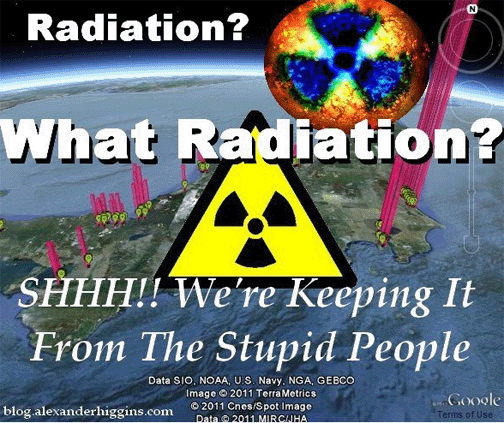
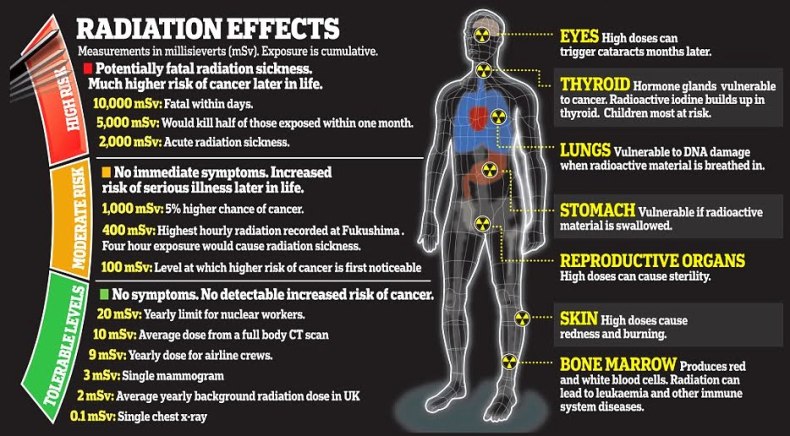


North Korea could have 60 nuclear weapons- according to South Korea Unification Minister Cho Myoung-gyon

 South Korea says Kim Jong Un could have 60 nuclear weapons SEOUL, South Korea , CBS News, 2 Oct 18-– A top South Korean official told lawmakers that North Korea is estimated to have up to 60 nuclear weapons, in Seoul’s first public comment about the size of the North’s secrecy-clouded weapons arsenal. Unification Minister Cho Myoung-gyon told parliament Monday the estimates on the size of North Korea’s nuclear arsenal range from 20 bombs to as many as 60. He was responding to a question by a lawmaker, saying the information came from the intelligence authorities.
The National Intelligence Service, South Korea’s main spy agency, couldn’t immediately comment.
Cho may have unintentionally revealed the information. His ministry said Tuesday Cho’s comments didn’t mean that South Korea would accept North Korea as a nuclear state, suggesting Seoul’s diplomatic efforts to rid the North of its nuclear program would continue.
The South Korean assessment on the North’s arsenal is not much different from various outside civilian estimates largely based on the amount of nuclear materials that North is believed to have produced……….https://www.cbsnews.com/news/north-korea-kim-jong-un-60-nuclear-weapons-south-korea-minister-atomic-bombs/
Nuclear pollution: Spain’s six radioactively contaminated sites

Yet none of the areas are officially classified as contaminated ground due to a legal limbo MANUEL PLANELLES, English version by Susana Urra.Madrid 4 OCT 2018
Spain’s Nuclear Security Council (CSN) has admitted the existence of radioactive contamination in an area located between Madrid and Toledo, as EL PAÍS revealed a few weeks ago. The agency also lists five more contaminated sites whose existence was previously known.
However, none of the six zones listed by the CSN are officially classified as contaminated ground because Spain has yet to produce a formal inventory of sites affected by radioactive leaks, a full decade after a royal decree ordered one to be drafted.
The CSN said that the Nuclear Energy Law needs to be amended first in order for the inventory to go ahead. And since 2008, no government has made any moves in this direction. In this legal limbo, the agency in charge of Spain’s nuclear security is simultaneously stating that these contaminated sites exist, but that they are not officially listed as such.
On November 7, 1970, several dozen liters of highly radioactive liquid from a spent nuclear fuel reprocessing operation leaked from the Juan Vigón National Nuclear Energy Center, located inside Madrid’s university campus. The liquid spilled into the sewer system and reached the Manzanares river; from there it flowed to the Jarama River, to the adjoining irrigation canal, and to the Tagus River.
The Franco regime, which was busy developing an atomic bomb under the Islero Project, hushed up the accident and the existence of contaminated soil, which it collected after draining the Jarama canal. The sludge considered to be least contaminated was then buried in eight ditches alongside the waterway. The legacy is still there, covered with weeds and lacking warning signs of any kind.
In its release, the CSN said that the Ecological Transition Ministry is working on legal changes to facilitate the approval of an official list of contaminated sites in Spain. This, said the oversight body, will help determine the need for cleanup operations or access restrictions.
“There are several sites showing radioactivity originating from human activity,” says the release. However, the CSN says that “it is estimated that there is no significant radiological risk.”
Besides the eight ditches along the Jarama, which are contaminated with cesium-137 and strontium-90, the CSN lists five other areas whose existence was already known. At the top of the list is Palomares, in southeastern Spain, where a US B-52 bomber collided in midair with a refueling plane on January 17, 1966, dropping four hydrogen bombs. While the bombs did not explode and nobody was killed, two of them released plutonium across the land.
There are two more contaminated sites on the Tinto River in Huelva province. One is located in the marshes of Mendaña, on the Tinto’s estuary, where there are high levels of cesium-137; the other site is near the spot where the Tinto meets the Odiel, and it contains significant amounts of radium-226.
Also on the list is El Hondón, a rural area in Cartagena (Murcia), which contains phosphate sludge and uranium-238; the last site is in the Ebro reservoir in Flix (Tarragona), where there was also phosphate sludge and uranium-238, although the CSN said that the sludge has already been removed from the site.
On Wednesday, the environmental groups Ecologistas en Acción and Jarama Vivo staged a protest in one of the ditches along the Jarama, where they placed symbolic warning signs. “A mere visual inspection of the site clearly shows how easy it is to access,” said these groups in a release. This lack of oversight has meant that, over the years, some of the earth may have been moved around, “causing a possible risk of radioactive contamination to the local population.”
“Right now there is no guarantee whatsoever that this toxic waste hasn’t been moved and scattered,” said Raúl Urquiaga, of Jarama Vivo. “In fact, some of the sites are in the same spots as infrastructure such as the A-4 bypass, roads and transmission towers.”
The new U.N. climate report will contain very bad news
 Climate scientists are struggling to find the right words for very bad news https://www.washingtonpost.com/energy-environment/2018/10/03/climate-scientists-are-struggling-find-right-words-very-bad-news/?utm_term=.1540529e507a A much-awaited report from the U.N.’s top climate science panel will show an enormous gap between where we are and where we need to be to prevent dangerous levels of warming. By Chris Mooney and Brady Dennis October 3 2018 In Incheon, South Korea, this week, representatives of over 130 countries and about 50 scientists have packed into a large conference center going over every line of an all-important report: What chance does the planet have of keeping climate change to a moderate, controllable level? When they can’t agree, they form “contact groups” outside the hall, trying to strike an agreement and move the process along. They are trying to reach consensus on what it would mean — and what it would take — to limit the warming of the planet to just 1.5 degrees Celsius, or 2.7 degrees Fahrenheit, when 1 degree Celsius has already occurred and greenhouse gas emissions remain at record highs. “It’s the biggest peer-review exercise there is,” said Jonathan Lynn, head of communications for the United Nations’ Intergovernmental Panel on Climate Change. “It involves hundreds or even thousands of people looking at it.” The IPCC, the world’s definitive scientific body when it comes to climate change, was awarded the Nobel Peace Prize a decade ago and has been given what may rank as its hardest task yet. It must not only tell governments what we know about climate change — but how close they have brought us to the edge. And by implication, how much those governments are failing to live up to their goals for the planet, set in the 2015 Paris climate agreement. 1.5 degrees is the most stringent and ambitious goal in that agreement, originally put there at the behest of small island nations and other highly vulnerable countries. But it is increasingly being regarded by all as a key guardrail, as severe climate change effects have been felt in just the past five years — raising concerns about what a little bit more warming would bring. “Half a degree doesn’t sound like much til you put it in the right context,” said Durwood Zaelke, president of the Institute for Governance and Sustainable Development. “It’s 50 percent more than we have now.” The idea of letting warming approach 2 degrees Celsius increasingly seems disastrous in this context. Parts of the planet, like the Arctic, have already warmed beyond 1.5 degrees and are seeing alarming changes. Antarctica and Greenland, containing many feet of sea-level rise, are wobbling. Major die-offs have hit coral reefs around the globe, suggesting an irreplaceable planetary feature could soon be lost. It is universally recognized that the pledges made in Paris would lead to a warming far beyond 1.5 degrees — more like 2.5 or 3 degrees Celsius, or even more. And that was before the United States, the world’s second-largest emitter, decided to try to back out. “The pledges countries made during the Paris climate accord don’t get us anywhere close to what we have to do,” said Drew Shindell, a climate expert at Duke University and one of the authors of the IPCC report. “They haven’t really followed through with actions to reduce their emissions in any way commensurate with what they profess to be aiming for.” The new 1.5 C report will feed into a process called the “Talanoa Dialogue,” in which parties to the Paris agreement begin to consider the large gap between what they say they want to achieve and what they are actually doing. The dialogue will unfold in December at an annual United Nations climate meeting in Katowice, Poland. But it is unclear what concrete commitments may result. At issue is what scientists call the ‘carbon budget’: Because carbon dioxide lives in the atmosphere for so long, there’s only a limited amount that can be emitted before it becomes impossible to avoid a given temperature, like 1.5 degrees Celsius. And since the world emits about 41 billion tons of carbon dioxide per year, if the remaining budget is 410 billion tons (for example), then scientists can say we have 10 years until the budget is gone and 1.5 C is locked in. Unless emissions start to decline — which gives more time. This is why scenarios for holding warming to 1.5 degrees C require rapid and deep changes to how we get energy. The window may now be as narrow as around 15 years of current emissions, but since we don’t know for sure, according to the researchers, that really depends on how much of a margin of error we’re willing to give ourselves. And if we can’t cut other gases — such as methane — or if the Arctic permafrost starts emitting large volumes of additional gases, then the budget gets even narrower. “It would be an enormous challenge to keep warming below a threshold” of 1.5 degrees Celsius, said Shindell, bluntly. “This would be a really enormous lift.” So enormous, he said, that it would require a monumental shift toward decarbonization. By 2030 — barely a decade away — the world’s emissions would need to drop by about 40 percent. By the middle of the century, societies would need to have zero net emissions. What might that look like? In part, it would include things such as no more gas-powered vehicles, a phaseout of coal-fired power plants and airplanes running on biofuels, he said. “It’s a drastic change,” he said. “These are huge, huge shifts … This would really be an unprecedented rate and magnitude of change.” And that’s just the point — 1.5 degrees is still possible, but only if the world goes through a staggering transformation. An early draft (leaked and published by the website Climate Home News) suggests that future scenarios of a 1.5 C warming limit would require the massive deployment of technologies to remove carbon dioxide from the air and bury it below the ground. Such technologies do not exist at anything close to the scale that would be required. “There are now very small number of pathways [to 1.5C] that don’t involve carbon removal,” said Jim Skea, chair of the IPCC’s Working Group III and a professor at Imperial College London. It’s not clear how scientists can best give the world’s governments this message — or to what extent governments are up for hearing it. An early leaked draft of the report said there was a “very high risk” that the world would warm more than 1.5 degrees. But a later draft, also leaked to Climate Home News, appeared to back off, instead saying that “there is no simple answer to the question of whether it is feasible to limit warming to 1.5 C . . . feasibility has multiple dimensions that need to be considered simultaneously and systematically.” None of this language is final. That’s what this week in Incheon — intended to get the report ready for an official release on Monday — is all about. “I think many people would be happy if we were further along than we are,” the IPCC’s Lynn said Wednesday morning in Incheon. “But in all the approval sessions that I’ve seen, I’ve seen five of them now, that has always been the case. It sort of gets there in the end.” |
Thorium Molten Salt Nuclear reactor (MSR) No Better Than Uranium Process
The safety issue is also not resolved, as stated above: pressurized water leaking from the steam generator into the hot, radioactive molten salt will explosively turn to steam and cause incredible damage. The chances are great that the radioactive molten salt would be discharged out of the reactor system and create more than havoc. Finally, controlling the reaction and power output, finding materials that last safely for 3 or 4 decades, and consuming vast quantities of cooling water are all serious problems.
The greatest problem, though, is likely the scale-up by a factor of 500 to 1, from the tiny project at ORNL to a full-scale commercial plant with 3500 MWth output. Perhaps these technical problems can be overcome, but why would anyone bother to try, knowing in advance that the MSR plant will be uneconomic due to huge construction costs and operating costs, plus will explode and rain radioactive molten salt when (not if) the steam generator tubes leak.
 The Truth About Nuclear Power – Part 28, Sowells Law Blog , 14 July 2014 Thorium MSR No Better Than Uranium Process,

It is interesting, though, that nuclear advocates must bring up the MSR process. If the uranium fission process was any good at all, there would be no need for research and development of any other type of process, such as MSR and fusion. Continue reading
Yet more delays for Finland’s troubled Olkiluoto nuclear power project
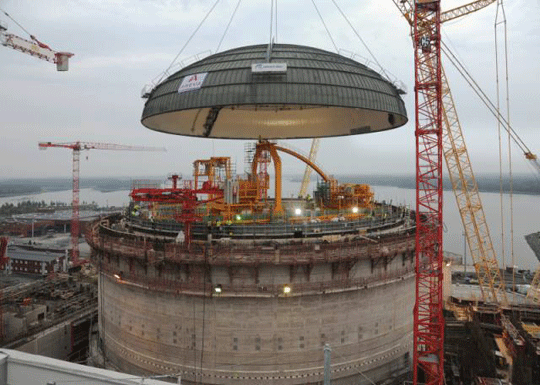 Finnish Olkiluoto-3 nuclear unit tests slipping behind schedule: TVO https://www.spglobal.com/platts/en/market-insights/latest-news/electric-power/100418-finnish-olkiluoto-3-nuclear-unit-tests-slipping-behind-schedule-tvo, Elaine Hiruo –Jonathan Dart
HIGHLIGHTS
New final phase schedule due in December
Too early to say if first power tests delayed
Output schedule ‘available ahead of commercial op’
London — Areva-Siemens is to provide a new schedule in December for the final phases of the 1.6-GW Finnish Olkiluoto-3 nuclear reactor after slippage in its commissioning tests, owner operator TVO confirmed Thursday.
This could potentially push back first delivery of power in tests currently scheduled from May 2019, “but we won’t know this until December,” TVO spokesman Pasi Tuohimaa told S&P Global Platts.
Previously TVO has said test production over a roughly five-month period could account for 10%-15% of Finland’s annual electricity needs ahead of full commercial operation, or 2-4 TWh.
Such is the potential volume at risk that TVO is to put up a schedule of Olkiluoto-3’s production tests six months before commercial operation, Tuohimaa said. He stressed that at this stage it was impossible to assess accurately how much electricity would be produced during testing.
“The completion of the commissioning tests has not been progressing according to the updated schedule for commissioning by the plant supplier Areva-Siemens Consortium,” TVO said in a statement late Wednesday.
The operator could not say whether “rebaselining” of the final phase schedule would affect the current September target for the start of commercial operation at the plant, which is already almost 10 years behind the original schedule and three times over the original Eur3.2 billion budget.
Neither could TVO say whether test production of electricity at varying power levels from May 2019 would be affected by the re-scheduling.
In June 2017, TVO said Olkiluoto-3 would begin commercial operation in September 2019, rather than in May of that year as expected. Hot testing had taken longer than expected, it said.
Q2 2019 Nordic baseload power on the NASDAQ futures exchange traded Thursday 0900 GMT at Eur36.40/MWh, down 30 euro cent from two trades earlier in the European morning.
elaine.hiruo@spglobal.com– jonathan.dart@spglobal.com
Trump Signs Legislation to Promote Advanced Nuclear Reactor Technology
 The bill reinforces the administration’s efforts to revitalize the U.S. nuclear industry. GreenTech Media
It also directs the DOE to facilitate the siting of advanced reactor research demonstration facilities through partnerships with private industry.
On the technical side, the legislation requires DOE to develop a fast test reactor, or fast neutron source, used for testing advanced reactor fuels and materials. The U.S. doesn’t currently have this capability.
Town Council election becomes a debate on nuclear waste hosting
Hornepayne, Ont., municipal election to become debate on nuclear waste, Community one of three in 
 northwestern Ontario to consider hosting nuclear waste J · CBC News Oct 04, 2018 Voters in the small northwestern Ontario town of Hornepayne will have more to consider at the ballot box than tax rates and economic growth.
When is radioactive waste NOT radioactive waste? When it is magically labelled “Exempt”

 Radiation Free Lakeland 3rd Oct 2018 , Nuclear mud isn’t the only waste. The industry is getting rid of waste by
sending it to landfill, ‘recycling’ – new routes are being found to
dump as much waste as possible.
The planned incinerator at Carlisle does not give any indication where the waste would be coming from. Radiation
Free Lakeland have written a letter of objection. The door is wide open to
a tsunami of radioactive waste being incinerated.
The private operators and even the regulators can get away with saying ‘ what dont be ridiculous
there is NO RADIOACTIVE WASTE planned for the new incinerator’. They said
this to us about radioactive wastes being dumped at Lillyhall. This is
because the waste that used to be classified as radioactive is now
classified as “exempt” for “free release” so by the magic touch of
a magic pen it is no longer radioactive.
https://mariannewildart.wordpress.com/2018/10/03/how-to-get-shot-of-nuclear-wastes/
Wales national assembly to debate motion to stop the dumping of mud from Hinkley nuclear station
 Welsh leaders urged to halt ‘nuclear mud’ dumping off Cardiff, Sediment from Hinkley Point C construction site is being disposed of at Cardiff Grounds, Guardian, Steven Morris @stevenmorris20– 2 Oct 2018 Pressure is increasing on the Labour-led Welsh government to halt the dumping of “nuclear mud” in the sea close to Cardiff after a campaign by an eclectic group of scientists, surfers and a pop star.
France’s nuclear regulator ASN orders further safety work on EDF’s flagship next-generation nuclear plant at Flamanville
 Watchdog warns EDF over weldings at flagship new nuclear plant, Ft.com 4 Oct 18 France’s nuclear regulator has said that EDF’s flagship next-generation nuclear plant at Flamanville might need further work due to faulty weldings which have already delayed the project.
In July, EDF said there would be further delays and cost overruns due to problems with the weldings. It pushed back the loading of nuclear fuel and the target construction costs at the late and over-budget plant. The state-backed energy utility said at the time that out of the 148 inspected welds, 33 had quality deficiencies and would be repaired. It said a further 20 would be reworked “even though they do not have any defects” while for another 10 it would submit a proposal to the ASN to convince the regulator of their safety. Now, the ASN has suggested, subject to further tests, that 8 of those 10 welds may need further work. The regulator said it “invites EDF to begin preparations on possible repair work to the welds concerned,” in a statement on Wednesday.“ASN also considers that the observed discrepancies indicate a failure of the monitoring carried out by EDF on certain activities of the EPR reactor site in Flamanville. It therefore asks EDF to extend the review of the quality of equipment installed on this reactor,”
“ASN also considers that the observed discrepancies indicate a failure of the monitoring carried out by EDF on certain activities of the EPR reactor site in Flamanville. It therefore asks EDF to extend the review of the quality of equipment installed on this reactor,” the ASN added………
The Flamanville plant in France is one of three being built in Europe using the next-generation European Pressurized Reactor technology. The other two projects are the Olkiluoto project in Finland, which is more than a decade late, and the UK’s Hinkley Point, which is mired in controversy over the high cost of the project.S……. https://www.ft.com/content/ec9c379a-c707-11e8-ba8f-ee390057b8c9ocial Responsibility
New Jersey’s electrical utilities lobbying for nuclear subsidies
 UTILITIES SUBMIT PROPOSALS FOR NUCLEAR SUBSIDIES, NJ Spotlight TOM JOHNSON | OCTOBER 3, 2018
While some residential customers may end up paying $30 more annually, large energy users may see their bills rise by $1 million a year.
It will be months before the state decides whether customers need to subsidize nuclear power, but New Jersey’s four electric utilities are already proposing how they will recover those costs.
In filings with the Board of Public Utilities, each of the utilities submitted tariffs disclosing how they will recoup the cost of buying Zero Emission Certificates (ZECs), the potential $300 million annual subsidy aimed at propping up the state’s supply of nuclear power.
The proposals are the latest in a series of filings that could boost bills to customers by billions of dollars if approved by the regulatory agency, most stemming from two bills signed into law this spring that will transform energy policy in New Jersey.
PSEG threatened to shut down units in South Jersey
The most contentious bill involved proposed subsidies to avert the closing of the three remaining nuclear power plants in New Jersey. Without financial incentives, Public Service Enterprise Group threatened to shut down the units it operates in South Jersey……
Is it a done deal?
“It gives the appearance of being a fait accompli,’’ said Doug O’Malley, director of Environment New Jersey, part of a coalition that opposed the nuclear bill. “The ZEC tariffs give the appearance that it is a done deal.’’
The board must still approve the tariffs, as well as any application by a nuclear-plant owner for the subsidy.
The proposed surcharge is established by the bill signed by Gov. Phil Murphy, but the tariffs submitted to the BPU vary on how much customers will pay depending on what customer class they’re in……..
Stefanie Brand: ‘It all adds up’
“The numbers appear small, but in fact they are quite large,’’ said Steve Goldenberg, an attorney representing large energy users. When you multiply the change by a whole lot of kilowatt hours, you derive a very large number.’’
The annual costs for some large energy users will exceed $1 million, Goldenberg said. “The lowest I’ve heard is $300,000.’’
Others worry the potential subsidies, when added to other costs that are pending before the BPU, or recently approved, will be a huge hit to ratepayers.
“It all adds up,’’ said Stefanie Brand, director of the Division of Rate Counsel. PSE&G has more than $10 billion in proposed rate increases pending before the BPU, if a recent $1.9 billion gas modernization program is included, Brand said.
Those cases include $2.5 billion to improve the resilience of its electric and gas distribution system; a $4 billion clean-energy initiative filed last Friday, and the proposed nuclear subsidy.
“The fact is there is no way to spend $10 billion and not have it be very expensive to ratepayers,’’ Brand said…….https://www.njspotlight.com/stories/18/10/02/utilities-submit-proposals-for-nuclear-subsidies/
USA threat about “taking out” Russian missiles
US threatens to ‘take out’ Russian missiles if Moscow keeps violating nuclear treaty By Ryan Browne and Frederik Pleitgen, CNN October 2, 2018 CNN)The United States Permanent Representative to NATO, Amb. Kay Bailey Hutchison, warned Tuesday that the US could “take out” Russian missiles that are perceived to be in violation of the Intermediate-Range Nuclear Forces Treaty should Moscow continue to violate the agreement…..
International Atomic Energy Agency (IAEA) announces 3 New IAEA Safety Guides on Radiation Protection
Aabha Dixit, The recommendations provided in these three Safety Guides, together with the requirements of IAEA General Safety Requirements( GSR Part 3), provide a basis for including environmental considerations in the assessment and management of radioactive releases.- IAEA Safety Standards Series No. GSG-8, Radiation Protection of the Public and the Environment, provides high level/generic guidance in relation to the protection of members of the public and the environment in planned exposure situations, existing exposure situations and emergency exposure situations. Key stakeholders from governments, regulatory bodies and operating organizations are provided with a structured approach to controlling radiation exposures resulting from the operation of facilities and environmental contamination resulting from accidents.
- IAEA Safety Standards Series No. GSG-9, Regulatory Control of Discharges to the Environment provides specific guidance on the application of the principles of radiation protection and safety objectives associated with the control of radioactive discharges from facilities and activities and on the process for their authorization. Recommendations and guidance focus on the process for the authorization for discharges, including the setting of discharge limits, the means of verification of compliance, that will contribute to control radiological impact on the public and the environment.
- IAEA Safety Standards Series No. GSG-10, Prospective Radiological Environmental Impact Assessment for Facilities and Activities details the general framework and methodologies for prospective radiological environmental impact assessment. It defines various types of methodologies that can enhance prospective radiological environmental impact assessment, which are normally undertaken at the pre-operational and the operational stage of a facility or activity, as a requirement for their authorization. The methodologies are also applicable for governmental decision-making processes, such as for the environmental impact assessment process included in several national and international regulatory frameworks.
Member States are encouraged to apply these recommendations and use them to enhance and develop national regulations on protection of the environment from harmful effects of ionizing radiation, Telleria said. Effective national radiation protection infrastructures, including the existing and those under development, can benefit from these new safety guides that promote the establishment optimal levels of protection. https://www.iaea.org/newscenter/news/three-new-iaea-safety-guides-on-radiation-protection-available
 |
ReplyForward
|
Belgium plans to sue Google over its refusal to blur sensitive military sites and nuclear power plants
 Google Faces Lawsuit In Belgium For Not Blurring Military Sites And Nuclear Power Plants On Maps, Gizmodo, Matt Novak Sep 29, 2018 Belgium plans to sue Google over the tech giant’s refusal to blur sensitive military sites and nuclear power plants on the company’s various mapping platforms. Military leaders in Belgium have not yet filed a formal complaint but confirmed to Reuters that they intend to sue……
1 This Month

Tell Congress: Prevent Nuclear Catastrophe in Iran

Tell Congress: Prevent Nuclear Catastrophe in Iran

Read the Public Inquiry Report, the Commissioners’ report, Surrendering Australia: The AUKUS Deception is available to download for free at aukuspublicinquiry.com. Or just watch the replay of the National Press Club Luncheon.
To see nuclear-related stories in greater depth and intensity – go to https://nuclearinformation.wordpress.com
Say No to NASA’s Reckless Nuclear Reactor on the Moon
-
Archives
- November 2026 (284)
- October 2026 (302)
- September 2026 (339)
- August 2026 (330)
- July 2026 (355)
- June 2026 (287)
- May 2026 (306)
- April 2026 (356)
- March 2026 (251)
- February 2026 (267)
- January 2026 (308)
- December 2025 (358)
-
Categories
- 1
- 1 NUCLEAR ISSUES
- business and costs
- climate change
- culture and arts
- ENERGY
- environment
- health
- history
- indigenous issues
- Legal
- marketing of nuclear
- media
- opposition to nuclear
- PERSONAL STORIES
- politics
- politics international
- Religion and ethics
- safety
- secrets,lies and civil liberties
- spinbuster
- technology
- Uranium
- wastes
- weapons and war
- Women
- 2 WORLD
- ACTION
- AFRICA
- Atrocities
- AUSTRALIA
- Christina's notes
- Christina's themes
- culture and arts
- Events
- Fuk 2022
- Fuk 2023
- Fukushima 2017
- Fukushima 2018
- fukushima 2019
- Fukushima 2020
- Fukushima 2021
- general
- global warming
- Humour (God we need it)
- Nuclear
- RARE EARTHS
- Reference
- resources – print
- Resources -audiovicual
- Weekly Newsletter
- World
- World Nuclear
- YouTube
-
RSS
Entries RSS
Comments RSS

