Following nuclear build mess, South Carolina’s SCANA faces bad financial news
| Money woes at SCANA? Utility releases latest financial report in wake of nuclear fiasco, The State BY SAMMY FRETWELL
sfretwell@thestate.com, October 25, 2018 , COLUMBIA SCANA, the struggling South Carolina-based utility staggered by the failure last year of its nuclear construction project, announced a better financial picture Thursday than it has in recent months. ……. SCANA, the parent company of SCE&G, has been criticized heavily since quitting the V.C. Summer nuclear construction project on July 31, 2017. The utility and its junior partner, the state-owned Santee Cooper utility, said last year they could no longer justify the project’s ever-increasing cost following the bankruptcy of chief contractor Westinghouse Electric. The two utilities spent $9 billion on two unfinished reactors. Ratepayers and state policy makers were irate. SCANA raised rates for its 728,000 electric customers to pay for the nuclear construction effort, charging those customers $2 billion. At one point, customers were paying an average of $27 a month for the nuclear project. However, the S.C. Legislature and Public Service Commission subsequently ordered the utility to lower its rates. However, many issues related to the V.C. Summer collapse remain unresolved. That has translated into bad financial news for the utility its shareholders…… https://www.thestate.com/news/business/article220579730.html
|
French government to decide whether or not to build new EPR nuclear reactors
France to decide over building new EPR nuclear reactors between 2021 and 2025: AFP https://www.reuters.com/article/us-france-energy/france-to-decide-over-building-new-epr-nuclear-reactors-between-2021-and-2025-afp-idUSKCN1N00RO
PARIS (Reuters) 26 Oct 18– The French government will decide on whether or not to build a new generation of EPR reactors between 2021 and 2025, Agence France Presse (AFP) reported on Friday, citing a working document.
France’s nuclear industry could be asked to draw an “industrial plan” by mid-2021 that would guarantee future EPR reactors are able to produce energy at a reasonable price, estimated between 60 and 70 euros per megawatt, AFP reported.
The French government will present its 2018-28 energy strategy next month instead of at the end of this month, a government source told Reuters earlier this week.
The long-awaited plan (PPE) will outline how and by when France will reduce the share of nuclear energy in electricity generation, currently at about 75 percent, and is a crucial factor in the investment planning of state-owned utility EDF, which operates France’s 58 nuclear reactors.
Asked about the AFP story in an interview with France 2 television on Friday, Environment and Energy Minister Francois de Rugy declined to confirm the information.
De Rugy added to France 2: “I confirm that a working document is made to work on it and weigh different scenarios.”
Reporting by Mathieu Rosemain and Caroline Pailliez; Editing by Sudip Kar-Gupta
Nuclear weapons building – building up to a budget disaster
|
THE TICKING NUCLEAR BUDGET TIME BOMB, WAR ON THE ROCKS, KINGSTON REIF AND MACKENZIE EAGLEN OCTOBER 25, 2018
In a little-noticed comment before his controversial July summit meeting with Vladimir Putin, President Donald Trump expressed a desire to talk to his Russian counterpart about their countries’ extensive nuclear modernization plans. Trump characterized his own government’s plan to spend hundreds of billions of dollars to upgrade the aging nuclear arsenal as “a very, very bad policy.” He seemed to express some hope that the two countries, which together possess over 90 percent of the planet’s nuclear warheads, could chart a different path and avert a new arms race. Still, it’s not clear Trump is actually interested in a different path. He said on Monday, in the context of his decision to withdraw the United States from the 1987 Intermediate-Range Nuclear Forces (INF) Treaty, that “We have far more money than anybody else by far. We’ll build [the U.S. nuclear arsenal] up until” other nuclear-armed states such as Russia and China “come to their senses.” Since the dawn of the nuclear age, there has been heated debate about the appropriate role and number of nuclear weapons in U.S. policy. What has largely been above debate, however, has been the need for a strong and credible arsenal so long as nuclear weapons exist — a top policy and budgetary priority of recent administrations of both parties. But a reckoning is coming, the result of a massive disconnect between budgetary expectations and fiscal reality. Despite claims that nuclear weapons “don’t actually cost that much,” the simple fact is that unless the administration and its successors find a pot of gold at the end of the rainbow, spending to maintain the current arsenal — to say nothing of a buildup — will pose a significant affordability problem. Trying to recapitalize nearly the entire arsenal at roughly the same time means less money is likely to be spent on each individual modernization program, thereby increasing the time and cost required to complete each one. The absence of reasonable planning will also result in more suboptimal choices when hard decisions become inevitable. The current path is an irrational and costly recipe for sucking funding from other defense programs and/or buying fewer new nuclear delivery systems and reducing the size of the arsenal. The longer military and political leaders continue to deny this reality, the worse off America’s nuclear deterrent and armed forces will be. The Third Wave of Nuclear Modernization Spending………. Sustaining the arsenal will require a third wave of major upgrades. The Obama administration committed to a major overhaul of the arsenal in 2010, part of its effort to win Republican support for the New Strategic Arms Reduction Treaty (New START) with Russia. The Congressional Budget Office (CBO) estimated last fall that the plans Trump inherited from his predecessor to maintain and upgrade the arsenal over the next 30 years would cost $1.2 trillion in today’s dollars. That CBO projection includes about $400 billion in modernization spending that falls largely in the mid-2020s to early 2030s, as well as relatively stable, though steadily increasing, operations and sustainment costs over the entire 30-year period. ……The CBO’s projection of $400 billion in nuclear modernization spending might be a best-case scenario. Because the Pentagon has not built intercontinental ballistic missiles or ballistic missile submarines in a long time, the department’s independent Cost Assessment and Program Evaluation office has acknowledged that the confidence levels for nuclear upgrade cost estimates are relatively low. This means that, even if the programs are managed perfectly, they could end up costing a lot more than the estimates project. The land- and sea-based missile programs, as well as the plan to build over 100 B-21 long-range bombers, could, by our count, each cost as much as $150 billion after including inflation, easily putting them among the top ten most expensive Pentagon acquisition programs. On top of all of this, the Trump administration’s Nuclear Posture Review proposes expanding U.S. nuclear capabilities by calling for new warheads and new missiles to counter Russia, more bomb production infrastructure, and a greater emphasis on nuclear command and control. These proposals would likely add additional tens of billions to the $1.2 trillion price tag. So too could a U.S. withdrawal from the INF Treaty and failure to extend New START, which is slated to expire in 2021. In particular, the verifiable New START caps on Russian deployed nuclear forces aid U.S. military planning by reducing the need to make worst-case assessments that could prompt additional costly nuclear force investments. Third Wave of Nuclear Modernization: Unique Challenges.…….. Most importantly, the overall federal fiscal outlook is far direr. The most recent CBO estimates suggest that the United States will add somewhere between $12 to $13 trillion in new debt from spending over the next decade. ……. The growth of mandatory spending in all categories, coupled with the recent tax cuts, will balloon the national debt to the highest level relative to GDP in the nation’s history. This will increase pressure to slash discretionary expenditures, including defense. While Congress approved a major increase to defense spending in fiscal year 2018, the Budget Control Act caps return in 2020 and 2021. Without amendment, these could result in a $171 billion national defense spending decline, or 13 percent of the total planned for those two years. Absent a “grand bargain” that eluded lawmakers in 2011 and led to the Budget Control Act’s spending caps, sustaining real growth in the defense budget will be almost impossible. This will make it difficult to afford both conventional and nuclear modernization in tandem. Additionally, bipartisan political support for increasing nuclear weapons spending is fragile and far from assured in the future. ……… Disarmament by Default Numerous Pentagon officials and outside experts have cautioned that the current nuclear upgrade plan cannot be sustained without significant and sustained increases to defense spending — which are unlikely to be forthcoming — or cuts to other military priorities………. The first step in solving a problem is recognizing that there is one. Whether one believes America’s nuclear weapons spending plans are good or bad policy, pursuing them poses a massive fiscal challenge that America’s military and political leaders can no longer afford to ignore.https://warontherocks.com/2018/10/the-ticking-nuclear-budget-time-bomb/ |
|
Nuclear waste drums ruptured due to a heat reaction
|
Fluor says heat reaction ruptured waste drums, Post Register, By NATHAN BROWN nbrown@postregister.com Oct 25, 2018 The rupture of four radioactive waste drums at a U.S. Department of Energy site in April occurred when “a reactive metal with radionuclides” heated up after being exposed to the air for the first time in almost 40 years.
Fluor Idaho, DOE’s cleanup contractor at the desert site west of Idaho Falls, announced the results of its months long investigation on Thursday. “This heating up of the reactive metal started a secondary reaction that caused a rapid rise in pressure inside each drum, resulting in the ejection of their lids,” a Fluor news release said…..https://www.postregister.com/news/local/fluor-says-heat-reaction-ruptured-waste-drums/article_e52132b9-33b0-5f61-8668-ae3f3dd4ce38.html |
|
University of California being used by the nuclear weapons industry
 California is complicit in the buildup of nuclear weapons http://www.latimes.com/opinion/op-ed/la-oe-fihn-californias-central-role-in-nuclear-arems-race-20181024-story.html, By BEATRICE FIHN, OCT 24,
 2018 A new nuclear arms race is underway, with California at the center, though it’s not clear its citizens realize it. |
|
“Peace comes through strength.” – says Vice President Pence about nuclear weapons in space
 Vice President Pence Didn’t Rule Out the Possibility of Nuclear Weapons in Space http://fortune.com/2018/10/23/pence-nuclear-weapons-space/, By RENAE REINTS October 23, 2018
Vice President Mike Pence chose not rule out the possibility of nuclear weapons in space, telling The Washington Post on Tuesday that “peace comes through strength.”
“What we need to do is make sure that we provide for the common defense of the people of the United States of America, and that’s the president’s determination here,” Pence said, when asked if nuclear weapons should be banned from outer space. “What we want to do is continue to advance the principle that peace comes through strength.”
Weapons of mass destruction, like nuclear weapons, are currently banned from orbit through the 1967 Outer Space Treaty, signed by both Russia and the United States during the Cold War. The treaty states that not only are nuclear weapons banned from outer space, but the moon and other celestial bodies are to be used for peaceful purposes only: this means no military bases, practices, or weapons testing.
President Donald Trump has already threatened to throw out one arms control treaty, however.
The Intermediate-Range Nuclear Forces Treaty, signed with Russia in 1987, required the destruction of ground-launched ballistic and cruise missiles with certain ranges. Amid concerns that Russia may be developing a medium-range ballistic missile, Trump said Saturday that the United States will end the INF Treaty.
Pence made his comments Tuesday at the “Transformers: Space” policy summit, hosted by the Post. He also said the Trump administration hopes to establish Space Force, a sixth branch of the U.S. military focused on outer space, as soon as 2020.
It’s imperative for the world to resist the escalation of nuclear weapons
 Nuclear escalation must be resisted https://www.theguardian.com/world/2018/oct/24/nuclear-escalation-must-be-resisted
We understood that in the 1980s and we mobilised against it. The INF treaty was in large part a result of massive international protest against nuclear escalation in the 1980s, including CND protests against cruise missiles which mobilised hundreds of thousands of people. The iconic Greenham peace camp was part of that wave of protest. We stand resolutely against this return to the nuclear escalation of the cold war and we call on all peoples once again to reject these moves.
Kate Hudson
General secretary, Campaign for Nuclear Disarmament
Japan’s draft new nuclear legislation including unlimited redress from utilities for accidents at their nuclear plants

 Draft bill omits state burden for nuclear accident compensation http://www.asahi.com/ajw/articles/AJ201810240030.html, THE ASAHI SHIMBUN, October 24, 2018 After more than three years of discussions, the nuclear damage compensation law will be left largely intact, including unlimited redress from utilities for accidents at their nuclear plants and vagueness about the government’s responsibility.
Only minor changes will be made to the law, such as measures to accelerate provisional payments to victims of nuclear accidents.
Science ministry officials on Oct. 23 presented a draft of proposed legislation to revise the law at a committee meeting of the ruling Liberal Democratic Party. The legislation is expected to be submitted to the extraordinary Diet session that began on Oct. 24.
An advisory committee on the nuclear damage compensation system within the Japan Atomic Energy Commission (JAEC) had been discussing possible revisions since 2015 in part because of the huge compensation amount–now more than 8 trillion yen ($71 billion)–facing Tokyo Electric Power Co. over the 2011 accident at its Fukushima No. 1 nuclear power plant.
Electric power companies had asked for some sort of limit in the law, given the situation at TEPCO.
One suggestion was to more clearly delineate the responsibility of the central government and the utilities for compensating victims of nuclear disasters.
A committee member who once worked in Keidanren (Japan Business Federation) supported setting a limit, saying the companies would face a serious management problem if they are unable to predict potential compensation risks.
In return, the central government would shoulder the compensation amount above a certain limit, the member proposed.
However, the committee could not reach an agreement, and no change was made to the provision that sets unlimited compensation responsibility on the part of the utilities.
Utilities will have to continue setting aside a maximum 120 billion yen for each nuclear plant it operates as insurance for a major accident.
Although the insurance amount would appear to be a sort of limit on the electric power companies, the utilities must also contribute to the Nuclear Damage Compensation and Decommissioning Facilitation Corp. (NDF), which provides assistance when compensation demands concerning a single nuclear plant exceed 120 billion yen.
The central government also contributes funds to the NDF.
Calls arose to raise the insurance limit for electric power companies beyond 120 billion yen. However, the insurance industry would not agree to any higher amount, and no change was made in the limit.
Some committee members brought up the topic of whether the central government’s responsibility for compensation should be included in a legal revision.
The electric power industry said the central government should shoulder a greater portion of the compensation responsibility for nuclear accidents because it has continued to define nuclear energy as an important base-load energy source.
Members of the advisory committee brushed aside that suggestion, saying the public would never be convinced in light of the Fukushima accident and the various shortcomings revealed about TEPCO’s management.
Other members cited the possibility that utilities would cut back on safety investment if they knew the central government would pay for compensation.
Discussions about the central government’s responsibility never did get off the ground in the advisory committee, even though a number of recent court verdicts in civil lawsuits have awarded compensation while clearly stating the central government’s responsibility for the Fukushima nuclear disaster.
The minor change to the law to allow electric power companies to more quickly begin provisional payments of compensation was proposed to address problems that arose after the Fukushima accident.
TEPCO took about six weeks to begin provisional payments to disaster victims. The delay, according to TEPCO, was because the utility had no idea about the maximum amount of compensation it would have to pay.
Under the proposed change, the central government will provide loans to utilities so they can immediately begin making provisional payments. Utilities will be obligated to compile guidelines that define the procedures for applying for compensation and making those guidelines widely known.
(This article was compiled from reports by Yusuke Ogawa and Senior Staff Writer Noriyoshi Ohtsuki.)
USA issues stark warning against UK partnering with China on nuclear power stations


 US warns Britain against Chinese alliances on nuclear plants, Security official claims evidence of civilian nuclear technology being put to military use, Ft.com, David Sheppard in London , 25 Oct 18
The US has issued a stark warning to the UK about partnering with China’s largest state-backed nuclear company on a host of new power plants, saying it has evidence that it is engaged in taking civilian nuclear technology and transferring it to military uses. Christopher Ashley Ford, the US assistant secretary for international security and non-proliferation, said that China General Nuclear (CGN), which is a partner on the £18bn Hinkley Point C nuclear project, among others, was at the forefront of Chinese efforts to militarise civilian nuclear technology.
“It’s quite clear now that essentially the entirety of the Chinese nuclear industry is lashed up with military-civil fusion,” Mr Ford said in a briefing with the Financial Times. “There is a growing pattern of information of which we have become aware over time related to technological theft issues.” Mr Ford said the US had shared evidence, both “open source” and from intelligence gathering, with the UK, showing CGN was involved in the transfer of technology that could be used for a range of military applications. That could include powering China’s new breed of nuclear powered submarines, aircraft carriers and “floating nuclear reactors for the ongoing militarisation of the South China Sea”, Mr Ford
“If CGN is engaged in helping the Chinese navy . . . with missiles that could presumably be pointed at western capitals, including London . . . It’s worth thinking about whether that’s a particularly good idea,” Mr Ford said. The bluntly delivered warning comes as UK prime minister Theresa May has tried to increase scrutiny of Chinese investment in key UK infrastructure compared to her predecessor David Cameron, including over involvement in nuclear power plants.
But the US intervention, given their status as the UK’s key military ally, is likely to increase pressure on Downing Street. The Trump administration is locked in a trade war with China, with tensions ramping up over tariffs and the balance of payments between the two countries. But the US this month also updated its own policies on civilian nuclear co-operation with China to say that there would be a “presumption of denial” for any US company seeking to transfer technology to CGN or its subsidiaries. …..
A contract between China and Westinghouse Electric Company, the US nuclear engineering group sold by Toshiba to Canadian asset manager Brookfield last year, is not, however, broadly affected by the US policy shift, although future deals could be. The second Westinghouse plant in China started up on Wednesday, 11 years after the deal to build four AP1000 reactors was first signed. …..
Last month, CGN told the Financial Times that political sensitivities could prompt it to give up the chance to operate a new atomic power plant at Bradwell in Essex, as the group also outlined ambitious plans for an industrial partnership with Britain. …..
CGN has invested more than £2bn in its British nuclear projects in the past two years, and has committed to spend £9.5bn in this area in total. https://www.ft.com/content/84ab26f6-d7a5-11e8-a854-33d6f82e62f
Countries are safer to not have nuclear facilities? IAEA training to prepare for cyberattacks on them
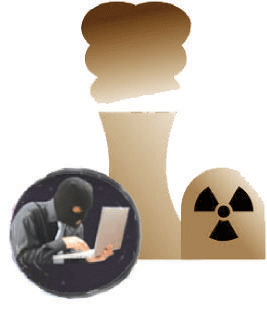 IAEA Launches International Training Course on Protecting Nuclear Facilities from Cyber-Attacks IAEA Vienna, Austria The International Atomic Energy Agency (IAEA) has introduced a new international training course (ITC) on protecting nuclear facilities from cyber-attacks, highlighting the Agency’s role in supporting national efforts to strengthen nuclear security.
The inaugural course, Protecting Computer-Based Systems in Nuclear Security Regimes, was held earlier this month. It brought together 37 participants from 13 countries for two weeks of immersive training on best practices in computer security. Developed together with the U.S. Department of Energy’s National Nuclear Security Administration (NNSA) and hosted by the Idaho National Laboratory in the United States, it was the first in what will be a series of IAEA information and computer security ITCs focusing on raising awareness of the threat posed by cyber-attacks, and their potential impact on nuclear facilities……https://www.iaea.org/newscenter/pressreleases/iaea-launches-international-training-course-on-protecting-nuclear-facilities-from-cyber-attacks-0 |
Britain’s Ministry of Defence foresees nuclear attacks on Earth, launched from space
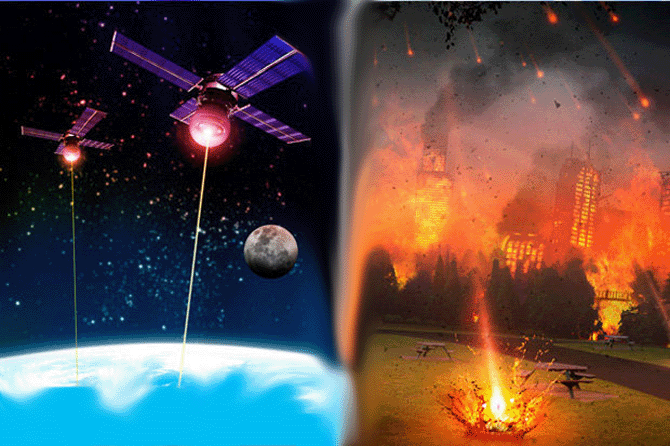 Space stations could launch NUCLEAR attacks on Earth in 30 years – shock MoD report
SPACE stations could launch nuclear attacks on Earth in 30 years, the Ministry of Defence has warned in a shock report on the growing threat of a nuclear space race. The threat of a nuclear space race comes as countries look to expand their arsenal of weapons outside the earths atmosphere.
A report called the ‘Future Starts Today’ outlines the “critical point” the world has reached in relation to warfare.
Defence Secretary Gavin Williamson acknowledged the “dangerous” state of the world.
As the advancement of technology increases the prospect of military space bases has come to fruition with nuclear warheads circling earth.
These weapons would have “global reach” and be unseen by those on Earth.
The destructive power of a nuclear electromagnetic pulse weapon – detonated in the air rather than on the ground – will be developed to knock out whole cities and even countries.
Electromagnetic pulses have the ability to shut down anything running on electrical power therefore, lights, communications, heating systems would all stop working in an instant.https://www.express.co.uk/news/world/1034575/space-stations-nuclear-attack-earth-ministry-of-defence-report
USA’s EPA removes regulation that would protect groundwater from uranium mining pollution
|
The proposed rule under Obama would have set standards requiring operators to do long-term monitoring of groundwater conditions while lowering how much of eachchemical is allowed. Both would be stricter than Wyoming’s current standards. The federal version would require quarterly monitoring over three years rather than one ensuring contaminant concentrations remained at pre-mine levels. …… The National Resource Defense Council found no groundwater near ISR mines have been returned to pre-mine conditions.http://www.wyomingpublicmedia.org/post/federal-uranium-contamination-rule-withdrawn#stream/0 |
|

Future of Bradwell nuclear project in doubt – Chinese company might withdraw
BANNG 22nd Oct 2018 , BANNG has long maintained that there is no need for a new nuclear powerstation at Bradwell. The costs, in terms of the long-lasting, physical
damage to the tranquil and vulnerable Blackwater estuary, of the finances,
of the potential for terrorist attacks and of the uncertainties around
investment by a potentially hostile state, are too high.
in the costs of renewables and storage, there will be no need for it by the
time Bradwell B could be in operation.
in the Bradwell B project. However, it seems now that CGN is wavering. In
the Financial Times of 18 September it was reported that CGN ‘has
admitted that political sensitivities could prompt it to give up the chance
to operate a new atomic power plant in the UK’.
security issues surrounding Chinese investment into a highly sensitive part
of the UK’s national infrastructure. In the Financial Times, Zheng
Dongshan, Chief Executive of CGN’s UK subsidiary, is reported as
acknowledging that it would take time for CGN ‘to show the public, the
government they can trust us’. Andy Blowers, Chair of BANNG, said: ‘The
project may be doomed anyway as the Bradwell B site is totally unsuitable
and is opposed by communities all around the Blackwater estuary.’
https://www.banng.info/news/is-bradwell-b-going-down-the-drain/
USA was close to using nuclear weapons in the Vietnam war
HOW CLOSE DID THE UNITED STATES ACTUALLY GET TO USING NUCLEAR WEAPONS IN VIETNAM IN 1968? WAR ON THE ROCKS
OCTOBER 24, 2018.”…….The publication of Michael Beschloss’ new book, Presidents of War, shined light on declassified documents describing the efforts that President Lyndon Johnson’s senior military officers undertook without presidential authorization in early 1968 to prepare for the use of tactical nuclear weapons in Vietnam.How close did the United States actually get to deploying nuclear weapons in Vietnam in 1968? Who initiated this plan, codenamed “Fracture Jaw,” and when did the president become aware of it? What can today’s leaders learn from this incident, and what implications does this episode have for command and control of nuclear weapons during wartime and the so-called “nuclear taboo” that purportedly dissuades their use?
Drawing on declassified “eyes only” materials housed at the Lyndon Johnson Presidential Library in Austin, Texas, I seek to situate the revelations in Beschloss’ book in the broader historical context to provide a more detailed account of the military’s planning for Fracture Jaw and just how far Pentagon and White House officials allowed these preparations to progress without the president’s full knowledge………….
The “Nuclear Taboo” and Command and Control Nuclear Weapons During Wartime
From the perspective of the so-called “nuclear taboo,” which dissuades the use of nuclear weapons because of their devastating destructive potential, the Fracture Jaw episode is something of a success story. Johnson consistently made clear to his advisors that he did not want to be put in a position where he would be asked for authority to launch tactical nuclear weapons in Vietnam. Although he did not explicitly rule out the use of these weapons categorically, Johnson’s fury in discovering on Feb. 10 that planning had persisted in spite of his earlier directive only reinforces the notion that the president was committed to avoiding their use.
From the vantage point of command and control of the nuclear arsenal, however, this episode is more harrowing. Although the president’s regional and theater commanders expeditiously complied with the commander-in-chief’s directive to shut down Fracture Jaw, their planning had progressed with seemingly little presidential understanding of just how far along Pacific Command had advanced in preparing its tactical nuclear arsenal for possible use……….
In his role as commander-in-chief, the president retains ultimate (and effectively unchecked) authority over whether to deploy nuclear weapons, a choice Johnson described as “one of the most awesome and grave decisions any president could be called upon to make.” In this instance, Johnson did not hesitate to exercise this authority, but only after media speculation made him aware of how far preparations for their use in Vietnam had actually progressed. That the president and the White House staff was insufficiently aware of how far along this contingency planning had progressed rightfully raises important questions about the integrity of the country’s nuclear command and control infrastructure, particularly as the United States contemplates a greater reliance on tactical nuclear weapons in its deterrence posture. And it gives rise to speculation, however remote, about the decision Johnson would have had to confront in weighing a full-fledged nuclear option in Vietnam should Fracture Jaw have come to fruition. In his role as commander-in-chief, the president retains ultimate (and effectively unchecked) authority over whether to deploy nuclear weapons, a choice Johnson described as “one of the most awesome and grave decisions any president could be called upon to make.” In this instance, Johnson did not hesitate to exercise this authority, but only after media speculation made him aware of how far preparations for their use in Vietnam had actually progressed. That the president and the White House staff was insufficiently aware of how far along this contingency planning had progressed rightfully raises important questions about the integrity of the country’s nuclear command and control infrastructure, particularly as the United States contemplates a greater reliance on tactical nuclear weapons in its deterrence posture. And it gives rise to speculation, however remote, about the decision Johnson would have had to confront in weighing a full-fledged nuclear option in Vietnam should Fracture Jaw have come to fruition. ……

Catholic Church urges countries to sign and ratify the UN Nuclear Weapons Ban
|
Holy See urges ratification of Nuclear Weapons Ban Treaty https://www.vaticannews.va/en/vatican-city/news/2018-10/holy-see-united-nations-auza-prohibition-nuclear-weapons.htmlSpeaking on behalf of Archbishop Bernadito Auza, the Holy See’s Permanent Observer to the UN in New York, Second Counsellor, Father David Charters addressed a UN General Assembly discussion on nuclear disarmament on October 22. By Robin Gomes
The Holy See has once more expressed grave concern over the catastrophic humanitarian and environmental effects of the use of nuclear weapons , and called on all governments of states who adopted the United Nations Treaty on the Prohibition of Nuclear Weapons (TPNW) to sign and ratify it. Speaking on behalf of Archbishop Bernadito Auza, the Holy See’s Permanent Observer to the UN in New York, Second Counsellor, Father David Charters made the call in an address on Monday at a UN General Assembly discussion on nuclear disarmament. The TPNW, or the Nuclear Weapons Ban Treaty, that prohibits the use, threat of use, development, testing, production, manufacturing and possession of nuclear weapons, will enter into force when 50 states have signed and ratified it. Fr. Charters warned that a nuclear war or even a limited use of nuclear weapons would be a catastrophe of unimaginable proportions, and would kill untold numbers of people and cause tremendous environmental damage and famine. Holy See vs nuclear weaponsThe Holy See official pointed out that the continued existence of over 14,000 nuclear weaponsheld by a handful of countries is one of the greatest moral challenges of our time. Fr. Charters said that the Catholic Church has been opposing nuclear weapons since 1943. St. John XXIII called for its ban in his encyclical “Peace on Earth” and the later popes have consistently called for the “abolition of these evil instruments of warfare that create both a false sense of security and foster distrust and disharmony”. Wasted resourcesFr. Charters pointed out that the Second Vatican Council condemned nuclear arms race as “an utterly treacherous trap for humanity, and one that injures the poor to an intolerable degree.” Fr. Charters noted that maintenance of nuclear weapons continues to siphon off immense resources that could be devoted, among other things, to the implementation and achievement of the Sustainable Development Goals, especially the eradication of extreme poverty and hunger. The Holy See the concern of Pope Francis according to whom “nuclear deterrence and the threat of mutually assured destruction cannot be the basis for an ethics of fraternity and peaceful coexistence.” |
|
1 This Month
Tell Congress: Prevent Nuclear Catastrophe in Iran

Tell Congress: Prevent Nuclear Catastrophe in Iran

Read the Public Inquiry Report, the Commissioners’ report, Surrendering Australia: The AUKUS Deception is available to download for free at aukuspublicinquiry.com. Or just watch the replay of the National Press Club Luncheon.


Shut down the radiation-damaged Heysham nuclear reactors now
To see nuclear-related stories in greater depth and intensity – go to https://nuclearinformation.wordpress.com

Say No to NASA’s Reckless Nuclear Reactor on the Moon
Say No to NASA’s Reckless Nuclear Reactor on the Moon
-
Archives
- November 2026 (246)
- October 2026 (302)
- September 2026 (339)
- August 2026 (330)
- July 2026 (355)
- June 2026 (287)
- May 2026 (306)
- April 2026 (356)
- March 2026 (251)
- February 2026 (267)
- January 2026 (308)
- December 2025 (358)
-
Categories
- 1
- 1 NUCLEAR ISSUES
- business and costs
- climate change
- culture and arts
- ENERGY
- environment
- health
- history
- indigenous issues
- Legal
- marketing of nuclear
- media
- opposition to nuclear
- PERSONAL STORIES
- politics
- politics international
- Religion and ethics
- safety
- secrets,lies and civil liberties
- spinbuster
- technology
- Uranium
- wastes
- weapons and war
- Women
- 2 WORLD
- ACTION
- AFRICA
- Atrocities
- AUSTRALIA
- Christina's notes
- Christina's themes
- culture and arts
- Events
- Fuk 2022
- Fuk 2023
- Fukushima 2017
- Fukushima 2018
- fukushima 2019
- Fukushima 2020
- Fukushima 2021
- general
- global warming
- Humour (God we need it)
- Nuclear
- RARE EARTHS
- Reference
- resources – print
- Resources -audiovicual
- Weekly Newsletter
- World
- World Nuclear
- YouTube
-
RSS
Entries RSS
Comments RSS

