Renewable energy can replace UK’s Moorside, Wylfa and Sizewell C nuclear power at a much cheaper cost
 ECIU (accessed) 17th Jan 2019 The future of the Government’s plans to roll out six new nuclear power
stations across Britain is looking increasingly parlous, as the Wylfa
project becomes the second power station to be scrapped in just two months.
Wylfa’s demise makes the Oldbury project extremely unlikely to proceed,
while Toshiba has already backed out of developing its Moorside station.
Their absence leaves space for new low-carbon capacity to fill the gap. Filling the ‘nuclear gap’ with
alternative low-carbon power sources would keep bills down, maintain secure
energy supply and allow the UK to maintain progress towards legally binding
climate targets.
A representative scenario, in which 80% of the energy
output of Moorside, Wylfa and Sizewell C was replaced in equal measure by
onshore and offshore wind, with the remaining 20% by solar PV would entail
an average price of £50-65/MWh, including the cost of system balancing.
This is 13-33% cheaper than the cost of energy from nuclear (not accounting
for nuclear system costs). This would see an additional 11.3 GW of onshore
wind and 5.7 GW of offshore wind capacity, as well as 20.8 GW of new solar
PV capacity. Renewable capacity is already set to increase on current
levels, as more – and cheaper – capacity continues to come online.
https://eciu.net/assets/Briefing-%E2%80%93-Filling-the-nuclear-gap-compressed.pdf
Dungeness B nuclear station – safety problems, reactors still shut down
|
IAEA 17th Jan 2019 , In September 2018, as part of a regulatory intervention on external
corrosion management, the UK nuclear safety regulator (Office for Nuclear Regulation (ONR)) issued a direction for Dungeness B nuclear power station to carry out a review and reassessment of safety addressing the corrosion of concealed systems that fulfil a safety function. Inspections carried out by the site nuclear licence holder (licensee) in response to this direction
identified that seismic restraints, pipework and storage vessels associated with several systems providing a safety function were found to be corroded to an unacceptable condition. This condition would have been present whilst the reactor was at power, although, the affected systems were not called upon to perform their safety function. Rectification of the degradation has now been undertaken whilst the units have been shut down for maintenance.
The rectification work required more than 300m of pipework associated with
reactor cooling systems to be renewed, along with renewal of numerous seismic pipework supports and remediation of carbon dioxide storage vessels. Both reactors at Dungeness B are currently (January 2019) shutdown
as part of the licensees ongoing recovery program. The licensee has identified a number of additional commitments that will be fulfilled prior to returning either reactor to service. ONR continues to engage with the licensee to monitor progress against commitments. The licensee has an on-going investigation underway to establish the causes of this issue. https://www-news.iaea.org/ErfView.aspx?mId=6033b140-6500-4900-a8bb-6bdb9f347c94 |
I
|
UK govt’s plan to let down solar householders has not gone down well
Physics World 16th Jan 2019 Dave Elliott: The UK government’s plan to abandon the feed-in tariff
(FIT) system for small renewable energy projects did not go down well,
especially since it meant the loss of the export tariff. Householders who
invested in a photovoltaic (PV) array on their roof have used that to
offset the cost of their investment by selling any extra power they
generated at a reasonable rate – 5.24 p/kWh – to their grid supplier.
However, with the FiT, along with the export tariff, to be closed to new
applicants from the end of March, they will get nothing for any exports. In
a parliamentary debate on the FiT in November last year, energy minister
Claire Perry said she aimed to avoid that situation. It certainly looked
unfair and counterproductive.
Claire Perry has now gone ahead with a
consultation on the Government’s proposals for a new market for
electricity export from small-scale PV solar, configured “so that people
are not providing it to the grid for free”. Under the proposed “Smart
Export Guarantee” (SEG), electricity suppliers would pay new small-scale
PV and other energy producers for excess electricity from homes and
businesses put back into the power grid.
https://physicsworld.com/a/after-the-fit/
Be aware of the radiation risks of CT scans
Scannell: The radiation risk posed when you undergo CT scans. The Mercury News, 18 Jan 19
Researchers estimate that nearly 2 percent of future cancers could be related to computerized tomography, It’s often said, “What you don’t know won’t hurt you.” But I’ve never understood the rationale behind that. In fact, as a doctor, I’d argue otherwise — that what you don’t know can harm you a great deal.
I’m thinking of this in light of recent studies concerning radiation exposure from medical imaging tests like computerized tomography (CT) scans. Many of us don’t know that we’re exposed to ionizing radiation when we undergo a CT scan, that ionizing radiation is a carcinogen or that data links an increased risk of cancer to low-level doses that are commonly used in CT imaging.
And while that increased risk may be small, it’s also cumulative over time — a concern for patients who receive multiple scans.
The benefits of CT scans in diagnosing disease and saving lives are indisputable. But, like any medical test or treatment, CT scans entail potential risks that should be balanced against expected benefits. Unfortunately, we’ve paid little attention to the radiation risks.
Putting the risk in perspective is difficult, considering the various yardsticks by which meaningful radiation exposure and cancer risks are measured. But, in broad terms, we can consider the constant background radiation from natural sources that we’re exposed to every day. While a chest X-ray exposes us to a 10-day dose of background radiation, a chest CT scan delivers about 2 years’ worth. And the average 3-year dose we get from a CT of the abdomen and pelvis more than doubles when the scan is repeated with and without contrast.
It’s important to remember that the increased cancer risk from a single CT scan remains low for most individuals. Still, the risk accumulates with additional scanning, and it constitutes an unnecessary risk if the scan isn’t medically necessary.
That latter point deserves underscoring because about 30 percent of CT scans performed in the U.S. are unnecessary, according to estimates. And, given that we perform over 80 million CT scans annually, it’s gob-smacking to consider the extraordinary unnecessary risk we’re assuming as a population. In fact, taking this population perspective, researchers have estimated that nearly 2 percent of future cancers could be related to CT scans.
Given the risks, our causal attitude toward CT scans is surprising. But they’ve become the Big Mac staple of modern medical fare. As a matter of perceived need or convenience, too many doctors order them and too many patients demand them when they aren’t medically needed.
Radiation risk reduction could be pursued through various strategies, beyond the obvious one of reducing unnecessary scans. Another obvious tactic involves minimizing the amount of radiation per scan without sacrificing image quality………..https://www.mercurynews.com/2019/01/18/opinion-the-radiation-risk-posed-when-you-undergo-ct-scans/
Missile Defense Review: North Korea remains ‘extraordinary threat’ to US
The Missile Defense Review report, introduced by President Donald Trump during a speech at the Pentagon, was released just hours ahead of a top North Korean envoy’s arrival in Washington to discuss a potential second summit between Trump and North Korean leader Kim Jong Un……….https://www.usatoday.com/story/news/world/2019/01/17/missile-defense-review-north-korea-still-poses-extraordinary-threat/2610585002/
High radiation levels in Fukushima area, but the Japanese government is pushing people back there
Fukushima Residents Return Despite Radiation, Eight years after the nuclear meltdown, wary citizens are moving back to contaminated homesteads—some not by choice, Scientific American, By Jane Braxton Little January 16, 2019
 When the Fukushima Daiichi Nuclear Power Plant began spewing radioactive particles after it was clobbered by a tsunami in March 2011Kaori Sakuma fled. She bundled her infant and toddler into a car and left her husband and family in Koriyama, 44 miles west of the ruptured facility. “The truth is, I ran away,” she says. Confronting gas shortages and snarled roads, she transported her children 560 miles away to Hokkaido, about as far as she could get.
Radiation from the fuming plant spread over tile-roofed towns and rice paddies across an area the size of Connecticut. The meltdown 150 miles north of Tokyo drove more than 200,000 people out of the region. Most believed they were fleeing for their lives. Now, almost eight years after the accident, the government has lifted most evacuation orders. Nearly 122,000 people have been allowed to return to communities where weeds have overtaken parking lots. Most are elderly, relieved to be resuming their lives. Prime Minister Shinzo Abe is determined to end all evacuations by 2020, when Japan will host the Olympic Summer Games. The events will include baseball and softball competitions in Fukushima City, a mere 55 miles from the ruined reactors.
Around 35,000 other citizens still wait to return, but they and many others throughout northeastern Japan worry all of this is too soon. Radiation, which is generally linked to cancer, in some places continues to measure at least 5 millisieverts (mSv) a year beyond natural background radiation, five times the added level Japan had recommended for the general public prior to the incident. In certain spots radioactivity is as high as 20 mSv, the maximum exposure recommended by international safety experts for nuclear power workers.
In its haste to address the emergency, two months after the accident the Japanese government raised the allowable exposure from 1 mSv annually, an international benchmark, to 20 mSv. Evacuees now fear Abe’s determination to put the Daiichi accident behind the nation is jeopardizing public health, especially among children, who are more susceptible. Lifting most evacuations has also ended subsidies for evacuees, forcing many to return despite lingering questions.
As more people inside and outside the country absorb the radiation data, Japanese officials are confronting a collapse of public confidence. Before the accident residents in Japan (and the U.S.) were living with background radiation that averaged 3.1 mSv a year,most of it emanating naturally from the ground and space. In Japan and the U.S. many residents experience an additional 3.1 mSv annually, due mostly to medical testing. But the anxiety of Fukushima residents facing even higher levels is palpable. If the government is going to fully restore lives and livelihoods, it needs to regain their trust, says nuclear engineer Tatsujiro Suzuki, a professor at Nagasaki University and former vice chairman of the Japan Atomic Energy Commission. That, he says, should include respecting international safety standards for radiation and lowering the allowable level at least to 5 mSv, although he acknowledges “even 5 mSv is too high for children.”
……….Concern about children is one of the most controversial issues. When officials raised the allowable level of radiation to 20 mSv, including in schools, it was under the guise of giving people a measure of normalcy. But the May 2011decision became a flash point for opponents of the government’s handling of the accident. They were furious children would be subjected to the maximum radiation allowed for nuclear workers, spending day after day in buildings that increased their cancer risk to one in 200 people.
Sakuma was one of those who returned to Koriyama, from her outpost in Hokkaido. She did not want her young children to touch contaminated soil or water along their walk to school, so she carried them both on her small back. “We all want our kids to play in the dirt and pick flowers but I was afraid. We all were,” says Sakuma, now 46. ……https://www.scientificamerican.com/article/fukushima-residents-return-despite-radiation/
UK government’s proposed ‘Regulated Asset Base’ (RAB) financing – a cover-up for a nuclear bailout
  Dave Toke’s Blog 14th Dec 2019 There’s a bunch of highly misleading statements that the Government is to adopt so-called ‘Regulated Asset Base’ (RAB) financing of nuclear power projects. Yes, some of the mechanisms that are being proposed are also used in RAB, but the term is being grotesquely distorted to hide the fact that this is a cover for the Government risking very large sums of money to be lent to nuclear power developers.
Put simply, if the nuclear power projects are as expensive as they usually are the electricity consumer will lose an awful lot of money and prices will be jerked upwards. Either that or the
taxpayer takes a hit and funding of public services suffer big time. You can see the cover up printed in the Sunday Times yesterday where, we are told that ‘Ministers are expected to accelerate plans to introduce regulated asset base (RAB) financing, which is popular in the water and infrastructure sectors, for nuclear plants including the Horizon project’.
Under such schemes the developers are allowed to charge consumers in advance for the capital building projects. What Ministers are not emphasising of course, is that in industries such as water the Government does not lend lots of money to the privatised companies. They raise this on private markets. But in the case of nuclear power plants the bulk of the money needed to build them will be borrowed from the Government.
So if the nuclear plant has very big delays and cost overruns (as has happened to ALL nuclear power plant built in the West this century), the Government loses shedloads of money. The Treasury is likely to insist that this gets paid for by adding the (large) sums to electricity consumer bills. RAB has been used to try to finance nuclear power plant in the USA, in the states of Georgia and South Carolina recently.
The result was disaster and the developing company, Westinghouse, went bust. But this was ‘normal’ RAB where the developer takes the risk of cost overruns. But in the proposed UK
nuclear version it will be the electricity consumer who goes bust when the almost inevitable cost-overruns set in! The nuclear RAB is really a cover for a nuclear bailout. So let’s call it a ‘nuke bailout RAB’.
https://realfeed-intariffs.blogspot.com/2019/01/government-spreads-big-lie-about-rab.html |
Wild mushrooms in Finland still containing high radioactive cesium from Chernobyl nuclear accident in 1986
The Finnish Radiation and Nuclear Safety Authority (Stuk) says that fallout from the Chernobyl nuclear accident can still be detected in Finnish foods, but that it accounts for less than one percent of the average annual radiation dose for people in Finland.
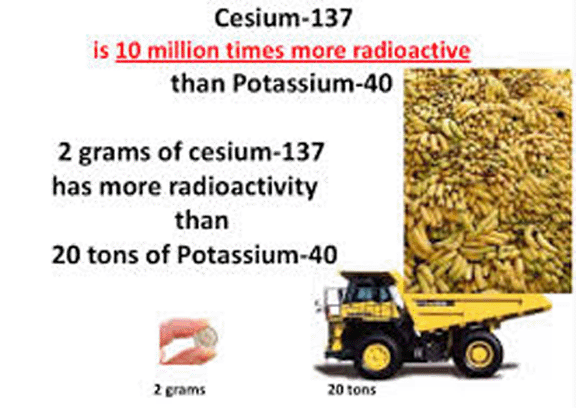 The city of Helsinki’s urban environment division said on Monday that two samples of funnel chanterelle (or yellow leg) mushrooms it tested contained levels of radioactive caesium that exceeded the recommended maximum.
According to EU guidelines, food products offered for sale should not contain more than 600 becquerels per kilo (Bq/kg) of caesium-137. Mushrooms picked in Pälkäne in Pirkanmaa, south-central Finland had a reading of nearly 1,000 Bq/kg. Meanwhile those picked in Hyvinkää, some 60 km from the capital, contained 1,300 Bq/kg. Wild produce from around the country is widely sold at marketplaces in the capital…… https://yle.fi/uutiset/osasto/news/watchdog_wild_mushrooms_ok_to_eat_despite_lingering_chernobyl_radiation/10598680
 |
ReplyForward
|
Offshore wind leads, as UK’s renewable energy is on course to overtake fossil fuels
 Business Green 16th Jan 2019, Renewables are on course to overtake fossil fuels for the first time as the UK’s primary electricity source as early as 2020, according to the latest market forecast from EnAppSys. If current trends continue, the market analyst predicts growing renewable power sources such as wind and solar
will generate 121.3TWh of electricity over the calendar year of 2020, pushing ahead of declining coal and gas-fired power sources with a forecasted 105.6TWh of generation.
The forecast assumes current trends of declining fossil fuel generation and rising renewables generation continue at the same annual rate. In 2018, coal and gas fired power stations
produced a combined 130.9TWh, a 6.7 per cent fall from the previous year’s 140.3TWh, the report states.
Meanwhile, renewable sources delivered 95.9TWh last year, rising 15.2 per cent from 2017 – a strong performance bolstered by the UK’s increasing offshore wind capacity.
https://www.businessgreen.com/bg/news/3069376/report-renewables-to-overtake-fossil-fuels-in-uk-energy-mix-in-2020
Japanese people losing trust in government, as the Fukushima nuclear catastrophe still poses health risks
 Fukushima Residents Return Despite Radiation Eight years after the nuclear meltdown, wary citizens are moving back to contaminated homesteads—some not by choice, SCIENTIFIC AMERICAN, BY JANE BRAXTON LITTLE JANUARY 16, 2019
“………. LACK OF PUBLIC TRUST
In the year after the accident Koriyama was one of 12 communities where the ongoing radiation rate measured between 3 and 5 mSv above background, but the town had not been evacuated. Today’s levels have stabilized at 1.5 mSv, but doubts remain. Skeptical of the government’s readings, Shigeru Otake, 49, takes his own. A slim man who wears a Dollar Store rope belt to give him “strength like a samurai,” he says he has measured radiation spikes at 15 mSv in Koriyama, where his family has lived for generations. Sakuma walks her sons, now eight and 10 years old, to school past a government monitoring post that she claims reads six times lower than her own dosimeter does.
Misgivings about government assurances of safety drove Hiroshi Ueki, 48, to move his family to Nagano Prefecture, where he is now growing “the best grapes in the world.” His parents stayed behind in Fukushima Prefecture. Ueki says he will never move back. “The prime minister says the accident is over but I won’t ever feel safe until the Daiichi plant itself is finally shut down. That will take 100 years.”
In spite of these concerns, Japan has continued to showcase repatriation as a barometer of progress toward recovery. By April 2017, the government had lifted all evacuations except for the most contaminated places closest to Daiichi. That decision also ended rent-free housing provided to people who were forced to leave as well as to some 26,600 people like Ueki who vacated voluntarily. Left without the $10,000 monthly subsidy provided by Tokyo Electric Company, some people have been forced to return home despite their safety concerns. They have no other economic options, says Hajime Matsukubo, general manager of the Citizens’ Nuclear Information Center. Some 16,000 people who refuse to return have been financially abandoned, according to the center.
Scientists generally agree on a few basics: The risks of getting leukemia or other cancers are higher for children than adults, and the risks for everyone increase significantly with exposure above 100 mSv annually. Various national agencies have set 20 mSv per year as a maximum for occupational exposure. Public exposure should be no more than 1 mSv per year above background levels, according to the International Commission for Radiological Protection. That raises questions about Japan’s 2011 emergency declaration of 20 mSv per year as the allowable exposure. …….
The public perception is that the Daiichi nuclear accident continues to pose health risks and, significantly, nuclear power is not safe. More than 80 percent of the Japanese public wants to phase it out, according to an October 2018 study by Suzuki, the former Japan Atomic Energy commissioner. He calls the erosion of public trust “the most unfortunate impact of the accident.”
Sakuma, the Koriyama mother, is using the Daiichi accident as a lesson in radical civic involvement. She intends to keep her sons in Koriyama despite radiation concerns. “I want them to grow up here so they can learn what the government does. I want them to tell other people about how it is to live with radiation,” she says. “This accident is not over.” https://www.scientificamerican.com/article/fukushima-residents-return-despite-radiation/
It is unlikely that nuclear power will be included in America’s Green New Deal
 Morning Consult 14th Jan 2019 , Lawmakers embracing a transition to 100 percent renewable energy under a Green New Deal have largely left out mention of whether nuclear energy should be included in such a policy package. While Rep. Alexandria Ocasio-Cortez, one of the Green New Deal’s biggest proponents, said she hasn’t ruled out nuclear energy from the platform, other advocates on the left hold long-running concerns that appear to lessen nuclear’s chances of inclusion in the deal.
https://morningconsult.com/2019/01/14/nuclears-bleak-odds-in-a-green-new-deal/
Japan must say NO to nuclear power, says former Prime Minister
 Koizumi says Japan must say ‘no’ to nuclear energy, THE ASAHI SHIMBUN, January 17, 2019, When he was prime minister, Junichiro Koizumi championed the use of atomic power to generate electricity.
Then the 2011 earthquake and tsunami disaster struck, triggering a crisis at the Fukushima No. 1 nuclear power plant in Fukushima Prefecture.
Koizumi, in office from 2001 to 2006, and widely regarded as one of Japan’s most popular postwar leaders, started reading up on the nuclear issue, and had a change of heart. Koizumi, 76, published his first book by his own hand titled “Genpatsu Zero Yareba Dekiru” (We can abolish all nuclear plants if we try) in December. It is available from Ohta Publishing Co.
In it, he lambasts consumers for lacking a sense of crisis and simply believing a serious accident like the Fukushima disaster will never happen again in Japan during their lifetime.
In a recent interview with The Asahi Shimbun, Koizumi said it was “a lie” to claim that nuclear power is “safe, low-cost and clean,” although that is precisely what he espoused when he held the reins of power.
Excerpts from the interview follow.
…….. Q: Is it really possible to replace all the nuclear reactors with other sorts of power plants?
A: No reactors were operated for two years after the Fukushima disaster. But no power shortages were reported during the period. That means Japan can do without nuclear plants. It is a fact……. http://www.asahi.com/ajw/articles/AJ201901170010.html
UK’s ‘nuclear renaissance’ collapsing, as Hitachi ponders exit from Wylfa project
 FT 13th Jan 2019 Nick Butler: Who could blame the board of the Japanese company Hitachi if
its members decide at their meeting this week to scrap plans for a new nuclear power station at Wylfa on the North Wales island of Anglesey?
Hitachi has invested more than £840m in the project over the past six years. The technology has passed all the tests set by the UK’s nuclear regulator. But the company has been unable to get the government to put in place the clear and credible financial structure necessary to underpin the investment.
That failure has already led other investors to abandon the new plant planned at Moorside in Cumbria. Talk of scrapping the Wylfa project could be a bargaining tactic on the part of Hitachi but the reality is probably much simpler. Hitachi’s doubts have been well signalled during the
past few months and the company’s purchase of ABB’s power grid business at the end of last year gives it a range of investment choices.
Given Whitehall’s chronic indecision, the company is ready to use its capital elsewhere. Hitachi’s withdrawal would mark the collapse of the energy policy adopted in 2013 by the UK’s coalition government. Facing what were believed to be ever-rising energy prices the policy plumped for new nuclear, promising that 35 gigawatts of new capacity would be on stream by the mid 2030s – more than replacing the first generation of nuclear plants, which would by then have reached the end of their useful lives.
Because the price of gas seemed doomed to keep rising, new nuclear would come to look highly competitive over time as well as reducing dependence on imports. Since then much has changed, and the assumptions which underpinned the old policy now look laughably wrong.
The costs of all forms of energy (apart from nuclear) have fallen dramatically and there is no shortage of supply. Electricity demand is down thanks to efficiency gains and new technology.
The contract for the first new nuclear station being built at Hinkley Point in Somerset, which enjoys a guaranteed index-linked price for 35 years from the moment the plant is commissioned, looks exorbitant. The demise of Wylfa forces the need for a comprehensive review of energy policy.
Since the UK government is too busy preparing for Brexit to focus seriously on any other issue, the review should be conducted independently. Advances in energy technology offer more
possibilities each year. But those options will never be taken up unless the old outdated policy is scrapped and a more realistic approach put in place.
https://www.ft.com/content/7b33e9fa-1648-11e9-9e64-d150b3105d21
The shutdown of Oyster Creek Nuclear Station- is it best to hand the waste management to Holtec?

After the Shutdown: Oyster Creek Nuclear Generating Station Oyster Creek is done producing nuclear energy. Now comes the hard part: cleaning up five decades of radioactive waste. New Jersey Monthly, By Ian T. Shearn | At noon this past September 17, operators shut down the Oyster Creek turbine. Three minutes later, two “scram” buttons were simultaneously pushed, inserting 122 control rods into the reactor core and aborting the nuclear reaction inside the vessel. After nearly a half-century of operation, the nation’s oldest active nuclear power plant went offline for good.
That began the onerous task of decontaminating and dismantling the plant—a process known as decommissioning. The shutdown also created severe financial angst among local officials, who had grown dependent on Oyster Creek’s tax revenue. And it offered the latest painful reminder that the United States lacks a plan to deal with a growing stockpile of radioactive nuclear waste.
The shutdown left New Jersey with three operating nuclear reactors, which produce 37 percent of the state’s electricity. With the emergence in recent years of cheap and abundant natural gas, along with a growing appetite for renewable energy, plants like Oyster Creek have lost their competitive edge. The nuclear age is on the wane in the United States, at least in the commercial energy sector. Today, there are 60 active U.S. nuclear plants with 98 reactors, down from a high of 112 operational plants in 1991. Only two reactor plants are under construction.
Oyster Creek’s license was to expire in 2029. But in 2010, the state Department of Environmental Protection ordered the plant to build cooling towers to protect Barnegat Bay from its warm-water discharges. After estimating the cost at more than $800 million, Exelon Corp., the current owner/operator, reached an agreement to close the plant in 2019. That was advanced to 2018 in part to manage costs.
A CHANGE IN PLANS
Shortly after the shutdown, plant employees began the process of cooling down the reactor and removing all nuclear fuel for storage in the plant’s used-fuel pool, a bath of highly purified, chemically balanced, fresh water. The 40-foot-deep pool—with reinforced concrete walls 2-feet thick—contains 2,430 fuel assemblies, more than half of the spent fuel that has accumulated over five decades.
Exelon estimated decommissioning would take 60 years. Its method, a process known as SAFSTOR, includes waiting for the radiation—both in the fuel pool and the reactor—to diminish naturally over decades, reducing the contamination risk for workers dismantling the facility. That plan changed dramatically last summer when Exelon reached an agreement to sell the plant to Holtec International, which has a technology campus in Camden, and proposes to complete the task in less than eight years by expediting the transfer of the spent fuel from the pool to dry storage casks before its radiation has appreciably decayed. Holtec and Exelon have asked the U.S. Nuclear Regulatory Commission for an expedited approval of the sale by May 1, prompting concern among environmentalists.
“What’s the big hurry?” asks Janet Tauro, board chair of Clean Water Action NJ. “Holtec may be the best thing in the world, but we’re talking about 1.7 million pounds of nuclear waste.” Lacey Township, the Sierra Club and Concerned Citizens of Lacey have asked the NRC to hold a public hearing. Tauro and Clean Water Action New Jersey have asked the state attorney general for a review of the Exelon/Holtec deal.
“The NRC will try to complete a review of the application by May 1,” says NRC spokesman Neil Sheehan. “But we have made it clear to Exelon and Holtec that achieving that will be contingent upon us receiving the information we need.” That could include information about technical aspects of the decommissioning and adequacy of funding for the project.
Exelon and Holtec officials are nonetheless optimistic the deal will be approved on their timetable. Soon, the nuclear license and the 700-acre property would be transferred to Holtec—along with control of a nearly $1 billion decommissioning trust fund generated by utility ratepayers over decades. Holtec would assume all liability for the spent nuclear fuel—and any potential accidents.
Jeff Tittel, director of the New Jersey Sierra Club, says he’s fine with the expedited decommissioning schedule. “It’s very doable and it’s been done many times throughout the country,” he notes. But he would like to see the storage site for the nuclear waste elevated and upgraded to withstand potential flooding or a terrorist attack. According to an AP report, the Sierra Club and several community groups also say the $1 billion fund is insufficient for cleanup and storage.
Tittel is “most concerned,” however, about the transfer of Oyster Creek’s ownership from Exelon, an industry behemoth with deep pockets, to Holtec, a relatively small limited-liability company, which will subcontract the work to an even smaller subsidiary. “If there is some kind of accident, there will be no one to hold accountable,” he says.
Kris Singh, who holds more than 90 patents, mostly related to nuclear energy, founded Holtec in 1986. His company has emerged as an industry leader in the management of spent nuclear fuel. Its dry-cask technology is used at 116 nuclear power plants around the world, including 65 in the United States. Those casks would be used to store Oyster Creek’s spent fuel.
But Singh’s company lacks experience in cleaning up closed nuclear plants. That’s why it teamed with a Canadian engineering firm, SNC-Lavalin, to form Comprehensive Decommissioning International (CDI). Holtec has also reached agreements to purchase nuclear plants in Massachusetts and Michigan and perform expedited decommissioning there. The Massachusetts deal is awaiting NRC approval, and the Michigan deal will be submitted at a later date.
“CDI, headquartered in Camden, has been established to bring the expertise of both companies together to ensure safe, rapid, and economic nuclear plant decommisioning,” says Holtec marketing and communications specialist Caitlin Marmion.
What’s in it for Holtec? The company would, in effect, hire itself and its subsidiary to clean up the site by drawing fees from the decommissioning fund. Holtec also would purchase its own storage casks for the cleanup. And once the cleanup is done, it can profit from the sale of the 700-acre Oyster Creek site.
SOUNDING THE ALARM
Paul Gunter, a longtime environmental activist, policy analyst and nuclear-reactor watchdog for the advocacy group Beyond Nuclear, has been following activities at Oyster Creek for decades. He is calling for a thorough inspection of the plant’s GE Mark 1 reactor before it’s disposed of, citing its well-documented design flaws and a long history of modifications and retrofits. The reactor came under intense international scrutiny in 2011, after three of the same reactors melted down at the Fukushima Daiichi Nuclear Power Plant in Japan.
Holtec’s decommissioning plan “is like burying a body without an autopsy,” says Gunter. He notes that 21 GE Mark 1 reactors remain operational in the United States. (Holtec’s Marmion points out that the company’s plans to dismantle and dispose of the reactor are “in accordance with regulatory requirements.”)
Gunter is also alarmed by Holtec’s partnership for the decommissioning work. SNC-Lavalin, Gunter says, currently faces federal corruption charges in Canada. Equally disturbing, he says, the company is “barred from doing any contractual work with the World Bank until 2023—again because of global corruption.”
SNC-Lavalin has had a legal cloud over its head since 2015 (the same year it began collaborating with Holtec) when allegations surfaced that former employees paid $150 million in bribes to officials in Libya to influence government policy and win contracts. In one case, a former SNC-Lavalin vice president is awaiting trial on charges he made bribes to the Gaddafi regime. In a separate case, a former SNC-Lavalin vice president of construction pleaded guilty in July to using a forged document following a widespread corruption investigation involving the construction of a super-hospital in Canada. And in May, Canadian authorities filed charges against SNC-Lavalin after a multiyear probe related to illegal political contributions.
“Is this the company we want to be handling a $1 billion trust fund?” asks Gunter……..
The decommissioning project is not the only joint venture between Holtec and SNC-Lavalin. The two companies are also collaborating on the design and production of a small, nuclear and modular reactor, called SMR-160, at Holtec’s Technology Campus in Camden. The reactor is planned for operation by 2026.
Last February, Holtec signed an agreement in Camden that calls for the state-run nuclear operator in Ukraine to adopt the SMR-160 technology to meet its energy needs. Shortly after, Holtec announced that Ukraine may also become a manufacturing hub for SMR-160 components.
“Holtec is poised to….reinvigorate nuclear power for a world in dire need of a weather-independent and carbon-free source of energy,” CEO Singh told World Nuclear News at the time…………. https://njmonthly.com/articles/politics-public-affairs/after-the-shutdown-oyster-creek-nuclear-generating-station-forked-river/
1 This Month
Tell Congress: Prevent Nuclear Catastrophe in Iran

Tell Congress: Prevent Nuclear Catastrophe in Iran

Read the Public Inquiry Report, the Commissioners’ report, Surrendering Australia: The AUKUS Deception is available to download for free at aukuspublicinquiry.com. Or just watch the replay of the National Press Club Luncheon.


Shut down the radiation-damaged Heysham nuclear reactors now
To see nuclear-related stories in greater depth and intensity – go to https://nuclearinformation.wordpress.com

Say No to NASA’s Reckless Nuclear Reactor on the Moon
Say No to NASA’s Reckless Nuclear Reactor on the Moon
-
Archives
- November 2026 (238)
- October 2026 (302)
- September 2026 (339)
- August 2026 (330)
- July 2026 (355)
- June 2026 (287)
- May 2026 (306)
- April 2026 (356)
- March 2026 (251)
- February 2026 (267)
- January 2026 (308)
- December 2025 (358)
-
Categories
- 1
- 1 NUCLEAR ISSUES
- business and costs
- climate change
- culture and arts
- ENERGY
- environment
- health
- history
- indigenous issues
- Legal
- marketing of nuclear
- media
- opposition to nuclear
- PERSONAL STORIES
- politics
- politics international
- Religion and ethics
- safety
- secrets,lies and civil liberties
- spinbuster
- technology
- Uranium
- wastes
- weapons and war
- Women
- 2 WORLD
- ACTION
- AFRICA
- Atrocities
- AUSTRALIA
- Christina's notes
- Christina's themes
- culture and arts
- Events
- Fuk 2022
- Fuk 2023
- Fukushima 2017
- Fukushima 2018
- fukushima 2019
- Fukushima 2020
- Fukushima 2021
- general
- global warming
- Humour (God we need it)
- Nuclear
- RARE EARTHS
- Reference
- resources – print
- Resources -audiovicual
- Weekly Newsletter
- World
- World Nuclear
- YouTube
-
RSS
Entries RSS
Comments RSS

