http://www.digitaljournal.com/news/world/germany-urges-russia-to-destroy-missile-to-save-nuclear-treaty/article/541215 German Foreign Minister Heiko Maas on Friday called on Russia to destroy a controversial missile system Washington says breaches a key arms control treaty.
“We believe Russia can save this treaty,” Maas said after talks with Russia’s top diplomat Sergei Lavrov, referring to the Intermediate-Range Nuclear Forces treaty (INF).
“It affects our security interests in a fundamental way.”
Tensions have raged between Russia and the United States over the fate of the INF agreement signed in 1987 by then US president Ronald Reagan and Soviet leader Mikhail Gorbachev.
US President Donald Trump has promised to walk away from the agreement and Russian leader Vladimir Putin threatened a new arms race, saying Europe would be its main victim.
Washington says Moscow’s 9M729 missile system violates the treaty and warned it would withdraw from the agreement if Russia does not get rid of it.
Russia denies the claim, accusing the United States of violating the treaty which forbids ground-launched short- and intermediate-range missiles.
“Like other NATO members, we believe that there is a missile violating this treaty and it should be destroyed in a verifiable manner to get back to the implementation of this agreement,” Germany’s Maas told reporters.
Maas commended Moscow for trying to salvage the agreement and expressed hope that talks between Russian and US negotiators would resume in the near future.
Last month Washington gave Russia a 60-day deadline to dismantle missiles that it claims breach the INF treaty or the US would begin the six-month process of formally withdrawing from the deal.
Lavrov for his part said Washington provided no evidence that Russia’s tests of the missile violated the INF treaty.
He said Washington’s demands to destroy the missiles and have regular access to Russian sites were just “a pretext to exit the treaty.”
“During official contacts on arms control and disarmament issues back in October the United States said the decision is definitive and their announcement of the withdrawal from the INF treaty is not an invitation to dialogue. This is a quote.”
Earlier this week, talks between US and Russian officials in Geneva to salvage the deal led nowhere. Moscow said Washington did not appear to be in the mood for more talks while a US official said Russia was just paying “lip service” to transparency.
Russian officials said US representatives had confirmed Washington’s intention to begin withdrawing from the treaty from February 2.
January 19, 2019
Posted by Christina Macpherson |
Germany, politics international, Russia, weapons and war |
Leave a comment
 US to begin nuclear treaty pullout next month after Russia missile talks fail, Guardian, Julian Borger in Washington, 17 Jan 2019
-
- Officials reject Russian offer to inspect new missile
- US says it will suspend observance of INF treaty on 2 February
The US has rejected Moscow’s offer to inspect a new Russian missile suspected of violating a key cold war-era nuclear weapons treaty, and warned that it would suspend observance of the agreement on 2 February, giving six-months’ notice of a complete withdrawal. The under secretary of state for arms control and international security, Andrea Thompson, confirmed the US intention to withdraw from the treaty after a meeting with a Russian delegation in Geneva, which both sides described as a failure.
Donald Trump took US allies by surprise when he announced his intention to leave the 1987 Intermediate-range Nuclear Forces (INF) treaty in October. The agreement led to the destruction of thousands of US and Soviet weapons, and has kept nuclear missiles out of Europe for three decades.
The Russian foreign minister, Sergei Lavrov, accused the US of intransigence, saying Moscow had offered to allow US experts to inspect the suspect missile, which it insists does not infringe the limits laid down in the treaty.
“However, US representatives arrived with a prepared position that was based on an ultimatum and centred on a demand for us to destroy this rocket, its launchers and all related equipment under US supervision,” Lavrov said.
Thompson noted that the US had been demanding Russian transparency over the missile for more than five years. She confirmed that the offer of inspections was not enough and that the US was demanding the destruction of the missile system, known as the 9M729……..
She said that there were currently no plans for follow-up talks on the INF before the 2 February deadline laid down by the Trump administration, though US and Russian diplomats would be meeting, including at a summit of the Nato-Russian council next week.
Thompson said that if Russia did not show willingness to comply with the treaty by the deadline, the US would suspend its own obligations, meaning that the US defense department could start research and development on missiles with ranges currently banned by the INF, from 500 to 5,500km.
At the same time, she told reporters, the US would formally give notice of its withdrawal from the treaty, which could come into effect on 2 August.
After that, there would be no restrictions on deployment of medium-range missiles in Europe or the Pacific………..
The Trump administration was criticised by former officials and arms control advocates for not pursuing the Russian offer of inspections.
“We’ve spent years trying to get something – anything – out of the Russians on INF. The Russian offer of an exhibition of the 9M729 is not enough, but it is something,” Alexandra Bell, a former senior state department official who is now senior policy director at the Centre for Arms Control and Non-Proliferation.
“Perhaps it is a foundation on which to build. Not trying to take advantage of this opportunity is to leave diplomatic options on the table and that’s just foolish.”
Daryl Kimball, the head of the Arms Control Association said: “If the INF is terminated on 2 August, there will be nothing to prevent Russia from deploying nuclear missiles that threaten Europe and the Trump administration will have no hesitation in pursuing the deployment of INF-prohibited weapons in Europe.” https://www.theguardian.com/world/2019/jan/16/us-russia-inf-treaty-nuclear-missile
January 19, 2019
Posted by Christina Macpherson |
politics international, Russia, USA, weapons and war |
Leave a comment
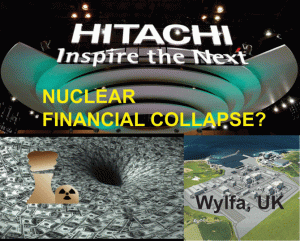 Hitachi to Cease Work on Nuclear Power Plant in North Wales, NYT, Stanley Reed, Jan. 17, 2019, Hitachi said on Thursday that it was suspending work on a 15 billion pound, or $19.3 billion, nuclear power project in North Wales after failing to agree on financial terms with the British and Japanese governments.
“The decision was made from the viewpoint of Hitachi’s economic rationality as a private enterprise,” the company, based in Japan, said.
Ben Russell, a spokesman for Hitachi’s British venture, Horizon Nuclear Power, said that discussions with the governments would continue but that its staff, currently around 300 people, would be cut to “a minimal handful.”
Hitachi will also stop planning work on a second project, in Oldbury, England. The company said it planned to take a write-off of 300 billion yen, or $2.75 billion, on the projects.
The decision by Hitachi is a blow to the British government, which is betting heavily on nuclear installations to help meet the country’s electric power needs in the coming decades.
The big question is whether Hitachi’s move will be a death knell for Britain’s campaign to build nuclear plants, which so far has resulted in only one project under construction.
While there are signs that the government is rethinking its energy policy, it was willing to go a long way toward trying to keep Hitachi on board.
In a statement to Parliament on Thursday, Greg Clark, the secretary of state for business and energy, said the government had been willing to consider providing one-third of the equity financing for the project and to take on all of the construction debt. When Hitachi continued to balk, Mr. Clark said, “I was not prepared to ask the taxpayer to take on a larger share.”
…….For Hitachi, though, the announcement could mark the end of a long and expensive saga. The company acquired the Horizon sites from two German utilities in 2012 for £697 million, or about $900 million, and wound up spending around £2 billion in total on design approvals, staff and other matters. It has been hiring apprentices, who have been training at a technical college on the island and going to Spain and Japan for work experience. At times in recent months more than 100 archaeologists were on the site, excavating and recording ancient structures that the construction would have destroyed.
Hitachi hoped Britain would prove to be an international showcase for its reactor designs. Ultimately, the company lost patience with the high level of spending required to land such a project there.
Hitachi had sought to arrive at a financial arrangement that would attract long-term investors like pension funds to the project and reduce its own exposure. But the offers of support from both the British and the Japanese sides were not enough………https://www.nytimes.com/2019/01/17/business/energy-environment/hitachi-horizon-wales-nuclear-plant.html
January 19, 2019
Posted by Christina Macpherson |
business and costs, politics, UK |
Leave a comment
Straits Times, WASHINGTON (REUTERS) 18 Jan 19, – A top North Korean nuclear envoy met President Donald Trump at the White House after holding talks with Secretary of State Mike Pompeo on Friday (Jan 18) in a diplomatic flurry aimed at laying the groundwork for a second US-North Korea summit.
The visit of Kim Yong Chol, Pyongyang’s lead negotiator with the United States and a hardline former spy chief, marked a rare sign of potential movement in a denuclearisation effort that has stalled since a landmark meeting between Trump and North Korean leader Kim Jong Un in Singapore last year.
Kim Yong Chol and Pompeo, with tight smiles, posed together for photographs at a Washington hotel before holding about 45 minutes of talks that could help determine whether the two sides can make headway.
After that meeting, the White House said Trump hosted Kim Yong Chol in the Oval Office to “discuss relations between the two countries and continued progress on North Korea’s final, fully verified denuclearisation.”
There has been no indication of any narrowing of differences over US demands that North Korea abandon a nuclear weapons programme that threatens the United States or over Pyongyang’s demand for a lifting of punishing sanctions.
Hours before Kim Yong Chol’s arrival on Thursday, Trump – who declared after the Singapore summit in June that the nuclear threat posed by North Korea was over – unveiled a revamped US missile defence strategy that singled out the country as an ongoing and “extraordinary threat.”
The State Department said after Friday’s meeting that Pompeo had a “good discussion” with Kim Yong Chol “on efforts to make progress on commitments President Trump and Chairman Kim Jong Un made at their summit in Singapore.”
But it provided no specifics.
The high-level visit could yield an announcement of plans for a second summit. Both Trump and Kim have expressed an interest in arranging but some US-based analysts say it would be premature due to the lack of obvious progress so far………. https://www.straitstimes.com/world/united-states/north-korea-envoy-in-us-for-talks-with-secretary-of-states-mike-pompeo-possibly
January 19, 2019
Posted by Christina Macpherson |
North Korea, politics international, USA |
Leave a comment
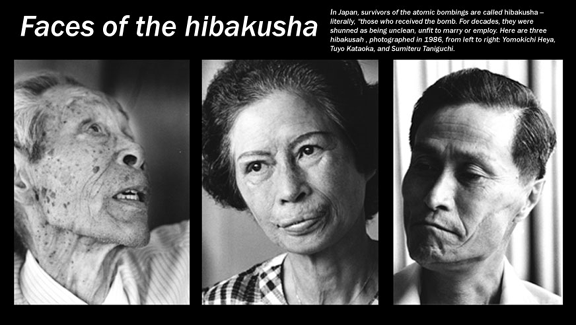
Ground Zero Nagasaki: Living the nuclear past – and future, Asia Times, By SUSAN SOUTHARD JANUARY 18, 2019 “…………….Hibakusha stories
It’s essential for us to remember such grim details, not just for the sake of history, but for our future, because nuclear weapons far more powerful and devastating than the Nagasaki bomb are now commonplace.
In a small area of Nagasaki that includes Hypocenter Park, the Nagasaki Atomic Bomb Museum, and Peace Park, dedicated teams of Japanese men and women still work tirelessly to counter the world’s inclination to forget what happened. For the past 35 years, one organization, the Nagasaki Foundation for the Promotion of Peace, has assembled cadres of hibakusha speakers – typically about 40 at any time – willing to tell their stories. They are now aging women and men with unique memories of the day of that bombing and the weeks, months and years that followed.
Sixteen-year-old Taniguchi Sumiteru was delivering mail on his bicycle about a kilometer and a half from the hypocenter when, a split-second after the bomb detonated, its tremendous force and searing heat blew him off his bicycle and slammed him face-down on to the road. His entire back was burned off. By all rights, he should never have survived. Three months later, he finally received medical treatment. Still in constant pain 10 years after the bombing, he became one of Nagasaki’s earliest anti-nuclear activists.
Wada Koichi, an 18-year-old streetcar driver at the time of the bombing, decided to speak out when he held his first grandchild and flashed back to the charred corpse of a baby he’d stepped over as he searched for his missing colleagues.
Do-oh Mineko, then 15, suffered critical injuries to her head and lingered near death for months. Though those injuries eventually healed, radiation exposure had caused all her hair to fall out. For nearly a decade, she hid in her house until her hair finally grew back. As an adult, she kept her identity as a hibakusha secret until, in her late 60s, she found new meaning for her life by telling her story to schoolchildren.
Yoshida Katsuji, only 13, was looking up in the direction of the bomb at the moment it exploded. His entire face was scorched. Years later, as friends and colleagues told their stories publicly, he remained silent, afraid of looks of disgust from audiences due to his disfigurement. He finally began speaking out in his late 60s after deciding that being shy was not a good reason to keep silent when it came to the terrorizing impact of nuclear weapons.
These four and many others dared to cross boundaries in Japanese culture to tell their personal stories of suffering and help others grasp what nuclear war would mean for the world. Unfortunately, most hibakusha – at least those who were old enough to have vivid memories of the bombing and its aftermath – have died or are reaching the end of their lives. They are the only people capable of telling us first-hand about the experience of nuclear war, and each year their numbers diminish. ………….. http://www.atimes.com/ground-zero-nagasaki-living-the-nuclear-past-and-future/
January 19, 2019
Posted by Christina Macpherson |
Japan, PERSONAL STORIES, weapons and war |
Leave a comment
The Pentagon Believes China Is Likely Developing A Long-Range Nuclear Bomber, Task and Purpose, Tony Capaccio, Bloomberg News, January 17, 2019 WASHINGTON — China is likely developing a long-range bomber capable of delivering nuclear weapons and a space-based early warning system it could use to more quickly respond to an attack, according to a new report from the U.S. Defense Intelligence Agency.
The development of the bomber, when combined with China’s land-based nuclear weapons program and a deployed submarine with intercontinental ballistic missile technology, would give Beijing a “triad” of nuclear delivery systems similar to the U.S. and Russia, according to the report published Tuesday.
“China is building a robust, lethal force with capabilities spanning the air, maritime, space and information domains which will enable China to impose its will in the region,” the report’s author, Lt. Gen. Robert Ashley, said in the introduction.
The report comes as President Donald Trump’s administration focuses on the potential for “great power” conflict with countries like China and Russia as part of its national defense strategy. It also comes amid heightened trade tensions between Washington and Beijing, and continuing disputes about China’s posture in the South China Sea.
……… The DIA assessment released Tuesday underscores that China maintains a “no first-use” nuclear policy but adds that there is “some ambiguity, however, over the conditions under which China’s NFU policy would apply.”
Despite a slew of disputes over Taiwan, the South China Sea and global trade, the review also says there is no indication in Chinese military strategic documents that Beijing views war with the U.S. as looming.
Moreover, while China’s defense spending climbed an average of 10 percent per year from 2000 to 2016, total spending remains “significantly below” the U.S., the report said. Spending was about 1.3 percent of gross domestic product from 2014-2018, compared to more than 3 percent of GDP for the U.S. over the same period.
China is trying to strike a balance between expanding its capabilities and reach without “alarming the international community about China’s rise or provoking the United States, its allies and partners, or others in the Asia-Pacific region into military conflict or an anti-China coalition,” the report adds.
Underlying China’s concerns are its view that the U.S.-led security architecture in Asia seeks to constrain its rise and interfere with its sovereignty, particularly in a Taiwan conflict scenario and in the East and South China Seas, said DIA.
The DIA’s observations will likely be used by proponents of the Pentagon’s drive to modernize the U.S. aging nuclear weapons infrastructure over 30 years, an effort that, when operations and support costs are included, could total about $1 trillion………. https://taskandpurpose.com/the-pentagon-believes-china-is-likely-developing-a-long-range-nuclear-bomber
January 19, 2019
Posted by Christina Macpherson |
China, weapons and war |
Leave a comment
 To Stop Bolton’s Fire and Fury, Fire Bolton ,BY Jon Rainwater, Truthout, January 18, 2019
To Stop Iran’s Bomb, Bomb Iran,” read the headline of a 2015 New York Times op-ed by now National Security Adviser John Bolton. Writing at the height of nuclear negotiations with Iran, Bolton argued that, “Time is terribly short, but a strike can still succeed.” Almost four years later, all of Iran’s potential pathways to a bomb remain blocked by the very deal Bolton would have traded for war. But like nonbiodegradable plastic adrift at sea, undeterred by the damage left in its wake, Bolton’s views haven’t changed.
On January 13, 2019, news broke that the National Security Council, at Bolton’s direction, asked the Pentagon for military strike options against Iran. The request was reportedly in response to a mortar attack launched in September 2018 by an Iraqi Shiite militia aligned with Iran that landed near the US Embassy in Baghdad, hitting an empty lot and causing no injuries or damage. In other words, Bolton asked the Pentagon to draw up plans for airstrikes over Iran that would start a catastrophic war — all in response to a militia attack with no victims.
Taken on its own, a thoughtful observer might characterize Bolton’s request as a gross overreaction from an overzealous national security adviser. But in the context of this administration’s policies and statements on Iran, it looks more like part of the plan.
Let’s review the lowlights. In the first days of Trump’s presidency, former National Security Adviser Michael Flynn ominously announced that the administration was “putting Iran on notice.” In May 2018, Trump withdrew from the Iran nuclear agreement despite Iran’s verifiable compliance, and reimposed the full suite of US sanctions lifted under the agreement. Last July, Trump authored a late-night tweetthreatening Iran with “consequences the likes of which few throughout history have ever suffered before.” In August, Secretary of State Mike Pompeo formed the Iran Action Group, a special team tasked with coordinating the administration’s policies for countering the “Iranian threat.” Earlier this month, Pompeo started an eight-country tour through the Middle East emphasizing the need to counter “the greatest threat of all the Middle East, the Iranian regime.” Next month, the secretary of state is hosting a summit in Poland focused on “making sure that Iran is not a destabilizing influence.” ……….
Picking up on Trump’s general disregard for congressional war powers, Sen. Tom Udall of New Mexico introduced legislation last year prohibiting the use of funds for military action against Iran without congressional approval. Legislation like this may prove crucial in preventing a war with Iran, especially given the ever-expanding interpretations of presidential war powers espoused by this administration. If confirmed, Trump’s nominee for attorney general, William Barr, could help expand those interpretations even further, as he tried to do in the lead-up to the Iraq War when he told President Bush that he had “no doubt” about the president’s authority to invade Iraq without congressional authorization.
However Congress moves to stop this march to war, it should move quickly. The administration’s actions suggest a strategy of provocation. Congress would be wise to sound the alarm and demand answers about the administration’s intentions before we find ourselves in another decades-long quagmire in the Middle East with quite imaginable consequences. https://truthout.org/articles/to-stop-boltons-fire-and-fury-fire-bolton/
|
|
|
January 19, 2019
Posted by Christina Macpherson |
politics international, USA |
Leave a comment
 Windfarm industry urges UK to lift onshore subsidies ban, Guardian, Adam Vaughan, @adamvaughan_uk, 19 Jan 2019
Firms say 800 renewable projects ready to plug gap left after Wylfa nuclear plant scrapped Ministers have been urged to drop their block on subsidies for onshore windfarms, as industry figures showed that nearly 800 renewable projects are ready to plug much of the power gap left by the abandonment of the Wylfa nuclear project.
Hitachi dropped plans for the
nuclear plant in Wales this week, raising questions over what would replace it and leading the business secretary, Greg Clark, to admit that renewable energy sources are more competitively priced than nuclear.
The wind industry said if a bar on onshore windfarm subsidies was lifted it would allow the construction of 794 projects which have won consent through the planning system and are ready to build. Together they would generate around 12 terawatt hours of energy a year; two thirds of what Wylfa would have produced.
A dozen firms are behind the schemes, including small players and big names such as Scottish Power, Vattenfall, E.ON, EDF Energy and npower’s owner Innogy. But onshore windfarm installations have stalled since the government banned them from securing subsidies.
Emma Pinchbeck, the executive director of RenewableUK, which compiled the figures, said: “We have ready-to-go onshore wind that can help close the gap between the low carbon power we need and the amount government policy is actually delivering, and this week’s announcement on nuclear power has made this mammoth task even harder.”
But she said the government had “stacked the odds” against building the onshore windfarms needed to hit the
UK’s carbon targets, by excluding developers from competing for subsidies in auctions. Only offshore windfarms can compete for state funds currently.
The government’s figures show onshore windfarms are the cheapest source of new electricity generation. The Hinkley Point nuclear project in Somerset won a guaranteed price of £92.50 per megawatt hour, compared with £57.50 for offshore windfarms in the early 2020s. Experts think onshore windfarms could hit around £50 per MWh…….
The Scottish energy minister, Paul Wheelhouse, said that after the failure of Hitachi’s projects, it was time for the UK to prioritise onshore windfarms and other renewable technologies over nuclear.
The government’s infrastructure advisers, the National Infrastructure Commission, urged a rethink that would allow onshore windfarms to compete for support…….https://www.theguardian.com/environment/2019/jan/18/windfarm-industry-urges-uk-to-lift-onshore-subsidies-ban
January 19, 2019
Posted by Christina Macpherson |
renewable, UK |
Leave a comment
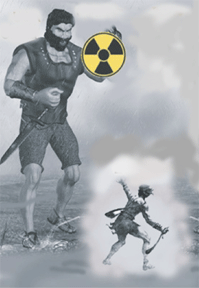 Ground Zecorporatero Nagasaki: Living the nuclear past – and future, Asia Times, By SUSAN SOUTHARD JANUARY 18, 2019 A David-and-Goliath nuclear world
“………..I returned to Nagasaki in November to participate in the city’s sixth Global Citizens Assembly for the Elimination of Nuclear Weapons. Specifically, I was invited to present on a panel tasked with exploring ways to carry forward the hibakusha stories.
What made the conference unique was the participation of both hibakusha and other citizens of Nagasaki, including high-school and university students, scholars, activists, artists, musicians, writers and interpreters. All of them were intent on exploring new ways to communicate stories of survival, from August 1945 to now, experiences that should remind us why the vision of a world without nuclear weapons matters.
Both panelists and participants again confronted the intensity of nuclear war. As hibakusha Kado Takashi, 83, prepared to stand before the assembly and tell his story for the very first time, he turned to me and pounded his heart with his hands to show me how terrified he was. Then, summoning his courage, he began to speak.
Yamanishi Sawa, 17, tenderly told her grandmother’s story of survival and her own tale of teenage activism both at her school and in meetings with anti-nuclear activists in Geneva, Switzerland. Everyday citizens adopted the stories of hibakusha no longer with us, using the survivors’ own words to recall the hell – and humanity – of nuclearized Nagasaki.
All of this, and more, reminded us of what those survivors have long known but the rest of the world seldom stops to grasp: that there’s nothing abstract about nuclear war and that nuclear weapons can never be instruments of peace.
They know what the world’s top nuclear physicists (and the Bulletin of Atomic Scientists with its doomsday clock) have been telling us for decades: Whether by intentional use, human error, technological failure, or an act of terrorism, our world remains at high risk of a nuclear conflagration that could leave Hiroshima and Nagasaki in the shade. Rather than a great-power war, even a regional nuclear conflict between, say, India and Pakistan could create a planetary “nuclear winter” that might, in the end, kill up to a billion people.
Keep in mind, as these Nagasaki activists do, that today there are nearly 15,000 weapons in the nuclear arsenals of nine countries. Of these, almost 4,000 are actively deployed across the globe. Theoretically, they are meant to deter another country from launching a nuclear attack, but the success of such deterrence policies relies, in part, on both technological invulnerability and relatively rational decision-makers. Need more be said in the age of Trump, Kim Jong Un, and others?
Most important, for nuclear deterrence to work, a nation must be committed to – and believed by other nations to be committed to – the mass murder, injury and irradiation of huge civilian populations. We rarely consider what this really means.
It was difficult to tell an audience like the one in Nagasaki that many Americans still wholeheartedly support both the atomic bombings of Japan and their country’s continuing development of its nuclear arsenal. To mitigate this discouraging truth, I cited something Wada Koichi told me years ago.
Now 91, Wada was inside Nagasaki’s streetcar terminal when the bomb brought the building crashing down on top of him and his coworkers. If you can call anything about surviving nuclear war lucky, he was one of the lucky ones. He suffered only minor injuries and mild radiation sickness, and all of his family members survived.
The rest of them evacuated Nagasaki after the bombing, but he stayed to work, day after day, on rescue and recovery teams. He watched his best friend die, lighting the match to the boy’s makeshift funeral pyre. In November 1945, when seven streetcars resumed operation on a few routes in the city, he drove the fourth one, thrilled to be a part of
Nagasaki’s recovery.
Sixty years after the bombing, Wada would awaken every morning at 5am, open his bedroom window, and look out on to the Urakami Valley, marveling at how the city had been rebuilt from those atomic ruins. “One person can’t do anything,” he told me, “but if many people gather together, they can accomplish unimaginable things. If it’s possible to rebuild this city out of nothing, why isn’t it possible for us to eliminate war and nuclear weapons, to create peace? We can’t not do it!”
Before I left Nagasaki, I visited the hypocenter memorial and looked up into the blue sky at the spot where, I imagined, the atomic bomb had exploded, changing human history forever. I spent 12 years writing Nagasaki: Life After Nuclear War, and the stories of that city and its hibakusha remain part of every breath I take.
The hibakusha of Nagasaki and Hiroshima and the other anti-nuclear activists across the globe – including members of the International Campaign to Abolish Nuclear Weapons, which won the 2018 Nobel Peace Prize for their work in passing the Treaty for the Prohibition of Nuclear Weapons – are the Davids of our world. They face the Goliaths – those nuclear-weapons states that cling to arsenals capable of destroying humanity.
In the face of such resolute, immensely powerful Goliaths, the Davids are the next generation of energetic, passionate, creative thinkers who single-mindedly refuse to let us forget or rationalize Nagasaki and Hiroshima, and who believe in a world of mutually supported international safety without nuclear weapons.
On behalf of Wada Koichi, all hibakusha past and present, and the entire human race, my bet is on them.
This article appeared previously at TomDispatch. Read the original here. http://www.atimes.com/ground-zero-nagasaki-living-the-nuclear-past-and-future/
|
|
|
January 19, 2019
Posted by Christina Macpherson |
2 WORLD, Arclight's Vision, opposition to nuclear |
Leave a comment

 Jim Green Nuclear Fuel Cycle Watch South Australia shared a link. 19 Jan 19
UK Secretary (Minister) for energy and business on the staggering subsidies offered to Hitachi to build reactors in Wales … and the project collapsed anyway!
Mr. Speaker, while negotiations were ongoing, I am sure the House will understand that the details were commercially sensitive, but following Hitachi’s announcement I can set out in more candid terms the support that the government was willing to offer in support of the project.
Firstly, the government was willing to consider taking a one third equity stake in the project, alongside investment from Hitachi and Government of Japan agencies and other strategic partners.
Secondly, the government was willing to consider providing all of the required debt financing to complete construction.
Thirdly, the government agreed to consider providing a Contract for Difference to the project with a strike price expected to be no more £75 per megawatt hour.
I hope the House would agree that this is a significant and generous package of potential support that goes beyond what any government has been willing to consider in the past. Despite this potential investment, and strong support from the government of Japan, Hitachi have reached the view that the project still posed too great a commercial challenge, particularly given their desire to deconsolidate the project from their balance sheet and the likely level of return on their investment. https://www.facebook.com/groups/1021186047913052/
January 19, 2019
Posted by Christina Macpherson |
politics, UK |
Leave a comment
 Why is the government cooling on nuclear?, BBC News, Simon JackBusiness editor17 January 2019
January 19, 2019
Posted by Christina Macpherson |
politics, UK |
Leave a comment
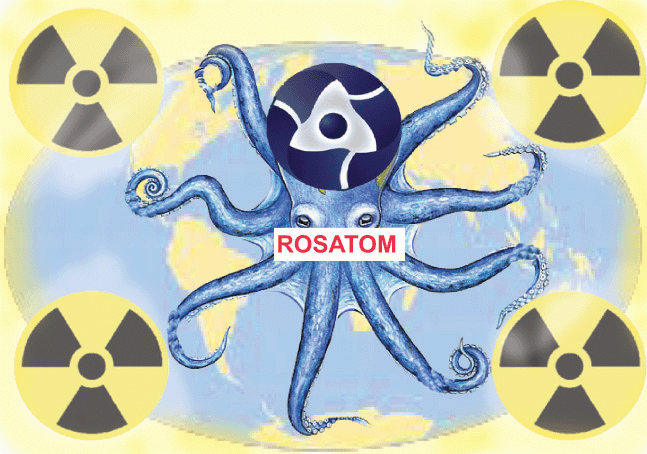
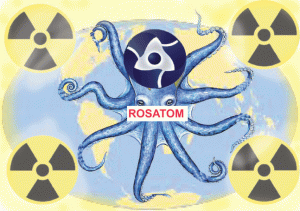 Russia, Serbia sign agreement on nuclear cooperation, Agreement includes construction of center of nuclear science, technology and innovation, Yeni Safak January 18, 2019 Anadolu Agency Russia and Serbia signed a strategic cooperation document for the peaceful use of nuclear energy, Russian State Atomic Energy Corporation Rosatom said on Thursday.
The agreement, signed during Russian President Vladimir Putin’s visit to Serbia, includes the construction of a center of nuclear science, technology and innovation, according to the company’s statement.
“In particular, the implementation of the project to build the center of nuclear science, technology and innovation will not only give a powerful impetus to bilateral cooperation between Russia and Serbia in a number of innovative areas, including medicine, industry and agriculture, but will also serve as a platform for cooperation at the level of the entire Central European region,” Likhachev said………
Alexey Likhachev, director general of Rosatom signed the documents on Russia’s behalf, while Nenad Popovich, Serbia’s minister in charge of innovation and technological development, signed them on Serbia’s behalf.
The Russian company has 36 nuclear reactor construction projects in different countries, including Bangladesh, Belarus, China, Egypt, Finland, Hungary, India, Iran and Turkey.
According to the company, its package of foreign orders in 2018 exceeded $130 billion. https://www.yenisafak.com/en/world/russia-serbia-sign-agreement-on-nuclear-cooperation-3472195
|
|
|
January 19, 2019
Posted by Christina Macpherson |
EUROPE, marketing, Russia |
Leave a comment

 China’s Guangdong to have 26 nuclear reactors, Indigenous Hualong reactors to be built at new megaplant in Huizhou, By ASIA TIMES STAFF JANUARY 17, 2019 China’s southern Guangdong province is on a spree constructing nuclear power plants, with the latest addition to the province’s nuclear plant cluster in the city of Huizhou, 90 kilometers northeast of Hong Kong…..
The 120 billion yuan (US$17.74 billion) megaproject, to be run by the state-owned China General Nuclear Power Corp (CGN), will bring the total number of nuclear reactors in Guangdong, a manufacturing powerhouse and China’s largest provincial economy, to 26.
CGN’s ultimate plan is to boost that number to 46, spanning 11 plants, to power Guangdong’s booming economy, whose gross domestic product in 2018 is tipped to hit the 10-trillion-yuan mark and surpass South Korea and Canada.
The new reactors in Huizhou, already given the go-ahead by China’s environmental watchdog, will be built around China’s indigenous, third generation Hualong (China Dragon) pressurized water nuclear reactor ……..
The first Hualong reactor went live in Fujian province in 2017.
Still, concerns are being raised about the safety of so many nuclear plants, including Daya Bay, Ling’ao, Taishan, Lufeng, Yangjiang and Huizhou, within a radius of about 100 km from Hong Kong and Macau.
Guangdong’s aggressive plans to harness nuclear energy have long stoked fears about safe operations and the disposal of spent fuel rods.
CGN has sought to allay misgivings by promising more transparent consultation, reactor management and notification of incidents, but the company has given scant information about the Huizhou plant, the built-in safety infrastructure and contingency plans.
The company told Xinhua that the National Nuclear Safety Administration would conduct a further assessment of the plant’s design and safety facilities and decide the start of its construction. http://www.atimes.com/article/chinas-guangdong-to-have-26-nuclear-reactors/
January 19, 2019
Posted by Christina Macpherson |
China, safety |
Leave a comment