Remembering the success of an indigenous fight against nuclear waste dumping
 Fight against nuclear waste dump remembered at Ward Valley Spiritual Gathering http://www.mohavedailynews.com/needles_desert_star/fight-against-nuclear-waste-dump-remembered-at-ward-valley-spiritual/article_90eb72d6-389e-11e9-b4f7-9f6fab400ac1.html. By GENTRY MEDRANO Director, Fort Mojave Indian Tribe Public Relations Department, 25 Feb 19,
We are closer to a nuclear war than we would like to believe – new smaller bombs make this more likely
Those missiles, Putin estimates, could reach Moscow in 10 minutes and he considers this “a very serious threat.” He declared in his response in English, “In this case, we will be forced – I repeat – forced to take tit-for-tat steps.”
Now, read this warning with another piece of news from the Truthout.org website. According to the Truthout report, the National Nuclear Security Administration (NNSA), the U.S. federal agency responsible for the military application of nuclear science, announced that the first of a new generation of strategic nuclear weapons had rolled off the assembly line. It is smaller in size and power; it will yield “only” about one-third of the power of the bomb the U.S. had dropped on Hiroshima on Aug. 6, 1945. In one day, 145,000 people were killed in Hiroshima. So, this “small” bomb, that is officially designated as the W76-2, could kill approximately 50,000 people.
A smaller missile and a smaller bomb, according to the group known as the Union of Concerned Scientists, are actually more dangerous than those monster nuclear weapons, for they kill fewer people. No, there is no contradiction in this evaluation. What precluded the use of the big bombs by both sides was the fear that mutual destruction from both sides’ large atomic weapons would mean the annihilation of civilization. That mutual assured destruction (MAD) theory made a thermonuclear disaster “unthinkable.” ……
This small bomb, according to the Union of Concerned Scientists, is not a deterrent against another country; it is going to be used. It is designed to be used. Its power is not the equivalent of the roughly 100 kilotons of TNT as the ones that had devastated Hiroshima and Nagasaki, but five kilotons. A practical guy like Trump would like to teach a lesson or two to those who are on his national strategy document as “the enemies of the U.S.” using this rather economic weapon. It would not end capitalism and the financial network as the “big one” would have.
Policy analysts think that the Pentagon would definitely deploy short-range nuclear-capable missiles in Eastern Europe and on islands off the Chinese coast. Watch for the deployment of those small bombs on nuclear submarines around Iran, too.
We are closer to a nuclear war than we would like to believe. https://www.dailysabah.com/columns/hakki-ocal/2019/02/25/tit-for-tat-steps-toward-a-nuclear-war
North Korea blasts Japan, claiming that Japan in “nuclear weaponizing”
In a commentary published Saturday in the Rodong Sinmun, the official newspaper of the North’s ruling party criticized what it claimed were “voices for the revision of the constitution and increased military spending and nuclear weaponization” from within the administration of Prime Minister Shinzo Abe.
The commentary said that under Abe, Japan “can go nuclear anytime after giving up ‘three non-nuclear principles.’ ” Consequently, it claimed, “peace in the Asia-Pacific region will be exposed to a great danger.”
Japan, the only country to have endured a nuclear attack, has long maintained that it adheres to its three nonnuclear principles of not possessing, not producing and not permitting the introduction of nuclear weapons. However, the government admitted in 2010 that previous administrations had lied to the public for decades about atomic weapons, after a government-appointed panel confirmed the existence of secret Cold War-era agreements allowing the U.S. to bring them into the country.
The Rodong Sinmun commentary said that if Japan ditches its three nonnuclear principles, there would be “unimaginable” and “catastrophic consequences.”
“All the countries that truly want global peace and security should keep close watch over Japan’s nuclear weaponization.”
Japan has ramped up military spending and the acquisition of sophisticated weapons in recent years, spending around 1 percent of its gross domestic product on the Self-Defense Forces — which, given the size of its economy, makes it one of the world’s biggest military spenders……. https://www.japantimes.co.jp/news/2019/02/25/national/politics-diplomacy/north-korea-alleges-nuclear-weaponization-japan-trump-kim-summit-draws-near/#.XHRA0YkzbGg
France’s nuclear corporation, EDF, faces the first of many mammoth nuclear plant burials
L’Express 22nd Feb 2019 , Sooner or later, EDF will have to close power plants. Facing the corporation is a vast building project with many unknowns. And in the middle flows the Meuse.
Nestled in one of its loops, a few kilometers from the Belgian border, the two cooling towers of the Chooz nuclear power  plant spew their plumes of white smoke. On the other side of the river, under the wooded hillside that has taken the colors of autumn, EDF is leading the dismantling of Chooz A.
Shut down since 1991 this reactor, installed in an\ artificial cavern, saw its installations gradually dismantled and
evacuated. Still to settle the fate of the tank. Perched on a metal bridge over a deep pool where she was dipped, a handful of Swedish engineers from the American company Westinghouse remotely maneuver the articulated arms of a robot that cut it. A long work, which must last until 2022. After which, the cave Chooz A will be filled with sand, for eternity.
Danger signs in Trump and co’s continuing push to sell nuclear technology to Saudi Arabia
 Why proposals to sell nuclear reactors to Saudi Arabia raise
 red flags, The Conversation, Director, Middle East Nonproliferation Program, Middlebury, February 23, 2019 According to a congressional report, a group that includes former senior U.S. government officials is lobbying to sell nuclear power plants to Saudi Arabia. As an expert focusing on the Middle East and the spread of nuclear weapons, I believe these efforts raise important legal, economic and strategic concerns.
It is understandable that the Trump administration might want to support the U.S. nuclear industry, which is shrinking at home. However, the congressional report raised concerns that the group seeking to make the sale may have have sought to carry it out without going through the process required under U.S. law. Doing so could give Saudi Arabia U.S. nuclear technology without appropriate guarantees that it would not be used for nuclear weapons in the future.
A competitive global market
Exporting nuclear technology is lucrative, and many U.S. policymakers have long believed that it promotes U.S. foreign policy interests. However, the international market is shrinking, and competition between suppliers is stiff.
Private U.S. nuclear companies have trouble competing against state-supported international suppliers in Russia and China. These companies offer complete construction and operation packages with attractive financing options. Russia, for example, is willing to accept spent fuel from the reactor it supplies, relieving host countries of the need to manage nuclear waste. And China can offer lower construction costs.
Saudi Arabia declared in 2011 that it planned to spend over US$80 billion to construct 16 reactors, and U.S. companies want to provide them. Many U.S. officials see the decadeslong relationships involved in a nuclear sale as an opportunity to influence Riyadh’s nuclear future and preserve U.S. influence in the Saudi kingdom.
Why does Saudi Arabia want nuclear power?
With the world’s second-largest known petroleum reserves, abundant untapped supplies of natural gas and high potential for solar energy, why is Saudi Arabia shopping for nuclear power? Some of its motives are benign, but others are worrisome. ………..
US nuclear trade regulations
Under the U.S. Atomic Energy Act, before American companies can compete to export nuclear reactors to Saudi Arabia, Washington and Riyadh must conclude a nuclear cooperation agreement, and the U.S. government must submit it to Congress. Unless Congress adopts a joint resolution within 90 days disapproving the agreement, it is approved. The United States currently has 23 nuclear cooperation agreements in force, including Middle Eastern countries such as Egypt (approved in 1981), Turkey (2008) and the United Arab Emirates (2009).
The Atomic Energy Act requires countries seeking to purchase U.S. nuclear technology to make legally binding commitments that they will not use those materials and equipment for nuclear weapons, and to place them under International Atomic Energy Agency safeguards. It also mandates that the United States must approve any uranium enrichment or plutonium separation activities involving U.S. technologies and materials, in order to prevent countries from diverting them to weapons use.
American nuclear suppliers claim that these strict conditions and time-consuming legal requirements put them at a competitive disadvantage. But those conditions exist to prevent countries from misusing U.S. technology for nuclear weapons. I find it alarming that according to the House report, White House officials may have attempted to bypass or sidestep these conditions – potentially enriching themselves in the process.
According to the congressional report, within days of President Trump’s inauguration, senior U.S. officials were promoting an initiative to transfer nuclear technology to Saudi Arabia, without either concluding a nuclear cooperation agreement and submitting it to Congress or involving key government agencies, such as the Department of Energy or the Nuclear  Regulatory Commission. One key advocate for this so-called “Marshall Plan” for nuclear reactors in the Middle East was then-national security adviser Michael Flynn, who reportedly served as an adviser to a subsidiary of IP3, the firm that devised this plan, while he was advising Trump’s presidential campaign.
The promoters of the plan also reportedly proposed to sidestep U.S. sanctions against Russia by partnering with Russian companies – which impose less stringent restrictions on nuclear exports – to sell reactors to Saudi Arabia.
Flynn resigned soon afterward and now is cooperating with the investigation into Russian interference in the 2016 campaign. But IP3 access to the White House persists: According to press reports, President Trump met with representatives of U.S. industry, a meeting organized by IP3 to discuss nuclear exports to Saudi Arabia as recently as mid-February 2019……..https://theconversation.com/why-proposals-to-sell-nuclear-reactors-to-saudi-arabia-raise-red-flags-112276
Climate change taking its toll on the Sea of Galilee and the Jordan River
The Sea of Galilee: A Sea of Miracles Disappearing
 Where Jesus once preached, the holy waters are draining away, Climate change and conflict have left the river Jordan a stagnant stream and the Sea of Galilee critically low, Guardian, Oliver Holmes Sun 24 Feb 2019
Once a raging torrent, the lower Jordan has been starved of water to become a stagnant stream, filled with sewage and dirty run-off from farms. Around 95% of its historical flow has been diverted by agriculture during the past half-century. And the river’s primary source, the Sea of Galilee – where Christians believe the son of God walked on water – has for years been dammed to prevent its demise.
Biblical bodies of water in the Holy Land, eternalised in Christian, Jewish and Muslim ancient texts as godly, are now facing very human threats: climate change, mismanagement and conflict.
Following five consecutive years of drought, the Sea of Galilee has sunk to a 100-year low. A number of small islands have emerged at the water’s surface, and several holiday homes that were built on the shoreline now stand at least 100 metres from the boggy edge.
Overuse has also taken its toll. Last summer, the level of the lake dropped close to a black line, a level at which it could lose its status as a freshwater body. “The black line is our best guess of that point,” says Gidon Bromberg, the Israeli director of EcoPeace, an organisation of Israeli, Palestinian and Jordanian environmentalists. “It was tens of centimetres above the black line,” he says, adding that such a shallow depth has not been seen in records taken over the past century.
As the lake’s level falls, it cannot wash away salt fast enough, and its salinity rises. If the Sea of Galilee’s waters were left to hover around the black line, its flora and fauna would start to perish. A glimpse of the lake’s grim future might be seen 350km downriver at the lowest place on the planet: the Dead Sea, a body almost devoid of fish and plant life. “Once the lake becomes saline, that could be irreversible,” says Bromberg, speaking at the muddy edge of the water, reeds poking up behind him………
As long as the Sea of Galilee is under threat, the river Jordan will be too. And their eventual deaths could have explosive ramifications as water in this region has been a key source of conflict. The river Jordan is shared by Israel, the occupied Palestinian territories, Jordan and Syria, all of which use its depleting reserves………
EcoPeace hopes that good water management will spur on peace to the region. Bromberg is now advocating for a deal in which Israel, which is on the Mediterranean, supplies desalinated water to Jordan. In exchange, Jordan, which is low on water but full of open desert with 320 sunny days a year, will supply solar power.
In the meantime, the river Jordan remains polluted. Most Christian pilgrims who want to be baptised in the holy waters do not venture to the original site where John the Baptist is believed to have led Jesus into the water. That location is in the occupied Palestinian territories next to Jordan, and the Israeli army mined it decades ago. Pilgrims were only allowed to return some years ago……… https://www.theguardian.com/world/2019/feb/23/israel-where-jesus-preached-holy-waters-draining-away-sea-of-galilee-river-jordan?CMP=share_btn_tw
2020 Olympic Games – a promotion for the nuclear industry? But they’re not getting many volunteers

Disaster-hit Fukushima still short of 2020 Games volunteers, Japan Today Feb. 24 FUKUSHIMA Fukushima Prefecture is still well short of its target for recruiting volunteers to help it stage some events at the 2020 Tokyo Olympics and Paralympics — a setback to its efforts to showcase its recovery from the 2011 earthquake, tsunami and nuclear disaster.
With the deadline for recruitment approaching at the end of this month, the northeastern prefecture, which is to host several softball and baseball games, was only a third of the way to its target of 1,500 volunteers.
Of the 503 people who had applied as of early February, 70 percent were in their 40s or above, with much lower participation from those in their teens and 20s, according to the prefecture.
Prefectural officials said the low number of applicants may be because the schedules for most of the games have yet to be set, while also acknowledging that promotion efforts have barely paid off.
One of the main themes of the Tokyo games is to demonstrate Japan’s reconstruction from the 2011 disasters and Fukushima, one of the hardest-hit areas, wants to use the opportunity to show the progress it has made and convey a message of gratitude for support. It also hopes to promote inbound tourism.
The prefecture has increased events for recruiting volunteers at company offices and colleges, while seeking to reassure potential volunteers that they can always change their minds later and withdraw their applications……..
“Whenever the opportunity arises, I want to call out for more volunteers by stressing how attractive (the job) is,” said Takahiro Sato, head of the prefecture’s Olympic and Paralympic promotion office. https://japantoday.com/category/sports/disaster-hit-fukushima-still-short-of-2020-games-volunteers
Climate change encroaching on Marshall Islands – drastic effort to “elevate” some of them
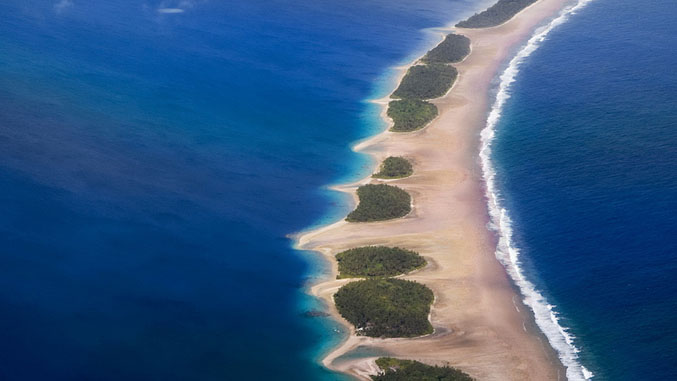 Climate change forces low-lying Marshall Islands to ‘elevate islands’, Climate change has left the low-lying Marshall Islands with little choice but to consider drastic measures. https://www.sbs.com.au/news/climate-change-forces-low-lying-marshall-islands-to-elevate-islands, 24 Feb 19, The far-flung Marshall Islands needs to raise its islands if it is to avoid being drowned by rising sea levels, President Hilda Heine has warned.
Plans are underway for national talks on which of the 1,156 islands, scattered over 29 coral atolls, can be elevated in a dramatic intervention to ensure safety on the islands.
“Raising our islands is a daunting task but one that must be done,” Heine said in an interview with the Marshall Islands Journal published Friday.
“We need the political will, and especially traditional leaders’ commitment, to see this through.
“We must come together as a nation as this is about our survival as a nation, as a people and as a culture.”
A “climate crisis” policy document prepared by the office of the chief secretary painted a bleak outlook for the Pacific Ocean archipelago with a population of 55,000.
It cited an increasing frequency of “inundation events, severe droughts, coral bleaching events, and… looking forward, there is very good reason to believe that conditions and prospects for survival will only worsen.”
Most of the islands are less than two metres (6.5 feet) above sea level and the government believes physically raising the islands was the only way to save the Marshall Islands from extinction.
They have not yet outlined specifics of how this would be achieved expect to have plans formulated by the end of the year. In the meantime, they are keeping a close watch on the ambitious City of Hope project on an artificial island in the Maldives as a viable option.
To lay the foundations of the city – which is expected to accommodate 130,000 people when completed in 2023 – sand is being pumped onto reefs from surrounding atolls and it is being fortified with walls three metres above sea level, which will make it higher than the tallest natural island in the Maldives.
“Whatever approach is selected, it will involve selecting islands to raise, add to, or build upon” Heine said.
“All Marshallese stakeholders, but especially traditional landowners, need to be at the forefront of this discussion if we are ever going to move the conversation forward.”
The Marshall Islands also aims to increase engagement with the three other all-atoll nations – Kiribati, Tuvalu and the Maldives – on climate issues.
“As a group, the atoll nations need to come together to formulate their unique concerns and develop their positions and plans and identify financial needs related to climate impacts,” said Heine, who chairs the Coalition of Atoll Nations Against Climate Change.
Senior White House officials, retired generals and Trump’s close relatives continuing secret deal to sell nuclear technology to Saudi Arabia
 Guardian 23rd Feb 2019 The idea that the US might sell state-of-the-art nuclear technology to
Saudi Arabia, potentially enabling Crown Prince Mohammed bin Salman’s reckless regime to build nuclear weapons, sounds so far-fetched as to be almost grotesque.
After all the near-hysterical American and Israeli warnings about the risk of Iran, the Saudis’ arch-rival, acquiring the
bomb, surely even Donald Trump would balk at such breathtaking – and dangerous – hypocrisy? Apparently not.
According to a congressional inquiry, senior White House officials, retired generals and Trump’s close relatives and business cronies have been secretly pursuing a multibillion-dollar scheme to cut a nuclear deal with Riyadh.
The talks are said to be continuing, despite increased public scrutiny and legal advice that a technology transfer lacking strict conditions could contravene US law, breach international counter-proliferation safeguards, and fuel a
nuclear arms race.
https://www.theguardian.com/us-news/2019/feb/23/trump-cronies-secret-talks-nuclear-tech-saudi-arabia
Packed church in East Suffolk hears residents’ opposition to Sizewell C nuclear project
East Anglian Daily Times 23rd Feb 2019 Suffolk residents pack out Theberton church to have their say on Sizewell
C. Worried residents from across east Suffolk voiced their dismay about plans for Sizewell C at a public meeting near the proposed site on Saturday morning. Residents have long been concerned that the plan will have
long-lasting effects on the areas environment and tourist industry, while other issues such as roads, traffic and an anti-nuclear attitude were also voiced in the meeting organised by Theberton and Eastbridge Action Group on
Sizewell (TEAGS).
TEAGS representative Charles McDowell said that “The link road they have proposed will cut parishes in two, breaks up fields and makes them inviable for farming. “It makes you wonder if they [EDF] are out for revenge against the people of Theberton.” The power station’s proximity to nationally renowned nature reserve, RSPB Minsmere ruffled feathers with residents concerned for the safety of the birds, and in turn the effect a downturn would have on the local tourism economy, worth £250 million.
Adam Rowlands, the RSPB’s Suffolk area manager, said: “In terms of flora and fauna in the area, this is a matter of international importance.” Another resident said that the plans could see a ‘decimated natural environment’ left for his children and grandchildren.
County councillor Guy McGregor, who was responsible for the council’s previous response to the plan, said that although it would see opportunities for employment, the problems outweighed the benefits, highlighting the ‘constant stream’ of heavy goods vehicles that would create traffic and pollution. EDF’s plans could see up to 1,500 HGVs on
the county’s roads, in addition to the extra traffic that would be created by the construction of a new build town or campus which would house 2,400 workers at Eastbridge.
Richard Smith – who is now the county councillor leading negotiations with EDF – praised the efforts of TEAGS
and residents, saying: “There is no better way for a community to voice its concerns like how you have. It sends a huge message to EDF.” Mr Smith did warn however that the authority has ‘no direct power’, but urged residents to continue their campaign.
https://www.eadt.co.uk/news/sizewell-c-concerns-bring-hundreds-to-theberton-church-1-5904154
U.S. Department of Energy changed safety rules for nuclear lab – workers excluded from health oversight
Nuclear safety board still wary of DOE changes, BY MARK OSWALD / JOURNAL STAFF WRITER February 23rd, 2019 Albuquerque Journal
SANTA FE – At the end of a hourslong meeting in Albuquerque on Thursday night, officials from U.S. Department of Energy agencies had failed to persuade an independent nuclear safety board and a contingent of interested New Mexicans that a DOE rules change won’t restrict efforts to keep the state’s national laboratory sites safe.
Bruce Hamilton, a Republican who chairs the presidentially appointed Defense Nuclear Facilities Safety Board, said DOE officials had continued to downplay the impact of DOE Order 140.1, which last May placed new limits on the board’s 30-year-old oversight role.
“We have repeatedly heard from DOE representatives that they really don’t mean what they wrote (in the rule) or at least that they really don’t intend to follow what they wrote,” said Hamilton. He said this is a “particularly bizarre argument coming out of the nuclear culture that has set the standard for following the written rules to the letter.”
The new rule says the private contractors that manage facilities like the Los Alamos and Sandia national labs can’t respond to DNFSB information requests without notifying or the approval of a DOE liaison and that the weapons facilities can refuse to provide information that is “pre-decisional” or that the DOE determines on its own is not needed by DNFSB inspectors to do their jobs.
Also, the rule excludes more than 70 percent of weapons complex facilities from DNFSB’s formal safety recommendations that require a response from the DOE.
The definition of “public health and safety” under DNFSB oversight was changed to exclude the safety of workers at nuclear facilities. The safety board’s regular reports posted on the web often focus on whether protocols to protect employees, and not just the public in general, are being followed.
The Waste Isolation Pilot Plant near Carlsbad could be one of the sites most affected, as the underground nuclear waste storage facility’s “hazard category” would fall outside formal DNFSB jurisdiction.
Coincidentally, at Thursday’s meeting at the Albuquerque Convention Center, Don Hancock, of the watchdog Southwest Research and Information Center, broke some news about WIPP. The DOE’s own safety and security assessment wing will investigate WIPP contractor Nuclear Waste Partnership LLC over “industrial hygiene” issues.
DOE’s Office of Enterprise Assessments says on its website that it will probe incidents at WIPP that took place from July through October last year including “multiple overexposures to hazardous chemicals, including carbon tetrachloride, nitrogen dioxide, and sulfur dioxide, as well as a series of heat-stress incidents.”……
Board members said they believed the DOE representatives present were sincere and had good intentions. But they said the issues about the DNFSB’s role under the new rule can’t be left to “personalities.”
Board member Joyce L. Connery said the comments by the NNSA folks at the meeting don’t match up with “the literal words” of the DOE order and that the rule should be suspended and revised. Board members also said the language of the rule isn’t consistent with federal law, including the Atomic Energy Act.
During a long public comment period, Jay Coghlan of Nuclear Watch New Mexico went the board members one better and said the rule is “flat-out illegal.” He said that as the Los Alamos lab ramps up the production of plutonium “pits,” the cores of nuclear weapons, and safety lapses are reported by the DNFSB, the Department of Energy wants to “shoot the messenger.” …….. https://www.abqjournal.com/1284667/nuclear-safety-board-still-wary-of-doe-changesnew-order-says-contractors-that-manage-labs-cant-respond-to-information-requests-without-notifying-or-the-approval-of-a-doe.html
Iran’s nuclear power station struggling financially
 Financial Future Of Iranian Nuclear Power Plant In Question, February 24, 2019, Radio Farda
The Energy Ministry “pays peanuts” for electricity produced at Bushehr, AEOI and former Foreign Minister Ali Akbar Salehi said on February 23. “For each kilowatt per hour of electricity produced at Bushehr, ME pays half a cent but exports electricity for nine cents,” he said.
Speaking at an industrial seminar, Salehi said, “The electricity produced at Bushehr reactor is bought for $40 million, while the annual budget needed for running the plant is $120 million. There’s a deficit of $80 million for which we don’t know how to compensate.”
Iran is currently suffering from an acute economic crisis and has been unable to issue a budget for the upcoming Iranian fiscal year. U.S. economic sanctions have halved Iran’s oil exports, which provide the hard currency needed for government operations.
AEOI spokesman Behrooz Kamalvandi says that given the budget allocated to Bushehr, the fate of Iran’s only nuclear power plant now hangs in the balance.
Bushehr’s construction started during the reign of Shah Mohammad Reza Pahlavi in 1975 by Kraftwerk Union, a Siemens company, along with several other German firms.
Following the downfall of the monarchy, work on the nuclear reactor ground to a halt.
A veteran Iranian diplomat and former foreign minister, Abbas Khalatbari, was executed by firing squad in April 1979 for charges that included signing a contract with Germany for the power plant’s construction.
However, in 1988, Russia signed a contract with Iran to complete the project……..
Based on a parliamentary motion endorsed by the parliament 14 years ago, the Iranian government is obliged to construct 13 more plants with output similar to Bushehr’s.
Opponents have long insisted that since Iran is rich in oil and natural gas resources and poor in uranium ore deposits, the viability of its nuclear program is questionable. …….. https://en.radiofarda.com/a/financial-future-of-irn-nuclear-power-plant-uncertain-salehi/29787790.html
Utility JEA on the hook for billions of dollars for Vogtle nuclear station

Feds reject JEA plan to ditch Georgia nuclear plant, JEA still responsible for billions to help pay for Plant Vogtle, News4JAX, By Jim Piggott – Reporter ,February 23, 2019 JACKSONVILLE, Fla. – The Federal Energy Regulatory Commission says it will not intervene in JEA’s dispute with the owners of Plant Vogtle and that JEA is still bound by its agreement to buy power from the nuclear plant still under construction.The expansion of Plant Vogtle, a nuclear power plant near Waynesboro, Georgia, is way behind schedule and billions of dollars over budget.
JEA is on the hook for billions of dollars to help pay for that construction because, in 2008, the utility signed a contract to fund 41 percent of the construction cost and, in turn, JEA would get a good price on electricity for 20 years. The problem is that construction cost has doubled and there’s still no power coming online anytime soon. JEA is trying to get out of the deal. It has filed lawsuits and taken other measures, but so far that has not worked. JEA is still bound by the contract.
JEA was hoping to get help from the feds, but now, the Federal Energy Regulatory Commission says it’s not going to intervene. That means JEA is still responsible for 41 percent of the construction cost, which is now nearly $3 billion, and that could go up even more. ……
More court actions are expected, with both sides planning lawsuits. For now, plan on seeing JEA pay billions. If history holds true, that means customers could see an increase in rates to pay for it. https://www.news4jax.com/news/feds-vote-to-reject-jeas-request-to-withdraw-from-power-purchase-deal
India: Union ministry of mines protects beaches from mining for thorium
 Private firms jolted by beach sand mining ban, Times of India M K Ananth , 24 Feb 19, MADURAI: Environmentalists fighting against rampant illegal sand mining have hailed the gazette notification by the Union ministry of mines changing the rules that earlier allowed private companies to mine rare earth minerals found on beach sand. They said the notification was much awaited and would help save the coastal treasures.
Photographer captures the eerie abandoned Chernobyl exclusion zone
News.com.au 23rd Feb 2019 , Eerie photographs taken recently show how nature is reclaiming an abandoned
town 33 years after the nuclear disaster at Chernobyl. The harrowing
pictures show what is left of the towns of Chernobyl and Pripyat in
Ukraine, with gasmasks scattered about and dolls left abandoned in a day
care centre. Other captivating photos show an abandoned supermarket with a
shopping trolley outside and a rusting bumper car. Dutch photographer Erwin
Zwaan, 47, travelled to the 28-kilometre exclusion zone around Chernobyl in
Northern Ukraine in 2016 and 2018 to photograph the ghostly ruins for his
book Chernobyl – 30+ Years Without Humans. The power plant and nearby town
Pripyat — once home to 50,000 people — remain more or less untouched
three decades after they were evacuated in 1986.
1 This Month
Tell Congress: Prevent Nuclear Catastrophe in Iran

Tell Congress: Prevent Nuclear Catastrophe in Iran

Read the Public Inquiry Report, the Commissioners’ report, Surrendering Australia: The AUKUS Deception is available to download for free at aukuspublicinquiry.com. Or just watch the replay of the National Press Club Luncheon.


Shut down the radiation-damaged Heysham nuclear reactors now
To see nuclear-related stories in greater depth and intensity – go to https://nuclearinformation.wordpress.com

Say No to NASA’s Reckless Nuclear Reactor on the Moon
Say No to NASA’s Reckless Nuclear Reactor on the Moon
-
Archives
- November 2026 (238)
- October 2026 (302)
- September 2026 (339)
- August 2026 (330)
- July 2026 (355)
- June 2026 (287)
- May 2026 (306)
- April 2026 (356)
- March 2026 (251)
- February 2026 (267)
- January 2026 (308)
- December 2025 (358)
-
Categories
- 1
- 1 NUCLEAR ISSUES
- business and costs
- climate change
- culture and arts
- ENERGY
- environment
- health
- history
- indigenous issues
- Legal
- marketing of nuclear
- media
- opposition to nuclear
- PERSONAL STORIES
- politics
- politics international
- Religion and ethics
- safety
- secrets,lies and civil liberties
- spinbuster
- technology
- Uranium
- wastes
- weapons and war
- Women
- 2 WORLD
- ACTION
- AFRICA
- Atrocities
- AUSTRALIA
- Christina's notes
- Christina's themes
- culture and arts
- Events
- Fuk 2022
- Fuk 2023
- Fukushima 2017
- Fukushima 2018
- fukushima 2019
- Fukushima 2020
- Fukushima 2021
- general
- global warming
- Humour (God we need it)
- Nuclear
- RARE EARTHS
- Reference
- resources – print
- Resources -audiovicual
- Weekly Newsletter
- World
- World Nuclear
- YouTube
-
RSS
Entries RSS
Comments RSS

