Former Brazilian President Michel Temer was indicted on Tuesday on corruption charges brought by prosecutors who said he took part in a bribery scheme related to the Angra 3 nuclear power plant complex on the coast near Rio de Janeiro.
The case is part of Operation Car Wash, Brazil’s largest corruption investigation, which has put dozens of businessmen and politicians in jail since 2014.
Federal Judge Marcelo Bretas accepted charges of corruption and money laundering against Temer, his former energy minister, Wellington Moreira Franco, and six other close aides.
Temer, who left the presidency just three months ago, was arrested with the others on March 21 and released four days later. They all deny any wrongdoing.
Prosecutors said the graft at Angra was one action of a “criminal organization” that Temer had run during his four decades in public life, which they alleged received or arranged upward of 1.8 billion reais ($462.5 million) in bribes.
The investigation into kickbacks on the nuclear plant’s construction contract involves the Brazilian subsidiary of Swedish consulting firm AF Poyry, along with Brazilian engineering firms Engevix and Argeplan.
The Swedish company declined to comment on an ongoing investigation. Engevix and Argeplan did not reply to requests for comment……. https://www.voanews.com/a/brazil-ex-president-temer-indicted-on-charges-involving-nuclear-plant-bribes/4859686.html
April 4, 2019
Posted by Christina Macpherson |
Brazil, secrets,lies and civil liberties |
Leave a comment
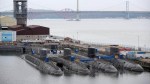 MoD criticised over failure to dispose of retired nuclear submarines https://www.itv.com/news/2019-04-03/mod-criticised-over-failure-to-dispose-of-retired-nuclear-submarines/ The Ministry of Defence has been condemned for a “dismal” failure to dispose of decommissioned nuclear-powered submarines.
The MoD has submarines which have been in storage longer than they have been in service and the UK now has twice as many submarines in storage as it does in service.
The National Audit Office (NAO) said the department has not disposed of any of the 20 boats no longer in service since 1980.
Some of these vessels still contain nuclear fuel and the failure to address the issue risks damaging the UK’s international reputation as a “responsible nuclear power”.
The issue was raised during Prime Minister’s Questions by Labour MP Luke Pollard who asked whether the prime minister will extend the nuclear clean up to include all the royal navy submarines.
Mrs May responded to say the MoD will continue to work with the nuclear decommissioning service to achieve “steady state disposal of our laid up submarines.”
The estimated cost of disposing of a submarine is £96 million, the NAO said.
Decommissioned vessels are being stored at Devonport and Rosyth, while arrangements are made to safely dispose of them and the radioactive waste they contain.
No submarines have been defuelled since 2004, when regulators said facilities did not meet required standards.
The process is not due to start again until 2023 and has been delayed for 11 years, with a £100 million cost increase to £275 million, a £12 million annual bill for maintaining and storing the nine fuelled submarines and pressure on dock space at Devonport.
The MoD has put its total future liability for maintaining and disposing of the 20 stored and 10 in-service nuclear-powered boats at £7.5 billion over the next 120 years, underlining the long-term nature of nuclear waste.
The Government said the ministry “needs to get a grip urgently” on the matter.
Meg Hillier, chairwoman of the Commons Public Accounts Committee, said: “For more than 20 years the Ministry of Defence has been promising to dismantle its out-of-service nuclear submarines and told my committee last year that it would now address this dismal lack of progress.
“It has still not disposed of any of the 20 submarines decommissioned since 1980 and does not yet know fully how to do it.
“The disposal programmes have been beset by lengthy delays and spiralling costs, with taxpayers footing the bill.
“The ministry needs to get a grip urgently before we run out of space to store and maintain submarines and we damage our reputation as a responsible nuclear power.”
The vessels being stored include the first submarines used to carry the UK’s nuclear deterrent – the Polaris boats HMS Revenge, HMS Renown, HMS Repulse and HMS Resolution.
Attack submarine HMS Conqueror, which sank the Argentine cruiser General Belgrano during the Falklands War is another of the boats in storage.
A Ministry of Defence spokesman said: ““The disposal of nuclear submarines is a complex and challenging undertaking.
“We remain committed to the safe, secure and cost-effective de-fuelling and dismantling of all decommissioned nuclear submarines as soon as practically possible.”
April 4, 2019
Posted by Christina Macpherson |
UK, wastes, weapons and war |
Leave a comment

The Hill 2nd April 2019 Rewarding failure: Taxpayers on hook for $12 billion nuclear boondoggle.
Vogtle’s nuclear expansion is billions of dollars over budget, its
completion is far from certain, and the federal government is once again
coming to the rescue. In March, Secretary Perry announced the finalization
of $3.7 billion in taxpayer-backed federal loan guarantees for the Vogtle
project. This came over repeated objections by taxpayer and consumer
watchdog organizations and despite numerous serious hurdles remaining for
the only new nuclear power project still under construction in the United
States. More importantly, these newly-finalized loan guarantees were on top
of $8.3 billion in federal loan guarantees that the project partners,
Southern Company’s Georgia Power, Oglethorpe Power Corporation, and the
Municipal Electric Authority of Georgia (MEAG Power), previously secured,
bringing the total to $12 billion.
https://thehill.com/opinion/energy-environment/436876-rewarding-failure-taxpayers-on-hook-for-12-billion-nuclear
April 4, 2019
Posted by Christina Macpherson |
politics, USA |
Leave a comment
 Lawsuit filed on behalf of nuclear workers https://www.abqjournal.com/1299172/lawsuit-filed-on-behalf-of-nuclear-workers.html, BY SCOTT TURNER / JOURNAL STAFF WRITER April 2nd, 2019 ALBUQUERQUE, N.M. — James Jaramillo and Harold Archuleta are used to having to navigate through government bureaucracy to receive compensation for illnesses they said were caused by radiation exposure during their days as employees at Sandia National Laboratories and Los Alamos National Laboratory.
Both men had to wait years after filing claims for compensation through the Energy Employees Occupational Illness Compensation Program.
Jaramillo, 65, worked at Sandia for 24 years. He found out he had cancer of the small intestine in 1998. He filed for compensation in 2003 but was originally denied. Through changes in the program, he was finally awarded compensation in 2012 for medical care and lost wages since he was forced to retire.
Archuleta, 80, worked 38 years, 35 full time, at Los Alamos, where, he said, he ended up with skin cancer after years of exposure to plutonium. He’s also received compensation, but his wife, Angie, said it wasn’t an easy process.
“Congress put forth this act to help them, but then when it comes to actually paying, they put up all of these barriers,” Angie Archuleta said. “It’s just been very frustrating.”
According to a release by the Department of Labor’s Office of Workers’ Compensation Programs, changes are being made next week to update some of the regulations, with the goal of increasing efficiency and transparency and reducing administrative costs. The rules would align the regulations regarding processing and paying medical bills with the current system Office of Workers’ Compensation Programs uses to pay medical bills, and set out a new process that the office will use for authorizing in-home health care that will enable the office to better provide its beneficiaries with appropriate care, according to the release.
However, a company that provides health care to workers such as Jaramillo and Archuleta says rule changes involving the program could make it harder for nuclear workers to receive compensation and could delay the medical treatment they need.
The company, Professional Case Management, has filed suit in the District Court of Colorado against the Labor Department to keep the changes to the Energy Employees Occupational Illness Compensation Program from taking effect. Professional Case Management Vice President Tim Lerew said the new changes could cause delays of 60 days or more in treatment.
“It’s hard to know how long those delays will be,” Lerew said at a town hall meeting in Albuquerque last week. “We estimate it will be about an additional 60 days. For some people, coming out of the hospital with particular illnesses where doctors want them to have additional care … they don’t have that time to wait.”
Lerew said the new rule changes will also add 36 steps to the process between the patient, the doctor and the Labor Department to get pre-authorization for treatment and services, such as home health care.
“If they have you jump through 36 more hoops, how is a guy supposed to do that?” Jaramillo asked.
The rule changes would require patients to fill out most of the paperwork. In the past, health care providers would fill out the majority of it, Lerew and Jaramillo said.
“If you don’t dot every ‘i’ and cross every ‘t,’ they deny you,” said Jaramillo’s wife, Terry.
“Nurses take all your vitals and with the doctor come up with your plan, and send to the Department of Labor for approval,” James Jaramillo said. “Now, they want the patients to fill out a lot of the paperwork and submit it themselves, and not let medical people get involved with that.”
Lerew said he wondered how a cancer-stricken person in his or her 80s “is successfully going to navigate that process.”
April 4, 2019
Posted by Christina Macpherson |
employment, health, legal, USA |
Leave a comment
Reuters 2nd April 2019 China will fall short of its nuclear power generation capacity target for
2020, according to a forecast from the China Electricity Council on
Tuesday. Total nuclear capacity is expected to reach 53 gigawatts (GW) next
year, below a target of 58 GW, council vice chairman Wei Shaofeng told the
China Nuclear Energy Sustainable Development Forum in Beijing.
China is the world’s third-biggest nuclear power producer by capacity, with 45.9 GW
installed by end-2018 and 11 units still under construction, but its
reactor building program has stalled since the 2011 Fukushima nuclear
disaster in Japan.
No new approvals have been granted for the past three
years, amid spiraling costs, delays for key projects and safety concerns
about new technologies. Environmental impact assessments for two new
projects in southeast China were submitted to regulators last month,
however, paving the way for a resumption of its atomic energy program.
https://www.reuters.com/article/us-china-nuclearpower/china-to-fall-short-of-2020-nuclear-capacity-target-idUSKCN1RE04S
April 4, 2019
Posted by Christina Macpherson |
China, politics |
Leave a comment
The MoD Has Blown £500m on Storing Old Nuclear Subs http://www.gizmodo.co.uk/2019/04/the-mod-has-blown-500m-on-storing-old-nuclear-subs/, By Gary Cutlack on 04 Apr 2019
Fans of the history of the UK’s submarine fleet will be pleased to know we have numerous classic old nuclear-powered subs in various storage sites around the country, although government financial watchdogs aren’t best pleased about it, as the lifetime cost to the Ministry of Defence for storing these ancient subs has now breached the £500m mark.
They’re not being stored for the greater good or to teach future generations about war etc. — they’re being stored because decommissioning 1960s and 1970s nuclear technology is extremely hard. Hence, 20 of our retired nuclear-powered subs have been sitting around, some since 1980, waiting to be dismantled and have their insides made safe.
This collection also includes all four of the Resolution class submarines that were designed and built in the 1960s to carry the Polaris nuclear missiles, and continued notionally defending us until the 1990s. The National Audit Office says nine of the 20 decaying subs in long-term storage still contain some nuclear material, and suggests there’s a total decommissioning cost of £96m to be found to make them all safe and recycle the clean bits into drones. [NAO via BBC]
April 4, 2019
Posted by Christina Macpherson |
UK, wastes, weapons and war |
Leave a comment
SIXTH TONE, Li YouApr 02, 2019 Energy official’s announcement comes after the Fukushima disaster in Japan led to new nuclear power projects in China being halted.
China will begin construction on several new nuclear power projects this year, according to Liu Hua, deputy minister of the Ministry of Ecology and Environment and head of the National Nuclear Safety Administration.
Liu’s announcement — made Monday during the China Nuclear Energy Sustainable Development Forum in Beijing and later reported by Economic Information Daily — marks an end to the country’s three-year halt to approving new nuclear projects. Since the 2011 Fukushima nuclear disaster in Japan, China has been circumspect in approving new projects. From 2016 to 2018, the country did not greenlight a single one…….
treating spent nuclear fuel and disposing of nuclear waste raise concerns for both the environment and public safety. In August 2016, thousands of residents protestedagainst a planned nuclear waste facility in Lianyungang, Jiangsu province, that led to the project being halted. ….https://www.sixthtone.com/news/1003796/china-to-resume-approving-nuclear-power-plants
April 4, 2019
Posted by Christina Macpherson |
China, politics |
Leave a comment
Christian campaigners are calling on Westminster Abbey to think again about hosting a service which is marking 50 years since the introduction of the UK’s nuclear deterrent at sea.
The famous London church will be used on May 3 by the Royal Navy.
The service is expected to include prayers for peace around the word.
Russell Whiting from the Christian Campaign for Nuclear Disarmament has questioned why the Abbey would want to host an event like this.
Speaking to Premier, he said: “During the Sermon on the Mount, Jesus said, ‘Blessed are the peacemakers they will be called the children of God’.
“I don’t believe that we can call ourselves peacemakers whilst we possess a weapon that can destroy creation, and it is a creation after all, that we have been given to be stewards of.”
While some have labelled it a “celebration” or a “thanksgiving service”, Westminster Abbey has distanced itself from those particular words.
In a statement to Premier, a spokesman said: “The service marking the 50 years of the continuous at sea deterrent is not a service of thanksgiving or a celebration of nuclear armaments.
“The service will recognise the commitment of the Royal Navy to effective peace-keeping through the deterrent over the past fifty years and will pray for peace throughout the world.”
Russell Whiting told Premier he remains unconvinced.
“The Royal Navy’s press release announcing this service described it as a celebration,” he said. “[The Abbey] says it’s not going to be a thanksgiving but the invitations that have gone out describe this as a national service of thanksgiving.
“It may well be that Westminster Abbey has one thing in mind, but it’s clear that the Ministry of Defence has something quite different.”
The Christian Campaign for Nuclear Disarmament says it will protest at the event if it goes ahead.
Whiting said he doesn’t object to a service going ahead as long as it isn’t in a place of Christian worship.
April 4, 2019
Posted by Christina Macpherson |
Religion and ethics, UK |
Leave a comment

Is The Nuclear Industry Abusing Subsidies? Oil Price, By Haley Zaremba – Mar 27, 2019, Although nuclear is often touted as an ultra-efficient and therefore affordable as well as clean alternative to fossil fuels, some states are beginning to discover that this is not necessarily the case as their local governments pour more and more money into nuclear plant subsidies only to see the nuclear industry come back with palms outstretched again and again.One such state is Connecticut, where local news source the Connecticut Mirror just published a direct-to-the-point op-ed aptly titled
“Nuclear plants will require ever-increasing subsidies”. The author Joel Gordes, a Connecticut-based energy and environmental strategist, argues that since the very beginning of nuclear energy in their country, when the argument for the resource was that nuclear energy was dirt cheap, nuclear has been deceptively pricey and getting pricier all the time.
“Please consider,” Gordes implores the reader, “the very basic fact that we have gone from nuclear technology sold in the 70s on the basis of being ‘too cheap to meter’ to one where they have been begging and receiving for what amounts to yet more subsidies. Even with the ‘too cheap to meter’ claim, in its heyday the nuclear industry was the recipient of huge amounts of subsidy in numerous forms.”
Gordes goes on to finish his denunciation of his state’s nuclear policy by imploring the government to rethink their history handouts: “With that, I suggest our leaders and regulators very carefully consider any actions contemplated to further subsidize this technology since that might add to its eventual stranded cost that will hold up newer, lower cost decentralized, modular and more secure options. Even more important is that aging plants may, themselves, present an existential danger to the citizens of the state.”
Meanwhile, energy insiders in Illinois are singing a similar tune. Chicago-based nuclear electric power generation company Exelon won ratepayer-funded subsidies for two nuclear plants in its home state just three years ago, and now it’s back in Springfield to ask for similar monetary support for other cash-strapped nuclear plants that have not yet had the benefit of a bailout. The bill will be voted on by the State of Illinois’ House Public Utilities Committee this week.
While Exelon is lobbying hard for more government support, however, it is receiving a fair amount of scrutiny and backlash. Just this month Monitoring Analytics released a “bombshell report” with the surprising findings that all five of Exelon’s nuclear plants in Northern Illinois are not in dire financial distress, but are in fact profitable, and are projected to continue to be so through 2021–by conservative estimates.
According to the Monitoring Analytics report, Exelon’s five Illinois-based nuclear plants will see a total estimated profit of approximately $472 million this year alone. What’s more, each individual plant will turn its own profit. Even in 2021, when it is anticipated that revenue will begin to decline, altogether the plants are still projected to earn a profit of $228 million–much lower, to be sure, but still a far cry from bankruptcy. The report has thrown doubt upon Exelon’s stance that the subsidy bill up for vote this week, which would legislate a very complex matter with massive consequences for Illinois’ power industry and energy market, is a matter of both urgency and necessity…….. https://oilprice.com/Energy/Crude-Oil/Is-The-Nuclear-Industry-Abusing-Subsidies.html
April 4, 2019
Posted by Christina Macpherson |
politics, USA |
2 Comments
Cumbria Trust 2nd April 2019 At the Silloth Town Council meeting held on 11 March 2019 it was
“RESOLVED that a letter be sent to say that Silloth Town Council will not
be volunteering to be a site for a GDF and that we don’t want it in our
area” which was in response to The Radioactive Waste Management –
Consultation on how they will evaluate potential sites for a GDF in the
future in England and Wales.
https://cumbriatrust.wordpress.com/2019/04/02/its-definitely-no-to-a-gdf-from-silloth-town-council/
April 4, 2019
Posted by Christina Macpherson |
opposition to nuclear, politics, UK, wastes |
Leave a comment
 Euractiv 29th March 2019 The European Parliament voted on a proposed classification for sustainable
assets on Thursday (28 March), voting to exclude nuclear power from
receiving a green stamp of approval on financial markets.
The text voted in Parliament also excludes fossil fuels and gas infrastructure from the
EU’s proposed green finance taxonomy, which aims to divert investments
away from polluting industries into clean technologies. In a bid to prevent
“green-washing”, the Parliament text also requires investors to
disclose whether their financial products have sustainability objectives,
and if they do, whether the product is consistent with the EU’s green
assets classification, or taxonomy.
While activists applauded the move, they said the classification voted by the European Parliament was too
narrow and applies only to a limited set of recognisable green assets, such
as wind and solar power companies.
https://www.euractiv.com/section/energy-environment/news/nuclear-power-excluded-from-eus-green-investment-label/
April 4, 2019
Posted by Christina Macpherson |
climate change, EUROPE |
Leave a comment
ACROnique of Fukushima 26th March 2019 25 people from Fukushima, who resettled in Ehime Province on Shikoku
Island, took legal action for better compensation. They claimed a total of
137.5 million yen (1.1 million euros) with the main argument that this
disaster could have been avoided if preventive measures had been taken to
protect the plant following the re-assessment of the earthquake risks. and
tsunami in 2006.
They believe that the compensation received is
insufficient in view of the harm suffered which has separated families and
cut ties with the community. They claimed 5.5 million yen (€ 44,000) per
person to cover stress, loss of property and relocation.
https://fukushima.eu.org/tepco-et-letat-japonais-condamnes-a-indemniser-des-personnes-deplacees/
April 4, 2019
Posted by Christina Macpherson |
Japan, Legal |
Leave a comment
ACROnique of Fukushima 31st March 2019 According to the Asahi , Orano is preparing to send MOx fuel to Japan from
2020. It is intended for the Takahama power plant , operated by Kansai Electric in Fukui province. The previous shipment dates from 2017. There are 32 nuclear assemblies that should sail to Japan. The amount of plutonium contained in these fuels is one tonne.
KEPCo will have yet to repatriate 10 tons of plutonium in the form of MOx fuel to clear its stock.
And Japan must also drastically reduce its stock in order to hope to start its reprocessing plant in Rokkashô mura, which is already 24 years behind schedule . However, only four reactors currently operate with MOx in Japan: Takahama 3 and 4, Genkai-3 and Ikata-3 ( see the state of the Japanese nuclear fleet ).
https://fukushima.eu.org/nouvel-envoi-de-mox-vers-le-japon-en-preparation/
April 4, 2019
Posted by Christina Macpherson |
Japan, reprocessing |
Leave a comment
As safety board cites quakes, Perry says Nevada nuke sites safe By Gary Martin / Las Vegas Review-Journal, April 2, 2019
|
 WASHINGTON — Energy Secretary Rick Perry acknowledged Tuesday that the Nevada National Security Site — where weapons-grade plutonium is being stored — and the proposed Yucca Mountain nuclear waste repository are located in an area considered a seismic hazard.
But he insisted that the facility where the half metric ton of plutonium is being held is secure and that Yucca Mountain would be a safe site to store waste…….
Safety board report
Perry told Cortez Masto the facility was secure. Cortez Masto raised concerns by the Air Force and other entities about the safety of storing plutonium at the facility and opening a nuclear waste repository in a region with current seismic activity.
Cortez Masto grilled Perry on a report first revealed by the Review-Journal in which the Defense Nuclear Facilities Safety Board outlined risks to workers and the “offsite public” because of seismic hazards to structures at the Device Assembly Facility at the security site, located about 90 miles north of Las Vegas.
“This facility continues to operate without accounting for the increase in seismic hazard and without evaluating whether the credited structures, systems and components can perform their safety function during and after a seismic event,” wrote Bruce Hamilton, chairman of the Defense Nuclear Facilities Safety Board, in the board’s report.
The board noted that concerns about seismic hazards at the Device Assembly Facility in Nevada were first raised in 2007.
Earthquake faults near Yucca
Cortez Masto raised the most recent U.S. Geological Survey report, issued in 2008, which lists the area that includes the Nevada security site and nearby Yucca Mountain as one of moderate to high seismic hazard.
Two faults, the Northern Death Valley and the Black Mountains, are located west of the Nevada security site and the proposed nuclear waste storage facility. According to the USGS, one of the strongest recent earthquakes in the state occurred on June 29, 1992, at Little Skull Mountain in the southwest portion of the Nevada security site and about 12 miles east of Yucca Mountain. That earthquake registered magnitude 5.6.
The safety board report noted that the Device Assembly Facility has “high explosives co-located with special nuclear material.”
Cortez Masto said the seismic hazards cited in the report should also be taken into account in the administration’s attempt to restart license hearings on the Energy Department’s application for Yucca Mountain.
Site is unsafe
Sisolak agreed with Cortez Masto in a statement.
“As the Defense Nuclear Facilities Board — a federal safety board — pointed out recently, earthquake risks make the Nevada National Security Site unsuitable for plutonium and make Yucca Mountain unsuitable for nuclear waste,” he said.
Cortez Masto also asked Perry about President Donald Trump’s flip-flop on Yucca Mountain during a campaign event in Nevada last year, where he said he agreed that a nuclear waste dump should not be located in the state if the residents don’t want it.
“What we all have to recognize here is that Yucca Mountain is the law,” Perry answered. “I’m going to follow the law. The president is going to follow the law. His opinion of whether or not the people of Nevada like it or not doesn’t have anything to do with what the statute says.”
Cortez Masto replied that the Obama administration had taken a different approach, preferring a consent-based plan to store nuclear waste in an area where residents didn’t oppose it.
And she told the secretary the 1987 law that focused only on Yucca Mountain to store waste was a decision that “shows extreme political influence was used to scapegoat the state of Nevada.”……….. https://www.reviewjournal.com/news/politics-and-government/as-safety-board-cites-quakes-perry-says-nevada-nuke-sites-safe-1631919/
|
|
April 4, 2019
Posted by Christina Macpherson |
politics, USA, wastes |
Leave a comment