nuclear-news

The News That Matters about the Nuclear Industry Fukushima Chernobyl Mayak Three Mile Island Atomic Testing Radiation Isotope

  • Home
  • 1 This Month
  • ACTION !
  • Disclaimer
  • Links
  • PAGES on NUCLEAR ISSUES

Even USA’s conservative groups are objecting to subsidising Ohio’s nuclear power stations

Conservative Groups Voice Objections, Concerns With Nuclear Subsidies Bill  https://www.statenews.org/post/conservative-groups-voice-objections-concerns-nuclear-subsidies-bill, By ANDY CHOW 2 May 19 The energy bill that would bail out nuclear plants while repealing the state’s green energy standards on utilities is collecting a variety of opponents that don’t usually take the same side,

Conservative groups have joined environmental groups in voicing their objections to the energy bill, HB6, albeit for different reasons.

Micah Derry with Americans for Prosperity Ohio says the bill, which could dole out more than $150 million to Ohio’s two nuclear plants, is an unfair bailout.

Derry goes on to say this bills like this one gives capitalism a bad name.  Policies that have led to hundreds of thousands of students on university campuses across the United States to believe that capitalism is a fraud, a fake, and a failure. It is because they’ve been told, and observed that such cronyism and corporate welfare is actually capitalism,” Derry says.

The conservative Buckeye Institute and the Ohio Chamber of Commerce also have concerns with the nuclear subsidies but do support a repeal of the alternative energy standards.

May 2, 2019 Posted by Christina Macpherson | USA, wastes | Leave a comment

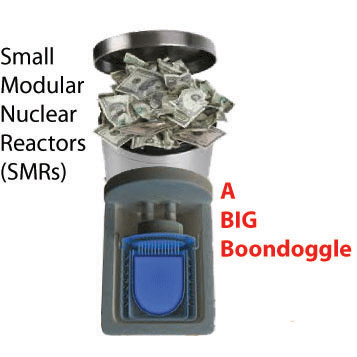
NuScale’s 12 Small Modular Nuclear Power units will cost $3 billion.

NuScale Gains Potential Financial Backing for Worldwide SMR Deployment, Power , 05/01/2019 | Sonal Patel   NuScale Power, the front-runner in the race to commercialize small modular reactors (SMRs), has bagged another major backer that could broaden its nuclear supply chain base and expand its financial standing. 

On April 29, NuScale signed a memorandum of understanding (MOU) with Doosan Heavy Industries and Construction (DHIC), a South Korean–based engineering, procurement, and construction contractor with a wide global network, that supports deployment of NuScale’s Power Module worldwide. “The relationship includes DHIC, a member of the Doosan Group, and potential Korean financial investors, which, commensurate to final due diligence, plan to make a cash equity investment in NuScale,” NuScale said on Monday. …..

That project, which is to be built at a 890-square-mile site at the Department of Energy’s (DOE’s) Idaho National Laboratory near Idaho Falls, will feature a plant comprising a dozen 60-MWe modules. NuScale anticipates the first module could be operational by 2026 and full plant would be operational by 2027. 

However, NuScale’s design certification application, which it submitted to the the Nuclear Regulatory Commission (NRC) in December 2016 covers 50-MWe modules. The company increased the module’s capacity to 60-MWe in June 2018, citing optimization through advanced testing and modeling tools. The breakthrough would boost the power capacity of the 12-module UAMPs facility from 600 MWe to 720 MWe, it said. ….

According to NuScale, the first 12-module facility, even at 684 MWe (net), could cost up to $3 billion to build.   ……https://www.powermag.com/nuscale-gains-potential-financial-backing-for-worldwide-smr-deployment/

May 2, 2019 Posted by Christina Macpherson | technology, USA | Leave a comment

U.S. Dept of Energy pledges to remove plutonium from Nevada

Energy Department says it will remove plutonium from Nevada, abc,By SCOTT SONNER, ASSOCIATED PRESS,  Apr 30, 2019,U.S. Energy Secretary Rick Perry is pledging to expedite the removal of weapons-grade plutonium secretly hauled to Nevada last year as the state and Trump administration remain locked in a court battle about whether the shipment was legal.

The Energy Department intends to start removing the highly radioactive material in 2021 and finish by the end of 2026, Perry said in an April 24 letter to U.S. Sen. Catherine Cortez Masto, a Nevada Democrat.

He also assured her in the letter released Tuesday that his department won’t ship any more plutonium from South Carolina to the Nevada Nuclear Security Site north of Las Vegas.

As a result, Cortez Masto said she would drop all Senate holds she had placed on pending nominations to fill vacancies in the Energy Department.
The agency already said in court filings earlier this year that it wouldn’t ship any more plutonium from South Carolina to Nevada, but the senator said she wanted Perry’s assurances in writing.

Nevada still is seeking a formal court order preventing any shipments because it says the agency’s track record shows it cannot be trusted. It also has a related case before the 9th U.S. Circuit Court of Appeals.

A federal judge in South Carolina has ordered the U.S. government to remove a metric ton (2,204 pounds) of plutonium from the Savannah River site by Jan. 1, 2020, and haul out an additional 5 metric tons (11,020 pounds) in future years.

Nevada sued in November, accusing the Energy Department of failing to do the necessary environmental reviews before adopting a plan last August to ship the plutonium to the state.

The department disclosed in January that it already had shipped half a metric ton (1,102 pounds) of the material before Nevada sued but kept it secret for national security reasons…….

The Energy Department has said it plans to forward the plutonium to the Waste Isolation Pilot Plant in New Mexico by the “2026-2027 timeframe.” https://abcnews.go.com/Technology/wireStory/energy-department-remove-plutonium-nevada-62738713

May 2, 2019 Posted by Christina Macpherson | - plutonium, USA | Leave a comment

Risk of catastrophic Hanford tunnel collapse prevented as tunnel is stabilised

Radioactive waste tunnel at Hanford stabilized after fears of a possible ‘catastrophic’ collapse, Tri City Herald, BY ANNETTE CARY, APRIL 29, 2019  The second Hanford PUREX plant tunnel storing highly radioactive waste has been stabilized to prevent a collapse.

Work to fill the tunnel with concrete-like grout began in early October and was completed at the end of last week.

Local government officials are relieved.

“We experienced a horrible winter with a massive amount of snow,” said Pam Larsen, executive director of Hanford Communities, a coalition of local governments, at a recent meeting of the Hanford Advisory Board.

“The tunnel could have collapsed,” she said. “It would have been catastrophic for our regional economy.”

Concerns about the second PUREX tunnel were raised after the first tunnel partially collapsed in spring 2017. An unusually wet winter may have contributed to the collapse.

Filling the second tunnel with grout is a temporary measure to prevent a possible collapse and release of radioactive particles into the air, with plans to clean up the waste in the tunnel to be made in the future……

About 40,000 cubic yards of grout, or 4,000 truckloads, were needed to fill the tunnel, which is 1,700 feet long.

It holds 28 rail cars loaded with obsolete and failed equipment that is contaminated with highly radioactive waste from the past production of plutonium at Hanford for the nation’s nuclear weapons program.

When the first tunnel partially collapsed, thousands of Hanford workers were ordered to take cover and the Tri-Cities-area anxiously waited for information until it was determined that there had been no release of radioactive particles.

The soil topping the tunnel fell into the breach, covering the waste…….

Hanford watchdogs were concerned that grouting might become a permanent solution, with the radioactive waste left in the ground permanently.

“Opponents raised legitimate concerns, but in the end those concerns did not outweigh the potential environmental and safety threats that could have been posed had the tunnel collapsed and exposed its highly radioactive contents,” Ecology officials said in a statement Monday…..

In both tunnels, grout was added in layers, with each layer allowed to set before the next layer was added.

But the second tunnel was five times longer, requiring changes to procedures and equipment as grout was added every 100 feet along the tunnel…….https://www.tri-cityherald.com/news/local/hanford/article229789389.html

May 2, 2019 Posted by Christina Macpherson | safety, USA | Leave a comment

Nuclear bailout could help “old” technology at the expense of “new nuclear”

Daily on Energy: Utility group CEO says popular nuclear energy bill could be a bailout in disguise https://www.washingtonexaminer.com/policy/energy/daily-on-energy-utility-group-ceo-says-popular-nuclear-energy-bill-could-be-a-bailout-in-disguise

by John Siciliano & Josh Siegel May 01, 2019 UTILITY GROUP CEO SAYS POPULAR NUCLEAR BILL COULD BE HIDING A BAILOUT: A popular Senate bill to advance nuclear energy could line the pockets of more conventional power plant owners, rather than pave a way for new, less expensive reactor types as intended.

John Shelk, the president and CEO of the merchant utility group Electric Power Supply Association, has raised the possibility of such a bailout ahead of Tuesday’s hearing in the Senate on the bill, the bipartisan Nuclear Energy Leadership Act introduced by Energy Committee chairwoman Lisa Murkowski and backed by high-profile Democrats like presidential candidate Sen. Cory Booker of New Jersey.

Shelk tells John he will be sitting down with Senate Energy and Natural Resources Committee staff as soon as this week to discuss changes to the bill to assure that it is narrowly focused on only advanced nuclear reactors and not the current fleet of reactors that are pushing for incentives in a challenging energy market.

What’s at issue: The bill would extend the contract time for federal power purchase agreements, which are used to secure electricity from a utility company for 10 to 40 years.

But the language is too open-ended and could benefit the existing fleet of reactors in addition to more advanced types, Shelk tells John.

Why the concern? Shelk’s group has been waging a national fight against state incentives for nuclear plants, and sees the bill becoming “yet another front in the fuels battles” to use government power to tip the scales in favor of less-economic resources like older nuclear plants.

In talking to sponsors of the bill, Shelk says he is “getting conflicting information … on why they want to keep the 40 year [power purchase agreement] open ended.”

Some offices say the idea is meant to make the federal contract fuel-neutral and open to other resources like geothermal and hydropower. But the problem is that a committee section-by-section summary of the bill describes nuclear power — not more advanced reactors — as “disadvantaged” when it comes to securing federal contracts. That raised the alarm for Shelk that the bill could be used as a means to give preferential treatment to all nuclear plants, undermining the free market system for electricity that supports competition.

Reminiscent of the Perry plan: Shelk says that when Energy Secretary Rick Perry was pushing for the Federal Energy Regulatory Commission to install market-based incentives to benefit coal and nuclear, the idea of using federal procurement rules to benefit generators was kicked around on the sidelines. Shelk and dozens of other groups opposed Perry’s push, and FERC rejected it in a unanimous vote.

Not everyone is a fan of the bill: Sen. Angus King, I-Maine, said the bill offers a backward approach to nuclear power.

“I think we’ve got it backwards; let’s solve the waste problem and then talk about promoting nuclear power,” King said at Tuesday’s hearing.

Murkowski, in almost anticipation of the criticisms King raised, introduced a bill Tuesday evening to rekindle the federal government’s obligation to move waste from existing power plants.

The bill would look for alternatives to less politically viable projects like Yucca Mountain in Nevada.

Meanwhile, the Environment and Public Works Committee held a hearing on Wednesday on a bill to jumpstart a new repository program separate from Yucca Mountain. Sen. Catherine Cortez-Masto, D-Nev., led the charge at the hearing on why the Yucca site was unworkable, citing its many structural flaws such as its proximity to a known earthquake fault.

Climate concerns should trump the need for the bill: “Time and money spent on unproven, new nuclear reactors is a distraction from the pressing need to address climate change,” Damon Moglen, senior strategic adviser at the left-leaning Friends of the Earth, tells John.

His group says the focus should be turned to zero-emission renewables, calling nuclear a “failed technology.”

May 2, 2019 Posted by Christina Macpherson | politics, USA | Leave a comment

UK’s nuclear weapons programme could cost £172bn

UK Defence Journal 30th April 2019 , A new report has warned that the UK’s nuclear weapons programme could cost £172bn between now and 2070, and suggests the government should
review the UK’s possession of nuclear weapons. The report, published
today by the Nuclear Information Service (NIS), states that the UK must
make a choice in the near future: increase the overall defence budget,
reduce spending on conventional weapons in order to fund nuclear weapons,
or reducing spending on/scrapping the nuclear weapons programme. NIS also
argues that the UK should work to “achieving a nuclear free world”, and
must “re-examine” the case for nuclear disarmament.

https://ukdefencejournal.org.uk/report-warns-of-spiralling-costs-of-uk-nuclear-weapons-programme/

May 2, 2019 Posted by Christina Macpherson | UK, weapons and war | Leave a comment

‘Climate emergency’ declared by Welsh Government,

 BBC,  29 April 2019  A “climate emergency” has been declared in Wales following protests demanding politicians take action on climate change.

The Welsh Government’s Lesley Griffiths said she hoped the declaration would trigger “a wave of action”.

Climate change threatens Wales’ health, economy, infrastructure and natural environment, she said……

https://www.bbc.com/news/uk-wales-politics-48093720

May 2, 2019 Posted by Christina Macpherson | climate change, politics, UK | Leave a comment

UK Cold War exhibition tries to gloss over the effects of nuclear testing on indigenous people

Cold War exhibition tries to airbrush Britain’s dark history of nuclear testing, The Conversation, Sue Rabbitt Roff, Researcher, Social History/Tutor in Medical Education, University of Dundee, May 2, 2019  A new exhibition about the Cold War recently opened at the UK National Archives at Kew in south-west London. Protect and Survive: Britain’s Cold War Revealed seeks to tell the story of how the years of high nuclear tensions affected the UK, from spy paranoia to civil defence posters to communications at the heart of government. …..

an extremely important facet of Britain’s Cold War has been almost entirely airbrushed from the story. There is barely anything in the exhibition about the 45 atomic and nuclear weapons detonations carried out by the British: 12 in Australia from 1952-57, nine in the central Pacific in 1957-58, and a further 24 alongside the Americans in the Nevada desert until as recently as 1991. The effects on the health of all this testing on indigenous people and some 22,000 British servicemen who were sent as observers is still being researched.
The Cold War exhibition includes three photos showing the atmospheric effect of the 1952 detonation off the Montebello Islands off north-western Australia. There is one additional picture of the hydrogen bomb that was exploded near Christmas Island in May 1957, the first of the central Pacific series, which persuaded the US to resume nuclear collaboration with the UK. And that’s about it. Worse, the exhibition includes a map of the global impact of the nuclear era in which the test locations in Australia are obscured by lettering – not least Maralinga, an important Aboriginal area in which seven detonations took place.

Files under review

My understanding is that decisions about the content of the exhibition were finalised late last year. Interestingly, this was around the same time as the Nuclear Decommissioning Authority, the public body with ultimate responsibility for the UK’s nuclear legacy withdrew recordsfrom the National Archives relating to 1950s nuclear weapons tests that had been declassified decades ago, pending a “security review” by the Ministry of Defence and Atomic Weapons Establishment. Specialists in this field have long complained about the many files concerning British testing that have remained secret, which makes the withdrawal of declassified files all the more unsettling………

Remembrance, The omissions at the London Cold War exhibition are a reminder about the UK’s low-key approach to its weapons testing history. The story doesn’t only need to be properly told at this exhibition, it needs a permanent public space. Yet no existing museum dedicated to Britain’s wars is interested in giving it house room – not even the records and memorabilia of all the military personnel sent to observe the tests. A number of years ago I was quietly told while walking down a corridor in one major institution not to offer it my own records because “they will end up in the skip”.

My years working in this field indicate to me that successive governments seem to want the story of British nuclear testing to die off naturally. But surely, at the very least, the point of the National Archives is to preserve the records to ensure that it is never allowed to be forgotten. https://theconversation.com/cold-war-exhibition-tries-to-airbrush-britains-dark-history-of-nuclear-testing-116237

May 2, 2019 Posted by Christina Macpherson | UK, weapons and war | Leave a comment

USA’s Nuclear Regulators look to New Mexico desert For Temporary Waste Storage Facility

Nuclear Regulators Search For Temporary Storage Facility In New Mexico, NPR, April 30, 2019  NATHAN ROTT

Private companies are proposing solutions to store the nation’s nuclear waste. The U.S. Nuclear Regulatory Commission is considering one storage site in New Mexico’s desert.

AILSA CHANG, HOST:

Nearly 100,000 tons of nuclear waste are piling up around the country. It wasn’t supposed to be this way. The federal government decided decades ago that it made sense to consolidate the waste at one permanent location, but no place seems to want it. So now nuclear regulators are considering proposals for temporary storage. NPR’s Nathan Rott checked out one such site in southeast New Mexico………

ROTT: The federal government’s inability to find a permanent repository for the nation’s nuclear waste has been a long-standing problem and an expensive one. Its preferred site, Yucca Mountain in Nevada, has long been blocked by local opposition. So instead, the government pays utility companies millions of dollars a day – taxpayer money – to continue to store the waste on-site at power plants around the country. A blue-ribbon panel tasked with looking at this problem under the Obama administration suggested temporary consolidated storage. But to avoid another Yucca-like impasse, it suggested taking a, quote, “consent-based approach” when finding a site.  And that May be hard to get…….. https://www.npr.org/2019/04/30/718735325/nuclear-regulators-search-for-temporary-storage-facility-in-new-mexico

May 2, 2019 Posted by Christina Macpherson | USA, wastes | Leave a comment

How bailout of Pennsylvania nuclear plants would cost consumers billions,

 By RICHARD MINITER,  THE MORNING CALL MAY 01, 2019 

Pennsylvania and New Jersey lawmakers are preparing to push up your monthly electricity bill … in order to shovel subsidies to failing nuclear-power plants. Consumers like you are projected to pay billions in higher electricity bills over the next decade — killing jobs and shrinking your savings in the bargain.

What’s driving this? For the past few years, natural-gas pipelines have delivered cheap fuel, shrinking the cost of generating electricity. It is now cheaper to make electricity with natural gas than with any other fossil fuel. That’s a big win for consumers and manufacturers. But it is bad news for nuclear-power plant operators, whose generating costs are often higher than the market price for power.

So now nuclear-power operators hope to persuade lawmakers that taxpayers should bail them out. And their plan, backed by a pile of lobbying dollars, is working.

The New Jersey Board of Public Utilities awarded “zero-emissions certificates” on April 18 to three state nuclear plants, all owned and operated by investor-owned utility Public Service Enterprise Group. That’s a subsidy of some $300 million per year. Those subsidies will be paid by surcharges on consumer electric bills. The Newark Star-Ledger summed it up best: “For PSEG, a windfall. For us, the shaft.”

And Pennsylvania is not far behind the Garden State.

Pennsylvania state Rep. Thomas Mehaffie, a Republican, has introduced a bill that would offer subsidies to the Keystone state’s five nuclear plants. He says the plan will cost some $500 million per year — raising utility bills roughly $21.24 per home per year. The real cost will be much higher, critics say, pointing to estimates of more than $60 per year per household.

The battle is not over yet in Pennsylvania. Lawmakers in Harrisburg are getting an earful from the AARP and consumer groups. State regulators also believe the Pennsylvania bailout proposal is misguided. Public Utility Commissioner Andrew Place sent a memo to members of the state Senate saying that “this bill, in its current form, is far from the least cost mechanism to achieve these goals.”

No kidding. In fact, the subsidy plan is so broadly written that it would also fund nuclear plants, like Beaver Valley Nuclear Station, that are not actually losing money.

What’s clear is that utilities are getting what they paid for. In New Jersey, PSEG reportedly spent some $2.4 million lobbying for subsidies in 2017.

In Pennsylvania, the company that owns the struggling Three Mile Island plant — Exelon — reportedly tripled its lobbying expenditures since 2016, spending $1.78 million in 2018.

While the nuclear-power industry can’t seem to make money off its failing plants, it has certainly figured out how to squeeze a return on investment from its lobbyists and its campaign contributions.

The hard truth is that plain-old competition is killing the dinosaur utilities. Thanks to natural gas, U.S. manufacturers enjoy lower industrial kilowatt per-hour prices than all of the other 35 countries in the Organisation for Economic Co-operation and Development, except Norway. That is a huge advantage for factories in Pennsylvania and elsewhere.

Subsidies just slow the inevitable. No bailout can change the reality that nuclear plants are whales beached by high insurance and regulatory costs. Their losses should provoke soul-searching among shareholders and far-reaching reforms of current management — not a cry for government bailouts…….. https://www.mcall.com/opinion/mc-opi-pennsylvania-nuclear-industry-bailout-20190501-hjzucrrqm5hovcunhj7dencnly-story.html

May 2, 2019 Posted by Christina Macpherson | politics, USA | Leave a comment

UK govt resisting calls to declare ‘climate emergency’

Business Green 1st May 2019 , The government is today expected to resist fresh calls for it to declare a’climate emergency’, after Michael Gove indicated that more agreement was
across government before Defra could back a formal ‘climate
emergency’.
Gove yesterday met with representatives from the Extinction
Rebellion group who later described themselves as “disappointed” at the
lack of firm commitments from the Environment Secretary on how he plans to
accelerate the UK’s decarbonisation efforts. The group expressed
frustration at the government’s continued failure to declare a ‘climate
emergency’ and insisted that their campaign of peaceful civil disobedience
would continue.
Later today the High Court is expected to rule on whether a
legal challenge against the government’s approval for Heathrow expansion
can proceed, while tomorrow the CCC will present its long awaited
recommendations on whether the UK should adopt a net zero emission target.
The Committee is widely expected to call for a new 2050 target, fuelling
speculation the government could look to amend the Climate Change Act
before the summer in order to get the new goal onto the statute book as
quickly as possible.

https://www.businessgreen.com/bg/news/3074863/alarm-bells-government-resists-calls-for-climate-emergency-ahead-of-latest-protests

May 2, 2019 Posted by Christina Macpherson | climate change, USA | Leave a comment

Secret history of Israel’s first nuclear device

I Guarded Israel’s First Nuclear Device, Former Israeli Reveals in U.S. Testimony, Haaretz, 1 May 19

Elie Geisler says he was asked during the Six Day War to guard a secret base in central Israel that held the device. He described a clash with Col. Yitzhak Yaakov, who demanded control of the base and threatened to break into it by force

Ofer Aderet    A former Israeli is claiming that during the Six Day War, he commanded a secret base in the center of the country where a nuclear core was stored that could have been used in a nuclear weapon.
In an interview appearing on the website of the Woodrow Wilson Center, Elie Geisler, who was a trained radiation inspector, tells Prof. Avner Cohen that he had been assigned to guard the device for the Israeli Atomic Energy Commission. He also told Cohen that he feared there could be armed internal Israeli conflict over control of nuclear power. ………
During that period, said Geisler, the atmosphere at the base, like in the rest of the country, was “a mix of uncertainty and bellicosity.” He reflected on the fact that “I had under my control the first Jewish nuclear core. I had read some books and articles about the origins of the atomic bomb and recognized the enormous contributions of Jewish physicists to the making of the bomb—from Albert Einstein to Enrico Fermi and Leo Szilard. I would stand in this small room and stare at the object with much awe, having seen photos and movies of the devastation in Hiroshima and Nagasaki. ……..

Geisler first addressed these events in a book he published in the United States under a pseudonym in 2017. In July of that year, Haaretz ran an article by historian Adam Raz about the book, under the title “The De Facto Coup D’etat: when Moshe Dayan Tried to Steal Israel’s First Nuclear Device.”

Yaakov, later a brigadier general, gave his own account to Cohen in interviews in 1999 and 2000, whose contents were published in 2017, four years after Yaakov’s death. Yaakov testified that official Israeli figures had planned to explode a nuclear device on a mountain in Sinai to deter Arab states from attacking. “……..
Cohen, author of “Israel and the Bomb” and “The Worst-Kept Secret,” is a professor at the Middlebury Institute of International Studies at Monterey, California, and a senior fellow at the Wilson Center. The interview with Geisler was initiated by Cohen and Joshua Pollack. His testimony appears in the newest edition of the journal Nonproliferation Review, which is published by the Middlebury Institute, and was simultaneously posted in the Wilson Center’s digital archives as part of its Avner Cohen Collection.  https://www.haaretz.com/israel-news/.premium-former-israeli-in-u-s-interview-i-guarded-nuclear-device-during-six-day-war-1.7186402

May 2, 2019 Posted by Christina Macpherson | history, Israel | Leave a comment

Counterterrorism requirement puts financial strain on nuclear power plant operators

safe_image.php.jpg
April 24, 2019
TOKYO — Nine nuclear reactors at five plants in Japan are expected to start going offline in succession from March 2020 because their operators cannot meet deadlines for implementing counterterrorism measures set by Japan’s nuclear regulator.
The five plants are operated by Kyushu Electric Power Co., Shikoku Electric Power Co., and Kansai Electric Power Co. They stand one to three years behind their respective deadlines for implementing counterterrorism measures set under a new policy of the Nuclear Regulation Authority (NRA). The situation is likely to disrupt the power companies’ plans to win customers by lowering their fees through the operation of nuclear reactors.
“If things continue like this, we’ll have to stop operating the Sendai Nuclear Power Plant in about one year. From a management perspective it’s tough,” one Kyushu Electric official lamented.
According to the three companies, when one plant stops operating, fuel costs for operating thermal power plants to make up for the electricity supply increase by between 3.5 billion yen and 6.5 billion yen a month. Kansai Electric and Kyushu Electric, which have multiple reactors in operation, could see their operating costs balloon by around 100 billion yen a year as a result.
Amid intense competition with Osaka Gas and other new electricity retailers, it is not viable for the power companies to ask customers to pay more for electricity.
Shikoku Electric in western Japan has already decided to decommission the No. 1 and No. 2 reactors at its Ikata Nuclear Power Plant in Ehime Prefecture, and operation of the plant’s No. 3 reactor, the sole remaining one, was viewed as a major premise for establishing stable financial management.
In light of the situation, the power companies’ sale of electricity to other firms is set to decrease, which is certain to hit power companies in the pocket — highlighting the risks of relying on nuclear power.
The nuclear regulator’s move is also likely to significantly affect Japan Atomic Power Co.’s plans to restart its Tokai No. 2 Power Station in Ibaraki Prefecture, northeast of Tokyo. In November last year, the power plant passed screening by the NRA to enable its reactivation, and received permission to keep operating for another 20 years. However, it has not even compiled an estimate for the cost of building a facility required under the counterterrorism guidelines.
Under NRA rules, nuclear plant operators are required to build facilities at least 100 meters away from reactor buildings that are able to remotely prevent meltdowns if the units come under terrorist attacks such as planes being flown into them. The facilities must be built within five years of the NRA approving plant construction plans.
A Ministry of Economy, Trade and Industry official observed, “This could be described as a birth pang in the process of boosting safety, but it’s an unfavorable wind in the short term.” Meanwhile, Tadashi Narabayashi, a specially appointed professor at Tokyo Institute of Technology, commented, “Power companies were hoping that things would go easy for them, but the NRA should have made it clear from the outset that they were not going to allow any extensions beyond the 5-year limit. The responsibility for the confusion lies on both sides.”
https://mainichi.jp/english/articles/20190425/p2a/00m/0na/020000c?fbclid=IwAR2fljT3mcAJAqEoRKYysj7x9Alv1hFFJFWZYZKQlCZDi2TElMpYInzrq0s

May 1, 2019 Posted by dunrenard | Japan | Counterterror steps, nuclear plants | Leave a comment

Japan to shut down nuclear plants if counterterror steps not taken in time

n-nuclear-a-20190425-200x200.jpg
April 24, 2019
Japan’s nuclear regulator decided Wednesday not to let power companies operate reactors if they fail to install sufficient counterterrorism measures by specified deadlines.
The decision by the Nuclear Regulation Authority came after three utilities that operate five nuclear plants in western and southwestern Japan requested that their deadlines be extended as they expect delays in completing counterterrorism steps required under stricter regulations introduced in 2013 following the Fukushima nuclear crisis.
Kyushu Electric Power Co., Kansai Electric Power Co. and Shikoku Electric Power Co. had sought to postpone their five-year deadlines by one to three years, citing reasons such as the need to carry out massive construction work.
The three companies told the NRA that the measures would not be on time at 10 of their reactors, according to documents published on the regulator’s website.
But the regulator has declined their requests for extensions.
The power plant operators are required to build facilities that can keep reactors cool via remote control and prevent the massive release of radioactive materials if the units are the target of a terrorist attack, such as from planes being flown into them.
Nuclear plant operators need to set up such facilities within five years of the nuclear safety watchdog approving detailed construction plans for the plants.
But several firms have warned they will not meet these criteria. The NRA said after a meeting earlier Wednesday it would no longer push back the deadline as it has done in the past.
“There is no need to extend the deadline, and nuclear facilities have to stop operations if the operators fail to meet it,” an NRA official said.
He added that several other reactors were also at risk of being shut down.
A reactor at the Sendai power plant in Kyushu could be the first to be suspended if Kyushu Electric Power fails to finish work by the deadline next March.
Following the No. 1 reactor at the Sendai plant, the No. 2 reactor at the complex is facing a deadline in May 2020. The deadline for the No. 3 reactor at the Takahama plant in Fukui Prefecture operated by Kansai Electric is August 2020.
At an NRA meeting Wednesday, one of the commissioners said, “The construction work did not fall behind schedule because of natural disaster,” expressing the view that there is no need to extend the deadlines.
“We cannot overlook the operations of nuclear facilities when they become incompatible with meeting standards,” NRA Chairman Toyoshi Fuketa said.
Before the Fukushima disaster, Japan relied on nuclear power for roughly 30 percent of its electricity. But this declined to less than 2 percent after the crisis as reactors were suspended for emergency safety checks, with many unable to resume operations under the stricter rules. The ratio has since recovered somewhat, but it remains below 10 percent due to a protracted process of stringent safety checks by the regulator.
Shares of all three companies tumbled on the news. Kansai Electric ended down 7.8 percent, Kyushu Electric fell 5.3 percent and Shikoku Electric dropped 5 percent.
A draft by the industry ministry said nuclear should account for 20 to 22 percent of power supply in 2030 and renewables 22 to 24 percent, in line with the trade ministry’s goals set in 2015.
But many experts view the nuclear target as difficult to achieve in the wake of the 2011 Fukushima crisis, which led to a big shift in public opinion after it exposed industrial and regulatory failings and led to the shutdown of all the country’s reactors.
https://www.japantimes.co.jp/news/2019/04/24/business/corporate-business/japan-halt-nuclear-plants-operations-anti-terrorism-steps-not-taken-time/?fbclid=IwAR1MOl_4xqdAs4g45dpzPCddJzWc2hg0MvwkaDvWgase_E1Hm2sGgSa6m_w#.XMDTOy-ZMWr

May 1, 2019 Posted by dunrenard | Japan | Counterterror steps, nuclear plants | Leave a comment

Exploitation of foreign workers in Japan’s Fukushima nuclear clean-up

Japan needs thousands of foreign workers to decommission Fukushima plant, prompting backlash from anti-nuke campaigners and rights activists, SCMP  Julian Ryall , 26 Apr, 2019

Activists are not convinced working at the site is safe for anyone and they fear foreign workers will feel ‘pressured’ to ignore risks if jobs are at risk
Towns and villages around the plant are still out of bounds because radiation levels are dangerously high

Anti-nuclear campaigners have teamed up with human rights activists in Japan to condemn plans by the operator of the crippled Fukushima Daiichi nuclear plant to hire foreign workers to help decommission the facility.

Tokyo Electric Power Co (TEPCO) has announced it will take advantage of the government’s new working visa scheme, which was introduced on April 1 and permits thousands of foreign workers to come to Japan to meet soaring demand for labourers. The company has informed subcontractors overseas nationals will be eligible to work cleaning up the site and providing food services.

About 4,000 people work at the plant each day as experts attempt to decommission three reactors that melted down in the aftermath of the March 2011 Great East Japan Earthquake and the huge tsunami it triggered. Towns and villages around the plant are still out of bounds because radiation levels are dangerously high.

TEPCO has stated foreign workers employed at the site must have Japanese language skills sufficient for them to understand instructions and the risks they face. Workers will also be required to carry dosimeters to monitor their exposure to radiation.

Activists are far from convinced working at the site is safe for anyone and they fear foreign workers will feel “pressured” to ignore the risks if their jobs are at risk.

“We are strongly opposed to the plan because we have already seen that workers at the plant are being exposed to high levels of radiation and there have been numerous breaches of labour standards regulations,” said Hajime Matsukubo, secretary general of the Tokyo-based Citizens’ Nuclear Information Centre. “Conditions for foreign workers at many companies across Japan are already bad but it will almost certainly be worse if they are required to work decontaminating a nuclear accident site.”

Companies are desperately short of labourers, in part because of the construction work connected to Tokyo hosting the 2020 Olympic Games, while TEPCO is further hampered because any worker who has been exposed to 50 millisieverts of radiation in a single year or 100 millisieverts over five years is not permitted to remain at the plant. Those limits mean the company must find labourers from a shrinking pool.

In February, the Tokyo branch of Human Rights Now submitted a statement to the UN Human Rights Council in Geneva demanding action be taken to help and protect people with homes near the plant and workers at the site.

“It has been reported that vulnerable people have been illegally deceived by decontamination contractors into conducting decontamination work without their informed consent, threatening their lives, including asylum seekers under false promises and homeless people working below minimum wage,” the statement said. “Much clean-up depends on inexperienced subcontractors with little scrutiny as the government rushes decontamination for the Olympic Games.”

Cade Moseley, an official of the organisation, said there are “very clear, very definite concerns”.

“There is evidence that foreign workers in Japan have already felt under pressure to do work that is unsafe and where they do not fully understand the risks involved simply because they are worried they will lose their working visas if they refuse,” he said……

https://www.scmp.com/news/asia/east-asia/article/3007772/japan-needs-thousands-foreign-workers-decommission-fukushima

April 30, 2019 Posted by Christina Macpherson | civil liberties, employment, Japan, politics, wastes | Leave a comment

« Previous Entries     Next Entries »

1 This Month

Tell Congress: Prevent Nuclear Catastrophe in Iran

Tell Congress: Prevent Nuclear Catastrophe in Iran

Read the Public Inquiry Report, the Commissioners’ report, Surrendering Australia: The AUKUS Deception is available to download for free at aukuspublicinquiry.com. Or just watch the replay of the National Press Club Luncheon.


​

Shut down the radiation-damaged Heysham nuclear reactors now

To see nuclear-related stories in greater depth and intensity – go to https://nuclearinformation.wordpress.com

Say No to NASA’s Reckless Nuclear Reactor on the Moon

Say No to NASA’s Reckless Nuclear Reactor on the Moon

  • Categories

    • 1
      • Arclight's Vision
    • 1 NUCLEAR ISSUES
      • business and costs
        • employment
        • marketing
      • climate change
      • culture and arts
      • ENERGY
        • renewable
          • decentralised
          • energy storage
      • environment
        • oceans
        • water
      • health
        • children
        • psychology – mental health
        • radiation
        • social effects
        • women
      • history
      • indigenous issues
      • Legal
        • deaths by radiation
        • legal
      • marketing of nuclear
      • media
        • investigative journalism
        • Wikileaks
      • opposition to nuclear
      • PERSONAL STORIES
      • politics
        • psychology and culture
          • Trump – personality
        • public opinion
        • USA election 2024
        • USA elections 2016
      • politics international
      • Religion and ethics
      • safety
        • incidents
      • secrets,lies and civil liberties
        • civil liberties
      • spinbuster
        • Education
      • technology
        • reprocessing
        • Small Modular Nuclear Reactors
        • space travel
      • Uranium
      • wastes
        • – plutonium
        • decommission reactor
      • weapons and war
        • Atrocities
        • depleted uranium
      • Women
    • 2 WORLD
      • ANTARCTICA
      • ARCTIC
      • ASIA
        • Burma
        • China
        • India
        • Indonesia
        • Japan
          • – Fukushima 2011
          • Fukushima 2012
          • Fukushima 2013
          • Fukushima 2014
          • Fukushima 2015
          • Fukushima 2016
          • Fukushima continuing
        • Malaysia
        • Mongolia
        • North Korea
        • Pakistan
        • South Korea
        • Taiwan
        • Turkey
        • Vietnam
      • EUROPE
        • Belarus
        • Bulgaria
        • Denmark
        • Finland
        • France
        • Germany
        • Greece
        • Ireland
        • Italy
        • Kazakhstan
        • Kyrgyzstan
        • Russia
        • Spain
        • Sweden
        • Switzerland
        • UK
        • Ukraine
      • MIDDLE EAST
        • Afghanistan
        • Egypt
        • Gaza
        • Iran
        • Iraq
        • Israel
        • Jordan
        • Libya
        • Saudi Arabia
        • Syria
        • Turkey
        • United Arab Emirates
      • NORTH AMERICA
        • Canada
        • USA
          • election USA 2020
      • OCEANIA
        • New Zealand
        • Philippines
      • SOUTH AMERICA
        • Brazil
    • ACTION
    • AFRICA
      • Kenya
      • Malawi
      • Mali
      • Namibia
      • Niger
      • Nigeria
      • Somalia
      • South Africa
    • Atrocities
    • AUSTRALIA
    • Christina's notes
    • Christina's themes
    • culture and arts
    • Events
    • Fuk 2022
    • Fuk 2023
    • Fukushima 2017
    • Fukushima 2018
    • fukushima 2019
    • Fukushima 2020
    • Fukushima 2021
    • general
    • global warming
    • Humour (God we need it)
    • Nuclear
    • RARE EARTHS
      • thorium
    • Reference
      • Reference archives
    • resources – print
    • Resources -audiovicual
    • Weekly Newsletter
    • World
    • World Nuclear
    • YouTube
  • Pages

    • 1 This Month
    • ACTION !
    • Disclaimer
    • Links
    • PAGES on NUCLEAR ISSUES
      • audio-visual news
      • Anti Nuclear, Clean Energy Movement
        • Anti Nuclear movement – a success story
          • – 2013 – the struggle for a nuclear-free, liveable world
          • – 2013: the battle to expose nuclear lies about ionising radiation
            • Speakers at Fukushima Symposium March 2013
            • Symposium 2013 Ian Fairlie
      • Civil Liberties
        • – Civil liberties – China and USA
      • Climate change
      • Climate Change
      • Economics
        • – Employment
        • – Marketing nuclear power
        • – Marketing Nuclear Power Internationally
        • nuclear ‘renaissance’?
        • Nuclear energy – the sick man of the corporate world
      • Energy
        • – Solar energy
      • Environment
        • – Nuclear Power and the Tragedy of the Commons
        • – Water
      • Health
        • Birth Defects in the Chernobyl Radiation Affected Region.
      • History
        • Nuclear History – the forgotten disasters
      • Indigenous issues
      • Ionising radiation
        • – Ionising radiation – medical
        • Fukushima FACT SHEET
      • Media
        • Nuclear Power and Media 2012
      • Nuclear Power and the Consumer Society – theme for December 2012
      • Peace and nuclear disarmament
        • Peace on a Nuclear Free Earth
      • Politics
        • – Politics USA
      • Public opinion
      • Religion and ethics
        • -Ethics of nuclear power
      • Resources – print
      • Safety
      • Secrets and lies
        • – NUCLEAR LIES – theme for January 2012
        • – Nuclear Secrets and Lies
      • Spinbuster
        • 2013 nuclear spin – all about FEAR -theme for June
        • Spinbuster 1
      • Technology
        • TECHNOLOGY Challenges
      • Wastes
        • NUCLEAR WASTES – theme for October 2012
        • – Plutonium
      • Weapons and war
      • Women
  • Archives

    • November 2026 (214)
    • October 2026 (302)
    • September 2026 (339)
    • August 2026 (330)
    • July 2026 (355)
    • June 2026 (287)
    • May 2026 (306)
    • April 2026 (356)
    • March 2026 (251)
    • February 2026 (267)
    • January 2026 (308)
    • December 2025 (358)
  • Categories

    • 1
      • Arclight's Vision
    • 1 NUCLEAR ISSUES
      • business and costs
        • employment
        • marketing
      • climate change
      • culture and arts
      • ENERGY
        • renewable
          • decentralised
          • energy storage
      • environment
        • oceans
        • water
      • health
        • children
        • psychology – mental health
        • radiation
        • social effects
        • women
      • history
      • indigenous issues
      • Legal
        • deaths by radiation
        • legal
      • marketing of nuclear
      • media
        • investigative journalism
        • Wikileaks
      • opposition to nuclear
      • PERSONAL STORIES
      • politics
        • psychology and culture
          • Trump – personality
        • public opinion
        • USA election 2024
        • USA elections 2016
      • politics international
      • Religion and ethics
      • safety
        • incidents
      • secrets,lies and civil liberties
        • civil liberties
      • spinbuster
        • Education
      • technology
        • reprocessing
        • Small Modular Nuclear Reactors
        • space travel
      • Uranium
      • wastes
        • – plutonium
        • decommission reactor
      • weapons and war
        • Atrocities
        • depleted uranium
      • Women
    • 2 WORLD
      • ANTARCTICA
      • ARCTIC
      • ASIA
        • Burma
        • China
        • India
        • Indonesia
        • Japan
          • – Fukushima 2011
          • Fukushima 2012
          • Fukushima 2013
          • Fukushima 2014
          • Fukushima 2015
          • Fukushima 2016
          • Fukushima continuing
        • Malaysia
        • Mongolia
        • North Korea
        • Pakistan
        • South Korea
        • Taiwan
        • Turkey
        • Vietnam
      • EUROPE
        • Belarus
        • Bulgaria
        • Denmark
        • Finland
        • France
        • Germany
        • Greece
        • Ireland
        • Italy
        • Kazakhstan
        • Kyrgyzstan
        • Russia
        • Spain
        • Sweden
        • Switzerland
        • UK
        • Ukraine
      • MIDDLE EAST
        • Afghanistan
        • Egypt
        • Gaza
        • Iran
        • Iraq
        • Israel
        • Jordan
        • Libya
        • Saudi Arabia
        • Syria
        • Turkey
        • United Arab Emirates
      • NORTH AMERICA
        • Canada
        • USA
          • election USA 2020
      • OCEANIA
        • New Zealand
        • Philippines
      • SOUTH AMERICA
        • Brazil
    • ACTION
    • AFRICA
      • Kenya
      • Malawi
      • Mali
      • Namibia
      • Niger
      • Nigeria
      • Somalia
      • South Africa
    • Atrocities
    • AUSTRALIA
    • Christina's notes
    • Christina's themes
    • culture and arts
    • Events
    • Fuk 2022
    • Fuk 2023
    • Fukushima 2017
    • Fukushima 2018
    • fukushima 2019
    • Fukushima 2020
    • Fukushima 2021
    • general
    • global warming
    • Humour (God we need it)
    • Nuclear
    • RARE EARTHS
      • thorium
    • Reference
      • Reference archives
    • resources – print
    • Resources -audiovicual
    • Weekly Newsletter
    • World
    • World Nuclear
    • YouTube
  • RSS

    Entries RSS
    Comments RSS

Site info

nuclear-news
Create a free website or blog at WordPress.com.
Privacy & Cookies: This site uses cookies. By continuing to use this website, you agree to their use.
To find out more, including how to control cookies, see here: Cookie Policy
  • Subscribe Subscribed
    nuclear-news
    Join 2,034 other subscribers

    Have a WordPress.com account? Log in now.

  • nuclear-news
    View site in Reader
    Manage subscriptionsSign upLog in
    Report this content
    Collapse this bar
Loading Comments...