High blood pressure risk from prolonged exposure to low-dose ionising radiation
 Prolonged exposure to low-dose radiation may increase the risk of hypertension, a known cause of heart disease and stroke https://www.sciencedaily.com/releases/2019/05/190503080554.htm
- Date:
- May 3, 2019
- Source:
- American Heart Association
- Summary:
- A long-term study of Russian nuclear plant workers suggests that prolonged low-dose radiation exposure increases the risk of hypertension. This study is the first to associate an increased risk of hypertension to low doses of ionizing radiation among a large group of workers who were chronically exposed over many years. The higher the cumulative dose of radiation, the greater the risk, the study showed.
-
Prolonged exposure to low doses of ionizing radiation increased the risk of hypertension, according to a study of workers at a nuclear plant in Russia published in the American Heart Association’s journal Hypertension.
Uncontrolled hypertension, also known as high blood pressure, can to lead to heart attack, stroke, heart failure and other serious health problems.
Earlier studies linked exposure to high doses of radiation to increased risk of cardiovascular diseases and death from those diseases. This study is the first to find an increased risk of hypertension to low doses of ionizing radiation among a large group of workers who were chronically exposed over many years.
The study included more than 22,000 workers at the first large-scale nuclear enterprise in Russia known as the Mayak Production Association. The workers were hired between 1948 and 1982, with an average length of time on the job of 18 years. Half had worked there for more than 10 years. All of the workers had comprehensive health check-ups and screening tests at least once a year with advanced evaluations every five years.
The researchers evaluated the workers’ health records up to 2013. More than 8,400 workers (38 percent of the group) were diagnosed with hypertension, as defined in this study as a systolic blood pressure reading of ?140 mm Hg, and a diastolic reading ? 90 mm Hg. Hypertension incidence was found to be significantly associated with the cumulative dose.
- To put it in perspective, the hypertension incidence among the workers in the study was higher than that among Japanese survivors of the atomic bomb at the end of World War II, but lower than the risk estimated for clean-up workers following the Chernobyl nuclear accident.
The differences may be explained by variations in exposure among the three groups, according to the researchers. Following the atomic bombing, the Japanese experienced a single, high-dose exposure of radiation, the Chernobyl workers were exposed to radiation for a short time period (days and months), while the Mayak workers were chronically exposed to low doses of radiation over many years.
While the development of cancer is commonly associated with radiation exposure, “we believe that an estimate of the detrimental health consequences of radiation exposure should also include non-cancer health outcomes. We now have evidence suggesting that radiation exposure may also lead to increased risks of hypertension, cardiovascular disease and cerebrovascular disease, as well,” said Tamara Azizova, M.D., lead author of the study at the Southern Urals Biophysics Institute in Russia.
-
Azizova pointed out that in recent years, the number of people exposed to radiation in everyday life, such as during diagnostic procedures, has increased. “It is necessary to inform the public that not only high doses of radiation, but low to moderate doses also increase the risk of hypertension and other circulatory system diseases, which today contribute significantly to death and disability. As a result, all radiological protection principles and dose limits should be strictly followed for workers and the general public.”
How radiation exposure may increase the risk of hypertension is still a question, according to Azizova. “So far, the mechanisms remain unclear, not only for certain cohorts but also for the general population. One of the main tasks for the coming decade is to study the mechanisms of hypertension and heart and brain atherosclerosis occurring in people who are — and who were exposed — to radiation.”
The authors note that their study is a retrospective one, and while many health conditions and behaviors were documented in the medical records of the workers (such as age, smoking, alcohol consumption and body mass index), other factors, such as stress and nutrition, were unavailable for researchers to be taken into account in this study.
Story Source:
Materials provided by American Heart Association.
- Journal Reference:
- Tamara Azizova, Ksenia Briks, Maria Bannikova, Evgeniya Grigoryeva. Hypertension Incidence Risk in a Cohort of Russian Workers Exposed to Radiation at the Mayak Production Association Over Prolonged Periods. Hypertension, 2019; DOI: 10.1161/HYPERTENSIONAHA.118.11719
USA Defense Dept knew that radiation causes birth defects. Now nuclear test veterans worry
 Atomic veteran wonders at radiation’s effects, PostStar, Will Doolittle will@poststar.comMay 2, 2019, GLENS FALLS — Bill Jones went to paradise for 13 months in the mid-1950s, and it wasn’t until many years later, when he and others were finally released from their vows of secrecy, that he found out what a hell it really had been……. But he doesn’t know for sure, and the government isn’t telling, which is what really bothers him. He has scars on his scalp from having growths removed, but at 84 considers himself fortunate. Benefits are available for atomic veterans, and Jones called the Department of Justice about qualifying for them.
He was told, “As soon as I get a terminal illness, call back.” “There’s not an awful lot of these atomic veterans left. There’s a lot that don’t know about the program, so they waste away, shall we say,” he said. Fred Schafer, an officer with the National Association of Atomic and Nuclear Veterans, says the soldiers were guinea pigs. “They wanted to see what happened,” he said, referring to the U.S. military establishment, which was monitoring the soldiers’ reactions to nuclear radiation. “They wanted to see how fast they could get in after using these bombs.”
Jones wasn’t allowed to tell Charlotte what he was doing on Enewetak. He couldn’t take photos, he could make only one phone call every two or three months, and his letters were reviewed. Anything he sent home, like a sea shell scooped up from the sand, had to be checked with a Geiger counter first. |
|
|
Trump administration re-ignites the political issue of nuclear waste and Nevada’s Yucca Mountain
 In Nevada, Trump administration revives a
 radioactive campaign issue, CBS News, BY ALEXANDER TIN, MAY 2, 2019 /Last year, the Trump administration faced a dilemma: where could the Department of Energy stow a metric ton of surplus, weapons grade plutonium?
Efforts to recycle thousands of pounds in unwanted radioactive material had been crippled by cost overruns. Now the government faced a court ordered deadline to remove the plutonium from South Carolina, where it had been stockpiled.
For the plutonium’s new home, the administration turned to Nevada. Over the state’s objections, authorities planned to ship some of the radioactive material to a site adjacent to Yucca Mountain, where the federal government has long sought to store dangerous nuclear waste. ……
The state fought for months in court to block the new plutonium delivery, until a bombshell revelation in early 2019 that the administration had already quietly trucked in much of the plutonium, with details kept secret for “operational security.”
The response from Nevada’s government was swift.
“They lied to the state of Nevada, misled a federal court, and jeopardized the safety of Nevada’s families and environment,” Gov. Steve Sisolak said in a statement. Nevada Democratic Sen. Jacky Rosen slammed the move as “deceitful” and “unethical.”
Energy Secretary Rick Perry then struck a deal with Nevada Democratic Sen. Catherine Cortez-Masto, and department has since promised to pull out the plutonium. But the shipment has added fuel to a political firestorm in Nevada over recent efforts to resurrect Yucca Mountain, sowing mistrust over a key issue for the state, which is home an early and important presidential primary contest.
On Wednesday, the administration’s push to reopen Yucca Mountain that drew a forceful condemnation from Vermont Sen. Bernie Sanders.
“The proposal by President Trump and Republicans in Congress to send our nuclear waste to Yucca Mountain would be a geological, environmental, and social disaster,” the presidential candidate said in a statement.
Sanders joins a long list of fellow White House hopefuls in questioning the project’s future, including former Rep. Beto O’Rourke, Washington Gov. Jay Inslee, Minnesota Sen. Amy Klobuchar, Massachusetts Sen. Elizabeth Warren, New Jersey Sen. Cory Booker, California Sen. Kamala Harris, and former Obama HUD secretary Julián Castro.
Opponents have long cited the risks of seismic activity under the site, and its proximity to an aquifer and a military test range. They have rejected arguments that Yucca Mountain would hasten the transfer to a more environmentally friendly economy, warning of the risks for communities through which waste would pass through……
Testifying before the Senate Environment and Public Works Committee, Rosen — Heller’s successor — joined Cortez-Masto in calling on Congress to help Nevada block Yucca Mountain. Their bill would require consent from state and local authorities before storing nuclear waste in their respective jurisdictions.
Only six other senators have so far cosponsored the proposal: Cory Booker, Kamala Harris, Amy Klobuchar, Bernie Sanders, Elizabeth Warren, and Kirsten Gillibrand. https://www.cbsnews.com/news/in-nevada-trump-administration-revives-a-radioactive-campaign-issue/
Trump’s hypocrisy – talks of nuclear disarmament while spending $megabillions on new nuclear weapons
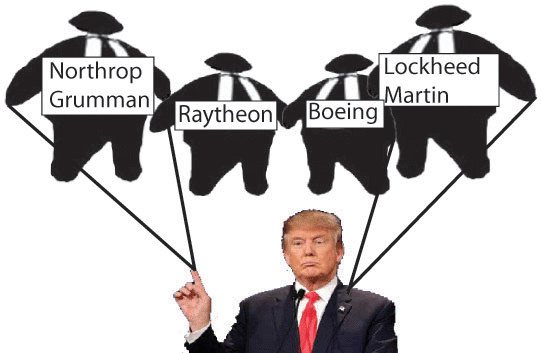 Trump to begin nuclear bomb-reduction talks with Russia, maybe China, ‘very shortly’ Washington Examiner, by Steven Nelson, May 03, 2019 President Trump said Friday that he expects to begin brokering a nuclear disarmament deal with Russia “very shortly,” with a possible addition of China later.
USA renews waivers of Iran sanctions for civilian nuclear work
|
Official: US renews Iran sanctions waivers for civilian nuclear work, The Times of Israel,
May 2019
Move allows Russia and European nations to continue work at nuclear sites without incurring US penalties; 2 waivers relating to heavy water and uranium enrichment not extended. The waivers, which were due to expire Saturday, are being extended for between 45 days and 90 days, shorter periods than had been granted in the past. But they will permit work at several Iranian nuclear sites to continue without US penalties. Under the terms of the 2015 Iran nuclear deal, Russia and several European nations help to maintain the facilities and are engaged in converting equipment there for exclusively civilian use. Facilities included in the waiver extensions include the Bushehr nuclear power plant, the foenrichment facility, the Arak nuclear complex and the Tehran Research Reactor, the official said. The official, who was not authorized to discuss the matter publicly and spoke on condition of anonymity, said the other two waivers — one that allowed Iran to store heavy water in Oman and the other that allowed Russia to process Iranian uranium — are not being renewed…..https://www.timesofisrael.com/official-us-renews-iran-sanctions-waivers-for-civilian-nuclear-work/ |
|
|
The Blue Pacific and the legacies of nuclear testing

The Strategist 1 May 2019| Patrick Kaiku States in the Pacific islands are small in landmass and population. Their limited terrestrial resources and lack of comparative advantage are compounded by their remoteness from global centres of commerce. This obviously has impacts on the costs of doing business and integration into global trade relations. Their invisibility in international relations means that small states must creatively frame their presence in the global community.It’s against this backdrop that the ‘Blue Pacific’, which is touted as an empowering worldview, should be understood. The core principles of the Blue Pacific must be read together with recent developments in the region. In 2017, Pacific Islands Forum leaders endorsed the concept as a ‘driving force’ connecting Pacific peoples ‘with their natural resources, environment, culture and livelihoods’. The Boe Declaration of 2018 formally recognised Pacific islanders’ stewardship over the Pacific Ocean.
While big states such as the US and China are competing for influence in the region, the Boe Declaration makes a case for prioritising the concerns of Pacific island communities. The strategic confrontations of big powers do not feature in the daily lives of Pacific peoples. What’s important to the survival of island states is their environment and the capacity of their resources to meet present needs and the needs of future generations. This logic is seen with the proposed Pacific Resilience Facility, which is a regional pool of resources to manage or mitigate the adverse effects of environmental challenges in the region.
….. a sticky issue in the region is the potential effects of nuclear contamination of the Pacific Ocean. The legacies of nuclear tests in the Pacific islands include highly radioactive waste materials stored on vulnerable atolls.
In the 1950s, the Pacific Ocean was considered an empty space by the Euro-American powers. With the onset of the arms race during the Cold War, some of the colonial powers used the Pacific as a testing ground for their nuclear weapons. More than 300 nuclear tests were conducted in the Pacific Ocean. Atolls in the Marshall Islands, Johnston Island, Christmas Island and French Polynesia were used as nuclear test sites, casting long shadows into the present.
On one low-lying Pacific island atoll, the toxic legacy of the nuclear tests remains. In 2017, Mark Willacy from the Australian Broadcasting Corporation investigated the nuclear-waste storage facility on the remote atoll of Enewetak in the Marshall Islands. It was there that the US conducted its series of tests of nuclear weapons, including the first full-scale hydrogen bomb. Before it abandoned its nuclear testing program in the 1970s, the US buried contaminated material on Runit Island.
An estimated 85,000 cubic metres of radioactive waste is buried on Runit Island, including some of the world’s most toxic materials. It will take more than 24,000 years for the waste to disintegrate. It’s buried in porous coral and sand and capped by a concrete dome. Marshallese and international non-government organisations are concerned that sea-level rise and major typhoons will destroy the dome, resulting in the contamination of not only the Marshall Islands but the wider Pacific Ocean. Since the sea is a free-flowing matrix of currents and borderless movements of water, a Pacific-wide disaster is a plausible scenario…….
The Pacific island states have an illustrious record in employing collective diplomacy to tackle difficult issues. Since the 1980s, the high-water marks of collective diplomacy have been the UN Convention on the Law of the Sea in 1982, the 1985 Rarotonga Treaty and the global moratorium on drift-net fishing. Currently, small states in the Pacific islands are actively engaged in framing the narrative on global cooperation to deal with climate change challenges.
The Blue Pacific is a timely framework, emphasising a Pacific islands worldview, and is an alternative to the zero-sum confrontations of big powers in the region. More importantly, it stresses the importance of cooperation on Pacific terms in dealing with transnational challenges. The various major powers embroiled in their great-power confrontations in the Pacific ought to be educated about the significance of the Blue Pacific and their participation in advancing the goals of that paradigm. After all, the Pacific Ocean connects all the large landmasses on the Pacific Rim. The state of affairs in the islands is a microcosm of the planet’s chances of surviving global environmental challenges.
Patrick Kaiku is a teaching fellow in the political science department at the University of Papua New Guinea. https://www.aspistrategist.org.au/the-blue-pacific-and-the-legacies-of-nuclear-testing/
Nevada presidential candidates have legislation planned to block nuclear waste dump for Yucca Mt
|
Presidential candidates join Nevada’s nuclear waste fight, SF Gate, Michelle L. Price,
Associated Press , May 3, 2019 LAS VEGAS (AP) — Nevada’s long crusade to block the creation of a national nuclear-waste dump at Yucca Mountain has pitted the state against a bipartisan group of lawmakers across the country, but a band of presidential hopefuls is joining the early voting state’s cause.
Nevada’s senior senator, Democrat Catherine Cortez Masto, has legislation that would bar the federal government from moving nuclear waste into a state without first receiving permission from the governor and local officials. Last year, Nevada’s two senators were the only sponsors of the measure. This year, they’ve got company in Democratic Sens. Cory Booker of New Jersey, Kirsten Gillibrand of New York, Kamala Harris of California, Amy Klobuchar of Minnesota, Bernie Sanders of Vermont and Elizabeth Warren of Massachusetts. The six senators’ move to establish opposition to the mothballed Yucca Mountain project is an appeal long-made by presidential candidates hoping to win favor in Nevada, which holds a pivotal role as a swing state and the third state to vote in the Democratic presidential contest. Any candidate hoping to win the support of Nevadans must be against Yucca Mountain,” Cortez Masto said in a statement Friday in response to a question about the new co-sponsors. ……
.
On Thursday, as Cortez Masto and Nevada Sen. Jacky Rosen testified in opposition to restarting the licensing project, Sanders issued a statement calling the Yucca Mountain plan “a geological, environmental, and social disaster” that must be abandoned. …….. https://www.sfgate.com/news/article/Presidential-candidates-join-Nevada-s-nuclear-13817561.php
|
|
|
Senator Chris Van Hollen on Gorging at the Nuclear Buffet Table
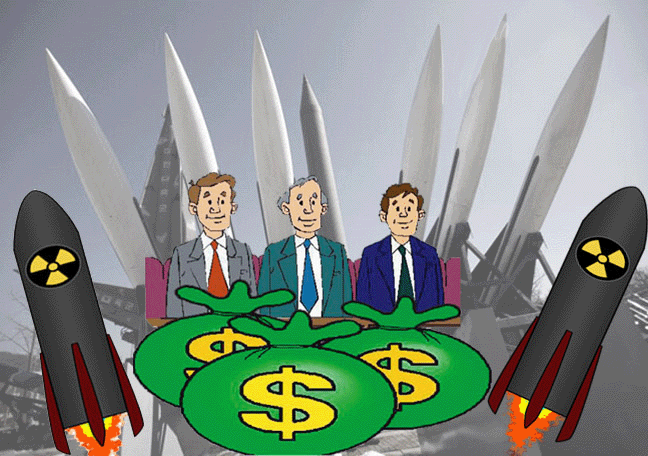 REMARKS: Gorging at the Nuclear Buffet Table Arms Control Association, May 2019
By Sen. Chris Van Hollen “…….we gather here at another urgent moment. It has been important work all along, but we are in an urgent moment now. Because with the Trump administration, all signs indicate that we’re jettisoning, we’re abandoning what has been a bipartisan tradition of recognizing that we need to modernize our nuclear forces, we need to modernize our triad, we need to make sure its survivable and resilient, but that we should do it within the framework of an arms control architecture that leads to predictability, stability, and transparency. That has been an important formula even as relations between the United States and the Soviet Union, now Russia, have gone up and down. We have still maintained that conversation, we have still maintained that structure, and that structure has helped keep the peace.
No evidence for this, but a Republican lawmaker says Russia has nuclear weapons in Venezuela
|
GOP Rep. says Russia has nuclear weapons in Venezuela but offers no evidence, Roll Call, Griffin Connolly, 1 May 19,
Rep. Mario Díaz-Balart made the comments in a Fox News segment with host Tucker Carlson. Rep. Mario Díaz-Balart asserted Tuesday that Russia might already have nuclear missiles stationed in Venezuela as that country’s political turmoil continues to churn in the wake of a disputed presidential election. Díaz-Balart, a longtime Florida Republican, provided no evidence to support his claim…… “Are you saying the Russians will put nuclear missiles in Venezuela?” Carlson asked in a follow-up question. “What I am suggesting is that they are already there,” Diaz-Balart said. The Florida congressman did not provide any evidence to support that suggestion. The Russian military flew and landed a nuclear-capable bomber in Venezuela in 2018, but there have been no reports or claims that they have outfitted such aircraft with nuclear bombs or transported nuclear missiles to the country…… “Are you saying the Russians will put nuclear missiles in Venezuela?” Carlson asked in a follow-up question……. https://www.rollcall.com/news/russia-already-has-nuclear-bombs-in-venezuela-gop-rep-suggests-sans-evidence |
|
|
Southern Company says – no more nuclear projects after the costly Vogtle project in Georgia
|
Georgia Power’s parent: After Vogtle, no new nuclear until maybe 2040, AJC, 3 May 19, Georgia Power’s parent company is the only utility constructing nuclear power reactors in the United States, and it doesn’t plan to do it again anytime soon.
It probably will be in the 2030s or 2040s before Atlanta-based Southern Company attempts another nuclear construction project, Southern CEO Tom Fanning told analysts Wednesday. ……. on Wednesday, Fanning told analysts that his administration won’t embark on more nuclear. …..
Liz Coyle, the executive director of Georgia Watch, a consumer advocacy group that has long warned about the Vogtle’s ballooning costs, questions whether ratepayers should fund another nuclear project incorporating new reactor designs. “What we don’t want to see is Georgia once again being made the guinea pig … for unproven technologies that end up taking much longer to build and at a significantly higher cost than other forms of generation,” she said……… https://www.ajc.com/business/georgia-power-parent-after-vogtle-new-nuclear-until-maybe-2040/ADjetBmiCnISHQIOP10uvJ/
|
|
|
The bizarre Westminster Abbey glorification of nuclear weapons
 Why is Westminster Abbey about to hold a bizarre thanksgiving for Britain’s nuclear weapons? https://www.independent.co.uk/voices/nuclear-weapons-westminster-abbey-cnd-bruce-kent-church-a8893106.html – 1 May 19
We are told that nuclear weapons and their deterrent effect have kept the peace. What peace? Bruce Kent
I think they’re right and the Abbey has got this very wrong. These submarines are nuclear weapon submarines. Their crews, trained to obey orders, are ready to fire missiles whose warheads will bring destruction to faraway places and people far beyond the scale of Hiroshima or Nagasaki.
My opposition to potential war crimes of this magnitude will motivate me to join a vigil outside the Abbey. I do not blame the sailors. The history of nuclear weaponry has been from the beginning one of deceit.
We were, and are, told that the bombs dropped on Hiroshima and Nagasaki were the only way to end the Second World War. Not true. The Japanese leadership, ready to surrender, were looking for one guarantee – that the position of the Emperor would not be challenged in any surrender settlement and that he would not be prosecuted. That was just what was given by General MacArthur but only after the bombs were dropped. Why were they dropped then? As a warning to the Soviets and to see if they “worked”? Probably.
We are never told about the few scientists, like Professor Joseph Rotblat, then in Los Alamos, who refused to continue to work on the bomb once he knew how it was to be used. He was sent back to Britain in 1944 in disgrace.
Not many church voices in this country were raised in opposition at the use of these bombs. One was that of Cuthbert Thickness, the Dean of St Albans Abbey. When he was supposed to have rung the bells in thanksgiving, he said in August 1945 “I cannot honestly give thanks to God for an event brought about by the wrong use of force, by an act of wholesale indiscriminate massacre, different in kind over all other acts of open warfare hitherto, however brutal and hideous.”
There were however strong military voices in opposition, to which little attention has been paid. General Eisenhower for instance had this to say: “Japan was at that very moment seeking some way to surrender with minimum loss of face. It was not necessary to hit them with that awful thing.”
We are told now that nuclear weapons and deterrence have kept the peace. What peace?
The list of post-1945 wars runs to several pages and the global military budget is nearly $2tn. If this claim means we have not had a nuclear war then I think we should listen to Robert McNamara, erstwhile US secretary of defense, who said, late in life, that we were saved not by our good judgement but by “good luck”. He had in mind the many accidents and misunderstandings which have dogged our nuclear weapon world.
In 1968 we signed up to the nuclear Non-Proliferation Treaty and promised in “good faith” to work for the elimination of all nuclear weapons.
Yet almost 50 years later we are now spending over £200bn on yet another nuclear weapons system (also entirely dependent on a regular loan of US missiles) to replace Trident.
Surely it is time to start spending our billions not on weapons of mass murder but on our NHS, pensions, welfare and real peace-making initiatives, here and abroad.
There is now a UN treaty on the prohibition of nuclear weapons just waiting for more signatory states to give it the force of law. Britain should sign it and lead the world towards a nuclear-free future.
In these dangerous times, when the threat of nuclear war is growing rather than receding, a thanksgiving service at Westminster Abbey for the so-called nuclear “deterrent” is the last thing we need.
Exelon welcomes Pennsylvania Governor joining nuclear front group the “US Climate Alliance”
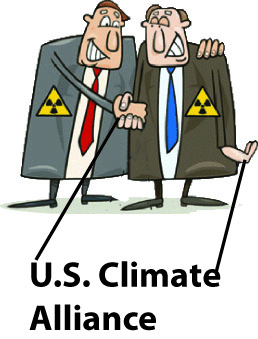
Pennsylvania joins US Climate Alliance, WNN, 1 May 19, Pennsylvania Governor Tom Wolf has joined the US Climate Alliance, a bipartisan coalition of governors committed to reducing greenhouse gas emissions. Exelon, which owns the Limerick, Peach Bottom and Three Mile Island nuclear power plants in the state, welcomed the move…..
Climate change has been causing droughts for a century, and this trend is accelerating
 Climate change link to global droughts goes back a century, study finds, SMH, by Peter Hannam, May 2, 2019 Humans have contributed to increased global risks of drought for more than a century, scientists say, in findings that also point to “severe” consequences ahead with climate change.
The research by US-based scientists and published in Nature journal on Thursday comes as the latest Bureau of Meteorology data showed the first four months of 2019 were the hottest on record for Australia as drought tightened its grip on the country’s south-east.
The scientists, led by Kate Marvel at NASA’s Goddard Institute for Space Studies, used so-called drought atlases derived from tree-ring data combined with satellite observations and climate models to identify how soil moisture has changed.
They found drought increased during the first half of the 20th century, eased in the quarter century to 1975 and worsened again. The pause in the trend coincided with increased aerosol pollution.
Models project and observations show a re-emerging greenhouse gas signal towards the end of the 20th century, and this signal is likely to grow stronger in the next several decades,” the paper concluded. “The human consequences of this, particularly drying over large parts of North America and Eurasia, are likely to be severe.”
Paul Durack, a research scientist and an author of the paper, said the study was the first to show global-scale droughts to be impacted by human activities.
“This is potentially bad news for Australia, and similar climate regions such as California,” he said in a statement. “These regions have experienced devastating recent droughts, and if the model projected changes continue, such droughts will become more commonplace into the future.”
Andrew King, climate extremes research fellow at the ARC Centre of Excellence for Climate System Science, said while heat extremes caused by climate change have been clear, “droughts are very complicated”, with natural variability masking the trends, Dr King said.
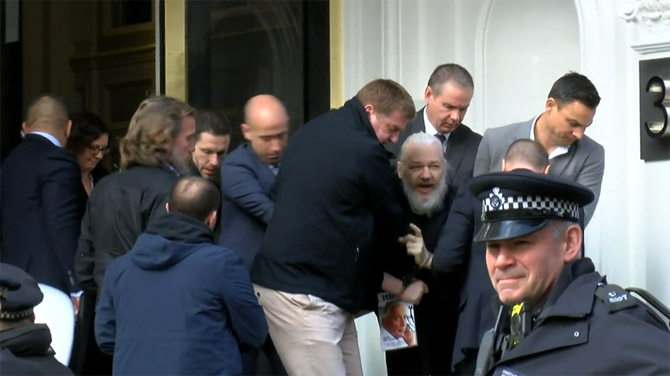
Extradition of Julian Assange Threatens Us All
|
|
|
Private Companies Pitch New Ways To Store USA’s piling up nuclear wastes
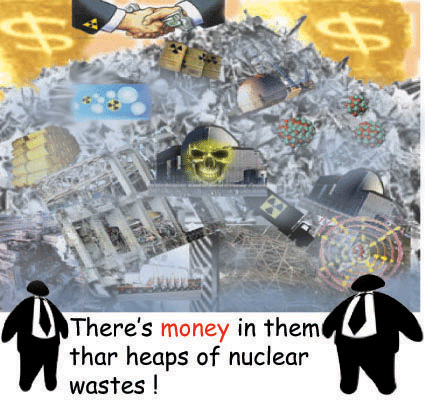 As Nuclear Waste Piles Up, Private Companies
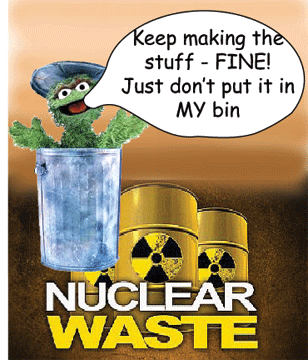 Pitch New Ways To Store It, NPR, JEFF BRADY 1 May 19, Congress is once again debating how to dispose of the country’s growing inventory of nuclear waste. Sen. John Barrasso, R-Wyo., is proposing legislation that would jump-start licensing hearings for the Yucca Mountain nuclear waste storage site in Nevada. The Trump administration also is asking Congress for money to resume work on that decades old project.But that may not end local opposition or a longstanding political stalemate. And in the meantime, nuclear plants are running out of room to store spent fuel.
Running out of room
The Peach Bottom Atomic Power Station in south-central Pennsylvania illustrates the problem. It’s one of 80 sites, across dozens of states, where nearly 80,000 metric tons of waste from power plants is stored where it was generated, at taxpayer expense.
Spent fuel removed from the Peach Bottom reactor is first stored in racks in a big pool. It’s surrounded by a bright yellow plastic barrier and signs that read “Caution: Radiation Area.”
“They are under about 22 feet of water,” says reactor engineering manager Mark Parrish. “They are continuously being cooled, as they still have some amount of decay heat even after they’ve operated in the reactor.”
The spent fuel stays here for seven to 10 years while it cools.
Once it’s safe to remove the spent fuel from the pool, it’s stored outside in white metal casks that look like big hot water heaters. They are lined up on a concrete base behind razor wire and against a hillside near the power plant.
Currently there are 89 casks at Peach Bottom with room for three more, says Pat Navin, site vice president for Exelon, the company that partially owns and operates the power plant.
“That is 40 years worth of spent fuel stored over there currently and it’s less than the size of a football field,” says Navin. “Probably half a football field.”…….
without a permanent disposal site, Navin says they’re going to run out of room. So they’re expanding the temporary storage to hold all the waste generated through the 60 years the plant is licensed to operate…..
Private companies propose their own storage plans
As the waste piles up, private companies are stepping in with their own solutions for the nation’s radioactive spent fuel. One is proposing a temporary storage site in New Mexico, and another is seeking a license for a site in Texas.
But most experts agree that what’s needed is a permanent site, like Yucca Mountain, that doesn’t require humans to manage it.
“Institutions go away,” says Edwin Lyman, acting director of the Nuclear Safety Project at the Union of Concerned Scientists. “There’s no guarantee the owner will still be around for the duration of time when that waste remains dangerous, which is tens or hundreds of thousands of years.”
 A California company says it has a viable plan for permanent storage. Deep Isolation wants to store spent fuel in holes drilled at least 1,000 feet underground in stable rock formations. The company says the waste would be separate from groundwater and in a place where it can’t hurt people.,,,,,,
Regulators require retrieval, because new technology could develop to better deal with the spent fuel. And the public is less likely to accept disposal programs that can’t be reversed, according to the International Atomic Energy Agency.
Proving the waste can be retrieved may be the easy part. The bigger challenge is federal law, which doesn’t allow private companies to permanently store nuclear waste from power plants.
Current law also says all the waste should end up at Yucca Mountain in Nevada. By contrast, Deep Isolation’s technology would store waste at sites around the country, likely near existing nuclear power plants.
“I just don’t see how there would be political support from every other state, other than Nevada, for changing the law, so that spent nuclear fuel could stay in your state forever,” says Lyman.
Despite the law, all that waste in dozens of states is staying put for now. https://www.npr.org/2019/04/30/716837443/as-nuclear-waste-piles-up-private-companies-pitch-new-ways-to-store-it
1 This Month
Tell Congress: Prevent Nuclear Catastrophe in Iran

Tell Congress: Prevent Nuclear Catastrophe in Iran

Read the Public Inquiry Report, the Commissioners’ report, Surrendering Australia: The AUKUS Deception is available to download for free at aukuspublicinquiry.com. Or just watch the replay of the National Press Club Luncheon.


Shut down the radiation-damaged Heysham nuclear reactors now
To see nuclear-related stories in greater depth and intensity – go to https://nuclearinformation.wordpress.com

Say No to NASA’s Reckless Nuclear Reactor on the Moon
Say No to NASA’s Reckless Nuclear Reactor on the Moon
-
Archives
- November 2026 (214)
- October 2026 (302)
- September 2026 (339)
- August 2026 (330)
- July 2026 (355)
- June 2026 (287)
- May 2026 (306)
- April 2026 (356)
- March 2026 (251)
- February 2026 (267)
- January 2026 (308)
- December 2025 (358)
-
Categories
- 1
- 1 NUCLEAR ISSUES
- business and costs
- climate change
- culture and arts
- ENERGY
- environment
- health
- history
- indigenous issues
- Legal
- marketing of nuclear
- media
- opposition to nuclear
- PERSONAL STORIES
- politics
- politics international
- Religion and ethics
- safety
- secrets,lies and civil liberties
- spinbuster
- technology
- Uranium
- wastes
- weapons and war
- Women
- 2 WORLD
- ACTION
- AFRICA
- Atrocities
- AUSTRALIA
- Christina's notes
- Christina's themes
- culture and arts
- Events
- Fuk 2022
- Fuk 2023
- Fukushima 2017
- Fukushima 2018
- fukushima 2019
- Fukushima 2020
- Fukushima 2021
- general
- global warming
- Humour (God we need it)
- Nuclear
- RARE EARTHS
- Reference
- resources – print
- Resources -audiovicual
- Weekly Newsletter
- World
- World Nuclear
- YouTube
-
RSS
Entries RSS
Comments RSS

