nuclear-news

The News That Matters about the Nuclear Industry Fukushima Chernobyl Mayak Three Mile Island Atomic Testing Radiation Isotope

  • Home
  • 1 This Month
  • ACTION !
  • Disclaimer
  • Links
  • PAGES on NUCLEAR ISSUES

Low level radiation exposure and increased risks of hypertension, cardiovascular disease and cerebrovascular disease

Moderate dose of radiation increase risk of hypertension  https://www.asianage.com/life/health/060519/moderate-dose-of-radiation-increase-risk-of-hypertension.html

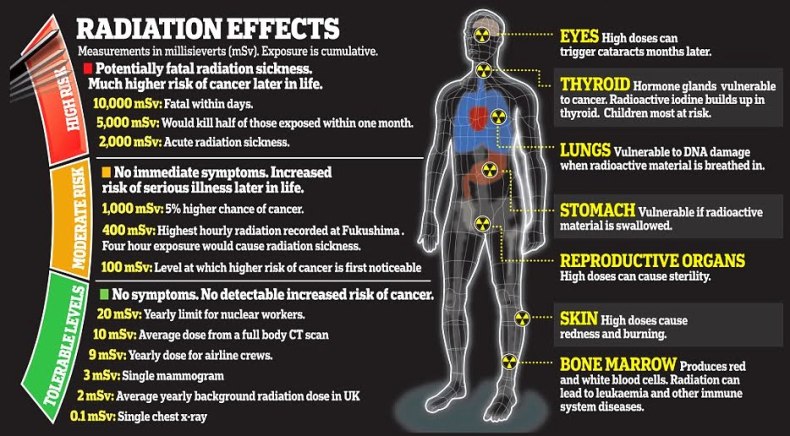
ANI May 6, 2019, Prolonged exposure to low-dose radiation could increase the risk of hypertension.  Washington: A study has revealed that prolonged exposure to low-dose radiation could increase the risk of hypertension, a known cause of stroke and heart ailments. The study published in Hypertension: Journal of the American Heart Association was conducted on workers at a nuclear plant in Russia.

“It is necessary to inform the public that not only high doses of radiation but low to moderate doses also increase the risk of hypertension and other circulatory system diseases, which today contribute significantly to death and disability. As a result, all radiological protection principles and dose limits should be strictly followed for workers and the general public,” added Tamara Azizova, lead author of the study. Uncontrolled hypertension, also known as high blood pressure, can lead to heart attack, stroke, heart failure and other serious health problems. Earlier studies linked exposure to high doses of radiation to increased risk of cardiovascular diseases and death from those diseases.

This study is the first to find an increased risk of hypertension to low doses of ionizing radiation among a large group of workers who were chronically exposed over many years.

The study included more than 22,000 workers. The workers were hired between 1948 and 1982, with an average length of time on the job of 18 years. Half had worked there for more than 10 years. All of the workers had comprehensive health check-ups and screening tests at least once a year with advanced evaluations every five years.

The researchers evaluated the workers’ health records up to 2013. More than 8,400 workers (38 per cent of the group) were diagnosed with hypertension, as defined in this study as a systolic blood pressure reading of 140 mm Hg, and a diastolic reading 90 mm Hg. Hypertension incidence was found to be significantly associated with the cumulative dose.

To put it in perspective, the hypertension incidence among the workers in the study was higher than that among Japanese survivors of the atomic bomb at the end of World War II but lower than the risk estimated for clean-up workers following the Chernobyl nuclear accident.

The differences may be explained by variations in exposure among the three groups, according to the researchers.

Following the atomic bombing, the Japanese experienced a single, high-dose exposure of radiation, the Chernobyl workers were exposed to radiation for a short time period (days and months), while the Russian workers were chronically exposed to low doses of radiation over many years.

While the development of cancer is commonly associated with radiation exposure, “We believe that an estimate of the detrimental health consequences of radiation exposure should also include non-cancer health outcomes. We now have evidence suggesting that radiation exposure may also lead to increased risks of hypertension, cardiovascular disease and cerebrovascular disease, as well,” said Azizova.

May 7, 2019 Posted by Christina Macpherson | 2 WORLD, health, Reference | Leave a comment

Distrust of Saudi Arabia’s motives in building a nuclear reactor

As Saudi Arabia Builds A Nuclear Reactor, Some Worry About Its Motives,   https://www.npr.org/2019/05/06/719590408/as-saudi-arabia-builds-a-nuclear-reactor-some-worry-about-its-motives  GEOFF BRUMFIEL On the outskirts of Riyadh, Saudi Arabia is building what it sees as the future of its energy production.

At the King Abdulaziz City for Science and Technology, the Saudi government is constructing a small nuclear research reactor. The Argentine-designed reactor will produce just tens of kilowatts of energy, a tiny fraction of what Saudi Arabia needs. But it’s a sign of things to come — the kingdom’s plans include gigawatts of energy from nuclear plants for both electricity and desalination.

Saudi Arabia’s plans appear, on paper, to be entirely peaceful. But some arms control experts are concerned that its nuclear energy ambitions may also be part of its ongoing rivalry with Iran, which already possesses dual-use technology that could aid in the production of a nuclear bomb.

The U.S. and others such as South Korea and China are pushing ahead with plans to help Saudi Arabia’s civilian nuclear program.

“The big, big question in the background,” says Sharon Squassoni, a nuclear expert and professor at George Washington University, “is do we have enough controls in place that we can trust [Saudi Arabia]? Since they’ve been pretty clear about their intentions should things go bad with Iran.”

Right now, Saudi Arabia generates its electricity with fossil fuels. But the government predicts that oil will be more valuable as an export. So about a decade ago, Saudi Arabia began pursuing an ambitious plan to start a nuclear energy program. Even after the 2011 disaster at the Fukushima Daiichi nuclear power plant in Japan, Squassoni says, Saudi Arabia kept at it.

“Most countries were walking away from nuclear, but they decided, ‘Look, this is our long-term plan,'” she says.

Squassoni says she’s a bit flummoxed by Saudi Arabia’s continued interest in nuclear, given its high cost and the ease with which the country could adopt renewable energy sources like solar.

But the interest may make a lot more sense, she says, when considering Saudi Arabia’s rivalry with Iran. Iran’s nuclear program has had military dimensions in the past, according to the International Atomic Energy Agency. Today, Iran remains in possession of thousands of centrifuges that can be used to enrich uranium. Depending on the level of enrichment, that uranium can be used either as fuel for nuclear reactors — or to make the cores of nuclear bombs.

Since 2015, the IAEA has closely monitored Iran’s centrifuges as part of an international agreement that freezes Tehran’s enrichment program in exchange for sanctions relief. But Iran’s nuclear capabilities clearly make Saudi Arabia nervous. Speaking last year on CBS’ 60 Minutes, Saudi Crown Prince Mohammed bin Salman warned that if Iran ever got a nuke, Saudi Arabia would too. “Without a doubt if Iran developed a nuclear bomb, we will follow suit as soon as possible,” he said.

Saudi officials say the new research reactor under construction outside of Riyadh has nothing to do with nuclear bombs. In a statement to Bloomberg News last month, Saudi Arabia’s Ministry of Energy, Industry and Mineral Resources said the reactor’s purpose was “strictly peaceful.”

“The project is fully in compliance with the IAEA and international framework governing the nuclear energy and its peaceful use,” the statement said.

The Saudi Embassy in Washington D.C. did not respond to an NPR request for comment.

From a technical standpoint, this new reactor is too small and too low-power to be of any use in bomb-making, according to Aaron Stein, director of the Middle East program at the Foreign Policy Research Institute in Philadelphia. “This is not something that a country would engage upon for a weapons program,” he says.

In fact, even large civilian nuclear power plants can’t be used easily to make bombs. But Saudi Arabia has remained quiet on whether it wants its own centrifuges in addition to power plants. Such centrifuges might be legal, as they are used to enrich uranium for electricity production, but Stein says a Saudi decision to pursue that technology “would send alarm bells throughout the region.”

“I think it would be interpreted as a move to hedge, and to consider building nuclear weapons down the line,” Stein says.

The Trump administration has been looking at a nuclear cooperation deal with Saudi Arabia. Squassoni says such a deal should be carefully crafted. She hopes the U.S. will seek assurances that Saudi Arabia will not pursue civilian technologies that could allow it to make a bomb.

May 7, 2019 Posted by Christina Macpherson | politics, Saudi Arabia | Leave a comment

U.S. Secretary of State Mike Pompeo ays that a nuclear deal with North Korea is still possible

Pompeo insists North Korea nuclear deal still possible despite weapons test,  Secretary of state echoes the president, saying ‘there’s opportunity to get a negotiated outcome’ on a denuclearization deal,  Guardian, Victoria Bekiempis in New York 6 May 2019 

  Secretary of State Mike Pompeo insisted Sunday that a nuclear disarmament deal between the US and North Korea was still possible, despite the country’s launch of several short-range projectiles into the sea one day earlier.“There’s an opportunity to get a negotiated outcome, where we get fully verified denuclearization” and said the US hopes to “get back to the table and find the path forward,” he told ABC’s This Week politics program on Sunday.

He also claimed that North Korean leader Kim Jong-un is on board with coming to an accord.

“Chairman Kim has repeated that,” Pompeo said. “He’s repeated that quite recently, in fact.”

Pompeo said the latest missile launch did not cross any international boundaries.

“That is, they landed in the water east of North Korea and didn’t present a threat to the United States or to South Korea or Japan,” he said. “And we know that they were relatively short-range.”

Pompeo’s statements about brokering a deal echo those of Donald Trump, who said he still thought the US and North Korea would reach a nuclear dealdespite the fact that talks have stalled since the leaders’ recent unsuccessfulsummit meeting in Vietnam. ……. https://www.theguardian.com/world/2019/may/05/mike-pompeo-north-korea-disarmament-deal-possible-despite-weapons-test

May 7, 2019 Posted by Christina Macpherson | North Korea, politics international, USA | Leave a comment

Four decades later, the Russian nuclear disaster—now the subject of an HBO miniseries—is still reverberating

Chernobyl (2019) | What Is Chernobyl? | HBO

Chernobyl Isn’t a Story About an Accident—It’s a Story About Endless Impact

Four decades later, the Russian nuclear disaster—now the subject of an HBO miniseries—is still reverberating, The Ringer, By Michael Baumann  May 6, 2019  “……….. an immense tradition of fiction about nuclear war or radiological mayhem. But somewhat paradoxically, a nuclear disaster, in and of itself, doesn’t make for particularly interesting television or film. You can’t fight radiation the way you can fire, or hide from it like you can a tornado. In the trailer for HBO’s Chernobyl miniseries, which premieres Monday night, Jared Harris’s Valery Legasov compares a radioactive atom to a bullet. Indeed, radiation kills instantly, though the process of dying from radiation poisoning can take anywhere from days to decades. By the time a nuclear accident happens, there’s nothing to do but limit the damage it causes.

A nuclear meltdown is not only more alien and irresistible than a natural disaster, it’s entirely anthropogenic. Fires, storms, and earthquakes occurred before industrialized society and will continue to occur after it ends. They can be written off on some level as acts of God, even when they’re caused, intensified, or exacerbated by human carelessness or malfeasance. Not so with a nuclear meltdown; nothing like it exists in nature. It doesn’t matter that nuclear power plants have a better safety record than fossil fuel power plants for the same reason it doesn’t matter that air travel is safer than driving: The deaths in those accidents are caused by something we all know humans weren’t designed to do. ………
even as the international cleanup effort enters its fourth decade, and even after the Ukrainian government opened the 30-kilometer quarantine zone to tourists, the legacy of the initial cover-up continues. Legasov, the chemist who led the Chernobyl investigation, took his own life on the second anniversary of the accident, leaving behind more questions than answers. In 1999, Belarusian physician Yury Bandazhevsky was sentenced to eight years in prison, supposedly for taking bribes from parents of prospective students—he says the Belarusian government was trying to stop and discredit his research into the health effects of the Chernobyl disaster. …….. https://www.theringer.com/tv/2019/5/6/18530653/chernobyl-hbo-miniseries-nuclear-accident

A grim ‘Chernobyl’ shows what happens when lying is standard and authority is abused

HBO’s miniseries about the 1986 nuclear disaster resonates with a crucial warning. (subscribers only) Washington Post 6 May 19


Chernobyl Disaster – growing up in the fallout zone, Business Insider, 6 May 19

Janina Scarlet was just under 3 years old when the Chernobyl Nuclear Power Plant blew up.

  • Chernobyl was the worst nuclear-reactor disaster in history. The explosion spread toxic radiation over large swaths of Ukraine, including Scarlet’s hometown.

  • Scarlet said she was often sick as a child, with a weak immune system and frequent nose bleeds. She still has migraines and occasional seizures……..

Although it’s been 33 years since the Chernobyl explosion, the health consequences of that radiation exposure still plague people who lived near the plant. The Chernobyl disaster has been directly blamed for fewer than 50 deaths from radiation poisoning, but many researchers say the full death tally from the Chernobyl explosion and its lingering effects may never be known. The World Health Organization estimates that eventually, the disaster may become responsible for some 5,000 cancer deaths. …….

Kids who lived near the Chernobyl site have increased instances of thyroid cancer, and adults who helped with the reactor cleanup are more at risk of developing leukemia.

May 7, 2019 Posted by Christina Macpherson | incidents, politics, Ukraine | Leave a comment

Why cockroaches might be able to survive a nuclear attack

How Can Cockroaches Survive Nuclear Attacks If They Can Be Killed By Insecticide?   http://mentalfloss.com/article/582458/how-can-cockroaches-survive-nuclear-attacks-killed-insecticide

BY QUORA .COM  MAY 6, 2019, Eduardo Fox:

Short answer: Because insecticides are powerful drugs specifically tailored to affect their neurological system when directly aimed, and many will leave long-lasting residual effect. Nuclear bombs not directly aimed at cockroaches may miss them underground for long enough to allow for radiation to dissipate enough for their survival.

Long answer:

There’s obviously considerable exaggeration on the widespread belief that cockroaches would survive a nuclear explosion.

Of course any exposed cockroach wouldn’t survive being hit by a missile, nor the massive forthcoming shock wave, not even the sky-high radiation levels. What is true is that insects are generally more resistant to radiation than vertebrates because of their smaller size and filtering exoskeleton, and that some pest cockroaches are well-known for being able to survive on limited nutrition and reproduce astoundingly quickly for their size.

This way, many researchers believe that cockroaches would likely survive for longer than vertebrates within any cities hit by a major nuclear accident or attack. Whether this is true or not, time will tell.

Now, insecticides are chemicals carefully selected to affect the nervous system of insects, causing death as soon as possible while lasting for a long time on surfaces (residual effect). They are designed to kill cockroaches—while nuclear attacks are designed to vanquish cities. The right weapon for the right enemy, that’s it.

May 7, 2019 Posted by Christina Macpherson | 2 WORLD, environment | 1 Comment

Nuclear weapons companies doing very profitably out of governments

HOW TO DISMANTLE THE ABSURD PROFITABILITY OF NUCLEAR WEAPONS, The Intercept

Jon Schwarz

May 5 2019  THE BULLETIN OF the Atomic Scientists currently has its Doomsday Clock set to two minutes to midnight — the closest we’ve been to self-obliteration in nuclear history.

But nuclear weapons are more than just a terrifying threat to every living thing on earth. For decades, they’ve been a terrific way to make money.

A new report from PAX, a Dutch peace organization, both illuminates how profitable it can be for multinational corporations to manufacture Armageddon and provides a roadmap for taking the money out of mass death.

The PAX report identifies a total of $116 billion in current contracts between governments and the private sector to design, build, and maintain the world’s nuclear arsenals. The actual amount may be significantly higher, since all nine nuclear powers maintain some degree of opacity about their nuclear programs. “We know what we can trace,” says Susi Snyder, the report’s principal author, “but there’s definitely more out there.”

Many powerful corporations therefore have incentives to push governments to expand their nuclear stockpiles. At a recent investor conference, a managing director of the investment bank Cowen Inc. questioned the CEO of Raytheon, one of the nuclear contractors listed by PAX. “We’re about to exit the INF [Intermediate-Range Nuclear Forces Treaty] with Russia,” the managing director said, and excitedly asked if this means that “we will really get a defense budget that will really benefit Raytheon.” (The planet may be destroyed, but for a beautiful moment in time, they will have created a lot of value for shareholders.)

Snyder believes that President Donald Trump’s decision to pull out of the INF Treaty may be paying literal dividends for Raytheon already. She points out that over a period of three months after Trump announced the U.S. withdrawal last fall, Raytheon received an anomalous 44 separate missile contracts worth more than $500 million.

Moreover, corporate lobbying has already nudged the U.S. to commit to a nuclear “modernization” program — initiated under former President Barack Obama and expanded under Trump — that will cost an estimated $1.2 trillion over the next 30 years. And while modernization sounds good, what’s planned will actually make U.S. nukes much more deadly, something to which Russia is already planning to respond. The final result may be an extremely modern nuclear war.

PAX, however, does not counsel despair, but instead sees the intertwining of the private sector and nuclear weapons as a potential point of leverage.

The five largest known current beneficiaries of nuclear weapons spending are all U.S.-based multinationals: Huntington Ingalls Industries ($29.9 billion), Lockheed Martin ($25.2 billion), Honeywell International ($16.5 billion), General Dynamics ($5.8 billion), and Jacobs Engineering ($5.3 billion).

The report also identifies large nuclear contracts with companies elsewhere. Airbus, headquartered in the Netherlands, develops nuclear-armed missiles for France. A British company called Serco has a 25-year contract to help manage and operate the U.K. Atomic Weapons Establishment, the center of the United Kingdom’s nuclear program. Bharat Dynamics Limited in Hyderabad helps make two of India’s nuclear-capable missiles.

Among the hundreds of nuclear contracts are some gems of nuclear insanity. Boeing has received $16 million to develop a “Flight Termination Receiver” that would theoretically allow nuclear missiles to be destroyed after a mistaken launch.

This could change the U.S. nuclear calculus in an extremely dangerous way. There have been many false alarms in the past that Russian missiles were headed toward the U.S. We’re here now only because no president responded to the alarms, in part because they knew such a response would be irrevocable. If future presidents believe that they have an end of the world “take back,” they may be tempted to launch U.S. nuclear missiles in response to another false alarm. But of course, no technology is ever 100 percent effective — especially when it’s built by the company that brought us the 737 Max. And if just one missile failed to self-destruct, a full-out nuclear war would soon follow.

That’s the bad news. Here’s the qualified good news…………….https://theintercept.com/2019/05/04/nuclear-weapons-profits/

May 6, 2019 Posted by Christina Macpherson | 2 WORLD, business and costs, weapons and war | Leave a comment

Donald Trump still predicting nuclear deal with Kim Jong Un

Trump insists nuclear deal will happen after North Korea fires projectiles, Guardian, 5 May 19, President tweeted on Saturday he believes Kim Jong-un understands North Korea’s ‘great economic potential’ and won’t interfere.  Donald Trump said he still believes a nuclear deal with North Korea will happen, after the country fired several unidentified short-range projectilesinto the sea.

The US president tweeted on Saturday that he believes that leader Kim Jong-un “fully realizes the great economic potential of North Korea, & will do nothing to interfere or end it”……..

If it’s confirmed that the North fired banned ballistic missiles, it would be the first such launch since the North’s November 2017 test of an intercontinental ballistic missile. That year saw a string of increasingly powerful weapons tests from the North and a belligerent response from Trump that had many in the region fearing war.

Experts say the North may increase these sorts of low-level provocations to apply pressure on the US to agree to reduce crushing international sanctions

South Korea said it’s “very concerned” about North Korea’s weapons launches, calling them a violation of last year’s inter-Korean agreements to reduce tensions between the countries.

South Korea’s military has bolstered its surveillance in case there are additional weapons launches, and South Korean and US authorities are analyzing the details.

North Korea could choose to fire more missiles with longer ranges in coming weeks to ramp up its pressure on the US to come up with a roadmap for nuclear talks by the end of this year……..https://www.theguardian.com/world/2019/may/04/trump-north-korea-nuclear-deal-short-range-projectiles

May 6, 2019 Posted by Christina Macpherson | North Korea, politics international, USA | Leave a comment

Report: Islamic Jihad threatens to strike nuclear reactor, airport

  https://www.ynetnews.com/articles/0,7340,L-5503570,00.html

Ynet  05.04.19, The military wing of Islamic Jihad threatens to strike sensitive Israeli sites, Israel public broadcaster Kan reports.

The targets mentioned in a video released by the Gaza-based terror group include the nuclear reactor in Dimona in the south, Ben-Gurion International Airport near Tel Aviv and oil refineries in the northern city of Haifa.

May 6, 2019 Posted by Christina Macpherson | Israel, safety | Leave a comment

ICAN’s strategy with Treaty on the Prohibition of Nuclear Weapons

HOW TO DISMANTLE THE ABSURD PROFITABILITY OF NUCLEAR WEAPONS, The Intercept

Jon Schwarz. May 5 2019, “…………. PAX is a member of the International Campaign to Abolish Nuclear Weapons, which won the Nobel Peace Prize in 2017. ICAN played a key role in the promotion of the Treaty on the Prohibition of Nuclear Weapons, or TPNW, which was adopted that year at the United Nationsand therefore, opened for ratification by member states.

ICAN’s strategy with the TPNW is a sneaky one. They do not aim to begin by trying to persuade countries with nuclear weapons to abandon them. Rather, they aim to start by persuading non-nuclear countries to ratify the treaty. Such countries will then be prohibited from possessing nuclear weapons — and from allowing them to transit through them or permitting their production on their territory.

If all goes according to plan, this will create a slowly tightening noose around the nuclear weapons states. If the Netherlands were to ratify TPNW, Airbus could no longer help build France’s nuclear missiles. The Italian company Leonardo also lends a hand with France’s nuclear program and likewise could not do so if Italy ratifies the treaty.

But beyond legal restrictions, ICAN hopes that grassroots organizing for TPNW country by country will eventually create a societal taboo around nuclear weapons that will put severe pressure on private-sector corporations and eventually the current nuclear states. If this sounds utopian, it should be remembered that such taboos have been created around biological and chemical weapons, as well as land mines and cluster bombs. There are still holdout countries for each, but they’ve faced greater and greater opprobrium as time goes by, and it’s not impossible to imagine that there will be eventual complete compliance in each case.

PAX points out that the TPNW has already helped create enough stigma surrounding nuclear weapons that two enormous pension funds have divested from nuclear arms producers. The Norwegian Government Pension Fund, the second-largest pension fund on earth, has sold its investments in, among other companies, Huntington Ingalls, Lockheed Martin, Airbus, and Boeing. The Dutch civil service fund ABP is the world’s fifth-largest and has also divested from the nuclear arms industry. “Changes in society, also at an international level,” said an ABP executive, mean that “nuclear weapons no longer fit in with our sustainable and responsible investment policy.”

This perspective is now quietly making its way across the Atlantic. This January, a bill was introduced in the Massachusetts State Legislature that would require the state’s pension funds to divest from nuclear manufacturers. The city of Cambridge has already done so. Ojai, California, will not make any future investments in the makers or funders of nuclear weapons.

“If Lockheed Martin can stop making cluster bombs because they’re losing investors across Europe,” says Snyder, “we know corporations can be moved. … It takes a long time with businesses, but you can do it faster than with governments.”

And that’s the point of Pax’s report: It wasn’t created for passive consumption, but to put basic information in the hands of activists, so that they can exert the power of basic sanity. https://theintercept.com/2019/05/04/nuclear-weapons-profits/

May 6, 2019 Posted by Christina Macpherson | 2 WORLD, politics international, weapons and war | Leave a comment

Cheaper and permanent, not temporary, disposal of nuclear waste.

We will provide an option for people not satisfied with existing options,” said Deep Isolation’s co-founder and CEO Elizabeth Muller. She pointed out the interim sites were not “deep geologic storage.”

They’re looking at being safe for decades,” Muller said. “They’re looking at temporary storage. We’re looking at disposal.”

David Lochbaum, former director of the Nuclear Safety Program for the Union of Concerned Scientists, has taken a seat on Deep Isolation’s advisory board.

“There are technical, legal and political challenges facing Deep Isolation, to be sure,” Lochbaum said via email. “I think their proposal could very well meet all these challenges.

“The spent fuel storage status quo is only worsening with time,” he said. “We need to find a solution before we run out of time to do so without harm.” 

Startup promotes permanent nuclear waste storage via miles-long drilling, South Coast Today, By Christine Legere / Cape Cod Times, 4 May 19, A small startup company in Berkeley, California, with connections to scientists, university professors, industry experts and Silicon Valley entrepreneurs is marketing a method to permanently store nuclear waste, tapping advanced drilling technology used for years by the gas and oil industries.

Storage of the highly radioactive waste would be permanent — unlike the options currently available around the world — and the method is being pitched as far less expensive than development of a deep geologic repository such as Yucca Mountain in Nevada. In New England, spent nuclear fuel is being stored on-site at the Maine Yankee, Seabrook, Vermont Yankee, Yankee Rowe, Pilgrim and Millstone nuclear plants.

Although the Department of Energy was required under the Waste Policy Act to remove spent fuel from sites nationwide for storage in a permanent repository by 1998, its plan for a Yucca Mountain repository in Nevada has languished for several years.

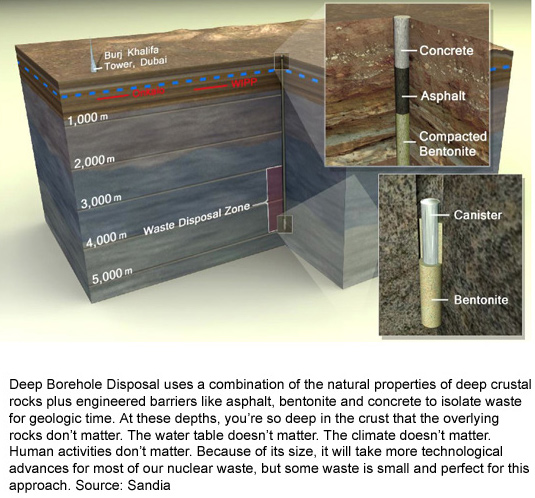
The proposal from Deep Isolation calls for drilling a 14-inch-wide vertical access channel up to a mile or more down, depending on geologic conditions, then gradually making the drill hole run horizontally along the line of the rock formation.

The horizontal bed, which could be as long as 2 miles, would serve as the nuclear waste storage area, deep in the subsurface where the rock has been stable and out of contact with the surface for millions of years and would remain out of contact for millions more, unaffected by surface impacts such as sea level rise.

Hundreds of corrosion-resistant canisters, each holding a spent fuel assembly, could be stored in a line inside a single drill hole, and since the technology already exists, the company could be placing fuel in the ground within two to three years, according to Sophie McCallum, Deep Isolation’s chief of staff.

And more than one drill hole can be made on a site.

We are in active discussions with potential customers in the U.S. and internationally to move forward disposal programs of stalled nuclear waste inventories,” McCallum said in an email .

Deep Isolation tested its system, installing a drill hole in Cameron, Texas, where it successfully placed a 5-foot-long canister — the kind used to store military waste such as cesium and strontium — in the horizontal storage area, deep underground. It then retrieved the canister, which Deep Isolation experts say could be done for up to about 50 years.

The company plans to begin with storage of defense waste in the U.S. and commercial waste in other countries, since the federal Waste Policy Act must be amended to allow for permanent storage of the nation’s commercial waste in places other than Yucca Mountain.

Currently about 80,000 metric tons of spent nuclear fuel produced by commercial reactors and another 14,000 metric tons from the nation’s weapons program is being temporarily stored at 80 sites in 35 states, in spent fuel pools or hulking dry casks.

Commercial reactor owners have sued the department for failing to provide promised permanent storage, and damages to date have cost the agency more than $6 billion.

In 2016, the department was investigating a method of storage that called for deep, vertical boreholes into crystalline basement rock, but the program was broken off in 2017 with Yucca Mountain once again taking over as the sole focus for permanent, high-level nuclear waste storage.

Holtec International and Waste Control Services have submitted applications to operate interim storage facilities in New Mexico and West Texas that are under review by the Nuclear Regulatory Commission. Spent fuel would be stored at those locations until a national repository is ready.

“We will provide an option for people not satisfied with existing options,” said Deep Isolation’s co-founder and CEO Elizabeth Muller. She pointed out the interim sites were not “deep geologic storage.”

They’re looking at being safe for decades,” Muller said. “They’re looking at temporary storage. We’re looking at disposal.”

……..Several nuclear watchdog groups have advocated for keeping waste at sites where it has been generated rather than transporting it across the country to other locations. Deep Isolation’s storage method can be done at or near the generation sites, depending on the geology.

…….Deep Isolation was established about three years ago and has operated to date without government or institutional funding but hopes that will change.

……The government estimates it will cost $100 billion to dispose of existing nuclear waste at Yucca. “We project that the cost of Deep Isolation disposal is about one-third of a mined repository,” McCallum said.

David Lochbaum, former director of the Nuclear Safety Program for the Union of Concerned Scientists, has taken a seat on Deep Isolation’s advisory board.

“There are technical, legal and political challenges facing Deep Isolation, to be sure,” Lochbaum said via email. “I think their proposal could very well meet all these challenges.

“The spent fuel storage status quo is only worsening with time,” he said. “We need to find a solution before we run out of time to do so without harm.” https://www.southcoasttoday.com/news/20190504/startup-promotes-permanent-nuclear-waste-storage-via-miles-long-drilling

May 6, 2019 Posted by Christina Macpherson | USA, wastes | Leave a comment

Hibakusha continue their mission to eliminate nuclear weapons

A-bomb survivor continues mission for nuclear-free world,  https://japantoday.com/category/national/a-bomb-survivor-continues-mission-for-nuke-free-world, May 4  19 NEW YORK

Jiro Hamasumi, in utero when the United States dropped the first atomic bomb on Hiroshima in 1945, told the United Nations he and other survivors will persist with their efforts to spare future generations the suffering caused by nuclear weapons.

“The hibakusha, whose average age has exceeded 80 years old, have endeavored to create a world without nuclear weapons in our lifetime, so that future generations will be free from the fear of having another hell on earth,” he said in a speech.

He was speaking at the third and final session of the preparatory committee for the 2020 review conference of the Nuclear Non-Proliferation Treaty that got under way last Monday and ends next Friday.

The Japanese word “hibakusha” is used to describe those who were exposed to fallout from the atomic bombs. While the first bomb was dropped over Hiroshima on Aug. 6 in the closing days of World War II, three days later Nagasaki, a city in Kyushu, suffered the same fate.

As assistant secretary general of the Japan Confederation of A- and H-Bomb Sufferers Organizations, Hamasumi was speaking along with the mayors of Hiroshima and Nagasaki as well as an activist from the Japan Council against Atomic and Hydrogen Bombs, known in Japanese as Gensuikyo, and other members of civil society.

Hamasumi recalled growing up looking at the portrait of his father, who had died in the initial blast, and the hardships his mother faced while raising seven children by herself.

He is among an estimated 7,200 hibakusha whom he said were exposed in utero through their mothers. Despite living with fears about his health and the welfare of his family, he has committed to pursuing a world free of nuclear weapons.

“We believe it is the mission of the hibakusha, as well as that of each and every one of the adults all over the world, to hand down the blue and clear sky free of nuclear weapons and wars to our children in the world,” he added.

The discussions are viewed as a critical step in setting the tone for what can be expected to be achieved at the five-year review of the NPT Treaty, lasting roughly a month.

Next year will be the 50th anniversary of the treaty, which came into effect in 1970. This year’s negotiations are taking place in an environment marred by heightened security challenges.

Against this backdrop, the United States and Russia in particular — the two countries with the largest nuclear arsenals — are increasingly at odds.

The situation was exacerbated in February when U.S. President Donald Trump announced Washington was withdrawing from its bilateral nuclear arms control treaty that dates back to 1987. The move was a response to alleged violations carried out by Moscow, stoking fears it may spark a new arms race involving other nations, such as China.

“We see disturbing trends, including the recent intention of the U.S. and Russia to terminate the INF Treaty,” warned Hiroshima Mayor Kazumi Matsui, who also spoke at the conference.

He voiced concerns about a global security system that remains based on the doctrine of nuclear deterrence and nuclear-armed states that keep modernizing their arsenals.

Nagasaki Mayor Tomihisa Taue raised concerns about the approximately 14,500 nuclear warheads in the world, and called on leaders of nuclear-armed states to do more to live up to the promise of reducing their arsenals.

“Please work in better faith for nuclear arms reductions in keeping with the promise you have with the world under the special status afforded you in the framework of the NPT,” he said, adding Moscow and Washington have a “responsibility to initiate a dialogue.”

After the session, Nagasaki survivor Sueichi Kido, secretary general of the Japan Confederation of A- and H-Bomb Sufferers Organizations, presented about a petition — calling for the elimination of nuclear weapons — with 9.4 million signatures to Malaysian Ambassador Syed Mohamad Hasrin Aidid, chair of the session.

Called the Hibakusha Appeal, it was last presented in the fall of 2018 by Kido and Hamasumi to an ambassador who chaired a committee tackling disarmament and international security. At that time there were more than 8 million signatures.

“Listening to the hibakusha you can somehow feel the pain, but it is not the same, so we hope that the delegates listen to what they have been saying and work towards a world free of nuclear weapons,” Aidid told Kyodo News after meeting hibakusha for the first time.
May 6, 2019 Posted by Christina Macpherson | 2 WORLD, weapons and war | Leave a comment

How Does the Olympics Clean Up? (Or, Is There an Olympics Without Cleaning Up?)

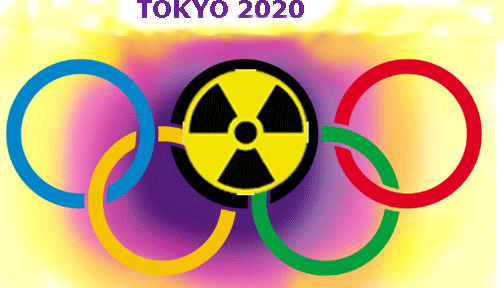
Under these circumstances, whether the unresolved issues of radiation, without appropriate treatment of nuclear power facilities, disaster victims lacking a place to reside, the forcible relocation of American army bases or the dispersal of the homeless, the Japanese media has relentlessly broadcast the Olympics.

“The Tokyo Olympics will take place in a state of nuclear emergency. Those countries and the people who participate will, on the one hand, themselves risk exposure, and, on the other, become accomplices to the crimes of this nation.”

THE OLYMPICS CLEAN-UP: FUKUSHIMA, OKINAWA, HOMELESSNESS    陳黃金菊05/05/2019    ENGLISH INTERNATIONAL MAY 2019   How Does the Olympics Clean Up? (Or, Is There an Olympics Without Cleaning Up?)

WHEN INTERVIEWED in Zhu Zhong (《諸眾》, literally Multitude), published by Kao Jun Honn in 2015, homeless artist Misako Ichimura raised opposition to the Olympics in the city that “Now we confront the challenge of the 2020 Tokyo Olympics. Whether we are homeless residents, or just the disprivileged, we all confront a large threat….many disaster victims don’t have a place to settle…For the sake of the Olympics, not only the parks, but the roads will be snatched away. The government also teaches children about the history of the Olympics, organizes many sporting activities. Everyone’s behavior and thinking has been “Olympicized” (P. 83-84). [13]
What is this threat that Ichimura speaks of concretely? I went to Japan at the end of March and in the beginning of April. Yoyogi Park has already become a shop in front of the Tokyo Olympics, with the park being completely gentrified as a space. Those living in the park have no more space to reside. The government has set up traffic cones, plants, and indirect means to drive away homeless Outside of this, Miyashita Park has been demolished, as part of plans for a “New Miyashita Park” undertaking, forcing squatters to inhabit the scaffolding.
Japanese citizens do not know this because mainstream media has not reported on this. Continue reading →

May 6, 2019 Posted by Christina Macpherson | Japan, politics | Leave a comment

Highland Green MSP John Finnie points out the danger of transporting nuclear material across the Atlantic

Press and Journal 4th May 2019  Highland Green MSP John Finnie has expressed concern after three quartersof a ton of highly enriched uranium was transported from Dounreay in
Caithness to America. He said: “The appropriate place for dangerous
material is secure storage and supervision by highly trained staff where it
was created, not transportation.

“Whilst pleased that this risky has been completed without incident, that we know of. “But before the authorities on both sides of the Atlantic pat themselves on the back, they need to
reflect on the dangers they put communities in. “As was evidenced when a
ship which was transporting nuclear material in the Moray Firth went on
fire. As with oil and gas reserves, the message regarding nuclear waste has
to be ‘keep it in the ground’.”

https://www.pressandjournal.co.uk/fp/news/highlands/1740397/700kilos-of-uranium-transported-from-dounreay-to-us/

May 6, 2019 Posted by Christina Macpherson | politics, safety, UK | Leave a comment

Fukushima nuclear waste mess is by no means solved

THE OLYMPICS CLEAN-UP: FUKUSHIMA, OKINAWA, HOMELESSNESS    陳黃金菊05/05/2019    ENGLISH INTERNATIONAL MAY 2019      NUCLEAR PHYSICIST Hiroaki Koide has pointed out that although eight years have passed, there is still more than one million tons of irradiated water which still hasn’t been treated. The Tokyo Electric Power Company (TEPCO)’s “handling” method for this situation was to build a thousand sewage tanks to store the sewage. But as space was limited and the number of sewage tanks was also limited. As such, Koide asserts, “TEPCO will be compelled to release these waters into the sea in the near future.” [1] Moreover, with regards to the core meltdown of the reactor, the melted fuel rods remain unaccounted for.

Koide points out that if there were issues with a fired power plant, there would not be such issues. But if this is nuclear power, “Anyone approaching the site would die.” Despite that the Japanese government has attempted to handle the matter with robots, once the microchips inside are exposed to radiation, they will be overwritten. Likewise, exposure to high levels of radiation is deadly for workers.

As such, Koide has been staunch in advocating that the only solution to the Fukushima incident is a Chernobyl-style sarcophagus, covering the nuclear power plant. But he also admits, even in this case, “the containment of this disaster will not have been achieved even after all who are alive today have died.” [2]

Abe Shinzo issued an order for an end to an evacuation on April 1st, 2017, at the same time as he issued a compulsory repatriation policy. At this time, the town of Namie, 11.2 kilometers from the Fukushima nuclear power plant, has been described as a “ghost town.” As raised by now deceased mayor Baba Yushi before he died, after the end of the evacuation, 234 people—one percent of the population—returned to Namie to live. The majority of these were elderly, which is to say, the town lacked a working population. Without any means of transportation and open supermarkets. There was just one clinic. [3] 

As a compensatory measure in line with the repatriation measure, TEPCO set a deadline, requesting that disaster victims assess their losses, and inform TEPCO of what kind of compensation they requested. Regarding this, the mayor of Namie stated that TEPCO never should have set this kind of deadline, but should account for the losses of disaster victims themselves.

What is even more incredible is that TEPCO could use “individual circumstances” as a way of avoiding the requests of disaster victims. For example, residents in twenty kilometers of the nuclear power plant were forcibly evacuated but TEPCO interpreted this instead as “voluntary evacuation”, and refused to pay compensation. [4] Even those who lost their real estate might not receive compensation, not to mention harms that could not be compensated for, such as those below the age of eighteen whose thyroids were inspected five years later, among them 172 were positive for or suspected of having thyroid cancer, and 131 had their thyroid glands removed by operation. [5] 

At the same time, damages to the environment cannot be compensated. Who is it that would receive compensation? What kind of compensation would that be? Before the disaster, Fukushima’s agricultural industry and natural environment were comparatively famous. But after the disaster, farmers have been forced to the end of a rope, some of which have chosen death. [6] Completely clearing radiation from the land is also impossible, because in clearing remaining radiation in the forest, this would require cutting down all of the trees, and removing all of the topsoils. [7]

Protests by those who have developed thyroid cancer were criticized by the government, stating that their protests were causing “reputational damage”.[8] The government and TEPCO toss the ball to each other, and what is even stranger is that nobody seems to need to take responsibility. [9]…………..https://newbloommag.net/2019/05/05/olympics-fukushima-okinawa-eng/

1] See “The Fukushima Nuclear Disaster and the Tokyo Olympics”.

[2] Ibid.

[3] See “‘Save the Town’: Insolvable Dilemmas of Fukushima’s ‘Return Policy’”.

[4] Ibid.

[5] See “Follow Up on Thyroid Cancer! Patient Group Voices Opposition to Scaling Down the Fukushima Prefectural Health Survey”.

[6] See the Green Citizen Action Alliance’s report “Environmental Front: Subscribing to 311 compensation” (〈環境前線:前仆後繼的311核災求償行動〉).

[7] See “Reconstruction Disaster: The human implications of Japan’s forced return policy in Fukushima”

[8] Ibid.

[9] See Tetsuya Takahashi’s book, Xisheng te tixi: Fudao ‧ Okinawa (2014, lit. The System of Sacrifice: Fukushima‧Okinawa), trans. Lee Yi-zhen.

[10] One can see the report “Decoding the US Military Bases in Japan with 9 Graphs” (九張圖解密日本美軍基地) in the News Lens and “Okinawa Government Sued by Japanese Government for ‘the Most Dangerous Military Bases’” (為了「全世界最危險的軍事基地」,沖繩縣政府被日本政府一狀告上法庭──觀光客看不到的美軍基地問題) in Crossing.

[11] One can see the report in UDN Global, “Okinawan Referendum: Say No to the US Military Again? The People Neglected by the Japanese Government” (沖繩基地公投:再次向美軍說NO?日美政府無視的43萬民意).

[12] See the editorial, “Henoko project clearly doomed; time to open talks with U.S” in Asahi and “US Military Base Threatens Biodiversity in Okinawa” in Truthout

May 6, 2019 Posted by Christina Macpherson | Fukushima continuing | 7 Comments

Discussion on nuclear weapons, between Trump and Putin

Trump, Putin discuss nuclear weapons and Venezuela in phone call, Aljazeera, 3 May 19,
US President Donald Trump tweets he ‘had a long and very good’ phone call with Russian President Vladimir Putin. 
US President Donald Trump and Russian President Vladimir Putin spoke for more than an hour on Friday, discussing the possibility of a new nuclear accord, North Korean denuclearisation, Ukraine and the political situation in Venezuela, the White House said.

“Had a long and very good conversation with President Putin of Russia,” Trump said in a post on Twitter, noting they had discussed trade, Venezuela, Ukraine, North Korea, nuclear arms and Special Counsel Robert Mueller‘s investigation of Russian meddling in the 2016 US presidential campaign.

White House spokeswoman Sarah Sanders told reporters that the call was an “overall positive conversation”…….

Putin told Trump that any external interference in Venezuela’s internal business undermines the prospects of a political end to the crisis, the Kremlin said.

Russian Foreign Minister Sergey Lavrov told US Secretary of State Mike Pompeo by phone on Wednesday that further “aggressive steps” in Venezuela would be fraught with the gravest consequences, the Russian ministry said…….

New START treaty

Sanders told reporters Trump and Putin talked about the possibility of a new multilateral nuclear accord between the US, Russia and China, or an extension of the current US-Russia strategic nuclear treaty.

She did not say which arms control agreement Trump and Putin discussed, but the Russian state news agency Tass reported that they talked about the New START treaty, the last major arms-control treaty remaining between the US and Russia.

The 2011 New START treaty expires in February 2021 but can be extended for five years if both sides agree. Without the agreement, it could be harder to gauge each other’s intentions, arms control advocates say.

The New START treaty required the US and Russia to cut their deployed strategic nuclear warheads to no more than 1,550, the lowest level in decades, and limit delivery systems – land- and submarine-based missiles and nuclear-capable bombers.

It also includes extensive transparency measures requiring each side to allow the other to carry out 10 inspections of strategic nuclear bases each year; give 48 hours notice before new missiles covered by the treaty leave their factories; and provide notifications before ballistic missile launches.

Trump has called the New START treaty a “bad deal” and “one-sided”.

“They discussed a nuclear agreement, both new and extended, and the possibility of having conversations with China on that as well,” Sanders said.

The Kremlin said the two sides confirmed they intended to “activate dialogue in various spheres, including strategic security”.

Trump earlier pulled the plug on a decades-old nuclear arms treaty with Russia. Trump accused Moscow of violating the 1987 Intermediate-Range Nuclear Forces Treaty (INF) with “impunity” by deploying missiles banned by the pact. Moscow denies violating it and has accused Washington of being in non-compliance……

North Korea

Trump also raised with Putin the issue of getting North Korea to dismantle its nuclear weapons and ballistic missile programmes. Trump has met twice with North Korean leader Kim Jong Un but Kim has yet to agree to a disarmament deal.

Sanders said Trump mentioned several times “the need and importance of Russia stepping up and continuing to put pressure on North Korea to denuclearize.” The Kremlin said both leaders highlighted the need to pursue denuclearisation of the region.

During an April summit with Kim in Vladivostok, Putin expressed Russian support for a gradual process of trading disarmament for sanctions relief. https://www.aljazeera.com/news/2019/05/trump-putin-discuss-nuclear-weapons-venezuela-phone-call-190503181032495.html

May 4, 2019 Posted by Christina Macpherson | politics international, Russia, USA | Leave a comment

« Previous Entries     Next Entries »

1 This Month

Tell Congress: Prevent Nuclear Catastrophe in Iran

Tell Congress: Prevent Nuclear Catastrophe in Iran

Read the Public Inquiry Report, the Commissioners’ report, Surrendering Australia: The AUKUS Deception is available to download for free at aukuspublicinquiry.com. Or just watch the replay of the National Press Club Luncheon.

​

Shut down the radiation-damaged Heysham nuclear reactors now

To see nuclear-related stories in greater depth and intensity – go to https://nuclearinformation.wordpress.com

Say No to NASA’s Reckless Nuclear Reactor on the Moon

Say No to NASA’s Reckless Nuclear Reactor on the Moon

  • Categories

    • 1
      • Arclight's Vision
    • 1 NUCLEAR ISSUES
      • business and costs
        • employment
        • marketing
      • climate change
      • culture and arts
      • ENERGY
        • renewable
          • decentralised
          • energy storage
      • environment
        • oceans
        • water
      • health
        • children
        • psychology – mental health
        • radiation
        • social effects
        • women
      • history
      • indigenous issues
      • Legal
        • deaths by radiation
        • legal
      • marketing of nuclear
      • media
        • investigative journalism
        • Wikileaks
      • opposition to nuclear
      • PERSONAL STORIES
      • politics
        • psychology and culture
          • Trump – personality
        • public opinion
        • USA election 2024
        • USA elections 2016
      • politics international
      • Religion and ethics
      • safety
        • incidents
      • secrets,lies and civil liberties
        • civil liberties
      • spinbuster
        • Education
      • technology
        • reprocessing
        • Small Modular Nuclear Reactors
        • space travel
      • Uranium
      • wastes
        • – plutonium
        • decommission reactor
      • weapons and war
        • Atrocities
        • depleted uranium
      • Women
    • 2 WORLD
      • ANTARCTICA
      • ARCTIC
      • ASIA
        • Burma
        • China
        • India
        • Indonesia
        • Japan
          • – Fukushima 2011
          • Fukushima 2012
          • Fukushima 2013
          • Fukushima 2014
          • Fukushima 2015
          • Fukushima 2016
          • Fukushima continuing
        • Malaysia
        • Mongolia
        • North Korea
        • Pakistan
        • South Korea
        • Taiwan
        • Turkey
        • Vietnam
      • EUROPE
        • Belarus
        • Bulgaria
        • Denmark
        • Finland
        • France
        • Germany
        • Greece
        • Ireland
        • Italy
        • Kazakhstan
        • Kyrgyzstan
        • Russia
        • Spain
        • Sweden
        • Switzerland
        • UK
        • Ukraine
      • MIDDLE EAST
        • Afghanistan
        • Egypt
        • Gaza
        • Iran
        • Iraq
        • Israel
        • Jordan
        • Libya
        • Saudi Arabia
        • Syria
        • Turkey
        • United Arab Emirates
      • NORTH AMERICA
        • Canada
        • USA
          • election USA 2020
      • OCEANIA
        • New Zealand
        • Philippines
      • SOUTH AMERICA
        • Brazil
    • ACTION
    • AFRICA
      • Kenya
      • Malawi
      • Mali
      • Namibia
      • Niger
      • Nigeria
      • Somalia
      • South Africa
    • Atrocities
    • AUSTRALIA
    • Christina's notes
    • Christina's themes
    • culture and arts
    • Events
    • Fuk 2022
    • Fuk 2023
    • Fukushima 2017
    • Fukushima 2018
    • fukushima 2019
    • Fukushima 2020
    • Fukushima 2021
    • general
    • global warming
    • Humour (God we need it)
    • Nuclear
    • RARE EARTHS
      • thorium
    • Reference
      • Reference archives
    • resources – print
    • Resources -audiovicual
    • Weekly Newsletter
    • World
    • World Nuclear
    • YouTube
  • Pages

    • 1 This Month
    • ACTION !
    • Disclaimer
    • Links
    • PAGES on NUCLEAR ISSUES
      • audio-visual news
      • Anti Nuclear, Clean Energy Movement
        • Anti Nuclear movement – a success story
          • – 2013 – the struggle for a nuclear-free, liveable world
          • – 2013: the battle to expose nuclear lies about ionising radiation
            • Speakers at Fukushima Symposium March 2013
            • Symposium 2013 Ian Fairlie
      • Civil Liberties
        • – Civil liberties – China and USA
      • Climate change
      • Climate Change
      • Economics
        • – Employment
        • – Marketing nuclear power
        • – Marketing Nuclear Power Internationally
        • nuclear ‘renaissance’?
        • Nuclear energy – the sick man of the corporate world
      • Energy
        • – Solar energy
      • Environment
        • – Nuclear Power and the Tragedy of the Commons
        • – Water
      • Health
        • Birth Defects in the Chernobyl Radiation Affected Region.
      • History
        • Nuclear History – the forgotten disasters
      • Indigenous issues
      • Ionising radiation
        • – Ionising radiation – medical
        • Fukushima FACT SHEET
      • Media
        • Nuclear Power and Media 2012
      • Nuclear Power and the Consumer Society – theme for December 2012
      • Peace and nuclear disarmament
        • Peace on a Nuclear Free Earth
      • Politics
        • – Politics USA
      • Public opinion
      • Religion and ethics
        • -Ethics of nuclear power
      • Resources – print
      • Safety
      • Secrets and lies
        • – NUCLEAR LIES – theme for January 2012
        • – Nuclear Secrets and Lies
      • Spinbuster
        • 2013 nuclear spin – all about FEAR -theme for June
        • Spinbuster 1
      • Technology
        • TECHNOLOGY Challenges
      • Wastes
        • NUCLEAR WASTES – theme for October 2012
        • – Plutonium
      • Weapons and war
      • Women
  • Archives

    • November 2026 (214)
    • October 2026 (302)
    • September 2026 (339)
    • August 2026 (330)
    • July 2026 (355)
    • June 2026 (287)
    • May 2026 (306)
    • April 2026 (356)
    • March 2026 (251)
    • February 2026 (267)
    • January 2026 (308)
    • December 2025 (358)
  • Categories

    • 1
      • Arclight's Vision
    • 1 NUCLEAR ISSUES
      • business and costs
        • employment
        • marketing
      • climate change
      • culture and arts
      • ENERGY
        • renewable
          • decentralised
          • energy storage
      • environment
        • oceans
        • water
      • health
        • children
        • psychology – mental health
        • radiation
        • social effects
        • women
      • history
      • indigenous issues
      • Legal
        • deaths by radiation
        • legal
      • marketing of nuclear
      • media
        • investigative journalism
        • Wikileaks
      • opposition to nuclear
      • PERSONAL STORIES
      • politics
        • psychology and culture
          • Trump – personality
        • public opinion
        • USA election 2024
        • USA elections 2016
      • politics international
      • Religion and ethics
      • safety
        • incidents
      • secrets,lies and civil liberties
        • civil liberties
      • spinbuster
        • Education
      • technology
        • reprocessing
        • Small Modular Nuclear Reactors
        • space travel
      • Uranium
      • wastes
        • – plutonium
        • decommission reactor
      • weapons and war
        • Atrocities
        • depleted uranium
      • Women
    • 2 WORLD
      • ANTARCTICA
      • ARCTIC
      • ASIA
        • Burma
        • China
        • India
        • Indonesia
        • Japan
          • – Fukushima 2011
          • Fukushima 2012
          • Fukushima 2013
          • Fukushima 2014
          • Fukushima 2015
          • Fukushima 2016
          • Fukushima continuing
        • Malaysia
        • Mongolia
        • North Korea
        • Pakistan
        • South Korea
        • Taiwan
        • Turkey
        • Vietnam
      • EUROPE
        • Belarus
        • Bulgaria
        • Denmark
        • Finland
        • France
        • Germany
        • Greece
        • Ireland
        • Italy
        • Kazakhstan
        • Kyrgyzstan
        • Russia
        • Spain
        • Sweden
        • Switzerland
        • UK
        • Ukraine
      • MIDDLE EAST
        • Afghanistan
        • Egypt
        • Gaza
        • Iran
        • Iraq
        • Israel
        • Jordan
        • Libya
        • Saudi Arabia
        • Syria
        • Turkey
        • United Arab Emirates
      • NORTH AMERICA
        • Canada
        • USA
          • election USA 2020
      • OCEANIA
        • New Zealand
        • Philippines
      • SOUTH AMERICA
        • Brazil
    • ACTION
    • AFRICA
      • Kenya
      • Malawi
      • Mali
      • Namibia
      • Niger
      • Nigeria
      • Somalia
      • South Africa
    • Atrocities
    • AUSTRALIA
    • Christina's notes
    • Christina's themes
    • culture and arts
    • Events
    • Fuk 2022
    • Fuk 2023
    • Fukushima 2017
    • Fukushima 2018
    • fukushima 2019
    • Fukushima 2020
    • Fukushima 2021
    • general
    • global warming
    • Humour (God we need it)
    • Nuclear
    • RARE EARTHS
      • thorium
    • Reference
      • Reference archives
    • resources – print
    • Resources -audiovicual
    • Weekly Newsletter
    • World
    • World Nuclear
    • YouTube
  • RSS

    Entries RSS
    Comments RSS

Site info

nuclear-news
Create a free website or blog at WordPress.com.
Privacy & Cookies: This site uses cookies. By continuing to use this website, you agree to their use.
To find out more, including how to control cookies, see here: Cookie Policy
  • Subscribe Subscribed
    nuclear-news
    Join 2,034 other subscribers

    Have a WordPress.com account? Log in now.

  • nuclear-news
    View site in Reader
    Manage subscriptionsSign upLog in
    Report this content
    Collapse this bar
Loading Comments...