nuclear-news

The News That Matters about the Nuclear Industry Fukushima Chernobyl Mayak Three Mile Island Atomic Testing Radiation Isotope

Deep divisions between nations as preparations made for next year’s review of the Nuclear Nonproliferation Treaty

May 13, 2019 Posted by | 2 WORLD, politics international, weapons and war | Leave a comment

North Korea is unlikely to ever give up all its nuclear weapons

North Korea won’t give up all its nuclear weapons, former Defense Secretary Gates says. Politico, By PATRICK TEMPLE-WEST, 05/12/2019  
Former Defense Secretary Robert Gates said North Korea is unlikely to ever give up all its nuclear weapons, and that President Donald Trump was right to walk away from deal with leader Kim Jong-un in February.In an interview with CBS that taped on May 10, Gates said North Koreans have come to see some modest nuclear capabilities as “essential to their national survival.”

“I believe that North Koreans will never completely denuclearize,” Gates said, adding that the Trump administration is “unrealistic in believing that they can get complete denuclearization.” ……. https://www.politico.com/story/2019/05/12/robert-gates-north-korea-1317623

May 13, 2019 Posted by | North Korea, politics international, weapons and war | Leave a comment

UK to become the first major economy to embrace a legally-binding net zero emissions goal

Business Green 10th May 2019 The UK government is preparing to announce that it will broadly embrace therecommendations of the Committee on Climate Change and introduce a new target to cut emissions to net zero by 2050, according to reports from news agency Bloomberg. Citing officials familiar with the plan, the agency
reported the new target is likely to be announced within two months. Such a fast tracked timetable could potentially allow for amendments to theClimate Change Act to be passed before Parliament’s summer recess,
especially given the limited nature of the government’s legislative agenda in the wake of the delay to Brexit.

Since the CCC’s wide-ranging report was released last week, leading Ministers have repeatedly hinted they want to
see the government adopt the target as quickly as possible and ensure the UK becomes the first major economy to embrace a legally-binding net zero emissions goal.

https://www.businessgreen.com/bg/news/3075426/reports-uk-prepares-to-fast-track-new-net-zero-target

May 13, 2019 Posted by | climate change, UK | Leave a comment

UK to become the first major economy to embrace a legally-binding net zero emissions goal

Business Green 10th May 2019 The UK government is preparing to announce that it will broadly embrace the recommendations of the Committee on Climate Change and introduce a new target to cut emissions to net zero by 2050, according to reports from news agency Bloomberg. Citing officials familiar with the plan, the agency
reported the new target is likely to be announced within two months. Such a fast tracked timetable could potentially allow for amendments to theClimate Change Act to be passed before Parliament’s summer recess,especially given the limited nature of the government’s legislative agenda in the wake of the delay to Brexit.

Since the CCC’s wide-ranging report was released last week, leading Ministers have repeatedly hinted they want to see the government adopt the target as quickly as possible and ensure the UK becomes the first major economy to embrace a legally-binding net zero emissions goal.

https://www.businessgreen.com/bg/news/3075426/reports-uk-prepares-to-fast-track-new-net-zero-target

May 13, 2019 Posted by | climate change, Ukraine | Leave a comment

UK’s Conservative govt increases tax on domestic solar, despite its goal to fight climate change

Independent 10th May 2019 James Dyke – Professor of Sustainability Southampton Univ. The UK can’t fight the climate emergency when the Tories are entirely opposed to
renewables like solar. The party’s decision to increase tax on domestic
solar power shows that its head is still firmly in the sand.
Why does the UK government appear to be intent on frustrating the deployment of solar
power? The real reason for this tax hike is that domestic solar has proved
too popular. The cost of solar panels have plummeted and people
increasingly see them as desirable improvements to their homes.
The accelerating update of domestic solar threatens to disrupt the UK’s still
largely centralised energy grid. It also butts up against seemingly
ideological opposition to renewable energy in the current Conservative
Party. The decision to increase tax on domestic solar power needs to be
considered alongside its support of fracking for gas, billions of pounds of
subsidies to continue to pump fossil fuels out of the North Sea, and
resistance to onshore wind turbines.

https://www.independent.co.uk/voices/solar-panels-energy-climate-breakdown-vat-conservatives-a8908366.html

May 13, 2019 Posted by | politics, renewable, UK | Leave a comment

UK’s Committee on Climate Change sinks nuclear power in the UK in favour of renewables.

May 13, 2019 Posted by | renewable, UK | Leave a comment

AS Wylfa nuclear project suspended, MPs have called on the UK and Welsh governments to consider a range of low-carbon energy projects

May 13, 2019 Posted by | politics, UK | Leave a comment

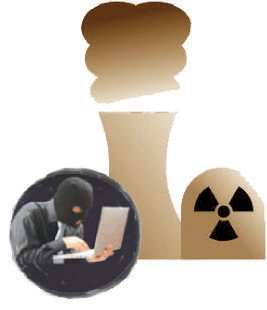
The vulnerability of nuclear weapons systems to cyber threats

May 11, 2019 Posted by | 2 WORLD, safety, secrets,lies and civil liberties, technology, weapons and war | Leave a comment

The problematic arrival of Artificial Intelligence for NuclearWeapons

From the A bomb to the AI bomb, nuclear weapons’ problematic evolution, more  https://www.france24.com/en/20190510-nuclear-weapons-artificial-intelligence-ai-missiles-bombs-technology-military, France 24 LIVE, Sébastian SEIBTm 10 May 19

From autonomous nuclear submarines to algorithms detecting a threat, to robot-guided high-speed missiles, artificial intelligence could revolutionise nuclear weapons – risking some profound ethical conundrums – a recent report reveals.

At 2:26 A.M. on June 3, 1980, Zbigniew Brezezinski, US President Jimmy Carter’s famously hawkish national security adviser, received a terrifying phone call: 220 Soviet nuclear missiles were heading for the US. A few minutes later, another phone call offered new information: in reality, 2,220 missiles were flying towards the US.

Eventually, as Brezezinski was about to warn Carter of the impending doom, military officials realised that it was a gargantuan false alarm caused by a malfunctioning automated warning system. Thus, the Cold War nearly became an apocalypse because of a computer component not working properly.

This was long before artificial intelligence (AI) rose to prominence. But the Americans and Soviets had already begun to introduce algorithms into their control rooms in order to make their nuclear deterrence more effective. However, several incidents – most notably that of June 3, 1980 – show the disadvantages of using AI.

Novelty implies new vulnerabilities’

Almost forty years on from that near debacle, AI seems to have disappeared from the nuclear debate, even though such algorithms have become ubiquitous at every level of society. But a report by the Stockholm International Peace Research Institute (SIPRI) published on May 6 underlines the importance of this aspect.

The nuclear arms race still poses a considerable threat, seeing as Donald Trump’s America has promised to modernise its arsenal, North Korea seems uninterested in abandoning its nuclear programme, and relations are tense between neighbouring nuclear powers and historical antagonists India and Pakistan.

However, technological breakthroughs in AI show “enormous potential in nuclear power, as in the areas of conventional and cyber weapons”, said Vincent Boulanin, the researcher at SIPRI responsible for the report, in an interview with FRANCE 24. In particular, machine learning is “excellent for data analysis”, Boulanin continued. Such work could play an essential role in intelligence gathering and the detection of cyber attacks.

Russia resurrects Soviet AI system

“In truth, we know very little about the use of AI in nuclear weapons systems at present,” Boulanin admitted. Russia is the only world power to have brought up the issue recently, with President Vladimir Putin announcing in March 2018 the construction of a fully automated nuclear submarine called Poseidon. Furthermore, in 2011 Moscow resurrected and updated the Perimetr system, which uses artificial intelligence to be able (under certain conditions) to detect an atomic bomb by another state. But experts consider these announcements to be lacking in concrete details.

In part, such scepticism stems from the fact that “the adoption of new technologies in the nuclear field tends to be rather slow because novelty implies the possibility of new vulnerabilities”, Boulanin pointed out. Those in control of nuclear weapons programmes prefer to work on outdated computers instead of state-of-the-art technologies that are at risk of being hacked.

Nevertheless, Bounanin continued, it’s only a matter of time before the nuclear powers adopt AI in their weapons systems, considering the enticing prospects of such technology. Its main advantage is that algorithms are an awful lot faster than humans at processing information.

AI could also make guidance systems for missiles more accurate and more flexible, according to Boulanin. “This would be especially useful for high velocity systems that human can’t manoeuvre,” he said. Indeed, several countries are working on prototypes of hypersonic aircraft and missiles able to fly five times faster than the speed of sound. It would be impossible for humans to intervene on the trajectory of such missiles, while AI could correct the aim if necessary.

The dark side of AI in nuclear weapons

There is, however, a very dark side to AI. By nature, it implies the delegation of decision-making from humans to machines – which would carry serious “moral and ethical” implications, noted Page Stoutland, vice-president of the American NGO Nuclear Threat Initiative, which collaborated in the SIPRI report.

On this basis, “the guiding principle of respect for human dignity dictates that machines should generally not be making life-or-death decisions”, argued Frank Sauer, a nuclear weapons specialist at the University of Munich, in the SIRI study. “Countries need to take a clear stance on this” so that they don’t have robotic hands on the red button.

That’s while algorithms are created by humans and, as such, can reinforce the prejudices of their creators. In the US, AI used by the police to prevent reoffending has been shown to be “racist” by several studies. “It is therefore impossible to exclude a risk of inadvertent escalation or at least of instability if the algorithm misinterprets and misrepresents the reality of the situation,” pointed out Jean-Marc Rickli, a researcher at the Geneva Centre for Security Policy, in the SIRI report.

Risk of accidental use

Artificial intelligence also risks upsetting the delicate balance between the nuclear powers, warned Michael Horowitz, a defence specialist at the University of Pennsylvania, in the SIRI study: “An insecure nuclear-armed state would therefore be more likely to automate nuclear early-warning systems, use unmanned nuclear delivery platforms or, due to fear of rapidly losing a conventional war, adopt nuclear launch postures that are more likely to lead to accidental nuclear use or deliberate escalation.” That means that the US – which boasts the world’s largest nuclear stockpile – will be more cautious in adopting AI than a minor nuclear power such as Pakistan.

In short, artificial intelligence is a double-edged sword when applied to nuclear weapons. In certain respects, it could help to make the world safer. But it needs to be adopted “in a responsible way, and people needs to take time to identify the risks associated with AI, as well as pre-emptively solving its problems”, Boulanin concluded.

One sobering comparison might be with the financial services industry. Bankers used the same arguments – the promises of speed and reliability – to introduce AI to the sector as those used by its advocates in the nuclear weapons field. Yet the use of AI in trading rooms has led to some very unpleasant stock market crashes. And of course, nuclear weapons will give AI much more to play with than mere money.


May 11, 2019 Posted by | 2 WORLD, technology, weapons and war | Leave a comment

Nuclear power isn’t needed for Green New Deal

May 11, 2019 Posted by | climate change, politics, USA | Leave a comment

U.S. Democrats trying to stop funding for US nuclear transfers to Saudi Arabia

Congress tries to defund US nuclear transfers to Saudi Arabia. Al-Monitor House Democrats are trying to use the power of the purse to block the transfer of US nuclear technology to Saudi Arabia amid concerns that the Donald Trump administration is too keen to strike a deal with the kingdom.

The House foreign aid panel’s spending bill for fiscal year 2020, released today, would bar the use of federal funds to “support the sale of nuclear technology to Saudi Arabia.” The provision comes as Democrats accuse the Trump administration of using a legal loophole to provide undisclosed nuclear technology and assistance to Riyadh.

“Given the administration’s failure to share important information about these activities with Congress, we included this provision, which prevents the administration from allowing the sale of nuclear technology to Saudi Arabia,” a House Democratic aide who did not want to be identified told Al-Monitor. “We hope this will force much-needed transparency on this issue.”

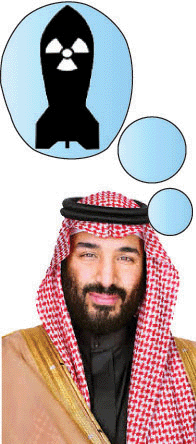
Lawmakers are concerned that Riyadh has not agreed to terms that would preclude it from enriching uranium or reprocessing plutonium on its territory, precursors to a nuclear weapons program. Crown Prince Mohammed bin Salman notably raised eyebrows last year by vowing that Saudi Arabia would pursue a nuclear weapon if Iran obtained one.

But some nonproliferation experts are skeptical that the legislation unveiled today would effectively deter the administration, which is determined to strike a civil nuclear deal with Riyadh, from continuing nuclear transfers……… https://www.al-monitor.com/pulse/originals/2019/05/congress-tries-defund-us-nuclear-transfers-saudi-arabia.html

May 11, 2019 Posted by | business and costs, politics, USA | Leave a comment

Increased tension as U.S. has seized a North Korean ship for sanctions violations

In Middle of Nuclear Standoff, U.S. Seizes North Korean Cargo Ship Illicitly Exporting Coal, Slate, By HANNON, 9 May 19

May 11, 2019 Posted by | incidents, North Korea, politics international, USA | Leave a comment

Iran Supports Nuclear Non-Proliferation Treaty

Tehran, May 10 (Prensa Latina) Iran supports the Nuclear Non-Proliferation Treaty (NPT) to the full extent, Iran’s Representative to the UN, Mohammad Ali Robatjazi, said in a statement quoted in Tehran on Friday.

During a meeting held in New York, Robajatjazi described the atomic weapon as greatest threat to humanity.

The best way to stop the development of these lethal tools is the total application of the NPT, to which all countries must subscribe, he said.

The Iranian delegate criticized the U.S. nuclear aid to Israel, which reflects its double standards for the possession and development of atomic technology.

Israel must be forced to join the Non-Proliferation Treaty, and submit to inspections of the International Atomic Energy Agency (IAEA), he stressed…… https://www.plenglish.com/index.php?o=rn&id=41815&SEO=iran-supports-nuclear-non-proliferation-treaty

May 11, 2019 Posted by | Iran, politics international, weapons and war | Leave a comment

Over $5 Trillion A Year On Oil And Gas Subsidies !

The World Blows Over $5 Trillion A Year On Oil And Gas Subsidies: Report  https://www.gizmodo.com.au/2019/05/the-world-blows-over-5-trillion-a-year-on-oil-and-gas-subsidies-report/ Brian Kahn, May 11, 2019, The world subsidized its own demise to the tune of $7 trillion in 2017.

That’s how much 191 nations collectively spent directly and indirectly subsidizing fossil fuels, according to the hippies at the International Monetary Fund. The staggering number shows why failure to account for climate change, air pollution, and other societal ills when it comes to fossil fuel extraction is often described as the biggest market failure ever, and also that maybe the market isn’t going to save us.

Thinking about $7 trillion is hard. It’s equivalent to 6.5 per cent of the entire world’s annual GDP. It’s more than France and Germany’s GDP combined. One thing is obvious: it is an absolutely stupid amount of money to be throwing away on something that is actively harmful to life on Earth.

IMF’s report released late last week breaks down where the huge figure comes from. On the one hand, you have you have your direct price subsidies that help offset costs consumers pay for, say gas or heating oil. Those totals are still profound at more than $430 billion in 2017, but the real subsidies are hidden in the impacts burning fossil fuels have on society.

Burning oil, gas, and coal cause widespread health problems tied with air pollution and disrupt the climate, and fossil fuels aren’t paying their fair share.

In their calculations, IMF relies on a metric called the social cost of carbon to estimate these hidden subsidies. It uses a middle of the road estimate of $57 per ton of carbon, with a 3 per cent rise annually. While there are lines of research showing a carbon tax of $57 per ton isn’t high enough, that’s how IMF arrives at its $7 trillion figure.

Using 2015 data, the report also breaks down subsidies by individual countries. The biggest subsidizer by far is China, which committed $2 trillion to subsidizing fossil fuels. The U.S. wasted $930 billion, the equivalent of using $2,907 per person to set the world on fire.

If fossil fuels were correctly priced in 2015, IMF’s research shows carbon emissions would have been 28 per cent lower and 46 per cent fewer people would’ve died from air pollution, which kills 4.2 million annually. Tax revenues would also have gone up 3.8 per cent and the total economic benefits would have been equal to 1.7 per cent of global GDP.

As things are currently structured, dirty fossil fuels like coal are an increasingly tenuous bet financially. But then they’ve also become indefensible scientifically as the world inches closer to catastrophic climate change. Despite this, the world continues to kowtow to entrenched interests. And the longer it does, the more this and future generations will suffer the consequences.

May 11, 2019 Posted by | 2 WORLD, climate change | Leave a comment

The difficulty in knowing if Iran did start making a nuclear bomb

It may become impossible to tell if Iran starts making a nuclear bomb,   https://www.newscientist.com/article/2202247-it-may-become-impossible-to-tell-if-iran-starts-making-a-nuclear-bomb/   By Debora MacKenzie, 10 May 19, 

The most ambitious effort ever to peacefully stop a country getting a nuclear bomb hangs by a thread this week. On 8 May Iranian president Hassan Rouhani announced that his country would start stockpiling low-enriched uranium and heavy water – a potential step towards building nuclear weapons.

The move was in response to US sanctions, despite Iran’s compliance with the Joint Comprehensive Plan of Action (JCPOA), which aims to limit the country’s potential bomb-making nuclear activities.

JCPOA imposed an unprecedented inspections regime on Iranian nuclear plants, which has been testing novel monitoring technology that could severely limit the spread of the bomb.

The deal does not stop Iran making enriched uranium to fuel its nuclear power plant, or heavy water for a reactor it was building at Arak. But it prevents it stockpiling either or enriching uranium further towards weapons-grade, and says Arak must be re-designed to produce less of another bomb fuel, plutonium.

The incentive for Iran was a lifting of trade sanctions, imposed after it was found to have covertly enriched uranium in the early 2000s. Since then the International Atomic Energy Agency (IAEA) has judged Iran to be in compliance with the deal.

But one year ago, US president Donald Trump pulled out of the JCPOA, saying he was unhappy with the deal. The US re-imposed trade sanctions and threatened countries that did business with Iran with severe trade penalties. Since then Iran’s oil exports have since fallen from 2.5 to 1 million barrels a day.

Now, Rouhani’s pledge means Iran will stop exporting low-enriched uranium and heavy water, which was mandated by the JCPOA, so Iran could continue production without exceeding caps on stockpiles.

The build-up of the materials will not immediately violate the JCPOA. But Rouhani added that if European countries do not, in 60 days, find some way for banks and importers to do business with Iran without suffering US sanctions, Iran will start enriching uranium further – and build Arak to existing specifications. That will be the end of the JCPOA, as Iran resumes its path to a bomb.

We may not even know if it does. The JCPOA provides three levels of safeguards in Iran. It gets the standard inspections the IAEA does in all countries with nuclear plants; additional inspections agreed in 1997 and voluntary for IAEA member states; and extra, unprecedented inspections, including continuous monitoring using novel technology.

James Acton of the Carnegie Endowment for International Peace in Washington, says that without the JCPOA, Iran gets only the basic inspections – which it successfully evaded in the past. Without extra inspections the IAEA cannot draw credible conclusions about the absence of undeclared activities in Iran, says Acton.

In theory inspectors outside Iran could watch for krypton-85, a tell-tale gas emitted when plutonium is extracted from heavy water reactors. But Acton is not even sure Iran would attempt to keep that secret. The idea of having nuclear weapons is to deter attack – and as Dr. Strangelove observed, it isn’t much of a deterrent if no one knows you have it.

May 11, 2019 Posted by | Iran, politics international, Uranium, weapons and war | Leave a comment