nuclear-news

The News That Matters about the Nuclear Industry Fukushima Chernobyl Mayak Three Mile Island Atomic Testing Radiation Isotope

The International Atomic Energy Agency itself predicted 4,000 cancer deaths from the Chernobyl nuclear accident

5 Weird Things You Didn’t Know About Chernobyl, Live Science, By Laura Geggel, Associate Editor | May 9, 2019 The Chernobyl nuclear power plant exploded more than three decades ago, in 1986, but you can watch it unfold on HBO’s TV miniseries “Chernobyl,” which premiered earlier this week.

While most people know the general story — that due to human error, the nuclear reactor exploded and unleashed radioactive material across Europe — few know the nitty-gritty details. Here are five weird facts you probably didn’t know about Chernobyl. [Images: Chernobyl, Frozen in Time]

About 30,000 people were near Chernobyl’s reactor when it exploded on April 26, 1986. Those exposed to the radiation are thought to have received about 45 rem (rem is a unit of radiation dosage), on average, which is similar to the average dose received by survivors after the atomic bomb was dropped on Hiroshima in 1945, according to the book “Physics for Future Presidents: The Science Behind the Headlines” (W. W. Norton & Company, 2008) by Richard Muller, a professor emeritus of physics at the University of California, Berkeley.

While 45 rem is not enough to cause radiation sickness (which usually occurs at about 200 rem), it still increases the risk of cancer by 1.8%, Muller wrote. “That risk should lead to about 500 cancer deaths in addition to the 6,000 normal cancers from natural causes.”

However, a 2006 estimate from the International Atomic Energy Agency (IAEA), which is associated with the United Nations, calculated much higher cancer fatalities. The IAEA looked at the total distribution of the radiation, which reached across Europe and even to the United States, and estimated that the cumulative radiation dose from Chernobyl was about 10 million rem, which would have led to an additional 4,000 cancer deaths from the accident, Muller wrote…… https://www.livescience.com/65450-weird-chernobyl-facts.html

May 11, 2019 Posted by | health, Ukraine | Leave a comment

Increase in Iran Snap Nuclear Inspections as Tensions With U.S. Rise

Iran Snap Nuclear Inspections Jump as Tensions With U.S. Rise, Bloomberg,By Jonathan Tirone, May 11, 2019, 

  •  Nuclear monitors conducted record surprise visits in 2018
  •  Iran has ‘most robust verfication system in existence’

Snap inspections at Iranian nuclear facilities jumped last year, underscoring the wide-reaching ability of international monitors to access potential sites that could feed clandestine research.

The finding was included in the International Atomic Energy Agency’s latest Safeguards Implementation Report, which is circulating among nuclear-security officials as the specter of another Middle Eastern conflict rises. Europe in particular has found itself squeezed between hostile governments in Washington and Tehran after the U.S. left the nuclear deal and slapped sanctions on Iran.

According to a copy of the restricted report published this week and obtained by Bloomberg News, inspectors deployed in Iran conducted a record number of so-called complementary accesses for a third year running in 2018. Almost 400 inspectors spent some 1,867 person-days combing Iranian sites and triggered more than three surprise visits a month………https://www.bloomberg.com/news/articles/2019-05-10/iran-snap-nuclear-inspections-jump-as-tensions-with-u-s-rise

May 11, 2019 Posted by | Iran, politics international | Leave a comment

Why Iran decided to partially withdraw from the nuclear weapons treaty

Iran’s ambassador to the UN blames ‘U.S. bullying’ for decision on nuclear treaty,  PBS NewsHour  Iran said it plans to cease complying with portions of the nuclear deal it signed with Western powers in 2015, though it didn’t withdraw from the agreement altogether. But the announcement increases already escalating tensions with the U.S. Nick Schifrin talks to Takht Ravanchi, Iran’s ambassador to the UN, about why Iran made the decision now and whether it can trust President Trump.
May 8, 2019

  • Judy Woodruff:

    Today, Iran announced it plans to stop complying with portions of the nuclear deal it signed with Western powers in 2015. Iran stopped short of withdrawing from the deal altogether.

    But, as Nick Schifrin reports, the announcement increases already escalating tensions with the United States.

  • Nick Schifrin:

    The Iran deal made a fundamental trade: Iran restricted its nuclear program in exchange for sanctions relief.

    One year ago today, the Trump administration withdrew from the deal, and has since reimposed sanctions. For the last year, Iran complied with the deal, but, today, Iran said it would not abide by all the deal’s restrictions….. https://www.pbs.org/newshour/show/irans-ambassador-to-the-un-blames-u-s-bullying-for-decision-on-nuclear-treaty

May 11, 2019 Posted by | Iran, politics international | Leave a comment

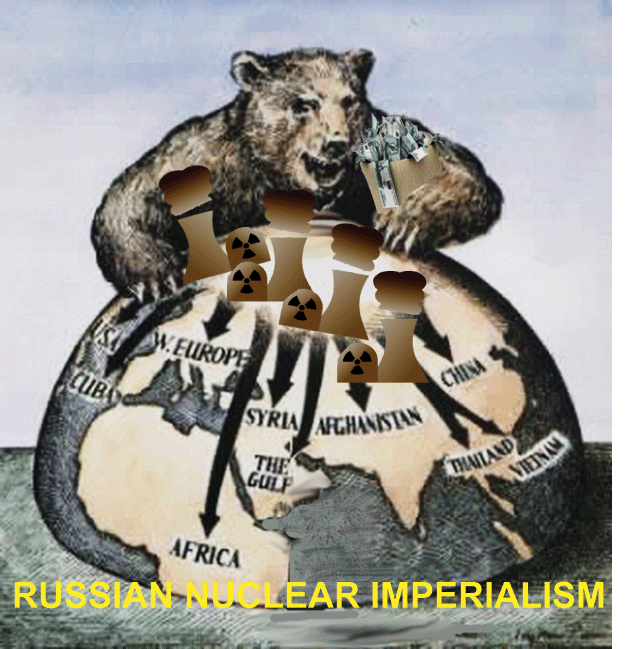
Rosatom keenly pursuing international nuclear sales, especially nuclear-weapons related

Rosatom expects foreign business income to double by 2024, WNN,10 May 2019  Rosatom expects to double revenue from its overseas business, from USD6.6 billion last year to USD15 billion by 2024, its director general, Alexey Likhachov, has told Russian Prime Minister Dmitry Medvedev. In their meeting, on 6 May, Likhachov said foreign projects were the “key theme” of the state nuclear corporation’s future growth.

According to a transcript of their conversation published by Medvedev’s office, Likhachov also said the “open part” of Rosatom’s revenue had for the first time exceeded RUB1 trillion and that investment was also at a record level of one-quarter of a trillion rubles ….
It is also making progress with its new businesses. “It is important to emphasise here that more than 50% of the revenue from new businesses is provided by enterprises of the nuclear weapons complex, defence companies. …….. http://www.world-nuclear-news.org/Articles/Rosatom-sees-income-from-foreign-business-doubling

May 11, 2019 Posted by | marketing, Russia | Leave a comment

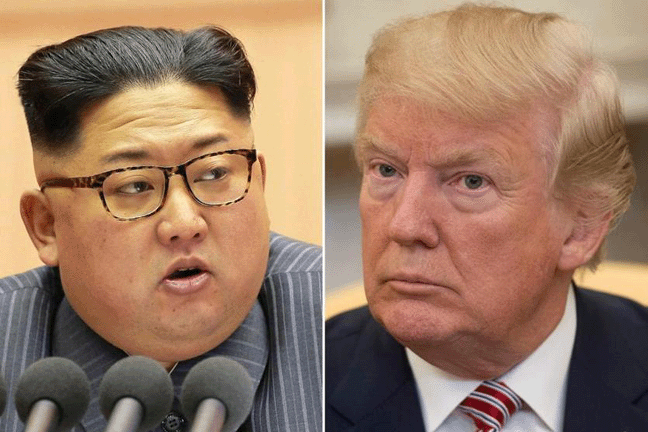
Donald Trump’s gamble with nuclear negotiations with North Korea – the risk of war if it falls apart

Trump’s Bet on Kim Might Not Pay Off, All that’s preventing the collapse of talks is that North Korea’s missiles haven’t flown far enough yet. The Atlantic

May 11, 2019 Posted by | North Korea, politics international, USA | Leave a comment

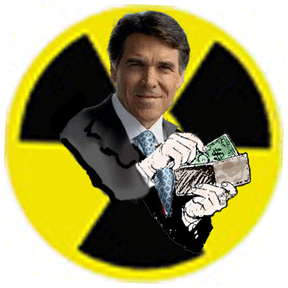
US Dept of Energy plans changes to definition of “High Level” nuclear wastes: Rick Perry keen, environmentalists not

Perry Supports DOE Reconsideration of High-Level Waste Definition, Exchange Monitor,   BY CHRIS SCHNEIDMILLER, MAY 10, 2019

Energy Secretary Rick Perry on Thursday voiced support for his agency’s potential reinterpretation of the definition of high-level radioactive waste.

The Department of Energy proposed the reinterpretation in October and is now reviewing public comments submitted through Jan. 9 on the matter.

Ultimately, DOE could determine the definition should emphasize the radiological threat waste poses to human health, rather than where or how it was generated. That could open the door to disposal methods now prohibited for high-level waste.

The department has not given a timeline for a decision……

Subcommittee Vice Chairman Jerry McNerney (D-Calif.)  suggested the reinterpretation could lead to high-level waste being dispoosed of “in less secure sites.” He asked Perry to specify the amount of material DOE is considering reclassifying. The DOE chief did not provide a specific figure.

The Nuclear Waste Policy Act of 1982 and the Atomic Energy Act of 1954 define HLW as highly radioactive material that comes from spent nuclear fuel. That generally involves separating contents in irradiated nuclear fuel and target materials, such as plutonium.

There is roughly 90 million gallons of solids, liquids, and sludge left over from decades of nuclear weapons production, the Blue Ribbon Commission on America’s Nuclear Future said in 2012. By law, that material must go into a geologic repository – which the United States does not yet have, after decades of efforts to bring the Yucca Mountain disposal site into existence.

Some high-level waste that is redesignated as another waste type could be shipped to the Nevada National Security Site, the Waste Isolation Pilot Plant in New Mexico, and the privately held Waste Control Specialists facility in West Texas, the nongovernmental Energy Communities Alliance has said. The Washington, D.C.-based group, which represents communities near DOE sites, has said it does not expect any decision from the department until late 2019. https://www.exchangemonitor.com/perry-supports-doe-reconsideration-high-level-waste-definition/

May 11, 2019 Posted by | USA, wastes | Leave a comment

Chelsea Manning released from gaol, – but this could be only temporary

May 11, 2019 Posted by | civil liberties, USA | Leave a comment

Radioactive fallout could be released from melting glaciers

“Anthropocene Nuclear Legacy” –Melting Glaciers Could Unleash Radioactive Fallout  https://dailygalaxy.com/2019/05/anthropocene-nuclear-legacy-melting-glaciers-could-unleash-radioactive-fallout/ May 9, 2019 “These materials are a product of what we have put into the atmosphere. This is just showing that our nuclear legacy hasn’t disappeared yet. It’s still there,”said Caroline Clason, a lecturer in Physical Geography at the University of Plymouth of a study published in Nature that surveyed 19,000 of Earth’s glaciers and found their total melt amounts to a loss of 335 billion tons of ice each year, more than measurements of previous studies.“When it was built in the early 1900s, the road into Mount Rainier National Park from the west passed near the foot of the Nisqually Glacier, one of the mountain’s longest,” reports the New York Times. “Visitors could stop for ice cream at a stand built among the glacial boulders and gaze in awe at the ice. The ice cream stand (image below) is long gone.”

The glacier now ends more than a mile farther up the mountain, and they are melting elsewhere around the world too.

This scary scenario of our nuclear legacy was explored by an international team of scientists who studied the spread of radioactive contaminants in Arctic glaciers throughout Sweden, Iceland, Greenland, the Norwegian archipelago Svalbard, the European Alps, the Caucasus, British Columbia, and Antarctica. The researchers shared their results at the 2019 General Assembly of the European Geosciences Union (EGU) in Vienna.

It found man made radioactive material at all 17 survey sites, often at concentrations at least 10 times higher than levels elsewhere. “They are some of the highest levels you see in the environment outside nuclear exclusion zones,” said Caroline Clason

“Missing –14 Billion Tons of Antarctica’s Ice”

Fallout radionuclides (FRNs) were detected these sites. Radioactive material was found embedded within ice surface sediments called “cryoconite,” and at concentration levels ten times greater than the surrounding environment.“ They are some of the highest levels you see in the environment outside nuclear exclusion zones,” Clason, who led the research project, told AFP.

The Chernobyl disaster of 1986—by far the most devastating nuclear accident to date—released vast clouds of radioactive material including Caesium into the atmosphere, causing widespread contamination and acid rain across northern Europe for weeks afterwards. “Radioactive particles are very light so when they are taken up into the atmosphere they can be transported a very long way,” she told AFP. “When it falls as rain, like after Chernobyl, it washes away and it’s sort of a one-off event. But as snow, it stays in the ice for decades and as it melts in response to the climate it’s then washed downstream.”

The environmental impact of this has been shown in recent years, as wild boar meat in Sweden was found to contain more than 10 times the safe levels of Caesium.

“We’re talking about weapons testing from the 1950s and 1960s onwards, going right back in the development of the bomb,” Clason said. “If we take a sediment core you can see a clear spike where Chernobyl was, but you can also see quite a defined spike in around 1963 when there was a period of quite heavy weapons testing.”

Weapons tests can fling radioactive detritus up to 50 miles in the air. Smaller, lighter materials will travel into the upper atmosphere, and may “circulate around the world for years, or even decades, until they gradually settle out or are brought back to the surface by precipitation,” according to the Environmental Protection Agency.

Fallout is comprised of radionuclides such as Americium-241, Cesium-137, Iodine-131, and Strontium-90. Depending on a material’s half-life, it could remain in the environment minutes to years before decaying. Their levels of radiation also vary.

Particles can return to the immediate area as acid rain that’s absorbed by plants and soil, wreaking havoc on ecosystems, human health, and communities. But radionuclides that travel far and wide can settle in concentrated levels on snow and ice—large amounts of radioactive material from Fukushima was found in 2011 on four glaciers in the Tibetan Plateau, for example.

One of the most potentially hazardous residues of human nuclear activity is Americium, which is produced when Plutonium decays. Whereas Plutonium has a half-life of 14 years, Americium lasts 400.

Americium is more soluble in the environment and it is a stronger alpha (radiation) emitter. Both of those things are bad in terms of uptake into the food chain,” said Clason. While there is little data available on how these materials can be passed down the food chain—even potentially to humans—Clason said there was no doubt that Americium is “particularly dangerous”.

As geologists look for markers of the epoch when mankind directly impacted the health of the planet—known as the Anthropocene—Clason and her team believe that radioactive particles in ice, soil and sediment could be an important indicator.

The team hopes that future research will investigate how fallout could disperse into the food chain from glaciers, calling it a potential “secondary source of environmental contamination many years after the nuclear event of their origin.”

The Daily Galaxy via AFP, France24, and Nature

May 11, 2019 Posted by | 2 WORLD, climate change, environment, radiation | Leave a comment

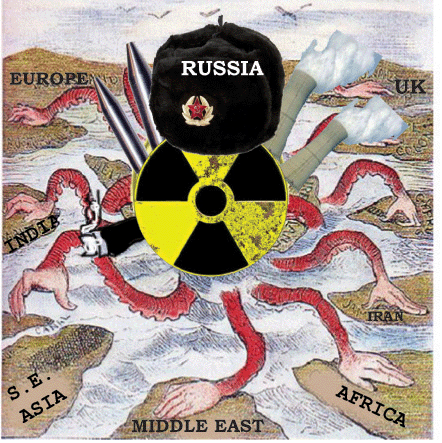
Russia using nuclear power loans and sales to have political influence – nuclear colonialism

Russia’s Nuclear Power Exports are Booming, Moscow Times, 10 May 19, 

Rosatom has been using nuclear power plants as a way of cementing ties with its fellow emerging markets.Russia’s state-owned agency Rosatom is on a tear. The company operates 35 nuclear power stations in Russia that produce 28 gigawatts (GW) of power, and it is actively exporting its nuclear technology to countries around the world.

Russia has been using nuclear power plants as a way of cementing ties with its fellow emerging markets with no nuclear power tradition and the BRICS countries, a group that started as a marketing tool for Goldman Sachs to sell equity but has increasingly turned into a real geopolitical alliance amongst the leading emerging market governments.

In recent years Rosatom has completed the construction of six nuclear power reactors in India, Iran and China and it has another nine reactors under construction in Turkey, Belarus, India, Bangladesh and China. Rosatom confirmed to bne IntelliNews that it has a total of 19 more “firmly planned” projects and an additional 14 “proposed” projects, almost all in emerging markets around the world.

Rosatom has become the world’s largest nuclear reactor builder as the financial problems of the two big Western firms Westinghouse Areva have crimped their ability to develop nuclear plants abroad . as the financial problems of the two big Western firms Westinghouse Areva have crimped their ability to develop nuclear plants abroad. Westinghouse and Areva, now owned by EDF, have for years negotiated deals to build reactors in India but have made little progress, partly because Indian nuclear liability legislation gives reactor manufacturers less protection against claims for damages in case of accidents.

The sales drive was organised by former Prime Minister Sergei Kiriyenko, who presided over Russia during the 1998 financial crisis but was given the job of running Rosatom after leaving office and tasked with selling 40 nuclear power plants internationally.

…… Part of Rosatom’s appeal is not only Russia’s lower prices and state-of-the-art technology, but the fact that company usually provides most of the financing for the typically $10 billion price tag.

Last year the Russian firm said it had an order book worth $134 billion and contracts to build 22 nuclear reactors in nine countries over the next decade, including Belarus, Bangladesh, China, India, Turkey, Finland, Hungary, Egypt and Iran. The size of the order book puts nuclear power station exports on a par with Russia’s booming arms export business.

But underpinning the business is politics. Russia has long used energy as the sweetener when offering a package of trade deal to its international partners. Like gas pipelines, nuclear power stations are a way of binding countries to Russia, as nuclear power stations come with 60-year long maintenance deals and uranium supply contracts.

……. Iran Bushehr

One of the most controversial nuclear power stations built by Moscow was Iran’s Bushehr that was completed in 2013 over strong U.S. objections.

…….Russia has been producing new parts for the second nuclear power plant to be built at Bushehr on the Persian Gulf and now Russia is preparing to push ahead with the construction of the second unit. ……

India Kudankulam…..

Hungary Paks……

Belarus Grodno……

Turkey Akkuyu……

Egypt El Dabaa…… https://www.themoscowtimes.com/2019/05/09/russias-nuclear-power-exports-are-booming-a65533

May 11, 2019 Posted by | marketing, politics international, Russia | Leave a comment

President Kennedy strongly warned Israel against getting nuclear weapons

May 11, 2019 Posted by | history, Israel, politics international, USA | Leave a comment

Environmentalists astounded that panel rules in favour of Holtec’s nuclear waste storage plan for New Mexico

May 11, 2019 Posted by | USA, wastes | 1 Comment

Patients not always aware of the risks in medical radiation treatment

May 11, 2019 Posted by | health, USA | Leave a comment

Deep ocean animals are eating radioactive carbon from nuclear bomb tests

May 11, 2019 Posted by | 2 WORLD, environment, oceans, radiation | Leave a comment

Another nail in the coffin of the ‘integral fast nuclear reactors’ championed by nuclear lobby shills

Jim Green.Nuclear Fuel Cycle Watch South Australia    https://www.facebook.com/groups/1021186047913052/– 9 May 19

Another nail in the coffin of the ‘integral fast reactors’ championed by Ben Heard, Barry Brook et al.
UK consideration as to how to manage a growing stockpile of separated plutonium: “Re-use in PRISM [IFR] fast reactors – an option proposed by GE Hitachi Nuclear Energy (GEH) involving the construction at Sellafield of a fuel fabrication plant and two PRISM reactors (all ‘first of a kind’ facilities) to irradiate a plutonium alloy fuel. The option was put forward by GEH as ‘ready to deploy’ and therefore capable of quickly dispositioning the complete plutonium stockpile.‘ However, the studies undertaken by NDA with GEH over the past few years have shown that a major research and development programme would be required, indicating a low level of technical maturity for the option with no guarantee of success.
At this time, it is noted that the cost, scope and extent of work required to progress Fast Reactor options, such as the GEH PRISM, as well as the timeframe for these options to become available, means it is not credible for the NDA to develop these options, or have them available for implementation within the next 20 years. Therefore no further work with GEH has been funded by NDA’.”

A decision on the fate of UK’s Plutonium stockpile remains years away.  http://corecumbria.co.uk/briefings/a-decision-on-the-fate-of-uks-plutonium-stockpile-remains-years-away/?fbclid=IwAR2yPVluaq70YaoxikF_paOTbJ9BwleBhtGQb6kF0vI2sT4Ae-0M7HIItrE, 6th May 2019   The much delayed update from the Nuclear Decommissioning Authority (NDA) on its plans for dealing with Sellafield’s burgeoning plutonium stockpile was quietly published at the end March 2019 under the title ‘Progress on plutonium consolidation, storage and disposition’. The lack of fanfare for its publication may be attributable to the absence of any major breakthrough in progress since the NDA’s 2014 Position Paper and the subsequent warning given to a Sellafield Stakeholder Group in 2016. Continue reading →

May 9, 2019 Posted by | technology, UK | Leave a comment

Trump announces new sanctions on Iran. Iran warns it will step away from nuclear deal

U.S. Issues New Sanctions as Iran Warns It Will Step Back From Nuclear Deal,  NYT,   By David E. Sanger, Edward Wong, Steven Erlanger and Eric Schmitt, May 8, 2019 

WASHINGTON — Iran’s president declared on Wednesday that he would begin to walk away from the restrictions of a 2015 nuclear deal, and the Trump administration responded with a new round of sanctions against Tehran, reviving a crisis that had been contained for the past four years.

The escalation of threats caught the United States’ allies in Europe in the crossfire between Washington and Tehran. And while the announcement by President Hassan Rouhani of Iran did not terminate the landmark nuclear accord that was negotiated by world powers, it put it on life support.

Britain, France and Germany all opposed President Trump’s move a year ago to withdraw the United States from the accord that limited Iran’s capacity to produce nuclear fuel for 15 years. Ever since, the Trump administration has ramped up a pressure campaign against Iran’s military and clerical leaders, including blocking global oil exports and expediting warships and B-52 bombers to the Persian Gulf this week to face down what officials described, without evidence, as a new threat by Tehran against American troops in the Middle East.

European officials had promised to set up a bartering system to evade American sanctions imposed against Iranian oil. But that effort has largely failed, even as Iran complied with its obligations under the agreement, from production limits to inspections.


On Wednesday morning in Tehran, Mr. Rouhani declared he had run out of patience.

“The path we have chosen today is not the path of war, it is the path of diplomacy,” he said in a nationally broadcast speech. “But diplomacy with a new language and a new logic.”

Rather than exit the deal entirely, Mr. Rouhani announced a series of small steps to resume the production of nuclear centrifuges and to begin accumulating nuclear material.

  • Mr. Rouhani also set a series of carefully calibrated deadlines for European leaders — essentially forcing them to either join the United States in isolating Iran or uphold the nuclear deal that world powers spent years negotiating with Tehran.

    He said the Europeans had 60 days to assure that Iran could “reap our benefits” under the nuclear accord, by making up for lost oil revenues and allowing the country back into the international financial system.

    If the Europeans agree, they will be subject to sanctions by the United States. If they dismiss Mr. Rouhani’s claims, he says Iran will take more dramatic steps.

    Hours later, the White House announced that it was taking additional measures to squeeze Iran’s economy by imposing sanctions on its steel, aluminum, iron and copper sectors. Iran’s industrial metals industries account for about 10 percent of its exports, according to a Trump administration estimate.

    Mr. Trump said in a statement that the move “puts other nations on notice that allowing Iranian steel and other metals into your ports will no longer be tolerated.”

    Under John R. Bolton, the national security adviser who has long advocated pressing for regime change in Iran, the White House has been urging ever-escalating sanctions…….Hours later, the White House announced that it was taking additional measures to squeeze Iran’s economy by imposing sanctions on its steel, aluminum, iron and copper sectors. Iran’s industrial metals industries account for about 10 percent of its exports, according to a Trump administration estimate.

    Mr. Trump said in a statement that the move “puts other nations on notice that allowing Iranian steel and other metals into your ports will no longer be tolerated.”

    Under John R. Bolton, the national security adviser who has long advocated pressing for regime change in Iran, the White House has been urging ever-escalating  santions……Hours later, the White House announced that it was taking additional measures to squeeze Iran’s economy by imposing sanctions on its steel, aluminum, iron and copper sectors. Iran’s industrial metals industries account for about 10 percent of its exports, according to a Trump administration estimate.

    Mr. Trump said in a statement that the move “puts other nations on notice that allowing Iranian steel and other metals into your ports will no longer be tolerated.”

    Under John R. Bolton, the national security adviser who has long advocated pressing for regime change in Iran, the White House has been urging ever-escalating sanctions…….https://www.nytimes.com/2019/05/08/us/politics/iran-nuclear-deal.html

May 9, 2019 Posted by | Iran, politics international, USA | Leave a comment