South Korean Report Says That North Korea Executed and Purged Top Nuclear Negotiators
|
North Korea Executed and Purged Top Nuclear Negotiators, South Korean Report Says, NYT, By Choe Sang-Hun, May 30, 2019, SEOUL, South Korea — North Korea has executed its special envoy to the United States on spying charges, as its leader, Kim Jong-un, has engineered a sweeping purge of the country’s top nuclear negotiators after the breakdown of his second summit meeting with President Trump, a major South Korean daily reported on Friday.Kim Hyok-chol, the envoy, was executed by firing squad in March at the Mirim airfield in a suburb of Pyongyang, the North Korean capital, Chosun Ilbo, South Korea’s largest daily, reported on Friday, citing an anonymous source. Mr. Kim faced the charge that he was “won over by the American imperialists to betray the supreme leader,” the newspaper said.
Four officials of the North Korean Foreign Ministry were also executed, the South Korean daily reported, without providing any hint of who its source might be or how it obtained the information. South Korean officials could not confirm the Chosun Ilbo report. North Korea has not reported any execution or purge of top officials in recent months. The country remains the world’s most isolated, and outside intelligence agencies have sometimes failed to figure out or have misinterpreted what was going on in the closely guarded inner circles of the country’s leader, Kim Jong-un. …… No American officials have spoken publicly of any intelligence they might have seen that would confirm or refute the rumors. Diplomats in Washington from other countries have also acknowledged hearing the rumors, but have said they have no confirmation. But some signs in recent weeks have led analysts in South Korea to speculate that Mr. Kim may be engineering a reshuffle or a purge of his negotiating team in the wake of the summit meeting, held in February in Hanoi, Vietnam. The meeting was widely seen as a huge embarrassment for Mr. Kim, who is supposedly seen as infallible in his totalitarian state. On Thursday, Rodong Sinmun, the official newspaper of the North’s ruling Workers’ Party, carried a commentary warning against “anti-party, anti-revolutionary acts” of officials who “pretend to work for the supreme leader in his presence but secretly harbor other dreams behind his back.” …… Chosun Ilbo, the South Korean newspaper, reported Friday that Kim Yong-chol, a senior Workers’ Party vice chairman who visited the White House as the main point man for diplomacy with the United States, had also been purged, sentenced to forced labor in a remote northern province. Also sent to a prison camp was Kim Song-hye, a senior female nuclear negotiator who teamed up with Kim Hyok-chol in working-level negotiations ahead of the Kim-Trump summit, the South Korean newspaper said. North Korea even sent a summit translator to a prison camp for committing a translation mistake, it said. During the Hanoi summit meeting, Mr. Kim demanded that Mr. Trump lift the most painful international sanctions against his country in return for partially dismantling his country’s nuclear weapons facilities. The meeting collapsed when Mr. Trump rejected the proposal, insisting on a quick and comprehensive rollback of the North’s entire weapons of mass destruction program before lifting sanctions. ……… Jung Chang-hyun, head of the Korean Peace and Economy Institute, a research group affiliated with South Korea’s Moneytoday news media group, said he had heard that four North Korean Foreign Ministry officials were executed by firing squad around March, not because of the breakdown of the Hanoi summit meeting, but rather for a separate corruption scandal. …….https://www.nytimes.com/2019/05/30/world/asia/north-korea-envoy-execution.html |
|
The health and environmental effects of the Chernobyl nuclear accident horror
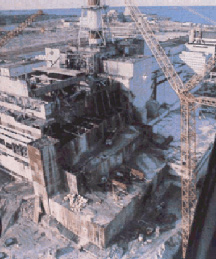 It’s one of the hottest TV shows in the world but what is the real story of Chernobyl and is it actually safe to visit the site now? https://www.news.com.au/entertainment/tv/the-real-story-of-the-chernobyl-nuclear-disaster/news-story/c3a2487f9392eb79717ae2f6b8c1a8cc
31 May 19, “…. The five-part Sky and HBO co-production, which is based on real-life events around the world’s worst nuclear disaster, has gripped the UK and is also now available in Australia via One Demand on Fox Showcase.
The horrifying events of April 26, 1986 when the Chernobyl nuclear power station went into meltdown have been brought to life in the new drama, and the show is now the highest rated program on IMDb.
Here’s a rundown of what we know about the real life events.
WHAT WAS THE CHERNOBYL NUCLEAR DISASTER?
An alarm bellowed out at the nuclear plant on April 26, 1986, as workers looked on in horror at the control panels signalling a major meltdown in the number four reactor.
The safety switches had been switched off in the early hours to test the turbine but the reactor overheated and generated a blast the equivalent of 500 nuclear bombs.
The reactor’s roof was blown off and a plume of radioactive material was blasted into the atmosphere.
As air was sucked into the shattered reactor, it ignited flammable carbon monoxide gas causing a fire which burned for nine days.
The catastrophe released at least 100 times more radiation than the atom bombs dropped on Nagasaki and Hiroshima.
Soviet authorities waited 24 hours before evacuating the nearby town of Pripyat — giving the 50,000 residents just three hours to leave their homes.
After the accident traces of radioactive deposits were found in Belarus where poisonous rain damaged plants and caused animal mutations.
But the devastating impact was also felt in Scandinavia, Switzerland, Greece, Italy, France and the UK.
An 18-mile radius known as the “Exclusion Zone” was set up around the reactor following the disaster.
HOW MANY PEOPLE DIED IN CHERNOBYL?
At least 31 people died in the accident — including two who were killed at the scene and more who passed away a few months later from Acute Radiation Syndrome.
The actual death toll is hard to predict as mortality rates have been hidden by propaganda and reports were lost when the Soviet Union broke up.
In 2005, the World Health Organisation revealed a total of 4000 people could eventually die of radiation exposure.
About 4000 cases of thyroid cancer have been seen since the disaster — mainly in people who were children or teenagers at the time.
DID THE CHERNOBYL RADIATION CAUSE ANIMAL MUTATIONS?
Farmers noticed an increase in genetic abnormalities in farm animals immediately after the disaster.
This spiked again in 1990 when around 400 deformed animals were born — possibly as a result of radiation released from the sarcophagus intended to isolate the nuclear core.
Some animals were born with extra limbs, abnormal colouring and a smaller size.
Animals that remained in the exclusion zone became radioactive — including as many as 400 wolves, which is the highest density wolf population on the entire planet.
The Eurasian lynx — once believed to have disappeared from Europe — thrived in Chernobyl as there were no humans to run them out.
Birds were also affected by radiation, with barn swallows having deformed beaks, albinism and even smaller brains.
The radioactive animals all live in the “Red Forest”, which got its name after the trees turned crimson in the fallout.
IS IT SAFE TO GO THERE NOW?
The site and Pripyat has been safe for tourists to visit since 2010.
There are around 160 villages in the Exclusion Zone but the basement of the hospital in Pripyat remains one of the more chilling stories.
The firemen were taken to the hospital for treatment and their clothes, which had been stripped off were discarded.
Later radiation readings at the site reached 7000 millisieverts — the risk of haemorrhage starts at 1000 while death begins at 4000.
The ghost town also includes a school that features in the video game Call of Duty, an abandoned Ferris wheel and homes frantically deserted when evacuation began.
Tourists have to be screened before they enter the Exclusion Zone and are told not to touch anything within the cordon.
Holiday companies offer packages that give an official tour of the Exclusion Zone.
Study in National Academy of Sciences proceedings shows that seas are rising faster than expected
 Sea-level rise could be even worse than we’ve been led to expect, WP, By Editorial Board
ONE THING scientists are sure will happen as the world warms is that the seas will rise, putting millions of people at risk of land erosion, flooding and permanent displacement. But ask experts exactly how far oceans will advance, and their answer gets far more qualified. A study published May 20 in the Proceedings of the National Academy of Sciences found that previous estimates of how bad sea-level rise could get were too conservative — and that coastal communities must contemplate more severe, long-term impacts from humans’ addiction to fossil fuels.
Researchers asked leading experts on the Greenland and Antarctic ice sheets to provide their best updated estimates for the future of these frozen masses as temperatures spike. Aggregating these, the researchers concluded that the range of outcomes scientists now consider possible has shifted markedly toward more melting and, therefore, higher seas. ……
President Trump and those in his administration ignore scientists’ increasingly dire warnings to the peril of their children, grandchildren and the rest of humanity. https://www.washingtonpost.com/opinions/sea-level-rise-could-be-even-worse-than-weve-been-led-to-expect/2019/05/30/7eb5a7f8-7d9f-11e9-8ede-f4abf521ef17_story.html?noredirect=on&utm_term=.89ffbe
Nuclear Pride Coalition and Michael Shellenberger: Greenwash and Propaganda 2019
 Michael Shellenberger is ‘a radioactive wolf in green clothing: Dissecting the latest pro-nuclear spin’ as Independentaustralia goes on to describe the impact of the nuclear travelling salesman. Furthermore Friends of the Earth Australia critically analyzes the well financed global lobbying activities.
On 21st October 2018 an article was published by the Süddeutsche Zeitung, reporting on a rather curious scene that took place in Munich. In a ‘Nuclear Pride’ event, organizations like ‘Ecologists for Nuclear’ and the ‘Humanist party’ alongside other participants tried to raise awareness for their goal: The return to nuclear energy, whilst simultaneously calling themselves climate protectors.
A few years after the devastating nuclear accidents of Fukushima and Tschernobyl, which both resulted in extremely high numbers of casualties, the international nuclear lobby decided to shun the limelight for a little while. But apparently it takes more than just two global disasters to bring them down for good. The global nuclear society, the old and powerful networks between enterprises, lobbyists and nuclear parties are still very much in tact. Even though renewable energies are on the rise in the western world, and many outdated nuclear power plants are going offline, dictatorships and economically weak countries continue to establish new nuclear power plants. That is one of the reasons why new NPP’s are promoted so massively in 2018. The nuclear power plant operators make a big effort to try and win over the wary public after Fukushima and Tschernobyl. Consequently cunning campaigns are run and used to cover up facts, to spread half-truths and to boast.
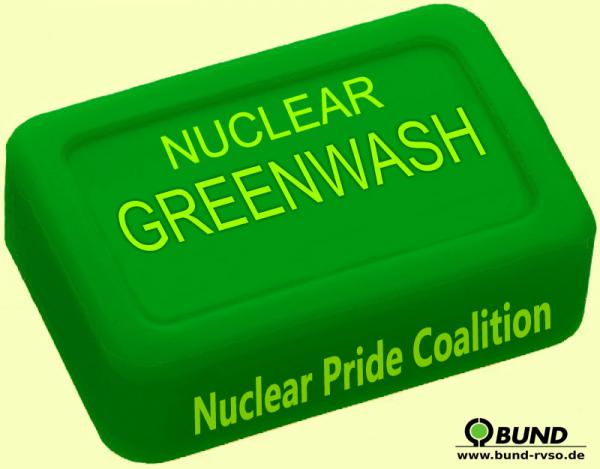
The only thing that has changed over the years are the propaganda and enforcement strategies that are being utilized. In former times, conflicts revolving around nuclear energy, protection of the environment and climate were argued out between environmentalists and opposing enterprises. Unfortunately the environmentalist movement today still thinks and acts upon outdated ways of thinking and conflict patterns. Nowadays those conflicts are being ‘outsourced’. It is alarming how all over Germany organisations of the nuclear and coal corporate groups, foundations and faked citizen initiatives like ‘Nuclear pride’ are supporting the usage of nuclear power plants and coal power stations while fighting environmentally friendly renewable energies.The German newspaper die Zeit states the following about the ‘German sister’ of Nuclear Pride: ‘Disguised as independent citizen initiative, the organisation ‘Bürger für Technik BfT (Citizens for Technology)’ has been praising nuclear energy for a long time. In reality the BfT is a group of energy industrial lobbyists. In addition nuclear scientists and engineers of the KTG (nuclear technology corporation) are pleading for the peaceful usage of nuclear energy. Furthermore The KTG are receiving financial support from the Deutschen Atomforum (The German nuclear forum), which officially represents the interests of the nuclear power plant operators.’
President Trump’s electoral campaign was largely financed by wealthy American lobbyists who also bear a tremendous interest in keeping NPPs in further operation. Additionally they strive for the erection of new nuclear power plants and coal power stations and further fuel the denial of climate change by fighting against renewable energies.
What Nuclear Pride would like to keep a secret:
Not only is the usage of nuclear energy life threatening but also the most expensive form of climate protection. In fact electricity from alternative energy sources that are combated vigorously by both the nuclear and coal lobby has become more cost efficient in recent times than the electricity produced by dangerous nuclear power plants. Environmental researchers have calculated that investments in energy conservation could prevent double the amount of carbon dioxide from being produced than comparable investments in the new construction of NPPs.
The nuclear lobbyist Michael Shellenberger is being portrayed as ‘environmental activist’ by the public and media. But Michael Shellenberger is ‘a radioactive wolf in green clothing: Dissecting the latest pro-nuclear spin’ as Independentaustralia goes on to describe the impact of the nuclear travelling salesman. Furthermore Friends of the Earth Australia critically analyzes the well financed global lobbying activities. We would appreciate a similarly critical analysis by the German media. In addition both the nuclear and genetic engineering corporations pursue an almost identical PR-concept with Patrick Moore.
Eco-optimism, Eco-realism and the Nuclear Pride Coalition
The industry guided eco-optimism and eco-realism campaign is an American campaign, run to divide the environmental movement. Now it’s being carried over to Germany and the whole of Europe. It lies in the eco-optimists interest to attack positive terms like protection of the environment, sustainability and ecology. Furthermore they try to discredit sustainability and put environmental movements and religious sects in political relation. Simultaneously Nuclear Power Plants, Coal Power Stations and genetic engineering are being praised. The Nuclear Pride Coalition counts as one of the most aggressive industry guided ecooptimistic groups.
The Nuclear Pride Festival was just the visible tip of the propaganda-eisberg.
In the past it often was the worlds best and simultaneously worst PR-organisations that have been pulling the strings behind PR-campaigns like the Nuclear Pride festival. Burson Marsteller., for instance, is one of them. One of the conflicting messages spread by the worlds most influential PR-agencies reads as follows: “The manmade climate change doesn’t exist but we still urgently need more nuclear power plants to fend off the impending climate disasters.” Furthermore it was those same old PR-agencies that have been lying through their teeth to benefit the Swiss Nuclear Forum. Moreover similar campaigns have been supported by paid trolls that were hired to anonymously write hundreds of “letters to the editor” and to litter online forums with promotional messages. Even the manipulation of Wikipedia articles is part of the PR-agencies everyday business. You’ve only got a chance to fight against this manipulative force if you don’t stay silent and utilize all of your knowledge and intelligence to compose your own letters to the editor and your own online posts to eradicate purposely planted misinformation.
Reading between World Nuclear News lines, did Russia’s Leningrad nuclear power plant have some safety issues?

Christina Macpherson’s websites & blogs
I know that this will read as just fine and dandy – because Russia never lets on about any problems in its nuclear infrastructure, but I think it;s just a hint of that.
IAEA notes improved safety at Leningrad plant, WNN, 30 May 2019 Rosenergoatom, the operator of Russia’s Leningrad nuclear power plant, has strengthened operational safety in response to the findings of an International Atomic Energy Agency (IAEA) review in 2017, a follow-up mission has concluded. The team encouraged the operator to pursue continuous improvement.
….. In November 2017, the IAEA completed a 17-day mission to Leningrad unit 4, which was connected to the grid in 1981 and is one of four light water-cooled graphite-moderated reactors (RBMK-1000) located at the site in Sosnovy Bor, 70 km west of St Petersburg. Plant operator Rosenergoatom is a subsidiary of Russian state nuclear corporation Rosatom.That mission made suggestions for improving operational safety at the plant, including: the use of leading indicators to further improve its performance; strengthening the radiation protection programme; and regular reviews of chemistry surveillance and control programme to ensure its continuous improvement……
The follow-up mission found improvements to control of movable items in some sensitive areas in the plant; the use of human performance tools; and the plant chemistry surveillance and control programme.
However, the team noted that more time is required to demonstrate that improvements are fully effective and sustained in the use of forward-looking and proactive performance indicators at the plant, and in the radiation contamination control programme.
The OSART team provided a draft of its report to the plant’s management and will submit the final report to the Russian government within three months……
Located on the coast of the Gulf of Finland, Leningrad NPP is Russia’s biggest nuclear power plant in terms of its installed capacity, which is 4200 MWe. It is also the only plant in the country comprising two types of reactor: Phase I of the plant comprises four RBMK-1000 units, while Phase II will have four VVER-1200 units. Leningrad unit 1 was shut down for decommissioning on 21 December last year. http://world-nuclear-news.org/Articles/IAEA-notes-improved-safety-at-Leningrad-plant
Doubts on Holtec’s clean-up of Pilgrim nuclear power station
|
Pilgrim Is Closing. So Then What Happens To The Radioactive Waste? wbur, Earthwhile, May 30, 2019, Barbara Moran This week, Pilgrim Nuclear Power Station will power down for the last time.Over the next few years, workers will move the radioactive fuel into storage, dismantle the plant, and clean up the site. The process is called decommissioning, and a lot of people are worried about safety, cost and where the nuclear waste will finally end up.
All together, there are 4,114 fuel assemblies at Pilgrim. They’ll stay radioactive for thousands of years. And with nowhere to put them — for now, at least — they’ll stay in Plymouth indefinitely. “With no repository in sight, Plymouth — America’s hometown — will be a nuclear waste dump,” says Diane Turco, executive director of the watchdog group Cape Downwinders. “No one knows what to do with this waste. … So I think we need to prepare that it’s going to be in Plymouth for a long time.”
After the plant powers down, workers will move the fuel from the reactor into the spent fuel pool. It will take a few years for the fuel to cool off enough for workers to move it from the pool into steel canisters. Then they’ll put the canisters into enormous steel-and-concrete containers called “dry casks” for storage. Everybody wants the job done right, because an accident could release radioactive material into the environment. The worst-case scenario — a major fire in the spent fuel pool — could put thousands of lives at risk. “Decommissioning is a very dangerous time at Pilgrim. The spent fuel will be moved from the pool to the dry casks; the dry casks will be moved on the property,” says Turco. “To do it quick and fast doesn’t necessarily mean safe — let’s do it right.” The fuel storage casks are made by New Jersey-based Holtec International. Holtec produces storage components for more than half of the nuclear power plants in the United States. And with nuclear plants shutting down across the country, business is booming.
It seems like a surprisingly low-tech way to hold highly radioactive spent nuclear fuel. That’s the beauty of it, says Allen Hickman, vice president of manufacturing for Holtec. ……… Not everyone shares Hickman’s confidence, including Plymouth resident Sean Mullin, chair of the state’s Nuclear Decommissioning Citizens Advisory Panel. “What happens if a crack emerges? There is a lot of salt in the air, and there’s a lot of other things that could deteriorate it,” says Mullin. At a public meeting in March, NRC Reactor Decommissioning Branch Chief Bruce Watson said the NRC is currently working with industry to develop surveillance and testing requirements, and that the storage facility at Pilgrim would be inspected “at least annually.” If workers detect a serious leak or crack in a cask — an event the Watson called “extremely unlikely” — it will be “encapsulated” in another cask. Mullin is skeptical of the encapsulation plan. “There should be something better,” he says. Holtec wants to do more than build nuclear storage casks. The company plans to buy Pilgrim and handle the whole decommissioning process: move the fuel to storage, tear down the plant, and clean up the site. But Holtec has never fully decommissioned a nuclear plant before. And unlike Entergy, which proposes decommissioning the site in 60 years, Holtec says it can be done in eight. ….. Holtec’s proposal worries critics like citizen’s group Pilgrim Watch and Massachusetts Attorney General Maura Healey. Both have filed petitions to intervene with the NRC. “Holtec has never actually cleaned up a nuclear power plant before, and it’s proposing to do so at what’s really a record pace,” says Healey. “What we want is for the closure to be done safely. We want the site cleaned up and we need to make sure that there’s enough money there to make that happen well.” Holtec also wants to buy Indian Point nuclear plant in New York, and build an interim storage site in New Mexico, where the company hopes to eventually ship spent fuel from Pilgrim and other sites. Critics say Holtec is stretched thin. We fear that they have bitten off far more than they can chew, negatively impacting the quality of oversight and attention to properly decommission Pilgrim Station,” wrote Pilgrim Watch director Mary Lampert in an email. In April the NRC issued two safety violations against the company for an incident involving dry casks at the San Onofre nuclear plant in California. Although no radioactive material was released and the NRC did not issue a fine, Holtec’s Russell says the company takes the violations “very seriously” and is scrutinizing technology, training and procedures…… Cost Concerns If Holtec purchases Pilgrim, the company will receive the plant, the surrounding land and a decommissioning trust fund currently valued around $1 billion. Holtec might also get additional money by suing the federal Department of Energy for failing to build a permanent nuclear waste repository. But an old plant like Pilgrim will likely have cleanup problems beyond nuclear waste, like asbestos and lead paint. And other nuclear plants, like Connecticut Yankee and Yankee Rowe, cost far more to clean up than expected. “We think that Holtec is seriously underestimating what it’s going to cost to get this done — underestimating to the tune of millions of dollars,” state AG Healey says. “And at the end of the day, if Holtec begins this project and doesn’t have the money to finish it, it’s going to be the state, our residents and taxpayers that are going to be on the hook, and we want to make sure that doesn’t happen.” Critics are also concerned about Holtec’s formation of a limited liability company with Canadian engineering and construction company SNC-Lavalin called Comprehensive Decommissioning International, which will handle Pilgrim’s decommissioning. Dan Wolf, a former state senator from the Cape and Islands — and the founder and CEO of Cape Air — says the move insulates the parent company and makes it unclear who is ultimately financially responsible for the cleanup. “My concern is, if there’s not enough money and the job doesn’t get completed, it’s going to fall both on our government and on the ratepayers to make up any deficiencies,” says Wolf. “It’s one of the more egregious cases of socializing risk and privatizing profit.”…….. The Pilgrim site is already storing spent nuclear fuel in 17 dry casks near the reactor building. Eventually, there will be 61 casks, stored on a new pad, 75 feet above sea level, partly to safeguard against sea level rise. It’s expected they’ll be moved there by 2021 and protected by armed guards. While Congress has recently started talking about a new national repository for nuclear waste, and Holtec says it hopes to remove the spent fuel from Pilgrim by 2062, there’s a chance that waste could remain at Pilgrim (or rather, the former Pilgrim) indefinitely, a silent monument to the nuclear age.https://www.wbur.org/earthwhile/2019/05/30/plymouth-nuclear-plant-decommissioning |
|
USA’s “Doomsday plane” – the pilots might survive, anyway

This ‘Doomsday Plane’ Can Survive a Nuclear Attack https://www.livescience.com/65603-doomsday-plane-can-survive-nuclear-attack.htmlm By | May 31, 2019
Investigation by IAEA finds no evidence that Russia is violating nuclear test ban
|
Nuclear watchdog chief: no evidence that Russia is violating test ban, US general said Moscow had ‘probably’ violated moratorium, Guardian, Julian Borger 31 May 19
Lassina Zerbo contradicts claims of testing at remote island The head of the international watchdog that monitors signs of nuclear testing has said there is no evidence to support a US allegation that Russiahas conducted low-yield tests in violation of an international ban.Lassina Zerbo, the executive secretary of the Comprehensive Nuclear-Test-Ban Treaty Organisation (CTBTO), said the agency had already investigated the claim made on Wednesday by the head of the US Defense Intelligence Agency, Lt Gen Robert Ashley, that Russia had “probably” violated the moratorium on tests of any yield. In a public appearance in Washington, Ashley did not give details, and in response to follow-up questions, he said only that Russia had the “capability” to carry out such tests. The US has long voiced suspicions that Russia could be carrying out low-yield testing at a remote Arctic island base, Novaya Zemlya. Zerbo said the agency had conducted a test of its global network of sensors on Wednesday to estimate what size of nuclear blast it would be able to detect at Novaya Zemlya. The test found that its monitoring system would have picked up a blast of 3.1 on the Richter scale, which would be roughly equivalent, in that area, to a nuclear detonation of 100 tons – tiny in comparison to the yield of most nuclear warheads, which are normally measured in thousands of tons. The bombs dropped on Hiroshima and Nagasaki were 15 and 20 kilotons, respectively……… It is unclear why Ashley chose to revive the allegation about Russian low-yield testing now, in the apparent absence of any new evidence. Some observers pointed to the fact that Ashley made the claim that testing had “probably” taken place only in his prepared remarks, but did not repeat the claim in a question and answer session, leading to speculation the claim could have been inserted into Ashley’s speech by the White House. The national security adviser, John Bolton, has a long record of hostility to arms control agreements. On his watch, the US has pulled out of the 2015 nuclear deal with Iran and the Intermediate-Range Nuclear Forces (INF) agreement with Russia. He is believed to be opposed to the extension of the New Start agreement, signed in 2010 with Russia, limiting deployed strategic nuclear warheads and their delivery systems on both sides. It is due to expire in 2021. Sarah Bidgood, Eurasia programme director at the Centre for Nonproliferation Studies at the Middlebury Institute of International Studies, suggested the issue had been rehashed “in order to support the narrative that Russia is an unreliable partner in arms control, with whom verification does not work”. https://www.theguardian.com/world/2019/may/30/nuclear-watchdog-no-evidence-russia-violating-test-ban |
|
|
Defying all laws of competitive economics, climate change, and technological progress, Ohio House votes in nuclear and coal subsidy
 Ohio Stumbles, with a Team Trump Nudge, Toward Nuclear and Coal https://progressive.org/dispatches/ohio-stumbles-trump-nudge-more-nukes-coal-wasserman-190530/ Defying all laws of competitive economics, climate change, and technological progress, the state House has voted in a ratepayer-funded bailout for two aging nuclear power plants. by Harvey Wasserman, May 30, 2019 If it passes Ohio’s Senate next week, the astonishing multi-billion-dollar public handout will guarantee the Buckeye State a prime spot in the new millennium’s can’t-compete Rust Belt rumble seat for decades to come. Passing 53 to 43 on May 29, the bitterly contested House Bill 6 forces ratepayers throughout the state to fork over $190 million per year in over-market payments to keep the decaying Perry and Davis-Besse reactors in business. The money is to come from all Buckeye electric consumers, even though many get zero power from the plants being bailed out. Ten Democrats voted yes, guaranteeing the bill’s passage. Seventeen Republicans voted no, mostly on libertarian grounds. HB6 was originally marketed as a “clean air” initiative. But the bailouts for the coal burners have stripped even that thin veneer from the bill’s real purpose: saving Akron-based FirstEnergy from its ongoing bankruptcyproceedings. The bill strips state funding for renewable and efficiency programs that had saved Ohio millions in utility bills and inched it toward a modern green-based power supply. The bill also left intact a unique setback clause that prevented big privately funded wind farms from being built in the “North Coast” region along Lake Erie. Many farmers I personally visited in this flat, breezy stretch of agricultural land eagerly support new wind projects, whose lease payments can bring in hefty payments. The potential sites are near urban customers and are criss-crossed with transmission lines. Despite a huge potential for jobs and profits, the setback clause has left Ohio out of the hunt for big new wind farms. Indiana, Michigan, New York, and Pennsylvania all have at least more than twice as much installed wind capacity as does Ohio. Buckeye lawmakers fret over the roughly 2,000 jobs at Perry and Davis-Besse, but have killed new turbine projects that could create far more in construction and maintenance, while dropping electricity rates throughout the region. Ironically, because of its historic industrial base, Ohio is a leading producer of wind turbine components—most of which are shipped out of state because the setback clause has buried the local demand. Despite a huge potential for jobs and profits, the setback clause has left Ohio out of the hunt for big new wind farms. Indiana, Michigan, New York, and Pennsylvania all have at least more than twice as much installed wind capacity as does Ohio. Buckeye lawmakers fret over the roughly 2,000 jobs at Perry and Davis-Besse, but have killed new turbine projects that could create far more in construction and maintenance, while dropping electricity rates throughout the region. Ironically, because of its historic industrial base, Ohio is a leading producer of wind turbine components—most of which are shipped out of state because the setback clause has buried the local demand. Many of the current jobs at the nuclear power sites would be preserved in a decommissioning process. Green activists advocate a “retain and retrain” program that would retain local workers tearing the plants down while training others for jobs in wind, solar, and efficiency. Now the Senate will debate fossil-nuclear subsidies aimed at protecting a company whose top ten employees are collectively paid more than $20 million annually. Opensecrets.org has reported that last year FirstEnergy spent more than $3 million on lobbying, much of it to turn a legislature now poised to grant the utility a hundred times that much in public money. mong the bailout’s biggest supporters is the International Brotherhood of Electrical Workers, representing staff at the nuclear plant. IBEW presence was strong at the bailout hearings in Ohio. The union plays less of an advocacy role for the wind and solar industries, whose jobs far outnumber those in coal and nuclear production. Offshore Ohio boasts some of the strongest winds of the Great Lake states. The fresh water avoids the salt corrosion plaguing ocean-based wind developments. Northern Ohio developers recently won a $40 million federal grant for the nation’s first major offshore freshwater wind farm, to be sited off the coast of Cleveland. Developers will also soon open two new Ohio solar farms totalling 275 megawatts. East of Cleveland, Perry was the first U.S. nuclear power plant to be damagedby an earthquake. According to the Nuclear Regulatory Commission, the forty-two-year-old Davis-Besse has suffered one of the worst U.S. atomic accidents on record. In sum, the Ohio legislature—with a push from Team Trump—is poised to deliver a huge bailout to a utility company whose compromised financial status darkens its ability to operate two elder reactors. In return for footing this bill, the citizens of Ohio stand to gain obsolete burners that doom their state to dirty air, above-market electric rates, and radioactive danger. |
Map drawn of 80 USA nuclear waste sites
|
New Map Shows Expanse Of U.S. Nuclear Waste Sites https://www.forbes.com/sites/jeffmcmahon/2019/05/31/new-map-shows-expanse-of-u-s-nuclear-waste-sites/#5f0a293fc2cf
Jeff McMahon, The United States is home to 21 “stranded” nuclear-waste storage sites, according to a congressional researcher who was quick to add that “stranded does not imply that the waste has been abandoned or lacks regulatory oversight.”It means those 21 sites are no longer attached to reactors that are producing electricity or revenue, environmental policy analyst Lance N. Larson writes in a May report to members of Congress. The stranded sites are costly for the federal government, which has spent $7.4 billion to nuclear utilities and other reactor owners, according to CRS, to offset its responsibility to store the waste. The 21 are among 80 sites Larsen drew together in a map that shows where the country’s nuclear waste is distributed while it awaits construction of a permanent repository. The United States is home to 21 “stranded” nuclear-waste storage sites, according to a congressional researcher who was quick to add that “stranded does not imply that the waste has been abandoned or lacks regulatory oversight.” It means those 21 sites are no longer attached to reactors that are producing electricity or revenue, environmental policy analyst Lance N. Larson writes in a May report to members of Congress. The stranded sites are costly for the federal government, which has spent $7.4 billion to nuclear utilities and other reactor owners, according to CRS, to offset its responsibility to store the waste. The 21 are among 80 sites Larsen drew together in a map that shows where the country’s nuclear waste is distributed while it awaits construction of a permanent repository. |
|
To the Trump administration, fossil fuels are “Molecules Of U.S. Freedom”
|
In a statement announcing an increase of natural gas exports, energy officials used the surprising new terms. The statement announces the expansion of a facility in Quintana, Texas, that produces liquefied natural gas (LNG) for worldwide export.…… https://www.forbes.com/sites/jamesellsmoor/2019/05/30/trump-administration-rebrands-carbon-dioxide-as-molecules-of-u-s-freedom/#2e2073ff3a24 |
|

Nuclear weapons even more risky in this age of Artificial Intelligence, Cyberattacks
|
Artificial Intelligence, Cyberattacks and Nuclear Weapons: A Dangerous Combination, Stratfor, By Pavel Sharikov, for the EastWest Institute 31 May 19, Artificial intelligence (AI) — defined by John McCarthy, one of the doyens of AI, as “the science and engineering of making intelligent machines” — is slowly gaining relevance in the military domain. While commercial use of AI is widening, there are only three countries that are reported to be developing serious military AI technologies: the United States, China and Russia. AI promises a significant military advantage to a nation’s offensive and defensive military capabilities.
AI now has the capacity to be merged with sophisticated but untried, new weaponry, such as offensive cyber capabilities. This is an alarming development, as it has the potential to destabilize the balance of military power among the leading industrial nations. Notably, with the advent of machine learning and AI, more targets have become available for computer hacking, meaning that critical infrastructure — banking systems, airport flight tracking, hospital records, the programs that run the nation’s nuclear power reactors — are vulnerable to attacks. One of the most pressing problems, however, lies in the destabilizing effects of sophisticated cyber weaponry, enhanced by AI technology, on the balance of nuclear power. There is no definite proof that nuclear command and control systems are vulnerable to cyberattacks, but these systems are digital, hence the vulnerability exists. The destabilizing effect of sophisticated AI cyber weaponry is of special concern for U.S.-Russia relations. Indeed, defending against such weapons and protecting a nation’s hardware, software and data against attack, has become an important issue in bilateral relations — on par with nuclear arms control and accidental conventional military escalation. Today, the owners of the largest stockpiles of nuclear weapons — Russia and the United States — are locked in, arguably, a new Cold War. Many of the traditional communication channels, including military ones, are compromised or broken, destabilizing nuclear diplomacy between the two countries. Along with the U.S. withdrawal from the Intermediate-Range Nuclear Forces Treaty, the arms control regime created during the Cold War can no longer guarantee strategic stability. The existence of new technologies, such as cyber capabilities paired with AI, will only amplify this destabilizing trend. In fact, a new technological, rather than nuclear, AI cyber arms race may have already begun……… A Way ForwardEven though it is impossible to reverse the advances of AI development, it is still possible to work out the rules of an arms race involving this technology. In this regard, it is worth thinking about the experience of Soviet-American agreements when anti-ballistic missile (ABM) technologies were introduced in the 1970s. Instead of getting into an arms race centered around this new technology, the Soviet Union and the United States agreed to accept mutual vulnerabilities and, for the sake of strategic stability, abandoned plans to field more advanced anti-ballistic missile technologies as evidenced by the ABM treaty, which remained in force until 2002. The ABM treaty could serve as the basis for a similar agreement on AI cyber weapons……. https://worldview.stratfor.com/article/artificial-intelligence-cyberattacks-and-nuclear-weapons-dangerous-combination |
|
IAEA Nuclear inspectors reported Iran continued adhering to its 2015 accord with world powers
|
Iran Sticking to Nuclear Deal as EU Vies to Prevent Its Collapse https://www.bloomberg.com/news/articles/2019-05-31/iran-sticks-to-nuclear-limits-under-2015-deal-with-world-powers By Jonathan Tirone, June 1, 2019, IAEA issues quarterly inspections report on Iran program Tensions rising in region between Iran, U.S. and Gulf states Nuclear inspectors reported Iran continued adhering to its 2015 accord with world powers, giving European nations room to pursue their troubled efforts to prevent a total collapse of a pact facing intensifying U.S. pressure. International Atomic Energy Agency monitors said Iran’s inventories of enriched uranium and heavy water remained below the thresholds allowed under the 2015 agreement, according to a restricted report seen by Bloomberg News. It’s the 15th consecutive quarterly report showing that Iran has observed its obligations, and comes amid growing concerns that the Trump administration’s campaign to counter Iranian influence in the Middle East could spill into war. The IAEA conducted snap inspections “to all the sites and locations in Iran which it needed to visit,” read the 6-page IAEA report that was circulated Thursday among diplomats in Vienna. “Throughout the reporting period, Iran’s total enriched uranium stockpile has not exceeded” the maximum permitted 300 kilograms, it said. Iran’s president signaled May 8 that stockpiles of nuclear material would soon exceed limits after the U.S. revoked waivers permitting it to be shipped abroad. That declaration was made on the one-year anniversary of the U.S. decision to unilaterally exit the nuclear accord and reimpose sanctions, including on vital oil exports. With its economy plunging into recession, Iran said it will violate even more sensitive provisions of the deal unless European signatories deliver the financial relief offered in return for moderating its nuclear program. Tensions have since spiked further after the U.S. accelerated the deployment of a carrier strike group to the Gulf to counter unspecified Iranian threats, suggested without providing proof that Iran and its proxies were to blame for attacks on ships in the crucial waterway as well as a Saudi oil pipeline, and sent more troops to the region. President Donald Trump has made confronting Iran a cornerstone of his foreign policy and is squeezing its economy to force it to roll back its ballistic missile program and support for groups such as Lebanon’s Hezbollah, which the U.S. deems a terrorist organization. The White House is counting on Saudi Arabia and other Arab allies to form a united front to contain Iran, prompting a series of meetings involving regional leaders in the kingdom this week. The stockpile of low-enriched uranium rose 7%, to 174 kilograms (384 pounds), the IAEA said. Its inventory of heavy-water was unchanged at 125 metric tons, less than the 130 metric tons permitted by the agreement. Iran has been enriching uranium well below capacity and should be able to boost its rate of production, according to a senior diplomat with knowledge of Iran’s program. The country said May 22 it would ramp up the rate at which it produces the material by four times. That implies accumulating as much as 18 kilograms of new low-enriched uranium a month rather than some 4 to 4.5 kilograms previously, the person said. The stored uranium is still well short of what would be needed to construct a bomb, were the material to be further enriched, and if Iran made the decision to pursue weapons. Iran had previously accumulated enough of the heavy metal to construct more than a dozen weapons before the agreement forced it to eliminate some 97% of its stockpile. Tehran says its nuclear program is solely for civilian energy and medical use. Heavy water, so named because it contains extra hydrogen atoms, can moderate neutrons inside a nuclear reactor or act as a tracer in medical applications. Iran had been shipping excess inventory to Oman before the U.S. blocked that activity. IAEA inspectors continued to confirm Iran’s Arak reactor, for which the heavy water production was originally intended, remained disabled as agreed under the 2015 accord. Tehran says it could reconstitute that project in the third quarter without sanctions relief. The IAEA report follows U.S. National Security Adviser John Bolton’s statement on Wednesday in the United Arab Emirates that a violation of the deal would show Iranians haven’t “constrained their continuing desire to have nuclear weapons.” The Trump administration has threatened to sanction Europeans for trying to hold the atomic pact together via a non-dollar-denominated financial channel. Critically, the IAEA report said Iran continued allowing access to sites under what its director general has called “the most robust verification system in existence anywhere.” Inspectors conducted a record number of surprise visits in Iran last year. Iran has also stuck to the number of centrifuges — the supersonic spinning machines that separate uranium isotopes — allowed for enrichment. Iran is holding “technical discussions” about new generations of more powerful centrifuges that are undergoing testing. |
Trump re-election push – big effort to make sure that Ohio lawmakers approve nuclear and coal subsidies
Ohio advances coal, nuclear subsidies after pressure from Trump campaign official, Politico, By GAVIN BADE, 05/29/2019
The Ohio House approved a bill Wednesday to gut clean energy standards and subsidize at-risk nuclear and coal plants after a last-minute push from a Trump reelection official to secure its passage.
Bob Paduchik, a senior adviser to the Trump reelection campaign, made calls Tuesday night to at least five members of the Ohio House of Representatives, pressuring them to vote ‘yes’ on the bill, five people familiar with the outreach told POLITICO. Sources said Paduchik emphasized preserving jobs at the Perry and Davis-Besse nuclear plants, both located in northeastern Ohio on the shores of Lake Erie…
“The message is that if we have these plants shut down we can’t get Trump reelected,” said one senior legislative source with knowledge of the conversations. “We’re going into an election year, we can’t lose the jobs.”
Paduchik did not return requests for comment, but confirmed to a local reporter that he called lawmakers to support the bill, saying he did so as a personal matter……..
The bill, which would create a $300 million subsidy program for two nuclear plants and two coal plants in the state, passed 53-43 Wednesday afternoon. It now heads to the state Senate.
Owner FirstEnergy Solutions has threatened to shut the plants down if they are not subsidized, and Cleveland.com reports Republican Gov. Mike DeWine, and labor union leaders made similar arguments in other 11th hour calls to lawmakers.
Legislators contacted by Paduchik include Republican Reps. Don Manning, Darrell Kick, Laura Lanese, Reggie Stoltzfus and Dave Greenspan, sources told POLITICO. The sources requested anonymity because they have other business before the legislature.
Paduchik led President Trump’s successful 2016 campaign in Ohio, after which he became co-chair of the Republican National Committee. In December, the Trump 2020 campaign announced he would return to oversee the president’s reelection bid in the crucial Midwestern swing state.
The White House referred questions on Paduchick’s involvement to the Trump campaign, which did not immediately respond to a request for comment.
In addition to Paduchik, three sources said some legislators received calls from two members of the Ohio delegation to the U.S. House — Republican Reps. Steve Stivers and Bob Gibbs. Their offices did not return requests for comment.
FirstEnergy Solutions, which split from utility FirstEnergy in a bankruptcy proceeding last year, said it did not engage Paduchik or the House members on its behalf. FirstEnergy’s political action committee has supported Trump, DeWine and Ohio Republicans in the past, and CEO Chuck Jones met with the president and Secretary of Energy Rick Perry on energy policy before the utility and subsidiary split……..
Along with subsidizing the nuclear plants, HB 6 would also increase existing payments to two large coal plants owned by the Ohio Valley Electric Corporation, a conglomeration of Midwestern utilities. To pay for the new subsidies, the bill would eliminate the state’s energy efficiency standard and its 12.5 percent-by-2027 renewable energy standard, which are financed on customer utility bills.
Approval in the House means the bill will now move to the Senate. Insiders told POLITICO earlier this week that chamber could take longer to debate the bill, which could create a conundrum for FirstEnergy Solutions, which must decide next month whether to refuel the Perry plant or move ahead with shutdown procedures…….. https://www.politico.com/story/2019/05/29/ohio-coal-nuclear-trump-1347274
Laundry in UK permitted to take radioactive materials from Sellafield!!
|
A Quick & Dirty Look At Energy Coast Laundry’s Radioactive Materials Permit (Starting With Caesium 137 Discharges to Air) https://mariannewildart.wordpress.com/2019/05/30/a-quick-dirty-look-at-energy-coast-laundrys-radioactive-materials-permit-starting-with-caesium-137-discharges-to-air/ |
|
1 This Month
Tell Congress: Prevent Nuclear Catastrophe in Iran

Tell Congress: Prevent Nuclear Catastrophe in Iran

Read the Public Inquiry Report, the Commissioners’ report, Surrendering Australia: The AUKUS Deception is available to download for free at aukuspublicinquiry.com. Or just watch the replay of the National Press Club Luncheon.


Shut down the radiation-damaged Heysham nuclear reactors now
To see nuclear-related stories in greater depth and intensity – go to https://nuclearinformation.wordpress.com

Say No to NASA’s Reckless Nuclear Reactor on the Moon
Say No to NASA’s Reckless Nuclear Reactor on the Moon
-
Archives
- November 2026 (202)
- October 2026 (302)
- September 2026 (339)
- August 2026 (330)
- July 2026 (355)
- June 2026 (287)
- May 2026 (306)
- April 2026 (356)
- March 2026 (251)
- February 2026 (267)
- January 2026 (308)
- December 2025 (358)
-
Categories
- 1
- 1 NUCLEAR ISSUES
- business and costs
- climate change
- culture and arts
- ENERGY
- environment
- health
- history
- indigenous issues
- Legal
- marketing of nuclear
- media
- opposition to nuclear
- PERSONAL STORIES
- politics
- politics international
- Religion and ethics
- safety
- secrets,lies and civil liberties
- spinbuster
- technology
- Uranium
- wastes
- weapons and war
- Women
- 2 WORLD
- ACTION
- AFRICA
- Atrocities
- AUSTRALIA
- Christina's notes
- Christina's themes
- culture and arts
- Events
- Fuk 2022
- Fuk 2023
- Fukushima 2017
- Fukushima 2018
- fukushima 2019
- Fukushima 2020
- Fukushima 2021
- general
- global warming
- Humour (God we need it)
- Nuclear
- RARE EARTHS
- Reference
- resources – print
- Resources -audiovicual
- Weekly Newsletter
- World
- World Nuclear
- YouTube
-
RSS
Entries RSS
Comments RSS

