USA war crimes – mass deaths in Fallujah, depleted uranium effects linger
there is no credible official figure for civilian casualties because the U.S. commanders and the Pentagon played down the killing of civilians in the Iraq conflict, though some estimates place deaths in the Mideast country at between a half-million and 1  million.
 it was the widespread deployment of depleted uranium (DU) munitions that was to have lasting human damage.
The British scientific report entitled “Cancer, Infant Mortality, and Birth-Sex Ratio in Fallujah, Iraq 2005-2009” confirmed that DU was in shells and also in bullets that were fired in large, unreported quantities, causing radiation contamination. DU’s effects can last for a long period and resulted over time in physical deformities among children.
Ghosts of Fallujah Haunting America http://americanfreepress.net/ghosts-of-fallujah-haunting-america/
By Richard Walker
The admission by Rep. Duncan Hunter (R-Calif.) that his Marine Corps unit may have killed hundreds of civilians, including women and children, in the city of Fallujah in Iraq in April 2004 once again raises the question of whether U.S. forces committed war crimes and used chemical and other unnamed weapons during major battles in Iraq that year.
Hunter was an artillery officer in what became known as the First Battle of Fallujah in April 2004, a city known for its beautiful, ancient mosques 30 miles from Baghdad. It was transformed into a war zone when protesters killed four Blackwater contractors and hung their bodies from a bridge. An operation was launched to find those responsible, but it developed into a full scale engagement. What is remarkable about this First Battle of Fallujah is that it did not last long, so the revelation by Hunter encourages additional scrutiny since it was not the battle that garnered the most controversy. Nevertheless, we have now learned that one artillery unit, by Hunter’s reckoning, may have killed hundreds of innocent civilians.
It is worth noting that there is no credible official figure for civilian casualties because the U.S. commanders and the Pentagon played down the killing of civilians in the Iraq conflict, though some estimates place deaths in the Mideast country at between a half-million and 1 million.
While the first battle was bloody, the Second Battle of Fallujah, in November 2004, was the one that we at American Free Press focused on most, believing correctly that the mainstream media was relying too much on official accounts of what transpired and was being denied the truth. AFP followed the story conscientiously, and we continued to do so in succeeding years. We were confident our reporting would be proved accurate and that new facts would emerge to confirm the claims we made that Marines used chemical weapons and depleted uranium munitions.
The U.S. military suffered 71 dead and over 250 injured in the Fallujah battles, leading to comparisons being made with some of the major exchanges of the Vietnam War.
In November 2004, Fallujah was sealed off from the outside world and quickly became a free-fire zone. This would be the Second Battle of Fallujah. There were many Iraqi fighters in the city, but there were civilians, too, who did not want to leave or had been unable to escape.
The battle was akin to what one might associate with the Second World War battle for Leningrad, with many snipers on both sides. In Fallujah, however, Marine Corp commanders had more firepower than the Iraqi fighters and used it to devastating effect. Some might argue that they used it with abandon.
Within a month, in what was dubbed Operation Phantom Fury, 36,000 homes were leveled, as well as 60 schools and 65 mosques. The city resembled a wasteland. At the time, and later, AFP reported that the Marines used white phosphorus bombs similar to ones the Israelis used later in Gaza, but it was the widespread deployment of depleted uranium (DU) munitions that was to have lasting human damage.
In 2004, and for several years afterwards, the Pentagon admitted having used white phosphorus, a chemical weapon that should not be used against civilians but denied that DU munitions were on the battlefield.
The truth emerged in 2010, however, when a British scientist and his team revealed that levels of radiation illnesses in Fallujah were comparable to, if not higher, than those found in Hiroshima and Nagasaki after the atoms bombs were detonated there in 1945.
It is still believed that other chemical weapons were used in Fallujah by the Marine Corps, but never identified. For example, aside from evidence of radiation, traces of mercury and other poisonous substances were found that could not be linked to known weapons.
The British scientific report entitled “Cancer, Infant Mortality, and Birth-Sex Ratio in Fallujah, Iraq 2005-2009” confirmed that DU was in shells and also in bullets that were fired in large, unreported quantities, causing radiation contamination. DU’s effects can last for a long period and resulted over time in physical deformities among children. The DU bullets were reported to have cut through walls like a hot knife through butter. The Pentagon has been reluctant to confirm whether experimental weapons were used on that battlefield.
Daniel DePetris, a conservative columnist, believes America has learned little from the Iraq War even though most Americans believe it was a disaster that caused thousands of American lives and tens of thousands of casualties.
He offers opinions on what our leaders should do before going to war, but perhaps his best piece of advice to them is “. . . deliver a case to the American people about why military action is appropriate and make them fully aware of what can go wrong.”
He knows, like the rest of us, that in Iraq everything that could go wrong did go wrong, especially in Fallujah.
Richard Walker is the pen name of a former N.Y. news producer.
Pre-emptive Nuclear War: The Role of Israel in Triggering an Attack on Iran
http://www.globalresearch.ca/pre-emptive-nuclear-war-role-israel-attack-iran/5677025/amp, Global Research (contributed  by Amel Polarte ) Prof Michel Chossudovsky 14 June 19
The text below is Chapter III of Michel Chossudovsky’s book entitled: The Globalization of War. America’s Long War against Humanity, Global Research Publishers, Montreal, 2015.
This chapter provides a historical perspective of US war plans directed against Iran, including the use of a preemptive nuclear attack, using low yield, “more usable” tactical nuclear weapons.
While one can conceptualize the loss of life and destruction resulting from present-day wars including Iraq and Afghanistan, it is impossible to fully comprehend the devastation which might result from a Third World War, using “new technologies” and advanced weapons, until it occurs and becomes a reality. The international community has endorsed nuclear war in the name of world peace. “Making the world safer” is the justification for launching a military operation which could potentially result in a nuclear holocaust.”
The stockpiling and deployment of advanced weapons systems directed against Iran started in the immediate wake of the 2003 bombing and invasion of Iraq. From the outset, these war plans were led by the U.S. in liaison with NATO and Israel.
Following the 2003 invasion of Iraq, the Bush administration identified Iran and Syria as the next stage of “the road map to war”. U.S. military sources intimated at the time that an aerial attack on Iran could involve a large scale deployment comparable to the U.S. “shock and awe” bombing raids on Iraq in March 2003:
American air strikes on Iran would vastly exceed the scope of the 1981 Israeli attack on the Osiraq nuclear center in Iraq, and would more resemble the opening days of the 2003 air campaign against Iraq.1
“Theater Iran Near Term” (TIRANNT)
Code named by U.S. military planners as TIRANNT, “Theater Iran Near Term”, simulations of an attack on Iran were initiated in May 2003 “when modelers and intelligence specialists pulled together the data needed for theater-level (meaning large-scale) scenario analysis for Iran.”2
The scenarios identified several thousand targets inside Iran as part of a “Shock and Awe” Blitzkrieg:
The analysis, called TIRANNT, for “Theater Iran Near Term,” was coupled with a mock scenario for a Marine Corps invasion and a simulation of the Iranian missile force. U.S. and British planners conducted a Caspian Sea war game around the same time. And Bush directed the U.S. Strategic Command to draw up a global strike war plan for an attack against Iranian weapons of mass destruction. All of this will ultimately feed into a new war plan for “major combat operations” against Iran that military sources confirm now [April 2006] exists in draft form.
… Under TIRANNT, Army and U.S. Central Command planners have been examining both near-term and out-year scenarios for war with Iran, including all aspects of a major combat operation, from mobilization and deployment of forces through postwar stability operations after regime change.3
Different “theater scenarios” for an all-out attack on Iran had been contemplated:
The U.S. army, navy, air force and marines have all prepared battle plans and spent four years building bases and training for “Operation Iranian Freedom”. Admiral Fallon, the new head of U.S. Central Command, has inherited computerized plans under the name TIRANNT (Theatre Iran Near Term).4
In 2004, drawing upon the initial war scenarios under TIRANNT, Vice President Dick Cheney instructed U.S. Strategic Command (U.S.STRATCOM) to draw up a “contingency plan” of a large scale military operation directed against Iran “to be employed in response to another 9/11-type terrorist attack on the United States” on the presumption that the government in Tehran would be behind the terrorist plot. The plan included the pre-emptive use of nuclear weapons against a non-nuclear state:
The plan includes a large-scale air assault on Iran employing both conventional and tactical nuclear weapons. Within Iran there are more than four hundred fifty major strategic targets, including numerous suspected nuclear-weapons-program development sites. Many of the targets are hardened or are deep underground and could not be taken out by conventional weapons, hence the nuclear option. As in the case of Iraq, the response is not conditional on Iran actually being involved in the act of terrorism directed against the United States. Several senior Air Force officers involved in the planning are reportedly appalled at the implications of what they are doing –that Iran is being set up for an unprovoked nuclear attack– but no one is prepared to damage his career by posing any objections.
Latest Chernobyl Shelter Implementation Plan operating this year, at cost of nearly £2billion

Chernobyl: The staggering amount it cost to install protective roof over reactor core https://www.express.co.uk/news/world/1143610/chernobyl-nuclear-disaster-hbo-drama-series-sky-atlantic-new-safe-confinement-spt
THE CHERNOBYL nuclear power plant has had a new roof installed to contain radioactive waste, 33 years after the April 1986 disaster. By ABBIE LLEWELYN Jun 21, 20196
The roof has been in construction since 2010, moved into position in 2016 and systems began operation in February this year. The huge structure was placed over the original sarcophagus, which was hastily put together in 1986 after Reactor 4 exploded and released huge amounts of radiation into the atmosphere. The New Safe Confinement (NSC) aims to prevent the release of radioactive material for the next 100 years.
The Shelter Implementation Plan, of which the roof is the main element, has cost around £1.9billion – the roof alone costing around £1.3billion.
The NSC is designed to withstand temperatures ranging from -43C to 45C, a class-three tornado and an earthquake with a magnitude of 6 on the Richter scale.
The first container that encased the offending reactor was assembled in just five months. But by 1996, the original sarcophagus was damaged beyond repair from prolonged exposure to the radiation.
Rain water was leaking through the roof and came into contact with radioactive material before dripping into the soil, posing a serious threat to the environment.
Radiation levels in the area had risen to 10,000 roentgens per hour – normal levels are around 20-50 roentgens per hour.
The first sarcophagus was meant to last 30 years and repairs and maintenance was carried out until as recently as 2011, but ultimately it was decided that a second sarcophagus would be necessary.
The new roof is 162m long, 257m wide and 108m tall: the arch could house the Statue of Liberty or Notre Dame Cathedral – before the fire.
It was built so large in order to allow for machines to enter and remove the old sarcophagus.
After the nuclear disaster, a 30km exclusion zone was put in place, and 335,000 forced to evacuate – 115,000 from the surrounding area in 1986 and 220,000 more people from Belarus, Russia and Ukraine after the fact.
However, there has still been an increase in the incidence of cancer amongst those living near Chernobyl.
There have even been studies suggesting that the DNA of birds in the area has been altered.
Interest in Chernobyl has skyrocketed in recent weeks due to the HBO historical drama series ‘Chernobyl’.
The programme, available in the UK on Sky Atlantic, shows the events of that fateful day unfold, as well as the attempted cover-up by the Soviet Union.
It has been rated the highest of any programme on IMDB.
By 2029, America Will Have a New ICBM That Can LAUNCH a NUCLEAR WAR – oh goody!

 take advantage of the Navy progress on its Trident II D5 nuclear armed submarine launched missile. National Interest,
The Air Force plans to fire off new prototype ICBMs in the early 2020s, assessing new ICBMs with improved range, durability, targeting technology and overall lethality when compared to the existing arsenal. The new arsenal of ICBMs will serve well into the 2070s – called Ground Based Strategic Deterrent, or GBSD. The service has at times been discussing the progress of the program, but is now specifying when the new weapons will be ready.
No justice for Marshall islands, with rising seas and nuclear trash

Nuclear waste, rising seas and Trump: Marshall Islands struggles to stay above water, Yahoo News, Marshall Islands President Heine speaks with Reuters in Geneva By Tom Miles, 21 June 19, GENEVA (Reuters) – The Marshall Islands is literally struggling to stay above water but its President Hilda Heine told Reuters she had saved her breath rather than try to persuade U.S. President Donald Trump to hear its climate change message.
Heine met Trump at the White House last month, along with the presidents of Palau and the Federated States of Micronesia, both of which are also under threat from rising sea levels.
But they did not talk about climate change.
“We made a conscious decision to discuss those things that we think we could accomplish, rather than spend time talking about something that we know is not going to happen,” she said.
“We know that we’re not going to be able to change his mind in 30 minutes about climate change.”
The Marshall Islands, comprising 31 tropical atolls between Australia and Hawaii, risks being underwater in 10-20 years.
“If that’s not scary enough, I don’t know what is. For us, it’s of course an existential issue,” said Heine, who was in Geneva to open a diplomatic mission, address the International Labour Organization and press her country’s case for a seat on the U.N. Human Rights Council.
The scene of massive U.S. nuclear tests in the 1950s, it is also at risk of disaster from radioactive debris the U.S. military left behind.
Her government has put a line item in its budget to cope with environmental costs, with about 5% of spending set aside to fund sea walls to save at least its two most populated areas.
On climate change, Heine said she had a simple message for the world: “Get real. Climate change is here. It’s not anything to just talk about and think, that is going to happen. It’s happening.”
The official statement from the White House meeting cited “the region’s most pressing issues, including responding to natural disasters”, but not climate change or rising sea levels.
The main topic was renewal of U.S. financial grants and the rollover of a Cold War-era defence and security agreement.
The Marshall Islands was occupied by Allied forces in 1944 and placed under U.S. administration in 1947. Between 1946 and 1958, the United States detonated 23 atomic and hydrogen bombs on Bikini and Enewetak atolls, debris from which was left buried under a shallow concrete dome on Enewetak.
“We’re told it’s seeping into the lagoon,” Heine said, adding that the government wanted help to assess the damage and impact on marine life and potential costs of making it safe.
Asked if it was potentially a nuclear disaster on top of a climate emergency, she said: “It could be.”
NUCLEAR JUSTICE
The Marshall Islands gained independence in 1986 and later tried in vain to sue nuclear powers in a David-and-Goliath case at the International Court of Justice.
It now has a “nuclear justice strategy” to cope with displacement and higher cancer rates, but cannot back a treaty banning nuclear weapons because of one provision that would force it to take care of its own clean-up, Heine said.
“The United States would be … off the hook.”…… https://news.yahoo.com/nuclear-waste-rising-seas-trump-120225579.html
France’s EDF struggling with the costs of fixing ever-delayed Flamanville EPR nuclear project
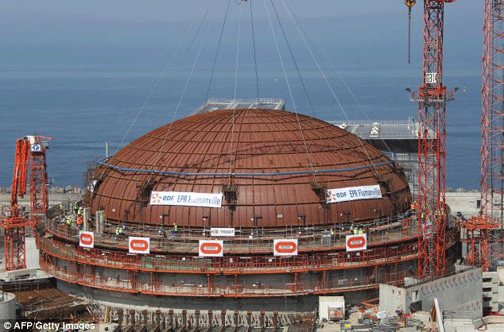
French energy group EDF reviews costs of delayed nuclear project https://www.ft.com/content/c6bc1884-9343-11e9-b7ea-60e35ef678d2 Flamanville plant’s faulty weldings must be fixed, says watchdog David Keohane in Paris JUNE 20, 2019
French energy group EDF says it is reviewing the start-up schedule and costs of its flagship Flamanville nuclear project after the regulator said it would have to fix faulty weldings, which have already delayed the project.
ASN, the nuclear watchdog, said on Wednesday that nuclear-focused EDF needs to repair eight of the joins at Flamanville in northern France.
“EDF is currently analysing the impact of this decision on the Flamanville EPR [nuclear reactor] schedule and cost, and, in the upcoming weeks, it will give a detailed update on the next steps in the project,” said the company in a statement on Thursday.
“This is negative news but it does not come as a surprise,” said analysts at Société Générale, since EDF had already flagged the likelihood of a delay. EDF’s shares fell 1.8 per cent by midday in Paris.
The ASN said in October that the weldings were being reviewed. While, in July, EDF said there would be further delays and cost overruns due to problems with the connections. It pushed back the loading of nuclear fuel and the target construction costs at the late and over-budget plant.
EDF had said the loading of nuclear fuel was scheduled for the end of 2019 with commercial activity starting in 2020 and costs revised up again from €10.5bn to €10.9bn. Initially, Flamanville was expected to cost €3.3bn and start operations in 2012. ASN suggested in its communication to EDF that the plant would not be operational before 2022.
The Flamanville plant in France is one of three being built in Europe using the next-generation European Pressurised Reactor technology. The other two projects are the Olkiluoto project in Finland, which is more than a decade late, and the UK’s Hinkley Point, which is mired in controversy over the high cost of the project.
More broadly, EDF is expected to brief trade unions on Thursday about plans to reorganise the company. The plan, codenamed Hercules, say people familiar with the matter, would involve a holding company 100 per cent-owned by the state and two subsidiaries sitting beneath it. EDF Bleu, or EDF Blue, would house all nuclear and hydroelectric assets and EDF Vert, or EDF Green, would hold the renewables, services and network assets.
EDF Vert would then be floated to raise funds.
The company will also propose a regulated pricing mechanism for 100 per cent of France’s nuclear production to replace the current mechanism, said analysts at Bernstein. The plan to split the company stems from this move since, as Bernstein add, a “100 per cent regulated price for nuclear production in France would likely be considered state aid by the EU”.
The plan thus still has to clear the European Commission as well as probable public pushback to higher regulated prices and heavy union opposition. French trade unions remain particularly powerful within EDF and has used threats of power cuts in the past.
In a joint statement this week, the unions said they “oppose a strictly financial reorganisation that would lose sight of the industrial project, the social ambition and the general interest” of the group.
Nuclear Regulatory Commission blesses takeover of New Jersey nuclear plant by Holtec
 business/nrc-approves-reactor-transfer-exelon-oyster-creek-nuclear-holtec-decommission-20190620.html
The Nuclear Regulatory Commission approved the transfer of the reactor’s license from Exelon Generation Co. to a subsidiary of Holtec International Inc., a nuclear services provider with headquarters in Camden. Holtec has developed a specialty in handling spent nuclear fuel and dismantling retired reactors.
The decommissioning will largely be concentrated in 2019 through 2025, but completed by 2035, according to a schedule submitted to the NRC. Under law, the owner could have taken up to 60 years to dismantle the plant and restore the site. ……
Holtec is hiring 200 of 600 Oyster Creek employees to work on the decommissioning. In addition, the other experts will be hired to assist in the project at various stages, Pierre Oneid, Holtec senior vice president and chief nuclear officer, said in a statement.
The company will pay the decommissioning costs from a $848 million trust fund that built up from payments collected from customers during 49 years of operations. The owner anticipates the fund, conservatively invested, will generate $46 million in interest income in the coming years that will also go toward decommissioning.
Oyster Creek, a 625-megawatt boiling water reactor, was built by General Public Utilities. Ownership transferred to Exelon in 2003.
Exelon secured a license renewal through to 2029, but announced in 2010 that it planned to shut down the reactor by 2019 rather than install a costly cooling tower required under new environmental standards to reduce the temperature of the water it discharges into Barnegat Bay.
Veteran of Chernobyl nuclear clean-up: HBO TV episode was very accurate
Chernobyl Episode 4 Scene | HBO | Graphite Clearing
This man knows what it’s really like shovelling radioactive debris on top of Chernobyl’s reactor ABC News
Key points:
- At age 32, Jaan Krinal was forced to go to Chernobyl and clean the roof of the reactor
- He says men were initially enthusiastic to help eliminate the radiation
- One-third of the men of his town he served with in Chernobyl have died
When he left his wife and two children on May 7, 1986 and went to work, Jaan Krinal didn’t know he would be one of those people.
The 32-year-old was working on a state-owned farm in Soviet-occupied Estonia.
Because he’d been forced to complete the Soviet military’s retraining a year before, he was confused when officers surprised him at work and said he’d been called up again — immediately.
Jaan and 200 other men were taken to a nearby school. Once they’d walked through the door, no-one was allowed to leave.
The men’s passports were seized before they were loaded onto buses and taken to a forest, where they were told to slip into brand new army uniforms.
“That’s when I first questioned what’s really going on here,” Jaan recalls………
Workers told radiation could have health benefits
It all happened fast.
Hundreds of men boarded a Ukraine-bound train on May 8. By the next evening, they were setting up camp on the edge of Chernobyl’s exclusion zone.
They were just 30 kilometres away from the site of the world’s worst nuclear disaster — the still-smouldering wreckage of a reactor torn apart by a series of explosions and spewing radiation in a plume across Europe.
Jaan was among the first group sent to clean up in the aftermath of the catastrophe.
Tasked with hosing down radiation on the houses in nearby villages, he was thrown into the thick of it……
Despite the apparent uselessness of the job, they continued to work 11-hour days without a day off until the end of June. After that, they had two days of downtime a month.
As the weeks rolled on, suspicions grew.
“We started to have doubts. But all the officers said, ‘Why are you fretting, the radiation levels aren’t that high.”
In a cruel irony, the commanders told the men that being exposed to radiation would actually have health benefits.
“They joked that whoever has cancer can now get rid of it — because the radiation helps,” Jaan says.
Men unaware of deadly reason behind roof time limit
By the end of September, whatever enthusiasm the men initially felt had faded.
As many developed a cough, concerns grew about whether they were being lied to about the radiation being harmless. The respirators the men were given wouldn’t stay on because of the heat and were used until they got holes in them.
Later they found they should have been replaced every day…….
A rumour had it that the very last leg of the assignment was going on the roof of the reactor to clean up as much debris as possible.
Humans were going to be given a task that remote-control robots had previously attempted, but failed. The machines simply stopped working due to the unprecedented levels of radiation.
“When they told us, ‘You have to go to the roof’, we thought, ‘Oh, this means we can go home soon’,” he says.
On the day, he changed his army uniform for a protective suit, glasses and a gas mask, and a metal groin guard.
“We were all lined up and told, ‘who doesn’t want to go on the roof, step forward’. But only a couple of us did,” he says.
“There was no mass rejection. Most people went up there.
“It had to be done. We couldn’t just leave it. I think everyone realised the longer the reactor would have stayed open, the more dangerous it would have become.”
Jaan was shown on a small screen exactly which piece of debris he had to pick up with a shovel and throw off the roof of the reactor, but strictly warned against going too close to the edge.
He had two minutes to complete the assignment — a bell would ring to tell him when to run back.
The two-minute timeframe was to limit exposure to radiation, which could kill a man.
But this wasn’t communicated to the men at the time.
Jaan says the roof-cleaning scene depicted in HBO’s mini-series Chernobyl mirrored real life events…….
A staggering one-third of the men of his town who went to Chernobyl have died.
The average age of death has been 52.
“Over the past couple of years, just a couple of us have died. But not too long ago it was around 10 men a year,” he says.
“There have been cancers. There have been suicides too, but thankfully not too many.”……
he hopes tourists won’t start flocking to the ghost city.
“I hope they’ll never start sending large groups of tourists there. It’s still a dangerous zone,” he says.
He hasn’t seen the mini-series, but welcomes the attention Chernobyl disaster is getting — he thinks it acts as a warning to the human kind. https://www.abc.net.au/news/2019-06-22/chernobyl-what-it-was-really-like-on-top-of-reactor/11223876
Why India’s Hypersonic Missile Could Trigger A Nuclear War
 New missile, new threats? National Interest, by Michael Peck, 21 June 19 1ndia’s test of a hypersonic missile signifies more than the advance of Indian weapons technology.
It also is one step closer to triggering a nuclear war with Pakistan.
Ironically, the first launch of the Hypersonic Technology Demonstrator Vehicle, or HSTDV, was a failure. The HSTDV, which is shaped almost like a sailing ship, is supposed to be a testbed for developing future hypersonic weapons such as cruise missiles. It is launched atop an Agni 1, an Indian ballistic missile…….
While that doesn’t necessarily mean the HSTDV has a problem, it’s not good news for India’s strategic nuclear deterrent. “The Agni 1 is a nuclear-capable missile that is in service with the strategic forces and has been successfully tested several times in the past,” noted the Economic Times. “Its failure to reach the desired altitude is a reason for concern and is being studied.”
Yet unproven or not, the existence of an Indian hypersonic project is an ominous step for India’s cold war with its neighbor Pakistan. Hypersonic missiles—defined as rockets with a velocity of at least Mach 5, though Russia and America are developing Mach 20 weapons—are dangerous because of their speed. Though the weapons have yet to be tested in combat, the U.S. military is concerned that Russian and Chinese hypersonic weapons may travel so fast that they can’t be intercepted. At the tactical level, this means that aircraft carriers and air bases could be destroyed by a salvo of missiles.
But on the strategic level, hypersonic weapons are truly frightening. A hypersonic missile can deliver a nuclear warhead more quickly than a ballistic missile. Or, a hypersonic missile armed with a conventional warhead might be able to destroy an opponent’s nuclear missiles in a first strike, but without the attacker having to resort to nuclear weapons.
Whether or not such a strike would be successful, or whether anyone would be confident enough to risk a nuclear exchange by using hypersonics, isn’t the point. Unlike the United States versus Russia and China, whose homelands are separated by thousands of miles of ocean, the distance between New Delhi and Islamabad is just over 400 miles. A Mach 5 or 10 weapon missile launched from India or Pakistan could hit its target in minutes (Russia’s Avangard hypersonic glider reportedly has a speed of Mach 20, with the United States working on a weapon equally as fast).
Armenia’s Metsamor nuclear plant seen as a risk by Turkey
Turkey holds drill over risk stemming from Armenia’s Metsamor nuclear plant, DAILY SABAH, ISTANBUL, 20.06.2019
Fearing impact from a possible accident from an aged nuclear power plant in neighboring Armenia, residents of a border village held a drill on Wednesday coordinated by the local governorate.
As part of the drill, medical rescue teams and gendarme troops evacuated residents of Orta Alican, one of eight villages of the eastern province of Iğdır, which are located in close proximity of Metsamor. It is the first comprehensive drill of its kind in the region against the danger the plant poses.
“Survivors” of the nuclear accident were taken to a tent camp set up in central Iğdır by crews and they were “decontaminated.” Iğdır Gov. Enver Ünlü said it was their responsibility to conduct such a drill against “a disaster that might happen.”
He said Metsamor was assessed as one of the world’s most dangerous nuclear plants by the International Atomic Energy Agency (IAEA) and according to data by European Union…….
Following an earthquake in 1988, Metsamor was closed. However, in spite of widespread international protests, it was reactivated in 1995. Armenia earlier rejected the EU’s call to shut down Metsamor in exchange for 200 million euros to help meet the country’s energy needs.
Turkey, which has not had diplomatic relations with Armenia since the 1990s over the occupation of Azerbaijan’s Nagorno Karabakh, has urged Armenia to shut down the plant due to the imminent danger the outdated plant posed to Turkey……https://www.dailysabah.com/turkey/2019/06/20/turkey-holds-drill-over-risk-stemming-from-armenias-metsamor-nuclear-plant
U.S. nuclear utilities upset about Trump’s plan for tariffs on uranium
NUCLEAR UTILITIES SCRAMBLE TO STAVE OFF TRUMP URANIUM QUOTAS, by John Siciliano & Josh Siegel June 20, 2019 Washington Examiner, : Major U.S. nuclear utilities are warning President Trump it would be a big mistake to impose strict limits on the amount of uranium the nation imports from Canada and other allies, risking thousands of layoffs and other calamitous effects at nuclear power plants.
Trump is expected to meet with his Cabinet in the next few days to discuss recommendations the Commerce Department provided to him in April on placing firm quotas on uranium imports as a matter of national security.
Utility lobbyists representing Exelon, Duke Energy, and other owners of nuclear power plants, say the idea of placing limits on the amount of fissile fuel the nation imports is misguided, and Trump should reject any proposal that recommends such action.
Uranium mining firms had petitioned for the quotas to protect U.S. jobs in the mining sectors under trade provisions aimed at protecting national security……..
Canadian Prime Minister Justin Trudeau, however, is expected to push back against the idea of imposing quotas at Thursday’s bilateral meetings at the White House. …… https://www.washingtonexaminer.com/policy/energy/daily-on-energy-nuclear-utilities-scramble-to-stave-off-trump-uranium-quotas
No Damages to Nuclear Plants after 6.8 Magnitude Earthquake ‘according’ to TEPCO and Trade Ministry

$Billions for companies dismantling nuclear stations – but looming costs and dangers for the rest of us?
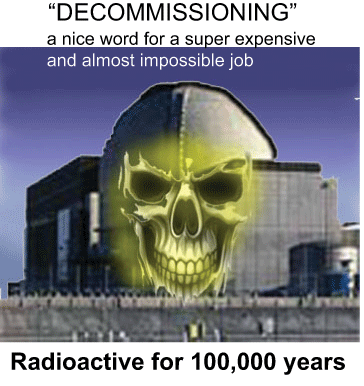
Dismantling nuclear plants is a gold mine for some, but at what risk to you? https://www.lohud.com/story/news/investigations/2019/06/19/nuclear-plant-decommissioning-is-a-gold-mine-for-some-but-at-what-risk/1269407001/
AS THE NATION’S NUCLEAR PLANTS CLOSE, A NEW INDUSTRY HAS SPROUTED. WORTH BILLIONS TO SOME, THE DECOMMISSIONING PROCESS WORRIES OTHERS.
Thomas C. Zambito, Rockland/Westchester Journal News June 19, 2019 Shutting down nuclear plants is set to become a multi-billion dollar business. If that business fails, critics say, your tax dollars – and possibly your safety – could be on the line. Learn more in our USA TODAY NETWORK Northeast project, The Nuclear Option.
 The nuclear power industry is shrinking by the day.
Some 20 reactors at 15 power plants across the U.S. have plans to shut down or are in the midst of being decommissioned, a process that traditionally takes decades.
Now, a new crop of companies — fed by Wall Street speculators — are claiming they can cut that time to at least eight years, as they eye the $60 billion set aside in trust funds to handle the messy work of shutting down nuclear reactors.
Two firms, Holtec International of Camden, New Jersey, and its rival, New York-based NorthStar Group Services, together with their partners, have been on a buying spree in recent years, snatching up power plants across the nation with the promise of quicker teardowns.
A quicker-to-finish timeline appeals to folks who live near power plants in communities that for decades could count on balancing their budgets with the tax revenue they generated.
 Safety sacrificed for speed?

But watchdog groups, politicians, scientists and experts on decommissioning nuclear plants are questioning whether safety will be sacrificed for speed, as profit-seeking companies rush to finish one job so they can move on to the next.
There are also worries that the trust funds will be bled dry before the job is completed, leaving taxpayers — and anyone who pays for electricity — footing the bill.
“If the decommissioning fund goes bankrupt and the job isn’t completed, they walk away and leave the cleanup to the states,” said Tim Judson, the executive director of the Nuclear Information and Resource Service.
In February, Massachusetts Attorney General Maura Healey voiced her concerns in a petition to intervene in the Nuclear Regulatory Commission’s review of the pending sale of Pilgrim Nuclear Power Station in Plymouth to Holtec.
The proposed deal puts the health and safety of our residents at risk,” Healey said. “We’re intervening to protect the public and ensure that the transaction does not leave our state’s taxpayers on the hook for any of the costs of safely decommissioning the plant, and managing spent nuclear fuel.”
With so much money at stake, things are moving quickly:
 On May 31, Pilgrim shut down. A day earlier, Duke Energy announced it had a contract with Accelerated Decommissioning Partners (ADP), a joint venture between NorthStar and Orano USA, to dismantle its Crystal River plant in Florida. ADP says the job will be finished by 2027.
- Holtec has pending deals to buy Indian Point in New York’s Hudson Valley and Oyster Creek on Barnegat Bay, with plans to tear them down. Oyster Creek shut down in the fall and Indian Point will shut down in 2021. Indian Point’s trust fund totals $1.85 billion and Oyster Creek’s is nearly $1 billion.
- Holtec and its partners also have a pending deal to buy Palisades Nuclear Generating Station in Michigan. If the deal goes through, Holtec will own six reactors in four states.
- Northstar, meanwhile, purchased Vermont Yankee from Louisiana-based Entergy in January and is already moving ahead with demolition following a lengthy state and federal approval process.
It’s the largest number of shutdowns since the 1990s, when some of the industry’s earliest reactors powered down.
In recent years, Entergy and Exelon, the owners of Indian Point and Oyster Creek, have faced economic challenges that forced them to reconsider their investment.
The cheap price of abundant natural gas has made it difficult to compete in the energy market.
And fears of a mishap like the partial meltdown that occurred at Pennsylvania’s Three Mile Island in 1979, coupled with disasters at Fukushima and Chernobyl — the focus of a recent series on HBO — have contributed to the chorus of political opposition.
Several other struggling nuclear power plants might have shut down if they hadn’t secured state bailouts to keep them operating. In upstate New York, the state agreed to divert billions of dollars in ratepayer money to subsidize three power plants — Nine Mile Point and James A. FitzPatrick in Oswego County and R.E. Ginna near Rochester.
And in April, New Jersey regulators approved $300 million a year in subsidies so Newark-based Public Service Enterprise Group can keep operating three nuclear reactors at the Salem and Hope Creek Nuclear Generating Stations in Lower Alloways Creek. The money will come out of ratepayers’ electricity bills.
Industry proponents view the latest downturn as part of the natural business cycle.
Rod McCullum, who specializes in decommissioning issues for the Nuclear Energy Institute, a trade group for power plant owners, says last year the nation’s 98 nuclear reactors had one of their best years ever.
Over each of the past three years, energy generated by nuclear power in the U.S. has been around 805 million megawatt hours, up from about 790 million megawatt hours in 2013.
McCullum noted, however, that several older plants are being phased out as more efficient, less costly reactor designs become available.
Georgia Power is building two nuclear reactors in Augusta, a rare event in the nuclear power industry over the past 20 years.
“The nuclear industry in the future will be very different,” McCullum said. “There are a lot of advanced nuclear designs on the table and over time we will be shutting down and decommissioning the older plants. You’re starting to see a wave of that now.”
Decommissioning is not new. Several plants were decommissioned in the 1990s at places like Rancho Seco in Sacramento County, California, and Maine Yankee in Wiscasset.
What’s new are two key changes.
First, companies are forming consortiums dedicated to dismantling. Holtec has partnered with SNC-Lavalin, a Canadian company that specializes in demolitions, to create a subsidiary called Comprehensive Decommissioning International. And NorthStar, which has experience knocking down large hotels and casinos, is teaming with a company whose experience is in the nuclear industry.
Second, and perhaps more importantly, the lessons learned in Maine and other sites provide a road map for how to do the job more efficiently, McCullum said. In prior years, the prevailing thought was to remove the fuel from the reactor, place it in either a cooling pool or canisters and leave the plant intact while radiation decayed. Such a process could take up to 60 years.
Not so today.
“The idea now is it’s a better use of the trust fund to get the plants down as fast as possible,” McCullum says. “That’s why you’re seeing these business deals.”
These newly formed companies use a “rip and ship,” which saves time and limits worker exposure to dangerous levels of radiation.
“They used to decontaminate the floor drains and it was hard to do,” said Bruce Watson, who heads the NRC’s decommissioning branch and has overseen shutdowns at Maine Yankee and Rancho Seco. “Now you go up, you hit it with a hammer, break the concrete, yank the pipe out and put it in a low level waste bin. You don’t waste your time cleaning it. You just measure it and put it in the bin.”
Holtec has yet to do a decommissioning but is no stranger to the nuclear industry. It manufactured a wet storage system used to store spent fuel once it’s removed from the reactor.
The company began manufacturing dry storage canisters in 1994. The canisters are built from stainless and carbon steel and more than two feet of cement is added to the interior once they arrive at the power plant.
Its decommissioning plan calls for moving spent fuel out of cooling pools as soon as possible so workers can get to work tearing down contaminated buildings without unnecessary exposure to radiation. And it has applied to the NRC for permission to use a cask that will allow workers to move hotter fuel into canisters after less than three years in a cooling pool.
By taking the spent fuel out of the pool faster it gives you the added benefit of making it almost a fully industrial decommissioning process,” said Joy Russell, Holtec’s senior vice president for business development.
Holtec has plans for an underground repository in southeastern New Mexico to hold some of the 80,000 metric tons of spent nuclear fuel that’s been building up at the nation’s nuclear power plants over the past six decades. Federal officials say it’s enough to fill a football field 20 meters deep.
 If successful, the plan could help resolve the nation’s nuclear fuel problem while making Holtec a lot of money.
“Holtec engineers have come up with a solution that puts that used fuel below the ground, away from the reach of terrorists, away from risks to humankind in any form,” Holtec’s owner, Krishna Singh said at a 2017 event in Camden.
The occasion was the grand opening of a state-of-the-art factory built on the shores of the Delaware River, where Holtec manufactures the mammoth steel canisters that will entomb spent nuclear fuel for hundreds of years.
“If it (the New Mexico repository) becomes a reality then we will need to build 10,000 canisters,” Singh said. “That will employ thousands of people for many, many, many years.”
Like Holtec, NorthStar’s partners, Waste Control Specialists, have plans to build a storage site out West. Theirs will be in Texas, not far from the site where Holtec has decided to build.
The sites would, in theory, serve as interim storage facilities until the U.S. Department of Energy secures a permanent repository for the nation’s nuclear waste. Efforts to create a final resting ground at Yucca Mountain north of Las Vegas have stalled.
 Stranded nuclear waste

As a result, nuclear power plants have sued the federal government for leaving nuclear waste stranded at their facilities.
At the end of 2016, the Department of Energy said the federal government had already paid out $6.1 billion to the owners of spent nuclear fuel and owes another $25 billion. The amount of waste is growing by 2,200 metric tons a year and is expected to hit 140,000 metric tons over the next 50 years, the Government Accountability Office says.
The NRC will have to sign off on the repository proposals, a process that could take several years.
“The companies specializing in decommissioning don’t share their strategies with us, including whether they are interested in managing the near- and long-term storage of spent nuclear fuel, including at interim repositories they hope to build,” said Watson. “But we will be closely reviewing all of those plans both at plant-specific and holistic levels.”
In May, Holtec cleared a significant hurdle in its effort to build its New Mexico facility when the NRC’s Atomic Safety Licensing Board rejected a challenge from environmental groups.
But the plan has a long way to go.
For one, the federal government will have to sign off on the transportation routes chosen to get spent fuel to New Mexico from power plants across country, whether by rail, truck or barge.
And Holtec will have to raise the money for the project. Russell said the company has already spent about $8 million on its efforts to secure an NRC license but will need much more to build.
“We haven’t made that jump yet to say we will build the facility,” Russell said during a May interview at Holtec headquarters in Camden. “As far as the construction goes, Holtec looks for funding from either the Department of Energy or utilities or some other source to begin the construction. That still has to be figured out and we’re actively working on it.”
If the funding comes through, construction would begin in 2021 and the first shipment of spent fuel would arrive in 2023.
Reactors in the U.S. have generated approximately 80,000 metric tons of nuclear waste.
That’s about about eight times as heavy as the Eiffel Tower.
About 14,700 metric tons of used nuclear fuel sits in storage in New York, Pennsylvania and New Jersey.
That’s roughly three-fifths the weight of the Statue of Liberty.
In the meantime, back home, Holtec has been forced to answer difficult questions about how it secured some $260 million in tax incentives from New Jersey’s Economic Development Authority (EDA) to build its technology campus in Camden.
On June 7, the Concerned Citizens of Lacey sent a letter to the NRC asking the federal agency to hold off on any decisions regarding Oyster Creek’s license transfer to Holtec until New Jersey state officials resolve questions raised by the award.
Earlier this month, ProPublica reported that New Jersey had put a hold on tax credits to Holtec.
“Holtec continues to have interactions with the EDA,” the company said in a statement. “No notice has been received by Holtec indicating that the tax credits are frozen.”
And in September Singh issued an apology after he made what some considered disparaging comments about Camden’s workforce in a published interview.
Singh immigrated to the U.S. from India in the late 1960s and received degrees from the University of Pennsylvania. In 2007, he donated $20 million to his alma mater to help fund a nanotechnology center that bears his name.
Singh’s expertise is in heat transfer, put simply the process of turning hot things cold and hot things hotter. In the lobby of Holtec’s Camden corporate offices plaques recognize some of his 60 patents.
Focused on the work ahead
“We’re going to show the world that we can safely decommission and safely manage spent fuel storage at these sites and instill confidence in the rest of the country that nuclear is a viable option,” Russell said.
“At a time when other companies in our industry and in the U.S. in general are rolling up their carpet and closing their shops and heading overseas, we’re not,” Russell added. “We’re investing in nuclear.”
The Camden factory is the size of eight football fields and resides on a site that was home to New York Shipbuilding Corp., which shut down in 1967 after building warships for the Navy with a workforce that at its peak numbered 30,000.
The factory will eventually be used to build Holtec’s modular nuclear reactors, smaller than the type currently used at power plants and less reliant on water sources. That has led some to speculate whether Holtec is looking to put the reactors into use at the nuclear power plants it plans to purchase.
 For now, though, the reactors are being marketed overseas.
“That’s why we built this factory here because we fully intend to bring that small modular reactor to market,” Russell said. “Unfortunately, we don’t see a market in the United States but we have signed a memorandum of understanding with a Ukraine nuclear utility and so we’ll likely build our first small modular reactor in Ukraine.”
It houses machines capable of bending steel plates seven inches thick, giant spinning lathes and an X-ray machine that insures every weld is leak free. On the factory floor are canisters destined for power plants across the county and overseas to Slovenia. This report is brought to you by USA TODAY Network Northeast, a group of network news organizations based throughout New Jersey, New York, Delaware, Pennsylvania, Vermont and Virginia.
Democrat Elaine Luria joins Republican politicians in Bill to fast track advanced nuclear energy
 Luria calls for national effort on advanced nuclear technology https://www.dailypress.com/news/politics/shad-plank-blog/dp-nws-luria-nukes-20190619-story.html Dave Ress Contact Reporter Staff writer
Which is why Rep. Elaine Luria, D-Norfolk, has proposed a bill meant to fast track advanced nuclear energy. And, as seems to be emerging as a pattern, she’s enlisted Virginia colleagues from the across the aisle — Rep. Rob Wittman, R-Westmoreland County, and Rep Denver Riggleman, R-Nelson County — as co-sponsors.
“As an engineer who operated nuclear reactors on aircraft carriers, I know that ensuring a thriving civilian nuclear industry is vital,” Luria said. “Nuclear energy must be part of any solution to transitioning to a clean energy future because nuclear power provides over 55% of our carbon-free energy.”
The bill would:
*set a strategy for nuclear science and engineering research and development;
* provide for at least two advanced nuclear reactor demonstration projects, to be completed by the end of 2025;
* let federal entities arrange power purchase agreements for up to 40 years, to make it more feasible for nuclear plant operators to venture into this line of business;
* start a pilot program for a long-term nuclear power purchase agreements for new nuclear technology;
* require the Department of Energy to provide a source for fast-neutron research;
* launch a program to supply reactors with High-Assay Low-Enriched Uranium (HALEU) fuel.
* set up scholarships and funding for students pursuing studies in nuclear science.
“We need an all-the-above energy strategy, and nuclear energy is an important component of that,” Wittman said.
Riggleman said “This bill will help position the United States as a global energy leader in a responsible and bipartisan way.”
Dave Ress, 757-247-4535, dress@dailypress.com
The world’s societies on the brink of unmanageable climate chaos

|
No System of Government Designed by Human Beings Can Survive What the Climate Crisis Will Bring https://www.esquire.com/news-politics/politics/a28102591/india-drought-chennai-climate-change-five-years-transform/, The window to prevent the worst of it is closing. Fast. BY CHARLES P. PIERCE, JUN 19, 2019 It is a long held belief here in the shebeen that, thanks to those clever Chinese climate hoaxsters, the next world wars are going to be fought not over oil, but over water. This is especially true in places like India, which is currently in the middle of a murderous heat wave in which temperatures regularly top out at 120 degrees Fahrenheit, and where hugely populated cities are running out of water.
From the BBC: Residents have had to stand in line for hours to get water from government tanks, and restaurants have closed due to the lack of water. “Only rain can save Chennai from this situation,” an official told BBC Tamil. The city, which, according to the 2011 census, is India’s sixth largest, has been in the grip of a severe water shortage for weeks now. As the reservoirs started to run dry, many hotels and restaurants shut down temporarily. The Chennai metro has turned off air conditioning in the stations, while offices have asked staff to work from home in a bid to conserve water.. The water crisis has also meant that most of the city has to depend solely on Chennai’s water department, which has been distributing water through government trucks across neighborhoods. “The destruction has just begun,” an official said. “If the rain fails us this year too, we are totally destroyed.” And, as the Times of London reports, the combination of heat and drought not only is killing people, but also is emptying villages in the northern part of India. (Gee, I wonder where everyone will go and how welcome they’ll be when they get there?) And things among the people who have stayed so far are getting ugly. In the worst-hit areas many villages starved of water have been abandoned until the arrival of the monsoon brings relief, after weeks of temperatures topping 50 degrees. In the northern states of Uttar Pradesh, Bihar and Rajasthan fighting has broken out over scarce water supplies, with police deployed to protect water trucks and wells. People have the misapprehension that we can recover from this state just by reducing carbon emissions, Anderson said in an appearance at the University of Chicago. Recovery is all but impossible, he argued, without a World War II-style transformation of industry—an acceleration of the effort to halt carbon pollution and remove it from the atmosphere, and a new effort to reflect sunlight away from the earth’s poles. This has to be done, Anderson added, within the next five years. “The chance that there will be any permanent ice left in the Arctic after 2022 is essentially zero,” Anderson said, with 75 to 80 percent of permanent ice having melted already in the last 35 years. This is a part of the new normal, and it’s coming soon to a theater near you. But, not to worry. According to this guy, if we don’t turn things around on those clever Chinese climate hoaxsters in the next half-decade, we’re all screwed anyway. From those noted tree-hugging libs at Forbes: “We have exquisite information about what that state is, because we have a paleo record going back millions of years, when the earth had no ice at either pole. There was almost no temperature difference between the equator and the pole,” said James Anderson, a Harvard University professor of atmospheric chemistry best known for establishing that chlorofluorocarbons were damaging the Ozone Layer. “The ocean was running almost 10ºC warmer all the way to the bottom than it is today,” Anderson said of this once-and-future climate, “and the amount of water vapor in the atmosphere would have meant that storm systems would be violent in the extreme, because water vapor, which is an exponential function of water temperature, is the gasoline that fuels the frequency and intensity of storm systems.”… No system of government devised by human beings can withstand what’s coming, any more than overbuilt coastal enclaves can. |
|

1 This Month
Tell Congress: Prevent Nuclear Catastrophe in Iran

Tell Congress: Prevent Nuclear Catastrophe in Iran

Read the Public Inquiry Report, the Commissioners’ report, Surrendering Australia: The AUKUS Deception is available to download for free at aukuspublicinquiry.com. Or just watch the replay of the National Press Club Luncheon.


Shut down the radiation-damaged Heysham nuclear reactors now
To see nuclear-related stories in greater depth and intensity – go to https://nuclearinformation.wordpress.com

Say No to NASA’s Reckless Nuclear Reactor on the Moon
Say No to NASA’s Reckless Nuclear Reactor on the Moon
-
Archives
- November 2026 (202)
- October 2026 (302)
- September 2026 (339)
- August 2026 (330)
- July 2026 (355)
- June 2026 (287)
- May 2026 (306)
- April 2026 (356)
- March 2026 (251)
- February 2026 (267)
- January 2026 (308)
- December 2025 (358)
-
Categories
- 1
- 1 NUCLEAR ISSUES
- business and costs
- climate change
- culture and arts
- ENERGY
- environment
- health
- history
- indigenous issues
- Legal
- marketing of nuclear
- media
- opposition to nuclear
- PERSONAL STORIES
- politics
- politics international
- Religion and ethics
- safety
- secrets,lies and civil liberties
- spinbuster
- technology
- Uranium
- wastes
- weapons and war
- Women
- 2 WORLD
- ACTION
- AFRICA
- Atrocities
- AUSTRALIA
- Christina's notes
- Christina's themes
- culture and arts
- Events
- Fuk 2022
- Fuk 2023
- Fukushima 2017
- Fukushima 2018
- fukushima 2019
- Fukushima 2020
- Fukushima 2021
- general
- global warming
- Humour (God we need it)
- Nuclear
- RARE EARTHS
- Reference
- resources – print
- Resources -audiovicual
- Weekly Newsletter
- World
- World Nuclear
- YouTube
-
RSS
Entries RSS
Comments RSS

