A nuclear reactor for Bradwell, on UK’s East coast? But what about storm surges, floods, coastal erosion?
BANNG 12th July 19 Blowers asks what might happen at Bradwell if the East coast floods again as in 1953 During the night of 31 January/1 February, 1953, in the moonlit dark, dead heart
of winter, the Essex Coast was struck by a surging storm, flooding the
creeks, overpowering the sea defences and leaving a trail of disruption,
destruction and death in its wake. I recollect my own astonishment when
walking to church that Sunday morning at the sight of the flooded factories
of the Hythe at Colchester.
I wonder what might happen to the low-lying
lands around the Blackwater if such a storm surge occurs again and if,
heaven forbid, a new nuclear power station had been built at the Bradwell
site. What must be recognised is that, with global warming and rising seas,
destructive storm surges, flooding and coastal erosion are quite likely
events over the lifetime of a new nuclear plant on the vulnerable shores of
Bradwell. In the circumstances it is difficult to conceive how the site can
be considered potentially suitable now, let alone into the next century
when decommissioning and radioactive waste management will become hazardous
operations.
Parties must close gap with reality in talks on nuclear power

Fukushima – a nuclear catastrophe that continues
Expert says 2020 Tokyo Olympics unsafe due to Fukushima | 60 Minutes
The first victims of the first atomic explosion might have been American children.
After a nearly half a century of denial, the US Department of Energy concluded in 2006, “the Trinity test also posed the most significant hazard of the entire Manhattan Project.
Ionizing radiation is especially damaging to dividing cells, so the developing infant, both before and after birth, is susceptible to radiation damage, as Alice Stewart, an epidemiologist who first demonstrated the link between X-rays of pregnant women and disease in their children,[12] first warned in 1956.[13]This damage may be seen years later with the development of leukemia and other cancers in children exposed in utero to ionizing radiation, as Stewart and others confirmed in subsequent studies.[14] By 1958, the United Nations Scientific Committee on the Effects of Atomic Radiation recognized that, in the short term, radiation damage can be reflected in fetal and infant deaths.[15]
Fallout protection was not a priority for the Trinity explosion.
The current body of historical evidence of harm, negligence, and deception—especially the evidence of increased infant death following the first nuclear explosion—should be more than enough for long overdue justice for the people in New Mexico who were downwind of Trinity.
Is cancer the legacy left by world’s first atomic bomb test?
Trinity: “The most significant hazard of the entire Manhattan Project” https://thebulletin.org/2019/07/trinity-the-most-significant-hazard-of-the-entire-manhattan-project/?utm_source=Newsletter&utm_medium=Email&utm_campaign=Newsletter072219&utm_content=Nuclear_Trinity_071519
By Kathleen M. Tucker, Robert Alvarez, July 15, 2019 For the past several years, the controversy over radioactive fallout from the world’s first atomic bomb explosion in Alamogordo, New Mexico on July 16, 1945—code-named Trinity—has intensified. Evidence collected by the New Mexico health department but ignored for some 70 years shows an unusually high rate of infant mortality in New Mexico counties downwind from the explosion and raises a serious question whether or not the first victims of the first atomic explosion might have been American children. Even though the first scientifically credible warnings about the hazards of radioactive fallout from a nuclear explosion had been made by 1940, historical records indicate a fallout team was not established until less than a month before the Trinity test, a hasty effort motivated primarily by concern over legal liability.
In October 1947, a local health care provider raised an alarm about infant deaths downwind of the Trinity test, bringing it to the attention of radiation safety experts working for the US nuclear weapons program. Their response misrepresented New Mexico’s then-unpublished data on health effects. Continue reading
Kim and Kourtney Kardashian join the fight to clean up Santa Susanna nuclear site
Kim and Kourtney Kardashian are flexing their social platforms for good, and they only had to go 10 miles away from their Southern California homes to do it. This weekend, they supported and advocated for the cleanup of one of America’s largest partial nuclear meltdown sites responsible for more than a thousand cancer cases.
Kim and Kourtney, along with their kids, came to the event and joined the community in painting rocks to be used for a memorial commemorating those harmed by radiation and chemicals. The Kardashians became aware of the site following the Woolsey Fire, which allegedly began at the Santa Susana Field Lab. Since then, Kim has advocated for the cleanup of the site on social media.
Alarmingly high radiation in soil, ocean sediments and fruits from Marshall Islands

Radiation Levels at the Marshall Islands Remain Disturbingly High https://gizmodo.com/radiation-levels-at-the- marshall-islands-remain-disturb-1836382678?IR=T, George Dvorsky– 15 July 19
An analysis of soil samples, ocean sediment, and fruits from the Marshall Islands—the site of nearly 70 nuclear weapons tests during the 1940s and 1950s—has revealed alarmingly high levels of radiation, with some regions at levels exceeding areas affected by the Fukushima and Chernobyl disasters.
From 1946 to 1958, the United States conducted 67 nuclear tests in the Marshall Islands, a series of atolls located north of the equator between Hawaii and Australia. Twenty-three of these tests were conducted at Bikini Atoll and 44 near Enewetak Atoll, but fallout spread throughout the entire Marshall Islands, exposing the indigenous people there to dangerous levels of radiation.
Much of the Marshall Islands remains uninhabitable as a consequence of these nuclear tests, and it’s not immediately clear when Marshallese residents will be able to return to their ancestral homes. Three new studies published today in Proceedings of the National Academy of Sciences suggests their long-awaited return won’t happen anytime soon. A research team led by Emlyn Hughes and Malvin Ruderman from the Center for Nuclear Studies at Columbia University has detected unsafe levels of radiation in the soil, ocean sediment, and fruits in these contaminated areas.
Three years ago, the same team discovered alarming levels of gamma radiationin the Marshall Islands, and at levels that exceeded scientists’ expectations. The three new PNAS studies add to this prior work, which is being done to determine which, if any, of the Marshall Islands are safe for resettlement, and the specific risks that would be faced by returning indigenous peoples.
For the first study, the researchers measured background gamma radiation in soil samples taken from four atolls in 2017 and 2018: Bikini, Enewetak, Rongelap, and Utirik. Gamma radiation on Bikini and Naen islands were well beyond the maximum exposure limit as stipulated in agreements between the United States and the Republic of the Marshall Islands. On Bikini, the levels were as high as 648 millirems per year, and on Naen they were as high as 460 millirems per year. Safe exposure to radiation is 100 millirems per year, according to the U.S.-Republic of the Marshall Islands agreement.
These levels are “significantly higher” than “areas affected by the Chernobyl and Fukushima accidents,” wrote the study authors. The “radiation levels on Bikini Island, which served as the primary island for habitation on the atoll, before and in the aftermath of the testing, are too high for relocation to Bikini,” according to the new research. Some of the outer islands “may not [be] suitable for habitation on their own, but… islanders may visit in search of food, especially in times of harvest.”
For the second paper, the researchers explored the Castle Bravo crater—the site of the most powerful nuclear test ever conducted by the United States, which happened on March 1, 1954. This 15-megaton explosion vaporized the land beneath it, forming a crater 1.5 kilometers (0.9 miles) wide and 75 meters (246 feet) deep on Bikini Atoll. The ensuing fallout was comprised of pulverized coral, water, and radioactive particles. Traces of the radioactive debris were detected as far as Japan, India, Australia, Europe, and even the United States.
The Castle Bravo explosion also produced radioactive material that settled into the ocean sediment. From the research vessel Indies Surveyor, the researchers collected nearly 130 core samples from the Castle Bravo crater from 2017 to 2018. Analysis showed that, six decades later, the radiation levels are still “orders of magnitude” above normal levels within the top inch of sediment across the entire crater. The researchers conclude thusly:
In summary, there is still residual contamination of radionuclides throughout the Bravo bomb crater, from center to rim. We find that the radionuclide distribution is fairly uniform across the crater with some tapering off toward the crater rim….Although the lagoon is gradually filling in over time, contamination levels from residual long-lived radioactive isotopes, such as plutonium and americium, will likely last for centuries. The nuclear weapon tests caused a dramatic change in sediment composition. Additional studies to determine what the impact on life is in the lagoon craters, especially at the deeper depths, would be valuable.
The third paper is an analysis of fruits found in the Marshall Islands, namely coconuts and pandanus fruits. Cesium-137 features a half-life of around 30 years, and it’s easily absorbed by plants, presenting a potential health hazard. Sadly, 11 islands were found to have coconuts and pandanus fruits with radioactivity exceeding limits established by several countries and international organizations, including International Physicians for the Prevention of Nuclear War (IPPNW). Once again, some of the levels exceeded values found near Fukushima and Chernobyl.
“Based upon our results, we conclude that to ensure safe relocation to Bikini and Rongelap Atolls, further environmental remediation… appears to be necessary to avoid potentially harmful exposure to radiation,” wrote the authors in the study.
All-in-all, some very discouraging results, as much of the Marshall Islands remain unsafe for resettlement. It’s not immediately clear when these islands will be free of radiation, or if people will ever return to Bikini Atoll. Sadly, climate change is making a bad situation worse, as rising sea levels could render many of the safe Marshall Islands uninhabitable.
Space is “new domain of military operations” – nuclear weapons enthusiast Gen Mark Milley , Trump’s choice to head Joint Chiefs of Staff

Does this guy think that USA can start, and win a nuclear war? I have moved this item up to the front page, because of its importance – should this belligerent man get in control of USA’s nuclear weapons policy.
 Milley throws support behind nuclear modernization, Space Force, Defense News, 14 July 19, WASHINGTON — U.S. President Donald Trump’s choice for the next chairman of the Joint Chiefs of Staff has thrown his full support behind nuclear modernization plans, the creation of a Space Force and developing new capabilities to offset China.
Iran still committed to the nuclear accord, but will decrease its commitment if other signatories cannot help
 Iran Threatens to Revert to Pre-2015 Nuclear Development Levels, By VOA News, July 15, 2019 Iran threatened Monday to revert its nuclear development program to pre-2015 levels before it agreed to restraints under an international accord if the European countries and the United States that were signatories to the deal fail to help its economy.
Bill Gates now glum about the prospects for his nuclear power company TerraPower

Bill Gates faces “daunting” nuclear energy future, Amy Harder AXIOX 15 July 19 ,The optimism usually radiating from billionaire Bill Gates when it comes to climate change is starting to fade on one of his biggest technology bets: nuclear power.
Driving the news: The Microsoft co-founder has focused much of his time lately on climate change and energy innovation. In an exclusive interview with Axios, Gates said that setbacks he is facing with TerraPower, a nuclear technology firm he co-founded in 2006, has got him questioning the future of that entire energy source.
……It’s declining in most places around the world, including the U.S., due to aging reactors, cheaper energy alternatives and public unease about radioactive risk ……
- The industry’s future is riding on largely unproven technologies like that of TerraPower because they’re smaller and deemed safer than today’s huge reactors.
“Without this next generation of nuclear, nuclear will go to zero,” Gates said during an interview in Washington last month. Germany is shutting 22 nuclear plants, France — a leader in clean-burning nuclear power — has plans to shut down some of its reactors and a similar trend is underway in the U.S. due to economic conditions, said Gates, before adding with a sigh: “So yes, it is daunting.”
Flashback: Gates announced in December that TerraPower was scrapping plans to build a demonstration reactor in China, largely due to the Trump administration deciding that fall to crack down on technological agreements between the two nations.
“There are times like when TerraPower gets told not to work in China, you’re thinking, ‘Boy, is this thing going to come together or not?’ ” Gates said in what are his first public comments on the matter since it happened. “That was a real blow.”
Where it stands: Gates is now trying to build TerraPower’s demonstration reactor in the U.S., calling on the Energy Department and Congress to more aggressively support advanced nuclear power through more funding and new legislation. Such a plant could cost anywhere between $3-$6 billion, say experts and Gates’ energy advisers.
- Bellevue, WA-based TerraPower is opening a new 65,000-square foot facility in the same region later this year to expand its research and testing, which is currently done in a lab 1/6th that size.
- Gates, whose net worth is roughly $100 billion, hasn’t disclosed how much money he has put toward the company, but experts think it’s at least $500 million.
“If at the end of the day we don’t find a country that wants to build an advanced nuclear power plant, then TerraPower will fail. I’m going to keep funding it for a period of years. And working with the U.S. is our strategy right now.”
— Bill Gates ………‘TerraPower’s traveling wave may prove to be an example of a very ambitious attempt to solve a very challenging problem that has turned out to be too expensive and too difficult,” said Chris Gadomski, head of nuclear research at Bloomberg New Energy Finance. ………
Millions of people displaced by floods – India, Nepal and Bangladesh
 Floods across subcontinent displace millions in India, Nepal and Bangladesh, Millions of people have been displaced across India, Nepal and Bangladesh after monsoon rains triggered flash floods and landslides over the past week. ABC News, 15 July 19
Key points:
- Monsoon rains have triggered widespread flooding and landslides across three countries
- Over two million people have been displaced as a result of the floods
- Nepal has recorded the most fatalities, with 55 people confirmed dead
India’s north-eastern state of Assam has been hit hard by the floods brought by the monsoon, with at least 1.5 million people displaced and 10 dead.
In the Chittagong division of Bangladesh, there have been 10 deaths and about 500,000 displaced as 200 villages have been flooded.
The disaster’s death toll has been highest in Nepal, which recorded 55 fatalities on Sunday, with 30 missing and 33 injured, the Government said.
Ten thousand people have been displaced from their homes as incessant monsoon rains pounded many areas in the country since Thursday, submerging large swathes of land, inundating homes and destroying bridges and roads across the country.
Nepalese cabinet spokesman Gokul Banskota said, “the disaster has caused a big loss to the economy”……..https://www.abc.net.au/news/2019-07-15/floods-on-indian-subcontinent-displace-over-a-million/11308502
Maine Bill for grants to local governments to offset costs of STRANDED nuclear wastes
 Bill would help Maine town offset cost of storing nuclear waste https://wgme.com/news/local/bill-would-help-maine-town-offset-cost-of-storing-nuclear-waste by The Associated Press Monday, July 15th WISCASSET, Maine (AP) — A proposal before the U.S. Senate would seek to help communities around the country that face the expensive problem of storing spent nuclear fuel.
Republican Sen. Susan Collins of Maine and Democratic Sen. Tammy Duckworth of Illinois are calling the proposal “the STRANDED Act.”
That stands for “Sensible, Timely, Relief for America’s Nuclear Districts’ Economic Development.”
The proposal calls for economic impact grants to local governments to offset the impacts of stranded waste. Communities would be eligible for $15 per kilogram of spent nuclear fuel stored.
Collins says the town of Wiscasset has endorsed the proposal. Wiscasset is the location of decommissioned Maine Yankee nuclear plant.
Collins says a permanent solution for the waste is also needed.
The co-sponsors of the bill include Maine’s other senator, independent Sen. Angus King.
Private Notes Show How Big Oil Spread Climate Science Denial
The ‘Historical Jigsaw of Climate Deception’: Private Notes Show How Big Oil Spread Climate Science Denial DeSmogBlog, By Mat Hope • Thursday, July 11, 2019 We’ve all heard the dodgy arguments: ‘the science is uncertain’, ‘climate change is natural, not down to humans’, ‘science has been hijacked by politics’… Now a new cache of documents sheds light on the origins of the disinformation.
In another verse of a now familiar refrain, a fossil fuel industry group in the 1990s publicly promoted arguments to undermine confidence in climate science while internally acknowledging their products were driving up temperatures.
A cache of meeting minutes, briefings, and emails uncovered by the Climate Investigations Center shows how industry group the Global Climate Coalition (GCC) used its financial clout and political connections to cast doubt on mainstream climate science until its disbandment in 2002. The GCC would for decades cast doubt on the veracity of climate science and strategically spread the message that the UN Intergovernmental Panel on Climate Change (IPCC) was a politicised body, to discourage regulatory reform that would hit coalition members’ profits.
The documents show that the group, which counted fossil fuel giants Exxon, Shell, and Peabody among its members, knowingly pushed misinformation on climate change even as the GCC internally acknowledged humans’ impact on the climate “cannot be denied”. Some of those same companies have been the recent targets of lawsuits seeking damages for climate change impacts.
“These documents are another stain on the fossil fuel industry’s track-record as a disingenuous rogue agent in climate science and politics,” Geoffrey Supran, a Postdoctoral Fellow at Harvard University researching climate science denial, told DeSmog. “They further illustrate the sophisticated combination of inside- and outside-lobbying used by the fossil fuel industry to protect their status quo business operations.”
Peddling Denial
Within the GCC, the Science and Technology Assessment Committee (STAC) took responsibility for assessing contemporary climate science and formulating strategic arguments to undermine it. The STAC was chaired by Mobil Oil’s Lenny Bernstein. Mobil, Exxon, and Texaco (now part of Chevron) all contributed five staffers to the committee.
An internal 1994 document outlining “issues and options” for the GCC to consider regarding “potential global climate change” shows the group’s outright climate science denial.
The document concludes that “the claim that serious impacts from climate change have occurred or will occur in the future has not been proven” and “consequently, there is no basis for the design of effective policy action that would eliminate the potential for climate change.”
In the same document, the GCC cites the work of infamous academics known for spreading climate science denial including Richard Linzen, Patrick Michaels, and Robert Balling. The document asserts that these academics’ arguments disputing mainstream climate science “have received far less attention than they deserve”. ……….
Politicisation
The GCC’s disinformation strategy extended beyond casting aspersions on the science to the process of gathering evidence for the major IPCC reports, the documents show.
Porter Womeldorff, an Illinois Power Company employee and co-chair of the STAC, suggested the group focus on the politicisation of the IPCC process.
And that’s exactly what the GCC did. In an internal document from 1996, the GCC boasted that its criticism of the IPCC’s processes had been picked up more widely by the mainstream media:
“Publications which have joined in questioning the IPCC approach to conforming technical reports to summaries include the NYTimes, Wall St. Journal, Energy Daily, and Nature.”
This followed a 1995 report that noted with glee a Nature editorial taking aim at the IPCC for a press-release that the erstwhile journal considered to be needlessly attention seeking.
Harvard’s Supran, who recently testified to the European Parliament about Exxon’s history of climate science denial, told DeSmog that the documents “help fill in pieces of the historical jigsaw of climate deception by the fossil fuel industry”.
“History teaches us that when it comes to the fossil fuel industry’s rhetoric on climate change and energy, we take them at face value at our peril.” https://www.desmogblog.com/2019/07/11/historical-deception-global-climate-coalition-science-denial?utm_source=desmog%20%20weekly%20newsletter
Iran says reducing nuclear deal commitments to save it from ‘total collapse
Iran says reducing nuclear deal commitments to save it from ‘total collapse’, Press TV, Jul 5, 2019 Foreign Minister Mohammad Javad Zarif says Tehran’s decision to scale down its commitments under the JCPOA is indeed aimed at protecting the multilateral deal, not killing it.
Back on May 8, Iran notified its remaining partners in the 2015 nuclear deal that it would suspend the implementation of some of its commitments in reaction to the US’ unilateral withdrawal and Europe’s failure to live up to its commitments.
Speaking in an exclusive email interview with The New York Times published on Thursday night, Zarif said Iran made the decision as it “can indeed prevent the deal from total collapse.”
The Joint Comprehensive Plan of Action (JCPOA) “was and remains the best POSSIBLE agreement on the nuclear issue,” Zarif said, adding that its total collapse “will be detrimental to the interests of all, including the US.”
He said Iran “will remain committed to the deal as long as the remaining participants (EU, France, Germany, UK, Russia and China) observe the deal.”
“Survival or collapse of the JCPOA depends on the ability and willingness of all parties to invest in this undertaking. In a nutshell, a multilateral agreement cannot be implemented unilaterally,” Zarif said.
He also said that Iran’s decision to reduce its commitments was taken in line with its legal rights under paragraphs 26 and 36 of the nuclear deal, saying, “Paragraph 36 of JCPOA is a clear example that we negotiated this deal with the full understanding that we could not trust the commitment of the West.
As part of the first phase of scaling down its commitments, Iran exceeded the 300-kilogram limit set by the JCPOA on its low-enriched uranium stockpiles……….
The JCPOA obliges the European partners to prove their commitment to the nuclear deal in action, Zarif said, adding that the Islamic Republic would commit to the agreement in exactly the same way as those countries would.https://www.presstv.com/Detail/2019/07/05/600190/Iran-Zarif-JCPOA-nuclear-deal-commitments
New research – climate change is exacerbating wildfires

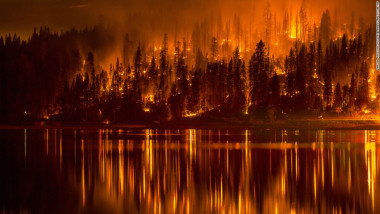 Climate change is worsening wildfires, new study highlights
Research shows that warming temperatures are likely fueling more deadly and devastating fires. Think Progress
U.S., Russia to discuss nuclear arms limits in Geneva on Wednesday –officials
U.S., Russia to discuss nuclear arms limits in Geneva on Wednesday –officials https://news.yahoo.com/u-russia-discuss-nuclear-arms-185425751.html
WASHINGTON, July 15 (Reuters) – Representatives from the United States and Russia are set to meet in Geneva on Wednesday to explore the idea of a new accord limiting nuclear arms that could eventually include China, U.S. senior administration officials said on Monday.
U.S. President Donald Trump has said that he would like to see a new type of arms control deal with Russia and China to cover all types of nuclear weapons, a topic that he has discussed individually with Russian President Vladimir Putin and Chinese President Xi Jinping.
China is not currently a party to nuclear arms pacts between the United States and Russia.
The U.S. delegation will be led by U.S. Deputy Secretary of State John Sullivan and will include Tim Morrison, a top aide at the White House National Security Council, as well as representatives from the Pentagon, the Joint Chiefs of Staff, and the National Security Agency, said the U.S. officials, who spoke to reporters on condition on anonymity.
Russia’s deputy foreign minister, Sergei Ryabkov, will lead the Russian delegation, the U.S. officials said.
“We actually feel that – touch wood – we’ve actually got to a point where we can try to start this again,” one of the officials said, listing off a long series of incidents that have soured relations between the United States and Russia during the past year.
“I say touch wood because we’re always just one incident away from unfortunately things getting derailed,” the official said. (Reporting by Roberta Rampton Editing by Marguerita Choy)
1 This Month
Tell Congress: Prevent Nuclear Catastrophe in Iran

Tell Congress: Prevent Nuclear Catastrophe in Iran

Read the Public Inquiry Report, the Commissioners’ report, Surrendering Australia: The AUKUS Deception is available to download for free at aukuspublicinquiry.com. Or just watch the replay of the National Press Club Luncheon.


Shut down the radiation-damaged Heysham nuclear reactors now
To see nuclear-related stories in greater depth and intensity – go to https://nuclearinformation.wordpress.com

Say No to NASA’s Reckless Nuclear Reactor on the Moon
Say No to NASA’s Reckless Nuclear Reactor on the Moon
-
Archives
- November 2026 (190)
- October 2026 (302)
- September 2026 (339)
- August 2026 (330)
- July 2026 (355)
- June 2026 (287)
- May 2026 (306)
- April 2026 (356)
- March 2026 (251)
- February 2026 (267)
- January 2026 (308)
- December 2025 (358)
-
Categories
- 1
- 1 NUCLEAR ISSUES
- business and costs
- climate change
- culture and arts
- ENERGY
- environment
- health
- history
- indigenous issues
- Legal
- marketing of nuclear
- media
- opposition to nuclear
- PERSONAL STORIES
- politics
- politics international
- Religion and ethics
- safety
- secrets,lies and civil liberties
- spinbuster
- technology
- Uranium
- wastes
- weapons and war
- Women
- 2 WORLD
- ACTION
- AFRICA
- Atrocities
- AUSTRALIA
- Christina's notes
- Christina's themes
- culture and arts
- Events
- Fuk 2022
- Fuk 2023
- Fukushima 2017
- Fukushima 2018
- fukushima 2019
- Fukushima 2020
- Fukushima 2021
- general
- global warming
- Humour (God we need it)
- Nuclear
- RARE EARTHS
- Reference
- resources – print
- Resources -audiovicual
- Weekly Newsletter
- World
- World Nuclear
- YouTube
-
RSS
Entries RSS
Comments RSS

