nuclear-news

The News That Matters about the Nuclear Industry Fukushima Chernobyl Mayak Three Mile Island Atomic Testing Radiation Isotope

Surprise surprise! UK’s New Prime Minister Boris Johnson is a big fan of the nuclear industry

In Cumbria 25th July 2019 New Prime Minister Boris Johnson has pledged his support for a nuclear renaissance, the Barrow-based Dreadnaught submarine programme and Northern
Powerhouse Rail in his maiden speech. On nuclear, Copeland MP Trudy
Harrison asked him: “Does the Prime Minister agree that the time is now
for a nuclear renaissance and that Copeland is the centre of nuclear
excellence?”

Mr Johnson replied: “It is time for a nuclear renaissance
and I believe passionately that nuclear must be part of our energy mix and
she is right to campaign for it and it will help us to meet our carbon
targets.”

His comments were made just days after the Government launched
a consultation into funding large-scale nuclear power stations and an £18
million Government investment into the development of small modular
reactors through a consortium led by Rolls-Royce, and including the
National Nuclear Laboratory, Wood and Nuvia. Opinions are being sought
between now and October 14 on a proposed Nuclear Regulated Asset Base (RAB)
model to fund large power stations.

https://www.in-cumbria.com/news/17795753.boris-johnson-pledges-back-nuclear-renaissance-dreadnought-submarine-programme-northern-powerhouse-rail/

July 27, 2019 Posted by | politics, UK | Leave a comment

Churches aim for joint church action to end nuclear energy

International forum calls for joint church action to end nuclear energy development https://www.anglicannews.org/news/2019/07/international-forum-calls-for-joint-church-action-to-end-nuclear-energy-development.aspx: July 26, 2019 [ACNS, by Rachel Farmer] An international forum set up by the Nippon Sei Ko Kai (NSKK) – the Anglican Communion in Japan – has issued a statement this week calling for denuclearisation and for churches to join in the campaign for natural energy.

The statement, following a gathering in May, says: “the Tokyo Electric Power Company Fukushima Daiichi Nuclear Power Station disaster and subsequent damage which occurred as a result of the March 11, 2011 Great East Japan Earthquake completely shattered the myth of safety and made us aware of the extreme danger of nuclear power generation.”

It states that as long as nuclear power generation is operative, it continues to create dangerous radioactive waste and there is a risk that the technology can at any time be diverted to nuclear weapons and threaten the right to live in peace.

It continues: “no longer should we continue as a society with the economic priority of reliance upon nuclear power generation; we should take a new path, of course practicing power saving and energy conservation, and we should make policy changes to renewable energy . . . Also, we have recognised that, when a nuclear power plant accident occurs, it is irreparable, and is more hazardous than with any other energy source. While on the one hand, grave effects remain now, after eight years have passed, with the passage of time we have become forgetful of the pain and suffering of those afflicted by the disaster.” Continue reading →

July 27, 2019 Posted by | 2 WORLD, opposition to nuclear, Religion and ethics | Leave a comment

International kindness to Chernobyl children from radiation-contaminated areas – but more help is needed

Chernobyl children are taking vacation breaks to escape radiation, but there aren’t enough families to host them. https://www.businessinsider.com/chernobyl-children-international-vacation-radiation-2019-7/?r=AU&IR=T,Jul. 24, 2019

July 27, 2019 Posted by | children, Ukraine | Leave a comment

Ohio takes a backward leap, as Ohio Governor Signs Coal and Nuclear Bailout at Expense of Renewable Energy

Ohio Governor Signs Coal and Nuclear Bailout at Expense of Renewable Energy

Opponents fear the law will send the growing wind and solar industry to neighboring states while Ohio homeowners are stuck boosting old, uneconomical power plants.  Inside Climate News. Dan Gearino, 26 July 19

July 27, 2019 Posted by | politics, USA | Leave a comment

UK Nuclear Finance: From No Subsidies to Nuclear Tax

July 27, 2019 Posted by | politics, UK | Leave a comment

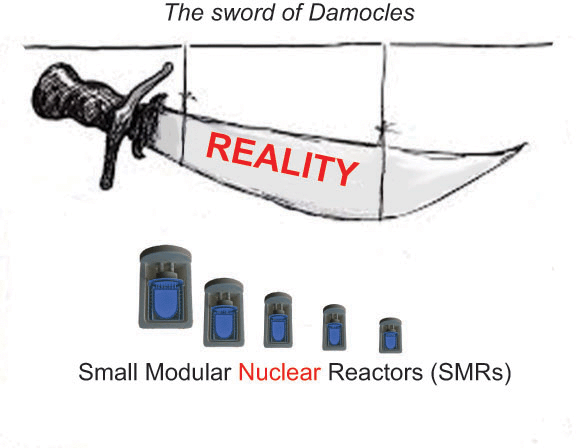
A damning new report on the unlikely future for Small Modular Nuclear Reactors (SMRs)

At a global level, the report concludes that, as with the much-heralded ‘nuclear renaissance’ of recent times, SMRs will not be built in any significant scale.
Whether the economies claimed from the use of production line techniques can be achieved will only be known if reactors are built in very large numbers, and at significant cost.
Spending so much time and effort pursuing such an uncertain technology, at a time when the ‘climate emergency’ has now reached the political and public lexicon in requiring urgent attention, does not appear to be an effective use of taxpayer resources.
In the overall view of the report authors, the prospects for SMRs in the UK and Worldwide are limited and not worth the huge levels of effort or finance being proposed for them.

NFLA support joint report with the Nuclear Consulting Group which looks at the prospects of Small Modular Nuclear Reactors in the UK and globally and concludes they will not be built to any significant  scale http://www.nuclearpolicy.info/news/nfla-joint-ncg-report-on-smrs/    25 Jul 19

The Nuclear Free Local Authorities (NFLA) welcomes cooperating with the Nuclear Consulting Group (NCG) in its development of one of the most detailed analyses of the technologies being developed to create small modular nuclear reactors (SMRs) in the UK and around the world. This report concludes there remains fundamental barriers to any significant development of this new nuclear technology, and its prospects for creating some kind of ‘nuclear renaissance’ are unlikely to be realised.

The report has been developed by Professor Stephen Thomas of Greenwich University, Dr Paul Dorfman of University College London and NCG Founder, Professor M V Ramana of British Columbia University, and the NFLA Secretary. (1) The global nuclear industry has put forward SMRs as a panacea to the problems of high cost and the difficulty of financing large nuclear reactors; a ready-made alternative that can fill the gap.

However, as the NCG / NFLA report outlines in detail, there are huge obstacles to overcome. Some of these are technical issues, others are around building up an effective supply chain, while the financing of such schemes will only be possible with significant and large subsidy from the public purse.

The report starts with considering the failures in delivering larger nuclear reactors, and then takes in turn each type of SMR technology that has been put forward by companies involved in the nuclear industry.

The report outlines in some detail UK Government policy on SMRs. It notes that after some considerable early promotion of the technology, interest has markedly cooled, despite another fairly limited amount of money being offered to develop the technology, announced earlier this week. (2) The report notes the extraordinary set of conditions set out by Rolls Royce to be met by the UK Government if it is to invest significant amounts of money in its own SMR design, which the authors argue could and should not be committed to at a time when serious doubts remain about the economic viability of the technology.

At a global level, the report concludes that, as with the much-heralded ‘nuclear renaissance’ of recent times, SMRs will not be built in any significant scale. The authors note that the two main rationales for SMRs – promised lower overall project costs and lowering the risk of cost overruns by shifting to an assembly line approach – are more than offset by the loss of scale economies that the nuclear industry has pursued for the past five decades. Indeed, many of the features of the SMRs being developed are the same ones that underpinned the latest, failed generation of large reactors. Reactor cost estimates will remain with a large degree of uncertainty until a comprehensive review by national nuclear regulators is completed, the design features are finalised and demonstration plants are built. Whether the economies claimed from the use of production line techniques can be achieved will only be known if reactors are built in very large numbers, and at significant cost.

Spending so much time and effort pursuing such an uncertain technology, at a time when the ‘climate emergency’ has now reached the political and public lexicon in requiring urgent attention, does not appear to be an effective use of taxpayer resources. Abundant evidence shows that renewable energy supply, storage, distribution and management technologies are being developed ever cheaper and swifter at a time when real urgency is required across society and government to mitigate the worst effects of climate change. SMRs are no answer to creating low-carbon economies by 2030 or close to that date. Governments should consider this report carefully and not be diverted by an unproven technology inherent with many difficult issues still to overcome.

In the overall view of the report authors, the prospects for SMRs in the UK and Worldwide are limited and not worth the huge levels of effort or finance being proposed for them.

NFLA Steering Committee Chair Councillor David Blackburn said:

“This excellent independent analysis on the prospects for small modular nuclear reactors needs to be read by the new Business Secretary Andrea Leadsom and senior civil servants in the UK Government who have been providing support to the development of small modular nuclear reactors. It is clear from this joint report between the NCG and the NFLA that this technology is not the panacea to kick start new nuclear reactors, far from it. As Councils around the country declare ‘climate emergencies’ it is clear from this report that scarce available resource should not be spent developing this technology but rather diverted into renewable energy, smart energy, energy efficiency and energy storage projects instead. As large new nuclear like at Moorside and Wylfa has failed to be realised, it is time now to move away from small nuclear reactors as an expensive sideshow to the critical needs of mitigating carbon.”

Report co-author Professor Steve Thomas added:

“Nuclear proponents are saying that SMRs will be the next big thing – but the reality is they are as expensive as large reactors, produce the same waste, carry the same radiation risks, and are a long way from any real deployment.”

Ends – for more information please contact Sean Morris, NFLA Secretary, on 00 44 (0)161 234 3244.

Notes for editors:

(1) NCG / NFLA report – Prospects for Small Modular Reactors in the UK and Worldwide, July 2019
http://www.nuclearpolicy.info/wp/wp-content/uploads/2019/07/Prospects-for-SMRs-report-2.pdf

(2) Energy Live News, Government mulls investing £18 million to develop UK’s first mini nuclear reactor, 23rd July 2019 https://www.energylivenews.com/2019/07/23/government-mulls-investing-18m-to-develop-uks-first-mini-nuclear-reactor/

July 27, 2019 Posted by | Small Modular Nuclear Reactors, UK | Leave a comment

Soaring temperatures in Europe – risk of record ice melt in Greenland

July 27, 2019 Posted by | climate change, EUROPE | Leave a comment

Germany’s Grohnde nuclear plant headed for shutdown, due to high temperatures

Nuclear power plant in Germany at verge of getting switched off due to heat wave – Nuclear phase-out, 26 Jul 2019, Benjamin Wehrmann  https://www.cleanenergywire.org/news/nuclear-power-plant-germany-verge-getting-switched-due-heat-wave

Clean Energy Wire / NDR / Bloomberg  

A nuclear power plant in northern Germany has come to the verge of being taken off the grid on Friday, a Lower Saxony state environment ministry spokesperson told Clean Energy Wire. The ministry on Thursday had said the Grohnde nuclear plant near Hannover would likely be taken offline, as high temperatures were excessively warming a river used for the plant’s cooling system, and should be started up again once the heat wave that has hit Germany and other European countries with unprecedented temperatures has abated. On Friday, the plant’s operator, Preussen Elektra had informed the ministry that water temperatures were not rising as quickly as expected. However, precautions for a possible shutdown were taken nonetheless, the operator said. The river Weser, into which the plant’s cooling water is discharged, is suffering low water levels and has warmed to above 26 degrees Celsius. Additional heat from the nuclear reactor could damage the river’s ecosystem, the ministry said.

According to preliminary figures from meteorological service DWD, 25 June set another temperature record for Germany. Lingen in Lower Saxony recorded a high of 42.6 degrees, breaking the previous day’s all-time German high of 40.5 degrees.

July 27, 2019 Posted by | climate change, Germany | Leave a comment

Fears about a Soviet-era nuclear waste site, on the planned route for a Moscow expressway.

July 27, 2019 Posted by | environment, Russia | Leave a comment

Bikini Atoll, site of nuclear bomb testing, still 10 times more radioactive than Chernobyl

After 61 Years, U.S. Testing Site For Nuclear Weapons Still 10 Times More Radioactive Than Chernobyl https://www.forbes.com/sites/davidbressan/2019/07/25/after-60-years-u-s-testing-site-for-nuclear-weapons-still-10-times-more-radioactive-than-chernobyl/#396a418e26be    David Bressan

Between 1946 and 1958 the atolls of the Marshall Islands in the Pacific Ocean were testing ground for the United States nuclear arsenal. The first bomb, called Able, was detonated July 25, 1946, on Bikini Atoll. The first-ever American hydrogen bomb, with the code name Ivy Mike, was tested on Enewetak in 1951. The 1954 Castle Bravo hydrogen bomb was 1,000 times more powerful than Little Boy, the uranium bomb that destroyed the Japanese city of Hiroshima. In 12 years the U.S. tested 67 nuclear weapons on the Bikini and Enewetak Atolls. The craters formed by the explosions are visible from space; however, less obvious is the radioactive contamination of the entire area.

A survey conducted in 2015 found concentrations of radioactive plutonium-239 and -240 in the soil of Bikini and Enewetak almost ten times higher than levels in the Chernobyl exclusion zone, where thirty-three years ago the reactor experienced a catastrophic core meltdown, exploded and parts of the nuclear fuel were released. Levels of gamma radiation were also higher than previously reported on Bikini and significantly elevated on sites tested on Enewetak and Rongelap Atolls.. Radioactive fallout from the Castle Bravo test on March 1, 1954, also contaminated the nearby Rongelap and Utirik Atolls, prompting the evacuation of the local population. Still today some sites surpass the maximum exposure for radiation considered safe by experts. Apart the 67 tests, also a leaking nuclear waste repository is contributing to the radioactive pollution of the area.

On Runit Island, one of forty islands forming the Enewetak Atoll, sits “The Dome” – a 100 meters wide crater filled with 85,000 cubic meters of radioactive debris and waste and covered with half a meter of concrete. The dome sits on permeable rocks and in 2013 leaks of radioactive water were noted at the base of the structure. As sea levels are rising the entire site will be flooded, potentially causing widespread radioactive contamination, including plutonium-239.

July 27, 2019 Posted by | environment, OCEANIA | Leave a comment

China absolutely clear on its policy of No First Use of Nuclear Weapons

July 25, 2019 Posted by | China, Reference, weapons and war | Leave a comment

New report: nuclear energy cannot be classified as “clean”, nor as economic

Nuclear: A poor investment strategy for clean energy    https://www.pv-magazine.com/2019/07/24/nuclear-a-poor-investment-strategy-for-clean-energy/

The study undertook an empirical survey of the 674 nuclear plants that have ever been built to demonstrate that private economic interests were not the motive, but instead have been driven by military interests.

“Nuclear power was never designed for commercial electricity generation; it was aimed at nuclear weapons. That is why nuclear electricity has been and will continue to be uneconomical,” says Christian von Hirschhausen, coauthor of the study.

In its Monte Carlo simulation model developed for the net present value of a 1 GW nuclear plant, the study found that expected loss of revenues range between 1.5 and 8.9 billion euros.  The model built in a variety of factors including the wholesale cost of electricity (20-80 euros/MWh), specific investment costs (4,000-9,000 euros/kW) and the weighted average cost of capital (4-10%). In the Monte Carlo analysis, researchers argue that, in all cases, nuclear investment would generate significant financial losses.

Expanding beyond lacking economic sustainability, the report goes on to further undermine international debates and policies which support nuclear as a part of climate action strategies. “Nuclear energy is by no means clean. Its radioactivity will endanger humans and the natural world for over one million years,” says von Hirschhausen.

The report calls out the International Energy Agency for recently suggesting nuclear energy in a clean energy system and for its encouragement of subsidies to the technology and its suppliers. Policies and frameworks around the world have incorporated nuclear power into the mix of future energy production. The EU Clean Energy Package built to support climate protection contains service life extensions for a number of nuclear plants and also recommends building more than 100 new plants by 2050.

“Describing nuclear energy as “clean” ignores the significant environmental risks and radioactive emissions it engenders along the process chain and beyond,” the report concludes.

Despite DIW’s warnings against costs and dangers, nuclear power capacity is increasing worldwide, even though solar and wind are taking front-runner positions as the cheapest grid-connected sources of energy. According to the World Nuclear Association, there are currently 50 reactors under construction, with more than 100 nuclear power reactors are on order or planned, and more than 300 additional plants proposed.

July 25, 2019 Posted by | 2 WORLD, politics international, Reference | Leave a comment

Nuclear reactors at Fukushima No 2 plant to be decommissioned

Tepco says it will decommission nuclear reactors at Fukushima No. 2 plant https://www.japantimes.co.jp/news/2019/07/24/national/tepco-says-will-decommission-nuclear-reactors-fukushima-no-2-plant/#.XTjRFugzbIU, 24 July 19,

  Tokyo Electric Power Company Holdings Inc. will decommission the Fukushima No. 2 nuclear plant, its president, Tomoaki Kobayakawa, told Fukushima Gov. Masao Ochibori at a meeting Wednesday.

The facility is the second nuclear plant that the utility company has decided to decommission after accepting it would need to shutter the nearby Fukushima No. 1 plant, which was crippled by the March 2011 earthquake and tsunami disaster in the world’s worst nuclear crisis since Chernobyl.

Tepco’s decision to scrap Fukushima No. 2, which is expected to cost some ¥280 billion ($2.6 billion), will be formally approved at the company’s board meeting later this month if local municipalities accept the plan.

The prefecture has demanded the utility scrap the reactors at Fukushima No. 2, saying their existence would hamper its reconstruction efforts. The plant has been offline since its operations were suspended due to the 2011 disaster.

If the plan goes ahead, all 10 nuclear reactors in the prefecture — four at the No. 2 plant and six at the No. 1 facility — will be scrapped.

It will also leave the utility company with only the Kashiwazaki-Kariwa nuclear plant in Niigata Prefecture and the planned Higashidori nuclear plant in Aomori Prefecture.

Kobayakawa said at the meeting, also attended by the mayors of the two towns — Naraha and Tomioka — that host the plant, that Tepco plans to build a new on-site storage facility for spent nuclear fuel from the reactors at the Fukushima No. 2 plant.

The fuel will be placed in metallic containers and cooled using a dry storage approach, according to the operator.

No decision has been made regarding final disposal of the spent fuel, raising concerns that the radioactive waste may remain on-site for a long time.

The Fukushima No.2 plant currently has around 10,000 assemblies of spent fuel cooling in pools.

July 25, 2019 Posted by | decommission reactor, Japan | Leave a comment

Renewable energy providing more electricity than coal and nuclear power combined in Germany

Renewable energy providing more electricity than coal and nuclear power combined in Germany Independent  Solar, wind, biomass and hydroelectric power generates nearly half of country’s output.   Emma Snaith, 25 Jul 19, 

Renewable sources of energy produced more electricity than coal and nuclear power combined for the first time in Germany, according to new figures.

Solar, wind, biomass and hydroelectric power generation accounted for 47.3 per cent of the country’s electricity production in the first six months of 2019, while 43.4 per cent came from coal-fired and nuclearpower plants.

Around 15 per cent less carbon dioxide was produced than in the same period last year, according to figures published by the Fraunhofer Institute for Solar Energy Systems (ISE) in July.

However, some scientists have attributed the high renewable power output to favourable weather patterns and “market-driven events”.

Fabian Hein, from the think tank Agora Energiewende, told Deutsche Welle the 20 per cent increase in wind production was the result of particularly windy conditions in 2019……..

Renewables accounted for 40 per cent of Germany’s electricity consumption in 2018, according to government figures.

While in the UK, 29 per cent of electricity was sourced from renewables last year.

Germany is aiming to phase out its nuclear power plants by 2022. Its renewable energy has been rising steadily over the last two decades thanks in part to the Renewable Energy Act (EEG), which was reformed last year to cut costs for consumers.

But Germany still relies heavily on coal, gas and lignite for its energy needs.

Germany’s reluctance to end its dependence on coal saw hundreds of climate activists storm one of the country’s biggest open-pit coal mines in June to protest against fossil fuel use.

..electricity production from solar panels rose by six per cent, natural gas by 10 per cent, while the share of nuclear power in the country’s electricity production has remained virtually unchanged.

https://www.independent.co.uk/news/world/europe/renewable-energy-germany-electricity-coal-nuclear-power-a9017821.html


July 25, 2019 Posted by | Germany, renewable | Leave a comment

A layman’s guide to the ‘Regulated Asset Base’ that will fund Sizewell C nuclear power plant.

July 25, 2019 Posted by | business and costs, politics, UK | Leave a comment