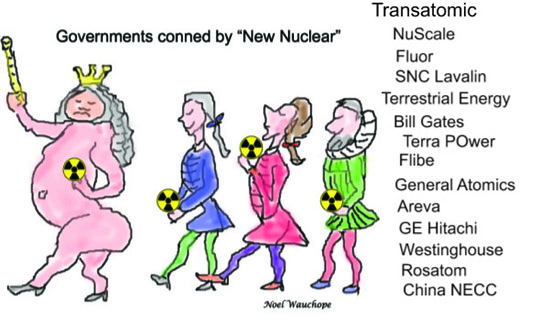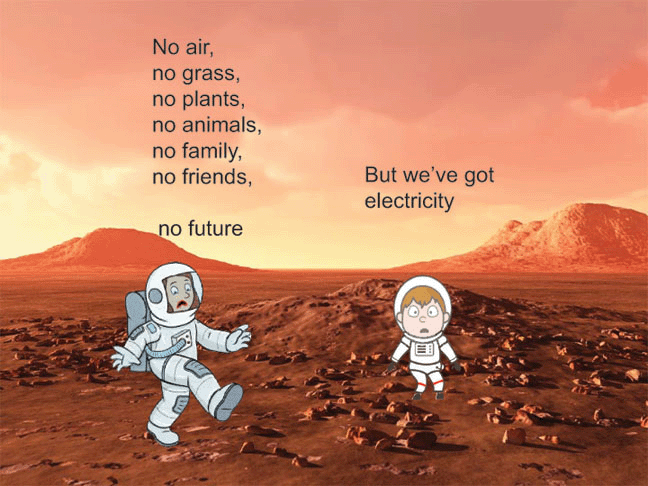
US plans to send nuclear reactors to space, Rt.com 19 Aug, 2019 Despite the nuclear industry stumbling in the domestic United States, the country is looking to put nuclear reactors on Mars and the Moon.
While the nuclear energy industry is struggling to stay afloat in the United States, bogged down by public and political mistrust, crushing nuclear waste-maintenance costs, and a market flooded by cheap natural gas, the country has grand plans for nuclear power outside of its domestic borders. Way outside.
In just a few short years from now, the United States will be shipping nuclear reactors to the moon and Mars. According to team members from the Kilopower project, a collaborative venture from NASA and the United States Department of Energy, nuclear energy is just a few years from heading into the space age.
“The Kilopower project is a near-term technology effort to develop preliminary concepts and technologies that could be used for an affordable fission nuclear power system to enable long-duration stays on planetary surfaces,” says NASA’s “Space Technology Mission Directorate.” In layman’s terms, the focus of the Kilopower project is to use an experimental fission reactor to power crewed outposts on the moon and Mars, allowing researchers and scientists to stay and work for much longer durations of time than is currently possible. …..
[ NASA says] The potential of this demonstration would be to “pave the way for future Kilopower systems that power human outposts on the Moon and Mars, enabling mission operations in harsh environments and missions that rely on In-situ Resource Utilization to produce local propellants and other materials.”
While this is not the first time that nuclear energy is being used to power pursuits into the final frontier, the Kilopower project is a much more ambitious and powerful project than any of its predecessors. According to Space.com, “nuclear energy has been powering spacecraft for decades. NASA’s Voyager 1 and Voyager 2 probes, New Horizons spacecraft, and Curiosity Mars rover, along with many other robotic explorers, employ radioisotope thermoelectric generators (RTGs), which convert the heat thrown off by the radioactive decay of plutonium-238 into electricity.” ….. https://www.rt.com/business/466790-us-space-nuclear-reactors/
August 20, 2019
Posted by Christina Macpherson |
space travel, USA |
Leave a comment
I visited Russia’s nuclear city and don’t want to relive the Cold War
Commentary: One era of nuclear brinksmanship was enough for CNET’s Stephen Shankland, who visited the Russian nuclear weapons center of Sarov just after the first Cold War ended. CNET, BY STEPHEN SHANKLAND
AUGUST 18, 2019 I spent more than five years as a reporter in Los Alamos, New Mexico, birthplace of the atomic bomb, home to a major national laboratory, and the 18,000-person town where I grew up. I covered everything from President Bill Clinton visiting the lab to mostly harmless radioactive cat poop triggering radiation alarms at the county landfill. But the story that made the biggest impression on me took place thousands of miles away, in Russia.
In May 1995, I was part of a seven-person civilian delegation that traveled to Los Alamos sister city Sarov, about 230 miles east of Moscow. It’s the home of the institute where Russia developed its first atomic bomb. Our visit was timed to coincide with a 50th anniversary celebration of the end of the Great Patriotic War, aka World War II, which for the Russians ended when the Germans capitulated in May 1945.
It was a sobering visit — the economic devastation; the Soviet-era microphones bugging away in our hotel; the angry and impoverished veterans; and the daunting quantities of vodka, champagne and cognac that accompanied us during a weeklong series of banquets. I spoke with
Viktor Adamsky, one of the designers of the biggest nuclear bomb of all time, the 50-megaton Tsar Bomba, which was more powerful than all the bombs dropped in World War II.
I’m remembering it now because I’ve recently interviewed Siegfried Hecker, former director of Los Alamos National Laboratory and a key leader of the US-Russian lab collaboration that led to my trip.
Back when US-Russian relations were thawing
During the time of my trip, relations between Russia and the US were warming, but now they’re cooling once again. That troubles Hecker — even though he spent much of his career designing the nuclear weapons the US aimed at the then-USSR.
It troubles me, as well. I grew up during the Cold War, and I’m not eager to introduce my children to concepts like nuclear winter and megadeath. And even as treaties between the US and Russia fizzle out and the two countries rev up another arms race, worries are piling up about the nuclear weapons capabilities of Iran and North Korea, too.
But Hecker stresses the similarities between the US and Russia — “They’re so much like us,” he says……
Each city benefited from its government’s largesse during the Cold War. “When I first came here, I thought it was a paradise. Such food!” one Sarov man told me. Meanwhile, Los Alamos received a federal funding boost for its schools and its police and fire departments. Each city suffered when government funding dropped with the end of the Cold War. Both cities teem with elite researchers who play important military roles and are curious about what makes the universe tick. Both cities have nuclear weapons museums showing off the hulking casings of early bombs…….
Hecker has a lot more of those connections. He’s friends with plenty of Russians and sees their cultural values as very similar to ours. And he’s keeping his communication links alive even though the US-Russia lab-to-lab collaboration project he helped begin is now all but dead. He’ll take his 57th trip to Russia in November.
The two countries can move past sticking points like NATO’s eastward expansion and Russia’s military action in the Crimea and eastern Ukraine, Hecker says. Today’s nationalistic fervor might make it hard to defrost the relationship, but seeing the world from the other side’s perspective will help, he says.
August 20, 2019
Posted by Christina Macpherson |
PERSONAL STORIES, politics international, Russia, USA |
Leave a comment
 The nuclear arms race is back … and ever more dangerous now https://www.theguardian.com/world/2019/aug/17/nuclear-arms-race-is-back-and-more-dangerous-than-before Simon Tisdall Donald Trump has increased spending on America’s arsenal while ripping up cold war treaties. Russia and China are following suit. Imagine the uproar if the entire populations of York, Portsmouth or Swindon were suddenly exposed to three times the permissible level of penetrating gamma radiation, or what the nuclear physicist Ernest Rutherford termed gamma rays. The outpouring of rage and fear would be heard across the world.
That’s what happened to the roughly 200,000 people who live in the similarly sized northern Russian city of Severodvinsk on 8 August, after an explosion at a nearby top-secret missile testing range. Russia’s weather service, Rosgidromet, recorded radiation levels up to 16 times higher than the usual ambient rate.
Yet the incident has been met with surly silence by Russia. It was five days before officials confirmed a blast at the Nyonoksa range had killed several people, including nuclear scientists. No apologies were offered to Severodvinsk residents. There is still little reliable information. “Accidents, unfortunately, happen,” a Kremlin spokesman said.
That callous insouciance is not universally shared. According to western experts, the explosion was caused by the launch failure of a new nuclear-powered cruise missile, one of many advanced weapons being developed by Russia, the US and China in an accelerating global nuclear arms race
Vladimir Putin unveiled the missile, known in Russia as the Storm Petrel and by Nato as Skyfall, in March last year, claiming its unlimited range and manoeuvrability would render it “invincible”. The Russian president’s boasts look less credible now.
But Putin is undeterred. Denying suggestions that the missile is unreliable, the Kremlin insisted Russia was winning the nuclear race. “Our president has repeatedly said that Russian engineering in this sector significantly outstrips … other countries,” a spokesman said.
Now fast-forward to 16 August, and another threatening event: the test-firing by North Korea of potentially nuclear-capable ballistic missiles, the sixth round of launches since July. More than two years of vanity diplomacy by Donald Trump has not convinced Pyongyang it is safe to give up its nukes – proof, if it were needed, that unilateral counter-proliferation initiatives do not work.
Arms control experts say a consistent, joined-up international approach is woefully lacking. Thus Israel’s undeclared nuclear arsenal is tolerated, and the idea of a bomb developed by Saudi Arabia is no longer ruled out. But the merest hint that Iran may build a nuclear weapon is greeted with megatons of hypocritical horror.
In a sense, the problem is circular. Putin argues that Russia’s build-up is a response to destabilising US moves to modernise and expand its own nuclear arsenal – and he has a point. Barack Obama, the former president, developed a $1.2tn plan to maintain and replace the “triad” of US air, sea and land-based nuclear weapons.
Trump has gone much further. The Pentagon’s nuclear posture review, published last year, proposed an additional $500bn in spending, including $17bn for low-yield, tactical nuclear weapons that could be used on conventional battlefields. The first of these new warheads is due to become operational next month.
Critics in Congress say low-yield weapons make nuclear warfare more likely, and oppose Trump’s budget increases. But with US planners saying the biggest national security threat is no longer terrorism but nuclear-armed states, there is little doubt that many new weapons projects will get the go-ahead.
The renewed nuclear arms race is a product of Trump’s America First outlook and that of comparable ultra-nationalist and insecure regimes elsewhere. Trump’s emphasis on defending the “homeland” is leading inexorably to the militarisation of US society, whether at the Mexican border, on inner-city streets or in its approach to international security.
“We have far more money than anybody else by far,” Trump said last October. “We’ll build up until [Russia and China] come to their senses.” Outspending the opposition was a tactic employed by Ronald Reagan in the 1980s. And Trump is putting taxpayers’ money where his mouth is. Overall, annual US military spending is soaring, from $716bn this year to a proposed $750bn next year.
The paradox is that even as the risk of nuclear confrontation grows, the cold war system of treaties that helped prevent Armageddon is being dismantled, largely at Trump’s behest. Earlier this month, the US withdrew from the 1987 Intermediate-range Nuclear Forces (INF) treaty with Russia (which rid Britain and Europe of US missiles deployed in the early 80s).
The US is also signalling it will not renew the New Start strategic nuclear weapons treaty when it expires in 2021. Washington claims Moscow cheated on the INF pact; Russia denies it. But the real US concern is that both treaties tie its hands, especially regarding China – another example of the impact of America First thinking.
This increasingly unregulated, three-way contest poses indisputable dangers. The US plans were “unnecessary, unsustainable, and unsafe” and “increase the risks of miscalculation, unintended escalation, and accelerated global nuclear competition”, the independent US-based Arms Control Association said in April.
With a much smaller arsenal than the US and Russia, China, too, is “aggressively developing its next generation of nuclear weapons”, according to a major Chinese weapons research institute. Nor, given Moscow’s and Washington’s behaviour, has it an incentive to stop, despite Trump’s vague proposal for a trilateral disarmament “grand bargain”.
Like the US, China – while historically pledged to “no first use” – wants potential enemies to believe it may actually use tactical nukes. As Dr Strangelove would doubtless appreciate, this, perversely, increases the chances that it will.
The dreadful example these nuclear arms-racers are setting to non-nuclear states such as Iran is obvious. By failing to uphold arms control agreements, neglecting collaborative counter-proliferation efforts, and building new, more “usable”, dangerously unproved weapons like the one that irradiated Severodvinsk, the nuclear powers are digging their own graves – and ours.
August 19, 2019
Posted by Christina Macpherson |
politics international, USA, weapons and war |
Leave a comment
We Can’t Confront Climate Change While Lavishly Funding the Pentagon, BY JP Sottile, Truthout. August 18, 2019
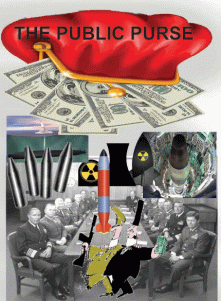 The Pentagon is staring down the barrel of what could become the longest, hottest war in U.S. history. This titanic clash pits the largest military the world has ever seen against an omnipresent opponent that can marshal resources like no enemy it has ever encountered.
That opponent is climate change, and according to a
joint investigationby
NBC News and
InsideClimate News, the extreme heat it brings is already generating military casualties. But soldiers like
Sgt. Sylvester Cline are not dying where you might expect, such as scorching, oil-rich targets like Iraq, where Cline served during a lie-tainted war. Unlike the overwhelming majority of Uncle Sam’s
long list of military conflicts, this war is also being waged on U.S. soil. Sadly, the Arkansas-based sergeant was just one of “at least 17 troops to die of heat exposure during training exercises at U.S. military bases since 2008.”
In fact, the total number of heat-strokes and cases of heat exhaustion suffered by active-duty service members rose by 60 percent between 2008 and 2018 (from 1,766 to 2,792). Forty percent of these incidents occurred in the Southeastern United States in places like Fort Benning (Georgia), Camp Lejeune (North Carolina) and Fort Polk (Louisiana). Over that same period, the Southeast region has experienced average summer temperatures that were the nation’s hottest on record, and a staggering 61 percent of major Southeast cities show the effects of these worsening heat waves, according to the
Fourth National Climate Assessmentreleased in 2018.
As Brown University’s Costs of War research project
recently pointed out, the Defense Department “remains the world’s
single largest consumer of oil – and as a result, one of the world’s top greenhouse gas emitters.” British researchers at Durham University and Lancaster University
published a corroborating report detailing the profuse use of hydrocarbons to fuel U.S. military adventurism. They astutely pointed out the dilemma of attempting to confront “the effects of climate change while remaining the largest single institutional consumer of hydrocarbons in the world.” …….
every year the U.S. political system reflexively funds a
world-dominating defense budget that directly benefits the oil industry, client states and the entire hydrocarbon-based economy. Basically, it’s a global protection racket that generates
huge profits for defense companies that sell weapons to the Pentagon.
And the
U.S. governmentalso
pushes arms sales abroad, particularly to
oil-rich clients like those in the Middle East. All of those arms sales sustain
thousands of jobs in states and congressional districts around the U.S. That, in turn, creates constituencies for members of Congress who collect millions in campaign contributions from both the
defense and
oil industries to make sure they can maintain
de facto subsides for their weapons and their oil. Taxpayers and consumers complete the circuit through their “contributions” to the empire’s public-private partnership: They get to keep on buying oil, gas and plastic, while paying taxes for the military. It’s a perpetual ATM fueled by oil.
Meanwhile, U.S. citizens fill the ranks of the military services that guarantee the continuation of a hydrocarbon system that’s now cooking them alive as they train on U.S. soil. It’s the ghoulish internal logic of the oil-driven imperium, one that generates its rationale for being through its continued existence.
Funding the Pentagon, Fueling the Fallout
Now this self-perpetuating system threatens to engulf the thawing Arctic, which is becoming a
new frontier for untapped oil and gas. Of course, there’d be no scramble for the Arctic’s once-impenetrable hydrocarbon resources without the unprecedented melting caused by our hydrocarbon-driven climate crisis. But that sad irony was purposefully ignored by Secretary of State Mike Pompeo at a recent meeting of the eight-nation
Arctic Council in Finland. Unsurprisingly, the
Rapture-ready Pompeo
refused to sign the meeting’s
joint accord because it mentioned the climate crisis now devastating the Arctic’s ecosystems. Instead, Secretary Pompeo
extolled the
supposed benefits of the big melt that’s rapidly altering the pristine landscape of the ever-less frozen frontier:
The Arctic is at the forefront of opportunity and abundance. It houses 13 percent of the world’s undiscovered oil, 30 percent of its undiscovered gas, an abundance of uranium, rare earth minerals, gold, diamonds, and millions of square miles of untapped resources, fisheries galore.
It’s a predictable statement from an
oil-obsessed administration that salivates at the prospect of
drilling, baby, drilling in the Arctic. At the same time, Secretary Pompeo put the world on notice,
stating that the region has become an “arena of global power and competition.” Without irony, he
warned Russia and “
non-Arctic” nations like China against “
aggressive” behavior. Actually, China is
already there and
drilling in cooperation with Russia in
a de facto alliance around the issue of the opening Arctic, a fact that is likely to become
budgetary catnip for U.S. empire. Competition for this new frontier is quickly becoming the latest oily justification to pour money into yet another theatre of operations. In other words, the climate crisis is not only a byproduct of empire, but it’s becoming a rationale for even more empire.
Actually, it’s already started
The troops sent to the border to “assist” U.S. Customs and Border Patrol and to “build” Trump’s wall are, like Sergeant Cline’s heat-related death, a harbinger of things to come. They are not only seeing firsthand the desperation of people willing to walk up to 2,000 milesto flee the fallout from decades of U.S. interventionism in Central America, they are witnessing the start of a widely predicted climate migration crisis. A brutal mix of prolonged drought, water scarcity and deforestation is exacerbating the suffering in El Salvador, Guatemala and Honduras. As InsideClimate News noted, Honduras typifies the unfair paradox of the climate crisis because “like so many developing countries” it “has contributed relatively little to the greenhouse gas emissions,” but “projections suggest it is especially imperiled by climate change.”
Low-emission countries like
Bangladesh,
Mozambique and
Fiji are already feeling the heat of the climate crisis. And, as U.S. troops suffer from heat waves in the Southeast, the impact of climate crisis is also being felt acutely in the U.S. in places like the
Alaskan village of Newtok, which requested and was
finally granted Federal Emergency Management Agency money to flee the relentless march of climate-caused erosion. Obviously, the crisis is not 50-75 years away, as Environmental Protection Agency Administrator and former hydrocarbon lobbyist Andrew Wheeler
smugly proclaimed — and
the Pentagon knows it.
Unfortunately, the longer the U.S. continues to garishly fund the Pentagon and its oil-based protection racket, the harder it will be to deal with the massive ecological and human fallout caused by the hydrocarbon economy. Ultimately, it might be impossible to halt or even mitigate the climate crisis without also ending empire. And if we are not careful, the same forever war mentality that has continually shifted from one enemy to another will find yet another reason to exist — this time as a bulwark against the escalating impacts of a climate crisis it helped to create in the first place.
August 19, 2019
Posted by Christina Macpherson |
climate change, USA, weapons and war |
Leave a comment
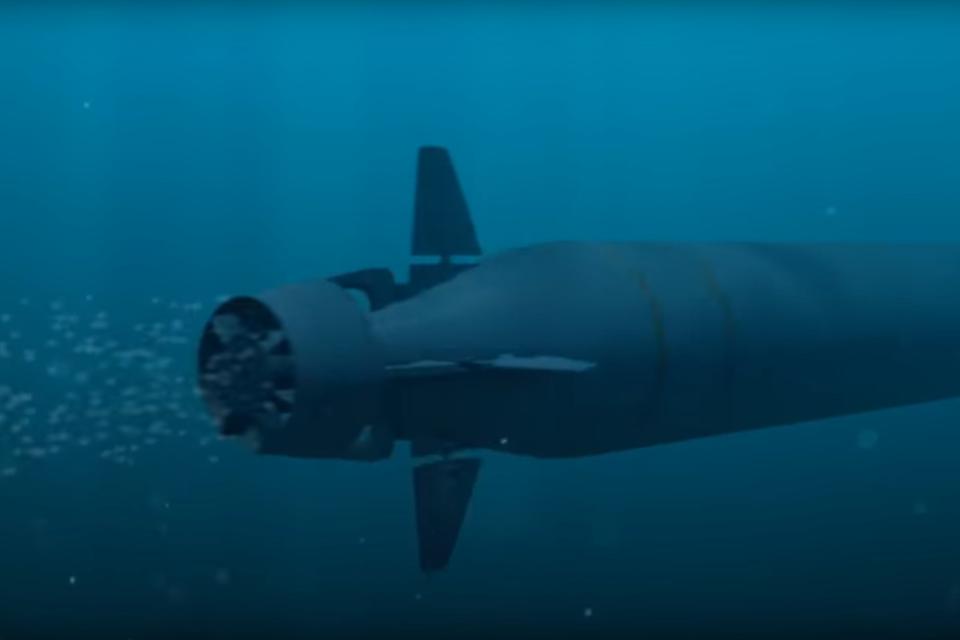
Russia Testing Nuclear-Powered Mega-Torpedo Near Where Deadly Explosion Occurred https://www.forbes.com/sites/hisutton/2019/08/17/russia-testing-nuclear-powered-mega-torpedo-near-where-deadly-explosion-occurred/#7f3e00632d7fH I Sutton, Aerospace & DefenseI cover the changing world of underwater warfare. Details are still emerging of the explosion of a nuclear-powered engine that killed at least seven people in northern Russia last week. Conflicting reports, rumors and speculation center around whether the engine was for a nuclear-powered cruise missile, codenamed Skyfall by NATO, or some other weapon-related reactor. One of the possible weapons in the frame is the Poseidon mega-torpedo. This new weapon is described as an Intercontinental Nuclear-Powered Nuclear-Armed Autonomous Torpedo by the U.S. government
One of the possible weapons in the frame is the Poseidon mega-torpedo. This new weapon is described as an Intercontinental Nuclear-Powered Nuclear-Armed Autonomous Torpedo by the U.S. government.
The unique drone-like weapon is in an entirely new category. Launched from a large submarine, potentially from under the protection of the arctic ice cap, it would have virtually unlimited range and Russia claims that it will run so deep that it cannot realistically be countered with existing weapons. It’s designed to be armed with a nuclear warhead, reportedly of 2 megatons, which represents a slow but unstoppable death-knell for the residents of coastal cities such as New York or San Francisco in the event of a nuclear war. The Russian Ministry of Defense also claims that it will be usable against high value maritime targets such as the U.S. Navy’s carrier battle groups.
It is massive, around 30 times larger than the heavyweight torpedoes commonly used aboard submarines, and twice as large as submarine launched ballistic missiles (SLBMs). Specially constructed submarines will be able to carry six Poseidon each. Unlike existing missile submarines, which are termed SSBNs, this type of submarine doesn’t even have a designation yet. Possibly SSDN will be used to denote a nuclear powered drone-carrying submarine.
Poseidon is being tested in the region, my analysis of information gathered from public sources shows. For trials it is being launched by a special submarine based in Severodvinsk, near the Nyonoksa testing site where the explosion occurred. The submarine is named Sarov after the city where the All-Russian Scientific Research Institute of Experimental Physics, which developed the nuclear engine involved in the explosion, is based. Sarov is also the city where the victims of the blast were laid to rest. In recent years the Russian Ministry of Defense has been open about Sarov’s role in the tests. The submarine rarely puts to sea but my analysis of information gathered from public sources shows that it did venture out into the White Sea in June, pointing to possible recent test launches.
Poseidon was first revealed to the public in dramatic fashion by Russian state media in the fall of 2015, when a slide on the new weapon was visible during a meeting with President Putin. The apparent security lapse was probably not by accident.
The project itself has since been traced back much further to the end of the Cold War, and defense watchers had an inkling of a giant torpedo-like weapon under development for about five years prior to the staged leak.
The weapon has been in testing since around 2014 and is likely to be nearing the production phase with deployments at sea from the early 2020s. The first submarine slated to carry the weapon operationally was launched in April in Severodvinsk. The gigantic Belgorod submarine is still undergoing fitting out and will not be operational for a few years. The second submarine, Khabarovsk, is also nearing completion and two more SSDNs are expected to follow, providing Russia with a new dimension in nuclear deterrence.
August 19, 2019
Posted by Christina Macpherson |
Russia, weapons and war |
Leave a comment
Regulators formalise technical collaboration on SMR regulation,WNN, 16 August 2019 Canadian and US nuclear regulators have signed a first-of-a-kind Memorandum of Cooperation (MoC) that will see them collaborate on the technical reviews of advanced reactor and small modular reactor (SMR) technologies. Meanwhile, the US Department of Energy has awarded funds to build SMR simulators at three US universities.
The MoC was signed on 15 August in Ottawa by Canadian Nuclear Safety Commission (CNSC) President Rumina Velshi and US Nuclear Regulatory Commission (NRC) Chairman Christine Svinicki and follows a Memorandum of Understanding signed two years ago. …..
The US DOE has awarded three grants to support the installation of a NuScale reactor plant simulators at Oregon State University, Texas A&M University-College Station and the University of Idaho, NuScale Power announced on 15 August. The simulators will be used for research and educational purposes…..
 We are very grateful to our university partners for their collaboration and eagerness to participate in this project, and to the Department of Energy for its continued support of NuScale’s groundbreaking work in the advanced nuclear industry,” NuScale Chairman and CEO John Hopkins said. “These simulator facilities will create new research opportunities and help ensure that we educate future generations about the important role nuclear power and SMR technology will play in attaining a safe, clean and secure energy future for our country.”
The simulator facilities will also be used for educational outreach to school-age students and public advocacy regarding nuclear power and SMR technology. The three grants are awarded through the DOE Nuclear Energy University Program and are worth a total of nearly USD844,000.
The simulators are based on NuScale’s simulator technology and computer models, and include an interface that accepts input from operators in a virtual control room and displays parameters simulating the plant response. They facilitate research into human factors engineering, human-system interface design, advanced diagnostics, cyber security and plant control room automation. In addition to supporting STEM research and education at universities, NuScale’s simulator can be used to show students and members of the public advanced nuclear technology in a control room setting.
http://www.world-nuclear-news.org/Articles/Regulators-formalise-technical-collaboration-on-SM?feed=feed
August 19, 2019
Posted by Christina Macpherson |
Canada, Education, USA |
1 Comment