A spokesperson for the Kremlin was blasé about the Nyonoksa explosion, stating that “accidents happen.” Yes, they do, but nuclear-powered cruise missile programs don’t just happen. They represent dangerous and unnecessary choices to goose a nation’s theoretical military supremacy, incentivizing other nations to follow suit, risks be damned. The arms control regimes that once moderated U.S. and Russian decisions are already crumbling, and another big one—the New Strategic Arms Reduction Treaty, or New START—may expire in 2021. What exactly transpired in the White Sea on August 8 may remain fuzzy, but what is becoming increasingly clear is the risk to life associated with a new generation of nuclear arms proliferation between the U.S. and Russia. With ultranationalist leaders and weapon fetishists in control of Washington and Moscow, buttressed by military yes-men and mercenary defense contractors, there’s little to stand in the way of a new, irrationally exuberant buildup of bizarre new nuclear forces.
Two victims of mysterious Russian missile blast ‘died of radiation sickness’

|
Two victims of mysterious Russian missile blast ‘died of radiation sickness’ , By Will Englund and Natalia Abbakumova, SMH, August 22, 2019 Moscow: Two of the Russian specialists killed in the explosion at a White Sea missile testing range died not of traumatic injuries from the blast itself but of radiation sickness before they could be taken to Moscow for treatment, the independent newspaper Novaya Gazeta has reported.The paper cited an unnamed medical worker who was involved in their care. “Two of the patients did not make it to the airport and died,” the person said. “The radiation dose was very high, and symptoms of radiation sickness grew every hour.”
Their bodies were taken to the Burnazyan Federal Medical and Biophysical Centre in Moscow, a leading institution in the fields of radioactive and nuclear medicine. The explosion occurred on August 8, on a sea-based platform off the village of Nyonoksa, in Russia’s far north. Rosatom, Russia’s atomic agency, said a device employing “isotopic sources of fuel on a liquid propulsion unit” was destroyed. Few additional details were provided……. The doctors and nurses were made to sign nondisclosure agreements stating that information about the incident is a state secret. A doctor told Novaya: “They don’t understand what a state secret is and what the scope of this secret is and that makes the staff very nervous.” ……. Four sensors in various locations across Russia that are in place to monitor compliance with the Comprehensive Nuclear Test Ban Treaty stopped reporting information shortly after the explosion, as first reported by the Wall Street Journal, but at least one has since resumed. An independent news website, Znak.com, quoted an unnamed nuclear expert as suggesting that the explosion does not pose a health threat to the general population but that the sensors may have been turned off to prevent disclosure of particular isotopes that would give clues as to the nature of the device being tested on the White Sea. An editorial in the newspaper Vedemosticriticised the lack of information from the government. “The authorities offer one answer to all the questions: The radiation level in the area of the blast is not excessive, the rest is not your business,” it read. “The authorities’ apparent unwillingness to present all necessary information about what happened and its consequences to society and international experts begets only new suspicions that someone is hiding something.” https://www.smh.com.au/world/europe/two-victims-of-mysterious-russian-missile-blast-died-of-radiation-sickness-20190822-p52jiu.html |
|
|
UK’s nuclear regulator allows EDF to restart Hunterston B nuclear reactor, despite cracks
 Nuclear regulator permits restarting of reactor 4 at Hunterston B
EDF Energy is expected to restart reactor a year after it was shut down over safety concerns, Guardian, Jillian Ambrose. 21 Aug 19, Britain’s nuclear watchdog has agreed to allow one of the country’s oldest nuclear reactors to restart, one year after it was shut down to investigate cracks in its graphite core.
EDF Energy is expected to restart reactor 4 at its 40-year-old Hunterston B nuclear plant on the Firth of Clyde in North Ayrshire within weeks after the Office for Nuclear Regulation (ONR) said the plant was safe.
The regulator will allow the reactor to run for four months after proving that the reactor cores can still fulfil their fundamental safety requirements, despite the cracks in its graphite bricks……..
The reactor was shut down last March after investigators discovered more than expected cracks in the graphite core of reactor 4 and reactor 3 at the Scottish nuclear plant. Its application to restart reactor 3, which was found to have more than 350 hairline cracks in its graphite core, is still pending. ……..
The French-owned energy company owns and operates all of the UK’s existing nuclear power plants, which provide about a fifth of the UK’s electricity. It is hoping to extend the reactors’ expected running lives and build new nuclear plants at the Hinkley Point C and Sizewell B nuclear sites.
The company said in 2016 it would extend the lives of its Heysham 1 and Hartlepool nuclear plants, which were due to close this year but will continue to run until 2024. The closure dates of the Heysham 2 and Torness nuclear plants will both be delayed by seven years to 2030.
EDF Energy hopes to run the Hunterston nuclear plant until 2023. https://www.theguardian.com/business/2019/aug/20/edf-nuclear-reactor-restarting-hunterston-b
Public Should Comment on New “WIPP Forever” Strategic Plan
 Public Should Comment on New “WIPP Forever” Strategic Plan, http://nuclearactive.org/ August 22nd, 2019 The Waste Isolation Pilot Plant (WIPP) is the nation’s first geologic disposal site for radioactive and hazardous waste. https://wipp.energy.gov/ But WIPP should not be the only repository. For decades, federal laws and state agreements and permits have established a limited mission for both the amount of waste allowed and how long the site can operate. Other repositories are necessary since the nation has no plans to stop production of nuclear weapons that generate the plutonium waste. Other repositories also are required for commercial spent fuel and military high-level wastes.
In recent years, officials with the Department of Energy (DOE) have discussed various ideas to keep WIPP open for at least 50 years – twice as long as the original schedule – and to expand the types and amounts of waste. One reason for the “WIPP Forever” plan is to avoid telling Congress and the public that it is time to develop other repositories – since no state is asking for those dump sites.
DOE announced the upcoming release of a Draft Five-Year Strategic Plan and public comment meetings in Santa Fe on Monday, August 26th from 3 to 5 pm at the Hotel Santa Fe, and in Carlsbad on Wednesday, August 28th from 10:30 am to 12:30 pm at the Skeen-Whitlock Building. While WIPP officials acknowledge that more informed public comment happens if the draft plan is released several days in advance, the document may not be available until just before the Santa Fe meeting.
Thus, what exactly is in the five-year plan is uncertain. But it likely will presume that WIPP continues to operate until at least 2050 and the amount of waste totals at least thirty percent more than the legal limit of 175,564 cubic meters. It will certainly include adding at least one new shaft and numerous underground disposal rooms beyond those ever included in past designs. That additional space is for plutonium-contaminated waste previously designated for WIPP that doesn’t fit because of the underground contamination that makes some areas of the underground unusable. The Plan also could include tons of weapons-grade plutonium and high-level waste that has always been prohibited by federal law and the state permit.
Don Hancock, of Southwest Research and Information Center, said, “Whatever the specifics of the WIPP Strategic Plan, the public can tell DOE that we do not agree with operating WIPP forever. People can also tell State officials to enforce the legal limits on the amount and types of waste and set a closing date so that DOE and Congress know that it’s time to plan for either long-term storage at generator sites or new repositories in other states.” http://www.sric.org/
Japan to report that North Korea can now miniaturise nuclear warheads
North Korea now able to miniaturise nuclear warheads – Japan defence report
Upcoming review out of Tokyo will reportedly say missile programme poses ‘serious and imminent threat’ Guardian Justin McCurry in Tokyo 21 Aug 19, Japan’s government will reportedly state that North Korea is capable of miniaturising nuclear warheads in a forthcoming defence report, it has emerged.
Tokyo will upgrade its estimate of the regime’s nuclear capability, having said last year only that the technical feat was a possibility, the conservative Yomiuri Shimbun newspaper said on Wednesday, without citing sources.
The defence report will maintain Japan’s contention that North Korea’s nuclear and ballistic missile programmes pose a “serious and imminent threat” to its security after recent meetings between Donald Trump and the North’s leader, Kim Jong-un, failed to make progress on denuclearisation. The report is expected to receive cabinet approval in mid-September, the Yomiuri said…….
In 2017, a leaked US intelligence assessment concluded that North Korea had developed the technology to produce nuclear warheads small enough to fit inside missiles, theoretically giving it the ability to send nuclear-armed intercontinental ballistic missiles [ICBMs] to distant targets, including the US mainland.
North Korea’s short- and medium-range missiles can strike South Korea and Japan, including US military assets in those countries……. https://www.theguardian.com/world/2019/aug/21/north-korea-now-able-to-miniaturise-nuclear-warheads-japan-defence-report
Safety concerns about floating nuclear reactors, and Rosatom admits that electricity from small floating nuclear reactors is more expensive.

|
Russia to launch floating nuclear reactor, Rosatom insists 2-reactor unit is safe as tests are planned in the Arctic, Ft.com, Nastassia Astrasheuskaya in Murmansk 21 Aug 19, On Friday, three tugs will tow the Akademik Lomonosov barge out of Murmansk to begin a 5,000km voyage to a remote port on the other side of Russia’s Arctic coast, and in the process send waves through the nuclear energy sector.
The vessel is a floating nuclear reactor, a portable power plant designed to supply electricity to areas disconnected from the grid, and envisaged by Russia’s state nuclear corporation Rosatom as the future of small-scale nuclear power with an eye on export opportunities in developing countries.
But the two-reactor Lomonosov, which took a decade to design and build, has sparked safety fears and concerns over the environmental impact of any mishap, amid concern over a botched nuclear missile test this month at a military site close to Murmansk that released a radiation spike in a nearby city.
Rosatom insists the unit is safe, and “virtually unsinkable” in case of natural disasters. The plant will also be guarded by the Russian guard, Moscow’s internal military force. “Our unit has other tasks, other requirements in terms of security. It has to correspond with double standards — for a nuclear plant and a vessel,” said Dmitry Alexeenko, deputy head of Rosatom’s department overseeing its construction.
The unit is the first in a programme designed to provide power to remote communities where building a conventional nuclear power plant would be excessive. The Akademik Lomonosov will sail to the Chukotka region, deep in Russia’s far east, where miners are seeking to exploit gold and copper reserves. …
However, environmental groups have raised concerns over the possible repeat of the 1986 Soviet nuclear power plant explosion in Chernobyl, modern-day Ukraine. In 2017, Greenpeace led a protest at St Petersburg’s Baltic shipyard, where the unit was being tested, demanding “No to floating Chernobyl”. The reactor tests were then moved to Murmansk. “A floating nuclear power plant is far more vulnerable to outside threats, such as those from pirates, should they be sold to equatorial countries, and natural disasters, which Fukushima proved even onshore plants are prone to,” said Konstantin Fomin of Greenpeace Russia. The launch comes as energy companies around the world, including in the US and South Korea, have been exploring building smaller scale reactors.
Rosatom says it has been in talks with potential buyers from Latin America, Africa and Asia. It has also held discussions with Sudan to use the plant for power generation and Argentina for water desalination. But the project’s total cost, and confirmation of any foreign contracts, will only be made after the technology is fully tested, the company added. Nuclear energy experts said given the construction timeframe, it is unlikely to be cheap.
Anton Khlopkov, head of Russia’s independent Center for Energy and Security Studies, expects the unit to be significantly cheaper than a conventional land-based nuclear power plant, which normally costs about $5bn-$6bn. But the cost per megawatt would be higher, he said.
“The project economics remain an open question, even taking into account that it is aimed at distant locations where the power costs can be higher for obvious reasons. Even then the project has to prove economic viability,” he said. Rosatom, however, sees the reactor as a strategic project where economic costs are secondary. …….https://www.ft.com/content/2edadf02-b538-11e9-8cb2-799a3a8cf37b
|
|
|
Rare earths’ radioactive wastes -a toxic issue in Malaysia
Australian mining company Lynas gets permission to dispose of radioactive waste in Malaysia, dividing locals ABC
Key points:
- Malaysia has renewed the rare earth plant licence of Australian company Lynas
- Green groups say Lynas’ activities pose a threat to the local environment
- Lynas says it will meet the licence obligations set by Malaysia’s Government
Outside of China, the Australian firm, Lynas, is the world’s only major producer of rare earth minerals, which are crucial in the production of high-tech gear including smartphones, laser-guided missiles and electric car batteries.
The ore is dug up at Mount Weld in Western Australia and then shipped to Malaysia, where the cost of processing is significantly lower.
The low-level radioactive waste is a by-product of the enrichment process and Malaysian activists are convinced it poses a threat to local communities.
At a recent protest in Kuantan, several hundred people rallied against the Australian firm and Malaysian Prime Minister Mahathir Mohamad’s decision to extend its licence to operate.
“[The radioactivity] will be passed through our children and our children’s children,” said Moses Lim, a chemical engineer turned activist.
“We may be gone, but our grandchildren will curse us.”
Mr Lim claimed the issue had the potential to “tarnish the good name of Australia” in the minds of millions of Malaysians. But the Prime Minister, 94-year-old Dr Mahathir, dismissed criticism of Lynas’ operations in Malaysia.
“It’s not Chernobyl. This isn’t going to be dangerous,” he said.
‘We just have to accept this fate’
The issue has split the local community, which relies on the hundreds of high-paying jobs that the processing facility provides.
At a local fish market in Kuantan, a mother who declined to offer her name told the ABC she feared radioactive contamination from the facility would make its way into her food.
“I am scared, but I have no choice but to buy the fresh fish from here. We just have to accept this fate,” she said.
“I think Lynas should be shut down for the sake of the surrounding environment.”
But other locals said there was nothing to worry about, blaming politicians for trying to capitalise on the issue by whipping up fear in the community.
Raja Harris bin Raja Salleh, the chief fisher in Balok village, said the residents are “not at all scared”.
“Lynas is the same as other agencies and factories that produce chemicals. The accusations against Lynas are political,” he said.
Toxic waste becomes a toxic issue
The issue of Lynas’ radioactive waste has become politically toxic for the Mahathir-led coalition, which promised in opposition to close the Australian plant.
Now in government after last year’s shock election result, there has been a major backing down.
Lynas is allowed to keep operating its plant and has been given six months to find a suitable site within Malaysia to permanently dispose of 580,000 tonnes of low-level radioactive waste currently stockpiled at the Kuantan facility.
The company has also been given four years to relocate its cracking and leaching processing operation — which creates the radioactive waste — to Western Australia.
Wong Tak, a Malaysian Government MP who attended the Kuantan protest, said the cabinet decision to extend the licence was a “great disappointment”.
The long time anti-Lynas campaigner claimed the issue was serious enough to fracture the Mahathir-led Pakatan Harapan, or Alliance of Hope, Coalition.
“I know the majority of backbenchers are with us, and I will even say the majority of the cabinet are with the people.”
Dr Mahathir has taken a pragmatic approach to the issue, saying the decision to extend the licence was based on expert advice, not the “popular view”.
“Either we get rid of the industry and lose credibility in terms of foreign direct investment, or we can take care of the problem,” he said……
The fate of Lynas in Malaysia is being keenly watched around the world amid concerns rare earth materials could become a bargaining chip in the ongoing US-China trade war.
In 2010, the Chinese supply of rare earths to Japan suddenly stopped for two months following a territorial dispute over Japan’s claim to the Senkaku Islands, which angered China.
The construction of the Lynas plant in Malaysia was largely funded in 2011 by Japan, which needed a reliable supply of rare earths.
China currently holds a near-monopoly on the production of rare earth minerals, with Lynas producing about 13 per cent of global supply.https://www.abc.net.au/news/2019-08-22/malaysians-divided-on-radioactive-waste-from-aussie-miner-lynas/11434122
Trump signs off on plan to launch nuclear spacecraft
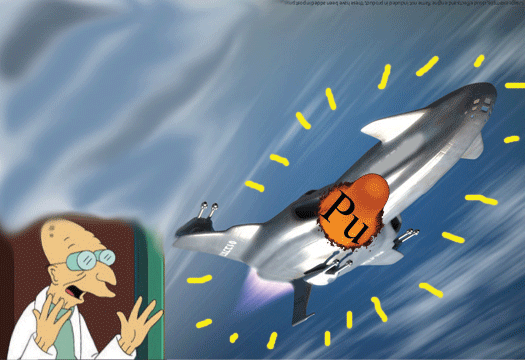 Trump signs off on plan to launch nuclear spacecraft, New York Post, By Marisa Schultz, August 20, 2019, WASHINGTON — President Trump on Tuesday signed a presidential memorandum outlining new procedures to launch nuclear power systems into outer space.
Trump directed the Department of Transportation to issue public guidelines within a year for commercial companies seeking a license to launch spacecraft with nuclear systems. …..
The federal government and private companies have been eyeing nuclear-powered space exploration and nuclear reactors to fuel missions to the moon, Mars and beyond.
Nuclear propulsion could cut the nine-month trip to Mars in half, the Houston Chronicle reported Tuesday, after the sixth meeting of the National Space Council. Vice President Mike Pence attended the Virginia meeting and touted accomplishments of Trump’s renewed focus on space exploration.
“Our moon-to-Mars mission is on track, and America is leading in human space exploration again,” Pence said. https://nypost.com/2019/08/20/trump-signs-off-on-plan-to-launch-nuclear-spacecraft/
Burevestnik, SKYFALL nuclear weapons – “of course, it’s a dick-measuring contest,”
 next superpower arms race will be even more foolish than the last one. New Republic , By August 22, 2019, The United States and Russia are entering a new arms race, and the costs aren’t just monetary. On August 8, Russian civilians around the remote village of Nyonoksa found themselves downwind of a military nuclear propulsion experiment gone wrong in the White Sea, just outside the Arctic Circle. According to the Russian ministry of defense, a liquid propellant rocket engine had gone awry and exploded.
The exact sort of weapon Russia may have been testing is unknown, but the balance of evidence points to a probable culprit: the Burevestnik nuclear-powered cruise missile. Nuclear nonproliferation expert Jeffrey Lewis and his team of researchers out in Monterey, California, have done much of the work in compiling this evidence, which includes the presence of a nuclear fuel carrier ship that was known to have been involved in recovery efforts after a previous failed test of the missile. Known in NATO countries as the SSC-X-9 SKYFALL, the Burevestnik’s atomic propulsion is said by Russian state media to give the missile “almost unlimited range, non-predictable trajectory and high air defense penetration capacity.”……..
In the end, much of what may be driving investment and research on this weapon—beyond Putin’s chest-thumping—may be the sprawling and influential Russian defense bureaucracy. (Overspending on exotic military systems is not an exceptionally American trait.)
That’s the shaky strategic logic behind it. But the common-sense logic, as the radioactive Nyonoksa explosion shows, is even less kind. If a nuclear-powered cruise missile sounds exotic and a little dangerous, that’s because it is. Missiles go boom—usually intentionally, but often enough not—and whatever nuclear power source they might be using onboard wouldn’t be immune.
There’s still little consensus among American experts about how exactly the Burevestnik might leverage nuclear power for propulsion. If you thought nuclear fission weapons were complex, nuclear rocket propulsion is more arcane and mysterious still. In the 1950s and 1960s, U.S. scientists drafted fanciful plans to give missiles nuclear engines, on the assumption that they’d be able to fly longer and farther than any weapon yet conceived. But the Americans eventually gave up; the technical challenges and environmental risks weren’t worth it. The Russians haven’t given up just yet, but they may someday…..
For the Russian leadership, a weapon like Burevestnik is a prestige project, a way to set Moscow apart from its competition……
Of course, Donald Trump couldn’t stomach another head of state flaunting his fancy rocket. The president tweeted on August 12 that the United States has “similar, though more advanced, technology.” As nuclear chemist Cheryl Rofer observed, this was a rare tweet by Trump’s standards: one that criticized Russia. “And of course, it’s a dick-measuring contest,” Rofer added. (Trump’s done this before, chiding North Korean dictator Kim Jong Un on Twitter over the size of his “nuclear button.”) To the extent he grasps the salient issues, it’s likely the president has already asked Pentagon officials why the United States doesn’t have a nuclear-propelled cruise missile of its own.
Russia Tells Nuclear Watchdog: Radiation From Blast Is ‘None of Your Business’
|
Russia Tells Nuclear Watchdog: Radiation From Blast Is ‘None of Your Business’ Daily Beast , Barbie Latza Nadeau, Correspondent-At-Large 08.20.19 Russia has told the Vienna-based Comprehensive Nuclear-Test-Ban Treaty Organization that the nuclear-reactor explosion at a White Sea missile test site in early August is none of their business.
The news came as two additional Russian monitoring stations designed to warn about nuclear radiation threats have gone silent after the mysterious Aug. 8 blast at the site this month, according to The Wall Street Journal. Four monitoring stations are now down, which is alarming experts who suspect Russia is attempting to cover up what really happened and keep details about the weapon being tested under wraps. ….. HTTPS://WWW.THEDAILYBEAST.COM/DONALD-TRUMP-DEFENDS-TRADE-WAR-WITH-CHINA-I-AM-THE-CHOSEN-ONE
|
|
Authorities Seize Crypto Mining Equipment from Nuclear Power Plant
|
Authorities Seize Crypto Mining Equipment from Nuclear Power Plant, https://www.coindesk.com/authorities-seize-crypto-mining-equipment-from-nuclear-power-plant Ukraine’s top law-enforcement and counterintelligence agency uncovered crypto mining equipment on site at a nuclear power plant.According to local media reports, the Security Service of Ukraine (SBU) confiscated six Radeon RX 470 GPU video cards, a motherboard, power supplies and extension cords, a USB and hard drive, and cooling units installed in the South Ukrainian Nuclear Power Plant on July 10.
All of the equipment was located in a single office, No. 104, in the administrative wing separate from the power facility, from the state-owned Energoatom enterprise. The power plant is registered as a state secret and outside computer equipment is not authorized to enter the property. The same day, a National Guard of Ukraine branch uncovered additional crypto mining equipment at same nuclear plant. In this search and seizure, 16 GPU video cards, 7 hard drives, 2 solid-state drives and router were uncovered. GPUs have fallen out of favor in the crypto mining community, as more specialized equipment has come to market. It is unknown what type of cryptocurrencies were being mined. The SBU did not respond to a request for comment by press time. Reportedly, activists with the Ukrainian Cyber Alliance formed a flash mob organized under the #fuckresponsibledisclosure in 2017, to raise concerns over security issues at Energoatom. |
|
Rolls-Royce in talks to sell French nuclear business to Framatome
Aero-engine group’s restructuring under chief Warren East continues, Ft.com Sylvia Pfeifer
Rolls-Royce is in talks to sell its French civil nuclear business to Framatome, a company controlled by France’s EDF, in the latest move by the FTSE 100 engineer to reshape its operations. Two people close to the sales process said on Tuesday night that talks with the French company were continuing. The aero-engine group confirmed in March it had hired consultants from KPMG to review options for its international civil nuclear business, estimated by analysts to be worth up to £200m.
 |
ReplyForward
|
A folly, endangering us all, If Trump ends another nuclear treaty
 If Trump ends another nuclear treaty, it will be the height of folly, by Michèle Flournoy and Kingston Reif, August 19, 2019 Michèle Flournoy is co-founder and managing partner of WestExec Advisors. She served as the Under Secretary of Defense for Policy from February 2009 to February 2012. Kingston Reif is the director for Disarmament and Threat Reduction Policy at the Arms Control Association.
(CNN)During his first two and a half years in office, President Donald Trump and his administration have laid waste to numerous international agreements originally designed to strengthen US security, bolster US alliances, and constrain US adversaries. The toll has been particularly high with respect to deals concerning nuclear arms control and nonproliferation.
Over the past 14 months, the administration has withdrawn from the 2015 Iran nuclear deal and abandoned the 1987 Intermediate Range Nuclear Forces (INF) Treaty. Both of these valuable agreements have been discarded without a viable plan to replace them.
Now the administration is signaling that it might jettison yet another nuclear pact, the2010 New Strategic Arms Reduction Treaty (New START) with Russia. Doing so would be the height of folly and would deal a significant blow to US national security. With the US withdrawal from the INF Treaty having just taken effect on Aug. 2, New START will be the only remaining agreement constraining the size of the world’s two largest nuclear arsenals. Were New START to disappear, for the first time in nearly half a century there would be no legally binding limits on American or Russian nuclear stockpiles. The risk of unconstrained US-Russian nuclear competition, and of even more tense bilateral relations, would grow.
New START also includes a comprehensive monitoring and verification regime to ensure compliance. But the agreement is set to expire on Feb. 5, 2021. Under its terms, it can be extended by up to five years if both presidents agree.
In an appearance before an activist group this summer, however, US National Security Advisor John Bolton, who before joining the administration calledNew START an “execrable deal,” said that while no decision has been made, he thinks an extension is “unlikely.”
Distinguished scientist Martin Rees – world must fight climate change, don’t waste tax-payers’ money on space travel
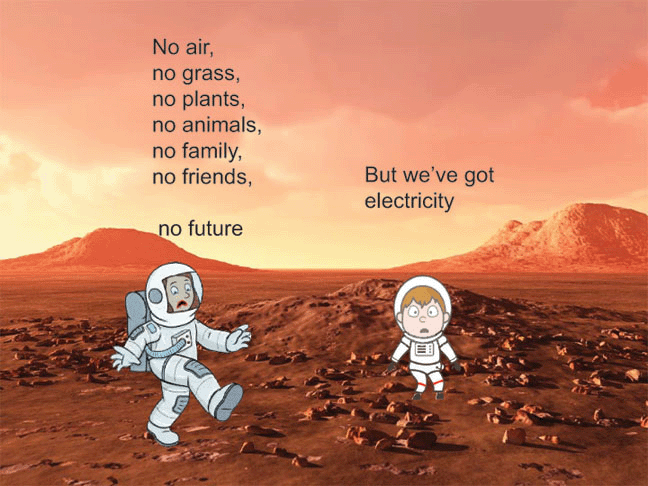
The astronomer royal and risk specialist on cyber-attacks, pandemics, Brexit and life on Mars, Martin Rees is a cosmologist and astrophysicist who has been the astronomer royal since 1995. He is also a co-founder of the Centre for the Study of Existential Risk, Cambridge. His most recent book, On the Future: Prospects for Humanity, is published by Princeton.
Martin Rees Politicians don’t prioritise things when the benefits are diffuse and in the far future. They will only take action if the voters are behind them. That’s why it’s very important to sustain these campaigns.
We want to make sure that these issues of climate stay on the agenda. For instance, the 2015 papal encyclical on climate change. The pope has a billion followers from Latin America, Africa, East Asia and this helped towards consensus at the Paris conference……
The need for sending people into space has evaporated. If you were building the Hubble telescope now, you wouldn’t send people to refurbish it, you would send robots. I hope human space flight will continue, but as a high-risk adventure bankrolled by private companies. If I were American, I wouldn’t support taxpayers’ money going on Nasa’s manned programme. …..
it is a delusion to think we can solve Earth’s problems by relocating to Mars. I completely disagree with Musk and with my late colleague Stephen Hawking on that, because dealing with climate change on Earth is a doddle compared with terraforming Mars. ….https://www.theguardian.com/science/2019/aug/18/martin-rees-astronomer-royal-interview-brexit
Funeral for the first glacier lost to climate change
Iceland holds funeral for first glacier lost to climate change
Nation commemorates the once huge Okjokull glacier with plaque that warns action is needed to prevent climate change Guardian Agence France-Presse 19 Aug 2019 ,
|
Iceland has marked its first-ever loss of a glacier to climate change as scientists warn that hundreds of other ice sheets on the subarctic island risk the same fate. As the world recently marked the warmest July ever on record, a bronze plaque was mounted on a bare rock in a ceremony on the barren terrain once covered by the Okjökull glacier in western Iceland. Around 100 people walked up the mountain for the ceremony, including Iceland’s prime minister, Katrín Jakobsdóttir, the former UN human rights commissioner Mary Robinson, and local researchers and colleagues from the United States who pioneered the commemoration project. “I hope this ceremony will be an inspiration not only to us here in Iceland but also for the rest of the world, because what we are seeing here is just one face of the climate crisis,” Katrín said. The plaque bears the inscription “A letter to the future”, and is intended to raise awareness about the decline of glaciers and the effects of climate change. “In the next 200 years all our glaciers are expected to follow the same path. This monument is to acknowledge that we know what is happening and what needs to be done. Only you know if we did it,” the plaque reads…… https://www.theguardian.com/world/2019/aug/19/iceland-holds-funeral-for-first-glacier-lost-to-climate-change |
South Korean call for import ban on processed foods from Fukushima
 Lawmaker calls for import ban on processed foods from Fukushima http://www.koreatimes.co.kr/www/nation/2019/08/356_274166.html South Korea should restrict imports of processed foods from Japan’s Fukushima region as radiation has been found in shipments, an opposition lawmaker said Monday.
South Korea banned all seafood imports from eight Japanese prefectures near Fukushima in 2013 on concerns over their radiation levels in the wake of the 2011 Fukushima nuclear power plant meltdown. But no import restrictions have been put on processed foods from the areas.
Citing data from the Ministry of Food and Drug Safety, Rep. Kim Kwang-soo of the minor opposition Party for Democracy and Peace said radiation has been discovered in 16.8 tons of processed foods imported from the eight prefectures, or 35 shipments, over the past five years.
The figures were 10 tons (11 shipments) in 2014, 0.1 ton (six) in 2015, one ton (six) in 2016, 0.3 ton (four) in 2017, 0.4 ton (six) in 2018 and 5 tons (two) for the first half of this year.
South Korea imported 29,985 tons of processed foods from the Japanese prefectures between 2014 and June this year. Imports, which came to 3,803 tons in 2014, increased to 7,259 tons last year. In the January-June period of this year, imports reached 3,338 tons.
“It is urgent for the government to take necessary action against processed foods from the eight Japanese areas since they pose a serious risk to public health,” the lawmaker said.
In response to a complaint from Tokyo, the WTO ruled in April this year that Seoul’s measures do not amount to unfair trade restrictions or arbitrary discrimination.
Meanwhile, the Ministry of Food and Drug Safety said it sees no problem with imports of processed foods from the eight Japanese prefectures because the Japanese government submits inspection certificates and thorough checks are conducted at local quarantine offices. (Yonhap)
1 This Month
19 November – Webinar – The Reality of Reprocessing
Time: 11:00 AM Pacific Time (US & Canada) / 2:00 PM Eastern / 7:00 PM UK / 8:00 PM CET
Register for the Zoom Event Here

Tell Congress: Prevent Nuclear Catastrophe in Iran

Tell Congress: Prevent Nuclear Catastrophe in Iran

Read the Public Inquiry Report, the Commissioners’ report, Surrendering Australia: The AUKUS Deception is available to download for free at aukuspublicinquiry.com. Or just watch the replay of the National Press Club Luncheon.


Shut down the radiation-damaged Heysham nuclear reactors now
To see nuclear-related stories in greater depth and intensity – go to https://nuclearinformation.wordpress.com

Say No to NASA’s Reckless Nuclear Reactor on the Moon
Say No to NASA’s Reckless Nuclear Reactor on the Moon
-
Archives
- November 2026 (190)
- October 2026 (302)
- September 2026 (339)
- August 2026 (330)
- July 2026 (355)
- June 2026 (287)
- May 2026 (306)
- April 2026 (356)
- March 2026 (251)
- February 2026 (267)
- January 2026 (308)
- December 2025 (358)
-
Categories
- 1
- 1 NUCLEAR ISSUES
- business and costs
- climate change
- culture and arts
- ENERGY
- environment
- health
- history
- indigenous issues
- Legal
- marketing of nuclear
- media
- opposition to nuclear
- PERSONAL STORIES
- politics
- politics international
- Religion and ethics
- safety
- secrets,lies and civil liberties
- spinbuster
- technology
- Uranium
- wastes
- weapons and war
- Women
- 2 WORLD
- ACTION
- AFRICA
- Atrocities
- AUSTRALIA
- Christina's notes
- Christina's themes
- culture and arts
- Events
- Fuk 2022
- Fuk 2023
- Fukushima 2017
- Fukushima 2018
- fukushima 2019
- Fukushima 2020
- Fukushima 2021
- general
- global warming
- Humour (God we need it)
- Nuclear
- RARE EARTHS
- Reference
- resources – print
- Resources -audiovicual
- Weekly Newsletter
- World
- World Nuclear
- YouTube
-
RSS
Entries RSS
Comments RSS

