South Korea might make own food arrangements for Fukushima Olympic events
 South Korea concerned over food safety at Olympics with events slated for Fukushima
Talks to take place over food provision at Tokyo Games
Fukushima to host baseball and softball games next year, Guardian Justin McCurry in Tokyo, Thu 22 Aug 2019 South Korea is considering making its own arrangements to feed its athletes at next year’s Tokyo Olympics, citing concerns over the safety of food from Fukushima, media reports said.
Radioactive patients – a concern following Russian nuclear accident
 Russian nuclear accident: Medics fear ‘radioactive patients’, https://www.bbc.com/news/world-europe-49432681 23 Aug 19, Russian medics who treated radiation victims after a military explosion in the Arctic had no protection and now fear they were irradiated themselves.
Two of the medics in Arkhangelsk spoke to BBC Russian about the victims’ evacuation, on condition of anonymity.
Five nuclear engineers died on 8 August when an “isotope-fuel” engine blew up at the Nyonoksa test range, officials said. Two military personnel also died.
President Vladimir Putin said the test involved a new weapon system.
Six people were injured in the accident, but officials gave few details about it.
On 14 August Russia’s weather service Rosgidromet revealed that radiation levels had spiked 16 times above normal, in Severodvinsk, a city 47km (29 miles) east of Nyonoksa.
According to the official data, the radiation that reached Severodvinsk was not heavy enough to cause radiation sickness.
Experts in Russia and the West say the test was most likely linked to the new 9M730 Burevestnik nuclear-powered cruise missile, called “Skyfall” by Nato. Last year Mr Putin said the technology would give the missile “unlimited” range.
The Arkhangelsk medics, who spoke to the BBC’s Pavel Aksenov, said at least 90 people came into contact with the casualties, but the military did not warn them of any nuclear contamination risk.
Contamination fears
The medics were at the civilian Arkhangelsk regional hospital, which treated three of the injured, while three other casualties were taken to an Arkhangelsk hospital called Semashko, which is equipped for radiation emergencies.
The medics said they were speaking out now because they feared for their own health and did not want any similar “[safety] violations” to recur.
“We don’t want them to bring us next time not three, but ten people, God forbid, and hide the information from us again,” said one.
The degree of secrecy surrounding the explosion has drawn comparisons with the 1986 Chernobyl disaster, when Soviet officials were slow to admit the truth.
The Arkhangelsk medics said it was clear that the three brought to their regional hospital were very sick. Doctors examined them in the emergency room, then sent them to an operating theatre.
But the emergency room continued to admit other patients for about an hour, the medics said, until the doctors realised that the three “had received a very high radiation dose”. The hospital handles pregnancy complications and other difficult medical conditions.
“The radiation picture was developing by the hour. Blood tests were being done, and every hour you could see that this or that cell count was plunging. That signified a very high radiation dose,” they said.
The hospital staff kept treating the victims despite knowing about the radiation dose. The staff had to improvise some self-protection – for example, they took face masks from the helicopter crews’ emergency kit.
The next day the three victims were transferred to a hospital in Moscow which has radiation specialists. Their condition now is unknown.
Nuclear decontamination
A military team later carried out decontamination work in the Arkhangelsk hospital.
The medics said the casualties’ clothing was removed, along with stretchers and a “highly radioactive bath”.
“Our cleaners should have been advised, they’re just simple country folk, they were just picking up sacks and bundles and carrying them out,” said one.
The other medic said hospital staff were now mentally stressed, knowing that radiation safety information had been withheld from them during the emergency.
Two weeks after the explosion the Russian health ministry said none of the medics at the Arkhangelsk hospitals had received a hazardous radiation dose. Its conclusion was based on medical examination of 91 staff.
Incomplete data
On Monday an international nuclear agency reported that the two Russian radiation monitoring stations nearest to Nyonoksa had gone offline soon after the explosion. The revelation fuelled suspicions that the radiation could have been heavier than officially reported.
The Comprehensive Nuclear Test-Ban Treaty Organization (CTBTO) said the technical failure at those sites was then followed by a failure at two more. It tweeted an animation showing the potential radiation plume from the explosion.
Russia said the weapons test was none of the CTBTO’s business, and added that handing over radiation data was voluntary. Two of the monitoring stations have since started working again.
Massive wildfires are burning across the world- July was hottest month ever
|
July was the hottest month ever on Earth. Now massive wildfires are burning across the globe. https://www.usatoday.com/story/news/nation/2019/08/21/wildfires-july-hottest-month-ever-fires-rage-across-globe/2070418001/ DENVER – Wildfires are burning across the globe, clogging the sky with smoke from Alaska to the Amazon, and scientists say it’s no coincidence that July was the warmest-ever month recorded on Earth.… |
|
“ZATO” Russia’s many closed cities, – some site of nuclear accidents

|
Russia’s closed cities hold the secrets to global nuclear disasters you’ve never heard of https://www.abc.net.au/news/2019-08-24/russia-closed-cities-hold-secrets-to-global-nuclear-disasters/11437734
Key points:
But it makes sense why Russia might be vague on the detail. Both the city near the accident site, Severodvinsk, and the one where the victims were buried, Sarov, are “closed cities” — highly controlled areas that house the country’s most important weapons sites. The Government does not want outsiders knowing what goes on there, especially when accidents happen. And when accidents do happen in closed cities, like a radioactive explosion or an outbreak of anthrax, Russia has a long history of covering them up. Russia is far from the only country to have closed cities, but it does have a lot of them. It’s thought there are about 40 closed cities in Russia, though it’s suspected there are others whose very existence is highly classified. First established in the 1940s, closed cities — officially known by the acronym ZATO in Russian — are most often associated with either military installations or major research centres and are used to house employees and their families. For example, Sarov, where the five scientists killed in the explosion were buried, is the site of a nuclear weapons design facility. It’s been a closed city since 1946, when it was renamed Arzamas-16 and its location was removed from all unclassified maps. The movement of people and information in and out of these cities is highly restricted, and residents are often not allowed to disclose where they live to outsiders.
“And when you have those it is easy to gloss over problems, perhaps cover up accidents, there’s not a lot of ways for information to get out.” The nuclear disaster you probably haven’t heard ofWhile Chernobyl and Fukushima might be synonymous with nuclear disasters, that might not be the case for Kyshtym. It was the third most-serious nuclear accident ever recorded, and it happened at the Mayak facility in the closed city of Ozyorsk, in Russia’s Ural Mountains, in 1957. A cooling system in a radioactive waste tank broke down and the rise in temperature resulted in an explosion that released an estimated 20 million curies of radioactivity into the environment. During the Chernobyl explosion, about 50–200 million curies of radioactivity was estimated to have been released. The Kyshtym disaster contaminated an area up to 20,000 square kilometres, known as the East-Ural Radioactive Trace, and thousands of people near the plant were evacuated. But the Soviet government didn’t publicly acknowledge the accident until 1989. The incident was happening at the time of the Cold War so it was also an attempt by the Soviet authorities to prevent the news from reaching the outside world,” Alexey Muraviev, a specialist in Russian strategic and defence policy at Curtin University, told the ABC. But the area had been contaminated even before the Kyshtym disaster, when high-level radioactive waste from the production of plutonium at Mayak had been intentionally dumped into the nearby Techa river. “They put about 3.2 million curies into that small river, and the people who lived downstream drank from it, swam in it, ate from it, fished in it, watered their crops in it,” Professor Brown said. Twenty-eight communities live down that river, several tens of thousands of people, and they didn’t tell anybody that they were putting high-level waste [in the river].” Mayak now serves as a reprocessing plant for spent radioactive fuel. In October 2017, a network of monitoring sites picked up a cloud of radioactive material, Ruthenium-106, above Europe. In a report published just last month, a team of scientists say the most likely source was a fire or explosion at Mayak that occurred during the reprocessing of spent fuel to create enriched caesium for an Italian laboratory. Russia’s nuclear energy agency continues to deny anything happened at Mayak in 2017, but at the time, the Russian Meteorological Service admitted there was “extremely high contamination” in the air around the Ural mountains. And it’s not just nuclear accidents that happen at closed cities. In 1979, spores of anthrax leaked from a biological weapons facility in the closed city of Sverdlovsk and killed at least 68 people, many of whom were civilians from a nearby ceramics plant. The Soviet government blamed the deaths on the consumption of contaminated meat, and it was only in 1992 that then-president Boris Yeltsin publicly linked the anthrax outbreak with the military facility. While some have a bad safety reputation, there’s a big reason why Russians might want to move to a closed city: they’ve historically gotten the best of everything. As part of the privileges of working on important, secret and dangerous processes, residents are promised a higher standard of living and better resources. During the Soviet era, those who lived in closed cities were spared the austerity of other parts of the country.
“They also provided better living conditions, so people who would work at closed cities would be guaranteed state funding accommodation and so on.” The reputation of the living standards and privileges of those cities meant the jobs that would allow you to move to one were highly sought after. “This is an important element, otherwise it sounds like [closed cities] are like a giant concentration camp,” Dr Muraviev said. And according to Dr Muraviev, Russian President Vladimir Putin has been actively trying to restore the glamour of the country’s remaining closed cities. “Back in the 1990s those privileges kind of really lapsed, so there were no incentives anymore, but now they’re sort of back on the agenda and the Government is really pumping funds into these cities,” he said. “That’s part of [Mr Putin’s] strategy to rebuild Russia’s national security as well as rebuild Russia’s national defence capability.” And as far as the risks go of moving to a secretive town next to a nuclear facility or a military installation? Dr Muraviev said the people who chose to move to closed cities knew what came with the job. “They understand risks associated with it and they’re not just doing it for money; they’re also doing it for the idea of making Russia safe,” he said. |
|
Iran working productively with France, to save nuclear deal
 Iran’s Zarif: Nuclear talks with Macron were ‘productive’ Mohammad Javad Zarif says they could work with new French proposals, to save nuclear deal. https://www.aljazeera.com/news/2019/08/irans-zarif-nuclear-talks-macron-productive-190823161529602.html Iran’s foreign minister has hailed “positive” talks with French President Emmanuel Macron, on salvaging the 2015 nuclear deal.Mohammad Javad Zarif says they could work with new French proposals, to save the nuclear deal. Speaking to reporters after meeting Macron, Zarif says both countries have made suggestions on how to move forward after the United States pulled out of the nuclear deal last year. Macron has previously said he will either try to soften the effect of the US sanctions or come up with a way to compensate the Iranian people. |
|
Trumped Up: Wiki cables show Australia thinks Iran is not the aggressor,
Trumped Up: Wiki cables show Australia thinks Iran is not the aggressor, Michael West, by Prof. Clinton Fernandes — 23 August 2019 Wikileaks cables reveal Iran presents no threat to Australia and little threat to the US. Instead, clear intelligence from the US, Australia and Iran confirms Iran, although portrayed as aggressive, has pursued a defensive military strategy. Clinton Fernandez reports.
UK Office of Nuclear Regulation seems to have increased the number of cracks permitted in Hunterston nuclear reactor.
|
Scottish CND 21st Aug 2019 Scottish CND condemn Office of Nuclear Regulation’s decision to restart
Hunterston nuclear reactor 4. The meeting between ONR, Dr Ian Fairlie and NFLA (notes available) stated that while the cracking in Reactor 4 is not as extensive as Reactor 3 there is an issue of some cracks openings that are greater than 1.2cm wide (i.e. 1/2 inch). Scottish CND chair Arthur West: “This news about the Hunterston reactor is very disappointing. It is
very worrying that the Office of Nuclear Regulation seems to have increased the number of cracks permitted in the reactor. This move seems to be a clear case of moving the goalposts to allow the closed reactor to reopen. It really is time to think about a future beyond nuclear energy. The best response to the current situation at Hunterston is to continue the development of safer and cleaner forms of renewable energy.” |
|
Massachusetts Attorney General objects to transfer of the Pilgrim Nuclear Power Station license to Holtec
 Regulators approve nuclear transfer over governor, AG protests, MASS LIVE, By Colin A. Young / STATE HOUSE NEWS SERVICESTATE HOUSE, BOSTON, AUG. 23, 2019…..Despite the objections of Attorney General Maura Healey, the Baker administration and local advocacy groups, federal regulators approved the transfer of the Pilgrim Nuclear Power Station license to a company that plans to decommission the plant on an “accelerated basis.” Entergy, which bought the Plymouth plant from Boston Edison in 1999, is selling it to Holtec International, and the Nuclear Regulatory Commission has been reviewing the requested license transfer since last year. The NRC approved the transfer Friday, announcing that Holtec International will be the owner of the plant and that its subsidary Holtec Decommissioning International will serve as the decommissioning operator. The NRC said its order approving the license transfer is effective immediately but that the transfer will not actually take place until the sale of the plant is finalized. The transfer includes the dry cask spent fuel storage installation at Pilgrim.
……… The approval comes as Attorney General Maura Healey, Gov. Charlie Baker’s energy and environment secretariat and members of the state’s Congressional delegation mounted an effort to block the transfer until the NRC held a full hearing on concerns over Holtec’s ability to safely decommission the nuclear plant, the company’s financial stability and its alleged involvement in a kickback scheme.
“The Commonwealth does not believe that Holtec has met the NRC’s financial and technical qualification requirements for license transfer approval,” Healey’s office wrote to the NRC this week. “Indeed, the Commonwealth has serious concerns about Holtec’s financial and technical capacity to complete the work at Pilgrm. At a minimum, this history requires a heightened degree of scrutiny by the NRC and its Staff.” ……..
On Friday, Healey’s office said it will review the options it still has to rectify what it called a “misguided decision” by the federal regulators. “We are deeply disappointed in the NRC’s misguided decision to approve the license transfer and trust fund exemption requests, and its failure to meaningfully consult with our state prior to doing so. We continue to have serious concerns about Holtec’s financial capacity, technical qualifications, and judgment to safely and properly clean up the site, and store and manage Pilgrim’s spent nuclear fuel,” Healey spokeswoman Chloe Gotsis said. “We are reviewing all of our available options to ensure the health, safety and interests of our residents and the environment are protected.” U.S. Sen. Edward Markey, who sits on a Congressional committee with jurisdiction over the NRC, said the agency “is abdicating any responsibility for protecting public health and safety with its rushed and uninformed license transfer for the Pilgrim nuclear power plant.” “The opaque process that disregarded local resident and state input reflects the Commission’s choice to prioritize industry timelines over due diligence and transparency. Holtec’s math on how it will pay for decommissioning does not add up. Holtec’s unwillingness to even negotiate an agreement with local stakeholders — the ones who will be living next door to nuclear waste for years to come — is unacceptable,” Markey said. “I have repeatedly called on Holtec to be a good neighbor and for the Commission to be a good regulator, but those calls of concern were ignored.”
The Baker administration said it “believes the Nuclear Regulatory Commission staff should not have made the decision to approve the license transfer prior to the Commission ruling on the concerns raised by the administration and Attorney General.” “Both offices remain deeply committed to ensuring the Pilgrim Nuclear Power station is decommissioned in a manner that protects the safety of the public and environment,” Energy and Environmental Affairs spokeswoman Katie Gronendyke said. Late Thursday, four state senators and six state representatives — Sens. Viriato deMacedo, Julian Cyr, John Keenan and Patrick O’Connor along with Reps. William Crocker, Josh Cutler, Dylan Fernandes, Sarah Peake, Kathleen LaNatra and Tim Whelan — issued a statement in support of Healey and the administration. They asked the NRC to give the issue a full hearing before acting on the license transfer application……… https://www.masslive.com/news/2019/08/regulators-approve-nuclear-transfer-over-governor-ag-protests.html |
|
White House new system guidelines for nuclear power in space includes weapons grade materials
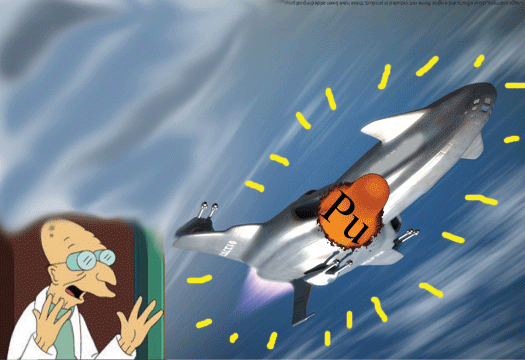 White House Overhauls Launch Approval Process for Nuclear Spacecraft, AIP, 23 Aug 19, The White House has announced a new launch authorization process for spacecraft that use nuclear-powered systems, instituting a tiered framework that delegates decision-making for less risky missions and provides explicit guidance on acceptable risk levels……
The least risky missions fall in Tier 1, where the director of the sponsoring agency can approve the launch. In Tier 2, an interagency review process is triggered, though the sponsoring agency director maintains authority over the launch decision. The memo directs NASA to establish a standing Interagency Nuclear Safety Review Board to perform this function, which formerly was handled by an ad hoc committee empaneled on a mission-by-mission basis.
Spacecraft that use fission reactors automatically fall in at least Tier 2, and the memo requires NASA to identify additional safety guidelines for “safe non-terrestrial operation of nuclear fission reactors, including orbital and planetary surface activities.”
Tier 3 missions require presidential authorization, which for non-defense missions is delegated to the OSTP director, who may opt to forward the decision to the president. Due to nuclear nonproliferation considerations, missions that use highly enriched uranium automatically fall in Tier 3.
The memo also establishes a set of safety guidelines that apply to spacecraft across all tiers. It specifies that the probability a launch accident would result in any individual receiving a total effective dose between 0.025 rem and five rem should be no greater than 1 in 100. The probability for exposures between five rem and 25 rem should not exceed 1 in 10,000, and above 25 rem the probability should not exceed 1 in 100,000. For comparison, the average effective doseindividuals receive from natural background radiation in the U.S. is about 0.3 rem per year, and the Nuclear Regulatory Commission’s dose limit for radiation workers is five rem per year…….
According to a 2015 study, the U.S. has launched 47 nuclear power systems and hundreds of heater units on 31 missions since 1961. The most recent scientific missions to employ an RPS were New Horizons, a Pluto fly-by mission launched in 2006, and the Mars Curiosity Rover, launched in 2011. The follow-on Mars 2020 Rover and the recently selected Dragonfly rotorcraft mission to Saturn’s moon Titan are currently the only two approved NASA spacecraft in development that will use an RPS.
The relatively infrequent use of nuclear systems on spacecraft is in part attributed to the complexity and cost of the safety review process, which generally has limited them to flagship-class missions. Low availability of plutonium for civilian uses has also constrained the mission cadence…….
NASA has recently emphasized the potential value of fission reactors for human deep space exploration missions. At the National Space Council meeting this week, NASA Administrator Jim Bridenstine said nuclear thermal propulsion technologies could significantly reduce transit time to Mars. He also pointed to other potential applications, such as using fission to power a space-based laser that could deflect asteroids and deorbit space debris.
NASA is also exploring how nuclear reactors could meet the power demands of planetary bases. One such concept, called Kilopower, could provide up to 10 kilowatts per reactor using highly enriched uranium. Bridenstine visited members of the Kilopower team this week at NASA’s Glenn Research Center.
The concept is not without critics. Rep. Bill Foster (D-IL), a former Fermilab physicist who advocates using alternatives to highly enriched uranium, pressedBridenstine on the subject at a hearing this year.
“A future where every space-faring nation has a big inventory of weapons-grade material to service the reactors that they are using all over the Moon and all over Mars is not a very safe space environment,” Foster said. “There will be some small performance compromises in going with low enriched non-weapons grade material, but I really urge you to look hard at keeping alive the prospect of having an international collaboration to develop workable non weapons grade-based materials that the whole world will use.” …….https://www.aip.org/fyi/2019/white-house-overhauls-launch-approval-process-nuclear-spacecraft
Dismay at safety risks of restarting Hunterston Nuclear Reactor 4
Largs and Millport Weekly News 19th Aug 2019 A SERIES of safety failure at Hunterston could have had ‘serious
consequences’ if the reactors had been in full operation, it was claimed
this week. The Nuclear Free Local Authorities group, which is made up of
councillors around the UK concerned about nuclear power, described the
incidents as ‘notable’. The incident which prevented cooling gas from being
circulated around a reactor was highlighted by the group as ‘a real
concern’. However the nuclear regulators described the incident as ‘minor’
as both incidents happened when both reactors were offline. n relation to
the incident, a spokesperson for Nuclear Free Local Authorities said:
“Whilst there were no radiological consequence from them, this is largely
due to the reactors not being in operation. “A loss of cooling is of real
concern as the consequences of such an eventuality when the reactors are in
full operation could have been extremely serious.”
https://www.largsandmillportnews.com/news/17833610.anger-series-safety-failures-hunterston/
The Nuclear Free Local Authorities (NFLA) is disappointed with the decision
of the Office for Nuclear Regulation (ONR) to permit resumption of
electricity generation at Reactor 4 in the EDF-owned Hunterston site in
North Ayrshire. NFLA believes the age, the amount of keyway root cracks in
both Reactors 3 and 4, and the precautionary principle should have been
considered in the reactors not being reopened for generation.
NFLA 21st Aug 2019
Toxic leak from North Korea’s nuclear programme
|
Nuclear warning: Huge leak spotted in North Korea turns rivers black in freak accident https://www.express.co.uk/news/world/1169175/north-korea-news-latest-kim-jong-un-donald-trump-US-nuclear-weapons-pollution-Pyongsan
NORTH KOREA’s contentious nuclear programme has allegedly leaked tonnes of toxic waste into rivers used for drinking water.He believes that the leakage has been covered up by the highly secretive insular state, and the true scale of disaster is only now unfolding.
Mr Bogle thinks that North Korea will struggle to keep the claimed leakage under wraps for any longer, as the river eventually leads into the Yellow Sea that North Korea shares with neighbouring South Korea and China. If true, the scale of those affected could grow to nearly 600million people and end up being the world’s worst man-made disaster. The photos shared by Mr Bogle appear to show a pipeline, built to carry toxic water from the facility to a nearby waste reservoir, digressing its intended route and leaking into the river instead.
Mr Bogle said: “I was able to review high-resolution historical satellite imagery for multiple years going back to 2003. “Each of the images shows an ever-growing pile of leaked material on either end of the pipe that takes waste material from the plant to an unlined reservoir. “Some of the images also show fluids being actively spilled directly into the river. “The plant is one of two declared uranium milling facilities in the country. It takes low-quality coal and processes it to create yellowcake, which then contains around 80 per cent uranium.
“The extraction and milling requires multiple chemical processes and leaves behind a very toxic mix of waste materials. “That toxic waste is then sent to the nearby reservoir, leaking and travelling into the Ryesong River in the process.” The Pyongsan facility is the largest in North Korea, and is built next to its largest uranium mine, and has recently undergone a ramped-up level of production of nuclear fuel for electricity generating purposes. Many have pointed out that the Conowingo Dam 16 miles downstream might be sufficient enough to trap and prevent any toxic waste from getting out – although experts told The Sun that the dam is “no longer capable of trapping sediment”.
|
|
|
Bitcoin Hackers Charged As Nuclear Power Plant Security Compromised
|
Bitcoin Hackers Charged As Nuclear Power Plant Security Compromised https://www.forbes.com/sites/daveywinder/2019/08/23/bitcoin-hackers-charged-as-nuclear-power-plant-security-compromised/#148c22252735
Davey WinderSenior Contributor, 23 Aug 19, Illicit cryptocurrency mining isn’t usually associated with state-level security compromises. Then again, Bitcoin hackers don’t often target nuclear power plants. Yet according to a report on the Ukrainian UNIAN news website, that’s exactly what happened at South Ukraine’s second-largest nuclear power plant, south of Kiev in the city of Yuzhnoukrainsk. What was found during the nuclear power plant raid? Detectives from the Security Service of Ukraine (SBU) searched the Yuzhnoukrainsk nuclear power plant on July 10. During the raids, two bespoke cryptocurrency mining hardware rigs were seized from office 104 in the plant’s administrative wing, along with fiber-optic and network cables. Coindesk has reported that, on the same day, “a National Guard of Ukraine branch uncovered additional crypto mining equipment at the same nuclear plant. In this search and seizure, 16 GPU video cards, seven hard drives, two solid-state drives and routers were uncovered.” This was at the barracks of the National Guard tasked with protecting the plant. The Russian international television network RT has said that “the people who were supposed to be defending the highly dangerous piece of Ukrainian infrastructure could well have been behind the scheme.” How was the nuclear power plant security compromised?The UNIAN report, via Cointelegraph, stated that the cryptominers “compromised the nuclear facility’s security via their mining setup internet connection,” and “ended up leaking classified information on the plant’s physical protection system.” According to a ZDNet report, the SBU is investigating the incident “as a potential breach of state secrets due to the classification of nuclear power plants as critical infrastructure.” As well as the apparent intent to misappropriate electricity and internet resources to mine cryptocurrency, the SBU is also investigating other lines of inquiry. One of these being whether the mining rigs could have been used to access the network to steal classified security data relating to the nuclear power plant. |
|
USA’s nuclear regulators concerned about possibility of an electromagnetic pulse attack
|
Feds fear EMP ‘meltdown’ of nuclear power plants, Washington Examiner, by Paul Bedard August 23, 2019 The federal government’s new focus on preventing disaster in a natural or terrorist electromagnetic pulse attack is drawing attention to a lack of testing and preparation at the nation’s nuclear power plants, where a resulting meltdown could cause radiation deaths. |
|
|
Warning on radiation risks at some parts of Fukushima, for Olympic Games 2020
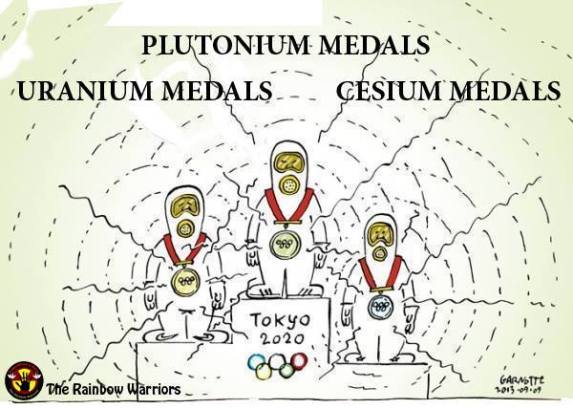
Seeking to break away from Japan’s association with high levels of radioactivity, the Abe government has branded the 2020 Olympics the “Recovery Games.”
But health and environmental risks from high levels of radiation persist in parts of Fukushima after the 2011 nuclear meltdown.
According to Shaun Burnie, a senior nuclear specialist with Greenpeace Germany, those visiting Fukushima for the Summer Games next year should take a proactive approach to educating themselves on which areas of Fukushima are affected by radiation and on the impact of exposure to radiation.
- “In terms of safety, there are certain areas of Fukushima where we would certainly not advise athletes or spectators to spend any time. Those are areas particularly close to the Fukushima Dai-ichi plant, including where the torch processions will be taking place,” Burnie said in an interview with The Korea Herald at Greenpeace Korea’s office in central Seoul last week.
“They are areas that are not safe for people to live. If you visit, you need to follow a radiation protocol. It is a bizarre situation that you are having Olympic events where people are concerned about radiation,” he added.
While noting that not all parts of Fukushima should be off limits, Burnie said athletes and sports bodies need to seek independent assessments on Fukushima, rather than relying on information provided by the Japanese government.
“It’s dangerous to just dismiss the whole of Fukushima as a radioactive disaster zone. It’s much more complex than that. The first thing is … don’t trust the Japanese government, educate yourself. If you’re an organizing body, get independent verification and independent information about what the relative radiation levels are, what the risks are,” Burnie said.As the senior nuclear specialist with Greenpeace Germany, Burnie has followed the Japanese government’s handling of the tsunami and earthquake in March 2011 that resulted in the meltdown of three nuclear reactors at the Fukushima Dai-ichi power plant.
In a report published in January, Burnie alleged that Tokyo plans to dispose of some 1 million metric tons of contaminated water by discharging it into the Pacific Ocean after the Summer Olympics.If Japan follows through with the move, radioactive water is expected to be present in Korea’s East Sea a year later.
“For the past five years we’ve been accessing the process, the discussions, the documents submitted by Tepco (Tokyo Electric Power Company) … we were reviewing some of Tepco’s data (last year) and we looked at it and went ‘there is something wrong here with Tepco’s processing,’” Burnie said.
“It became very clear there has been bad decisions made, not really surprising, by Tepco, by the (Japanese) government over the last five or six years and how to manage the water crisis.”
Last year Tepco acknowledged its Advanced Liquid Processing System, or ALPS, had failed to purify contaminated water stored in tanks at the Dai-ichi power plant.
A committee under Japan’s Ministry of Economy in 2016 put together five scenarios for the Japanese government to deal with the massive volume of pollutants stored at the Fukushima No. 1 plant.
The amount of water stored at the plant is to reach its full capacity of 1.3 million tons by the end of 2020, with about 170 tons accumulating daily.
According to Burnie, Tokyo has chosen to discharge the radioactive water instead of acting on any of the other four suggestions because “it is the most cheap and fast.”
Besides increased levels of radioactive cesium found in Fukushima and in the East Sea, Burnie warned of “cesium-rich micro particles” extremely small in size and inhaled through breathing.
Cesium is one of the largest sources of radioactivity from the 2011 disaster and has a half-life of 30 years.
“There is evidence from samples … some scientific literature has published the results and they found concentrations of these particles in areas 20-30 kilometers from the plant. … The problem is these particles can be inhaled. Then some of them lodge inside your lung at which point you are getting an internal dose, a very focused, very localized, relatively high-exposure dose to individual cells,” Burnie said.
“That’s a real problem because there is very little known about how cesium in that form will affect your long-term health. … Again, the people most at risk are those returning to live in areas of Fukushima affected by these particles. But the Japanese government has not taken into account in any of its assessments what those risks are,” he added.
Stressing that the risks of exposure to radiation should not be exaggerated, Burnie noted there is no safe level of radiation exposure and the long-term effects are unknown.
“The effects you will only see over decades. It won’t be instant, it’s not an acute radiation exposure, it’s low-level radiation,” Burnie said.
“The country that will be next impacted will be Korea, because it’s the geographically closest. … There is no safe threshold for radiation exposure. … Why should you be exposed when there is a clear alternative, which is you store?”
Kremlin cover up on weapon tested, and radioactive contamination?

 Russian radiation detectors ‘go dark’ after mystery explosion
The mysterious shutdown of four nuclear monitoring stations after a fatal blast at a military site has fuelled fears of radioactive contamination. news.com.au 22 Aug 19
Russian officials have dismissed concerns, declaring on Tuesday the country had no obligation to share its data with the CNTBTO — raising fears of a Kremlin cover up on the type of weapon involved and the extent of contamination.
Elevated radiation levels — of up to 16 times the average — were detected 40 km away in the city of Severodvinsk in the aftermath of the event, according to The New York Times.
President Vladimir Putin said on Monday there was no risk to the public, although officials have yet to disclose how much radiation was released………
US National Nuclear Security Administration former deputy William Tobey said it was “at least an odd coincidence” Russian sensors stopped transmitting data about the same time as the explosion occurred.
“Power outages, other failures, can knock down a particular place, but if more than one site is out, it would seem that that is a less likely explanation,” Mr Tobey said.
Russian authorities have offered changing and contradictory information about the explosion fuelling speculation about what really happened and what type of weapon was involved.
While the Russian Defense Ministry said no radiation had been released in a rocket engine explosion, officials in the nearby city of Severodvinsk reported a brief rise in radiation levels.
The contradiction drew comparisons to Soviet attempts to cover up the 1986 explosion and fire at the Chernobyl nuclear power plant in Ukraine, the world’s worst nuclear disaster.
In his first comments on the explosion, Russian President Vladimir Putin said Monday that it hasn’t posed any radiation threat. Putin added that experts are monitoring the situation to prevent any “unexpected developments.”
He didn’t say what weapon was being tested when the explosion occurred, but described the
test as a “state mission of critical importance.”…….
The Russian military said the explosion killed two people and injured six, while the state nuclear corporation Rosatom acknowledged later that it also killed five of its engineers and injured three others.
Rosatom said the explosion occurred on an offshore platform during tests of a “nuclear isotope power source.”……
Rosatom’s mention of a “nuclear isotope power source,” led some observers to conclude that the weapon undergoing tests was the “Burevestnik” or “Storm Petrel,” a prospective nuclear-powered cruise missile first mentioned by Putin in 2018 and was codenamed “Skyfall” by NATO.
US President Donald Trump backed that theory in a tweet last week, saying America is “learning much” from the Skyfall explosion.
The US worked to develop a nuclear-powered missile in the 1960s under Project Pluto, but the idea was discarded as impractical and risky. Mr Tobey said Russia’s apparent revival of the concept raises significant risks.
“Effectively, Russia is thinking about flying around nuclear reactors,” he told AP.
“The very idea of this system is, I think, a risky system. It probably poses more risk to the Russian people than to the American people. If it crashes, it could spread radiation.”
Nuclear expert Michael Krepon, who co-founded the Stimson Center, a nonpartisan public policy research body, said it was not surprising that Russia might take steps to conceal its activities because “they just can’t accept transparency when it comes to screw ups”.
“This weapon poses a danger first and foremost to the people who are working on it,” Mr Krepon said.
“It’s dumb, it’s stupid, it’s expensive, and there are so many other ways that you can deliver nuclear weapons long distance. The more Putin advertises this system, the more he’s likely to be embarrassed by it.” https://www.news.com.au/technology/innovation/military/russian-radiation-detectors-go-dark-after-mystery-explosion/news-story/4ab6ce7b4b3926379381a9a7d20baab3
1 This Month
19 November – Webinar – The Reality of Reprocessing
Time: 11:00 AM Pacific Time (US & Canada) / 2:00 PM Eastern / 7:00 PM UK / 8:00 PM CET
Register for the Zoom Event Here

Tell Congress: Prevent Nuclear Catastrophe in Iran

Tell Congress: Prevent Nuclear Catastrophe in Iran

Read the Public Inquiry Report, the Commissioners’ report, Surrendering Australia: The AUKUS Deception is available to download for free at aukuspublicinquiry.com. Or just watch the replay of the National Press Club Luncheon.


Shut down the radiation-damaged Heysham nuclear reactors now
To see nuclear-related stories in greater depth and intensity – go to https://nuclearinformation.wordpress.com

Say No to NASA’s Reckless Nuclear Reactor on the Moon
Say No to NASA’s Reckless Nuclear Reactor on the Moon
-
Archives
- November 2026 (190)
- October 2026 (302)
- September 2026 (339)
- August 2026 (330)
- July 2026 (355)
- June 2026 (287)
- May 2026 (306)
- April 2026 (356)
- March 2026 (251)
- February 2026 (267)
- January 2026 (308)
- December 2025 (358)
-
Categories
- 1
- 1 NUCLEAR ISSUES
- business and costs
- climate change
- culture and arts
- ENERGY
- environment
- health
- history
- indigenous issues
- Legal
- marketing of nuclear
- media
- opposition to nuclear
- PERSONAL STORIES
- politics
- politics international
- Religion and ethics
- safety
- secrets,lies and civil liberties
- spinbuster
- technology
- Uranium
- wastes
- weapons and war
- Women
- 2 WORLD
- ACTION
- AFRICA
- Atrocities
- AUSTRALIA
- Christina's notes
- Christina's themes
- culture and arts
- Events
- Fuk 2022
- Fuk 2023
- Fukushima 2017
- Fukushima 2018
- fukushima 2019
- Fukushima 2020
- Fukushima 2021
- general
- global warming
- Humour (God we need it)
- Nuclear
- RARE EARTHS
- Reference
- resources – print
- Resources -audiovicual
- Weekly Newsletter
- World
- World Nuclear
- YouTube
-
RSS
Entries RSS
Comments RSS

