Distribution of highly radioactive microparticles in Fukushima revealed
Distribution and origin of highly radioactive microparticles in Fukushima revealed, Science Daily
- Date:
- October 16, 2019
- Source:
- University of Helsinki
- Summary:
- New method allows scientists to create a quantitative map of radioactive cesium-rich microparticle distribution in soils collected around the damaged Fukushima Daiichi Nuclear Power Plant Nuclear Power Plant (FDNPP). This could help inform clean-up efforts in Fuksuhima region.
A large quantity of radioactivity was released into the environment during the 2011 Fukushima Daiichi Nuclear Power Plant accident. The released radioactivity included small, poorly soluble, cesium-rich microparticles. The microparticles have a very high radioactivity per unit mass (~1011 Bq/g), but their distribution, number, source, and movement in the environment has remained poorly understood. This lack of information has made it hard to predict the potential impact of the radioactive microparticles.
However, a study just published in the scientific journal Chemosphere, involving scientists from Japan, Finland, France, and the USA, addresses these issues. The team, led by Dr. Satoshi Utsunomiya, Ryohei Ikehara, and Kazuya Morooka (Kyushu University), developed a method in 2018 that allows scientists to quantify the amount of cesium-rich microparticles in soil and sediment samples.
Radioactive chlorine from nuclear bomb tests still present in Antarctica
|
Radioactive chlorine from nuclear bomb tests still present in Antarctica, Phys Org, by Abigail Eisenstadt, American Geophysical Union 16 Oct 19, Antarctica’s ice sheets are still releasing radioactive chlorine from marine nuclear weapons tests in the 1950s, a new study finds. This suggests regions in Antarctica store and vent the radioactive element differently than previously thought. The results also improve scientists’ ability to use chlorine to learn more about Earth’s atmosphere. Scientists commonly use the radioactive isotopes chlorine-36 and beryllium-10 to determine the ages of ice in ice cores, which are barrels of ice obtained by drilling into ice sheets. Chlorine-36 is a naturally occurring radioactive isotope, meaning it has a different atomic mass than regular chlorine. Some chlorine-36 forms naturally when argon gas reacts with cosmic rays in Earth’s atmosphere, but it can also be produced during nuclear explosions when neutrons react with chlorine in seawater. Nuclear weapons tests in the United States carried out in the Pacific Ocean during the 1950s and the 1960s caused reactions that generated high concentrations of isotopes like chlorine-36. The radioactive isotope reached the stratosphere, where it traveled around the globe. Some of the gas made it to Antarctica, where it was deposited on Antarctica’s ice and has remained ever since. Other isotopes produced by marine nuclear bomb testing have mostly returned to pre-bomb levels in recent years. Scientists expected chlorine-36 from the nuclear bomb tests to have also rebounded. But new research in AGU’s Journal of Geophysical Research: Atmospheres finds the Vostok region of Antarctica is continuing to release radioactive chlorine into the atmosphere. Since naturally produced chlorine-36 is stored permanently in layers of Antarctica’s snow, the results indicate the site surprisingly still has manmade chlorine produced by bomb tests in the 1950s and in the 1960s……… https://phys.org/news/2019-10-radioactive-chlorine-nuclear-antarctica.html |
|
Switzerland’s old Beznau nuclear power plant
|
The world’s oldest nuclear power plant, By Jack Unwin Power Technology, 16 Oct 19, A look at Beznau nuclear power plant in Switzerland, the world’s oldest nuclear power plant currently in operation…….
Construction on the plant began in 1965 and Beznau 1 began producing power on 1 September 1969, with Beznau 2 following in 1972. It has two pressurised water reactors (PWR) built by Westinghouse with a capacity of 365MW each, for a total capacity of 730MW and able to produce 6000 gigawatt-hours (GWh) of energy. The plant is owned and operated by Swiss private company Axpo Holdings.
Accidents will happenDespite its long run producing power, Beznau has been no stranger to accidents at its site. According to the Swiss Federal Nuclear Safety Inspectorate, there were 91 nuclear security incidents between 1995 and 2014. However 86 of these were at level 0 on the International Nuclear Event Scale (INES), the least severe on its scale. Four were at level 1 and one in 2009 that was level 2, when two workers at the plant were exposed to “inadmissible” levels of radiation . Following its reopening four incidents were recorded at in 2018.
Protests and closureProtestors in Switzerland have targeted Beznau in particular, and nuclear power in general. Following the Fukushima nuclear disaster in Japan in 2011, 20,000 protestors gathered in the town of Doettingen to condemn Beznau in the largest anti-nuclear protest in the country for 25 years. In 2014 100 Greenpeace activists broke into Beznau and scaled one of the buildings at the site with a banner proclaiming “the end” of nuclear power due to safety concerns for the ageing plant. These concerns appeared to be well-founded in October 2015 when Beznau 1 was found to have 1000 holes, cracks and indentations around the reactor. Beznau was closed for repairs when “anomalies” were found in its steam generators from March 2015 to March 2018. The future of nuclear power in SwitzerlandDespite still producing power and being one of five nuclear plants that form35% of Switzerland’s energy mix, Beznau and nuclear power itself is under threat. Switzerland will instead develop renewable energy from wind, solar and hydropower as part of its Energy Strategy 2050 plan. Meanwhile there will be no new general licenses for nuclear power plants, but old plants like Beznau will continue to run until they are decommissioned…..https://www.power-technology.com/features/worlds-oldest-nuclear-power-plant/ |
|
Risks of nuclear transportation
|
Safer nuke shipments? Critics split on whether tech has cut nuclear transportation risk, reno gazette journal, Scott Sonner, Associated Press Oct. 14, 2019 “…… Today, radioactive shipments are hauled in double-walled steel containers inside specialized trailers that undergo extensive testing and are tracked by GPS and real-time apps.But whether shipping technology has evolved enough to be deemed safe depends on whom you ask.
The Trump administration’s revival of a decades-old plan to move the nation’s most dangerous radioactive waste to a remote spot in the Nevada desert has reignited a long-running fight in the courts and Congress over how to safely get the hazardous remnants of decades of bomb-making and power generation to a permanent resting place. “It seems to me, that part of the gist of the government’s argument is that, ‘We’ve been doing this a long time. We know what we are doing. You have to trust us,’” noted U.S. District Judge Miranda Du who’s considering a lawsuit Nevada filed against the Energy Department over waste being sent there. For its part, the government says there are no safety concerns………. But there have been close calls, said Robert Halstead, an analyst who has studied the dangers of transporting radioactive waste for 35 years and is head of Nevada’s Agency for Nuclear Projects. A truck crash in 1971 killed a driver and propelled a cask full of nuclear waste into a ditch in Tennessee. The container was damaged, but no radioactive material leaked. More recently a Tennessee contractor revealed earlier this year it may have mislabeled low-level nuclear waste – items such as contaminated equipment or workers’ clothing – that potentially was sent to Nevada over six years without the proper safeguards. The Energy Department responded by announcing in July it will review all radioactive waste packaging and shipping. Perhaps the greatest point of disagreement is whether the “rigorous testing” is rigorous enough. It would be dangerous and expensive to run tests involving explosions, fire or other hazards on a real cask of spent nuclear fuel. So it’s never been done in the United States. “What isn’t clear is: ‘What are the conditions under which the package would fail?” said Edwin Lyman, head of the nuclear safety project at the Union of Concerned Scientists, who has studied the hazards of nuclear shipments for 25 years. There’s enough high-level nuclear waste awaiting disposal in the U.S. to fill a football field 65 feet deep. Few states want to house it within their borders. To solve the long-time problem, the Trump Administration has revived a decades-old plan to move the nation’s most dangerous radioactive waste from around the country to a site 90 miles northwest of Las Vegas, the Yucca Mountain Nuclear Waste Repository. It was proposed to hold 77,000 tons of highly radioactive spent nuclear fuel in a maze of tunnels bored into an ancient volcanic ridge. Nevada doesn’t want it. The state and its congressional delegation have been fighting the project and other attempts to store nuclear waste in Nevada for decades, and the Yucca Mountain project was shelved in 2010 under pressure from then-Senate Democratic Majority Leader Harry Reid of Nevada and President Barack Obama. U.S. Rep. Dina Titus, a Nevada Democrat who helped defeat a GOP-led effort to restore funding to Yucca Mountain last May, called it “the latest attempt to force nuclear waste down Nevada’s throats.” Meanwhile, the state has sued the federal government over the half metric ton of plutonium secretly shipped from South Carolina to the Nevada National Security Site. That site is separate from but close to the Yucca Mountain site. While U.S. leaders battle over where to ship the nuclear waste, the government says it has upgraded transportation containers and the way it hauls the material………..https://www.rgj.com/story/news/2019/10/14/critics-split-whether-tech-has-cut-nuclear-transportation-risk/3978815002/ |
|
The U.S. Supreme Court has shut down South Carolina’s attempt to complete a nuclear fuel facility
|
Supreme Court Lets US Stop Work on $8B SC Nuclear Fuel Plant
The U.S. Supreme Court has shut down South Carolina’s attempt to complete a nuclear fuel facility. https://www.usnews.com/news/us/articles/2019-10-15/supreme-court-lets-us-stop-work-on-8b-sc-nuclear-fuel-plant, Oct. 15, 2019 BY JEFFREY COLLINS, Associated Press COLUMBIA, S.C. (AP) — The federal government does not have to restart construction on a nuclear fuel facility in South Carolina that it abandoned after spending nearly $8 billion, the U.S. Supreme Court ruled Tuesday.
The justices refused without comment to hear South Carolina’s appeal of a lower court decision last October that allowed the U.S. Energy Department to stop building the Mixed Oxide Fuel Fabrication Facility at the Savannah River Site near Aiken. Work on the plant started nearly two decades ago. Its goal was to take plutonium used in nuclear weapons built during the Cold War and convert it into a fuel called MOX to run nuclear plants around the world. The facility was over budget and behind schedule nearly from the start. It was still decades away from completion when President Barack Obama’s final budget in 2016 pulled funding. Republicans in South Carolina asked President Donald Trump to restart the project, but his administration has refused. South Carolina then sued the federal government, saying the government had promised to remove the 11 metric tons (24,250 pounds) of plutonium from the state by 2021. Without the MOX plant in place, there was no guarantee the government would keep its end of the deal, state officials argued. South Carolina Attorney General Alan Wilson said he was disappointed with the Supreme Court’s refusal to hear its appeal but said state officials “will continue to do everything necessary to protect the citizens of our state and hold the federal government accountable under the law.” Federal officials said they should be free to consider any alternatives they want. The plan now appears to be to seal the plutonium and bury it in the western U.S. desert. The Energy Department first disclosed in January 2019 that it had sent a half ton of plutonium to Nevada in 2018. Two months ago, Wilson said a full ton of plutonium had been removed from South Carolina to meet a federal court-imposed deadline of Jan. 1, 2020. He didn’t say where the other half-ton went. In August, Nevada lost its own federal appeals court fight to block any more shipments of weapons-grade plutonium to a site near Las Vegas. |
|
Removing a nuclear arsenal from Turkish soil is a necessary step in reducing a global danger.
Why Are U.S. Nuclear Bombs Still in Turkey? The best time to get atomic weapons out was several years ago. The second best time is now. The New Republic, By ANKIT PANDAOctober 16, 2019
The American relationship with Recep Tayyip Erdoğan’s Turkey has been fraught for half a decade, but never this bad. Last week, American troops were intentionally targeted by Turkish artillery units in Northern Syria as Erdoğan’s forces advanced and President Donald Trump ordered the U.S. into a unilateral withdrawal. The Pentagon sternly warned that Turkey’s troops would face “immediate defensive action” from American forces if such an encounter were to be repeated……..
China’s huge unfinished underground nuclear facility
In the 1960s, at the height of the Cold War and amid rising tension between the Soviet and Chinese governments, the Chinese Communist Party began relocating its military installations inland, away from major targets in the large coastal cities. The 816 Nuclear Reactor was Communist China’s first foray into building its own nuclear reactor capable of producing weapons-grade plutonium without Soviet assistance.
To further protect against a nuclear attack, Premier Zhou Enlai approved a project that called for building the reactor underground, adding an extra layer of complexity to an already difficult engineering process. For the following 18 years, more than 60,000 workers were dispatched to an isolated base in the remote Sichuan mountains, at that time only reachable by boat. The tunnels were dug using only small drills, shovels, and dynamite, and official figures state that at least 100 workers died due to the harsh and dangerous working conditions, although it is suspected that the actual number is much higher.
Due largely to the changing circumstances of the Cold War, the project was abruptly called off in 1984, with construction of the doomed project only 85 percent completed. For 26 years, the site lay mostly abandoned, used for storage and as a fertilizer factory, before opening its doors to Chinese tourists in 2010………https://www.atlasobscura.com/places/816-underground-nuclear-plant
Typhoon Hagibis floods carry away Fukushima nuclear waste bags in their thousands
Ed. note. Since we published the article below, Nuclear Hotseat has corrected the misleading information about 2667 bags of radioactive debris being washed away.
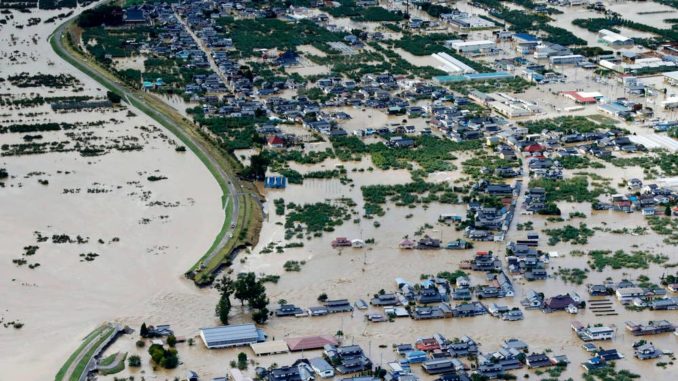
2,667 Radioactive Bags From Fukushima Swept Away By Typhoon Hagibis https://newspunch.com/1667-radioactive-bags-fukushima-swept-away-typhoon-hagibis/, October 14, 2019 Baxter Dmitry As Typhoon Hagibis hammered Japan on Saturday, thousands of bags containing radioactive waste at Fukushima were reportedly carried into a local stream by floodwaters.Experts warn the radioactive bags could have a devastating environmental impact across the entire Pacific region, reports Taiwan News.
According to Asahi Shimbun, a temporary storage facility containing 2,667 bags storing radioactive contaminants from the 2011 Fukushima nuclear disaster were “unexpectedly inundated by floodwaters brought by Typhoon Hagibis.“
Torrential rain flooded the storage facility and released the bags into a waterway 100 meters from the site.
Officials from Tamara City in Fukushima Prefecture said that each bag is approximately one cubic meter in size.
Authorities were only able to recover six of the bags by 9 p.m. on Oct. 12 and it is uncertain how many remain unrecovered while the potential environmental fallout is being assessed.
The radioactive waste swept away by Typhoon Hagibis represents the latest setback for Fukushima officials who have struggled to adequately quarantine the radiation.
StatesmanJournal reports: Seaborne radiation from Japan’s Fukushima nuclear disaster has been detected on the West Coast of the United States.
Cesium-134, the so-called fingerprint of Fukushima, was measured in seawater samples taken from Tillamook Bay and Gold Beach in Oregon, researchers from the Woods Hole Oceanographic Institution are reporting.
Because of its short half-life, cesium-134 can only have come from Fukushima.
Also for the first time, cesium-134 has been detected in a Canadian salmon, the Fukushima InFORM project, led by University of Victoria chemical oceanographer Jay Cullen, is reporting.
In both cases, levels are extremely low, the researchers said, and don’t pose a danger to humans or the environment.
Massive amounts of contaminated water were released from the crippled nuclear plant following a 9.0 magnitude earthquake and tsunami in March 2011. More radiation was released to the air, then fell to the sea.
Climate and nuclear threats join in Japan’s multibillion-dollar typhoon disaster.
|
………….As the core of the storm pulled away from Tokyo Sunday, it dumped heavy rains across Toshigi as well as Fukushima Prefecture. Floodwaters there have raised concerns about radioactive contamination following the 2011 Fukushima nuclear disaster.
Typhoon Hagibis will go down in Japanese history as a multibillion-dollar disaster. The storm’s widespread impacts and high death toll are unusual for Japan, since the country is one of the best-prepared in the world for natural disasters
Climate studies suggest that the Japanese Archipelago could see more frequent and stronger typhoons in the future, due in large part to warming seas as a result of human-caused global warming. There is evidence showing that tropical cyclones in the Northwest Pacific Ocean Basin are reaching their maximum intensities further north than they used to, a trend some scientists attribute in part to climate change. This could send more intense storms into areas that typically see weaker storms, such as Honshu and other parts of northern and northeastern Japan.
One trend that is especially clear is that damage costs from typhoons in Japan are escalating, with three of the top 10 most expensive Japanese typhoons since 1950 occurring in the past 2 years alone. Typhoon Faxai, which affected Tokyo in early September. Typhoon Hagibis is extremely likely to increase this number to four. https://www.theage.com.au/world/asia/why-typhoon-hagibis-packed-such-a-deadly-devastating-punch-in-japan-20191015-p530o7.html
|
|
|
Soaring costs of France’s Flamanville project casts a blight on the global nuclear industry
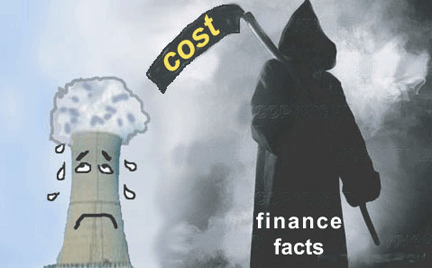
EDF said that its European pressurised reactor in Flamanville was now expected to cost €12.4 billion. This is €1.5 billion more than the previous estimate.
Initially it was supposed to cost €3.3 billion and the reactor was supposed to come on stream in 2012. The company says that under the revised plan it hopes to load fuel at Flamanville at the end of 2022, a decade late.
EDF is an electrity business with interests worldwide, including operating 58 nuclear reactors in its home country. It is majority-owned by the French state, which holds an 83.7 per cent stake…(subscribers only) https://www.thetimes.co.uk/edition/business/edf-admits-flamanville-reactor-will-cost-four-times-original-estimate-k55qjn9b5?fbclid=IwAR0-APtlBA77Q8ixdA4VPMl3YCO24A_ivA0dL9Xf_Hyo0mwKn4w0898zmjY
U.S. presidential candidates should state their position on nuclear weapons

 Candidates should state position on nuclear weapons, https://www.dispatch.com/opinion/20191014/column-candidates-should-state-position-on-nuclear-weapons David Wright, The upcoming Democratic Party presidential debate in Ohio provides an opportunity for candidates to address an issue that a majority of Ohio voters want to hear about: their plans for U.S. nuclear weapons policy.
A recent Zogby Analytics poll found that more than 80% of Ohio residents believe it is critical that the candidates state their positions on this issue.
They are right to want to hear the candidates’ views. Ohioans understand that the risk of nuclear war remains one of the greatest threats to civilization, and security experts warn that the potential for a nuclear war is greater than it has been in decades.
The good news is that the next president could make America safer by changing U.S. nuclear policy.
Under current policies, the United States could start a nuclear war by mistake. How? Let me explain the chain of events.
The Pentagon keeps its 400 land-based missiles on hair-trigger alert so they can be launched quickly upon warning of a Russian missile attack before they could be destroyed by incoming Russian missiles. If the military received such a warning, the president would have less than 10 minutes to decide whether to launch U.S. missiles. But that warning is generated by computers based on radar and satellite data, all of which are fallible. Indeed, there have been false alarms over the years due to a range of technical and human errors. This tight time span in which to make a decision increases the risk of starting a nuclear war based on a false warning. U.S. missiles cannot be recalled or destroyed in flight, even if the Pentagon belatedly realized that the warning had been false.
Keeping missiles on hair-trigger alert is not only dangerous, it is also unnecessary. Most U.S. nuclear weapons are hidden at sea on submarines where they are safe from attack, so the United States can wait to see if a nuclear attack is actually happening before it retaliates. Debate moderators should ask the candidates if they would remove U.S. missiles from hair-trigger alert and eliminate the possibility of starting a nuclear war by mistake.
The next president also could reduce the chance that the United States would deliberately start a nuclear war. Current policy permits the United States to use nuclear weapons first in a non-nuclear conflict with Russia, China or North Korea — all of which are nuclear-armed. Doing so would almost certainly provoke a devastating nuclear response against the United States.
Moderators should tackle that topic as well. They should ask the candidates whether, if elected, they would clearly state that the only purpose of U.S. nuclear weapons is to deter a nuclear attack and establish a policy that the United States will never use nuclear weapons first. Such a policy also would make America safer by making it less likely that our adversaries would attack us with nuclear weapons first out of fear that a U.S. nuclear strike was imminent.
The Zogby survey polled Ohioans about this “first use” issue, too. When asked if there were any acceptable circumstances for the United States to use nuclear weapons first, nearly two-thirds said no.
Finally, the United States has long relied on verifiable international agreements to constrain its adversaries’ nuclear forces. Today the United States and Russia still possess 92% of all nuclear weapons, yet the United States recently pulled out of a longstanding nuclear arms treaty with Russia and has threatened to walk away from the landmark treaty that limits long-range nuclear weapons. Debate moderators should ask the candidates if they are committed to maintaining such agreements, how they would reinvigorate U.S.-Russian negotiations and how they would address North Korea and Iran’s nuclear ambitions.
Voters want to know, but they will only if debate moderators ask the right questions. The presidential candidates must clarify what they would do, if elected, to reduce the nuclear threat and guarantee national — and international — security.
David Wright, co-director and senior scientist in the Global Security Program at the Union of Concerned Scientists, grew up in Lima and attended Miami University and Ohio State University.
The million year problem – deep burial of nuclear wastes
Quite apart from the technological challenges and ethical issues these solutions present, both have one major drawback: to be successful they rely on external, uncontrollable factors. How could the knowledge required to interpret these things this be guaranteed to last?
Semiotician Thomas Sebeok recommended the creation of a so-called Atomic Priesthood. Members of the priesthood would preserve information about the waste repositories and hand it on to newly initiated members, ensuring a transfer of knowledge through the generations.
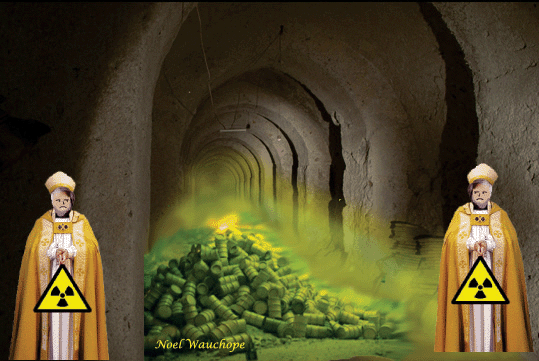
Buried nuclear waste stays dangerous for a million years — here’s how scientists plan to stop a future disaster
In thousands of years’ time, will they even understand the language written on our ‘keep out’ signs? https://inews.co.uk/news/long-reads/buried-nuclear-waste-danger-underground-future-disasters-814704
By Helen Gordon, Monday, 14th October 2019 The red metal lift takes seven juddering minutes to travel nearly 500 metres down. Down, down through creamy limestone to reach a 160-million-year-old layer of clay.
Here, deep beneath the sleepy fields and quiet woods along the border of the Meuse and Haute-Marne departments in north-east France, the French National Radioactive Waste Management Agency (Andra) has built its underground research laboratory.
The laboratory’s tunnels are brightly lit but mostly deserted, the air dry and dusty and filled with the hum of a ventilation unit.
Blue and grey metal boxes house a series of ongoing experiments – measuring, for example, the corrosion rates of steel, the durability of concrete in contact with the clay. Using this information, Andra wants to build an immense network of tunnels here.
It plans to call this place Cigéo, and to fill it with dangerous radioactive waste. It is designed to be able to hold 80,000 cubic metres of material.
Long-term risks of nuclear waste Continue reading
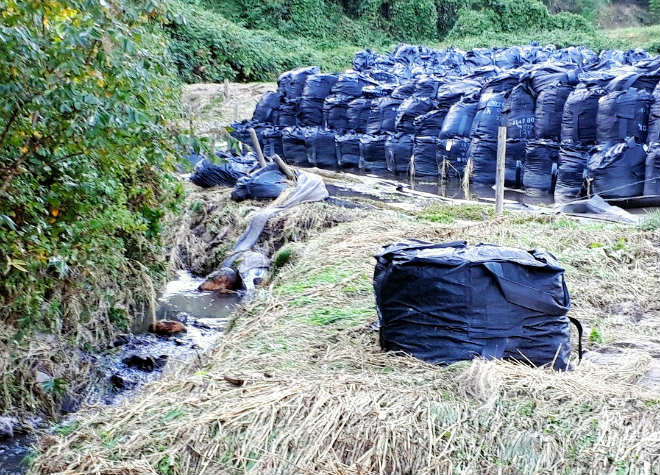
Bags of debris from Fukushima disaster swept away in typhoon
|
Bags of debris from Fukushima disaster swept away in typhoon http://www.asahi.com/ajw/articles/AJ201910140036.htmlBy TARO KOTEGAWA/ Staff Writer, October 14, 2019 Flexible bulk bags containing waste produced from decontamination work around the Fukushima No. 1 nuclear power plant were swept away in flooding during Typhoon No. 19 in Tamura, Fukushima Prefecture. (Hideyuki Miura) TAMURA, Fukushima Prefecture–Bulk bags filled with greenery collected during decontamination efforts after the nuclear disaster at the Fukushima No. 1 nuclear power plant were swept into a river during Typhoon No. 19 on Oct. 12. According to the Tamura city government, the bags were among 2,667 that have been stored temporarily at a site in the Miyakoji-machi district here. The facility was flooded after heavy rains brought by the typhoon, and the water carried an unknown number of the bags to a river about 100 meters away. A city government official received a phone call at around 9:20 p.m. on Oct. 12 from a nearby civil engineering firm, saying six of the bulk bags had been recovered from the river. Each of the bulk bags was 1 cubic meter in size. No sheets had been placed over the bags as a precaution against the rain and wind from the typhoon. A city official said consultations will be held with the Environment Ministry to determine possible effects on the environment. The decontamination effort involved removing debris, such as soil, leaves and plants, containing radioactive substances released after the 2011 triple meltdown at the Fukushima No. 1 plant. |
|
Putin warns on the need for a new nuclear weapons treaty
 PUTIN TAKES SWIPE AT TRUMP FOR WITHDRAWING FROM NUCLEAR TREATY: ‘IT WAS NOT WORTH RUINING’, Newsweek,
In an interview with Arabic-speaking journalists ahead of his visit to Saudi Arabia and the United Arab Emirates, Putin reiterated Russia’s opposition to the withdrawal in February from the INF, which had been signed in 1987 by Soviet leader Mikhail Gorbachev and President Ronald Reagan.
It banned missiles with ranges of between 310 and 3,400 miles but the U.S. and Nato had accused Russia of violating the pact by deploying a new type of cruise missile, a claim Moscow denied.
Putin said: “It think it was a mistake…and that they could have gone a different path. I do understand the U.S. concerns. While other countries are free to enhance their defences, Russia and the U.S. have tied their own hands with this treaty. However, I still believe it was not worth ruining the deal; I believe there were other ways out of the situation.”
Putin said that the U.S. must back a new START Treaty, which expires in 2021, to restrict a race to acquire strategic nuclear weapons.
“The new START Treaty is actually the only treaty that we have to prevent us from falling back into a full-scale arms race. To make sure it is extended, we need to be working on it right now. We have already submitted our proposals; they are on the table of the U.S. administration. There has been no answer so far.
“If this treaty is not extended, the world will have no means of limiting the number of offensive weapons, and this is bad news. The situation will change, globally. It will become more precarious, and the world will be less safe and a much less predictable place than today,” Putin said, according to a transcript of the interview on the Kremlin website.
Putin said that his doubt over the U.S. commitment to nuclear disarmament stretched back to 2002, when under President George W. Bush, Washington withdrew from the Anti-Ballistic Missile (ABM) Treaty, which had imposed limits on missile defence systems……… https://www.newsweek.com/putin-start-treaty-trump-arms-race-1464921
Urgent need for diplomacy with Iran
|
Both authors held high positions at the State Department in previous administrations. This month, six years ago, we were in the midst of secret talks with Iran that led to the comprehensive nuclear agreement. It was a moment when diplomacy carried considerable risk, and considerable promise. Today, the promise has faded, and the risk is accelerating. The consequences of the Trump administration’s foolish decision to abandon that nuclear deal last year, with no evidence of Iranian noncompliance, were predictable — and predicted. We are now at a very dangerous point. The story of how we got here is one of faulty expectations on both sides. Iran thought it could wait out President Trump, and the United States would simply return to the deal under a new president in 2021. But the pressure of economic sanctions, unilaterally reimposed by the United States, has been more formidable than Iran anticipated. …….. If we stay on this trajectory, we will soon go off the cliff. The policy questions debated in Washington are too often about whether or not to wear a seatbelt. Instead, we ought to put our hands back on the wheel of diplomacy and steer toward an off-ramp before it is too late. If we stay on this trajectory, we will soon go off the cliff. The policy questions debated in Washington are too often about whether or not to wear a seatbelt. Instead, we ought to put our hands back on the wheel of diplomacy and steer toward an off-ramp before it is too late. https://www.nytimes.com/2019/10/14/opinion/iran-nuclear-deal.html |
|
|

1 This Month
19 November – Webinar – The Reality of Reprocessing
Time: 11:00 AM Pacific Time (US & Canada) / 2:00 PM Eastern / 7:00 PM UK / 8:00 PM CET
Register for the Zoom Event Here

Tell Congress: Prevent Nuclear Catastrophe in Iran

Tell Congress: Prevent Nuclear Catastrophe in Iran

Read the Public Inquiry Report, the Commissioners’ report, Surrendering Australia: The AUKUS Deception is available to download for free at aukuspublicinquiry.com. Or just watch the replay of the National Press Club Luncheon.


Shut down the radiation-damaged Heysham nuclear reactors now
To see nuclear-related stories in greater depth and intensity – go to https://nuclearinformation.wordpress.com

Say No to NASA’s Reckless Nuclear Reactor on the Moon
Say No to NASA’s Reckless Nuclear Reactor on the Moon
-
Archives
- November 2026 (190)
- October 2026 (302)
- September 2026 (339)
- August 2026 (330)
- July 2026 (355)
- June 2026 (287)
- May 2026 (306)
- April 2026 (356)
- March 2026 (251)
- February 2026 (267)
- January 2026 (308)
- December 2025 (358)
-
Categories
- 1
- 1 NUCLEAR ISSUES
- business and costs
- climate change
- culture and arts
- ENERGY
- environment
- health
- history
- indigenous issues
- Legal
- marketing of nuclear
- media
- opposition to nuclear
- PERSONAL STORIES
- politics
- politics international
- Religion and ethics
- safety
- secrets,lies and civil liberties
- spinbuster
- technology
- Uranium
- wastes
- weapons and war
- Women
- 2 WORLD
- ACTION
- AFRICA
- Atrocities
- AUSTRALIA
- Christina's notes
- Christina's themes
- culture and arts
- Events
- Fuk 2022
- Fuk 2023
- Fukushima 2017
- Fukushima 2018
- fukushima 2019
- Fukushima 2020
- Fukushima 2021
- general
- global warming
- Humour (God we need it)
- Nuclear
- RARE EARTHS
- Reference
- resources – print
- Resources -audiovicual
- Weekly Newsletter
- World
- World Nuclear
- YouTube
-
RSS
Entries RSS
Comments RSS

