More evidence of safety risks: Hunterston B nuclear reactors should be closed
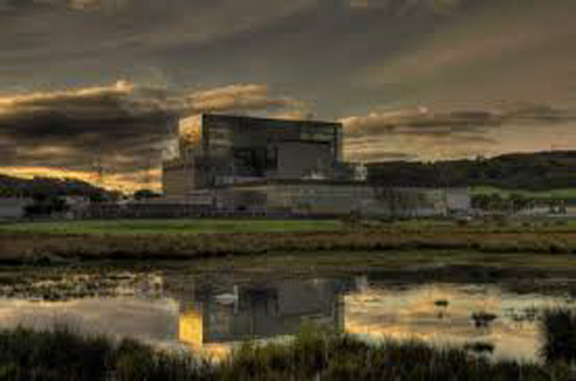
 The Ferret 17th Oct 2019, Hunterston, The graphite cores of two ageing nuclear reactors at Hunterston in North Ayrshire have begun to crumble as cracks spread, prompting safety inspectors to impose tough new conditions threatening future operations.
Technical reports released by the UK government’s Office for Nuclear
Regulation (ONR) reveal that at least 58 fragments and pieces of debris
have broken off the graphite bricks that make up the reactor cores.
According to ONR there is “significant uncertainty” about the risks of
debris blocking channels for cooling the reactor and causing fuel cladding
to melt. This could cause an accident and a leak of radioactivity.
The 50-strong group of Nuclear Free Local Authorities (NFLA) is urging ONR to close down both reactors at Hunterston. “These latest alarming
revelations about the graphite reactor cores at Hunterston B starting to
crumble and potential issues with the fuel make us even more convinced that
reactor three should not be allowed to resume operation,” said NFLA
Scotland convener and Glasgow SNP councillor, Feargal Dalton.
“We will be pressing the Office for Nuclear Regulation very hard to examine very carefully any justification which EDF Energy puts forward to reopen reactor four after its initial four month trial, and to be open and transparent
about what they find.
The precautionary principle would suggest that this reactor too should stay closed.” NFLA radiation consultant, Dr Ian Fairlie, described ONR’s latest reports as “very worrying”. By considering the melting of fuel cladding the regulatory agency was “getting into even more dangerous matters than before”. He added:
“These reports and their harder language make one wonder why ONR granted
a four month extension to reactor four in August. Taken together the new
revelations strengthen the calls by local residents to close both reactors
at Hunterston B.” https://theferret.scot/hunterston-graphite-debris-nuclear/
Ohio’s Fascist Pro-Nuke Attack on Democracy Comes Due on Monday
By Harvey Wasserman, 18 Oct 19A terrifying series of gestapo-style assaults, petiton buying, bribery, mass media manipulation and systematic intimidation has smacked into the attempt of Ohio citizens to repeal a billion-dollar bailout for two dangerously failing atomic reactors on Lake Erie.The unprecedented assault threatens the referendum process in Ohio and across the nation.It also threatens to keep on line two very old, dangerously decayed reactors where melt-downs and explosions could forever contaminate the Great Lakes region and more. (For a full explanation, hear this one-hour discussion at:The story may end Monday, October 21, when signatures are due to qualify an anti-nuclear referendum for the fall 2020 ballot.It begins with the July passage by the gerrymandered Ohio Legislature of HB6, a massive bailout scheme designed to subsidize the Perry and Davis-Besse nukes, plus two fifty-year-old coal burners, one of them in Indiana. HB6 does support ten small solar facilities. But it also kills an extremely popular, effective energy efficiency program along with larger subsidies for wind and solar energy in general.The bailout is vehemently opposed by a large majority of Ohioans, including most of its usually pro-corporate media. Commercial, industrial and environmental groups did mount a massive campaign meant to stop the bill from passing. But with help from Democrats in both houses, the Legislature narrowly approved the bailouts.Almost immediately, a referendum was filed for repeal. With 265,000 signatures due by October 21, Ohioans Against Corporate Bailouts began hiring canvassers.Ohio’s GOP Secretary of State delayed the process as long as possible. He waiting a full 20 days before turning down the first petition submission. He then waited another 20 to certify the second.But as soon as the referendum supporters began gathering signatures, pro-nuke forces attacked with a fascist assault unlike any other in US history.First they began running an astonishing wave of TV ads claiming the referendum was a plot by Chinese Communists to take over Ohio’s electrical grid. The ads feature (they are still running!) hordes of goose-stepping Chinese soldiers, sinister footage of China’s dictator, shuttered US factories, and more.Accompanied by high-gloss mass mailings, the pro-nuke forces are also running saturation radio ads warning Ohioans to shun all signature gatherers lest they be tracked by sinister communists out to ruin their lives and credit. A toll-free number is offered to those willing to call in the location of any repeal supporters.But the pro-nuke gestapo has also leapt from mere media manipulation to physical intimidation. When the referendum-gatherers hit the streets, they were confronted by industry “blockers” to tangibly prevent them from doing their job. In one case (as filmed on a security camera) a blocker smacked the cell phone out of the hands of a signature gatherer as he tried to photograph her. Gatherers have widely reported close-up verbal assaults. In some cases as many as three paid blockers have surrounded a single signature gatherer to prevent anyone from coming near to signing a petition.Because many of the signature gatherers are hired employees, they’re required to register contact information with the state. The pro-nuke mob has assaulted them with threatening phone calls. In some cases they’ve reportedly offered substantial cash payments and airline tickets if they leave the state. One signature gatherer reported being offered $2500 (!) for the day’s accumulated sign-up sheets, which would presumably then be shredded.Under the circumstances, many now wonder if the pro-referendum forces have been able to accumulate the required 265,000 signatures, plus the many more needed for a traditional cushion. The Republican Secretary of State is certain to discard as many signatures as he can, especially with the micro-managed scrutiny of the nuclear industry.The ramifications of such an outcome are staggering. It could signal the death of the popular referendum, a cornerstone of the democratic process.It could also mean two old, uncompetitive, uninsured, un-inspected crumbling atomic reactors highly likely to explode will continue to threaten the entire Great Lakes region for years to come.————-Harvey Wasserman’s People’s Spiral of US History is at solartopia.org. His California Solartopia show is broadcast at KPFK/Pacifica-90.7FM in Los Angeles. The Green Power & Wellness Show is podcast at prn.fm.

8-10 years for Southern California Edison to demolish San Onofre Nuclear Generating Station

The permit will allow Edison contractors to begin removing major structures at the facility, located on an 85-acre chunk of Marine Corps Base Camp Pendleton owned by the Department of the Navy. SONGS is home to 3.55 million pounds of used-up nuclear fuel, between the Pacific and Interstate 5…..
Ultimately, the federal government has the final say about where used-up commercial nuclear fuel should go. But since a permanent site has not been found, nuclear waste at plants like SONGS have been piling up for decades. …….
A provision within the commission’s vote added a special condition to the permit concerning the demolition of two spent fuel pools where used-up nuclear waste is stored.
Under the provision, Edison will not get rid of the pools until it funds an independent third-party review of an inspection and maintenance plan regarding the condition of canisters in dry storage and forwards the findings to the Coastal Commission. Edison also agreed to start the plan by March 31, 2020 — seven months earlier than scheduled.
In return, the commission agreed to not sit on the report and vote on a recommendation by Coastal Commission staff by July 2020.
The proposed demolition of the pools at Units 2 and 3 dominated much of the discussion that dragged out for most of the day.
While fuel inside a nuclear reactor typically loses its efficiency after about four to six years, it is still thermally hot and emits a great deal of radiation. To keep the fuel cool, nuclear plant operators place the used-up waste in a metal rack and lower it into a deep pool of water, typically for at least five years. Once cooled, the fuel is often transferred to a dry storage facility.
Some speakers supported removal of the pools but others insisted they must remain to make sure the canisters holding the waste can be retrieved and inspected.
While fuel inside a nuclear reactor typically loses its efficiency after about four to six years, it is still thermally hot and emits a great deal of radiation. To keep the fuel cool, nuclear plant operators place the used-up waste in a metal rack and lower it into a deep pool of water, typically for at least five years. Once cooled, the fuel is often transferred to a dry storage facility.
Some speakers supported removal of the pools but others insisted they must remain to make sure the canisters holding the waste can be retrieved and inspected………
The dismantlement will be carried out by a general contractor selected in December 2016 — a joint venture of AECOM and Energy Solutions called SONGS Decommissioning Solutions. The decommissioning will be paid for by $4.4 billion in existing trust funds, The money has been collected from SONGS customers and invested in dedicated trusts. According to Edison, customers have contributed about one-third of the trust funds while remaining two-thirds has come from investments by the company.
Some of the work can begin before the waste transfers are completed, provided they are “geographically separate from locations where fuel storage and transfer operations occur,” Dobken said.
After transfers were suspended for a little more than one year after the August 2018 incident involving the 50-ton canister, Edison resumed moving canisters in July. Workers have moved 35 canisters to dry storage thus far, with 38 more to go. Transfer operations are expected to be completed by mid-2020…….
SONGS is far from the only nuclear plant with waste on-site. About 80,000 metric tons of used commercial fuel has piled up at 121 sites in 35 states because the federal government has not found a repository where it can be stored. Federal authorities were supposed to begin taking custody of spent fuel in 1998. https://www.sandiegouniontribune.com/business/energy-green/story/2019-10-17/coastal-commission-oks-permit-to-begin-dismantlement-at-san-onofre-nuclear-plant
Bradwell B – UK’s futile nuclear project
BANNG 17th Oct 2019, Andy Blowers ponders the question, ‘Why, since Bradwell B is such a futile project, don’t the regulators stop it now?’ in the BANNG column for Regional Life, October, 2019. Why is it that so often decision makers fail to see or, perversely, choose to ignore the blindingly obvious?
This thought occurred to me during a recent meeting of BANNG with officials from the Office for Nuclear Regulation (ONR) and the Environment Agency (EA) about the Bradwell B site?
There are at least three major ‘showstoppers’ that should have already made Bradwell B, to borrow a phrase, ‘dead in the water’: Cooling water – the Blackwater estuary cannot possibly provide or sustain the volume of cooling water needed.
Emergency plan – in the event of a serious accident it will be impossible
to evacuate the surrounding area. Climate change – the Bradwell site is
fragile and vulnerable to rising seas, storms and erosion which will,
sooner or later, impact on the power station and its dangerous nuclear
waste stores. https://www.banng.info/news/the-show-must-not-go-on/
Safety concerns over Berkshire nuclear weapons factories
 Safety concerns over Berkshire nuclear weapons factories, BBC, 17 Oct 19, Two nuclear weapons factories are to remain under extra scrutiny due to safety concerns over their ageing facilities, a government watchdog said. BBC News
The AWE sites in Aldermaston and Burghfield, Berkshire, make and maintain the UK’s nuclear warheads.
The Office for Nuclear Regulation (ONR) said the sites will be scrutinised closely for at least two years.
Contractor AWE Plc said the replacements for the outdated facilities had been delayed.
The private company manufactures the warheads for Trident, the UK’s nuclear deterrent at sea.
AWE had planned to replace the Burghfield facilities by 2016, but due to construction delays it is expected to be completed in 2023, according to the Local Democracy Reporting Service. …. https://www.bbc.com/news/uk-england-berkshire-50099579
A single bird grounds America’s Navy ‘Doomsday’ plane
Navy ‘Doomsday’ plane built to withstand nuclear attack grounded after striking single bird, By JESSICA SCHLADEBECK, NEW YORK DAILY NEWS |OCT 18, 2019 The Navy’s “Doomsday Plane,” designed to withstand even a nuclear attack, suffered millions of dollars in damages after striking a single bird as it practiced a landing maneuver earlier this month at a Maryland air station.
The E-6B Mercury was supposed to only touch down momentarily before immediately taking off again from the Patuxent River Naval Air station – but a bird was sucked into one of the plane’s four engines while it attempted the “touch and go” move, according to Military.com….. https://www.nydailynews.com/news/national/ny-bird-strike-navy-plane-nuclear-attack-grounds-20191018-c5jhcnyoufa2nf2ryaxb3bupo4-story.html
Jane Fonda arrested with Sam Waterston in climate change protest
“We can do this!” Waterston, 78, said during the protest. “We need something to push for that’s as big as the problem.”
“This is an ongoing action to draw attention and a sense of urgency to the climate crisis,” Fonda said before her arrest. “Make no mistake, change is coming, whether we like it or not. Change is coming by disaster, or change is coming by design.”
The actors were seen with zip ties around their wrists by police following a demonstration in Washington, D.C, in front of the Library of Congress.
“We can do this!” Waterston, 78, said during the protest. “We need something to push for that’s as big as the problem.”
“This is an ongoing action to draw attention and a sense of urgency to the climate crisis,” Fonda said before her arrest. “Make no mistake, change is coming, whether we like it or not. Change is coming by disaster, or change is coming by design.”
The actors were seen with zip ties around their wrists by police following a demonstration in Washington, D.C, in front of the Library of Congress. …… https://www.msn.com/en-au/news/world/jane-fonda-arrested-with-sam-waterston-in-climate-change-protest/ar-AAIZPb1?ocid=spartandhp
Hurricane Hagibis Spreads Fukushima Radiation (But No, 2,667 Bags of Decontaminated Waste were NOT Washed Away!)
 Nuclear HotSeat BY NHADMIN OCTOBER 16, 2019 Fukushima Hurricane Hagibis Flooding – deluge of water washes full bags of “decontaminated” soil, plants, and other radioactive matter into Furumichi river near the Japanese city of Tamura in Fukushima Prefecture (above). No report yet on how much radioactive material from the decomposing, torn waste bags was washed back into the environment. http://nuclearhotseat.com/2019/10/16/fukushima-hurricane-hagibis-flooding-spreads-radiation-risks/
|
Below are brief extracts – transcript from this important podcast.
Hurricane Hagibis – Alarms went off – City said an unknown number of radioactive waste bags were lost…
Each bag weighs more than one tonne…. some bags not swept away but still damaged
Nancy Faust of SimplyInfo.org. “- not enough information yet… Tepco did have time to prepare for the typhoon.
Tepco phrased it vaguely about the readings of radioactivity – equipment is monitored – readings showed that rain-water was leaking in to various facilities. They measured only the water itself, not radiation. Tepco has not talked about how much water is coming in to the reactor. We worry about how much water is coming in , and then washing things out.”
Question: Do we know how many bags of radioactive material were washed away?
“One report from one city Tamara City – has 2667 bags onsite – did not say how many were washed away -said that 6 were found….. We don’t know yet how many were washed away
We also don’t know the condition of these bags at the storage site. Older bags at higher risk of breaking. They have a lifespan of about 6 years. Also we don’t know what the level of radioactivity is in these bags.
We may get some bits of information about how much radiation was dispersed over the next weeks. Simply Info will be looking for differences in radiation level reports. Tepco not legally obliged to give this information.
From Arnie Gunderson.
Sean McGee reminds that there will be dispersal of radiatioactive material after the area dries out, and from the mountains.
The story that all 2667 bags were swept away is incorrect . That imprecision in the report was in the headline.
The Japanese government and Tepco will try to obscure the facts. It’s incumbent upon us to be accurate. |
|
Nuclear power to combat climate change? This cure is worse than the disease
|
Think fossil fuels are bad? Nuclear energy is even worse .
Some tout nuclear energy as ‘clean,’ but it’s hardly that, even with technological advancements. https://www.marketwatch.com/story/think-fossil-fuels-are-bad-nuclear-energy-is-even-worse-2019-10-17 By JURICA
DUJMOVIC Nuclear power, as it is today, is a poor substitute for fossil fuels.
Not long ago, I wrote about nuclear plants and the large number of “incidents” (many of which go under the radar) that occur every year, despite upgrades, updates, technological advancements and research that’s put in nuclear energy.
Researchers from the Swiss Federal Institute of Technology have come up with an unsettling discovery. Using the most complete and up-to-date list of nuclear accidents to predict the likelihood of another nuclear cataclysm, they concluded that there is a 50% chance of a Chernobyl-like event (or larger) occurring in the next 27 years, and that we have only 10 years until an event similar to Three Mile Island, also with the same probability. (The Three Mile Island Unit 2 reactor, near Middletown, Pa., partially melted down on March 28, 1979. This was the most serious commercial nuclear-plant accident in the U.S.)
Companion stories: The energy revolution is already here and California’s mass power outage shows we don’t really know the costs or effects of climate change Nuclear waste Then there’s the problem of nuclear waste. Just in the U.S., commercial nuclear-power plants have generated 80,000 metric tons of useless but highly dangerous and radioactive spent nuclear fuel — enough to fill a football field about 20 meters (65 feet) deep.
Over the next few decades, the amount of waste will increase to 140,000 metric tons, but there is still no disposal site in the U.S. or a clear plan on how to store this highly dangerous material.
While some would say that this amount of nuclear waste is nothing compared with the tons of trash polluting our seas and toxic gasses destroying our atmosphere, let’s not forget this isn’t ordinary waste. Nuclear waste will remain dangerous — deadly to humans and toxic to nature — for hundreds of thousands of years. Digging deep wells and tunnels in which it can be stored is simply kicking a very dangerous can down the road — a can that can break open and contaminate the environment because of earthquakes, human error and acts of terrorism.
Ocean dumping Let’s also not forget that the majority of developed countries have felt the need to use seas and oceans as nuclear-dumping sites. Although the practice was prohibited in 1994, the damage was already done. The current amount of nuclear waste in world seas greatly exceeds what’s currently stored in the U.S. And that’s just documented waste, so the exact number may be much higher. Some may be comforted by the fact that 2011 data suggest the damage to the environment was minimal, but let’s not forget that these containers will eventually decay and their contents will spill and mix with water, polluting marine life and changing the biosphere. Finally, all of this contamination comes back to us in the form of food we eat, water we drink and air we breathe.
The question I was asked when writing this article was: “Is there a place for nuclear energy in a carbon-free world?” If we keep storing dangerous nuclear waste in places where it can come in contact with our immediate environment and where isolation isn’t 100% secure, and if we keep lying to ourselves that nuclear power plants are safe and clean, even though the data clearly show otherwise, then the answer is no.
Clean’ energy?
The nuclear-energy industry wants to participate in the clean-energy movement by positioning itself as an environmentally friendly alternative to fossil fuels. However, fossil-fuel pollution can be reversed. Nuclear waste is here to stay for hundreds of thousands of years. You may think I oppose nuclear energy in any shape or form, but that’s not true. Key problems that plague the industry are waste management and safety. Once those burning issues are appropriately addressed, I’d be more than happy to support nuclear power. But for now, if we use nuclear to fight fossil-fuel-based pollution, we’re simply replacing one problem with one that is much worse. The majority of models from the United Nation’s climate-research body calls for an increase in nuclear power. The goal here is precisely what I warned about: To reduce the carbon output while paying the high cost of producing more nuclear waste. This, they say, should be done by bringing about an additional 17 gigawatts from nuclear power plants a year. If this plan were put into action, it would effectively double the number of nuclear power plants in the world by 2040. If that happens, it will be clearer to everyone why nuclear energy — in its current shape and form — is not the tool to battle climate change. |
|
China Calls for Maintaining Global Strategic Stability and Reducing Nuclear Conflicts Risks
|
China Calls for Maintaining Global Strategic Stability and Reducing Nuclear Conflicts Risks https://www.fmprc.gov.cn/mfa_eng/wjbxw/t1708327.shtml–2019/10/16 The 16th PIIC Beijing Seminar on International Security was held in Shenzhen, China on the 16th October, 2019. It is organised by China Arms Control and Disarmament Association (CACDA), Program for Science and National Security Studies (PSNSS),and Nuclear Threat Initiative (NTI). Scholars and experts from China, the U.S., Russia, the U.K.,Germany, Italy, Belgium, Japan, South Korea, Mongolia and other countries participated in this seminar. The Director-General of the Department of Arms Control of the Foreign Ministry Fu Cong attended the opening ceremony and made a keynote speech, calling for maintaining global strategic stability and reducing risks of nuclear conflicts. Fu Cong said that the global strategic security situation has dramatically worsened over the past few years. Unilateralism and hegemonism is rising in international relations, posing major threats to the international order based upon international law. Returning to the cold war mentality, the U.S. has withdrawn from or renegaded on a host of multilateral arms control agreements, with the aim of seeking unilateral and overwhelming military superiority. With these actions, mutual trust and cooperation between major powers have been severely eroded, the global strategic stability is being seriously undermined, the international norms and multilateral regimes are under severe stress, and the deficit of global security governance is becoming more prominent. Fu Cong emphasized that continued erosion of global strategic stability would inevitably lead to a relapse of nuclear arms race. And the risks of nuclear conflicts would increase. All nuclear-weapon States should take measures to diminish the role of nuclear weapons in their national security doctrines. Nuclear-weapon States should provide unconditional and unambiguous security assurances to non-nuclear-weapon States. Countries should exercise restraint in building and deploying strategic capabilities. Nuclear disarmament should be pursued in a reasonable and pragmatic manner. Nuclear-weapon States should enhance dialogue on nuclear doctrines and strategies. Nuclear non-proliferation issues should be resolved through political and diplomatic means. And the challenges created by emerging technologies should be properly addressed. Fu Cong said that China expresses its deep regret over the U.S.’s withdrawal from the INF Treaty. It is of China’s view that the U.S. withdrawal will have a direct negative impact on global strategic stability, on peace and security in Europe and Asia-Pacific region, as well as the international arms control regime. The fact that the U.S. has conducted a ground-based intermediate-range cruise missile test less than three weeks after its withdrawal from the Treaty shows that its withdrawal was meant to free its hands in developing advanced weaponry in order to seek unilateral military advantage. . China firmly opposes the U.S. deployment of ground-based intermediate-range missiles in the Asia-Pacific region. The U.S. missiles, if deployed in the region against others’ expectations, would be virtually on China’s doorsteps. Should that happen, China would have no choice but to take necessary countermeasures in defence of its national security. China urges the U.S. and other countries concerned to exercise restraint and prudence on this matter. Fu Cong also briefed on China’s efforts in maintaining global strategic stability, including China’s “no first use” policy, and stressed that China has shown maximum transparency in its nuclear strategy, exercised the utmost restraint on the development of its nuclear force, and adopted an extremely prudent attitude toward the use of nuclear weapons. China will remain committed to peaceful development and continue to advocate for multilateralism. And China will always be a positive force for international arms control and disarmament efforts and a contributor to the lofty cause of safeguarding peace and security of the mankind. |
|
Marshall Islands’ nuclear clean-up workers concerned about radiation leaking
|
Nuclear warning: Toxic waste equivalent to 2,000 Hiroshima bombs could be leaking in sea https://www.express.co.uk/news/science/1191538/nuclear-waste-cold-war-cleanup-hiroshima-us-news-nuclear-bomb
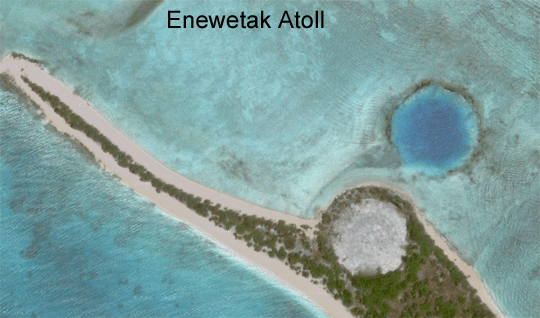
A CONCRETE dome filled with nuclear waste could be leaking into the ocean, with experts urging the US government to act urgently as humans “cannot wait”.By SEAN MARTIN, Wed, Oct 16, 2019 |Enewetak Atoll is a series of small islands in the South Pacific which the US government used to test its nuclear weapons following World War 2 from 1948 to 1958. Over a ten year period, 30 megatons of weapons – equivalent to 2,000 Hiroshima bombs – were dropped on the islands during the Cold War. When the US had finished its testing, it built a concrete barrier known as the Runit dome to store the debris of 43 nuclear explosions in a clean-up operation lasting from 1977 to 1980.
However, employees who worked on the clean-up believe the dome could be leaking radioactive waste into to the ocean.
In response, the US has invested $1,689,000 (£1.32m) in a mission to analyse the dome, but there are claims that it could be too late as the waste could have seeped into the ocean, which would have an effect on the marine ecosystem.
Paul Griego, a former radiochemist who worked on the cleanup operation from June 1977 to October 1978, said: “We need the very same funding and for the very same analysis – the dome can wait for radiochemical analysis but we are human and we cannot wait.
While the US government said staff were subjected to just low-levels of radiation and wore all the necessary protective gear, Mr Griego has said this was not the case. The 62-year old added: “We are certain we have the very same radionuclides in our bodies that that would be found in the dome. “We were bombarded with radiation while building the dome, we drank the contaminated water, inhaled the dust-filled air, absorbed contaminates though our skin, ate the fish we caught and more. “We are not only denied the diagnostic resources, we are denied healthcare to cover our radiation and toxin-related illnesses.
“The government’s refusal to provide radiochemical resources is malicious and feeds into the status quo. “It places the burden of proof of an illness on the individual rather than the moral responsibility of our government.” The mission saw more than 1,000 employees tasked with collecting contaminated soil and radioactive debris, which was then mixed with concrete and placed in a nuclear test crater, which was sealed in a concrete dome.
However, people who were on the scene said that the dome was not lined with concrete, and warn it could be seeping into the ocean. For this reason, the US will embark on an 18 month mission to analyse the dome to see if needs to be reinforced or perhaps completely removed. Doug Domenech, Assistant US Secretary of the Interior for Insular and International Affairs, said: “The US Departments of the Interior and Energy are partnering on this important analysis of Runit Dome so that we can be responsive to both Congress and concerns expressed by the Enewetak community in the Marshall Islands.”
|
|
America’s Nuclear Doomsday Submarines
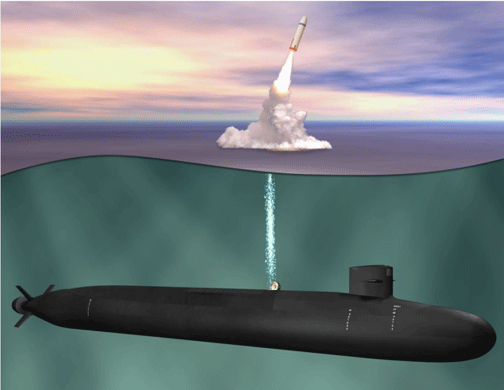 Meet the Ohio-Class: America’s Nuclear Doomsday Submarines, National Interest, by Sebastien Roblin 16 Oct 19,”………. The most deadly of the real-life kaiju prowling the oceans today are the fourteen Ohio-class ballistic-missile submarines, which carry upwards of half of the United States’ nuclear arsenal onboard. If you do the math, the Ohio-class boats may be the most destructive weapon system created by humankind. Each of the 170-meter-long vessels can carry twenty-four Trident II submarine-launched ballistic missiles (SLBMs) which can be fired from underwater to strike at targets more than seven thousand miles away depending on the load.
As a Trident II reenters the atmosphere at speeds of up to Mach 24, it splits into up to eight independent reentry vehicles, each with a 100- or 475-kiloton nuclear warhead. In short, a full salvo from an Ohio-class submarine—which can be launched in less than one minute—could unleash up to 192 nuclear warheads to wipe twenty-four cities off the map. This is a nightmarish weapon of the apocalypse. ………. https://nationalinterest.org/blog/buzz/meet-ohio-class-americas-nuclear-doomsday-submarines-88386
|
|
Russia showcases its nuclear arsenal with huge war games
|
Russia kicks off huge war games to test its nuclear arsenal, CBS News, BY DARIA LITVINOVA, OCTOBER 15, 2019 MOSCOW — Russia kicked off a sweeping military exercise of its Strategic Missile Forces on Tuesday. The Defense Ministry said the drills would include 16 practice launches of cruise and ballistic missiles.
Dubbed “Thunder-2019,” the war games were set to last three days and involve 12,000 troops, 213 missile launchers, 105 aircraft, 15 surface warships and five nuclear submarines………
Last week, Putin announced that Russia would start developing short- and intermediate-range missiles in response to U.S. plans to deploy such weapons in Asia. They are missiles that were banned for decades under the INF. Russia formally withdrew from the Reagan-era treaty soon after the U.S., which had accused Moscow of working on new missiles that violated the terms of the accord. https://www.cbsnews.com/news/russia-war-games-thunder-2019-test-strategic-nuclear-weapons-today-after-inf-collapse-2019-10-15/ |
|
2019 Nuclear Weapons Ban Monitor report
 Nuclear Weapons Ban Monitor 2019 is here, https://banmonitor.org/news/nuclear-weapons-ban-monitor-2019-is-here The 2019 report of the Nuclear Weapons Ban Monitor was launched at a side event during the UN General Assembly in New York on 16 October. This watchdog measures progress towards a world free of nuclear weapons, by using the 2017 UN Treaty on the Prohibition of Nuclear Weapons (TPNW) as a yardstick. The report also evaluates the extent to which the policies and practices of all states comply with the prohibitions in the TPNW, regardless of whether they have joined the Treaty yet. The 2019 report of the Nuclear Weapons Ban Monitor, which is researched and published by the organization Norwegian People’s Aid (NPA), identifies 31 mostly European states – including countries like Belgium, Denmark, Italy, the Netherlands, Norway, and Spain – as “nuclear-weapon-complicit states”. These are states that do not themselves possess nuclear weapons but have outsourced their nuclear postures to one or more nuclear-armed allies through arrangements of extended nuclear deterrence, or so-called “nuclear umbrellas”. They have endorsed or acquiesced in the continued possession and potential use of nuclear weapons on their behalf.
– It is not only the nine nuclear-armed states that stand between the international community and its long-standing goal of a world free of nuclear weapons. So do the 31 nuclear-weapon-complicit states. Their role in assisting, encouraging, and inducing continued retention of nuclear weapons had not been given much attention prior to the adoption of the TPNW in the UN in 2017, says the editor of the Nuclear Weapons Ban Monitor, Grethe Lauglo Østern of NPA. The nine nuclear-armed states and the 31 nuclear-weapon-complicit states do not support the TPNW, and some of them actively oppose it. The majority of the world’s states, however, stand behind the Treaty. The Nuclear Weapons Ban Monitor categorizes a total of 135 countries as TPNW supporters.
– As of October 2019, 32 states are full states parties to the TPNW, while another 48 states have signed it, but not yet ratified it. In addition, 55 countries have voted in favour of the Treaty in the UN, but not yet taken steps to adhere to it, says Østern. Support for the TPNW is high in all regions apart from Europe, where 34 states (or 69%) today are opposed to signing it. Only 17 countries in the world are undecided on the TPNW. The TPNW will be binding, international law when 50 states have ratified it. The Nuclear Weapons Ban Monitor shows that the Treaty is moving steadily towards early entry into force, despite obstructionism from nuclear-armed states. At the time of writing, the TPNW had, by a close margin, the second fastest speed of adherence of the treaties on weapons of mass destruction, though significantly slower than the 1968 Treaty on the Non-Proliferation of Nuclear Weapons (NPT). Among the states that have ratified the TPNW already are Kazakhstan and South Africa, both of which once had nuclear weapons but subsequently disarmed; two of only four states ever to do so.
– A facts-based debate on the UN prohibition on nuclear weapons is essential if we are to achieve the goal of a world without nuclear weapons. This applies to civil society, and to politicans and diplomats. The Nuclear Weapons Ban Monitor gathers and makes available crucial data, says NPA’s secretary general Henriette Westhrin. Even though the nuclear-armed states are resisting the TPNW, Westhrin believes it is important that countries without nuclear weapons now are taking the lead and becoming the first states parties to the Treaty. In doing so they are creating a long-overdue norm that nuclear weapons are unacceptable, and an international framework for their elimination. – The first parties to the TPNW have a responsibility to use this tool to break decades of acquiescence to the nuclear threat and to encourage other states to stop justifying the “benefits” of nuclear weapons. The impact of the TPNW will be built gradually and will depend on how it is received and used by each and every UN member state, says Westhrin. Contact: Grethe Lauglo Østern, Editor of the Nuclear Weapons Ban Monitor on +41 78 717 9137 or e-mail: gretheo@npaid.org
|
|
|
Removal of highly radioactive material from 60 year old Dounreay Fast Nuclear Reactor (DFR).

BBC 15th Oct 2019, Radioactive material jammed inside a Scottish nuclear reactor since the 1970s has been removed for disposal. Remotely-operated tools were specially made to extract the breeder elements from the Dounreay Fast Reactor (DFR).
The DFR and its dome-shaped housing are to be demolished as part of the
wider decommissioning of the former nuclear power site near Thurso.
Dismantling the 60-year-old DFR is among the most challenging of the
decommissioning work.
https://www.bbc.co.uk/news/uk-scotland-highlands-islands-50055003
1 This Month
19 November – Webinar – The Reality of Reprocessing
Time: 11:00 AM Pacific Time (US & Canada) / 2:00 PM Eastern / 7:00 PM UK / 8:00 PM CET
Register for the Zoom Event Here

Tell Congress: Prevent Nuclear Catastrophe in Iran

Tell Congress: Prevent Nuclear Catastrophe in Iran

Read the Public Inquiry Report, the Commissioners’ report, Surrendering Australia: The AUKUS Deception is available to download for free at aukuspublicinquiry.com. Or just watch the replay of the National Press Club Luncheon.


Shut down the radiation-damaged Heysham nuclear reactors now
To see nuclear-related stories in greater depth and intensity – go to https://nuclearinformation.wordpress.com

Say No to NASA’s Reckless Nuclear Reactor on the Moon
Say No to NASA’s Reckless Nuclear Reactor on the Moon
-
Archives
- November 2026 (190)
- October 2026 (302)
- September 2026 (339)
- August 2026 (330)
- July 2026 (355)
- June 2026 (287)
- May 2026 (306)
- April 2026 (356)
- March 2026 (251)
- February 2026 (267)
- January 2026 (308)
- December 2025 (358)
-
Categories
- 1
- 1 NUCLEAR ISSUES
- business and costs
- climate change
- culture and arts
- ENERGY
- environment
- health
- history
- indigenous issues
- Legal
- marketing of nuclear
- media
- opposition to nuclear
- PERSONAL STORIES
- politics
- politics international
- Religion and ethics
- safety
- secrets,lies and civil liberties
- spinbuster
- technology
- Uranium
- wastes
- weapons and war
- Women
- 2 WORLD
- ACTION
- AFRICA
- Atrocities
- AUSTRALIA
- Christina's notes
- Christina's themes
- culture and arts
- Events
- Fuk 2022
- Fuk 2023
- Fukushima 2017
- Fukushima 2018
- fukushima 2019
- Fukushima 2020
- Fukushima 2021
- general
- global warming
- Humour (God we need it)
- Nuclear
- RARE EARTHS
- Reference
- resources – print
- Resources -audiovicual
- Weekly Newsletter
- World
- World Nuclear
- YouTube
-
RSS
Entries RSS
Comments RSS

