North West Evening Mail (UK) gives a fine example of incorrect pro nuclear goobledygook
 Radiation Free Lakeland 12th Oct 2019, New Nuclear** On the anniversary of the Windscale disaster and in the midst of the building of a new gas plant especially for Sellafield, the North West Evening Mail publishes a press release from the nuclear industry touting the ‘Rediscover Nuclear’ campaign.
Some of the laughable descriptions include “homegrown” “safe” “low carbon”. Each of these claims is a big fat lie. As Phil Johnstone tweets: UK “homegrown” nuclear. “UK only ever sold 2 reactors back in 60s, British Energy no longer exists. The UK doesn’t really have much of a civil nuclear industry. What is “homegrown” about it? Electricite de France? China General Nuclear Power Corporation?
https://mariannewildart.wordpress.com/2019/10/12/homegrown-dont-make-me-laugh/
Climate Scientists urge protestors to keep on going with Extinction Rebellion
|
Hundreds of climate scientists call on protesters to step up efforts to save the planet, https://thenewdaily.com.au/news/world/2019/10/13/climate-scientists-call-for-more-protests/ More than 300 scientists have endorsed a civil disobedience campaign aimed at forcing governments to take rapid action to tackle climate change, warning that failure could inflict “incalculable human suffering”.In a joint declaration made in London, climate scientists, physicists, biologists, engineers and others from at least 20 countries, including Australia, broke with the caution traditionally associated with academia to side with peaceful protesters from The Netherlands to Australia. Wearing white laboratory coats to symbolise their research credentials, a group of about 20 of the signatories gathered on Saturday to read out the text outside London’s Science Museum. “We believe that the continued governmental inaction over the climate and ecological crisis now justifies peaceful and non-violent protest and direct action, even if this goes beyond the bounds of the current law,” said Emily Grossman, a science broadcaster with a PhD in molecular biology, who read the declaration on behalf of the group. “We therefore support those who are rising up peacefully against governments around the world that are failing to act proportionately to the scale of the crisis,” she said. The declaration was co-ordinated by a group of scientists who support Extinction Rebellion, a civil disobedience campaign that formed in Britain a year ago and has since sparked offshoots in dozens of countries. The group launched a fresh wave of international actions on Monday, aiming to get governments to address an ecological crisis caused by climate change and accelerating extinctions of plant and animal species. A total of 1,307 volunteers had since been arrested at various protests in London by Saturday, Extinction Rebellion said. A further 1,463 volunteers have been arrested in the past week in another 20 cities, including Brussels, Amsterdam, New York, Sydney and Toronto, according to the group’s tally. More protests in this latest wave are due in the coming days. While many scientists have tended to shun overt political debate, preferring to confine their public pronouncements within the parameters of their research, the academics backing Extinction Rebellion say they feel compelled to speak out. “The urgency of the crisis is now so great that many scientists feel, as humans, that we now have a moral duty to take radical action,” Grossman told Reuters. Other signatories included several scientists who contributed to the UN-backed Intergovernmental Panel on Climate Change, which has produced a series of reports underscoring the urgency of dramatic cuts in carbon emissions. Extinction Rebellion has electrified supporters who said they had despaired at the failure of conventional campaigning to spur action. But its success in paralysing parts of London has also angered critics who complained the movement has inconvenienced thousands of people and diverted police resources. The group said more than half the signatories of the declaration are experts in the fields of climate science and the loss of wildlife. Although British universities and institutes were well represented, signatories also worked in countries including Australia, the United States, Spain and France. |
The impossibility of nuclear power solving climate change
|
Eric Peters, 14 Oct 19, “…………According to a very interesting analysis by professor Roger Pielke of the University of Colorado published recently by Forbes, [to reach zero carbon emissions] it would entail putting at least one new nuclear reactor online every week until 2030 or 2050 (the number of new reactors needed to get to “net zero” carbon-dioxide emissions depending on how soon we want to get there). Leaving aside the regulatory hurdles involved in permitting a single new plant — and the money that would be have to be found to finance the construction of scores of new plants.
Pielke is a mathematician who has done the math, and the numbers are daunting. ……
Pielke, who is also a climate scientist who worked at the National Center for Atmospheric Research, says the only way to replace that much fossil fuel energy with “carbon-neutral” energy using actually feasible technology would be to use nuclear energy. A lot of it. In his Forbes article, Pielke explains that one nuclear power plant like the Turkey Point reactor complex in Homestead, Florida, generates the equivalent of about 1 million metric tons (1 mteo) of fossil-fueled energy each year. That’s a lot of juice but it hardly puts a dent in the problem………..
Pielke cites International Energy Projections about world energy demand tomorrow. The IEA estimates that “global energy consumption will increase by at least 1.25 percent per year to 2040.”
This will mean a lot more mteos and reactors (or some other carbon-neutral way) to produce them.
“To achieve net-zero carbon dioxide emissions by 2050, the world would need to deploy three Turkey Point nuclear plants’ worth of carbon-free energy every two days, starting tomorrow and continuing to 2050,” Pielke writes. “And at the same time,” he adds, the fossil-fueled equivalent of one Turkey Point plant would have to be “decommissioned every day, starting tomorrow and continuing to 2050.” This isn’t just a tall order. It’s an impossible one……. https://www.nwitimes.com/opinion/columnists/guest-commentary/guest-commentary-two-nuclear-power-plants-a-week/article_a206346c-d2f9-55d7-b935-6782b4001cd5.html |
|

Marshall Islands, victim of nuclear testing, now declares a Climate Emergency
 Marshall Islands, low-lying US ally and nuclear testing site, declares a climate crisis https://www.heraldmailmedia.com/news/nation/marshall-islands-low-lying-us-ally-and-nuclear-testing-site/article_4b37cc0d-040d-5b2a-b83e-1df6d71dfb74.html, By Susanne Rust Los Angeles Times (TNS), Oct 11, 2019
-
- The Marshall Islands, a low-lying chain of atolls and key U.S. ally in the Central Pacific, has declared a national climate crisis because of the mounting risk of sea-level rise, the nation’s president announced this week.
The nation’s parliament, the Nitijela, overwhelmingly supported a measure that calls upon the international community to step up its efforts to mitigate global warming and provide aid to nations unable to finance safeguards against rising seas.
“As one of only four low-lying coral atoll nations in the world, the failure of the international community to adequately respond to the global climate crisis of its own making holds particularly grave consequences,” wrote President Hilda Heine in a tweet Wednesday.
Low-lying coral atoll nations such as the Marshall Islands, Kiribati and Tuvalu in the Pacific and the Maldives in the Indian Ocean are particularly vulnerable to rising oceans, averaging just a few feet above sea level. There have already been episodes of “King Tide” flooding in the Marshall Islands, which consists of 29 coral atolls, located about 5,000 miles from Los Angeles and 2,000 from Hawaii.
A recent Intergovernmental Panel on Climate Change report warned that sea level could rise by 1 to 4 feet by 2100, potentially submerging many of these nations, and by 2050, making many uninhabitable.
The report echoes research sponsored by the Department of Defense, which found Kwajalein Atoll, where the U.S. leases a strategic military base, could become unlivable by 2030, if the Antarctic ice sheet were to melt. Mid-century inhabitability due to flooding, storm waves and ground water contamination by salt water was predicted in a more conservative model.
The resolution calls upon the Nitijela to “unite fully and unequivocally behind the science” and to recognize the rights of the Marshallese youth to grow up in a “climate safe future.”
It asks the international community to “consider additional ways to respond to and support the extreme vulnerability and special circumstances” unique to low-lying coral atoll islands, such as the Marshall Islands.
“Prolonged and unseasonal droughts are hitting us real hard, and saltwater is creeping into our freshwater lands,” said Heine last month at the United Nations Climate Action conference in New York. “We are on the very front line of climate change.”
The United States used the Marshall Islands as a nuclear testing ground during the Cold War, detonating 67 nuclear bombs on the nation between 1946 and 1958.
The U.S. is committing $10 million to the Pacific region for disaster resilience, weather forecasting and “to address environmental challenges,” said a U.S. State Department spokesperson Friday. “The United States recognizes that addressing environmental degradation and climate change is a priority in the Pacific — especially for the Marshall Islands — due to the threat posed by sea level rise and the region’s vulnerability to natural disasters.”
Russia and the quest for nuclear power in space

 Ekipazh: Russia’s top-secret nuclear-powered satellite, The Space Review, by Bart Hendrickx, Monday, October 7, 2019 There is strong evidence from publicly available sources that a Russian company called KB Arsenal is working on a new type of military satellite equipped with a nuclear power source. Called Ekipazh, its mission may well be to perform electronic warfare from space.
Regulatory issues
One of the Principles stipulates that nuclear reactors may be operated on interplanetary missions, orbits high enough to allow for a sufficient decay of the fission products, or in low-Earth orbits if they are boosted to sufficiently high orbits after the operational part of the mission. As explained earlier, the latter procedure was followed for the Soviet-era RORSAT missions, but it is highly unlikely that Russia would want to risk repeating the Cosmos 954 experience of 1978. In fact, the very presence of a “transport and energy module” on Ekipazh is a sure sign that it will be placed into an orbit high enough to prevent any harm. Before the nuclear-powered TEM is even activated, a liquid-fuel propulsion system may first boost the satellite to an orbital altitude of at least 800 kilometers, the same procedure that has been described for the one-megawatt TEM. During a recent question-and-answer question with students in St. Petersburg, Roscosmos chief Dmitri Rogozin confirmed that 800 kilometers is the minimum operating altitude for nuclear reactors. Judging from Russian press reports, Rogozin was actually replying to a question about Ekipazh, but seemingly dodged that by talking about the one-megawatt reactor instead.[38]
The results of this safety assessment, together with, to the extent feasible, an indication of the approximate intended time-frame of the launch, shall be made publicly available prior to each launch and the Secretary-General of the United Nations shall be informed on how States may obtain such results of the safety assessment as soon as possible prior to each launch.
Outlook
One also wonders if the Russians are biting off more than they can chew by simultaneously working on two nuclear electric space tugs (Ekipazh and the one-megawatt TEM). An attempt to streamline this effort seems to have been made by giving KB Arsenal a leading role in both projects in 2014, making it possible to benefit from the company’s earlier experience in the field and infrastructure that it may already have in place to test related hardware. Still, the two projects use fundamentally different nuclear reactors built by different organizations.
Is UK’s regulator of Hinkley nuclear project ignoring the seismic risks of fracking in the area?
Drill or Drop 12th Oct 2019, Hinkley. The safety regulator for the nuclear industry has no information about the risk of earth tremors from fracking near the Hinkley Point power station, a campaign group has revealed. Frack Free Exmoor, Quantocks and Sedgemoor.
(FFEQS) has also shown that the Office for Nuclear Regulation (ONR) has had no correspondence on the subject with either the oil and gas industry regulator, the power station operator, local exploration companies or Somerset County Council. FFEQS has described the failure to assess the risk of fracking on the nuclear station, which includes the new Hinkley Point C facility, as “a gaping hole” in the safety case.
In August 2019, fracking by Cuadrilla near Blackpool caused more than 130 earth tremors, including the UK’s largest fracking-induced seismic event, measuring 2.9ML. This tremor led to formal complaints of cracks to walls, windows and doors to about 100 properties, DrillOrDrop understands. Hinkley Point is a few miles from an area where the exploration company, South Western Energy, has indicated it is interested in drilling for hydrocarbons (DrillOrDrop report).
Opposition to fracking appears to be growing in the region.
Sedgemoor District Council voted unanimously on 9 October 2019 to be a Frack Free zone. This follows previous similar votes in Somerset West and Taunton councils.
USA anxiety over its nuclear weapons stashed in Turkey
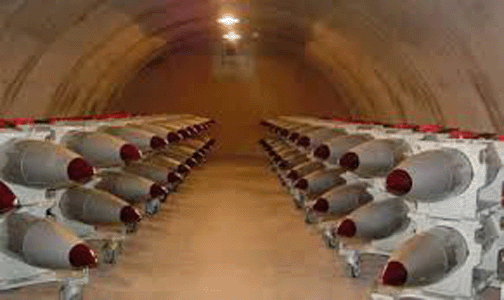
The US is rethinking the 50-plus nuclear weapons it keeps in Turkey, Quartz, By Tim Fernholz, 14 Oct 19, Turkish forces are pushing into northern Syria, replacing and sometimes even firing on the US troops retreating at Donald Trump’s orders.
The question of whether Turkey, a member of the North Atlantic Treaty Organization, is really a US ally was put to US defense secretary Mark Esper on Fox television this morning. “No, I think Turkey, the arc of their behavior over the past several years has been terrible,” he said.
Which brings up a problem: The US is storing perhaps 50 air-dropped thermonuclear bombs at its Incirlik Airbase in southern Turkey, less than 100 miles from the Syrian border where this conflict is taking place.
The nuclear stockpile dates back to the Cold War, when the US sought to keep a sufficient supply of atomic weapons deployed in Europe to deter potential Soviet aggression. Belgium, the Netherlands, Germany, and Italy also host similar arsenals, and the US trains the participating nations in the use of the doomsday devices.
Today, these bombs remain in place largely because of inertia, and the hope that countries like Turkey will see the depot as sufficient reason not to develop nuclear weapons of their own. It doesn’t seem to be working: Last month, Turkish president Recep Tayyip Erdogan said he could “not accept” efforts to prevent Turkey from developing its own atomic bombs.
But instability in Turkey and the region, along with Ankara’s close relationship with Russia, have had American strategists talking about re-locating their weapons for years. (The US does not officially discuss the arsenal, but there is no indication that the stockpile has been removed.)……..https://qz.com/1727158/us-rethinking-the-50-plus-nuclear-weapons-it-keeps-in-turkey/

Energy Efficiency – effective, but forgotten since UK privatisation of Energy Saving Trust and the Carbon Trust.

Business Green 10th Oct 2019, Energy Efficiency. The public needs reminding that saving energy is good for the planet, argues Andrew Warren.
British people are very confused about what they should most usefully be doing, in order to assuage any guilt they might feel about damaging the climate. A Smart Energy GB study released this week found just three in 10 people think being energy efficient would have the biggest impact on protecting the environment.
This startling finding was backed up another a survey of 2,000 people undertaken by Opinium Research. That found saving energy tends to come way down the list of possible practical response under consideration. The most popular response to the Opinium survey was to “avoid throwing away food”. This was followed by various moves to reduce plastic wastage – buying plastic-packed groceries, single-use plastic bottles, using plastic shopping bags – or simply not recycling enough.
Steven Day, co-founder of Pure Planet, which sponsored the opinion survey, commented: “It is great that the majority of people are thinking more about their impact on our environment. But it looks like they
are feeling guilty about the smaller things – not the biggest-impact
activities causing the greatest harm.”
This lack of awareness of the potential for saving energy contrasts enormously with similar surveys undertaken twenty years ago, admittedly when overall awareness of the threat of climate change was far lower. Then, the vast majority of people would always respond to questions to the threat of climate change by emphasising the need to save energy, both at home and at work.
Since 2010 there have been no publicly funded awareness campaigns supporting energy efficiency funded by central government. Their abandonment directly followed the privatisation of the two main public advice agencies, the Energy Saving Trust and the Carbon Trust.
35,454 Petitioners call for scrapping of UK’s “regulated asset base” (RAB) funding for Sizewell nuclear project
 Sizewell.
TASC 11th Oct 2019, Just one major problem with the Sizewell C plans is that nuclear new build projects have been largely a financial disaster. Almost every major nuclear project in the West has been plagued by delays and cost overruns: Some delays are in the order decades. Likewise, the cost overruns are of epic proportions.
Some new-build projects have had cost overruns that run into billions. Changing the funding method for the planned Sizewell C to a
regulated asset base model would shift the risk of rising costs from EDF to consumers, and could lead to even worse project planning because the existing RAB model would offer little incentive for EDF to build on-time and on-budget. EDFs investment is safe regardless, and we wind up footing the bill no matter how incompetently EDF proceeds.
TASC 11th Oct 2019,Today, campaigners from Sizewell, Hinkley Point and Bradwell nuclear sites and consumer group SumOfUs will visit the Department of Business, Energy and Industrial Strategy to deliver a 35,454-signature petition protesting the government’s proposal to subsidise new nuclear power plants by hiking energy bills.
The petition calls on the government to scrap plans to subsidise the nuclear industry through a “regulated asset base” (RAB) funding model, under which consumers would be forced to pay a surcharge on their energy bills for new nuclear power projects such as Sizewell C in Suffolk and Bradwell B in Essex.
The truly dangerous situation of USA’s nuclear weapons
|
US nuclear weapons policies are alarmingly dangerous. https://www.ucsusa.org/nuclear-weapons/us-weapons, 13 Oct 19, The United States tested the first atomic device in July of 1945. Seven years later, it exploded the first thermonuclear weapon—designed in part by Richard Garwin, who now serves on the board of the Union of Concerned Scientists. In the following years, the United States amassed many thousands of nuclear weapons, each capable of immense destruction. At the height of the Cold War, the United States maintained roughly 30,000 nuclear bombs and warheads, though the total number of weapons has fallen, thanks in part to US-Soviet and US-Russian treaties and agreements. The policies governing when, where, and why the United States would use nuclear weapons remain unconscionably risky. The US arsenalAs of 2019, the US arsenal contained some 4,000 nuclear weapons, about half of which are deployed and ready to be delivered. Their destructive capabilities range widely: the most powerful weapon—the “B83”—is more than 80 times more powerful than the bomb dropped on Hiroshima. The smallest weapon has an explosive yield of only 2 percent that of the Hiroshima bomb. Such “low-yield” weapons are designed to be used on the battlefield, increasing the likelihood they may actually be used.
The country’s weapons are deployed in submarines and in 80-foot-deep missile silos across the American west. Others are stored at air force bases, where they can be loaded on long-range bombers. Some 150 US bombs are deployed at airbases in five European countries. The arsenal’s primary purpose is “deterrence”—i.e., it’s intended to dissuade others from launching a nuclear attack. However, current policies allow the United States to use nuclear weapons first against Russia, China, or North Korea, effectively beginning a nuclear war.
New weaponsOver the coming years the Pentagon plans to spend more than a trillion dollars maintaining and rebuilding the entire US nuclear arsenal, which is both unnecessary and unwise. US weapons are maintained and upgraded on an ongoing basis and many don’t require replacement. Certain types should be eliminated altogether because they are redundant and provocative.
The main outcome of the Pentagon’s spending spree may be to spark an arms race with Russia and China, which would be expensive and dangerous—especially in the absence of strong arms control agreements.
PoliciesThe risk of nuclear war has as much to do with policy as it does to do with the weapons themselves. In the United States, the President is granted sole authority to launch nuclear weapons. He or she doesn’t need to consult with anyone beforehand and can issue a launch order with very few checks and balances. It’s also US policy that nuclear weapons can be used first in a non-nuclear conflict with a nuclear-armed state, i.e. not only in retaliation. If the United States crossed the nuclear threshold and started a nuclear war, it would open up our country to a retaliatory attack. Additionally, 400 land-based missiles are kept on hair-trigger alert, meaning they’re maintained in a ready-for-launch status. Current policy allows the United States to launch these missiles on warning of an incoming attack, despite a long history of false alarms and close calls. Collectively, these and other policies increase the risk of nuclear war. Better policies would reduce that risk. |
|
Iran categorically opposes nuclear weapons – Foreign Minister Mohammad Javad Zarif
Zarif: Iran categorically opposes nuclear arms, Islamic Republic News Agency Tehran, Oct 12, IRNA – Iranian Foreign Minister Mohammad Javad Zarif in a message referred to Iranian Supreme Leader Ayatollah Seyyed Ali Khamenei’s remarks that nuclear weapons are immoral, saying Iran categorically opposes such weapons.
“#Iran’s Leader has long made it abundantly clear that nuclear weapons are immoral & contravene Islamic principles,” Zarif wrote on his Twitter account on Saturday.
“Their development, acquisition, stockpiling & use is thus forbidden,” he added.
Zarif noted: “We’re categorically opposed to nuclear arms as a religious/moral duty & strategic imperative.”
On Wednesday, Ayatollah Khamenei emphasized that making, keeping and utilizing nuclear weapons are banned according to the Islamic law, …….. https://en.irna.ir/news/83514156/Zarif-Iran-categorically-opposes-nuclear-arms
“The Columbian” jeers the U.S. Department of Energy, over nuclear wastes
In Our View: Cheers & Jeers: storing nuclear waste, The Columbian,
Jeers: To the U.S. Department of Energy. The Western Governors’ Association is right to decry federal plans regarding the storage of radioactive nuclear waste. Among the complaints: Governors were not consulted before a plan to ship contaminated items to Carlsbad, N.M., was unveiled.
For decades, the federal government has shirked its duty for cleaning up contaminated sites such as the Hanford Nuclear Reservation. Federal officials need to better engage with the states that have unwittingly become experts in dealing with contaminated waste. https://www.columbian.com/news/2019/oct/12/in-our-view-cheers-jeers-bo-tax-storing-nuclear-waste/
Ex-trade minister Hiroshige Seko involved in nuclear gifts scandal
 Gifts and donations link official in Kepco scandal to second nuclear plant and ex-trade minister Hiroshige Seko, Japan Times, 10 Oct 19, KYODO, JIJI OSAKA – A former senior Kansai Electric Power Co. official said Thursday he received gift coupons in the 1990s from a former deputy mayor of a town hosting one of the company’s nuclear power plants, though he was in charge of a plant outside the town.Eiji Moriyama, the late deputy mayor of Takahama in Fukui Prefecture, later hinted that a particular firm undertake regular inspection work at the utility’s Oi plant in the same prefecture, the former official said. The latest revelation suggests Moriyama was trying to involve himself in the operations of a nuclear plant in addition to the one at Takahama. Kepco has already admitted that 20 of its executives and officials received a total of ¥318.45 million worth of gifts from Moriyama……. Kepco Chairman Makoto Yagi and four other executives stepped down Wednesday amid growing criticism over the shady ties between the nuclear industry and local government officials. Also on Wednesday, former trade minister Hiroshige Seko’s office said his fund management body had received political donations from a company head linked to Moriyama. Seko’s political fund management body received ¥6 million from the head of Yanagida Sangyo, a maintenance service company based in Takasago, Hyogo Prefecture, according to the office. Moriyama served as an adviser to Yanagida Sangyo. The body accepted ¥1.5 million, the maximum amount for a personal donation, every year between 2012 and 2015 from the company head, the office said. Seko’s office said that the donations from the company head were handled appropriately as the money was reported in his political funding reports. Seko now serves as secretary-general for the ruling Liberal Democratic Party in the House of Councilors. Speaking to reporters, Seko said the contributions were “strictly” personal donations. “I’ve never received business requests (from the company head),” he said, adding that he will not return the money. He said he did not know Moriyama.https://www.japantimes.co.jp/news/2019/10/10/national/ex-takahama-deputy-mayor-also-gave-gift-coupons-kepco-official-nearby-oi-nuclear-plant/#.XaORu0YzbIU |
|
|
EPA Announces $125 million settlement for cleanup of the Nuclear Metals Superfund Site in Concord, Massachusetts
EPA Announces $125 million settlement for cleanup of the Nuclear Metals Superfund Site in Concord, Massachusetts USA EPA,
The site, also known as the Starmet Corporation site, includes the 46-acre parcel located at 2229 Main Street in Concord and the surrounding areas where groundwater contamination has migrated. Several prior owners/operators used the site for research and specialized metals manufacturing and were licensed to possess low-level radioactive substances.
From 1958 to 1985, wastes contaminated with depleted uranium, copper, and nitric acid were disposed into an unlined holding basin at the site. Volatile organic compounds (VOCs), which likely contained 1,4-dioxane as a stabilizer, were used as solvents and degreasers for the cleaning of machines and machined parts/products and discharged through floor drains to an on-site cooling water pond that resulted in contamination of an on-site supply well.
The facility was listed as a Superfund site in 2001, and EPA placed a temporary cover over the holding basin in 2002 to address one of the most immediate risks at the site. Approximately 185,000 square feet of building space was demolished between 2011 and 2017 at a cost of $54 million under a previous agreement with the EPA.
The long-term cleanup plan for the site was selected by EPA in 2015 and generally includes the following components, which will be completed under the proposed agreement:
- Excavation and off-site disposal of about 82,500 cubic yards of contaminated soils, sediment and debris.
- Stabilization of depleted uranium contaminated soils in the holding basin.
- Extraction and treatment of groundwater for VOCs and 1,4-dioxane.
- Treatment of depleted uranium and natural uranium in groundwater.
- Long-term monitoring and land use controls.
A portion of the groundwater cleanup was started in 2016 because a plume contaminated with 1,4-dioxane was migrating away from the property under the Assabet River towards the town of Acton’s water supply. The remainder of the groundwater cleanup will be done under the agreement.
The Consent Decree, lodged in the U.S. District Court for the District of Massachusetts on Oct. 9, 2019, is subject to a 30-day public comment period and approval by the federal court. A copy of the consent decree will be available on the U.S. Department of Justice’s website at https://www.justice.gov/enrd/consent-decrees.
Site cleanup work can begin upon approval of the consent decree by the court.
For more information on EPA’s cleanup of the Nuclear Metals site visit https://www.epa.gov/superfund/nmi……. https://www.epa.gov/newsreleases/epa-announces-125-million-settlement-cleanup-nuclear-metals-superfund-site-concord-0
Senate to probe Philippine’s nuclear energy program
Gatchalian, chairman of the committee, filed a resolution for an inquiry on the status of the Department of Energy (DOE)’s Nuclear Energy Program Implementing Organization (NEPIO) in pursuit of his call for transparency in the government’s nuclear initiatives.
“A comprehensive, transparent and public discussion must be made on the merits of a national nuclear program taking into consideration the social, economic, environmental and technical effects and requirements of such a program,” he said.
He added that the development of a nuclear power program in any country requires three phases marked by a specific milestone and the completion of 19 infrastructure requirements, which necessitate specific actions during each of these three phases as indicated in the International Atomic Energy Agency (IAEA)’s milestones in the development of a national infrastructure for nuclear power.
The Philippines, according to the senator, is currently completing phase one, which commenced when the DOE issued Department Order 2016-10-0013 in 2016, creating the NEPIO, which is tasked to explore the development and inclusion of nuclear energy in the country’s electric power supply.
Phase two requires preparation for the contracting and construction of a nuclear power plant after a policy decision has been made, and its milestone is an invitation to bid or negotiate a contract for the power plant.
Meanwhile, phase three details the activities necessary to implement the first nuclear power plant, and its milestone is the commissioning and operation of such activities……..
The senator made the call during the hearing on the DOE’s proposed 2020 budget.
He pushed for the scrutiny of the nuclear energy program after a memorandum of intent was signed by Philippine and Russian officials during President Duterte’s visit to Moscow last week “to jointly explore the prospects of cooperation in the construction of nuclear power plants in the Philippines.”
A proposal to build a floating nuclear power plant in the country was also forwarded by Russia.
One of world’s worst nuclear disasters occurred in 1986 at the Chernobyl Nuclear Power Plant, which was blamed on a flawed Soviet reactor in Ukraine, at the time part of the Soviet Union.https://www.philstar.com/headlines/2019/10/14/1960013/senate-probe-philippines-nuclear-energy-program#Yu0jW87Rhm5T2TgI.99
1 This Month
19 November – Webinar – The Reality of Reprocessing
Time: 11:00 AM Pacific Time (US & Canada) / 2:00 PM Eastern / 7:00 PM UK / 8:00 PM CET
Register for the Zoom Event Here

Tell Congress: Prevent Nuclear Catastrophe in Iran

Tell Congress: Prevent Nuclear Catastrophe in Iran

Read the Public Inquiry Report, the Commissioners’ report, Surrendering Australia: The AUKUS Deception is available to download for free at aukuspublicinquiry.com. Or just watch the replay of the National Press Club Luncheon.


Shut down the radiation-damaged Heysham nuclear reactors now
To see nuclear-related stories in greater depth and intensity – go to https://nuclearinformation.wordpress.com

Say No to NASA’s Reckless Nuclear Reactor on the Moon
Say No to NASA’s Reckless Nuclear Reactor on the Moon
-
Archives
- November 2026 (190)
- October 2026 (302)
- September 2026 (339)
- August 2026 (330)
- July 2026 (355)
- June 2026 (287)
- May 2026 (306)
- April 2026 (356)
- March 2026 (251)
- February 2026 (267)
- January 2026 (308)
- December 2025 (358)
-
Categories
- 1
- 1 NUCLEAR ISSUES
- business and costs
- climate change
- culture and arts
- ENERGY
- environment
- health
- history
- indigenous issues
- Legal
- marketing of nuclear
- media
- opposition to nuclear
- PERSONAL STORIES
- politics
- politics international
- Religion and ethics
- safety
- secrets,lies and civil liberties
- spinbuster
- technology
- Uranium
- wastes
- weapons and war
- Women
- 2 WORLD
- ACTION
- AFRICA
- Atrocities
- AUSTRALIA
- Christina's notes
- Christina's themes
- culture and arts
- Events
- Fuk 2022
- Fuk 2023
- Fukushima 2017
- Fukushima 2018
- fukushima 2019
- Fukushima 2020
- Fukushima 2021
- general
- global warming
- Humour (God we need it)
- Nuclear
- RARE EARTHS
- Reference
- resources – print
- Resources -audiovicual
- Weekly Newsletter
- World
- World Nuclear
- YouTube
-
RSS
Entries RSS
Comments RSS

