COP 25 – a chance to avoid catastrophic climate change.
Earth has a couple more chances to avoid catastrophic climate change. This week is one of them https://theconversation.com/earth-has-a-couple-more-chances-to-avoid-catastrophic-climate-change-this-week-is-one-of-them-128120 Robert Hales
Director Centre for Sustainable Enterprise, Griffith University, December 3, 2019 Almost 200 world leaders gather in Madrid this week for climate talks which will largely determine the success of the Paris agreement, and by extension, the extent to which the planet will suffer under climate change.
Negotiations at the so-called COP25 will focus on finalising details of the Paris Agreement. Nations will haggle over how bold emissions reductions will be, and how to measure and achieve them.
Much is riding on a successful outcome in Madrid. The challenge is to get nations further along the road to the strong climate goals, without any major diplomatic rifts or a collapse in talks.
What COP25 is about
COP25 is a shorthand name for the 25th meeting of the Conference of Parties to the UN Framework Convention on Climate Change (or the nations signed up to the Paris agreement).
After Paris was signed in 2015, nations were given five years in which to set out bolder climate action. Current targets expire in 2020. At next year’s November COP in Glasgow, nations will be asked to formally commit to higher targets. If Madrid does not successfully lay the groundwork for this, the Glasgow talks are likely to fail.
The United Nations says the world must reduce overall emissions by 7.6% every year over the next decade to have a high chance of staying under 1.5℃ warming this century.
The 1.5℃ limit is at the upper end of the Paris goal; warming beyond this is likely to lead to catastrophic impacts, including near-total destruction of the Great Barrier Reef.
Presently, emissions reduction targets of nations signed up to Paris put Earth on track for a 3.2℃ increase.
A global carbon market
Parties will debate the mechanism in the Paris agreement allowing emissions trading between nations, and via the private sector.
Such mechanisms could lower the global cost of climate mitigation, because emissions reduction in some nations is cheaper than in others. But there are concerns the trading regime may lack transparency and accountability.
Among the risks are that emissions cuts are “double counted” – meaning both the buying and selling nation count the cuts towards their targets, undermining the aims of the agreement.
Help for vulnerable nations
Small island states say COP25 is the last chance to take decisive action on global emissions reduction.
Fossil fuel burning in the developing world is largely responsible for the carbon dioxide that drives global warming. Developing nations are particularly vulnerable to the loss and damage caused by climate change.
Parties will discuss whether an international mechanism designed to assess and compensate for such damage is effective.
Developing nations are expected to contribute to the Green Climate Fund to help poorer nations cope with and mitigate climate change. Some 27 nations contributed US$9.78 billion in the last funding round.
Some nations have indicated they will not contribute further, including Australia, which says it already helps Pacific nations through its overseas aid program.
Arguments about cost
Nations opposed to adopting stronger emissions reduction targets often argue the costs of decarbonising energy sectors, and economies as a whole, are too high.
However, recent cost benefit analysis has found not taking action on climate change will be expensive in the long run.
Realisation is also growing that the cost of emissions reduction activities has been overestimated in the past. In Australia, prominent economist Ross Garnaut recently said huge falls in the cost of equipment for solar and wind energy has created massive economic opportunity, such as future manufacturing of zero-emission iron and aluminium.
The shift in the cost-balance means nations with low ambition will find it difficult to argue against climate mitigation on cost grounds.
Australia’s position at Madrid
At the Paris talks, Australia pledged emissions reduction of 26-28% by 2030, based on 2005 levels. The Morrison government has indicated it will not ramp up the goal.
About 68 nations said before COP25 they will set bolder emissions reduction targets, including Fiji, South Africa and New Zealand. This group is expected to exert pressure on laggard nations.
This pressure has already begun: France has reportedly insisted that a planned free trade deal between Australia and the European Union must include “highly ambitious” action on climate change.
The Climate Action Tracker says Australia is not contributing its fair share towards the global 1.5℃ commitment. Australia is also ranked among the worst performing G20 nations on climate action.
The Madrid conference takes place amid high public concern over climate change. Thousands of Australians took part in September’s climate strikes and the environment has reportedly surpassed healthcare, cost of living and the economy as the top public concern.
Climate change has already arrived in the form of more extreme weather and bushfires, water stress, sea level rise and more. These effects are a small taste of what is to come if negotiations in Madrid fail to deliver.
Johanna Nalau, Samid Suliman and Tim Cadman contributed to this article.
Rafael Mariano Grossi, new UN nuclear agency chief, states he will be“firm and fair” stance on Iran
|
New UN nuclear agency chief: “firm and fair” stance on Iran , https://www.yahoo.com/news/argentina-grossi-cleared-helm-un-102125633.html 2 Dec 19, VIENNA (AP) — The incoming head of the U.N.’s atomic watchdog agency said Monday he will take a “firm and fair” approach toward inspections of Iran’s nuclear facilities, and plans to visit Tehran in the near future.Argentine diplomat Rafael Mariano Grossi’s comments came after he was confirmed as the new director general of the International Atomic Energy Agency unanimously at a special session. His four-year term begins on Tuesday.
The 58-year-old succeeds Yukiya Amano, who died in July, and takes over at a time when the nuclear deal between Iran and world powers is unraveling. The landmark 2015 deal known as the Joint Comprehensive Plan of Action promised Iran economic incentives in exchange for curbs on its nuclear program. The IAEA’s role has been to inspect and verify Iran’s compliance with the deal. With the unilateral withdrawal of the United States from the agreement last year and the imposition of new American sanctions, Iran’s economy has been struggling. So far, the other nations involved — France, Germany, Britain, China and Russia — have been unable to offset the effects, and Iran has slowly been violating the terms of the JCPOA. Tehran is, however, continuing to provide IAEA inspectors access. Grossi told reporters he expected to travel to Iran himself in the “relatively near future” to meet with leaders there. “It is really a priority,” he said of the situation in Iran, adding that his philosophy on inspection safeguards was to be “firm and fair.” Those “two guiding principles” apply not just to Iran, but to how the IAEA deals with everybody, though “different cases demand different approaches,” he said. “An inspector is not a friend. He’s someone who comes and needs to ascertain the facts without bias, without agenda, in an objective and impartial way,” Grossi said. “This has to be done in firmness, but in fairness as well.” Grossi became Argentina’s ambassador to the Vienna-based IAEA in 2013 and was previously the IAEA’s chief of cabinet under Amano. |
|
UN chief praises youth leadership on climate action, deplores government inaction
COP25: youth ‘leadership’ contrasts with government inaction, says UN chief, Ahead of Madrid climate change conference António Guterres says political will missing, Guardian, Fiona Harvey Environment correspondent, 2 Dec 19, António Guterres, the United Nations secretary general, contrasted the “leadership” and “mobilisation” shown by the world’s youth on the climate emergency with the lack of action by governments, which were failing to keep up with the urgency of the problem despite increasing signs that the climate was reaching breakdown.
Before the start of a critical conference on the climate crisis on Monday, he said the world had the technical and economic means to halt climate chaos, but what was missing was political will.
“The technologies that are necessary to make this possible are already available. Signals of hope are multiplying. Public opinion is waking up everywhere. Young people are showing remarkable leadership and mobilisation. [But we need] political will to put a price on carbon, political will to stop subsidies on fossil fuels [and start] taxing pollution instead of people.”
Guterres called for further investment from rich countries and support for poor nations to make the changes needed to reduce greenhouse gas emissions and cope with the impacts of global heating. Amid rising temperatures, wildfires, heatwaves, droughts and floods, the danger signals were clear and must be acted on without further delay, he said…..
The countries most at risk of deluge from climate chaos have issued an impassioned plea to the industrialised world ahead of crucial negotiations on the Paris agreement that start on Monday in Madrid.
“We see [these talks] as the last opportunity to take decisive action,” Janine Felson, deputy chair of the Alliance of Small Island States (AOSIS) told the Guardian.
“Anything short of vastly greater commitment to emission reduction, a new climate finance goal and tangible support for disaster risk reduction will signal a willingness to accept catastrophe.” https://www.theguardian.com/science/2019/dec/01/island-states-want-decisive-action-to-prevent-inundation
Antarctic ice sheets could be at greater risk of melting than previously thought
|
|
|

Coal power becoming ‘uninsurable’ as firms refuse cover
Coal power becoming ‘uninsurable’ as firms refuse cover, US insurers join retreat from European insurers meaning coal projects cannot be built or operated, Guardian, Julia Kollewe, Mon 2 Dec 2019 The number of insurers withdrawing cover for coal projects more than doubled this year and for the first time US companies have taken action, leaving Lloyd’s of London and Asian insurers as the “last resort” for fossil fuels, according to a new report.The report, which rates the world’s 35 biggest insurers on their actions on fossil fuels, declares that coal – the biggest single contributor to climate change – “is on the way to becoming uninsurable” as most coal projects cannot be financed, built or operated without insurance.
Ten firms moved to restrict the insurance cover they offer to companies that build or operate coal power plants in 2019, taking the global total to 17, said the Unfriend Coal campaign, which includes 13 environmental groups such as Greenpeace, Client Earth and Urgewald, a German NGO. The report will be launched at an insurance and climate risk conference in London on Monday, as the UN climate summit gets underway in Madrid.
The first insurers to exit coal policies were all European, but since March, two US insurers – Chubb and Axis Capital – and the Australian firms QBE and Suncorp have pledged to stop or restrict insurance for coal projects.
At least 35 insurers with combined assets of $8.9tn, equivalent to 37% of the insurance industry’s global assets, have begun pulling out of coal investments. A year ago, 19 insurers holding more than $6tn in assets were divesting from fossil fuels…… https://www.theguardian.com/environment/2019/dec/02/coal-power-becoming-uninsurable-as-firms-refuse-cover
Support candidates in 2020 who will work for nuclear disarmament
 Support candidates in 2020 who will work for nuclear disarmament, https://www.thetimesnews.com/opinion/20191202/letter-support-candidates-in-2020-who-will-work-for-nuclear-disarmament?utm_source=dlvr.it&utm_medium=twitter Anne Cassebaum It was good to hear Mikhail Gorbachev given some air time to speak of the unspoken. Current tension and permanent war, he warned, make the danger of nuclear weapons “colossal.”Nuclear weapons rarely make the news; recent worry about ours in Turkey was fleeting, so the danger is pushed back in many Americans’ consciousness. The result: Pentagon spending balloons, and the Trump administration carries forward President Obama’s plan to modernize our nuclear forces. Modernization may sound good and even inevitable; it is neither. In fact, it will set off a new arms race of smaller nuclear weapons that are, imagine, “more usable.” And smaller means reduced to Hiroshima and Nagasaki-sized bombs that killed more than 200,000 people. The price tag for this 30-year modernization is $1.2 trillion and rising. The beneficiaries will be weapons producers, such as Lockheed Martin and Boeing, for whom the Pentagon budget acts as an ATM, as one researcher quipped. We could be pursuing disarmament treaties and diplomacy. Money siphoned for endless oil wars and weapons buildup could instead create jobs in green energy and deal with climate change, which, like radioactivity, respects no borders. Any nuclear exchange would be a climate crisis of its own. As Gorbachev put it, ” … nuclear weapons should be destroyed. This is to save ourselves and our planet.” The 2020 elections offer a time to consider candidates who see a new arms race as insanity, not security.
|
|
|
Climate activists protest Black Friday shopping sprees
 Climate Activists Protest Black Friday Around the World https://www.motherjones.com/environment/2019/11/climate-activists-protest-black-friday-around-the-world/
27 people were arrested in New York City while calling for action to fight climate change. NATHALIE BAPTISTE ON BLACK FRIDAY,
Climate change activists in cities all over the planet took to the streets to decry the biggest shopping day of the year.According to the New York Post, 300 protesters marched down a busy street in New York City then blocked traffic near Herald Square by sitting in an intersection. Police arrested 27 people after they refused to clear the road. Law enforcement said the individuals would be charged with disorderly conduct.
Protests were widespread across Europe. In France, protesters targeted Amazon’s French headquarters. Other climate demonstrators protested at a shopping center in Paris. At a Lyon protest, video captured riot police dragging protesters. In the United Kingdom, protesters chanted outside of shopping centers.
Safety concerns linger although Onagawa reactor cleared to restart

Nuclear watchdog approves restart of Onagawa reactor in Miyagi hit by 3/11 tsunami

COP25: UN climate conference to tackle global challenges
Germany must now face up to its nuclear waste problem

Germany is closing all its nuclear power plants. Now it must find a place  to bury the deadly waste for 1 million years
By Sheena McKenzie, [excellent diagrams]. CNN https://edition.cnn.com/2019/11/30/europe/germany-nuclear-waste-grm-intl/index.html When it comes to the big questions plaguing the world’s scientists, they don’t get much larger than this.
 Ben clock towers — of deadly radioactive waste for the next million years?
Searching for a nuclear graveyard
Between a rock and a hard place
People power
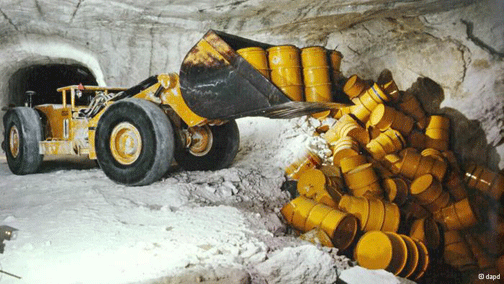 Former salt mines at Asse and Morsleben, eastern Germany, that were used for low- and medium-level nuclear waste in the 1960s and 1970s, must now be closed in multibillion-dollar operations after failing to meet today’s safety standards.
Global climate tipping point is getting near – researchers say
|
By Helen Regan, CNN, November 28, 2019 , The Earth is heading toward a “global tipping point” if the climate crisis continues on its current path, scientists have warned, as they called for urgent action to avoid “an existential threat to civilization.”
The group of researchers, who published a commentary in the journal Nature, say there is growing evidence to suggest that irreversible changes to the Earth’s environmental systems are already taking place, and that we are now in a “state of planetary emergency.”
A global tipping point is a threshold when the planet’s systems go beyond the point of no return — such as the loss of the Amazon rainforest, accelerated melting of ice sheets, and thawing of permafrost — the authors of the commentary say.
Such a collapse could lead to “hothouse” conditions that would make some areas on Earth uninhabitable.
“We argue that the intervention time left to prevent tipping could already have shrunk towards zero, whereas the reaction time to achieve net zero emissions is 30 years at best,” the authors said.
Active problem areasLed by Timothy Lenton, professor of climate change and Earth system science at the University of Exeter, in southwest England, the team identified nine areas where they say tipping points are already underway.
Those include widespread destruction of the Amazon, reduction of Arctic sea ice, large-scale coral reef die-offs, melting of the Greenland and West Antarctic ice sheets, thawing of permafrost, destabilizing of boreal forests — which contain vast numbers of trees that grow in freezing northern climes — and a slowdown of ocean circulation.
The team claims that these events are interconnected and change in one will impact another, causing a worsening “cascade” of crises………
.
The UN Environment Program (UNEP) 2019 Emissions Gap report said at the current rate, temperatures are expected to rise 3.2 C by 2100.
Greenhouse gases reached a record high in 2018 with no sign of peaking, according to a recent World Meteorological Organization report. Carbon dioxide levels reached 407.8 parts per million, a unit used to measure the level of a contaminant in the air.
Hope is not lost, however. Researchers say that mitigating greenhouse gas emissions could still slow down the accumulation of these climate impacts.
What is needed, they say, is urgent international action to cut emissions, slow sea level rise, and to keep warming to 1.5 C.
“A saving grace is that the rate at which damage accumulates from tipping — and hence the risk posed — could still be under our control to some extent,” they said.
“The stability and resilience of our planet is in peril. International action — not just words — must reflect this.” https://edition.cnn.com/2019/11/28/health/climate-crisis-global-tipping-point-intl-hnk/index.html?utm_source=twCNN&utm_content=2019-11-30T05%3A01%3A06&utm_term=link&utm_medium=social
|
|
Big risk factors for Middle East countries in adopting nuclear power
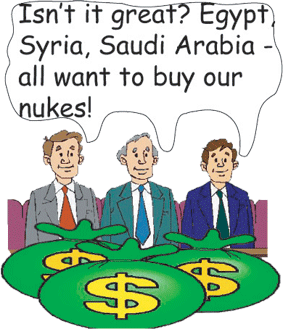
  Facing the Nuclear Storm Countries across the Middle East are building or have already started operating their nuclear power plants. To assess how “resilient” their nuclear energy systems are, one must look at a number of important risks and factors The Cairo Review By Ali Ahmad, and Benedetta Bonometti 1 Dec 19, Soon enough, countries with nuclear power in the Middle East will have to face a storm when it comes to operating their power plants safely. That is why the focus on introducing resilient energy systems is receiving much attention in developed and developing countries alike.
Across the globe, a variety of natural and human-induced risks and threats have caused substantial disruptions to the delivery of energy services and affected millions of people. From the massive July blackout in New York City that was linked to a sweltering heat wave to the conflicts in Yemen, Libya, and Syria that have caused power outages and severe damage to power generation and transmission, the need for resilient energy infrastructure is becoming more relevant than ever.
Energy resilience remains an evolving concept, but for now, it can be understood as the ability of an energy system to adapt to possible disruptive and challenging environments such as a tsunami or a heat wave, and to resume service provision swiftly. However, studies and experience have demonstrated the pivotal role that preemptive measures play when envisaging a resilient energy system. The link between energy resilience and the proposals to build nuclear energy power plants across the region lies in the scale of the region’s nuclear ambitions. Currently, there are six regional countries, including Iran, the United Arab Emirates (UAE), Egypt, Turkey, Jordan, and Saudi Arabia, which are developing nuclear power programs, with varied degrees of commitment. In a global energy landscape that is tilting toward renewable energy and an increased interest in decentralized systems, which combined together make for strong or resilient structures, one important question to ask is how the introduction of nuclear power will affect the resilience of national energy systems in these countries. This is especially important considering the exclusive set of risks associated with having a nuclear power program. Nuclear Vulnerabilities and Disruptions Pre-operation risks Nuclear power plant projects are exposed to numerous threats before they start operating. In fact, lengthy construction times, which are common in such projects, increase the probability of project cancellation before the plants start generating electricity. The years-long lead times, or in other words the time it takes to carry out financial and licensing procedures as well as construction, make nuclear projects vulnerable to financial and political risks and could lead to plant closure. The most common financial problems which arise from escalating costs and construction delays are due to either stringent licensing processes and/or project mismanagement. Moreover, other sources of energy could become cheaper and more competitive, especially as gas or oil discoveries are made more often (such as the discovery of offshore gas fields like Egypt’s Zohr). Nuclear energy programs in turn become highly sensitive political issues to the extent that a change of governments, as in the case of the so-called Arab Spring, might halt the construction of planned nuclear power plants. Fuel supply The main threat to front-end activities regarding fuel supply is the disruption of enriched uranium supply. Uranium fuel disruptions would more likely be linked to the regional political climate given that the global supply chains of uranium fuel face no major impediments. …….. Attacks against critical nuclear facilities The recent drone and missile attacks on Saudi Arabia’s ARAMCO facilities temporarily crippled its oil production, inflamed regional tensions, and sent shockwaves around the globe. Had the attack been on a nuclear power facility, the consequences could have been much more grave………. Foreign workforce …….. The involvement of foreign workers, which may be necessary when the host country lacks the required human capital to run its own nuclear power program, may raise several issues. …….. Climatic effects When thinking of possible climatic effects on the resilience of the nuclear power plants in the region, heat waves are particularly concerning due to their impact on the temperature of the reactor’s cooling water. …. Spent nuclear fuel considerations Spent nuclear fuel, in other words the irradiated (and radioactive) fuel waste generated by nuclear fission, must first cool down for a number of years in water-filled storage pools before it is ready to be handled and transported. Spent fuel pools will always be full as new spent fuel will continuously replace fuel that is removed. Consequently, various threats to the storage pools are possible. Firstly, like the case with nuclear reactors, natural disasters and extreme weather conditions could threaten the functionality of the storage pools. Secondly, spent fuel pools may also be identified as targets during armed conflicts. …… Major risks exist that show the contradiction between the development of nuclear energy in the Middle East and the emerging narrative of energy resilience. Nuclear power is not only vulnerable to climatic and nature-induced extreme events but also to attacks by state and non-state actors. The recent attacks on Saudi Arabia’s oil infrastructure are reminders that the higher the value of the target, the more critical it becomes. With nuclear power becoming a reality in the region, efforts by governments, academia, and civil society need to focus on promoting its resilient, safe, and secure operation. As a start, we need to invest in risk mitigation strategies and mechanisms as well as better emergency response and preparedness that utilize unhindered and depoliticized technical cooperation between all states in the region. Since the effects of nuclear accidents are often cross-border, even countries that do not have nuclear power programs must be part of these efforts. Ali Ahmad is the director of the Energy Policy and Security Program in the Issam Fares Institute for Public Policy and International Affairs at the American University of Beirut. Ahmad is the author of numerous journal articles on nuclear energy and security with a focus on the Middle East region. Read More
Benedetta Bonometti is a graduate student in public policy with a specialization in energy, resources, and development at Sciences Po Paris. Her research interests focus on fossil fuel and nuclear energy policies in the Middle East. Read More https://www.thecairoreview.com/essays/facing-the-nuclear-storm/
|
|
Iran warns EU that it may step back from UN nuclear watchdog
Iran threatens to step back from UN nuclear watchdog
Tehran warns it will reconsider IAEA commitments if EU states trigger possible sanctions, Guardian, Patrick Wintour Diplomatic editor, Mon 2 Dec 2019
Iran has warned it may “seriously reconsider” its commitments to the UN atomic watchdog if European parties to a nuclear deal trigger a dispute mechanism that could lead to fresh sanctions.
The speaker for the Iranian parliament, Ali Larijani, told a press conference in Tehran on Sunday: “If they use the trigger [mechanism], Iran would be forced to seriously reconsider some of its commitments to the International Atomic Energy Agency. If they think doing so is more beneficial to them, they can go ahead.”
The threat to trigger sanctions has come after the Iranian government has taken a series of deliberate steps away from the 2015 nuclear deal, which it says are intended as a reprisal for Europe’s failure to deliver on commitments to boost trade.
Iran has also been frustrated by Europe’s refusal to defy the threat of US sanctions against any European company that trades with Iran.
A mechanism known as Instex developed by Europe to sidestep sanctions received a boost at the weekend when six more EU countries said they would join. Instex is a bartering system devised to avoid the reach of the US, but Iran is less interested in the number of EU countries signed up than the fact that no deals are being made under the mechanism. A mechanism known as Instex developed by Europe to sidestep sanctions received a boost at the weekend when six more EU countries said they would join. Instex is a bartering system devised to avoid the reach of the US, but Iran is less interested in the number of EU countries signed up than the fact that no deals are being made under the mechanism……. https://www.theguardian.com/world/2019/dec/01/iran-threatens-to-step-back-from-un-nuclear-watchdog
Prominent Americans to wage ‘World War Zero’ against climate change
 John Kerry Launches Star-Studded Climate Coalition, NYT, By Lisa Friedman, Nov. 30, 2019 WASHINGTON — John Kerry, the former senator and secretary of state, has formed a new bipartisan coalition of world leaders, military brass and Hollywood celebrities to push for public action to combat climate change.
The name, World War Zero, is supposed to evoke both the national security threat posed by the earth’s warming and the type of wartime mobilization that Mr. Kerry argued would be needed to stop the rise in carbon emissions before 2050.
The star-studded group is supposed to win over those skeptical of the policies that would be needed to accomplish that.
Former presidents Bill Clinton and Jimmy Carter are part of the effort. Moderate Republican lawmakers like Arnold Schwarzenegger, the former governor of California, and John Kasich, the former governor of Ohio, are on the list. Stars like Leonardo DiCaprio, Sting and Ashton Kutcher round out the roster of more than 60 founding members.
“We’re going to try to reach millions of people, Americans and people in other parts of the world, in order to mobilize an army of people who are going to demand action now on climate change sufficient to meet the challenge,” Mr. Kerry said in an interview.
The launch of the new group on Sunday comes as diplomats gather in Madrid on Monday for global climate negotiations aimed at strengthening the 2015 Paris Agreement, from which President Trump has vowed to withdraw next year. Earlier this week the United Nations found that the world’s richest countries, responsible for emitting more than three-fourths of planet-warming pollution, are not doing enough to keep Earth’s temperature from rising to dangerously high levels. Net carbon emissions from the two largest polluters, the United States and China, are expanding……….. https://www.nytimes.com/2019/11/30/climate/john-kerry-climate-change.html?smid=tw-nytclimate&smtyp=cur
1 This Month
19 November – Webinar – The Reality of Reprocessing
Time: 11:00 AM Pacific Time (US & Canada) / 2:00 PM Eastern / 7:00 PM UK / 8:00 PM CET
Register for the Zoom Event Here

Tell Congress: Prevent Nuclear Catastrophe in Iran

Tell Congress: Prevent Nuclear Catastrophe in Iran

Read the Public Inquiry Report, the Commissioners’ report, Surrendering Australia: The AUKUS Deception is available to download for free at aukuspublicinquiry.com. Or just watch the replay of the National Press Club Luncheon.


Shut down the radiation-damaged Heysham nuclear reactors now
To see nuclear-related stories in greater depth and intensity – go to https://nuclearinformation.wordpress.com

Say No to NASA’s Reckless Nuclear Reactor on the Moon
Say No to NASA’s Reckless Nuclear Reactor on the Moon
-
Archives
- November 2026 (178)
- October 2026 (302)
- September 2026 (339)
- August 2026 (330)
- July 2026 (355)
- June 2026 (287)
- May 2026 (306)
- April 2026 (356)
- March 2026 (251)
- February 2026 (267)
- January 2026 (308)
- December 2025 (358)
-
Categories
- 1
- 1 NUCLEAR ISSUES
- business and costs
- climate change
- culture and arts
- ENERGY
- environment
- health
- history
- indigenous issues
- Legal
- marketing of nuclear
- media
- opposition to nuclear
- PERSONAL STORIES
- politics
- politics international
- Religion and ethics
- safety
- secrets,lies and civil liberties
- spinbuster
- technology
- Uranium
- wastes
- weapons and war
- Women
- 2 WORLD
- ACTION
- AFRICA
- Atrocities
- AUSTRALIA
- Christina's notes
- Christina's themes
- culture and arts
- Events
- Fuk 2022
- Fuk 2023
- Fukushima 2017
- Fukushima 2018
- fukushima 2019
- Fukushima 2020
- Fukushima 2021
- general
- global warming
- Humour (God we need it)
- Nuclear
- RARE EARTHS
- Reference
- resources – print
- Resources -audiovicual
- Weekly Newsletter
- World
- World Nuclear
- YouTube
-
RSS
Entries RSS
Comments RSS

